Skiing History Magazine

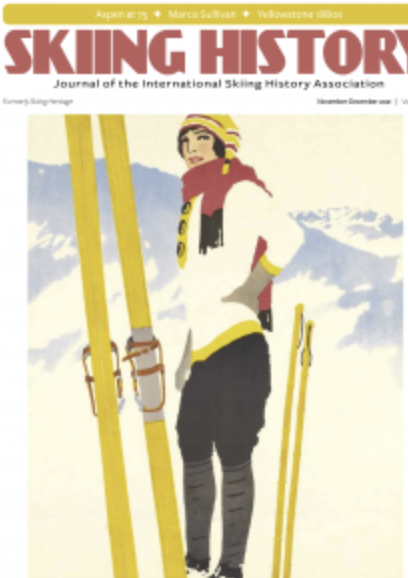
Covid-related delays at the printer and post office caused the November-December issue of Skiing History to mail a month late. The online version posted right after Thanksgiving, and you can read it here. Here’s what you’ll find:

Aspen’s Anniversary: 75 years ago, Aspen built its first chairlifts and opened for business. Most of us are familiar with the story of how racing champion Friedl Pfeifer returned as a wounded veteran of the 10th Mountain Division and forged a partnership with Chicago industrialist Walter Paepcke to form the Aspen Skiing Company. In this issue, Aspen-based writer and editor Cindy Hirschfeld tells the story of the locals who surveyed the ground, cut the trees, dug the footings, hauled and poured the concrete, assembled the towers, hung cables and chairs, and then ran the lifts and ski school.


100th Anniversary of Megève, the first purpose-built resort in France. When the Baroness Noemie de Rothschild took a break from running a military hospital during World War I, she went skiing at St. Moritz. There she bumped into the German arms-maker (and notorious antisemite) Gustav Krupp. She swore to build an all-French resort, and in December 1921 opened her Hotel Prima in this medieval village just off the main road from Geneva to Chamonix. Under the stewardship of four generations of Rothschilds, the resort has maintained is ultra-luxe ambience. The skiing is good, too: After all, Megeve produced Emile Allais. Article by Bob Soden.


Ron’s Last Run: We go into the New Year mourning the sudden death of our great friend and longtime contributor Ron LeMaster. His obituary is on the SkiingHistory.org website now. This issue contains the last article he wrote for us – the history of ruade, the “horse-kick” turn that evolved into down-unweighting and paved the way for avalement.


American Downhiller Marco Sullivan retired after 105 World Cup starts and went to promote Alpine speed through coaching and an award-winning film. Edie Thys Morgan reports.

Walter Kofler Invented Kofix, the first polyethylene base, in 1952. It replaced celloid bases and revolutionized ski racing, making the Austrian and Swiss teams dominant at the 1956 Olympics. By Seth Masia.

150 Years of Skiing in Yellowstone. Explorers, poachers and even the U.S. Cavalry skied into the bitterly cold, snowbound National Park beginning around 1872. By Jay Cowan.

Meet the U.S. Ski and Snowboard Hall of Fame Class of 2021, with boot designer Sven Coomer, snowmaking genius Herman Dupre, skiing stuntman John Eaves, retail pioneers Dave and Renie Gorsuch, broadcaster Peter Graves, freeskiing hero Mike Hattrup, ski mountaineer Jan Reynolds and pro freestyler Alan Schoenberger.

Farewell to Ski Pioneers Rupert Huber of Atomic Skis, inventor of the fat powder ski; racing promotors Anne and Joe Jones; adaptive ski coach Hal O’Leary; Whistler general manager Peter Alder; Burke Academy founder and ski-racer Martha Coughlin Corrock; and pro racer Paul Carson.

The January-February issue should mail around mid-January, but you can already read Edie Morgan’s brilliant report on the upcoming Olympics, Beijing Olympic Alpine courses are a mystery.
 

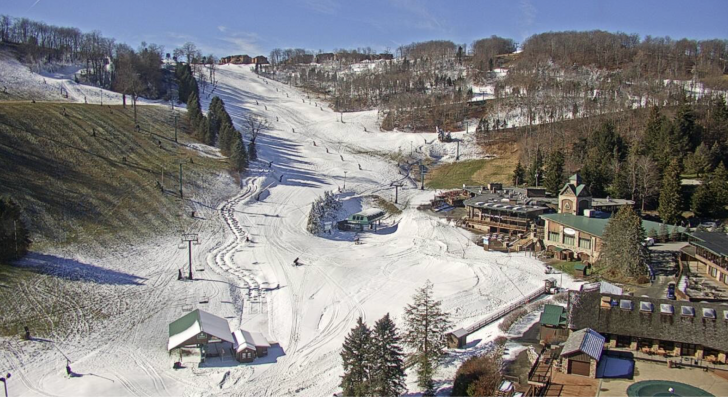
Thorne Mountain

Test Your Skiing Knowledge

Each issue of SeniorsSkiing.com has a picture to help test your skiing knowledge. The pictures are from collections in a variety of participating ski museums, which we encourage readers to visit.

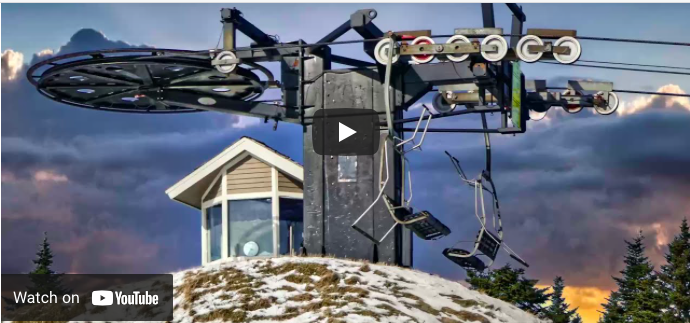
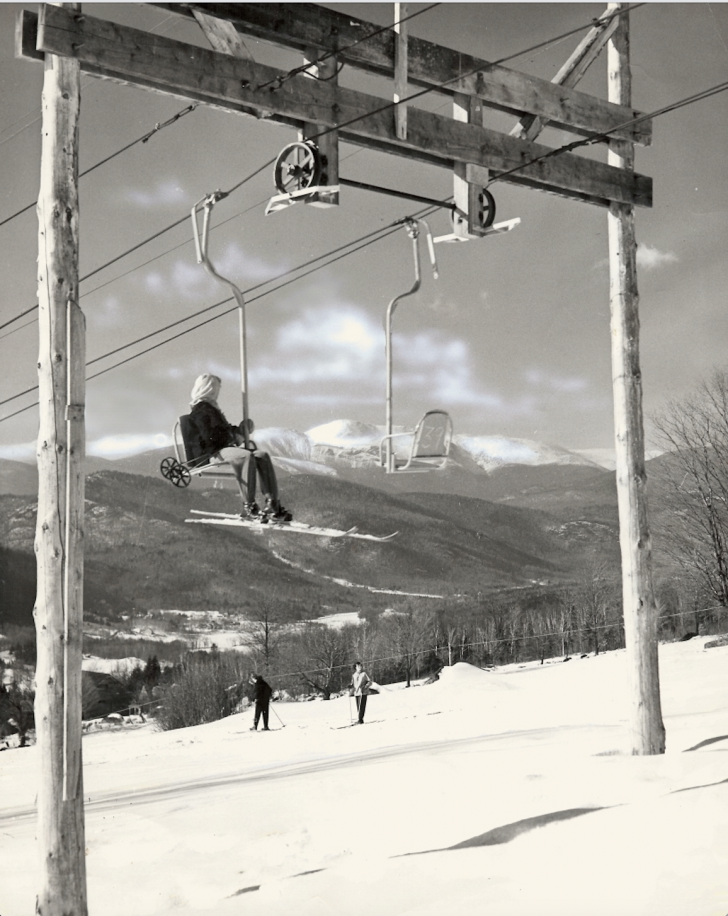
This picture, submitted by The New England Ski Museum, shows a chair that serviced a New England area in the 1950s. It was the upper of two lifts that, combined, providing more than 1000′ of vertical. The area closed in the mid-50s. What was the name of this short-lived ski area?

The first person to submit the correct answer to jon@seniorsskiing.com wins a yet to be determined, but skiing-related prize. Note, only answers sent to that address will qualify.The correct answer and the name of the winner will appear in the next issue of SeniorsSkiing.com.

Unfrtunately, there were no correct answers to the last Test Your Skiing Knowledge quiz. Perhaps the answer was a bit arcane. Nonetheless, it is quite interesting.

Source: New Mexico Ski Museum and Ski Hall of Fame

The man in the middle is Bruno Hans Geba, and he’s shown instructing two coeds from the University of New Mexico at Sandia Peak Ski Area in 1968. Several readers thought it might be Ernie Blake at Taos, probably because the image was submitted by the New Mexico Ski Museum and Ski Hall of Fame. Geba was born in 1927 in Salzburg, Austria. After World War II, he received bachelor’s, master’s and doctoral degrees in medical science, psychology and physical education from the University of Vienna. In 1955 he was invited to the US to serve as a consultant for the Aspen Institute for Humanistic Studies. At about the same time, he received his American doctorate in clinical psychology at the University of Colorado. While in Aspen, he trained the U.S. men’s and women’s Olympic ski teams and coached the International Professional Ski Racers Association. In 1966 he started a private psychotherapy practice in San Francisco; later becoming a professor at San Diego State University. He retired in 1992, moved to Hawaii. and passed away there at age 74.


Source: New Mexico Ski Museum and Sk Hall of Fame

LUV2SKI (con’t)

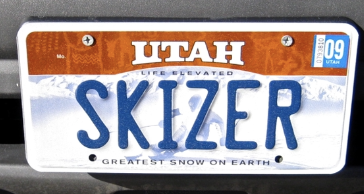
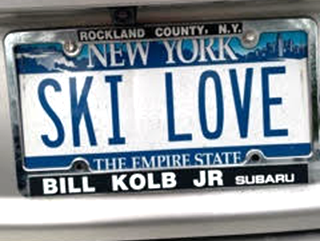
Isn’t it fantastic what a good imagination can do with six or seven characters…especially when a passion for identifying with skiing is involved?

These new additions to the license plate gallery came from Margery Martin, Minneapolis; Jack Whalberg, Cape Cod, and Hamlin “Ham” Pakradooni, Cape Cod.

If you run across a skiing license plate and want to add it to the SeniorsSkiing license plate picture gallery, take a picture (preferably close up and straight on) and send it to info@seniorsskiing.com. We’ll do our best to credit each contributor.

The Skiing Weatherman-December 30, 2021

The Skiing Weatherman-December 30, 2021

The West is wonderful…Ol’ Sol causes problems in the East…

After an exceptionally slow start to the season in the West, the past few weeks have brought an amazing and dramatic reversal of fortune to that half of the continent in terms of snowfall.  An upper level trough has dominated the pattern from the Rockies to the west coast, and storm after storm has delivered deep Pacific moisture into an air mass cold enough to dump many feet of snow.  The holiday week has turned out spectacular in the West, after many resort operators were looking at grassy/rocky slopes just a few weeks ago. 

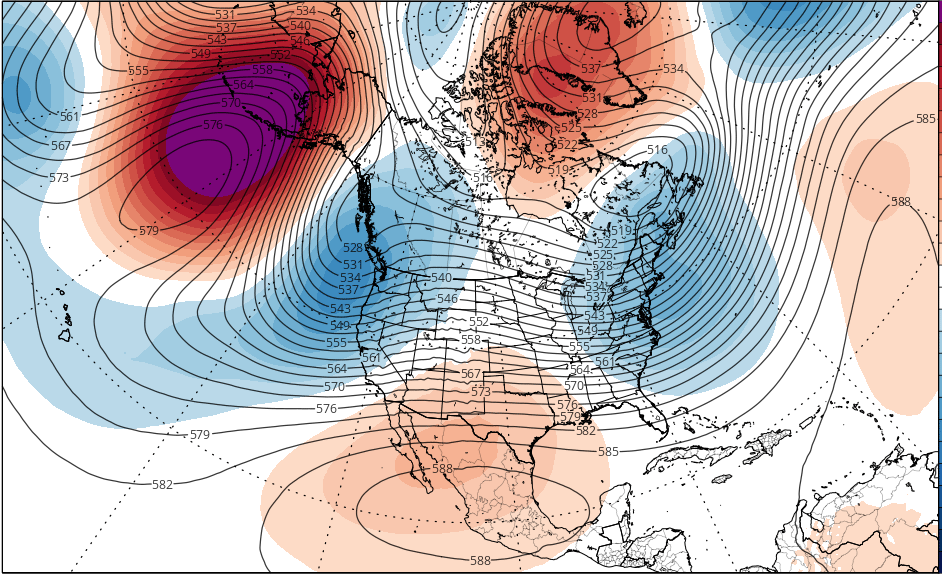
Over the eastern half of the continent, skiers and riders have been waiting impatiently for some of the western cold to flow east so resorts could settle into winter.  I thought that the cold would arrive around Christmas and call the shots right into the New Year, but I was wrong.  The pattern suggested it would happen, snowy analog years like 1995-96 agreed, and the jet stream configuration around the northern hemisphere pointed toward the evolution of a cold upper trough over eastern North America.  And then it didn’t happen.  Why not?  Well, a rather anomalous spike in the output of the sun might be to blame.  When solar flux, or the output of the sun, increases dramatically in winter, it tends to sustain a southeastern U.S. upper ridge, the feature that has thus far kept winter at bay over the Midwest and East.  The following map shows the jet setup on the 31st

You can see two features that are producing the latest rounds of snow in the West…one centered over ID/WA and the other west of Baja California.  Over the East, the persistent, troublemaking ridge is still there…in classic La Nina fashion.  The ridge has been in place much of the time for a few weeks and it is still there.  Here is the graph of solar flux that could explain why the ridge won’t relent and let cold shots penetrate deeper into the East…

The red line on the graph is solar flux, and you can see that it increased dramatically around mid-December.  There is a lag time of a few weeks with this phenomenon, which explains why the ridge won’t budge and keeps deflecting low pressure centers through the eastern Great Lakes and up into Canada…an unfavorable track for cold and snow in the Northeast.  But also notice that it is now weakening, so I believe that cold shots will have an easier time knocking down the ridge in the weeks to come.  The change won’t happen overnight, but I expect disturbances that press eastward out of the western troughs will start to break down the ridge, starting with a body shot the weekend of the 1st/2nd.  The ridge will fight back, but by mid-month, cold should rule across the north from the Lakes to the Northeast, and the mid-Atlantic and Southeast should be in a more favorable pattern by then, as well.           

Here are regional highlights…    

Northwest U.S./Western Canada:  Snowfall takes a time-out this weekend, but resumes during the first week of the New Year.            

Sierra:  Nice weekend to enjoy all the new snow.  Snow returns next week…higher totals to be found north of I-80.             

Rockies:  Cold weekend with diminishing snows.  After a couple of quiet days, the parade of storms resumes early to midweek. 

Midwest:  Cold weekend with snow in lake effect belts.  Clipper brings snow midweek.  Pattern turning colder overall. 

Mid Atlantic/Southeast:   Rain changes to snow this weekend.  Cold shot supports productive snowmaking early in the week.        

Northeast/QB:  Messy weekend turns much colder.  Great snowmaking early in the week.  Prospects improving for meaningful snow late next week. 

This Issue

This is being written from Salt Lake City, the day after 20” fell at Snowbird. It’s almost at the top of Little Cottonwood Canyon and just a short distance from Park City, where the total was 10”. Compare that to Mammoth Mountain in California’s Sierra range… 44” in 72 hours!

Jon’s Short Swings! column is a bit self-confessional this time, speaking to the factors that help us age gracefully. As usual, it also reports on industry news and recent curiosities. The link to a history of how snowball fights have been shown in art shouldn’t be missed.

Herb Stevens, the Skiing Weatherman, reports on winners and losers in the most recent storm cycles. His articles are always good reading.

We really should appreciate our ski buddies because, as we age, they become like hen’s teeth. Harriet Wallis advises how to find others with whom to ski.

Longtime ski instructor, John Gelb, addresses a common and often undiscussed issue among skiers of all ages: fear. He offers good guidance on conquering what he calls, the Fear Monkey.

Contributor Pat McCloskey, who is accustomed to skiing in his home state of Pennsylvania, explains how to use smaller mountains to hone skiing skills for trips to bigger terrain. Pat has skied them all and offers readers excellent counsel.

XC editor, Roger Lohr, presents 10 places around the country where XC beginners can learn the basics.

The winner of our last Test Your Skiing Knowledge feature is presented along with the new challenge. Remember, first correct answer mailed to jon@seniorsskiing.com wins the prize.

And, thanks to the contributions from numerous readers, the ski-oriented vanity license plate photo gallery has expanded.

Enjoy the issue. Have a great Holiday Season. Next issue: January 7.

Short Swings!

Yes, age does give many of us some advantages. Wisdom is often cited, but, I, for one have made enough errors in judgment to be exempted from checking that box. I’m probably not alone.

Financial well-being is another frequent citation. Fortunately, along with about two-thirds of SeniorsSkiing readers who say they’re financially independent, I’m okay in that category. But I know too many older skiers whose fortunes took them in another direction. Many have adjusted lifestyles so they can continue to pursue their favorite sport.

Outlook and attitude also are advantages for some of us. My old friend, Frank Burgmeier, is 98. A veteran of 65+ bomber flights in WWII, he continues to have a sharp mind and a great attitude. “I’m blessed,” he tells me. That, despite disappointments from some family members. “When I peel all of those things away, I’m happy and at peace.” If I make it to that age, I hope my mind and spirit are as healthy as his.

Jim Cobb is another example. Jim is 89 and the developer and manufacturer of The Bootster, the ski boot shoehorn that advertises on these pages. He skied many years with the National Brotherhood of Skiers before age caused him to retire. When I mention that we just had a 24-hour snowstorm here in Utah, he sighs with resignation and says, “I’m envious that you’ll be skiing. That part of my life is behind me.”

Some are fortunate enough to ski on and on. George Jednikoff continued past 100. At 99, Claus Obermeyer is still going. I know there are others, but I don’t know their names.

Luck also is a big factor. I recall being at a luncheon where the speaker was Mike Singletary, then coach of the San Francisco 49ers. One comment that stuck with me was the 20% luck factor. Being in top physical condition and having outstanding skills were essential for his players’ good results, he said. But luck always plays a role on the field; he thought about 20%.

Luck (good or bad) also is a factor as we age. Like many other senior skiers, I’ve had my fair share of bad luck. Much of it seems to have occurred health-wise in 2021. I’ve been climbing out of that hole for the past six months, and I’m now ready to get back to what I love: skiing. I readily admit that the goal of publishing SeniorsSkiing.com kept me motivated during some dark and difficult times.

Wisdom. Financial well-being. Outlook and attitude. Good luck. They can keep us going as we age. Whether we possess all of them or a few, we should be grateful for what we have, while we have it.

Wishing all readers good health, good skiing, and good times for the Holidays, and beyond.

[[Taking Christmas and New Year’s off. Next issue of SeniorsSkiing.com will be sent January 7. You always have access to all articles by visiting seniorsskiing.com. New articles are posted on the site during the week leading up to each publication date. Please help us grow the seniorsskiing.com audience by sharing seniorsskiing.com with other senior skiers.]]

232 Skiing Santas Raise Charity $$$s

For the past 21 years, Sunday River (ME) has kicked off the Holiday Season with Santa Sunday, a fund-raiser for a local charity. This year, 232 Santa-clad skiers each paid a $20 entry donation, raising more than $5000 for The River Fund, which invests in the education of young people in the region.

Vail Resorts Tops Season Pass Sales

Vail Resorts reported it sold more than 2.1 million season pass products for this season. That’s 700,000 more than last year, a record for the company. Also, for the second year in a row, Newsweek named VR one of America’s Most Responsible Companies.

Jackson Hole Ups Hourly Wage

Jackson Hole Mountain Resort is increasing its minimum wage for all non-tipped positions to $18 per hour, up from $15 per hour. The increase is intended to attract new and retain existing employees.

Really Smart Helmet Technology

Source: Twiceme

Twiceme, a Swedish company, has teamed up with Salomon to produce “smart” ski helmets. To be available late 2022, the helmets will utilize twICEme® technology to provide a suite of safety information ranging from personal medical records to finding a lost child. It will be readily accessible to ski patrol and search and rescue.

NE Areas Banning Boot Bags?

SeniorsSkiing subscriber, Torry Hack, writes: “As a grey-haired skier who likes to put on his boots in the lodge vs in his car, I am disappointed to find that many New England areas are still banning bags.”

New England skiers: Please email info@senioirsskiing.com to let us know if your area bans bags in the day lodge, and we’ll publish the list.

Shipping Container Ski Lodge

The Pad Hotel, Silverthorne, CO

The town of Silverthorne, in Summit County, Colorado, is home to The Pad, a  hotel constructed from 18 shipping containers. Private rooms are $350. per night; bunk rooms, $50. It’s not far from Copper, Keystone, Breckenridge, and A-Basin.

Surprise Storm

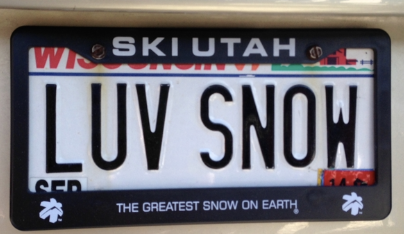
Reader Donna Ohanian in New Hampshire, sent in this photo along with a note stating, “This storm was supposed to be 3-6”. Nope. 30!”  Note the LUV-SNO license plate. Thanks, Donna!

Snowball Fights in Art

Detail from a fresco depicting the month of January at Buonconsiglio Castle in Trento, Italy, ca. 1400

Public Domain Review is a British-based organization that issues interesting articles and illustrations outside of copywrite restrictions. Click here to enjoy PDR’s history of snowball fights in art over the centuries and in a variety of cultures. It’s a treat.


seniorski1-1

The Skiing Weatherman-December 16, 2021

Colder, snowy pattern evolving coast to coast…

As we hit the holiday season, the weather pattern is changing to one that will soon be dominated by colder than normal air.  Cold air has been in relatively short supply for a couple of weeks now, but in the past week, a series of troughs have descended into the West, leading to several sizable snow events that have given the season a badly needed jump-start in the coastal ranges with lighter but helpful snow further inland.  Elsewhere, snowmakers have had to pick their spots for cranking out crystals, and trail counts have been creeping upward in the Midwest, Northeast, and central and southern Appalachians.  What is needed is a jet stream pattern change that taps more cold air from Canada and thankfully, here it comes.

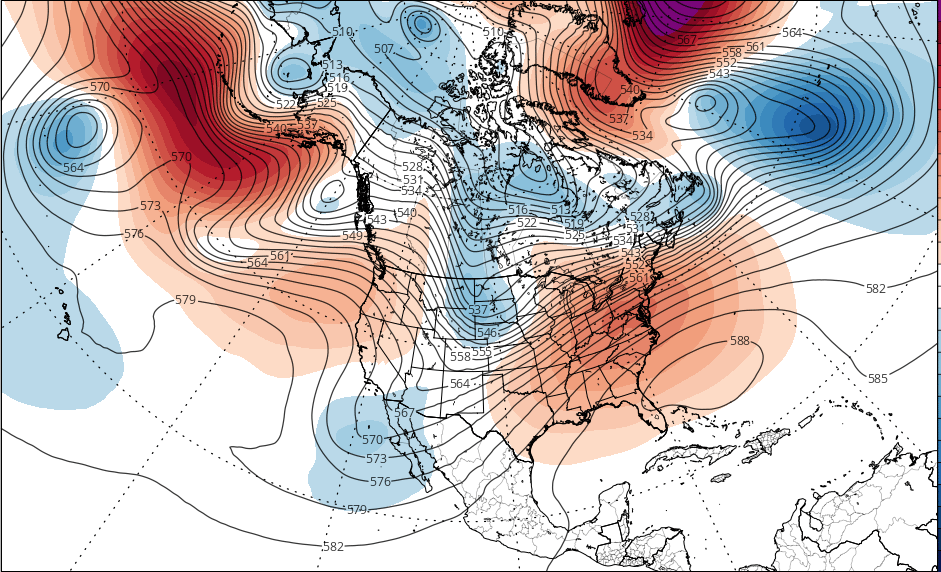
Here’s the current state of the jet stream…

There are several features of note on this map, which is valid on Friday the 17th.  First, there is the broad ridge over the eastern U.S., with the center of the feature the closed circle that you see north of the Bahamas.  This ridge is a common feature in a La Nina winter…when it is strong, as is the case now, mild air spreads north.  When it is suppressed, cold air penetrates further south from Canada.  There are two troughs over the western half of the country…one over the Dakotas and the other over Baja California.  Both were responsible for snow earlier this week.  The northern feature will help to break down the ridge and produce a light to moderate snowfall over the interior Northeast this weekend.  The last item is the ridge over Greenland and the trough south of it, over the waters of the Atlantic.  This couplet forms a classic “Negative NAO”, or North Atlantic Oscillation.  When the NAO goes negative, it blocks the progression of jet stream features over much of North America.  Typically, a negative NAO leads to a persistent trough over the eastern half of the U.S. and that is where we are headed.

Here is a forecast for the jet stream on Christmas Eve, which I generally agree with…

You can see the negative NAO ridge/trough couplet top right.  The troughs over the east coast AND west coast hold the promise of colder weather and natural snow in both regions.  The ridge over Alaska, with its clockwise circulation, will tap into the very cold air stored over the northwestern part of the continent and send it further south.   As the holiday week progresses, the Yukon connection will bring about a trend toward colder temperatures from the upper Midwest into the East, all the way down into the mountains of North Carolina.  The jet stream setup that you see on this map is just about perfect for benefitting resorts coast to coast…those trail and lift numbers should be on rise from this weekend right through the holiday week.  Here’s a look at snowfall predicted through Christmas Day…              

During the holiday week I expect the snowfall numbers to increase in the East and spread down the Appalachians, in anticipation of the presence of the trough that will enhance snowfall opportunities.

Here are regional highlights…    

Northwest U.S./Western Canada:  Pattern favors a trough offshore for a while…leads to frequent episodes of moderate/heavy snow.          

Sierra:  Quiet weekend but significant snow returns Tuesday-Thursday next week.  Another storm around Christmas Day           

Rockies:  Northern resorts in a good position for snows in the next week…south of I-70 best chance will come late next week 

Midwest:  Upper trough, Clippers, lake effect, and snowmaking keep trail counts growing through the holiday period 

Mid Atlantic/Southeast:   Productive snowmaking next week…natural snow a good bet Christmas Week.        

Northeast/QB:  Moderate snow this weekend north of I-90 in NY/NE.  Snowmaking and natural snow push trail counts up going forward through the holiday 

IMG_1071

The Fear Monkey in Our Heads

When was the last time this happened to you on the mountain: you’re skiing down one of your regular trails, having fun, where you know every turn by heart, and then, as you approach a trail sign for a more difficult run than you’re used to, you think maybe it’s a good time to try it…but then you keep on skiing down the regular old way.

So what happened?  It happens to me also: a tiny little wave of discomfort/anxiety/fear creeps into my head (I call it the “fear monkey”) and causes me to ski the easier way, meanwhile telling myself, “I’ll do this one tomorrow.”  And just like that… fear becomes the boss of me!  I hate that, but it happens.  How can we change our patterns, so we take the turn down the more challenging terrain?

Don’t let the fear monkey get in your way.

I’ve noticed this for years in my own skiing, although I’ve gotten better at deciding when I’m going to “go for it” and challenge myself more than usual.  The key for me in making positive changes, and skiing more challenging terrain on a regular basis, started when I began ski instructing twelve years ago!  Huh?  Let me explain…

I’d take a group of skiers, usually 3-6 people, ranging in ages from 18-50.  While the group was being organized, I’d always introduce myself to each skier, and ask each person a few questions about why they were taking a lesson, what types of sports and activities they enjoyed, what they hoped to get out of the lesson; stuff like that. I’d also ask, ”What are you worried about?”


I’d hear a lot of things that would help me figure out what each person’s “takeaways” were for their lesson.  It was almost like each person would give me the magic key for solving their “personal skiing puzzle.”  Everyone’s got one, hidden away, just waiting to be revealed, including me: “afraid of going too fast,”  “getting my skis more parallel in the turn,” “keeping my speed under control to lower my fear,” ”not be so afraid,” “looking as good skiing the tough stuff as the easier stuff!”   What’s yours?

For skiers, the degree of FEAR in their heads is the ultimate limiter on both performance and improvement. Of course, we need fear to warn us away from true danger, but fear is greedy, and likes to hang around unless we send it away.

The good news is that you can send fear to the back of your mind.  It’s simple.  Just figure out your own magic key to your own skiing puzzle.   What do YOU need to do on a tougher run to stay confident?  For me it was this: take the more difficult trail, but plan to ski it in a very measured way, slower than the other runs, pausing to pick each line, just one turn at a time, and stay smooth.  Once I started thinking differently about skiing the tougher stuff, it became much easier to choose those double blacks, and it felt good at the end of each day to have skied them.


Seven Springs Resort, Pennsylvania

The Power of the Small Area

When I hear that people don’t ski in their local areas because they’re spoiled by skiing out West, I believe they’re missing something.

A lot of world class ski racers cut their teeth on areas that have less than 1000’ vertical. Lindsey Vonn and Kristina Koznick both were raised on Buck Hill in Minnesota, under the watchful eye of Erich Sailer.  Erich is a world-renowned coach and has done an amazing job training ski racers on a hill with very little vertical drop.  Similarly, the Cochran family in Vermont has a rich legacy of developing ski racing talent on smaller hills.

Seven Springs Resort, Pennsylvania

Recently, the PSIA pod cast, Chaos and Company, discussed the fact that there are many drills that can be utilized at smaller areas.  Frank Andres, who coached racing at Seven Springs Resort (another <1000’ vertical hill) used to advise making as many small turns as possible.

Buck Hill trail map

My message is: wherever you ski, utilize the available terrain to advance your skiing skills. Here are some ways to do it:

  • Use edging exercises such as garland drills, where you link edge and release traverses across the hill. They’re beneficial in helping you understand when and where to release and set edges during a turn.  Many garlands can be made at smaller areas.
  • Jump turns can be utilized along with short radius turns to make use of the terrain at smaller areas. See how many short radius turns or jump turns you can make in a contest with friends
  • Blend short radius turns into medium radius turns and back again in a prescribed space to develop control.
  • Pick an imaginary alley and make a series of short radius turns not allowing yourself to ski out of the alley.  Mix it up by using the same imaginary alley and holding your poles in front of you to promote balance.  Think of the poles like holding a tray and avoid spilling the drinks.
  • Make your legs do all the work to eliminate rotation during a turn.  If you’re not accustomed to this drill, start on a gentle slope or trail.
  • NASTAR is often run at smaller areas and allows for repeated race turns against the clock.
  • Skiing on one ski and switching back and forth can develop good individual leg coordination and can be utilized with ease at a smaller area.

Practice these exercises locally and you’ll get a lot more skiing out of a lot less vertical. That home hill homework will get you better prepared for that trip out West.


Finding a Senior Ski Buddy

Finding someone to play with was easy when we were kids. “Can Johnny come out and play?” But as seniors, it’s not easy to find someone to ski with. Ski friends drop out, move away, or go to the great beyond.

SeniorsSkiing.com is an amazing source of information. Here’s what happened recently: A skier emailed me saying: “I saw your stories in SeniorsSkiing.com and I want to connect with senior skiers in the Salt Lake area when I’m out there this winter. I’ve heard about Alta’s senior group called the Wild Old Bunch. How do I connect with them?”

The Wild Old Bunch meets daily at the only round table in Alf’s, mid-mountain at Alta. Photo Harriet Wallis

That was easy. I told her all about the Wild Old Bunch – the upbeat group of senior skiers who gather about 11- 11:30-ish weekdays for camaraderie and snacks at the only round table in Alf’s mid mountain restaurant. It might be a big group or maybe just a few. It just depends on who’s skiing that day. They talk about all kinds of things: golf, plumbing, road trips and more. You’ll likely meet someone who skis the way you like to ski.

Look for the WOB patch. Photo: Harriet Wallis

Enthusiastic WOB-er Bob Phillips said: We welcome anyone who shows up to join us at the round table. It’s a good way to find a ski buddy. And on the hill, look for the smiley face WOB patch that many wear on their jackets.

Bet you’re thinking: “I won’t be at Alta. How do I find ski buddies?”

Nationwide, the 70+ Ski Club is a senior club that typically has a handful of week-long trips to US and foreign destinations. Travels include everything: hotels, tickets, transportation, and of course cocktail parties and dinners together. It says: ”Since 1977, 70 Plus Ski Club members have enjoyed free and discounted skiing, developed lasting friendships, and skied together at resorts worldwide.”

Bet you’re still thinking: “I want to find ski buddies. How do I do it?”

Many areas have ski hosts who conduct mountain tours. The tours usually are a few hours, and participating in one may help you meet someone with comparable skills.

Another suggestion: Many older skiers read SeniorsSkiing.com, so let’s start a list of senior ski groups across the country. Just fill in the Leave a Reply message box following this story and we’ll get this going.

What ski area?

In what state?

Does the group have a name?

Where do they gather?

A certain day of the week? Daily?

What time?

Do they ski together? Ski with a guide? Other?

Please add everything else you’d like skiers to know.

SeniorsSkiing.com is an amazing source of information. Using the site to create a central registry of senior ski groups will benefit the entire community. Let’s do it!

Mt. Peg

New To Cross Country? These Nordic Centers are Great Places to Start.

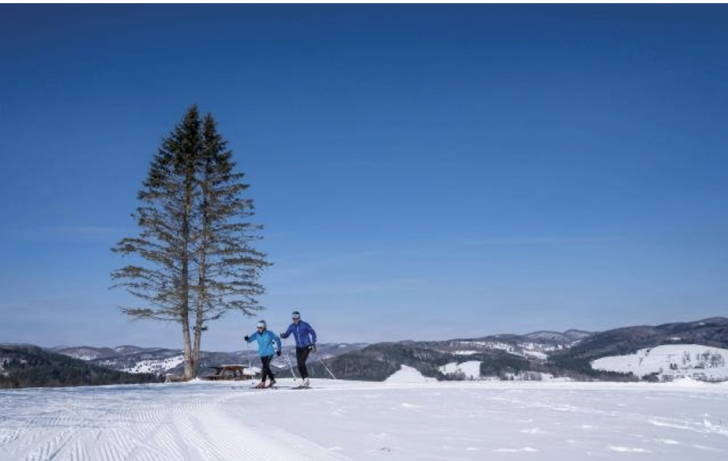
If you’re among the many newcomers to XC skiing, I suggest that you take a lesson. XCSkiResorts.com recommends starting at one of the following locations:

Metropolitan Boston — Weston Ski Track, a county-owned golf course accessible by public transportation. Snowmaking guarantees good cover and lights allow for night skiing. A 75-minute session covers the basics (i.e. motion, turning and negotiating small hills). A package of rental gear, lesson, and trail access starts at $44 for kids and $64 for adults. There are well-priced multiple session packages, too.

New HampshireGreat Glen Trails, Gorham, encourages booking on line because of capacity limits in its 75-minute group lessons. Coaching goes at a pace that is comfortable for the whole group to learn gliding, stopping, and getting up (just about everyone falls on the snow when they begin skiing). The views of Mt. Washington from Great Glen Trails are astounding.

Mt. Peg at Woodstock Nordic Center

VermontTrapp Family Lodge (the Sound of Music family), Stowe, starts newcomers by teaching basic techniques which help beginners get control (e.g. kick and glide motion, using poles, and stopping).  They use soft skis, which make it easier to turn and stop. Woodstock Nordic Center, Woodstock Inn & Resort, offers a 20-minute “Mini Clinic” for first timers ona golf course behind the inn. It includes a lesson, trail pass, one hour equipment rental  for $50.

New YorkLapland Lake Vacation Center in Northville customizes the introduction to XC skiing to the skier’s level of ability. There is terrain with a wide modest downhill and a run-out to make skiers feel more comfortable.

MichiganCross Country Ski Headquarters, Roscommon, offers free lessons on weekend mornings for beginners in classic or skate skiing. Their Winter Trails Day on January 8 provides free access and a lesson with a complimentary hot cocoa and hot dog cookout for only $9.

Minnesota —   Maplelag Resort, Callaway, is a family-oriented operation that goes out of its way to make people comfortable with new adventures like XC skiing or snowshoeing so they’ll want to come back for more. Maplelag is a community-based experience and often, experienced guests provide extra attention to first time skiers.

Breckenridge Nordic Center lodge

ColoradoBreckenridge Nordic Center specializes in working with those who are first timers. The Center gives a 20% discount on group lessons booked on line. All resort staff are ambassadors who freely offer ski tips to all. As soon as the skier steps out the door, staff is available to help skiers put equipment on, review the trail map, talk about body balance, and provide other tips.

CaliforniaTahoe Donner Cross Country has low cost opportunities to help people learn basic ski skills. The $87 member price is for a group lesson package that includes rental gear, trail pass, and a 75-minute lesson or tour with an instructor.

Washington – Located in eastern Washington, Methow Trails has one of the largest trail networks in the U.S. On January 21. It hosts Free Backyard Ski Day with free access to the trails, free rental gear, and free lessons available for beginners.

XC skiing delivers physical, mental, and spiritual well-being. Spending time in a snowy landscape can be magical. Do yourself a favor and give it a try.

Test Your Skiing Knowledge

Each issue of SeniorsSkiing.com has a picture to help test your skiing knowledge. The pictures are from collections in a variety of participating ski museums, which we encourage readers to visit.

Source: New Mexico Ski Museum and Sk Hall of Fame

The hairdo’s scream late 1960s. But these co-eds weren’t the only students of the man in the middle. He trained members of the US men’s and women’s Olympic ski teams and went on to write books on finding inner peace. What is his name and what is the name of the area where this picture was taken? One clue: it was submitted by the New Mexico Ski Museum and Ski Hall of Fame.

The first person to submit the correct answer to jon@seniorsskiing.com wins a yet to be determined, but skiing-related prize. Note, only answers sent to that address will qualify.The correct answer and the name of the winner will appear in the next issue of SeniorsSkiing.com.

The winner of the last Test Your Skiing Knowledge is Jimme Quinn Ross of Stephentown, NY. He was the first of several readers to correctly identify the top terminal of the Lynx chairlift being helicoptered into place at Wildcat, NH. The Lynx chair was a Riblet double that opened in the winter of 1970-1971. Jimme’s prize is a container of Slide On, the compact spray that helps ski boots slide on effortlessly by forming a layer of dry lubrication. One can is a full year’s supply. Value: $12.95.

LUV2SKI (continued)

Ski license plates are definitely a thing. The call for additions to the gallery published in the last issue received a healthy response from readers around the country.

Margery Martin, who lives near Minneapolis, has been collecting pictures of ski-oriented license plates for years. Several of her favorites have been added to the gallery; more to follow.

Boyd Allen, Exeter, NH, frequents Mad River, Gunstock, Waterville Valley and Wildcat. Given his 3-PIN plate, we assume he’s a tele-skier.

Richard Brewer, Cohoes, NY, writes that he’s “a proud member of the Corduroy Cowboys.” He skis mostly Mt. Snow, Hunter and Gore. In the past it was Whiteface, hence the Ski Face plate.

Scott Paine, a subscriber since 2017, sent in the ALTA license.

Andrew Howe’s SAILSKI plate states his two main interests.

John Vyverberg sent SKI ONE.

Arthur Sexauer’s Wisconsin plate reads ARTSKI. He also submitted BMPSKR.

Mike Rector’s Missouri plate states, SKI BUM.

Tony McCurdy’s Pennsylvania plate is ESQUIAR,”Spanish for “to ski.”

And Nancy Wilson’s New Jersey plate reads, SGRBUSH.

Finally, Cyndy Gal Scholz’s Colorado plate (she’s a longtime Copper Mountain instructor who guides and teaches in the area’s Over the Hill Gang program) is in the form of a practical advertisement: LRN2SKI.

If you run across a skiing license plate and want to add it to the SeniorsSkiing license plate picture gallery, take a picture (preferably close up and straight on) and send it to info@seniorsskiing.com. We’ll do our best to credit each contributor.

[modula id=”33642″]

This Issue

We had an unfortunate reminder that “skiing is an inherently dangerous sport” with the untimely death of Ron LeMaster, ski writer/photographer and certified PSIA instructor. The 72-year-old was killed earlier this week after colliding with a snowboarder on Eldora Mountain (CO). May he rest in peace.

Like so many things in life, sometimes fortune is not on our side, even though we plan carefully and exercise caution. We need to remember to appreciate what we have when we have it.

There’s a lot to read and see in this issue.

  • The Short Swings! column makes a statement about the proliferation of redundant promotional ski videos.
  • Skiing Weatherman, Herb Stevens, has encouraging news that snow is on the way!
  • Dreaming of skiing the Dolomites? An account, updated to reflect changes since it was published two years ago, will fire your imagination.
  • Don Burch shares with us another delicious short video titled, “Calling Me.”
  • Jon has been collecting photos of ski-oriented vanity license plates. Hope you enjoy them and send in some photos of ski plates you spot in the lot.
  • Jonathan Wiesel writes about Latigo Ranch, a high-elevation cross-country skiing paradise in northern Colorado.
  • Executing a proper turn is explained in a short article by British ski coach and writer, Bob Trueman.
  • And Pat McCloskey introduces us to The Fall Line with Chaos and Company, a PSIA podcast filled with good advice.

Finally, please take a peek at the photo in Test Your Skiing Knowledge. If you think you know the answer, submit it through info@seniorsskiing.com. The first one with the correct answer will receive a can of Slide On, the compact spray that helps stockinged foot slip effortlessly into boot.

A belated Happy Thanksgiving and best wishes for a safe and enjoyable season.

seniorski1

The Skiing Weatherman-December 2, 2021

Pattern coming alive on both coasts…

Thanks to snowmaking and a nice dump of fresh snow last Friday, I kicked off my season with a nice day on the trails of Killington this past Tuesday. The surface midwinter stuff and it was fantastic to be making turns again. The storm late last week helped out across much of the Northeast, but more is needed not only in that region, but across the entire country, as trail counts and opening dates are lagging nationwide this year. Fear not, though…help is on the way!

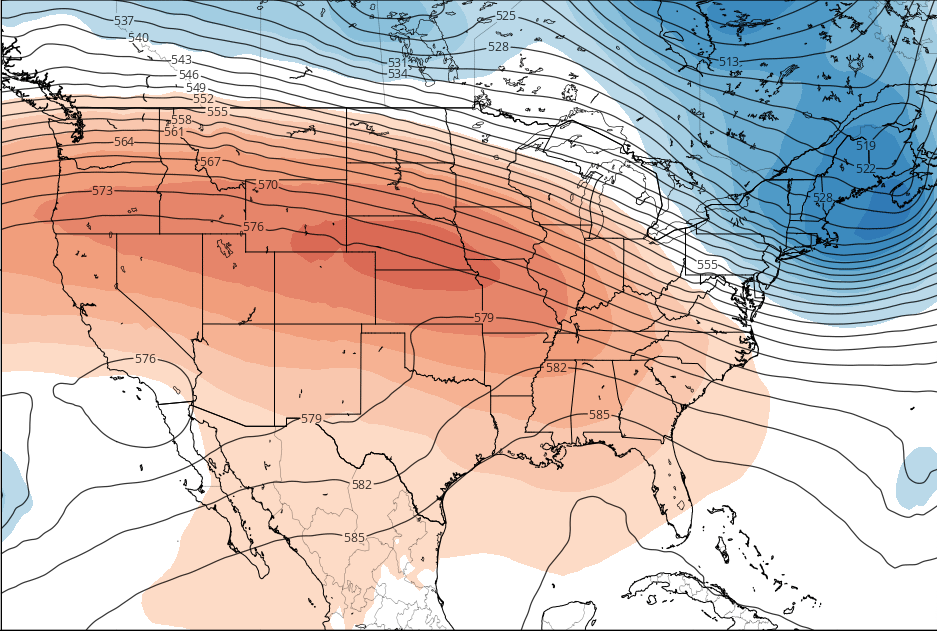
The current jet stream setup has been in place for a few weeks now, with a western upper ridge coupled with a broad trough over the eastern half of the country, as illustrated by this map, valid the morning of the 3rd….

The ridge (orange) has kept the West high and dry while the trough (blue) further east has supported weak systems that have spun through the Lakes into the Northeast. Each one of those disturbances has delivered a modest shot of colder air, allowing snowmakers from Ontario and Quebec to North Carolina to get the season rolling on a limited basis. The trough will remain in place for the next several days, but by the 6th, changes will get underway. A new trough will dive into the center of the country and deliver a significant shot of cold air…good news in the upper Midwest. To the east, a mild upper ridge will pop up in response, with low pressure taking a track between the two jet stream features, from the mid-Mississippi Valley up through the Great Lakes and on toward Toronto and Montreal. In the East, that track will produce rain and then snow as cold air rushes in on the backside of the storm. Next, a weaker midweek disturbance will bring light to moderate snow from the central Appalachians into New England and eastern Canada.

The biggest pattern change is coming to the West and not a moment too soon with the holidays just a few weeks away. While the initial thrust of cold air will move into the northern Plains, several additional systems will move south from Canada in the coming week, breaking down the ridge in the process. The first will impact the far northern Rockies and southern Canada this weekend, the second will reach the central ranges Monday and Tuesday, and then a late week trough will dive all the way into the Southwest, producing the biggest snowfall of the young season in the southern Sierra and Rockies as it does. Here is a forecast of snowfall through next Friday night…

You can see that significant, beneficial snow can be expected not only in the West, but also in the upper Midwest and the northern regions of New York and New England. Deep cold is still a little tough for the pattern to access, so snowmaking will still be hit and miss in the near term. Longer term, the week of the 13th will bring a western cold trough/eastern mild ridge couplet, with the potential for a nationwide cold and snowy pattern developing the week of the 20th. Here are the regional highlights…

Northwest U.S./Western Canada: Snowy week unfolding…snow levels lower than recent two weeks will help.

Sierra: Dry start, but pattern turns snowy mid to late week onward(north to south)
Rockies: Snowy pattern develops from northern (early week) to central and southern resorts (mid to late week).

Midwest: Favorable storm track and cold period unfolding next 1-2 weeks. Trail counts and bases will grow quickly.

Mid Atlantic/Southeast: Mild weekend/early next week. Colder air supports snowmaking and some snow by midweek.

Northeast/QB: Cold weekend with some light snow. Rain and backside snow early in the week. Light to moderate snowfall midweek.

Ski Videos for the Rest of Us

No impossible steeps, flips or cliff-hucking. Don Burch creates kinder and gentler ski videos showing normal skiers doing normal things. His editing, use of interesting digital enhancements and choice of scenic shots have a warm, old-school quality appealing to skiers and boarders of a certain age. “Calling Me” (about 3-minutes) is Don’s most recent production. Click on the image to view.

'Fun 2 ski' license plate

LUV2SKI: Skiing Vanity Plates

There’s a joy to walking through the parking lot, skis on shoulder on the way to the lift or at the end of the day. People wishing you a good day, asking how the day went, commenting on the snow, sitting on a lawn chair sipping a cold one. 

The often-unnoticed backdrop to this gemutlichkeit is the ski-oriented vanity license plate. This aspect of skiing passion extends across the spectrum. You’re as likely to spot one on a beaten up 4-Runner as you are on a new Range Rover.

I started collecting pictures of these bad boys a few years ago. Most were shot at Alta and other Utah resorts. (There was a time when Alta posted its own gallery of plates reading ALTA.) Some were captured in big cities, far from mountains. 

If you have a skiing license plate or run across one and want to add it to the gallery, take a picture (preferably close up and straight on) and send it to info@seniorsskiing.com. We’ll do our best to credit each contributor.

In the meanwhile, enjoy these…

Screen Shot 2021-12-02 at 10.43.36 AM

Skiing Technique: Where should you be headed?


Several responses to a recent article under the same heading suggest I left the wrong impression on some readers. That’s anathema for a coach, so this is an attempt at clarification.

Source: Bob Trueman

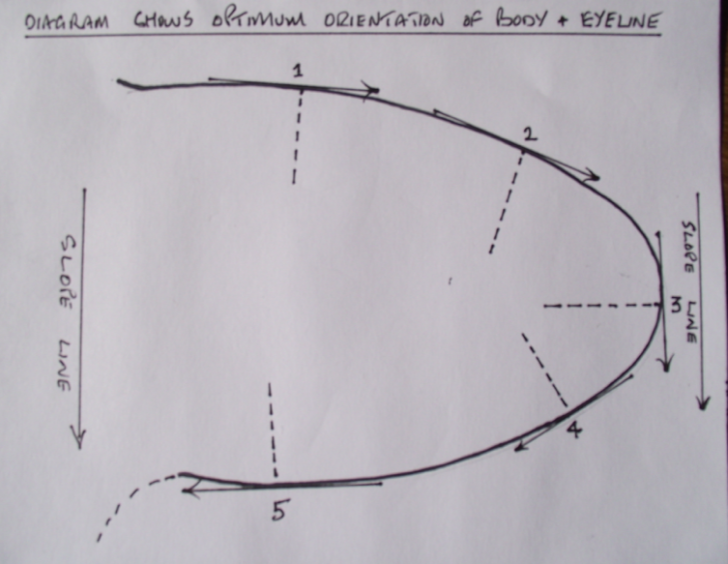
The sketch is my attempt to explain the direction in which the skier’s torso is best oriented; not the direction your skis will be taking.

In reality, every arc comprises an infinite number of “points”, not just the ones I picked out for illustrative purposes.  For now, let’s consider those few identified points.

RADII AND TANGENTS

 At each of the points I have drawn a dashed line at a 90º angle to the radius. Focus on the direction of the line.

That dashed line indicates the direction in which your body would travel if you suddenly became detached from your skis.  (Where your skis went after such an event is anybody’s guess and of no importance to anyone other than the poor unfortunate who happened to be in the way!)

 Good skiers orient their torsos in the direction of the dashed line, with the axis across their shoulders and their hands at right angles to the dashed line. That is to say, facing slightly outward of the arc.  If you imagine an arrow glued smack in the centre of the skier’s chest, facing forward, it would point in the direction of the line.

 The optimal degree of difference between ski direction and body orientation will vary; on this sketch it’s noticeable if you look at the point where the arc is “sharpest” – in this case just momentarily as skis and torso encounter the slope line (aka fall line).

 This “outward” orientation is counter-intuitive, which is why unskilled skiers have a strong tendency not to do it, instead consistently aligning torso with ski tips or rotating into the arc; sub-optimal movements to be avoided.

 LEG ROTATION

A more effective and controlled technique is to utilize the hinge-like mechanism of our bodies. While legs travel in the direction of the skis and the torso faces outward in the direction of the dashed line, the thighs rotate in the hip sockets. Importantly, this is why skiers must be flexed forward at the hip joint. When standing upright on skis, effective and efficient turning are impossible.

 Lito Tejada Flores, celebrated ski instructor, author and filmmaker used to call it being “anticipated”.  What it gives you is enhanced stability and improved form.

 I hope this helps.

psia-podcast

PSIA Podcast: Not Just for Pros


The Fall Line with Chaos and Company is a podcast hosted by PSIA Alpine Education staff members, Dave Capron and Angelo Ross. Now in Season 2, the podcast is usually about an hour long and features conversations with ski industry leaders with something to say.  You don’t have to be a ski instructor to reap the podcast’s benefits. Angelo happens to be a friend with whom I’ve skied for a long time.

A recent one features PSIA Alpine Team Coach Michael Rogan. His knowledge of skiing is extensive.  When asked about his thoughts on the World Cup, Michael says that watching the races with a discerning eye can be informing, even for amateurs.  The winners have good connection to the snow, a keen sense of where the fall line is, and when the turn should happen. He goes on to say that any turn after the fall line or outside of the fall line with poor connection to the snow will lead to “the wrong side of the clock.”

He mentions that  Penn State was contracted to develop a standardized certification process for ski instruction that hopefully will eliminate the variance of expectations that exists between divisions of PSIA.  In other words, no matter where a candidate would take an exam to be certified in ski instruction, the same protocol would be followed, thus eliminating  nuanced legacy behavior among examiners in PSIA that sometimes can lead to biases impacting how candidates succeed.

Click on the image above to listen to The Fall Line with Chaos and Company. Or click here to connect with the entire catalog of podcasts.

It’s interesting dialog that will ready you for the season and, in general, make you better informed.

This Week

Even though senior skiers ski more and spend more per capita on skiing than younger generations, there’s a perception throughout the industry that the older cohort is made up of tight wads taking up otherwise valuable space in the day lodge. Jon touches on the issue in this week’s Short Swings! column.

In his typical light and informative style, Skiing Weatherman, Herb Stevens, presents a clear picture of the forecast for snow country.

Henry David Thoreau wasn’t a skier, but, as Mike Maginn writes,  Winter presents an excellent opportunity to visit Walden Pond on XC skis and contemplate how the naturalist/philosopher/poet spent his time there.

Staying on the topic of XC skiing, Roger Lohr explains the basics for newcomers to select a functional XC package. Very good advice.

Also in the Department of Good Advice, Bob Trueman offers guidance for coping with the dreaded Day 3 slump.

Harriet Wallis reports on Brighton’s tree nursery and it’s Ski With an Arborist program.

And Jackson Hogen explains what to do and what not to do to keep your binding functioning effectively.

Finally, check out this issue’s Test Your Skiing Knowledge feature. The winner will receive a one-year subscriiption to Outside+, will full access to the new Warren Miller film, magazine subscriptions, and lots of other goodies.

Note that the next issue of SeniorsSkiing.com will be issued Friday, December 3. In the interim, my wife and I will be moving permanently from East Coast to Salt Lake City, where the condo that’s been under renovation since June, won’t be ready for yet a few more months. Chalking this up to the challenges of managing contractors from a 2250 mile distance.

weather diagram

The Skiing Weatherman-November 12, 2021

Cold air supply growing…

Before I look forward in this discussion, let’s look back. October was a very warm month relative to normal across the country, in large part because a sizable upper level dome of high pressure stretched across Canada and the northern states. Early snow cover over northern Asia and Canada are typically harbingers of a fast start to our winter sports season, and although Russia stocked up with snow early and often, the upper ridge over Canada meant that a buildup of early season snow cover there was a non-starter. Now that doesn’t rule out a quick start to the season, but it does make it tougher. The good news is that the pattern in the high latitudes has been changing, and snow cover is accelerating. That has led to a rapid buildup of the cold air that we need for snowfalls and snowmaking. Forecasters use temperatures at 5,000 feet as a proxy for predicting surface temps and just a couple of weeks ago, there was a warm anomaly at that level spread out from the Canadian Rockies to the Maritimes. But take heart, the supply of cold is growing and the jet stream mechanism for delivering the cold…upper level troughs…have started to appear. Here’s proof. First, the jet stream setup for 11/13…

That large blue ball of yarn centered over the western Great Lakes is a deep trough that has delivered snow to the northern Plains this week, and it will generate lake effect and mountain snow showers as it pivots east this weekend. It has the goods in terms of cold air, as you can see on this map of the temperature anomalies at 5,000 feet.

In November, we find smaller “chunks” of cold air than we will a month or two from now, and that is why you see orange to the west and east of the cold shot in the middle of the continent. That tells me that the pattern will be rather changeable through the end of the month, with the cold shots alternating with brief warmups…very typical for a transitional month like November. As time goes on, the supply of sufficiently cold air for snow will grow, and we can see that if we look at the 5,000 foot anomalies for the Sunday before Thanksgiving…

Notice that is appears as though the Lakes and East will be well supplied with cold air and the next cold air mass will be linked to the piece over the eastern third of the continent. The purple color you see over NW Canada suggests that the cold will be deepening, as well. So, it appears to me that the resorts in the Great Lakes and East will have opportunities for snowmaking leading up to Thanksgiving, and the air masses will, at times, be cold enough to support natural snow. In the West, more of an upper ridge will be in place and that will limit the opportunities for significant Pacific storms to lend a hand. The northern Rockies will catch a glancing blow from the NW-SE push of cold air masses, and that could generate some snowfall in the next couple of weeks. Let’s break it down by region…

Northwest U.S./Western Canada: Best shot at snow in the next week is higher elevation slopes in B.C. NW U.S. prospects very limited for now.

Sierra: West coast upper ridge keeps it mild and dry until further notice
Rockies: Glancing blows from systems diving into central/eastern U.S. trough brings light snow every few days to northern resorts. Central and south quiet for now.

Midwest: Upper trough, cold shots, and lake snow become commonplace up through Thanksgiving. Solid prospects for early openings.

Mid Atlantic/Southeast: Enough cold air penetrates from the north to get snowmaking started at times over the next couple of weeks.

Northeast/QB: Good snowmaking opportunities will develop leading up to Thanksgiving. Several shots at mountain snow, as well.

Around Walden Pond

There are two trips around Walden Pond near Concord, MA. The first is a ski tour through a picturesque New England landscape, with sharp and steeply wooded hillsides surrounding an ice-covered, lambchop-shaped lake.

Around the same pond is a second trip, a pilgrimage that passes the cabin site of Henry David Thoreau, “self-appointed inspector of snowstorms”, conjuring the spirit of a special place and inspiring the thoughts of the pilgrim visitor.

Henry David Thoreau in 1856. Source: Wikipedia

If you choose the first trip, you‘ll find a pleasant ski tour: maples, birch, and oaks, rubbing branches in the wind, a frozen-solid pond to ski across, varying widths of trails in and out of sunlight, all free of charge, all well-tended, all convenient to the Walden Pond State Reservation parking lot on the Concord Road.

But, if you choose the second, be prepared to confront a man who discovered himself in those very woods and hills of Walden Pond, giving us a model of independence and renewal. One thing is for sure; if you take this trip around Walden, you won’t come out the way you went in.

What is it about Thoreau that initiates such pilgrimages? Why are visitors on foot and on skis so drawn to this singular place, the site of a small cabin gone long ago?

The answer is in the subtle message Thoreau left in those winter woods. To know the message, you have to know why Thoreau went to the woods to live alone by Walden Pond and what changes the woods made to his life.

Born in Concord in 1817, Thoreau went to Harvard College where he was homesick for the fields and forests where he once had played. Upon graduation, he and his brother, John, started a school in Concord. John became ill, the school closed, and Henry went to live with Ralph Waldo Emerson, serving as the philosopher’s gardener and handyman. Shortly after moving in, John Thoreau died, and Emerson’s five-year-old son passed away; their mutual grief bonding the two.

Now, Thoreau turned his attention to the community of thinkers surrounding Emerson, splitting his time between handyman and writing philosophical essays.

He was 28, an unsuccessful writer and poet living among the most dynamic American literary and philosophical giants of the time.  Frustrated by the complexities of society, Thoreau returned to the woods, to think, write, learn and sort out his life.

Replica of Thoreau’s cabin. Source: The Walden Woods Project

On July 4, 1845, he moved into the cabin he had built on the northwest shore of Walden Pond on land owned by Emerson.

You can ski up to the site of Thoreau’s cabin by following the shoreline trail on the north side of the pond or by a ridge trail also to the north of the pond but in more rugged terrain. If conditions are right, you can ski right across the frozen surface.

All of these trails are short, about a quarter-mile from the parking lot. A circumnavigation of the pond is less than three miles. If you want more skiing,  cross Concord Road and link into the web of well-tended trails that spread around Sandy Pond and into the town of Lincoln.

But this is a pilgrimage.

Thoreau’s house site and cairn. Source: The Walden Woods Project

The cabin site is in a clearing of pine and hickories “on a pleasant hillside.” A cairn nearby has been building since the site was discovered  in 1947. Stone markers indicate a small cabin, about 11 by 15 feet, the door facing the pond.

Much has been written about Thoreau’s two-year residence in the woods as a practical experiment and a naturalist’s odyssey. However, as you stand in that clearing by the cabin site, imagine Thoreau writing  on his little desk, remembering his brother and struggling to express his thoughts about life, values, and simplicity. Surely, the time spent at Walden was a time of renewal.

“I went to the woods because I wished to live deliberately, to front only the essential facts of life, and see if I could not learn with it had to teach and not, when I came to die, discover that I had not lived,” he wrote later.

In September 1847, Thoreau left Walden and moved back to his father’s house in Concord. He left knowing he could live the life he wanted. For the rest of his life until he died in 1862 at 43, Thoreau wrote, lectured, travelled, and continued to wander the woods.

Walden had been a turning point; the woods were a catalyst that helped him recognize who he was and where he was going, a man marching to a different drummer.

If you make this pilgrimage in winter, go early. You’ll find yourself alone in the woods next to Walden Pond. Stop skiing and stand quietly. The wind will crackle the branches, and you’ll hear your heart pounding.

Like Thoreau, let the woods give you respite. Recall what these woods have done, what any woods can do to vexed souls. Reflect on the simple beauty around you, read aloud from Walden, go back to the parking lot, different than when you went in.

Out Of Control

The Day Three Slump

This is my shortest ever blog, but it may have a significant impact on your next ski holiday.

Should have taken the day off.

It’s your first day back on the slopes, and you want to hit the ground running.  You don’t want to miss a thing, so you‘re up early, on the first chair, and skiing like a mad thing all day.  It feels so good!

The next day you’re just a wee bit sore, but not enough to stop you.

But on the third day you hit the “Day Three Slump”.  Your skiing seems to have got worse.  Your energy levels have slumped.  You hoped you’d get better; it’s frustrating.  At the end of the week you feel you’ve made no improvement; got no better than last year.  This is how your week may go:

Source: Bob Trueman; Bobski.com

I have a suggestion for “slump day”:  take it easy, be patient, don’t push it, do lessthan you might.

Would it be sacrilege to suggest taking a later breakfast?  An even greater sacrilege to suggest starting at 11:30 and finishing at 2:30?  Or, if it pleases you, consider taking a half day out and visiting a local place of interest. You could spend an amusing hour or two in a ski shop trying to guess which of this year’s new wonder skis is actually last year’s but in different livery.

Tomorrow do just a little bit more.  On day three you’ll be ready to fly; stronger, your muscle memories will have kicked-in.  You’ll find yourself skiing better, not worse.

At the end of the week, you’ll be skiing better than last year, and you won’t get home feeling frustrated that your skiing is in decline.

Your week will go like this and end on a high:

Source: Bob Trueman; Bobski.com

It will be a better feeling and well worth a try!

Moving seedlings

Move it or lose it

Moving seedlings at Brighton

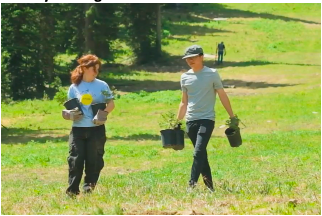
In a sheltered, out-of-the-way spot, a tree nursery suddenly popped up at Brighton, the ski area gem at the end of Salt Lake City’s Big Cottonwood Canyon. That’s where 266 saplings are adjusting to life in pots until they’re big enough to be planted back onto the mountain.

Mother Nature inconveniently sowed seeds on ski trails where they took root. But the young trees didn’t know they’d get mashed down by heavy snow grooming machines or mangled by skiers and boarders. Solution: Move them or lose them.

It’s a small part of Brighton’s environmental sustainability commitment.

“Brighton Resort is known for its terrain parks, exceptional annual snow fall, and, most importantly, it’s amazing tree runs. We’re … investing in preserving these areas with our new forestry program,” said Director of Sustainability Erika Kazi.

Brighton kicked off the tree moving project by partnering with Tree Utah whose mission is get people excited about trees and plant trees in public spaces throughout Utah – parks, schools, along trails, in national forests and more. On the days when trees are being rescued, an arborist trains volunteers on-the-spot before they head onto the trails to find, dig, and pot vulnerable trees.

But its more than shovels and pots. Tree rescue has gone high tech. “With new technologies we will be able to map out our trees in a more succinct way through GIS mapping,”  Kazi said, and we’ll have a better understanding of our forest.

Brighton’s Ski with an Arborist program. Source: Brighton Resort

Brighton invites guests to ski with an arborist on free tree tours and learn about the mountain’s ecosystem. Meanwhile, the rescued trees are snug and safe under their winter blanket in the secluded nursery.

close up binding

Bindings Made Simple

Originally published in the 2020-21 Masterfit Buyer’s Guide and realskiers.com

Bindings are rugged little devices, but like any mechanical unit they can wear out quickly if not kept clean and lubricated.
At the beginning of the season, do a binding check. Annual shop inspections of the ski/boot/binding system will reveal any deviations in the release system that may require a binding to be re-set or retired if it won’t release within a standardized range.

close up binding

After a given binding model has been off the market for several seasons, the binding company’s liability insurer can decline indemnity coverage for a model it deems obsolete due to its age and likely condition. If shop personnel inform you they “can’t work on this binding,” they’re acting within established guidelines over which they have no control. No matter how much you once loved them, if your bindings are no longer indemnified, it’s time for them to go.

DO:

Determine your binding setting. It’s based on height, weight, age, boot sole length and skiing style. Any shop tech can help you do this in about 10 seconds

Pick a binding with your setting number (often called a “DIN” number) near the middle of the binding range. If your setting is “6,” a binding with a 3 – 10 scale should be fine.

Ask a salesperson about any special features that may make one binding more suitable for you than another.

DON’T

Continue to use a binding the manufacturer no longer indemnifies.

Use a boot with a touring sole or walking sole that’s incompatible with your Alpine bindings.

Use a boot with worn-out soles.

Mix a child’s normal boot sole with an adult binding.