
Tag Archive for: 50+

2020-21 Survival Guide

Buckle Up, Bundle Up And Buck It Up.

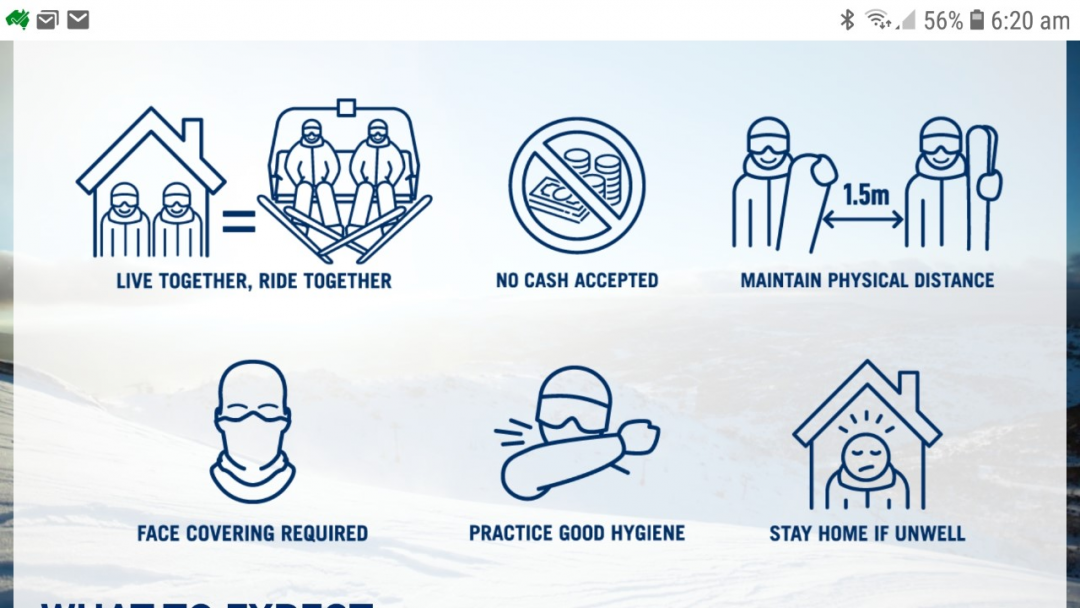
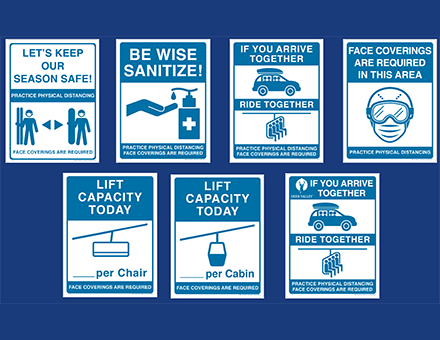
NSAA recommended signage for this season. Credit: NSAA

Never before has there been as much trepidation about a ski season as for this one.  Given all the tumult that occurred during this year, it’s no surprise we’re anxious.  What follows are some insights that will help us get the most out of what will be a most unique season.

Above all, we need to go into this season with realistic expectations.  Things are not going to be the same as ski resorts strive to provide us the best possible experience in the midst of the pandemic.  Be prepared for limits on the number of skiers allowed at resorts each day and in many instances we’ll have to reserve these days in advance online.  The result is that we will likely not get to ski each and every day that we would want to, and we will likely not get to ski as many total days as we’d like. 

As resorts work to ensure social distancing across all phases of our visits, we can expect changes to how day tickets are purchased, how food and beverages are purchased and where they are consumed.  There will be changes to how lift lines are organized, rules about who can ride lifts together and how many people unfamiliar with one another can ride together.  Because resorts will be limiting the number of people allowed in lodges, we need to be prepared to boot up, warm up, and eat in our cars.

It will behoove each and every one of us to be as self-reliant as possible.

There are a number of stakeholders in skiing, and it helps to understand that we all share the same goal: to make skiing as fun as possible for as many people as possible and to keep everyone safe. We are all in this together and the 2020 ski season will be th ebest possible if we recognize our interdependence. If people choose not to follow the rules, it could lead to further restrictions.

In addition to the demanding tasks involved in reopening each year, resort operators are facing a daunting array of challenges including redesigning how services are delivered, complying with federal, state and local mandates, financial challenges, acquiring an adequate work force and doing all this amidst tremendous uncertainty.

As a result, resorts are not going to get everything righ,t and we should expect things will not always run smoothly. In essence, we need to be understanding and patient.

Because the impact of the pandemic is so fluid, resorts will likely change policies throughout the season. So, know before you go. Staying up to date on information regarding a resort’s policies will help us avoid unwanted events.

Now the lemonade: The thing we love most about ski trips is the actual skiing, and this season time on the slopes will be just as much fun as ever. Additionally, we may come to like some of the changes.  Strategies for more “low-touch” interaction with guests may lead to smoother and more efficient ticket sales, use of passes and quicker access to food and beverages. Resorts are considering some very creative options for dining such as food trucks, other satellite food stations and take-out.

So, buckle up, bundle up and buck it up.
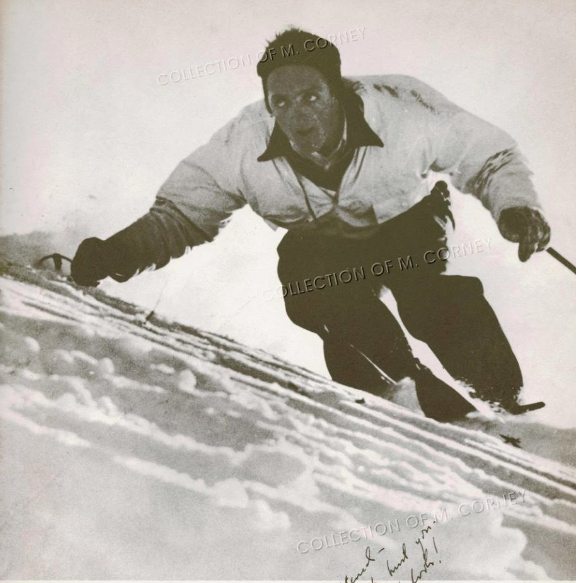
Mystery Glimpse: Those Eyes

The Face Of Intensity.

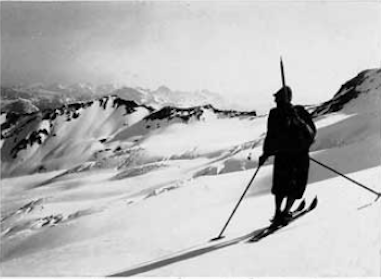
Here’s the first of our Mystery Glimpse feature for this new season. We post a picture from snowsport’s past and you guess who the person, place, or thing is. Write your response in the Leave A Reply box below.  If you know any details about the photo or the situation, let us know.

Here’s a racer whose name you should be familiar.

Credit: Ski History Magazine


Question For You 14: How Do You Decide What To Buy?

Shopping For New Stuff?

Now is the time of the year when thoughts of pulling out the plastic and splurging on gear and clothing permeate our waking hours. After all, those old bindings are past their sell-buy date, and those cracked boots don’t quite fit the way they did seven years ago. And that dirty parka is simply falling apart.

And retailers are hanging out the discount signs.  Although there won’t be ski shows this year, there might be some online versions thereof to entice those with a hole in their pockets.

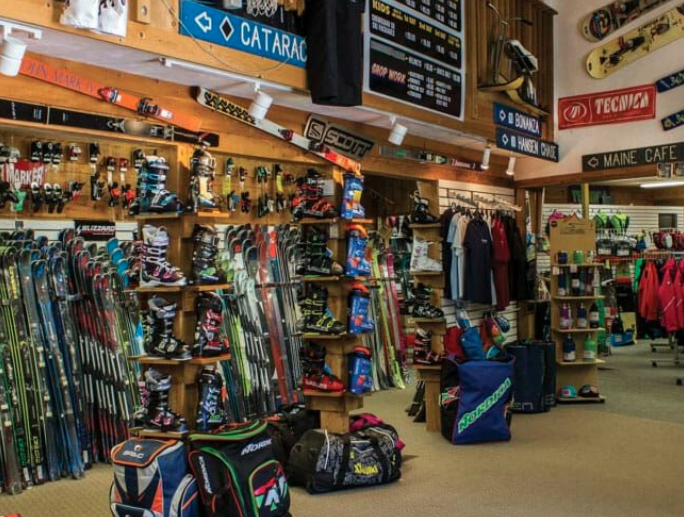
Bob Skinner’s Ski And Sports, Newbury, NH.

We’ve often wondered how you, dear reader, makes decisions about what to buy. Do you look for articles in the magazines and blogs to guide you? Are they helpful? Do skiing friends tell you about what works for them? Do retail sales specialists guide you through choices? How do you judge? Do you know what you’re looking for at the start of your search? Or, are you working from some impressions gathered on last year’s lift lines? Share your thoughts.  We’d really like to know.

As you know, we’ve been publishing ski and boot recommendations for since we started SeniorsSkiing. Has that made a difference in your buying decisions?


If  you are considering buying new gear for the new season, how do you decide what to buy?

Please respond in the Leave A Reply box below.


Make More Tracks: Rendezvous Ski Trails

Catch Early Snow in West Yellowstone.

West Yellowstone Rendezvous Trails might be the center of XC in North America.

If you head to West Yellowstone, MT, in late November, you can visit the early winter cross-country ski epicenter of North America: the Rendezvous Ski Trails.

There are a bunch of fall camps in the Rockies – including Silver Star, BC, Crested Butte and Steamboat Springs, CO, plus Mt. Bachelor in Oregon – but the Yellowstone version is the oldest, largest, and incredibly convenient: literally right beside town (http://www.skirunbikemt.com/yellowstone-ski-festival.html). You can fly into Bozeman, MT, and stop to downhill at Big Sky Resort on the way to or from the Rendezvous Trails.

For decades, West Yellowstone was known as Snowmobile Capital of the World, partly because Yellowstone National Park is right next door (geysers! wolves! bison!). These days, the winter economy is also driven by cross-country skiing. (The Park isn’t open to over-snow traffic until December 15th this year, but you can ski from town before that onto snow-packed roads inside Yellowstone.) XC has changed from a handful of locals who thought XC was cool to a community where skiing is a life-style for a lot of residents.

A Lovely Trail System.

“West” has as lovely and lilting a trail system as anywhere in North America. What’s remarkable is that the roughly 35 km are loved by racers (like the Norwegian, Latvian, and German national teams, who trained there for the 2002 Salt Lake City Olympics) and recreational skiers. Perhaps the favorite recreational trail is the Rendezvous Loop, which passes by the biathlon course. A lot of competitors like a good long workout on Dead Dog and Windy Loop, on the far end of the network.

The Rendezvous Trails routes can hone your technique but aren’t a survival challenge (there’s only about 200’ of vertical change). And while they’re full of free-skiers and Fall Training Camp participants around Thanksgiving, the rest of the winter (especially non-holiday weekdays) they can be so peaceful that you can be out for an hour and see only a dozen people.

The trail system is a cooperative venture on U.S. Forest Service land, managed by the Forest Service, the West Yellowstone Chamber of Commerce, and the non-profit West Yellowstone Ski Education Foundation. A WYSEF Director once told me, “I would personally love to see West Yellowstone known as the Cross-country Ski Capital of the World. Our proximity to the trails inside Yellowstone National Park, our lengthy ski season, and competition-worthy grooming lend themselves to this possibility.” 

Several thousand skiers, from beginners to families to elite athletes, flock to “West” in November for the marvelous skiing, moderate altitude (around 6,700’), superb grooming, and reliable snow. In rare years when the white stuff arrives a little late in town, groomed skiing begins on a higher plateau, accessible by four wheel drive vehicles.

Yellowstone Ski Festival.

YSF has racing, but there’s a lot more including Pilates, kids activities, clinics, classes, demos. YSF is modified for this year but may be back full strength again in 2021

Before the upcoming “interesting” winter, the Fall Training Camp was known as the Yellowstone Ski Festival. It included natural science programs for kids, Pilates, backcountry films, indoor equipment expo and clinics, beer tasting, on-snow ski demo, and an end-of-week party. While the indoor component has been reined back – thanks, COVID-19! – there’s still a wide-ranging array of XC clinics with outstanding coaches, biathlon, and an FIS race (Ma Nature cooperating). Winter 2021-‘22 may be back to full-scale festivities.

Post-Festival, there’s still plenty of activity, with the winter schedule getting nailed down as I write this in early October. There are plans for ski races, biathlon (ski-and-shoot) competitions, and fun events, perhaps including the annual “Taste of the Trails.”

West Yellowstone has a daily trail fee (probably $12). Amenities along the trail are pretty limited (there’s a trailhead building with bathrooms and a communal room), but you can rent skis at several locations in town. Freeheel and Wheel (www.freeheelandwheel.com) has instructors, clothing for sale, and equipment rental and retail – plus they’ve got great coffee and a sense of humor!

There’s a mix of hotels and motels in “West”—check http://www.skirunbikemt.com/sleep.html for recommended lodging.

Rendezvous Trail System. Something for everyone.

Question For You 13: CBD?

Fad Or Fabulous? Does The Cannibis Derivative Work For You?

Getting high is not the point of CBD.

We are curious about the emergence of CBD as a medicinal potion for a variety of ailments. Surely, we bet most of you remember the furtive days with Mary Jane back in college. Actually, let’s not go there.

CBD is different.  Cannabidiol or CBD has rapidly become the celebrity ointment or additive for everything from sore joints to anxiety. Although CBD has been around for over 70 years, it’s only in the past three or four years that it has a become ubiquitous on the retail market.

Our question for you. Have you tried CBD? What condition were you using it for? How has it worked out? Would you recommend it?


This Week In SeniorsSkiing.com (10/2)

And So Begins The 2020-21 SeniorsSkiing.com Publishing Season.

Fasten your face masks firmly in place; this winter is going to be like no other.  

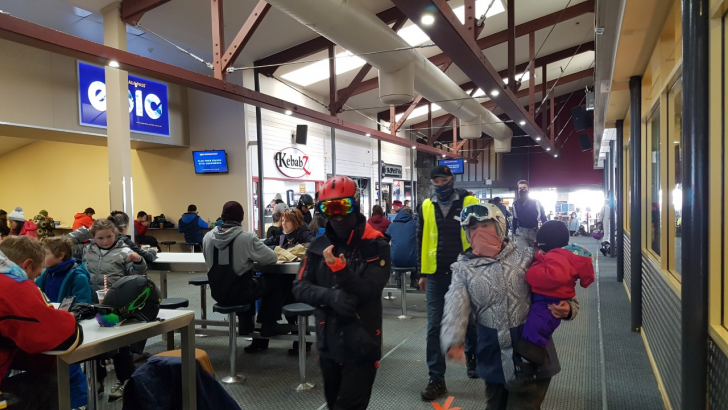
Masks were everywhere in the Perisher lodge. Credit: John Harris

The entire snow sports industry has spent the summer planning how to open up when the snow flies.  Uncertainty about the future makes people anxious, however, the semblance of a cohesive, cogent plan with precautions goes a long way to calming customer nerves. The industry has done a terrific job trying to figure out how to manage this unprecedented public health threat.  Changes in business as usual are keys to managing the “Covid Season.”

We’ve created some changes, too, that might help you as this strange winter starts to evolve.

Classifieds Are Coming!

For one thing, we’re going to launch our brand new Classified Ad section next week.  Starting 10/16, you will be able to place a classified ad on SeniorsSkiing.com.  We’ve developed a number of categories where you can offer  everything from gear or collectibles to ride shares and meet-to-ski to condo rentals.  As a introductory promotion, you’ll be able to post an ad for 30 days in any category for $1.  Regular rates will be quite reasonable and based on how long you want your ad to be accessible to our readers. As with all dealings online, readers are encouraged to use caution and common sense in contacting others through this service.

Alternatives to Alpine: Make More Tracks

Over the summer, we’ve been watching industry news releases and have scrutinized some of the plans for re-opening ski resorts. All of these plans are thoughtful and respectful of both the virus and customers. All contain a degree of restrictions on customer behavior which may or may not wear well as the season goes on. In fact, the Cross-Country Ski Area Association has extrapolated that the rise in walking and bike riding this spring and summer might correlate with increased interest in Nordic skiing, snowshoeing and other ways to get outside in the winter and “make more tracks”. 

As a result, SeniorsSkiing.com is introducing a new section, “Make More Tracks”,  initially devoted to articles about XC skiing, snowshoeing, fat biking, and other snow activities.

Nordic or XC skiing and snowshoeing are ideal for the Covid Season.  Outdoors, of course, socially distanced, reasonably priced, uncrowded, the sports lends themselves as a perfect alternative to Alpine skiing. Snowshoeing, by the way, is also ideal for seniors who have given up skiing due to health, fitness ,or lack of interest reasons.

If you haven’t tried XC skiing as a senior skier, you are missing a completely different way to enjoy winter outdoors. If you’ve been away from the sport for a while, you have a plethora of new types of equipment and gear to learn about.  And, if you haven’t noticed, there are many XC-oriented resorts that have grown in the past decade that offer unique winter vacation experiences. 

Our Make More Tracks initiative includes a Resource Guide with tips and advice from Roger Lohr, editor of XCSkiResort.com, and Jonathan Wiesel, international XC trip planner and guide, trail designer, and resort owner, both experts in all aspects of XC skiing.  We will include at least one Make More Tracks article per weekly issue of SeniorsSkiing.com and devote an entire issue in November to these sports.

This Week 

We’re publishing our new boot recommendations for seniors, developed in cooperation with America’s Best Bootfitters (ABB) and the 2021 Masterfit Buyer’s Guide. This is an industry exclusive, Subscriber-Only offering that can be accessed after confirming your name and email address.  Click on the third box in the top menu to get to the story.  Boot recommendations are graded by traditional or walking, including specific boots for men and women. 

The ski season has just concluded Down Under. We can learn a lot from the experience of Australian skiers and how resorts managed the virus. John Harris, our new correspondent in Australia reports on the recent season, noting what worked and what didn’t. Despite a dearth of snow, the season went on, and “car parks were full.” Click here for the story.

One aspect of the Covid Season that hasn’t been discussed is what happens to shared ski houses.  The problems of distancing, scheduling, cleaning and the like are important consideration.  Correspondent Alice Winthrop discusses these issues and proposes some approaches.  Alice is the designer of Resercal, a new app for scheduling and managing shared vacation properties.  Ski clubs, this is for you. Click here for her story.

Crested Butte Nordic has rentals for $20 a day. Credit: CB Nordic

XCSkiResorts.com publisher and SeniorsSkiing.com Nordic editor Roger Lohr discusses the impact of the Covid Season on Nordic skiing.  This is the first of an ongoing series of Make More Tracks articles.

As a regular early-season feature, we’ve been watching winter weather forecast conditions every year.  This year, La Nina is in. Find out how warmer waters in the eastern Pacific are going to impact snow levels in North America.  We also share the Farmer’s Almanac’s prediction for 2020-21. Compare and contrast.

And to celebrate the last gasp of summer, here’s an article from correspondent Josh Foss on lessons learned from surfing with dolphins. 

Finally, here’s touching video below from Alta, praising the work and dedication of the ski patrol. These guys keep us safe, and they deserve this impressive shout out.

Thank you for reading SeniorsSkiing.com.  Please tell your friends and remember, there are more of us every day, and we aren’t going away.


Pandemic Skiing In Australia

Impossible Or Just Tricky?

Resort skiing in Australia is in the Australian Alps straddling the border between our most populous states, New South Wales and Victoria, with capitals in Sydney and Melbourne.

The season officially opens in early June and closes early October.

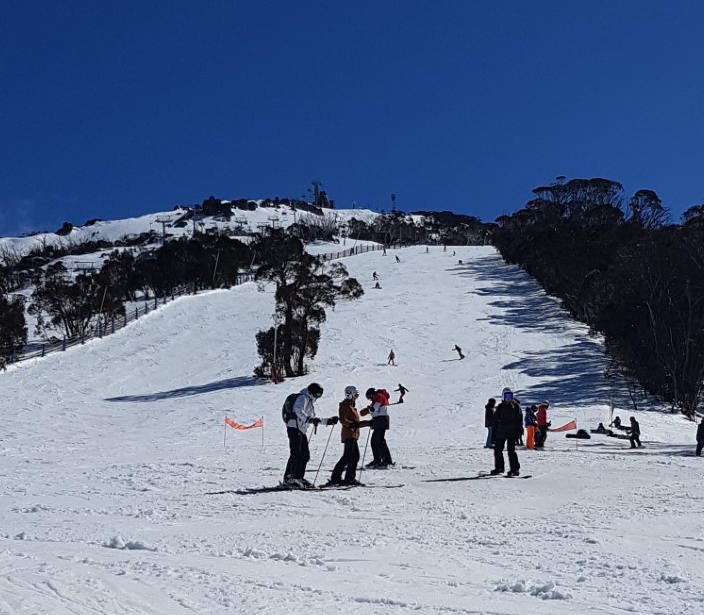
Thredbo Supertrail mid-August. Credit: John Harris

NSW’s biggest resorts—Perisher (acquired by Vail Resorts in 2015) and Thredbo (Mountain Collective and Ikon links)—lie in Kosciuszko National Park in the Snowy Mountains. They cater mainly to Sydney’s five million people a six hour drive away.

Victoria has three resorts. Mt Hotham and Falls Creek were also recently acquired by Vail Resorts. Mt Buller is the other. They cater to 5.6 million folk, most of whom live in Melbourne.

This year’s opening was delayed for several weeks in NSW. The National Park closed for the long opening weekend amid all the concerns and regulations surrounding the pandemic back then. Tricky!

June saw a rush on sales of backcountry equipment amid fears the resorts wouldn’t open at all. Gear was in short supply with importation restrictions. Tricky!

Perisher’s restrictions. Credit: John Harris

In early July, just when seasoned skiers expect skiing conditions to be okay, a second wave of coronavirus hit Melbourne, and Victoria went to lockdown. Victoria’s ski resorts closed and remained  closed for the season. State borders shut then so snow sports became limited to NSW and Canberra and impossible for residents from all other states. Nearly 17 million Australians had no access to the resorts this year. Impossible for them!

Perisher and Thredbo in New South Wales opened later in June.

Perisher offered Epic Australia season passes but for the first few weeks everyone including pass holders had to prebook days online to ski . One staffie I spoke to only managed to find three days available during this time due to the limited tickets. The website crashed often with the traffic. He checked every morning, hoping more tickets would come online. Thredbo was similar. Tricky!

My favourite lunch spot at Perisher only available to hotel guests in 2020. Credit: John Harris

Skiers who had booked resort accommodation had no guarantee of getting lift tickets. Communication with Perisher was only possible online. Emailed inquiries yielded an automatic reply promising a reply within days. Tricky!

There were no group ski lessons and no assistance by staff getting on chairlifts. Some restaurants were restricted to hotel guests. It was suggested that skiers bring food and drink in case venues were full. Tricky!

Despite the restrictions, the skiers came. Sydney had a few covid cases and locals were worried they’d bring it down. A trace of virus was detected in Perisher’s sewage and face masks became mandatory in the resort, inside and out. They still are. Tricky!

Thredbo is linked to Mountain Collective and Ikon groups and is an all year resort. Its restrictions were similar to Perisher. This year the resort did not offer season passes, saying they usually had a large proportion of skiers with season passes, and it wouldn’t have been workable. 70 years plus day passes were just $A25 but available days hard to find. Masks were not worn outside. Tricky!

Thredbo closed a week after this picture was taken. Credit: John Harris

Thredbo’s Supertrail closed a week after I took the photo above due to snow melt. As runs became fewer, Thredbo credited the accounts of people who had pre-purchased tickets with a proportion of the cost. The resort closed prematurely two weeks ago.(Editor Note: mid-September). Commendable!

Perisher plans to stay open till the end of the school holidays on October 9. Its rules are unchanged. I have been very impressed with how professionally both resorts have handled difficult and changing circumstances and how co-operative the public has been. Hopefully, your North American winter will run smoothly with fewer changes needed and good powder.

 I visited Perisher on Sunday to see how things were going. Here’s what I found.

Demand remains high at Perisher with a full car park. Credit: John Harris

Most patrons were wearing face covering and happy laughter was everywhere.

Masks were everywhere in the Perisher lodge. Credit: John Harris

Okay, this senior’s tally wasn’t too impressive in the pandemic, one day at Perisher so far, one at Thredbo. But what a wonderful sport. Age hardly matters. You get pulled up the hill, and gravity takes you down. People of widely different ages can relate to each other and be friends. And so much laughter.

2020 skiing down under was tricky but for many of us not impossible.

La Nina Is Here

She Is Bringing Snow For Some. Find Out Who.

La Nina is has been lurking around the west coast of South America since August. That frosty little senorita brings cooler temperatures to the mid- and eastern Pacific waters which in turn impacts atmospheric circulation, which affects the shape of the Jet Stream across North America.  And that determines precipitation and temperatures across the entire continent, essentially shaping the severity of winter storms.

The Jet Stream is impacted by La Nina. Credit: Climate Prediction Center

The National Weather Service’s Climate Prediction Center foresees that the La Nina will hang around for the entire ski season into Spring 2021.

La Nina raises the potential for more hurricanes, which we are currently experiencing. As of this writing, we’re up to 28 named storms since the start of the hurricane season.

Classic La Nina weather patterns feature a wave-like jet stream flow across North America, which causes colder and stormier than average conditions across the northern tier and warmer and less stormier conditions across the south.  

That’s good snow news for Alaska, western Canada and the northern Rockies, northern California, Wyoming, and the Northwest. It’s probably drier and warmer for New Mexico, Arizona, and Southern California.  Utah and Colorado, and the Northeast as well as parts of the Midwest are in the uncertain zone. 

For an interesting discussion of the different impacts of El Nino and La Nina conditions, click here for seasonal correlations for resorts from Australia to South and North America.

Secret formula at The Farmer’s Almanac has different outcomes. Credit: Farmer’s Almanac

Compare the Climate Predication Center’s forecast with the 2020-21 prediction from the Farmer’s Almanac.  The venerable publication uses its own formula and data for weather prediction, and, as you can see, this year’s future picture is different than what we are hearing from NOAA.

Take your pick.

Question For You 11: How Will You Share a Ski House In COVID Time?

How Will Your Ski Club/Family/Partner Ski House Shares Be Different This Year?

Will you hail, hail the gang’s all here this year?

We wondered how many of our readers are involved in sharing private accommodations near ski areas. And, if you do, are you making special arrangements for 2020-21 due to COVID-19 like scheduling use? 

This question came up because our website designer recently created Resercal.com, an online scheduling service to make it easier to share a ski house or other vacation home. 

If you had a shared house during the summer, what issues came up? What will be the most difficult aspects of sharing a ski house in the upcoming season? And what any changes are you making this season to your sharing plans due to the pandemic?

Make More Tracks: What Has Covid Wrought For Nordic Skiing?

XC Skiing And Snowshoeing Are Perfect Forms Of Recreation For The Pandemic.

Based on activity with walking and bicycling last spring, many people in the snowsports business are anticipating a surge in XC skiing and snowshoeing this winter. If alpine ski areas are restricted in ways that lead to excessive waiting such as the amount of time waiting to acquire lift access reservations via the Internet, waiting to get on the lift, waiting to get lunch in the lodge, waiting to go to the restroom, etc., we predict there may be a resulting influx of alpine skiers to XC skiing and snowshoeing. And, perhaps we’ll see:

  • People who have tried XC skiing in the past but not continued (lapsed skiers) may be motivated to try it again.
  • People who have never gone XC skiing or snowshoeing may be encouraged to try it for the first time—because of associated wellness benefits.
  • And people who already enjoy XC skiing or snowshoeing will go more often this winter.

We do not know if there will be similar restrictions at XC ski areas, but it is expected that people will go XC skiing and snowshoeing with or without restrictions at commercial XC ski areas, which charge a fee for groomed trail access.

A Forbes Magazine article cited that “the younger generation doesn’t ski and some of them think skiing is ecologically destructive and too bourgeois; under forties people feel that it is all artificial snow that requires paying a fortune for gear, clothes, and lessons.” I’m not sure what statistics the Forbes article is drawing on, but COVID surveys conducted by Spot seen in content posted on SeekingAlpha.com revealed “33% of skiers said there is a reduced likelihood of skiing in the upcoming season; 30% fewer season passes have been sold, 24% said they’ll be skiing less frequently, and less travel is expected due to limited resort amenities and services.”

We’ve become accustomed to all the protocols that will be in place at XC ski areas (distancing, contact-less transactions, masks in crowded areas, etc.). All the ski areas both alpine and XC are taking a wait-and-see attitude, hoping that availability of a COVID therapeutic or vaccination will change everything. The predictions are that many of the mitigation efforts will be necessary with or without vaccinations across the population as it will take months for the vaccination to bring on normalcy. Most ski area operators have already set their operational plans to open despite the pandemic and skiers will hear about them as the season approaches.

Product suppliers and dealers are salivating about hoped-for increases in product sales, but some of them are certainly somewhat apprehensive (considering that about 27 million jobs have been lost) about the level of consumer enthusiasm to purchase new gear this year.

Touring is Nordic is XC. Credit: Dynafit

With all of this anticipation, one thing is clear: the reality is that XC skiing and snowshoeing are perfect forms of recreation for the pandemic. Both XC skiing and snowshoeing are exactly what the doctor ordered, that is, healthy benefits such as physical fitness, psychological wellness, and a door to a deep emotional connection with nature. The feeling of passing through the snow covered forest at a slow pace provides a wellness indoctrination that is unavailable from other activities.

It would be beneficial for the people who are newcomers or returning lapsed skiers to get exposed to the advancements in XC skiing such as equipment that makes the sport easier and better. I’ve heard from people who are talking about finding the good in all of the challenges that we have faced since March 2020. More seniors who love the outdoors and winters will be discovering XC skiing and snowshoeing because it will be a great boost and alternative for all those folks. Let’s Make More Tracks!

Click Here For SeniorsSkiing.com’s Make More Tracks: A Resource Guide To XC, Snowshoeing, Fatbiking.

This Week In SeniorsSkiing.com (July 31)

Hints Of The Coming Winter, Questions For You, Covid Fitness, Ski Canada And Covid.

Wow, turn around, and it’s the end of July, and August is upon us. Has Covid-19 accelerated the clock? It seems like we are rushing into fall.  And all the uncertainty that will bring.

One thing for certain, we know most people don’t like uncertainty, ambiguity, vagueness; we like the opposite much more: predictability, certainty, clarity.  Well, that ain’t happening these days, so we might as well get used to it, because it is definitely going to affect winter sports next winter.

Take Australia, for instance. It’s winter down there, and ski resorts began operating in late June, but a record high of 191 new coronavirus cases hit the state of Victoria on July 7, prompting Victoria Premier Daniel Andrews to revert to stage three restrictions, similar to stay-at-home orders issued in the United States this spring, for six weeks. In response, Vail Resorts, operator of Hotham and Falls Creek in Victoria, announced that it would suspend operations at the two resorts, according to a report in Powder Magazine.

Boom. Closed. At least for a while.

Mt. Hotham trails open report from the resort’s website. Owner Vail Resorts closed down the area after a spike in virus infections.

On the other hand, resorts in New Zealand are operating without the usual Covid restrictions, because the country locked down tight in late March, flattened the curve, and beat the virus. However, it’s a domestic crowd hitting The Remarkables and Mount Hutt, resulting in 50-80 percent of normal visitations. International visitors won’t be making the En-Zed scene this year due to travel restrictions.

Meanwhile, The Remarkables in Queenstown, NZ, are open to domestic visitors only. NZ locked down in late March and beat the virus. At least so far.

So, while US and Canadian resorts will be limiting visitor capacity, accepting only online reservations, practicing distancing on lifts and lift lines, frequently sanitizing facilities,  restricting food service and even terrain accessibility, if the virus peaks again regionally, some local resort owners could do what the Victoria areas did and shut down for some length of time.

That will leave winter sports lovers with some choices.  At SeniorsSkiing.com, we feel—based on our survey responses—that readers will either find somewhere else to go or start or re-introduce themselves to cross-country skiing, snowshoeing, or fat-biking, outdoor winter sports that may satisfy the need for cold weather activity. Should that future scenario unfold, SeniorsSkiing.com plans to help our readers make a transition to alternative winter sports with information resources and recommendations specifically for our senior readership.

Look for “Make More Tracks” coming up this fall.

This Week

Downtown Banff. Bike rental on Banff Ave. which was closed to traffic this summer for social distancing. Credit: SkiBig3

SeniorsSkiing.com correspondent Yvette Cardozo reports on preparations underway in some leading Canadian resorts, anticipating the US-Canada will be open by the beginning of ski season.  One thing is for sure, uncertainty is out there, but planning the details helps boost confidence in visitors.

Have you been keeping up with your Covid-era exercise and fitness program?  We ask that question in one of our Questions For You.  Also, SeniorsSkiing.com correspondent tells about what Covid has done for him, physical-fitness-wise.

We also have a question for you about our upcoming SeniorsSkiing.com Classified Ad section. We’d like your input on what categories you’d like to see and your impressions about carrying classified ads in our online magazine.

And finally, speaking of “Make More Tracks”, here’s  a GoPro promo video of a guy named Chuck Patterson skiing down some waves in Hawaii.  Perhaps we should all be learning to ski on water? Global warming? Eh?

Thanks for reading SeniorsSkiing.com.  Be safe out there. Wear a mask, wash your hands, distance.  And remember there are more of us every day and we aren’t going away.


Ski Canada And Covid

Ski resorts are still trying to figure out what the next season will look like.

We heard from a few Canadian ski area representatives and whatever finally happens, next year your favorite resort won’t look like what you remember from the past.

 Many resorts opened for a revised summer season that several called “a great dress rehearsal” for next winter.

Downtown Banff. Bike rental on Banff Ave. which was closed to traffic this summer for social distancing. Credit: SkiBig3

It involved limits to daily lift ticket totals, spaced tables in restaurants (and a lot of outdoor eating), social distancing in lift lines and yes, restrictions on lifts themselves.

 But the final details for winter, everyone said, are still being determined.

Not so, though, for Air Canada.

Tony Celio of Air Canada had a very specific list:

  • Touch-free checkins, mandatory masks on board, hand sanitizing stations throughout the airports, health questions and temperature checks (top temp is 99.5).
  • In the boarding area, no lining up to board. Everyone stays seated until their group number is called, then boarding is back to front, window to isle.
  • On board, free packs containing hand sanitizer, wipes, mask, gloves, bottle of water, snack and headset are given to each passenger. Crews wear masks and gloves. Everything is sanitized between flights with hospital grade disinfectant and HEPA filters are being used for the cabin air.

Air Canada has this video on its website:

As for resorts, they are not expecting massive crowds since they assume their international visitor counts will be down.

Tamara Melanson of SilverStar said hotel guests have been naturally spaced out because there is a mandatory 24 hour gap between check out and the next check in so rooms can be deep cleaned.

But specifics for winter, she and others admitted, are all still being worked out, though Melanson could speak to what they’re doing about lift lines and lifts now.

Interestingly, this is the busiest year they’ve ever had for cyclists going up the mountain but still, they are limiting tickets to keep people socially spread and keeping people in a single stretched out line to board.

In summer, they have only the six-pack lift and gondola open. And for now, it’s one person (or group of friends) to a gondola and a max of two strangers to a lift. She figures seating on the resort’s quads and the six pack in winter will be similar.

Andre Quenneville, general manager of Mt. Norquay added that some resorts are experimenting with spraying lifts with disinfectant.

Jen Kyles of SkiCan which represents resorts across Canada said,  “People will need more patience.” For instance, they will need to make prior reservations for rentals which will then have timed entries to keep folks spaced. Many resorts, she said, are thinking of shifting dining into their conference facilities where the rooms are larger. And buffets will be gone.

Top of lift, Norquay, this summer. Credit: Mt. Norquay

Resorts like Mt. Norquay and Panorama Mountain Resort, not exactly known for crushing crowds, don’t expect to have problems with spacing on-slope.

Meanwhile this summer, Banff has closed its main downtown corridor to provide more space for people on foot. Restaurants have 50 percent occupancy indoors but also have spaced dining on the street. And while masks are encouraged, they are not required, though that may change.

Quenneville of Norquay said he feels confident his resort will be open for winter and expects the US-Canada border will be open by then. And Steve Paccagnan, CEO of Panorama, referring to shuttles from the Calgary airport, said they would be offering private travel for those who want it along with buses with “safe practices,” meaning spacing people out.

In the end, everyone agrees, it will be a lot of trial and error.

Question For You 9: Corona Making You More Fit?

It’s Been Four Months. Where Are You On Your Fitness Plan?

The season ended abruptly for everyone in mid-March. One day, you were on the lift line at Killington, and, boom, next day you were heading home. Just like that.
We know that many of your resorted to picking up new activities.  With the gyms. pools, tennis, and golf clubs closed,  we and you were left to our own ingenuity. Everyone started walking. Some got into a yoga routine. Cycles came out when the weather cleared. All good.

Four months on, how’s it working out for you?  Our yoga routine stopped short when we pulled a muscle.  We know folks that got tired of walking the same three mile loop. So, here’s the question:

Please write your response in the Reply Box below:

Have you maintained a new Corona exercise routine? Have you gained/lost weight? Gained muscle mass? Flexibility? After four months, are you still doing what you started doing back in March? What’s changed?


Question For You 10: Classifieds?

Help Us Decide If/How SeniorsSkiing.com Classifieds Should Work.

At SeniorsSkiing.com World Headquarters, we get frequent requests from readers looking for ski partners, places to go, house or condo rental information, and many other topics.  So, we decided to create a classified ad section within SeniorsSkiing.com to accommodate these kinds of wants, needs, and desires.

What we are planning is a relatively inexpensive way to post stuff for sale of different kinds.  Options include a one-week insertion all the way up to 10 weeks in the classified ad section. Prices range from $10-$50, depending on duration of the ad.  Readers can post the ad themselves, including pictures (to some extent), and pay using a credit card.  Nice and simple.

Here are the categories we are thinking of. Please let us know what you think. Here’s the question for you:

What do you think? Good idea? Bad idea? What categories are missing? Which of those listed are not important or irrelevant? Would you post a classified on SeniorsSkiing.com?

Please write your response in the Reply Box below.

Proposed Classified Categories

Alpine Equipment For SaleNordic Equipment For SaleAccessories, Gizmos, Electronics For SaleNon-Winter Sports Gear For Sale
Guides/Instructor ServicesSeasonal/Weekly RentalsTrucks, Campers, Trailers, Cars For SaleRide Share
In Search OfLooking For Ski Buddies
Ski Club Trips Open To SeniorsSkiing.com ReadersVintage equipment, collectibles, antiques

This Week In SeniorsSkiing.com (June 26)

Is Fitness On Your Mind These Days?, Harriet’s Hip Advice, Exercise Hacks Book Review, Questions For You.

Ski Tuck in June? Sure, say three Vermonters. See below for link to story in Powder Magazine. Credit: Connor Nash from Powder Magazine

The summer solstice has come and gone.  On solstice day, a northeastern Siberian town located above the Arctic Circle, recorded 100.4 degrees, the highest temperature ever recorded in the Arctic since records have been kept.

In the East, an early summer heat wave continues, putting a damper on vigorous outdoor activities for seniors.

Or not.

Around our rural neighborhood, we’ve noticed several senior road cyclists riding solo in the heat of the day, temperature in the mid-90s, humidity up there, their gray hairs sticking out of their helmets giving them away.  Senior runners are out there, too. Wise to keep pumping? Witless for pushing the limit?

At our age, most readers engage as best they can in vigorous physical activity, snow sports in winter, other activities in non-snow months. The virus, however, is cramping our habits. Gyms are closed or opening under major constrictions; team sports are out, bike clubs are social-distancing and mask-wearing, and pools are off limits.

As a result, we know for a fact that some seniors are exercising with new behaviors perhaps unwisely, too much, in the heat, perhaps with existing injuries. We know because we are one. Too much aggressive yoga led to pulled muscles, shutting down our physical activities for weeks now.

It’s hard to ignore that our lives have changed in these times of the virus. What we need to understand is that new fitness habits have to be thought through so that our enthusiasm for that endorphin rush doesn’t compromise our bodies.

This Week.

In this week’s edition, we have a series of articles on fitness.  SeniorsSkiing.com correspondent Harriet Wallis offers her advice on critical decisions prior to having a hip replacement.  Harriet should know; she has two new hips and two new knees.
We have also been sent a cool book on fitness for seniors.  K. Aleisha Fetters’ Fitness Hacks For Over 50 offers 300 ways to build easy fitness moves into everyday activities. It’s a very clever idea to get us to think of different ways to keep our bodies in motion.

The results of our Next Season Survey are in. Click here to review the highlights. Thanks so much for your participation. We had a 21% response rate which is very high for a publication like ours and evidence of the engagement of our readers.

We have some additional Questions For You this month, focusing on cross-country skiing and how frequently SeniorsSkiing.com should publish next season.  Please offer your thoughts.

And despite the oncoming of summer, three Vermonters found a way to ski left-over snow at Tuckerman Ravine in the White Mountains.  Click here for a link to this story from Powder Magazine about three lucky skiers who saw an opportunity ski the Ravine in late June.

Be safe, stay well. Remember there are more of us every day and we aren’t going away.


Question For You 8: The XC Option

What About Cross-Country?

Let’s imagine that the recovery from the Corona virus doesn’t go as we all hope it will.  And that by the time snow flies again in the mountains, the second wave has landed.  Ski resorts are either closed or postponing opening dates until later in the winter. Or ski resorts are limiting access through a lottery or other ways of restricting access. In other words, no or limited opportunities for Alpine skiing.
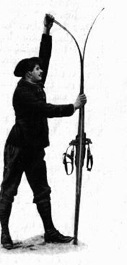
And backcountry may be discouraged for senior skiers because of the potential for deploying essential search and rescue personnel when they are needed elsewhere.

Got it?  So here’s the question:

Please write your response in the Reply Box below.

Given your attraction to snow sports and physical activity, if Alpine skiing is cancelled, delayed, or restricted, will you find opportunities to go cross-country skiing in parks, golf courses, open farm fields, even XC resorts?

old fashioned skier

Question For You 9: SeniorsSkiing’s Publishing Schedule

Is Once A Week Too Much?

The co-publishers are curious about how our readership feels about our publishing schedule.  Currently, SeniorsSkiing.com publishes a weekly edition from around the beginning of October to the end of April. We’ve heard from some readers that might be overkill. Others say, keep on keeping on. We have been struggling with the decisions.  Perhaps you can help.

How say you?

Please write your response in the Reply Box below.

Should SeniorsSkiing.com consider shifting its publishing schedule to twice a month versus once a week during the snow season?

This Week In SeniorsSkiing.com (May 22)

Green Shoots On The Horizon (?), Yellowstone Opens, Season Ticket Puzzle, Bike Fit, Questions For You.

Superstar Killington, VT,  May 19, 2020 Credit: Killington/NewEnglandSkiIndustry.com

According to New England Ski Industry, early-open, late-close Killington resort has decided to pivot to golf on May 19th despite skiable conditions on one popular trail.  Indeed, as the photo shows, Superstar looks ready to go, top to bottom.  The resort closed on March 14, holding open a tendril of possibility of re-opening for some late season skiing. That’s not going to happen. Killington president Mike Solimano said that even if the resort opened with just one trail, a thousand visitors would show up, confounding any attempts at social-distancing.  For the first time in a long time, Killington has lost its “last-to-close” honor because four New Hampshire resorts closed four days later on March 18.

And so the chapter officially closes on the 2019-2020 season, one which currently finds snow falling in the Sierra and the White Mountains in May. It “coulda been a contenda” for a great season, but…

On the other hand, there are green shoots signaling a turning towards the direction of normal. For example, Yellowstone National Park is opening up this week in a series of cautious phases. Come to think of it, what a perfect place to be outdoors and stay isolated. Pitch your pup tent in one of the National Parks’ halycon camp sites, and you’re in lock-down in paradise. If you can get on the road, why not travel to a National Park near you?

Active Travel For Seniors

Which brings up a new feature series for SeniorsSkiing.com.  We’ve realized for a while that our readers are interested in active vacation travel.  Snow sports is just one part of the wide interests of our audience. So are many non-snow destinations and activities.  We’re going to be publishing stories about interesting places to go where you can be active, engage with nature, learn something new, and stay fit. We’re calling the series, “Active Travel For Seniors”.

Coincidentally, our first article is about Yellowstone opening up. Thanks to our new correspondent, Chicago-based Mira Temkin, you can read about its astonishing features and perhaps contemplate a camping/holiday trip into one of its isolated corners. That is, when you’re comfortable with traveling away from your confinement.

Our Looking Ahead Survey

One of our trademark practices at SeniorsSkiing.com is to keep in touch with our readers through online surveys. This spring, we’re going to ask you about how you see your snow sports activity unfolding in the fall. Realizing full-well that everything changes in one news cycle, we’d like to capture a snapshot of how you view the upcoming season as of late May, early June.  So look for the survey coming soon to your email box. And please respond. We will share that information with you when we sift through the data.

This Week

Harriet gets fit in a bike shop studio with an Oriental rug on the floor. Credit: Harriet Wallis

In addition to our inaugural Active Senior Travel story about Yellowstone, you can learn how to get your bike fit to your own peculiar metrics. Correspondent Harriet Wallis visits a pro bike fitter who explains the process.

We are also asking two Questions For You this week.  Questions For You is a new feature which provides you with an opportunity to sound off on a topic. From these collected comments come some themes and and ideas that we can use for future editorials as well as interesting connections between readers.  The Questions For You this week involve what you’re doing for fitness in these virus times and what ski resorts need to do to make you feel comfortable returning to the lifts.

We have also included a nostalgic tribute video story from Outdoor TV about the incomparably stylish Stein Eriksen. Check out his moves and those sweaters right here. 

Thanks for reading SeniorsSkiing.com.  We will get through these difficult times together. We plan to publish monthly through the summer until the snow starts to fly, as we know it will.  It always does.  And remember there are more of us every day, and we aren’t going away.

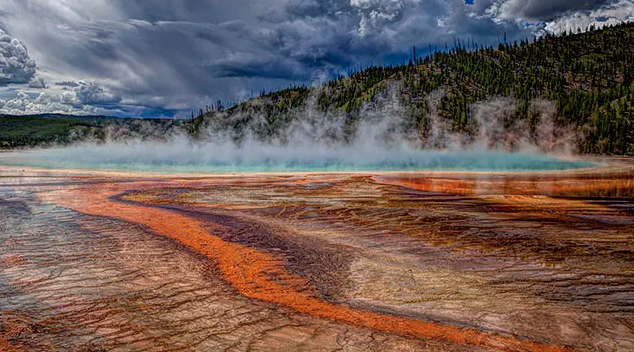
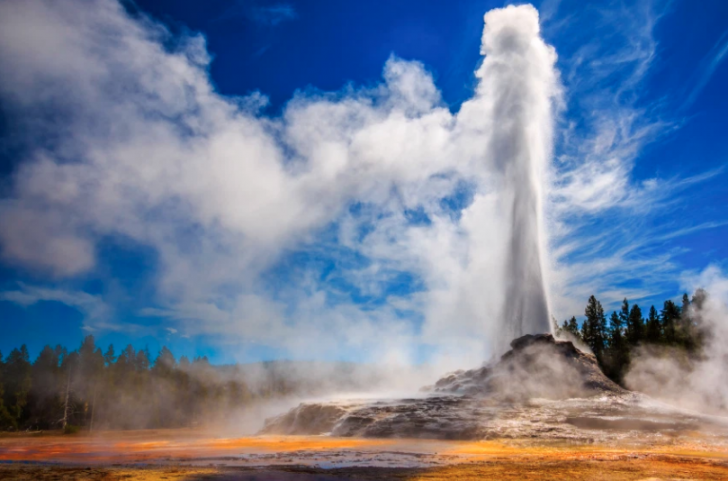
Yellowstone sits on top a thin part of the earth’s mantel, so hot springs are everywhere, heated by the planet’s core.

Stein Shows The Way

Remember Classic Skiing?

Those sweaters, that hair, those baggy pants. Stein was a one-of-a-kind.

Here’s a really great tribute video from Outside TV on Stein Eriksen’s role in creating the world of modern skiing. From extreme skiing to blue cruising, Stein has had a deep and lasting impact on the sport.  Who hasn’t tried to ski with knees locked together in a comma position just like him?

Click below to watch real wedlen and gelandesprungen in action. He sure makes it look easy.


Question For You 6: Next Season

How Is This Going To Work?

Everyone in the ski business has been puzzling about next season and how it will unfold. Uncertainty brings with it lots of speculation about if, when, and how the ski industry will re-open. Even if it does re-open, whatever that means, will people show up? So our first Question For You this month is asking for specifics from your point of view.
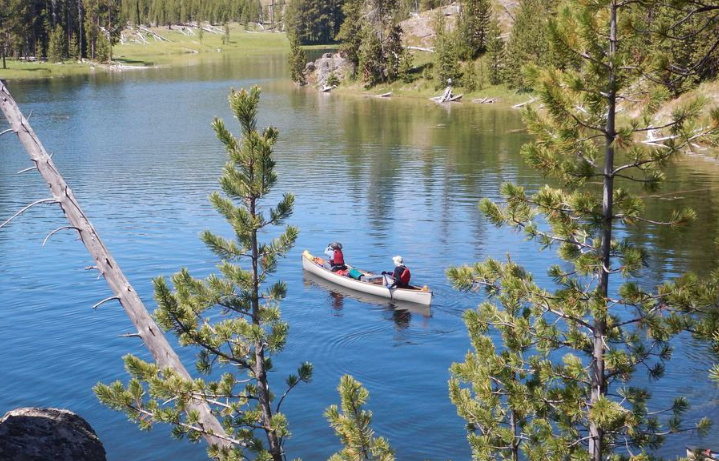

Please write your response in the Reply Box below.

What will you need to see ski resorts do to make you feel comfortable about coming back next season?


SeniorTravel: Yellowstone For Remote Active Adventures

The Oldest National Park Starts Phased Re-Opening This Week. 

Yellowstone’s vast 2.2 million acres holds many opportunities for an active vacation, and there’s plenty of space for isolation.

Located in Wyoming, Montana, and Idaho, Yellowstone National Park is the first national park, named in 1872, and ideal for active seniors who want to explore the great outdoors. The park is about to be gradually opened up this month. Here’s more information on the re-opening plan.

There’s something surreal about being in Yellowstone. Maybe it’s the millions of years of formation that seem to hold tight to its secrets. When you’re in the park at 8,000 feet of elevation, it evokes a serene sense of calm with lush valleys, jagged buttes, and free-flowing waterfalls.

For seniors who love adventure, the park offers a range of recreational opportunities from hiking, biking and horseback riding to kayaking, white water rafting and fishing. One of the most popular sports is wildlife spotting. When you see a line-up of cars along the highway pulled over to the side, you know there’s something to see. Maybe it’s a herd of bison with their babies, an elk, antelope, or mountain goat. Get your camera out and take some pictures. 

See Old Faithful in All its Glory

When Old Faithful will erupt is predicted on the NPS webcam. Place your bets.

The star of Yellowstone is Old Faithful, erupting on schedule every 35 – 120 minutes and shooting as high as 140 feet in the air. This magnificent geyser in all its splendor lasts between 1 minute, 30 seconds, and five minutes. For those fascinated with statistics, there’s even a clock in the lodge to predict the next eruption. For now, check out the webcam at yellowstone.net/webcams/old-faithful.

With more than 1,000 miles of trails, there’s a hike to challenge you and take you out of your comfort zone. There’s a range of activity for all. Check out the 500-plus geysers in the park with their own schedules, paint pots, calderas, and hydrothermal wonders. Fish enthusiasts will discover the largest population of wild cutthroat trout in North America. Don’t miss the Grand Canyon of the Yellowstone River with its gorgeous waterfalls that will simply take your breath away.

Lake Yellowstone Hotel: Classic Accommodations with Spectacular Views

Hugging the shores of Yellowstone Lake, the “Lady of the Lake” is a magnificent hotel featuring 158 deluxe rooms, recreating a time of grandeur and elegance. Built in 1891, this historic hotel provides guests with fine dining, a string quartet, and an Inspired by Artist series. The narrow halls, back porch, and Sunroom make you feel like you’re on a cruise ship.

A Range of Accommodations and Dining

Yellowstone offers nine types of lodging from the elegant Lake Yellowstone Hotel to cabins and more rustic lodging for those who prefer something other than a hotel. as a part of the premier Xanterra Travel Collection. Check their website for lodging openings. The Lodges also offer tours and activities guided by Certified Interpretive Guides.

Consider visiting in the shoulder season when crowds are a little thinner. Spring (May – June) welcomes bison and antelope newborns, while bears are out of hibernation. In winter, wolf-watching is popular and the geysers even more spectacular.

Yellowstone will be back this summer.  If you decide to travel, you can get “lost” in its vastness. Talk about getting away from it all.

For group travel and recommendations, check out roadscholar.org, yellowstone vacations.com and www.nps.gov

Yellowstone sits on top a thin part of the earth’s mantel, so hot springs are everywhere, heated by the planet’s core.

Open: South and East entrances in Wyoming, the lower loop of the Grand Loop Road, restrooms, self-service gas stations, trails, and boardwalks in open areas

Closed: Montana entrances, overnight accommodation, full-service dining, commercial tour buses, and ranger programs.

For the most current information, visit www.nps.gov/yell/index.htm.


This Week In SeniorsSkiing.com (April 10)

Season Wrap: It Was A Very Good Season Until It Wasn’t.

[Editor note: We’re including a few notable pics from the year to accompany this article.]

Credit: Taos

And so ends the sixth publishing year of SeniorsSkiing.com.  A little earlier than planned.  We had some spring skiing in mind around mid-March; we bet you did, too. Nothing is constant but change.

As we move into the blooming part of Spring 2020—the weather breaking, nature waking up—we have to be grateful for what we did have this year. So, in this last This Week of the publishing year, we are going to look back.

The Women’s World Cup on Thanksgiving Weekend at Killington was, luckily, an act of kindness from the snow gods. Thanks to an early snowstorm, there was snow for racing. And the East was poised to have another fantastic year. California also had a early snow. Hopes were up.  Little did we know the season would be U-shaped, snow-wise, when all was said and done. Rockies, BC, Northwest, mostly great to fantastic. The report card for 2019-20: All good West (not California), Meh, East. Maybe next year.

SeniorsSkiing.com continued to publish its directory of 157 ski resorts where seniors could ski for free or almost free. We defined almost free as deeply discounted lift tickets and season passes.  We keep uncovering more of these bargain spots, thanks, in part, to referrals from our readers. We can still download that directory. Note: You will have to re-enter your name and email to access subscriber-only content.

We also published our yearly list of skis for seniors, thanks to our partnership with Realskiers.com. That is still available, too, as a download. Note: You will have to re-enter your name and email to access subscriber-only content.

This season, we had technique tips from Bob Trueman, Pat McCloskey, and Marc Liebman, as well as a new Ask The Expert series, where reader questions were fielded by industry savants. We published personal memoirs about last turns of the season and Moriarty hats, profiles and obits of ski personalities, and fitness routines, personal stories of knee replacements, and health tips especially for seniors. We had a series of pre-season puzzles to keep readers’ interests engaged while we waited for the weather to turn colder.

We also published resort reviews, based on visits by our correspondents, and a collection of cross-country skiing articles, about places, technique, and news.

Correspondent Jan Brunvand captured an incident in action.

We were happy to publish the Skiing Weatherman’s weekly predictions all season long.  Thanks to Herb Stevens for delivering interesting analyses of how the weather works.  We actually learned a lot about troughs and ridges in the process.

We published over 20 Mystery Glimpse pictures contributed by the many fabulous ski museums around North America. In looking at your guesses, we realized there are many astute observers of ski history out there.  Thanks for playing the game.

This February, we had our second fundraiser. We were humbled and grateful for the wonderful contributions from our readers that will keep this enterprise going. 

Finally, this year’s Incidents And Accidents series has led to important recommendations, shaped by our readers, to make the on-slope experience safer for everyone.  We are currently bringing our findings to the ski industry for their reaction and action. We will report how that project is processing over the next few months.  Bear in mind, the ski business is pre-occupied with virus management, so we are treading carefully and patiently.

Our Magnificent Correspondents

SeniorsSkiing.com could not exist without the contributions of our correspondents, most of whom are professional journalists. Most of these writers have been with SeniorsSkiing.com since we started six years ago. We hope you appreciate their work; we can’t thank them enough.
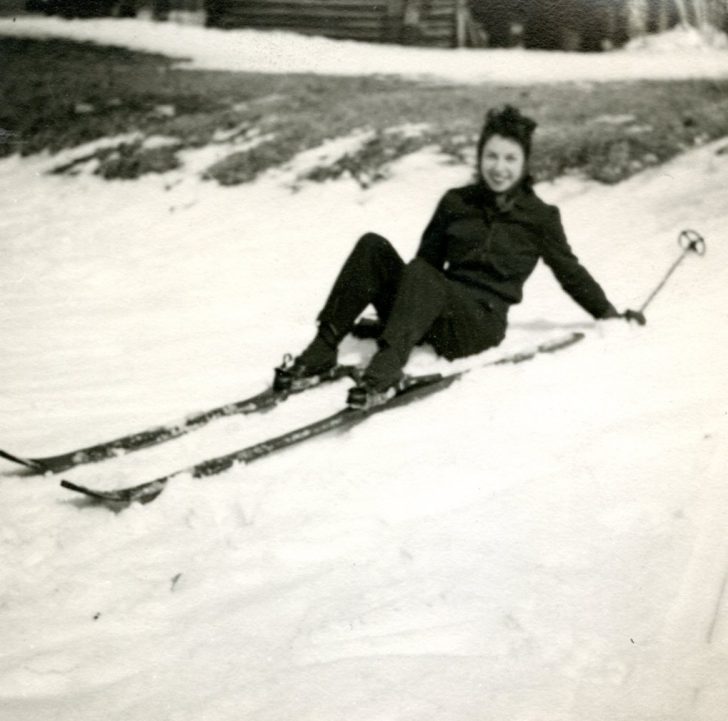
This year’s regular contributors are:

  • Harriet Wallis, Salt Lake City, UT
  • Roger Lohr, Lebanon, NH
  • Tamsin Venn, Ipswich, MA
  • Pat McCloskey, Sewickley, PA
  • Marc Liebman, Savannah, TX
  • Don Burch, South Windsor, CT
  • Joan Wallen, Andover, NH
  • Bob Trueman, Welshpool, Wales
  • Herb “Skiing Weatherman” Stevens, Wakefield, RI
  • Mike Roth, Albany, NY
  • Rose Marie Cleese, San Francisco, CA
  • Yvette Cardozo, Issaquah, WA
  • Mary Jo Tarallo, Rehoboth Beach, DE

And thanks to the one-time contributors who made it to our pages.

This Week

Co-Publisher Jon Weisberg reviews Roam Robotics Elevate, a computer-assisted exo skeleton, that supplies subtle support and a completely different approach to assistive ski devices.

We reveal last week’s Mystery Glimpse picture from the Tread Of Pioneers Museum, Steamboat Springs, CO.  One reader did a Sherlock-like job connecting the dots, deducting the right answer by reading the clues in the article and pic. Nice work.

We reprise a verse from Two Tramps In Mud Timeby Robert Frost, which fits the temperament of April. We have also included a link to Frost reading the poem himself. The Snow In Literature series has been fun for us to curate, and we’re glad we’ve reached a number of readers. Just shows you there’s another part of winter besides resorts, skis, gear, etc.

Thanks for reading SeniorsSkiing.com.  Take good care in these disruptive days. We will publish monthly over the non-snow months. 

Remember, there are more of us every day, and we aren’t going away.

Sunday River, ME


Editorial: Too Many Incidents And Accidents

It’s Time To Update The Responsibility Code.

Whoops.

Many senior snow sports enthusiasts have been participating in the sport for decades, in some cases, starting as children or high school or college students. Each year, they return to the ski hills, older, less strong, less stamina, but still dedicated to the sport they love.

They come back despite the concern that most senior skiers share: Getting hit and injured by another skier/boarder.

In late spring 2019, SeniorsSkiing.com conducted its annual survey of readers. Among other topics, we asked what most aggravated them about their on-slope experience.

About half reported they experienced a variety of near-misses, injuries, or dangerous behavior of others. A subsequent SeniorsSkiing.com article reported on the writer being blind-sided by another skier who left the scene. This prompted additional comments from other readers expressing dismay and anger about being involved in similar incidents.

Sensing a need for our readers to express their views about these on-hill collisions and near-misses, we launched “Incidents And Accidents”, a series of personal reports from readers in an attempt to further understand and communicate what was happening. We asked readers to report what occurred and what lessons they learned from the experience.

The combination of comments to Incidents And Accidents and the open-ended responses to the survey formed a clear picture of what seniors saw happening on ski slopes that made them cautious, apprehensive, angry, and even frightened about the sport they’ve been engaged in for so many years.

Their observations can be grouped into three categories:

1) Skiers/boarders skiing out of control or too fast for conditions or their skill level,

2) Reckless and rude skiers/boarders distracted, stoned, intoxicated, or not paying attention, and

3) Skiers/boarders not following proper rules of conduct, ignoring trail etiquette, violating right-of-way protocols, and/or not warning about passing.

Too much speed, lack of attention, and non-compliance with standard on-slope protocols are the dangers. These behaviors result in actual or potential accidents and collisions, leaving senior skiers annoyed and disappointed in how their sport is conducted.

Readers report a) being hit from behind sometimes with serious, long-term injuries; b) being passed too close by a speeding skiers/boarders; c) reckless emergence from side trails or trail junctions, and, perhaps most unsettling, d) being knocked down and the other party not remaining at the scene.

As a result, senior skiers devised their own self-protection tactics, adapting their on-snow experience to better deal with potential injury.

Our readers report adopting a number of self-protection tactics. These include a) avoiding crowds or crowded days; b) staying away from beginner areas; c) maintaining a predictable rhythm of turns; d) vigilantly monitoring surroundings and uphill activity, and e) remaining with friends. Basically, they are skiing defensively at all times, some to the point of being ultra, self-consciously cautious on the slopes.

They have also prescribed actions to take if there is a collision, namely, get an ID from the other party, taking a picture of both the ID and the other’s face with a Smartphone, and report the incident to ski patrol and the resort. If circumstances warrant, call 911 or the police, especially if there are serious injuries involved.

That our senior readers—long time veterans of the sport—have generated their own rules and guidelines for dealing with out-of-control skiers/boarders is telling. While they have learned to adapt, they have done so in the absence of more proactive efforts by ski resorts to curb out of control behaviors.

Skiing/boarding without fear of getting hit wouldn’t be such an issue if resorts stepped up to their responsibility to keep all customers safe.

When we asked our readers for advice on what ski resorts can do to better control danger on the slopes, their solutions were insightful. Rather than put the task of enforcing rules squarely on Ski Patrol whose primary function is rescue and trail management, readers recommend ski resorts create a new role of “Safety Guard” who can be visibly monitoring critical hot spots. Safety Guards can pull tickets, track violators, and bring offenders into “time out”. The resort can establish a system where repeat offenders are barred. Resorts can also visually post the number of tickets pulled in a day. Some resorts already use these tactics. For example, Vail is a pioneer in posting and enforcing ski safe rules.

While enforcement and monitoring is critical to making a safe skiing/boarding policy stick, there is an important role for greater awareness and education. Our readers state that resorts should invest in posting the Responsibility Code more prominently. They also recommend displaying the Code and the ski patrol’s hot line number on lifts, in restaurants, and on runs.
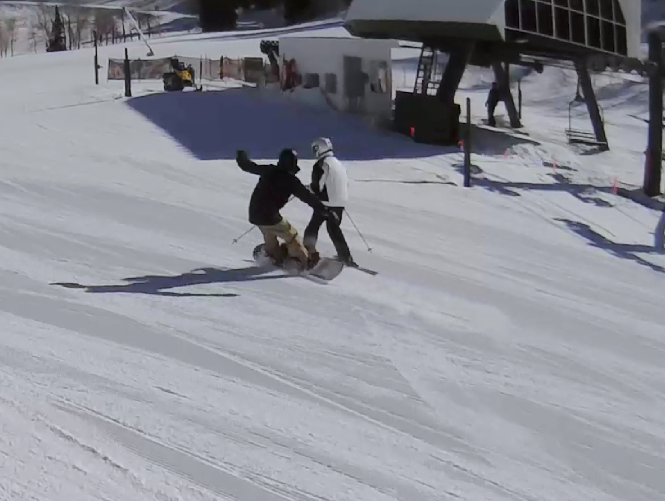
Where do new skiers/boarders learn the Responsibility Code? In lessons where instructors can explain the Code and interpret situations in real time so students can learn to identify what to do.

Finally, to make all these provisions work, ski resorts need to design and implement a safety process. To take the role of monitoring and enforcement seriously, the resort needs to collect incident reports in a consistent and timely manner, analyze the data collected, report it to customers, and use that data to inform policy and decisions.

Recommendations To Ski Area Operators and The Ski Industry: Update The Responsibility Code

At this writing, Vail Ski Resort, CO, has a model program that other resorts can learn from. Its Mountain Safety Program includes a comprehensive list of activities. Education, enforcement, monitoring are keystones. Slow zones and high traffic areas get special attention. Tickets are lifted and daily enforcement results are posted for all to see. At Vail, on-hill safety is a managed priority.

It would be ideal if other resorts copied or adopted a Vail-like program. It wouldn’t take much for resort management to create a new role of Safety Manager who can implement new monitoring and enforcement procedures, perhaps adding responsibilities to an existing position. Also, the national snow sport organizations can help with a set of suggested ideas for the position of Safety Manager with a job description and on-snow deployment techniques and interactions with staff and guests

Right now, resorts have a wide-ranging and inconsistent set of initiatives—and attitudes—when it comes to programs like this. Industry guidance would be helpful in creating consistency and momentum, but that’s not going to happen next season.

So we ask ski resort management and the ski industry to take a small, simple step that will bring attention to on-slope safety and may actually help invigorate awareness of the problem.

Our readers have told us they see an opportunity to update the Responsibility Code, the ski industry’s only guidelines for on-snow safety that hasn’t substantively changed since it was created in the mid-1970s.

SeniorsSkiing.com believes there should be a new provision to “Stay On The Scene” in case of an accident as well as “Provide or Call Help For A Downed Skier/Boarder”. While we’re at it, why not review the other rules and bring them up to date.

These are common sense additions that can help prevent bad situations from becoming worse. Adding these to an updated Code is doable, reasonable, and non-controversial.

It’s up to the ski industry and resort management to decide how to address the on-slope safety issue for everyone, not just seniors. Resorts can consider naming a Safety Manager, enlisting Safety Guard volunteers, and creating awareness with signage and messaging.  Those steps require leadership, commitment, and investment. They are also low cost, high impact.

And, right now, the ski industry can update the Responsibility Code, one simple step that can be done easily, signaling a broad-based effort to curtail unsafe behavior on the hill.

Let’s start there.


Question For You: 5

We Need Your Ideas.

Correspondent Jan Brunvand captured an incident in action.

Our editorial this week calls for the ski industry to re-consider the Responsibility Code with the goal of reducing on-slope collisions, near misses, and even hit-and-runs. This is a serious problem that we’ve explored all season in our Incidents And Accidents series. While a comprehensive solution requires leadership, commitment, and investment by resort management, SeniorsSkiing.com believes a simple, realistic, feasible, and achievable first step is for the industry to update the Responsibility Code.

What do you think? How would you update or amend the Responsibility Code to reflect today’s reality?

Please respond in the Reply Box below.


Mystery Glimpse: Movie Star

Who’s This?

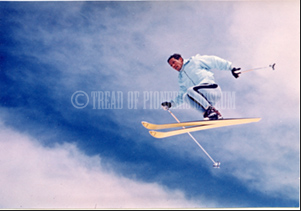
This is a still from a movie this celebrity ski racer was in. Many thanks to the Tread Of Pioneers Museum in Steamboat Springs, CO, for this photo.

Last Week

Credit: Journal New England Ski Museum

From the Journal Of The New England Ski Museum:

“Pete Seibert worked as a ski patroller in Aspen just after the war, then in 1950 attended L’Ecole Hoteliere de Lausanne in Switzerland, learning the art of hotel management on the G.I. Bill. Returning to Colorado, he became manager of Loveland Pass ski area, then moved to Aspen Highlands in 1957.  By then, Earl Eaton had taken Seibert on a March climb up the mountain just west of Vail Pass that Seibert decided he would spend his life developing.”

The video below tells the story of that seminal hike into the hinterlands which would become the Vail resort.


https://www.youtube.com/watch?v=zP4vzekpwjg