Tag Archive for: 50+

historic6

Incidents & Accidents: 8

[Editor Note: SeniorsSkiing.com is asking our readers to contribute to support our online magazine. Yes, we have grown in the number of subscribers and advertisers. But our expenses have also grown. You can help us defray some of these expenses by helping us out with a donation.]

Support SeniorsSkiing.com by clicking here.

______________________________________________________

It Might Be Wise To Skip That Last Run.

Who: Arlene Condon Maginn

Where: Bretton Woods, NH

What Happened: On the third day of our ski week, Bretton Woods had a two-for-one ticket day.  The crowd, still very modest, was noticeably bigger than earlier in the week.

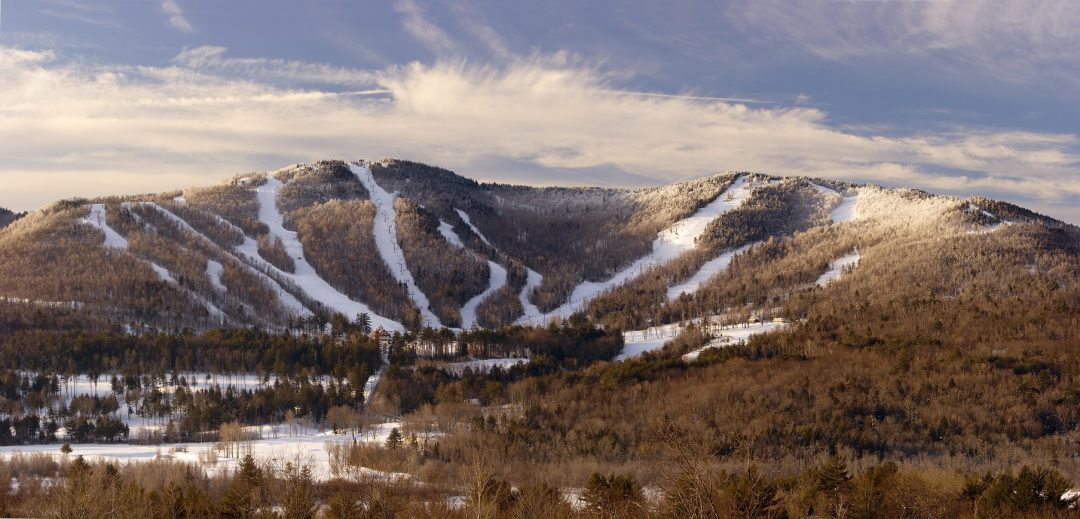
John and I were skiing the last run of the day around 3 pm. John followed me down from the top, and, at the very bottom run out, he zoomed past me. At least three trails led into the base area, marked by a big “Slow” sign. No one was slowing in the slightest. Suddenly, a boarder crossed directly in front of me and went right over the back of John’s skis, not 15 feet away. John launched into the air without his skis and landed head first in a snow bank off the trail. The boarder also fell and lost his board.

Both John and the boarder stood up and shook themselves off. John said he saw stars and was thankful he was wearing a helmet.  The boarder also said he was okay and was very apologetic to have caused the mishap. 

I am a nurse with a recent head injury, so I was very careful to ask John several times about any symptoms, like blurred vision and headache. The boarder stayed with us while John put his skis back on. We went down the 50 or so yards to the base.  We were done for the day and headed back to the lodge.

Lesson Learned:

1. We should have asked for identification from the boarder, just for future reference. And we should have reported the incident to the resort. Later, in the lodge, we learned from an employee that there is a formal process for reporting accidents. Since we never exchanged information with the boarder, reporting didn’t seem that useful.

2. The last run of the day can often be problematic. We had fatigued muscles, slowing down our response time.  John should have curbed his enthusiasm and his speed at the bottom of his last run.

3. Skiing in crowded areas—merging trails, near the base, or where there are lessons—requires more diligence and focus on what’s going on. Clearly this is where the risk for collisions is highest.

4. As a senior—especially someone who is recovering from a head injury—I try to be very careful about injuries.  I stay in shape, stretch, wear a helmet and bright-colored parka. My lesson is to ski defensively, especially in tight places and at the end of the day. 


Mystery Glimpse: Celeb In NH

[Editor Note: SeniorsSkiing.com is asking our readers to contribute to support our online magazine. Yes, we have grown in the number of subscribers and advertisers. But our expenses have also grown. You can help us defray some of these expenses by helping us out with a donation.]

Support SeniorsSkiing.com by clicking here.

______________________________________________________

All The Way From Television Land.

Was she a skier?

Here’s a famous television celebrity you should know if you grew up in the 50s. We took this from a picture displayed in the lobby of the venerable Mittersill Alpine Resort, Franconia, NH. We think the famous person was visiting the Baron von Pantz and his family, who built the resort in the mid-40s, modeled after his “castle” in Austria.  Enough clues.

Last Week

This is iconic Tuckerman Ravine, located across from Wildcat Ski Area in NH. There were many interesting guesses as to the artist.  We can see a little Wyeth in there.  However, this watercolor is by G. Lewis Hodgkins (1906-1972), an architect who lived in nearby North Conway. Hodgkins eventually became keeper of Ye Coach and Four Inn on Oak Street. He gave daily painting lessons that were quite popular.

He is known for his bold strokes and his ability to interpret his subjects simply and impressionistically. This water color was most like done en plein air. 

Curiously, as an architect, Hodgkins designed homes and buildings in and around the area, including the North Conway Community Center which eventually became the North Conway branch of the New England Ski Museum where this work is currently displayed.

Many thanks to the New England Ski Museum for permission to use this photo.


X-C Skiing: What To Wear

[Editor Note: SeniorsSkiing.com is asking our readers to contribute to support our online magazine. Yes, we have grown in the number of subscribers and advertisers. But our expenses have also grown. You can help us defray some of these expenses by helping us out with a donation.]

Support SeniorsSkiing.com by clicking here.

______________________________________________________

Don’t Wear Your Ski Parka. Choose Specialized Gear For XC.

Contemporary nordic ski togs are lightweight, warm, and more athletic looking than Alpine gear. Credit: Roger Lohr

Often on cross country (XC) ski trails, you see many of the uninitiated in clothes that just don’t work. That is, they are dressed for downhill skiing with insulated ski jackets and pants, alpine ski gloves or mittens, and ski goggles. Over-dressed on an XC trail can lead to heavy sweating, dehydration, cold, and fatigue. There is a better way.

XC skiing is a form of recreation that involves moving and thus lighter clothing is appropriate and recreational XC ski garb is versatile, functional, and fashionable, which is different than either outfits for downhill skiing or the suction suits worn by the XC ski racers seen at the Olympics.

Currently, the most popular cross country ski apparel is from companies like Craft, Daehlie, Sporthill, Swix, and others.  What is important is that the products fill a function that includes comfortably allowing movement, protection from the outdoor elements, and transporting perspiration out to keep skiers dry. Of course, skiers need to heed the weather by wearing layers (base layer underwear, pants and tops, and outerwear) and when it’s colder, more layers or thicker layers are necessary.

XC Ski Jacket and Pants

A jacket for XC skiing provides a layer to keep warm and also a way to cool off and transport perspiration away. These jackets have a mesh liner and material that is comfortable when you have to zip up the collar on a very cold day. The hood on the jacket is useful if it suddenly gets cold out on the trail. The high-hip fit keeps you warm and the zippered side pockets can be closed to avoid losing pocketed items. In some jackets the pockets have a mesh liner that allows for the skier’s heat to escape when working hard. The jacket arms might have extended cuffs, which are a nice touch to keep snow out of your gloves. The inside chest pocket has a zipper and a hole for a phone and earbuds for the times that you may want musical accompaniment on solo trail outings.

The pants for XC skiing may be light overpants with zippers along the entire length of the legs.  At the ankle there is an elastic area that may be closed with a zipper. This pant ankle set-up is a most significant aspect of the pants because it tightly fits around the boot and keeps snow out of the shoe top to avoid getting wet socks while skiing. To prevent losing a set of keys, zippered side pockets (on pants or jackets) allow a way to lock away your valuables. The base layer (also known as long underwear) is intended to provide a dry layer next to the skin but if there is lined material in the pants it may be enough to stay warm with or without a base layer underneath.

Other Aspects of the XC Ski Outfit

Base layers in various thicknesses can correlate to warm and cold days. Moving perspiration away from the body is very important and very lightweight underwear on those nice winter or spring days are the way to stay dry, but on the coldest days use a heavier or thicker base layer pants and a top that has a turtleneck.

 For your head, a light hat or headband is the way to go. Light Lycra neckies are good for your face but when it is very cold (below 15 degrees Fahrenheit) try a heavier neck gaiter like you’d wear when alpine skiing.

Socks and gloves are an entirely other matter that could be covered in a separate article. In short, parameters for selecting socks include material for perspiration, thickness, spacious comfort for your toes, and height of the sock on your leg.  Expect to pay as much as $25 for a pair of quality socks these days.

Different pairs of gloves will allow adjusting to the temperature ranging from heavier insulated mittens or two-fingered gloves for the really cold days to lightweight gloves for springtime. One of the features to consider is the patch of soft material found on the outside part of the thumb, which is useful for nose wiping.

For eyewear, opt for sunglasses rather than goggles. Sunglasses allow the air to flow while goggles tend to fog up when you get hot. Oversized glasses that have interchangeable lenses for sun or flat light are great for XC skiing.  

Nonprofit Seeks Public Input On Ski Safety

[Editor Note: SeniorsSkiing.com is asking our readers to contribute to support our online magazine. Yes, we have grown in the number of subscribers and advertisers. But our expenses have also grown. You can help us defray some of these expenses by helping us out with a donation.]

Support SeniorsSkiing.com by clicking here.

______________________________________________________

Please Participate In This Short Survey From The SnowSport Safety Foundation.

[Editor Note: Daniel Gregorie, founder, SnowSport Safety Foundation, has requested the SeniorsSkiing.com publish this safety survey to its readers. We know that on-snow safety is an issue for you. Please take a minute to weigh-in on the subject by participating in this survey from the SnowSport Safety Foundation.]

Safety is a growing concern among skiers of all ages—and particularly among senior skiers. This much is evident on the pages of SeniorsSkiing.com, which has done a marvelous job highlighting the topic with excellent opinion pieces, perspectives from readers and even an original play

The topic is personal for me. I lost my 24-year-old daughter more than a decade ago when she fell to her death at a ski resort. What I learned in the wake of this preventable accident prompted me to create the SnowSport Safety Foundation. Since 2008, our  Foundation has been dedicated to advocating for changes to make ski resorts safer for the enjoyment of everyone. 

Our foundation is part of a new and growing coalition of organizations and individuals pushing for change in Colorado, the state that hosts the most skiers and boasts the most ski resorts. We are a growing coalition of skiers and riders of all ages, parents, grandparents, seniors, safety experts, and health care professionals concerned about safety at Colorado ski resorts. 

We are seeking the information necessary for skiers and riders to make informed choices about safety, identify and define opportunities to prevent accidents and reduce the severity of injuries, support measurable improvement in resort safety management, and enable public safety oversight.

Our coalition seeks to benefit from the variety of perspectives among readers to help shape an upcoming public support building campaign. Coalition partners created a brief survey to better understand the views and opinions of skiers and riders. 

Please Click Here To Complete A Brief Survey So The SnowSport Safety Foundation Can Benefit From Your Perspective.

Please submit responses by March 6. More information about our foundation is available at SnowSportSafety.org

The Skiing Weatherman: Snow West, Maybe East

Editor Note: SeniorsSkiing.com is asking our readers to contribute to support our online magazine. Yes, we have grown in the number of subscribers and advertisers. But our expenses have also grown. You can help us defray some of these expenses by helping us out with a donation.]

Support SeniorsSkiing.com by clicking here.

______________________________________________________

The Pattern Persists.

In the past two weeks I have enjoyed many days on the snow, and a couple of them turned out feeling like reunions with old girlfriends. First came an afternoon at West Mountain in Glens Falls, NY, where new owners and $6 million in investments have turned a sleepy hill into a dynamic mountain that embraces racing for all ages. Got my skis tuned there, and the result was phenomenal!

Then I caught Wildcat, NH on a packed powder bluebird day. The long winding cruisers loaded with natural mini-features brought back memories of cutting high school in Rhode Island for twofer days on Wednesdays. The views of Mt. Washington across the street are beyond stunning. Wildcat summit view is the best in the East, IMO.

So, where are we going with the weather the next couple of weeks? The pattern has been rather persistent for weeks on end now, with abundant snow piling up over much of the West, the exception is the central and southern Sierra, where storms of significance have been rare this winter. In the Midwest and East, “persistent” has had a different meaning with mild and cold air masses taking turns marching through every four to six days. Storm tracks have favored a “cutter” type, where the primary low center moves through the eastern Great Lakes toward the St. Lawrence River Valley. A coastal secondary storm has formed with many of the cutters, but usually quite late—south of Long Island or Cape Cod—which has helped boost snowfall totals in New Hampshire and Maine as the low center heads for the Maritimes. However, at resorts further west, in VT, NY, and PA, the cutter has been more influential and most have produced a “variety pack” in terms of precip types.

There are a number of indices that help me put together longer range forecasts, such as the SOI (Southern Oscillation Index), MJO (Madden Julian Oscillation), AO (Arctic Oscillation) and NAO (North Atlantic Oscillation). For the most part, these indices have sent mixed signals in what has turned out to be a tough winter for forecasting over the eastern half of the country. The West has been much easier: ”Snow and more snow”.

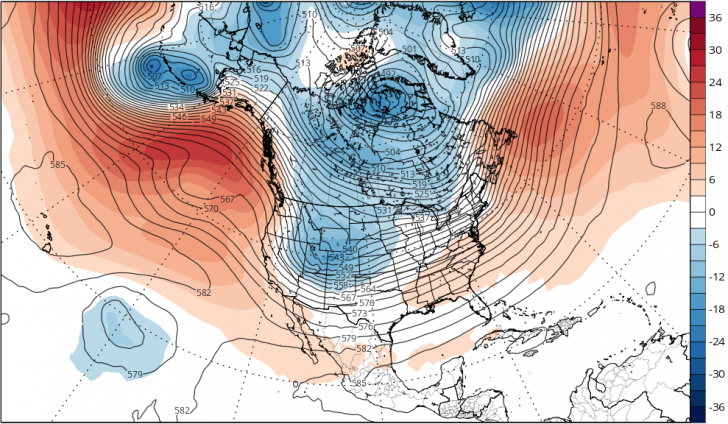
One index that has performed admirably has been the EPO (Eastern Pacific Oscillation). When it is positive, we tend to see a trough over Alaska, which helps drive moisture into the NW, which accounts for the bountiful snow, but that Pacific air is mild when it reaches the lower elevations further east. When the EPO is negative, an upper ridge pokes northward to Alaska and helps tap colder air from the Arctic regions. This forecast of the EPO telegraphs the changeable nature of the temps going forward.

Following the green line, the neutral look to start with accounts for the chill of this weekend, with the rise next week foretelling a milder spell, followed by a drop and colder weather thereafter, a sequence that mimics what we have experienced for quite a while.

The decade of the 10’s was the most active on record in terms of sizable coastal snowstorms in the East, but the first winter of the new decade has pitched a shutout to this point. That said, there are signs that the forces might conspire to bring the Northeast a late season dump during the colder dip in the EPO. Here is a look at the European forecast for the 7th of March. A man can dream can’t he?

Here Are The Regional Details

Northwest U.S./western Canada: Onshore flow from the Pacific will keep the snow coming, broken periodically by a short wavelength ridge passing through. Many powder days coming through mid-March.

Sierra: Some much needed snow is coming to this region early in the week of the 2nd. Another shot comes along about a week later.

Northern Rockies: I don’t see a whopper on the horizon, but a moderate snowfall will come along every few days in the next two weeks

Central and southern Rockies: Light to moderate snow event 3rd-5th followed by upper level ridging and bluebird skies late next week.

Midwest: Lake effect snow early in snowbelt areas. Clipper systems bring additional snow during EPO dip.

Northeast/Quebec: Back and forth temperature ride continues into mid-March. Snowfall highly storm track/elevation dependent. Some signs of coastal storm around March 6-7 starting to show up.

The Daly Chutes At Deer Valley

[Editor Note: SeniorsSkiing.com is asking our readers to contribute to support our online magazine. Yes, we have grown in the number of subscribers and advertisers. But our expenses have also grown. You can help us defray some of these expenses by helping us out with a donation.]

Support SeniorsSkiing.com by clicking here.

______________________________________________________

Want Steep? Chute 4 Has Steep.

Chute 4 from the cornice. You ready? Credit: FeedTheHabit

Deer Valley Resort in Park City, UT has a reputation for catering to its clientele.  Aside from the great food and fabulous customer service, it pampers skiers with groomed perfection and valet service, Yet, the resort is often dismissed by hard core skiers who feel that there is nothing on the mountain that would interest them.   

To those folks I simply say, ”Go to the Daly Chutes off the Empire Express Chair.” Riding the chair, the chutes are visible to your left.  As you exit the chair to your left, you make your way down the Orion Trail until you see the signs for The Daly Bowl and then an upward climb/traverse to the cornice on top of the Daly Chutes area. 

Depending on the weather and the condition of the snow that is blown into the bowl area, the openings can be varied.  Sometimes only a few chutes (which are numbered) are open and you must choose the correct ones as you stand at the top of the windblown and steep cornice. 

Last week I chose Chute 4 twice, and, as I dropped in to the windblown snow, I immediately began a series of steep jump turns down the throat of the chute.  Coming up on an exposed rock section, I veered to the right and finished in a wide open bowl area that was strewn with debris from avalanche blasting the day before. 

After weaving through the large snow chunks and into the trees, the chicane of seldom used tight trails eventually brought me out in plain view of the Empire Lodge. 

The chutes are all skiable and if you can manage the roller coaster trail through the woods on the way over to the bowl area and eventually to the top of the cornice, you will be treated to a selection of some steep but manageable terrain that definitely quiets the naysayers. 

In addition to the challenging terrain of the Daly Bowl and Chute area, if you make your way all the way over to skier’s left of the resort, you can access the Sultan, Wasatch, and Mayflower chairs and experience some fast and steep groomers. 

The signature run is Stein’s Run named after the legendary Stein Eriksen who was the Director of Skiing at Deer Valley for many years and an Olympic and World Championship medalist.  Usually this area is quiet, and you have free rein to rip GS turns to your heart’s content,  another plus for those who think that Deer Valley is not challenging. 

All in all, a word to advanced skiers would be that although the terrain at Deer Valley does not rival Jackson Hole, Alta, or other areas with challenging expert terrain, the Daly Chutes will not bore you, and you definitely have to pay attention on your way down any of the selections. 

Don’t knock it until you have tried it.  Seniors get the benefit of a $125.00 lift ticket on certain days compared to the usual $209.00 tab.  And of course the Ikon Pass is accepted at Deer Valley.  

Check out a video trip down Chute 4 from Deer Valley.

A Letter To A Very Stupid Nephew

[Editor Note: SeniorsSkiing.com is asking our readers to contribute to support our online magazine. Yes, we have grown in the number of subscribers and advertisers. But our expenses have also grown. You can help us defray some of these expenses by helping us out with a donation.]

Support SeniorsSkiing.com by clicking here.

______________________________________________________

Avalanches Don’t Care Who You Are; They Kill You.

Ted, you do not want to meet this on your bluebird, outback ski day. Credit: UtahOutside.com

[Author Note: I wrote this as a letter and emailed it to a college student nephew who’s experiencing his first Utah winter with lots of snow and avalanches. He thinks he’s infallible.

If you have grandkids or others who are new to snow country, you’re invited to copy and send any part of this story to them. They probably won’t get this kick in the pants anywhere else.] 

Hi Ted,

The photos of your ski adventure into the backcountry are beautiful. The ski is blue, the snow is deep, and the mountain you climbed is extremely steep. You must be very proud of yourself.

And you are lucky to be alive. You acted stupidly.  Avalanches do not play favorites.

Craig Gordon, a forecaster with the Utah Avalanche Center says backcountry skiers who get caught in an avalanche have already made three bad decisions before they get swept away and killed. Gordon’s examples include exactly the bad decisions you made.

  1. It’s a beautiful day, let’s go.
  2. It’s fresh snow. I want to ski it.
  3. We’ll be okay because my friend is going.

Your pal has 18 minutes to find you and dig you out. That’s it. Credit: Mountain Savvy

Furthermore, if you’d checked the avalanche forecast—the very first thing you should have done—you would have learned that many backcountry areas were closed and  others were under extreme avalanche danger warning. But you went anyhow.

I know that you were dead set on getting an avalanche flotation bag that you would hope to inflate and ride out an avalanche if caught in one. But absolutely no piece of equipment can compensate for stupidity.

Perhaps you equate an avalanche with a Disney World ride. Whoopee! I’m riding down an avalanche. It’s not like that. Avalanches don’t care who you are, what your college GPA is, how much you work out in the gym, or what your life’s goals are. Avalanches kill.

An avalanche doesn’t care about Mother Nature either. Avalanches snap off trees and rip up boulders. If you’re caught in an avalanche you’re pummeled with broken tree trunks, tossed around with boulders, and thrown over cliffs and buried. The snow quickly sets like concrete. You are entombed.

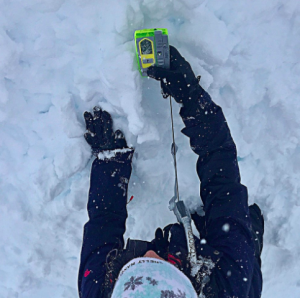
If you haven’t already died from blunt force trauma, you have 18 minutes to live before you die from asphyxiation from being sealed in an airless tomb. Your buddy had better know how to use his avalanche beacon, his probe and his shovel and use them furiously fast.

There is no time for your buddy to see if his cell phone works out there in the backcountry. It won’t do any good to call 911. He has to dig you out within 18 minutes. Just 18 minutes.

Avalanche burials frequently become body recoveries.

Ski patrols work to reduce the avalanche danger in-bounds, but that does not guarantee in-bound safety. But the moment you leave the in-bounds by stepping through a gate, you are totally, completely, absolutely on your own—even if your are only 10 feet out of bounds.

You were lucky this time. You did everything wrong, but you were lucky. Pull a stupid stunt like this again, and you might be dead.

Being macho won’t save your life. Take an avalanche course. Courses include field work where you dig snow pits, learn to calculate slope angles, and learn to use your avy beacon, probe and shovel. Then practice in one of the many avy beacon “parks” at ski resorts and trailheads.

Craig Gordon also says: Time your buddy while he practices in the beacon park. If he’s slow finding the buried target beacon, he’ll be slow finding you if you’re buried—so don’t go into the backcountry with him. You need to be quick and expert with your equipment.

Practice. Practice. Practice. You can’t learn to drive a car in one lesson. You can’t be proficient with your avy equipment in one lesson. Practice. Avalanches don’t give you a second chance.

An avalanche is not an amusement park ride you can race. If you try, you will lose. Credit: KUTV

Skiing Weatherman: Sun Spot Cycle Means Jet Stream Changes

[Editor Note: SeniorsSkiing.com is asking our readers to contribute to support our online magazine. Yes, we have grown in the number of subscribers and advertisers. But our expenses have also grown. You can help us defray some of these expenses by helping us out with a donation.]

Support SeniorsSkiing.com by clicking here.

______________________________________________________

The Potential Exists For “Significant” Snow Events In The Midwest and East For The Remainder Of The Winter.

In real estate, location is everything.  In skiing, TIMING is everything, and last weekend I lucked out during my three days in Stowe.  The first day, a foot of what turned out to be a 19 inch storm fell, and the skiing the following two days was wonderful.  Now, if you end up at Stowe on a weekend powder day and don’t get there before 9 a.m., you will have a traffic/parking problem…consider yourself warned.

That storm dumped on the East along a swath from western New York to the mountains of Maine, including nearby Quebec.  Once again, there wasn’t enough cold air to bring snow to the northern mid-Atlantic as the battle between modest Canadian cold and the mild air associated with a southeastern U.S. ridge continued.  That same clash of air masses will carry on through much of this month, with the upper Midwest and interior Northeast in line for frequent refreshing of surface snow.

In the West, the replacement of an Alaskan upper ridge with a trough will keep the hits coming to the mountains of B.C., WA, OR and the northern Rockies, but not for long.  Another system will spin southeastward from Alaska during the holiday weekend and it will reach the northern and central Rockies by early next week, but this shot of the jet stream on President’s Day shows a ridge poking northward into Alaska.  

That feature will allow storms (with less moisture) to continue moving through western Canada into the western U.S., but the ridge will nudge the storm track eastward, which will limit the snow in the U.S. coastal ranges.  The region of the West that could use fresh snow is the central and southern Sierra, but this jet stream change will make that a tough task for the next week, at least. 

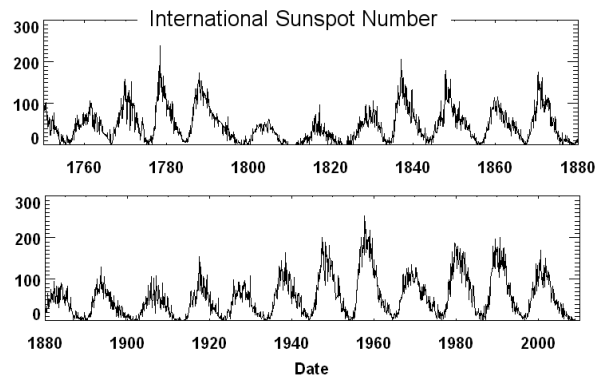
Looking further down the road, it appears the pattern will become more changeable.  For the most part, jet stream features have been quite persistent this winter.  There have been pattern changes, but once they set up they have tended to linger longer than usual for winter, but that is quite common at the time of solar minimum.  The following chart shows you the 11 year sunspot cycle for the past 250 years and clearly shows that sunspots are scarce right now.      

Fighting the persistence associated with solar minimum is the tendency for the wavelengths between jet stream troughs and ridges to shorten during the latter stages of winter, due to the gradual shrinking of cold pools that support the troughs that lead to snow and colder weather.  So, even as a trough visits Alaska from time to time going forward, which will help shoot milder Pacific air into the pattern over the lower 48, the potential exists for significant snow events in the Midwest and East due to shorter wavelength troughs taking shape at times.  That includes those areas, generally south of I-80, where snow has been hard to come by this season.  North of I-90 in the east, the snows should keep on coming.  If you time it right, you should have a good number of powder days to choose from well into March.      

Here Are The Regional Details:      

Northwest U.S./western Canada:  Holiday weekend into early next week will be snowy, but as ridging pushes northward and toward the coast, the storm track will ease to the east.  Snows will back off for the first time in a while later next week.      

Sierra:  Offshore ridge will continue to make it difficult for storms to reach the Tahoe region.  A southern branch storm will deliver fresh snow to the southern Sierra and Southwest late next week.     

Northern Rockies:  Another Alaskan low will bring moderate to heavy snow late this weekend.  Only lighter snows will fall beyond that event for the following week. 

Central and southern Rockies:  Moderate to locally heavy snow late Sunday through Tuesday, with ridging leading to only spotty light snow later in the week.  Southern Rockies in line for snow late in the week, too. 

Midwest:  A couple of Clipper systems bring light to moderate snow to the north early next week and again late in the week.  Temps comfortable for February.             

Northeast/Quebec:  Clipper system brings light snow Sunday.  Stronger storm follows Tuesday, with snow favored north of I-90, mixed/rain to south.   Parade of storms continues for a while. 


This Week In SeniorsSkiing.com (Feb. 7)

Our Iowa Caucus Moment, Hemingway In The Voralberg, Ragged And Powder, Mystery Lady, Weather Report.

We recovered though.

Last Friday, SeniorsSkiing.com launched our Annual Fundraiser, asking you, our wonderful readership, to help defray some of the expenses that come with publishing an online magazine. Well, all went well for a few hours, and then…we went Iowa. 

A small number of our readers reported their credit cards or zip codes were being rejected. Egads! What to do? Slightly panicked, we dug around the back end of applications and called support people, finally finding a menu box that should have been unchecked was still checked. Uncheck the box, and the world is well. That bit took all day.

So, please, if you tried to donate to SeniorsSkiing.com, the only online magazine for senior snow sports enthusiasts, and you ran into our Iowa moment, please try again. 

Once again, the premiums we are offering are:

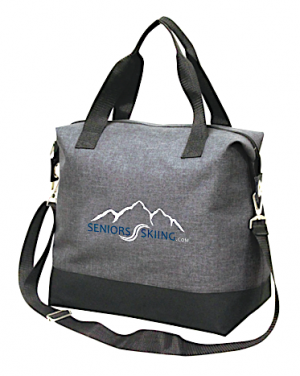
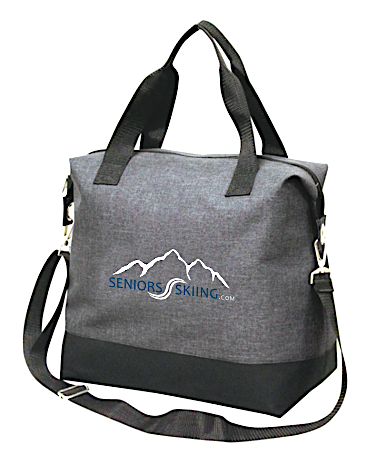
For $65 or more, you get a SeniorsSkiing.com tote bag, our top choice for the best way to keep all of your ski stuff in one, portable place, and to show your support for SeniorsSkiing.com. Made of durable, water-resistant polycanvas, it is 19.5” wide, 15” high, and expands by 7.5”. Use it to store and carry gloves, mittens, liners, hand warmers, sun screen, lip balm, extra tops and socks, a change of clothes, you name it. It has a good-sized zippered interior pocket to keep ski passes, cell phone, etc. The entire bag zips up to make a neat package for the back of the car or to carry on board. It features sturdy sewn hand straps and a clip-on nylon shoulder strap.

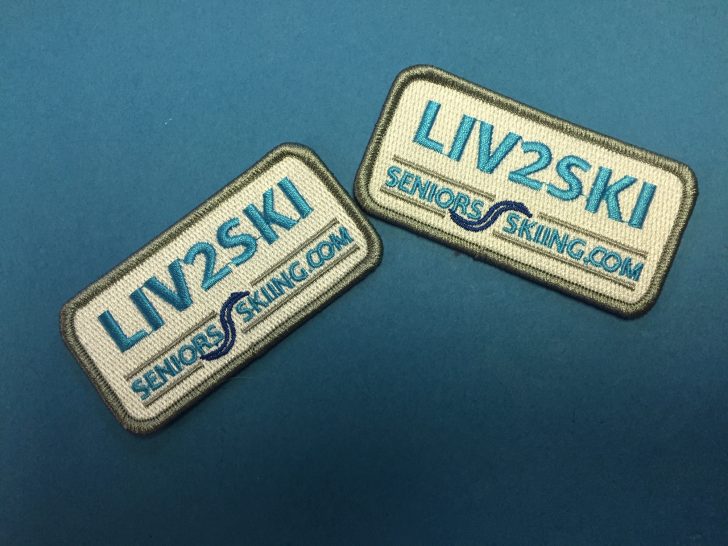
For $35, we’ll send you two coveted SeniorsSkiing.com sew-on patches with a bold battle cry, “Liv 2 Ski” and two SeniorsSkiing.com stickers.

For $25, you’ll get two SeniorsSkiing.com stickers with our “Mountain Man” logo, one for each ski.


CLICK HERE TO DONATE. WE APPRECIATE YOUR SUPPORT.


__________________________________________________________________________________

This Week

Voralberg region, Austrian Alps, was visited by Hemingway and friends.

The Voralberg, Austria

Our Snow In Literature feature publishes an excerpt from Ernest Hemingway’s famous story, The Snows Of Kilimanjaro, describing the main character’s memories of skiing in the Austria Voralberg in the 20s. Clearly, some of these fictional passages were based on Hemingway’s own sojourn is the Alps as an early adopter skier back in the day.  We originally published this article in 2014, but we’re bringing it back for our newer subscribers. You can’t beat his description of skiing down to mountain inns with a “Hi! Ho! said Rolly!” A link to the whole story is included in case you haven’t read it in a while. Have you skied the Voralberg?

Ragged Mtn, Danbury, NH, has two peaks. Credit: Ragged Mtn.

Correspondent Joan Wallen reports on Ragged Mt. a New Hampshire classic that we feel is a perfect hill for seniors.  It’s within easy driving distance from Boston, Connecticut, Maine, and has an array of do-able trails, uncrowded, relatively moderate cost, and no-frills base lodge.  What more could you want?

Credit: Thad Quimby, Peak Resorts

Our popular Mystery Glimpse feature has a picture of a dashing woman skier, heading down a slope sans chapeau, wearing a light sweater.  What’s that flag doing in the background? That’s enough of a hint for observant readers to guess where, but what about who?  Thanks to Peak Resort’s photo archives for this pic. We also reveal the identity of the ski team from last week.

Harriet Wallis updates our review of Powder Mt, the wide-spread ski area in Utah, that loves seniors so much they offer a free ticket to 75+ and a practically free season pass. How’s that, readers? That gives you access to uncrowded slopes, good snow, and classic facilities. 

Finally, we have our weekly weather prognosticator Herb Stevens, showing us that winter might be half over, but not done by far.

Thanks again for reading SeniorsSkiing.com.  Tell your friends, and remember, there are more of us every day, and we aren’t going away.


Mystery Glimpse: Fast Lady

[Editor Note: SeniorsSkiing.com is asking our readers to contribute to support our online magazine. Yes, we have grown in the number of subscribers and advertisers. But our expenses have also grown. You can help us defray some of these expenses by helping us out with a donation.]

Support SeniorsSkiing.com by clicking here.

______________________________________________________

Nice Sweater, But Who Is She?

Looks like a balmy day on the snow with this speeding skier, sans cap and a big sweater.  And hmmm, that flag.  This week’s pic comes from Jamie Storrs at Peak Resorts who has opened their archives for SeniorsSkiing.com.

Credit: Thad Quimby, Peak Resorts

Last Week

Thanks again to Dana Mathios, Curator and Director of Collections, Colorado Snowsports Museum, for the description. This photo shows the 1972 U.S. Alpine Ski Team. Colorado heroes include Hank Kashiwa, Rick Chaffee, and Whit Sterling.

Hank Kashiwa was a member of the U.S. National Team from 1967 to 1972. He won the 1969 US National Championships and competed in the 1970 World Championships in Val Gardena, Italy. After racing in the 1972 Olympics in Japan, he starred in the Pro Circuit from 1972 to 1981 and won the World Pro title in 1975. He later served as President of the Volant Ski Corporation, a Boulder-based ski manufacturer. Hank was inducted into the Colorado Snowsports Hall of Fame in 1994.

Other 1972 US Alpine Ski Team members included Bob Cochran, David Currier, Terry Palmer, Tyler Palmer, Karen Budge, Marilyn Cochran, Susan Corrock (placed third in Downhill), Barbara Cochran (who won the Slalom), Sandy Poulsen , and Patty Boydstun.

SeniorsSkiing Guide: Ragged Mountain

[Editor Note: SeniorsSkiing.com is asking our readers to contribute to support our online magazine. Yes, we have grown in the number of subscribers and advertisers. But our expenses have also grown. You can help us defray some of these expenses by helping us out with a donation.]

Support SeniorsSkiing.com by clicking here.

______________________________________________________

Ragged Has All The Features Seniors Love: Great Trails, Low Crowds, Modest Prices.

Ragged Mtn, Danbury, NH, has two peaks. Credit: Ragged Mtn.

Located less than two hours from Boston, Ragged Mountain in Danbury, NH offers skiers and boarders a wide variety of terrain from a perfect learning area for beginners to some challenging glades for the expert. It’s truly a family mountain as all trails lead back to the quintessential New England base area.

Ragged’s beginner terrain is ideal for learning. There are two carpet lifts serving very gentle terrain that provides a slope that will not threaten or frighten new skiers. From there they can progress to the Barnyard Triple serving a slope perfect for working on turns and building confidence. The whole beginner area is located off to the side of the main mountain, keeping it separate from the better, faster skiers coming off the summit.

Magic Carpet ride for beginners. Credit: Ragged Mtn.

Two high speed lifts serve the area’s two main peaks. A detachable, high speed six passenger chair, New Hampshire’s only sixpack, whisks skiers and riders to the summit of Ragged Mountain in about five minutes. A detachable quad takes about the same amount of time to reach the Spear Mountain summit. From the Ragged peak a variety of trails from easy green to black diamond wind their down. Skiers and riders are able to navigate from the summit to base on all green or all blue trails or a combination of the two. There are some shorter black diamonds on the upper mountain and a couple of top to bottom ones as well. Several steep glades connect Ragged summit to the trails on Spear. Spear Mountain has three main trails down with one called Cardigan being the easiest and longest way down. Flying Yankee is sometimes closed for racing but when open is a nice intermediate cruiser. Showboat, under the lift, is a steeper pitch and is great for what its name implies. There are half a dozen black glades on Spear, open only with natural snow but great fun when the cover is good. There are three terrain parks, including a small introductory one in the Barnyard learning area.

The area first opened in 1965 and being an older mountain, the trails are interesting and varied, from wide and open to narrow and twisting. Their grooming crew does an excellent job. Even in a challenging winter like this one all open trails have been in great shape.

The Learning Center offers the unique Bebe Wood Free Learn-to-Ski or Ride Program for beginners of all ages to be introduced to snow sports without risk to their wallet. This program – it really is free! – offers three two-hour lessons, with rental equipment and a lower mountain lift ticket for no charge. Following graduation from the program students can purchase discounted equipment and seasons passes. It’s named after long time Ragged employee Bebe Wood who worked there until she was in her nineties.

The attractive and well thought out base area is easy to navigate. There you’ll find the Elmwood Lodge, the Meetinghouse Lodge and the Guest Services building all designed with skiers in mind. The Elmwood Lodge, with its attached Red Barn, houses three restaurants. Birches features table service and an upscale menu of classic American cuisine and lovely mountain views of Ragged’s slopes. If you’re there to watch one of the races held on the Main Street trail and don’t want to stand outside, this is the spot to be. The Stone Hearth Bar, located in the Red Barn, serves up lunches and snacks as well as thirst quenching adult beverages including some new and delightful beers brewed at the Flying Goose in nearby New London. Check out the newest one—Rags to Riches. A huge stone fireplace and weekend entertainment complete the picture here. The Harvest Café is great for a quick lunch or snack with soups, sandwiches, items from the grill and more. There’s plenty of table space in the lodge and the bar’s stone fireplace extends to two floors and provides a cheerful spot to warm up.

The Meetinghouse Lodge houses the Learning Center, the rental shop and more gathering space for changing and picnic lunches.

Although a little off the beaten path, Ragged is accessible either via Interstate 89 or 93 followed by a 20- to 30-minute drive on lightly traveled secondary roads. While not the largest of mountains, its 1250’ of vertical, short lift lines and uncrowded trails reward skiers and riders with plenty of time on the hill in a relaxed atmosphere. It is well worth the trip!

Tickets And Passes

Lift Tickets: Seniors (65+-79) $62 Weekend/Holiday, $52 Midweek,  $51 Four Hour Weekend/Holiday, $45 Four-Hour Midweek, 80+ Free

Season Passes: From $349-519, All ages. Purchase of a season pass provides access to four additional resorts: Jay Peak, Pats Peak, Ski Butternut, Whaleback

Click Here For Ragged Mountain Trail Map

Click Here For Ragged Mountain Web Cam

There’s the base lodge down there. Credit: Ragged Mtn.


Powder Mountain

Uncrowded Powder Mountain

[Editor Note: SeniorsSkiing.com is asking our readers to contribute to support our online magazine. Yes, we have grown in the number of subscribers and advertisers. But our expenses have also grown. You can help us defray some of these expenses by helping us out with a donation.]

Support SeniorsSkiing.com by clicking here.

______________________________________________________

500 Inches Of Snow, 8,000+ Acres, And No Crowds.

Uncrowded on a holiday weekend. Powder has plenty of room. Credit: Harriet Wallis

A Mountain Host greeted us with memorable words. “The snow here is all natural. Mother Nature makes all of it,” she said. “And it’s GMO-free,” she quipped.

We skied Powder Mountain during a recent holiday weekend when other resorts near Salt Lake City were packed to the gills, “PowMow’s” trails were not only uncrowded, they were sometimes absolutely empty. It was wonderfully relaxing. I didn’t need eyes in the back of my head. Nobody was going to run over me. And there was still patches of untracked snow from a storm nearly a week earlier.

To ensure a good experience, the mountain caps adult season passes at 3,000 and daily lift tickets to 1,500. It doesn’t accept the Ikon or other multi-resort passes. Do the math. At max capacity, every skier gets about 2 acres.

Seniors 75 and older get a free lift ticket or a season pass for $20. 

Good snow, uncrowded slopes and affordable senior prices  are just part of the equation. Powder Mountain is old school. It doesn’t do glitz. That’s it’s charm. There’s even an old fashioned blackboard where the list of upcoming bands to play in the Powder Keg bar are written in colored chalk.

Powder base lodge is unpretentious. Credit: Harriet Wallis

The day lodge is modest, the bathrooms are adequate, the cafeteria tables are set in long rows so everyone eats family style and gets acquainted with whoever sits down next to them. The lodge on the summit is similar, just smaller.

Six chairlifts serve 8,464 acres that include white knuckle slopes, aspen forests, and treeless snowfields. And in old school style, there’s a Poma. It hauls skiers up a short pitch that’s a gateway to vast terrain. Riding a Poma is a skill that older skiers remember well but younger skiers struggle to learn. After a few they get to experience what the good old days of skiing were like.

We chanced to meet Bob Leaverton, a veteran ski patroller, who has skied Powder Mountain for 35+ years. His three favorite things are: “the road, the people, and the snow.”

The last several miles up to the resort are steep, and that climb often deters visitors, he said. The people are friendly, and the snow is wonderful. Take it from a local.

For adrenaline junkies, Powder Mountain offers specialty adventures: in- and out-of bounds backcountry skiing, skin & ski, snowcat, and heli-skiing.

Historically, Frederick Cobabe accumulated the vast acreage as range for his herd of sheep. His son eventually purchased the livestock company and the land and turned it into a ski resort in 1972.

It’s currently owned by private investors who are developing an upscale community of Bauhaus-style homes set in the far reaches of the resort and linked by a network of trails and lifts that sprawl across that rolling, not steep, terrain. It can take most of the day to ski a circuit all around the resort.

But if its a powder day, do what the mountain resort is named for: Ski the powder.

Yes, that’s the lift line. Where is everyone? Credit: Harriet Wallis

Skiing Weatherman: A Battle For The Second Half

[Editor Note: SeniorsSkiing.com is asking our readers to contribute to support our online magazine. Yes, we have grown in the number of subscribers and advertisers. But our expenses have also grown. You can help us defray some of these expenses by helping us out with a donation.]

Support SeniorsSkiing.com by clicking here.

______________________________________________________

Post-Ground Hog Day Winter Looks Like A Struggle Between Air Masses. The Winner Determines the Outcome Of The Season.

Over the past week, the Northwest and northern Rockies have been the overall winners in the snowfall lottery, continuing a trend that has been in place much of this winter. Over the eastern half of the country, it has been a struggle to pile up snowfalls. More often than not, storms have produced a mix of precip types because of an unfavorable storm track or simply just a lack of available cold air. This discussion is going to focus on the Midwest and East, because a battle for the outcome of the season in those regions is getting underway. What I mean by that is cold air is trying to push southward out of Canada but milder air associated with an upper ridge over the Southeast just won’t go away. While the next couple of weeks look snowy, there are signs that the ridge may push back and cause the storm track to shift northward late this month.

The day this is posted, a juicy storm is delivering heavy snow to a swath of the Northeast from upstate New York to western Maine. Further south, snow is also falling on the heels of another round of mixed precip. The dramatic thermal gradient between the contrasting air masses is responsible for the storm and if we look at the outlook for temperatures at 5,000 feet for Friday (2/7), you can see the essence of the fight.

The border between blue and green is the 32 degree line, which approximates where the rain/snow line is likely to be. The line has cut across the East, and at times the Midwest, in most storms this season, causing a wide variety of precip types and changeable conditions.

Last week I wrote about the cold that was finally asserting itself again, and it will be available for storms through at least mid-month, so I am confident that more snow will fall north of I-80 or so. Beyond that, I have some concerns about the staying power of any cold, based on whether or not the EPO, or Eastern Pacific Oscillation, will stay negative, where it is now. A negative EPO, where an upper ridge is found over Alaska with an upper trough underneath it and off the west coast, correlates with colder than normal temps over the eastern half of the country. That helps turn more water vapor into snowflakes rather than those less desirable forms of precipitation. There are signs that the EPO will trend positive later this month, with a trough returning to Alaska. That would inject milder Pacific air into the pattern which would squeeze the rain/snow line further north once again. Here is a forecast for the EPO going forward.

It is not forecast to go strongly positive, but still enough to potentially limit the push of the cold air from southern Canada. I will have more in my next post, but in the meantime, enjoy the snowy pattern unfolding from the Lakes to the Northeast.

Here Are The Regional Details

Northwest U.S./western Canada: Disturbances will slide down the coast along the eastern flank of the ridge over Alaska and deliver moderate to locally heavy snowfall every two or three days through the next week. The parade will continue into Week Two.

Sierra: Ridge offshore is “too close for comfort” in Week One as most storms are deflected to the east. Week Two looks more promising for fresh snow.

Northern Rockies:  Systems cutting southeast into the region will maintain enough moisture and power to keep the snows coming every few days Week One into Week Two/

Central and southern Rockies: The storms that hit the NW/N Rockies will produce a snowy Week One in the central Rockies. Light to moderate snows further south in NM/AZ. Week Two looks better.

Midwest: Two snowfalls north of I-80 in Week One will refresh the slopes nicely. Alberta Clippers will bring additional snow in Week Two. Packed powder to rule in most of this region.

Northeast/QB: Early storm sets things up for a nice weekend from central NY through Adirondacks, northern Greens/Whites and western Maine.  Same areas hit again later next week. Mixed precip south of these areas.

This Week In SeniorsSkiing.com (Jan. 31)

Annual Fundraiser Starts, John Fry, Mystery Team, DV Multi-Generationals, Weather Coming, Start Drinking.

If it’s Ground Hog Day, it must mean SeniorsSkiing.com is launching its annual fundraiser. This time around, we have three levels of premiums to consider:

  • $65: A super duper SeniorsSkiing.com tote bag, rugged and ready for ski trips, plus SeniorsSkiing.com patches and stickers.
  • $35: SeniorsSkiing.com highly coveted sew-on patches and stickers.
  • $25: SeniorsSkiing.com popular stickers with our Mountain Man logo.

Why a fundraiser? The short answer is that our subscriber base and editorial projects been growing and expanding, leading to increased expenses for emailing, software licenses, web design, hosting, not to mention administrative, marketing promotion, and, yes, even postage.

A couple of years ago, we thought that SeniorsSkiing.com should be offered on a paid subscription basis. When we pressed on that idea, we realized it would be a huge hassle to manage log-ons, passwords, cyber security, customer service, and lots more, representing a whole other set of tasks that distract from editorial.  So, we adopted a fundraising model, just like National Public Radio.  We offer free access, and you can choose to support us if we are providing you with interesting, useful, and entertaining content. We hope you do.

We are in the exact middle of SeniorsSkiing.com’s sixth publishing year.  We’ve come a long way with your support and help. Thanks for making a donation.

Click Here To Support SeniorsSkiing.com

Or

Mail A Check To SeniorsSkiing.com, Box 416, Hamilton,MA. 01936

This Week

John Fry. Credit: SKI Magazine

We lost John Fry, a ski journalist, innovator, historian, and member of both the US and Canadian ski halls of fame.  He had just turned 90 when he passed away on vacation in Puerto Rico. Click here for a look at his long life in snow sports.

Our West Coast correspondent Rose Marie Cleese reminds us to start drinking and stretching before we head out. Lack of hydration is the bane of seniors, as our own physician once said, “Most seniors are walking around in a state of dehydration.” And tight, too. It makes sense to do wake up those hamstring and quads, too. Click here to drink up.

Correspondent Tamsin Venn recounts her trip to Deer Valley with her millennial family who dropped their “Ok Boomer” attitudes and wound up loving the resort. Here’s her report on DV.

Our Mystery Glimpse asks you to identify the members of a US Ski Team, and we reveal the previous week’s picture was the Hotel Jerome in Aspen, the venerable, silver-mining relic that had celebrities and scoundrels galore in residence. Click here to see the Mystery.

Skiing Weatherman Herb Stevens previews the second half of the season. He’s optimistic there is much more to come.  Check out his analysis here.

Thanks for reading SeniorsSkiing.com.  Tell your friends, and remember, there are more of us every day, and we aren’t going away.


SeniorsSkiing.com’s Winter Fundraiser Begins

We’re Asking For Your Support; Contribute And Get A Cool Premium.

Patches!

SeniorsSkiing.com is in the middle of our sixth publishing year. We are gratified and proud that our online magazine has clearly found an audience that resonates with our editorial content and our advertisers. Our new Incidents & Accidents feature has clearly struck a nerve, and we will continue to examine how unmonitored skiers and boarders are impacting senior skiers, and what can be done to mitigate these errant resort customers. Our skilled group of international, professional correspondents bring you a variety of articles from instructional tips, equipment comments, resort reviews, personality profiles, nostalgia, and popular features like Mystery Glimpse and Ask The Expert. Our directory of those resorts that offer free or deeply discounted tickets and passes seniors is completely unique.  Our listing of ski recommendations in conjunction with Jackson Hogan’s realskier.com is a fall favorite. 

Stickers!

All of this and more comes to you weekly for free. 

And we’ve grown in subscribers and advertisers. With that growth comes increased expenses. You can help us defray some of those expenses by helping us with a donation.

Please consider a donation; in return, we offer exciting SeniorsSkiing.com premiums.


Tote Bag!

For $65 or more, you get a SeniorsSkiing.com tote bag, our top choice for the best way to keep all of your ski stuff in one, portable place, and to show your support for SeniorsSkiing.com. Made of durable, water-resistant polycanvas, it is 19.5” wide, 15” high, and expands by 7.5”. Use it to store and carry gloves, mittens, liners, hand warmers, sun screen, lip balm, extra tops and socks, a change of clothes, you name it. It has a good-sized zippered interior pocket to keep ski passes, cell phone, etc. The entire bag zips up to make a neat package for the back of the car or to carry on board. It features sturdy sewn hand straps and a clip-on nylon shoulder strap.

For $35, we’ll send you two coveted SeniorsSkiing.com sew-on patches with a bold battle cry, “Liv 2 Ski” and two SeniorsSkiing.com stickers.

For $25, you’ll get two SeniorsSkiing.com stickers with our “Mountain Man” logo, one for each ski.


To Make A Donation, Click Here. 


John Fry (1930-2020)

Journalist, Historian, Innovator, Hall of Fame Member Passes On.

[This article first appeared in Ski History Magazine. We thank the International Ski History Association for permission to reprint this memory of a ski industry legend.)

John Fry. Credit: SKI Magazine

John Fry, the dean of North American ski journalists, died suddenly but peacefully on January 24, two days after celebrating his 90th birthday

Fry was in apparent good health. According to his wife, Marlies Fry, he suffered a probable stroke while floating quietly in shallow water off a beach on Vieques Island, Puerto Rico.

Over a 60-year career devoted to ski journalism, Fry served on the staffs of the magazines SKI LIFE, SKI, Snow Country and Skiing Heritage (now Skiing History). He was editor-in-chief of SKI, founding editor of Snow Country, and served as president and then chairman of the International Skiing History Association.

“John’s love of skiing, combined with his talent for in-depth reporting and crystal writing style, set the standard for ski journalism not only in English but world-wide,” said Seth Masia, who went to work for Fry in 1974 and is today president of the International Skiing History Association. “Those of us who had the good fortune to work for him loved his wit, warmth and mentorship. He was the heart and soul of each magazine he edited and was more productive and inspiring than ever during his final years with us.”

Kathleen James, editor of Skiing History, had this to say: “In 1994, John Fry gave me my first big-time magazine job as an associate editor at Snow Country. Over the years, working for him there and later at Skiing History, he taught me how to hold every issue of every magazine to the very highest standards: to examine story ideas with a critical eye, ask authors the right questions, and artfully present the finished article on the page. At the age of 90, his comments on stories, his suggestions, and his headlines — succinct, funny, compelling — were always the very best. He was my mentor, my friend and a second father who always pushed me to be better. To my occasional frustration and eternal gratitude, he was (almost) always right.”

Fry edited America’s Ski Book, revised edition (1973), co-authored with Phil and Steve Mahre their autobiography No Hill Too Fast (1985), and authored the award-winning book The Story of Modern Skiing (2006) and a work of Canadian history, A Mind at Sea: Henry Fry and the glorious era of Quebec-built giant sailing ships (2016).

In addition to his writing, as editor-in-chief at SKI Fry created the Nations Cup of alpine skiing, ranking the worlds’ national ski teams based on World Cup points; and NASTAR (National Standard Racing), the nationwide recreational alpine racing series now owned and operated by the U.S. Ski and Snowboard Association.

Born January 22, 1930 in Montreal, Canada, Fry first donned skis at age six. After a few years he was able to ride the world’s first rope tow, which had been built at Shawbridge, Quebec in 1932.  For high school, he attended Lower Canada College (class of 1947), and was a member of its championship ski team. At McGill University he raced for the Red Birds Ski Club and earned a bachelor of arts degree in 1951.

Fry emigrated to New York City in 1957 to join the daily trade paper American Metal Market, where, in 1960, he was named managing editor. Meanwhile, he freelanced as contributing editor of Ski Life, a national magazine launched in 1959, soon to be merged with SKI Magazine. In 1963 he joined the staff of SKI as executive editor, and editor of its sister publication Ski Business. In 1964 he was named editor-in-chief of SKI, and in 1969 became editorial director of SKI and Golf Magazines. After the Times Mirror Company acquired the titles in 1972, he served as editorial director of Outdoor LifeSKI and GOLF, with circulations ranging from 350,000 to 1.8 million. During this period, he created two new publications: Action Vacations and Cross-Country Ski. In 1965 he married Marlies Strillinger.

In the summer of 1987, the New York Times Co. retained Fry to create a new magazine, Snow Country. When the magazine debuted in January 1988, he became the full-time editor-in-chief. Snow Country attained a circulation of 450,000.

In 1996, the New York Times Sports/Leisure Group appointed Fry as editor of new magazine development. In this role he launched Golf Course Living Magazine. He retired from the New York Times Co. in 1999 and returned to SKI as a contributing editor. He remained an active contributor at Skiing History magazine until his death. 

Fry was elected to the U.S. Ski and Snowboard Hall of Fame (1995), to the Laurentian Ski Hall of Fame (2016), and to the Canadian Ski Hall of Fame (2018). A founding member of the International Skiing History Association, he first served as its president in 2001, and from 2014 until his death was the association’s chairman. He also served as a director at the environmental organizations Riverkeeper (1992-2000), Pinchot Institute for Conservation (1994-1999), and Beaver Dam Sanctuary (1995 until his death). In 1997 he was honored by the International Ski Federation (FIS) with its Journalism Award.

Fry is survived by his wife of 55 years, Marlies; their daughter Nicole Fry; his children by Ann Lyons, the sculptor Leslie Fry and William Fry; and grandchildren Sarah and Emily Fry.

A memorial will be planned later.

Mystery Glimpse: Name That Team

Here’s A Ski Team From The Past.

Can you name when? Who’s who? Thanks to the Colorado Snowsports Museum for this one.

Last Week

Well, last week’s photo was a challenge.  Not one guess. Thanks again to Dana Mathios of the Colorado Snowsports Museum for this description.

This photo was taken at The Hotel Jerome in Aspen. The photo is believed to have been taken in 1948, but some indications from the scrapbook this photo came from indicate a date as early as New Years 1939. The Jerome was built in 1889 and is often described as one of the city’s major landmarks. In 1986 it was listed on the National Register of Historic Places. During Prohibition a celebrated spiked drink, the Aspen Crud, was invented at “J-Bar”. Later, the drink and the bar became popular with members of the 10th Mountain Division while they trained in the area. After the war, Aspen and its new ski resort became a popular destination. Celebrities vacationed in Aspen like Gary Cooper, John Wayne, and Hunter S. Thompson.
The Hotel Jerome: If the walls could talk…Credit: Amuse


This Week In SeniorsSkiing.com (Jan. 24)

Talking To Yourself, Skis Delivered, Robert Frost, New Mystery And A Correction, Weather Coming Up, Windham Mt MidWeek Seniors.

Our day trip to Attitash included at this free view of the White Mountains. Credit: Attitash.

As reported in this space, the snow weather here in New England has been sketchy once a burst of fluff in early December disappeared or turned to ice. We had a miserable melt the second weekend of January with temps in the 70s, preceded by several weeks of mediocre snow making weather. That has all changed.  Winter is in. Temps are the teens, and a Nor’easter has delivered the goods.  The MLK weekend was a huge success around here stemming from that big snow fall and snow making for most resorts, setting attendance records across the region.

White Mts in background, we conquer Attitash.

So we set out for our very first day of Alpine skiing with one of our famous day trips to New Hampshire from the Boston area. The target was Attitash, a venerable, family-friendly, classic area with very decent snowmaking, beautiful, wide trails that we like, and magnificent views of the White Mountains on a blue-bird day. Taking advantage of those post-MLK conditions, we lucked out with a low, online ticket price, an empty lodge, no lift lines, and almost “private” trails.

With new boots and new gloves, we made our first run on the beginner’s slope. We immediately started talking to ourself. “Bend zee knees.” “Inside edge.” “Toe pressure.” “Forward, forward.” “Athletic stance.” After Run One, we made another adjustment, focusing on just one self-instruction: “Edge, edge, edge”.  The psychologists call this self-instruction, providing ourselves cues that help us perform. For children who have learning difficulties, self-instruction or, more formally, cognitive mediation, provides a built in tutor who can add a helping reminder. Anyone learning a new skill can benefit from this technique.

Some models of learning call this phase “conscious competence”. We are aware we are doing something new and processing our self-instructions and actively watch the result, aka feedback.

Eventually, after many repetitions of successful performance, the need for self-instructions fades away, and we have “unconscious competence”.

We are curious if other senior skiers use this kind of self-instruction, especially when starting out the season or approaching new situations. Do you talk to yourself? What do you say? How did you learn to do that? Does it work for you? What works? What doesn’t? Have you ever had an instructor tell you to talk to yourself? Share your insights with other senior skiers. Note Comments Below.

This Week

Snowmaking is robust and widespread at Windham.

A day trip area near NYC?  Correspondent Joan Wallen describes her experience at Windham Mt, in the heart of the Catskills and just two and a half hours from the Big Apple. The resort has a special 50+ Midweek program that offers lessons, lunches, presentations, and yoga. Sounds like a nice package.

Correspondent John Nelson reports on his experience with Ski Butler, the ski delivery service that brings rental equipment to you. For those traveling to far-away resorts, the savings in airline baggage fees alone makes Ski Butler worthy of a look.

We have a nostalgic look at Moriarty hats, 60s and 70s icons of the “skier-look”.  Yes, we still have two left over from college days, and, yes, they are both over 50 years old.  And we still wear them, tiny moth holes and all.  The cognoscenti at ski places nod knowingly at us, sometimes commenting. Imagine a hat as a conversation starter. This article is a reprise from the earliest days of SeniorsSkiing.com.

We bring you another in our Snow In Literature series, again a poem by Robert Frost: “The Wood-pile”.  Speaking of wood piles, how much of yours is left?  Better be a little more than half this time of the year, say the old farmers.

Not Barb Ferries.

We add a correction to last week’s Mystery Glimpse.  The two racers were not Beth Ferries and Buddy Werner. Thanks Chuck Ferries and others for the tip.  See the correction in this week’s article and our new mystery.

As predicted, winter time weather is finally settling in. The Skiing Weatherman Herb Stevens give us the Big Picture for the next two weeks, as well as regional forecasts.

Thanks for reading SeniorsSkiing.com.  Tell your friends, and remember there are more of us every day and we aren’t going away.


SeniorsSkiing Guide: Windham—A Gem In The Catskills

A Mid-Week Senior Program Includes Clinics, Group Lunch, Yoga, Plus.

Windham is 2 1/2 hours from NYC and has something for everyone.

Driving from New Hampshire through Vermont to Windham Mountain in the Catskills of New York on a recent weekend I felt some trepidation as to what I would find. There had been rain, lots of it, and temperatures reaching 60 degrees over the course of the weekend. Arriving at the mountain on Monday mornin,g it was not looking promising – lots of bare ground and brown spots. But everyone in our group was game to try it out so we booted up and headed for the lift.

And what a pleasant surprise was in store for us! There had been a small window of snowmaking temperatures Sunday night,, and the mountain crew made full use of it. While it didn’t allow any new trails to be opened, it did a wonderful job of patching and spot resurfacing. The groomers smoothed out the surfaces, and, though only a small percentage of the trails were open, those skied very nicely on softish, granular sugar snow.

Snowmaking is robust and widespread at Windham.

Windham is a sizable mountain with a 1600’ vertical. To me, it feels like a much bigger mountain. There are 54 trails, ranging in length from 300 to over 12,000 feet, serviced by a total of 11 lifts including a high speed six pack and two high speed quads. Snowmaking covers 97 percent of its trails and slopes.  Much of that is fully automated, making it very responsive to changing weather conditions. There were several trails open off the Westside Six, the six-pack going to the West Peak summit, and the Wonderama Express Quad.  We found enough good skiing to keep us entertained over the course of a day and a half. An Express Quad took us up to East Peak where we found a couple of good runs including Wanderer, a long, easy cruiser that sweeps along the ridge at the edge of the resort and eventually winds its way to the base. All were in agreement that the mountain ops crew did a fantastic job in recovering from the “R” event prior to our arrival.

The modern, airy base lodge houses a spacious cafeteria on the ground floor and a table service restaurant with an upscale menu upstairs. Also on the upper level is a private club with its own food service and lounge areas.

The resort has spent more than $12 million in the last two years to elevate the guest experience, and it is quite apparent from snowmaking to grooming to base area and resort amenities.

Midweek Program Just For Seniors

Windham boasts an active 50+ Midweek program which runs for eight Tuesdays from early January to early March. There’s an optional yoga program at the beginning of each day followed by on snow clinics with the instructors then a group lunch. During lunch, there are presentations on snowmaking, product reviews, what’s happening at Windham, and various other topics of general interest. The program currently has more than 70 participants who come from New York City and its environs as well as the local area. The Midweek program costs $250, pass not included.

You can ski the big race courses on the simulator. Credit: Joan Wallen

The Adaptive Sports Foundation has partnered with the mountain to bring in the Ski and Ride Simulator which provides real skiing and riding in virtual reality. Used by the race teams for training, it is also available to the public for a fee. Skiers and riders of all ages can test themselves on virtual race courses from around the globe simulating real World Cup and Olympic courses. From grandparents to grandkids, it can an enjoyable challenging to all. A portion of the proceeds help support the Adaptive Sports Foundation.

The Alpine Spa, kids snowmobiling, snow tubing and ice skating will keep everyone – kids to parents to grandparents – busy when not on the slopes.

While we didn’t get to ski all of Windham, what we experienced was great and certainly whetted the appetite making us eager to return when the mountain is fully operational to explore what is truly big mountain skiing just 2 ½ hours from New York City.

Tickets And Passes

Day tickets for 65-74 are $76; 75+ is $70. Windham also offers a four-hour Flex Ticket good for any four consecutive hours. 65-74, $52; 75+, $35.

Season Passes, 65-74, $659; 75+, $229. A Sunday-Friday mid-week pass is $549 for all ages.

Click here for Windham Mountain Web Cam.

Click here for Windham Mountain Trail Map

The base area is the hub of activity with lifts radiating out.


Mystery Glimpse: Crash Pad

CORRECTION!

Linda Meyers, not Barb Ferries.

We received several comments and emails about the identification of the woman in this recent Mystery Glimpse. The photo was provided by the Tread of Pioneers Museum, Steamboat Springs, was mis-labelled as Barb Ferries. Our observant readers saw the error and correctly identified her as Linda Meyers who also skied with Buddy Werner on the 1964 US Ski Team.  One of those who corrected us was none other than Chuck Ferries, Barb’s brother.  We notified the curator at the Tread of Pioneers Museum which is taking corrective action. Thanks readers.


Where Is This Hotel?

Thanks to the Colorado Snowsports Museum for this picture.

Last Week

Rudi Wyrsch was the self proclaimed Pied Piper of skiing and taught children not only how to ski but how to have fun on and off the snow.  From Piperville, his name for the Mt. Snow pee-wee  playground/ski school,  to his 12 foot stilts, Rudi was a master at engaging children with entertainment.  Once a member of the Swiss national team and coach of the British, Australian, and New Zealand ski teams, Rudi worked at Mount Snow in the 60’s – 70’s. After wowing the kiddies on the hill, Rudi entertained adults back in the lodge with joke-telling, magic tricks, and juggling.  

Rudi’s approach to teaching kids at Piperville revolved around three principles: 1) Balance, 2) How to turn, and 3) Self-confidence. 

Rudi conducted trick skiing stunts across New England.  Here he is performing at Pleasant Mountain, ME, home of a nascent freestyle program under Rudi. He later open a restaurant at Taos, NM. We have heard, but could not confirm, that he was killed in a “ski accident” in Switzerland.  If anyone knows that part of the story, please share it with us.

Thanks to Mt. Snow and Peak Resorts for the pic of Rudi  flipping in the top hat and to the New England Ski Museum for the photo below.


Skiing Weatherman: Winter Is Delivering

Looks Like A Promising Couple Of Weeks.

It has been a terrific week of skiing and riding in most of the U.S. and Canada and I have been lucky enough to squeeze in a couple of days. Loon Mountain on Tuesday was wonderful; miles and miles of packed powder and views of the White Mountains that are hard to beat. Packed powder, sunshine, and light winds at Stratton on Thursday added up to another awesome day.

The pattern looks very promising for the next couple of weeks, but it is not without its challenges. The primary challenge arises from a jet stream development over the northeastern Pacific that quite honestly, I had not anticipated. With a sizable pool of warmer than normal water over that part of the Pacific, I expected an upper level ridge to be a persistent feature that would extend northward to Alaska. Instead, a trough is parked over Alaska and the counter clockwise circulation around it cuts off cold air from the high latitudes and pumps milder Pacific air into the southern Canada/U.S. pattern instead. Temps will be above normal over Canada for the next ten days or so as flat ridging dominates there. Does that mean that it can’t snow over the northern tier of states? Not at all, because we are at the climatologically coldest time of year. However, each storm will be a nail-biter for snow vs. rain in the Midwest, northern mid-Atlantic, and Northeast. Here is a forecast map for the jet stream across the continent for later Saturday, Jan 25, that illustrates the issues.

The trough off the west coast that stretches northward to Alaska is tapping relatively mild air and sending it into the Northwest and mountains of B.C. There is a ton of moisture available, but snow levels will be an issue in WA and OR this weekend…not so further north in B.C. The moisture will flow east and the northern and central Rockies will benefit with moderate amounts of new snow later this weekend.


The red shades that you see across Canada indicate the extent of the ridge that will play a major role in this weekend’s event in the Northeast. Although it is mild relative to normal over the eastern half of Canada, that air is still cold enough to support snow. Also, upper ridges support surface high pressure centers that can deliver low level cold air into the path of a storm. Just such a high will be present over Quebec this weekend and it will help produce snow in the Adirondacks, Greens, Whites, and into the mountains of Maine. Further south it will turn into more of an elevation-dependent tossup. The upper ridge will help suppress the trough you see over eastern Ohio and it will track east…favorable for the snow to the north. The upper ridge will also keep the surface low from racing out to sea, so the snow will be a 48-60 hour event. Here is a snowfall forecast map through Monday night…it is great to see that significant snow will reach southward to West Virginia resorts…they are running a little lean right now.

Longer term it looks like the same general pattern will remain in place for the next 10-14 days, with another eastern storm in the cards late next week. After that, the western ridge should poke north far enough to deliver a fresh shot of cold to the lower 48.

Here Are The Regional Details

Northwest U.S./Western Canada: B.C. will see very heavy snow this weekend. WA and OR Cascades pick up heavy “cement” as snow levels start high and slowly drop. Same general setup holds through next week.

Sierra: Snow—perhaps a foot—Saturday night/Sunday Tahoe regio. Snow levels dropping through the event. Lighter snows southern Sierra. Some light snow next week; main storm track to north.

Northern Rockies: Moderate snow will develop later this weekend from Pacific trough. Wasatch, Tetons and points north looking snowy next week.

Central and southern Rockies: Dry weekend. Light snow early next week central, just snow showers south.

Midwest: Light snow north this weekend, mixed precip WI and lower MI. Another shot at snow later next week.

Northeast/QB: Long duration light to moderate snow event this weekend, north of I-90. Elevation snow between I-80 and I-90. Snow south to WV along Appalachian spine. Another storm late next week.

Jeeves, Bring Me Some Skis…

…And Boots. Ski Butler Service Takes The Schlep Out Of Ski Vacations. 

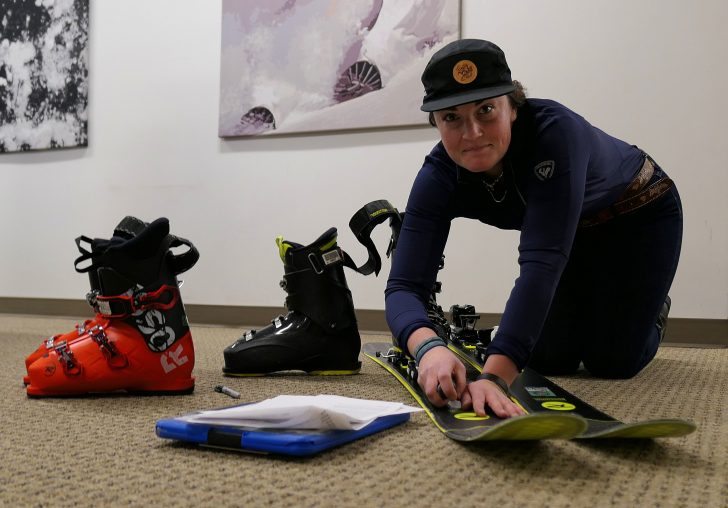
Maura Grady of Ski Butlers adjusts the bindings on Rossignol Soul 7 HD skis, one of the models the company offers. Credit: Jon Nelson

I’ve always wanted a butler. After watching all of those episodes of “Downton Abbey,” who wouldn’t?

And like the wise and efficient Carson on that popular TV show and movie, Ski Butlers offers an indispensable service, making the lives of traveling winter recreationists a whole lot easier.

Ski Butlers is a “come-to-you” ski and snowboard rental service that operates out of some of the largest markets in North America and Europe. Once you fly to a destination and check into your accommodations, Ski Butlers arrives with the gear, setting you up on site.

It’s a seamless operation.

I used the service when I flew into Salt Lake City for a four-day tour of Wasatch resorts in mid-January. The Ski Butlers team brought everything —goggles, helmet, skis, boots and poles. I had requested a high performance package and got Rossignol Soul 7 HD skis, a model I’ve been wanting to try out for a couple of years.

Your first question might be, “How did they fit your boots?”

Maura Grady of Ski Butlers brought several different pairs of boots for me, finding the right-fitting performance Rossignol boots almost immediately. I even learned something from her after finding the right pair.

“Pull the power strap tightly above the top buckle to prevent bruising on your shins,” she said.

It worked. Thank you, Carson. I mean Maura!

Once the boots were selected, Grady set the bindings, and I was good to go. The skis performed flawlessly during my tour of Alta, Snowbird, Solitude, Brighton, Snowbasin and Powder Mountain.

And let me also say this: The Soul 7s are a great ski for Utah’s amazing powder.

When it’s time to go back home, Ski Butlers picks up the gear, saving you another travel headache. All in all, it’s the easiest rental service I’ve ever used.

Ski Butlers started at Park City, Utah, in 2004, and has expanded to 50 destinations worldwide, concentrating on the Rocky Mountains and Western United States, said Nikki Bongaerts, senior content and communications manager.

The pricing for Ski Butlers depends upon the time of year, the type of package and the location, Bongaerts said, with rates going up during the busiest times of the year. She added: “Our prices are equal to or lower than the shop prices on the hill.”  

For example, base prices in Park City range between $51 per day for a “first-timer” package and $71 per day for a high performance package.

Some of the top markets for Ski Butlers are Utah, Summit County in Colorado, the Lake Tahoe area in California, Jackson Hole, Wyo., and Big Sky, Mont., Bongaerts said. Some Northeastern U.S. destinations may be added in the future, she added, depending upon demand.  

Besides the boot-fitting, the other main concern among customers is whether the gear will be beat up. No worries—the bases of my skis were perfectly tuned, thanks to Ski Butlers’ Montana tuning machine, a state-of-the-art robotic system.

Rather than schlepping your gear on an airplane, you might want to consider Ski Butlers in the future.

“The biggest advantage is the convenience factor,” Bongaerts said.

Snow In Literature: The Wood-pile

By Robert Frost

Out walking in the frozen swamp one gray day,
I paused and said, ‘I will turn back from here.
No, I will go on farther—and we shall see.’
The hard snow held me, save where now and then
One foot went through. The view was all in lines
Straight up and down of tall slim trees
Too much alike to mark or name a place by
So as to say for certain I was here
Or somewhere else: I was just far from home.
A small bird flew before me. He was careful
To put a tree between us when he lighted,
And say no word to tell me who he was
Who was so foolish as to think what he thought.
He thought that I was after him for a feather—
The white one in his tail; like one who takes
Everything said as personal to himself.
One flight out sideways would have undeceived him.
And then there was a pile of wood for which
I forgot him and let his little fear
Carry him off the way I might have gone,
Without so much as wishing him good-night.
He went behind it to make his last stand.
It was a cord of maple, cut and split
And piled—and measured, four by four by eight.
And not another like it could I see.
No runner tracks in this year’s snow looped near it.
And it was older sure than this year’s cutting,
Or even last year’s or the year’s before.
The wood was gray and the bark warping off it
And the pile somewhat sunken. Clematis
Had wound strings round and round it like a bundle.
What held it though on one side was a tree
Still growing, and on one a stake and prop,
These latter about to fall. I thought that only
Someone who lived in turning to fresh tasks
Could so forget his handiwork on which
He spent himself, the labor of his ax,
And leave it there far from a useful fireplace
To warm the frozen swamp as best it could
With the slow smokeless burning of decay.

This Week In SeniorsSkiing.com (Jan. 17)

East Coast: Start Us Up.  Roll Away Stiff Muscles, Harriet Wears A Cup Cake, New Bindings Old Skis, Mystery Top Hatted Skier, Nordic Gourmet Ski Tours, Good Weather News.

Last weekend, the temperature was 70+ degrees in Boston, a record high for January 4-5.  That was not a good thing for resorts, especially lower altitude areas, that are gearing up for the busy MLK weekend and trying to preserve whatever base they have. But, change is coming for the better. Real winter is finally coming to the East and Northeast.

How do we know? Statistics tell us so.  There is a metric devised by the National Weather Service called the North East Snowfall Impact Scale (NESIS) which rates snowfalls based on how much has fallen and the area of coverage. It is a similar rating scale to the Fujita tornado rating scale and the Saffir-Simpson hurricane scale many of us are familiar with. 

Using the NESIS scale, snowfalls are rated, again based on amount and area,  from 1 to 5 with an appropriate descriptor for each category:

    • Category 1 Notable
    • Category 2 Significant
    • Category 3 Major
    • Category 4 Crippling
    • Category 5 Extreme

Over time, you can look at the pattern of when these different categories of snowfalls occur over the winter. What you find when you plot Category 3-6 storms over time is the following: 

NESIS Cat 3+ storm frequency distribution by month, 1956-2019. Credit: Weather Channel

This graph shows that Category 3 to 6 storms usually show up at the end of January and the beginning of February. Which is now.

So, if you’ve been waiting for snow in the East, Northeast, Middle Atlantic, you may be able to finally get out on decent snow cover.  Place your bets because this looks like the snow train is a’-coming.

This Week

Nordic Nibbles are happening across the country. Eat and lost weight.

Our Incidents & Accidents this week is by Dave Irons, a noted ski journalist and patroller from Maine. His point: Safety is our everyone’s job. What can you do to avoid problems? Check it out here.

In Ask The Expert, Reader James Davis asks about using new bindings with old skis, the opposite question asked a couple of weeks ago. Those old skis might look fine, but inside…is another story. Here’s advice for James.

By now, you’ve probably been out for a day or two, or even several days of exercise on the slopes. If you are like many seniors, you are discovering some muscle soreness, knots, and stiffness. The way to smooth these normal aches and pains out is by foam rolling.  If you haven’t tried this form of self-therapy, you are missing a quick, simple, and effective method for relief. Click here for more.

Our Mystery Glimpse photo this week comes from Peak Resorts. He should be a familiar character that skiers who’ve been around for a while will recognize. We also reveal who the two racers from last week’s mystery picture. For the first time in a while, we had no guesses for those two, so we stumped the readership. Click here to see the Flippin’ Clown.

XCSkiResorts.com publisher and SeniorsSkiing.com cross-country editor Roger Lohr brings us a round up of where you can enjoy cross-country skiing and gourmet food on the same tour. Yes, there are xc resorts across the country that offer delicious food in plein air along beautiful ski trails.  Interesting concept: eat and burn calories.

Harriet will pass this badge on to someone turning 80 before April. Credit: Harriet Wallis

Herb Stevens, the Skiing Weatherman, brings good news about the change coming to the snowfields. The winter pattern is settling in on schedule, signaling a comeback for the East and New England.

The best for last.  Harriet Wallis, our esteemed and venerable correspondent from Utah, has her 80th birthday party at Alta.  Check out her pink, cup cake helmet cover.  You have to see it to understand.  And she is offering to pass along her “80” badge to a SeniorsSkiing.com reader who will turn 80 before April. Help her celebrate.

Thanks for reading SeniorsSkiing.com.  Please tell your friends and remember, there are more of us every day, and we aren’t going away.

Hope this guy has a foam roller.

https://www.facebook.com/Vagueetvent/videos/753540895153044/?v=753540895153044


Eat Your Way To Fitness

Cross Country Ski and Snowshoe Food Events Offer Exercise And Gourmet Food.

Nordic Nibbles are happening across the country. Eat and lose weight.

[Editor Note: This article first appeared in XCSkiResorts.com, published by Roger Lohr.]

Want a guilt-free way to indulge yourself with food while exercising? Cross country (XC) skiing and snowshoeing are some of the best forms of aerobic exercise, but if you go on a “Gourmet Ski Tour” on your XC skis or snowshoes, you may very well eat your way to fitness at a number of trailside food stops. What a grand time so go ahead, eat, ski, and be merry—appetizers, wine, champagne, fondue, entrees, desserts, and more.

Here’s a cross section of the culinary XC ski events that are planned this winter across the country with a varied menu of fun and fine cuisine.

East

Smugglers Notch, VT has the Snowshoe Adventure Dinner at the mountain summit on Tuesdays. The Maple Experience is on Tuesdays on a tour to learn about maple sugaring and get to take home a sample. The Sugar on the Snow snowshoe tour is on Wednesdays. The Hot Chocolate Warm Up is daily at 3:30 PM with a bonfire.

Notchview Reservation,  Windsor, MA hosts the the Breakfast Ski Club with a short tour followed by beverages, pastry and fruit (9 – 11:00 AM on Jan 18, Feb 1 and 15).

The Chocolate Festival at Mt. Washington Valley Ski & Snowshoe Center, Intervale, NH on Sunday, February 23 is an inn-to-inn affair at about 12 stops to experience your chocolate fantasies including moose and fondue. Go on a tour of any length and actually gain calories, even if you ski as far as 20 kilometers. A shuttle is also available for those that have overindulged at the event dubbed the “Sweetest Day on the Trails.”

Check out those goodies, then burn cals.

Central

Treetops Resort, Gaylord, MI has the Skiable Feast Getaway Package that features a winter gourmet adventure with five buffet food stations along six km of trails. It is offered at 8 AM – 2 PM on seven dates on Saturdays during January-March. Also the Wilderness Sleigh Ride Dinner is on Saturdays at 5-9:30 PM on a tour to the cabin for a culinary adventure.

Cross Country Ski Headquarters, Roscommon, MI has the “Around the World Wine & Ski Tour” is a new event with XC skiing, and Ribs & Blues food music event, and the Gourmet Chili Bard. Look for the Fill at the Grill and Fire on the Mountain food events.

The Upper Peninsula of Michigan in Ironwood features cuisine from local restaurants that can be purchased at a nominal fee for a food court with local restaurants at the Taste of the Trails on the ABR trails on March 14.

Mountains

Just Desserts Eat & Ski in the Enchanted Forest, Red River, NM on February 22 features goodies from 20 different local restaurants at three trailside stations with up to 100 desserts within a four kilometer loop. Their motto is, “It’s not a race, just a gorge fest.” Additionally, on Feb 14 there is a Yurt Dinner Party for Valentine’s Day.

Look to the Galena Lodge, Ketchum, ID for the Full Moon Dinners on nights with the full moon, whereby you can go ski or snowshoe ($5 snowshoe rental offered) and then return to lodge for a four-course dinner at $40 or half-price for kids under 12. There are also special Wine Dinners, Holiday Dinners, and Valentine’s Day Dinner scheduled from mid-December to mid-March.

At Devil’s Thumb Ranch Resort & Spa, Tabernash, CO,  the Ski, Sip & Spa is an all day event that includes lunch and wine & cheese is scheduled for Feb 9, 2020. Also, set for Jan 25 is the Stagecoach Classic Race & Tour starting at Devil’s Thumb into the town of Winter Park followed by an event with a beer garden and hosted by multiple food vendors.

The Rendezvous Trails, West Yellowstone, MT, features cuisine that is homemade and from local restaurants that can be found along a designated route on the trails at the Taste of the Trails on Feb 16. Pay in advance at West Yellowstone retailer Free Heel & Wheel.

Frisco Nordic Center  in Colorado has the Ski, Eat and Be Merry event on Feb 1 from 6:00 – 10:00 PM with a progressive dinner along the trails featuring food, drink, 3 bonfires and luminaries on a 2 km loop.

West

Bear Valley Adventures, in California,  hosts the Wine Tasting in the Meadow in late November to sample local wineries with appetizers.

Tahoe XC, Tahoe City, CA, has the Fish Taco Night is a fundraiser on Jan 29 at the Sunnyside Restaurant & Bar in Tahoe City.

Cypress Mountain, outside Vancouver, BC has Fondue Dinner Snowshoe Tour, S’Mores Tour, and Cheese & Chocolate Fondue Tour all scheduled with a snowshoe trek to the Hollyburn Lodge Building to start in January. These programs include rental equipment, trail access, and guides/instructors.