Tag Archive for: 50+

Transition To Cycling

“Start Slow And Taper Off.”

Keep your distance and take it easy, especially at one your first rides. Credit: Pat McCloskey

The ski season came to a screeching halt as most of us are now staying inside with some socially distanced outings.  As I look back on this shortened season, I can take heart in the fact that I made the most of it before cancelling my last trip.  Skied a lot in the rain locally, dropped some of the Daly Chutes in Deer Valley, and had a great time skiing with my wife and our dear friends out there in Utah.  Skied some great conditions again  locally and was looking forward to another trip with the guys this time and —voila!  Covid -19.  So, for me, I  sharpened and waxed the skis and put them away for another year and look forward to some dry trail time on the mountain bike. 

The good thing about transition time for us seniors is that we can go about it slowly.  We have paid our dues, and those of us who rode over the winter have a good base already on which to build. I have a friend who has a great saying when asked about how he will start his rides.  He smiles and says, “Start slow and taper off”.  We all laugh at this and have made it our motto, but, really, there is some truth to this especially in the spring.  There is no reason to be a world beater when it is still early. Like anything—running, gym work, or any other springtime resolution—if you start too fast or go too hard, you will most likely quit.  Especially if you are new to the sport or perhaps have not done your homework over the winter.  If you approach Spring with the idea that you will start slowly, each day becomes more and more enjoyable as you build your fitness. 

This social distance deal is a bit confining, so it is important to safely get outside and get some fresh air.  You can still build your fitness for the summer in a socially responsible way. For me, I look for trails that I know will not be crowded.  I went out yesterday, for instance, and saw two ladies on horseback—(seniors actually), and a family of hikers.  That was it. 

It was a warm and sunny day, and I felt good getting out under the socially correct protocol.  Eventually, we will be able to regroup with our friends and life will move on. 

For the moment, if you do venture out of your home, avoid the parks, and crowded trails and seek some solace in the more remote places.  A mountain bike is good for that, and, if you take it easy, you will find that you feel good getting out and not killing yourself.  I always say to my friends, “Nobody here is going to the Olympics so slow down.” We will all get through this.  Better times ahead but now is the time to be responsible and “Start slow and taper off.” 

This Week In SeniorsSkiing.com (Mar. 27)

Onwards, Reporting On Your Comments, New Question For You, Skiing Weatherman, Cool Sun Glasses, Poetry For These Times, XC Skiing Still Viable, Sugarloaf Resort Review, Stow Your Gear.

Postmasters Andrea and Brenda at our little country post office were so helpful in mailing fund raiser tote bags. Thanks so much.

Winding down, changing pace, and adapting to new circumstances has become the order of the day. At SeniorsSkiing.com, we are still publishing relevant articles for our readership that will in some small way briefly divert attention away from the pandemic and, at the same time, provide stories that deliver some insight about how to deal with it.

Last week, we offered our readers an opportunity to respond to three questions revolving around the resort shut down, alternative activities, and advice. The response has been overwhelming.  We received more comments on those questions than any article in our six year history.  So, we decided to summarize those replies and offer you the highlights of what your fellow senior snow sports enthusiasts are thinking and feeling these days.

Your comments reflect a thoughtful attitude, kind and understanding, and creative, even resolute, in adjusting to the world of social distancing. Thank you for your contributions.

We decided to add another question in this week’s addition.  A little prosaic, perhaps, but timely. Let’s see what you think about buying lift passes this spring.

Finally, we’re happy to report that all our fundraiser premiums—stickers, patches, tote bags— have been mailed. You should have received your packages or envelopes by now.  Many thanks to the tireless postmasters at our little country post office who handled the load.  Brenda and Andrea, you rock.  We gave them some SeniorsSkiing.com tote bags as thank you gifts.

This Week

As we mentioned, we’re feeding back your comments on our open ended questions from last week, and asking a new question for you. Click here and here for summaries. Please comment in the Reply Box at the bottom of article.

Spring storms have brought snow to many areas. Get your outdoor fix by enjoying the outdoors with XC.

Irony reigns as Herb Stevens, the Skiing Weatherman, reports late season snow is on the way. So there will be Nordic skiing opportunities at the beginning of April. If you’re in snow country, it’s not over yet.

XCSkiResort.com’s publisher Roger Lohr reminds us that Nordic skiing is still available to many and brings lots of benefits in fighting COVID-19Read his report here.

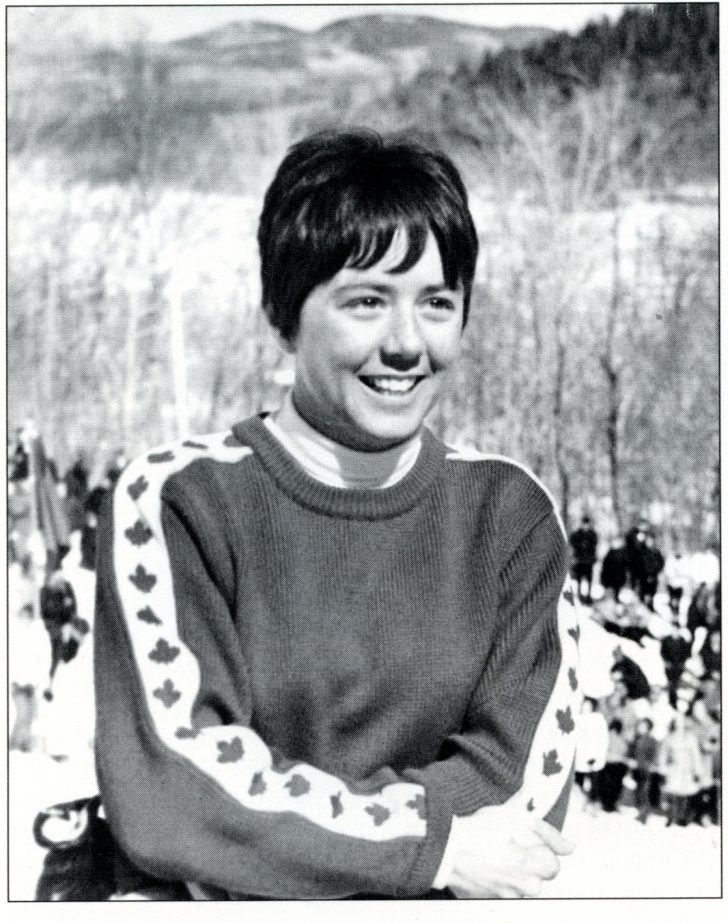
That young racer from last week’s Mystery Glimpse was Nancy Greene-Raine, Canada’s sweetheart and an active player in the snow sports industry in North America. Nancy spent about a decade serving in the Canadian legislature as senator from British Columbia. One of our readers actually skied with her a couple of weeks ago at Sun Peaks! We have included a video news interview with her that was recorded just before she retired where she describes her gold medal win in the 1968 Grenoble Olympics. Our new Mystery Glimpse shows a dude in some cool sunglasses.  Guess who.

We are reprising a story from last year on how to stow away your skis and gear. Correspondent Don Burch has some good advice, and since you probably have some time on your hands, it might be useful to be vigilant about taking care of your equipment.

Sugarloaf from the air on a beauty of a bluebird day.

We have one final Resort Review this season from correspondent Tamsin Venn who reports on Sugarloaf, the beautiful, big resort in western Maine that straddles the northern end of the Appalachian Trail. She managed to get a weekend of skiing in before the big shut down.  Perhaps her story will stir some memories of your season ending runs.

Finally, we include a special poem in our Snow In Literature series.  This one, Wendell Berry’s The Peace Of Wild Things, offers nature and the natural world as a potion for these uncertain times.

Thanks for reading SeniorsSkiing.com.  Tell your friends, and remember, there are more of us every day and we aren’t going away.


What You’re Saying: Wisdom And Kindness

Activities and Advice

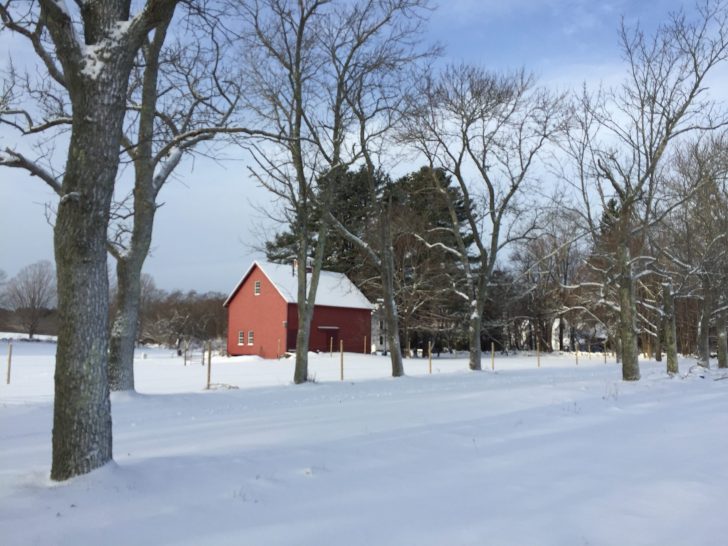
Appleton Farms, Hamilton, MA

Our editorial intuition proved to be correct when we decided to ask you, our dear readers, about your reactions to the current situation we are all facing and the premature shuttering of ski resorts and snow-sports related activities. In fact, we had more responses to the three questions we posed last week than any other article we’ve published in the six years SeniorsSkiing.com has been around.

Thanks for taking the time to respond.  Here are some take-aways from taking a close look at your responses to a couple of questions.

When you look at Question 2: What outdoor activities are you doing these days?  we find some clear themes.

  • The top two activities you are engaging in are walking/hiking and biking.  Clearly our active senior group is selecting heart-rate-raising activities that keep you in shape. Those two activities combined represented 50 percent of responses. 
  • Yard work, house projects, and gardening followed. According to Tom K., “Hiking, yard cleanup and I may start a garden. I tried a garden 15 years ago and gave up because I never realized how much physical labor goes into a garden.”  Work it out, Tom. Tell us about those tomatoes when they come up.
  • There is a smaller group of readers who are also doing quiet things: reading, watching television, and researching.  Reader Larry McDonald has been looking back into the history of the 1918 Spanish Flu epidemic.  Here’s his comment: “Historical research here in one of Colorado’s virus hotbeds, Gunnison. Must not have learned much from 1918, as Gunnison was an “escape community” back then with 0 deaths during the first two waves, and just a few during the 3rd deadly wave. Just google Gunnison flu 1918. Plenty of historic cemeteries and ghost towns around here to see the impact it had back then.” We did google that, Larry, and found that Gunnison escaped the worst of the flu through strict precautions. 
  • The remainder of activities you’re engaging in range from riding motorcycles and horses, to golfing, tennis, kayaking, playing music, fishing, prepping boats, and, yes, skiing.  There are a couple of folks who plan to continue to ski either by skinning up mountains or cross-country.
  • And just a few of you report you will be “working“. 

What About Advice?

As far as Question 3: What advice would you give seniors facing indefinite isolation?, your words of wisdom revolve around getting outside, staying in shape, staying connected and staying busy with a variety of tasks.

Some  comments were funny (“Binge eat”), therapeutic (“Gargle with saline solution”), or practical (“Make sure you have enough provisions”). 

Others reflected a sense of community. “Do what you can for others” came up often, including offering food, money, or just contact to others. 

One comment really struck us in its inherent kindness.

Reader Bob Ohrt said, “We are some of the most fortunate people in the world, share the blessings a bit more. There are those all around us, and there are about to be a lot more, living on the edge of making it by. Give what you can for others; give money, food, even just a smile. We have all been in tough places and somebody helped, pass it forward. It is our time, that is how a younger generation will learn to do the same.”

Indeed, it’s our time.  Thanks, readers,  for sharing your wisdom and kindness.

Sunday River, aerial view.

Mystery Glimpse: Cool Sun Glasses

A Founder

Another easy one.  Let’s hear from you. Do you have any stories about this person?

Credit: Journal New England Ski Museum

Last Week

Credit: Dorothy Crossley, New England Ski Museum

Nancy Greene-Raine, skiing’s girl next door. Not only was she a successful ski racer for Canada, she became a senator for British Columbia in 2009 until her mandatory retirement in 2018. She has a long list of ski industry related accomplishments, including racing, ski area development, fundraising, as well as awards.  She is a recipient of the Order of Canada, the country’s highest civilian honor. She was instrumental in developing Sun Peaks in BC where she regularly skis with visitors.

Here’s a comment from Steve Threndyle, a reader who recently skied with Nancy.

“That’s Nancy Greene-Raine (note ‘e’ in Greene and hyphenated last name). Canada’s Female Athlete of the Half Century (wasn’t even close). Two time overall World Cup winner. Canada’s Sweetheart (well, more like, “Tiger”, her nickname). Gold and Silver Olympic Medalist, in 1968 Grenoble. Served in the Canadian Senate until mandatory retirement at age 75 three years ago. Authored legislation to ban sugary/unhealthy food and instituted Canadian Fitness Day each June.

Skied with her for a couple of hours two weeks ago. She and Al are wonderful people. Sun Peaks is a fantastic place!”

Here’s a picture Steve provided with a smiling Nancy.

Nancy still skiing at Sun Peaks. Credit: Steve Threndyle

Here’s a short video of Nancy speaking about her 1968 Grenoble Olympics gold medal win.

Skiing Weatherman: More Snow Coming. No Kidding.

Late Season Snow Opens Nordic Opportunities.

As the coronavirus situation has continued to unfold and expand, the curtain has all but come down on the alpine season across North America. Nevertheless, lovers of the great outdoors continue to find ways to ingest their fair share of fresh air by a variety of different means, including cross country skiing aficionados. At last count, 17 Nordic centers around the country remain open.  For those of you who will continue to rack up the kilometers as we move through early spring, here’s this week’s weather outlook.

This season now has all the earmarks of ending up with bookends in terms of jet stream patterns. You may recall that November got us off to a quick start as the jet stream aligned itself in a fashion favorable for the delivery of early season cold to the lower 48 states. Here in the East, as the calendar turned from October to November, the folks at Killington were very nervous about the prospect for the Women’s World Cup event scheduled for late that month. However, when the Women’s White Circus showed up three weeks later, the reversal of weather fortunes made for another hugely successful weekend of racing.

And then came the rest of the winter. As I discussed a couple of weeks ago, the Midwest and East got locked into a highly unfavorable jet steam setup that, unfortunately, made it very difficult for cold air masses to stick around for a while. Well, that appears to be about to change, which should help to extend the Nordic season.

In a nutshell, an upper level trough is going to set up shop over the eastern half of North America later next week. At the same time, a blocking ridge will be in place over Greenland. It was the LACK of a blocking ridge in that position that allowed cold air masses to slide right off the continent when they did manage to make a push into the Midwest and East. Cold air is not as abundant as it was one or two months ago, but there is enough available to flow into a trough and lead to late season snow. That scenario is on the table around April 3-5 in the Northeast. Here is a look at the expected pattern on the morning of the April 3:

A deep trough centered over eastern New York will provide the focus for the cold air. The trough may want to progress eastward into the north Atlantic, but the ridge that extends from Labrador to Greenland will resist and force the trough to only slowly move toward the ocean. It is important to also know that near the center of circulation of troughs, the air is rising and cooling to a greater extent than at points further away from the center. This further suggests that eastern New York and northern New England could very well pick up a substantial late season snowfall next weekend. That’s great news for Nordic touring centers from the Adirondacks to the mountains of Maine. As long as the ridge remains over Greenland, the colder air will stick around, just like in November.

Here Are The Regional Details.

Northwest U.S./western Canada: A season of abundant snowfall shows no signs of quitting. The hits will keep on coming in this part of the world for the next couple of weeks at least.

Sierra: While the amounts won’t be as prodigious as further north, the proximity of a trough not far offshore should produce several meaningful snowfalls in the next two weeks.

Northern Rockies: The storms that continue to bury the coastal ranges will move inland and keep this part of the U.S. and adjacent Canada in the crosshairs for solid snowfalls for the foreseeable future.

Central and southern Rockies: In the absence of an El Nino, it is tough to grind much snow out of the southern branch of the jet stream late in the season. Northern stream systems will graze these areas from time to time and provide several lighter snowfalls.

Midwest: Other than across the Upper Peninsula of Michigan, snowfall is a long shot the rest of the way in the middle of the country.

Northeast/Quebec: Next weekend looks like the best opportunity for late snow. Based on what has happened the past few weeks, northern Maine and adjacent Quebec won’t see bare ground for many weeks to come.

Thanks for reading. Enjoy your sliding and your summer.

This Week In SeniorsSkiing.com (Mar. 20)

Hold Fast, James Niehues Paints Mountains, Emily’s Poem To Spring, Ski Diva Perspective, Senior Group At Powder Mountain, Weatherman Says More Snow, Mystery Racer.

Spring Arrives Tonight.

The irony is sardonic. The snow-starved Sierra is finally getting yards of snow, Easter will most likely have another coating in New England at higher elevations. And no lifts are turning.  Normal is upside down.

Ski towns are discouraging second-home owners from taking shelter in rural areas, some resorts are giving out food to employees. Waterville Valley, NH, the last remaining operator in the Northeast, is finally closing down, despite their elaborate precautions. Our continuing operations have been met with outcry by many who choose to misrepresent our efforts and have created an environment that has incited people to act irresponsibly to the point of becoming abusive and threatening to our staff,” says this week’s press release.  What used to be a mecca for cheerfulness, easy-going-ness, and fun has turned rough with people rubbing each other the wrong way. Irony.

We know this period of time is unsettling, uncertain, ambiguous, and, to some, quite frightening. During this disruption, we feel it is critical to remember what is still important and always will be. For example, pay attention to your fitness. You might be doing some backcountry skiing, or skinning at closed ski areas. Please be careful and make sure you know what you are doing.  First responders are pre-occupied these days. We’re taking long walks and doing yoga at home guided by a wonderful app called Down Dog, which will be offered free until April 1.

Another priority is to connect. We’re going to be isolated, dear readers. That is not a good thing for seniors in normal times, and even more stressful now. So, here’s what we propose. We are going to offer our readers a chance to connect with like-minded folks through a simple idea.  We’re going to pose some questions you can respond to in the Reply Box for each question. Respond to the questions, to each other’s comments, start a dialogue, connect. What we’re trying to do is create a place for exchanging ideas, offering support, referring to resources, or whatever falls out.  Please give it a go.  We have no idea how this experiment will turn out, but it is worth a try.  We already know our readers have lots to say.  So, let’s hear from you.

Finally, folks, it’s Spring. Yes, it is snowing in places. But here we are, on the other side of winter. We saw our first robin on our walk yesterday.  Look for yours.

Check out Jon’s comments in Short Swings this week for his perspective on dealing with the current crisis.

Hold Fast.

This Week

A poem from Emily Dickinson helps put spring in perspective. Welcome Spring and notice the crocuses coming up in your walks.

Our friend and colleague the Ski Diva has published an important summary of what’s going on in the ski industry since the advent of the virus. An important read.

Herb Stevens, the Skiing Weatherman, reports on snow coming for Easter. Oh well.  You can probably go x-c skiing or snow shoeing if you’re living in the right places.

Niehues’ trail map of Vail. Complex, broad, beautiful.

We feature James Niehues’ work, the Man Who Paints Mountains.  Actually, he is an artist who has created ski maps for hundreds of ski resorts across the globe.  He’s published a book of his work which, as you know if you’ve ever really looked closely at a trail map, is incredible.

Salt Lake City correspondent Harriet Wallis tells us about a special senior week in small groups run by a couple at Powder Mountain, UT. It is an interesting idea: great food, mountain-side lodging, kindred spirits.

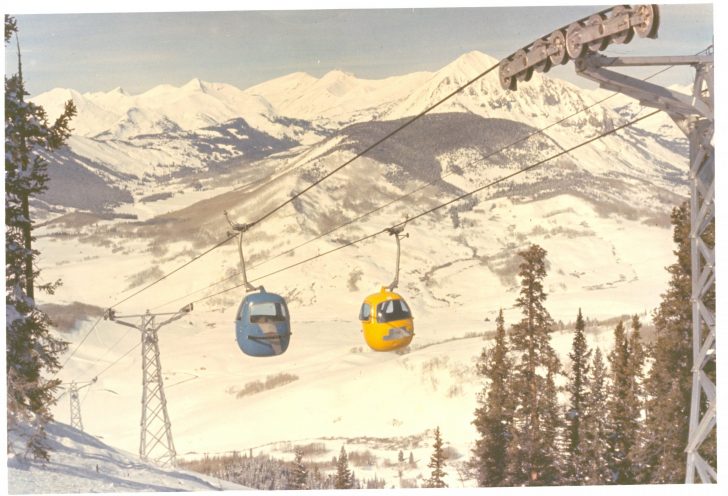
Our Mystery Glimpse this week features a young woman who should be familiar to many readers. And those colorful gondolas? Crested Butte.

Thanks for reading SeniorsSkiing.com.  Tell your friends about us, and, remember, there are more of us every day, and we aren’t going away.


Two Skiers

Question For You: 1

It’s important for seniors to connect during these difficult times. Because we have a large list of senior readers, we are contemplating turning a portion of SeniorsSkiing.com into a forum for our readers.  We’re going to ask some questions that you can respond to in the Reply Box below each question. Hopefully, others will respond and we can create a dialogue.  This is an experiment in connecting readers to each other.

How do you feel about the early close of the season?  Were you done? Did you have more turns to make?

Please respond in the Reply Box below.


Ski Instruction

Question For You: 2

It’s important for seniors to connect during these difficult times. Because we have a large list of senior readers, we are contemplating turning a portion of SeniorsSkiing.com into a forum for our readers.  We’re going to ask some questions that you can respond to in the Reply Box below each question. Hopefully, others will respond and we can create a dialogue.  This is an experiment in connecting readers to each other.

What outdoor activities are you doing these days?

Please respond in the Reply Box below.

Historic5

Question For You: 3

It’s important for seniors to connect during these difficult times. Because we have a large list of senior readers, we are contemplating turning a portion of SeniorsSkiing.com into a forum for our readers.  We’re going to ask some questions that you can respond to in the Reply Box below each question. Hopefully, others will respond and we can create a dialogue.  This is an experiment in connecting readers to each other.

What advice would you give your fellow senior winter outdoor enthusiasts in dealing with an indefinite period of isolation?

Please respond in the Reply Box below.

The Man Who Paints Mountains

James Niehues Creates Hand Painted Maps Of Ski Resorts And Now There’s A Book.

James Niehues in his studio, creating maps by hand. Credit: LA Times

If you’ve ever taken a second look at the resort trail maps you casually pick up and put in your parka pocket, you are most likely looking at a painting by James Niehues. James has created trail map art of over 200 resorts around the globe since 1988.  Instead of resorting to computer-created images, he paints by hand and the results are remarkably detailed and beautiful. How does he do it?

James combines the technology of cartography with the art of water colors to create the maps. He flies over an area, takes aerial photographs, studies topographic maps, then creates a simple sketch of the mountain scene. From there, he projects the image on a painting surface, filling in the details starting from the sky down to the base. 

Niehues’ trail map of Vail. Complex, broad, beautiful.

One of the biggest challenges is to show the back trails or bowls of mountain on the same map as the front side. Sounds like Picasso, right? He says it’s a puzzle he has to piece together.

James has been creating resort maps for three decades, taking over the role from Colorado’s Bill Brown, the only resort map artist at the time. Now in his mid-70s, James has anthologized his collection of over 200 maps into a coffee-table book, The Man Behind The Maps, available from Amazon for about $100.

He’s retiring from his one-man profession, passing the mantle to a younger protege. Clearly, his maps create a mood that you don’t get from computer graphics, and that’s the whole point.  Both approaches show you the way down, but James’ maps are create a “feeling” of mountains and the outdoors.

Here’s  a short video that tells James’ story. 


Skiing Weatherman: There’s Snow In The West, Only Maybe East

For Those Still Venturing Out On Snow Shoes, Skinny Skis, Or Skins.

On a typical office day in the winter, I often scan web cams from resorts, living vicariously on those days when I can’t be on the snow myself. Now that the coronavirus pandemic has ground the winter sports season to a virtual halt, I still check out the cams, but recently I have felt more of a sense of sadness rather than excitement or anticipation of my next trip to the mountains. The absence of skiers and the stationary lifts is striking, and where fresh snow has fallen and remains untouched, the scenes are downright bizarre. Although the alpine resort options are very limited, there are many of you who still want to get your fresh air on skins, skinny skis, or snowshoes, or perhaps with your grandchildren on a sledding hill, and it is for you that I present this week’s weather discussion.

The winter pattern has shown a great reluctance to change from a dominant western trough/southeastern ridge configuration, which has led to abundant western snows and a struggle for snow lovers in the Midwest and East. For the past two weeks, there have been signs of change in the Pacific that correlate to colder than normal weather spreading into the eastern half of the country and that change makes sense based on the change of seasons. You see, as we head toward spring, the distance between jet stream features shortens as the available supply of cold air in the hemisphere starts its seasonal decrease. If you think of that cold air as one large puddle in the heart of winter, it becomes smaller puddles as the overall supply dwindles. Each winter trough requires a cold pool aloft to exist, but with less cold air around, those features tend to be smaller than a month or two ago. So, rather than have two large features covering the continent, there is room for three, or even four from the eastern Pacific to the East coast. It is possible to have a western trough AND an eastern trough with shorter wavelengths. This jet stream forecast for next Tuesday illustrates that setup.

Not only is there a deep trough off the West coast, which will deliver another significant snowfall to the Sierra, Cascades, and northern Rockies, but there is a departing trough over the Northeast. In addition, the ripple in the flow over the Plains is another package of energy that could turn into a deeper eastern trough and potential snow producer by late next week because it could become stronger as it moves into the East.

Looking further down the road into early April, there are conflicting signs as to whether or not the jet stream flow will tap any appreciable amount of cold air to sustain what is left of the season. The transitional months are easily the most difficult time to forecast. Judging the battle between the retreating cold and advancing spring warmth is a handful, and there are signs that the pattern will revert to one that is milder than normal over the East while the West continues in more of a wintry setup. I still think that the shorter wavelengths will deliver cold shots and late opportunities for snow to the Midwest and East, at least up until Easter weekend.

Here Are The Regional Details.

Northwest U.S./western Canada: Quiet weekend with systems from Alaska moving into the region next week, leading to a snowy period overall.

Sierra: Dry weekend with snows returning to region next week as an upper trough slides down the coast. Only issue is that if trough hugs the coast, snow levels will rise.

Northern Rockies: Sunny weekend. Coastal Pacific system will bring snow to the region by Tuesday and Wednesday…another system arrives next weekend.

Central and southern Rockies: Southern branch of jet stream has brought this area snow over the past two weeks, but it will be rather quiet for the next week. Nothing more than a little light snow at times.

Midwest: Late week snow will refresh surfaces across the north. Nice weather for the weekend. Next opportunity for snow late next week.

Northeast/Quebec: Chilly, dry weekend. No major storms next week, but an early week southern system could bring late snow to the northern mid-Atlantic areas. Overnight lows help preserve snow most nights.

Senior Small Group Ski Week With Lodging Right On Uncrowded Powder Mountain

Plan Now For Next Winter

Seniors participating in Life Elevated Utah having fun and acting silly for the camera. Credit: Harriet Wallis

Gary and Sandy Nielsen have run Road Scholar programs in Utah for about 20 years. They’re experts at planning and organizing week-long programs including Hopi pottery, dinosaurs and rock hounding in summer—and the very popular senior ski program in winter.

But several years ago as the demand for more senior ski weeks kept growing, Gary and Sandy responded with an idea of their own. They created new, small group ski weeks especially for seniors, and they base the programs at Powder Mountain. It’s ski weeks with all the trimmings.

Gary and Sandy cookin’ up Eggs Benedict for breakfast. Credit: Harriet Wallis

Gary invited me to experience the program. As I entered the little lodge’s great room, the first thing I saw was an inviting table with every beverage a tired skier could want: refreshing lemon water, coffee, tea, cocoa, a selection of wine with nice glasses, and plenty of cold beer in the fridge. Such enormous hospitality! As the skiers came in, they chose a beverage and settled into the sofas to retell the day’s adventures. And that was just the beginning.

When it came time for dinner, we gathered around a beautifully set table and enjoyed huge portions of roast salmon, fresh asparagus, baked potatoes, and a crisp tossed salad. There are seconds! Then came dessert: steaming homemade peach cobbler topped with vanilla ice cream. Gary and Sandy love to cook. Every meal was just as spectacular.

“When Gary and Sandy run a program, I know it’s going to be good,” said Henry, a repeat skier.

About The Programs

Gary explained how the ski weeks work. “Powder Mountain is known as ‘Utah’s Best Kept Secret’ and through our nonprofit organization called Life Elevated Utah,” we have been running week-long ski programs for older skiers between the ages of 60-90+ for the past few years.

“We stay right at the base of the mountain in a comfortable 1980s style lodge. This is a true ski-in, a ski-out experience in which our older skiers simply love. We only have five hotel rooms, each with a private bathroom. The rooms have great views of the slopes looking out from each room’s patio doors.

“Our programs are six days of skiing Monday-Saturday with programs beginning and ending each Sunday. We provide transportation to/from SLC Airport, cover seven nights lodging, prepare three delicious meals a day for our small ski groups in our kitchen in the lodge. We help set up ski lessons, mountain tours, and many other ski amenities,” he said.

“I know they really care about me,” said Kathy, a repeat skier. They make sure every detail is just right. This program has just the right number of people, but not too many. I used to do all the ski trip planning when my family was young, but this is so much better. They take care of everything.”

Life’s Lessons Achieved

Gary was one of five children, and it was a family rule that when you turned eight years old you learned how to cook dinners for the family. The cooking lessons stuck, and along the way he developed a specialty catering business. “Chef” is in his soul.

Travel planning has also been in his soul since he was young, and he’s skilled at it. He has degrees in Recreation Management, specializing in travel and tours, and a degree in Business Management. It all fits together.

Looking To Next Season

This really is a best kept secret. Gary and Sandy don’t have a website. So,  to get information for next year’s Powder Mountain senior ski weeks, email gary@lifeelevatedutah.org

Seniors like to ski with seniors, but finding a program is as difficult as looking for a Yeti. Interestingly, Road Scholar has eliminated all western downhill ski programs for 2021. Just one ski eastern Road Scholar program continues.

Small group of seniors on big Powder Mountain: 8,400 acres with 154 trails. Credit: Harriet Wallis

Mystery Glimpse: Young Racer

Who Is This Racer?

Major hint: O, Canada! This one should be easy. This week, we all need an easy one. Can you tell us about her history? Her extraordinary career? Thanks to the New England Ski Museum for this picture.

Credit: Dorothy Crossley, New England Ski Museum

Last Week

This photo was taken at Crested Butte Mountain Resort in 1963, showing off the installation of their new Carlevaro-Savio, Silver Queen Gondola.

Crested Butte Mountain Resort opened in 1960 when two men—Fred Rice and Dick Eflin—purchased a ranch on Mt. Crested Butte. An operating permit enabling the resort to be built was approved by the United States Forest Service the following year.

In 1963, Crested Butte constructed a top-to-bottom gondola from the base area to near where the bottom of the High Lift is today. The resort was the second resort to open a gondola in Colorado, after Vail Ski Resort opened theirs in 1962. Constructed by Carlevaro-Savio, the three-person Silver Queen Gondola was notorious for being cramped, and the cabins were known to have frequent collisions. The gondola lasted until 1972, when a bubble double chairlift replaced it.

Special thanks—again—to Dana Mathios, curator and Director of Collections, at the Colorado Snowsports Museum, located in Vail, CO.

70+ Ski Club: Ski Trips, Fun, And Camaraderie

You Are Never Too Old To Be Young.

70+ Ski Club group photo. The club ventures to US, European, and this year, New Zealand resorts. Credit: 70+ Ski Club

Ski clubs have been around ever since people strapped skis on for fun. But the 70+ Ski Club has a unique niche. It’s the only ski club for skiers – and boarders – who are at least 70 years old. 

People often give up skiing when their spouse passes away or when they simply run out of friends to ski with. The 70+ Ski Club fills the need and serves up week long ski trips and also short events so skiers can make new friends and find new ski buddies.

Red and Jim: Newfound friends become new ski buddies. Credit: Harriet Wallis

This winter, the Club’s week-long international trips included the French Alps, Vermont’s Okemo, Big Sky, Banff/Lake Louise, and Utah, where they skied a different resort every day. And the season isn’t over when the snow melts here. The Club is scheduled to go down under to ski New Zealand this summer.

There are shorter jaunts and day events especially in the Mid-West and New England. While the mountains might not be as big, the game is on with new trails to explore, ski clinics, race clinics, good natured events, and apres ski parties.

At a time when our doctors are urging us to be active, the 70+ Club members already have the message. They continue to be active skiers and they engage in living life to the fullest. Becoming 70 is just the beginning. Many members are in their 80s and 90s and even a few at 100. As the saying goes: “You’re never too old to be young.”

The Club was launched 43 years ago, in 1977, by Lloyd Lambert, an enthusiastic and accomplished skier and patroller who saw the need to keep skiers skiing as they grew older. He urged ski resorts to give discounts to older skiers. And he helped turn the tide from skiing being a sport for the adventurous young into a lifelong sport for all. The Club started with 37 members and has grown to 3,000 members.

Today, grandson Richard Lambert heads the Club and plans the trips. He gets universal praise for his thoughtful preparation and well organized trips.

I asked very modest Richard to say something about the Club for this story. Instead, he sent a note he received from skier who met some of the 70+ers.

It said: “Met several of your members and would love to be part of this amazing group. I vow not to adapt to a sedentary lifestyle and this group is an inspiration. I plan to wear out, not rust out. The enthusiasm of the group is contagious.”

Membership includes a distinctive 70+ (or 80+, 90+, or 100+) jacket patch, a helmet decal, a lapel pin, a list of ski areas that offer seniors free or discounted skiing, a twice annual newsletter, and a membership card. All for $15.

Are you old enough to be a 70+ Ski Club member?

Not quite 70? Check the website for details on becoming a 70+ Ski Club member-in-training.

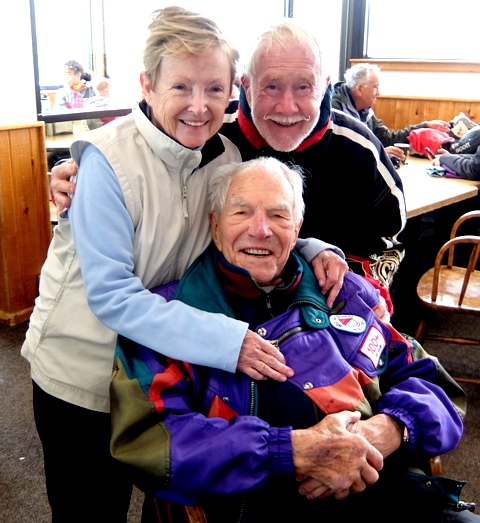
70+ Ski Club members Sandra, Red, and 102 year old George Jedenoff. Credit: Harriet Wallis

Skiing Weatherman: Out Like A Lion

March Won’t Be Ending Spring-like.

Although I had good intentions, I must confess that I did not get on the snow in the past week.  65 degree temperatures here in Rhode Island early this week didn’t help to inspire, for sure.  Much of the East has had a frustrating season, due to a lack of cold and snow, but the evolving pattern over the next several weeks is not going to please those ready to turn their backs on winter.  The pattern is going to change to one that delivers cold and snow into the country, first into the West but also to the East, where the colder pattern will persist for a longer spell than we have seen since early winter.  That is great news if you have plans to ski or ride Easter weekend!

In the short term, a massive high pressure center is going to deliver a seasonably cold weekend to the resorts in the Great Lakes and East.  In the West, the best news is that the Tahoe area is going to receive heavy snow during the second half of this weekend into early next week.  After a largely snow-free February, some lighter snow has fallen the past two weekends in the central Sierra but this event will deliver the load that the resorts really need.  Amounts will range from 1 to 2.5 feet with this storm.  Snow is headed for the northern Rockies this weekend, too, as this surface map from Sunday morning illustrates. 


Next week will turn milder again in the East, but not to the extent that we saw earlier this week.  The coastal system that impacts the Sierra this weekend will continue to rotate southeastward during the first half of next week, bringing snows to the southern Rockies.  While the upper level trough that produces that snow favors the West, an upper ridge over the East will keep it mild and deflect a storm up through the Great Lakes late in the week, and that track will be unfavorable for snow in the East.

Help is on the way to the East, though, in a classic case of “better late than never”.  Changes are underway in the Pacific in terms of the location of ridges and troughs, and we will soon see a configuration that has been rare this winter.  An upper ridge will set up shop over Alaska, with a trough south of that spot.   Here is forecast for the 22nd that illustrates the position of that ridge.

In addition to the strong ridge sitting over Alaska, notice the trough extending down from the southern flank of the polar vortex all the way to southern California…that will continue to benefit parts of the West.  With a clockwise flow around the ridge and a counterclockwise flow around the trough, you can see how the air will be directed from the Yukon into the northern Plains and then eastward through the Great Lakes.  As the trough presses eastward, it will spread the cold air into the East for the final week of the month and likely beyond.  The season will roll along in the West, while in the East, don’t despair, a solid shot of cold and snow will set things up for some nice Easter sliding.

Here Are The Regional Details    

Northwest U.S./western Canada:  Light to moderate snow this weekend followed by several dry days next week.  Light snows return Thursday, followed by a more substantial weekend storm.       

Sierra:  Good sized storm this weekend, the biggest since January.  Next weekend looks promising, too.  Longer term, eastern Pacific trough development will bring additional snows into April.             

Northern Rockies:  Moderate to heavy snow this weekend, light snows continue early in the week.  Next shot at snow later next weekend.  

Central and southern Rockies: Light to moderate snow this weekend, another shot at significant snow Tuesday as southern branch systems moves toward Four Corners.      

Midwest:  Nice weekend on the slopes.  Light precip early next week, snow across north, rain south.  Developing colder pattern will help sustain the season late month/early April.               

Northeast/Quebec:  Seasonably cold, dry weekend.  Milder next week, not so much for northern New York and New England.  Pattern change will make Easter viable for skiing, riding.     

A New Yorker Discovers New Mexico Resorts

A Veteran Skier Can’t Find Ice On His Visit To Taos, Angel Fire, Ski Santa Fe.

Taos Kachina Peak is at 12,481 where the snow stays cold. Credit: Taos

The past three times I skied here in the East the skiing was good.  That means the trails were all skiable but every run you would encounter different conditions.  Most mornings after a cold night, you will find nice groomed corduroy which had set up overnight due to the cold temperatures.  We have not received much snow but thank God for snow making.  After a run or two the firm corduroy changes to loose large granular pieces. Then after a couple more runs that will change to a fine granulated sugar, again very skiable.  As the day progresses that sugar finds its way to the sides of the trails and the rest of the trail, especially the slightly steeper spots get scrappy and eventually Boiler plate.  Time to go home!

Now once in awhile you will hit a day when it was snowing or had just snowed.  Here in the Northeast this seems to be happening less and less and I am convinced that it is a product of global warming.

As Eastern Skiers we can usually ski any condition as it changes throughout the day and lately that has been the norm.  I still love it but it can get frustrating.

Compare that to skiing out West. West, as in New Mexico. Mountains? You bet.

Here’s what I discovered on a recent trip. The New Mexico ski areas are much higher than the Northeast and as you climb up you get colder and receive more major snowstorms.  Skiing at Taos, Red River and Santa Fe you will be skiing approximately from 9,000 ft. to 12,000 feet, that’s 6,000 feet higher than the tallest mountain in the Northeastern United States which is mount Washington in New Hampshire (6288″). 

The average snowfall in Taos is around 300″ per year of very dry fluffy powder due to the high elevation.    It’s 220″ at Ski Santa Fe, 214″ at Red River. With the higher elevations the temps are lower and the snow sits longer. Compared that to the Eastern ski areas where the elevations are below 4,000 feet.  Whiteface is the highest ski area at 4,650′ with average snowfall of just over 100″. Altitude, acreage, the snow and  weather is all the difference.

In the East we fight icy weather conditions up to 4,000 ft., whereas the higher and drier climate of the Rockies are well above 10,000 feet above sea level.

In the East there are wind chills that are very, very cold, where out West it is sunny during the day with Blue Bird sunny skiers. (Most of the time, it seems.)

Moguls are hard and icy here in the East but in the West they are constantly soft snow. No matter how big the moguls may be they are usually always soft so you actually can be a hero out West while in the East you battle the ice on the downside of almost every one. 

Length of trails at all the New Mexico areas were substantial, open Bowls compared to dense trees of the Eastern trails.  Bigger vertical gets plenty of skiing in the West compared to skiing shorter lifts in the East and more runs. 

Taos has the most expert terrain especially now that you don’t have to hike Kachina peak with 1294 acres 51% expert 25% intermediate and 21% beginner. There was only one main lift that gets you to the numerous other fixed grip lifts on the mountain.

Angel Fire has some two mile runs, and best of all 70-75 seniors pay $29, 75+ pay zero. Credit: Angel Fire

Angel Fire has 560 acres of skiing  with 23% expert 56% intermediate and 21% beginner with  their main Chile Express lift over 2 miles long so all the runs down are very long. Their two main lifts are hi speed and you get plenty of skiing in a day. And Angel Fire loves seniors: 70-74 pay $29 a day, over 75 free. 

SkiSantaFe has super senior (72+) tickets for $0. Thanks guys.

Ski Santa Fe was the smallest in skiable acres with 660 acres 40% expert 40% intermediate and 20% beginner but still had plusses. One of which is that you can stay in Santa Fe and drive to the ski area and enjoy the culture. And seniors 72 plus ski free at this resort. Thanks, Ski Santa Fe.

Bottom Line: New Mexico Ski Resorts enjoy low humidity, consistently low temperatures due to elevation and enough snowfall that ice doesn’t form.  It is consistently packed powder from top to bottom

Mystery Glimpse: Bumpin’ Gonds

What Ski Area Is This?

And what’s the story behind these yellow and blue gondolas?

Special thanks to Dana Mathios, curator of the Colorado Snowsports Museum, for providing this week’s photo.

Last Week

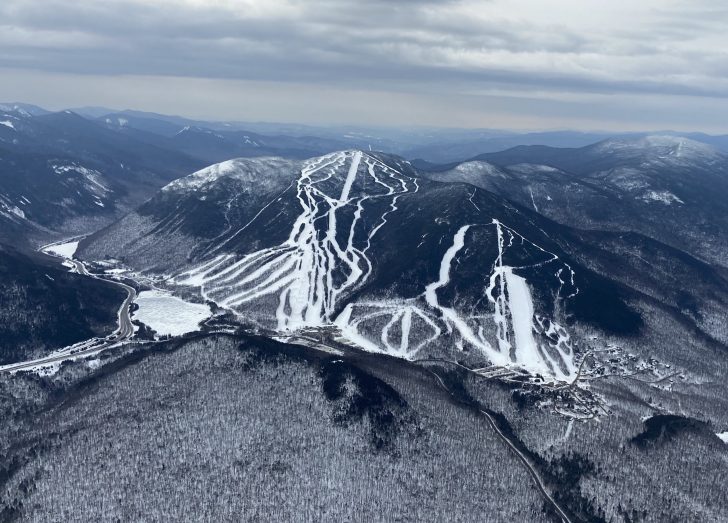
This is a photo of Cannon Mountain, Franconia, NH, home of America’s first aerial tramway which began operation in 1938 and was renovated in the 80s. Taken from the air by a passing friendly aviator, the resort has a reputation as one comment pointed out for being “too cold and too fast”.  Regardless, one feature of Cannon that endears the state-owned resort to SeniorsSkiing.com is that seniors 65-plus ski for free. That is, if you are a New Hampshire resident.  Still, that’s a gift.

That wide swath you see on the right side of the mountain is the training hill for myriad ski teams. At the very base is the Mittersill Alpine Resort.  A reader reports the training hill was closed for 40 years, but it’s clearly back in operation, accessible from the base by a t-bar.  Quaint, no?

Here’s a short video showing the ride up the tram.


This Week In SeniorsSkiing.com (Mar.6)

We Get Letters, Alpine Backcountry Primer, Frost’s Funny Poem, History Dartmouth Skiway, Big Green Machine, Collision Video, Guess Aerial Photo Of Resort, Weather Ahead.

Dear Readers:

Our 2020 SeniorsSkiing.com February Fundraiser is officially over, however, the donation page will remain open. We are overwhelmed by the response from so many of you.  Your contributions will go a long way in helping defray the expenses incurred in putting out an online magazine, an expense that grows as our subscriber base grows.

Throughout the month, we’ve been getting emails and snail mails with notes from you that are incredibly sustaining to us. We are proud to have provided a forum for seniors’ interests in the snow sports world and even in the active senior world. Frankly, your validation about what we are doing feels darn good. Here’s a sample of comments:

From Lynn and Alice:

Hope you got my donation last week.  I just cannot believe that you have 20,000 subscribers!! [Editor Note: Not there quite yet. We anticipate that number by the end of the season.] And, here, I thought that I was one of very few 74 year old women who get so overly excited when they see an untouched glade on the mountain!  😍

Soon, you will outdo the printed ski mags—once so popular and so celebrated—but who now are sadly R.I.P. I did say to my sister about 20 years ago, “Somehow I can’t imagine us not wanting to still be riding these chair lifts in a quarter of a century! And I just know that the ‘Free Lift Pass for over-65’ will have climbed to ‘over-90’.  Such is life!  At this rate, she and I will NEVER make it to a ‘Free Lift Pass’  It’s the ‘Jedenoff Gang’, who will be the Spoilers for us!!  Long may they reign and ski!

Your newsletter—seriously—is far more informative (and funny) than those “resting giants”—the old ski mags—had come to be by the time they met their demise.

You all do a wonderful job and, believe me, we all appreciate it!

From Bruce:

Your reports motivate me to keep working and skiing.

From Kate:

Love what you are doing, love the tote.

From Gail and Tom:

Really enjoy SeniorsSkiing. We ski for free at Alta now.

From Marilyn:

Keep up the good writing and work!

From Richard:

If you ever venture up to Maine to ski, give me a call.

From Bruce and Mary Lou:

We read almost everything published in SeniorsSkiing and I think we get more value from your publication than we do from our Ski Magazine subscription.  Keep up the good writing!  We’ll see you out on the slopes some day.

Thank you, dear readers.  We are touched. Premiums are being sent out over the next couple of weeks.

This Week

Backcountry skiing is different, requires planning and gear. Credit: Bolton Valley

Correspondent Tamsin Venn introduces us to a relatively new snow sport: Alpine Backcountry skiing. It requires new equipment, preparation, and planning.  Her article tells you what to do and not do when you go off piste.  Her report comes from Bolton Valley’s Alpine Backcountry area.

Our Snow In Literature series features a Robert Frost poem that highlights the mischievous nature of the month of March. You’ll get a laugh at the last line. Kind of unusual for Robert.

Correspondent Roger Lohr shows us what its like to ski the famous, venerable Dartmouth Skiway. This area is one of the early venues for skiing and the long-time training site for many ski teams. Check out the green-colored lodge.  It is Dartmouth, after all.

Speaking of green, snow machines are also going green.  Here’s a report from Harriet Wallis about the new PistenBully hybrid snow groomer at Alta. Many ski resorts are making investments in green, sustainable energy sources. Expect to hear about more machines like this at ski resorts in the future.

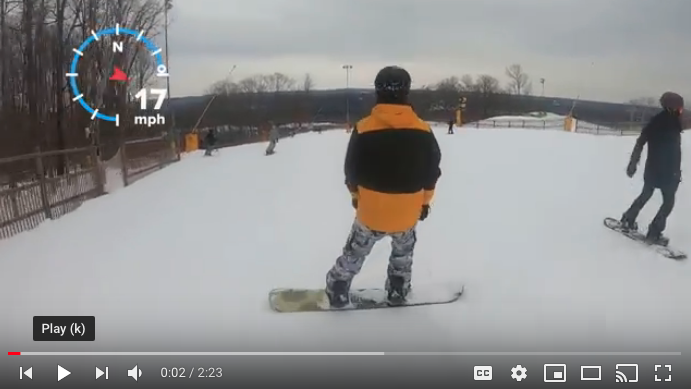
Skier hits boarder from behind. We have a new Incidents & Accidents report from reader Randall White who shows us a video of his collision with a snowboarder.  Now, that’s a complete reversal of the kind of incidents we’ve been reporting.  Find out why the collision happened. Randall did a great job analyzing the conditions that led to the impact.

Yes, indeed, it was Lucille Ball at the Mittersill Alpine Resort in last week’s Mystery Glimpse. This week we have an aerial photograph of a notable ski area. Can you guess which one? Not easy.

Finally, Herb Stevens, our Skiing Weatherman, tells us what to expect in next week’s weather. Spring is coming, but there’s still lots of activity in the atmosphere.

Once again, thank you so much for your support. And, tell your friends about SeniorsSkiing.com. Remember, there are more of us every day, and we aren’t going away.


Alpine Backcountry Touring Primer In Bolton Valley

Three Things to Do And Not To Do While Alpine Backcountry Touring.

Backcountry skiing is different, requires planning and gear. Credit: Bolton Valley

For those who have never tried Alpine Touring, Bolton Valley near Burlington, Vt., offers an intro to backcountry skiing every Saturday morning out of the spacious Sports Center near the main lifts.

That is due to a recent change in Bolton Valley ownership. Three years ago former owner Ralph DesLauriers, his son Evan, and local partners bought back the well-loved ski resort.

Alex describes the required gear. Credit: Tamsin Venn

An avid backcountry enthusiast, Ralph’s other son Adam developed a unique backcountry and split boarding program to fully enjoy the 1,200 acres of terrain here. Ralph’s daughter Lindsay who is president of the organization is another fan.

In Alpine Touring, you skin up the mountain with your heels free on lightweight, Alpine-like equipment then lock in and ski down. It’s called “earning your turns.”

We were lucky to have as our guide Medevac helicopter pilot Alek Jadkowski who was patient and clear with us newbies. Indoors we learned how to secure the toe, adjust the heel lifts for uphill climbing, then lock into downhill mode, and put on skins. We followed Alek uphill to nearby Holden’s Hollow Glades and soon were all whooping it up between the trees in thigh-deep snow having caught our fearless leader’s joyous enthusiasm.

Here are three things Alek recommends when starting out in this fast growing sport.

What Not To Do:

1) Don’t ski alone. It’s possible to injure yourself so you can’t even call for help; you need someone else to do that.

2) Don’t get lost. It doesn’t necessarily require a map or compass. You can use GPS or a map on your phone; how you keep track of your location is up to you. Carry a phone battery booster; take into account you may be out of cell service range.

3) Don’t drop your skins in the snow. They will lose their grip and with it your uphill power. Fold them carefully when removing them. Stash them in your pack.

What To Do:

1) Wear a helmet. Travel uphill with a lightweight beanie but downhill protect your head from possible tree contact. Wear goggles to protect your eyes from tree branches.

2) Know what weather to expect and dress for it. You get hot and sweaty climbing uphill and chilled when you stop to switch gear and ski down. Layer your clothing, carry a backpack so you can shed layers and put them back on. Slow your climb if overheating. Drink plenty of water.

3) Do have fun. Go and ski something you are going to enjoy; find the level that suits you; do something that makes you happy.

Where: Bolton Valley Resort and Mt. Mansfied State Forest. 100 km trail and glade network

Learn: Intro clinic every Saturday, (9:30 to noon). Cost $60 includes two hours of guided skiing but not rental gear. Private guiding and lessons also offered.

Fees: NBU (Nordic/Backcountry/Uphill) day pass $13 for seniors (65 plus). Senior Season pass $149; age 75 plus $79.

Gear: State-of-the-art rentals of Dynafit Alpine Touring ski equipment, $60 a day.

Gimme Shelter: BV has added a warming tent in its backcountry glades.

Getting ready to go Alpine Backcountry with friends. Credit: Tamsin Venn


SeniorsSkiing Guide: Historic Dartmouth SkiWay

Big Mountain Fun And Small Mountain Friendly With History All Around.

Corduroy in the morning. Dartmouth Skiway has a mix of twisty narrow and open groomers. Credit: TheSnowWay.com

Dartmouth Skiway in Lyme Center, NH was founded in 1956. After six decades the ski area has recently hired only the fourth director in its history. Mark Adamczyk who was the director of outdoor adventure at the Winter Park Resort in Colorado will replace Doug Holler, who is retiring at the end of this season after 19 years on the job.

The Skiway rock guards the entrance to the big, green lodge. That’s Dartmouth green, BTW. Credit: Roger Lohe

The Skiway as it is known locally is family-friendly and reasonably priced with 20-30 runs of terrain that will serve first timers or challenge skiers and riders of all ages and abilities. One-on-one teaching for beginners through advanced skiing is a tradition at the ski area that includes two mountains, a clean, comfortable lodge, a rental shop, and a food court. Visit the area and you’ll see not only kids learning to ski in a beginner area and older skiers doing snowplow turns on the trails, but also ski racers from Dartmouth College training and clacking through the gates.

The Holt’s Ledge side of the resort has a double chair while there is a quad chair and a conveyer lift on the Winslow side. The McLane Family Lodge is open and airy with plenty of space. The large wooden tables and benches and stone fireplace give the lodge a rustic appeal of skiing in the old days. You’ll see after-school groups at the Skiway during the week, but even on weekends the slopes are uncrowded and the lift lines minimal. Dartmouth Skiway has more than 100 skiable acres including tight off-piste trails and glades for advanced patrons, 968 foot vertical drop, and 16,000 square foot lodge.

Watching the races at the Holt’s Ledge, circa 1960. Credit: Dartmouth.edu

This area is quite historical in the world of skiing and ski racing. More than 100 national and Olympic champions have trained at Dartmouth Skiway. The Dartmouth Skiing Wall of Fame on the first floor of the lodge reveals a Who’s Who of ski legends.

Calling the lift ticket prices at Dartmouth Skiway reasonable is an understatement. Adult midweek lift passes are $33 (weekend $58) and half day prices available for morning or afternoon are available for only $28. Prices are lower for teens and children while senior skiers pay only $27 a day or $22 for a half day, and super seniors age 80 and over ski or ride for free! There are low priced season leases for equipment and packages to learn skiing or riding (with private lessons). The beginner area is $14 all day, and there is a Skiway Special on Monday and Tuesday for $23 during non-holiday periods.

From a personal view, the Skiway was about 15 minutes from my home in Hanover, and much of my family ski lore occurred there. Each day of the week there was a different town after-school ski program. I ran the Ford Sayre snowboard program for a number of years there, hiring Hanover High School kids (including my son and daughter) to teach and chaperone hundreds of younger kids in small groups. On a recent visit to the Skiway following a full day snowstorm, I was greeted by the woman at the ticket window stating, “Some things never change, it’s no surprise seeing you here on a powder day.” Riding on and off trail with my kids at Dartmouth Skiway is a deep-rooted part of my family history and on-snow soul.

Dartmouth Skiway is 15 minutes from I-91 Exit 14. For more information  click here. 603-795-2143.

For a Dartmouth Skiway trail map, click here.

For Dartmouth Skiway web cam, click here.

Skiway has a museum in the lodge reflecting 60+ years of history. Credit: Roger Lohr.

There’s A Big Green Machine At A Few U.S. Resorts

It’s More Than A Pretty Paint Job. It’s The World’s First Hybrid Snow Groomer.

Up the hill goes the PistenBully. Quietly. Credit: PistenBully

On the outside, it looks pretty much like all the others in a resort’s fleet. It has a fierce-looking blade up front, a cab in the middle, and a corduroy-making tiller behind. What’s “under the hood” makes the green groomer special.

The PistenBully 600 E+ is on the forefront of environmental kindness. It uses 20 percent less fuel, and its carbon emissions are reduced by 20 percent. In addition, there’s a major reduction in particles released. And it’s also quieter.

Those are major factors because grooming operations go on all night, every night, all season long, manicuring the snow into fresh corduroy for skiers every morning.

The green groomer is called the E+ because it makes its own electricity. That electricity powers its work-horse equipment including its tank-like tracks and its huge corduroy-making tiller. It’s a hybrid!  It’s the world’s first diesel-electric snow groomer.

Alta got one of the very first PistenBully 600 E+ in the country. “The 600 E+ is a step towards the future just as we are seeing with electric cars,” said Buck Boley, Alta’s Director of Equipment Operations. “It’s a great snowcat, and we are happy to have one.”

Other resorts that have a 600 E+ include: Bromley, Cranmore, Jiminy Peak, Park City, Heavenly, Alpine Valley, WI, and Crystal Mountain, WA.

The groomer has joystick and lots of knobs and dials. A steep learning curve. Credit: Harriet Wallis

Taking a snow groomer for a test drive and getting it delivered is more complicated than buying a new car. Alta’s came from Peterson Equipment, the regional, Utah-based PistonBully dealer that’s been in the groomer business for nearly 60 years and was named the top snow groomer dealer in North America. Alta, now in its 82nd year, has earned many awards for its environmental commitment and leadership, so its 600E+ fits right in as a strategy to reduce environmental impact.

Looking to the future, total electric groomers are being tested, but they’re not yet ready for production, said Eric Kircher, a PistenBully Trainer and Technical Advisor. Kircher is an expert who travels to resorts to teach the fine points of groomer operation.

Nitty Gritty Specs About The PistenBully 600 E+

Where Manufactured: Germany

Engine: 6-cylinder, in-line Mercedes Benz

Fuel and Tank: 73 gallons, diesel

Speed: 12 mph, continuously variable depending on the work it’s doing

Torque: Its electric motors have full torque as soon as  they start to turn at very low engine rpm.

Turning Radius: On the spot

Weight: About 10 tons

Cost: About the same as a large house.

Mystery Glimpse: From The Air

What Are We Looking At?

Thanks to a friendly aviator, we have this magnificent, recent (last week) view of a most formidable mountain resort.  How’s your pattern recognition?  Can tell us where it is? Major hint: That wide trail to the right is used for racing team practice.

Last Week

Yes, Lucille Ball visiting the Mittersill Alpine Resort in Franconia, NH, probably in the early-mid 60s. The man on the left is Gary Morton, her second husband, not her “I Love Lucy” husband-partner Desi Arnaz.

She and Desi can be credited with creating the sitcom format. Among her many other achievements was becoming the first female head of a major television-film production company, Desilu Productions. Her biography doesn’t reveal her attraction to snow country, however.

We can only guess she was a guest of Baron Hubert von Pantz, Mittersill’s founder and aristocratic host.

Desi, Jr., down in front looks like he could use a hot chocolate.

This photo is currently on display in the lobby of the Mittersill Alpine Resort along with other momentos of the hotel’s history.  Among those is a page from the hotel registry featuring the signature of Princess Elizabeth, soon to be Queen, on a stop over trip during her tour of Canada.


Incidents & Accidents: 9

Funneled With No Place To Go.

Who: Randall White

Where: Mt St Louis, Ontario, Canada, near Toronto

What Happened: Skier-snowboarder collision at convergence and crossover of blue ski runs. These were moderate to high speed runs without any warning signs, and it was a crowded day.  See recorded GoPro video for a detailed visual account of the accident, and thoughts on improvements.

Role of Ski Patrol: Neither person was seriously injured or required transport, so Patrol not called. The protocol at this ski area is for Patrol to take a “not injured statement and signature” from people.  That is for relief of liability. 

Lessons Learned:  Read maps carefully, ski off to the side of the run in busy intersections, go slow, and watch out for fast skiers behind you. Runs with funnel points should be avoided or approached with caution.

Advice: Wear a flashing red bicycle light on your helmet aimed behind you. Choose one of very high lumens for daylight visibility.  That may help reduce the probability of rear end collisions. 

Action: Make a report to the manager of Ski Patrol, or the GM of the ski area for such hazardous conditions.  Suggest that they install metering chicanes in such locations to slow skiers down and allow for safer crossovers and merges. See video.

For Prevention:  Stay away from overcrowded ski slopes that are too close to large metropolitan areas. There are inherent hazards/accidents that while preventable, are unlikely to be corrected by the ski area operators.  

CLICK BELOW TO SEE RANDALL’S STORY AND ANALYSIS OF THE CAUSE.


weather

This Week In SeniorsSkiing.com (Feb. 28)

[Editor Note: SeniorsSkiing.com is asking our readers to contribute to support our online magazine. Yes, we have grown in the number of subscribers and advertisers. But our expenses have also grown. You can help us defray some of these expenses by helping us out with a donation.]

Support SeniorsSkiing.com by clicking here.

______________________________________________________

What Is It With February? Trapp Family XC Tour And Beer, XC Clothing That Works, Funny Keep-Warm Tips, Safety Survey, Mystery Celeb, Doing The Chutes At DV, Weather Next Week.
“The most serious charge which can be brought against New England is not Puritanism, but February. Spring is too far away to comfort even by anticipation, and winter long ago lost the charm of novelty. This is the very three a.m. of the calendar.” Joseph Wood Krutch

“Why does February feel like one big Tuesday?” Todd Stocker

“While it is February one can taste the full joys of anticipation. Spring stands at the gate with her finger on the latch. ” Patience Strong

February is the border between winter and spring.”   Terri Guillemets

“Good morrow, Benedick. Why, what’s the matter,
That you have such a February face,
So full of frost, of storm and cloudiness?” William Shakespeare, Much Ado about Nothing

“Late February, and the air’s so balmy
snowdrops and crocuses might be fooled
into early blooming. Then, the inevitable blizzard
will come, blighting our harbingers of spring,
and the numbed yards will go back undercover.” Gail Mazur, “The Idea of Florida During a Winter Thaw,” The Common, 1995

“Late February days; and now, at last,
Might you have thought that winter’s woe was past;
So fair the sky was, and so soft the air.” William Morris, “February: Bellerophon in Lycia,” The Earthly Paradise: A Poem, 1870

February is the bridge we cross over into spring.  It’s the month that hosts the mid-point of winter. You can feel the change happening in the longer hours of sunshine and the odd day that reaches far above average temperatures. To some, February’s end brings spring in the mountains, enjoying the snowpack with suntan lotion on nose and your extra layer tied around your waist or balled up in your pocket.  To others, the burning need to get in some more swings and turns gets amped up: Gotta do it now because it’s all on a downhill calendar. Take that trip out West; it’s high season.  To still others, the season’s end is just a couple of weekends away.

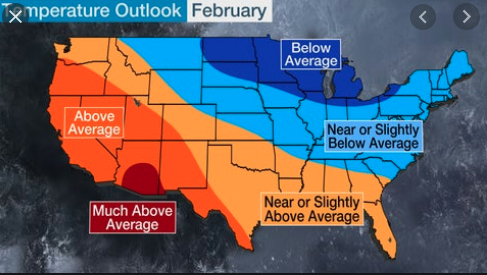
So, what is it with February? We’re halfway done, but there’s a whole other half ahead. Fifty percent of the season is about to unfold. And, in completely different ways than the first half. More sun, longer days, changing snow conditions. According to this season’s winter weather predictions, the forecasts were more or less on target. The West (minus California) has hit snow base records; the East continues to a be a swirl of snowy days, rain, warm temps, freezes, and repeat, exactly the “mixed, wet and wild” prediction that NOAA forecast. 

The end of February signals one more big vacation week ahead to look forward to for the season. Spring Break brings the last waltz for a lot folks who don’t live close to resorts, who live near resorts whose snow bases are thin, who have boats to uncover, tennis leagues to form, bike rides to plan.

But wait.

February might be the middle, but March, ah, March, is the impish one, the spoiler with more days to work with, more volatility in the air, more history of being mischievous. Hope for a sudden, out of nowhere and strong Nor’easter to cover every ski hill from West Virginia to Maine, and you might get your wish. Yes, we can see Spring on the horizon in February, but no one can tell what March is up to, and that’s coming up next.

This Week
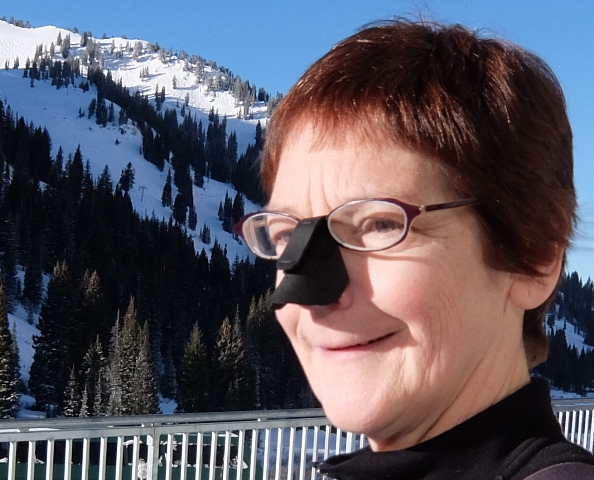
Nose cone fashion statement? Credit: Harriet Wallis

We rejoin our Incidents & Accidents series with the recounting of yet another hit-from-behind story.  The lessons learned, however, might be a little more nuanced than the ones we’ve seen previously. Thanks to Arlene Condon Maginn for the report.

SeniorsSkiing.com is asking its readers to complete a survey provided by the Snowsports Safety Foundation, a non-profit that is seeking input on safety matters at ski resorts.  Please offer your perspectives and opinions; this is a good cause.  The survey is quite short, the questions are clear; shouldn’t take more than five minutes.

George and Jon at Alta.

Of all people, co-publisher Jon Weisberg bumped into the 103-year-old George Jedenoff, the legendary skier who is the senior-most senior skier of all.  Check out Jon’s story about skiing with George at Alta this week.

Correspondent Pat McCloskey rips up the notion that Deer Valley is overly intermediate. Check out his story about handling the Daly Chutes at DV.  The video is pretty cool, too.

New England-based correspondent Tamsin Venn visited the Trapp Family Lodge, toured up to a remote cabin, and returned to the Trapp Bierhall, all in one day. If you love Nordic skiing, or you want a break from Alpine, consider a cross-country vacation at either Trapp Family Lodge, or any other resort that caters to xc. For a listing of those, check out XCSkiResorts.com.

Northern VT mountain-scape on the way to the Slayton Lodge. Credit: Tamsin Venn

This week’s Mystery Glimpse is another relatively easy one.  Name the famous television celeb on a visit with her family to the Mittersill Alpine Resort, Franconia, NH.  We also reveal the name of the artist whose watercolor adorns the walls of the New England Ski Museum’s North Conway Branch.  Not a Wyeth, but sorta close.

Utah-based correspondent Harriet Wallis has some fun with her “recipes” for handling cold noses and feet.  Practical advice from some inventive senior skiers.

SeniorsSkiing.com’s cross-country editor and publisher of XCSkiResorts.com Roger Lohr offers his advice on the latest xc clothing to wear. As in, don’t wear your parka.  There’s more.

Finally, Herb Stevens checks in with his view of what’s happening in the atmosphere. As we mentioned above, you can never tell what will happen in March, and Herb has a nascent Nor’easter on his scope for the end of the first week.  Stay tuned. Click here for the outlook.

Thanks for reading SeniorsSkiing.com.  Thanks for contributing to our February Fundraiser; premiums will be going out soon.

Tell your friends about us and remember, there are more of us every day and we aren’t going away.


 

Trapp Family Lodge: Some Favorite Nordic Things

[Editor Note: SeniorsSkiing.com is asking our readers to contribute to support our online magazine. Yes, we have grown in the number of subscribers and advertisers. But our expenses have also grown. You can help us defray some of these expenses by helping us out with a donation.]

Support SeniorsSkiing.com by clicking here.

______________________________________________________

A Ski Tour At The Legendary Resort Winds Up With Craft Beer.

Northern VT mountain-scape on the way to the Slayton Pasture Cabin. Credit: Tamsin Venn

One of our favorite things to do at the Trapp Family Lodge in Stowe, VT, is to ski up to Slayton Pasture Cabin, a three-mile steady climb.

The rewards are a screaming yippee-inducing downhill and a cozy cabin with a roaring fire, friendly fellow skiers, and hot chocolate, soup, and sandwiches.

The pasture is named after the farming family that once owned this hill-top acreage, a corner of the gorgeous 2,600 acres of rolling hills and meadows owned by the Trapp Family Lodge.

On a recent crisp mid-February day with new snowfall, nature presented a perfect Vermont day, sun shining through the trees, and impeccably groomed tracks. Every senior who likes to Nordic ski should do this trip.

Sam von Trapp, scion of the famous singing family, leads the tour up to Slayton Pasture Cabin. Credit: Tamsin Venn

Our guide was Sam von Trapp, son of Johannes, youngest of the singing family’s siblings. Sam exudes enthusiasm—for the trails, his family’s business, land, guests, Nordic guides, and epic ski races. He actually waited for us to catch up, then told entertaining stories while we caught our breath.

It was Johannes armed with a masters’ degree from the Yale Forestry School and, with the aide of a Norwegian XC director from Oslo who cut the lovely rolling loops through the woods and fields, created the first commercial Nordic center in the country in 1968.

We reached the cabin via Yerrick’s Yodel to the newly named Hissy Fit trail to Chris’ Run. The sign that marks the half way point to the cabin has been removed for motivational reasons. The official record time from the Outdoor Center to the cabin is 17 minutes 11 seconds, according to von Trapp.

On the way down, follow Haul Road, Chute Bypass, Triple Bypass, cross Luce Hill Road, to Luce Trail, to Lager Lane, and you have arrived. At the Bierhall!

Here the spacious setting offers Austrian fare for lunch and dinner. Dishes like the chicken schnitzel and the Johannesburger, made from the Trapps’ own grass-fed beef await. We sampled the new Berliner Weissbier “test batch,” just out of the brewery. It’s going to market later this month.

Sam and Johannes at the brewery. Beer and XC skiing make a natural combo. Credit: Tamsin Venn

Ever the visionary, Johannes started the brewery in 2010, when the craft beer movement was gaining froth. The goal was to brew crisp, clean craft lagers like the ones the family tasted on trips back to Austria. First opened in a retro-fitted bakery on the property, the brand new 36,000-square-foot brewery that you see today followed, so positive was the response.

A shuttle will take you back to the Outdoor Center. Just ask the host at the Bierhall to request the ride. If you still have some energy left snowshoe the red trail up to the Stone Chapel that Werner von Trapp built. Snowshoeing is increasingly popular here with dedicated trails, another favorite thing.

The facts: 100 km of XC, snowshoe, and backcountry trails on more than 2,500 acres. 36 miles are groomed,

Passes: Senior day $20. Senior Ski Season (65 plus) $185. Senior couples $300.

If you energy to spare, snow shoe over to the Stone Chapel, built by Werner von Trapp. Credit: Tamsin Venn