Tag Archive for: 50+

Personal Note: Sources Of Inspiration And Frustration

A Military Epic Pass Discount Special Became A Big Motivator To Get Back In Shape.

Marc—The Inspired Biker—Liebman

Last winter and spring, like many others, I watched the ski season melt away. For those who went before the big shut down, good on you. For, me, the only hopes I had of skiing was in late April or May or June at Mammoth.  And, poof, that was gone.

Slowly, I had been building back the stamina I had from a persistent infection I was fighting since the previous summer, but at 74 and more than a half, what was gone was gone, never to return.

Yet, I had hope.

Hope came from several sources. One was that medically I knew I was beating the bug. Another was from the emails from ski areas saying they just received X inches of new snow. Snow wasn’t going away. That was comforting.

Another inspiration came from an odd source. One morning, my inbox has an email from the people who run Epic Pass offering a steep discount for an unlimited pass assuming I could prove that I was a member—active, reserve or retired—of the U.S. military. I read the fine print, called and then had a long online chat with the online person before I plunked down my credit card data for an Epic Pass that cost about what I would spend for two days of skiing! The purchase was a no brainer.

So, with that in hand, so to speak, I was even more inspired to regain as much as I could the way of fitness for the season to come. At the end of June, I was finally off the medications and cleared to start exercising more “vigorously” than walking.  Since Covid had shut down all gyms and even when they re-opened, they were considered high-risk for a septuagenarian.

What was left? Summer in North Texas was here, and I pulled my bike down from the rack. The tires were flat and when I tried to pump them up, I popped both tubes. Since it hadn’t been ridden in a year, I took it to a bike shop which recommended that I replace the brake pads, (cracked and split and soon wouldn’t work) and the chain which was showing some signs of wear.

How long to fix? Six weeks! Egads! Everyone was rehabbing their bikes, it seems. So it was back to walking.

But, beginning in August, I was on the bike four or five times a week. The goal, get back to 20 miles a ride. Now, before you are impressed, the elevation change of the route I take is a whopping 94 feet. I’m averaging about 10.6 miles per hour so I am not riding like a bat out of hell. Eleven miles takes roughly an hour.

The most important thing is that I am riding and am, as of this writing, doing about 12 miles a ride. Still working on getting to 20. Next challenge is figuring out how to get to the slopes to make use of my Epic Pass.

Now that’s an inspiration.

This Week In SeniorsSkiing.com (Nov. 20)

SPECIAL EDITION: MAKE MORE TRACKS!

Credit: Trapp Family Lodge

Focus On Nordic, Snowshoeing, Fat Biking: Rationale, The Market Forecast, Videos: How To XC, Snowshoe, Fat Bike, Hidden Gem XC Resorts, Lesson Advice, Mystery Nordic Star, Trail Preferences.

There’s more to winter besides downhill skiing. This issue will explore additional ways you can Make More Tracks.

Let’s be clear at the top: We love Alpine skiing, the thrill, the speed, the grace, and all that. We always will, so don’t think this Special Edition of SeniorsSkiing.com devoted to alternative winter snow sports is an abandonment of the mainstay that almost all of our readers have been participating in for years.

However, this year, we anticipate that while our readers will at first enthusiastically head to Alpine resorts, reserve online, gear up in their cars, mask up, social distance, eat a bag lunch, and all the rest, many will grow weary of those restrictions. Or become frustrated. Or not bother going at all.

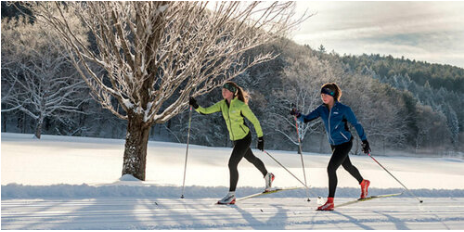
But, since we know our readers love winter and snow, we also anticipate that they might be open to alternative snow sports that might be new to them or to which they may be returning. Like cross-country skiing and snowshoeing.  These are accessible, easy to learn the basics, affordable, safe (social distance built in), and good for body and soul.

Since the beginning of October we have been publishing a series of articles named Make More Tracks. These include instruction, resort reports, clothing advice, and the like.  In addition, we’ve compiled a Make More Tracks Resource Guide with a compendium of articles about the alternative winter snow sports, covering gear, destinations, technique, and how to dress, and much more.

Co-Publisher Mike Maginn on wooden skis, circa 1970.

We are dedicating this entire issue to Nordic skiing, snowshoeing, and Fat Biking. Hopefully, you will read something that might stir you to think about getting into other winter sports. We’ve been loving cross-country skiing since the early 70s. So much so that we still (occasionally) get out our wooden skis, wax, four-pin bindings, and take a loop around the farm across the street. On a bluebird day with perfect snow, the right wax combo, and a Heineken in your backpack, there is nothing like it.

ANNOUNCEMENTS

We are extending our special introductory classified ad offer until Dec. 4th. That means you can post a classified ad for 30 days from the date you post for just $1. We’re hoping you take advantage of this opportunity to find ski buddies, share rides, rent condos or apartments, and sell gear and collectibles.

We’ve been contacted by several readers who are frustrated by having to re-enter their name and email on the subscription pop-up. We know this can be frustrating. Here’s what you can do to eliminate the problem: TURN ON “ENABLE COOKIES” IN YOUR BROWSER ON EACH DEVICE YOU USE TO ACCESS SENIORSSKIING.COM. We’re working with our IT resource to make enabling cookies more clear as a way to avoid constantly re-entering name and email.

This Week

SeniorsSkiing.com’s cross-country editor and publisher of XCSkiResorts.com  Roger Lohr explains what XC means to him. Our thanks to him and cross-country journalist and consultant Jonathan Wiesel for their support and contributions to the Make More Tracks series. Click here.

Our Mystery Glimpse picture this week is a Nordic competitor who may be the greatest xc racer of all time. We predict some of our readers will get this one right away; others will have no clue. Such is the fate of Nordic celebrity in the snow sport world.  You will also learn the name of that odd parka from last week. Click here. 

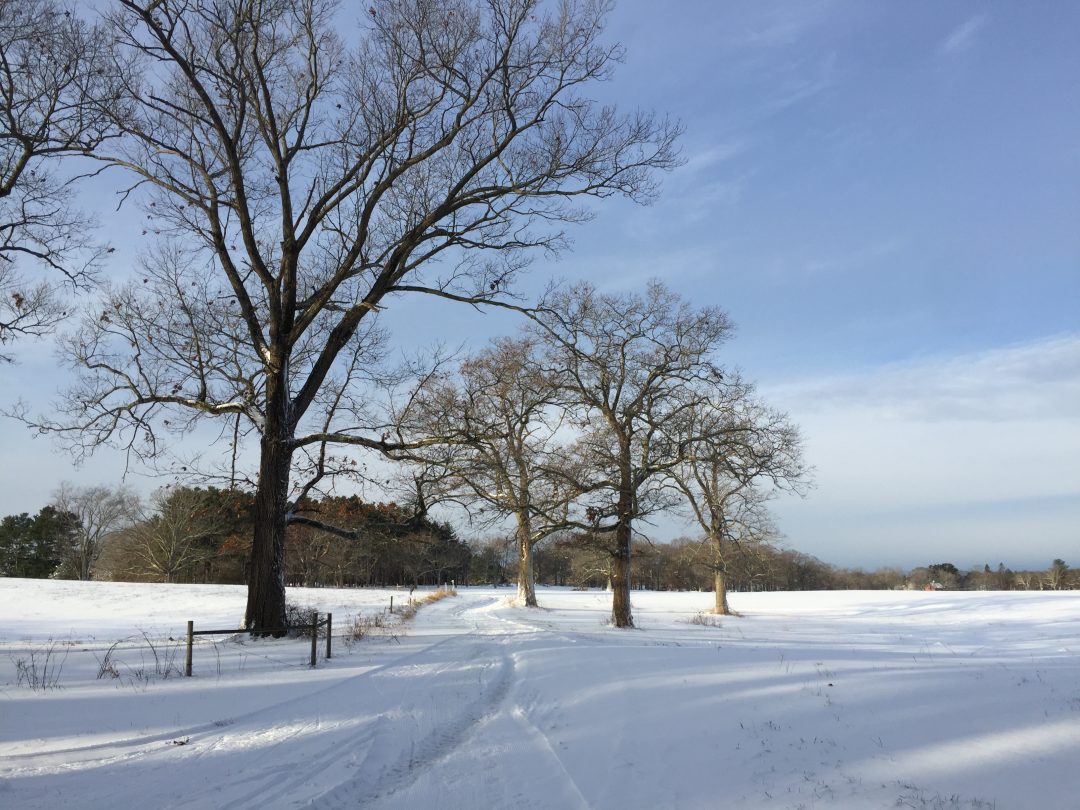
“Au naturel” trail across Appleton Farms field. Credit: SeniorsSkiing.com

This week’s Question For You asks our reader’s preference for what kind of XC ski trail they like best: groomed and groovy or no grooming. Our choice is actually a little of both. Click here.

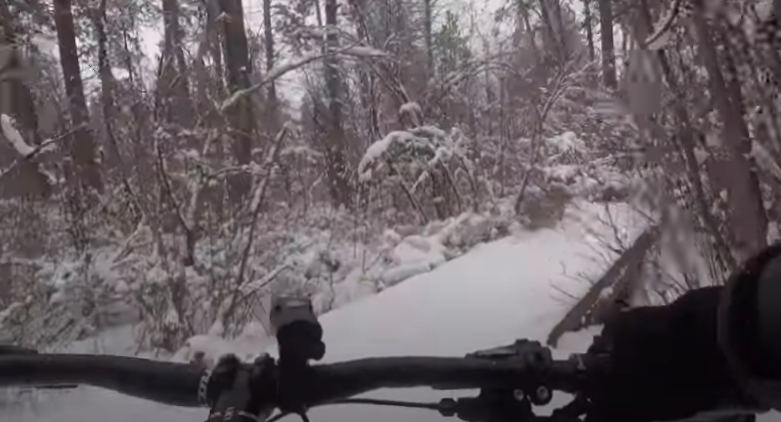
We have a short video about a cyclist making his first fat bike ride on a chilly day. We learned that keeping toes warm is a project. Click here.

Kelly Davis is a noted snow sports industry market researcher. We met her several years ago when she was director of research at SIA, the industry trade group. Currently, she runs Snow Sports Insights, a consulting company that brings information to decision-makers about the changing market place. Here’s her view of what’s happening this year in the Nordic/Snowshoe market space. Interesting stuff, and thanks to Kelly for allowing us to reproduce this article which first appeared on the Cross Country Ski Area Association website. Click here.

Credit: LL Bean group lessons

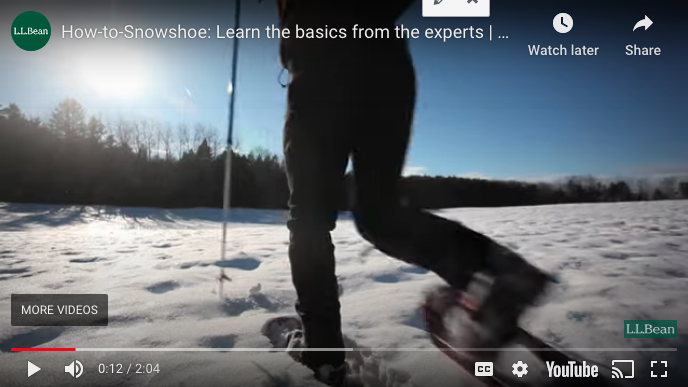
Snowshoeing is the easiest alternative for those who want to get outdoors in the winter without a learning curve or significant outlay of cash. It is also the most grandchild-friendly choice. Here’s a short video that explains the basics of How To Snowshoe from LL Bean. Click here.

Cross-country editor Roger Lohr offers his inventory of XC ski resorts that he considers “hidden gems”, tucked away from hustle and big areas. These resorts offer extraordinary opportunities to enjoy a socially-distanced vacation in snow country. Yes, you can! Click here.

Methow resort has lots of ways to make more tracks. Credit: XCSkiResorts.com

Cross-country journalist and consultant Jonathan Wiesel expounds on when and how you might take XC lessons: Group or private.  Trust us, we’ve been xc skiing since the 70s and we took a brief lesson last winter from a former Olympian and US Ski Team member Sue Wemyss at the Great Glens Trails Outdoor Center in Gorham, NH. Amazing how quickly you can improve your stride with a few simple moves. Click here.

For those readers who have never tried to cross-country ski or who might have tried to learn on their own, here’s a short video from REI that is a clear and really helpful guide on How To Cross-Country Ski. Click here

Finally, the Skiing Weatherman Herb Stevens explains how the winds of November will favor some regions and not others. Click here. 

Thank you for reading SeniorsSkiing.com.  Please tell your friends, and remember, there are more of us every day and we aren’t going away.

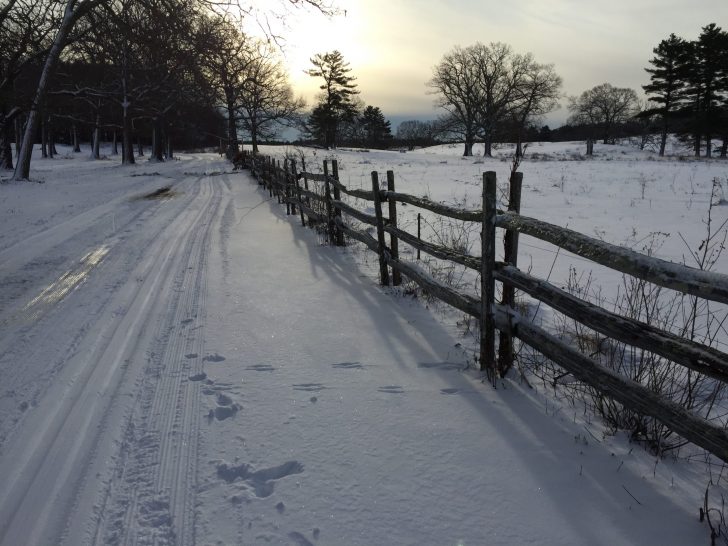
Appleton Farms, Ipswich, MA. Trails are groomed by a volunteer group. Credit: SeniorsSkiing.com


Editorial: Why Cross-Country Skiing?

[Editor Note: Roger Lohr is SeniorsSkiing.com’s Nordic Editor and publisher of XCSkiResorts.com]

The Older I Get, The More I Love Cross Country Skiing.

Roger Lohr in the grooves. Credit: XCSkiResorts.com

I love the sensation of gliding on the snow through the forest, being outdoors in nature. I can smell the fragrance of the trees. I can hear the bubbling brook and the sound of a bird in the distance, or the screech of my ski bases on the snow.

Groomed trails make it so easy to pass through the woods without worrying about the snow condition or getting tripped up by a hidden branch. But there is also something ethereal about skiing between the trees backcountry down the hill avoiding obstacles and picking my way to the destination. Even on a local trail network, being out in the forest seems like in the words of author Anders Morley (This Land of Snow), where wilderness and civilization meet to negotiate their differences. Even if you can hear cars on a nearby road, that negotiation allows a meditative state in the here and now.

Most skiers are encouraged to go skiing by their family or friends, or they personally always wanted to do it. Getting outdoors is among the list of reasons for people getting into XC skiing, and exercise is most likely an important reason for people to try it. The well-being factor goes beyond exercise as psychological and emotional benefits may very well be the cross beams of XC skiing that buttress the soul.

I love XC skiing in my light jacket and pants over a lightweight base layer, taking my small backpack with all my necessities. Barriers to XC skiing are low. For example, you can XC ski where ever there is snow so it is very accessible in parks and on local trails. While the sport admittedly takes time and practice to master, XC skiing is easy to do at beginner levels. It is also rather inexpensive compared to many other recreational activities. Additionally, people can ski at their own pace and go to a local park to get some outdoor exercise or enjoy the winter scenery.

On the other hand, there are issues that make XC skiing a challenge to people who’ve not tried it. Beginning XC is easy, but if you want to get proficient you have to work at it. Proficiency to higher levels only comes with time, experience, and practice. Specific equipment is important for the different types of XC skiing such as on track, off track, beginner, backcountry with heavy or light weight gear, skating, etc. Struggling on skating skis up a hill exemplifies the need for learning the right technique, skiing on proper equipment, and practice. The different segments of XC skiing may be perplexing to some people. Another factor is that experienced skiers are a tight-knit group, and it maybe a little while before the uninitiated feel accepted.

Why people quit cross country skiing is similar to why people quit any activity. People get tired of traveling or take the time to get to the trails or ski area. Time commitment can be an issue to some. Responsibilities such as work or family are also a significant reason for people deciding to reduce or eliminate time for skiing.

There are few injuries suffered by XC skiers, well, beyond being sore on the next morning because of muscles that are unaccustomed to being used. For XC skiing, proficiency is a factor when learning to glide, go uphill without backsliding, or control the skis on steep downhills.

The reasons why people start or quit skiing have been understood for decades and developing programs and incentives to address concerns is a great challenge for the snow sports industry. But personally I begin longing for the snow as spring time flourishes and am exultant the next time the ground is covered come November or December. Valhalla.

Mystery Glimpse: XC Dominator

Perhaps The Greatest XC Competitor Of All Time?

This week’s challenge might be very difficult for some, easy for others.  Why? Because not as many people follow the fortunes of cross-country competitors compared to their Alpine counterparts. Everyone knows Karli Schranz, Jean-Claude Killy, Bode Miller, and the rest.  But how about Sverre Stenersen, who consistently won medals in the Olympics and World Championships through the 50s? Remember what Jessica Diggins and Kikkan Randall did just a few years ago in the team sprint at the PyeongChang Olympics? Curious? Check it out here. 

This week we are presenting a photo of an xc racer who some have called the very best.  If you know who he is, comment in Leave A Reply below.

Okay, that’s a nice pic, but hard to identify the person.  How about this one?

Last Week

This is ski jumper Anders Haugen wearing his 1924 Chamonix Olympics coat. Norwegian-born Haugen came to the States in 1909 and started ski jumping with his brothers in the Milwaukee area. Between 1910 and 1920, Anders and his brothers won the US Championship 11 times. As captain of the US team at the inaugural Winter Games, Haugen wound up placing fourth behind three Norwegians.

However, in 1974, a sports statistician noticed that Haugen’s score was incorrectly calculated. After verification by the International Olympic Committee, Anders Haugen, at 85 years old, was awarded a bronze medal. Thus, he became the first American Winter Olympics medalist and the only US athlete to win an Olympic medal in ski jumping.

As for this fantastic coat, it was created for the US team by the Hudson Bay Co. of Canada and is called a Capote.

The 1924 Olympic capote is made of felted, twill-weave wool. It is white or natural color with printed bold stripes in black, yellow, red and green-blue. There is fringe along the top of the shoulders and sleeves and along the top front opening of the coat made of the same wool fabric, along with a tall, pointed hood.

Anders Haugen’s “Capote” from 1924 Olympics. Credit: Colorado Snowsports Museum


Question For You: Groomed Or Au Naturel?

What Is Your Preference? 

Appleton Farms, Ipswich, MA. Trails are groomed by a volunteer group. Credit: SeniorsSkiing.com

We live across a little country road from a 900-acre conservation property. For years, we’d walk across the road, stumble over the stone wall bordering the street, and plod our way about 20 feet through tree-falls and heavy brush to a trail where we’d put on our xc skis. And then we’d break trail around our favorite loop, eventually meeting up with trails already made by skiers who made it out earlier than us.  Then we’d follow those.

In recent years, North Shore Nordic, a local, volunteer-run non-profit, regularly runs a trail-maker snow mobile around the property, creating perfect, groomed grooves for classic skiing and a corduroy path for xc skaters.  Now, we have the best of both worlds.  To get to the groomed track, we break trail from a remote corner of the property to the main area. We like the groomed trails.  But then, there are the walkers who are enjoying the beautiful snow-filled fields by walking on—and disturbing—the groom. So, hmmm.

And, here’s our question for you:

Do you favor going to a cross country ski area with groomed trails or on a local trail that is not maintained? Do you have a place that is cross country skiing close to home? Is it au naturel or groomed?

“Au naturel” trail across Appleton Farms field. Credit: SeniorsSkiing.com

Make More Tracks: Fat Bike Experience

Another Way To Go In The Snow: Fat Bikes.

If you’re a cyclist, you will love the fat bike experience. You will most likely want to head out on a cold day so the snow is firm but not icy. Many xc ski resorts have groomed tracks for Fat Bikes as well as skiing. Deep snow: Fat Bikes don’t work, maybe downhill, but it’s much more pleasant on a track. Soft snow: Fat Bikes work, but so will you. Alot.  Weather makes a difference.

Here’s a short video on what the Fat Bike experience is like.  Click on the image below.


Make More Tracks: Predicting Participation In XC/Snowshoeing

[Editor Note: The following article was written by Kelly Davis, Snow Sports Insights. Kelly is a veteran snow sports industry researcher and a consult to the Cross Country Ski Area Association.]

Alternatives To Alpine Skiing Are Expected To Blossom This Season.

Participation in cross country skiing and snowshoeing is expected to increase significantly this winter for the second season in a row. Since late March, when the COVID-19 pandemic sent many Americans home, participation in many outdoor activities has spiked, including hiking, cycling, and paddling. Trailheads across the country were full, many on trails were there for the first time looking for activities that offered safe, socially distanced activity outside of the home and away from the gym. Some areas reported more than double the usual traffic on local trails.

The numbers that we’re seeing are greatly higher than we’ve ever seen before. We’re seeing it across all of the forest, in our places where we’ve kind of labeled as quieter places. They’re at capacity and spilling out as well. Tiffany Brenna U.S. Forest Service

As the weather turns colder, sending many indoors and driving up COVID-19 infection rates, Americans will again look for ways to get outdoors and participate in healthy and physically distanced activities. In addition to offering a refuge from COVID, cross country skiing and snowshoeing are some of the most accessible and economical activities available.

Participation

XC/Snowshoe participation numbers are up. Credit: Snow Sport Insights

Last season, despite the abrupt end of skiing at downhill resorts in March, cross country skiing and snowshoeing saw participation grow. More than 5.2 M Americans participated in cross country skiing, a 6 percent increase over 2018/2019. Snowshoe participation grew more than 12 percent last season to 3.6M participants.

Cross country skiing and snowshoeing are far more accessible than downhill skiing for most participants. Skiers and snowshoers participate at many different locations including cross country ski areas that offer miles of groomed trails, groomed municipal properties, golf courses, parks, frozen lakes, and even on snow covered roads and sidewalks in their neighborhoods. In fact, many participants can find trails within a few miles of their home.

According to an SIA study on barriers to participation, downhill skiers typically need to travel at least 45 minutes to get to the nearest lift-served resort and they can expect to pay about $100 for a weekend lift ticket. By comparison, cross country skiing trail day passes average $15 and season passes range from $25 for the Great Minnesota Pass to $212 at the Trapp Family Lodge located in Stowe, VT, to $280 at Devil’s Thumb Ranch in Frasier, CO. [Editor note: Local parks, golf courses, and conservation areas are often free or ask a small fee] .Once on the skis, remaining physically distanced from others on trails that frequently are 12-18 feet wide is a non-issue.

Retail

In speaking with retailers across North America, many are saying August and September sales of cross country gear are up as much as 300 percent.  Several retailers are saying the gear being sold is entry level packages, indicating beginner skiers are thinking very far out about the coming winter and what activities they will be doing.

I’ve already increased all my orders exponentially—quite a bit for cross-country skiing.  It’s going crazy now. I’ve never had the (ski) wall up so early. I’ve never had so much interest. We’ve never sold so many packages this early in the season. It’s pretty incredible. Trevor Norgan Canadian Retailer, Regina Sports

The 2020/2021 season projections are positive. Increased participation will drive hard goods sales that typically total about $40 M according to NPD. Participants will also need winter apparel but most who participate in other outdoor activities won’t need to spend thousands on a new kit. Cross country skiing doesn’t require a helmet, or goggles and not everyone chooses to deck themselves out in spandex (although wicking fabric is helpful).

The Experience

Cross country skiing and snowshoeing are fun to learn, healthy, family friendly, accessible, affordable, and offer great variety. Participants can hike their favorite trails on snowshoes, find amazing winter scenery on groomed cross country ski trails, or wait for snow to fall in their neighborhoods and ski around town. Cross country skiing uses natural movements; it doesn’t require special skills to get started and has a short learning curve. Snowshoeing may be more difficult than walking but most people can start snowshoeing within minutes of strapping on their snowshoes. As an added bonus, many areas that cater to cross country skiers and snowshoers offer fine food and craft beverages.

An important factor likely to drive increased participation on trails this winter is the obvious social distancing advantage these activities have over lift-served downhill skiing. The two largest alpine resort operators have announced that there will be capacity limitations at their resorts and season pass holders will have priority. Casual skiers, those that only ski a few times each season, may find themselves blocked out of weekend skiing at lift served resorts. Social distancing is far easier when skiers and snowshoers have miles of trails to explore away from crowds.

The financial bottom line on cross country skiing and snowshoeing tends to be small, making these winter activities an excellent option for anyone that wants to experience a true winter wonderland.

Weather

Finally, weather is always a factor in winter sports, and cross country skiing and snowshoeing depend on snowfall.  The forecast for this winter is promising. This season, La Niña conditions are projected, the northern states and Canada will be colder and wetter than normal.  According to the National Oceanic and Atmospheric Administration, “La Niña favors increased snowfall over the Northwest and northern Rockies, as well as in the upper Midwest Great Lakes region. Reduced snowfall is observed over parts of the central-southern Plains, Southwest, and mid-Atlantic.” Many downhill ski resorts have snowmaking equipment that can compensate for natural snow, but fewer than 20 percent of cross country trail systems have snowmaking capability. This season’s weather looks promising for most cross country ski areas.


Make More Tracks: How To Snowshoe

Snowshoeing Is A Highly Accessible and Easy Way To Enjoy The Winter.

Now here’s a winter outdoor sport that brings you in to the vibrant , snow-filled landscape and fresh air with a minimum of hassle and expense. From our surveys, we’ve noticed that those who snowshoe often bring spouses and grandchildren along into an easy way to walk in the woods.

How easy is it to get started?  Here’s a short instructional video from LL Bean. Click on the image to view.

Make More Tracks: Hidden Gems Of Nordic Skiing

[Editor Note: This article first appeared in XCSkiResorts.com.]

Less Known, Excellent XC Destinations To Explore.

Comfortable going along the river behind the Woodstock Inn. Credit: XCSkiResorts.com

With torrent of people hitting the trails and the outdoors across the country, XCSkiResorts.com wanted to give a shout out to hidden gem destinations for cross country (XC) skiing this winter. There may very well be an overflow of skiers at the most popular XC ski trails, so this guide will share some of the lesser known but excellent destinations.

In the east, the Woodstock Nordic Center https://www.xcskiresorts.com/woodstock-nordic-center offers more than 45 km of skiing right in the town of Woodstock, VT on two trail systems. The Mt. Peg trails begin on the golf course at the Woodstock Country Club and climb to the summit overlooking the village below. On nearby Mt. Tom, the Center grooms more than 20 km of trails on old carriage roads in the midst of Vermont’s first tree farm and Marsh-Billings-Rockefeller National Historical Park. The Woodstock Inn & Resort, which operates the Nordic Center is a 142 room AAA four Diamond Resort in the heart of Woodstock, a town that is the quintessential New England town with a wonderful collection of restaurants and shops.

Lapland Lake XC Ski & Vacation Center http://www.xcskiresorts.com/lapland-lake/ in Northville, NY features a touch of Finland in the Adirondacks from the food and the resident reindeer to the Finnish woodburning sauna and children’s games. They’ve got 38 km groomed for classic and skate skiing and 12 km of mapped snowshoe trails. The resort is located adjacent to the famed 133-mile Northville-Lake Placid Trail for limitless wilderness ski and snowshoe opportunities. Known for its courteous staff, this year-round family resort features a two-story warming lodge with a wax room, restrooms, changing room, and shower along snack bar, and eleven housekeeping cottages known as “tupas” that have fully equipped kitchens, living room, up to 4 bedrooms, electric heat, woodstoves, and a bath with showers.

Crystal Lake Ski & Outdoor Center https://www.xcskiresorts.com/crystal-lake-ski-center in Hughesville, PA (central PA near Williamsport) is in a snowbowl location that often has snow when the rest of the region is bare, and the trail system is second to none. There is varied terrain to please beginners, intermediates and advanced skiers. This is a full service area with rentals, ski instruction, and a cozy fireplace lounge.

Yes, West Virginia. Almost heaven. Credit: XCSkiResorts.omc

The White Grass Touring Center http://www.xcskiresorts.com/white-grass-touring-center/ is in the Canaan Valley and high Allegheny Mountains in West Virginia. It is a one-of-a-kind place to XC ski that gets 150 inches of snow annually. There’s 50 km of trails that are groomed or maintained and the area has 1,200 vertical feet with slopes and glades for backcountry skiers, too. Established in the late 1970’s the “fleece and flannel” scene at White Grass is alive with a popular natural foods café.

XC ski destinations in the central regions include Cross Country Ski Headquarters http://www.xcskiresorts.com/cross-country-ski-headquarters/ in Roscommon, MI which is a leading XC ski outfitter and ski area in the Higgins Lake area. Since 1974 this has been a premier destination for XC skiing in Midwest in

XC HQ in Roscommon, MI. Credit: XCSkiResorts.omc

the heart of Michigan, with 19 km of trails groomed for classic and skate skiing for skiers of all abilities and there are also miles of trails all around the region. The Cross Country Ski HQ is known for its friendly and experienced staff and retail operation. Trails are groomed for classic and skate skiing characterized as 10% hilly, 50% moderate, and 40% flat.

The Golden Eagle Lodge https://www.xcskiresorts.com/golden-eagle-lodge in Grand Marais, is a family owned year-round resort located on Flour Lake sitting at the Height of the Laurentian Divide in MN. It has 70 km groomed trails for classic skiing and 60 percent of the trails are groomed for skating in the Superior National Forest. The Baumann family owns the Golden Eagle Lodge, and they are the only residents on the lake, welcoming skiers to enjoy 120 inches of snow annually and the tranquility and solitude of the surrounding ancient forests. The lodge is also amidst the Gunflint Trail 100-mile system, which is a mecca for Midwestern cross country skiers.

Maplelag Resort http://www.xcskiresorts.com/maplelag-resort/ in Callaway, MN is located in the northwest region of MN and is within an hour of Fargo, ND. Maplelag has 70 km groomed for skiing, snowshoeing, and fat biking. Family style meals are known to feed the camaraderie at Maplelag and the lodge is a treasury of Norwegian Folk Art with nooks and crannies to enjoy together or get away to relax and read a book. The bottomless cookie jar policy provides endless sweets. The Richards family is the host that will guarantee you a memorable time.

Further west is XC skiers can visit Enchanted Forest XC Ski & Snowshoe Area http://www.xcskiresorts.com/enchanted-forest/ in Red River, NM, which has 33 km of trails groomed for classic and skate skiing, 15 km for snowshoeing, and 5 km that allow dogs. Enchanted Forest is known for the entertaining events and the great scenic views with 500 acres of ancient forests, aspen groves, and sweeping meadows in the Carson National Forest (that’s Kit Carson for you history buffs) There’s a day lodge at the base area for a snack and the Midway warming yurt and three rental yurts are available for overnight winter accommodations.

Crosscut Mountain Sports Center https://www.xcskiresorts.com/crosscut-mountain-sports-center is in Bozeman, MT next to the alpine ski area Bridger Bowl is a popular XC ski day area only 16 miles from Bozeman. This non-profit organization is a year round recreational sports training and educational facility providing human powered outdoor activities with 50 km of groomed trails for classic and skate skiing. Located in the Bridger Mountains, the center includes a biathlon range and includes a wide 15-foot trail width and narrow gauge trails for fat biking, snowshoeing and classic skiing with impeccable trail grooming. At 6,100 foot elevation there are no altitude problems at Crosscut.

Methow has lots of ways to make more tracks. Credit: XCSkiResorts.com

Methow Trails http://www.xcskiresorts.com/methow-trails/ is located in north-central Washington just below the Canadian border and anchored by the towns of Winthrop, Mazama and Twisp. It has more than 220 km (136 miles) of perfectly groomed skate and classic ski trails. Kids 17 and under ski free everyday in the Methow Valley. Many of the trails also welcome fat bikers, snowshoers and dogs. Methow Trails is a non-profit organization dedicated to connect people, nature and community through world class trail systems.

The Bear Valley Adventure Company http://www.xcskiresorts.com/bear-valley-cross-country/ is in Bear Valley, CA on Highway 4 on the west slope of the Sierra Nevada Mountains in the land of giant Sequoia trees. Bear Valley is perfect for new or experienced XC skiers with a trailhead meadow surrounded by hills and ridges. It is at 7,000 – 7,800 foot elevation and boasts substantial annual snow depths making it in most years the first to open and last to close among the Sierra XC ski centers. There are 70 km on 38 trails groomed for classic and skate skiing with 2 kids trails, a popular sledding and tubing hill, the Snowbound Café and 3 trailside huts There’s a groomed downhill ski area nearby, too.


This Week In SeniorsSkiing.com (Nov. 13)

Classified Bonus, Skiing Weatherman, Volcano Snowshoeing, Renting Your Ski House Apt., Dust Of Snow Poem, Prep Advice, Strange Parka, Holiday Valley Review, COVID Rules Example.

So we had  six inches of snow on Halloween and two weeks later we have 70 degree weather all week around the Boston outpost of SeniorsSkiing.com. And it’s Friday the 13th. And it’s a La Nina year. And it’s COVID time. And it’s 2020. What’s going on?

We’ll stop there. We’ve run out of synonyms for “unprecedented”. 

One thing we know for sure is that our readers are beginning to discover our new Classifieds section.  Reader ads are populating that page with some interesting offers from condo rentals and requests for ski buddies to ski club trips and offers of used gear. 

We started the Classified section because we felt there was some kinetic interest in our readership for connecting with other readers. Comments in various Question For You features revealed there was some back and forth between respondents. Responses to our annual reader surveys revealed ideas for connecting with others.  So, we thought a Classifieds section would be low-hanging fruit.

Our original plan was to offer readers the opportunity to post an ad for 30 days for $1.  The offer was to end today, Nov. 13. But, because we started publishing kind of early in the season, and because this Fall as been so…um…unprecedented, we thought we’d extend our offer of a $1 classified ad for 30 days until Dec. 4th. Our regular, reasonable, affordable rates will begin after that date.

As a reminder, here are the categories:

Just click here to view Classifieds or post an ad:

This Week

SeniorsSkiing.com correspondent Herb Stevens, the Skiing Weatherman, points out there will be snowfall this week in some places and not others. Surprised? Find out where and why and what the prospects are for the near future. Click here.

Beautiful snowshoeing and XC skiing on a volcano. Credit: NPS

Make More Tracks correspondent Jonathan Wiesel writes about a visit to Craters of the Moon National Monument, a unusual park in south central Idaho where you can ski and snowshoe on top of a volcano.  Extinct, but maybe not. Click here.

We hear from Steve Bell about how to market your ski house apartment, what online services to use, and how to prep your apartment for visitors. He has guidelines for dealing with COVID and guests. Part 2 of a three part series. Click here.

Our Question For You asks how you prepare for the season.  What’s the ritual you fall into year after year, consciously or unconsciously? Click here.

Our Mystery Glimpse feature presents a photo of an old timer in an odd parka.  We also reveal the identity of the instructor in comma position. Click here.

Correspondent Yvette Cardozo forwarded an interesting web page from Summit at Snowsqualmie which we are publishing as an example of what you can expect at almost any ski resort in the upcoming weeks.  Be prepared.  It’s unprecedented. Click here.

Reader Craig Scott sends in a report about Holiday Valley, a western NY powder catcher. We believe small resorts like Holiday Valley will benefit from increased traffic as customers will seek accessible, uncrowded areas this year. Click here.

Finally, we have a poem by Robert Frost as part of our Snow In Literature series.  The message is uplifting and frankly we need an uplift. Enjoy. Click here.

Thanks for reading SeniorsSkiing.com. Tell your friends and remember, there are more of us every day and we aren’t going away.

Credit:Creasy Mahan Nature Preserve


house in summer

Marketing A Rental Unit In Your Ski House: Part 2

Attracting Renters Using Online Booking Tools.

Steve’s rental unit is full most of the year. Here’s a summer view of the property. Credit: Steve Bell.

So, once you purchase the right house, how do you rent out the guest unit?  You could rent on a long-term basis, but we found that to be a problem.   A long-term lease gives the tenant a lot of time to mistreat the apartment.  In the past, we rented to a long-term tenant.  She was sweet, but she was busy.  Over time she neglected cleaning, so she left us with a lot of work at the end of the lease.  As a landlord, you can write security agreements into a lease, as well as periodic inspections, but these too can be problematic.  In any case, we have found that short-term renting is much better.  During short stays, even guests with less-than-ideal neatness (we have only hosted a very few of these) do not have enough time to create much extra work. 

For advertising purposes, we started by listing on airbnb.com and vrbo.com, both of which get tremendous traffic.  We rented our apartment most nights.  If, for some reason, demand starts to fall, we can explore other sites and other advertising media beyond website listing.  We created an entry on airbnb and vrbo without any professional help.  The sites include cell phone photos that we took ourselves.  To see our apartment, simply type “airbnb 36134350“ or “vrbo 1695325 “ into your browser. (Each website assigns its own unique identifying number to every listing.  The preceding numbers are ours.)

Since December 2019 through the end of September 2020, except for a stretch when we stopped accepting guests due to COVID, we rented out our attached apartment for the majority of nights.  We have been amazed by the demand, and especially delighted by the strong interest of summer visitors.   We don’t spend that much time managing reservations, because the websites nicely facilitate the rental process.  They provide a simple channel of internet communication, descriptions of the property and community, delivery of owner established rules, reservation management with calendars, seamless payment processing, renters’ reviews of their stay, and many other services.  As an added bonus, we can invite friends and family to the apartment when we want to as it is simple to black out the calendars on airbnb and vrbo.  

Supply The Basics

The apartment must be fully equipped with towels, bath mats, down-filled comforters, duvets for the comforters, fluffy pillows, hotel style soaps and shampoos, first aid kit, fire extinguishers, smoke alarms, etc.  And for the kitchen: silverware, plates, bowls, napkins, wine bottle openers, cutting boards, pasta strainer, coffee grinder, coffee maker, etc.  All-in-all, a lot of stuff to promote a blissful stay (buying on amazon.com saves us trips to Bozeman).  Guests want to save money by preparing many of their own meals rather than paying hotel room service or resort restaurant prices.  There is a good grocery store, nearby.

As mentioned above, the apartment has a separate entrance.  Check-in and check-out are self-service.  We leave the door unlocked before guest arrival, and airbnb or vrbo has already collected all monies before the departure day.  The combined effect is that we often never see the guests.  It’s not that we don’t love them, but due to COVID risk, separation is best for everyone.  Guests are appreciative of this, too.  Many resort visitors prefer an alternative to the common spaces of hotels, elevator buttons, shared door handles, and other opportunities to get sick.  All communication is over the internet by email, cell phone conversations, or texting. 

Before COVID was a concern,  we would often invite guests for a drink to chitchat around our fireplace.  Guests come from all over the U.S. and the world. They share fascinating experience and knowledge.  The company enriched our lives and we looked forward to it.  When the COVID pestilence is a fading thought,  we expect to accept invitations to visit our new friends. And very soon, we hope to be able to resume hosting friendly fireside visits. 

One final note about your rental unit: clean really, really well.  We try to make everything squeaky clean or better.  We have been thanked for this by our guests, who frequently indicate that cleanliness is very important to them. We are hoping that they will remember and return many times.

Editor Note: In Part 3 of this series, Steve will describe tips on operating a rental.  If you have questions, just leave a comment below.

The North Crater

Make More Tracks: Craters Of Moon

Ocean Of Volcanic Lava Offers Awesome XC/Snowshoe Experience.

“[It is an] area of about 60 miles in diameter, where nothing meets the eye but a desolate and awful waste, where no grass grows nor water runs, and where nothing is to be seen but lava.” (Washington Irving, The Adventures of Captain Bonneville, 1868 )

The North Crater shows the jagged lava outcrops. Credit: NPS

Some things leave a lasting impression. I flunked geology my freshman year of college—just couldn’t figure out technical things like how to measure a geosyncline or why it matters—and consequently rejected the whole science for years. And then I found that in the right context, absorbing geology can be amazing fun. Aside from Yellowstone National Park, the place that’s had the most volcanic effect on my geologic viewpoint is Craters of the Moon National Monument and Preserve  in south-central Idaho.

I used to pass the entrance a couple of times a year, driving between Jackson Hole and Sun Valley, at 5,900 feet in the middle of high-desert seeming-nothingness. Hummocks, ridges, cones, lava and cinders don’t create an inviting landscape; in fact, formations are so moon-like that the Apollo astronauts studied geology there prior to their lunar landing.

Craters isn’t exactly a winter destination. There’s not a whole lot of temptation to stop because there’s not much sign of human activity; there’s no on-site lodging; the nearest restaurants, motels, and gas stations are some miles away.

Beautiful snowshoeing and XC skiing on a volcano. Credit: NPS

Man doesn’t seem to have had much impact on the Craters locale. Oh, there’s more air pollution drifting through than a few decades ago, so you’re not as likely to see the high mountain ranges along the Snake River Plain; and larger animals like grizzlies and big-horn sheep disappeared a century ago—but overall, there’s not a lot of visible change.

The region began erupting around 15,000 years ago and stopped around 2,000 years ago. There’s a school of thought that another eruption is due in the next few centuries; but it’s expected to again be flowing lava rather than an explosion like Mount St. Helens in 1980.

There are no streams and few water holes, but the ecosystem is home to 2,000 species of insect, almost 200 bird species, 59 species of mammals, plus reptiles, amphibians, and a remarkably diverse plant population. Of course, you don’t see a whole lot of any of them in winter – primarily shrubs and limber pine.

It’s a unique land of tremendous extremes that an early visitor called “the strangest 75 square miles on the North American continent.” My first visit was in mid-summer with a geologist-friend who was ecstatic to see both aa lava (a Hawaiian name that’s spelled at least three different ways, meaning a jagged surface best avoided) and pahoehoe lava (smooth and ropey-looking). The heat was stifling – air temperatures may only reach the 90s in July, but surface temperature on that black rock can reach 170 degrees Fahrenheit. That’s more than hot enough to fry an egg – if you can find a flat surface.

I remember the physical shock of following a trail into a lava tube that’s perpetually chilly. We lost perhaps a dozen feet in elevation, started to shiver, and came across ice.

Snow covered spatter cone arises from the landscape. This is a place for other-worldy exploration. Credit: NPS

Winter Landscape: Milk And Vanilla Ice Cream.

Snow can bring a gentler face to Craters, or as one guide told me, a “Sahara arctic flavor.” He added, “It’s an entirely different experience from what you can have in any other area because of the brilliant white snow and the black basalt rock. It kind of looks like cookies and cream ice cream out there.”

Explore the snow-covered lava on snowshoes with a guide. Credit: NPS

Winter conditions can see -30 degrees Fahrenheit at night, with the wind rising to 30 miles per hour and not much tree-cover. It’s a great time to have the right clothing and good judgment on how far to venture from your car. There’s usually about a four-month season for skiing and snowshoeing.

The Park Service grooms up to seven miles of two-way trail along a summertime scenic loop drive. When I visited it was double-tracked, with a skate lane shared by snowshoers plus a separate snowshoe trail. There’s no fee, no dogs, no bikes, no snowmobiles. It’s easier to ski clockwise if you’re a beginner in order to avoid a downhill on the southwest edge of Inferno Cone.

In some ways, snowshoeing around the Monument is more fun than skiing because you get more flotation so can do more off-track exploring. But if you enjoy downhills, it’s a blast to make some turns on the open-sloped cinder cones, which can give you 400-500 feet of vertical drop.  

You can climb to the summit of Mt. Paisley for grand views before heading back to the Visitor Center. As a guide once noted to me, “How many places can people say, ‘Ya know, I went out Saturday and snowshoed to the top of a volcano?’”

At 6,000 feet, snow dominates the landscape from November to April. Credit: NPS


Skiing Weatherman: Haves and Have Nots

So It Begins, Unevenly.

As is often the case at the start of the ski season, the weather pattern is designating “haves” and “have nots” in terms of sufficiently cold air for snowmaking and natural snow.  Consistent with first year La Ninas, as this season will be, November has brought winter weather to the West while the eastern half of the country has been basking in Indian Summer warmth for the most part.   The jet stream has been set up in a western trough/eastern ridge configuration since the start of the month, allowing cold air to spill out of Canada into the Rockies, Cascades, and northern Sierra.  In addition to supporting a good amount of snowmaking, the western trough has also be productive in terms of natural snow and that has allowed a small number of resorts to kick off the season.  From Banff Norquay and Lake Louise in the north to Wolf Creek in southern Colorado, turns are now being made.  Wolf Creek, a legendary snow magnet, has all but six of their 133 runs skiable already.  Don’t believe me?  Check out their web cams!

In the short run, the western trough will remain in place, and additional snow will fall into this weekend in the B.C. coastal ranges, the Cascades, northern Rockies, and the peaks of NoCal.  Yet another system will move in from the Pacific late in the weekend, but that one will lift more northeastward, leading to more snow in the Northwest, but also a rise in snow levels.  Early next week, a ridge will pop up in the west, while a trough dives through the Great Lakes and into the Northeast. The air will be cold enough for at least a couple of nights of snowmaking across the northern Lakes as well as northern New York and New England.  It will be a gamble to make the snow, because the cold is not ready to settle into the eastern half of the country.  By next weekend, the jet stream will flatten out across the country, allowing mild Pacific air to move from west to east.  This jet stream forecast for next Saturday illustrates.

Although the flow looks pretty flat and dull, a look at the temperature anomalies at 5,000 feet, a forecasting proxy for surface temps. There will be some modestly cold air along the Canadian border, so there is potential for some additional snowmaking late next week in the Lakes and Northeast.  Here’s that map. 

It’s still early, so we’ll take potential where we can find it!          

Here are the regional details…         

Northwest U.S./Western Canada:  Two additional early season snowfall are coming, the first late this week, with a storm right on its heels about 48 hours later. The second storm will have higher snow levels.  

Cascades and Sierra:  The same two systems will bring snow to the Cascades with the snow extending down to the northern mountains of California.  

Rockies: Northern Rockies pick up two additional snowfalls by early next week.  First system reaches Wasatch, second stays further north.  Central and southern Rockies miss most of the action…some light snow will reach Colorado late this week, though. 

Midwest:  Resorts in far northern MN and MI will be able to make snow late this weekend/early next week and again late next week.  The early week cold will trigger some lake effect snow in the Upper Peninsula.        

Northeast/QB:  Northern New York and New England will have a couple of snowmaking nights early next week and again late in the week.  Longer term, CONSISTENT cold is not happening until a major pattern change, not likely until very late in the month at the earliest.

Patience.

Summit At Snoqualmie COVID Rules: Expect This At Your Local Area

Here’s An Example Of What You Can Expect When You Make Your First Visit To Your Favorite Local Resort.

This comes from The Summit at Snosqualmie. The video below introduces the program. Thanks to SeniorsSkiing.com correspondent Yvette Cardozo for passing it along.

https://youtu.be/2yJm5pT_OiE

Face Coverings Required. Keep your mask on – both inside and outside – while at your home mountain.
 

Stay Home If You’re Not Feeling 100%  Don’t be the reason we lose the season! If you’re not feeling 100% STAY HOME and If you start to show symptoms of illness LEAVE right away.

Keep Your Distance 6  feet apart, roughly a ski/board length. Be considerate and leave some space between our staff and your fellow snow sports enthusiasts.
 
Use Your Vehicle As Base Camp. Get ready in your rig this season. We will have reduced occupancy in all facilities. When tailgating remember to practice physical distancing and wear your face mask.
Arrive Together Ride Together. Help reduce the likelihood of transmission, please stay with your group while at the mountain.
 
Be Wise Sanitize. Use our sanitization stations and wash your hands often. Additional sanitization stations will be available at each mountain area.
Singles Won’t Mingle. Singles will ride solo or on the outside on quad chairs. Please help us load chairs as efficiently as possible so you can spend more time on the slopes.
 
We’re Cashless. All major cards and forms of mobile payment accepted. You can also link your credit card to a season pass, or use our physical or digital gift cards.
Buy Online In Advance Limited Availability. All tickets, products and services will be sold online this season. Plan ahead and visit our website to book everything in advance.
 
No Brown Bagging. Seating inside is for restaurant patrons only. No outside food, beverages, containers, utensils, or cups inside our lodges please.
Reduced Visitation. Season pass and lift ticket sales will be limited in order to reduce the number of people on the mountain and in our facilities, especially on peak days.
 
Avoid Busier Days/Times. To ski or ride with fewer people head to the mountain evenings, afternoons, or midweek. You can also save money by visiting during off-peak times.
We’re In This Together. Be patient & respectful of your fellow skiers/riders and our employees. This isn’t easy for any of us, but we’re stoked to make the most of this winter with you!
SEASON PASS SALES PAUSED Season Pass sales are currently paused. When season pass sales resume, quantities and types will be limited. Prior to resuming sales we will provide an update with more information. Thank you for your patience.

Question For You: Preparing

What’s On Your Agenda?

Last week, we noted that Warren Miller’s new movie Future Retro has hit the internet. For many, the premier of a Warren Miller film has been the starting gun of the season. Which got us to thinking about routines we have developed to start our own personal snow sports season. As we mentioned, perhaps it’s something like: Watch the Warren Miller movie, go to the ski show, get your gear cleaned up, visit the ski shop for a sharpening, watch the weather, etc.

Maybe you have a ritual that you follow every year. Buy a new hat or gloves? Put on snow tires? Start working out? Put away the summer toys? What is it? Share with your fellow senior snow sports enthusiasts.

How do you prepare for the upcoming winter snow sports season? Is there a set of activities you follow yearly? Something special you buy? Let us know.

Write your comments in Leave A Reply below.

SeniorsSkiing Guide: Holiday Valley

Are there powder days in Western New York? Can Pete Widger yodel?


Yes, to both. In fact, septuagenarian Widger, the voice of Holiday Valley’s Snow Phone, will lace his conditions report with his trademark vocals every powder day of the season.

Holiday Valley’s powder comes compliments of Lake Erie’s snow machine, the same lake-effect system that gives Buffalo its arctic reputation.

Holiday Valley, in Ellicottville, Cattaraugus County, averages about 180 inches of snow per season. In addition, the resort’s snowmaking staff is able to cover 95 percent of the resort’s terrain with its 611 snow guns.

Holiday Valley’s peak elevation is 2,250 feet, a rise of 750 feet from its 1,500-foot base elevation.

It boasts 60 trails, served by 13 lifts (including three high-speed quads) over 290 acres. Green trails make up 37 percent of those runs, blue, 25 percent, black, 37 percent and double-black, 2 percent.

For a good warmup, take the Mardi Gras lift for a slide down Candy Cane, a green trail, with options for a blue Crystal Bottom. Or start blue with Independence or even black with Yodeler or Champagne. North Wind upper and lower trails are also accessible from this lift as are a variety of other lift-and-trail combos.

On the facing hillside, Cindy’s Run, accessible by Cindy’s Quad, is a challenging blue. Cindy’s can lead to black options such as Foxfire, Wall Top and the double-black Wall.

It is easy to spend a day at Holiday Valley mixing your trail colors and lifts. Most every skier will find challenges and satisfaction.

Comfy lodge at the bottom. Trails for all abilities at HV. Credit: Craig Melvin

The resort’s beginnings can be traced to the late 1930s when enterprising enthusiasts built a tow from an old truck and built a little warming hut. The operation has moved from slope to slope in the Ellicottville area. The current lodge site was established in the 1960s and the resort has grown from there.

The club atmosphere of those days has endured, said Jane Eshbaugh, director of marketing at Holiday Valley, “Especially in this part of the country, skiing is very social, we see many senior groups skiing together or having coffee or dining.”

“We have so many generations at Holiday Valley. We really market to families, but that includes parents, grandparents and great-grand parents,” Eshbaugh said.

One perk for senior pass holders is the ability to add a grandchild at an additional family rate.  At Holiday Valley, loyalty pays. Skiers 65 to 69 can receive 5 percent of a Classic Pass. But if a senior skier has purchased a Season Pass or Ultimate Pass for the past five years, the discount goes to 25 percent. For those 70-plus, the initial discount is 10 percent and 50 percent for those with pass purchases the past five years.

Holiday Valley gets regular snow dumps from lake-effect storms. Nice coating on trees. Credit: Craig Scott

Holiday Valley’s employment rolls are well-populated with seniors. From office and maintenance to on-slope duties such as Ski Patrol, Ski School Instructors and Safety Patrollers.

Because Holiday Valley lies close to Canada (about an hour from the Canadian border), there are often as many Ontario plates in the parking lot as those from New York. The resort features, Canadian Friendship Week, during which lift tickets and rentals are at par with Canadian cash. It’s hard to ride the lifts on a busy day that week without meeting fellow skiers from, say, Toronto or Niagara Falls.

Lift lines, however, are rather rare at Holiday Valley. The lifts are efficient and only on the busiest days are there people waiting to ride.

Holiday Valley offers a number of lodging and dining options, and nearby Ellicottville is a friendly and hip little Eastern ski town.

The nearest large airport is Buffalo International, about 60 minutes away. Cleveland, Pittsburgh and Rochester are about two to three hours away by car.

CLICK HERE FOR HOLIDAY VALLEY TRAIL MAP

CLICK HERE FOR HOLIDAY VALLEY WEBSITE


This Week In SeniorsSkiing.com (Nov.6)

Warren Miller’s Latest, Skis For Senior Recommendations, Rent Your Ski House, COVID Rules, Sun Valley XC, Mystery Instructor, Early Visitor Question.

November 7 marks the Eastern premiere of the new Warren Miller ski-a-rama movie, Future Retro. This year, the crew of extreme skier-athletes and videographers tackle remote mountain settings in Antarctica, Iceland, Alaska, Montana, Switzerland, and more, all blue sky, magnificent vistas, and incredible skiing marked by flips, chute-running, and dare-devilry.

For many years, the arrival of the new Warren Miller movie has marked the official beginning of the ski season. The routine usually is: watch Warren’s latest, head to the November ski shows, start gathering your gear, wait for the first flakes, and make plans for your first outing. It’s a classic calendar marker, like September is back to school, and July is the beginning of summer.

Streaming on three different nights in three different regions of North America, Warren Miller’s 71st feature film will premiere on the East Coast on Saturday, November 7th, Mountain/Central regions on Saturday, November 14th, and on the West Coast on Saturday, November 21st. Each event features regional sponsors and unique prize giveaways. Each ticket includes deals, prize entries and the live event for up to four people.  The trailer is below. And Click Here to order tickets for the virtual tour. 

But here’s a thought. When we first went to ski movies, probably back in the late 60s, we were enchanted and lured into the sport by a distinctly different kind of Warren Miller film.  The characteristic features then, we recall, were beautiful slow motion shots of skiers carving down slopes or doing ballet-like flips with grace, rhythm, and a lightness that made it look easy, accessible, and enticing. Sure, many Warren Miller films also featured hokey jokes and silly skiing, but there were always those slo-mos that were beautiful. We thought we could see ourselves doing those moves. Well, maybe not the flips, but the graceful turns, sure.

Clearly, contemporary ski films are emphasizing the other end of the thrill spectrum: More edgy, athletic, and dangerous-looking skiing. Compare this trailer from Warren Miller’s 1972 film Winter People to this year’s Future Retro Notice the difference?  If you think of these films as recruiting tools for the sport of alpine skiing, which one appeals to the average Joe or Jane who came to the flick to see what skiing was all about. Could they see themselves straight-lining a narrow, rock-bound chute in the back of the beyond?

Okay, if you’re an aficionado and have been doing this for a long time, the extreme skiing films are eye candy and a psych-up tool for the season. But does the skiing they present appeal to the curious neophyte? What do you think?

https://www.youtube.com/watch?v=L6ZdZgdj8Wc

This Week.

The latest crop of Ski for Seniors recommendations is available. Created with realskier.com, the list includes a variety of ski types.  For us guys and gals, it’s a good place to start the search for new boards.  Bear in mind, inventory might be short this season so check around.

This is an online message from Mt. Hotham, a popular Australian ski resort the eventually closed for a good portion of the season this year. Could we be seeing these messages here?

Correspondent Tamsin Venn summarizes the restrictions and constraints facing Alpine skiers at resorts this season. You may have heard this information before, but it’s important stuff.  Know before you go, well before you go.

Correspondent Jonathan Wiesel reports on a glamor spot for Nordic Skiing, Sun Valley’s Nordic Center. Consider cross-country skiing a viable and accessible alternative this year. As we are learning, interest in the sport is spiking.  What better place to give it a try than Sun Valley?  It’s naturally socially distanced, healthy, outdoors, and all that beautiful scenery.

This week’s Question For You asks those readers who have already visited an early-opening resort to report their experience. We are all facing unknown circumstances and advice from the first wave of senior skiers will be helpful to all of our readers.

Contributor Steve Bell offers his advice on how to rent a portion of your ski house.  It’s an interesting idea that will definitely help pay the mortgage, especially if you’re in a popular area for both winter and summer activities.  This is the first of a series of articles on finding and operating a rental property in your own ski house.

Finally, this week’s Mystery Glimpse features a photograph of one of our ski idols as a very young man.  A noted instructor, and pioneer in the teaching of the sport, this person is a celebrity in the ski industry.  And Happy Birthday to him.  We also reveal the identity of the flying saucer-like gondola from Mt. Snow.

Thanks for reading SeniorsSkiing.com.  Tell your friends, please, and be careful out there.  Remember there are more of us every day and we aren’t going away.


Make More Tracks: Sun Valley Sabbatical

Classy And Classic, Sun Valley Has Magnetism And Charm.

Sun Valley Nordic Center has beautiful vistas and trails. Credit: Visit Sun Valley

I’m a total sucker for romance, and Sun Valley, ID, radiates charisma, beauty, diversity, skiing history— the whole shebang. Known as “America’s First Destination Ski Resort,” it’s 2.5 hours from Boise. Happily, there’s a jet airport only a dozen miles away.

Set in the rugged Sawtooth Mountains, Sun Valley Nordic & Snowshoe Center was one of the first cross-country areas in North America, chronologically just after Vermont’s Trapp Family Lodge and just before California’s Royal Gorge. It’s complemented by a series of trail networks, mostly maintained by the Blaine County Recreation District.

Snowshoeing can also bring you out into the scenery. Credit: Visit Sun Valley

I’ve visited many times in winter and skied maybe a quarter of the trails. That’s actually not negligible, since we’re talking about a cumulative 200 km. There’s tremendous diversity in everything from terrain to snowfall to surroundings—some trails on the edge of Sun Valley Resort and the neighboring town of Ketchum, some higher and far from sight of any structure or even a road.

So here’s my take on skiing the two centerpieces of the region. It feels like a long and affectionate shared history.

The Resort: Sun Valley Nordic & Snowshoe Center


The Sun Valley Nordic & Snowshoe Center  has easier trails diverging from the trailhead, leading to more difficult routes, and thence to the challenging stuff. Set at around 6,000’, it’s mostly delightful beginner-to-intermediate terrain, totaling 40 km. Much of this is on golf course grass, a lot winds through sage, with some aspen and pine, with great mountain views, including alpine skiing on famous Bald Mountain (aka “Baldy,” 9,150’).

Almost everything is groomed daily. Sun Valley is a recreation-crazy region, so you see a lot of ski-skaters, including local folk of mature years who are tearing along the trails. Steve Haims, a Sun Valley fixture who runs the Center and is former owner/operator of Galena Lodge, says that most visitors, skiers and snowshoers are women, and a typical skier is 50+ years old.

You can also enjoy 14 km of snowshoeing and 16 km of fat bike routes. A typical season starts a bit before Christmas and runs through March, with 100” of snow in a good winter.

The Center itself is a 58,000 square foot golf clubhouse in the off-seasons, though I suspect summer visitors don’t think of it in quite those terms. You can rent skis, snowshoes, or fat bike rental, and arrange instruction.

The County

Galena Lodge

Historic Galena Lodge is the region’s other Nordic kingpin. At 7,865’, it’s a snow magnet. If you’re coming from sea level, it’s smart to acclimate down below, and then drive up to Galena, where you can overnight in one of their yurts.

Yurt will welcome you.

The lodge is owned by Blaine County Recreation District, which does the grooming. Erin Zell and Don Shepler are the concessionaires and have been running the lodge since 2006. Erin says, “We make all of our food from scratch and have wonderful house-made soups, sandwiches, salads and sandwiches.”  In addition to restaurant and bar, you’ll find ski and snowshoe rentals, instruction, and many happy dogs.

Galena is the centerpiece of 50 km of groomed ski trails, along with 25 km of snowshoe trails. There’s not much that’s truly flat, since terrain near the lodge is rolling, while it gets hillier as you get farther away. The landscape is dominated by lodgepole pine forest, with lots of meadows, and populated by wolves, coyotes, elk, and smaller critters.

For a personal touch, “Psycho” is a humbling black diamond route. I managed to stay upright until the final downhill, did a face plant in front of a bunch of other skiers right at the junction with Gladiator Creek Loop. At least I didn’t lose my glasses.

Accommodations

I’ve stayed at Sun Valley/Ketchum motels, inns, and B&BS and crashed with friends, but the most elegant and opulent visits have been at Sun Valley Lodge.  

Ski Areas Ready For 2020-21 Season

This is an online message from Mt. Hotham, a popular Australian ski resort, that eventually closed for a good portion of the season this year. Could we be seeing these messages here?

This Is Probably Not The Year To Try To Ski Your Age.

Precautions may reduce the number of days you ski, but rest assured that resort managers have been huddling on defensive plays. They got a head start this summer when we all flocked outdoors to bike, hike, paddle, and golf.

“We feel there is going to be a strong demand for skiing, similar to outdoor recreation we saw this summer… Everything will be in record numbers,” said Vernon Greco of Pacific Group Resorts, which includes Ragged Mountain, New Hampshire, and Powderhorn Mountain Resort, Colorado.

Here is some of what ski areas have planned.

Standard Precautions

Following state, regional, city and CDC regulations, areas will uniformly require face masks, social distancing, requesting ill skiers to stay home, and hand sanitizing stations. They will use same-party lift loading, online lift ticket reservations and purchase, parking reservations, and limit ski school class sizes. Signs will abound as reminders. Lift lines will be delineated for six-foot distance on all sides. Many ski area operators feel happy that ski slopes make for social distancing, but will face challenges managing indoor space. The well-loved parking lot schlep? Booting up in the car, and carrying essential items with you skiing is part of the scenario.

Don’t Just Show Up

Adam White of Ski Vermont advised, “Go online and do research. This is not the season for an impromptu ski trip or powder chasing and walk-up-to-the-ski window to buy your ticket. Educate yourself ahead of time, so we can all continue to have a season.” White explained Vermont currently has some of the strictest interstate travel restrictions in ski country.

Trying to make it Predictable

“The exciting thing is that we are going to have a season. We are striving for consistency across the resorts to provide as much predictability as possible,” says Jody Churich, General Manager of Keystone, Colo., which opens Nov. 6 for its 50th season.

“We believe that the majority of skiers will be able to ski and ride on the days they want,” she said of the 37 areas that make up Vail Resorts.

State Quarantines

These are out of the ski areas’ control. In New England, New Hampshire is open to all New England skiers. Utah and Idaho have no travel restrictions.

The Canadian border is closed.

This is the season to try Nordic. Backcountry skiing will also be popular. If you go remote, get some training in First Aid and Avalanche skills.

Outdoor Dining

Ski areas will rely on our outdoor hardiness and business. Spruce Peak base area at Stowe, Vt., comes to mind. Expect outdoor heaters, fire pits, picnic tables, heated benches, ticket kiosks, pop-up tents, family group lessons, and food trucks. Drinking fountains will be closed.

Nordic Skiing Will be Very Popular

Ditto backcountry and uphill access. Nordic saw a run on purchase of season passes and package equipment over the summer, many by first-time skiers. Nordic areas feel confident that inside space won’t be a problem because Nordic skiers tend to buy a ticket and head for the trails and don’t crowd up.

Ready? Let it snow.

Finding A Ski House With Rentable Space: Part 1

A Rental Apartment Can Pay For Your Ski House.

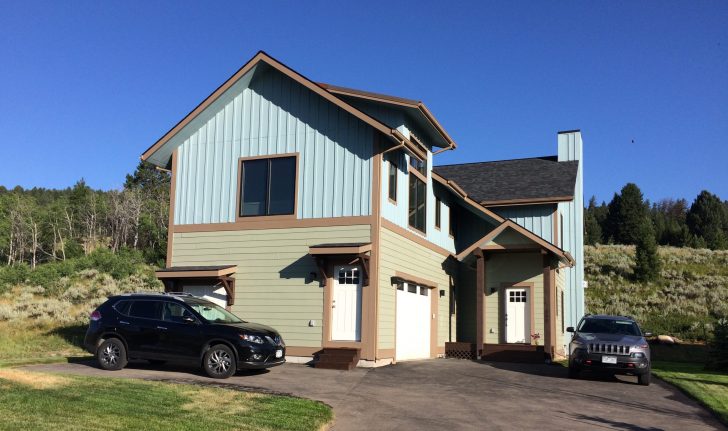
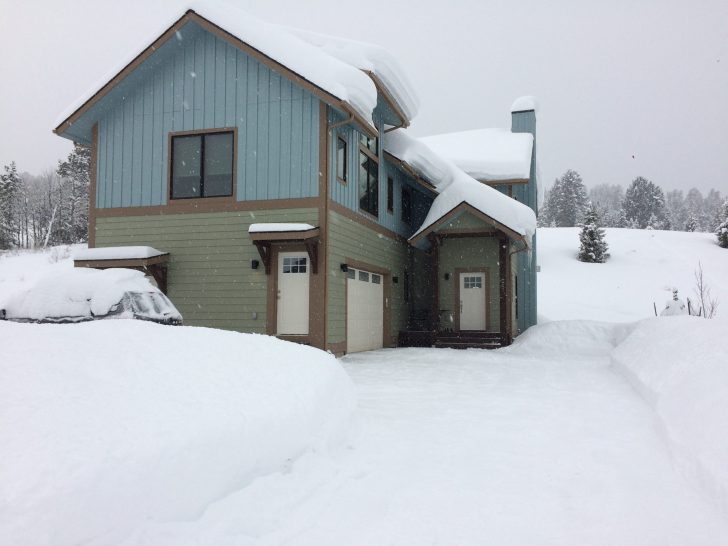
The author’s ski house has a rental apartment over the garage.

Perhaps you have daydreamed about buying your own ski house in a great resort, but dismissed it as out of your reach financially.  But don’t give up your dream!  In July 2018, my wife and I took the leap and we landed happily with a ski house in beautiful mountain country.  The central notion that works of us and for you to consider is to buy a property that doubles as an easily managed business, in the form of a home plus a rental unit. 

In this article, I’ll discuss finding a property.  In the coming weeks, you’ll be reading about marketing a rental property as well as other ideas for making this idea work.

The Right Property For An Owner-Rental Business.

Most resort houses do not have a rental unit, detached or attached, as a part of the layout.  But if you can find a house that does have a rental unit, or a house that you can easily alter to create one, you have the opportunity for income that subsidizes your mortgage payments.  You have to shop with caution.  Not all municipalities or HOAs (Homeowner’s Association) permit rentals, or they permit rentals only under certain conditions, so you have to do your due diligence. 

Easier said than done, you say, that kind of property can’t be so easy to find.  They exist.  Before you leave on a ski vacation, search for a real estate agent and call ahead.  Use realtor.com or trulia.com, or any of the many real estate websites to look for houses yourself.  Look for a property that suits you best and that is most likely to include an apartment that an owner is permitted to rent, then connect with the listing agent. 

Tell the agent you are looking for a property that includes an apartment which the owner is permitted to rent.  Add that you are willing to look at properties that are similar to the one that you identified.  Don’t be disheartened by list prices, because you will be eventually be generating rental and other revenue to subsidize your mortgage payments.

Won’t a house with a potential rental apartment have a higher price?   As a homeowner in Big Sky and a long-time house shopper before that, I can tell you that houses with apartments are not usually more expensive.  How can that be?  Most resort house buyers are not looking for a rental apartment.  They have neither the time nor the desire to manage a small business.  So if they see an attached rental apartment, they regard it as just another bedroom/bath suite and are usually not willing to pay a premium for the fact that it is a separate apartment.  To look at it another way, we are famously told that adding a swimming pool to the average house will not get a good return on investment.  Why not? Because most people do not want to own a swimming pool (the possible headaches and maintenance costs) and will not pay more for a house that has one.

What To Look For?

A basic studio furnished with simple but stylish furniture from Ikea or Wayfair.

I’ll start by describing the rental apartment in our house, a well-insulated studio tucked over our attached two-car garage.  It has an off-road parking space,  a separate thermostat, a fully equipped kitchen, a full bath, a queen size bed, a television, vaulted ceilings, many windows providing views of the surrounding mountains, and a separate entrance.  (To see a listing for our apartment, simply type “airbnb 36134350“ or “vrbo 1695325 “ into your browser.)

Having rented to guests during both winter and summer, what do we find is good about our apartment, and what is not ideal?  We have found that a studio is plenty big enough for a single or couple which is a good percentage of potential guests.  Of course, if you have a larger space, your revenue will be greater. In Big Sky, off road parking is vital because parking on the street is not permitted, so off street parking is essential.  A separate thermostat?  My wife and I agree that separate thermostats are indispensable.  We would never want to be awakened by a guest request to turn up the heat, and we want our guests to feel snug and cozy.

The kitchen includes a range (cooktop with stove), but no dishwasher.  Is a dishwasher necessary?  We have found that most guests, when they do not dine at restaurants, keep their meals simple.  A dishwasher for cleanup might be overkill. An oven?  We regret having an oven, because it is rarely used.  A cooktop or dual hot plate would be adequate, particularly if you provide a microwave

Isn’t furniture expensive?   We did not pay a fortune for furniture.  We installed inexpensive (but stylish!) items from Wayside and Ikea.  For the bed, since people crave a good night sleep, we did pay a premium for a very comfortable mattress.  We have received a number of compliments on the quality. 

And you have to have a separate entrance.  A separate entrance is very, very important.  I will explain why in next in this series.

This Week In SeniorsSkiing.com (Oct. 30)

Snow On Halloween! Skiing Weatherman Predicts, Resort Options Question, Mystery Air Ride, Nordic Exercisers.

Lots of Black Swans this year. Enough already!

This year is unprecedented in many ways. Perhaps another oddity to add to how unusual things have become is that we have snow forecast for the Boston area on Halloween. Well, the evening before Halloween, but still. If you know anything about statistics, you have probably heard of a “Black Swan” event, something that happens that goes beyond so-called normal variances and which has heavy consequences.  This year, we have a bevy of black swans.

What will the early snow mean? It’s that old “Go” signal to skiers everywhere, but with a new direction, scurrying people to buy any new gear they can find in their local ski shops.

Why?

Last spring, when the hammer came down, retailers saw a rush of last minute buyers for end of season, on sale stuff.  Kind of like the toilet paper phenomenon but with skis, boots, and gear. This fall, according to Freeskier, backcountry gear is currently selling out. Uphill traffic is predicted to explode. Expect to see a new emphasis on avalanche awareness and condition reporting, guide services and instruction, and new back country ski packages hard to find in retail outlets. In that mix is the cross-country ski and boot you can use at your local golf course.  Hot cakes, they are. If you want some, “Go” now!

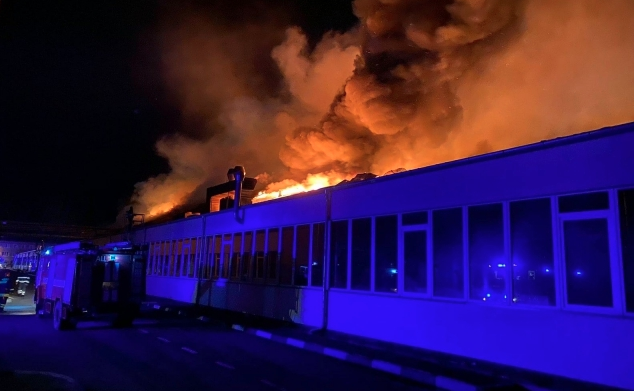
Fischer factory in Ukraine burns Oct 19, made many brands of skis.

In the Alpine world, the virus hit just as retailers were about to place orders for the upcoming season’s equipment.  Factories shut down, orders were cancelled.  With on the shelf inventory depleted and a recent fire in the largest ski factory in Europe, according to Pugski, you’ve got to buy it now or not this season. Forget about demos and consults with shop experts about what choices you might have. It’s a different swan this year. 

Classified Hints

You can post a classified ad  for 30 days for only $1 until Nov 12th. It’s easy. Tips:

  1. Post a picture with your ad.  You can actually post a “gallery”, or number of pics. It really helps.
  2. Include details of the deal, including payment options, shipping, who pays for what, etc. in the description.
  3. Your headline will make readers click on your ad. Think about how to frame your wording.

This Week

Skiing Weatherman Herb Stevens returns with his prediction for the upcoming snow season.  Herb has looked at that La Nina out in the Pacific, cooling the atmosphere above the west coast of South America. Find out what kind of weather he says that will bring to your favorite ski resort.

Our Mystery Glimpse this week shows us a really different and, thankfully, quick-passing fad in ski gondolas. Tell us what this is, where it was in operation, and what you think?  Would you like to ride up a mountain in a flying saucer look-alike?

Our Question For You takes a serious tone this week.  We ask what you would do if ski resort management and a goodly portion of your staff turns up positive for COVID. Not a pleasant thought, but one has to plan. What would you do?

We had a lot of responses to our previous question for you about advice re: joint replacements. Many responses were well-thought out and extremely useful to anyone facing that kind of procedure. We decided to analyze the responses to see what bubbles up and forms a clear message.  We want to thank all our readers for responding so conscientiously. 

Finally, there are still several months to go before the snow starts to build up into serious accumulation. You can continue to get into shape using a variety of Nordic exercise equipment for both inside and outside use.  Check correspondent Steve Hine’s advice on what is available.

Thanks for reading SeniorsSkiing.com.  Tell your friends, and remember, there are more if us every day, and we aren’t going away.


What You Said About Joint Replacement

“Not a day goes by that I don’t marvel at my pain-free knees and thank my luck stars I had this technology available.” Nancy P.

Take it easy, wait for perfect conditions, think positive. Credit: Liftopia

We had a number of comprehensive, well thought out, and even emphatic responses to our Question For You last week. Recall, we asked for advice about getting joint replacement as an active snow sports-loving senior. We don’t usually analyze the array of responses we get to the QFY feature, but in this case, there are some findings that are worth highlighting.

Here’s what you said:

  1. Some descriptive stats: The average time between surgery and returning to skiing was 8.46 months. Most of the respondents were in their 70s, fewer in their 60s, and one 80. Most respondents reported knee replacements, about a quarter of those double knee replacements. Fewer respondents reported hip replacements.
  2. “Prehab”, exercise before surgery, and Rehab are the key to success. Many responses endorsed the need to strengthen muscles and stretch ligaments under the guidance of a PT and/or on your own. Post operative exercise brings back functionality faster and safer, but overdoing it—which can be a problem for some committed exercisers—can lead to setbacks.

“The value of pre-op therapy for strength and flexibility cannot be over stated.” Mark M., PT

“Go in strong, come out strong.” Donald M.

“Be religious about rehab.” Sherm W.

“Work your tail off.” John W.

“Strengthen, strengthen, strengthen.” Jack M.

  1. Ongoing exercise after rehab PT was a frequent mention. You said these activities kept you going: Swimming, cycling/mountain biking, walking/hiking, elliptical machine, pickleball, Boot Camp fitness. Note: no running, jumping off the backs of pickup trucks, mogul skiing, or icy slopes.
  2. Several readers offered advice about easing back to downhill skiing. This included doing snowplows, sticking with greens, waiting for perfect conditions, avoiding too much, too soon, i.e., glades, blacks. Interestingly, one person mentioned heading back to cross-country skiing before going to the mountains to gain confidence. Bottom line: Take it easy.
  3. What helped getting back into skiing? There were several mentions of having a good surgeon and good appliance replacing the joint in the first place. Other readers mentioned enablers: New equipment, Knee bindings that release from the heel as well as the toe, Ski Mojo, a supportive device that relieves pressure on hips and knees. Another reader mentioned a positive mental attitude. Can’t argue with that.
  4. Curiously, a number of readers mentioned alternatives to surgery including a variety of therapeutics including different drugs and stem cell treatments. Obviously, they are out there and worthy of inquiry. However, most respondents opted for surgery, some after years of a pain.
  5. As far as outcomes are concerned, several readers reported they’ve never skied better. Clearly there is a transformation from pre- to post- joint replacement.

“It was the first time in 30 years that I didn’t have at least twinges of pain from that knee.” Nancy P.


Mystery Glimpse: Air Ride

Not A Flying Saucer.

Close, though. It certainly looks like it might be from…um…elsewhere. And that’s a giveaway to what was going on in that particular era. Is it an amusement park ride? Prop from a space movie? No, but at what stylish resort did this car-ish “gondola” appear? How about when? Does anyone know the history? We thank Jamie Storrs of Vail Resorts for opening his archive of historical photos for us.


Last Week

We have few answers as to the details of the video of vintage home movies curated by correspondent Don Burch. Clearly, some 50s and 60s footage. Don reports the first segment is from the Ostego Ski Club skiing at Hidden Valley, PA. The second is labelled 1961, and no data for the last segment. Fun, though, to see that world again.

Here it is in case you missed it last week.


This Week In SeniorsSkiing.com (Oct. 23)

Classified Launch, Response, and Advice,  Chile Season Review, Serious Question For You, Mystery, Maine Guide Advice, How To Ski With COVID.

Last week, we launched our new Classified Ad feature with a special introductory $1 for 30 days offer.  We are happy that there are readers who are posting their ads and hopefully getting some responses. 

Here’s what Bill Cohen, San Jose, CA, had to say about his ad posting experience.  Boy, did that make us smile.

Hey, just wanted to thank you guys for setting up a classified listing program.  I just posted my first ad (CHRISTIE LODGE ROOM AVAILABLE) and wanted to let you know it was EASY, FAST, covered all the bases, and hopefully will get my extra room filled!  So thanks for providing this and I hope others will take advantage of both POSTING and READING the classifieds – GREAT EXTRA SERVICE to the Senior Skiing community.  Bill Cohen in San Jose, CA

Based on what we’ve seen so far, here is some advice:

  1. Post a picture with your ad.  It is easy to upload a .jpeg or .png photo. In fact, you can post more than one, a gallery if you wish.
  2. Be sure to include any details re: shipments or transactions.  Many readers are using PayPal as a payment method. It is simple and easy to setup.
  3. Think about your headline.  Make it short and get to the point. 

If you want to view classified ads already posted, click on the blue menu bar, second box from the left.

As more hikers explore the White Mountains, calls for help climb, too.

 
As a result, SeniorsSkiing.com is asking readers to think about their day hiking plans and review what to bring along.  A great source is expert advice provided by REI, the outdoor equipment company.  You may think some of these recommendations of what to bring are a bit over the top, but if you need, say, a compass, and you’re stuck in the woods without one, you’ll quickly find out how valuable it is.
 

REI’s checklist of equipment to bring for day hikes is definitely worth bookmarking.

Finally, we’re reprising an fantastic resource for those heading to the woods. It’s a valuable document you can download and print out,  published by the State of Maine, by Maine guides. Alone In The Woods is a homespun collection of advice for surviving in the woods if you get lost. With more hikers headed out leaf peeping and conditioning-walking, this is an important source of information. The illustrations may be a bit cartoon-ish, but the information is valuable and might save your life. Click here to read and download.

This Week

Our Question For You this week takes a personal bend as our editor asks readers who have experienced a joint replacement how they returned to the sport.  Why personal?  He’s facing a hip replacement in January.  Gulp.

Correspondent Don Burch offers some basic advice for getting ready for the season of skiing with COVID. As Henry V said in Shakespeare’s play, “All things be ready of our minds be so.”

Correspondent Casey Earle provides a summary of the ski season in Chile in the times of COVID. As we have seen from reports from Australia, the virus has had a heavy hand in how the resorts operated this past season. Those constraints and a lousy snow season made for a fair to middling snow season. What can we learn from both these south of the Ecuador experiences?

Mystery Glimpse is trying something different this week.  Correspondent Don Burch has curated a video of some vintage home movies taken in the 50s and 60s.  Can you spot the locations? 

Thanks for reading SeniorsSkiing.com. Tell your friends and remember there are more of us every day and we aren’t going away.


Question For You 15: Returning With New Joints

What Does It Take To Come Back With Artificial Parts?

Here’s a question for a subset of our readership. This question is being posed by your faithful editor because he is facing the prospect of a hip replacement.  Assured by our capable and competent orthopedic surgeon that skiing and other athletic activities (not running or impact sports) are in the offing, we wonder how others have fared after getting a new shoulder, knee, or hip.

If you’ve had a joint replacement, please share what it was like to come back to your sports regimen? What was that first ski run like? How did you muster the gumption to give it a try? What did you do to prep? What helped? What hindered? What advice do you have for those facing replacements?

From what we’ve heard, joint replacements have become the most common surgery in North America. Since osteoarthritis seems to be the reason for that surgery and since OA is most likely found in older folks, we have a suspicion that a good proportion of our readers have been down that path.

Please share your thoughts in the Leave A Reply box below.