Tag Archive for: 50+

Fond Memories Of Blandford Ski Area

Memories Live On Even If The Area Closes.

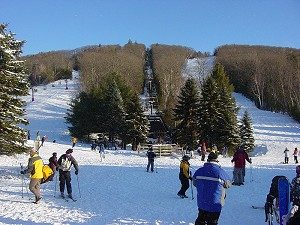
Blandford has three chairlifts. When I learned to ski, it had seven rope tows but only one chairlift. Credit: Harriet Wallis

Nothing can replace this family-based ski area in southern Massachusetts. But Blandford is now on the brink of being closed or sold. It has offered what mega resorts cannot offer.

If kids got tired of skiing, they’d go off trail with their friends and build snow caves and ski jumps. When my son broke the tip off a ski, we knew exactly how it happened. When my daughter needed a break, she discovered she could mooch cookies from skiers in the lodge.

It was all part of the ski experience. Something that doesn’t happen at the big resorts.

Adults had their fun too. In spring, we’d take a picnic lunch and a bottle of wine to the picnic tables at the summit.
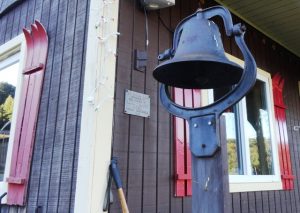
The ski school bell rang when it was time for lessons. Credit: Harriet Wallis.

If it rained we put on garbage bags and did “worm turns” rolling on the soggy snow. One rainy day when no one was riding the T-bar, a group of us slalomed the T-bar line. The Ts were moving targets coming up, and we skied around them going down. Naughty but fun.

Après ski was a food fest. Families brought crockpots and plugged them in on the deck letting dinner simmer while they skied. Oh the glorious smells! At the end of the day, everybody shared.

We skied there every Saturday and Sunday during the 1960s and early 70s when my kids were growing up.

There were family races—our first race experience with gates and awards. My daughter didn’t yet understand the race concept. She stopped to chat with each gate keeper.

The Blandford race team won many competitions even though they trained mostly on dry land because early season snow was too skimpy. The kids honed their muscles and reflexes by quick stepping through an array of tires and other dry land exercises.

The race coach also gave ski tuning demonstrations, a skill I continue to use today.

And he demonstrated ski binding release. He careened down the hill in Olympic form, carving hard lefts and hard rights. Then he would stop, lift each foot and shake his skis off! If you ski technically correct, your binding don’t have to be cranked down, he said.

The ski patrollers found ways to busy themselves as there were few accidents. One day, a patroller watched a youngster cut the chairlift line, slithering through the long line up to the very front. Just before the child got onto the chair, the watchful patroller sent him to the back of the line. The child never cut the line again.

One spring, the patrollers decided to tap the many maple trees and make syrup. Their first morning duty was to gather the makeshift syrup buckets — #10 size cans – and carry them to the patrol’s dispatch shack at the summit. There the dispatcher kept the golden liquid stirred on the pot belly stove. The patrol bottled the syrup and invited everyone for après ski “syrup on snow.”

Then there were parties. In summer, we enjoyed the camaraderie of work parties, pitching in to help with lodge and slope maintenance. That was always followed by a corn husking contest and a giant BBQ.

In winter, there were celebrations with a caldron of gluehwein simmering over a fire, torchlight parades with real torches, and then dinner and dancing. Kids danced. Adults danced. Everybody danced. Everybody danced with everybody.

Small ski areas are the heart and soul of skiing. It’s sad that this could be the end of iconic Blandford Ski Area that’s been in operation since 1936.

To read more from Harriet click here for her stories on SkiUtah.


June Skiing At Alta: The Never-Ending Season Goes On

Where Is Everyone? There’s Pow At Alta.

Thanks to Snowbrains for passing this along.  June 13, 2017 run at Alta.

Senior Skier Profiles: Two Kings Of The Hill

These Octogenarians Are High Spirited Role Models.

Some skiers slow down as they get older. But Bud Temple (84) and Paul Jacobsen (89) pick up steam. Each has skied for more than 70 years. They each learned on primitive equipment in a city park.

Meet Bud Temple

Bud’s been skiing for 70 years.
Credit: Harriet Wallis

Bud launched into skiing in an unusual way. While a student at the University of Utah, he took a ski course offered by Bill Lash, a founder of PSIA (Professional Ski Instructors of America). Bud excelled, and he earned a ski teaching certificate—one of the very earliest. But then he was drafted.

No problem. He entered the U.S. Army with two unusual documents: his ski teaching certificate and a personal letter from Bill Lash to the Commandant at Camp Carson where special troops were trained.

After basic training when assignments were made, Bud presented his two documents to the assignment officials.

“The Army didn’t know what to do with me,” Bud said. “They’d never seen such documents.”

So the officials left the room, called the Commandant, and returned saying: “The Commandant is expecting you.”

Bud taught special troops how to ski, and he also taught survival, mountaineering, and climbing to special forces in all branches of the military.

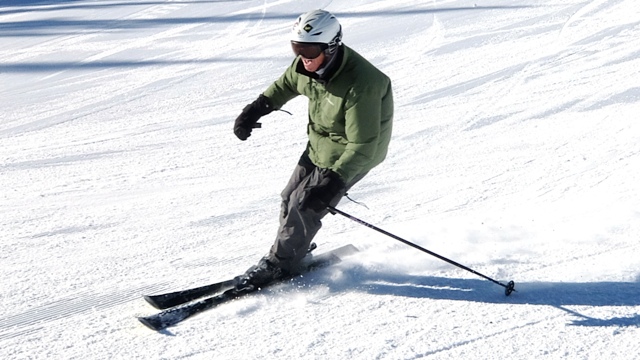
Bud showing a some form.
Credit: Harriet Wallis

And then he continued to teach and coach. He coached World Cup alpine champion Tamara McKinney, created a ski school at a small mountain that didn’t have a ski school, and taught internationally at eight resorts.

Last year, Bud was clocked at 48 mph.

On land, Bud hobbles because of chronic leg problems. But skis give flight to this retired mining and metals professional. He swoops smoothly down the slopes.

Bud’s advice for older skiers:

“Accept that you’re not as agile as you once were. Slow down,” says speedster Bud. Then he adds: “I guess I should take my own advice!”

Meet Paul Jacobsen

So has Paul.
Credit: Harriet Wallis

Paul holds a 25 year record for skiing every day of the season at Brighton. He’s known as First Chair Paul because he’s always first in line when the lifts open.

Agile and mobile at 89, this retired architect skis daily. Then, for après ski, he goes to most of the University of Utah’s home football and basketball games

Skiing has always meant freedom for him. As a kid he skied for the first time when someone brought a simple pair of slats to the sledding hill. He was hooked.

As a teen he worked in his dad’s grocery store, and he drove to the wholesale produce market daily to buy fresh produce for the store. When his job was done, he was free to ski.

For years, Paul skied with a Japanese fish kite flying from his helmet. But it blew away this winter, and everyone misses seeing it. When skiers dress silly in spring, he wears a tutu.

Paul’s advice for older skiers:

“Enjoy what you’re doing,” says Paul. “Don’t be a couch potato.”

Paul in his tutu. He skis every day, but not always in a tutu. Sometimes he tows a kite from his helmet.
Credit: Harriet Wallis

Fitness Focus: Plank, Plank, Plank

This Pose Is Considered The Simplest, Most Effective Core Strengthener.

Pretty basic, but effective. It’s easy to do it incorrectly so study up.
Credit: Yoga Lily

“Plank, plank, plank,” says Jan, the exercise instructor at the head of our class.  After an hour of kick boxing, we start the floor exercises to end the session.  We get into plank position as she intones, “Plank, plank, plank”. The seconds roll by.

High plank or Phalakasana pose. The most glorious of simple exercises, body weight held in place by core strength.  Arms, wrists, shoulders, lower back, abs, gluts, all working to hold the position.

The proper plank position can be found by putting your hands under your shoulders, extending up to a full, high plank on your toes, body a straight line from heels to back of head, eyes focused about a foot ahead of you, chin tucked. Basically, it’s like the top of a push-up, making sure your body is straight and not sagging or arched. While you’re up there, you can flex your feet, bend one knee in, then the other. Put one foot’s toes on the heel of the other foot, then switch. If you hold yourself still, you can feel your muscles adjusting and keeping you balanced.

High plank can be modified by resting on your knees versus your toes. That might be a good place to start if you haven’t done core exercises in a while.

If your wrists are sensitive, you can support yourself on a pair of dumb bells or yoga blocks. If you have hand or wrist issues, like carpal tunnel or rotator cuff, you’ll have to get some advice from a physical therapist or yoga instructor to help mitigate those conditions.

You can also move from high plank to low plank, moving down to resting on your forearms, arms extending in front of you, one arm at a time.  Then, back to high plank.  And then down to low plank. Do this slowly while mindfully keeping your body in a straight line position.  Man, that’s a work out.

The benefits are impressive; you get toned up in the middle, and you will find yourself using those newly strengthened core muscles to support your back when lifting, twisting, even walking.  We’ve found that lower back problems can be addressed with a strong core.  Your posture will improve, too. Your mileage may vary, but plank and other exercises focused on the core can definitely help that lower back.

The experts say you should shoot for 30 seconds as a beginner to get into this.  Eventually, if you can hold plank for two minutes, you’re doing very well.

You can find more advice from experts on how to safely and properly do plank here.  Jen Reviews has a number of pointers and caveats on doing this exercise.  More advice from the Yoga Outlet here.   Jen Reviews sums up the major benefit of planking:

Planks are a very versatile exercise that target a lot of the most important muscle groups in the body. The core muscle groups are responsible in some way for helping us carry ourselves through almost every action we’ll perform in a day, so making sure your core strength is in check is absolutely vital for someone who wants to leave a healthy lifestyle.

Plank pose is also one of the Sunrise Salutation series of connected poses that cycles through all your muscles, flexing, and strengthening all of you.  We’ll talk about the Sunrise Salutation in another Fitness Focus because it is a really awesome way to start the day.

You can incorporate plank as well as last week’s squat exercise along with others in a regime of strengthening, stretching and flexing that will keep you feeling good.

As with all new activities, please consult your doctor, physical therapist or exercise professional if you have any issues that might cause concern.


Cycling Series: Around Old Seattle

Biking With A Mission: Hit The Historic Parts Of Town.

Editor Note: You can download a cue sheet for this “Forgotten Seattle Bike Tour” by clicking here which will take you to correspondent John Nelson’s blog. 

Start the ride at Occidental Park, once a salt marsh. Historic bike rides bring a new dimension to a city. Credit: John Nelson

It turns out the bicycle is a great time machine.

I recently devised a tour to take in some of Seattle’s most famous historic sites. You can do it too, no matter where you live. Using a bike and a little imagination, it’s fun to explore your city in different way.

Come along on my 23-mile tour back to the 1800s, and let’s see what was happening here in Seattle.

Pioneer Square

Our journey begins in Occidental Park. Today it’s a vibrant brick-covered gathering place, but when the first settlers came to Seattle, it was a salt marsh.

As we travel three blocks north toward Yesler Way, notice how wobbly the ground is. You can thank the workers of Yesler’s Mill, who started filling much of this ground with sawdust as the city was being built. Streets throughout this part of town are uneven and unstable, as fill material was added over the years, including the refuse from a major fire in 1889.

Shoreline to Denny Hill

Heading north along Western, imagine we’re traveling on the shoreline of Seattle. Back in the 1850s, this was the waterfront—none of those piers 300 yards to the west were here.

As we pass Spring Street, take a moment to look up the hill to the east. Nine springs provided water to the early settlers in the city, and Spring Street is named for the biggest of these. To appreciate this spot, let’s take a long drink from our water bottles, and continue north toward what is now Pike Place Market.

From the market, it’s time to do some climbing, although today, our climb is much shorter than it would have been in the 1800s. Denny Hill once stood between Pike and Cedar Streets, now called Belltown.

Starting in 1897, the hill was shaved off in what is known as the Denny Regrade. Over the next 33 years, giant hoses, dynamite and steam shovels were used to remove the top 120 feet of the hill in the name of growth and development.

Lake and Forest

For now we’re done with historic downtown Seattle. Our journey takes us south and east, toward Lake Washington. But we’re not done with regrades—our tour takes us along Jackson and Dearborn streets, both of which were regraded to help the city grow bigger.

The regraded streets are nice for biking today, but back in the 1800s they were quite hilly. Jackson at one time had a 15 percent grade. In the early 1900s, the city’s busy earth-movers shaved down Jackson and Dearborn, using the dirt to fill in much of what is now the SoDo neighborhood of Seattle.

Hopping onto the Mountain to the Sound Greenway, we travel through a tunnel to Lake Washington and down to the lake shore.

Heading south along Lake Washington Boulevard, we travel to Seward Park, one of the few places we can still see old-growth trees in the city.

Along the Duwamish

Leaving Seward Park, we ride west over Beacon Hill to a pioneer farming location, Georgetown. It’s an arty, hipster hangout now, but back in the 1800s, Georgetown was on the edge of the tidal flat and had rich alluvial soil deposited by the Duwamish River.

Duwamish River, looking to downtown Seattle, used to meander through the salt marsh.
Credit: John Nelson

Today, the Duwamish River is a major industrial waterway, engineered to handle huge ships. Little remains of the old river that once wound among the mud flats.

But we can see a hint of the past at Terminal 107 Park, the site of a former Duwamish Indian village. Step off your bike and take a walk along a gravel path to the shore of the river.

As we peek at the earth along the riverbank, we may find evidence of a middena place where shells and refuse were discarded by native people.

The home stretch

From here, we’ll be riding back through the stadium district to our starting point. Hopping on the West Seattle Bridge Trail, we pedal into SoDo and take in the former tidal flat. If this was 1850, we’d be under water now, or at least stuck in the mud.

Hear that crowd roar? It’s the sound of modern times as we pass Safeco Field (Seattle Mariners) or CenturyLink Field (Seattle Seahawks, Seattle Sounders) back into Pioneer Square.

Shells are visible in the embankment of Terminal 107 Park in what is called a midden, where Native people discarded refuse.
Credit: John Nelson

_____

John Nelson is a freelance outdoors writer based in Seattle. Follow his blog at skizer.org.

This Week In SeniorsSkiing.com (June 2)

We’re Starting Our Summer Schedule!

From Memorial Day to Labor Day, SeniorsSkiing.com will be publishing on a bi-weekly basis.  We’ll still be continuing our Cycling Series, our new Fitness Focus, articles about hiking, profiles of senior skiers, and interesting places our readers and correspondents are visiting.  And, we’ll be publishing our list of 78 Trailmasters, super senior skiers who skied their age and more last season.

So, see you next week with more stories.  As for now, there’s this:

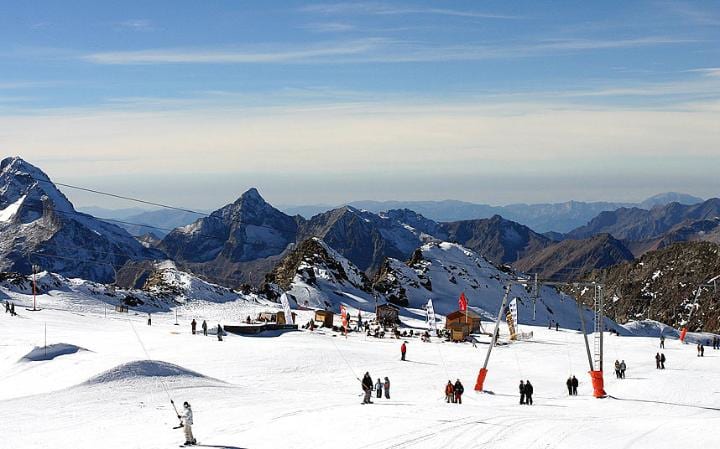
Where To Ski In Summer: Best Glaciers For Skiing [From The Telegraph (UK)]

Les Deux Alpes has skiing all summer.

Click here to link to the Telegraph article.

This Week In SeniorsSkiing.com (May 26)

Survey Results Highlights, Trailmaster Statistics, Fitness Focus Series Starts, Senior Woman Skier Wanted.

Click on the picture to learn how to do a body squat.
Credit: New York Times

This week, we have waded through the responses to the Spring Subscriber Survey 2017 and, by analyzing the data, we are discovering exactly who our readers are.  Jon does a nice job summarizing the main points of the research.  Thank you for responding; we had an incredible 27% response rate again. That’s really an impressive sign of engagement of our readers.  We continue to be awestruck how much our readers want SeniorsSkiing.com to continue to be a voice for them.

We are also announcing statistics on our Trailmasters, those readers who “skied their age”, that is, the number of days equal to or exceeding their age.  This year, we had 77 respondents who qualified as Trailmasters.  The statistics on their average age, number of days skied, and number of years as a skier are interesting. We will publish the full list of names when we verify the topmost super skiers.

We are also starting a summer series this week we’re calling Fitness Focus.  Respondents to our survey suggested we have more articles on fitness, so here you go.  With each edition over the summer, we plan to focus on one exercise, stretch, pose, activity that can benefit seniors’ conditioning.  Our inaugural article is on the squat which can be performed as moving exercise or as a yoga pose.  It’s considered one of the “essential” exercises.  Hope you like the series.

Finally, we were approached by a talent agency who is looking for a senior female skier who can appear in a TV commercial.  The timing is tight, so if you know someone, take some quick action.  Click here for the details.

We will be starting our summer schedule next week.  That means, we’re going to be publishing every other week instead of weekly.  We’ll still be at SeniorsSkiing.com world headquarters, however, so if you have ideas, comments, etc., you know where to find us.

If you want a few SeniorsSkiing.com 3″ x 3″ stickers, just send us a stamped, self-addressed envelope to SeniorsSkiing.com, Box 416, Hamilton, MA. 01936.  We’ve already received many letters from far and wide, even a nice chap from Australia has sent for some.

And remember, dear readers, there are definitely more of us every day, and we are not going away.

Super Senior Skier Trailmaster Results Are In

Here Are The Stats From This Extraordinary Group Of Senior Skiers.

Our recent Spring Subscriber Survey 2017 had a question asking if the respondent had skied a number of days that equaled or exceeded their age in years.  The results are extremely interesting.

We had 77 respondents who qualified as this year’s group of Trail Masters, that remarkable group of super senior skiers who really hit the slopes this past season.  While we await verification from the top skiers, the most senior with the most days, we wanted to give you some statistics that describe who these super seniors are.

  • The average age of the Trailmaster group: 66.03
  • Highest lowest age range: 50 and 83
  • The average number of days skied: 84.49
  • The highest lowest number of days skied: 60 and 160 (!)
  • The average number of years the respondent has been skiing: 49.4
  • International locations of Trailmasters: Italy, Canada, France, Australia
  • Most frequently mentioned home state of Trailmasters: Vermont

We’ve sent emails to the super duper top of the list of Trailmasters to validate their numbers.  We’ll let you know who these folks are and who else is on the list of SeniorsSkiing.com’s Trailmasters for the 2016-2017 season soon.


This Week In SeniorsSkiing.com (May 19)

Cycling Series Begins, Ski Video Compilation, Survey Comments, Publishing Schedule News.

Night skiing under the North Lights. See the compilation video in this week’s edition.
Credit: Good Time With Rider

This week, you can see that we are shifting focus to summer activities.  We know our readers are also cyclers, hikers, kayakers, and to a lesser extent, golfers and fishermen.  With that in mind, here’s the first of our cycling series for this season.

Correspondent Pat McCloskey tells us about his early season mountain bike ride in Happy Valley in Central Pennsylvania. If you’re into mountain biking, you can appreciate Pat’s challenge in keeping up with a bunch of younger spinners who climb gnarly, rugged, rock-strewn trails with vigor.

Roger Lohr, publisher of XCSkiResorts.com, reports on an adaptive bike program in Vermont that will host vets and people with disabilities all summer long in different locations. If you are in the area, you might want to check in and see if you can help out.

Trails at Rothrock require some technical skills.
Credit: Pat McCloskey

Finally, we have a compilation video depicting skiing from all ends of the spectrum, from silly and zany to serious and thrilling.  It’s a tribute to the unbeatable 2016 season and worth a four-minute view.

We are compiling our list of Trail Masters, those readers who have “skied their age” this past season.  We have an amazing list of over 150 names to vet and are getting it ready for publication soon.

Speaking of our survey, we want to respond to some comments that seem to have come up frequently, based on a scan of the data. This is not a thorough analysis, just a quick hit:

  1. Our readers want us to provide information on discounts and lobby ski resorts for additional price breaks for seniors. Roger that and will continue to do even more.
  2. You want to connect with other senior skiers.  We hear that loud and clear.  First step, go to COMMUNITY in the top menu, scroll down to Find Ski Buddies With NSCF, which is the National Ski Council Federation, an umbrella organization for ski clubs in the US, and find a club near you. Then, check out 70+ Ski Club, one of our fantastic advertisers.  Also add a comment in our FORUM under the COMMUNITY menu.
  3. Many comments revolve around reporting on resorts.  Our correspondents will be fanning out next season to add even more Resort Reviews to our collection.  By the way, we welcome contributions from our readers.  Let us know what you have in mind, and we’ll send our submission guidelines.
  4. Video submissions: You want to see them from other seniors, and so do we.  Please send our clips.  Keep them short, 3-4 minutes.  We started a collection, have only two on the site, and we welcome more. If you post them on Youtube, it is an easy pick up for us.
  5. Lessons, technique, skills.  You want advice for seniors on adapting to changing abilities. We will take that on board as a to-do for next season.

There’s much more, of course.  We will analyze and learn from your valuable comments.

One comment did get to us in a very good way.  One of you wrote, “You’re on a significantly important mission by providing an excellent quality read.” Tears in eye, man.  Thanks.

Finally, our readers are still vexed with the problem of having to re-enter email addresses. Here is how to resolve this problem:

If you are being asked to re-enter your email to confirm your subscription to SeniorsSkiing.com, you might be a bit annoyed.  We don’t blame you, but there is an explanation.

  • You are accessing SeniorsSkiing.com through a device that is different from the one you originally signed up on. Subscribing to SeniorsSkiing.com puts a “cookie” on your device.  If you use a different device, no cookie, so you are viewed as a non-subscriber. If you re-enter name and password, you’ll be okay with the new device.
  • You have disabled cookies or cleared browser history on your device. Turn cookies back on, and you’ll not have to re-enter again, or leave it disabled and realize you have to re-enter each time.  Your call.
  • You are trying to access our Subscriber-Only Content.  Instead of building a firewall that requires usernames and passwords, we elected a much simpler way of getting to our exclusive content: Just confirm your name and email.  You will have to do that each time you want to get to that information, which, by the way, is under the Community tab at the top.

Finally, finally, we are considering changing our publishing schedule from weekly to bi-weekly for the summer months.  The new schedule will start at the beginning of June.

Once again, thanks for reading SeniorsSkiing.com, tell your friends, and remember, there are more of us every day, and we aren’t going away.


Vets Take Part In VT Adaptive Bike Program

Special Bikes Available At Different VT Locations This Summer.

[Editor Note: This article first appeared in XCSkiResorts.com; we thank Roger Lohr, editor-in-chief, for sharing this with SeniorsSkiing.com readers.]

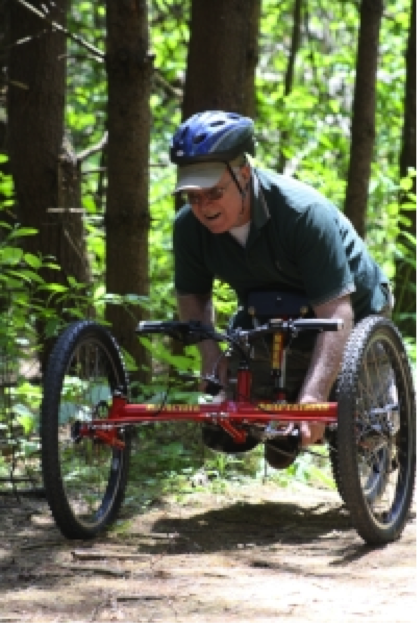
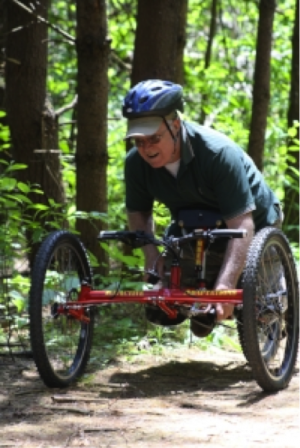
Adaptive bikes make it possible to get to the top of the trail. Each one is handmade.

The Vermont Adaptive Ski and Sports organization’s new Adaptive Mountain Bike Program, which is one of the first in New England offers special dates for outings in various location and limited adaptive mountain bikes to use. All abilities are welcome and participants may bring their own equipment as well.

The program is scheduled at multiple locations with outings and events planned for all level mountain bikers who have their own equipment. In addition, four adaptive mountain bikes are available for participants on a first-come, reservations-based system.

These highly adjustable bikes are ideal for individuals with spinal cord injuries, amputations or limb differences, or balance and motor skill disabilities. Vermont Adaptive purchased the bikes last summer with funding from the US Dept. of Veterans Affairs grant and Phil Black, owner of Lookout Tavern who donated monies for Vermont Adaptive to purchase a trailer for hauling the bikes to various locations statewide.

“Participants gain a sense of accomplishment when reaching the top of the mountain and that is great to see,” said Kelly Walsh, Vermont Adaptive program coordinator, who is responsible for Vermont Adaptive’s veterans programs.

For 2017, the US Dept of Veterans Affairs again awarded Vermont Adaptive grant monies to help purchase 10 two-wheeled mountain bikes and 10 bicycles for use on recreation paths. These bikes will be added to the existing fleet, allowing participants who don’t need to use an adaptive bike to get outside, exercise and socialize with other veterans, to enjoy Vermont alongside their peers with physical disabilities.

The custom hand cycles are crafted specifically for rocky terrain with unique hand cycles that are designed for adaptive riders to cruise down the trails smoothly.

There is open enrollment for free to the mountain bike program this summer. Although Vermont Adaptive will have a limited number of adaptive mountain bikes for use, all adaptive riders are encouraged to bring their own bikes and participate in any of the summer events. Reservations are required for programming and equipment use.

The schedule will kick off with the Summer Solstice Bike Ride on June 21 at Blueberry Lake in Warren, VT followed by the Mountain Bike “Snowshed Session” on June 24 at Killington Resort. Other events include the Green Mountain Trails Bike Ride is July 9 in Pittsfield, the Blueberry Lake Bike Ride on July 9 in Warren, the Vermont Mountain Bike Association Festival on July 21-23 in Warren, the Killington Bike Ride on July 29 and the Pine Hill Park Bike Ride on August 13 in Rutland. This program is limited to Vermont but you can look for similar programs in other regions across the country by contacting organizations that resemble Vermont Adaptive.

This year’s Killington Resort Adaptive Event for Independent Riders will also have bike demos “encouraging adaptive awareness for proper use of hand cycles,” said Olivia Joseph, Vermont Adaptive program coordinator and organizer of the adaptive mountain bike program.

The program is seeking volunteers who have an interest in mountain biking and for further info, contact Olivia Joseph at north@vermontadaptive.org.

The custom hand cycles are crafted specifically for rocky terrain with unique hand cycles that are designed for adaptive riders to cruise down the trails smoothly.

There is open enrollment for free to the mountain bike program this summer. Although Vermont Adaptive will have a limited number of adaptive mountain bikes for use, all adaptive riders are encouraged to bring their own bikes and participate in any of the summer events. Reservations are required for programming and equipment use.

This Week In SeniorsSkiing.com (May 12)

More Ticks, More Storage Ideas, Sharks That Swim Under Snow, Oh Boy.

Don’t go near the…snow. Avalanche Sharks are out there.

Thanks to all our readers who responded to our SeniorsSkiing.com Spring Subscriber Survey 2017.  We had an incredible 28 percent response rate. If you are familiar with surveys, you will instantly see that is an extraordinary number.  Our readers—you guys—are definitely engaged in our online magazine/community.  And the comments and advice you offered were wise, humbling and most encouraging.  We are very grateful for your input.  More on what we learned later.

One thing we learned immediately from scanning the responses is that many readers looking for other people to ski or travel with. There are at least two avenues to pursue:

  1. Check out the 70+ Ski Club, a group of seniors who ski together on trips around North America and Europe.  [You don’t have to be 70+ to join, by the way.]
  2. Find a ski club near you. We have partnered with the National Ski Council Federation—an umbrella group of ski clubs across the US—and have posted a link to their map of clubs.  Just go to the map, click on your city and you will get names of ski clubs and the email addresses of club officers.

As for this week, we continue some themes from last week. Correspondent Val E., a specialist in retail and ski industry products, adds tips for the careful storage of gear over the summer. A few simple steps now can avoid complex steps later.

Steve Hines, our outdoorsman and Wilderness First Responder, offers Part 2 on the tick infestation we are experiencing. This time he discusses treatment and prevention. This is serious business folks; he also reminds us to pay attention to the Powassan virus, another tick-carried disease that is serious and even deadly.  If you spend any time in the woods this summer, this is important stuff.

Finally, we have a movie review to share.  Avalanche Sharks is a modern monster movie featuring an avalanche, a bikini contest at a ski resort, and sharks that swim under the snow. Seriously, that’s the plot.  Check out review and see the trailer here.

Finally, finally, here’s why you may be asked to enter your email address when you come to SeniorsSkiing.com.  It’s the most common comment/complaint we get here at SeniorsSkiing.com World Headquarters.

If you are being asked to re-enter your email to confirm your subscription to SeniorsSkiing.com, you might be a bit annoyed.  We don’t blame you, but there is an explanation.

  • You are accessing SeniorsSkiing.com through a device that is different from the one you originally signed up on. Subscribing to SeniorsSkiing.com puts a “cookie” on your device.  If you use a different device, no cookie, so you are viewed as a non-subscriber. If you re-enter name and password, you’ll be okay with the new device.
  • You have disabled cookies or cleared browser history on your device. Turn cookies back on, and you’ll not have to re-enter again, or leave it disabled and realize you have to re-enter each time.  Your call.
  • You are trying to access our Subscriber-Only Content.  Instead of building a firewall that requires usernames and passwords, we elected a much simpler way of getting to our exclusive content: Just confirm your name and email.  You will have to do that each time you want to get to that information, which, by the way, is under the Community tab at the top.

Next week, we’ll get into more summer activities. For now, we are experiencing a cool and wet mid-Spring  here in New England.

Thanks for reading SeniorsSkiing.com.  And remember, folks, there are more of us every day and we aren’t going away.

Putting Away Stuff: More Advice On Cleaning And Storage

Things You Can Do To Show How Much You Love Your Equipment.

[Editor Note: We received several comments about last week’s article by Don Burch about putting your skis away.  So, we asked retail expert and SeniorsSkiing.com correspondent Val E. offer some more advice.  Here you go.]

Ski Cleaning

Care for your equipment in the springtime pays off in the fall.

All ski bases are made out of polyethylene which is a chemically neutral and relatively durable material. You can’t ruin it with household chemicals, but you should keep in mind that the base material is porous.  So, clean dirt from the surface and from the pores (hot wax cleaning is for that). Acetone is a simple, cheap and easy option for base cleaning. Use rubber gloves.

To slow down oxidation of polyethylene (see any whitish areas?), seal the base with wax, that is why hot waxing is better than cold waxing. A thick layer covering the base and the edges doesn’t let oxygen infiltrate.

I would suggest you file down nicks on aluminum tail and tip inserts as well as round up the nicks on the top surface edge, especially in the areas where you grab your skis. The top layer and the sidewalls are often made out of ABS plastic which doesn’t like acetone, so to be on a safe side use household soap to clean these areas.

Binding Cleaning

Try to avoid getting liquids besides water and special lubricant into your bindings. A ski bag should protect your bindings from dust sticking to the internal parts. Don’t have a ski bag? Wrap the bindings or the entire skis in a plastic bag. Two big garbage bags will work.

Keeping skis in a shed or cold garage is even worse as driving with your skis on the car roof unprotected; be nice to your skis and you will be a happy camper…oops, skier!

Poles

If tips are rusty and dull, sand them and sharpen. Aluminum poles may bend and stay bent or break, while composite poles never stay bent, they just break in case of high load. Check the shafts: in case of aluminum poles—file any nicks if found. In case of composite poles (carbon or fiberglass), fill in deep cuts or delaminated areas with epoxy resin. Look at the baskets, they should not have any deep cuts.

Boots

Pull out the liner and wash the shell of your ski boots with soap and nylon brush. Dry out the liners and the shells.

Store your boots buckled up. You may want to fit them with newspapers or thick wrapping paper. It may sound very old school, but it will help your liners to stay in shape.

Clothing

Wash all your ski soft goods—pants, jackets, base and mid-layers, face masks, socks using the right detergent; read the tags first. Most dry cleaning companies will not accept your clothing made of membrane fabric. If your gloves are very dirty, hand wash them, carefully squeeze the water out, starting with the fingers, and hang the glovers with the fingers up to dry. If your gloves have membrane liners (Gore-Tex or similar), try to not mess with it, if your pull the liner out of the fingers, it would be very difficult to put them back.

Store your ski jacket on a “fat” plastic hanger, not wire or thin plastic or wood. This is especially important for a natural down jacket. I prefer my ski pants to spend the summer hanging on a belt loop, not folded. Fold it less and you will extend the life of a waterproof/breathable membrane!

Synthetic fleece pieces and mid-layers with synthetic insulation are very easy to wash and store. Some items can be used off season for biking, running or walking. A fleece sweater is my favorite item while traveling by airplane—light, easy, and comfortable. If you have wool layers (merino or regular wool), make sure they are protected from moth.

Helmet

The liner may need a wash, check for cracks, the buckle and adjustments should work well. Dry it out and put in a fabric bag, don’t keep in a direct sunlight or in a hot shed.

Electronics

If you use batteries in your ski gear (goggles, heated gloves, boot heaters, helmet camera, etc.) pull them out. Replace batteries at the beginning of next season.

What’s Biting You? Part Two: Treatment And Prevention

[Editor Note: This is Part Two of a two-part article on Lyme disease by Steve Hines, outdoorsman and Wilderness First Responder. Click here for Part One: What’s Biting You?]

Treatment

The best treatment for Lyme disease bacteria is antibiotics. According to the Centers for Disease Control (CDC), “Patients treated with appropriate antibiotics in the early stages of Lyme disease usually recover rapidly and completely.” Patients with certain neurological or cardiac forms of illness may require intravenous treatment.

However, the National Institutes of Health (NIH) tells us, “Physicians sometimes describe patients who have non-specific symptoms (like fatigue, pain, and joint and muscle aches) after the treatment of Lyme disease as having post-treatment Lyme disease syndrome (PTLDS).”

So, don’t assume that because you and your doctor caught it early, and you took a course of antibiotics that you need not be careful. This is the case especially for seniors, since one symptom is cognitive impairment. The question comes up, “What’s normal age related ‘forgetfulness’ and what’s a lingering symptom of my Lyme disease?”

Prevention

It seems, then the best treatment for Lyme disease is prevention.

And prevention falls into two categories:

1. Personal protection

The first line of defense is protection when outdoors. Personal tick sprays use the chemical DEET.

The CDC recommends 30-50% DEET to prevent the spread of pathogens carried by insects, and it should be applied every 3-6 hours

Examples of tickproof gators. Worth it if frequently in high scrubs.

Finally, a number of outdoor clothing makers offer clothing in which the fabric’s threads are infused with permethrin. Hats, shirts, pants, socks, bandanas and gaiters are available from brands including Outdoor research, Orvis, ExOfficio, Craghoppers all offer these clothing pieces. Check with your local outdoor retailer.

Clothing containing the insecticide Permethrin (also known as Nix) is effective. Products like Sawyer’s Permethrin Spray can be squirted on clothing to make it tick (and mosquito) repellent.

Once you gear up with these products, don’t get overconfident. The critical activity for Lyme disease prevention is to inspect yourself from head to foot thoroughly when you come indoors. Ticks like warm dark moist places—so you know what that means for inspection.  Don’t be shy.

2. Controlling ticks in the environment.

CDC experts suggest that, in the absence of a human vaccine for Lyme disease, “no single method will be sufficient to substantially reduce Lyme disease.” Therefore, a main goal of researchers is not only to develop new treatment methods, but to assess the effectiveness of combined treatments for habitat.

What’s a potential habitat for Lyme? Richard C. Falco, of Fordham University has conducted research on this and asks questions including:

  • Is the property located in a Lyme-disease-endemic neighborhood?
  • Is there a history of tick bites associated with the property?
  • What is the proximity to woods?
  • Are deer observed on the property?
  • Is the property shaded?

If the answer is “yes” to all these questions, you should consider a tick-management plan from a professional. However, if the answer is “yes” to some of the questions, agree on a plan you are comfortable with given the estimated level of risk.

The deer tick is now carrying a disease more deadly than Lyme called Powassin. The CDC says approximately 75 cases of POW virus disease were reported in the United States over the past 10 years. But the danger is real and no cure exists. So, take precautions. [Editor Note:  As Steve suggests, Powassin is important to know about.  Click here for our SeniorsSkiing.com Powassin story from 2015.]

[A Final Editor Note: Our own SeniorsSkiing.com correspondent Suzie Winthrop alerted us to an important effort to better understand and fight Lyme disease. The Bay Area Lyme Foundation is asking people who get bitten to send the tick to them for analysis. You can learn more by checking out bayarealyme.org. They have been getting submissions from all over and will send you a report on your submission after it is analyzed.]

Find out how you can fight Lyme by submitting ticks from your area.

This Week In SeniorsSkiing.com (May 5)

Cinco de Mayo Skiing, Skiing On Stones, Why Re-Enter Name/Email?, Storing Skis, Ticks Are Coming.

Proof that more than one person has skied the scree in Austria.

The responses to our Spring Survey 2017 are rolling in.  Thank you for your encouraging comments and suggestions.  It is very heartening to know there are so many readers out there who are rooting for us and for senior skiing.  Yes, we are trying to promote senior discounts. And we will continue to highlight the “second-tier” ski areas where discounts are more generous and skiing more…relaxed.  And yes, we will have more articles on fitness and gear reviews.  So much helpful information.

If you haven’t responded, there is still time. We’ll send out a reminder soon.

Spring skiing in Arizona?  Who woulda thunk?  But here it is. Arizona Ski Bowl is celebrating Cinco de Mayo with open lifts. Click below to see short news story.

“Why Do I Have To Re-Enter My Name and Email Address?”

If you are being asked to re-enter your email to confirm your subscription to SeniorsSkiing.com, you might be a bit annoyed.  We don’t blame you, but there is an explanation.

  • You are accessing SeniorsSkiing.com through a device that is different from the one you originally signed up on. Subscribing to SeniorsSkiing.com puts a “cookie” on your device.  If you use a different device, no cookie, so you are viewed as a non-subscriber. If you re-enter name and password, you’ll be okay with the new device.
  • You have disabled cookies or cleared browser history on your device. Turn cookies back on, and you’ll not have to re-enter again, or leave it disabled and realize you have to re-enter each time.  Your call.
  • You are trying to access our Subscriber-Only Content.  Instead of building a firewall that requires usernames and passwords, we elected a much simpler way of getting to our exclusive content: Just confirm your name and email.  You will have to do that each time you want to get to that information, which, by the way, is under the Community tab at the top.

Co-publisher Jon Weisberg found a place in this whacky world where people ski on rocks.  Okay, we’ve seen skiers in canoes going down ski trails, surfers wearing skis, skiers in streets and urban parks, but this one gets the nutsy award.  Okay, maybe once to say you’ve done it, but not every weekend. Check it out.

Lyme’s tell-tale ring rash appears 36-48 hours after a tick bite.

Correspondent Steve Hines brings us the first part of a two-part series on Lyme disease. We know our readers are active summer people, many cyclists and hikers.  The news is that Lyme is spreading, no longer the exclusive disease of New England.  It pays to pay attention to this; having Lyme disease is a serious condition. The good news is it can be avoided.

Finally, Correspondent Don Burch gives us some tips on putting our gear away.  If you haven’t thought about storing your equipment with just a little TLC, now is the time to rectify.  We typically thrown our boot and ski bags down by the furnace after our last outing without so much as a fare-thee-well.  Not a good idea.


Our sticker, free with a self-addressed, stamped envelope.

Finally, finally, if you’d like a SeniorsSkiing.com sticker, please send a self-addressed, stamped envelope to SeniorsSkiing.com, Box 416, Hamilton, MA. 01936. We will send you a couple for sticking on things.

We appreciate our readers more and more every day.  Thanks again so very much for your responses to our new survey.  Keep ’em coming.  And remember, folks, there are more of us every day, and we aren’t going away.


What’s Biting You? Lyme Is Now A National Problem

If You Are Walking In The Woods This Spring, Be Wary Of Ticks.

[Editor Note: This is the first of a two part article on Lyme disease by Steve Hines, an avid outdoorsman and certified Wilderness First Responder.]

Lyme disease is a bacterial infection caused by the bite of an infected black-legged or deer tick. Lyme disease has become a nation-wide epidemic with 300,000 cases reported last year with a significant increase predicted for 2017. The highest concentration of cases has been the Northeastern United States including the New England states, New Jersey and Pennsylvania. Outbreaks will also occur in the west most noticeably in Colorado, Wyoming and Montana.

NPR has reported that back in the early ’80s, the disease wasn’t that big a problem. Cases were confined to two small regions: western Wisconsin and the area from Connecticut to New Jersey.

However, in 2015, the CDC reported Lyme is present in more than 260 counties. The disease shows up in Maine, swoops down the East Coast into Washington, D.C., and southern Virginia. Then it hops to the Midwest into northern Indiana, Illinois, Wisconsin, and Minnesota. There are also small pockets of Lyme on the West Coast. This map shows the extent of Lyme disease for 2015, the latest year for which complete date is available.

Lyme disease is no longer considered limited to the Northeast.
Credit: CDC

We are vulnerable almost anywhere outdoors. So, hikers, hunters and fishermen and gardeners are all susceptible. The size of the deer tick can vary depending on the sex of the tick, and its maturation state. Approximately the size of a sesame seed, a female adult deer tick measures about 2.7 mm in length. They are orangish brown but may change to be rust or brown-red in hue following feeding. The body becomes engorged after a meal and may expand considerably. Regardless, the deer tick’s body is approximately half as large as that of the common American dog tick.

According to the CDC’s Kiersten Kugeler. “In the Northeast, most people catch Lyme around their homes,” she says. “People out gardening. People playing in their backyard. Mowing the lawn.”  The ticks are transmitters of the disease, picking up Lyme pathogens from deer mice or other infected hosts.

Notice the cycle of Lyme and the tick life cycle.

Deer are hosts; Lyme is transmitted to ticks via mice or other infected organisms.
Credit: CDC

Diagnosis

The main problem in diagnosing Lyme disease has been physicians’ lack of education about it. Many doctors won’t recognize Lyme as an ailment. That denial caused a serious lag in treatment and investigation into an effective vaccine. Some victims have developed home remedies and antibiotics have been reasonably effective with early diagnosis.

Another difficulty has been how Lyme’s mimics other ailments like Influenza, chronic fatigue, arthritis.

The classic symptoms include fever, facial paralysis, joint and muscle pain and the classic Erythema migrans (EM) rash referred to as the “bullseye” rash. All symptoms of infected victims appear within 3 to 30 days, which is why early detection and diagnosis is critical.

Lyme disease is a real threat to our health. As seniors, if infected, we can be very sick and take a long time to recover—if ever (the disease if untreated can be chronic). Next week, we’ll discuss treatment and prevention.

This Week In SeniorsSkiing.com (Apr. 28)

Cat Skiing, A Record Number Of Resort Visits, Naming Ski Trails, Putting XC Skis To Bed.

How does lunch in the French Alps compare to the cafeteria line at your local resort? You kidding?
Credit: Richard Pazara

We think we may have struck a nerve in last week’s editorial on whither senior lift ticket prices in the age of resort consolidation and collaboration.  Check the comments. Will big-league destination resort prices be pushing seniors to less-traveled, second-tier areas? How will second-tier resorts react? Will you be looking for deals in your local area when your favorite spot snaps into line with corporate-no-senior-discount pricing? This is going to play out this summer at big and small ski areas when pricing settles down. Meanwhile, we suggest you look for season pass deals right now while early-bird discounts are in season.

We know there is another whole universe of Alpine skiing where there are no lifts, no lines, no crowds. Beyond Pluto? Nope, it’s just cat skiing, where a big machine takes you into untracked high country and picks you up at the bottom. In this week’s edition, correspondent Suzie Winthrop tells us what it’s like to yo-yo in perfect powder in a week of cat skiing in BC’s Selkirk Mountains.

We got an email from Richard Pazara, a retired executive, who wanted to know if we’d be interested in his adventures skiing around the world. What makes Richard’s story astonishing is that he’s skied at 1,241 resorts from Dubai to New Zealand.  Richard is a big league traveler. Not only has he racked up ski resort visits, he’s visited all 3,144 counties in the US over a 40 year span. And, all 32 states in Mexico, all Canadian provinces and 144 of the world’s 193 countries. He is ranked 78th of the world’s most traveled people. And he reports it’s mostly on frequent flier miles. He says he has a “strange accounting gene” that pushes him to remain in motion and keep track of every step.

Correspondent Don Burch brings us an interesting note on how ski trails are named or got their names. Have you noticed a theme to the trail names where you go skiing? What’s your most remarkable, notable, provocative trail name?

What’s in a name? A few resorts create a theme for trail names. Memorable. Cutesy. Provocative (?)
Credit: Don Burch

Finally, Roger Lohr of XCSkiResorts.com and Andy Gerlach of SkiPost.com team up to tell us how to put away our XC skis.  Please don’t just put them down in the basement next to the furnace. A little care goes a long away when next season’s snowflakes fly.

Meanwhile, we are getting our end-of-season Spring Survey 2017 ready to distribute to our readers.  Please watch for it soon in your email box.

Thanks again for reading SeniorsSkiing.com. Tell your friends, and remember there are more of us every day, and we aren’t going away.

Suzie In The Selkirks

Run After Run Of Perfect Powder For Five Straight Days. Snowcat Skiing At Its Best.

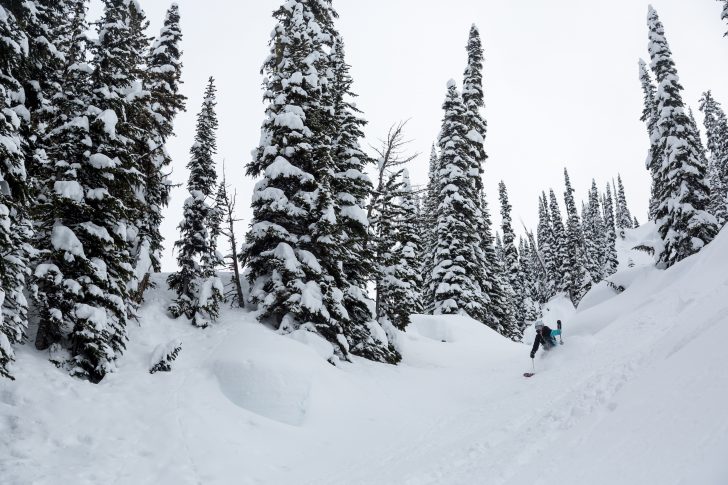
Correspondent Suzie Winthrop found fresh powder every day. Can you see the smile on her face?
Credit: Steve Shannon

Do you dream of skiing in untracked powder?  Of course! We all do!  And most of us get one or two runs at resorts that offer “fresh tracks” early in the morning before the snow cats groom the trails. But soon you’re plowing through broken snow and by noon those freshies are a distant memory.

Snowcat skiing is a unique, albeit pricey experience with fresh powder every day.
Credit: Selkirk Snowcat

How about skiing run after run of perfect powder for five straight days? Run after run of power up to your knees, day after day. Impossible, you say. Well, this past March a group of us found Nirvana in the Selkirk Mountains of British Columbia.

It snowed every night.  In the morning, our tracks from the previous day were nowhere to be seen. We accessed the terrain by snowcats which accommodated 12 skiers plus two guides.  The powerful machines were cozy, comfortable and allowed for good conversation as we chugged up the mountains.  The pace was just right; we had time to catch our breath between the ten or eleven runs we took each day.  Fifteen to eighteen thousand vertical feet of downhill per day was more than enough to send us back to the comfortable lodge exhausted and happy.  After a soak in the hot tub, a drink at the bar, a delicious homestyle dinner and a few rounds of “Grunge” at the pool table, it was time to call it a night. After all, we would be awakened at 6:30 a.m., stagger in to our 7:00 yoga/stretch class before enjoying our hearty breakfast and then head out to yet another day of perfect powder skiing.

Selkirk Snowcat Skiing is located in Meadow Creek in the SE corner of British Columbia, 60 miles north of Nelson.  We flew to Spokane, rented vans and drove to Nelson where we spent the night at the Hume Hotel (“Antique, Chic, Boutique”).  While in Nelson, we checked out Whitewater Ski Resort which offers a Super Senior ticket (75+ ski free) and looked like a great place to get your ski legs.

[Editor Note: Rates for 2017-18 range from $2,000-$6,000 per guest. If you’re interested, better check for availability.  Repeat visitors book early.]

Putting XC Skis Away

Nine Steps For Maintaining Your XC Equipment.

[Editor Note: SeniorsSkiing.com thanks Roger Lohr of XCSkiResorts.com and Andy Gerlach of SkiPost.com and StartSkiWax for this article.]

Preparing the base with hot wax.

The winter and snow cover are leaving us, so what do we do with your xc ski equipment?

1) Cleaning: Use wax remover and Fiber wipe, a chamois-like cloth, to clean the kick zone and the glide zone.

2) Use a fine steel or copper brush to clean excess dirt from base.

3) Apply layer of Start Base (Start is a brand of XC ski wax) or Service or soft non-fluoro glider like SG2 to glide zones.

4) While wax is still soft, use scraper with low pressure to “hot wipe” wax and further dirt away.

5) Follow with Fiber wipe and then a fine steel brush again to remove dirt while refreshing base further. Repeat steps 4 and 5 as necessary until no more dirt is seen coming from base.

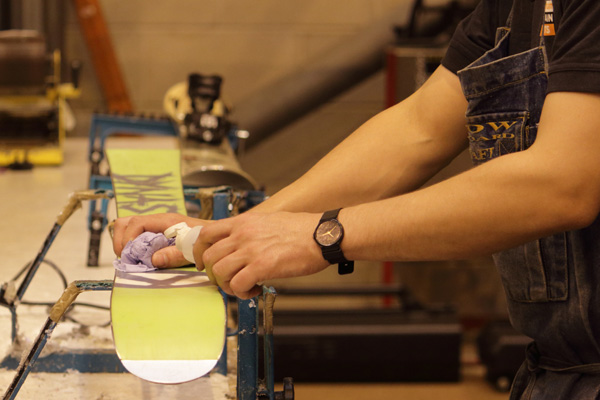
6) If you suspect your skis have any base damage (i.e. base sealing), consider having the skis stone ground to reveal a fresh base in the spring before summer storage. A fresh base is the most import feature in a skis ability to hold wax and to glide. Ski shops in most every ski town offer great stone grinding services.

7) Once you have a clean and refreshed base, it is time to saturate the base with a summer storage wax. In the glide zones, melt in a thick layer of Start Base (or Service or soft non-fluoro glider like SG2) and let it cool. If all the wax has been absorbed into the base at any point add another layer on to. Let cool leave it on the ski all summer.

8) Skis should be stored in cool, dry place, out of sunlight and not near heating elements nor near a roof or attic where temperature can rise over 130 degrees F. Skis should be stored loosely strapped with no pressure on camber so that there is no risk that heat and pressure can alter any of the skis camber characteristics.

9) Better to do something than nothing. So at the very, very least crayon your softest glide onto your glide zones right now.

If you have questions, contact Andy Gerlach at SkiPost.com.

This Week In SeniorsSkiing.com (Apr. 21)

Checking The Winter Forecast, Mom-And-Pop: Is Smaller Better?, Editorial: Is Bigger Better?, Silly Falls On Video, Alta GM Retires.

Small is better? Accessible, economical, family-friendly, local ski areas have a community feeling.
Credit: Ski Sundown

This week, a mini-theme has emerged from two of our articles.  We have a piece from new contributor Don Burch, who makes the case for the local ski area. Basically, he says, it’s inexpensive, accessible, manageable, and more intimate (think community) than big resorts. Certainly true in our experience.

And, we opine in a SeniorsSkiing.com editorial on the acquisitions that have rocked the ski industry this month: Vail and Aspen scooping up properties all over the map.  Will those resorts maintain their attractiveness to seniors? Will discounts still be offered in a corporate pricing environment?

Put these two thoughts together, and you can see a future where seniors are literally drawn into second-tier resorts where amenities, discounts and friends can be readily found. Big resorts, maybe not so much. We’d like your reactions to these big changes in resort ownership.

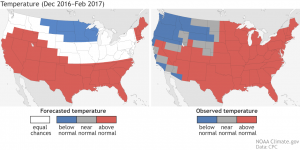
Temperature: Forecast vs Actual, 2016-17
Credit: NOAA

We also thought it was time to go back to the NOAA Climate Prediction Center’s forecast for the 2016-17 Winter to see how well it held up.  Hint: California was the spoiler, but you knew that.

A tip of the ski pole to Alta GM Onno Wieringa who is retiring after an entire career at the area.

Finally, we have a short video clip of classic flops and flips.  We know it’s not polite to laugh at other people’s misfortunes on skis, but these are quite funny, nevertheless.  Enjoy.

We are moving slowly but surely to spring.  We have heard there is a resort in the Sierra that plans to stay open all year.  How about that?  Would you ski in August?

We’re developing our Spring Survey 2017, and you will be hearing more about that next week.

Meanwhile, thanks for reading SeniorsSkiing.com, tell your friends, and, remember, there are more of us every day and we aren’t going away.


Alta’s GM Onno Wieringa Retires

He’s Loved And Will Be Missed.

Credit: Harriet Wallis

Onno Wieringa has a passion for snow and for the soul of Alta. They have been his love and his career for 45 years.

He arrived at Alta Ski Area in 1972 and landed a job as ski patroller. That was his day job. At night, he was a bartender at Rustler Lodge.

After five years on patrol, Onno was promoted to snow safety director and served under Alta’s second GM, Chic Morton. In 1988 Chic was ready to retire and called on Onno to take the reins. Onno leaves a legacy for Alta to emulate for years to come.

Click for videos of Alta and Onno. http://www.alta.com/snow-and#

To read more from Harriet click here for her stories on SkiUtah.

Editorial: How Will Consolidations And Collaborations Impact Senior Skiers?

Bigger Better?

With the Aspen KSL Capital Partners acquisition of Stratton VT and Mt. Tremblant, PQ, and Vail buying the iconic Stowe VT resort, it appears the ski industry has passed a tipping point. The trend is now toward nation-wide reach, corporate management and marketing, multi-resort passes that can be used from coast to coast, and certainly more choices. These multi-resort passes are formed through acquisition and merger of resorts or through collaboration between individual independent resorts.

The good news is that the ubiquitous pass idea—Epic, Mountain Collective and others—gives the skier lots of opportunities for variation and actually brings the price of skiing down if you ski a lot. These passes give you, for example, two days skiing at designation resorts and half-price tickets if you want to ski more. Passes are on sale now for next season and, if you’re interested, now is the time to buy.

On the other hand, what about senior discounts for the less active skier? Stowe currently has a Super Senior Card (70+) that reduces lift ticket prices to as little as $44 a day. The question is will new management sustain these in the future? Vail gives seniors a five percent discount for day lift tickets at the home base resort in Colorado. For example, a regular adult ticket in late April is priced at $123; seniors 65+ pay $113. Granted it’s Vail, but that’s not much of a discount. What’s the point, Vail?

We know from reader surveys that seniors like discounts and deals. Perhaps we will see second tier areas who do encourage seniors with nice discounts and amenities benefiting from new traffic, especially from those who ski less than 10-20 days a season. Perhaps seniors will gravitate to where the lift prices are always reasonable. Perhaps local, mom-and-pop areas will get a boost from seniors re-discovering the benefits of smallness.

We will be watching.

Ski Fails On Video

A Compilation Of Major Flops And Embarrassing Flips.

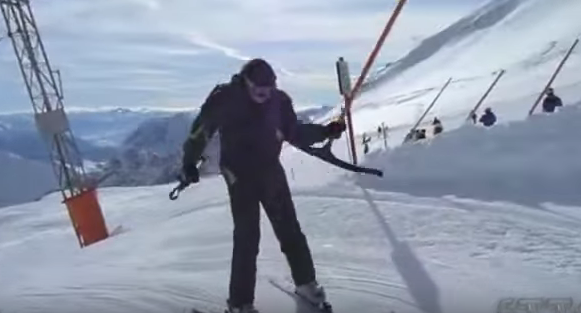
It’s the silly season in these last days of April.  We’re sending along a collection of video clips of those skiers and boarders who tried…and failed.  The T-bar episode is actually hysterical. Thanks to FailToTheGail for putting this together.  Who was it that said the difference between comedy and tragedy is distance?


The Case For The Local Ski Area

So It’s Not The Rockies.  But What Makes Mom-And-Pop Special?

Ski Butternut in the Berkshires: All you need for a fun day with friends at a typical local area.
Credit: Ski Butternut

[Editor Note: As we are seeing in a month of startling industry news, the ski business is rapidly consolidating.  Big corporations are buying portfolios of resorts.  Vail has added Stowe to its collection. Aspen and its private equity investors, KLS Capital Partners are plucking up Stratton and Mt. Tremblant, among others. Other consortia have been formed or are forming. Where does this leave the mom-and-pop local area, probably closer to home, less exciting facilities, average food, but nicely discounted mid-week tickets for seniors? This is an important question in an industry that is moving away from smallness.] 

Support your local ski area. You know the place. It’s likely the place you learned to ski at and/or where you brought your children to teach them. If you have grandchildren, its the place you are bringing them to ski. It’s likely the ski area is privately owned and supports the surrounding area by employing local workers. Simply put, we go to local ski areas to ski. We don’t go to see others or to be seen. We don’t go for après ski activities or plush lodging.

Small is better? Accessible, economical, family-friendly, local ski areas have a community feeling.
Credit: Ski Sundown

We need to support our local ski areas by skiing at them. Increasingly smaller mountains are being bought by corporations or going out of business. Local ski areas are by definition closer to home, they are less crowded and have less expensive lift tickets. Midweek skiing at one of my favorite areas, Ski Butternut, in Western Massachusetts, is $25 for all skiers! Every season, I make it a point to ski at Butternut and several of my other local ski areas, and each time it’s a wonderful experience.

Aesthetically my local ski areas fit into their surroundings rather than dominate them.

When I go to my local ski area, I don’t race there. I know I’ll park close to the lodge, I won’t have to wait in line for tickets or in lines to get on the lifts. The entire day is more relaxing. I know I’ll get plenty of great skiing, and I don’t have to jockey to get a place in line or compete for a table to have lunch at. I do less racing down the mountain (though I can do that if I want) and spend more time stopping, looking at the scenery or talking to people. I feel safer skiing at my local area because there are few, if any, rude or aggressive skiers. While skiing, I don’t have to keep looking over my shoulder to make sure I’m not going to get run over.

It’s a more relaxing day, because everything feels manageable. First time visitors are not going to be confused about where to park, how to get to the lodge or what trails go where. At the end of the day, families don’t have to worry about finding their children because everyone ends up in the same place. Since local ski areas are less overwhelming and feel safer, parents are more likely to give children the freedom to ski on their own. As a child, one of my favorite memories was being allowed to ski with my friends and explore the mountain without our parents.

Because I skied these areas as a child, I get the added benefit of a wonderful sense of nostalgia. When traveling, I’ve also had great fun skiing at independently owned mountains that I’d never been to before.

Spend a day or so exploring a local ski area and experience the charm and fun they have to offer. Just take a look at a small sample of season pass senior deals for next season:

Ski Butternut, Western MA: $175 (70+)

Ski Sundown, Northwestern CT: $109 (70+)

Catamount: Eastern NY: FREE (80+), before 6/1 $150, before 9/1 $155 (70-79)

What’s your local area? How are the deals shaping up for seniors?


This Week In SeniorsSkiing.com (Apr. 14)

A Reunion, Big White As A Role Model, A Forbidden Resort, Goodbye To A Mountain Pioneer, Remembering Spring Skiing.

Jolly time at Masters Week apres ski party at Big White Ski Resort. The Masters program is aimed at skiers of all levels over the age of 50.
Credit: Yvette Cardozo

Onwards to Spring!  We hear the skiing in the West has never been better.  Still more storms in the Sierra coming and the question, “When will it end?” must be raised.  For some, never is an okay answer.

Ski legend Doug Pfeiffer and SeniorsSkiing.com co-publisher Mike Maginn reconnect after many decades at the ISHA Hall of Fame ceremony at Stowe.

This week, in addition to noting the 105th anniversary of the sinking of the Titanic, we have dipped into nostalgia. Most happily, we (i.e., this editor) bumped into our former boss from SKIING Magazine Doug Pfeiffer and his wife Ginny at the International Ski History Association Hall of Fame Induction ceremony at Stowe, VT, last weekend.  Decades didn’t erase the memories we shared ever so briefly as the crowds mingled around us.  It’s great to see the long arc of life events coming round again.  Doug and Ginny, it was wonderful to say hello.

We have a two-part story about the Master’s Week program at Big White, Kelowna, BC.  We feel this is an important pair of  articles for two reasons.  First, we want our readers to know that ski areas can and should develop senior-specific programs that will consistently attract seniors and help create a lasting community of friends.  Second, we want to show ski area management that these kinds of programs, which have been popping up across North America, are, in fact, a low-cost, no-cost way to acknowledge and support a ski resort’s most loyal customers, the seniors who come back year after year. Thanks to correspondent Yvette Cardozo for looking at both the social and ski clinic elements of the program.

Utah-based Harriet Wallis reminiscences about spring skiing days in New England, a special time up there when snow season transitions to mud season, and Robert Frost poetry books come down from the shelf in the evening.

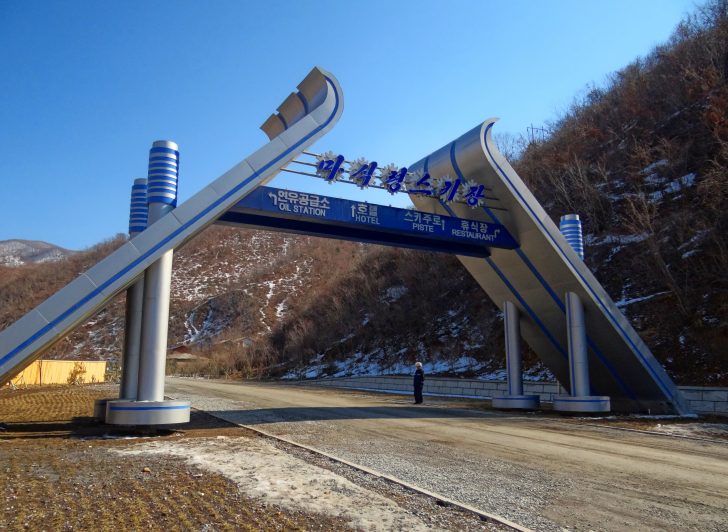
Gates-To-Masikryong Ski Resort, North Korea

Many years ago, we skied in South Korea. It was an unusual experience. Pioneering could be a way to describe conditions and equipment back then.  We are sure they’ve been upgraded since.  Co-publisher Jon Weisberg notes that the North has joined the alpine ski business with a new resort.  Could it be the One-Whose-Haircut-Can’t-Be-Mentioned wants to relive his college days in the Swiss Alps?

Finally, we remember Mary Anderson, co-founder of REI in 1938.  Not many retail businesses last that long.  Mary and her partners formed a cooperative that managed to survive swings in the economy and to this day appeals to mountain and outdoor enthusiasts.

Thanks to all and, this week, a special salute to our advertisers who are renewing for one more year of supporting SeniorsSkiing.com.

Next week, we’ll be profiling our two Advisory Council members who were inducted into the ISHA Hall of Fame, Bernie Weichsel and Gretchen Rous Besser.  We’ll have a story about the glory of local areas by a new contributor and other surprises.

Remember folks, there are more of us every day, and we aren’t going away!

Mary and Lloyd Anderson, REI founders.


Free One Year Subscription To Skiing History Magazine

CLICK HERE FOR YOUR FREE SUBSCRIPTION TO SKIING HISTORY MAGAZINE

For your free subscription, CLICK HERE, scroll to Digital Membership, select 1 Year-Digital Only, add to cart, enter coupon code SENIORSKI17, checkout, then set up your account. P.S. Once you’ve subscribed, you’ll have access to the archives to 2009.