Tag Archive for: ski history

How Wheaties Affected The 1936 Olympics

Publishers Note: It is with great sadness that we learned of the recent passing of one of our most popular contributors, Harriet Wallis. This is one of her many articles we are republishing this season.

The Breakfast of Champions Kept Champion Ski Jumper Alf Engen From Competing.

Wheaties Ad 1936, Courtesy of Alan Engen

Legendary extreme athlete Alf Engen, known as the greatest all-around skier ever, was a champion soccer player, skier and ski jumper. During the 1930s, he set ski jumping world records. He helped design and establish more than 30 ski areas in the western United States. And he’s fondly remembered for pioneering deep powder skiing techniques and for his ski school at Alta.

But world champion Alf Engen was banned from competing in the 1936 Olympics because of a Wheaties breakfast cereal box.

It was just the fourth time that countries faced off against each other in wintertime Olympics. Competition included just four sports: bobsleigh, ice hockey, skating, and skiing. Twenty eight countries sent their best athletes to the IV Olympic Winter Games.

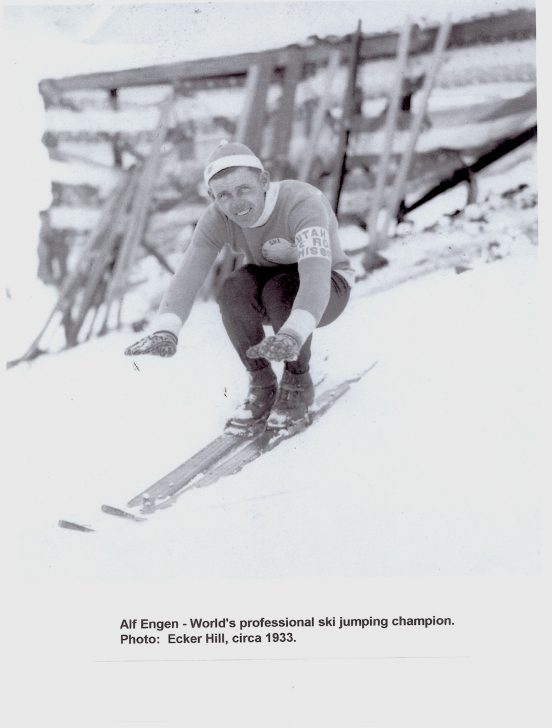
As background, Engen came from Norway to the United States in the 1920s, and he played professional soccer. By the 1930s, he was acclaimed for his ski jumping feats, he joined a ski jumping team, and he soon won 16 national ski jumping titles. And his jumps set world records. He also won national titles in all four ski disciplines: ski jumping, cross country, downhill, and slalom skiing.

Alf circa 1933, Courtesy of Alan Engen

Also in the 1930s, radio was the mass media communication method of the era. There was no television. People used their imaginations to create pictures from the words they heard.

But another form of mass media was taking hold: cereal boxes. Until then, breakfast cereal had to be cooked, but when food manufacturers invented cereal that could be eaten right from the box, they faced a marketing dilemma. How could they convince families to switch from cooked cereal to this newfangled ready-to-eat cereal? A cereal box sitting on the breakfast table with pictures of all-star athletes would be the marketing device. And unlike radio, the images were right there on the box.

Four athletes appeared on the Wheaties box—Bob Kessler, basketball star; Mike Karakas, champion hockey player with the Chicago Blackhawks; women’s speed skating champion Kit Klein; and famed skier Alf Engen.

Meanwhile, Engen became an American citizen. In 1935, at the U. S. Olympic Ski Jumping Finals held at classic Ecker Hill, he out-jumped everyone. He was immediately named as a member of the U.S. Winter Olympic Ski Jumping Team which would compete in the 1936 Winter Games in Garmisch-Partenkirchen, Germany.

But just before he was scheduled to leave, Avery Brundage, president of the International Olympic Committee and a zealous supporter of amateurism, ousted Engen from the team because his picture had appeared on the Wheaties box. He declared that Engen’s image on the cereal box made him a professional, not an amateur athlete.

“Engen said he didn’t remember getting any money from the cereal company, ‘Just a lot of Wheaties. I think I gave everyone in Salt Lake City free Wheaties.'”

Alf with trophies, courtesy of Alan Engen

Ironically, shortly after the Olympics, Engen jumped against—and he beat—both the gold and silver medalists from the Olympic Games, Norwegian gold medalist Birger Ruud and Swedish silver medalist Sven Eriksson.

The remarkable skiing Engen family is the only family to have four family member in the U.S. Ski and Snowboard Hall of Fame: Alf, his two brothers Sverre and Corey, and his son Alan.

Alan lives on in his father’s tradition. He’s a champion skier and athlete as well as an accomplished scholar, author, and historian. He carries on the Engen tradition of serving the skiing community.

Alan dreamed of displaying hundreds of Alf’s ski trophies and memorabilia for the public. The dream grew into the $10.5 million Alf Engen Ski Museum at the Olympic Park in Park City, Utah. Visitors can also learn about avalanches, sit in a real bobsled, try their knack at interactive ski jumping, and more. The museum was funded entirely by private donations, including donations from Utah’s famed and philanthropic Quinney and Eccles families. Visit and enjoy the museum when you’re in Utah.

Alf in flight, circa 1936, courtesy Alan Engen

Moving To Indiana Then Idaho

Part Four: Jan and Judy Find Lots Of Places To Ski.

We returned from Norway in 1957 and headed to Indiana University. We skied Caberfae near Cadillac, MI, a couple of times, but otherwise, our four years at IU were devoted to my studies and having Bloomington’s New Year’s Baby in January 1960. Where and when would we ever start little Erik on skis?

When I graduated in June 1961 we had a second child on the way, and I had a job offer from the University of Florida. Then came a call from Moscow, Idaho. The chair of the Humanities Department wanted to expand offerings in American Studies, and he had contacted the well-known IU program to see whether any newly-minted folklorist was interested.

This was the only job I ever took without a site visit and a personal interview. Everything was done by telephone and letters. The offer came as a telegram. It worked out perfectly: Moscow was a pleasant small town, the university was solid, my colleagues were smart and friendly, and—best of all—there was a nice little ski area just north of town.

The North-South Ski Bowl had a couple of rope tows and a log warming house. Here is a photo of Judy and me with toddler Erik ready to ski. His baby sister Amy, was with a sitter. Yes, I’m still wearing that old Norwegian sweater.

Jan, Judy, Erk, 1962.

Besides our local area, we visited other ski resorts in our region. We skied Mt. Spokane a couple of times, and returning from a meeting in Seattle I skied Snoqualmie Pass. When I gave a lecture for an extension course in Boise I brought my skis and had a day at Brundage Mountain near McCall, a place Judy and I also skied together. By then we had replaced the front clip on our Norwegian skis with first-generation “safety bindings.”

In early 1962 I was surprised by orders to join the US Army and fulfill my ROTC obligation. Even this led to some  skiing.

On my way to join my class at Ft. Gordon, Georgia, I visited my parents in Lansing. My dad suggested that we go skiing. But was there time to drive up north? Not a problem. A new little area called Mt. Brighton was on I-96 down towards Detroit. In my dad’s garage I found some gear that fit, and thus I had what turned out to be my last ski day in my home state. Hard to believe that little old Mt. Brighton is now part of the Vail empire.

I was assigned to Fort Monmouth, New Jersey, for a year. Judy and the two kids joined me, and we found a local ski club that met in a neighborhood bar. Their meetings were the last time either of us were carded to buy drinks. We never took a ski trip with the club, but we did get to some eastern ski areas on our own.

Judy’s aunt lived in upstate New York, so we could leave the kids with her and go skiing. Here’s Judy in 1963 at the now-defunct Petersburg Pass. It’s not clear whether she was planning to ski an expert or a novice trail.

Judy checks trail map at Petersburg Pass, 1963

Back in Idaho a major new area opened in the mountains above Sandpoint: Schweitzer Basin, now Schweitzer Mountain. We skied it in January 1964 when Judy was pregnant with our second daughter, Dana, born in Moscow in June. The views from the mountain looking past the frosted trees to Lake Pend Oreille were stunning.

Lake Pend Oreille from Schweitzer.

In spring 1965 opportunity knocked in the form of an offer from the Edwardsville campus of  Southern Illinois University. I felt I should not pass up a chance for a promotion to Associate Professor and time off for folklore fieldwork. So back we went to the Midwest with our three little kids, hoping that eventually we would be able to teach them skiing.

To be continued . . .

Skiing In Norway: 1956-57

Jan and Judy Get New Ski Gear, New Snow Adventures In A Land That Loves Skiing.

After breaking her leg on our disastrous first ski date in Michigan, my wife Judy was still a bit stiff  in the left leg when we arrived in Norway in late June 1956 to begin my Fulbright-student year studying Norwegian folklore.  But we had all summer to get in shape—walking around Oslo, hiking in the forests and mountains, and taking some long bike trips.

In the fall, we bought ski gear: wooden skis, cable bindings, leather boots, and bamboo poles. State of the art stuff. I had my favorite ski clothes, including the Norwegian striped cardigan I had been using since 1953; Judy bought a spiffy new outfit (maroon ski pants and grey jacket) that she occasionally still uses.

Oslo was a great place to practice. The tram lines run right up to the edge of Nordmarka, the vast wooded park above the city, and there were ski racks integrated into the sides of the old wooden cars. (I assume they have metal tram cars by now.) This photo of Judy loading her skis was taken on a weekday; on weekends and holidays the whole side of the car would be covered with skis.

Judy racks skis and boards tram to suburbs of Oslo.

I believe the only ski lift we rode all year was a T-bar in Nordmarka; the rest was cross country. After touring up there we could glide right back down to the area where we lived via ski tracks maintained between houses and businesses.

Early in the winter we took a train to Lillehammer, stayed in the youth hostel, and skied both in town around the open-air folk museum and in the surrounding countryside.

Next we did a weeklong trip with some friends to Numedalen, staying in a rented cabin (hytte) above the treeline. The snow was great, and we got lots of practice and exercise climbing up hills and sliding down. Judy, only in her second season as a skier, got pretty good, despite having little coaching beyond “Follow me!” Here she is enjoying some powder.

Judy in powder on her new skis and outfit.

One day on that trip I skied down to a village to buy some food, expecting a long slog back up with a heavy rucksack. But just as I was starting up, a group of Norwegian army men came along in a tracked vehicle. They tossed me a rope and pulled me back to the level of our cabin. Sweet!

In March we attended the annual jumping meet at Holmenkollen with my uncle and his family. It was a foggy day, and the jumpers came sailing out of the murk, most of them sticking the landing as if it had been a clear day.

Easter was late in 1957  (April 21st) so when we made another mountain trip, this time to a cabin in Telemark, the weather was balmy and snow was thin except in the shadows. Here we are enjoying the traditional Norwegian Easter ski trip, me still in that favorite sweater.

Jan and Judy, Easter ’57.

In June when we returned to the States we had enjoyed a great year of study and skiing in my ancestral home, so to speak. I brought back an article that got published in the Journal of American Folklore, kicking off my academic career. And, of course, we kept our Norwegian ski gear.

But would there be much skiing in our immediate future? After all, we were headed to Bloomington for my graduate work at Indiana University. Not exactly in a major ski zone, but who knows?

To be continued . . .


Mystery Glimpse: Where And When?

This Is An Oldie.

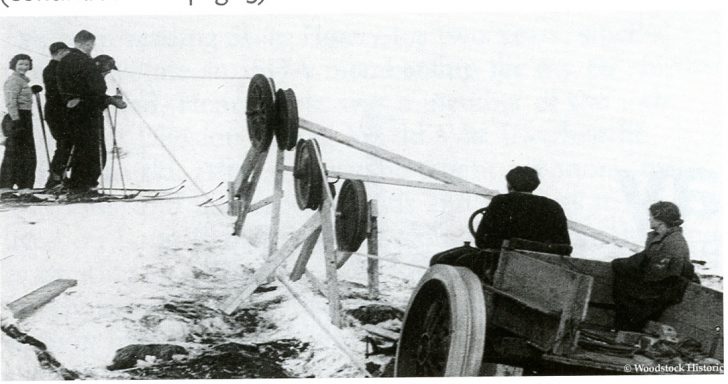
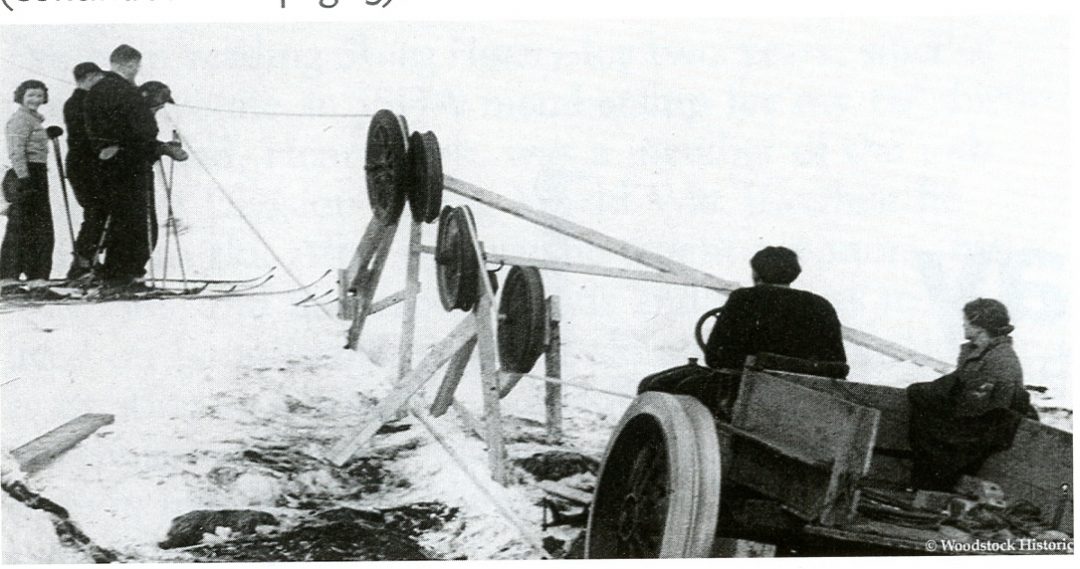
Can you identify where this rope tow was and when? If you can, write your comment in Leave A Reply below.

Many thanks to Ski History magazine for this picture. Ski History magazine is the publication of the International Ski History Association. Find out more about ISHA by clicking here.

Last Week

Bjorn before the start of an American Birkebeiner, 2009. Credit: FastSkier.com

In keeping with last week’s Make More Tracks theme, we posted a picture of the GOAT of Nordic racing.

And he is Bjorn Daehlie, the Norwegian Nordic skier who has won more total Olympic and gold medals than any other cross-country skier, making him the greatest Nordic competitor of all time. 

Bjorn is reported to have one of the highest VO2 max scores for endurance athletes in all sports. The maximum rate of Oxygen (O2) consumption by the body during exercise is the criterion measure of aerobic endurance fitness. Dahlie’s VO2 max has been recorded as high 96 ml/kg/min in the 1990s.  That’s more than twice the VO2 max for his most likely competitors, 20-29 year old males in excellent condition. 

A back injury forced Dahlie into retirement in 2001.  Since then, he has become a successful businessman in real estate and fashion. Dæhlie also invented the Salomon Nordic System Pilot Bindings.  His ski clothing is offered in a variety of outlets. Click here for the Bjorn Dahlie line at REI.

What’s curious is Bjorn is a national hero in Norway, an astronomic legend in cross-country circles, yet virtually unknown to North American skiers. 

Bjorn Dahlie showing his stride.

Mystery Glimpse: Instructor Comma

Famous Instructor And Ski Celebrity.

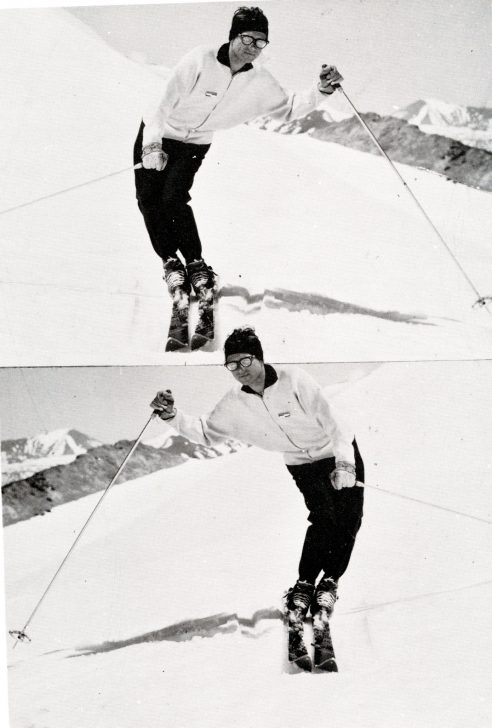
Here’s a picture of one of skiing’s most famous instructors, demonstrating the equally famous comma position.  This might be an easy one for many readers who have been around skiing for a while, like since the early 60s. Heavy hint: He just had a birthday.

Last Week

Yes, it’s the famous Air Car, a sui generis tram that operated at Mt. Snow, VT, from around the mid-60s to the mid-70s. It “flew” directly over Fountain Mountain, connecting the Snow Lake Lodge to the ski area. Legend has it that Mt. Snow developer Walt Schoenknecht had back problems and didn’t like taking off his skis.  So the Air Car, along with the Bubble Chairlift, accommodated him and, we bet, lots of other skiers.  Skis-on “gondolas” were an innovation, and Walt was a leader in coming up with ideas like the Air Car and Bubble Chair that made Mt. Snow unique.

Here’s another view of the Air Car in operation. Do any readers remembers taking the Car? What was it like?

Mystery Glimpse: From The Air

What Are We Looking At?

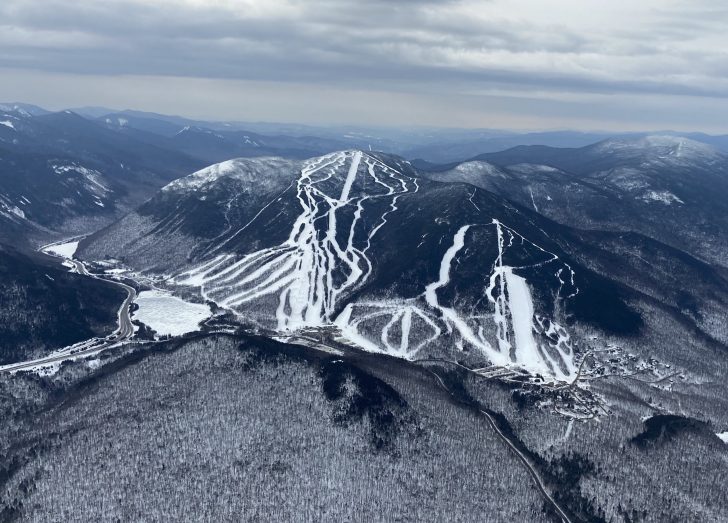
Thanks to a friendly aviator, we have this magnificent, recent (last week) view of a most formidable mountain resort.  How’s your pattern recognition?  Can tell us where it is? Major hint: That wide trail to the right is used for racing team practice.

Last Week

Yes, Lucille Ball visiting the Mittersill Alpine Resort in Franconia, NH, probably in the early-mid 60s. The man on the left is Gary Morton, her second husband, not her “I Love Lucy” husband-partner Desi Arnaz.

She and Desi can be credited with creating the sitcom format. Among her many other achievements was becoming the first female head of a major television-film production company, Desilu Productions. Her biography doesn’t reveal her attraction to snow country, however.

We can only guess she was a guest of Baron Hubert von Pantz, Mittersill’s founder and aristocratic host.

Desi, Jr., down in front looks like he could use a hot chocolate.

This photo is currently on display in the lobby of the Mittersill Alpine Resort along with other momentos of the hotel’s history.  Among those is a page from the hotel registry featuring the signature of Princess Elizabeth, soon to be Queen, on a stop over trip during her tour of Canada.


This Old Moriarty Hat

Who owns a hat for 50 years?  Well, if it’s a Moriarty hat, perhaps you understand why.

Getting ready to shovel the driveway one cold morning last winter, I reached to the top shelf of the hall closet for a hat.  My fingers felt the double-thick headband of my old Moriarty hat tucked up out of sight.  I pulled it over my ears and went a-shoveling.  Working the shovel in knee-deep in snow, a thought occurred to me.  Wait a minute.  I bought that hat from Mrs. Moriarty’s shop on the Stowe Mountain Road in 1964.  That made it fifty years old.  My hat was fifty.  It has been with me in trunks, suitcases, boxes and dresser drawers in moves from New York to California to Japan back to California and then to Massachusetts.  Been with me at Mammoth Mountain, cross-country in Appleton Farms, MA, going to class in Syracuse, sailing the Gulf of Maine, walking to work from North Station in downtown Boston.  Fifty years is a long time to own a hat.  Of course, I had other hats, but my Moriarty kept popping into my hand from time to time from the top shelf.  How did this happen?

It's quite the hat. Back in the 60s and 70s, Moriarty hats were iconic.  The Preppy Handbook lampooned them as an essential part of the spoiled college kid outfit.  Almost everyone I skied with at Song Mountain, Tully, NY, had one.  The three points on the top were like a rooster’s cockscomb, distinctive and bold.  You wore your hat down tight over your ears with your goggles wrapped around your head.  No helmets in those days.  It was a “look” that even the most tentative skiers could exhibit.

Mrs. Moriarty founded a cottage industry around weaving those hats.  Soon outpaced by the volume of orders, Mrs. M. enlisted an army of fifty weavers in Stowe village, producing as many as 40,000 in 1965.  At its height, the Moriarty hat was as ubiquitous a symbol of skiing as Head skis and Marker turntable bindings.  An ad in SKI was bold enough to say, “The people of Vermont make great maple syrup, great cheddar cheese and the best ski hats in the world.”  As I said, icon status.

You can buy a vintage Moriarty hat on eBay or from the Vermont Ski and Snowboard Museum that somehow has a stock of left over inventory from the later days of the company.  The Moriarty family got out of the business in the 80s.

Mrs. Moriarty was told by skiers that "they skied better" with her hat on. Credit: SKI January, 1965

Mrs. Moriarty was told by skiers that “they skied better” with her hat on.
Credit: SKI January, 1965

Don’t ask why I never sent my hat off to the Salvation Army.  Despite the odd moth hole, it has simply always been part of my kit along with a handful of books, a banjo, a lighter from my Navy destroyer, and other small remainders of the past.  Things that travel through life with you have value.  When you pick them up again after many years, memories start to emerge in layers.  Even after many years.  Even a ski hat.  That’s why I love my Moriarty hat.

Do you still have one?

For more information, check out Retro-Skiing.com as well as Ivy-Style.com.

Mystery Glimpse: Two Racers

One Very Young, The Other A Successful Competitor.

Many thanks to the Tread Of Pioneers Museum, Steamboat Springs, for this photo. Visit their online collection by clicking here.

Last Week

This is George Lundeen’s bronze statue, The End of An Era,  circa 1960. Why is it significant? Here’s what Dana Mathios, Curator and Director of Collections, Colorado Snowsports Museum, has to say:

This sculpture depicts a sport poised at a turning point on the edge of change. Soon, metal and synthetics would become standard in ski construction in place of wood that had been in use for more than 4,000 years. Pioneering skiers used a single wooden pole. By the early 1900s, two poles were in fashion. The shafts were often made from bamboo until superior poles of a light metal alloy were developed. Higher, plastic ski boots featuring buckles marked the passing of lace-up leather boots.

Also depicted in the sculpture is an early version of a safety binding designed to release the toe of the boot in a fall. A leather thong anchored the heel to the ski. More advanced safety bindings that released both the toe and the heel of the boot followed.

Early in the development of Colorado’s ski industry, the Pikes Peak region offered a number of small ski areas. Nearby slopes at The Broadmoor Hotel and others on Pikes Peak at Glen Cove, Elk Park, and Holiday Hills were popular. The region also included Tenderfoot Hill at Cripple Creek and the Edlowe ski jumping hill at Divide. In time, large corporate-managed ski areas further to the West replaced the small, locally owned ski facilities in the region.

Many thanks to  curator Dana Mathios and the Colorado Snowsports Museum for their many contributions to SeniorsSkiing.com’s Mystery Glimpse feature. Visit the museum’s website to browse its collection and do consider making an audition.

Mystery Glimpse: Racer R.

This Is A Challenge. Hints Below.

He was on Bob Beattie’s 1964 US Ski Team. He later worked for Head Ski and Lange Boots. Do you know who he is? Put your guess in the comment box below.

Last Week

Thanks to ski correspondent Dave Irons for supplying last week’s picture and this description:

“John and Joe Luc Roy Jr. got it right away.  Pleasant Mountain in Bridgton (now Shawnee Peak) is Maine’s oldest continuously operated ski area starting with rope tows in 1938.  In 1951 they built Maine’s first T-bar which is in the picture. The T-bar is long gone, but you can still ski the lift line, a narrow run lined by trees. The base lodge has expanded and is more than triple the original size. The lake in the picture is the real give away. Moose Pond is 13 miles long and provides the area with unlimited water for snowmaking, something many areas envy. 

Sorry Marilyn, although my association with Sunday River is well known, we skied Pleasant Mountain in the fifties before Sunday River opened in 1959. We switched to Sunday River because as we were living in South Paris it was an easier drive, and Pleasant Mountain had become known for lift lines.  That’s no longer the case, with two top to bottom triples, a quad and another triple for beginners.  For more on the area, my book, Shawnee Peak at Pleasant Mountain is available on Amazon, and at Shawnee Peak. How’s that for a shameless plug?  I’ll try to answer any questions about the area.” 

Short Swings!

Uphill Without a Lift?

In this age of technological disruption, it’s time to consider the growing number of alternatives to rope tows, chairlifts, gondolas and trams.

Self Powered

Starting at the most basic level, there’s the growing practice of uphilling, the use of skins on skis to help the more fit and energetic work their way up. Long a European pastime, it’s catching on in North America to the extent that some resorts are charging for the use of their slopes. 

Unassisted backcountry skiing is a version and vice versa. The boarder version uses splitboards, short skis used to climb and then lock together into a snowboard for the trip down.

Heli-, Cat-, Car-Powered

By now, all of us are familiar with helicopters, snowcats, and snowmobiles as a way of reaching higher and more remote terrain.

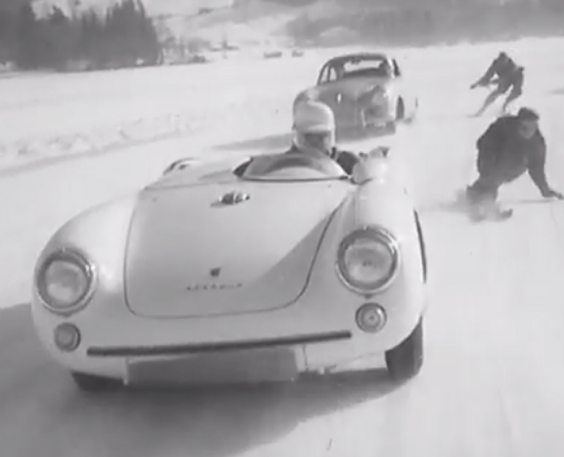
Some of you may have experienced skijoring, the sport of being pulled on skis by horse, motorcycle, snowmobile or car. If you haven’t, this 1955 video, titled World’s Most Dangerous Sport, will convince you not to try.

Mechanical Skis

Source: Popular Mechanics

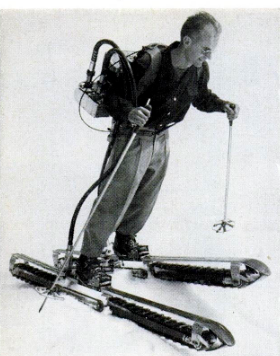
In 1953, Popular Mechanics featured Caterpillar Skis, motorized skis that promised to transport the skier up the mountain. The skis had devices that looked like tank tracks and weighed almost as much as the tank. An engine strapped to the skier’s back provided the power. This link to the article shows and tells all.

Fan-Power

Donald Steeg with the SkiBee

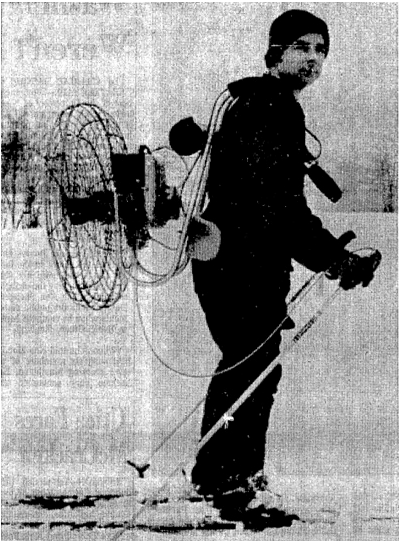
Some years ago, a guy in Turkey mounted a large fan on his back to propel himself uphill on skis. More recently, a Russian man developed this fan device from a lawn mower engine. In the early 70s Donald Steeg of Detroit came up with the fan-on-back SkiBee.

Is Something Following Me?

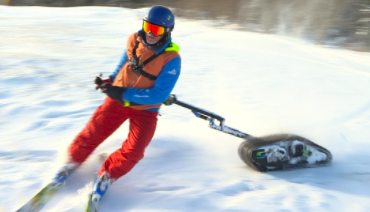
Skizee Woodsrunner

There’s the Roller Cycle Tracker, a ski-mounted motorized unit that pushes its user through snow. The demo video gives the impression it needs further development. Another product, the Skizee Woodsrunner, operates on a similar push principle but looks more sophisticated, as you’ll see here.

As fat tire e-snowbikes grow in popularity, so, too, may their use in towing skiers uphill.

Drone Alone

Samsung built an experimental drone to lift a human.This video  shows the drone transporting a boarder. Peculiar and Jetson-like as it sounds, it probably isn’t that far away.

R2-D2 In Our Future?

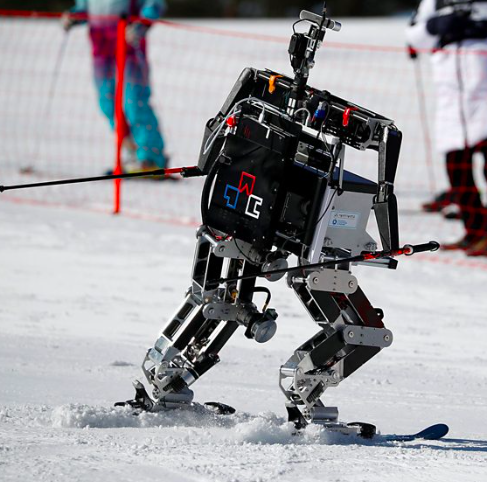
Last season, the South Koreans held a robot-skiing competition. Assuming that technology improves, there may be R2-D2s in our collective future.

Brighton, Utah’s First to Open

Brighton opened Tuesday, Nov 19, becoming the first Utah resort to kick off the 2019-20 season. Many visitors to the area overlook this gem at the end of Big Cottonwood Canyon. It is an absolute snow magnet and has varied terrain. Passes are reasonably priced for the 65+. Brighton attracts a lot of boarders, so go midweek when they’re in school.

Fantastic Senior Ski Weeks at Mountaineer Inn, Mount Snow

Mountaineer Inn at the base of Mount Snow in Southern Vermont has been hosting Senior Ski Weeks for several years. The 5-night packages include lodging, Mount Snow lift tickets, lessons and meals. Each evening is rich in conversation and entertainment, including live performances from the American musical theater. Openings are still available for the January 5-10 and March 1-6 Senior Ski Weeks. $715 pp/double occupancy. Mountaineer Inn also has special mid-week rates for seniors. Click here for details or call 1-800-682-4637.

Sweet Deal From Apex

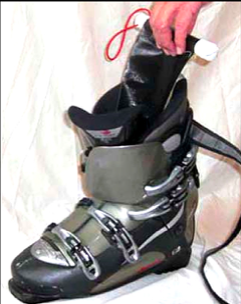
Apex Boots

Apex is a remarkable solution for any skier living with uncomfortable or underperforming conventional boots. It combines a soft and comfortable walkable boot with a stiff open chassis. The soft boot slips on with ease, even on cold days. When it’s time to ski, step into the chassis, close the three buckles, and step into your bindings. The company has a sweet deal for SeniorsSkiing.com readers. It ends November 30. Order directly through the manufacturer’s website (use Discount code SENIOR3000) and get free shipping in the lower 48, a ski boot bag from Kulkea (value: $149.95), and free demos for friends and family through 2020 at Apex’s demo center in Golden, Colorado. 

Great Gift for Older (and Younger) Skiers!!

Bootster is a compact, lightweight and portable shoehorn for ski boots. It works for ANYONE fed up with grunting and groaning trying to fit foot into boot. I purchased several for Christmas and Hanukah gifts. At $25, Bootster is a bargain. The thing lasts forever. It’s a gift that keeps giving. Click here on or the adjacent ad to learn more and to order.


Discounted Skiwear For Every Size

Snow Country Outerwear is discounting its full line of skiwear for women (Reg and Plus; XS – 6X), men (Reg and Big; Sm – 7XL), and children. Click here or on the adjacent ad for details.

A Ski Gift for the Grandkids

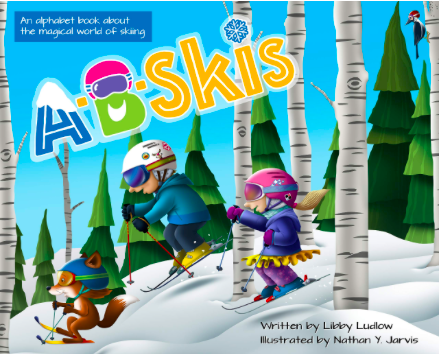
A-B-Skis is a beautifully illustrated hardcover children’s alphabet book. There’s one letter per page that covers some aspect of skiing, each in verse. The volume also has safety information and guidance for getting the young ones excited to be on the hill. It was written by former U.S. Ski Team member and 2006 Olympian, Libby Ludlow and illustrated by Nathan Y. Jarvis, a prominent illustrator and PSIA certified Children’s Specialist ski instructor. A delightful Holiday gift for grandkids. $24.99. Click here to order.

A Worthy Skiing Cause

Since it was founded 17 years ago, the Alf Engen Ski Museum in Park City has become one of the world’s preeminent ski history museums. Visitors get to see extensive collections and to experience numerous interactive mountain sport simulators. There’s no admission. Last year, alone, there were more than a half-million visitors. The non-profit foundation behind the museum is conducting its annual fundraiser. To donate, click here.

Award-Winning Animated Ski Film

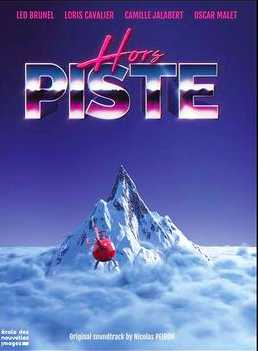
Hors Piste is an award-winning, student-produced, animated film of a hapless injured skier being “rescued” by two emergency medical crewmembers. No words. About 6 minutes. Click here.

Fact Or Fiction

Test Your Ski Knowledge

  1. The most ancient ski in existence was found well preserved in a peat bog in China, dating from about 450 AD.
  2. The furthest anyone has Nordic skied in a 24 hour period is nearly 300 miles.
  3. In 1918 Denmark had the first “ski army”.
  4. With about 472, the US has the most ski reports of any country.
  5. Skiing is available in nearly half the countries of the world.
  6. The longest ski ever used was over 1,800 feet long.
  7. The fastest anyone has skied backwards is over 80 mph.
  8. The most vertical skied in one season is over 6 million feet.
  9. The longest T-bar in the world is nearly four miles long.
  10. Though attempted many times, no one has successfully run a marathon in ski boots.

Don’t Peek Yet. Answers Below.

  1. Fiction: The oldest ski was found in a peat bog but it was in Norway and dates from 2500 BC.
  2. Fact: Hans Maenpaa of Finland skied 293 miles in 24 hours.
  3. Fiction: Norway had the first “ski army” in the 1700s.
  4. Fiction: Japan has the most with about 500.
  5. Fact: Of the roughly 196 countries in the world about 97 offer skiing.
  6. Fact: At an event in Norway 170 skiers skied 44 feet on a pair of 1,800 foot long skis.
  7. Fact: Elias Ambüehl of Switzerland skied backwards at over 80 mph.
  8. Fact: In the 2014 – 15 ski season Canadian Pierre Marc Jette skied 6,025,751 vertical feet at Whistler Blackcomb. In doing so he raised money for Alzheimer’s treatment and research.
  9. Fiction: The longest T-bar is at Murray Ridge, BC, Canada. At just under 2.5 miles long it runs at a speed of about 12 mph. To put that in perspective, that’s about the same speed as detachable chairlifts.
  10. Fiction: Dr. Paul Harnett holds the record; he ran a marathon in ski boots in five and a half hours.  Check out this video about his accomplishment:

Mystery Glimpse: Tow Boat

What’s This?

This Strange Device Held 10 Skiers. Hint: Western resort. Many thanks to the Tread Of Pioneers Museum for this contribution.

Last Week

October Snow.

Of course, Killington. We took advantage of a picture of the resort a day or two after a major pair of Nor’Easters in New England taken by a pilot friend of ours. The snow dusting bodes well for Killington. The resort is hosting the 2019 Audi Women’s World Cup on Nov. 29th, that’s just four weeks away!

Mystery Glimpse: Bang, Bang

The First Glimpse Challenge This Season Is Not What You Think.

When, Where, What, How, Who?

This Mystery Glimpse photo comes from the archives of the Alf Engen Ski Museum in Park City, UT. Take a virtual tour of the museum’s collection by clicking here.

The Mystery Glimpse feature posts a photo from one of the ski industry’s wonderful museums. Often these museums are located at or near ski resorts. They preserve and maintain unique assortments of ski history memorabilia, artifacts, documents, publications, and photographs. We are very grateful that so many ski museums are sharing photographs with our readers.

Do you know what’s going on in the picture? Take a guess in the Comment Box below. We’ll reveal the story behind the photo next week.

History Lives At Cranmore Mountain

Celebrating Hannes Schneider, A Pioneer Of Alpine Skiing In North America.

Jubilation at the vintage fashion show at the Hannes Schneider Meister Cup. Credit: Tamsin Venn

Every year, the Hannes Schneider Meister Cup Race, sponsored by the New England Ski Museum and Cranmore Mountain, NH, celebrates the legacy of the venerable Austrian ski instructor. For 23 years, the Cup has drawn people to Cranmore from all over to race or just cruise on this low angle dual slalom course on the Alley, where the old Skimobile ran up.

Schneider and his wife arrive via train at North Conway, greeted by his new employer banker Henry Gibson, owner of Cranmore. Credit: NE Ski Museum

This year’s March event poignantly marked the 80th anniversary of Schneider’s arrival via the Eastern Slope Express 7 a.m. Feb. 11, 1939 at the railroad station that still sits in downtown North Conway.

Any major ski resort in the US would have been thrilled to hire Schneider as ski school director, but he chose to make Cranmore his home. His family followed him into the ski business and now four generations of Schneiders are part of the family narrative.

At the recent festivities, great grandson Hannes Schneider dedicated a plaque to his grandfather, Herbert Schneider (Hannes senior’s son), who served in the 10th Mountain Division and also owned Cranmore from 1963-84. His goal had been to make sure every kid in the valley had a chance to learn to ski.

Instructors from Army’s Mountain Warfare School stand to attention at beginning of festivities. Credit: David Eden

The organizers went all out. The weekend started with a reception and hearty dinner at Zip’s (Hannes’ nickname) Pub & Grill and torchlight parade. It continued Saturday morning at Cranmore’s base with dedication ceremonies, a vintage ski fashion show (one winner rifled through her mother’s closet for an award-winning outfit), silent auction, awards ceremony, bratwurst and beer, all serenaded nonstop by the oompah music of the Bavarian Brothers Band. One felt quite transferred to Austria, instead of a quaint  North Conway. All proceeds went the New England Museum, the goal being to preserve the rich ski history in this region.

Schneider’s story is an intersection of politics and skiing. Here’s the short version.

Hannes Schneider ran a ski school in St. Anton Austria, where he promoted the new Arlberg technique and helped bring important tourism business to the region. As a high-profile critic of Hitler, he drew ire from the Nazi party who threw him into prison. With the intervention of a German skier friend who was also an attorney, and Harvey Gibson, an influential American banker, Hannes eventually found refuge in the US where Gibson set him up as ski school director at the new snow-train-served resort Gibson opened in North Conway.

For competing in the Ski Meister Cup, or any ski race, here’s general advice for seniors. If it’s a fundraiser for a worthy cause, it’s easier to justify having more youthful competitors heartlessly whiz by you on a parallel GS course.

In North Conway, visit the Eastern Slope Branch of the New England Ski Museum, opened only a year ago, a companion to the one in Franconia.

Click here for more on skiing at Cranmore Mountain.

Click here for Cranmore’s website.


Sir Arnold Lunn

In Praise Of Ski-ing

Sir Arnold Lunn wrote the rules for slalom and downhill. Credit: JungfrauStories

When this passage (below) from The Mountains of Youth (1925) by Arnold Lunn was published, “skiing” still had a hyphen and “ski” was both the singular and plural form. Lunn (1888-1974) invented downhill and slalom racing, introducing them when the sport was mostly jumping and nordic racing.

Lunn was knighted in 1952 “. . . for services to British skiing.” He was a major figure in promoting ski sports in the Olympic games. As is obvious in this selection, he was a competitive skier who loved speed and took daring chances.

*   *   *   *   *   *   *   *

Arnold Lunn on his first ascent of the Eiger 1924. Credit: Walter Amstutz

The worst and best moments in ski-ing are often separated only by seconds. You are standing at the top of some fierce slope which you have vowed to take straight. You look at the line and observe with sick disgust that the change of gradient is abrupt at the bottom, and that the slight bump half-way down will probably send you into the air. A kind friend says: “I shouldn’t take that straight,” and your enemy remarks: “Oh, it’s safe enough. Jones took it straight yesterday.”And then suddenly, before you quite realize what has happened you are off. The wind rises into a tempest and sucks the breath out of your body A lonely fir swings past like a telegraph pole seen from an express train Your knees are as wax, and your stomach appears to have been left behind at the top. You fight against the tendency of your ski to run apart—the inevitable sequel to undiluted funk—by locking your knees and turning your ski on to their inside edges. And now comes the supreme crisis—the run-out where the gradient suddenly changes. You throw your weight forward, and mutter “Hold it, hold it.” You clench your teeth, and make strange noises as the shock drives up through your legs. Your ski quiver with the strain . . . and you realize to your intense astonishment that you have not fallen.

The pace relaxes. The hurricane dies away. You are drunk with the wine of speed, and you marvel at the faint heart which so nearly refused the challenge. You glory in the sense of control which you have recaptured over your ski no longer untamed demons hurrying you through space, but the most docile of slaves. You are playing with gravity You are master of the snow. You can make it yield like water or resist like steel. Suddenly you decide to stop. A rapid Telemark, the snow sprays upwards, and the “slabberie snow broth,” to quote an old Elizabethan,”has relented and melted about your heeles.”

A laugh floats upwards, and you much enjoy telling your enemy that his diagnosis was correct, and that he can safely venture to take it straight. And, if he falls, your triumph is complete

*   *   *   *   *   *   *

Lunn’s classical education is apparent in his allusion to “an old Elizabethan.” The “slabberie snow broth” quotation, reports the Oxford English Dictionary, comes from the first English translation (1600) of Livy’s Roman History. Shakespeare mentions “snow-broth”—mixed snow and water—once, with reference to the blood in the veins of a villain. (Measure for Measure, I, iv, 57).


British athlete Sir Arthur Lunn helped create a sport out of a past time.

Mystery Glimpse Returns: What’s Happening?

Guess What’s Going On, Submit Under Comments Below.

Our popular Mystery Glimpse feature is returning after a summer respite. The basic idea is that we publish a photo of a person, place, or thing, and you guess who, where, or what. Most of these photos have been submitted to SeniorsSkiing.com by some very excellent ski museums around the country. We will be highlighting each museum with the week’s new Mystery Glimpse. In the next edition, we’ll reveal the story behind the picture and present a new puzzle.

This week, we have a news photo from the Colorado Snowsports Museum and Hall of Fame located in Vail Village, CO.  Its collection of priceless artifacts tells the story of the birth, rise, and explosive growth of skiing in Colorado. Click here to support the museum’s mission.

What’s going on here?

If you think you know, submit your guess in comments below.

Who, What, Where, When?

You can access our archive of Mystery Glimpse articles by clicking here.


My Search For Stein’s Studebaker

Having A Studebaker In Common With A Legend Prompts A Sherlockian Pursuit.

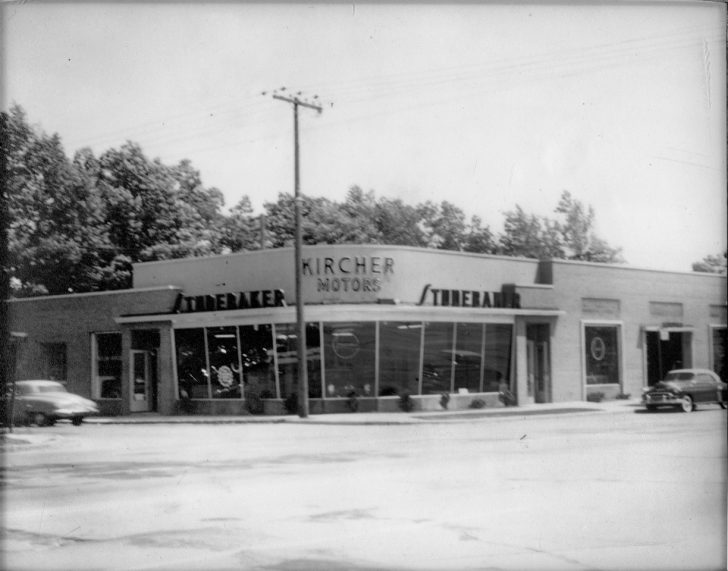
The Kircher Studebaker dealership in Detroit in the early 1950s. The car on the left is clearly a ’50 or ’51 bullet nose model, even though only the back of the car shows here. Those are the only years this model was made.

Stein Eriksen bought a new Studebaker in April 1953. That much is certain. I’d like to know which model Stein bought, what happened to it, and if there is a photo of Stein with the car.

Why? Because my father-in-law bought a Studebaker that same spring, and my wife Judy and I have had it restored. Is it possible that we own a close match to Stein’s Studebaker?

Stein bought his in Detroit from the dealership owned by Everett Kircher, founder of Michigan’s Boyne Mountain ski resort. Judy’s dad bought his from a dealer in Benton Harbor on the other side of the state. Studebakers, seniors may recall, were manufactured in South Bend, Indiana. The company folded in 1966.

Car salesman Don Thomas, also a weekend ski patroller at Boyne, met Stein through mutual Norwegian friends when he attended the 1952 Oslo Winter Olympics. When Stein came through Detroit en route from Sun Valley where he had been training. Thomas invited him to dinner and introduced him to his boss.

Everett Kircher offered Stein a job at Boyne, but Stein wanted to compete in the 1954 FIS World Championships before turning pro. He took the job the next year and spent two seasons at Boyne before moving on, ending up at Deer Valley. But he did buy that Studebaker in 1953.

Various sources describe the car as a “sports car,” a “sports coupe“ and a “graceful 1953 Studebaker coupe.” These ’53’s were a sleek breakthrough concept by the Raymond Loewy design team at Studebaker, coming between the “bullet nose” models and the later Hawk series.

A 1953 model might be the hardtop “Starliner” version or the “Starlight” coupe (our car) which has a pillar supporting the roof. Either version came as either a 6-cylinder “Champion” or a V8 “Commander.”

In an interview, Don Thomas described the car as a “five-passenger coupe,” which could fit either model, although it seems likely a salesman would refer to a hardtop by its proper term.

Once at Deer Valley, I was able to ask Stein about his Studebaker. I was in the singles line at the Northside quad when Stein approached the lift with a couple of celebrity guests. He gestured for me to join them.

I had met Stein a couple of times before, so I used the typical Norwegian greeting for acquaintances, “Goddag, og takk for sist.” Then I asked him about his Studebaker. “Ja,” said Stein, “that was the one that looked like an Italian sports car. I took it with me to Oslo and sold it.”

That’s all I learned straight from the source. But Stein remarked as we got off the lift, “Brunvand, you should speak better Norwegian!”

Since then. I have queried Stein’s son Bjorn, Kircher’s daughter-in-law Molly Clark Kircher, and a Norwegian Studebaker club member, hoping to unearth more information.

The closest I’ve come is finding a 1950’s-era photo of Kircher Motors in the Boyne archive at the Bentley Historical Library in Ann Arbor. Oh, how I wish someone had posed Stein there with his new car for another picture.

Likely Stein’s Studebaker was eventually junked, but it’s barely possible that someone somewhere has the car, perhaps unaware of its past connection with skiing royalty. I plan to keep on searching.

Correspondent Jan Brunvand with his 1953 Studebaker Starlight coupe. In the background, early snow on the Wasatch mountains. Credit: Jan Brunvand

Mystery Glimpse: He Was The First

This Well-Dressed Athlete Was The First Of Many.

Thanks to the Colorado Ski And Snowboard Museum for sending this picture along. We’re reaching deep here, dear readers, and if you can get this one, we will be really impressed.  Who is he and what did he do that gave him a place in ski history?

Last Week

This is a glimpse of the famous Winter Park ski train that has recently shut down after 69 years of service.  Ski trains were very popular with skiers from metropolitan areas on both coasts and the Rockies during the 30s and 40s.  But, with roads and interstates, the trains became unprofitable. According to the Colorado Ski and Snowboard Museum, the ski train that brought Denver citizens to the mountains was one of the few that survived.

You can only now imagine how convenient and almost luxurious it must have been to take a train to a station near a ski area and get picked up by a bus or horse-drawn sleigh to be taken to a mountain hotel or base lodge. Must have been some fun times on those trains going back and forth.

Anyone remember taking a ski train to and from the mountains?  What was it like?

To read more about the history of the Winter Park ski train, click here.

Visit A Ski Museum

SeniorsSkiing.com salutes the many ski museums who have contributed to the Mystery Glimpse series this season. Our readers should be aware that these often very small museum carry the stories and pictures of the past years of snow sports, going back to the early renderings of hunters and warriors on skis and ski-like gear. If you have a ski history museum near you, visit and support their efforts.

Colorado Ski and Snowboard Museum

Vermont Ski and Snowboard Museum

Ski Museum of Maine

New England Ski Museum

National Ski and Snowboard Hall of Fame

Alf Engen Ski Museum

Museum of Sierra Ski History

We very much appreciate the contributions these ski museums made to SeniorsSkiing.com’s Mystery Glimpse.  It was our way of keeping ski history and heroes alive and in front of an audience who appreciates the value of nostalgia. Next season, we hope to expand our list of contributors.


Mystery Glimpse: Who, Where, And What?

Here’s A Classic-Looking Skier In A Classic Pose.

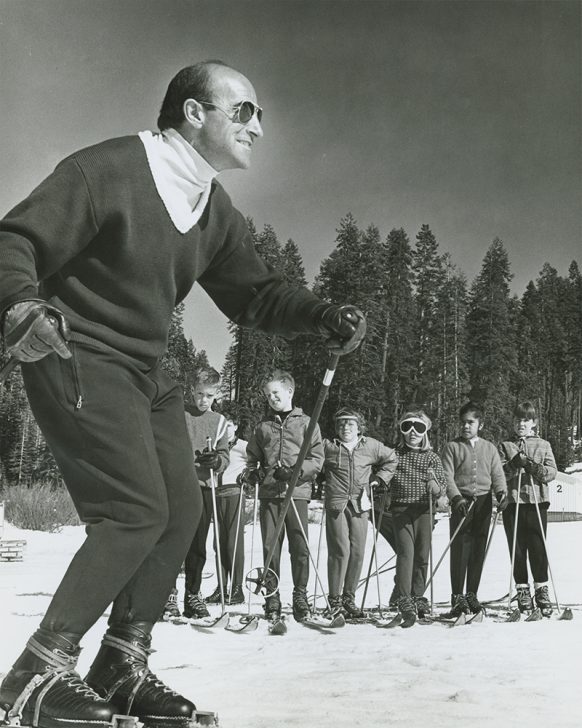
Looks like an instructor demonstrating to a kids’ class. Check the straps around his boots, and you will get a hint about the era depicted here. Don’t you love that turtleneck? No, parka, hmmm. Looks a little like California-stylin’.  That’s enough of a hint for this one. Who is he, where did he hang out, and what’s his claim to fame?

Thanks to the Museum Of Sierra Ski History and 1960 Winter Olympics for contributing this.

Last Week

Mystery Glimpse has stumped the collective hive mind for the first time.  No, not Stein Eriksen’s older brother, but good guess.

The handsome, young skier is Dick Buek, an extreme skier before there was extreme skiing.  Here’s John Jerome, the noted ski writer, talking about Dick back in the January, 1970 issue of SKIING magazine.

“To Dick Buek, the human body was a device with a certain potential, and the only sensible course for the intelligence which guided that body was to find out what that potential was….Collecting Dick Buek stories is an exercise in the suppression of disbelief.  Shussing Exhibition the first time he saw it. Winning a ski jump the first time—maybe the only time—he ever went down an in-run. Sky-diving with a parachute he found in a scrap heap. Diving off cliffs in Acapulco to win a bet for gas money. Piloting a light plane over a slalom course around lift towers at Squaw Valley, beneath  the cables. And so on. The stories are legend.”

He won the 1952 National Downhill Championship. Then, severe injuries from a near fatal motorcycle accident left him in really tough shape. Despite his knee and shoulder being held together by pins and plates, his leg only able to extend to 60 degrees, he entered and managed to win the Downhill at the 1954 Nationals at Aspen. He was passed over for the 1954 FIS World Championships because he was “a basket case.”

Dick Buek, 1929-1957

There are other stories, like watching Stein Eriksen do his famous flip at Sun Valley and immediately trying it himself, crashing spectacularly, catching a ski in the face, getting up, skiing down the rest of the run on one ski, handing the broken one to Ed Scott (Scott Poles) and telling him to fix it. Reports were he was trying a double flip.

Dick was a daredevil stunt pilot and managed to crash twice into Lake Tahoe, the first time when he was towing water skiers. In the second crash, he was actually giving a flying lesson to a friend, the wings froze up, and the plane went straight down.  He was just short of his 28th birthday.

He was inducted into the National Ski Hall of Fame in 1974.

You can read more about Dick Buek here.


Mystery Glimpse: What’s The Story?

Dire Straits Require Heroic Acts.

Credit: New England Ski Museum

This week, a historic event for Mystery Glimpse.  Can you identify the characters involved in the above picture? What’s going on? Where are they headed? Why? And yes, they are skiing.

Thanks to the New England Ski Museum, Franconia, NH, for hosting this jewel. Congratulations to NESM for opening its new branch in North Conway!

Last Week

Who, where, 1950.

Yes, Stein Eriksen is the racer and the event is the FIS World Championships at Aspen in 1950. This was the first FIS event held outside Europe when Aspen was open for only four seasons. Italy’s Zeno Colo missed sweeping all three events by losing the slalom by 0.03 seconds. Stein Eriksen placed third in the slalom.


Tread Of Pioneers: A Blast From the Past

Quaint Museum Reveals Steamboat Spring’s Rich History.

Ski Joring was the way to get around the valley when the snows came.
Credit TOP Museum

In 1947 an AP dispatch to 1,000 daily papers dubbed Steamboat Springs, Colo., “Ski Town, USA” with the declaration that of its 1,700 residents, 1,685 were skiers.

The others were children under the age of one.

Enthusiasm for skiing run deeps in this town. And you can learn all about it at The Tread of Pioneers Museum in downtown Steamboat. Native Utes, trappers, Yampa Valley settlers, ranchers, miners, farmers, cowboys, skiers, ski jumpers, snowboarders, outlaws, and lawmen, they all shared a part in the creation of this friendly town, sitting just below one of Colorado’s best loved ski resorts.

Famed Norwegian ski-jumper and circus star Carl Howelson arrived in 1913 and taught early residents of Steamboat Springs how to ski and ski jump. Suddenly, the valley’s ranchers were exploring the surrounding mountains on homemade wooden skis, school kids filled recess with downhill races, and locals became expert jumpers.

Billy Kidd, first American to medal in Alpine skiing, has lived in SBS since 1970. Here he is at 20.
Credit: TOP Museum

Favorite fact: Three Wire Winter is agricultural lingo used in the Yampa Valley to indicate that snow has reached the third strand of barbed wire on a four-strand fence, roughly 30 inches. A three-wire winter is just about right, with enough snowpack for spring run-off; more makes it difficult for feeding cattle in winter as well as damage to the barb-wire fences, according to Bill Fletcher, an Elk River Rancher.

The museum has an extensive historic photography collection, a few of which are included here. Go to the museum website to view and purchase online.

The museum is located downtown at 800 Oak Street. New exhibits this year include Staking Their Claim: Pioneer Settlement in the Yampa Valley highlighting early Yampa Valley settlers; Pioneer Kids Bedroom: Hands-on Discovery, letting kids dress up in historic clothes and play with antique toys; and A Legacy of Learning: Celebrating 50 Years of Colorado Mountain College and the Bud Werner Memorial Library exhibit, highlighting these two key local institutions; and the works of portrait and Native American photographer Edward S. Curtis.

The Museum Gift Shop has locally made jewelry, postcards, and photographs. Hours & Admission: Tues.-Sat. 11 a.m.-5 p.m. $6 for adults, $5 seniors over 62, $2 children ages 6-12, under 6 free.

The Harbor Hotel sleigh picked up skiers from the train depot and delivered them to the popular hotel at 7th and Lincoln, circa 1957.
Credit: TOP Museum

How Wheaties Affected The 1936 Olympics

The Breakfast of Champions Kept Champion Ski Jumper Alf Engen From Competing.

Wheaties Ad 1936, Courtesy of Alan Engen

Legendary extreme athlete Alf Engen, known as the greatest all-around skier ever, was a champion soccer player, skier and ski jumper. During the 1930s, he set ski jumping world records. He helped design and establish more than 30 ski areas in the western United States. And he’s fondly remembered for pioneering deep powder skiing techniques and for his ski school at Alta.

But world champion Alf Engen was banned from competing in the 1936 Olympics because of a Wheaties breakfast cereal box.

It was just the fourth time that countries faced off against each other in wintertime Olympics. Competition included just four sports: bobsleigh, ice hockey, skating, and skiing. Twenty eight countries sent their best athletes to the IV Olympic Winter Games.

As background, Engen came from Norway to the United States in the 1920s, and he played professional soccer. By the 1930s, he was acclaimed for his ski jumping feats, he joined a ski jumping team, and he soon won 16 national ski jumping titles. And his jumps set world records. He also won national titles in all four ski disciplines: ski jumping, cross country, downhill, and slalom skiing.

Alf circa 1933, Courtesy of Alan Engen

Also in the 1930s, radio was the mass media communication method of the era. There was no television. People used their imaginations to create pictures from the words they heard.

But another form of mass media was taking hold: cereal boxes. Until then, breakfast cereal had to be cooked, but when food manufacturers invented cereal that could be eaten right from the box, they faced a marketing dilemma. How could they convince families to switch from cooked cereal to this newfangled ready-to-eat cereal? A cereal box sitting on the breakfast table with pictures of all-star athletes would be the marketing device. And unlike radio, the images were right there on the box.

Four athletes appeared on the Wheaties box—Bob Kessler, basketball star; Mike Karakas, champion hockey player with the Chicago Blackhawks; women’s speed skating champion Kit Klein; and famed skier Alf Engen.

Meanwhile, Engen became an American citizen. In 1935, at the U. S. Olympic Ski Jumping Finals held at classic Ecker Hill, he out-jumped everyone. He was immediately named as a member of the U.S. Winter Olympic Ski Jumping Team which would compete in the 1936 Winter Games in Garmisch-Partenkirchen, Germany.

But just before he was scheduled to leave, Avery Brundage, president of the International Olympic Committee and a zealous supporter of amateurism, ousted Engen from the team because his picture had appeared on the Wheaties box. He declared that Engen’s image on the cereal box made him a professional, not an amateur athlete.

“Engen said he didn’t remember getting any money from the cereal company, ‘Just a lot of Wheaties. I think I gave everyone in Salt Lake City free Wheaties.'”

Alf with trophies, courtesy of Alan Engen

Ironically, shortly after the Olympics, Engen jumped against—and he beat—both the gold and silver medalists from the Olympic Games, Norwegian gold medalist Birger Ruud and Swedish silver medalist Sven Eriksson.

The remarkable skiing Engen family is the only family to have four family member in the U.S. Ski and Snowboard Hall of Fame: Alf, his two brothers Sverre and Corey, and his son Alan.

Alan lives on in his father’s tradition. He’s a champion skier and athlete as well as an accomplished scholar, author, and historian. He carries on the Engen tradition of serving the skiing community.

Alan dreamed of displaying hundreds of Alf’s ski trophies and memorabilia for the public. The dream grew into the $10.5 million Alf Engen Ski Museum at the Olympic Park in Park City, Utah. Visitors can also learn about avalanches, sit in a real bobsled, try their knack at interactive ski jumping, and more. The museum was funded entirely by private donations, including donations from Utah’s famed and philanthropic Quinney and Eccles families. Visit and enjoy the museum when you’re in Utah.

To read more from Harriet, click here for her stories on SkiUtah.

Alf in flight, circa 1936, courtesy Alan Engen


Coveted Honors Awarded At Ski History Gala

Rossignol’s Top Executive And The University Of Utah Ski Team Earned Top Honors.

Top honoree Ron Steele oversaw the company’s sales and distribution of Rossignol, Dynastar, Lange, Look and Kerma brands while he was president of Rossignol.
Credit: Harriet Wallis

The country’s largest ski history and research organization, Ski Archives, held its annual gala and fundraiser to help support its mission. In addition, the event honors individuals and organizations that set a high mark for their influence on the ski industry.

This year, Ron Steele, philanthropist and Rossignol’s executive vice president earned the Joseph Quinney Award. The award recognizes him for his ski industry commitment, vision, and business leadership.

Steele left his home state of Washington to become a champion ski jumper for the University of Utah, and he went on to compete on the U.S. Olympic ski team in Sappporo, Japan. Along the way he was an alpine technician for Rossignol and he rose through the ranks to become its president and now executive vice president. He also serves on ski industry boards.

“I got a great life after coming to Utah,” he quipped.

The award Steele earned, the Joseph Quinney Award, is named for the late ski visionary and founder of Alta.

The University of Utah’s ski team won the NCAA Championship, and the ski team members have high GPAs.
Credit: Harriet Wallis

The other top award, the J. Willard Marriott Library History-Maker Award, went to the University of Utah Ski Team. In 2017, the team won its 11th overall title and its first national NCAA Ski Championship title.

During the winter while the team was out skiing, the unique $2.8 million ski team building, the Spencer F. Eccles Ski Team building, was rising out of the ground on the campus. It’s believed the building is the first-of-its-kind facility on a U.S. college campus.

It’s named after Spencer F. Eccles, a former U of U All-American ski team member, and it was funded by private donations. The donation program was headed by another skier well known in the industry, U of U All-American skier Jim Gaddis. The evening’s award winner Ron Steele was a major donor and played a major role in fund raising for that structure.

The Ski Archives collection is open to the public, and it’s located in the University of Utah campus library in Salt Lake City.

To read more from Harriet click here for her stories on SkiUtah.


Ski Show Retro Video Brings Back Memories

If You’ve Been Around The Ski Biz, You Will See Some Familiar Faces.

Flipping out at a 60s ski show.

Thanks to Cathie Judge for sending us this video commemorating the famous Harry Leonard Ski Shows, starting in the late 60s with lots of clips of several giants of the ski industry back in the day.

Ski and Snow Board Show impresario and SeniorsSkiing.com advisory board member Bernie Weichsel, who contributed archival photographs to this video, said that Harry Leonard’s son, Adam Leonard, produced this for Harry’s 90th birthday.

SKIING magazine editor and ski legend Doug Pfeiffer at the show sometime in the early 70s.

So many familiar faces: Barbara Alley, Stein Ericksen, Doug Pfeiffer, Bob Beattie, and many other industry personalities.


The Ski Trains Return!

Car Free Means Care Free for Seniors.

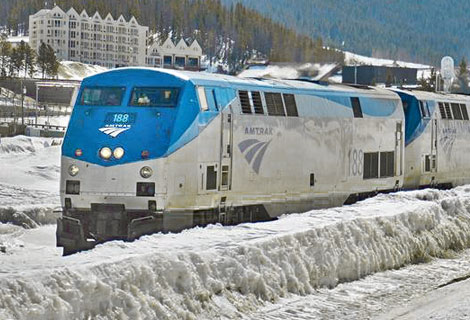
The newly Revived Winter Park Express. All Aboard! Credit: Amtrak

The newly revived Winter Park Express. All Aboard!
Credit: Amtrak

Remember ski trains? Back in the day, trains were the way to get away from the city and into the mountains.

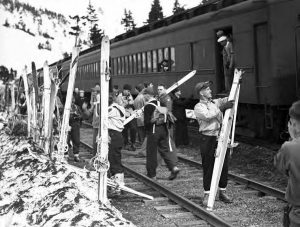
Skiers unloading in Grandview, circa 1946.

Skiers unloading in Grandview, circa 1946.

Denver skiers were thrilled last March when the ski train resumed service from Denver to Winter Park, CO, to help celebrate the ski area’s 75th birthday. Officials had ended the service in 2009 due to expense and liability. But regular weekend service resumes for the 2016-17 season Jan. 7. www.amtrak.com/winterparkexpress.

Adios to I-70 and the dreaded “red snake” down from the mountains, slick roads, zero visibility, death grip on the steering wheel, leaving you wondering whether it’s OK to use the runaway truck lane yourself.

Ski trains make a lot of sense for us seniors. Go ahead relax, get up and walk around, visit the dining car, arrive rested not rattled, and perhaps meet some fellow comrades to ski with. Then, on the way home, knock down a Mountain Stream Ale, no need to keep your wits about you. Plus, Amtrak offers seniors 62 years of age and older a 15 percent discount.

Here are some other “ski trains” to help you get right to the lifts car-free:

* Salt Lake City skiers have to be the most spoiled skiers in skidom with major resorts like Alta, Snowbird, and Park City a 45-minute drive from downtown via car or bus. But why not take the train? The UTA Front Runner rail service takes skiers from downtown Salt Lake’s North Temple Station to Ogden in less than an hour for skiing at Snowbasin or Powder Mountain. www.rideuta.com

* Lake Tahoe skiers and riders in California can ride the Polar Express that goes from Emeryville/San Francisco Amtrak station to Truckee in about five hours later to nearby Northstar. The scenic ride through the snow-swept Sierra Nevadas sure beats I-80 closures due to snow. No need to “seek an alternate route.” www.amtrak.com

* Leave your car at home and take the Downeaster to Portland, ME from Boston. From there a shuttle from the Bethel Inn Resort will meet you at the train station and whisk you off to Bethel and skiing at Sunday River.

* Wachusett Mountain in Princeton, Mass., encourages you to “Ski the T.” New this year Boston skiers and snowboarders can take the commuter rail (ski racks included) from Boston’s North Station to the new “Wachusett Station” only ten minutes from the mountain. On weekends, a ski shuttle will meet you there. www.wachusett.com.

* In the Adirondacks in upstate New York, the Gore Mountain Ski Train connects Saratoga Springs to North Creek and a free shuttle bus takes skiers from the North Creek Station to Gore Mountain’s Base Lodge Friday-Sunday. That service started a few years ago after a 50-year hiatus. Does anyone remember riding this train back then?

* Amtrak’s Vermonter hauls skiers and riders to Brattleboro where they can hop on the free local MOOver shuttles to the Mt. Snow base lodge or various local inns. It’s easy – just tell the driver where you need to go and the driver will be sure you connect with the right bus.

* Amtrak’s Ethan Allen Express takes car-free seniors from Penn Station to Rutland, VT. The Killington Express Shuttle will pick you up at the depot and take you your final half hour to Killington.

Riding the rails has a long tradition in skidom, and the appeal is still strong.

Thanks to www.liftopia.com for some of these route suggestions.

[Editor note:  Thanks to the Canadian Ski Instructor Alumni Association for passing long this “lost footage” of real ski trains from 1939. From the Governor Francis P. Murphy Estate.]

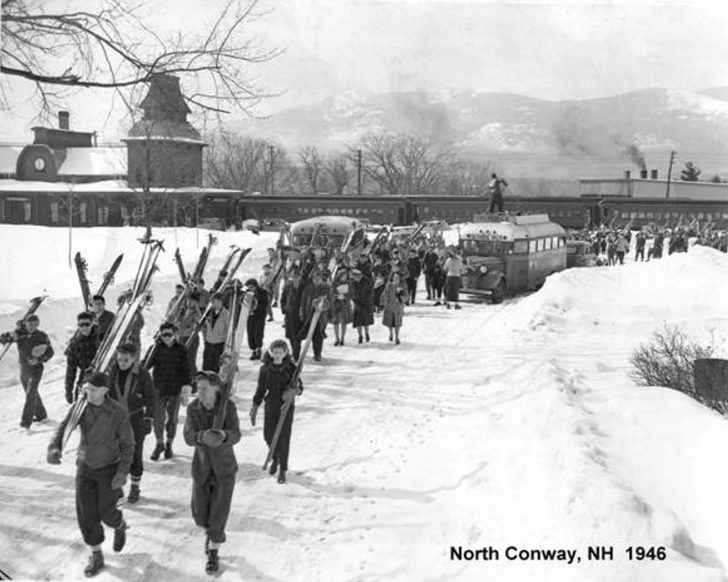
Ski train unloads in North Conway, NH, circa 1946. Credit: Dick Smith

Ski train unloads in North Conway, NH, circa 1946.
Credit: Dick Smith