SeniorsSkiing Guide: Winter Park, CO—Almost Denver

Close to Denver, This Venerable and Varied Ski Resort Can Get Crowded On Weekends.

Lots of folks lining up at Winter Park. Holiday weekend was busy. Credit: Susan Winthrop

Lots of folks lining up at Winter Park. Holiday weekend was busy.
Credit: Susan Winthrop

One of the oldest ski areas in Colorado, Winter Park is only 67 miles from Denver (about a 90 minute drive). It has excellent terrain for all levels of skiers and snowboarders. I was there with my daughter and her 12 year old twins who couldn’t wait to ski Mary Jane—one of the four mountains included in the area. We were there over a holiday week-end, and we can attest to what a popular ski area this is.

Susie and grandkids point out high points on WP trail map. Credit: Susie Winthrop

Susie and grandkids point out high points on WP trail map.
Credit: Susie Winthrop

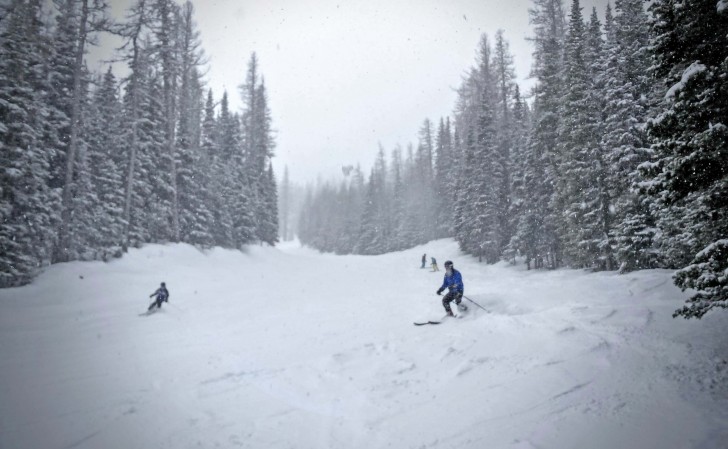
Conditions were excellent with a few inches of new powder and a huge base. As I’d come from New England, I was looking for some ice but found none. It was Martin Luther King holiday weekend—late January—and the crowds (15,000 people) were there, but we still discovered powder stashes in the trees. Plenty of full-on moguls fields kept the kids happy and when my old knees started to protest, I found some lovely blue trails which deposited me at the same lift as my more ambitious (and far younger) family members.

In spite of the throngs milling around the base and the hour-long lift line at the bottom, once we were on the slopes we quickly found our way to mostly unoccupied lifts and never had to wait again.

Snow and Terrain

With 3,081 acres of skiable terrain and 24 lifts, Winter Park had something for everyone. The average snowfall of 320 inches is impressive. The elevation of 11,220 feet is exhausting for those who come from sea-level. It was overcast and a bit windy when we were there so I can’t comment on the views or on the Parson Bowl, an area which was closed due to poor visibility. But there’s more the WP than the front slope.  Click here for a description of the “Seven Territories”, something for everyone.

Lot to Lift Access

On a busy weekend, you would have to get to the area by 7:30 a.m. to get a good parking spot in one of the designated lots. Those who slept in had a long trek uphill after parking alongside the access road. Once in the village, you can grab a red wagon provided by the ski area to tote your gear or your kids to the ticket office, the cafeteria, the restrooms or to Starbucks. At the end of the day, you might want someone to put you in a cart and pull you back to your car.

Ski Meisters

Ski Meisters whooping it up at Winter Park provides year-round activities for active seniors. Credit: Susie Winthrop

Ski Meisters whooping it up at Winter Park provides year-round activities for active seniors.
Credit: Susie Winthrop

If I lived nearby and skied here often, I would definitely join the Ski Meisters club. It’s a friendly, fun loving, hard skiing group of 55-plus seniors who enjoy discounted tickets, lockers and gorgeous jackets. They ski together at Winter Park on Sundays, Wednesdays and Thursdays when the crowds dwindle. They enjoy eating lunch together upstairs in the Stow Asis Lounge and often get together for after ski fun. They also cycle, bike, hike and take trips together to other ski areas. Currently there are 400 members, and there’s a wait list to get in. But I’m sure it would be worth the wait.

Culture

The “Guest Services” at Winter Park are friendly hosts in yellow jackets helping everyone to navigate the base area. It wasn’t immediately clear which line was the ticket line and which one was for the lift, but there was always some nice person to set us straight. I spent time at the end of the day at the tea room which turned out to have a small but popular bar. The people there were also very friendly!

Bottom Line

Day pass for senior (65+): $114; online, seven days in advance can be as little as $83. Senior pass (70+) in 2015-16 was $509.
Trail Map Click Here

Web Cams Click Here

This Week In SeniorsSkiing.com (Feb 19)

Reminiscing About A Great Big X-C Race, More Resort Reviews, Why Ski Philosophy, And Snow Kayaking.

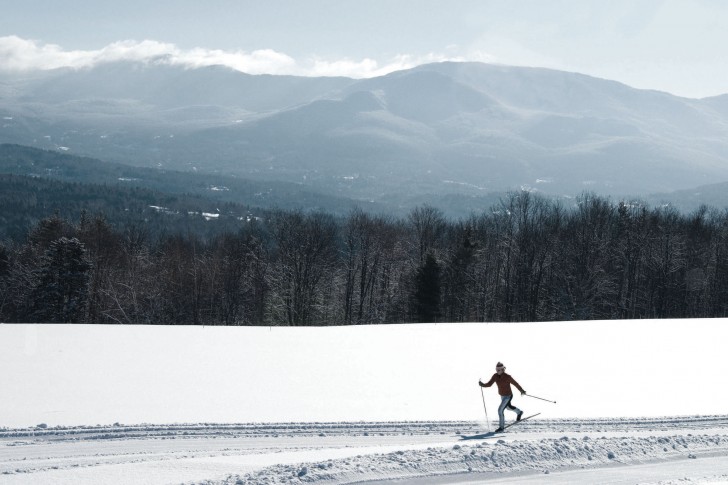
Edelweiss, edelweiss must be along here somewhere. Tracking along on groomed trails is another one of our favorite things. Credit: Trapp Family Lodge

Credit: Trapp Family Lodge

We celebrate Washington’s Birthday with a remembrance of the “people’s” cross-country, point-to-point race that was held from 1963 to 1973 in various places in southern Vermont. We tracked down Bob Gray, two-time Olympian and winner of the first race, for his views on the race and why it was shut down. We have some Resort Reviews, running across the country from the famous Trapp Family Lodge in the Stowe, VT area to SnowBasin in Utah (which has remarkable restrooms, we are told) to Mission Ridge, a bargain for seniors outside Seattle.

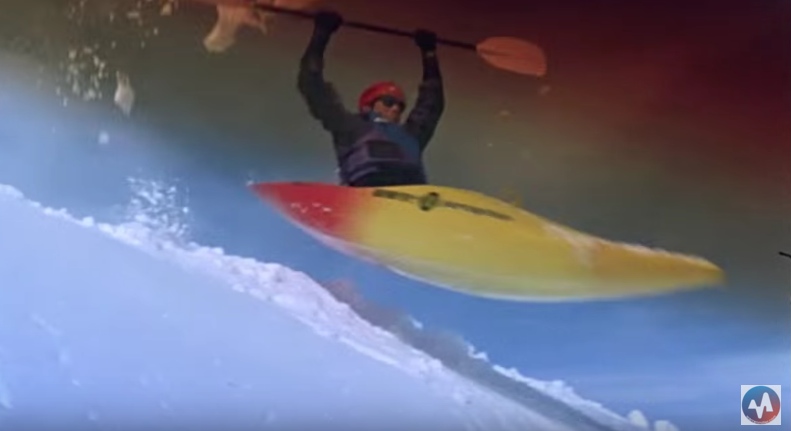
Also, if you are getting tired of going down mountains on boards or skis, we have an alternative to consider: Kayaking. A short clip from Warren Miller will get you wondering what it would be like if more than a couple of people took this up.

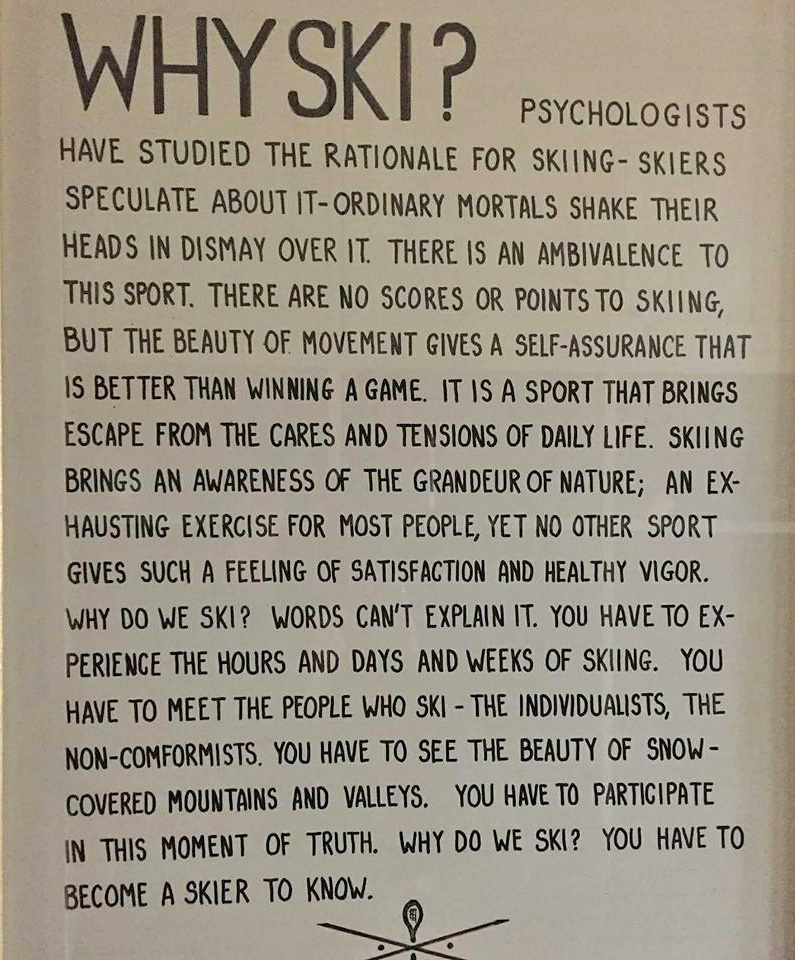
Finally, we have some words for reflection: A poster spotted at a NSP hut in upstate New York on Why Ski. See if you agree.

IMPORTANT NOTE TO OUR READERS

If you haven’t registered for the special Promotive discount we’ve arranged for our readers, please do it now. You will receive an email shortly after getting this edition of our online magazine with a repeat of the instructions and access code for signing up. Seriously, folks. This is a good deal. You get discounts on top name brand items just for being a SeniorsSkiing.com reader. You said you wanted them, we got ‘em. Promotive is judging the success of this effort by how many subscribers take advantage of it.  So please register. Free. No strings.  More to come on other stuff. Stay tuned.

And expect to see some changes in our graphic layout. We are trying to make our publication more user-friendly and simple.

Preview

Next week more Resort Reviews, art on the mountain and thoughts about the winding down, already, of snow time in the East. As one ski resort owner from New England said to us recently, “This is not a top-ten year.” Amen, bro.

And remember, there are more of us every day and we aren’t going away.

SeniorsSkiing Guide: Fixed Income Skiing on a Liberated Schedule at Sunday River, ME

Big, Big Four-Season Resort In Maine Has Activity-Filled Social Scene For Seniors.

Terrain for everyone at Sunday River and lots of room for blue cruising. Credit: Sunday River

Terrain for everyone at Sunday River and lots of room for blue cruising, greening or double-black diamonds.
Credit: Sunday River

For seniors on a fixed income and liberated schedule, a top place to ski in the East is Sunday River, ME. That is for three main reasons. First, it is huge. When you look up from the South Ridge base lodge, you see wide slopes slung over rolling peaks, in every direction, a three-mile span from White Cap to Jordan Bowl Peaks.

Started in 1959 with one T-bar, Sunday River had a huge growth spurt when Les Otten bought the small family area and put his vision for expansion into high gear.

Today, that translates into 135 trails and glades and 15 lifts (five high speed), slung over eight interconnected peaks. That’s a lot of opportunity for seniors to select the “just right” terrain. Each peak has an easy way down. You can knock yourself out on the double black White Heat or stroll down the Three Mile Trail with Agony and Ecstasy in between.

Second, owner Boyne Resorts has done a great job modernizing lifts and focusing on snowmaking and grooming, keeping trails in good shape, even in low-snow years.
Finally, everyone who works here is very friendly, so you have nice people looking after you.

Bethel, a short drive from the mountain, is a classic New England village. Main Street has several shops and cozy restaurants. The rambling turn-of-the-century Bethel Inn Resort has a 35-km XC groomed trail network right on the edge of town. Nearby Carter’s XC Center has 55 km.

These guys meet every morning, ski, and hang out. The Prime Time Ski Club is Credit: Scott Andrews

These guys meet every morning, ski, and hang out.
The Prime Time Ski Club is informal and provides a lot of opportunities for socializing.
Credit: Scott Andrews

One great asset here for seniors is the 100+ member Prime Time Ski Club (motto “You’ll never ski alone!”) for those over 50. Meet up any weekday morning at North Peak Lodge 10-10:30, top of the Chondola (get there early before the cinnamon buns are gone!) and have a fun group of people to ski with. Break off into groups (no larger than eight) usually based on terrain, ability, and social interactions, and then ski!

Many members also gather in the Mahoosic room at South Ridge in the morning and lunch there around noon. Après ski activities include wine tastings, game night, potlucks or special restaurant dinners, trips to local mountains, and an annual western trip, plus off-season activities. New Members: $25. Renewal (pre-season): $15.

Many members ski midweek and take advantage of discounts offered at area restaurants. Check out Terri Messer’s weekly column on the club in the Bethel Citizen for what’s happening.

Bottom Line

Senior Pricing: Daily lift ticket, 65 and older, $59; $53 online advance purchase.

Senior (65-79) season passes (includes Sunday River, Sugarloaf, and Loon): New England Gold Pass: $869 (Super Senior, 80-plus: $30); Silver Pass (13 blackout dates) $705; Bronze Pass (midweek non-holiday, all ages) $529 .

GO50 Week: Mid-January with lift ticket and lodging deals for five nights, a clinic, après-ski social events, and a Sock Hop.  Kudos to Sunday River for celebrating its 50-plus skiers with a full week of fun events including a “Retro Race” on vintage equipment.

Bethel Nordic Center at the Bethel Inn Resort: All Day Trail Pass: Seniors (63 plus): $16; half day, $13. Season Pass (63 plus): $125. Ask about the daily ski-swim-sauna package at the inn’s Health Club.

Trail Map Click Here


Remembering The Great Big Washington’s Birthday Touring Race

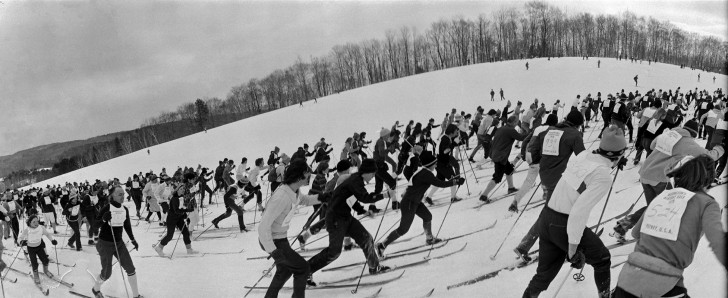
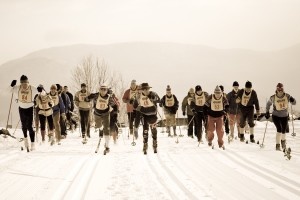
Bang and everyone charges off across the hay field. The Washington's Birthday Race circa 1971 or so. Credit: Spencer Grant

Bang and everyone charges off across the hay field. The Washington’s Birthday Race circa 1971 or so.
Credit: Spencer Grant

 Such Fun. Should We Do It Again?

What a celebration of winter it was. Imagine several hundred cross-country skiers, some serious racers—even Olympians—, college kids, couples and families, office people (like us) up from the Big City, all in a long line, awaiting the gun in a big, snow-covered Vermont hayfield. Bang, and everyone charges off, either fast skating or slowly shuffling to the far end where the field funnels into a tractor road and the rest of the 20-km (12-mile) course beyond.

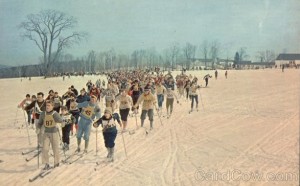
This was the Washington’s Birthday Touring Race, a “people’s race” in more or less the same tradition as Sweden’s Vasaloppet where you went from point to point or town to town, not stopping if you’re racing or stopping for a picnic snack if you weren’t. In 1963, Eric Barradale, a Brattleboro dentist and former Dartmouth Outing Club member, and a cluster of southern Vermont educators, business people and professionals, thought a race like the Vasa would help promote cross-country skiing in the US. Back then, Nordic skiing was esoteric, and an event like a great, big race would—and did— attract lots of attention.

A small group of SKIING magazine staffers participated in the 1971 edition along with about 1000 other folks. We arrived with brand new kangaroo skin boots, wooden skis, four pin bindings and bag of waxes. It was our first time ever on cross-country skis. In fact, SKIING magazine’s editor and our boss Al Greenberg gave us a lesson in his office before we left for Vermont in our rented car. “Just shuffle like you have bedroom slippers on and keep your arms moving.” Doug Pfeiffer, the editor-in-chief at the time, opined about ski wax. “Some concoctions are said to include whale blubber,” he hinted mysteriously. The hook was set. The night before the race, we learned how to put on pine tar and wax in the basement of the Whetstone Inn, in Marlboro. From that delicious aroma, we knew we were going to love it.

The GWBDR was modeled after Sweden's Vassalopett. Credit: CardCow

The GWBDR was modeled after Sweden’s Vassalopett.
Credit: CardCow

The first race in 1963 had 54 participants. Bob Gray, a two-time Olympian and student of John Caldwell, a long time coach, member of the 1952 Olympic team and eventually USSA team coach, was the winner. Bob told us in a recent interview the first race went from Hogback Mountain to Brattleboro. In subsequent years, the race was held on different courses throughout southern Vermont, some more challenging than others, all linking towns around the area. And the numbers of participants grew. Bob said, “We had the US Women’s Cross-Country team in one race. More and more competitive racers started coming.” That’s when Barradale started having second thoughts.

“There were racers knocking people off the track,” said Gray. “Barradale got discouraged.” The charm of a citizen’s race was disappearing as more and more serious racers showed up. Over the years, we had always thought the race was finally called off because of lack of snow. We asked Bob Gray if that was the reason. “No, it was because the race became too much of race.”

The final official Washington’s Birthday Race was held in 1973. Bob Gray was in that one, too, as he was in five since 1963. The people’s race run by a group of volunteers was experiencing the embarrassment of success. Too many details, too many arrangements, and too many racers. “After 1973, there were about five years where we had loop races around the a county club in Brattleboro for real racers, but the basic idea was lost,” said Gray. Gray said he got to keep the Winner’s Bowl when the race “retired”.

Gilbert_Stuart_Williamstown_Portrait_of_George_WashingtonIn 1971, our group from SKIING managed to come in dead-last. Our wax had long gone, we got lost, yet we laughed our way to end point at Putney School. We did get a pin for finishing. It instantly became one of our proudest possessions.
Should we have another generation of the Washington Birthday Race? Would you go?


Other Things You Can Do On Snow: Try Kayaking

A Short Clip On A Snow Sport Alternative From Warren Miller.

Someone out there is bored.  But how do you get up the lift? Credit: Warren Miller

Someone out there is bored. But how do you get up the lift?
Credit: Warren Miller

Why Ski?

From NSP Eastern Division Safety Team, Corinth, NY

whySki__

SeniorsSkiing Guide: SnowBasin

Great Skiing. Terrific Views. America’s Fanciest Loos.

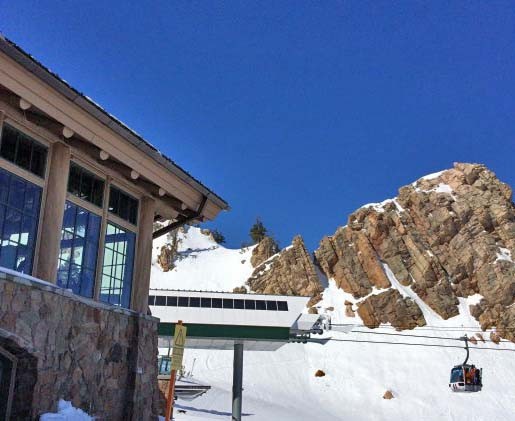
The Needles Lodge and Gondola at SnowBasin on a bluebird day. Credit: Jon Weisberg

The Needles Lodge and Gondola at SnowBasin on a bluebird day.
Credit: Jon Weisberg

SnowBasin is the expansive, exceptionally beautiful Utah area that most out-of-staters never get to ski. They’re attracted to the bigger name resorts just 45 minutes east of the airport. Head north, add 10 minutes, and you’re at MAGNIFICENT, SnowBasin—site of the 2002 Olympic Downhill events.

At the top, looking over its 3,300 acres, the cliffs and outcroppings suggest Europe. The vertical is 2,950 feet.

From this reviewer’s perspective, it ranks high for older skiers.

Snow and Terrain

  • There is much here for every ability: trails, bowls, glades. On powder or post-powder days, freshies await.
  • Lifts are fast and modern, including two gondolas and a short tram serving a vast black diamond area.
  • Ample snowmaking assures good coverage while nature sleeps. Elevation can be an issue. Its base is 6400 feet. Alta’s is 8530 feet, meaning more snow. But when conditions are good, Snow Basin is great.
  • Visibility is another issue. When it’s not bright and bluebird, its vast, treeless spaces produce unusually flat light; disorienting to anyone with compromised visual acuity.

Lot-to-Lift

  • Easy to reach lodge and lifts: The resort runs a frequent shuttle service delivering skiers a short distance from base lodge and lifts.
  • Parking is well organized: lots of personnel guiding you to your spot.
  • A fleet of large plastic garden carts is available to transport equipment and grandkids.

Day Lodges

Taking a break at Snow Basin

Taking a break at SnowBasin

These are not your typical lodges. They’re every bit as luxurious as Four Seasons hotels. Finishings. Furnishings. Flooring. You name it. No expense was spared, either at the base (Earl’s Lodge) or on the mountain (John Paul Lodge and Needles Lodge), where the luxe interiors and glass enclosed patios have spectacular views.

Food is several steps up from most resorts. House-made soups can stand up to most big city eateries. Look for Snow Basin’s Dining Discovery Series with sustainable farm-to-table selections. More on that on the resort website under “Events”.

Loo Review

Clean, classy luxury in every lodge! Men’s Rooms have a foyer with upholstered furniture, a washroom with gold-plated fixtures, and fully-enclosed commodes. Every place you go has shelving and hooks for gloves, helmets, and parkas.

Culture and Practicalities

From parking attendant to ticket window to liftee, there’s a culture of friendliness and helpfulness. Some areas don’t seem to care or have personnel who don’t even bother to sweep snow from chair. Snow Basin has trained its people to make the interaction truly enjoyable.

Unfortunately, there’s no onsite lodging. Condo rentals are available at nearby Pineview Reservoir. Many hotel/motel/other options are available in the city of Ogden, 20 – 25 minutes away.

Best to get there by auto although inexpensive public busses run three times a day between Ogden and the resort.

Bottom Line

Click here for more SnowBasin information

Trail Map Click Here 

Webcams

SeniorsSkiing Guide: Trapp Family Lodge Nordic Skiing Has Trails for Seniors

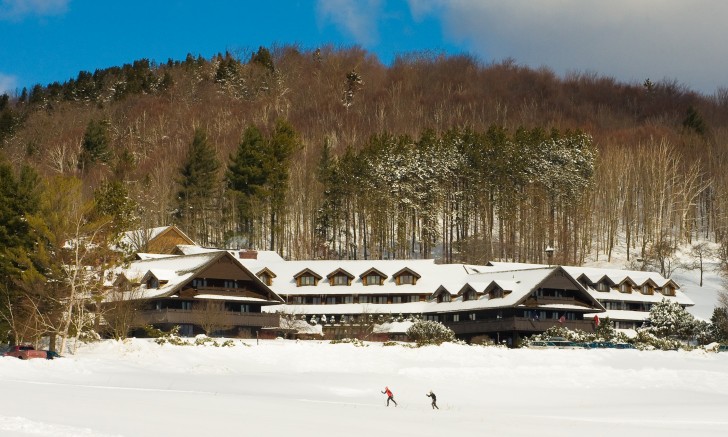
The Trapp Family Lodge is a one of a few of our favorite things. Credit: Trapp Family Lodge

The Trapp Family Lodge, near Stowe, VT,  is a one of a few of our favorite things.
Credit: Trapp Family Lodge

The Hills Are Alive With The Sound Of Senior Skiers.

In 1968 Johannes von Trapp opened the first commercial Nordic Center in the U.S. on his family’s farm overlooking the Worcester Range in Stowe, Vt. The Trapp Family Lodge continues as a diamond of Nordic skiing with 100 kilometers of trails on more than 2,500 acres in one of the most scenic spots in Vermont.

Snow and Terrain

Grooming and trail maintenance are impeccable, and it is wonderful to see beginners shuffling around wearing parkas and goggles versus lightly-fleeced skaters zooming by. Snowshoers are welcome off track.

The center’s high elevation captures snow, and it has recently added snowmaking in the stadium area to redistribute as needed. Good for seniors, the center has a lot of variety. Many like to visit the Slayton Pasture Cabin, a gradual three-mile climb, warm up by the open fire with hot chocolate, then shoot back down, about three hours round trip. A nice close-in loop is Sugar Road to the Telemark Trail, but the Haul Road, Slayton Pasture Trail, and Skater’s Waltz all provide varied journeys over rolling terrain, allowing the mind and skis to wander in equal measure.

You can get those four-pin bindings and leather boots out and wax up your wooden skis for the TFL's antique ski race. Credit: Trapp Family Lodge

You can get those four-pin bindings and leather boots out and wax up your wooden skis for the TFL’s antique ski race.
Credit: Trapp Family Lodge

The best backcountry skiing is accessed by climbing to the Slayton Pasture Cabin, then climbing the trail to “Round Top,” says Ryan Kukar of Trapp Family Lodge. “Bear right at the top and then drop in off the ridge towards Hare Line trail. Skiing through the woods this way is great and allows skiers to bisect some of the other Nordic ski trails.” Several backcountry zones have been trimmed to open up the lines for us seniors whose reactions may be slower. Rental backcountry gear available at the Nordic Shop include the Rossignol Soul 7 skis, with Dynafit boots and bindings, skins required.

Dining, Lodge and Culture

For many, the draw to the Trapp Family Lodge is the von Trapps’ compelling family history, brought to life in The Sound of Music. Pilgrimage would not be too strong a word.

The lodge has 96 rooms, guest houses, and villas. The food is outstanding. The lodge’s gardens, greenhouses, laying hens, and livestock, have long been providing fresh and tasty fare to guests (marked by a crown on the menu).

Pour syrup from the majestic sugar maples onto your breakfast French Toast. Add to the tasting list an Austrian style Trapp Lager made right on the premises and the new von Trapp Weiss Beer (a white beer made with coriander). The wine cellar isn’t bad either and available for regular wine tasting sessions.

The lodge is cozy; get a good night’s sleep under Tyrolean eaves and feather pillows, comforters, with a window view over the mountains. Classical music wafts out of the lobby.

As an overnight guest, you have access to the ski trails, the Fitness Center with indoor pool, massage therapy, sauna, and hot tub. Grandchildren will appreciate the daily Mountain Kids Club.

After a day on the trails, there’s nothing better than to head to the Lounge in the lodge, order a von Trapp ale and maybe a house-made Bratwurst and Tagessuppe, and watch the winter twilight set in.

Bottom Line

For seniors: Day pass, 65 and over: $20.

Trail Map Click Here

Edelweiss, edelweiss must be along here somewhere. Tracking along on groomed trails is another one of our favorite things. Credit: Trapp Family Lodge

Edelweiss, edelweiss must be along here somewhere.
Tracking along on groomed trails is another one of our favorite things.
Credit: Trapp Family Lodge


This Week In SeniorsSkiing.com (Feb.19)

Big News For Our Subscribers, Resort Reviews, Stretching Advice, Boots and a Ski-From-Home Apartment in Borat-Land.

PromotiveWe are extremely excited this week to announce a fantastic and exclusive discount deal for SeniorsSkiing.com’s subscribers.  Now you guys can sign up with Promotive.com (using a special access code you will receive shortly in a separate email), and get discounts on top brands in ski equipment, clothing and lots of stuff.  We know this is important to you because our reader surveys have revealed that discounts are critical, really.  So, there you go, have at it.  Free.  No charge for subscribing to SeniorSkiing and no charge for signing up with Promotive.com. Look for the subscribers-only email with access instructions very soon.

Stories this week include reviews of Mt. Baker, snow catcher of the Northwest, by our newest contributor John Nelson.  Great ticket deals there, seniors. There’s also a guide to skiing easy ways down Mt. Mansfield, Stowe’s magic mountain, by correspondent Tamsin Venn. We remember beautiful, long runs down the Perry Merrill, many, many years ago. Stowe is a special place in the pantheon of skiing., and Tamsin does a great job of introducing seniors to its charming, blue runs. Paul Foy also shows us some lightweight gear that might encourage you to visit the backcountry, a segment of snow sports that is really growing.

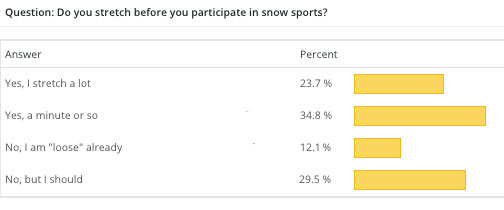
We asked Salt Lake City correspondent Harriet Wallis to investigate the stretching challenge we discovered in our recent poll.  We found that 60 percent of you do some level of stretching and 40 percent don’t.  What she found when she consulted with her physical fitness advisor and others surprised her, us and it will you, too.

Co-Publisher Jon Weisberg has a report on Muck Boots, hearty footwear for snow country. Curious how a boot originally designed for cleaning horse stalls has made its way into snow country fashion.

Finally, we have a bit of fun with a most amazing architectural design: An apartment building with a built-in ski slope. Yes, this is legit; it even won an architectural award. Think of the implications for Saturday night parties.

Preview

Because this week was so busy with our Promotive announcement, we weren’t quite able to get the Washington Birthday race story in press.  It is interesting that our queries around the ski industry into that race’s history resulted in little information.  The Washington Birthday race was a “people’s race”, like the Vassalopett in Sweden.  Everyone lines up in a giant, snow-covered field, and off you go.  Was great fun back in the 60s and 70s.  Anyone out there have memories or pictures to share?

That's what Borat says.

That’s what Borat says.

More Resort Reviews, product ideas, and ideas for making snow sports rewarding.  Remember, if you want to communicate with other readers, find people to pal up with or ask questions, use the FORUM.  Click the menu in the upper right, blue bar.

Thanks again for subscribing to SeniorsSkiing.com.  There are more of us every day, and we are not going away.

Special Edition: Great News for SeniorsSkiing.com Subscribers!

Subscribers to SeniorsSkiing.com are now eligible to receive substantial discounts on a wide variety of equipment, gear, accessories, clothing, etc.

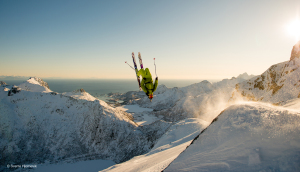
Flipping out: Lofoten, Norway Credit: Oystein Aasheim

Flipping out over deals for SeniorSkiing.com subscribers!
Credit: Oystein Aasheim

We have arranged for this subscriber benefit with ProMotive.com, the online community for industry experts and influencers that matches qualified members with exclusive discounts on top brands.

These offers—the same as or similar to those available to professional ski and snowboard instructors—are based on the understanding that SeniorsSkiing.com subscribers influence buying decisions by their peers.

There is no cost for being a SeniorsSkiing.com subscriber, and there is no fee for using ProMotive.com.

Look for emails from us soon and over the coming weeks. They will explain the simple registration process and will link to ProMotive’s “Snow Influencers Team.”

Our Subscriber Survey revealed our readers want discounts for seniors. We hope you enjoy this new subscriber benefit!

Mike Maginn, Jon Weisberg, Co-Publishers


SeniorsSkiing Guide: Stowe Mountain Resort—Easy Ways Down

Legendary Ski Trails As Well As Amazing Blue Runs.

Stowe in the morning. Skiing starts at 7:30 am. Credit: Stowe Mountain Resorts

Stowe in the morning. Skiing starts at 7:30 am.
Credit: Stowe Mountain Resorts

Visibility was poor as I slid onto the Forerunner Quad to reach the summit of Stowe Mountain Resort, braced by Mt. Mansfield, highest peak in Vermont at 4,395 feet. Somewhere below in the gray swirl were the legendary front four—the Goat, Starr, National, Liftline—the gnarliest and most iconic ski trails in the East, double black diamonds all.

But apprehension vanished after the first few turns on the Lord.

Lifts and Terrain

Easy intermediate cruisers like the Lord and Ridgeview provide smooth sailing down from the top of the quad (elevation 3,615 feet), new in 2012. Even the seven-turn Nose Dive (nee Barnes, circa 1930s) is sheer joy on a good day. The average 2,200 vertical feet of those top-to-bottom cruisers allows you to slide into the rhythm.

Volunteer Stowe Host Peter Lawler has been skiing at the mountain for 70 years. Credit: Tamsin Venn

Volunteer Stowe Host Peter Lawlor has been skiing at the mountain for 70 years.
Credit: Tamsin Venn

The management has gotten much better at taking care of trails and making snow, says Peter Lawlor, 83, a volunteer Stowe Host from Shelburne, Vt., skiing Stowe for 70 years. Lawlor very kindly took a few runs with me, providing company and hair-raising tales of the brave young racers on ice-slicked courses he had witnessed in decades past, including a youthful Andrea Meade Lawrence.

Hop over to the eight-person Gondola, and you’ve got more senior-friendly cruisers on the meandering Perry Merrill and the Gondolier, plus swank dining at the summit in the Cliff House Restaurant. After lunch, move over to the sunny slopes at Spruce Peak. The Sensation Quad lands you at the top of Spruce Peak for a fast cruise down Sterling or Main Street.

Lodges and Dining

Anchoring the trails here is the self contained pedestrian Spruce Peak Village, a game changer for the resort, full of senior-friendly amenities.

The Spruce Camp Base Lodge has vast amounts of space; the soaring Great Room Grill means never having to say, “Are you leaving? Can we have your table?” Heated snow free walkways, spacious ski racks, the Easy Over gondola that takes you from the Mansfield parking area over to Spruce Peak all mean minimal schlepping.

The Stowe Mountain Lodge, the slope-side condo hotel straight out of Architectural Digest, rolls out your skis on trolleys and heats your boots.

Need a lift blanket? Chairs heading up on a frosty day at Stowe. Credit: Stowe Mountain Resort

Need a lift blanket? Chairs heading up on a frosty day at Stowe.
Credit: Stowe Mountain Resort

The pedestrian village also has an ice skating rink, performing arts center, Stowe Mountain Club with special privileges, and kids Adventure Center (soon to open).

The Evolution Stowe Card provides hands free lift access and lets you reload your daily lift ticket online for savings.

Use the newly installed GPS Ride Systems app on the free shuttle bus that runs from the village to the mountain —stay inside until the bus comes.

For Seniors: Lifts open at 7:30 am weekends and holidays. Ski when slopes are uncrowded, freshly groomed, and the light is good.

Free Stowe Host-guided mountain tours meet at 10:30 on weekends and holidays in Spruce Plaza outside Spruce Camp Base Lodge.

WoW, Women of Winter, meet regularly to ski together to ski off the Forerunner Quad.

Bottom Line

Senior pricing: Senior Daily Lift Pass, 65 and older: $82 (Online)

Super Senior Daily Lift Pass, 70 and older: With purchase of Super Senior ByPass, online direct-to-lift ticket, $42 per day.

Stowe Statistics

Vertical: 2,360 feet, Trails: 116, Trail Acreage: 468, Lifts: 13, Snowmaking coverage: 83 percent, Beginner: 16 percent, Intermediate: 55 percent, Expert: 29 percent

Trail Map click here

Web Cam click here

Stowe's Mt. Mansfield has some legendary trails in front: Goat, Starr, National. Credit: Stowe Mountain Resort

Stowe’s Mt. Mansfield has some legendary trails in front: Goat, Starr, National.
Credit: Stowe Mountain Resort

SeniorsSkiing Guide: Mission Ridge On A Snowy Day

Day Trip-able Area From Seattle Offers Senior Bargains and “Uncrowds.”

Skiers enjoy the soft snow on Chair 3 at Mission Ridge on a snowy day. Credit: John Nelson

Skiers enjoy the soft snow on Chair 3 at Mission Ridge on a snowy day.
Credit: John Nelson

“My wife and I are retiring and moving here this year,” the skier from the Seattle area said as we rode the chairlift at Mission Ridge. “We love it here.”

I could see the attraction of this gem on the eastern slope of the Cascade Mountains. Mission has bargain pricing, and beautiful, uncrowded terrain far from the busy ski areas nearer to Seattle.

During my visit, a major blizzard dumped all day, turning the open slopes of Mission into a playground of powder. With a sparse midweek crowd, I skied untracked lines all day in what felt like my own, private ski area.

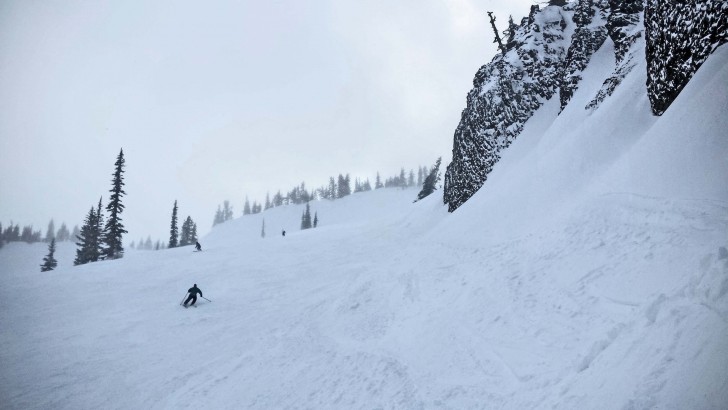
The best of the best was Bomber Bowl, where swirling storm winds dumped more soft powder amid the gladed slopes.

Snow, terrain and more

  • Location: Mission is located just 12 miles from Wenatchee, Wash., an agricultural hub on the Columbia River known as the apple capital of Washington state. The bustling town also has a growing number of wineries to attract visitors, along with ample dining and lodging options. It takes about three hours to drive to Mission from Seattle.
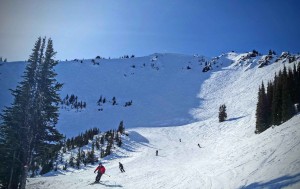
  • Snowfall: This is the “dry” side of the Cascades, so less snow falls here than on the western slopes of the mountains. It also means more sunny skies. Ample snowmaking keeps the mountain slopes covered during early season and lean snow years.
  • Terrain: About 2,000 acres of rolling terrain drops off the top of the ridge, with a great deal more of easily accessed side country. About 30 percent of the terrain is rated advanced; 70 percent is beginner and intermediate. Gladed tree skiing and bowls are situated off a high ridge with dramatic cliffs, giving the area an appealing, open feeling.
  • Vertical: 2,250 feet from base (4,570) to ridge-top (6,820).
  • Lifts: Four chairlifts serve the basin; one is a high-speed quad taking skiers from mid-mountain to the top of Mission Ridge.
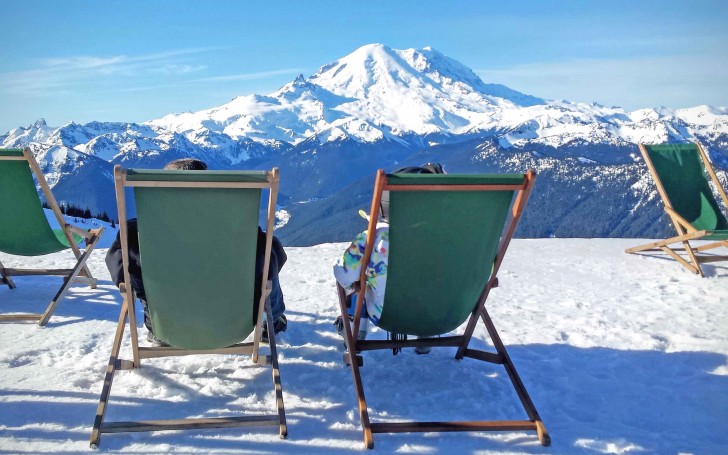
  • Views: 14,410-foot Mount Rainier and the Cascade Range are visible from the top. The ski area faces the Columbia Plateau to the east.
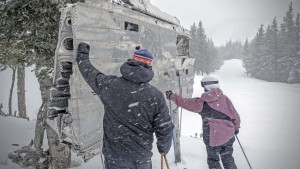
  • History and legend: In 1944, a B-24 Liberator heavy bomber crashed on the ridge during a training flight. A piece of the wing is on display at Bomber Bowl, one of the signature runs at Mission Ridge. Legend has it that if you touch the wing, you’ll bring fresh powder to the ski area; consequently, riders stop by often to work the mountain mojo.
Touch the bomber wing at Mission Ridge and legend has it you'll bring a new storm. Credit: John Nelson

Touch the bomber wing at Mission Ridge and legend has it you’ll bring a new storm.
Credit: John Nelson

Lot to lift access

  • Mission has two main parking lots. Drivers may drop-off passengers and gear near the lodge and ticket kiosk. On weekends during the height of the season, the lots can fill up early.
  • An inexpensive bus service operates from Wenatchee. A regional airport serves the town, as does Amtrak.
  • Accommodations are plentiful in Wenatchee. A little farther away (about a one-hour drive) is the tourist hub of Leavenworth, Wash., with many more hotels and restaurants.

Culture

  • The vibe: Small-town friendly. Locals will talk with pride about their ski area, but you’re also likely to run into refugees from Seattle who come here to escape the west-side crowds.
  • Dining: The Hampton Lodge at the base of the mountain offers a cafeteria and restaurant/pub. On the mountain is Midway Lodge, a cozy dining and drinking hut.

Bottom line

  • Adult tickets are $55; seniors 70 and older pay just $15. Season passes for 70+ seniors are just $125.
  • Lots of uncrowded, gladed skiing in an area that averages more than 300 sunny days a year. Touch the bomber wing for luck (and you might bring a new storm).
  • Parking is limited on weekends in high season; midweek is empty.

Trail Map click here

Mission Ridge Webcam click here

Skiers drop under the cliffs on Bomber Bowl, one of Mission Ridge's signature runs. Credit: John Nelson

Skiers drop under the cliffs on Bomber Bowl, one of Mission Ridge’s signature runs.
Credit: John Nelson


Ski At Home: Faux Mountain Condos In The City

Vail, Are You Paying Attention?

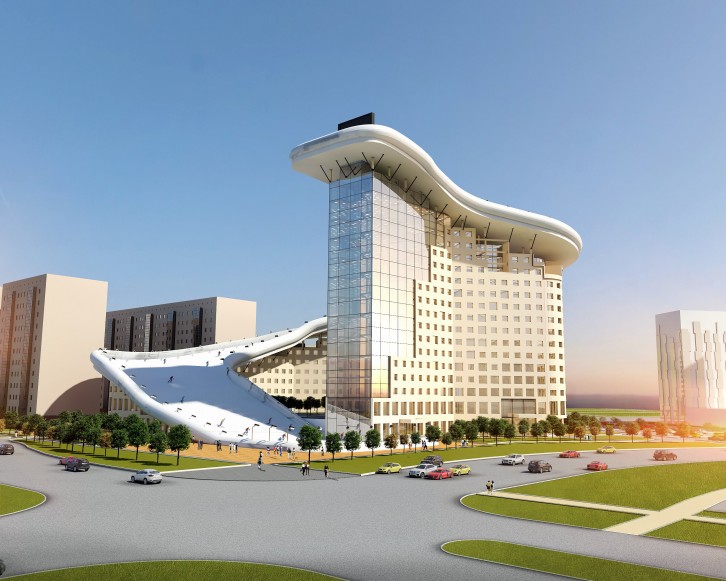
Design by Shokhan Mataibekov Architects is a finalist in World Architect Festival Awards.

Design by Shokhan Mataibekov Architects is a finalist in World Architect Festival Awards.

That's what Borat says.

That’s what Borat says.

Remember Borat, the hilarious Kazakhstanian character created by British comic, Sasha Baron Cohen? His spoof helped define Kazakhstan in a way that has it trying to get respect ever since.

The country has five ski resorts, at least one reaching higher than 10,000-feet. Now a proposed apartment building for Astana, the nation’s capital, would add another skiing option. Slalom House is designed as a 21 story building with a 1000-foot slope wrapping the exterior. It would be the world’s first residential building with a built-in ski slope.

If built, it would not lack for decent snow-making conditions. Astana, the second coldest capital city in the world, has winter temperatures reaching as low as -31°F. Summer temps climb as high as 95°F.
Here’s a virtual video tour.  We suggest turning off your sound to avoid Borat-like soundtrack.


Stretching vs Dynamic Warm-Ups

Are you tuning or terrifying your body?

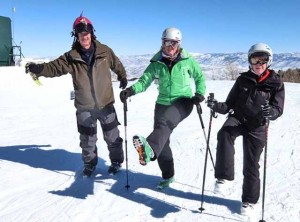
Correspondent Harriet Wallis bribed son Cal, daughter Alison, and best ski buddy Laurie to demonstrate warm ups at the top of a Deer Valley lift. Credit: Harriet Wallis

Correspondent Harriet Wallis bribed son Craig, daughter Alison, and best ski buddy Laurie to demonstrate warm ups at the top of a Deer Valley lift.
Credit: Harriet Wallis

Some experts say stretching before exercise helps performance and lessens injuries. Others say stretching can cause damage.

So what should you do?

“Skiers who stretch at the top of a lift are crazy!” says Jo Garuccio, a PSIA Examiner, Snowbird ski instructor and Triathlon World Champion. “They’ve been on a cold lift and then they’re going to stretch? That’s absolutely nuts!” she exclaims.

Really good warm ups in ski boots include swinging arms, swinging legs and marching in place, Garuccio says. Get the blood flowing.

Recent studies concur. Static stretching done cold without a warm up hurts the performance of weight lifters and competitive athletes.

Okay. Case closed. Warm up at the top of the lift before you even think about doing something else.

But when I Googled “dynamic stretching” and also “dynamic warm ups” I found – ironically – that the images were virtually the same for both. So it seems it’s your responsibility to ask your body: “Am I getting juices going, or am I straining cold muscles?”

On a humorous personal note, my best ski buddy would stand at the top of the lift and wiggle this way and that. I don’t know if she was warming up or stretching. Nevertheless, she was glued in place until she finished her routine. If it was a powder day I was frantic. “Hurry up. We’re wasting fresh snow,” I’d grumble. She finally learned that fresh powder trumps wiggles.

[Editor Note: Our recent poll revealed 60 percent of our respondents did some kind of stretching, 40 percent didn’t.  Here is an LA Times article on stretching that amplifies Harriet’s point about getting the blood flowing through an “active warm-up”, i.e., moving around a lot.  Short duration, static stretches are just an add on to the moving around part.  But experts certainly haven’t reached consensus.  For a collection of short, light stretches, look here.]


SeniorsSkiing Guide: Mt. Baker, Snow Catcher

Hey Seniors, Low Ticket Prices In The Northwest!

With Mount Shuksan looming behind, a snowboarder shreds soft snow at Mt. Baker Ski Area. Credit: John Nelson

With Mount Shuksan looming behind, a snowboarder shreds soft snow at Mt. Baker Ski Area.

Mt. Baker is a storm factory.

This North Cascades ski area holds the world record for snowfall in a season—an incredible 95 feet dumped here in 1998-99!

I arrived in mid-January to a modest three inches new, but that was on top of a foot that had fallen the previous day. The snow was soft; the scenery stunning.

The Canyon, one of Mt. Baker's signature runs, takes skiers and boarders into a narrow drop between mountain walls. Credit: John Nelson

The Canyon, one of Mt. Baker’s signature runs, takes skiers and boarders into a narrow drop between mountain walls.

I immediately took a few runs down The Canyon, one of Baker’s signature drops. Skiing between these towering mountain walls is a rush.

But best of all was Pan Face, a wide-open powder shot into a lovely mountain basin. Empty slopes meant fresh lines all day.

To top it all off, Mt. Baker is an incredible bargain for senior skiers, with some of the lowest ticket prices in the Northwest.

Snow, terrain, and more

  • Location: Baker is 52 miles from Bellingham, Wash., on State Route 542. It is the northernmost ski area in Washington and is closer to the Vancouver, British Columbia, metropolitan area (about a two-hour drive) than it is to Seattle (two and a half hours).
  • Snowfall: Pacific winter storms seem converge on Mt. Baker; it averages 640 inches annually, far more than any ski area in the state.
  • Terrain: About 1,000 acres are lift-served with 31 percent rated as advanced and 69 percent rated as beginner and intermediate. The Mt. Baker backcountry is enormous with huge, avalanche-prone big-mountain drops. You’ll need a partner, transceiver, shovel and probe to go out of bounds.
  • Vertical: 1,589 feet (the base is 3,500 feet; chairlift access to 5,089 feet).
  • Lifts: Eight chairlifts (none high-speed) operate out of two base areas: White Salmon (open every day) and Heather Meadows (open weekends and holidays only).
  • Views: If you’re lucky enough to visit between storms, you’ll have a commanding view of 9,131-foot Mount Shuksan to the north, a stunning, glaciated wall of rock and ice. Mount Baker (the volcano) stands at 10,781 feet to the south and is visible from certain locations of the ski area.

Lot to lift access

  • Parking on a weekday at Mt. Baker is a breeze; I arrived 10 minutes before opening and parked in the front row next to the ticket window at White Salmon Lodge. Weekend parking is busier and skiers might find closer lift access at the Heather Meadows base.
  • Bus service operates daily out of Bellingham.
  • Closest lodging options (motels and condominiums) are in Glacier, Wash., a foothills town about a half-hour from Mt. Baker. Bellingham (population 82,000 and counting) is a lovely port city about 75 minutes away with top-notch dining and accommodation options.
Culture

  • The Vibe: Old-school friendly. Everywhere I went, I was talked up by locals who were happy to share their knowledge and pride in Mt. Baker.
  • Dining: Lodges operate out of the two base areas, but the best option is the cozy Raven Hut, a mid-mountain lodge at the base of Chairs 4, 5 and 6.

Bottom line

  • Baker is a true bargain. Weekend and holiday tickets are $58 for adults; seniors 60-69 pay $50, and those 70 and older pay $39. Weekdays are even cheaper: $53 for adults; seniors 60-69 pay $41.
  • Big powder dumps are common, and locals are happy to share their advice.
  • Snowboarders love Mt. Baker for its rough features and natural half-pipe; out-of-bounds, big-mountain terrain attracts hard-cores.
Trail Map Click Here

The open, powdery slopes of Pan Face drop into the Heather Meadows side of Mt. Baker Ski Area. Credit: John Nelson
The open, powdery slopes of Pan Face drop into the Heather Meadows side of Mt. Baker Ski Area.
Credit: John Nelson

Lightweight Ski Gear Does Double Duty At Resort, Backcountry

Backcountry Skiing May Be An Alternative For Seniors.

Backcountry can be a destination for seniors, especially with new equipment. Credit: Paul Foy

Backcountry can be a destination for seniors, especially with new lightweight equipment.
Credit: Paul Foy

It’s getting crowded on the slopes. Lift lines can be agonizingly long, the runs denuded of soft powder. You’re looking over a shoulder trying to avoid getting clobbered by someone else. Is that any way for an older skier to enjoy the sport?

Maybe it’s time to venture into backcountry. Equipment on display at the recent Outdoor Retailer Show in Salt Lake City had plenty of boots that walk naturally and bindings that free the heel for backcountry travel. Skis are easier to turn in many categories and are lighter on the foot.

Nearly every major ski brand is offering equipment that can do double duty at resorts and off-piste. Technology advances (and some lifts) are leading skiers into the wild or the resort’s side country. One problem is that backcountry bindings didn’t always stand up to a more aggressive style of resort skiing on hard snow and in moguls. But that is changing. The new binding systems, like Marker’s Kingpin or Fritschi Diamir’s Viper, are designed to close the gap.

Dynafit has long been the backcountry leader in ski equipment, but others are catching up with beefier versions of its classic pin binding, which allows skiers to naturally flex their legs for cross-country travel.

With its patent expired, Dynafit’s basic design has been widely copied with variations making it safer for less forgiving resort slopes. The company has beefed-up versions of the pin binding for safer boot retention, a critical feature for the hybrid ski category.

Backcountry skiers also need mohair or synthetic climbing skins that stick to the bottom of a ski, giving a skier traction to move uphill or cover distance easy. They peel off quickly for the downhill run.

Alternatively, Voile sells a touring ski that comes with traction scales embedded in the base. The so-called Vector ski glides with a grip on flat or gently rising terrain.

There’s a big safety concern for backcountry travel, addressed by another category of equipment. Anyone venturing deep into mountain wilderness needs avalanche training, a beacon to transmit their position under snow, a probe to find and a shovel to dig out a ski buddy.

First-timers can aim for gentle slopes, away from avalanche zones, or in resort side country cleared of dangers. But navigating backcountry terrain can be tricky. Earlier this winter in Utah, safety experts triggered deep avalanches from hundreds of yards away, just by stomping on their skis.

If you are looking for a new challenge, learning about and gearing up for backcountry skiing might be your next one.


Muck Boots: The Toyota 4-Runner Of Footwear

Rugged, Waterproof Snow Boots E-Z On/Off.

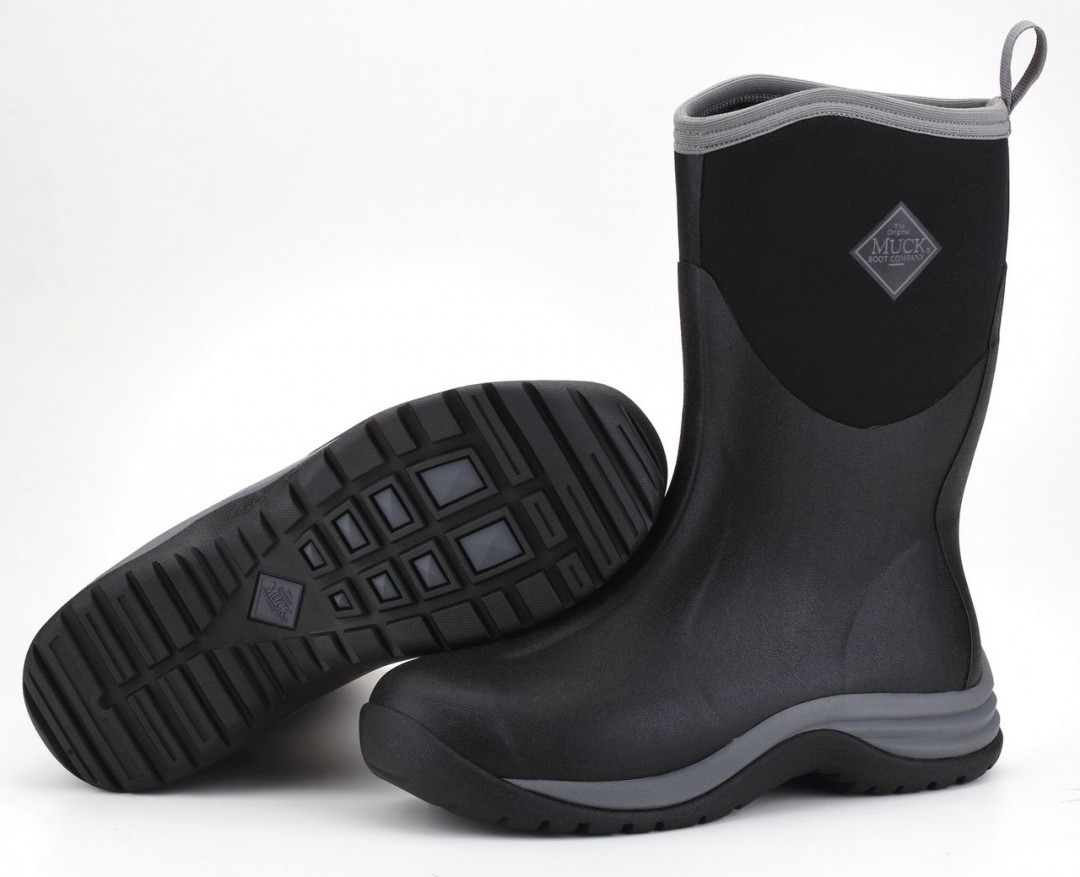
If you know horses, you'll know what "muck" means. These boots are warm and tough. Credit: Muck Boots

If you know horses, you’ll know what “muck” means. These boots are warm and tough.
Credit: Muck Boots

My wife and I just returned from a pleasant hike in the snow, among cliffs and monoliths; sagebrush and Ponderosa pine. She wore sturdy hiking boots and gaiters. I wore the Muck Boot Arctic Commuter, a high-rise (mid-calf) fleece-lined neoprene boot. They were an ideal choice.

For a hike on snow-covered, uneven, though generally flat terrain, I’d typically wear Sorels or Kamiks—sturdy felt-lined winter boots combining warmth, good traction and protection from a foot of snow. They’ve been my go-to’s for snow shoes.

Muck is a good alternative. I’ve used them to drive to ski areas, especially when snow is really deep in the lot. They accompanied us on a recent ski/road trip to Colorado. In Glenwood Springs, a lovely town not far from Aspen, the town fathers and mothers are snow clearance challenged. Walking from the hotel to one of the multiple excellent eateries requires navigating frozen snow and patches of ice. Muck handles these conditions well. A slightly longer walk to Glenwood’s public hot springs (about a football field in length) was more complicated with a variety of frozen obstacles. Muck was warm, comfortable, and gripped effectively.

The company makes a variety of boot designs for men, women and kids. The Arctic Commuter is listed at $150, although some Web-based “sole searching” may deliver them for less.

I’ve worn them with and without socks. Comfort reigns. The website claims comfort to -40F. I have no intention of testing that one, but I do look forward to using them during mud season. Not a chance water will get inside, and they’ll wash clean with the garden hose. Their material and construction make them the Toyota 4Runner of footwear. They look good and will get anyone wearing them through the elements in comfort and basic style.

This Week In SeniorsSkiing.com (Feb. 12)

At Last, It’s Cold In The East, Poll Results, Resort Reviews and A Ski Hero Profile.

ASunnyRainier__

All those hopeful prayers and skyward glances are paying off for the snow businesses on the eastern side of the North America. An arctic air mass followed this week’s innocuous snowstorm, and, for snowmaking from the mid-Atlantic to Maine and Quebec, it’s game on. Contrast the feeling of relief if not ebullience to last week’s dour ski condition report from Bromley and Mad River Glen. And just in time for school vacation week. Single digits upcountry this weekend. Whew.

In fact, we took advantage of the change in weather to sneak away to North Conway, where we are writing this by the side of a roaring fire at the Cranmore Inn.

We have the results of our latest reader poll that asked about our readers’ stretching habits. The results are a bit surprising—perhaps you’d like to comment or interpret. Stimulated by these polls results, in a few weeks we will have a report on stretching and senior skiers; apparently, some folks need some motivation out there. Stay tuned.

San Francisco correspondent Rose Marie Cleese reports on what we feel is a very important event for senior skiers. It’s a Master’s Clinic, held at Dodge Ridge, CA, where seniors get come intimate coaching on their technique, all intended to reduce strain on joints and muscles and to shift the hard work to the skis. We feel this is the kind of event ski areas can hold for their senior clientele. It pays for itself, and everyone benefits. Expect to hear more about low-cost, no-cost senior events on these pages real soon.

We have two resort reviews this week. Crystal Mountain near Seattle boasts of being the largest resort in Washington. From the pics that John Nelson, our new Pacific Northwest-based contributor submitted, it certainly has the best views of Mt. Rainier.   SeniorsSkiing.com’s staff also visited Appleton Farms in Ipswich, MA, describing the magnificent, historic property, ideal for cross-country skiing and snowshoeing. While not a resort, per se, it is a snow enthusiast’s perfect retreat from the humdrum.

Finally, we are honored to have Joan Wallen, president of the North American Snow Journalists Association, Eastern Region, send us the story of New Hampshire’s 90-year-old Bebe Wood who started skiing in the 30s, ski bummed out West in the 50s and has been involved with the sport at all levels to this day. SeniorsSkiing.com loves to salute ski heroes like Bebe and if know of any others, please let us know.

Preview

Next week, we have more Resort Reviews, a look back on America’s biggest cross-country race, held on Washington’s Birthday in Vermont. Alas, it is no more, but some say it put Nordic skiing into play on this side of the Atlantic.

Please respond to our new poll question in the blue box on the right. We want to understand how optimize the FORUM for our readers; it’s the best way for our readers to talk to each other.

Also, we know that our readers are seriously interested in discounts. We are working very hard to bring you some very cool deals. Watch this space.

Tell your friends about SeniorsSkiing.com; there are more of us every day and we aren’t going away.


Poll Results: Stretching 60; Not Stretching 40

Most Do, Many Don’t.

Here are the results of our latest poll.  We are curious about why people do and don’t.  Please let us know in the “Comments” section below.  And, we are researching an article on stretching for an upcoming issue.  There are some exercise and physical therapists who say it’s essential, and some who say maybe not so much. We shall see.

Thanks for responding.  Let us know what you think.

Poll

SeniorsSkiing Guide: It’s Hard To Beat Crystal Mountain On A Sunny Day

Pacific Northwest Resort Is Largest Plus Reasonably Priced For 70+ Seniors.

ASunnyRainier__

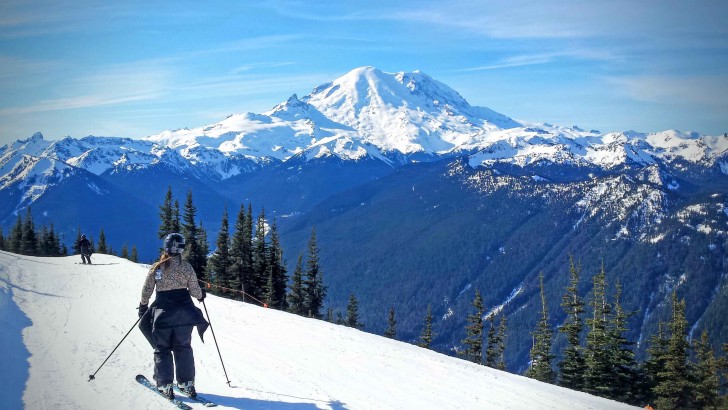
Pausing to take in a stunning view of Mt. Rainier from trailside at Crystal Mt. WA. Credit: John Nelson

When I stepped off the resort’s gondola, I was treated to a stunning view of 14,410-foot Mount Rainier just 12 miles to the south. Not a bad way to begin a spring-like February day at Washington’s largest ski area.

I clicked in and started with some of Crystal’s cruisers. Many of these intermediate runs funnel into a high basin known as Green Valley, served by its own high-speed quad. The skiing was fast and fun.

Besides cruisers, Crystal has some truly thrilling drops on Northway and Chair 6 in the Campbell Basin. These two double chairs deliver skiers into the best of Crystal Mountain’s cliff-strewn double-diamond runs.

Skiers cruise down the intermediate run Lucky Shot at Crystal Mountain. Credit: John Nelson

Skiers cruise down the intermediate run Lucky Shot at Crystal Mountain.
Credit: John Nelson

Snow, terrain and more

  • Location: Crystal is situated off of State Highway 410, 39 miles from Enumclaw, Wash., a small town at the base of the Cascade foothills. The ski area is about a two-hour drive from downtown Seattle.
  • Snowfall: Nearly 500 inches a year fall here annually. Snowmaking was upgraded on the lower mountain following the drought year of 2015, and additional snowmaking improvements are planned for the mid-mountain.
  • Terrain: About 2,600 acres are spread over several lift-served basins. About 35 percent of the terrain is rated advanced; 65 percent is beginner and intermediate.
  • Vertical: Lift-served vertical is 2,602 feet (the base is 4,400 feet; chairlift access goes to 7,002 feet) but those willing to do a little hiking can stretch the vertical to more than 3,000 feet.
  • Lifts: One eight-passenger gondola, two high-speed detachable six-passenger lifts, two high speed quads, one fixed-grip quad, two triples, two doubles and one children’s surface lift.
  • Views: On clear days, Mount Rainier dominates the skyline, but you’ll see much more. The Olympic Mountains are visible to the west, as are most major peaks in the Cascade Range from the Canadian border to Oregon.

Lot to lift access

  • Crystal has five parking lots. The lower lots are served by free shuttles to ferry skiers to the base area. In addition, drivers can drop off equipment and passengers next to the ticket kiosk before parking.
  • Private bus and van services operate from Bellevue, Seattle and Tacoma bringing skiers to the mountain. Information is here.
  • Several private lodging options are available on the mountain. Three lodges and two condominiums operate at the base area; another lodge is about 15 minutes away on Highway 410.

Culture

  • Apres Ski: Washington’s best après ski bar, the cozy Snorting Elk, is located in the old-school Alpine Lodge just across a wooden bridge next to the top parking lot. You’ll find a well-oiled group of hard-core skiers swapping tall tales here at all hours.
  • Dining: On the mountain, there are two day lodges, one in base area, the other in Campbell Basin. The upscale Summit House restaurant at the top of the gondola offers sit-down dining with views of Mount Rainier.
  • Vibe: Because it’s Washington’s largest ski area, Crystal has a “resort-y” feel. While a great many hard-core skiers of all income levels come here, you’ll also run into some very rich folks.

Bottom line

  • Tickets are $72 for an adult all-day pass; $48 for 70 and older. When available, seniors 70-plus can get Five-Pack lift tickets for $215. Mid-week season passes for 70-plus are from $450 to $700, depending on dates.
  • Highest-elevation, biggest ski area in Washington.
  • Can be crowded on weekends; weekdays are empty.

Trail Map

Webcam

Skiers take in the view of Mount Rainier from the Summit House area of Crystal Mountain. Credit: John Nelson

Skiers take in the view of Mount Rainier from the Summit House area of Crystal Mountain.
Credit: John Nelson


SeniorsSkiing Guide: History All Around At Appleton Farms

Boston’s North Shore Has A Peaceful Place For Senior Nordic Skiing Or Snowshoeing.

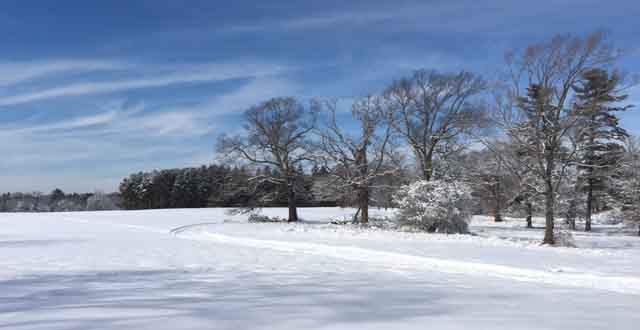
Skiing in open fields under a bluebird sky at Appleton Farms, Ipswich, MA is about as good as it gets. Credit: SeniorsSkiing

Skiing in open fields under a bluebird sky at Appleton Farms, Ipswich, MA is about as good as it gets.
Credit: SeniorsSkiing

We cross the road and climb over the stone wall into a grove of trees, walking a few yards to a trail. Stepping into our skis, we take a look around; we are in the woods, frosty air, untracked trail ahead. No one around but us. Off we go to our favorite loop around The Farms, a very special place to ski, snowshoe or walk.

History and Setting

In 1638, Charles I gave Samuel Appleton a grant of land on Boston’s North Shore. Since then, Appleton Farms has continuously been a bona fide, 1,000-acre farm, first run by the Appleton family and now under the care of the Trustees of Reservations, a land conservancy in Massachusetts. Appleton straddles the border between Ipswich and Hamilton, MA., in the heart of equestrian estate country. When it snows, the open fields and pastures and windy trails welcome snow sports enthusiasts. For cross-country skiers and snowshoers, Appleton is a trip through beautiful vistas and historical artifacts of a 377-year-old property what has remained more or less intact since colonial days.

Terrain

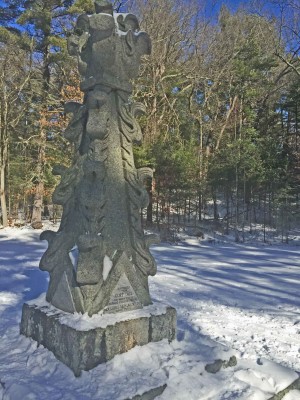
A pinnacle from Gore Hall, former library at Harvard. The Appleton family had close ties. Credit: SeniorsSkiing

A pinnacle from Gore Hall, former library at Harvard. The Appleton family had close ties.
Credit: SeniorsSkiing

There are two sections to the farms: The working farm itself with big fields and tractor roads, and the Grass Rides, a spoke-and-hub networks of trails arranged around one of the four pinnacles from Gore Hall, the former library at Harvard University.  The three others are scattered in strategic points around the property. It’s fun finding them.

Generations of Appletons created a country estate with long allées—parallel rows of linden trees—that were used for carriage and horse riding. They make perfect ski trails. On the farm side is the Great Pasture, a 133-acre field that is reportedly the largest piece of open land left in Massachusetts, historic farm buildings and the restored main house, plus a dairy that sells milk and cheese from the farm’s herd and much more. Skiing through these big, open fields on a bluebird day is what keeps bringing people back to the sport; it’s quite a restorative experience. The Grass Rides network wanders through marsh and hillside settings where birds and wildlife abound.

This year, North Shore Nordic Association, a new community group, is using a snowmobile groomer to create trail loops around the property. A groomed track really helps with traction and glide, taking away need to break trail.

Why Seniors?

Seniors will find the relatively flat terrain at the Farms easy to ski or snowshoe. On a weekday, you will find the trails to yourself. Indulge your photography hobby or bring a lunch in your backpack and enjoy the quiet. If you’d like slightly more challenging terrain, the Grass Rides has some ups and downs, but nothing that is too aggressive. The Farms restricts visits to humans only, while the Grass Rides is a popular place for dog walking, even in the winter. Doggies tend to disrupt ski tracks, so get to the Grass Rides early if you go. Access to the trails is easy. Just park and put on your skis, no walking. Visit if you’re passing through, in town for a wedding, heading to or from ski areas in New Hampshire or Maine or just looking for something different.

Appleton's famous Allees, formerly carriage paths, make perfect ski trails. Credit: SeniorsSkiing

Appleton’s famous Allees, formerly carriage paths, make perfect ski trails.
Credit: SeniorsSkiing

Bottom Line:

If you are member of the Trustees of Reservations, access to Appleton’s is free. Non-members pay $5 per car at the solar powered kiosks in the parking areas.

If you are coming from away, you can find lodging in Ipswich and Hamilton where there are archetypical country inns. The Trustees also maintain an inn at the Crane Estate, down by the beach. Skiing on the beach in the winter is another story for another time.

Trail Map


B_Sun Valley 1950

Bebe Wood: Approaching 90 And Going Strong

Skiing Since The 30s, She Has Seen Lots Of Changes.

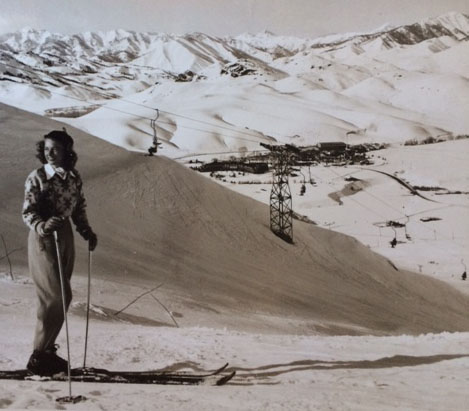
In 1949, 23 year old Bebe Wood left her job at Dartmouth College and traveled to Idaho seeking adventure as a ski bum in Sun Valley. By then, she had already been skiing for about 10 years!  Thus began her long association with the ski industry. Today, approaching her 90th birthday, she remains actively involved as a Host at Ragged Mountain in New Hampshire.

As a youngster in Marblehead, MA, she and her siblings taught themselves how to ski at a nearby golf course. By the late 1930’s her sister, five years her senior, had a driver’s license so they started going up to Cranmore in North Conway, NH. It was there that she became immersed in the sport.

Bebe Wood was an original ski bum in Sun Valley in 1950. Credit: Bebe Wood

Bebe Wood was an original ski bum in Sun Valley in 1949-50.
Credit: Bebe Wood

Following graduation from college, she went to work at Dartmouth as medical secretary. She and her friend Jean Adams joined the Dartmouth Outing Club which was an opportunity for travel around Northern New Hampshire and Vermont—Stowe, Cranmore and Suicide Six. They also skied locally at the Oak Hill rope tow in Hanover. “The DOC was a wonderful experience”, says Bebe. “We all loved to ski, yodel and sing. We had a great time.”

In the winter of 1949-50 Bebe and Jean Adams headed west to be ski bums in Sun Valley. They worked as waitresses and had plenty of time for skiing during the day. Bebe also had time to be a Sun Valley model for a Life Magazine shoot there and appeared in a February 1950 issue. “We had the best time there,” Bebe says. “Dartmouth was connected to Sun Valley back then and we were able to ski with some top notch eastern skiers.”

During the following ten years or so there was not much skiing in her life as she and her new husband were starting a family and moving around. But in 1963 they moved to Bristol, NH. And that move heralded her return to skiing in a big way.

In 1964 she began her long tenure at Ragged Mountain where she directed the junior program for school kids. She continued in this role until the mid 1980s when Ragged closed. During the next few years, Bebe taught at nearby King Ridge in New London, NH where she was part of the ski school until Ragged reopened in 1989.

All along the way Bebe found time to become PSIA certified, a first aid instructor, make two trips to the Alps skiing in Switzerland, Austria an Italy and a return trip to Sun Valley.

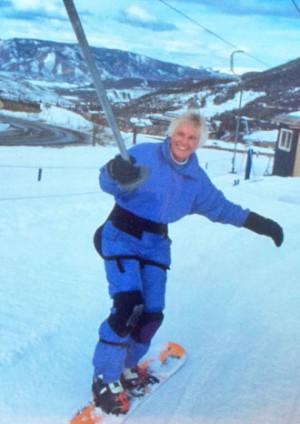
Bebe learned snowboarding at 70. Credit: Bebe Wood

Bebe learned snowboarding at 70.
Credit: Bebe Wood

Bebe retired from instructing in 2007 but continued as head the Courtesy Patrol until it was phased out a few years ago. Not wanting to be idle, however, she remains active at the resort today as a mountain host. You can find her in the base lodge greeting skiers and boarders, chatting with folks as come in for a break, checking with patrol on the latest conditions and dispensing all kinds of local knowledge and information about the resort and the general area.

Bebe stopped skiing five years ago at the age of 85. “Not because I can’t ski,” she says, “but because I’m now too afraid of getting hurt. I have no one to take care of me if I were to get injured. I do miss it, though.”

Bebe sees the evolution of equipment and technique as a positive thing that has made the sport much easier to learn and continue. “Sometimes the technical details get confusing but if the continued development of new equipment and technique makes the sport easier that’s good for its growth,” she said. When asked about other changes she’s seen, she said that in the old days skiers were just one big happy family. They sat around the fireplaces in old ski lodges and never complained about rope tows that wore out ski gloves or conditions that were less than ideal. Now she says, skiers want everything to be perfect. And there are so many people you have to be a little more careful.

According to Bebe, “It’s still a wonderful sport. It should be available in all schools free of charge so all kids have a chance to experience it.” She thinks there are more seniors skiing now than ever before. “New and better equipment keeps people going longer,” she says, and hopes that “more people being on the hill does not discourage older skiers.” She knows some seniors in their late 70s and early 80s who still ski, including some 10th Mountain veterans. “But the group is dwindling.”

What keeps her coming back? Why does she continue to work even though she no longer gets out on the hill? Love of the outdoors, a desire to keep up with the sport and the people in it, the opportunity to meet new people with similar passions are just a few of the reasons. “You don’t have to be young to enjoy it. It brings family and friends together.” Of teaching she says, “I can still look at skiers and tell what they’re doing wrong. I can tell who has had lessons and who hasn’t.”

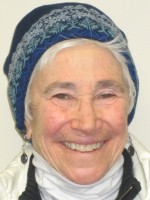
Bebe Wood today.

Bebe Wood today. Tuckerman’s Ravine was a favorite spot. Credit: Joan Wallen

Approaching her 90 th birthday in a few months and summing up her lifetime involvement in a sport she loves, Bebe states, “I wouldn’t have changed a thing.” Including, or perhaps especially, her ski bumming year in Sun Valley. “If young people have a chance to be a ski bum, they should go for it. It’s an experience to always remember.”

Master’s Clinic: Fabulous Idea For Senior Skiers

The Secret To Breaking Decades-old Bad Habits: Attending A Master’s Clinic At Dodge Ridge.

Jon Mahanna, creator of the Master’s Clinics, has class members follow his every move down the slopes. Credit: Dodge Ridge

Jon Mahanna, creator of the Master’s Clinics, has class members follow his every move down the slopes.
Credit: Dodge Ridge

I hadn’t skied at Dodge Ridge, the closest ski area to the San Francisco Bay Area, in years. But as soon as I arrived at the base area a couple of Thursdays ago for one of its Master’s Clinics, a four-hour-long freeski instructional program designed for intermediate and advanced skiers over 50 years of age, the memories flooded back. It was the first place I had ever put skis to slopes back in the ’50s, unwittingly grabbing on to a rope tow and finding my 12-year-old self being flung into the nearest snowbank. In the ’60s, it was the area my friends and I headed to when classes were over for the day at San Jose State College, taking a hit of blackberry brandy from our bota bags each time we headed down the rudimentarily “groomed” slopes on our brakeless wooden skis with bear-trap bindings and with long leather straps bound around our leather boots.

Now a saner, much older me was back to do things right! My friends and I were going to get this ski season headed in the right direction: by letting a seniors-certified PSIA instructor spend a few hours with us, helping us to break bad habits we’d acquired over the years and showing us how to adapt our skiing styles to today’s more-efficient shaped skis.

We met up with our group of nine other fellow seniors, ranging in age from 58 to 79, at the base promptly at 10 AM and headed up the mountain to do a ski-off for our two instructors: Bryan Jarratt, 61, an Aussie who’s been with the resort for 15 years, and Jenny Matkin, 64, who has deep roots in the region and has been teaching for decades. As we all did our “exhibition” run down the hill, I could instantly tell when my fellow participants had learned to ski. Yep, those two guys standing tall and stately over their skis with their ankles seemingly tied together were from the Arlberg “reverse-shoulder” method days. And that guy making the quick turns probably learned during the “short skis” phase. Our instructors split us into two groups, those itching for some “black diamond, off-piste” skiing and we more-timid ones who still had some cobwebs to dust off our skis before going full-out.

After three-and-a-half hours of skiing with frequent instructional breaks, we learned at least four or five specific things from Jenny that we could take away and work on the rest of the season in order to ski with much more ease and efficiency and not be exhausted after a full day of skiing.

DodgeRidge3A

Dodge Ridge’s Jon Mahanna saw the need to help senior skiers adapt to the new, shaped skis. “Let the skis do the work,” he says. Courtesy of Jon Mahanna

Jon Mahanna, 68, explains the strategy behind the Master’s Clinics best. He, along with Dodge Ridge’s current owners, Frank and Sally Helm, came up with the concept three years ago. Jon had been Dodge Ridge’s ski school director for 15 years in the ’80s and ’90s, and after serving in various capacities at ski areas in Colorado, New Mexico, and back in California, the “retired” Mahanna saw a need for older skiers, Level 5 and higher, to improve their skiing technique, especially with the advent of all the new equipment. Says Mahanna, “I saw that a lot of older skiers, especially those returning to the sport, needed to work on creating a balanced, ‘stacked’ stance so that there’s the least amount of resistance on their skeletal frame and muscle groups. This open, athletic stance gives them better lateral stability and is easier on their knees and backs. Balance is the key to everything.”

The instruction focuses on medium-radius turns on groomed slopes. “The modern equipment out there lets you stand there and go for the ride while you let the skis do the work,” avows Mahanna. “The idea is to have fun and to be able to ski all day, where your knees and muscles don’t give out on you.”

When we all met up at the lodge afterwards for lunch (which is included in the clinic package), the participants, to a person, were Master’s Clinic converts, and most were planning to sign up for more. One of them, Ralph Purdy, 75, happened to be the son of Dodge Ridge founder Earl Purdy, who opened the resort back in 1950. Said Purdy, “This is the first lesson I’ve had in many years. I thought that there’s gotta be something I’m missing. I saw this as a drill, and today I learned about unweighting and keeping my legs apart a little.” Another clinic attendee, Mark Sahines, 58, skied a lot in his 20s and 30s, then kids and work put skiing on a back burner. “I want to get to an advanced level, and my goal is to be skiing at 75 or 80. A lot of the guys older than me in today’s class ski a lot better than I do. Today I learned to do a hockey stop, something I could never do before.” My friends, Jim, 65, and Kathy, 70, Clarke, have a cabin near Dodge and are season ticket holders. They’ll definitely be back for more Master’s Clinics. Kathy called her teacher “one of the best” and appreciated Jenny’s focus on older skiers and the different techniques required with the new equipment. Jim shared that “every year I fret about being ‘ready’ to hit the slopes. Will my legs hold up? Will my funky right knee start giving me problems? Jenny, our wonderful instructor, brought my focus back to the skills and techniques needed to get the most out of my fancy, red shaped skis. By the end of our class, I was able to remember and use several of Jenny’s methods for getting the most out of my skis. In the end, there’s no reason I can’t learn this stuff if I keep a positive attitude, pay attention, and practice, practice, practice.”

To learn more about Dodge Ridge’s Master’s Clinic program or sign up for one of its Thursday or Sunday clinics, click here.  Tell them Rose Marie sent you! And if you love uncrowded slopes, sign up for a Thursday clinic.

[Editor Note:  SeniorsSkiing.com salutes Dodge Ridge and Jon Mahanna for creating a program focused on helping seniors optimize their technique and continuing to enjoy skiing.  If you, our readers, think this is a good idea, please forward a link with this story to your local ski area to show them how easy it is to support seniors skiing.  Or, if you’re in the Bay Area, enroll in Dodge Ridge’s Masters’s Clinic. We hope to see the idea of focused events for seniors—especially mid-week— growing in the ski resort industry.]

This Week In SeniorsSkiing.com (Feb. 5)

Welcome New Subscribers, A Busy Week For SeniorsSkiing.

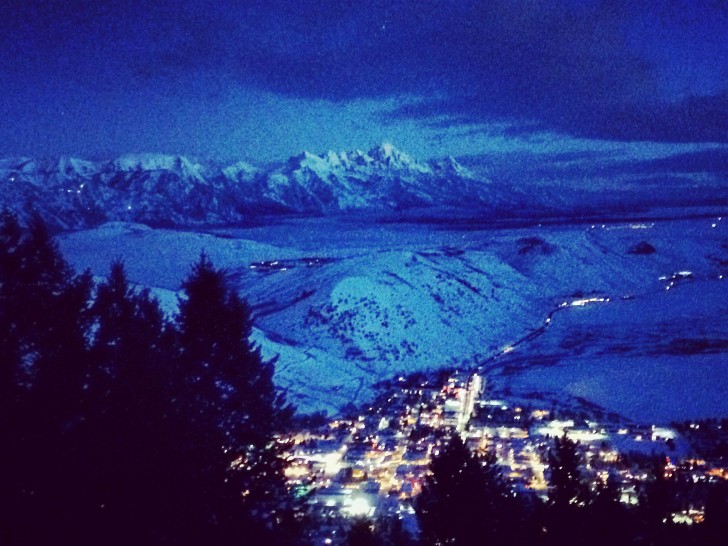
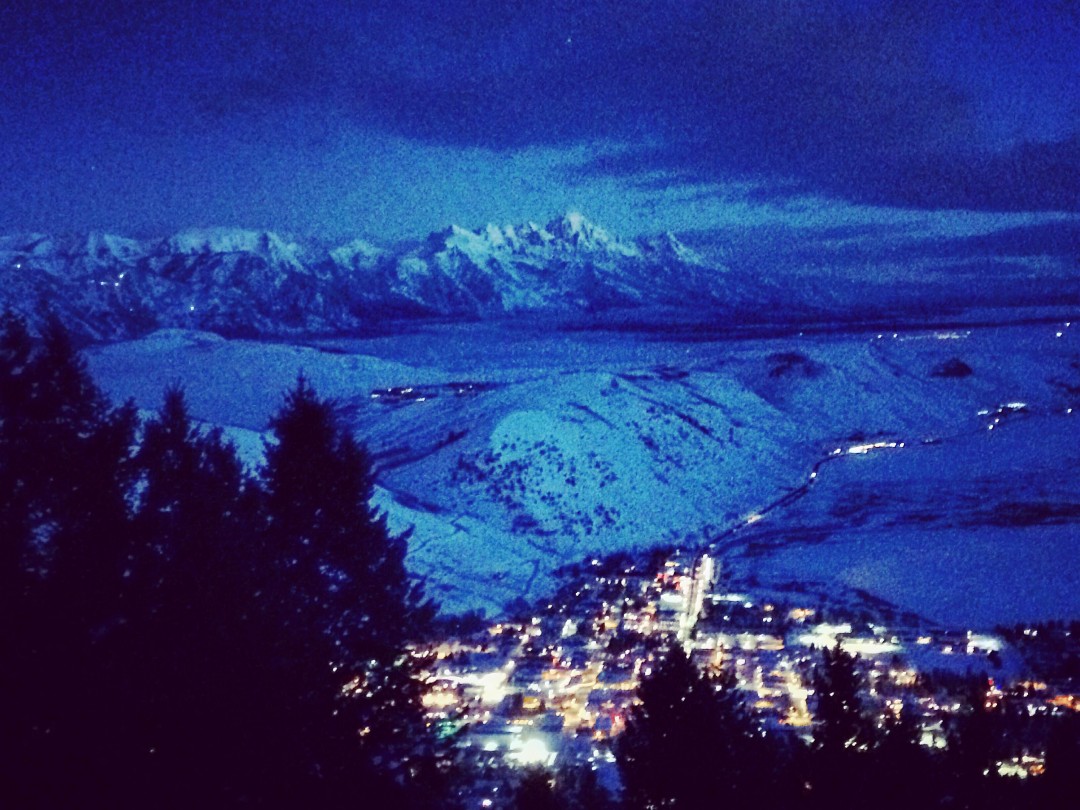
From the top of Snow King, looking at the Grand Teton and Jackson Hole. Credit: Patrick Kearney

From the top of Snow King, looking at the Grand Teton and Jackson Hole.
Credit: Patrick Kearney

An article in the New York Times travel section last weekend has brought many new readers to our growing online magazine. We are really glad you’ve joined us.  Please connect with other readers through the FORUM (see menu pick in blue border, upper right), comment on our stories and let us know what you think.  Again, our mission is to help influence the snow sports industry to see the value of its most loyal, long-time and engaged participants. Hope you like.

This week, we feature Ski Ballet, a video clip of unknown provenance from the 50s (we think) with carefully orchestrated, synchronized skiing. It’s high camp and hilarious.  Try those moves with your ski club.  If you know where this comes from, please let us know.  There might be more.

The bad news this week is that the on-again, off-again snow situation in the east is off again.  Here’s a downbeat ski report from Mad River Glen and Bromley about closing down until this week.  The good news is that it is snowing again—in fact right now—in New England,  so we are on-again.

Salt Lake City Correspondent Harriet Wallis gives us a profile of Deer Valley, the “gold standard” of ski resorts, committed to top notch service.  Her goal in this story was to provide seniors with an “insider’s training” guide that will help newcomers enjoy the resort.

Co-publisher Mike Maginn revisits Cranmore Mt. in North Conway, NH, to show you a snapshot of that venerable mountain. Cranmore is a two-and-a-half hour drive from the Boston area, a perfect, low-key resort for seniors with just enough terrain to keep things interesting and really wonderful prices.  For seniors in the local area, it is a daily hang out.

Correspondent Roger Lohr from XCResorts.com highlights his top 10 Cross Country resorts for romantic Valentine get-aways.  And Co-Publisher Jon Weisberg shows us Valentine gift for snow lovers that might impress your honey.  Really, Jon, long underwear as a Valentine gift?

Correspondent Pat McCloskey reviews some really high tech sunglasses and goggles from Red Bull Racing.  We’ve seen a lot of high tech eye wear lately, and we’re wondering what’s the big fascination with carbon fiber and exotic materials for sunglasses. Anyway, they look cool.

Finally, we have a very neat picture from the top of Jackson Hole at dawn from contributor Patrick Kearney.  We are thinking of starting a photo gallery of interesting shots like this one in the near future. What do you think?  Good idea?

Preview Of Next Week

We will be featuring a story from San Francisco-based Correspondent Rose Marie Cleese about the Master Clinic she attended at Dodge Ridge.  We also should be hearing from a Senior Day event at Jack Frost ski area in PA.  We believe that these senior-focused activities are really important events for snow sport venues to hold.

We will also report on the results of our recent Subscriber Survey 2016.  Thanks to all who participated.  The response rate was way over the average for an online survey.  It’s great have that support. The winners of the prizes for participating have been notified and the swag is in the mail.

More pictures, more fun, and hopefully, more comments and input from you.  Please use the FORUM to communicate with your fellow readers, get together, enjoy winter.

Remember:  There are more of us every day, and we’re not going away.


Ski Ballet: Polka Anyone?

Kinda Catchy.

Anyone know where this was filmed and when?