Learn About Layering: It Will Be Cold

Some Lessons About How To Dress For Frigid.

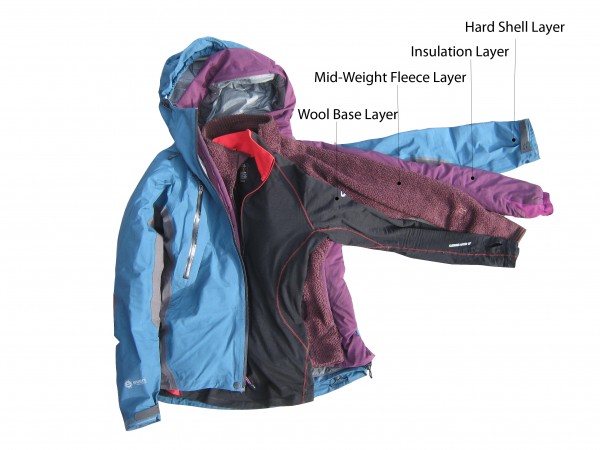
Four layer system for cold weather. Of course, there are pants. Credit: Outdoor Gear Lab

Four layer system for cold weather. Of course, there are pants.
Credit: Outdoor Gear Lab

Last February, we spent a wonderful long weekend in Quebec, visiting the lovely city’s Winter Carnavale and skiing at some fabulous ski resorts (Mte. Ste. Anne, Le Massif de Charlevoix) and dining in a little village of Baie-Saint-Paul.  Delightful.  If you  ever want a Euro-type ski experience close to home, Quebec is the place.  The only cloud was that on those days, it was thrillingly cold, ranging from around at least -20 F up to 0 F.  So we layered up.  We noticed that while we initially kept more or less warm, we soon found ourselves working up a mighty sweat under all those layers.  We had clearly over-dressed, and we paid for it by becoming uncomfortably chilly after a few runs.

So, we decided to learn about layering.  Sure, we know about “cotton kills” and “wet wool is warm” (thank you, Navy basic training), but we weren’t up on the newest thinking.  We consulted the following sources, and, after reviewing the advice from experts, realized we had made some mistakes in our enthusiasm for warmth.

How layering is supposed to work. Credit: BassMegeve

How layering is supposed to work.
Credit: BassMegeve

As you are well aware, it’s all about layers.  Consider this:

Base Layer–This is what used to be called long underwear.  The new performance materials are designed to manage your sweat level, wicking it away from your skin. Thin wool underwear is still a classic.  We all understand that the days of waffle weave are gone.  Check.

Mid Layer–Over your underwear, you will place a classic fleece, a thin wool sweater or one of those puffy, lightweight, squishable puffy jackets, depending on how cold it is and your activity.  The point here is insulation, that is, creating an air space that will create a barrier to cold air.

Insulating Layer–You thought the Mid Layer was insulating, you say?  Yes, if it is moderately cold.  When you get to cold, cold, you are going to need some more.  This could be a light-weight jacket (the squishy kind mentioned above), a fleece jacket or a perhaps a thin vest, depending.

Outer Shell–A “hard” Outer Shell is your wet protection.  A water-resistant top, like Gore-Tex, sheds moisture and keeps you dry while allowing the moisture inside to escape.  A “soft” Outer Shell is basically a wind jacket that can also serve as a rain/snow buffer in more moderate temperatures.

Head Gear and Accessories–You have to let your head breath. Most of your body temperature will exit through your head, so you have to let some of it out.  We all seem to get by with just wearing a helmet in moderate condictions,  When it goes really cold, a thin nylon skull cap underneath your helmet might make a lot of sense. You will need a neck-up gaiter, face mask or a Balacalva to protect your throat and face.

That said, where did we go wrong in our frosty day in Quebec?

  1. We had on too any layers.  Base, double insulating layers, vest, “hard” outer shell with down liner, which was yet another layer.
  2. We had too much head gear on.  Helmet, fleece skull cap, Balaclava, neck-up gaiter, scarf.
  3. We didn’t take the time to change or have dry replacement clothes to unlayer.

All lessons learned.  Ever happen to you?

Here are some links to expert advice about layering.

REI Expert Advice On Layering

Outdoor Gear Lab Layering How-Tos

EVO Dressing For Backcountry

Sierra Trading Post Layering Guide

Here’s a video from Sierra Trading Post you might find interesting.
A Skier’s Journey: Pushing The Envelope

A Senior Skier Reflects On The Thinking Part of The Sport.

Since I was five I’ve been on a voyage of self discovery through skiing that started at the ski areas of the Laurentian Mountains of Quebec, Canada and grew to be an integral part of my life the older I became. Initially learning to ski on riverbank in Winnipeg wasn’t the most auspicious start to any skier’s career but the passion for the sport of those around me left an indelible impression. Certainly I picked this up from my father, a local and eventually nationally recognised builder of the sport in Canada. It probably meant that skiing and not hockey would become the central sport of my life but I was under no pressure to do this. Instead I was attracted for its own merits to this activity that rewarded individual effort yet was always way more fun in the company of others. And then there was the connection with nature and the fact that skill wasn’t just about the size or sex of the participant. It appealed to me on an intellectual level too. The best skiers always seemed to me to be aware and afterwards reflective of what they were trying to accomplish yet in the moment of performance instinctively connected to the snow. They were and are my inspiration.

As I gained more experience it became obvious to me that I would want to pass this joy on to others so at the age of 14 I became an instructor. I also realised that one of the best ways to understand the sport that was rewarding in so many ways was to never stop trying to learn yourself. In 1986 a close friend invited me to enter the sport from a different angle and coach. Along the way I made a career in the retail sporting goods field and still strive to learn everything I can about the impact of equipment on performance as a professional boot fitter, technician and ski shop manager since 1974. All of which led to jumping off points in my life which I was completely oblivious to at the time. It was never just the destination but the journey that with hind sight mattered most. Like having a great run where sometimes a moment of reflection at the end when you realise what you just accomplished. Now I’m not saying that skiing is somehow always a metaphor for life but it was for me.

So here I am 55 years later from that little boy in Montreal and still learning and pushing the envelope. It’s a fascinating period of time in the evolution of the sport for any of us that have experienced the full range of changes in the last 60 years. Thanks to this website for allowing me to share some of the ride.

Contributor Glenn Allen is an “employee athlete” at Sport Chek, Canada’s largest retail chain of sports equipment.  Thanks for letting us use the video clip.

Winter 2015-16 Forecast Update: El Nino Rises

This Just In: The Sea Surface Temperature Off Ecuador Exceeds Records.

In its August update, NOAA’s National Weather Service reports this year’s El Nino is roaring along to record highs. NWS predicts that sea surface temperatures in the eastern Pacific will peak in the late fall/early winter near or exceeding 2 degrees C/ 3.2 degrees F above normal.  “If this forecast comes true, it will place the 2015 event among the strongest El Niños in the (admittedly short) 1950-2015 historical record.

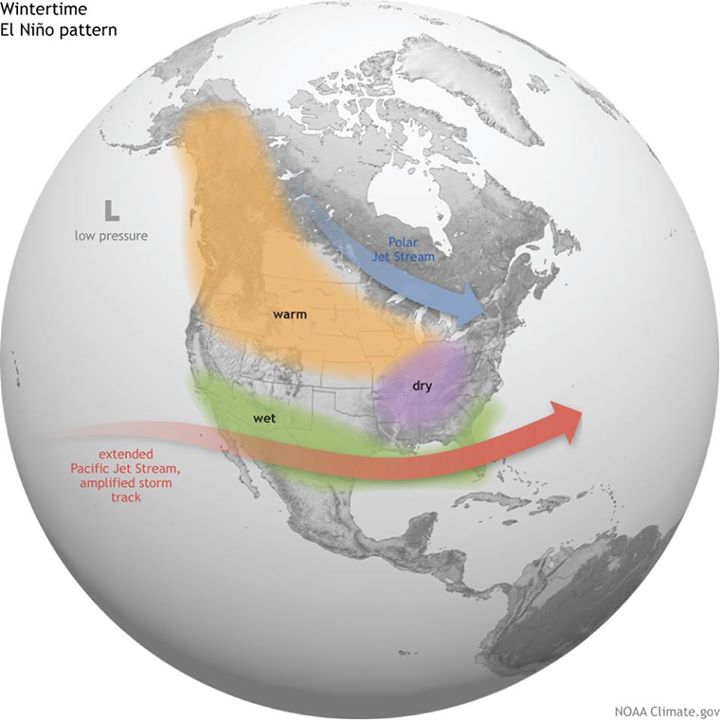
What this means is that forecasters can be assured the odds are growing that El Nino will play a role in various parts of the US as far as winter climate is concerned. As we reported earlier, a strong El Nino event brings wet and cool winter from the West Coast across the lower half of the US,  drier and warmer in the Northern Rockies, Ohio Valley, Great Lakes and Northeast.

Winter forecast 2015-16 shows how the jet stream funnels warm air across the southern US. Credit: NOAA/NWS

Winter forecast 2015-16 shows how the jet stream funnels warm air across the southern US.
Credit: NOAA/NWS

So, we will most likely have a very different winter than we had last year, especially in the northeast where the snow depth and temperature will not come close to the near-Armageddon experience of last season.

To brush up on El Nino meteorology basics, click here. 


More Hot Products From SLC’s Outdoor Retailers Show

Gee Whiz, Seniors, Here’s What’s Coming to a Store Near You!!

Shoes whose laces tighten without your needing to bend down to tie them.

Wireless heating insoles controlled with a smart phone app.

A small device that communicates your whereabouts and whether or not you need help when there’s no cell service— nywhere on the globe.

These are just a few of an endless array of products exhibited at the summer edition of the semi-annual Outdoor Retailers Show in Salt Lake City.

Every August, thousands of manufacturers and merchants—from mom and pop to big box—converge on the Salt Palace Convention Center in Salt Lake City to see and place orders for products to be sold a year from now. They return in January, this time focusing on winter sports.

Exhibitors are organized by product category. Paddle board, surf boards, water accessories, etc. in one section. Footwear, socks, foot beds, etc. in another. Yoga equipment here; camping gear there.

handsfree_heel_wheel

Treksta’s hands free lacing system works by sliding the heel back for lace up. Credit: Treksta

Back to those self tying shoes. You can look for them under the name Treksta Hands Free Shoes. It’s an athletic shoe (quite comfortable) with a foot-activated lacing system. Even the most active person will enjoy not having to bend down to tie or tighten shoe laces.

Digisole is a French import that will be in stores in a year. A programmable, heatable insole for ski and other cold weather boots, the insoles can reach 120 degrees F, a bit too toasty for most tootsies. The great thing about Digisoles is that they’re fully adjustable using an app on your Smartphone. Same phone app tells you how many steps that day, what the weather is, etc., etc. The soles are charged via USB connection, and, for most heat levels and in most conditions, will keep your feet comfy for 5-8 hours. Can’t wait to try it on the hill.

SPOT Gen3 will find you almost anywhere on the globe. Credit: SPOT GlobalStar

SPOT Gen3 will find you almost anywhere on the globe.
Credit: SPOT GlobalStar

Spot is a reasonably priced, pocket-sized, personal tracking device that, with the push of a button, lets family and friends know you’re ok or sends emergency responders your GPS location. It’s all about providing you and loved ones peace of mind when you’re out of cell range. Using satellite technology, it works from land, air and sea, anywhere on the globe. The unit, itself, can be purchased for about $75, and the satellite subscription is about $150 per year. A small price to pay for peace of mind. It’s a valuable and necessary addition to every pack or parka.

Outdoor Retailers Show: Harriet’s Three Hot Product Picks

It’s Like Christmas In August.

Outdoor Retailers Show in Salt Lake is the largest outdoor sports show of its kind. Credit: Harriet Wallis

Outdoor Retailers Show in Salt Lake is the largest outdoor sports show of its kind.
Credit: Harriet Wallis

The annual Outdoor Retailers Show is going on in Salt Lake City right now (August 5-8), and it showcases gear for all outdoor enthusiasts. It’s a sneak peek at brand new innovative products as well a upgrades in existing products.

The massive trade show has more than 1,500 exhibitors from around the world. Some exhibitors are well known outdoor recreation companies while others are little companies that strut a single creative product. The show brings buyers together with the sellers and it sets the stage for what you’ll soon see in your favorite recreation store.

I attended the show for SeniorsSkiing.com to search for products that would appeal to our readers. I walked miles to see the show takes up every square inch of the Salt Palace, the city’s convention center, and then it spills outside into three, block-long tents.

Here are my top picks:

Harriet's Pick #1: Addaday Rollers. Credit: Harriet Wallis

Harriet’s Pick #1: Addaday Rollers.
Credit: Harriet Wallis

Addaday rollers for soothing sore muscles. Apply a lot or a little pressure on what hurts. It’s less bulky than traditional foam rollers so you can pack it in your suitcase and take it with you on vacation. www.addaday.com

Harriet's Pick #2: Spriggs Wrist Wallet Credit: Harriet Wallis

Harriet’s Pick #2: Sprigs Wrist Wallet
Credit: Harriet Wallis

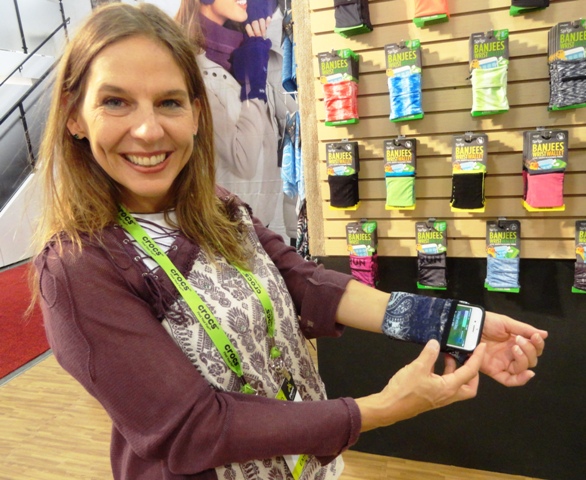
Sprigs wrist wallet is a comfy cuff that’s safer than your coat pocket. Each wrist wallet has a hidden pocket, a zipper pocket and room for your cell phone too. Stash all your important items — credit card, money, room key and phone – and you’ll always have them with you. Lightweight and lots of patterns. “I invented it in 2004 after my sister came back from a trip to Morocco and said there were lots of thieves,” said Sprigs owner Valerie Ciptak Vierra. www.sprigs.com  

Harriet's Pick #3: ExOfficio undwear Credit: Harriet Wallis

Harriet’s Pick #3: ExOfficio sports underwear
Credit: Harriet Wallis

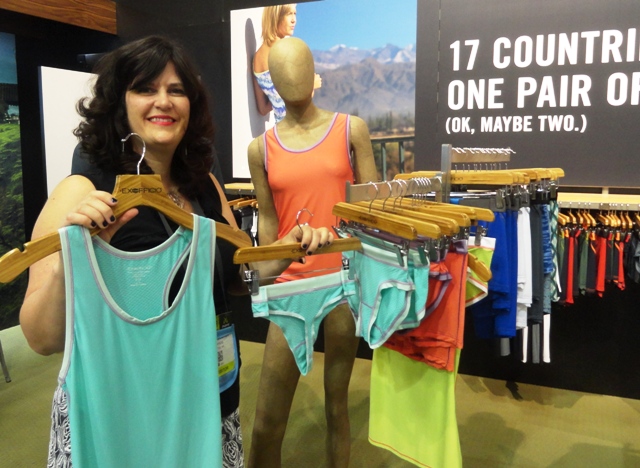
ExOfficio Give-N-Go Sports Mesh underwear. ExOfficio is already known for it’s lightweight, breathable, quick wicking and quick drying fabrics that are perfect for travel. It’s women’s underwear line now includes the extra-breathable diamond weave sports mesh fabric that will breathe beneath your base layer. Next year, look for the boy shorts style and the fancier lace collection. There are new styles for men too. www.exofficio.com.


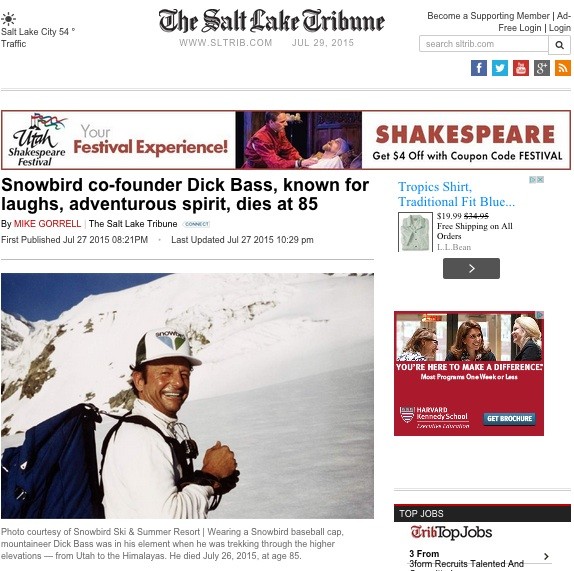
Dick Bass, Skiing Visionary, Dies At 85

Breaking News From The Salt Lake Tribune.  Click to read more.

SLT

Droning On: Striking Views Of Ski Country, Other Places

Drones Bring A Magnificent, Unexpected Perspective.

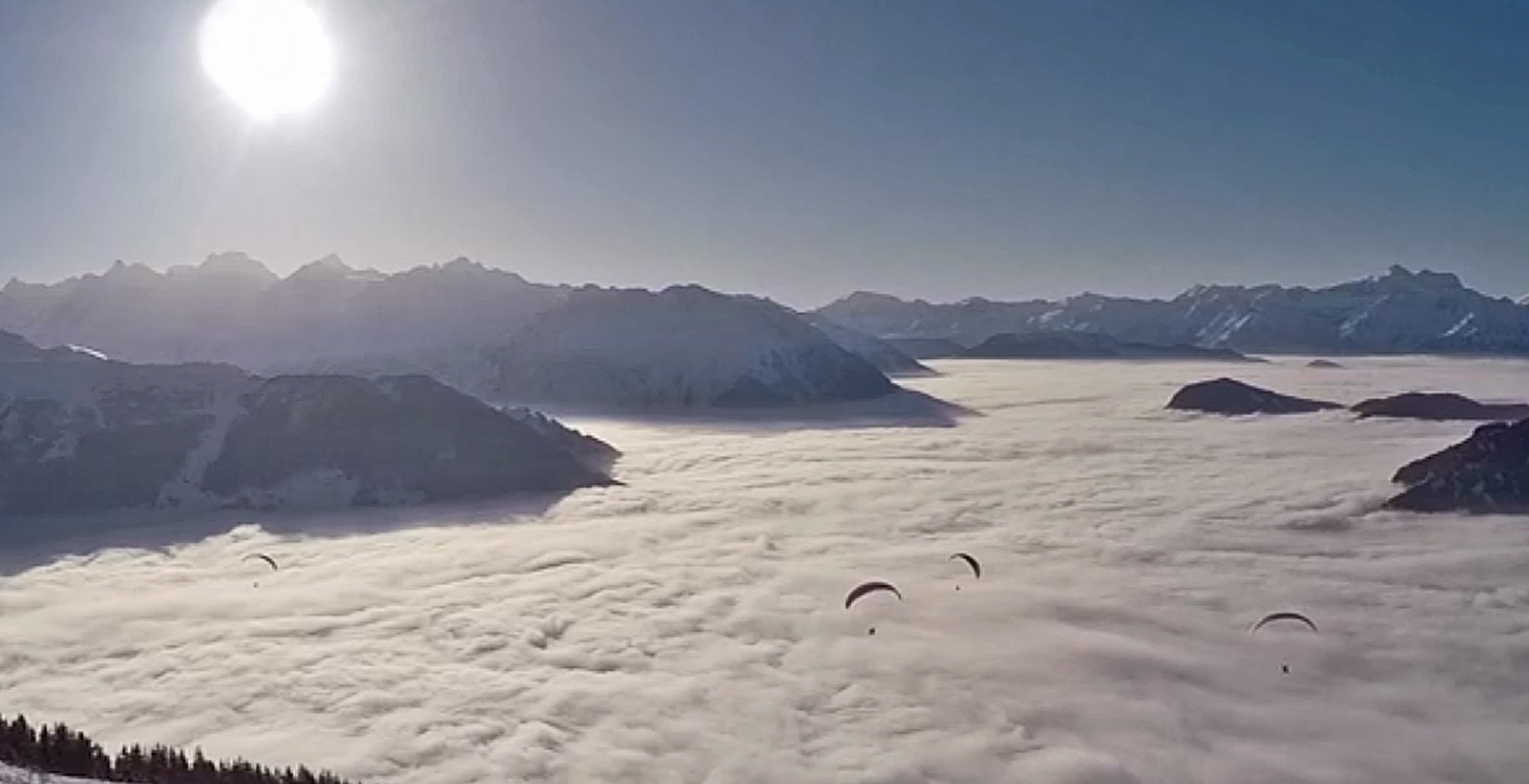
Verbier, Switzerland: ParaSailing on skis Credit: Mark Subi

Verbier, Switzerland: ParaSailing on Skis
Credit: Mark Subi

They’re in the skies, but you may not see them. Professional and amateur operated photo drones are capturing striking bird’s eye views of snow-covered mountains, crashing waterfalls, ancient architecture, daredevil feats, even the inside of an erupting volcano.

So this senior skier learned one late July afternoon following a long hike in the high desert of south central Utah. Prone on couch, he wanders to “drones” on the web and a collection of exceptional videos and stills shot with camera-mounted drones awaited.  Click here for the site; home page reads: Bird’s Eye View. Explore. Share.

Postings are from every part of the globe. Videos tend to be a few minutes in length, and while some are of borderline interest, others are well worth the clicks.. Here are a few that may whet your appetites for winter or for an exotic place that takes on new meaning when viewed from a higher place:

Switzerland: Wintery ravine/ Ski

http://www.dronestagr.am/hauptstrasse-bergun-graubunden-switzerland/

http://www.dronestagr.am/verbier/

Mexico: Tamu Waterfall/ Whales near Puerto Vallarta

http://www.dronestagr.am/tamul-waterfall-2/

http://www.dronestagr.am/puerto-vallarta/

Niagara Falls/New York City

http://www.dronestagr.am/niagara-falls-3/

http://www.dronestagr.am/new-york-usa-8/

Vanuatu: Inside an exploding volcano

http://www.dronestagr.am/yasur-volcano-tanna-island/

Bulgaria: Soccer

http://www.dronestagr.am/sofia-bulgaria-5/

Iceland: Park Tour

http://www.dronestagr.am/reykjavik-iceland/

France: Versailles/High Wire Skyliners

http://www.dronestagr.am/versailles-france/

http://www.dronestagr.am/skyliners/

Have you been droning lately?

Early 2015-16 Winter Forecast: El Nino Cometh

A Strong El Nino Is Not Too Cool News For Skiers.

ElNino2


The latest (July 15th) word from NOAA (National Oceanic and Atmospheric Administration) and other weather watchers is that the El Nino currently growing off the west coast of South America is gaining intensity.  El Nino is the weather phenomenon that occurs when Eastern Pacific waters are warmed through a combination of factors, starting with increased cyclones in the Indonesian archipelago, the reversal of the trade winds from easterly to westerly off South America, and the resulting flood of warm Western Pacific waters eastward.  This has an direct impact on our weather and, in fact, weather around the global.

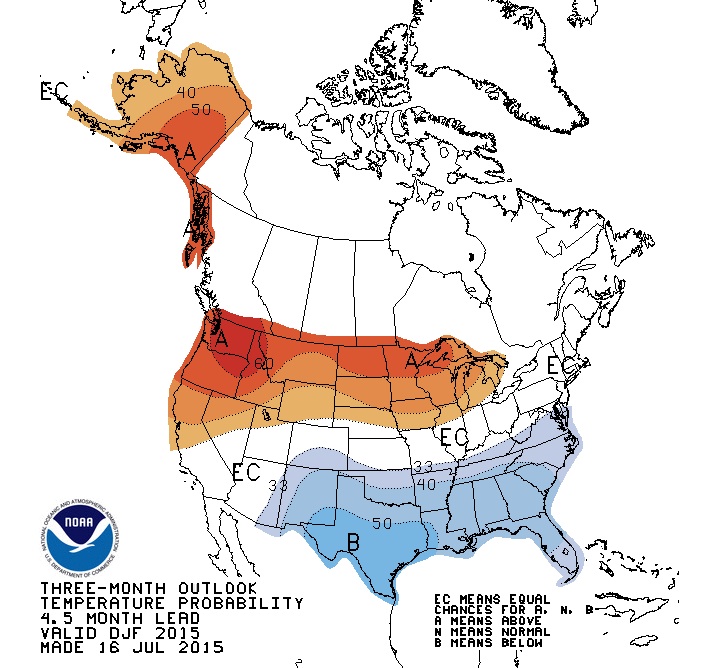
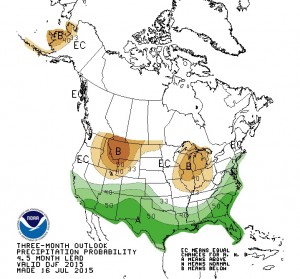
Dec-Jan-Feb Prediction Charts for Precipitation and Temperature reflect impact of El Nino. Credit: NOAA

Dec-Jan-Feb Prediction Charts for Precipitation and Temperature reflect impact of El Nino.
Credit: NOAA

TPrecipPredictionWhen an El Nino comes in, intensity clearly matters.  As of July, this year’s El Nino has a running start, driving the Sea Surface Temperatures (SST) off South America up +1.5 degrees above normal.  Some models have that going up even further later in the year.


According to NOAA, this year’s El Nino has a 90% chance of lasting through February 2016 and an 80% chance of lasting through April next year.  The last strong El Nino in 1997-98 brought major flooding to the West, especially California where storms caused half a billion dollars in damage and loss of life.  This winter, this El Nino’s level of intensity is predicted to have the following effects on our weather:

  • There will be a milder hurricane season this summer and fall in the Atlantic, a busier one in the Eastern Pacific. The National Hurricane Center has predicted below-normal storm activity for the Atlantic Hurricane Season which started June 1 and an above-normal season for the Eastern Pacific, thanks to El Nino.
  • It will be wetter this winter in the southern US from around Interstate 80 to the Mexican border.
  • It will be drier in the Northern Rockies, Ohio Valley, Great Lakes and Northeast.
  • It will be cooler in the southern band from Southern California to the Gulf states to the Carolinas.
  • It will be warmer in the Pacific Northwest to the Great Lakes and the Northeast.

Forecasting weather six months out is obviously an exercise in probability.  What’s interesting this year is that the variables are not wishy-washy; the SST is demonstrable, leading one to think that the chance for coming close to prediction is better than not.

SeniorsSkiing.com will keep you posted as the weather predictors weigh in.


There’s Still Room: Join The Crowd At The FORUM

SeniorsSkiing.com’s FORUM Is Up, Running and Waiting For You.

Even though you are a subscriber, you will have to register separately for the FORUM.

Even though you are a subscriber, you will have to register separately for the FORUM.

The FORUM is SeniorsSkiing’s online community exchange.  Add your thoughts, comments, insights, advice, critiques, recommendations, favorites, disses, and whatever. Just be nice.

If you are a subscriber to SeniorsSkiing.com, you will have to register separately for the FORUM.  Just click on FORUM, click Register, pick a username (that will appear on your postings) and enter your email address.  You will get an email with a password.  When you enter those back on the FORUM log in page, you will be in.

Remember, the FORUM requires a separate registration even if you’re a regular SeniorsSkiing.com subscriber.  Please join us.

There's plenty of room in SeniorsSkiing.com's FORUM Credit: James Cridland Flickr Creative Commons

There’s plenty of room in SeniorsSkiing.com’s FORUM
Credit: James Cridland Flickr Creative Commons

Which Ski Areas Are In Survival/SunsetMode?

Industry Expert Stacks Up Ski Areas From Healthy To Sunset.

Doom and gloom seemed to poke through the otherwise good news presented at the end of January, 2015 Snow Sports Industries America trade show in Denver. Gathered for an “Assembly” by marketing analyst Destimetrics, marketing gurus opined that there was good news in the data: economy upbeat, lodging and gear purchases all on the positive side.  The spoiler was a presentation by former ski resort CEO, now marketing consultant Bill Jensen whose presentation sorted ski areas in a hierarchy.  At the top were the handful of healthy, name-brand resorts.  But, at the bottom of the stack were 300 ski areas who were either in Survivor or Sunset mode.  Bear in mind, according to the National Ski Area Association, there are 470 active ski areas in the US, not counting 50 or 60 in Canada.  Of course, the name of the game is which areas are on those lists.  What do you think?

Here’s a report from Curbed Ski, a Colorado city-ski blog.

CurbedSki


Your Turn: Announcing SeniorsSkiing’s New Forum

Connect With SeniorsSkiing.com Subscribers: Share, Debate, Create

CrowdScene2_AWe are very pleased to announce that SeniorsSkiing.com is launching its new FORUM for our subscribers.  We learned from SubscriberSurvey2015 that our readers would be very interested in both reading comments on a forum as well as entering their own thoughts.  So, our technical team has created the FORUM, accessed by a menu tab at the top of our page.

For those of you who remember, the FORUM is the same as the Bulletin Board format.  You will have to register your name and email address as well as select a password to participate in the FORUM. This is separate from signing up for a SeniorsSkiing.com subscription. Feel free to start a new topics or contribute to one that’s already there.  We have some pretty common sense rules about what can be posted and what’s not appropriate.  You can find them at the head of each category area.

What we hope is that our readers will:

  • Contribute reports about super deals for seniors—equipment, destinations, fitness, etc.
  • Find friends to ski with or pal around in general.
  • Recommend super senior-friendly ski areas—Alpine or Nordic—that go out of their way to make seniors feel welcome.
  • Offer health and fitness ideas and advice for keeping in shape, staying in shape, avoiding injury and recovering from injury, and the like.
  • Locate clubs in their area looking for new members.
  • Share memories of skiing days of yore—heros, histories, legends, pictures of the past.
  • Offer encouragement, support, advice, camaraderie and good cheer to each other.
Click here to go to the SeniorsSkiing.com's FORUM.

Click here to go to the SeniorsSkiing.com’s FORUM.

We will be moderating the group, and we look forward to opening up this opportunity to hear from our subscribers.  Thanks for your ongoing support for SeniorsSkiing.com.  Just remember, there are more of us every day!

My Fitness Journey Begins: Part One

My six-month plan to go from being a couch potato to a mogul masher.

I had a revelation and a wake-up call on the slopes of Heavenly Mountain Resort this winter while skiing a few runs with the resort’s director of skier services. I had not taken my own advice regarding pre-skiing conditioning or done anything to lose the pounds that have piled on in the last decade or so. And even though I had been able to squeeze into my ski pants and didn’t seem to be affected by the 7,000-foot mid-mountain elevation, I felt like a lumbering whale as I went down the slopes. When I got into gunk, I really had to struggle to work my way out of it. I just didn’t have any strength.

Correspondent Rose Marie Cleese BEFORE she started her fitness program. Credit: Rose Marie Cleese

Correspondent Rose Marie Cleese BEFORE she started her fitness program.
Credit: Rose Marie Cleese

But having my ski gene reactivated and sitting amid all that alpine splendor at lunch, I realized how much I love this invigorating sport and all that comes with it. I decided then and there that one of the things on my bucket list (which I still haven’t put together) is going to be skiing down a slope somewhere at age 90!

So I’m going public with my fitness plan; if that doesn’t keep me on track, I don’t know what will! Plus I’m hoping that my personal journey to fitness will encourage other seniors to make the effort to get in the shape they need to be in to return to the slopes and be able to ski safely and with great satisfaction. And I hope that we’ll learn from each other as I share my progress over the next six or seven months. Comments and suggestions are encouraged! My monthly progress reports will be interspersed with bold-faced suggestions to help readers take action.

So, first things first. Before folks at our age jump into a fitness and diet regimen, it’s vital to have the blessing of one’s doctor. I had a complete physical a few months ago, and my doctor was encouraging me to move more, eat less and more healthy. I’m planning to include a few comments from her in a future progress report. Check with your doctor before you begin any fitness and/or diet program.

Since I can’t afford a personal trainer and have a big DIY streak in me, I’m planning to do a mix of things that I think I can stick with, keeping in mind the elements of fitness and health in general and for skiers and boarders specifically. Ignoring any one of these will not get me where I need to be next November. But at its simplest, it all gets down to exercise and diet.

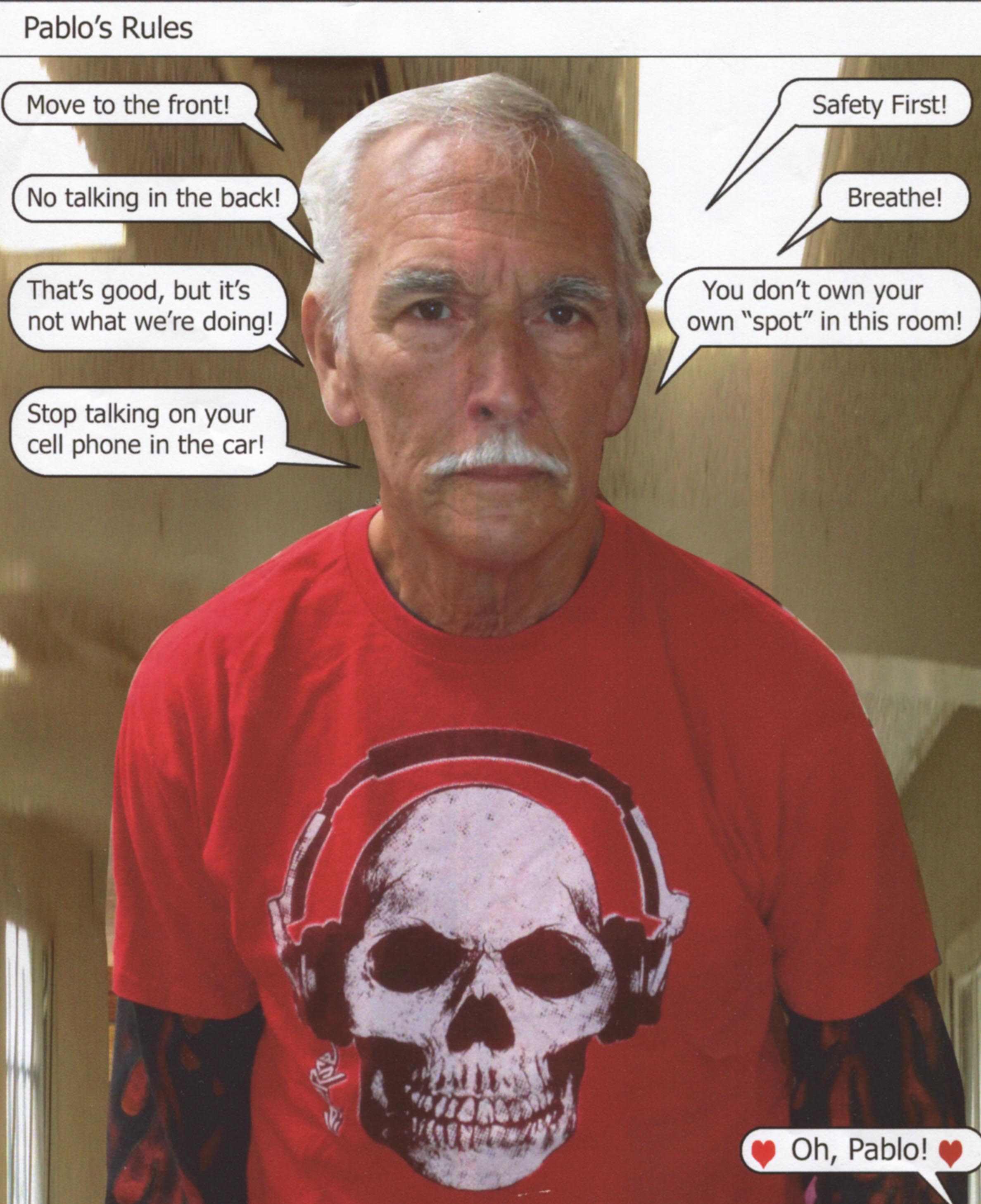
No nonsense aerobics instructor Pablo Molina keeps his classes hopping. He'll be 73 in June, just a few months older than Rose Marie

No-nonsense aerobics instructor Pablo Molina keeps his classes hopping. He’ll be 73 in June, just a few months older than Rose Marie. Credit: San Francisco Recreation and Parks Department

First, I plan to move a lot more. In March, I started several once-a-week classes at the local San Francisco Park and Rec Senior Center located in Golden Gate Park two blocks from my flat: a low-impact and a medium-impact aerobics class, a stretching and strengthening class, and a weights class. And they’re all free. Look for free fitness classes or programs for seniors; they’re more common than you’d think. These classes have shown me in no uncertain terms what I have to work on most: building up my core strength and regaining my balance!

Cardiovascular-wise, I’m finding that, after just six weeks, I’m hardly out of breath now when I walk up the hill to my flat after class. My exercise goal is this: by the end of the summer, to be able to do all the floor core-building exercises and the aerobics exercises that involve balance without batting an eyelash. It’s a pretty pathetic sight to see right now!

My other big move toward fitness and good health was joining Weight Watchers. I’ve known many people over the years who have sworn by it and were also able to maintain a healthy weight once they quit. Choose a dietary program that you can stick to. I signed up for Weight Watchers’ online program in mid-April for three months and after figuring out how to navigate around the website, I’m finding that I’ve become a lot more conscious of my food consumption. Since Weight Watchers’ integrates activity into the point system, I’m also seeing quantitatively the connection between exercise and what and how much one eats. When I started, I weighed 170 pounds and today my weight is 166 pounds. My goal is to reach 140 pounds by the end of my three months with Weight Watchers’, next maintain that weight for a couple of months, and then get down to 130 pounds before the flakes fly.

And finally, I want to concentrate on getting adequate sleep. I’m still working on that one, inveterate night owl and all-nighter puller that I am. I am, however, making sure I get a good night’s sleep when I have an exercise class the next morning. It’s a start!

One more caveat before I sign off: set realistic goals. I expect that I will hone this fitness plan in the coming months, possibly adding some yoga classes, hiking the trails in the wealth of parklands that surround me, and adding more fruits and vegetables to my larder. All I have to do, whenever I waver, is picture being at the top of some fabulous snow-covered mountain, and everything seems possible. Wish me luck!

[Editor’s Note: SeniorsSkiing.com salutes Rose Marie for publicly chronicling her personal journey back to fitness  She is an inspiration to us and we hope to those seniors in our readership or friends of our readership who would benefit from getting back into shape.  Please support her with advice and comments as she travels down that challenging road.]

How Many Subscribers Ski Over 30 Days A Season?

Check More Results From SubscriberSurvey 2015.

UphillMuch to our happiness and gratification, the SeniorsSkiing.com SubscriberSurvey 2015 was a tremendous source of insight and guidance. We reported the highlights in March with a promise to provide some more detail. What follows are more interesting responses to some of our questions.
We asked you to rate the importance to SeniorsSkiing subscribers of the amenities provided by ski areas and resorts. Here are the results in rank order:

Amenity Very Important or Critical
Discounted Lift Tickets and Season Passes 100%
Easy Access From Parking To Lifts 76%
Newsletters/Web Pages For Senior Activities 50%
Other Discounts (Food, Rentals, Gear) 50%
Ski Lessons Tailored For Seniors 46%
Family/Group Discounts 36%
Walkable Base Lodge With Shops, Restaurants 34%
Meeting Place For Seniors 31%
Set-Aside Areas in Lodge For Seniors 22%
Valet Parking 4%

Here’s what kind of content topics you said you’d like to see in SeniorsSkiing.com. These reflect the results for Very or Extremely Interested ratings only.Note these are just the Very Important or Critical responses. Clearly, discounts are a universal need for seniors. And, there are also some ideas here about access from parking lots, information sharing, discounts, ski lessons and other ideas that can make a Senior Skier’s time at a ski area or resort more valuable and attractive. It’s interesting that some of these ideas are really low-cost expenses for the ski area.

Topic Very or Extremely Interested
Gear For Seniors Reviews 72%
Destination Profiles For Seniors 67%
Health, Nutrition, Fitness 60%
Legends, Heroes, History 58%
SnowSport Industry News 54%
Features about People, Places, Things 54%
Restaurant Reviews 17%

Finally, we see that you report skiing with family and grandchildren about an average of 8.6 days a season. That’s an impressive amount, considering the median number of ski days per season for our subscribers is 9.7. We used median for the number of ski days because 55 percent of you skied over 30 days a season, skewing that data ‘way northward. Now that’s passion in action.We also notice your average age is 69.4 and 44% of you belong to ski clubs.

Several respondents said they’d be interested in contributing articles to our online magazine next season. Thank you! That’s a terrific endorsement. Please contact us at info@seniorsskiing.com with your ideas and we will get right back to you.

Adieu Winter 2014-15: Shifting To The Non-Snow Season

SeniorsSkiing.com Will Be Publishing This Summer.

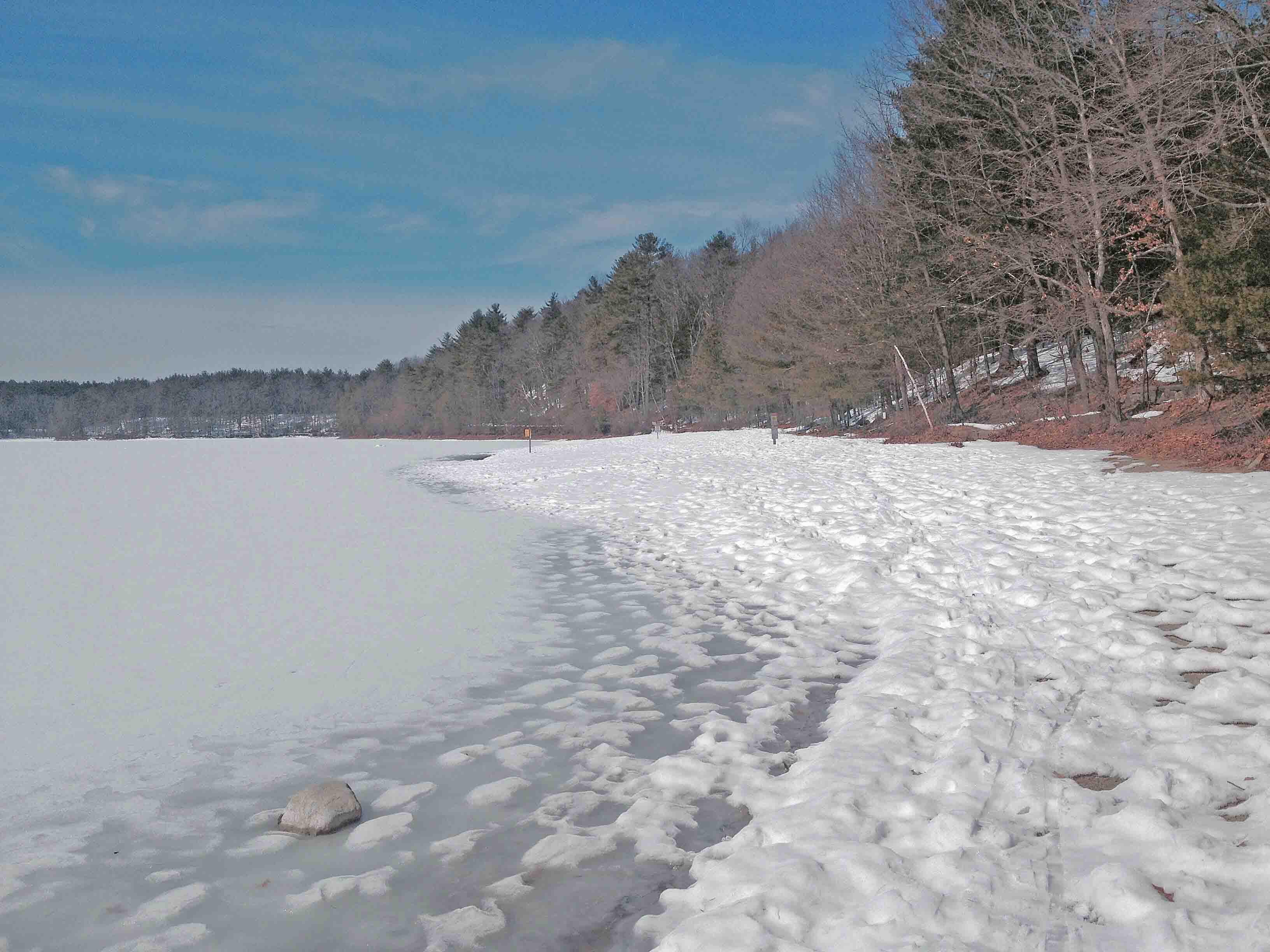
One of our best ski tours of the season came at the beginning of April at Walden Pond.  We go there occasionally throughout the year to reflect on the messages of Henry Thoreau and to take a picture or two of the “pleasant hillside” where he built his tiny cabin.  When we skied in, the trails along the ridges surrounding the pond were chopped up and icy, so we scooted around the snow-covered ice on the edges, thinking that Henry probably walked this way when the snow at Walden got too thick. It’s a short ski, maybe three miles around, but it was a beautiful spring day, we were pretty much the only ones there, and the spirits were a-rising, so to speak.  There’s more to be told about skiing at Walden, and we will have to save that for next season.

Early spring ski tour on a quiet day around Walden Pond.  Priceless. Credit: Mike Maginn

Early spring ski tour on a quiet day around Walden Pond. Priceless.
Credit: Mike Maginn

Based on the responses from Subscriber Survey 2015, we learned that you, our readers, are interested in fitness and product ideas for seniors.  As we move through the summer months, we and our correspondents will be offering both of those topics—as well as whatever pops up—in the spirit of keeping in touch with you, our active and engaged readers.  Please note that we will be starting our online Forum very shortly—another major recommendation from the survey—so you can more readily talk back to us and your fellow snow sport enthusiasts.

Two requests:  Tell your friends about SeniorsSkiing.com. And please watch for our Forum, coming soon.

Let the non-snow season at SeniorsSkiing.com begin!

A Worry In The Woods: Tick-Borne Powassan Virus

Shifting From Snow To Summer Activities?  Beware Of This New Menace.

We’re starting to hike or bike in the woods between the receding snowbanks here in New England.  We’ve just learned that you better make sure you review your tick-avoidance-and-protection practices.  Powassan virus is yet another tick-borne disease that, according to this new report from CBS, can be lethal.  So, this is very serious stuff to pay attention to.  Don’t get complacent: check this site for more information on ticks and tick checks before you head to the woods.

Click for CBS News story on Powassan virus in Connecticut.

Click for CBS News story on Powassan virus in Connecticut.

Early Results From Our Subscriber Survey 2015

Much Useful Information To Steer SeniorsSkiing.com.

Thank you, thank you, thank you.  Our recent Subscriber Survey 2015 had a 22% response.  If you’re familiar with surveys, you know that is exceptional.  To us, it signifies that readers are engaged and involved with this online magazine.  Even more, almost all our respondents answered every question!

SeniorsSkiing.com will be analyzing Subscriber Survey 2015 data over the next few weeks. Credit: digitalart

SeniorsSkiing.com will be analyzing Subscriber Survey 2015 data over the next few weeks.
Credit: digitalart

The early results show us that discounts on lifts and passes are very important or critical for 100% of SeniorsSkiing.com subscribers.  That is a dramatic statistic.  Also very important or critical (75% of respondents) is easy access from parking to lift.  And, a majority say other discounts on food, rentals, and/or equipment (51%) are very important or critical.

We know about our subscribers:  70% male, 30% female and the average age is just touching 70. You’d like to see more stories about gear suitable for seniors, health and fitness, and snow sports industry news.

Finally, 93% of you are interested in either reading or contributing to a Forum were you can contribute ideas, comments, and the like.  Our crack technical team is working on that, and you can expect to see our new Forum soon.

We’re doing to be pouring over the other results of the survey in the coming weeks.  Clearly, you advice and insights are extremely valuable to us.  Thank you for helping us steer SeniorsSkiing.com into the next season.

If You Like Mountains…

Take An Aerial Tour Of The Himalayas.

Teton Gravity Research, one of our favorite action sports movie makers, has captured the spirit of the mighty giants of the Himalayas.  Using an advanced camera stablizer, this short, ultra HD video takes you up close and personal to Mt. Everest, Ama Dablam, and Lhotse.  Fasten your seat belt and pass the pop-corn.

The Ski Diva Heads West

All-Women Ski Trip Brings Kindred Spirits Together

Our friend and colleague, The Ski Diva, gathers a group of Diva Members for an annual ski trip to exciting places.  This year, her group went to Montana where they had a rocking good time.  Click here for her report.  Pass this along to the Ski Diva in your life. The Ski Diva is a super resource for women who ski. Perhaps your diva would be interested in joining.

Ski Divas gathered in Montana this year.  Clear skies and clearly fun. Credit: The Ski DIva

Ski Divas gathered in Montana this year. Clear skies and clearly fun.
Credit: The Ski DIva


Serious Stuff: There Is No Such Thing As “Side Country”

And There Is No Such Thing As Being A Little Bit Dead.

Back country warnings are there for a reason. Credit: Harriet Wallis

Back country warnings are there for a reason.
Credit: Harriet Wallis

Yesterday we rode the chairlift with a bozo. Okay. Maybe he wasn’t a bozo. Maybe he was just clueless. All the way up he yapped about his skiing prowess. And near the top he phoned home to give his wife his location. “She worries about me,” he said.

She should worry. He planned to duck under the boundary rope and make some turns in the deep, unspoiled powder beyond.

“Take your avy gear,” we said.

“Don’t need it. It’s in the car. I’m just doing side country,” he said.

Somehow he missed hearing that there is no such thing as side country.

The term “side country” hit the scene a few years ago, and it was quickly squelched by the ski industry’s leading avalanche experts, snow science experts, the U.S. Forest Service, ski area risk managers, mountain patrollers and others. It was likely a marketing brainchild used to promote the newest boots and powder-specific skis and boards.

The term had obvious appeal to intermediate and advanced skiers and riders. They could buy the latest gear and try their skills beyond the rope line thinking it would be okay. They could be a little bit naughty.

But the ski industry took a stance saying you’re either within a resort or else you’re in the unmonitored, ruthless back country. You’re either in bounds or you’re out of bounds. There’s nothing in between. There is no such thing as side country. There is no such thing as “kinda” out of bounds.

“We all must focus on educating skiers and snowboarders that backcountry terrain accessed from a ski lift has the same risks as any other back country or out-of-bounds area,” says the National Ski Area Association.

Later in the day I caught the TV news. A skier died after being caught in an avalanche. The avalanche occurred in the very out of bounds area where a guy— with too much macho and too little knowledge—went to ski. There’s no such thing as side country.

There’s no such thing as being a little bit dead.


Portrait Of A Weird February: East, Coldest; West, Warmest

Here’s a picture of our weather record-breaking mid-winter month.

Black and White, Ying and Yang, Macy’s and Gimbel’s, Felix and Oscar: These opposites come to mind when we look at this picture of what happened to the weather in February, 2015.  The Washington Post reports there were coldest months on record throughout the East, while the West cooked.  There are some in both places who aren’t having fun with this.  You can understand the frustration of Western snow sport enthusiasts when they see brown hills, but there are plenty in the East who find the cold abysmal, the roads to ski areas challenging, and the need to deal with ice dams at home more demanding than recreation.  Nevertheless, as the month turns (Rabbit, Rabbit), there are signs the West is entertaining new storms.

One glance at the February weather composite shows why we've had a weird mid-Winter: Cold East, Warm West.  Credit: Weatherbell.com

One glance at the February weather composite shows why we’ve had a weird mid-Winter: Cold East, Warm West.
Credit: Weatherbell.com

Come On Over, Western Skiers: Eastern Snow Is Epic

Boston Reports Over 100 Inches, 2 1/2 More Than Normal, With Three More Weeks Of Winter To Go.

If you are a senior skier from the West, you are probably wondering what’s going on with the snow.  Our correspondent in Utah report skiers taking two or three runs on ice-covered, snow-deprived slopes and calling it a day.  We’ve heard of areas closed in Montana due to “dirt”.  On the other hand, we Easterners are luxuriating in historically epic piles and piles of the stuff.  It’s fun to look back on NOAA’s prediction for the Winter of 2014-15.  Notice they had it kind of right in the West, major wrong in the East.

NOAA Winter 2014-15 Prediction shows warm in the West and the East. Credit: NOAA

NOAA Winter 2014-15 Prediction shows warm in the West and the East.
Credit: NOAA

To be sure, there is good snow everywhere in the Northeast, from the Poconos to Quebec.  Here’s an article by New York Times travel writer John O’Connor who reports on ecstatic conditions in New England.  Bottom Line:  It may be that if Western skiers want to do some decent skiing, they should plan coming East right now.

NYTimes_022515

The Get Started Basics Of Snowshoeing

Here’s Another Way To Enjoy Winter That Seniors Can Easily Get Into

Snowshoeing, once a practical means of winter travel, is now a winter recreational activity. It provides many folks  an outdoor winter alternative to skiing or X-C. In fact, most ski areas now offer snowshoeing as an option.

If you like walking, you will enjoy getting out on snowshoes. Some tips and a little technique will increase your enjoyment of this growing sport.

Male (L) and female (R) snowshoes accommodate different sized people. Credit: Connie Phillips

Male (L) and female (R) snowshoes accommodate different sized people.
Credit: Connie Phillips

Dress: Use three layers to keep warm in cold, snowy weather. Wool socks will help keep your feet warm. Mittens are warmer than gloves.

Layer 1: Wicks away perspiration. The base layer, next to your skin, should be wool or synthetic. The most common synthetic is polypropylene.

Layer 2: Insulates you from the cold. Again, wool is very dependable. But the various types of synthetics (aka “fleece”) provide enough warmth. Personally, I’ve never been cold when snowshoeing because of the activity level (exertion) involved.

Layer 3: Protects you from wind, rain and snow and should be waterproof and breathable.

Preparation: Many new enthusiasts are surprised to find that snowshoeing is a very aerobic activity. Exercises like walking, running, cycling and/or swimming are good preparation. Start before winter arrives.  Remember to know your own capabilities before heading out; take your first outing slow and easy.

Equipment:  Snowshoes are your main piece of equipment. The longer and wider a snowshoe, the less you will sink into the snow. Most snowshoe dealers will ask you for your body weight plus your pack weight. Let your dealer help you select the right snowshoe and remember this acronym FACT.

F – Flotation: make sure the length supports both you and your pack weight.

Note toe lift technique when walking on the flat. Credit: Connie Phillips

Note toe lift technique when walking on the flat.
Credit: Connie Phillips

A – Articulation: the snowshoe front should tip up when you raise your foot using a hinge at the forefoot position (See  photo).

C – Comfort: the right snowshoe should not make you spread your legs too wide apart and should keep your hips in a near normal position. Also, the bindings should be easy to use. Most snowshoe brands now make “gender specific” snowshoes. (See photo)

T – Traction: spikes or “crampons” on the bottom of the snowshoe help with traction going up and down hills.

Boots are important too. Most snowshoers will need insulated boots. Boots that lace up (rather than zip up or pull on) are best. Many snowshoe boots have a lip or spur a few inches above the heel which help keep the snowshoe binding strap in place.

Poles are another useful piece of equipment. Many snowshoers prefer the telescoping trekking poles. Large baskets on the end of your poles prevent sinking too far into the snow and help with balance. Gaiters, those nylon tubes that extend from the boot to just below the knee, help keep snow out of your boots.

Technique: A little technique goes a long way. When moving on flat terrain or going uphill, walk by moving your back foot forward with your toe dropped. On the downhill, walk heel to toe like normal.

Start your snowshoeing on broken out trails and not in deep snow. As you gain strength and experience, head into deep snow. Start off by going for time and then go for distance.

hinesHeadshot_1


Steve Hines is a sales associate at REI, Inc. (Steve’ does not necessarily reflect REI’s views). He has been a wilderness guide, a Wilderness First Responder and a volunteer trip leader for the Appalachian Mountain Club.


The Ski Diva Focuses On Senior Skiers

Women’s Ski Site Offers Advice To Seniors

SeniorsSkiing.com’s favorite online resource for women skiers is The Ski Diva, a one-stop shop for interesting ideas, information and a meet-up forum for like-minded women.  In this recent article, The Ski Diva explores how a senior woman approaches skiing at 72.  She also describes how the senior segment in snow sports is growing and quotes SeniorsSkiing.com’s co-founder on how the industry can be more accommodating to seniors returning to the sport after a hiatus.  Click to read the article, Age Is Just A Number, Right?

SkiDiva_2


Huff Post: Skiing With Senior Eyes

Huffington Post Features SeniorsSkiing.com’s co-founder Jon Weisberg On Light, Goggles and Lenses

We’ve all been there.  Flat light conditions, slow down, stop.  Take your goggles off and put them on.  Peer down the slope.  Proceed slowly, cautiously down, perhaps calling it a day. In his latest Huff Post Post-50 article, SeniorsSkiing.com’s co-founder Jon Weisberg explores the impact of aging eyes on seeing and skiing.

BlindedByLight

Is This Guy For Real? Amazing Candide Thovex In The Alps

Daredevil is becoming an -ism.  Here’s yet another impossible run.

We wonder if videos like this help recruit people to skiing or turn them off.  It sure looks, um, well, risky.  What do you think? Professional skiers Candide Thovex totally shreds Val Blanc.