Tag Archive for: senior skiing

Sunday River

Look Back: Sunday River
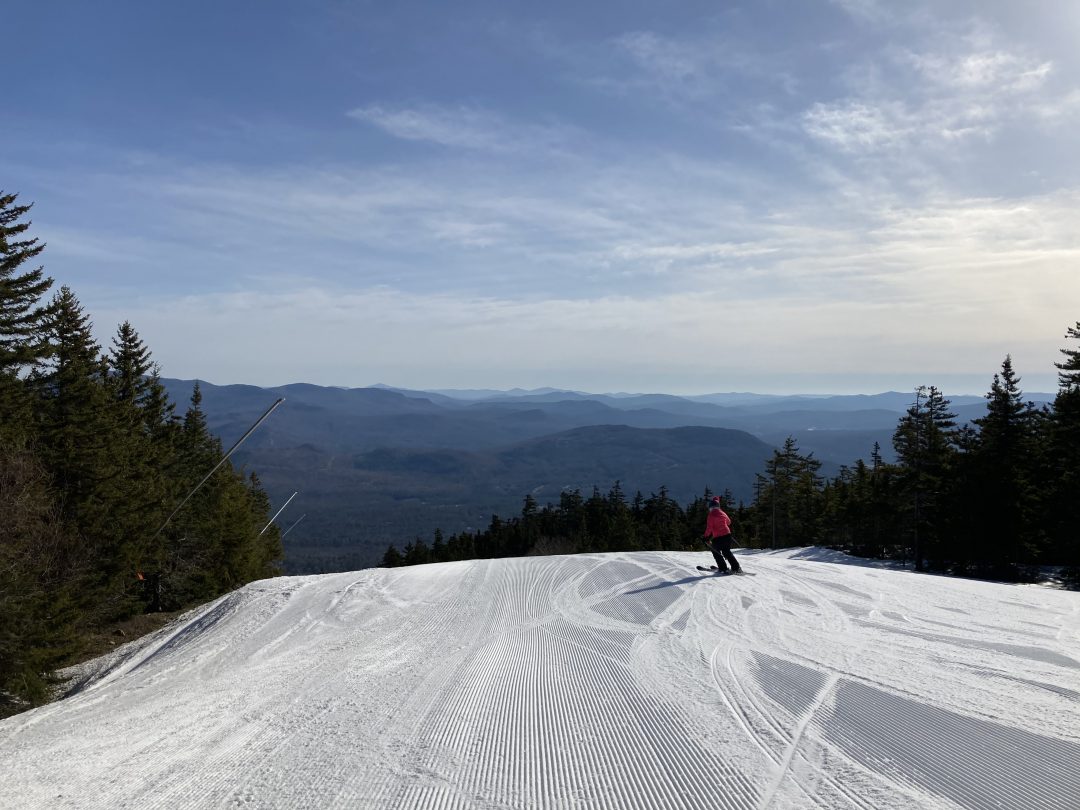
Smooth sailing on Risky Business. Photo by Tamsin Venn.

For the record, early morning skiing was just the best at Sunday River, Maine.

We skied this reliable, late-season spot over Easter weekend with two gorgeous sunny days, happy the travel restrictions into Maine had eased for us at last. Better late than never.

Everyone wore masks. Photo by Tamsin Venn.

Count SR’s season-long commitment to snowmaking (90 percent coverage) as the insurance that makes the late season possible, especially with paltry late-season snowfall. Also, a three-mile-long ridge of eight peaks gives skiers and boarders varied snow conditions at different exposures. You can always find something holding up well. Big vert lets you stay on upper slopes in afternoon to avoid lower-elevation slush. Good grooming helps put things right the next day in New England’s freeze and thaw cycle: 8 a.m. crispy corduroy.

All good.

The crowds were the biggest challenge. At the popular Barker Chair, social distancing was a little ragged, but everyone was wearing masks. People in the lift line were polite, waiting their turn, and no grumbling heard for riding alone. Slopes were busy, but most people knew what they were doing, including the rug rats, probably mostly passholders. (Note to senior self – the later in the season, the safer you are.) The one exception was the young, helmetless dude on the snowboard straight-lining White Heat.

There were a few surprises. We agreed to meet for Easter lunch at the sunny deck at North Peak Lodge, but only the bar was open. So we drank instead and ate chocolate bunnies. One closed trail we wanted to ski suddenly opened. The top of White Heat is nothing but a granite ledge with snow on top of it (you don’t realize that mid-winter). The schlep across a dry parking lot is not so bad.

I checked in with the millennials with me on what they liked at Sunday River and what they hope will be carried over into next year.

On the way over to the next peak. Photo by Tamsin Venn

Increased RFID use and access? Already there. Food trucks? Already had them. Outdoor dining? Great, unless it’s a blizzard. They can’t wait to get back to booting up in the lodge and more places to eat. They plan to renew their Ikon passes.

As for changes going forward, Sunday River says while plans for next year aren’t finalized, it will likely continue to encourage online advanced ticket sales, offer online food ordering at certain eateries, and hopes to expand takeout options.

Kelly Pawlak, President of the National Ski Areas Assn., noted successes that will likely be carried over into next year at most ski areas. Those include advanced ticket sales (ski areas like to know how many skiers will show up); reconfigured indoor spaces that open up space within lodges; increased use of ticket kiosks; outdoor living fixtures like fire pits, chairs, food trucks, outside food windows; and for employees, daily wellness checks, staying home if sick, plus sick pay for seasonal workers.

Summary of the 20-21 ski season? Like many, with the skis now hung up, I was very grateful there was one to begin with, and Sunday River made for a very rewarding finale.

Ski Japan: Happy Appi Kogen

Untracked Deep Powder For A Week.

Appi Kogen is a self-contained resort in northern Honshu.

Casting aside the duvet and, with a flourish, we spread the curtains wide to greet a new day, a new location, a place of considerable legend.

Here the tall Japanese Black Pines punctuate the landscape between the tall buildings of our hotel in this place almost three quarters of the way up the island of Honshu.

Appi Kogen is one of Japan’s best ski resorts. The resort’s tagline: “Be Happy in Appi”, of course.

We have arrived by road to Appi Kogen, almost taking a whole day to do so. This road trip was tedious, attributed to a slow traffic jam and, paradoxically, the most exciting bus trip we could ever conceive.  Our bus driver, growing weary and ever more frustrated by the constant traffic jam, decided a different route was needed. The existence of a little used forest track was discovered—a forest track at times covered in deep virgin powder snow.

Our driver revealed quite a level of skill when required to navigate slippery and often poorly delineated tracks through the forest. Our driver and his co-driver were engaged in constant discussion as to how to proceed when fast acceleration was required. It was best alpine driving we are ever likely to witness. Although I well remember being in a taxi going up a hill from St. Anton to Lech in Austria where our driver exclaimed in strong language his scorn for the slippery steep slope and the driver of a Mercedes that halted his progress. Then, sliding backwards down a considerable slope completely at ease with his dilemma, he just reversed to a lower slope where he could gain some traction and move forward back up the steep narrow slope.

Back to Japan. Our trip, a long, long ten-hour drive by bus, one we hired  at Lodge Scolé at Zao Onsen Ski Resort to take us to Appi Kogen. Zao was a place of big tree runs and Snow Monsters. Traveling plans were adjusted for what we thought would be just a four-hour trip up the main island of Honshu.

A huge snowstorm of cold air from across the Sea of Japan unloaded across the north.  Our movement down the road now so slow at one point we left the bus to obey a nature call at a rest stop. We visited said rest stop and purchased takeaway lunch before returning to find the bus only 80 meters further down the road.

Appi Kogen is not far from the East Coast where those winter winds suck up the moisture from Sea of Japan and dump when they hit the land mass around Appi. Indeed this is often the case along the whole coastline particularly in the North where we are now.

It is another skiing day, a day not quite like we have experienced before above the snow line. Although I recall a day in Lech where we skied in snow so deep the only reveal of me deep in this fine dry powder is the top of my ski helmet.

Appi Kogen is very similar to this as is much of Japan in winter where it will often snow down to the beach and cover the sand.

Light fog at the top of the gondola leads to fields of deep powder.

After a couple of runs down medium steep slopes on the front side, we decide to venture as far out as we can to the most outer edge of the ski resort. We are at the topmost point on a black run now with powder so deep and almost un-skied, the day still early. We set an easy pace to get some rhythm in to our legs and balance in the fine powder. The visibility is ok but a little foggy. Japan is like this in winter because the cold is only -2 C (28 F) or at most -8 C (18 F), this knowledge gathered over many previous visits.

As we proceed down the slope, it is obvious the area has not been skied today or even possibly this last week. The slope is lined with trees mostly beech, so definition of the journey down is easy in the slight fog. As we near the end of this trail, the skiing gets flatter and, after 900 meters, we arrive at the gondola. It will surprise you to discover we skied all day down that one slope in fresh powder. Would you be further surprised to learn we skied that same slope for a whole week with no change to the perfect powder? Well, it amazed us to discover that many Japanese don’t like ungroomed snow. When you learn to ski in Australia. the quality of snow is mostly hard pack ice. There, the day temperature around -1C  (30 F) to 1C (34 F) and then freezing overnight: result, ice. So we are very lucky in Oz if we ever experience powder. At Appi Kogen, we have never experienced such perfect conditions for skiing for one whole week .

Be adventurous if you dare. Take a trip soon you will find the country very rewarding in so many ways.

Appi K: 70 percent of runs are intermediate or “easy”.

For a more extensive report in Appi Kogen, click here.

Question For You: Dispatches From The Snow Frontier

Let’s Try Again: What Is Your First Visit To A Ski Resort In COVID Times Like?

Restrictions: Help, hinder, hopeless? What is your experience? Credit: USNews&WorldReport

A few weeks ago, we asked our readers to tell us how their first visits to a ski resort went in this unusual year.  We wanted to hear reactions to constraints, regulations, and policies designed to keep visitors and staff safe.

Unfortunately, we didn’t get many responses, presumably because it was a bit too early for resorts to open and our readers to visit.

When we received a detailed report from a reader on a visit to Wolf Creek, CO, we decided to ask our question again. Reader John Farley described his visit to the moderate-size Colorado area—the first in North America to open—and how his strategy for parking and getting to the lifts worked out for him. Click here to read his dispatch.

Take two: If you’ve been out for your first day of skiing this year, how did it go? How did you manage the COVID rules? Were there karmic differences between this year’s first run and other years? More important, how will lessons learned on your first day impact how you approach the rest of the season?

Please write your comments in the Leave A Reply box below.


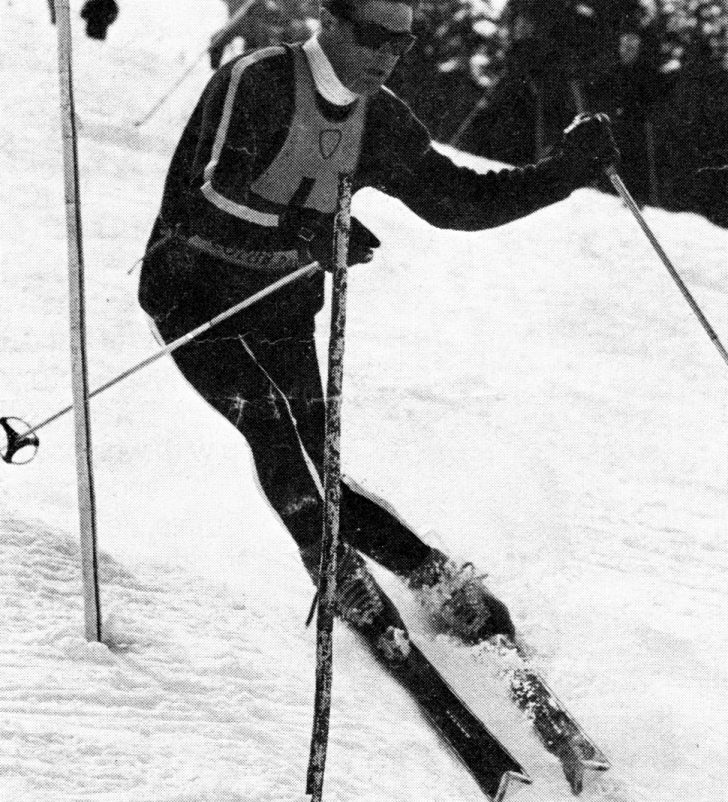
Mystery Glimpse: Racer R.

This Is A Challenge. Hints Below.

He was on Bob Beattie’s 1964 US Ski Team. He later worked for Head Ski and Lange Boots. Do you know who he is? Put your guess in the comment box below.

Last Week

Thanks to ski correspondent Dave Irons for supplying last week’s picture and this description:

“John and Joe Luc Roy Jr. got it right away.  Pleasant Mountain in Bridgton (now Shawnee Peak) is Maine’s oldest continuously operated ski area starting with rope tows in 1938.  In 1951 they built Maine’s first T-bar which is in the picture. The T-bar is long gone, but you can still ski the lift line, a narrow run lined by trees. The base lodge has expanded and is more than triple the original size. The lake in the picture is the real give away. Moose Pond is 13 miles long and provides the area with unlimited water for snowmaking, something many areas envy. 

Sorry Marilyn, although my association with Sunday River is well known, we skied Pleasant Mountain in the fifties before Sunday River opened in 1959. We switched to Sunday River because as we were living in South Paris it was an easier drive, and Pleasant Mountain had become known for lift lines.  That’s no longer the case, with two top to bottom triples, a quad and another triple for beginners.  For more on the area, my book, Shawnee Peak at Pleasant Mountain is available on Amazon, and at Shawnee Peak. How’s that for a shameless plug?  I’ll try to answer any questions about the area.” 

This Week In SeniorsSkiing.com (June 22)

Southern Hemisphere Special, Safe and Sane Cycling For Seniors, Zany Videos, El Nino Coming.

Yes folks, it’s the start of the ski season in far away places below the Equator. Here’s a picture of downtown Santiago, Chile, which received a highly unusual coating of snow for the first time in years.

If there’s snow in the city, there’s more in the mountains. Credit: anis_velasco/instagram

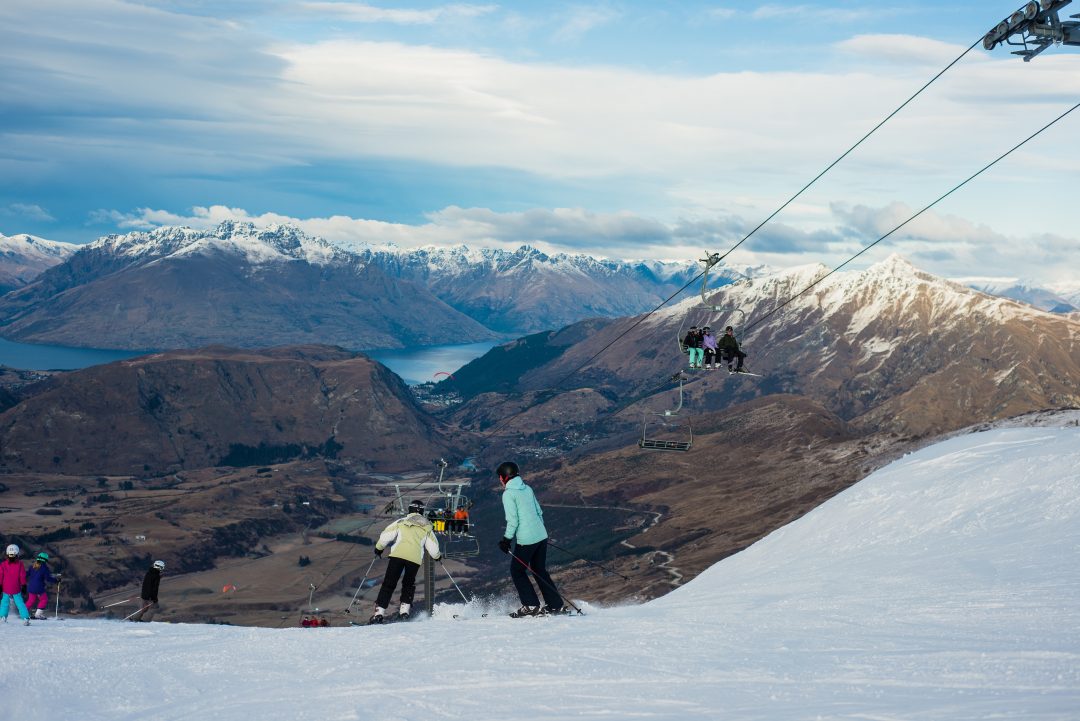
And in New Zealand, The Remarkables, those beautiful, mystic mountains from Lord of the Rings fame near Queenstown, are open for the season.  Check out the video of opening day at the bottom of this article. Nearby Coronet Peak has been open for a couple of weeks.  Here’s what the early season skiing looks like down there.

First turns of the season at Coronet Peak, Queenstown, New Zealand.
Skiing Chile

If you’ve ever wondered what it might be like to follow the snow during the summer and weren’t quite sure how to do it, we have a new series that might get you started.

Portillo Plateau, Chile. Amazing skiing starting now. Credit: Casey Earle

In celebration of the beginning of the snow season in the Southern Hemisphere, we have an orientation to skiing in Chile by a new SeniorsSkiing.com correspondent Casey Earle, an American ex-pat who lives and skis down there.  His first article describes the different resorts what line the magnificent Andes mountains. You will hear more about skiing in Chile in the coming months.

Biking With Young Hammerheads

Veteran cyclist, skier, and SeniorsSkiing.com correspondent Pat McCloskey offers some advice for seniors who ride with a gang of younger riders.  He has strategies for going around the loop safely and saving face at the same time. It pays to recognized the limitations that senior status brings, especially on a mountain bike.

Have You Seen These Videos?

Here’s Opening Day at The Remarkables, Queenstown, New Zealand. Click below for the festivities.

And, Check Out What Happens To A Show Off When His Ski Flipping Trick Doesn’t Work. Click the picture below.

Finally, mountain biking down Corbet’s Couloir? First time ever, but you can be sure it isn’t the last.  Thanks Teton Gravity Research. Click on picture to view.

And Looking Ahead. El Nino Is Knocking.

Weather worriers are looking at an emerging El Nino pattern forming in the eastern Pacific. El Nino comes around when the surface water temperature increases ever so slightly in the ocean west of the Peru and Ecuador. Since everything in the weather world is connected, that water temperature change impacts the atmospheric wind patterns which impacts the everyone’s weather.  From the Weather Channel Explainer:

“If El Niño conditions are present during the winter, the jet stream pattern over the U.S. shifts and can result in a wetter-than-average winter across the southern tier of the U.S., including portions of California.

“During an El Niño winter temperatures are also typically cooler-than-average from the southern Plains into the Southeast and warmer-than-average from eastern Alaska into western and central Canada and into the Pacific Northwest, northern Plains and Midwest.

“The strength of the El Niño plays an important role in impacts across the U.S., including in the tropical Atlantic. At this point, it is too early to know when an El Niño pattern may develop and how strong it might be.”

Happy First Day Of Summer.

Onwards.  Have you bought your season ticket yet? Time to pay attention to whatever deals are left.

And tell your snow loving buddies about SeniorsSkiing.com.  Remember, there are more of us everyday, and we aren’t going away.


This Week In SeniorsSkiing.com (April 20)

Discount Reminders, Season Thanks, Washing Down, Stowing Gear, Abandoned Ski Area Movie, -30-

Killington is still open. Also Sugarloaf, Sunday River, Wildcat, Jay Peak, Okemo, Mt. Snow, Sugarbush. May is possible! Credit: Jamie Frankel

This amazing season hangs on. Even as we write this on April 19 snow is falling in New England, in fact, right outside our window on Boston’s North Shore. We know that the Sierras and Rockies are also seeing spring snowfalls. It will be the last weekend for some, but it’s been years since we even contemplated skiing in May in Maine.

Fourth Season Into The Archives

With this week’s edition, the fourth publishing season of SeniorsSkiing.com is fading into the archives. We will be shifting gears in the next month, bringing articles that reflect our readers’ non-snow season activities on a less frequent basis. We’ll be picking up the pace with new ideas, articles, and offers on the other side of summer.

Bear in mind, the almost 900 articles that we’ve been publishing since 2014 are still and will always be available.  Just check the drop down menus in the blue bar above.

Our Publishing Season In Retrospect

Looking back, we’ve accomplished a lot and worked hard to create value for our leaders. Those initiatives marked SOC can be found under Subscriber-Only Content in the top menu bar. The initiatives we’ve developed in partnership with others include:

  • Mystery Glimpse photos from US ski museums
  • Our Donations to Defray Expenses Campaign
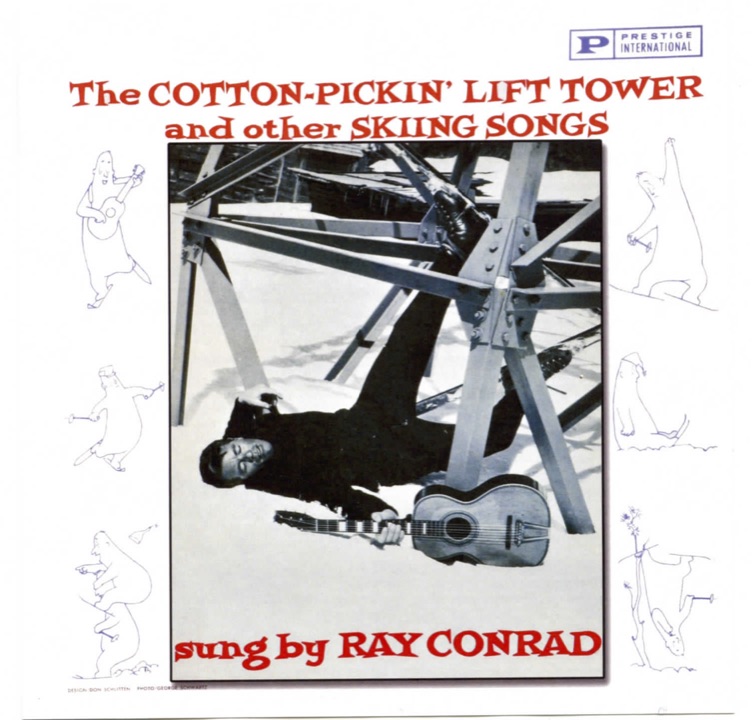
  • Making available 60s Ski Songs from Ray Conrad
  • Arranging exclusive Discounts For Seniors from 20 vendors
  • Publishing Best Skis For Seniors and Best Boots For Seniors (SOC)
  • Creating a directory of  resorts Where Seniors Ski Free (or almost free) (SOC)
  • Offering a free subscription to SKI magazine (SOC)
  • Making available a free digital subscription to Ski History magazine

We also have available on under Subscriber Only Content our first information asset we developed for our readers, complied with the cooperation of the International Ski History Association.

  • Free eBook Collection Historic Ski Posters (SOC)

Early Survey Results: We DO Have Lists Of Discounts.

A quick glance at the survey responses currently rolling in reveals that some readers are wondering when and if we will be offering advice where to get discounts on skiing. We’ve already got you covered.

One of our major early season efforts for the past couple of years has been to identify those ski areas which offer free skiing, or nearly free skiing, for seniors.  We want to point out that information is available under the Subscriber-Only Content menu that is above the blue menu bar. If you are already a subscriber, you will have to confirm your name and email address to get access to that directory. We think confirming your email address is much better alternative than having you create a username and password. We hope you agree.

Spring Survey 2018 Is Still Open.

Responses to our Spring Survey 2018 are still coming in. Thanks to those who have taken the time to give us some valuable input. If you haven’t taken our survey, just click here.  It will take you three minutes, and your advice is important to making SeniorsSkiing.com work for you.

https://www.surveymonkey.com/r/G7YBNCK

Thanks To Our Correspondents: You Are The Best.

SeniorsSkiing.com can’t publish every week during the season without articles submitted by our stalwart correspondents.  You should be familiar with their names by now. Each is a professional, some are active journalists, and each “gets” what SeniorsSkiing.com’s mission is all about: Promoting the interests of senior snow sport enthusiasts.

A tip of the ski pole to:

  • Jan Brunvand
  • Don Burch
  • Yvette Cardozo
  • Rose Marie Cleese
  • Val E.
  • Steve Hines
  • Marc Liebman
  • Roger Lohr (SeniorsSkiing.com XC editor)
  • Pat McCloskey
  • John Nelson
  • Tamsin Venn
  • Joan Wallen
  • Harriet Wallis
  • Jonathan Wiesel

And Thanks To Our Reader Opinion Writers.

This year, our readers have submitted more articles to us for publication than ever. We’d like to acknowledge those who were inspired to put pen to paper to write something for our readers. They made an effort to share their opinions, humor, stories, memories, and advice with you.  Thank you to all.

  • Torry Hack
  • John Farley
  • Bill Emerson
  • Brad Noren
  • Roger Monty
  • Bernie Weichsel

Paying Attention to Gear.

With the season winding down, it’s time to clean and stow your gear. We have two articles with advice for doing same. Val E. gives us 10 steps to cleaning that funky down jacket. And, we reprise Don Burch’s article from last year on putting away your equipment.

Flipping out at the US Ski & Snowboard Hall of Fame Induction Ceremony at Squaw Valley. Credit: Charlie Shaeffer.

US Ski & Snowboard Hall Of Fame 2018 Inductees

The US Ski & Snowboard Association has just inducted its 2018 class of new members at Squaw Valley.  We salute the following ski celebrities:  Airborne Eddie Ferguson, Hermann Gollner, Marty Hall, Mike and Steve Marolt, Thom Weisel, Steve McKinney, and Shaun Palmer.

Abandoned Ski Areas In Colorado Documentary

Here’s a short documentary from a production company called The Road West Traveled about ski areas that disappeared from the Colorado landscape. In the 60s and 70s at the height of the ski craze, there were 200 ski areas in the state.  There are currently 30. “Abandoned” tells the story of just one, Geneva Basin, which closed in 1984 with some nice drone shots. But what’s with the dog running down the piste with the skiers?  Thanks to Outside magazine for sharing this.

CLICK THE IMAGE TO SEE THE DOCUMENTARY

Or, Click Here for “Abandoned”. 

Look For Us This Summer And Fall.

We’ll be publishing articles on fitness, summer sports, fun things, and skiing in the Southern Hemisphere all with a senior slant for the next few months. Please tell your friends, and remember, there are more of us every day, and we aren’t going away.

-30-

Kingdom-Trails-Fatbike

Kingdom Trails: Vermont’s Fat Bike Mecca

A New Sport Bridges Snow and Non-Snow Seasons: Fad Or Here To Stay?

On the Kingdom Trails in Lyndonville, VT. Credit: Herb Swanson

[Editor Note:  SeniorsSkiing.com is interested in bringing new activities to our reader.  In this story originally published on XCSkiResorts.com on biking with fat, balloon tires, publisher Roger Lohr does an explainer and reports the adventures of a group of neophytes on Kingdom Trails in Northeastern Vermont.]

Fat bikes, dubbed the “Hummers of the two-wheelers’ world” are proliferating with more than 150 cross country (XC) ski areas in North America that welcome fat bikes on their snow covered trails. These specially-made bicycles accommodate ultra-wide tires that can be run at very low pressure 4-8 pounds of pressure, allowing fat bikes to roll over soft, slippery surfaces like snow. XC ski areas and regional pockets across the nation from Vermont to Michigan and Arizona to California and Washington now have fat bike trails with single track groomed and signed trails, rental bikes, and special events.

Snow Sport journalists head off on a fat bike familiarization tour. Credit: Roger Lohr

A small group of North American Snowsports Journalist Association members were recently introduced to fat biking by the welcoming folks at Kingdom Trails in Lyndonville, VT. The group found the bikes easy to balance and maneuver. Similar to XC skiing, the fat bikes provide exercise when going on flat terrain with more effort required up hills, earning thrills on the downhills.

An industry source at QBP, manufacturers of fat bike brands Surleybikes and Salsacycles, boots, gloves, accessories and apparel recently reported that 150,000-200,000 fat bikes that have been sold since 2010. These bikes provide a great way for avid cyclists to stay in shape during the winter season, and they provide different recreational fun for people who are active or love the outdoors.

Fat biking at Kingdom Trails in northeastern Vermont is no small matter. It is the foremost mountain bike destination in the east with more than 40,000 day passes sold in 2017 (20 percent increase from the previous year), and they’ve quickly parlayed this notoriety into becoming a mecca for fat bikers in the winter. Kingdom Trails has 100 miles of bike trails, 30 of which are used in winter for XC skiing, snowshoeing and fat biking, and works with 80 different land owners. Kingdom Trails also hosts Winterbike, which is the biggest fat bike festival in the east. The organization conducted a survey of bikers showing that they are generally aged 45-60 and reportedly attract $8-10 million of business to the region!

At Darling Hill Road in Lyndonville, the Village Sport Shop has a trailside facility adjacent to the Kingdom Trails Nordic Adventure Center renting fat bikes for $55 a day and sells the bikes ranging from $1,800 to $2,800. Fat bike products include softgoods, accessories, and bikes available from companies such as Liv Bikes, Giant, and Pivot among others.

Bike in winter? Fatties make snow country accessible.
Credit: Herb Swanson

Another option for those who would like an introduction to fat biking is to have a guide at Kingdom Experiences take care of all the details. They’ve got certified instructors and want to help cyclists have an experience catered specifically to rider skill and ability levels offering kids camps, women’s clinics and getaways and more.

Kingdom Trails employs three paid groomers, who pack and maintain about 30 miles of trails. Day membership prices (day pass for trail access) are $15 a day for those aged 16-69 and $7 for youth aged 8-15. There are also year-round memberships available with an annual family membership priced at $150. Memberships and rules of fat bike etiquette can be found at the Kingdom Trails Welcome Center in East Burke or the Kingdom Trails Nordic Adventure Center on Darling Hill Road in Lyndonville.

Mystery Glimpse: What’s The Story?

Dire Straits Require Heroic Acts.

Credit: New England Ski Museum

This week, a historic event for Mystery Glimpse.  Can you identify the characters involved in the above picture? What’s going on? Where are they headed? Why? And yes, they are skiing.

Thanks to the New England Ski Museum, Franconia, NH, for hosting this jewel. Congratulations to NESM for opening its new branch in North Conway!

Last Week

Who, where, 1950.

Yes, Stein Eriksen is the racer and the event is the FIS World Championships at Aspen in 1950. This was the first FIS event held outside Europe when Aspen was open for only four seasons. Italy’s Zeno Colo missed sweeping all three events by losing the slalom by 0.03 seconds. Stein Eriksen placed third in the slalom.


Seniors Skiing

This Week In SeniorsSkiing.com (March 2)

Introducing NEW DISCOUNTS FOR SENIORS, Mystery Pic, Smuggs Resort Review, Injury Lesson, Women XC Gold.

This week, SeniorsSkiing.com is very happy to introduce Discounts For Seniors, a new feature that brings real savings to our readers.  All our research surveys have revealed a constant finding: Senior snow sports enthusiasts—our readers—are looking for discounts. Knowing that, we have curated a number of vendors who have agreed to offer interesting products at 15-20% and more discounts to our readers.

From the beginning of SeniorsSkiing.com, we have recognized that our readers are not just winter sport participants; our readers are active all year round—hiking, kayaking, sailing and lots of other sports in non-snow months.  You also have grandchildren.  So our select collection of vendors is eclectic, presenting ideas for products you can use as well as for gifts you can buy for friends and families.

To access our Discounts For Seniors page, click here.  Note the discount code on the ad and click through to the vendor’s site to order.

We are quite excited about this new offering to our readers.  Please let us know what you think.

CLICK HERE TO ACCESS DISCOUNTS FOR SENIORS

This Week

Big, high, dry, up in the sky: That’s Taos. Credit: Val E.

Another Mystery Glimpse to puzzle over. This has proven to be a popular feature, highlighting historical photos from ski museums across the country. However, for the first time, we had a submission of a mystery photo from a reader.  Perhaps you have a curious old picture from the past or about ski lore you might want to post.  Let us know.

Correspondent Val E. reports on Taos, the high country ski area in New Mexico which seems to cast a spell on people who ski and live there.  Perhaps it’s the altitude. Click here to read his Taos review.

In another Resort Review, correspondent Tamsin Venn tells us about Smuggler’s Notch, way up in Vermont, next to Stowe. She reports on intermediate trails that range from mountain top to bottom which offer seniors a chance to ski confidently. At the same time, did you know that Smuggler’s has the only triple black diamond in the Eastern US? Lots of variation for families.

Unfortunately, correspondent Yvette Cardozo had a “routine” fall that turned into a significant injury.  She opines on recovery and reflects on lessons learned.

Finally, XCSkiResorts.com publisher Roger Lohr offers his thoughts on the amazing first gold Cross Country Olympic medal for the women’s team sprint.  His prediction: Cross Country racing is going to get a big boost from this historic victory.

Thanks to all readers who have offered to financially support SeniorsSkiing.com. Your response is gratifying; we very much appreciate your help in defraying costs.

On to March. We hear the Sierras are getting big snow at last; let’s hope the crowds come out.

Meanwhile, tell your friends about us.  There are more of us every day, and we aren’t going away.

There are lots of blues at Smuggler’s for cruising seniors.
Credit: Tamsin Venn

Ray Conrad Cover

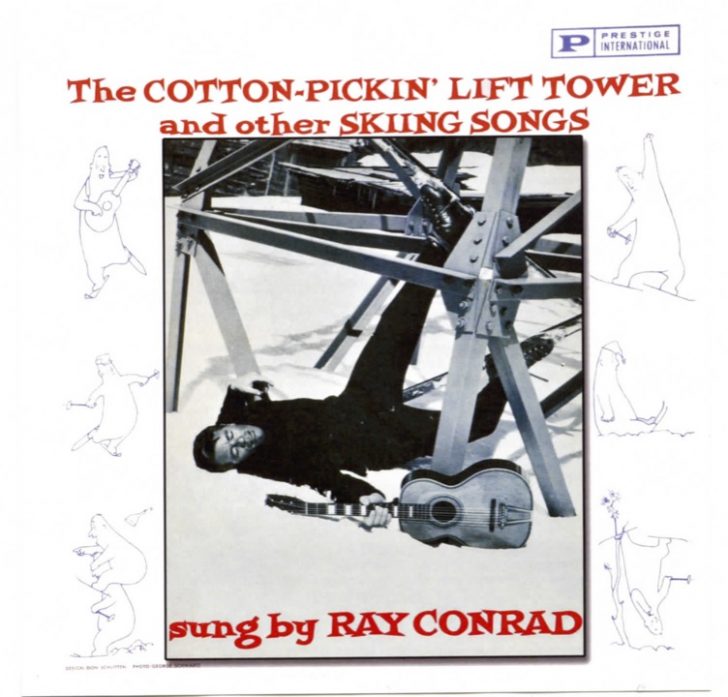
Coming Soon: Ski Songs From The 60s

Stay Tuned.

We’re close to announcing a fantastic opportunity to download Ray Conrad’s classic ski songs.  You asked for them; we got them.

COMING SOON! Ski Songs From Ray Conrad.


Baby, It’s Cold Outside. Really Cold.

Here Are 10 Tips For Seniors Dealing With Cold Cold Temps.

Ah, a balmy 0 degrees. In New England lately, 0 is the new 40.
Credit: Tamsin Venn

I posted here awhile ago about the benefits of skiing in the rain. Another unpopular time to ski is in extreme cold. The upside is you have the slopes to yourself. Unless you don’t. When skiing in Stowe over the recent holiday in frigid conditions, I was astonished by the hardy crew of skiers out on the slopes. A lot of that comes down to the increased quality of insulated layering…plus high speed quads.

Here are ten tips for seniors for skiing in cold temps.

  • Take frequent breaks inside to stay warm. Wind is the main factor to consider. Your body loses heat faster in the wind and makes it feels colder than it really is. But note that wind chill is a highly variable condition. Meteorologists revised the calculation in 2001 with much less austere conclusions. Ski area snow reports often cite the wind chill factor, but google the formula for a more precise reading. Take gusts into consideration. Ride the gondola, tram, or bubble lift for added protection.
  • Stick ’em up. When it is this cold, you got to mask up.
    Credit: Tamsin Venn

    Dress like a robber. Exposed skin loses heat first. Cover every bit of your face and neck with ski goggles and a balaclava, the best way to prevent gaps. Get one with a ventilation flap to improve breathing. Put your hood up.

  • Keep hands and feet warm. Long-lasting hand (ten hours) and toe (six hours) warmers are a cheap heat supply when bought in bulk at the hardware store. Follow the kids’ lead and put the toe warmers on top of the toes, not the bottom where they get mushed up. Ditch the gloves. Wear mittens. Some mittens have slots for heaters.
  • Invest in a boot heater. Boot heaters have come a long way with battery-operated heated insoles where you use your smartphone as the remote. For low tech, put toe warmers in your boot before you leave for the mountain.
  • Add a layer. A down or fleece vest to heat the core is a good option. Wear wicking layers next to the skin. Avoid, avoid, avoid cotton anywhere down below your outer layer
  • Drink lots of water. Cold air and intense exercise means you lose more vapor when you breathe, which leads to dehydration.

Cold strategies of old: Knitted face mask/racoon coat. From the Vermont Ski and Snowboard Museum.
Credit: Tamsin Venn

  • Take a friend or family member skiing. To sidle up to on the lift or check for frostbite. Early signs of frostbite include red or pale skin, prickling, and numbness. Discuss bailout options, so no one is waiting in the wind for the other to catch up.
  • Don’t try anything too fancy. You may stiffen up in the cold. Ski early in the day, for fresh grooming or powder. Follow the sun for visibility and warmth.
  • Save the Snuggly Snowman hot chocolate concoction for the end of the day. Alcoholic beverages swipe heat away from your core, as they send blood and warmth to the vessels near your skin. Outside, you lose heat quickly.
  • Make a leisurely day of it. You’re not going to rack up the vertical feet on your app today. Remember when we all went out into the cold no matter what as a badge of honor of being real skiers? Ditch that concept.

Spruce Camp Base Lodge at Stowe, VT, is calling. Time to head inside. Notice no one on the slopes.
Credit: Tamsin Venn

Seasons Greetings From SeniorsSkiing.Com


SeniorsSkiing.Com Salutes Our Veterans

Thank You For Your Service.

For a history of the 10th Mountain Division from Snow magazine, click here.

This Week In SeniorsSkiing.com (Sept. 15)

Down Under Snow Reports, Experticity Update, Early Winter Forecast.

A unique arrangement: No lifts at Charlotte Pass in Australia, just a 30-minute Sno-Cat Ride each way to the slopes.
Credit: Bernie Weichsel

While we start thinking about buying season passes, contemplating new boots, and enjoying the last of summer activities (btw: great sailing in New England these days), the snows of Australia have been falling mightily.

We have two reports from the land of Down Under.  One focuses on the massive amounts of snow currently covering the ski hills of Victoria and New South Wales, Australia. Folks, it’s yet another weather phenomenon; it’s the most snow in a decade. Thanks to Snowbrains.com for bring this to our attention.

The second report comes from Ski and Snowboard Show Impresario and SeniorsSkiing.com advisory council member Bernie Weichsel who has just returned from a three-week trip to New Zealand and Australia.  His report is a really interesting guide to some of the most popular ski hills in those countries as well as some differences in how resorts are run done down there. Thanks, Bernie.

Last week, we published an update on the new Experticity application process for our subscribers. We are publishing it again because we know that right now and the next few weeks are the start of the equipment and clothing buying season. The discount policy offered to our subscribers is different than before, and it requires that a subscriber demonstrate some type of “professional” connection to the ski industry. There’s contact information for Experticity if you have questions.

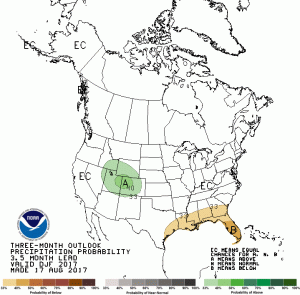
Meanwhile, the National Weather Service Climate Prediction Center has published its early winter forecast. Here are the late-fall, early winter maps from the NWS.

Precipitation forecast: Sept-Nov 2017

Temperature forecast: Sept-Nov 2017


So, above average precip in the Rockies and Wasatch, a drier Florida, and/but above average temps radiating out from Arizona. However, do not place your bets yet.  We also hear from the folks who monitor the El Nino Southern Oscillation (ENSO) that the waters off western Peru are “neutral”, not too hot, not too cold.  Since the ENSO drives a lot of the weather in North America and around the world, having a neutral ENSO makes the forecast much more difficult to predict.  Again, these predictions are merely placeholders in an ongoing story.  We will be watching and will let you know what evolves.

Thanks for subscribing to SeniorsSkiing.com.  We very much appreciate your presence and your input.  If you’re interested in a free and wonderful 3″ x 3″ SeniorsSkiing.com sticker, please send a self-addressed, stamped envelope to: SeniorsSkiing.com, Box 416, Hamilton, MA 01936.
And remember, there are more of us every day and we aren’t going away.

Oz And EnZed: Skiing The Antipodes

Ski And Snowboard Show Impresario Bernie Weichsel Reports On The Down Under Scene.

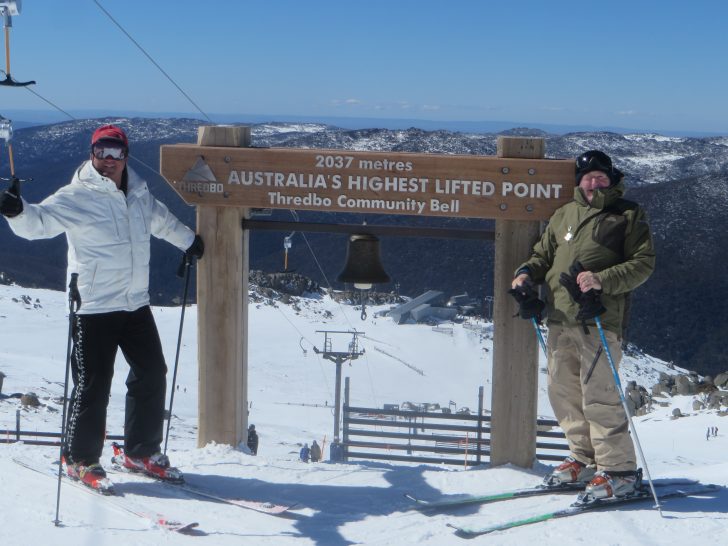
Bernie (r) at Thredbo’s highest lift.
Credit: Bernie Weichsel

For most of us in the international ski community, whether here in the US and Canada, or within the Alpine countries of Europe, there is good news to be found in Australia and, to a lesser degree, New Zealand. Over the past three weeks, I had the opportunity to visit a number of ski areas in New Zealand’s South Island and in Australia’s states of Victoria and New South Walks. I skied at the four areas around Queenstown and Wanaka (The Remarkables, Coronet Peak, Cardrona and Treble Cone and in Victoria (Mt Buller and Falls Creek) and New South Wales (Skiing at Perisher, Thredbo, and the unique Charlottes Pass. I am glad to report in both countries skiing, and, in contrast to the US at least, snowboarding, too, seemed to not only being doing well, but to be thriving.

Skiing The Remarkables, Queenstown, NZ. Anyone notice any hobbits?
Credit: Bernie Weichsel

New Zealand areas’ growth seemed to be coming from visitors from Asia. There were loads of Chinese and Koreans, plus a lot of athletes from Northern Hemisphere countries taking advantage of the snow to prepare for the upcoming Olympics, including Lyndsey Vonn among other US athletes.

But it was in Australia where the growth in the local market was most evident. All the resorts I visited were crowed with families and students, and it wasn’t even vacation time. Resort management all said that they were witnessing growing interest and participation in SnowSports which might be the only SnowSports market in the world where that can be said!

One effort that is propelling growth is a program called Inter-School, a regional wide, multi-discipline, competitive program with local races that lead to regional events and ends in a National Championship. The regional event I saw at Mt Buller—the Victorian State Championships—had 6,000 participants, in many cases, with their parents on hand for a whole week. I am not aware of a similar program in our country. I presume the best analogy is an NCAA program but for High Schools. We all know how school programs for soccer, football, etc. dominate American youths’ time and keeps them—and their families—away from the slopes. Maybe the Australians have found something for us to think about!

All the resorts had decent facilities—from lifts, snow-making and day lodges—and pretty good grooming. New Zealand, for us spoiled North Americans, is a bit of a challenge since there is virtually no on-snow lodging. Most of the lodging is in Queenstown and Wanaka, where it almost never snows;  to get to the skiing you must drive with chains always at the ready in your “boot”—or take a bus.

Weather is also a consideration in New Zealand since all the skiing is above timberline, leading  to some serious white-outs when the clouds hang low, which is often.  But the snow quality is good, the runs decently long— think Northern New England. When it is clear, you can see some of the most stunning scenery anywhere.

Australia, on the other hand, has lodging right on the mountains making it possible to ski in, ski-out. However, the mountains are not as high as New Zealands’ and are wider rather than high, that is, many runs over a number of hills.  That is, except for Thredbo which has a vertical of about 2,000 ft. What really intrigued me was how popular skiing was given that in Australia, there were many road-blocks one has to overcome to get the mountains.  You have to pay an entry fee to enter the Park; all the ski resorts are in state or national parks, you have to pay to park and again pay for a snow taxi to take you to your lodging—not in all resorts but the majority.  And lodging isn’t cheap. The resorts, though, have copied—or might have pioneered—the idea of expensive day tickets versus reasonable priced season pass.

Usually, so I was told, New Zealand gets the better snow.  But, during my visit, it was the opposite: I had basically spring skiing in New Zealand and super mid-winter conditions in Australia—packed powder and blue-bird days. And recently Australia’s resorts have had some of the biggest snow dumps in almost two decades!

One oddity worth noting. The small area near Perisher, Charlottes Pass, might be —I can’t think of any other resort that can only be accessed—in and out—by Sno-Cat . It’s a 30-minute ride each way. Nice, but small skiing, once you get there,  and it’s pretty private and worth the effort.

A unique arrangement: No lifts at Charlotte Pass, just a 30-minute Sno-Cat Ride each way to the slopes.
Credit: Bernie Weichsel

Fitness Focus: Plank, Plank, Plank

This Pose Is Considered The Simplest, Most Effective Core Strengthener.

Pretty basic, but effective. It’s easy to do it incorrectly so study up.
Credit: Yoga Lily

“Plank, plank, plank,” says Jan, the exercise instructor at the head of our class.  After an hour of kick boxing, we start the floor exercises to end the session.  We get into plank position as she intones, “Plank, plank, plank”. The seconds roll by.

High plank or Phalakasana pose. The most glorious of simple exercises, body weight held in place by core strength.  Arms, wrists, shoulders, lower back, abs, gluts, all working to hold the position.

The proper plank position can be found by putting your hands under your shoulders, extending up to a full, high plank on your toes, body a straight line from heels to back of head, eyes focused about a foot ahead of you, chin tucked. Basically, it’s like the top of a push-up, making sure your body is straight and not sagging or arched. While you’re up there, you can flex your feet, bend one knee in, then the other. Put one foot’s toes on the heel of the other foot, then switch. If you hold yourself still, you can feel your muscles adjusting and keeping you balanced.

High plank can be modified by resting on your knees versus your toes. That might be a good place to start if you haven’t done core exercises in a while.

If your wrists are sensitive, you can support yourself on a pair of dumb bells or yoga blocks. If you have hand or wrist issues, like carpal tunnel or rotator cuff, you’ll have to get some advice from a physical therapist or yoga instructor to help mitigate those conditions.

You can also move from high plank to low plank, moving down to resting on your forearms, arms extending in front of you, one arm at a time.  Then, back to high plank.  And then down to low plank. Do this slowly while mindfully keeping your body in a straight line position.  Man, that’s a work out.

The benefits are impressive; you get toned up in the middle, and you will find yourself using those newly strengthened core muscles to support your back when lifting, twisting, even walking.  We’ve found that lower back problems can be addressed with a strong core.  Your posture will improve, too. Your mileage may vary, but plank and other exercises focused on the core can definitely help that lower back.

The experts say you should shoot for 30 seconds as a beginner to get into this.  Eventually, if you can hold plank for two minutes, you’re doing very well.

You can find more advice from experts on how to safely and properly do plank here.  Jen Reviews has a number of pointers and caveats on doing this exercise.  More advice from the Yoga Outlet here.   Jen Reviews sums up the major benefit of planking:

Planks are a very versatile exercise that target a lot of the most important muscle groups in the body. The core muscle groups are responsible in some way for helping us carry ourselves through almost every action we’ll perform in a day, so making sure your core strength is in check is absolutely vital for someone who wants to leave a healthy lifestyle.

Plank pose is also one of the Sunrise Salutation series of connected poses that cycles through all your muscles, flexing, and strengthening all of you.  We’ll talk about the Sunrise Salutation in another Fitness Focus because it is a really awesome way to start the day.

You can incorporate plank as well as last week’s squat exercise along with others in a regime of strengthening, stretching and flexing that will keep you feeling good.

As with all new activities, please consult your doctor, physical therapist or exercise professional if you have any issues that might cause concern.


Cycling Series: Around Old Seattle

Biking With A Mission: Hit The Historic Parts Of Town.

Editor Note: You can download a cue sheet for this “Forgotten Seattle Bike Tour” by clicking here which will take you to correspondent John Nelson’s blog. 

Start the ride at Occidental Park, once a salt marsh. Historic bike rides bring a new dimension to a city. Credit: John Nelson

It turns out the bicycle is a great time machine.

I recently devised a tour to take in some of Seattle’s most famous historic sites. You can do it too, no matter where you live. Using a bike and a little imagination, it’s fun to explore your city in different way.

Come along on my 23-mile tour back to the 1800s, and let’s see what was happening here in Seattle.

Pioneer Square

Our journey begins in Occidental Park. Today it’s a vibrant brick-covered gathering place, but when the first settlers came to Seattle, it was a salt marsh.

As we travel three blocks north toward Yesler Way, notice how wobbly the ground is. You can thank the workers of Yesler’s Mill, who started filling much of this ground with sawdust as the city was being built. Streets throughout this part of town are uneven and unstable, as fill material was added over the years, including the refuse from a major fire in 1889.

Shoreline to Denny Hill

Heading north along Western, imagine we’re traveling on the shoreline of Seattle. Back in the 1850s, this was the waterfront—none of those piers 300 yards to the west were here.

As we pass Spring Street, take a moment to look up the hill to the east. Nine springs provided water to the early settlers in the city, and Spring Street is named for the biggest of these. To appreciate this spot, let’s take a long drink from our water bottles, and continue north toward what is now Pike Place Market.

From the market, it’s time to do some climbing, although today, our climb is much shorter than it would have been in the 1800s. Denny Hill once stood between Pike and Cedar Streets, now called Belltown.

Starting in 1897, the hill was shaved off in what is known as the Denny Regrade. Over the next 33 years, giant hoses, dynamite and steam shovels were used to remove the top 120 feet of the hill in the name of growth and development.

Lake and Forest

For now we’re done with historic downtown Seattle. Our journey takes us south and east, toward Lake Washington. But we’re not done with regrades—our tour takes us along Jackson and Dearborn streets, both of which were regraded to help the city grow bigger.

The regraded streets are nice for biking today, but back in the 1800s they were quite hilly. Jackson at one time had a 15 percent grade. In the early 1900s, the city’s busy earth-movers shaved down Jackson and Dearborn, using the dirt to fill in much of what is now the SoDo neighborhood of Seattle.

Hopping onto the Mountain to the Sound Greenway, we travel through a tunnel to Lake Washington and down to the lake shore.

Heading south along Lake Washington Boulevard, we travel to Seward Park, one of the few places we can still see old-growth trees in the city.

Along the Duwamish

Leaving Seward Park, we ride west over Beacon Hill to a pioneer farming location, Georgetown. It’s an arty, hipster hangout now, but back in the 1800s, Georgetown was on the edge of the tidal flat and had rich alluvial soil deposited by the Duwamish River.

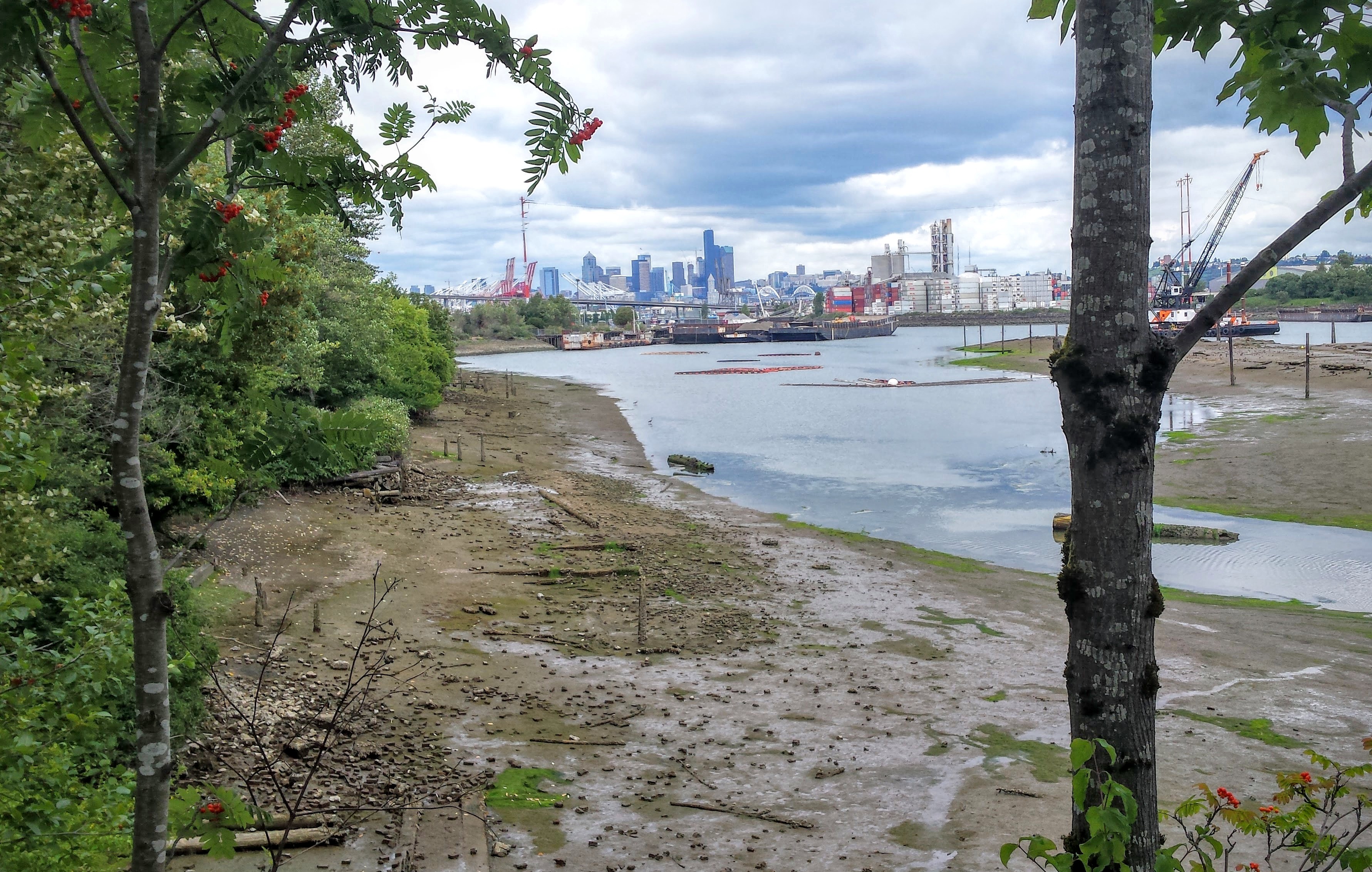
Duwamish River, looking to downtown Seattle, used to meander through the salt marsh.
Credit: John Nelson

Today, the Duwamish River is a major industrial waterway, engineered to handle huge ships. Little remains of the old river that once wound among the mud flats.

But we can see a hint of the past at Terminal 107 Park, the site of a former Duwamish Indian village. Step off your bike and take a walk along a gravel path to the shore of the river.

As we peek at the earth along the riverbank, we may find evidence of a middena place where shells and refuse were discarded by native people.

The home stretch

From here, we’ll be riding back through the stadium district to our starting point. Hopping on the West Seattle Bridge Trail, we pedal into SoDo and take in the former tidal flat. If this was 1850, we’d be under water now, or at least stuck in the mud.

Hear that crowd roar? It’s the sound of modern times as we pass Safeco Field (Seattle Mariners) or CenturyLink Field (Seattle Seahawks, Seattle Sounders) back into Pioneer Square.

Shells are visible in the embankment of Terminal 107 Park in what is called a midden, where Native people discarded refuse.
Credit: John Nelson

_____

John Nelson is a freelance outdoors writer based in Seattle. Follow his blog at skizer.org.

This Week In SeniorsSkiing.com (June 2)

We’re Starting Our Summer Schedule!

From Memorial Day to Labor Day, SeniorsSkiing.com will be publishing on a bi-weekly basis.  We’ll still be continuing our Cycling Series, our new Fitness Focus, articles about hiking, profiles of senior skiers, and interesting places our readers and correspondents are visiting.  And, we’ll be publishing our list of 78 Trailmasters, super senior skiers who skied their age and more last season.

So, see you next week with more stories.  As for now, there’s this:

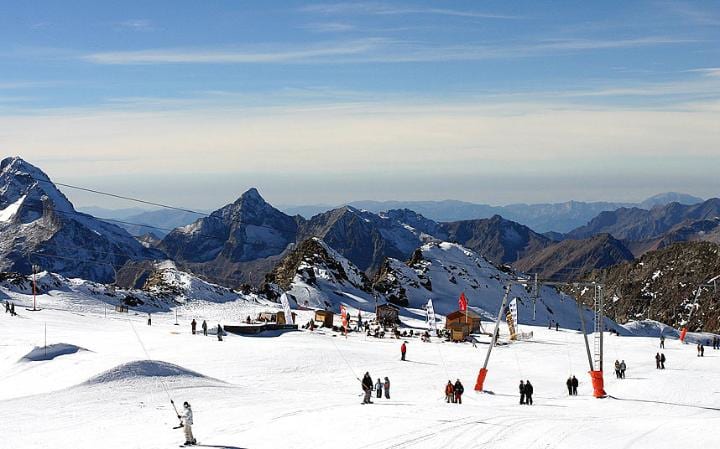
Where To Ski In Summer: Best Glaciers For Skiing [From The Telegraph (UK)]

Les Deux Alpes has skiing all summer.

Click here to link to the Telegraph article.

Fitness Focus: Do You Know Squat?

Squat Lately? Try It Every Day For A Week And See What Happens.

Editor Note: This week marks the beginning of our summer exercise series, Fitness Focus, where we will highlight one particular exercise, activity, stretch, or pose that leads to increased strength and flexibility.  Our first is the ubiquitous, simple, and under-appreciated squat.

Did you know the squat sit, or the crouch—feet planted shoulder width, as flat on the ground as you can get them, backs of thighs on calves—is one of the most useful and healthy poses you can assume at the gym, at home, or anywhere?

Hanging out in the squat sit is common in many parts of the world.
Credit: Asian People Like

If you’ve traveled in Asia, you’ve seen squat toilet facilities, people chatting with neighbors while squatting, and even squatting while waiting for trains or buses. Children everywhere squat, too, playing in the sand or around a collection of toys. The squat position is a natural pose, something we have grown out of as we grow up and sit at desks and on chairs. Yet, the squat is a powerful and effective position you can use for flexibility as well as strength training.

You can simply squat sit, or you can raise and lower yourself with or without weights.  Learn how to do a body weight squat by clicking here.

Jamie Lauren Keiles’ recent “Learning To Squat” in The New Yorker extols the virtues of this simple exercise. She writes,

“Squatting involves the whole body. The legs and the hips control the lowering motion, while the abdominals and the lower-back muscles work to stabilize the torso. Add a weighted barbell along the span of the shoulders, and the deltoids and the arms become implicated, too. Weight-bearing squats help to improve balance and flexibility and build muscular strength. In a squat’s concentric phase, as the legs extend to stand, the gluteus contracts to pull the hips forward.”

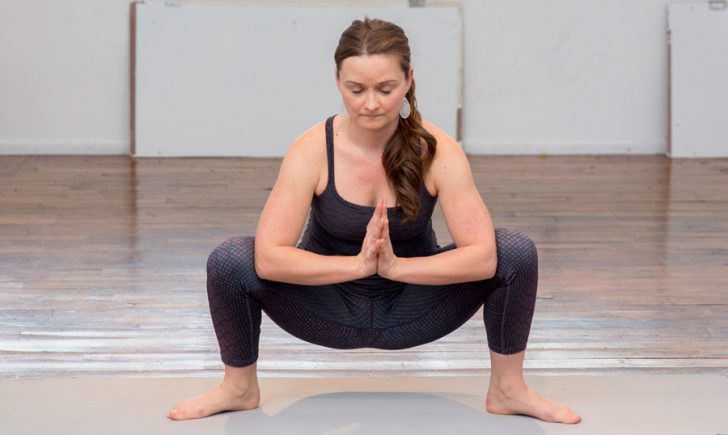
Malasana or garland pose is a squat sit that might be a good place to start.
Credit: REI

You don’t have to flex up and down to get the benefits of the squat position.  In yoga, you can assume malasana or garland pose, where you assume a wide stance—almost a plie position, squat down, lowering your hamstrings to your calves, putting your elbows inside your knees and your hands in front of your chest. Hold that for 30 seconds, gradually building up to a minute or so, and you will be stretching lower back, glutes, hamstrings, inner thighs, and working your core.

From the NYTimes Magazine, What’s the Best Exercise?:

“I nominate the squat,” said Stuart Phillips, Ph.D., a professor of kinesiology at McMaster University and an expert on the effects of resistance training on the human body. The squat “activates the body’s biggest muscles, those in the buttocks, back and legs.” It’s simple. “Just fold your arms across your chest,” he said, “bend your knees and lower your trunk until your thighs are about parallel with the floor. Do that 25 times. It’s a very potent exercise.” Use a barbell once the body-weight squats grow easy.

Click on the picture to learn how to do a body squat.
Credit: New York Times

So you have options: squat with or without weights, flexing up and down, or assume the malasana or garland pose.

To state the obvious, if you have any issues with knees, hips, or lower back, you may want to consult a trainer, physical therapist, or your physician before you try any squatting variation.

This Week In SeniorsSkiing.com (May 19)

Cycling Series Begins, Ski Video Compilation, Survey Comments, Publishing Schedule News.

Night skiing under the North Lights. See the compilation video in this week’s edition.
Credit: Good Time With Rider

This week, you can see that we are shifting focus to summer activities.  We know our readers are also cyclers, hikers, kayakers, and to a lesser extent, golfers and fishermen.  With that in mind, here’s the first of our cycling series for this season.

Correspondent Pat McCloskey tells us about his early season mountain bike ride in Happy Valley in Central Pennsylvania. If you’re into mountain biking, you can appreciate Pat’s challenge in keeping up with a bunch of younger spinners who climb gnarly, rugged, rock-strewn trails with vigor.

Roger Lohr, publisher of XCSkiResorts.com, reports on an adaptive bike program in Vermont that will host vets and people with disabilities all summer long in different locations. If you are in the area, you might want to check in and see if you can help out.

Trails at Rothrock require some technical skills.
Credit: Pat McCloskey

Finally, we have a compilation video depicting skiing from all ends of the spectrum, from silly and zany to serious and thrilling.  It’s a tribute to the unbeatable 2016 season and worth a four-minute view.

We are compiling our list of Trail Masters, those readers who have “skied their age” this past season.  We have an amazing list of over 150 names to vet and are getting it ready for publication soon.

Speaking of our survey, we want to respond to some comments that seem to have come up frequently, based on a scan of the data. This is not a thorough analysis, just a quick hit:

  1. Our readers want us to provide information on discounts and lobby ski resorts for additional price breaks for seniors. Roger that and will continue to do even more.
  2. You want to connect with other senior skiers.  We hear that loud and clear.  First step, go to COMMUNITY in the top menu, scroll down to Find Ski Buddies With NSCF, which is the National Ski Council Federation, an umbrella organization for ski clubs in the US, and find a club near you. Then, check out 70+ Ski Club, one of our fantastic advertisers.  Also add a comment in our FORUM under the COMMUNITY menu.
  3. Many comments revolve around reporting on resorts.  Our correspondents will be fanning out next season to add even more Resort Reviews to our collection.  By the way, we welcome contributions from our readers.  Let us know what you have in mind, and we’ll send our submission guidelines.
  4. Video submissions: You want to see them from other seniors, and so do we.  Please send our clips.  Keep them short, 3-4 minutes.  We started a collection, have only two on the site, and we welcome more. If you post them on Youtube, it is an easy pick up for us.
  5. Lessons, technique, skills.  You want advice for seniors on adapting to changing abilities. We will take that on board as a to-do for next season.

There’s much more, of course.  We will analyze and learn from your valuable comments.

One comment did get to us in a very good way.  One of you wrote, “You’re on a significantly important mission by providing an excellent quality read.” Tears in eye, man.  Thanks.

Finally, our readers are still vexed with the problem of having to re-enter email addresses. Here is how to resolve this problem:

If you are being asked to re-enter your email to confirm your subscription to SeniorsSkiing.com, you might be a bit annoyed.  We don’t blame you, but there is an explanation.

  • You are accessing SeniorsSkiing.com through a device that is different from the one you originally signed up on. Subscribing to SeniorsSkiing.com puts a “cookie” on your device.  If you use a different device, no cookie, so you are viewed as a non-subscriber. If you re-enter name and password, you’ll be okay with the new device.
  • You have disabled cookies or cleared browser history on your device. Turn cookies back on, and you’ll not have to re-enter again, or leave it disabled and realize you have to re-enter each time.  Your call.
  • You are trying to access our Subscriber-Only Content.  Instead of building a firewall that requires usernames and passwords, we elected a much simpler way of getting to our exclusive content: Just confirm your name and email.  You will have to do that each time you want to get to that information, which, by the way, is under the Community tab at the top.

Finally, finally, we are considering changing our publishing schedule from weekly to bi-weekly for the summer months.  The new schedule will start at the beginning of June.

Once again, thanks for reading SeniorsSkiing.com, tell your friends, and remember, there are more of us every day, and we aren’t going away.


Vets Take Part In VT Adaptive Bike Program

Special Bikes Available At Different VT Locations This Summer.

[Editor Note: This article first appeared in XCSkiResorts.com; we thank Roger Lohr, editor-in-chief, for sharing this with SeniorsSkiing.com readers.]

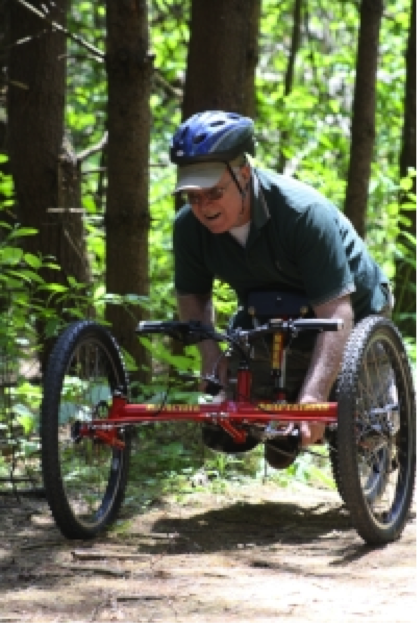
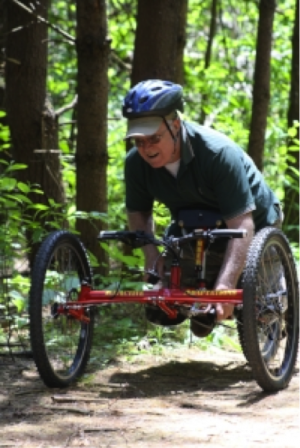
Adaptive bikes make it possible to get to the top of the trail. Each one is handmade.

The Vermont Adaptive Ski and Sports organization’s new Adaptive Mountain Bike Program, which is one of the first in New England offers special dates for outings in various location and limited adaptive mountain bikes to use. All abilities are welcome and participants may bring their own equipment as well.

The program is scheduled at multiple locations with outings and events planned for all level mountain bikers who have their own equipment. In addition, four adaptive mountain bikes are available for participants on a first-come, reservations-based system.

These highly adjustable bikes are ideal for individuals with spinal cord injuries, amputations or limb differences, or balance and motor skill disabilities. Vermont Adaptive purchased the bikes last summer with funding from the US Dept. of Veterans Affairs grant and Phil Black, owner of Lookout Tavern who donated monies for Vermont Adaptive to purchase a trailer for hauling the bikes to various locations statewide.

“Participants gain a sense of accomplishment when reaching the top of the mountain and that is great to see,” said Kelly Walsh, Vermont Adaptive program coordinator, who is responsible for Vermont Adaptive’s veterans programs.

For 2017, the US Dept of Veterans Affairs again awarded Vermont Adaptive grant monies to help purchase 10 two-wheeled mountain bikes and 10 bicycles for use on recreation paths. These bikes will be added to the existing fleet, allowing participants who don’t need to use an adaptive bike to get outside, exercise and socialize with other veterans, to enjoy Vermont alongside their peers with physical disabilities.

The custom hand cycles are crafted specifically for rocky terrain with unique hand cycles that are designed for adaptive riders to cruise down the trails smoothly.

There is open enrollment for free to the mountain bike program this summer. Although Vermont Adaptive will have a limited number of adaptive mountain bikes for use, all adaptive riders are encouraged to bring their own bikes and participate in any of the summer events. Reservations are required for programming and equipment use.

The schedule will kick off with the Summer Solstice Bike Ride on June 21 at Blueberry Lake in Warren, VT followed by the Mountain Bike “Snowshed Session” on June 24 at Killington Resort. Other events include the Green Mountain Trails Bike Ride is July 9 in Pittsfield, the Blueberry Lake Bike Ride on July 9 in Warren, the Vermont Mountain Bike Association Festival on July 21-23 in Warren, the Killington Bike Ride on July 29 and the Pine Hill Park Bike Ride on August 13 in Rutland. This program is limited to Vermont but you can look for similar programs in other regions across the country by contacting organizations that resemble Vermont Adaptive.

This year’s Killington Resort Adaptive Event for Independent Riders will also have bike demos “encouraging adaptive awareness for proper use of hand cycles,” said Olivia Joseph, Vermont Adaptive program coordinator and organizer of the adaptive mountain bike program.

The program is seeking volunteers who have an interest in mountain biking and for further info, contact Olivia Joseph at north@vermontadaptive.org.

The custom hand cycles are crafted specifically for rocky terrain with unique hand cycles that are designed for adaptive riders to cruise down the trails smoothly.

There is open enrollment for free to the mountain bike program this summer. Although Vermont Adaptive will have a limited number of adaptive mountain bikes for use, all adaptive riders are encouraged to bring their own bikes and participate in any of the summer events. Reservations are required for programming and equipment use.

This Week In SeniorsSkiing.com (May 12)

More Ticks, More Storage Ideas, Sharks That Swim Under Snow, Oh Boy.

Don’t go near the…snow. Avalanche Sharks are out there.

Thanks to all our readers who responded to our SeniorsSkiing.com Spring Subscriber Survey 2017.  We had an incredible 28 percent response rate. If you are familiar with surveys, you will instantly see that is an extraordinary number.  Our readers—you guys—are definitely engaged in our online magazine/community.  And the comments and advice you offered were wise, humbling and most encouraging.  We are very grateful for your input.  More on what we learned later.

One thing we learned immediately from scanning the responses is that many readers looking for other people to ski or travel with. There are at least two avenues to pursue:

  1. Check out the 70+ Ski Club, a group of seniors who ski together on trips around North America and Europe.  [You don’t have to be 70+ to join, by the way.]
  2. Find a ski club near you. We have partnered with the National Ski Council Federation—an umbrella group of ski clubs across the US—and have posted a link to their map of clubs.  Just go to the map, click on your city and you will get names of ski clubs and the email addresses of club officers.

As for this week, we continue some themes from last week. Correspondent Val E., a specialist in retail and ski industry products, adds tips for the careful storage of gear over the summer. A few simple steps now can avoid complex steps later.

Steve Hines, our outdoorsman and Wilderness First Responder, offers Part 2 on the tick infestation we are experiencing. This time he discusses treatment and prevention. This is serious business folks; he also reminds us to pay attention to the Powassan virus, another tick-carried disease that is serious and even deadly.  If you spend any time in the woods this summer, this is important stuff.
Finally, we have a movie review to share.  Avalanche Sharks is a modern monster movie featuring an avalanche, a bikini contest at a ski resort, and sharks that swim under the snow. Seriously, that’s the plot.  Check out review and see the trailer here.

Finally, finally, here’s why you may be asked to enter your email address when you come to SeniorsSkiing.com.  It’s the most common comment/complaint we get here at SeniorsSkiing.com World Headquarters.

If you are being asked to re-enter your email to confirm your subscription to SeniorsSkiing.com, you might be a bit annoyed.  We don’t blame you, but there is an explanation.

  • You are accessing SeniorsSkiing.com through a device that is different from the one you originally signed up on. Subscribing to SeniorsSkiing.com puts a “cookie” on your device.  If you use a different device, no cookie, so you are viewed as a non-subscriber. If you re-enter name and password, you’ll be okay with the new device.
  • You have disabled cookies or cleared browser history on your device. Turn cookies back on, and you’ll not have to re-enter again, or leave it disabled and realize you have to re-enter each time.  Your call.
  • You are trying to access our Subscriber-Only Content.  Instead of building a firewall that requires usernames and passwords, we elected a much simpler way of getting to our exclusive content: Just confirm your name and email.  You will have to do that each time you want to get to that information, which, by the way, is under the Community tab at the top.

Next week, we’ll get into more summer activities. For now, we are experiencing a cool and wet mid-Spring  here in New England.

Thanks for reading SeniorsSkiing.com.  And remember, folks, there are more of us every day and we aren’t going away.

What’s Biting You? Part Two: Treatment And Prevention

[Editor Note: This is Part Two of a two-part article on Lyme disease by Steve Hines, outdoorsman and Wilderness First Responder. Click here for Part One: What’s Biting You?]

Treatment

The best treatment for Lyme disease bacteria is antibiotics. According to the Centers for Disease Control (CDC), “Patients treated with appropriate antibiotics in the early stages of Lyme disease usually recover rapidly and completely.” Patients with certain neurological or cardiac forms of illness may require intravenous treatment.

However, the National Institutes of Health (NIH) tells us, “Physicians sometimes describe patients who have non-specific symptoms (like fatigue, pain, and joint and muscle aches) after the treatment of Lyme disease as having post-treatment Lyme disease syndrome (PTLDS).”

So, don’t assume that because you and your doctor caught it early, and you took a course of antibiotics that you need not be careful. This is the case especially for seniors, since one symptom is cognitive impairment. The question comes up, “What’s normal age related ‘forgetfulness’ and what’s a lingering symptom of my Lyme disease?”

Prevention

It seems, then the best treatment for Lyme disease is prevention.

And prevention falls into two categories:

1. Personal protection

The first line of defense is protection when outdoors. Personal tick sprays use the chemical DEET.

The CDC recommends 30-50% DEET to prevent the spread of pathogens carried by insects, and it should be applied every 3-6 hours

Examples of tickproof gators. Worth it if frequently in high scrubs.

Finally, a number of outdoor clothing makers offer clothing in which the fabric’s threads are infused with permethrin. Hats, shirts, pants, socks, bandanas and gaiters are available from brands including Outdoor research, Orvis, ExOfficio, Craghoppers all offer these clothing pieces. Check with your local outdoor retailer.

Clothing containing the insecticide Permethrin (also known as Nix) is effective. Products like Sawyer’s Permethrin Spray can be squirted on clothing to make it tick (and mosquito) repellent.

Once you gear up with these products, don’t get overconfident. The critical activity for Lyme disease prevention is to inspect yourself from head to foot thoroughly when you come indoors. Ticks like warm dark moist places—so you know what that means for inspection.  Don’t be shy.

2. Controlling ticks in the environment.

CDC experts suggest that, in the absence of a human vaccine for Lyme disease, “no single method will be sufficient to substantially reduce Lyme disease.” Therefore, a main goal of researchers is not only to develop new treatment methods, but to assess the effectiveness of combined treatments for habitat.

What’s a potential habitat for Lyme? Richard C. Falco, of Fordham University has conducted research on this and asks questions including:

  • Is the property located in a Lyme-disease-endemic neighborhood?
  • Is there a history of tick bites associated with the property?
  • What is the proximity to woods?
  • Are deer observed on the property?
  • Is the property shaded?

If the answer is “yes” to all these questions, you should consider a tick-management plan from a professional. However, if the answer is “yes” to some of the questions, agree on a plan you are comfortable with given the estimated level of risk.

The deer tick is now carrying a disease more deadly than Lyme called Powassin. The CDC says approximately 75 cases of POW virus disease were reported in the United States over the past 10 years. But the danger is real and no cure exists. So, take precautions. [Editor Note:  As Steve suggests, Powassin is important to know about.  Click here for our SeniorsSkiing.com Powassin story from 2015.]

[A Final Editor Note: Our own SeniorsSkiing.com correspondent Suzie Winthrop alerted us to an important effort to better understand and fight Lyme disease. The Bay Area Lyme Foundation is asking people who get bitten to send the tick to them for analysis. You can learn more by checking out bayarealyme.org. They have been getting submissions from all over and will send you a report on your submission after it is analyzed.]

Find out how you can fight Lyme by submitting ticks from your area.

This Week In SeniorsSkiing.com (May 5)

Cinco de Mayo Skiing, Skiing On Stones, Why Re-Enter Name/Email?, Storing Skis, Ticks Are Coming.

Proof that more than one person has skied the scree in Austria.

The responses to our Spring Survey 2017 are rolling in.  Thank you for your encouraging comments and suggestions.  It is very heartening to know there are so many readers out there who are rooting for us and for senior skiing.  Yes, we are trying to promote senior discounts. And we will continue to highlight the “second-tier” ski areas where discounts are more generous and skiing more…relaxed.  And yes, we will have more articles on fitness and gear reviews.  So much helpful information.

If you haven’t responded, there is still time. We’ll send out a reminder soon.

Spring skiing in Arizona?  Who woulda thunk?  But here it is. Arizona Ski Bowl is celebrating Cinco de Mayo with open lifts. Click below to see short news story.

“Why Do I Have To Re-Enter My Name and Email Address?”

If you are being asked to re-enter your email to confirm your subscription to SeniorsSkiing.com, you might be a bit annoyed.  We don’t blame you, but there is an explanation.

  • You are accessing SeniorsSkiing.com through a device that is different from the one you originally signed up on. Subscribing to SeniorsSkiing.com puts a “cookie” on your device.  If you use a different device, no cookie, so you are viewed as a non-subscriber. If you re-enter name and password, you’ll be okay with the new device.
  • You have disabled cookies or cleared browser history on your device. Turn cookies back on, and you’ll not have to re-enter again, or leave it disabled and realize you have to re-enter each time.  Your call.
  • You are trying to access our Subscriber-Only Content.  Instead of building a firewall that requires usernames and passwords, we elected a much simpler way of getting to our exclusive content: Just confirm your name and email.  You will have to do that each time you want to get to that information, which, by the way, is under the Community tab at the top.

Co-publisher Jon Weisberg found a place in this whacky world where people ski on rocks.  Okay, we’ve seen skiers in canoes going down ski trails, surfers wearing skis, skiers in streets and urban parks, but this one gets the nutsy award.  Okay, maybe once to say you’ve done it, but not every weekend. Check it out.

Lyme’s tell-tale ring rash appears 36-48 hours after a tick bite.

Correspondent Steve Hines brings us the first part of a two-part series on Lyme disease. We know our readers are active summer people, many cyclists and hikers.  The news is that Lyme is spreading, no longer the exclusive disease of New England.  It pays to pay attention to this; having Lyme disease is a serious condition. The good news is it can be avoided.

Finally, Correspondent Don Burch gives us some tips on putting our gear away.  If you haven’t thought about storing your equipment with just a little TLC, now is the time to rectify.  We typically thrown our boot and ski bags down by the furnace after our last outing without so much as a fare-thee-well.  Not a good idea.


Our sticker, free with a self-addressed, stamped envelope.

Finally, finally, if you’d like a SeniorsSkiing.com sticker, please send a self-addressed, stamped envelope to SeniorsSkiing.com, Box 416, Hamilton, MA. 01936. We will send you a couple for sticking on things.

We appreciate our readers more and more every day.  Thanks again so very much for your responses to our new survey.  Keep ’em coming.  And remember, folks, there are more of us every day, and we aren’t going away.


What’s Biting You? Lyme Is Now A National Problem

If You Are Walking In The Woods This Spring, Be Wary Of Ticks.

[Editor Note: This is the first of a two part article on Lyme disease by Steve Hines, an avid outdoorsman and certified Wilderness First Responder.]

Lyme disease is a bacterial infection caused by the bite of an infected black-legged or deer tick. Lyme disease has become a nation-wide epidemic with 300,000 cases reported last year with a significant increase predicted for 2017. The highest concentration of cases has been the Northeastern United States including the New England states, New Jersey and Pennsylvania. Outbreaks will also occur in the west most noticeably in Colorado, Wyoming and Montana.

NPR has reported that back in the early ’80s, the disease wasn’t that big a problem. Cases were confined to two small regions: western Wisconsin and the area from Connecticut to New Jersey.

However, in 2015, the CDC reported Lyme is present in more than 260 counties. The disease shows up in Maine, swoops down the East Coast into Washington, D.C., and southern Virginia. Then it hops to the Midwest into northern Indiana, Illinois, Wisconsin, and Minnesota. There are also small pockets of Lyme on the West Coast. This map shows the extent of Lyme disease for 2015, the latest year for which complete date is available.

Lyme disease is no longer considered limited to the Northeast.
Credit: CDC

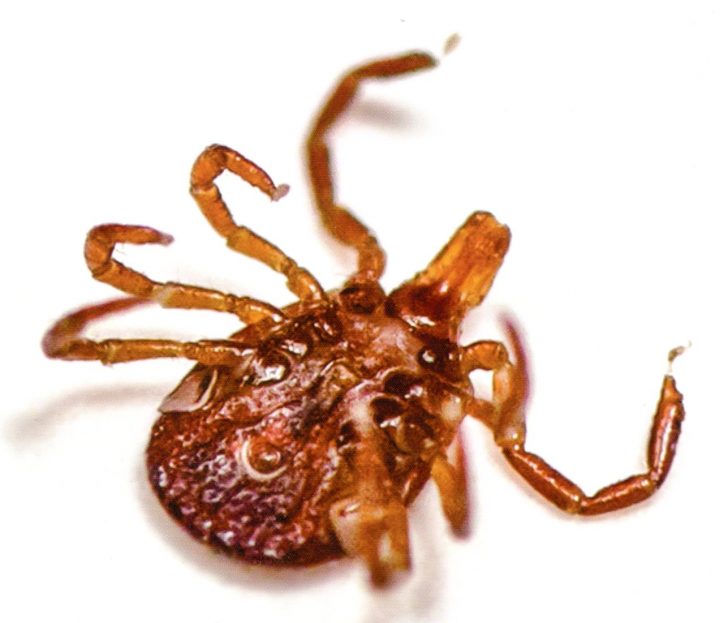
We are vulnerable almost anywhere outdoors. So, hikers, hunters and fishermen and gardeners are all susceptible. The size of the deer tick can vary depending on the sex of the tick, and its maturation state. Approximately the size of a sesame seed, a female adult deer tick measures about 2.7 mm in length. They are orangish brown but may change to be rust or brown-red in hue following feeding. The body becomes engorged after a meal and may expand considerably. Regardless, the deer tick’s body is approximately half as large as that of the common American dog tick.

According to the CDC’s Kiersten Kugeler. “In the Northeast, most people catch Lyme around their homes,” she says. “People out gardening. People playing in their backyard. Mowing the lawn.”  The ticks are transmitters of the disease, picking up Lyme pathogens from deer mice or other infected hosts.

Notice the cycle of Lyme and the tick life cycle.

Deer are hosts; Lyme is transmitted to ticks via mice or other infected organisms.
Credit: CDC

Diagnosis

The main problem in diagnosing Lyme disease has been physicians’ lack of education about it. Many doctors won’t recognize Lyme as an ailment. That denial caused a serious lag in treatment and investigation into an effective vaccine. Some victims have developed home remedies and antibiotics have been reasonably effective with early diagnosis.

Another difficulty has been how Lyme’s mimics other ailments like Influenza, chronic fatigue, arthritis.

The classic symptoms include fever, facial paralysis, joint and muscle pain and the classic Erythema migrans (EM) rash referred to as the “bullseye” rash. All symptoms of infected victims appear within 3 to 30 days, which is why early detection and diagnosis is critical.

Lyme disease is a real threat to our health. As seniors, if infected, we can be very sick and take a long time to recover—if ever (the disease if untreated can be chronic). Next week, we’ll discuss treatment and prevention.