Tag Archive for: senior skiing

This Week In SeniorsSkiing.com (Apr. 28)

Cat Skiing, A Record Number Of Resort Visits, Naming Ski Trails, Putting XC Skis To Bed.

How does lunch in the French Alps compare to the cafeteria line at your local resort? You kidding?
Credit: Richard Pazara

We think we may have struck a nerve in last week’s editorial on whither senior lift ticket prices in the age of resort consolidation and collaboration.  Check the comments. Will big-league destination resort prices be pushing seniors to less-traveled, second-tier areas? How will second-tier resorts react? Will you be looking for deals in your local area when your favorite spot snaps into line with corporate-no-senior-discount pricing? This is going to play out this summer at big and small ski areas when pricing settles down. Meanwhile, we suggest you look for season pass deals right now while early-bird discounts are in season.

We know there is another whole universe of Alpine skiing where there are no lifts, no lines, no crowds. Beyond Pluto? Nope, it’s just cat skiing, where a big machine takes you into untracked high country and picks you up at the bottom. In this week’s edition, correspondent Suzie Winthrop tells us what it’s like to yo-yo in perfect powder in a week of cat skiing in BC’s Selkirk Mountains.

We got an email from Richard Pazara, a retired executive, who wanted to know if we’d be interested in his adventures skiing around the world. What makes Richard’s story astonishing is that he’s skied at 1,241 resorts from Dubai to New Zealand.  Richard is a big league traveler. Not only has he racked up ski resort visits, he’s visited all 3,144 counties in the US over a 40 year span. And, all 32 states in Mexico, all Canadian provinces and 144 of the world’s 193 countries. He is ranked 78th of the world’s most traveled people. And he reports it’s mostly on frequent flier miles. He says he has a “strange accounting gene” that pushes him to remain in motion and keep track of every step.

Correspondent Don Burch brings us an interesting note on how ski trails are named or got their names. Have you noticed a theme to the trail names where you go skiing? What’s your most remarkable, notable, provocative trail name?

What’s in a name? A few resorts create a theme for trail names. Memorable. Cutesy. Provocative (?)
Credit: Don Burch

Finally, Roger Lohr of XCSkiResorts.com and Andy Gerlach of SkiPost.com team up to tell us how to put away our XC skis.  Please don’t just put them down in the basement next to the furnace. A little care goes a long away when next season’s snowflakes fly.

Meanwhile, we are getting our end-of-season Spring Survey 2017 ready to distribute to our readers.  Please watch for it soon in your email box.

Thanks again for reading SeniorsSkiing.com. Tell your friends, and remember there are more of us every day, and we aren’t going away.
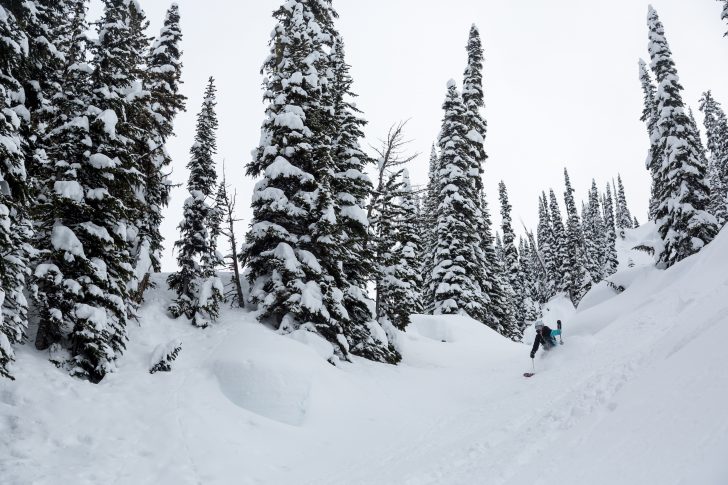
Suzie In The Selkirks

Run After Run Of Perfect Powder For Five Straight Days. Snowcat Skiing At Its Best.

Correspondent Suzie Winthrop found fresh powder every day. Can you see the smile on her face?
Credit: Steve Shannon

Do you dream of skiing in untracked powder?  Of course! We all do!  And most of us get one or two runs at resorts that offer “fresh tracks” early in the morning before the snow cats groom the trails. But soon you’re plowing through broken snow and by noon those freshies are a distant memory.

Snowcat skiing is a unique, albeit pricey experience with fresh powder every day.
Credit: Selkirk Snowcat

How about skiing run after run of perfect powder for five straight days? Run after run of power up to your knees, day after day. Impossible, you say. Well, this past March a group of us found Nirvana in the Selkirk Mountains of British Columbia.

It snowed every night.  In the morning, our tracks from the previous day were nowhere to be seen. We accessed the terrain by snowcats which accommodated 12 skiers plus two guides.  The powerful machines were cozy, comfortable and allowed for good conversation as we chugged up the mountains.  The pace was just right; we had time to catch our breath between the ten or eleven runs we took each day.  Fifteen to eighteen thousand vertical feet of downhill per day was more than enough to send us back to the comfortable lodge exhausted and happy.  After a soak in the hot tub, a drink at the bar, a delicious homestyle dinner and a few rounds of “Grunge” at the pool table, it was time to call it a night. After all, we would be awakened at 6:30 a.m., stagger in to our 7:00 yoga/stretch class before enjoying our hearty breakfast and then head out to yet another day of perfect powder skiing.

Selkirk Snowcat Skiing is located in Meadow Creek in the SE corner of British Columbia, 60 miles north of Nelson.  We flew to Spokane, rented vans and drove to Nelson where we spent the night at the Hume Hotel (“Antique, Chic, Boutique”).  While in Nelson, we checked out Whitewater Ski Resort which offers a Super Senior ticket (75+ ski free) and looked like a great place to get your ski legs.

[Editor Note: Rates for 2017-18 range from $2,000-$6,000 per guest. If you’re interested, better check for availability.  Repeat visitors book early.]

The Case For The Local Ski Area

So It’s Not The Rockies.  But What Makes Mom-And-Pop Special?

Ski Butternut in the Berkshires: All you need for a fun day with friends at a typical local area.
Credit: Ski Butternut

[Editor Note: As we are seeing in a month of startling industry news, the ski business is rapidly consolidating.  Big corporations are buying portfolios of resorts.  Vail has added Stowe to its collection. Aspen and its private equity investors, KLS Capital Partners are plucking up Stratton and Mt. Tremblant, among others. Other consortia have been formed or are forming. Where does this leave the mom-and-pop local area, probably closer to home, less exciting facilities, average food, but nicely discounted mid-week tickets for seniors? This is an important question in an industry that is moving away from smallness.] 

Support your local ski area. You know the place. It’s likely the place you learned to ski at and/or where you brought your children to teach them. If you have grandchildren, its the place you are bringing them to ski. It’s likely the ski area is privately owned and supports the surrounding area by employing local workers. Simply put, we go to local ski areas to ski. We don’t go to see others or to be seen. We don’t go for après ski activities or plush lodging.

Small is better? Accessible, economical, family-friendly, local ski areas have a community feeling.
Credit: Ski Sundown

We need to support our local ski areas by skiing at them. Increasingly smaller mountains are being bought by corporations or going out of business. Local ski areas are by definition closer to home, they are less crowded and have less expensive lift tickets. Midweek skiing at one of my favorite areas, Ski Butternut, in Western Massachusetts, is $25 for all skiers! Every season, I make it a point to ski at Butternut and several of my other local ski areas, and each time it’s a wonderful experience.

Aesthetically my local ski areas fit into their surroundings rather than dominate them.

When I go to my local ski area, I don’t race there. I know I’ll park close to the lodge, I won’t have to wait in line for tickets or in lines to get on the lifts. The entire day is more relaxing. I know I’ll get plenty of great skiing, and I don’t have to jockey to get a place in line or compete for a table to have lunch at. I do less racing down the mountain (though I can do that if I want) and spend more time stopping, looking at the scenery or talking to people. I feel safer skiing at my local area because there are few, if any, rude or aggressive skiers. While skiing, I don’t have to keep looking over my shoulder to make sure I’m not going to get run over.

It’s a more relaxing day, because everything feels manageable. First time visitors are not going to be confused about where to park, how to get to the lodge or what trails go where. At the end of the day, families don’t have to worry about finding their children because everyone ends up in the same place. Since local ski areas are less overwhelming and feel safer, parents are more likely to give children the freedom to ski on their own. As a child, one of my favorite memories was being allowed to ski with my friends and explore the mountain without our parents.

Because I skied these areas as a child, I get the added benefit of a wonderful sense of nostalgia. When traveling, I’ve also had great fun skiing at independently owned mountains that I’d never been to before.

Spend a day or so exploring a local ski area and experience the charm and fun they have to offer. Just take a look at a small sample of season pass senior deals for next season:

Ski Butternut, Western MA: $175 (70+)

Ski Sundown, Northwestern CT: $109 (70+)

Catamount: Eastern NY: FREE (80+), before 6/1 $150, before 9/1 $155 (70-79)

What’s your local area? How are the deals shaping up for seniors?


This Week In SeniorsSkiing.com (Apr. 14)

A Reunion, Big White As A Role Model, A Forbidden Resort, Goodbye To A Mountain Pioneer, Remembering Spring Skiing.

Jolly time at Masters Week apres ski party at Big White Ski Resort. The Masters program is aimed at skiers of all levels over the age of 50.
Credit: Yvette Cardozo

Onwards to Spring!  We hear the skiing in the West has never been better.  Still more storms in the Sierra coming and the question, “When will it end?” must be raised.  For some, never is an okay answer.

Ski legend Doug Pfeiffer and SeniorsSkiing.com co-publisher Mike Maginn reconnect after many decades at the ISHA Hall of Fame ceremony at Stowe.

This week, in addition to noting the 105th anniversary of the sinking of the Titanic, we have dipped into nostalgia. Most happily, we (i.e., this editor) bumped into our former boss from SKIING Magazine Doug Pfeiffer and his wife Ginny at the International Ski History Association Hall of Fame Induction ceremony at Stowe, VT, last weekend.  Decades didn’t erase the memories we shared ever so briefly as the crowds mingled around us.  It’s great to see the long arc of life events coming round again.  Doug and Ginny, it was wonderful to say hello.

We have a two-part story about the Master’s Week program at Big White, Kelowna, BC.  We feel this is an important pair of  articles for two reasons.  First, we want our readers to know that ski areas can and should develop senior-specific programs that will consistently attract seniors and help create a lasting community of friends.  Second, we want to show ski area management that these kinds of programs, which have been popping up across North America, are, in fact, a low-cost, no-cost way to acknowledge and support a ski resort’s most loyal customers, the seniors who come back year after year. Thanks to correspondent Yvette Cardozo for looking at both the social and ski clinic elements of the program.

Utah-based Harriet Wallis reminiscences about spring skiing days in New England, a special time up there when snow season transitions to mud season, and Robert Frost poetry books come down from the shelf in the evening.

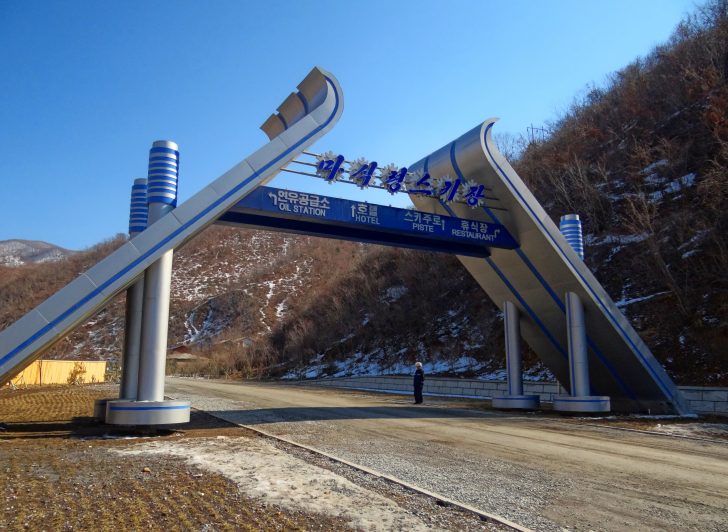
Gates-To-Masikryong Ski Resort, North Korea

Many years ago, we skied in South Korea. It was an unusual experience. Pioneering could be a way to describe conditions and equipment back then.  We are sure they’ve been upgraded since.  Co-publisher Jon Weisberg notes that the North has joined the alpine ski business with a new resort.  Could it be the One-Whose-Haircut-Can’t-Be-Mentioned wants to relive his college days in the Swiss Alps?

Finally, we remember Mary Anderson, co-founder of REI in 1938.  Not many retail businesses last that long.  Mary and her partners formed a cooperative that managed to survive swings in the economy and to this day appeals to mountain and outdoor enthusiasts.

Thanks to all and, this week, a special salute to our advertisers who are renewing for one more year of supporting SeniorsSkiing.com.

Next week, we’ll be profiling our two Advisory Council members who were inducted into the ISHA Hall of Fame, Bernie Weichsel and Gretchen Rous Besser.  We’ll have a story about the glory of local areas by a new contributor and other surprises.

Remember folks, there are more of us every day, and we aren’t going away!

Mary and Lloyd Anderson, REI founders.


Master’s Week At Big White: Senior Focused Lessons And Activities

Big White Found The Right Formula To Attract Seniors For A Special Week Just For Them.

Ski lift with view of condos. Credit: Big White Ski Resort.

Like so many things of yesteryear, ski weeks are making a comeback.

And not surprisingly, they’re aimed at the same folks who went ski trips back during the ski week heyday in the 1970s and early ‘80s—the Boomers.

The original ski week hit when the baby boomers were yesterday’s millennials. They had money, they were skiing, they wanted a fun social experience.

Then boomers started having families and taking an entire week no longer worked. So short, specific clinics (racing, bumps, women’s) that lasted only a long weekend, took over.

But why have ski weeks returned?

Women in Big White Ski Resort Masters ski program show off their green hair helmet decorations. The program runs a week with lessons in the morning and social programs at night. Kelowna, BC.
Credit: Yvette Cardozo

Because the kids have grown up, the money is available and so is the option of taking a week. Plus, it’s, well, your own age group. No trying to keep up with someone 30 years younger.

“It started as 50 Plus in 2011,” said Katie Balkwill, regional sales manager for Big White Ski Resort. “We ran it that way with very small numbers until 2013. Then we changed the name to Seniors Ski Club—and no one came the following week.

“So we changed the name to Masters Monday and had 30 participants the next week. We average 45 people every Monday for most of the season now.

“It truly is all in a name.”

As for Masters Week, it has grown steadily from 23 participants the first year (19 of whom have returned) to 59, then 109, then last year, 229 split between into two weeks, and after the second session, a third was added for the end of the season.

 And so, I signed up. We would ski together each morning and have a variety of social programs in the afternoons or evenings.

Since we had all filled out forms suggesting our ski level, we separated into skill groups the first morning ranging from novice to expert. After a bit of shuffling, we were set for the week.

Instructor at Big White ski resort shows an exaggerated proper stance for skiing.
Credit: Yvette Cardozo

Our group, Level 4 of 6, was perfecting its stance, getting more aggressive on our turns, and playing a bit in the year’s epic powder.

Anthony, our instructor, tailored exercises to each of the five in our class.

For Sandy, it was ski down holding poles horizontally in her hands which, Anthony said, helps you lead the turn with your lower body. Her upper body was turning into the hill, which throws you off balance.

For Norm, it was a “prayer stance” holding his hands together in front of his chest. This balances you and helps you lead with your legs, rather than your upper body.

For me, it was making sure I looked downhill when turning, not to the side—again, helping with balance.

And for all of us, there was a maddening exercise where we dragged our downhill pole along the snow, which truly is not intuitive. This gets you onto your downhill ski throughout the turn, Anthony insisted.

And, well, it did.

It snowed every day but on two mornings, fog settled in.

We all gulped, shrugged, and took off for lessons on how to deal with a whiteout.

We headed for the Black Forest chair whose medium width trails were lined with trees heavily frosted in Christmas card snow.

Ski along the trees, Andrew said. And sure enough, there magically was definition in the snow at our feet.

Don’t look at your skis, he added. Yes, it’s scary to peer into the white void, but find something ahead—another skier, a line of trees, a pole, a lift, and keep your eyes on that.

It absolutely helps avoid vertigo and, of course, falls.

I had truly hoped that last day we could find some steep cruisers along one of the outlying chairs and some untracked powder but the fog and near blizzard conditions squelched that.

Instead, I took the lessons home where, yes, it all made a huge difference.

Information

Big White Ski Resort’s Masters Week is actually five days, Monday through Friday. There are on-slope lessons each morning, then social activities in afternoon or evenings.

For 2018, Big White is planning at least two Masters ski week programs, Jan. 29 – Feb. 2 and Feb. 26 – Mar. 2, plus possibly a third at the end of the season.

Price for the week (lessons, clinics and most social activities) will be $278 Canadian. Canadian dollars have run about .75 per US dollar for a few years meaning $278 CDN works out to about $208 US.

There are also Masters Monday classes, held each Monday morning, for people who don’t want to commit to an entire week.

Early morning view of Big White Ski Resort village ski runout on a sunny day. Credit: Yvette Cardozo

Master’s Week At Big White: The Social Side For Seniors

There’s More Than Ski Clinics For Seniors That Make Big White’s Master’s Week Unique.

Sleigh ride at Big White Ski Resort. One of many non ski winter activities.
Credit: Big White Ski Resort

[Editor Note: Correspondent Yvette Cardozo also reported on Big White’s Master’s Week focusing on the ski instruction elements.  Here, she shows us the social side which really looks like a lot of fun.]

The social part of the Big White Ski Resort Masters Week is what made the experience different.

Those of a certain age who skied in the ‘70s and ‘80s will remember the original ski weeks. Some were run like summer camp and at least one (Gray Rocks in Quebec) came off like a cruise ship.

Jolly time at Masters Week apres ski party at Big White Ski Resort. The Masters program is aimed at skiers of all levels over the age of 50.
Credit: Yvette Cardozo

You skied together, you ate together, you made long term friends.

And now, the old fashioned ski week is back and aimed squarely at the folks who made it a success decades ago—the Boomers.

Okay, the ski weeks I remember from yesterday had us on the slope ALL day with a brief break for lunch. My knees are long past that.

 Instead, the Big White Ski Resort (Kelowna, BC) Master’s Week has on-slope work in the morning, then social stuff in the afternoons or evenings. There is also a Masters Monday, aimed more at locals but also including folks who don’t want to commit for an entire week.

And this certainly has hit a chord with people

The first day of my week, when we were joined by the Monday only groups, the resort was expecting perhaps 130 for lunch. Nearly 200 came (many signing up just that morning). There was quite a scramble for food, but nobody went hungry.

Dizzy of Dizzy’s boot fitting shop at Big White ski resort shows off an early 1970s ski boot that boasted fantastic ski technology that, sadly, was ahead of the boot’s ability to support it. The boots famously would come apart during skiing.
Credit: Yvette Cardozo

This reflected what has been happening with the five-day ski weeks, which grew from 23 people a few years ago to 229 last year spread across two sessions before adding a third session at the end of the season.

Each day after class, there was something—a clinic, apres ski, a sleigh ride.

One night, we met for beer and pizza at Dizzy’s Ski & Board Shop where Lindsay Bennett (aka Dizzy) talked about ski gear.

Along shelves in the shop sat hundreds of old boots, some from the 1940s, each representing a tech breakthrough. His fav is an early 1970s orange Scott boot that was truly revolutionary … and fell apart when the plastic couldn’t keep up with tech.

 Boots are, Dizzy said, the single most important piece of equipment you can own. A decent boot will last for 200 days of skiing. And custom foot beds are perhaps the most important thing you can have in a boot, he added.

No one knows that better than me. Slower than most to catch on, I spent a decade trying to figure out how to turn at all. Then someone noticed my board flat feet. I splurged on custom footbeds, headed for a lift and in the space of 30 seconds went from struggling novice to solid intermediate. I had been making the right moves all along but my feet weren’t connecting with the boots.

 A few tips—get ski socks. They’re a blend that keeps you warm without being too bulky. Don’t pull the liner out of your boot each night. Electric boot dryers will do a better job. And park your boots up high for the night (where air in your room is warmer).

 I went into the shop the next day and an added thin innersole and heel lifts helped my aging boots fit snug again with the added benefit of tipping me forward just a bit more.

The next night, my friend Kay and I went on the dinner sleigh ride, riding in a large sled pulled by two beautiful Clydesdale horses through a magic scene of snowy trees and swirling flakes. Dinner was both gourmet and rustic—chicken cassoulet and bison ribs. We bonded with our seat mates, who produced bottles of good red wine and topped it all off with mini cheesecakes.

 Our final gathering was apres ski at an Irish pub with good munchies, great beer and wonderful memories.

Information

Big White Ski Resort’s Masters Week is actually five days, Monday through Friday. There are on-slope lessons each morning, then social activities in afternoon or evenings.

For 2018, Big White is planning at least two Masters ski week programs, Jan. 29 – Feb. 2 and Feb. 26 – Mar. 2, plus possibly a third at the end of the season.

Price for the week (lessons, clinics and most social activities) will be $278 Canadian. Canadian dollars have run about .75 per US dollar for a few years meaning $278 Cdn works out to about $208 US.

There are also Masters Monday classes, held each Monday morning, for people who don’t want to commit to an entire week.

Big White ski resort base village.
Credit: Big White Ski Resort

This Week In SeniorsSkiing.com (Apr. 7)

More From Jackson Hogen, Snow Sierra Superlatives, Seniors Like Online, Good Lesson Criteria.

This week, we notice there are a number of resorts in New England having their final runs. Lifts are still spinning for a week or perhaps more at upper altitude resorts in northern Vermont, New Hampshire and Maine, though. And season pass deals for 2017-18 are starting to appear.

That is definitely not the case in the West where yet more snow will be falling this weekend.  The California drought is definitely over, and we hear there will be skiing at Mammoth on July Fourth.  Which raises a question: How much skiing is too much?  Is there such a thing? Several years ago, we recall that Alta kept its lifts going well into the spring, but skiers didn’t show up. On to other things?

This weekend, we travel to Stowe, VT, to attend the International Ski History Association’s US Ski and Snowboard Hall of Fame induction ceremony.  We will salute SeniorSkiing.com Advisory Board Members Bernie Weichsel and Gretchen Rous Besser, both of whom have contributed to the industry for decades. Among other things, Bernie is the impresario of the Ski and Snow Board Shows, and a major player in ski business, from enticing European skiers to come to the US to an highly active role in ski history museums across the country.  Gretchen’s laurels are associated with the National Ski Patrol as an historian, author and journalist. Other inductees include Michael Berry, National Ski Area Associations leader, Dan and John Eagan, ski action movie stars and ambassadors, Ellen Post Foster, racer and founder of the USSA Youth Ski League, Jeff Hastings, ski jumper and founder of USANS, Marion Post Caldwell, pioneering freestyler, and, posthumously, Chuck Lewis, racer, coach, and Vail entrepreneur.

Articles this week include Part Two from Jackson Hogen about top all-mountain skis of all times.

We also have a fascinating video clip showing the difference in snowpacks in the Sierra from 2015 to 2017.  Clearly an exceptional year.

Co-publisher Jon Weisberg describes some results from our recent Subscriber Survey 2017, revealing that seniors are embracing online ski ticket purchases.

Finally, frequent contributor and ski instructor Pat McCloskey offers advice on how to tell you’ve had a good ski lesson.  His article is in response to last week’s post, Taking A Lesson At 72.

Thanks for reading SeniorsSkiing.com.  We are transitioning to late spring and early summer story themes.  If you have suggestions, please let us know.  Meanwhile, remember: There are more of us everyday, and we aren’t going away.
Taking A Lesson At 72

Lessons Learned Beyond Skiing.

When I told my companions I was going to take a lesson in the middle of our three-day ski getaway in Maine a couple of weeks ago, they uniformly said, “What a good idea!  So should I.”  But it was just me signing up for an hour-and-half with instructor Fred (not his real name) whom I was to meet at the ski school hut at 10:00 am the next day. Regardless of the expense, a private lesson, I conjectured, would erase years of skiing almost okay.

Confession:  I never took a real ski lesson.  I got some tips from Ginny Pfeiffer at Hunter Mountain when we had a SKIING Magazine outing one evening back in 1971 or so (yes, evening).  I watched ski instruction videos from time to time, read articles, but never really a bona fide lesson. I just learned vicariously.

But, I had the feeling that an important experience was missing.  Not to mention I couldn’t really carve a turn.  I mean really, neatly carve; I couldn’t match those clean, incised, parallel arcs I saw people making under the lift line.  I could skid a turn, I could stem christie a turn, I would have a great run and then five un-great runs.  My new shaped skis were not being optimally used.

Fred was a veteran instructor.  “What do you want to focus on?” he said when we met.  “I want to carve these skis. The perfect turn is eluding me.” So up we went to a nice wide blue cruising trail.  “Ski down fifty yards or so, I’ll be right behind you,” said Fred. I did, I was self-conscious and tight, nervous, but nevertheless, I wanted Fred to see what he was dealing with.

“You are skiing with your feet together,” Fred said as his first lesson. “Keep them shoulder width.” Hmmm, I thought, I knew I did that, but only sometimes.  Is sometimes okay? After all, couldn’t sometimes be okay? Resistance was emerging.

We went another fifty yards.  “Now, watch how I link my turns. Try that and don’t take such long traverses.”  He showed how with me tagging in his tracks. Ah, linked turns. Then, I went down with him behind, watching.

“Okay, you’re not putting pressure on your front edges. Feel your shins pressing on the front of the boot.  The toe of your outside ski and the pinkie toe of our inside ski need to do the pressing.”  Ah, pressure, okay.

I tried. It was hard. I couldn’t do it. I didn’t like it. It was uncomfortable. I was incompetent. I wanted Fred to go away and stop watching.

More conferences on the side of the trail.  More advice and demonstrations. “I will try harder,” I said to myself, thinking I paid a lot for this. But I am not liking this.

Another couple of runs, Fred skiing behind, and I finally felt it.  I felt my big toe pressing, I was linking, my feet were shoulder width apart.  I was doing it.  I was far from proficient, by a long shot, but I had the idea.  I was linking my way down a long blue trail, non-stop, with Fred behind. I was learning. I found it was hard to learn, I resisted the new physical move, but eventually I learned at least something. I was surprised at how hard it was.

We talked at the bottom at the end of the lesson.  On the lift, we learned we had sailing in Maine in common.  I realized I hadn’t actually seen Fred’s face since we started as we were both goggled up and helmeted.  He took off his goggles.  “How old are you?” I asked, just curious. “Sixty six.  How old are you?”  “Seventy two”, I said.

“No dust on you,” he said, shaking hands.

That made my day.

New England Ski Industry And Climate Change

The Facts Are Tough To Face, But The Ski Season In New England Is Getting Shorter.

Spring Skiing 2016, somewhere in New England.
Credit: Mike Maginn

This story comes via the New England News Collaborative, and was first published by Maine PublicIt aired on WBUR Boston, March 15, 2017.

Two years ago during the infamous 2014-15 season, there was enough snow, it seemed, in New England to cover Mt. Washington many times over.  The 2015-16 season was the opposite; we were lucky to get a string of decent days and many resorts closed early.  This season, it was on-again, off-again, with an on-again storm at the beginning of March that will definitely extend the season.

This up-down trend is part of a bigger picture that is reported here in a WBUR Boston NPR Radio segment that we are passing along.  Although the tone is frank and a bit foreboding, the entrepreneurial spirit of mountain business people is encouraging, especially when they talk about plans for the dealing with what’s coming.

CLICK HERE TO LISTEN TO THE SEGMENT OR TO READ THE TRANSCIPT.  It’s about five and a half minutes long, or you can read a transcript in the link.

What do you think? Will summer activities on mountains run by ski resorts be viable business alternative and money maker?

This Week In SeniorsSkiing.com (Mar. 17)

Happy St. Patrick’s Day! Senior Skin Sun Protection, Tamarack Bargain Resort, Steamboat’s Masters’ Program, Learning To Ski As An Adult.

Brodie Mountain in Western MA was ground zero for St. Paddy’s Day Skiing. Ah, memories.
Credit: Brodie Mtn

There was a wicked big, late winter snowstorm in the Northeast this week.  While not living up to dire predictions, this one (Stella, according to the Weather Channel) brought yet more snow to the high country in NH, VT and Maine.  There is a LOT of skiing left out there, extending this on-again, off-again season yet more weeks.  We are reminded that last year at this time there were resorts closing or closed already.

This week we’d like to remind you to respond to our currently available Subscriber Survey 2017.  The response rate continues to be very strong so far.  If you haven’t had a chance to complete it, check your email for the message send last Tuesday.  We’ll send a reminder again later this weekend.

SLC-based Harriet Wallis tells us about an after-hours, walk-in injury clinic handy to Alta, Brighton, Snowbird, and Solitude, and run by the University of Utah Health Care Orthopedic Center. Nice to have competent, convenient help if things go awry on vacation.

Bay Area Correspondent Rose Marie Cleese reminds us what to do and think about if you’ve been on hiatus from skiing for a while or, if you or a person you know is considering taking up the sport at an advanced age.  We know many senior skiers who are coming to the sport through retirement from busy careers, recovery from long-time injury, seeking social connections or just plain curiosity.  The new equipment and techniques also make it a lot easier for seniors to re-start their skiing experience. If you are or know someone who is returning, her advice is quite important.  Are you a returnee? What’s your story?  I took a 20 year pause in my skiing when I was running my own business. It’s a different world, but that’s another story for another time.

The base at Tamarack Resort with sports and cafe domes and a snow rainbow.
Credit: Tamarack Resort

We hear from Oregon-based Yvette Cardozo about Tamarack, a resurrected resort in the middle of Idaho that offers amazing bargains for seniors.

Correspondent Tamsin Venn reports on the Mountain Masters’ program at Steamboat Springs, where seniors can gather in the morning and ski with a guide who matches ability with terrain.  And, that’s free, folks.  We love these kind of program that extend a special hand to seniors. This program is a sign that ski resorts are waking up to the potential of treating seniors nicely.

Finally, we hear from Justin, Thulin, MD, an SLC-based dermatologist, who advises us about skin protection.  If you’ve ever had a skin cancer removed, you know how disturbing the whole experience can be.  The best protection is prevention, so pay attention to his wise words.

Why Do I Have To Re-Enter My Name And Password?

If you are being asked to re-enter your email to confirm your subscription to SeniorsSkiing.com, you might be a bit annoyed.  We don’t blame you, but there is an explanation.

  • You are accessing SeniorsSkiing.com through a device that is different from the one you originally signed up on. Subscribing to SeniorsSkiing.com puts a “cookie” on your device.  If you use a different device, no cookie, so you are viewed as a non-subscriber. If you re-enter name and password, you’ll be okay with the new device.
  • You have disabled cookies or cleared browser history on your device. Turn cookies back on, and you’ll not have to re-enter again, or leave it disabled and realize you have to re-enter each time.  Your call.
  • You are trying to access our Subscriber-Only Content.  Instead of building a firewall that requires usernames and passwords, we elected a much simpler way of getting to our exclusive content: Just confirm your name and email.  You will have to do that each time you want to get to that information, which, by the way, is under the Community tab at the top.

Thanks And Green Beer Tonight!

We very much appreciate your support as evidenced by the wonderful response we are getting to our Subscriber Survey 2017.  Thanks so much.

Toast the old country this evening!  Remember there are more of us every day and we aren’t going away.

Steamboat Mountain Master Guide Steve Cozette (red jacket) herds his charges down Two O’Clock.
Credit: Tamsin Venn

Sierra Nevada Blowout Version 2.0

And The Snow Just Keeps Piling Up!

Credit: Homewood Mountain Resort

A month ago I wrote that, barring a barrage of rainstorms, 2016–17 would be going down as an epic ski season in the Sierra Nevada.

What’s a word that’s greater than “epic”?! Stupendous? Mammoth? Ginormous?

Credit: Squaw Valley Alpine Meadows

All apply to the Sierra’s burgeoning snowpack that just keeps growing, thanks to another string of snowstorms in February. This last Wednesday ski resort operators could stick their heads out the window for the first time in weeks and not see snow falling. The respite will last only until the weekend, however, when another storm is forecast to hit the mountain range. In the meantime, resorts will have a couple of days to dig out buried chairlifts and clear the decks before it starts snowing again.


Like the snow itself, snowfall records across the Sierra keep falling.

To get an idea of just how, uh, stupendous this season has been, consider the snowfall statistics to date at Squaw Valley Alpine Meadows. As of Wednesday, the resort has surpassed its annual average snowfall of 450 inches by an additional 115 inches—and this a week before March! Since last Friday, more than seven

Credit: Mammoth Mountain Resort

FEET of snow have fallen on top of the already prodigious snowpack, bringing the season’s total snowfall to the aforementioned 565 inches. As of today, the base clocks in at 138 inches (11.5 feet) and the top of the mountain has 243 inches (20 feet).

The statistics are no less impressive across the Sierra. In the past week, most resorts around the Tahoe basin have received six to seven feet of new snow and have already gone past their snowfall averages for the entire season. Even Homewood Mountain Resort, which sits on the western shore of weather-moderating Lake Tahoe, accumulated five-and-a-half feet of snow in the last week and now has an impressive 95 inches at its base and 201 inches on top. In the central Sierra, Dodge Ridge

Credit: Homewood Mountain Resort

added another five feet of snow to its pack in the last week and now has 83 inches at its base and 132 inches on the summit. Most importantly, temperatures have stayed low, so fluffy light powder is currently ruling the day throughout the Sierra.

Ski and snowboard until the Fourth of July!

Although many Sierra resorts have yet to post a closing date (Easter weekend, this year April 15–16, is usually when most resorts wrap things up), a few have already extended their mountain operations well past that. Squaw Valley Alpine Meadows, for instance, plans to stay open well into June and then crank up the lifts on July 4th, conditions permitting. Mammoth Mountain, which currently has 200 inches at its base and 350 inches on top, plans to stay open through the 4th of July weekend and beyond, if possible. As of today, Heavenly

Credit: Sugar Bowl Ski Resort

and Northstar plan to extend their operations one week past the Easter weekend. As long as temperatures stay cool through the spring, other resorts will likely join the ranks of resorts remaining open beyond Easter. For Northern California skiers and riders, who have suffered through a five-year string of utterly abysmal ski seasons, this record-breaking season has been a long-overdue gift from the heavens.

Now, if there was only a way to save snow!

Credit: Northstar California

Need Some New Tricks?

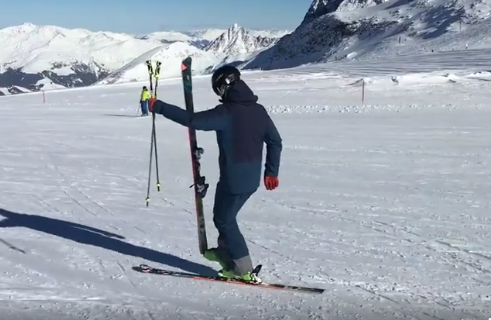
From Mammut Deutschland.  Take Off Ski And Replace While Skiing?  Hold My Beer.

Toni Heinle is the skier.  That’s all we know.


SeniorsSkiing Guide: Schweitzer Mountain Resort

Northern Idaho’s “Little Secret” Steps Up Dining Amenities.

Much of the skiing at Schweitzer Mountain has great views of Lake Pend Oreille and the surrounding mountains.
Credit: John Nelson

Pat Rotchford, 76, sat in The Nest, the new top-of-the-mountain restaurant at Schweitzer Mountain Resort, looking very happy.

He was drinking red wine by the fireplace with his friend, Debbie Stanley, eating prime rib sliders and Vietnamese spring rolls—not your typical mountain fare.

Pat Rotchford and Debbie Stanley enjoy a glass of wine in The Nest inside the new Sky House lodge at Schweitzer.
Credit: John Nelson

“Everything we’ve had here has been excellent,” said Rotchford, who has been skiing for 70 years, many of those at Schweitzer.

Sufficiently refreshed, Rotchford and Stanley geared up and hit the slopes for more afternoon skiing at this exceptional mountain in North Idaho.

Schweitzer has always been a mountain with great terrain and few skiers (“It’s our little secret,” Stanley says). Now, with the just-opened Sky House lodge on Schweitzer’s summit, the resort has taken a step up to match the amenities of great resorts around the country.

The beautiful $3.8 million, 9,000-square-foot facility houses two restaurants with 360 degree views of the Selkirk and Cabinet Mountains and Lake Pend Oreille. Besides the upscale bar-restaurant Nest, the Red Hawk Cafe offers hearty, cafeteria-style mountain fare.

Executive chef Pete Tobin designed the menu at the Sky House lodge at Schweitzer Mountain.
Credit: John Nelson

The Nest has a creative menu of small plates, none more expensive than $13, designed by executive chef Pete Tobin.

“It gives people a chance to have a quick bite and then head back to the slopes,” Tobin said.

Snow, terrain and more

  • Location: Schweitzer is about 15 miles from the resort town of Sandpoint on the shores of Lake Pend Oreille. Coeur d’Alene, Idaho, is about 45 minutes away, and Spokane, Wash., with its international airport, is about 90 minutes drive. For those traveling by train, Amtrak stops in Sandpoint.
  • Snowfall: 300 inches fall annually, keeping the slopes covered from December to April most years.
  • Terrain, lifts: With 2,900 acres of terrain on its front and back sides, Schweitzer is the biggest resort in North Idaho and the state of Washington next door. One high-speed six-pack and two high-speed quads do most of the people-moving, along with one triple and three double chairlifts. About 50 percent of the terrain is rated beginning or intermediate; 50 percent is advanced or expert. Outside the resort’s boundaries, advanced side-country skiing abounds.
  • Vertical: 2,400 feet from a summit (6,400 feet) to the back-side base. The main village is at 4,700 feet.

Lot to lift access

  • Parking: Schweitzer has two large parking lots on the mountain with unloading zones and also has a large parking lot on the valley floor served by a shuttle bus.
  • Public transportation: Several companies offer service from Sandpoint to the resort.
  • Accommodations: The Selkirk Lodge and White Pine Lodge are excellent choices at the village base; on-mountain condominiums also are available, as well as lodging in all price-ranges in nearby Sandpoint.

Culture

  • The vibe: With its empty slopes on the weekdays, Schweitzer feels like a well-kept secret; friendly locals from Sandpoint, Coeur d’Alene and Spokane are happy to show you the ropes.
  • Dining: Besides the Sky House restaurants, the resort offers a back-side lodge called The Outback Inn and a large base lodge restaurant. In the village, there are several restaurants, including Pucci’s Pub, the place to go for a post-shred beer.
  • Mountain life: Beyond the lift-skiing, Schweitzer has cat skiing, snowmobiling, tubing and excellent Nordic trails.

Bottom line

  • The new Sky House summit lodge, which will remain open this summer for weddings and special events, helps elevate Schweitzer to a top-tier resort.
  • Affordable package deals, ample snowfall and empty midweek skiing make Schweitzer an enticing destination for a multiday vacation. Single day senior tickets are $69.30 online.
  • Vast terrain gives skiers a lot to explore at one of the Northwest’s best resorts.

Webcam Click Here

Trail Maps Click Here

The upper-mountain Lakeview Triple delivers skiers to mostly advanced terrain.
Credit: John Nelson


Demo Day: How To Participate And Enjoy

Here Are Some Tips For Taking Part. Don’t Be Shy.

Demo staff are knowledgable, helpful and welcoming to first-timers.
Credit: Val E.

Every season ski shops, ski manufacturers, and ski resorts organize events when anybody could try new ski equipment. Demos range from a local mom-and-pop ski shop get-together to major on-snow events run by SIA (Snowsports Industry America).

Why do you need to take part in it? Technical progress never stops, try new things; you may like them. At least you will have your own opinion. Picking a pair of skis or boots is as personal and as tricky as picking a life partner. Well, kind of.

Never think you are not qualified for a ski demo. The idea is to let “volks” try the “wagen” and to give them a clear reason to buy it later.

Setting bindings based on your experience and size has to be done accurately. Don’t exaggerate your skill level!
Credit: Val E.

  • Check the list of demos at your local resort, or before you go to a ski trip. State ski associations are good resources for finding resort events. (SkiNH, SkiUtah, etc.)
  • Come early, bring your boots, poles, ID, and a credit card. Bring your own skis to “calibrate a zero level” by taking a run or two before the demo.
  • Before starting the demo, you must fill in a form with your weight, height, skier type, age, and gender. Be honest with this info; it is used for adjusting your bindings.  A higher setting than needed may lead to non-release of a binding which is dangerous.
  • Prepare a list of announced brands and potential models to try on. Know before you go so your search can be focused. Have an objective for your try-outs.
  • Read some magazines or blogs about different ski types before you go. Think about types of skis you like and dislike, what you want to demo considering the snow conditions. For example, if you ski mostly in hard pack or ice, don’t spend much time on skis for powder/soft snow.
  • If time permits, talk to the staff working at the demo booths; they are knowledgeable about ski features and benefits.
  • It’s pretty obvious but don’t ruin the edges and bases of the demo skis. These aren’t your rock skis.
  • Unwritten rule is that a skier makes a couple of runs on one pair of demos and returns it. Someone else will be waiting for your demos.
  • Use your smart phone to take photos of ski reviews and demo skis. Record your audio and video comments about them while staying in line or riding a ski lift. A partner can record a video of you going down the hill on different skis to compare. You can share your recorded impressions with your less fortunate friends on Facebook or in real life.

Even if you are not really interested in purchasing a new pair of skis, you learn a lot about gear and the sport, and it’s fun!


Sierra Nevada Blowout!

Think Feet, Not Inches.

Homewood: Monumental snow, lake level.
Credit: Homewood Mountain Resort

“Nevada” (Spanish for “covered in snow”) is back with a vengeance at the end of “Sierra” (“mountain range”) and California’s skiers and ski resorts are jubilant! Since January 1st, the Sierra Nevada has been

Mt. Rose lodge buried.
Credit: Mt. Rose Ski Tahoe

clobbered with one storm after another, and except for one spate of warmer temperatures that brought rain for a couple of days earlier in the month, it’s been nothing but fluffy white stuff ever since—feet of it! This week, it’s experiencing a nice long stretch of cold days and sunny skies that isn’t predicted to end until next Wednesday when another storm rolls in. Last year, many resorts were forced to close off and on because of no snow; this season nearly every Sierra ski area has had to close a couple of days here and there because of too much snow!


January has broken snowfall records across the mountain range.

Northstar shoveler at work.
Credit: Northstar California

The remarkable record-breaking snowfall statistics that Squaw Valley Alpine Meadows has tallied up in the first 23 days of January are typical of many Sierra Nevada ski areas. According to Public Relations Coordinator Sam Kieckhefer, the combined resorts have seen 276 inches (that’s 23 feet or an average of one foot a day!) fall since the month began, easily surpassing the previous record snowfall in a single month (241 inches in March of 2011) since record-keeping began 46 years ago. Its total snowfall since the 2016–17 ski season began—381 inches—is more than double the average for this point in the season.

This jubilant tale is being repeated throughout the Sierra, from Mt. Shasta in the north to Southern California’s cluster of Big Bear Mountain ski areas. Like Squaw Valley Alpine Meadows, many ski resorts in the northern and Central Sierra are reporting record-breaking total snowfall amounts to date averaging around 380 inches. Mt. Rose over the hill from Tahoe in Nevada has a season-to-date total at 412 inches and Sugar Bowl sitting atop Donner Summit back in California may be able to claim the highest total snowfall to date of 451 inches.

At the top of Crow’s Nest lift
Credit: Sugar Bowl Resort

This latest storm that wrapped up this past Monday added tons of light, fluffy powder to an already impressive snowpack. Dodge Ridge in the Central Sierra, which has often found itself on the short end of the snow stick, had 10 feet of snow fall in just five days, bringing its total January snowfall to 19 feet! Other impressive storm totals were 97 inches at Kirkwood, 88 inches at Heavenly, 94 inches at Northstar, and up to 106 inches at Sugar Bowl. Most ski resorts in northern California currently have top-of-the-mountain snowpacks ranging from 150 to 185 inches. Mammoth Mountain in Central California has a upper base of 300 inches and even Homewood Mountain Resort, which sits near the shore of temperature-moderating Lake Tahoe, can lay claim to impressive base figures: lower and upper bases of 77 to 156 inches respectively.

Squaw Valley lift
Credit: Squaw Valley Alpine Meadows

Are the ski resorts happy that Easter—the weekend that most Sierra ski resorts traditionally close—is relatively late this year (April 15th)? You betcha. It’s likely that a good number of them will keep the lifts running well past that date. And, with the exception of 2015–16, which was the first respectable ski season in the Sierra after five years of sparsely covered slopes, thin layers of man-made snow, and some resorts not even opening, skiers and boarders are happy campers, too. Barring a barrage of warm “Pineapple Express” storms emanating from the Hawaiian Islands or the storm door slamming shut, 2016–17 is going to go down as one epic Sierra ski season!


Shovel all the day and nothing moves away. Digging out at Kirkwood resort.
Credit: Kirkwood Mountain Resort

SeniorsSkiing Guide: Sun Peaks, BC, Senior-Easy Big Mountain

When You’re No. 2, The Saying Goes, You Try Harder.

Skiers and snowboarders rise above the clouds on the Crystal Chair at Sun Peaks. Credit: John Nelson

That’s true of Sun Peaks Resort, Canada’s second largest ski area behind behemoth Whistler-Blackcomb 200-plus miles away in the coastal mountains.

This excellent resort near the British Columbia city of Kamloops offers three mountains to ski, a well-designed, bustling village and even a fair bit of off-piste, side country powder to hike. Add to that a sunnier climate, lighter snow and lower prices and Sun Peaks looks better and better compared to its rival to the west.

You’ll find bargains here as well. Seniors 65 and older receive a 20 percent discount on ticket prices at Sun Peaks, and that’s on top of the favorable exchange on the strong U.S. dollar.

A snowboarder shreds fresh snow on the Crystal Chair at Sun Peaks. Credit: John Nelson

Snow, terrain and more

  • Location: Sun Peaks is about 35 miles from Kamloops, a city of 85,000 in what’s known as “Thompson Country” of B.C.’s inland mountains. It is the closest inland resort to the Vancouver metro area (about five hours away by car), and the Kamloops airport gets several daily flights from major Canadian cities.
  • Snowfall: The mountains here receive far less snow than the coastal range, but Sun Peaks still gets more than 230 inches a year. Snowmaking helps keep some of the lower slopes covered.
  • Terrain, lifts: The three mountains at Sun Peaks serve predominantly intermediate terrain on its whopping 4,270 acres. About 68 percent of the resort is rated beginning or intermediate, and 32 percent is rated expert. The Gil’s Zone side-country area offers expert skiers the chance to find untracked lines after a short hike off the top of the Crystal and Burfield lifts.
  • Vertical: 2,893 feet from a village base at 4,117 feet. The hikable summit of Tod Mountain (7,060 feet) adds few hundred vertical for those willing to sweat for their freshies.

Lot to lift access

  • Parking: Parking is scattered in several lots near the bases of each mountain; in addition, accommodations generally offer heated parking garages.
  • Public transportation: A bus service operates on weekends from Kamloops. In addition, an airport shuttle runs from Kamloops to Sun Peaks, and an inter-resort shuttle operates between Whistler, Big White and Sun Peaks.
  • Accommodations: The village at Sun Peaks is well designed; you can ski among the shops, condos and hotels to the lifts. Several ski and stay deals are offered by the resort.

Culture

  • The vibe: This is the friendly interior of B.C., so you won’t find any of the Whistler-Blackcomb snobbery here. As with many resorts in Canada, a strong Australian presence is apparent nearly everywhere you go among workers and vacationers.
  • Dining: 22 dining spots are scattered around the resort and village. Several restaurants deliver great meals, including the excellent Voyageur Bistro and the rocking Bottoms Bar and Grill.
  • Mountain life: Winter activities abound, with Nordic skiing, snowmobiling, snowshoeing and skating. Of the interior B.C. resorts, Sun Peaks has the best four-season set-up, with a golf course and excellent mountain biking during the summer.

Bottom line

  • Sun Peaks has a robust village scene that delivers a resort experience at the fraction of the cost of skiing at Whistler-Blackcomb..
  • Canada’s second largest ski area has ample terrain to explore over the course of a ski stay.
  • With 2,000 hours a year of sunshine, your chances of getting a goggle tan are pretty good.

Trail Map click here

Webcam click here

A well-designed village offers dining, shopping and accommodations at the base of Sun Peaks. Credit: John Nelson

_____

John Nelson is a freelance outdoors writer based in Seattle. Follow his blog at skizer.org.


SeniorsSkiing Guide: Big White, Big Senior-Friendly

Big Choice Of Intermediate Runs, “Master” Lessons, Bring Seniors Back Each Year.

The Alpine T-Bar serves low-angle intermediate terrain near the 7,606-foot summit of Big White. Credit: John Nelson

It’s hard to find a resort better suited to older skiers than the popular British Columbia destination of Big White.

Located in Okanagan region of B.C. near the bustling, fast-growing city of Kelowna, Big White is indeed big, with a sprawling village that boasts the most ski-in, ski-out lodging in Canada.

A skier turns amid the snow ghosts near the top of the Alpine T-Bar at Big White.
Credit: John Nelson

The resort’s rolling terrain of predominantly intermediate runs is especially popular with older skiers. In its lesson programs, Big White offers discounted “Masters Mondays” classes, and two popular “Masters’ Weeks” designed to teach older skiers how to keep shredding.

“Our retention rate is over 60 percent,” says Ollie McEvoy, one of the masters instructors. “If they take a lesson from us, they’ll come back.” The many skiers who take part in the masters’ week programs return every year after making personal connections, McEvoy says.

“They end up making friends for life,” he says.

For U.S. residents, Canadian resorts are particularly attractive this year, with a favorable exchange rate of more than 30 percent. Add to that a discount on senior tickets at more than 16 percent and U.S. skiers make out very well at one of Western Canada’s favorite resorts.

Ski instructor Ollie McEvoy helps run the masters programs at Big White. Credit: Big White Ski Resort

Snow, Terrain and More

  • Location: Big White is about 33 miles southeast of Kelowna, a city of more than 100,000 in the Okanagan Valley of British Columbia. Kelowna has an international airport with daily flights from Seattle, as well as major cities in Canada.
  • Snowfall: “It’s the snow” is the marketing slogan for Big White. Located far inland from Canada’s west coast, Big White’s snow is colder and drier than rival Whistler-Blackcomb, and it receives about 300 inches a year.
  • Terrain, lifts: Intermediate skiers love the rolling terrain of Big White, where all 15 lifts have a green run down. About 72 percent of the terrain is rated easy or intermediate; 28 percent is rated expert and extreme. Five of the chairlifts are high-speed on more than 2,700 acres of skiable terrain.
  • Vertical: 2,656 feet from Big White summit (7,606 feet) to the base of the Gem Lake Express lift (4,950 feet).

Lot To Lift Access

  • Parking: Day-trippers can park at the Gem Lake base or at the Happy Valley Lodge. This is one resort where you should consider staying on mountain because of the vibrant and affordable ski-in, ski-out village scene.
  • Public transportation: Big White offers a shuttle service from the airport to the mountain village, so skiers flying into Kelowna do not need to book a rental car if they are staying on the mountain. In addition, an inter-resort shuttle operates between Whistler, Big White and Sun Peaks for skiers who want to try three of Canada’s biggest resorts.
  • Accommodations: Big White is built for skiers who want to stay on the mountain. Thousands of ski-in rooms are available in all price ranges, with many package deals that include lift tickets and meals.

Culture

  • The vibe: Friendly, with a pronounced Aussie accent. The resort, owned by an Australian family, attracts a large number of Aussie workers and vacationers, giving it a “no-worries, mate” feel.
  • Dining: The resort has 18 on-mountain restaurants in various price ranges. Among the very best is the Kettle Valley Steakhouse and Wine Bar at the Happy Valley base area, serving excellent upscale entrees with a long list of tasty, British Columbia wines.
  • Mountain life: Beyond the lift-skiing, Big White offers many other activities, including Nordic skiing, outdoor ice skating, tubing, snowshoeing and sleigh rides.

Bottom line

  • Big White is a major resort that does very well by older skiers, with vast intermediate terrain and popular masters instructional programs.
  • The strong U.S. dollar makes this Canadian resort particularly attractive for deal-hunters.
  • Excellent snow quality keeps the lifts spinning well into April.

Trail Map Click Here

http://www.bigwhite.com/explore-big-white/mountain-info/maps-brochures

Webcam Click Here

_____

John Nelson is a freelance outdoors writer based in Seattle. Follow his blog at skizer.org.

Big White’s vibrant village has the most ski-in, ski-out lodging in Canada. Credit: Big White Ski Resort


Snow In Literature: Snowbound by John Greenleaf Whittier

[An excerpt from Snowbound by John Greenleaf Whitter (1807-1892) to reflect on the tremendous snowfalls in the US and Canadian West.]

Alpine Meadows

So all night long the storm roared on:
The morning broke without a sun;
In tiny spherule traced with lines
Of Nature’s geometric signs,
In starry flake, and pellicle,
All day the hoary meteor fell;
And, when the second morning shone,
We looked upon a world unknown,
On nothing we could call our own.
Around the glistening wonder bent
The blue walls of the firmament,

Squaw Valley

No cloud above, no earth below,—

A universe of sky and snow!
The old familiar sights of ours
Took marvellous shapes; strange domes and towers
Rose up where sty or corn-crib stood,
Or garden-wall, or belt of wood;
A smooth white mound the brush-pile showed,
A fenceless drift what once was road;
The bridle-post an old man sat
With loose-flung coat and high cocked hat;
The well-curb had a Chinese roof;
And even the long sweep, high aloof,
In its slant splendor, seemed to tell
Of Pisa’s leaning miracle.

Sugarbowl

Utah’s Historic Snowfall

This Says It All About The Snowfall In Utah This January.

Credit: SkiUtah

This Week In SeniorsSkiing.com (Jan. 13)

Deer Valley Senior Friendliness, Online Lesson Review Series Starting, Using Old Stuff, Part 2, Fun and Fotos; Black Diamond’s Founder Urges Outdoor Retailers to Leave Utah.

Squaw Valley Alpine Meadows this week and more snow coming.

The snow has been piling up and up in the West while the snow from last weekend’s moderate storm in New England has melted in 55 degree temps. Crested Butte was closed down for a while because roads were impassable and completely clogged with snow. Same in the Tahoe area; 10 feet of snow in the Sierra, I-80 closed. Too much snow. Meanwhile, the Northeast teeters on the edge between cold nights for snowmaking and warm and rainy days.  Very up and down season so far.

Sugar Bowl base lodge on a snow day.

What is most disconcerting though is news from various Western resorts where skiers are caught in backcountry avalanches.  Some lucky escapes have been caught on GoPro videos; others didn’t make it.  Too many deaths this season so far.  So, be careful out there.  Big, big snow has big downsides.

Peter Metcalf, founder and former CEO of outdoor equipment maker Black Diamond, urged the big Outdoor Retailer show to get out of Utah. His reasoning? The outdoor industry relies on access to beautiful public lands, but Utah’s political leadership is hellbent on selling it all to the highest bidder.

We have an interesting report from correspondent Tamsin Venn on Deer Valley describing how senior-friendly the resort can be.  Comfortable skiing, excellent dining, service staff standing by to help carry, direct, teach, or serve guests in many ways.  We hope to visit DV one of these days; a true stand-out resort.

Yes, neon jumpsuits were the rage…35 years ago.
Credit: Shinesty

Val E. continues his two-part series by talking about using, well, old clothes and accessories.  Did you know neon jumpsuits are coming back?  Have you seen anyone wearing an 80s fuschia onesie?

Reminder: Last week we asked for you to submit a video of your skiing experiences.  We had a terrific submission from one of you guys, and we are putting it on the magazine next week! Please send more.  

Next week, expect to read about a new content asset for subscribers-only, more resort reviews, an op-ed about the Ski Patrol (you will find this very interesting), and a review of an online instructional video.  Please keep telling your friends about us, visit our advertisers, and remember: There are more of us every day, and we are not going away.  AND DON’T FORGET YOU CAN FIND A LOCAL SKI CLUB BY LOOKING HERE.

Ahhh. Fresh morning tracks.
Credit: Deer Valley

Stein Eriksen Honored

Pioneer of Modern Skiing and Beloved Park City Community Member Remembered.

Stein thrilled visitors to Park City with his aerial flips. He was a gymnast by training, and his graceful moves influenced several generations of free stylers.
Credit: Park City

Stein Eriksen’s kind demeanor and passion for alpine skiing defined him in equal measure. An accomplished gymnast, Stein transformed skiing by integrating aerials and other acrobatics into the sport. Stein proudly represented his home country of Norway in the 1952 Oslo Olympic Winter Games, winning gold in giant slalom and silver in slalom. In 1954 Stein became the first alpine skier to win “Triple Gold” in the World Championships in Åre, Sweden. As admired as he was for his grace on the slopes, those who knew him personally will attest just as much to his thoughtfulness, generosity and sense of humor.

Stein’s son Bjorn (right) and Cameron Berard at the dedication ceremony.
Credit: David Eden

Stein arrived in Utah in 1969 and resided in Park City until his death in 2015. He proudly served as director of skiing for Deer Valley from the resort’s inception in 1981, working closely with founders Edgar and Polly Stern to fulfill their vision of providing a resort experience unlike any other in the industry. Stein’s desire to develop an internationally-renowned luxury hotel was fulfilled in 1982 with the opening of the now world-famous Stein Eriksen Lodge. His influence in the ski industry and at both Deer Valley and the lodge that bears his name was infinite and his legacy will always be a fundamental aspect of their success.

This plaque was dedicated by Park City’s City Council on December 11, 2016 to honor Stein’s enduring memory and his outstanding contribution to the sport of skiing and the town of Park City. It also officially commemorates December 11 (Stein’s birthday) as Stein Eriksen Day.

Stein Eriksen is remembered for his charm, his infectious passion for skiing, and his enduring love of family. A favorite saying of Stein’s was, “Na har vi det godt igjen.” “Now we have it good again.”

Milestones of Modern XC Skiing In the US

Remember Skiing On Wooden Skis With A Pine Tar Base And Lathered In Klistervox? Wasn’t That Long Ago.

Norway-born Snowshoe Thompson learned to ski in Telemark, his home town.

Editor Note: XCSkiResort Publisher Roger Lohr has catalogued the main events that propelled XC skiing from a peculiar sport with a small following in the US to a major recreational and racing enterprise with a huge following.  Thanks, Roger, for tracing the trail.

Since wooden skis were found in a peat bog in Sweden dating to 2,000 BC, there have been many milestones that brought xc skiing to where it is today. In the US, the forefathers of xc skiing include legends like Snowshoe Thompson, who delivered the mail in the Sierra Mountains of California and Jack Rabbit Johannsen, who xc skied in northern New York.

The editors of XCSkiResorts.com researched the milestones of modern XC skiing in order of significance:

1. Development of synthetic xc skis in 1974.
2. Development of the waxless based ski in the early 1970’s, most notably the Trak ski with synthetic fish scales on the ski base to eliminate the need for ski waxes. The waxless base gave the recreational skier grip on uphill travel while also allowing gliding downhill.
3. Integrated xc ski binding systems, which provided substantial improvements in simplicity of boot/binding interface and control in the mid 70’s.

4. Bill Koch won the Olympic silver medal in 1976  at Innsbruck and at the World Cup in 1982, the first American to ever win at that level. The Nordic Track exerciser used the Koch image as a fitness icon in advertisements for years. In 2010, there were US Olympic medalists in Nordic Combined and in 2012 there was a World Cup winner in women’s sprint.
5. The onset of the commercial xc ski area concept began in 1968-69 at Trapp Family Lodge. This brought designed, groomed, and maintained trails making xc skiing easier and safer for the average person.
6. The skating technique proliferated for a faster paced and higher performance form of recreation.
7. Revolution Skis developed by Fischer led the way to shorter skis, which were easier to use and consolidated ski sizing and simplified ski selection.
8. New, lighter clothing with synthetic and breathable materials made XC skiing more comfortable; company brands such as Mother Karen led the way in the late 1970’s.
9. Other technological advances such as the 2 Wax System that offered one wax for cold temperatures and one for warm temperatures simplified ski waxing.  BackCountry binding systems provided a beefed up boot/binding system that provided substantially more support and control for backcountry recreation.

New NIS bindings link boot with ski using a plate.

10. Will the Nordic Integrated System (NIS) developed in 2005 change the ski/binding interface? This system combines the ski and binding at manufacture rather than at the retail store.


This Week In SeniorsSkiing.com (Dec. 30)

Happy New Year! Ski Carefully.  This Week: Fun Videos, Almost Lost Ski Area, Where To Find Our Senior Ski Recommendations.

SKIING magazine editor and ski legend Doug Pfeiffer at a ski show sometime in the early 70s.

Another busy week at SeniorsSkiing.com’s press room.  We hope your holidays were happy, and that, as we head to the New Year, everyone reflects on their blessings and the promise of the year ahead.

We’ve apparently aroused major interest in our readership when it comes to skis for seniors.  We have had a great boost in the number of subscriptions (free, fun), but some new folks are having trouble finding our valuable content assets for subscribers only.  So, we spelled out simple instructions for finding our senior ski recommendations and for downloading our other free offers to subscribers. Just click here for directions.

Correspondent Cathie Judge, a long-ago colleague at SKIING magazine, sent us a nostalgia-tinged video reflecting the classic Harry Leonard ski shows of yesteryear.  Industry veterans will appreciate this view of the personalities that dominated the biz in those inchoate days. Thanks, Cathie.

We also found a cartoon from the 60s that shows how skiing was viewed from Goofy and Mickey’s perspective.  Kinda fun.  Thanks, Walt Disney.

We all know that owning a ski area is a challenging business.  Success depends on many factors that owners don’t have control over. As a result, as the industry grew, many small and medium-sized ski resorts have become “lost” over the years, trails overgrowing and property reverted to condos or other uses.  The great exception in this story is Laurel Mountain in Western Pennsylvania.  Laurel was built around the same time as Cranmore Mountain, NH, another pioneer area.  And, it was backed by some of the same moguls.  Better, the trails were laid out by none other than Hannes Schneider.  Thanks to correspondent Pat McCloskey for bringing this story of reclaiming an almost lost ski area to us.

Next week we will be bring you more resort reviews, advice on using old equipment, a report on Stein Eriksen Day in Utah, and more.

As you enjoy winter sports this week, please remember that SeniorsSkiing.com depends on you telling your friends about us.  There really are more of us everyday, and we aren’t going away.

Happy New Year 2017!

Flipping out at a 60s ski show.

Goofy And Mickey On The Art Of Skiing

This Throw-Back Cartoon Reveals The Stereotypes Of Skiing In The 70s.

Credit: Walt Disney Productions (Of Course!)