Tag Archive for: SeniorsSkiing.com

This Week In SeniorsSkiing.com (Oct. 21)

New Features: Industry News, Ski Recommendations For Seniors, Plus Advice On Carving, And An Often-Neglected Miracle Drug.

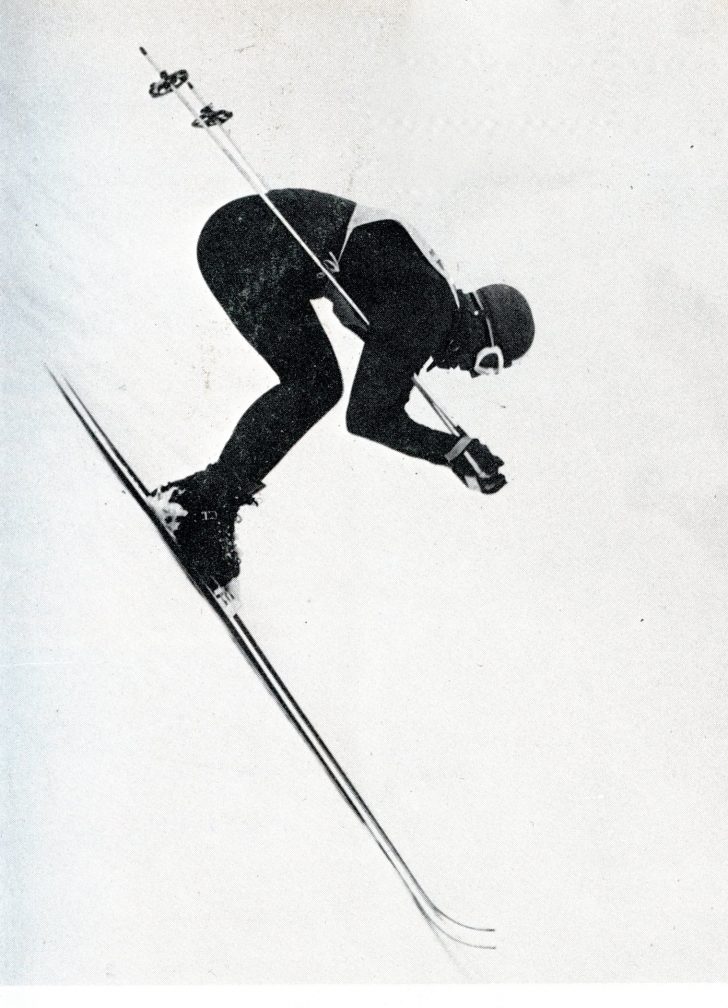
Pat McCloskey's article on the Modern Ski Turn explores the power of what you see Ted Ligety doing. Credit: NY Times

Pat McCloskey’s article on the Modern Ski Turn in this week’s edition explores the power of what you see Ted Ligety doing above.
Credit: NY Times

As the season ramps up in the West (A-Basin opens today!) and snow forecasts start to appear in Vermont, SeniorsSkiing.com is moving into snow season mode. There are some important new features we are launching this week.

  • Short Swings! is our brand new round-up of industry news organized by state.  Many ski resorts, equipment vendors and others in the industry have discovered SeniorsSkiing.com and have sent us buckets of news almost every day.  We decided to start a new weekly feature that gives you access to this information.  Tell us what you think.
  • The Best Skis For Seniors.  We are often asked for equipment recommendations for seniors, particularly skis. We are very excited to announce that we’ve worked with realskiers.com, a much-respected source of technical evaluations of skis and other equipment. The result is a list of 38 skis just for seniors culled from the many than were tested by realskiers.com. This is an exclusive, FREE offering for our subscribers who have already been sent a notice and link for downloading the article.  New subscribers will receive the link when they submit their email address.  This is a big deal, folks, and we hope you find this a valuable addition to SeniorsSkiing.com

With snow in the air in so many places, we thought we’d help you start think about the season. Correspondent and PSIA instructor Pat McCloskey offers some pre-season advice to seniors about the modern ski turn.  We are guilty of buying new, shaped skis and never taking a lesson on them.  This year, Pat’s article encourages everyone to think about technique, and we are sure going to take a lesson to put this advice to work.

Finally, we hear about the critical importance of hydration for seniors, especially active seniors.  If you are exercising in any way, you are going to have to replace fluids.  If you don’t, you will suffer some unpleasant symptoms.  It’s a personal story from one of our editors, one that we hope you find useful.

So let the lifts start to spin.  We are getting ready.  And remember, there are more of us every day, and we aren’t going away.


Short Swings!

A Weekly Round-Up Of Industry News.

historic7_CALIFORNIA

11th annual Alpenglow Sports Winter Film Series will be held at Squaw Valley’s Olympic Village Lodge, November 17.

Squaw Valley Alpine Meadows promoted Tom Feiten to VP, Marketing and Business Development, overseeing marketing and sales. Before joining the resort in 2011, he helped Teton Gravity Research revitalize the Teton Gravity Research annual film tour. He also worked eight years as Director of Strategic Finance for Booth Creek Ski Holdings in Vail, CO.

COLORADO

Arapahoe Basin will open for the season on Friday, October 21.

Ski Younger Now, instructed by Seth Masia at Vail Ski and Snowboard School, is a great program for older skiers. This season there will be four monthly midweek clinics (Tuesday thru Thursday, December 13-15, January 17-19, February 14-16, March 14-16) and one over the Martin Luther King Jr Day weekend (January 14-16). More at skiyoungernow.com or call Seth at 303.594.1657.

Colorado Cross Country Ski Association (CCCSA) announced the lineup (classic and skate skiing) for the inaugural 2017 Colorado Nordic Race Series taking place at four iconic Colorado destinations between January and March 2017.

GetSkiTickets.com announced it now offers discounts on ski lodging as well as lift tickets for resorts across North-America.

MICHIGAN

Boyne Resorts appointed Ian Arthur Chief Marketing Officer, a new position on the company’s executive team. He joins Boyne Resorts with 30+ years of marketing and related experience. Much of his career success has been achieved in the resort and travel industries. 

NEW HAMPSHIRE

Omni Mount Washington Resort, Bretton Woods, NH was named one of the Top 25 Resorts in New England in Condé Nast Traveler’s 2016 Readers’ Choice Awards. The awards recognize the best travel destinations from around the world.

UTAH

Ski Utah published its fifth annual Ski Utah Magazine, including, among other features, a comprehensive guide of all of Utah’s 14 ski resorts. Highlighted is an article about the Ski Utah Interconnect Tour, a great opportunity to ski six Utah resorts in the central Wasatch Mountains in one day. Online at: http://bit.ly/SkiUtahMagazine2016-17.

Deer Valley Resort has a new offering: Guests can hit the slopes with Olympic athletes such as Heidi Voelker, Shannon Bahrke, Kris “Fuzz” Feddersen, Kaylin Richardson, and Trace Worthington.

POWDR, owner of “experiential businesses” (e.g. Copper Mountain, Killington/Pico, Mt Bachelor, Boreal, others) announced it has rebranded. www.POWDR.com.

VERMONT

Okemo is offering its transferrable “3 & Easy” multi-pack that includes three days of lift access, valid any day of the season, with no restrictions. Lift access can be redeemed one day at a time or all on the same day. $204 for seniors (ages 65-60); $186 for super seniors (age 70+). Special offer available until October 31.

OTHER

SeniorsSkiing.com co-publisher was interviewed on Rudy Maxa’s World with The Careys, a nationally-broadcast radio program. Podcast of interview: http://rudymaxa.com/podcasts/2016-2/

Vail Resorts announced that it has added three days at Whistler Backcomb to its Epic Pass and Epic Local Pass.

schusser_2_skier_491

The Best Skis For Senior Skiers

 Soft Flex. Minimal Exertion. Skis for Six Different Scenarios.

Update Dec 27, 2016:  Subscribers can now download the list of recommended skis by going to the top navigation bar, click on Community, select Subscriber-Only-Content, choose the download and reconfirm your email address.  If you are not a subscriber, consider subscribing. It’s free, lots of interesting articles for seniors who love winter sports.

Ski manufacturers have never designed a ski for senior skiers. With about one million on the slopes, there’s enough of us to justify the investment.

But don’t hold your breath.

schusser_2_skier_491There is a breakthrough this season. For the first time, an in-depth evaluation of the best skis for older skiers is available. This is good news since choosing a new pair of skis, regardless of age and ability, has never been easy, and the abundance of brands and models is always confusing.
The evaluation is the result of collaboration between SeniorsSkiing.com and realskiers.com, the go-to site for in-depth ski equipment evaluations. The free list is available to all SeniorsSkiing.com subscribers. 

Of the many 2017 skis tested, 38 were identified as suitable for senior skiers. Most have relatively soft flex, allowing the sidecut to engage with minimal exertion. The result is ease of turning and forgiveness, which, regardless of physical condition, reduces stamina loss.

In other words, using these skis, it’s easier to ski more runs and have more fun!

Working with testers from around the country, realskiers.com has been reviewing ski equipment for many years. The results are gathered each spring and published in September, where abbreviated reviews are available free and in-depth information comes with a modest, paid annual subscription.

The recommended skis are grouped into six categories, each based on skiing preference, location, and snow conditions. They are:

Frontside (aka “Carving” skis)

  • These skis encompass the broadest range of skier abilities from entry-level to experienced and are for general use on groomed terrain. Wider models are usable off-trail.

 All-Mountain East

  • Skis that are extremely versatile and for general use on groomed terrain. They also work off-trail.
  • This category is suitable for those who have not skied in a few years.

 All-Mountain West

  • These are good for use in the West by high performance skiers and are good both for groomed trails and for powder.

 Big Mountain

  • Skis for use on big mountains with selections for strong and for less strong skiers.

 Powder

  • Specialty skis for use in deep powder.

Technical

  • These have high performance race ski characteristics and are suitable for carving turns on hard-snow.

While many consider skis to be unisex, some women prefer skis with weight and flex more suitable to their size and physique. The list identifies women’s skis, as well.

When selecting skis…

  1. Identify the most suitable category.
  2. Work with a quality ski shop.
  3. If possible, demo selections to compare before purchasing.

To Access the List

SeniorsSkiing.com subscribers were emailed a link to the list. The email was sent on October 14, 2016. Check your inbox or spam folder.

If you have not yet subscribed, click on this link and sign up using the subscription form in the right column or the pop-up which will appear on the page. After confirming your subscription, you will receive and email with a link to the list of senior ski recommendations. And, as a new subscriber, you will have access to discounts and deals on gear and clothing from top brands, and a lot of info relevant to the older snow sports enthusiast!


Pre-Season Advice: Carving The Modern Ski Turn For Seniors

A Ski Instructor Reviews How To Turn On Shaped Skis.

You don't have to ski hard over like Ligety, but look how he bends those skis into the turn. Credit: New York Times

You don’t have to ski hard over like Ligety, but look how he bends those skis into the turn. See how those ankles flex? From the New York Times tutorial on Ligety’s approach.
Credit: New York Times

[Editor Note: Our Spring Survey 2016 revealed an interesting statistic. About 30 percent of seniors take one or more lessons during a ski season. For those of us who are still skidding around turns and wondering how other skiers make those clear, sharp, carved ski tracks, PSIA ski instructor Pat McCloskey has some advice. But, it’s one thing to read about and even see a video of carving turns, it’s another to perform on a hill.  Our advice: Take a lesson and learn how to really navigate on those new skis.]

Remember when we had to up-unweight to make a pair of skis turn?  In the old days, the skis were longer and had minimal side cut so the only way to release the gripping edges at the end of a turn was to literally up-unweight, rotate the tips downhill and finish the turn.

As skis developed more sidecut, the up-unweighting became more subtle and edge engagement was easier facilitating more of a carved turn.  The modern ski turn is aided by shorter skis with radical sidecuts that virtually eliminate up-unweighting. The movement is more lateral across the skis where the skiers center of mass seeks the next turn.  I call it belly button to the next turn.

Ted Ligety, US Ski Team star GS racer, says that the reason he is faster than the competition is that he starts his turns earlier than most competitors by getting on a high edge early in the turn.  He then pressurizes the ski with a good ankle flex, finishes the rounded turn across the fall line and then releases the pressurized skis which actually slingshots him into the next turn.

Key moment in Ligety's carved turn, engaging the uphill ski earlier. Flexing the ankle puts pressure on the edge. Credit: NY Times

Key moment in Ligety’s carved turn, engaging the uphill ski earlier. Flexing the ankle puts pressure on the edge.
Credit: NY Times

If we slow that down for the mortal senior skier, the key is to engage the new edges early in the turn by getting that belly button to face towards the next turn.  Then as the turn progresses, the ankles flex in the boots to hold the pressurized edges and the skier can finish his or her turn controlling the skis with a carved turn instead of a skid.

There is an element of trust in what the modern ski can do when you engage it early.  But if you are patient and trusting, allow the edges to grip and carve; you can use your ankles to micro manage turn shape which controls speed.  One of the keys to success here is to make sure you have a ski than can easily flex and a pair of boots that can also flex.  A race boot is sometimes not the best choice for a senior skier.  Make sure you can flex your ski boots which is critical during the progress of a modern ski turn.  You especially need that flex at the end of the turn to pressurize the skis to make a strong, across the fall line, rounded turn.  Just like Ted.

Check out his carving in this video clip below.  For a more complete explanation of Ligety’s approach to the turn, click here for a tutorial from the New York Times and clips from the 2015 Sochi Olympics. 

Most Active Seniors Probably Have This Problem

But, There’s A Free Miracle Drug You Can Take.

You can live better when you're hydrated. Credit: TreeHugger

You can live better when you’re hydrated.
Credit: TreeHugger

At the risk of sounding like a spam email headline, I have re-discovered a miracle drug. It’s completely free, it acts quickly, and it can be found anywhere and everywhere. It’s a drug that can directly change your life for the better. I say re-discovered because I knew about this drug, loved its restorative properties, but like many things, I took it for granted and thoughtlessly stopped taking it as much as I should have, especially this summer. The impact of stopping was immediate and perplexing.

Of course, I’m talking about water. And what happened to me just over the summer is what can happen to any senior who is active. You forget to or ignore taking a water bottle to the gym, or you don’t drink after a walk or bike ride. You don’t ask for water with a meal. You spend a sunny day on the water fishing, sailing, kayaking, drinking sodas or beer with a sandwich.

You probably don’t think much about drinking water, but if anyone asks you why you don’t, your rationale is brilliant. Mine was: I have enough coffee, wine, tea, etc. during the week to keep me floating, or that water with a meal takes away my appetite, or I don’t like the taste of water at home because the well is low. (Common in parts of New England these days.)

Or glasses of water are for kids, right?

For me—a fairly active senior, the result of ignoring to hydrate was not positive. My symptoms: Logy, headache, irritability, lower than normal blood pressure (got a heads up during a routine visit), rapid resting heart rate, musty, dark-ish urine, and frequent, yes, frequent urination. I never once connected these to my being dehydrated, just getting a little more senior by the day.

But what signaled that I might have a hydration problem was a gym class instructor mentioning in passing that stiff joints might come from not having enough water onboard. Click. I had developed stiff joints and muscles this summer. I found walking a distance challenging because my hip flexors, psoas, hamstrings and glutes were tightened up. Stretching didn’t seem to help as much as it should have. I thought I was the victim of sitting at a desk for long stretches. That contributed, but lack of drinking water as a clear accomplice.

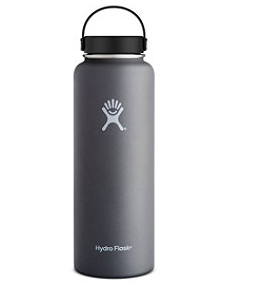
Expensive water bottle, insulated, vacuum. Credit: LL Bean

Expensive HydroFlask water bottle, insulated, vacuum.
Credit: LL Bean

My remedy is to start drinking water again, simple as that. I now have at

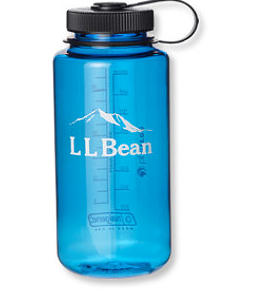
Reasonably priced, Nalgene water bottle. Credit: LL Bean

Reasonably priced, Nalgene water bottle.
Credit: LL Bean

least three eight-oz. glasses before noon and three after. I use spring water to replace the mineral-filled well water. When I first started this regimen, the results were immediate. I felt more alert, energetic, upbeat, and the muscle/joint stiffness—combined with dutiful and targeted stretching—is gradually going away. At least, this is working for me. Your mileage may vary.

I am not a medical professional, but I’ve learned that most seniors tend to walk around in a dehydrated state. Medications, living at high altitude, certain conditions like diabetes, just getting older can all contribute to dehydration. And forgetting to drink.

Easy tips from MedicalNewsToday:

  • Drink water, juice or milk at each meal.
  • Moderate how much coffee, tea, alcohol you drink. They are diuretics, and, to varying extents, take water out of your body.
  • Drink small amounts of water frequently throughout the day.
  • Drink small amounts during a workout as well as after to replace what you lose in sweat.
  • Consider an electrolyte-type drink.

Final tip: Buy an expensive water bottle so you feel guilty if you don’t use it; keep it full and handy.

If you have symptoms or questions, see your primary care physician.


This Week In SeniorsSkiing.com (Oct. 14)

The Benefits Of Solitude, Grandkid Book Recommendation, Boot Revival.

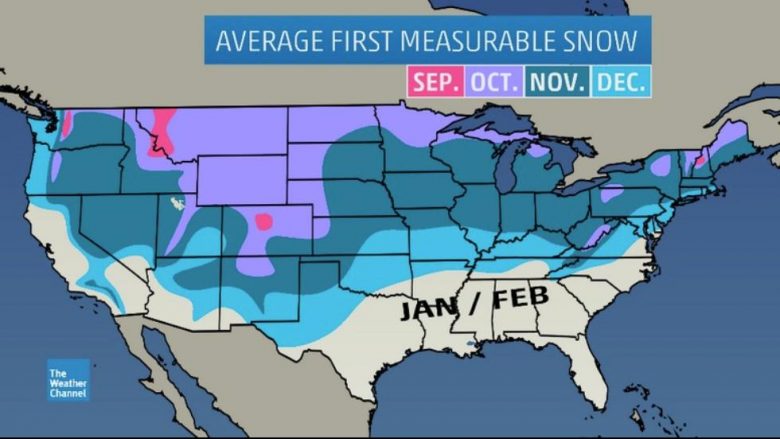
This week we are anticipating a big, big snow fall in the Pacific Northwest coming from a huge cyclone off the coast.  And thanks to Snowbrains.com, a really terrific snow sport site, we learn where the snow will accumulate enough for resorts to open first.  Here’s the official view from NOAA/NWS.  Just a matter of days in some places.

Killington usually vies for being the first in the East. When you read this, we think lifts will be spinning in the Northwest. Credit: NOAA/NWS, Thanks to Snowbrains.com

Killington usually vies for being the first in the East. When you read this, we think lifts will be spinning in the Northwest.
Credit: NOAA/NWS. Thanks to Snowbrains.com

XCSkiResorts.com publisher Roger Lohr writes about skiing (or riding in his case) alone.  Let’s face it, there are many benefits to flying solo, not the least of which is to contemplate, reflect, and/or zone out into a Zen-like state.  Skiing/riding/x-c with friends is one experience; going alone is another.  Clearly, there is a time when one prefers being an “ace”. Perhaps more often than not.

Co-publisher Jon Weisberg recommends a cute book for your grandkids, bunny slope, about a rabbit who skis.  Adorable illustrations, fun story, something to read aloud on a snowy afternoon by the fire with a youngster or two on your lap.  Fun stuff.

Finally, correspondent Jan Brunvand reflects on the re-appearance of rear-entry boots, manifest as FullTiltBoots.com. Perhaps you remember the convenience and comfort of those old Raichle, Hansen, and other rear-entry brands.  Well, Full Tilt has bought the Raichle molds, updated the design and is marketing these without much fanfare, it seems.  Funny, we just tossed an old pair of re-entry boots in the dumpster.  Who knew they are now cool?

Next week we will be bringing you news of a great new asset for our subscribers.  Hint:  It has to do with skis and seniors and matching the two. Please watch for this really terrific new benefit of being a SeniorsSkiing.com reader.

And tell your friends.  Remember, there are more of us every day, and we aren’t going away.

Flying Solo

Making The Case For Going Alone.

XCSkiResorts.com publisher Roger Lohr likes to go alone, sometimes on the spur of the moment. Anti-social? Expedient? Credit: Roger Lohr

XCSkiResorts.com publisher Roger Lohr likes to go alone, sometimes on the spur of the moment. Anti-social? Expedient? 
Credit: Roger Lohr

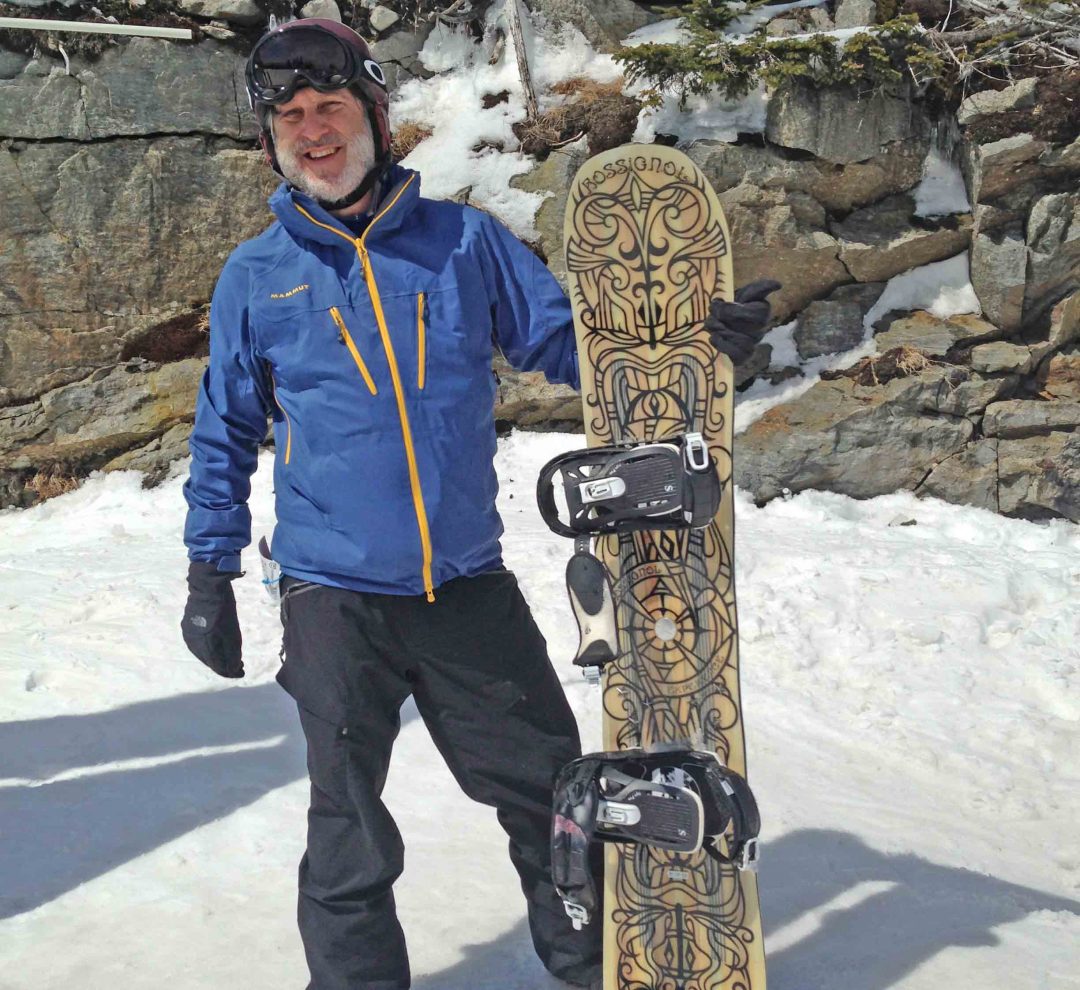
Ski areas don’t really want to hear about people snowboarding by themselves because they like the multiplier effect of groups and families. At the risk of being called a loner, anti-social, or a follower of the British punk band the Anti-NoWhere League, I can surely admit that I like going SNOWBOARDING BY MYSELF. Self centered? You betcha!

One big benefit of going alone is avoiding the negotiation about the time to leave for the slopes, meeting up, when or if to stop for some food or drink, when to go home, etc. Sometimes, I decide in the morning on a given day that it is just right to be out there snowboarding and within 20 minutes I’m in the car and off to the mountain. It just doesn’t take much time to don the base layer, put in contact lenses, grab the accessories bag, boots, board, jacket/pants and car keys.

Of course, I must disclose that going snowboarding might mean only a 10-minute drive to the closest ski area but it also could be an hour or two to a further destination that has better snow conditions. I also admit that sometimes I like my favorite mountains because they have easier runs or a better lunch selection. And being a writer, going alone allows time flexibility to go snowboarding during the week or any day for that matter. When I go snowboarding with someone else, all of these issues become a group decision.

Getting to the ski area, I get on the chair lift pretty quickly after changing in the car, getting a lift ticket, and hopping on the lift. There is no waiting for any acquaintance with their idiosyncratic snow sport rituals. I’ve streamlined my rituals and I’m happy to practice them every outing.

Always open to meeting people on the chairlift, I’m willing to put my music on pause to have a conversation about anything. Some days I don’t meet anyone willing to chat and there are some other days when I meet someone who I’ll join to do some runs. There’s also the rare occasion when I’ll befriend the person that I meet on the chairlift but, more often, I ride the lift listening to my own tunes, selecting the desired runs, and navigating the mountain as I wish.

Based on momentary whim, I do some warm-up runs, cruise some easy runs, drop in on an occasional dash into the glades, turn on the jets on the groomers, pursue powder stashes, and so on. No discussions, no joint decisions, no concerns about the partner’s prowess, boredom, or whether he/she needs to hit the head. There’s no guilt about how much I’m getting for the value of the lift ticket. There’s no worry about bailing because that day’s snow or weather conditions are not conducive to having very much fun. I like riding in a snowstorm for the freshest powder, or doing runs in the spring time mush, and there’s no concern that perhaps I drove an hour to ride only three runs and decided to leave because I wasn’t feeling it.

Yeah, I like snowboarding by myself.

Back to the Future With Full Tilt Boots

Rear Entry Boots For Comfort And Convenience.

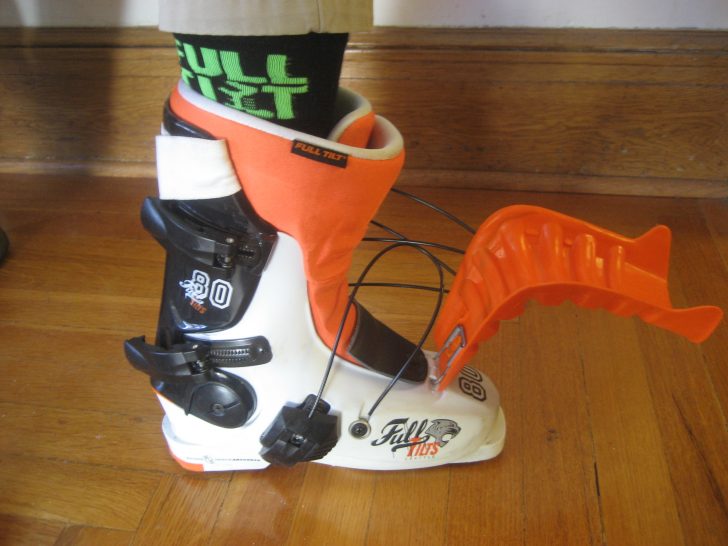
Full Tilt boots: comfort, warmth, convenience.

Full Tilt boots: comfort, warmth, convenience.

If you bring up the subject of ski boots among senior skiers, you’re bound to hear someone lament the demise of rear-entry boots or praise the old Raichle Full Flex boots (AKA Flexon Comps). Today when some oldsters need boot horns to get into their ski boots and boot jacks to remove them, these defunct models have a nostalgic appeal.

Rear-entry boots pivoted open from a center point to provide a wide space to insert the foot, while Flexon Comps had a tongue that hinged forward, with wires and clamps to secure them. Neither style won much appeal from ski racers, and instructors talked recreational skiers out of using them, presumably because they were not judged sufficiently stable.

True, Bill Johnson won his downhill gold medal in the 1984 Winter Olympics wearing Flexon Comps, but that wasn’t enough to save the pattern. By 1999 both models were gone.

Some devotees stockpiled the boots. Others turned to thrift shops and Ebay for boots or parts to keep them going. For most skiers these old comfort boots seemed to be gone forever.

Enter Full Tilt boots! Someone had the good sense to buy the original Raichle molds, improve the dynamics of the older models, and re-launch them in the mid 2000s. I never see Full Tilts reviewed or advertised in ski magazines, but you can find all their current boots online at www.FullTiltBoots.com and locate a dealer.

My wife and I own two pair of Full Tilts each and find them comfortable, warm and convenient. My older pair are the original black-and-yellow “Bumble Bee” style, and they even have “Flexon Comp” molded into the back side of the tongue. Nowadays they come in a variety of attractive colors and designs and are popular with freestyle skiers and other hotshots.

Once we met a group of young ladies from a college in Vermont training for freestyle at Brighton, Utah who all wore Full Tilts, so we posed with them for a picture—Grandpa and Grandma flanking the kids, all in colorful boots.

Full Tilt boots have heat moldable liners that wrap around and conform to the shape of your foot. A dealer will heat and fit the boots properly, or you can just warm them with a hair dryer and wear them around the house to get a good fit.

The boots come with a user manual detailing adjustments for liners, cables, buckles and tongues (all replaceable) for setting the forward lean or canting. We’ve never had to make such micro-adjustments; the only changes I’ve made are replacing the exterior heel pads secured by two screws about once a season.

Prices for Full Tilts are comparable to other modern ski boots, but—as with most ski gear—if you look online or check local shops off-season you can usually find some on sale.

I was on a gondola once at Sun Valley with a couple wearing Flexon Comps. I stuck out my Full Tilts for a comparison photo—comfort ski boots, old and new. You gotta love it, seniors!

Layering Redux: More Tips For Senior Skiers

What A Modern Senior Skier Needs To Know About Layers.

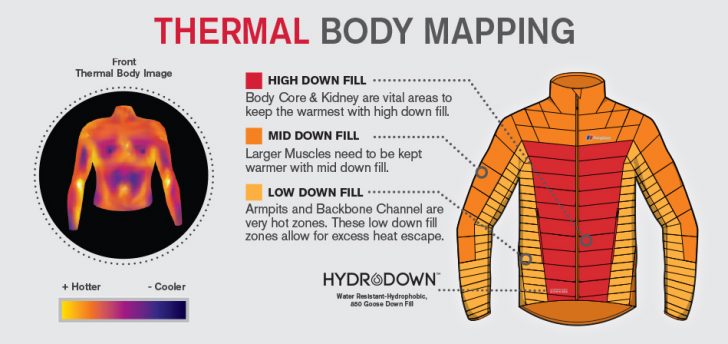
Body mapping clothing--allocating insulation in different zones--is an innovative idea being used by clothing manufacturers. Credit: Berghaus

Body mapping clothing–allocating insulation in different zones–is an innovative idea being used by clothing manufacturers.
Credit: Berghaus

[Editor Note: Last September, SeniorsSkiing.com published an article about layering prompted by an unfortunate experience in extremely cold weather when we over-layered and paid the price for it. This year, here’s a list of tips from Val E., our new correspondent who has deep background in the ski industry. He’s bringing us up to date on the new technology view of layering. Here’s his advice.]

Thoughts On Hats, Gloves, Socks:

  • A thin skull cap (1/32 inch thick) doesn’t add much warmth to a helmet (which has about an inch of foam). However, a balaclava protects your face, neck areas exposed to cold air.
  • Let’s be real, glove liners (very thin gloves made out of silk, wool or synthetic fabric) add very little warmth to a decent pair of gloves. They also separate your fingers if you’re wearing outer mittens. But liners do keep your hands drier by taking moisture off your skin, and, most importantly, they protect your skin from exposure when you take your outer gloves off.
  • Socks must be skiing-specific,(i.e., not hunting socks, etc.) made of a synthetic or wool/synthetic combination. And, a ski sock must be knee high, no exceptions. All real ski socks are, anyway. Thicker is not always better, because comfort, staying dry and avoiding blisters are critical. Avoid old school equally thick tube shape socks. And, only one sock per boot! Never use sock liner, no matter what the propaganda says. Feel cold? Get the boot fitting right, install heaters, take a break inside.

 Base Layer Thoughts:

  • Lightweight (thick as a nylon sock) –For warm weather or people who “run hot”
  • Midweight (thick as a cotton t-shirt) –For most conditions or most people
  • Heavyweight (thick as a warm flannel) –For cold conditions or people who “run cold”
  • Three-quarter base layer pants are relatively new and very practical, because a skier doesn’t need to have pants extend into the boots which can get bunched up and cause comfort and  circulation problems.
  •  Compression base layers (shirts, pants, socks) are becoming more popular. Manufacturers claim they support muscles, improve recovery time, and more. There are skiers who love them and skiers who don’t. Try a pair of compression socks to see what you think. [Editor Note: See our article on Injinji compression toe socks here.]
  • These days, some base and mid layers have extended sleeves with so called thumb loops to keep the sleeves in place. Majority of outer jackets on the market have sleeves cut longer than we are accustomed to. You can adjust them with Velcro closures. The idea is to keep the wrist area well covered for people of different height.

Outer Layer Thoughts:

If you ski most of the time in:

  • Wet conditions (high humidity, wet snow, rain, wind), then stick to pants and jackets made of the best waterproof/breathable fabric (Gore-tex, Dermizax).
  • Dry climate and not very cold conditions with moderate snowfall, you can select clothing made of any breathable membrane fabric.
  • Warm conditions with no or limited precipitation,  then try a soft shell jacket. These are highly breathable, windproof and water resistant (but not waterproof!).
  • Many companies use the idea of mapping insulation or “body-mapped clothing” in mid and outer layers, putting more insulation in the zones, where the skiers need them most. Mapping for women and men is different.

For an in-depth discussion of technical clothing of all kinds, check out this article from the European Outdoor Conservation Association.

And here’s a short video produced by Berghaus on its experiments with body mapped outer layers in Greenland. Worth a look.

Five Ideas For Finding Ski Buddies

Here Are Five Starter Ideas.  Do You Have Any More?

trailmasterimage_SeniorsSkiing.com’s Spring 2016 Survey revealed a pretty interesting statistic. Half our respondents—49.33% to be precise—were interested in meeting other seniors to ski with.  We know that many people drop out of snow sports because their spouse either isn’t able or isn’t interested in winter sports.  An alternative to quitting is to find kindred spirits.  Here’s an attempt to get some ideas flowing.  If you have any other ideas or are a member of a ski club or group looking for members, please go to SeniorsSkiing.com’s Forum and post a comment in the Meet Up/Get Together category.

1) Check the 70+ Ski Club.  They specialize in trips but may have knowledge of standing clubs also, based on their experience with their clients. They are a SeniorsSkiing.com advertiser so just click on one of their ads on this page.

2) Next, try the National Ski Council Federation, an association of ski clubs. Look up your state and find clubs in your area. You will get the names of the clubs and the email address of the regional council president who can give you a steer. The Ski Council also offers discounts and other benefits for joining.

3) SeniorsSkiing.com has a Forum for people who want to meet up and get together. Just click on Forum in the upper right in the blue menu bar or click here. You’ll be asked to register. Please give this a try.

4) Get in touch with some of the resorts in the area you want to ski.  Chances are, the General Manager or Marketing Director might know of formal or informal groups that get together mid-week. In fact, the resort might sponsor a club of its own like Waterville Valley’s Silver Streaks.

5). Click on over to MeetUp.com, a site that is specifically designed to get people with mutual interests together. You can zone in on your local area or expand outwards, depending on your interests. When we checked, there are lots of opportunities for people to get together for skiing and snow sport activities.

Of course, another option is to show up mid-week at your favorite resorts and look for the guy or gal eating lunch alone. One of the reasons we started SeniorsSkiing.com is because we saw lots of folks having lunch alone in ski lodges on a mid-week afternoon. Say hello, who knows, you might make a friend.

You are certainly not alone in looking for ski buddies. Please let us know what else can work out there.


Snow Sports Leaders: Reese Brown, X-C Ski Area Association Exec

New Ideas For X-C Skiing With New Director.

New CCSAA Exec Director Reese Brown brings energy. Credit: Roger Kohl

New CCSAA Exec Director Reese Brown brings energy.
Credit: Roger Lohr

Reese Brown is taking over the reins at the Cross Country Ski Areas Association (CCSAA) as Executive Director after a long run by former leader, Chris Frado. CCSAA is a nonprofit organization founded in 1977 with about 350 ski area members in North America and is dedicated to promoting growth and improving the quality of the cross country (XC) ski area operations.

The XC ski area members of CCSAA include businesses including resorts and inns, and public facilities such as parks and club-run trail systems that offer skiers groomed trail XC skiing, instruction, ski clinics, lessons and programs, and so much more. The organization coordinates conferences and member services such as a website directory, snow conditions reporting, and educational support.

As the new executive director, Reese Brown is charged by the organization board of directors with reinvigorating the group and increasing the value of membership with tangible benefits. Additionally, Reese serves as the Nordic Director of Snowsports Industries America, the trade association of product suppliers recently moved to Park City, UT.  He is involved with a US Ski Team committee and runs the Winter Trails introductory program. He’s a personal interlocking directorate for cross country skiing.

XCSkiResorts.com asked Brown about his perspectives on CCSAA and XC skiing on a number of issues. He wants to help XC ski areas raise their game, and he intends to increase the educational benefits for ski area members.

Regarding older skiers, who represent 12.4% of the XC ski population, he said, “cross country skiing and snowshoeing are the perfect forms of recreation for seniors because they are low impact activities that can be done into the later ages. With cross country skiing and snowshoeing, seniors can go at their own pace, get some exercise, join with like-minded people, and just enjoy the scenery.” He points out that senior skiers and snowshoers can socialize with friends or a group of people at the Nordic ski areas on midweek days when there are no crowds. Many cross-country ski areas coordinate specific senior programs with a short outing on the trails, a snack, coffee or hot chocolate and some company to enjoy it with on the same day each week.

After decades under the same CCSAA leadership, the new executive director and CCSAA’s rejuvenated working board is taking ownership of the organization’s efforts to revamp. For example, at the CCSAA spring conference Brown and some Board members orchestrated educational programs on grooming, snowmaking, and website effectiveness. These programs were parlayed with one-on-one sessions that were tailored to attending individual ski areas. These tailored sessions were scalable to the different ski areas so a small area could apply specific information at a lower level of commitment be it for a snowmaking investment or enhancing a website.

Brown is working on educational programs such as effective snow condition reporting, dealing with fat bikes on the trails, making rental equipment inventories more productive, and financing. “We intend to up the level of cross country ski providers’ games, which will benefit the skiers.”

When meeting with XCSkiResorts.com, the energetic Reese Brown reported that he had recently met with a company to work on an Internet-based ski trail ticket program.  Then, he was on his way to a snow gun company in the area to discuss biathlon ideas. This level of adrenaline at the association can only help the cross country ski areas and in turn provide better service to cross country skiers.

This Week In SeniorsSkiing.Com (Sept 30)

Senior Season Pass Discount Deals, BC Big Boy Resort, Tandem Warren Miller Movie And Book Reviews.

Get ready for the new season with some mind candy from Warren Miller.

Get ready for the new season with some mind candy from Warren Miller.

The snow season continues to emerge from the fall weather.  There’s snow at high elevations through the Northwest and, in the East, there is definitely a snap in the air and the leaves are turning.

This week in SeniorsSkiing.com we welcome Michael Warner’s new site SeniorsSkiDeals.com which focus solely on discounts for senior skiers. We salute Michael for putting a spotlight on skiing seniors and highlighting what resorts are super senior-friendly.  It is a move we hope the ski industry notices as we aren’t going away, are we?

Correspondent Yvette Cardozo also puts a spotlight on Revelstoke, a BC resort with big steeps and incredibly great deals for seniors, especially with the Canadian dollar’s exchange rate. A five-day pass up there runs about $167-$182 US.  Think about that. A five-day pass.

Finally, we honor an influential ski industry pioneer who probably brought more people to snow sports than storybook racers and celebrity instructors, We bet that you saw those Warren Miller movies back in the 60s and 70s which mixed scenes of graceful ski turns down beautiful mountains with goofy comic scenes and quips.  We also bet that many people actually learned—at least subliminally—their first ski moves from watching Warren Miller’s films. It’s called “vicarious learning” by the psychologists, we know for sure we learned the rhythm of turning from watching those movies.

Co-publisher Jon Weisberg previews WME’s new film, “Here, There, and Everwhere”, where Warren answers the question “What do people get out of skiing?”  Correspondent Karen Loretz reviews Warren’s autobiography, “Freedom Found,” which tells his surprising back story about how filming outdoor adventures provided purpose to a young man looking for direction.

Upcoming, we will have some news about some other new developments about ski selection for seniors. And suggestions about where seniors can find skiing buddies.  Stay tuned.

Thanks for subscribing to SeniorsSkiing.com. Tell your friends, please. And remember, there are more of us every day, and we aren’t going away.

Senior Season Pass Deals From SeniorSkiDeals.Com

New Site Pinpoints Lift Discount Deals For Seniors.

[Editor Note:  Last season, we published an article about Michael Warner’s website that summarized lift ticket deals for senior skiers at Tahoe area resorts.  This season, Michael is going national, publishing a new website—seniorsskideals.com— that identifies season pass and lift ticket discounts for seniors at top resorts. Michael uses data from Zrankings.com to select the top hundred or so resorts around the country, then digs in to identify season and lift ticket discounts for seniors.  Bear in mind, this is a first pass for Michael’s site.  It is a work in process.  You may find some inconsistencies or gaps, but, at SeniorsSkiing.com, we think it’s a terrific start in giving senior skiers the information they need to find the discounts that we all know are out there.]

screen-shot-2016-09-29-at-10-08-16-am

Former ski instructor Michael Warner is publishing a new site that pinpoints season and lift ticket discounts for seniors. He’s our friend!

In a survey recently posted on SeniorSkiing.com, saving money on equipment was important to only 7% of the seniors that responded. I can understand that few of us 65 and up skiers think much about too tight boots in August. However, I remember an earlier survey in SeniorsSkiing that asked: “How important to you are lift ticket prices?”, and 100% said “VERY.”

I started a website last year giving the lift ticket deals for senior Tahoe skiers. My research often revealed dramatic savings by purchasing a season pass. For instance, if you bought your ticket two or three days before arrival, the savings could be $20 to $40. That’s a nice savings for an infrequent, day-by-day skier, but serious senior skiers who hit the slopes seven days or more want deeper discounts.  For instance, if you are a SoCal senior and love Mammoth and ski 12 days this winter, the cost at the lift window is $1,272. But buying a senior season pass, good every day, all season is just $449.

On my new website www.SeniorSkiDeals.com, I have the top 90 ski areas in the US and Canada with their Adult and Senior Season Passes. Following are just a sampling of the best Senior Pass Deals.

West

  • Mammoth, June Mountain ­ 65­-79, $449
  • Heavenly Valley, Northstar, Kirkwood ­ $369 (no holidays)
  • Timberline ­ 65­-74 $369, 75+ free. Good at 10 other ski areas
  • Mt. Baker, Stevens Pass ­ 70+ $160
  • Sundance ­ 65+ $150
  • Grand Targhee ­ 65+ $459
  • Aspen’s 4 Areas ­ 70+ $459
  • Copper Mountain ­ 65+ $ 319
  • Crested Butte ­ 70+ $ 323
  • Whitefish 70+ Free
  • Taos ­ 65­79 $350
  • Angel Fire ­ 70+ Free

East

  • Jay Peak ­ 70+ $359
  • Smuggler ­ 70+ $70
  • Whiteface, Gore ­ 70+ $250
  • Saddleback ­ 70+ $200

The most important thing to get out of this article and seniorskideals.com is to check on the season passes NOW at where you are going to ski. The pass prices at most areas go up after September.

For the full list of Senior Ski Deals, please visit seniorskideals.com.  Watch for lift ticket deals coming in November.

Happy trails. Watch those hot doggers and boarders.

SeniorsSkiing Guide: Revelstoke, BC, Big Boy Mountain

Seniors Can Find Big Bargains At This Big Boy Resort.

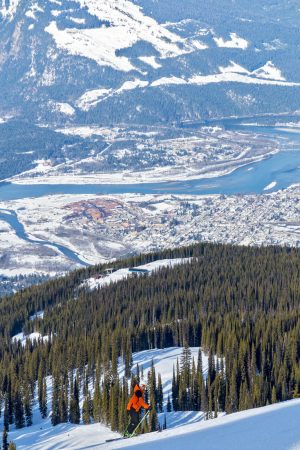
View of Revelstoke town, the valley, Columbia River and Monashees Mountains from the top of Revelstoke ski slope.

View of Revelstoke town, the valley, Columbia River and Monashees Mountains from the top of Revelstoke ski slope.

It’s hard to realize that today’s Revelstoke Mountain Resort only dates back to late 2007 and now has the greatest vertical drop in North America (at 5,620 feet, 400 feet more than Whistler, locals like to point out). And while it has only a third the skiable acres of Whistler, there are dreams of eventually having 10,000 acres, which would be more than twice Whistler.

Yes, this is a Big Boy mountain.

People come here for the powder, for the cliffs, for the STEEP. Ski run categories (beginner, intermediate, expert) are relative to each mountain. The greens (beginner) here would be blues (intermediate) most anywhere else. And the blacks, well, you do need to be able to ski. But it’s not like there’s NO milder terrain. You just have to look for it. And the cruising is fabulous.

Snow, Terrain And More

Location: Revelstoke Mountain Resort is in Revelstoke, British Columbia, Canada, just off the Trans Canada Highway (Canada Hwy. 1). If you fly into Kelowna, BC, you can grab a seat on one of the four daily Revelstoke shuttles. The drive is 2.5 hours.

Snowfall: On a usual year, the mountain gets 40 feet of dry, powder snow.

Terrain, lifts: 65 runs and named areas, 3 skier lifts, 3,100 acres of skiable terrain. Much of this mountain is serious expert terrain though there are easier runs lower down on the mountain and the Burn Down run on the backside is a true intermediate cruiser.

Vertical: Revelstoke has a vertical drop of 5,620 feet, base 1,680 feet, top 7,300 feet (about 400 more than Whistler)

Lot To Lift Access

There is a large parking lot in front of the hotel, a minute’s walk from the snow. However, people staying at the hotel have only to take the elevator down to the slope exit. Town shuttles—Revelstoke Resort Express—run under the care of an independent local operator. It’s $3 one way, $5 RT.

Culture

The Vibe: Revelstoke Mountain Resort has one large hotel at the base of the slope, somewhat like Alyeska in Alaska. The vibe here is electric…it’s locals on skis (on slope) launching glider wings to fly downhill and the sound of helicopters out your window, landing next to the hotel parking lot late each afternoon with heliskiers. It’s noisy crowds cramming into Rockfort Wok Bar and Grill for 35 cent Monday wing night. It’s hot tubs filled with 30 and 40-something Aussies there for a boys’ powder week. And it’s also the old ski town down the road with its quirky apres-ski bars, its restaurants, its old ski town feel.  Click here for dining and shopping options.

Bottom Line

Thanks to a weak Canadian dollar, which has hovered around .75 of the US dollar for several years, you almost can’t afford not to ski Canada. Ordering tickets online, one day senior rates mid season (month of February) run about $36 to $45 US. A five day pass runs about $167 – $182 US. Hover over the Canadian rates, and US rates show up.

Meanwhile, in town, rates become outrageous. For instance, at Powder Springs Inn the rooms (per room, double occupancy), start at what works out to about $165 US and include lift tickets for each person, free passes to the town aquatic center and free shuttle to the ski area .

Trail Map Click Here
Webcams Click Here

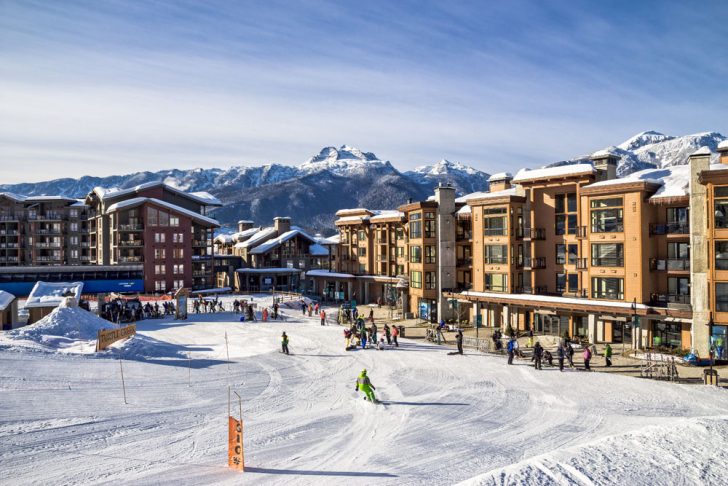
Base village at Revelstoke ski resort. Credit: Ian Houghton/ Revelstoke

Base village at Revelstoke ski resort.
Credit: Ian Houghton/ Revelstoke

Warren Miller’s Story: You May Be A Skier Because Of Him

New Autobiography Shows How Miller Created Skiing’s Visual Brand.

Ski Pioneer Film-Maker Warren Miller lacing up at the Matterhorn. His beautiful and fun-filled films brought new people to skiing in the 60s and 70s. The WME company continues to produce over the top visual feasts.

Ski Pioneer Film-Maker Warren Miller lacing up at the Matterhorn. His beautiful and fun-filled films brought new people to skiing in the 60s and 70s. The WME company continues to produce over the top visual feasts.

For any senior who’s ever attended a Warren Miller film, Freedom Found, My Life Story will provide an intriguing look at skiing history as well as Miller’s success story. The autobiography is a must-read for anyone with a mindset to dig into the ups-and-downs of skiing—and real life.

Freedom Found is also a candid, moving, and adventurous story of how Miller became America’s most famous and prolific maker of ski and sports films.

As Miller details his journey from childhood deprivation to filmmaker success, he delves into the effects of being an “invisible” child during the Depression. In sharing his dysfunctional family life—alcoholic father doesn’t work, mother incarcerated, embezzlements—he shows how parental neglect led to his own drive to work hard.

He also acknowledges the saving grace of grandparents who provided attention at just the right times—an inventor grandfather who teaches him skills in his workshop and pays him for work; a grandmother whose gifts (bicycle, roller skates, Scout uniform) provide the attention and help needed. Living with them for two years while his mother was “away,” Miller finds the support that “changed my life” and gets to join the Boy Scouts in 1936 at age 12, another life-changing event.

Loving the outdoors, he enjoys hiking and learning to ski with his troop. By taking Scout trip photos with his 39-cent Univex camera and selling a print, he discovers the profit motive, commenting, “This was the kernel of the idea that taking pictures of great places would be a good way to make a living.”

It was skiing and surfing—he lived in Hollywood near the ocean and a teacher helped him make his first surfboard—that provided an escape to a world of delight and freedom. Miller graduated to even more freedom with his driver’s license, and soon his filmmaking turns into a career, starting with Surfing Daze in 1949 and Deep and Light in 1950.

An “original ski bum,” Miller lived out of a trailer and cooked over a camp stove to afford his ski habit and to make films. Marketing his ski features as fundraisers—for ski shops, clubs, organizations—he built his touring business into a huge success by personally narrating the showings (narration tracks came later). He entertained us with wry humor and comedic ski scenes—frustrating rope tow struggles, awkward situations (splitting stretch pants, etc.), crazy crashes—and inspired us to ski with his thrilling action shots and gorgeous scenery.

Warren’s success helped build skier participation and was a major contributor to the 1960s and 1970s ski boom. I saw that firsthand after showing The Sound of Winter (1970) to two high school assemblies and at an evening fundraiser: several non-skiing students joined our ski club and parents came forth to chaperone! The proceeds paid for the bus to Whiteface and made possible a $70 six-day trip (skiing, lessons, lodging, meals). To say thousands took up skiing because they enjoyed his films is an understatement.

Warren sold his film company in 2004, but the Warren Miller Entertainment (WME) film tour lives on. This year’s feature Here, There, and Everywhere (reviewed here by Seniorsskiing.com co-publisher Jon Weisberg) weaves the Warren story into several segments.

The just-published, 444-page biography, written with collaborator Andy Bigford whose 35 years in publishing include SKI Magazine and WME, is available at bookstores, warrenmiller.net, and via online outlets. Suggested retail price is $29.95.

Order Freedom Found by Warren Miller from Amazon, WME or at your bookstore.

Order Freedom Found by Warren Miller from Amazon, WME or at your bookstore.


Warren Miller’s ‘Here, There And Everywhere’ Ushers In 2016-17 Season

He’s 91. This Is His 67th Production.

Get ready for the new season with some mind candy from Warren Miller.

Get ready for the new season with some mind candy from Warren Miller’s Here, There, And Everywhere.

Warren Miller is back. The patriarch of outdoor adventure films is 91 and at the beginning of the trailer for the 2016-17 film Here, There And Everywhere, he asks, “What do people really get out of skiing?”

His answer? “It satisfies our innermost urges…for freedom.” He mentions being in square boxes, “This building…is square. The walls are vertical.” Then he delivers a prototypical Warren Miller punch line: “Out there nothing is straight. It’s all crooked.”

The beauty of the outdoors and the freedom of skiing are Warren Miller's trademarks.

The beauty of the outdoors and the freedom of skiing are Warren Miller’s trademarks.

And suddenly we’re transformed to the magnificent Warren Miller landscape we’ve come to know and to anticipate over the years: blue skies, bottomless powder, and endless runs.

Miller’s first film was presented 67 years ago. Since then, the genre he created has psyched and pumped snow sports enthusiasts for the coming season. Here, There And Everywhere features elite athletes descending exotic terrain in Alaska, Montana, Greenland, and Switzerland. Other locations might be more familiar to viewers, including Deer Valley, where the film pays tribute to the late Stein Eriksen. Warren, himself, participates in the narrative—a return to his origins when every Warren Miller film presentation featured him in person.

I haven’t screened the film yet, but I know it will be terrific. How could it not? It’s Warren Miller, and it’s the beginning of another ski season!

The website for Here, There & Everywhere has trailer, film excerpts, and a full schedule of where the film will play.

This Week In SeniorsSkiing.com (Sept. 23)

La Nina No Way, Goggle News, Sailing On Snow, Advice On Buying Gear.

Study up if you're buying new gear this year. There is a lot of nuanced knowledge to learn. Credit: SkiSaltLakeCity

Study up if you’re buying new gear this year. There is a lot of nuanced knowledge to learn.
Credit: SkiSaltLakeCity

EXTRA! LATE BREAKING NEWS:  SeniorsSkiing.com Subscribers Can Get A Discount at BEWI’s Ski And Snowsport Expos. Click The Ad At The Top Of The Page.

We’ve been watching the news from various country ski resorts about the first snow falls of the year.  We’ve heard Tahoe has been hit with plowable snow, more in Utah, and there are reports of dustings in the Canadian Rockies.  So, perhaps this season is picking up where it left off: big weather in the West while the Northeast, especially parts of New England, are experiencing a drought.

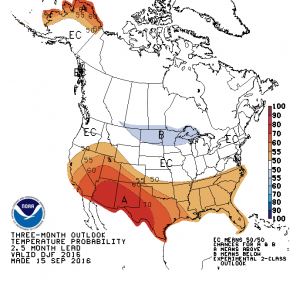
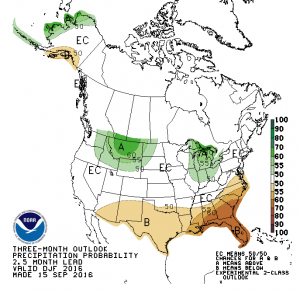
Which leads us to this week’s report on NOAA’s latest winter weather prediction.  The much-anticipated La Nina—which would have brought above average precipitation to the Northeast—will not happen, it seems.  Find out what that means for your region by clicking here.  And remember, a prediction of the future is not a dead-cert bet.

We are entering the buying season where ski shops will be stocking new inventory, and you’ll be looking for stuff.  Our Spring Survey 2016 revealed that many of you will be looking for hardware—skis, boots, bindings.  Our correspondent and PSIA ski instructor Pat McCloskey offers a guide to what is important to know when buying.  And Val E., our new correspondent with deep ski business retail experience, shows us ten tips on buying goggles.  Everyone needs new goggles.  Study up.

There’s more buying advice from Yvette Cardozo’s article last week on finding proper ski and sport clothes for plus-size senior women.

If you notice a shift in our editorial stream, you’re right. We’re slowly shifting over to snow sports news and reports.  Next week, we hope to have a guide to equipment and ski resort discounts just for seniors. And our first Resort Review of the season. Stay tuned.

Curiosity Department: We have a small and short video showing a creative soul sailing a catamaran down a ski hill somewhere.  Don’t ask us why.

Important Update On Promotive-Experticity

Also, Promotive is now Experticity.  Our special opportunity for our subscribers to get discounts has shifted over to Experticity, the new provider.  If you are subscriber who registered with Promotive, it should be a seamless switch. If you are a subscriber who has not yet registered for discounts, there are some NEW INSTRUCTIONS.  Send us an email at info@seniorsskiing.com, and we will forward these to you. Just verify you are a subscriber, okay?

Thanks for subscribing to seniorsskiing.com.  Please tell your friends and remember, there are more of us every day and we are not going away!

New NOAA Winter Long Range Forecast: No La Nina

screen-shot-2016-09-20-at-2-47-19-pm

screen-shot-2016-09-20-at-2-47-45-pm

NOAA National Weather Service Says Not So Fast, Winter.

The weather outlook for this winter shifted dramatically over the summer when the sea water temperatures of the Western Pacific cooled more slowly than predicted.  To review, El Nino is a “hot” sea water temp, La Nina is “cool”.  Both play significant roles in global weather because sea water temps determine which way the surface winds blow which in turn impacts the circulation pattern that connects the tropics with the middle latitudes.

The 2015-16 El Nino was one of the strongest on record.  We had huge snows out West and close to nada in the East.  This year’s El Nino was declared over in May, 2016.  The big bets—and data collected from NOAA ships, buoys and planes—were on for a dramatic La Nina that would basically reverse that prediction.

That is not to be.  The current data shows the La Nina hasn’t developed as predicted.  So, the National Weather Service says we’re headed for a “ENSO-neutral” winter, that is, no La Nina.  To cut to the chase, that means—for Jan, Feb, March 2017— below normal temps in the upper mid-west,  higher than normal precipitation in Idaho and western Montana (i.e., snow), warmer than normal temps in the southwest with below average precipitation (i.e., warm and dry), and about an equal chance of above, normal or below normal temperatures and precipitation in the northeast. (i.e., you can’t predict it.) From this prediction, it appears the place to ski will be Ontario.

But, be advised, these predictions are based on measures that can and do change randomly. So, stay tuned.  We will be watching developments and report the latest when it comes from the National Weather Service.

Here’s a clip from the Climate Prediction Center ENSO site.  Worth a visit.

screen-shot-2016-09-20-at-3-30-27-pm


10 Tips For Buying Goggles

10 Things A Senior Buyer Has To Know About Goggles.

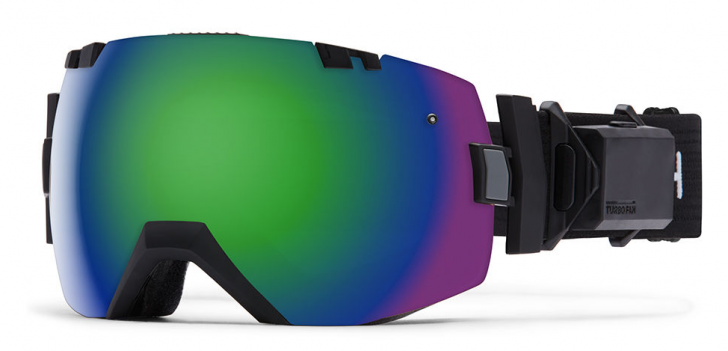
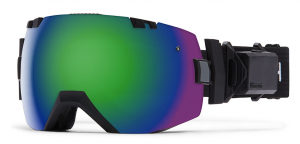
Googles, once an after-thought, have embraced high technology as well high style. Credit: Smith Goggles

Googles, once an after-thought, have embraced high technology as well high style.
Credit: Smith Goggles

  • While goggles shopping, take your helmet with you; both should happily marry. It is good to have no gaps between goggles and your nose.
  • Don’t touch the inner side of the lens with your fingers, gloves or paper napkins. You may scratch off the special coating, then the goggles will start fogging up in this area. Shake off snow or water droplets.
  • It is more practical, comfortable and even safe to have two lenses—one for a sunny day and another for a low light day. These days, some goggles have lenses which are VERY easy to swap; they have super magnets or easy locks.
  • Use a microfiber bag to protect your goggles (or glasses) from scratches and also to clean the leans. Microfiber in contrast with cotton, wool, leather and many other materials doesn’t scratch the coating of the lens.
  •  You can ski in goggles with dark lenses and keep your sunglasses with yellow, rose or light gray lenses in your pocket or around your neck in case of low light conditions.  You can see how different tints affect what you see by clicking here on the Anonoptics “Lens Visualizer.” Pretty interesting.
  • People with smaller faces should check so-called “Asian fit”, “Women” or “Junior” models.
  • Uvex Variotonic can change VLT with a touch. Pretty fancy. Credit: Uvex

    Uvex Variotonic can change VLT with a touch. Pretty fancy.
    Credit: Uvex

    Visual Light Transmission (VLT) is an important metric. VLT is the percent of visible light that passes through a glazing unit, like a goggle lens.  Lens color is a question of taste and sometimes may help to see better in fog or flat light conditions.  Years ago, we were told the yellow one was the best, later rose/pink became popular, now Smith has red, blue, yellow lenses with VLT (55, 60, 65).  It’s hard to tell which one is best. Uvex has a goggle that can change VLT in a fraction of a second.  (7 -17 %, very bright conditions; 20-50%, universal, 50-84%, low light/night)

  • Concerned about protecting your goggles while traveling? Put them in a metal cookie container.
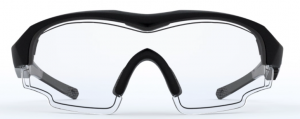
  • OTG (Over The Glasses) goggles are good option for those skiers who want to combine their prescription glasses with goggles. It is an easy and cheap solution. But make sure the prescription frame is made of impact resistant materials (plastic lenses and flexible frame).
  • Some brands (Smith, Bolle, Oakley, Uvex) make prescription inserts for goggles. Some of them cost as low as $20-30. Technically, the inserts are designed to fit certain goggles, but in reality they may fit other goggles.  Just try. Your optician will install your Rx lenses. You can save money if you ask for the cheapest plastic lenses with minimal coatings. Your sunglasses will already have UV protection and other features.
  • High tech goggles with GPS and small computers are not cheap, but they could be helpful. You can find your way out or find your friends even when your cell phone doesn’t work.
Are we subliminally trying to look like F15 pilots? Credit: Wallpaperup.com

Are we subliminally trying to look like F15 pilots?
Credit: Wallpaperup.com

Sail Skiing: Don’t Do This On Saturday Afternoon

Yet Another Attempt To Hybridize Skiing And Another Sport.  Why Is This Happening?

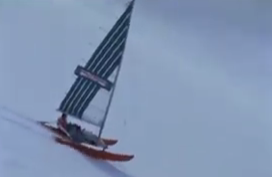
Ready about! Tacking down a ski hill in a catamaran requires a steady hand on the tiller and a love of the absurd.

Ready about! Tacking down a ski hill in a catamaran requires a steady hand on the tiller and a love of the absurd.

We’ve reported on individuals who think it’s a good idea to take a kayak down a ski hill. Click here for our story with a video by Warren Miller, no less.

And then there was the guy who thought he’d surf on big rollers in Hawaii on skis AND in ski boots.  Here’s his moment of glory.

Apparently whenever gravity is combined with slipperiness, there’s a challenge.  At least for some people.

We don’t know the provenance of this clip, but it sure must have been a gas to sail downhill.  We have a feeling this might just be a one-time-thing.


Click on the picture below for a video of the ride.

Ski Instructor Advice On New Alpine Gear

If You’re Buying, Know Before You Go.

Study up if you're buying new gear this year. There is a lot of nuanced knowledge to learn. Credit: SkiSaltLakeCity

Study up if you’re buying new gear this year. There is a lot of nuanced knowledge to learn.
Credit: SkiSaltLakeCity

This is the time of year when a lot of people buy ski equipment for the upcoming season.  Ski swaps, retail sales, online blowouts, etc. are all in full swing once the weather starts to turn cooler.  But aside from the great deals, caution should definitely be applied when purchasing equipment.

As a ski instructor, I have seen the most ill-fitting and inappropriate equipment on students in a ski lesson.  The classic answer is, “I got it on sale.”  So, here are some suggestions that might help folks in this season of “great deals” especially our senior skiers:

•  Ski Boots are the single most important piece of equipment a person can buy.  Two critical features are fit and flex.  I have seen  too many seniors buy boots at a sale and try to fit them post-purchase.  My suggestion is find a good boot fitter at a reputable shop and take the time to have them fit you properly.  There are a lot of aftermarket liners available today like Intuition Liners, that are an excellent custom accessory to any good boot fitting procedure.  The second feature to think about is flex.  Many of us senior skiers still think of the past when we skied more and had the strength to properly flex a race boot.  There are so many options today that it you don’t have to purchase a “fire hydrant “ of a boot with a stiff flex.  Not only does it affect your performance, but an ill-fitting race boot can ruin your day.  The ankle is the most crucial joint in skiing and to properly flex your ankle is essential in executing a good carved turn on a pair of skis.  The flex should be even and allow for that micro-adjustment of pressure applied to a ski in the critical phases of turn shape.  So, senior skiers, take it down a notch and take the time to be fitted properly and allow time to see how the boot fits and flexes in the shop.  You will be much happier on snow.  Here’s some advice from REI on selecting ski boots. [Editor note:  Also check out our advertiser MasterFit here.]

Bindings have a DIN setting available on bindings that allows for the weight and expertise of the skier.  Race bindings can start at 12 and end at 18 DIN or higher.  Even if you back the bindings down to the lower settings, chances are that type of DIN setting will not release for most skiers.  It is better to have a binding that has a single digit DIN setting on the lower end and ending around 14 or so.  If properly set, the DIN should be somewhere in the middle to make the binding the most functional.  I have been skiing for 55 years and am in pretty good shape but my setting is around 11.  Look at the DIN and see if there is an option that would give you a better choice, especially as a senior skier.  Here’s a DIN setting calculator.  Go to a pro to get this right.

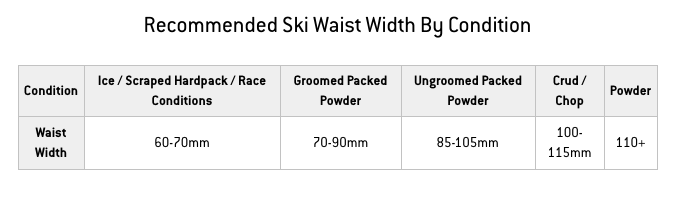
• Skis have become condition-specific.  Don’t buy wide underfoot skis if you are mostly skiing the groomers in the East.  On the flip side, race skis like GS boards or slaloms with ample sidecut and more narrow underfoot, will submarine in powder conditions.  Consider the conditions you will ski and purchase accordingly.  Also, like boots, race equipment may have been the choice a number of years ago, but as senior skiers, a more forgiving flex pattern will make the ski day more enjoyable and longer.  Executing the turns is the key not how cool the skis look in the rack.  Guidelines for picking skis are here from Backcountry.

Recommendations from Backcountry. See link for more information. Credit: Back Country.

Recommendations from Backcountry.  Click here for more information.
Credit: Backcountry.

•  Tuning is often skipped, but easy to get done. Get your skis tuned at least once a year on a Wintersteiger machine found in many good ski shops.  There are other machine options also that can provide a flat base and a beveled tune to your liking.  A properly tuned ski makes all the difference in the world.

All in all, the message is “Don’t be a hero.”  Recognize your ability as an older skier and if you can still “arc em”, get the high performance stuff.  If you don’t ski as much, back it down a bit and enjoy equipment that fits properly.

Think Snow.

Here’s a demo of the Wintersteiger tuning machine.

From One Ski Pole to Two

A Personal Experience As Told To Alan K. Engen.

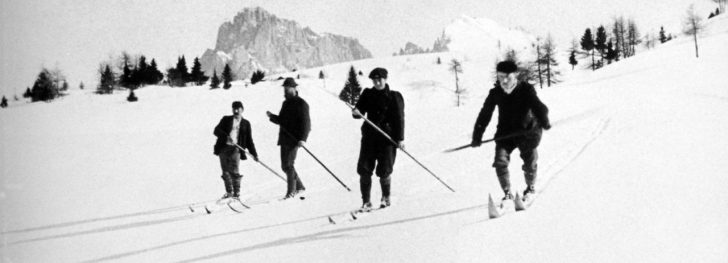
Early One Pole Skiers

Early One Pole Skiers

The late Ruth Rogers Altmann, a good friend and longtime Alta skier, was born in Vienna in 1917. She learned to ski in the Austrian Alps. Ruth’s earliest ski lessons involved the transition from Mathias Zdarsky’s (1874-1946) turning technique using one ski pole and leaning into the mountain to Hannes Schneider’s (1890-1955) turning technique using two ski poles and leaning away from the mountain.

Zdarsky transformed cross-country skiing to downhill skiing during the late 1800s and the early 1900s. He is recognized as the father of alpine (downhill) ski technique.

Young Ruth Altman in Austria

In the early ’20s, Ruth learned to ski in Zdarsky’s Ski School using a single, 5′ to 6′ metal-tipped bamboo pole for balance, turns, and to stop. With this technique, Zdarsky could teach people to ski in about five days.

The following excerpts are from Ruth’s recollections, which I recorded in 1988:

“The one long pole generally was made of bamboo and had a sharp metal point at the bottom. It was light and slightly flexible. Its purpose was to balance and support the skier. It was supporting when climbing up hill. One leaned on it with each step. When trails were too narrow for stemming or wedeln turns, we placed the pole between our legs and sat on it lightly, using it as a brake.”

“As skiing became more popular and developed from a means of transportation to a sport, games and racing competitions came into being. The popular game was a fox hunt on skis. A group of people had to find and catch the human fox’s red zipfel mūtze [long red night cap with a pom-pom]. The fox had an earlier start than the hunters so he could hide and flee from the hunters. ”

“As speed control became a factor in this new sport, the Zdarsky technique was challenged by Hannes Schneider’s speedier technique, which developed according to the law of physics and gravity. The weight had to be changed to lean downhill in turns, and two shorter poles, with baskets, replaced the one pole.

“We, the younger generation, and our older teenage brothers and sisters went with the new. A new division (of the ski school) was formed for two-pole skiing. Even some of the elders would use two poles, which when needed could be batted together to form one pole.”

Ruth Rogers Altmann skied every year at Alta well into her 90s and was a member of the “Wild Old Bunch,” Alta’s ski ambassadors. She passed away in the fall of 2015 at age 98 in New York City, where she lived most of her adult life.

From the permanent collection of the Joe Quinney Winter Sports Center/Alf Engen Ski Museum,

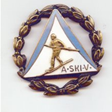
Several years ago, she presented me with the instructor pin she received in the 1920’s by the Austrian Ski School. That pin on permanent display in the Joe Quinney Winter Sports Center/Alf Engen Ski Museum, at Utah Olympic Park, shows a skier with a single pole.


Finding Plus-Size Clothing A Problem For Skiing Senior Women

SeniorsSkiing.com’s Correspondent Yvette Cardozo Tells Where To Get Decent Clothing For Plus-Size Women.

Correspondent Yvette Cardozo decked out in Obermeyer plus size ski wear at the top of Mammoth Mountain's expert runs, ready to put the technical skiwear through its paces. Credit: Yvette Cardozo

Correspondent Yvette Cardozo decked out in Obermeyer plus-size ski wear at the top of Mammoth Mountain’s expert runs, ready to put the technical skiwear through its paces.
Credit: Yvette Cardozo

This is a story of success and failure. And progress. Sort of.

I am not svelte by anyone’s measure. But I ski. I cycle. I scuba dive.  And I once rode my bike across the state of Florida … 174 miles in one day. The average temperature was 95, by the way.

 Many, many years ago when I got into serious cycling and wanted shorts, I was laughed out of the shop and resorted to cutting off polyester pants. Those of you of a certain age will remember those pants. They had a hideous seam down the front and stretched horribly when wet.

 Sadly, it rains a lot in South Florida, where I was living at the time.

 My ski wear consisted of men’s very large sizes tailored to fit. Eventually, someone came out with skiwear for “fat ladies.” The coat was neon pink. Be real guys. Nobody that size is gonna wear something that makes them look like Lake Superior. And it had hardly any pockets.

Women’s sportswear back then was notorious for not being technical. Fat women’s sportswear? You can imagine.

Enter Obermeyer. Go to the company website, click on women, then plus size and you actually get a choice. Mine that season boiled down to a pant called the Birmingham with all sorts of nice techie add-ons…fleece lining, storm flaps, high back, scuff guards, sturdy zippers, pockets. POCKETS!

By the time I decided to get them, the only color left in a size 20, yes, I am a size 20, was white. That is not a color someone my size EVER wants to wear in public. Sigh.

But they arrived, and they were four inches too large. I put them on, held them at the waist, let go and they fell to the floor by themselves.

Which is when I discovered another thing about clothing. The more expensive the clothes, the smaller the claimed size at a particular measurement. In other words, two pants that measure the same might be a 20 in something less expensive, an 18 in a mid-range and maybe even a 16 if it’s REALLY spendy.

Being rich, I guess, means you never have to admit to one of those embarrassing fat sizes.

There were none of my first choice left, but in my next choice, I was a size 18. Yay.

These things have style. They have pockets … lots of pockets. They fit. I could actually bend and squat in them while still managing to breathe.

Then, off I went to Mammoth Mountain in California to put the pants through their paces.  And yes, they did the job. Our first day, despite the April date, it was still full on winter with enough wind to close the top of the mountain. I wondered if it was possible to get frostbite on your tongue (you pant a lot at 11,000 feet).  But the pants survived and kept me toasty.

Then the next day, spring arrived, with 50 degree temps. I expected to sweat my knees off. But, oddly, I did not. Somehow, I stayed cool while diving into Mammoth’s famous Cornice Bowl.

I finally have a smart, technical pair of ski pants.

Now all I need is a jacket.

With lots of pockets.

Editor’s Note: Sourcing athletic, technical clothing for plus-size women is a real problem.  A recent Washington Post article describes the frustration and discouragement women feel when they can’t get decent, well-made technical clothing for sports or business wear.  What is available is not stylish, ill-fitting or wildly expensive.  We thank our new correspondent Yvette Cardozo for telling us, with humor, about what must have been a exasperating search for competent clothing. Have you ever experienced this? What is your solution? Are you a retailer or manufacturer? What’s going on?

This Week In SeniorsSkiing.com (Sept. 9)

Snow Sports Leader Interview, Awesome Mountain Biking By Senior Crew in WVA, Kudos To The Ski Diva.

Not easy these WV rock pots. But that's why correspondent Pat McCloskey and his senior cyclist pals took them on. Credit: Pat McCloskey

Not easy these WV rock pots. But that’s why correspondent Pat McCloskey and his senior cyclist pals took them on.
Credit: Pat McCloskey

Labor Day is at last behind us.  We’re getting closer to snow season and, guess what, we’ve heard that there are folks making runs in Montana on scratchy and almost covered trails.  So it begins, the season of 2016-17.  There are so many big discount deals for season tickets out there right now.  Some of these deals have cut-off dates so let’s get on it, fellas and gals.  It’s hard to think snow when we are dealing with humid, rainy days—at least here in New England—but, well, you said you wanted discounts.  Now is the time.

This week, we interviewed a true industry leader: Bernie Weichsel, the impresario of the BEWI Ski and Snowboard Expos, the biggest snow shows in the business.  Actually, Bernie and our co-publisher Mike Maginn met in the early 70s, when both were young and casting about in the ski business.  Bernie worked for the Harry Leonard ski show organization, and Mike was a junior editor for SKIING.  Curious that their paths crossed again more than 40 years later. Bernie offers his wisdom on why skiing is the way it is, the role of seniors and what he sees in the future.  Thanks, Bernie for your time.

We also have a final Cycling Series report for the non-snow season from correspondent Pat McCloskey.  Pat gathered a group of senior cyclists and managed to find some “Black Diamond” biking in the hills of West Virginia.  They were guided by Sue Haywood, a mountain biking National Champ, who took Pat and the lads down and up some major technicals.

Finally, our “sister site”, The Ski Diva, is celebrating its 10th anniversary this week.  We are so proud to know  The Ski Diva and to have learned from her about niche audiences, the internet and the ski business when SeniorsSkiing.com was starting out two years ago. Salute to The Ski Diva; it’s a fabulous online community for women snow sports enthusiasts.

Please take advantage of your Promotive (now Expertcity) discount offered to Seniorsskiing.com subscribers. Like season passes, now is the time to grab some discounts on top brand gear and clothing.  If you need help in registering for Promotive, send an email to info@seniorsskiing.com.  Just verify you are a subscriber.  If you aren’t a subscriber, join us. It’s free!

Meanwhile, thanks for subscribing to Seniorsskiing.com.  Tell your friend. And remember, there are more of us every day and we aren’t going away.


Snow Sports Leaders: Bernie Weichsel, BEWI Ski And Snowboard Expos

"Bernie Weichsel speaks at the Jerry Awards at the Ishpeming 100 Film Festival during Skiing History Week in Steamboat Springs."

Bernie has been in the ski biz for over 45 years.

Bernie Weichsel is the country’s major producer of ski shows and expos. He founded BEWI Productions, Inc. in 1979 and has successfully marketed snow sports to audiences in the US and internationally. He assists with fundraising for the U.S. Ski Team and other non-profit organizations. Bernie also is a valued member of the SeniorsSkiing.com Advisory Council.

How did you start skiing and become a major player in ski promotion?

Skiing is my first love. I was lucky, my parents, both refugees from Germany, passed on their love of skiing and the Mountains  at any early age. We lived in Manhattan, and I got started at Belleayre Mountain, in the Catskills, when I was four. Due to my mom I got introduced to Trailside Ski Camp, at Killington, during High School – Brooklyn Technical, where I had organized the school’s first Ski Club – where I washed dishes in exchange for lodging and transportation from N.Y.C. Around the same time, I took on the duties of promoting the New York Ski Show that the owner of Trailside – Mike Cohen – had committed to do (in exchange for Trailside’s booth). That action, in turn, led me to get to know Harry Leonard, the creator of ski shows. Harry loved the “stunts” we did to promote his how – like the time I got a group of friends to stencil “Go Go Ski Show” on Manhattan sidewalks. Wasn’t popular with the police, but Harry loved it!

I ended up working for Harry for six years. The shows were in the Fall. It gave me time to “ski bum” – pursuing each winter a different “vocation” (ski guide, rep, etc.), which I did with enthusiasm from Aspen to Innsbruck.

In 1974 I got involved with the International Freestyle Skiers Association (IFSA) tour which was sponsored by Chevrolet & Skiing Magazine. It was the first organized professional Freestyle Skiing competitive circuit with events at five resorts nationwide. Huge crowds would show up to watch the stars of “Hot Dog” Skiing – like Wayne Wong and John Clendenin compete in mogul skiing and aerial acrobatics on skis. It really was the beginning of Freestyle, which is now a major Olympic event.

My ski expo experience led me to create and produce other large scale gatherings promoting sports and travel and music. The longest lasting was the New York City Winter Festival, held annual – weather permitting – in Central Park, from 1979 thru 1996!

I founded BEWI Productions, Inc. in 1979 and soon after purchased the Boston Ski Show from Harry. Audiences had declined, but we figured out how to bring them back.

The number of skiers in the US has been stagnant for 20 years. Why?

The good news is that it hasn’t really changed much. Estimates of how many people ski or snowboard vary between 8 and 22 million; the number is probably around 12 million. As to why it hasn’t grown, there are several reasons, I believe.

Snow sports are not really a sport with teams like baseball. It’s recreation, and it’s a physical activity. That makes it intimidating to many people.

I also believe our society’s perception of winter, and cold weather,— always loudly promoted negatively—pushes people away. It’s a fact of life today but most people just don’t like winter and cold weather. We’re actually taught to “beware it’s going to be cold and snowy,” starting with our parents and the news media, especially television weathermen. It’s something the industry doesn’t talk enough about, but I think it’s a big reason people don’t engage in snow sports.

Then you throw in the economy, having to travel on winter roads to resorts, the perception that skiing is an elitist sport and add in competing family activities, you find the number of people willing to commit to snow sports is small. But, once you get started, chances are you’re going to stick with it.

What role do older skiers have in sustaining the ski industry?

Seniors have a huge role. Chances are they bring their families into the sport. They are more social, skiing in groups and, most important for ski resorts, skiing mid-week. They dine at mountain resorts with friends and family. And manufacturers are making more products for seniors. In a way, they keep the whole industry going. With cheap season passes for seniors, it’s easy to remain active. On the other hand, I notice that when one spouse or another decides to quit, they other one will, too. So, the challenge is to keep them going.

Why do you think older skiers don’t get more attention from the ski industry?

It’s really a strategic business decision to focus on the younger market and youth culture. The industry is over-focused on flashy, free-style, extreme-skiing videos and the like. Maybe it’s because most marketers are young. Frankly, I don’t think marketers know how to approach the senior market. After all, seniors can be counted on to buy season passes, so that segment is almost a “given”.

You were involved with Y.E.S. to get inner city kids on the slopes, and the New England Ski Museum honored you with its “Spirit of Skiing Award.” What are your proudest accomplishments in the world of skiing?

Couple of things. I try to ski my age every year. I’ve done that most years. I slipped a little last year, only 57 days and I’m 68, but I’m going to be trying for 70 days when I’m 70. I’m proud of being able to do that.

I am proud of starting Ski USA, an overseas marketing venture. When I started promoting skiing in Europe in 1981, only a small number of people were coming here to ski in North America. Now, 10-20% of Vail’s business comes from international skiers, and Nationwide the figure is close to 10%. And on a personal level Ski USA opened up doors around the world to friends in so many countries!

I am also proud of the BEWI shows, especially our expos in Boston and Denver, and being able to run them successfully for so many years. And the US Ski & Snowboard Ski Hall of Fame, where I served as chairman for six years. So many things.

What else would you like to add?

I feel very lucky to be involved with snow sports, a healthy, fun-filled activity that I can do with my friends. It’s a life-long sport, and I’ve formed life-long friendships because of it.

One big worry of mine, though, is climate change. That’s something the industry has to be thinking very seriously about right now. After all, it’s happening now.