How I Choose Hikes

Outdoor Expert Says Consider Your Purpose For Walking.

[Editor Note: Steve Hines will be teaching a hiking boot fitting workshop at the REI in Reading, MA., on August 10 at 6:30 pm. If you are in the area, drop by REI at 279 Salem St. and say hi.]
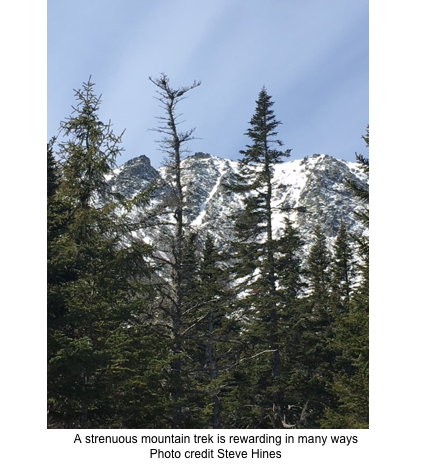
MountainTrekI like to hike. I hike for exercise, escape/“mental health” and to enjoy the companionship of friends and family. If there were no other responsibilities to take care of or if I could make my living hiking, I suppose I would hike every day. Henry David Thoreau had a humble opinion when he quipped that any hike that took less than half a day wasn’t worth it. Focusing on day hikes is my purpose here. Backpacking is a different topic. I select hikes based on a loose set of criteria.

Day hikes can stretch from a few hours (Thoreau notwithstanding) to a dawn to dusk affair. Some folks make a weekend or a vacation out of it by hiking all day and staying at a comfortable lodge or hotel each night. For me, day hikes are any where from four to 15 miles. Below are some tips and suggestions for choosing your next hike into the back country.


Exercise

I often hike for exercise. If I want a good workout, I’ll pick a trail or location I know and am familiar with distances and terrain. I’m looking for a trail that provides a good cardio workout with some interesting features like rock scrambles. Generally, these hikes are moderate to strenuous and along trails I’m familiar with.

Escape

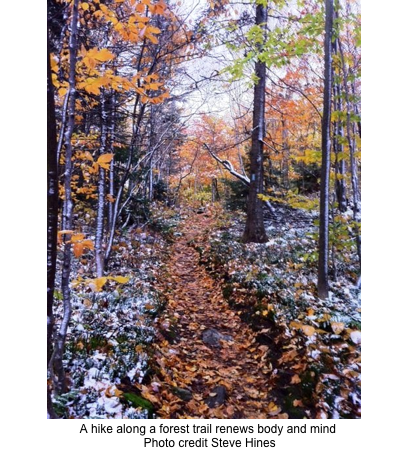
A hike along a forest trail restores the mind and spirit. Credit: Steve Hines

I often like to escape my routines here in the city and find the best scenery to take my mind off civilization. I like mountain views most but also enjoy lakes, rivers and dense forest trails. Purists also like to differentiate between hiking and climbing. In that classification, hiking is along flat trails with little or no elevation gain while climbing involves elevation gain and loss to peaks over 2,000 feet above sea level. Climbers like to differentiate between technical or aided climbing and scrambling or “walk up” summits.

Companionship

I adjust my hiking destinations according to who I’m hiking with. Generally families with small children prefer flat or gently rolling terrain. I’ve certainly chosen hikes and climbs with folks who are younger and/or in better shape than I am. I try for some consensus or form groups with similar interests.

Scales The hiking guide books I use generally describe hikes on a three point scale:

Easy: Short or flat hikes of very limited duration. Good for families and those with small children.

Moderate: Longer hikes with some elevation gain. Usually longer and requires some level of fitness.

Strenuous:  Long hikes requiring at least a day’s time. They often have serious elevation gain and loss. Strenuous hikes/climbs provide wonderful views from summits and “height of land”.

Tips
Motivation Easy Moderate Strenuous
Escape A walk in the woods can clear your mind. Take the same hike in all four seasons Scenery often gets nicer as you gain elevation Rest often and take photos.

High peaks offer great views

Exercise Start slow and move through the levels Hills and mountains build your quads (great for pre-ski season) Gives a better cardio workout
Companionship Stay easy when children are along Appeals to a wider range of your friends Invite only the fittest in your circle

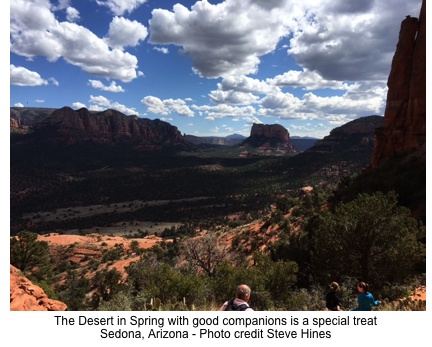
A desert spring with great companions is a treat in Sedona, AZ. Credit: Steve Hines

Tender Exercise Relieves Ski Day Stiffness

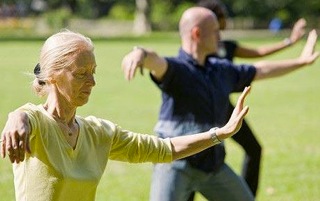
Simple Tai Chi for Senior Skiers.

[Editor Note: SeniorsSkiing.com welcomes Tommy Kirchhoff, a long-time ski instructor and a certified Tai Chi master. He has been teaching senior exercises for 12 years. Tai Chi is an ancient martial art that has evolved to slow-moving poses that is practiced all over the world.]

Credit: Telegraph UK

Credit: Telegraph UK

I learned something valuable recently: my health and my body are one in the same.

I have been a professional skier for almost 30 years and have skied more deep powder days than most people can imagine. By senior year at university, I had skied over 10,000 hours. By the end of last year, I must have skied 35,000 hours or more. But this winter I’ve only skied about 20 days.

Not because I didn’t want to. I wasn’t injured or sick, and there was no impediment other than my will to stay healthy. I know that skiing can be rough on the body. For me, the day after skiing comes with aches and stiffness. Then it takes several days to repair the damage and return to a higher state of health. But I can always fix it.

Maybe it was Christmas. My two sons came to visit, and we skied six or seven days straight. I put them on a plane back home, and I fell ill—sudden sinus infection, a backache that screamed for the chiropractor, and overall lethargy.

And so began the repair.

Tai Chi is my body’s auto mechanic. I’ve been practicing it for almost 13 years. The gentle movements alleviate stiffness and bring order to physical chaos.

Here’s why:

  • Gentle stretching—Tai Chi is full-body stretching, but nothing extreme. Being upright and on your feet allows all the joints to separate ever so softly and minutely.
  • Continuous movement—When you see photos of Tai Chi it looks like static postures, similar to yoga; but continuous movement is a principle of Tai Chi, and a true mode of self-healing.
  • Tongue position—Okay, this sounds strange, but when you press your tongue up into your hard palate, the body’s reaction is to relax. Less stress means more health.
  • Deep breathing—Your body craves oxygen, and the slow, controlled, and deep breathing of Tai Chi feeds your cells ample oxygen for reparation.

If you want to experience the healing magic of Tai Chi without any classes or experience, go online to investigate ChiGong (often spelled QiGong, but pronounced “chee-gong”). ChiGong is the mother of Tai Chi. It is more like simple, repetitive calisthenics than the choreographed dance of Tai Chi, but it includes all the same healing principles.

Clif Bar vs Munk Pack: A Jolt In A Bar

Comparing Veteran And A New Comer Energy Boosters.

Sometimes we need a little boost.

Sometimes we need a little boost.

Energy bars and gels have been on the market for a long time for endurance athletes and weekend warriors alike. Cycling, running and skiing require a positive store of energy that can be augmented by a power snack stored in a cycling jersey, pack or ski parka.  It is especially important to seniors who are active to have some form of nourishment during activities that require fitness and skill. Depleting carbohydrates can drain muscle power and lead to injuries.

The Veteran

The Veteran

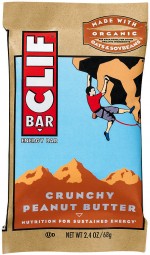
The gold standard for energy replacement has been Clif Bars for the last several

The Newbie

The Newbie

years.  Energy bars, mini bars, gels and Clif Shots have all been part of the active outdoors persons arsenal .  Recently, Clif Bars has joined a movement that emphasizes non-GMO, Gluten free, organic ingredients included in packaging that is non-toxic and able to be re-sealed.

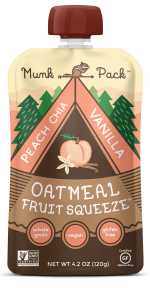
Recently a competitive producer has been gaining ground in the energy food world.  Munk Pack is produced in Canada and has focused on the energy food packs that have all natural flavors and able to be resealed.  They specialize in Oatmeal fruit squeezes that include whole grain oats, delicious fruits and flax, to produce sustained energy.  At $14.99 per six pack, they are reasonably priced and have four delicious flavors.

Personal Observations

Both Clif and Munk Pack emphasize the quality of ingredients. In my estimation, Munk Pack has an edge because, by comparison, their packs have 90 calories and 1% or one gram of total fat versus five grams of total fat and 140 calories for the Clif product. Some people value low calorie/ low percentage of fat grams in their intake of power snacks. Munk Pack delivers impact in terms of performance and recovery with the least amount of calories and fat. Both products are 120 gram packages. I found that the Peach Chai, Blueberry Acai, Rasberry Cocoanut, and Apple Quinoa Cinnamon also had an edge in exotic flavor over the Clif selections and utilizing the natural sweetness of the ingredients adds to the flavor enhancement.  Both products are comparatively priced, but Clif ranges from $13.99 per box to $18.00 per box of six depending on flavor.  Munk Pack is $14.99/six pack for all four flavors.

Clif has a wide range of products that suit different needs for the modern day athlete.  But Munk Pack seems to have cornered the market on fresh ingredients, taste, and price.  Their logo features a chipmunk which has significance in their mission.  ” We take inspiration from nature to create delicious brands of pure fruit and grain.  Like the chipmunk, we gather only high quality, real ingredients for balanced nutrition on the go. ”  A great addition to the pocket of your ski parka or cycling jersey.

Stretching vs Dynamic Warm-Ups

Are you tuning or terrifying your body?

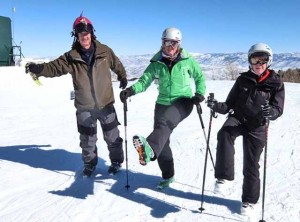
Correspondent Harriet Wallis bribed son Cal, daughter Alison, and best ski buddy Laurie to demonstrate warm ups at the top of a Deer Valley lift. Credit: Harriet Wallis

Correspondent Harriet Wallis bribed son Craig, daughter Alison, and best ski buddy Laurie to demonstrate warm ups at the top of a Deer Valley lift.
Credit: Harriet Wallis

Some experts say stretching before exercise helps performance and lessens injuries. Others say stretching can cause damage.

So what should you do?

“Skiers who stretch at the top of a lift are crazy!” says Jo Garuccio, a PSIA Examiner, Snowbird ski instructor and Triathlon World Champion. “They’ve been on a cold lift and then they’re going to stretch? That’s absolutely nuts!” she exclaims.

Really good warm ups in ski boots include swinging arms, swinging legs and marching in place, Garuccio says. Get the blood flowing.

Recent studies concur. Static stretching done cold without a warm up hurts the performance of weight lifters and competitive athletes.

Okay. Case closed. Warm up at the top of the lift before you even think about doing something else.

But when I Googled “dynamic stretching” and also “dynamic warm ups” I found – ironically – that the images were virtually the same for both. So it seems it’s your responsibility to ask your body: “Am I getting juices going, or am I straining cold muscles?”

On a humorous personal note, my best ski buddy would stand at the top of the lift and wiggle this way and that. I don’t know if she was warming up or stretching. Nevertheless, she was glued in place until she finished her routine. If it was a powder day I was frantic. “Hurry up. We’re wasting fresh snow,” I’d grumble. She finally learned that fresh powder trumps wiggles.

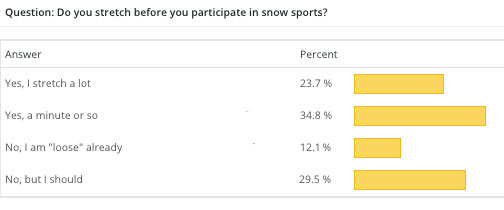
[Editor Note: Our recent poll revealed 60 percent of our respondents did some kind of stretching, 40 percent didn’t.  Here is an LA Times article on stretching that amplifies Harriet’s point about getting the blood flowing through an “active warm-up”, i.e., moving around a lot.  Short duration, static stretches are just an add on to the moving around part.  But experts certainly haven’t reached consensus.  For a collection of short, light stretches, look here.]


Poll Results: Stretching 60; Not Stretching 40

Most Do, Many Don’t.

Here are the results of our latest poll.  We are curious about why people do and don’t.  Please let us know in the “Comments” section below.  And, we are researching an article on stretching for an upcoming issue.  There are some exercise and physical therapists who say it’s essential, and some who say maybe not so much. We shall see.

Thanks for responding.  Let us know what you think.

Poll

From The Ski Diva: Keep Tootsies Warm

Advice On How To Manage Cold Feet.

Our friend and fellow online ski magazine, The Ski Diva, has just posted a really helpful article on cold feet management.  This is important folks.  Cold toesies can ruin your day and might even discourage you from enjoying the world of winter outdoors.  Take a moment to check out The Diva’s suggestions, and feel free to add your own in COMMENTS.  Click on the toes to link to her site.

A_SkiDiva


Dine On A Local Cow—Or Lamb—Or Carrot

Locally Sourced Foods Are Catching On.

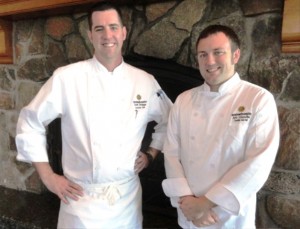
Snowbasin Executive Chef Scott Sniggs (l) with Executive Sous Chef Aric Glanville. Credit: Harriet Wallis

Snowbasin Executive Chef Scott Sniggs (l) with Executive Sous Chef Aric Glanville.
Credit: Harriet Wallis

At Snowbasin, Utah, chefs have embraced locally sourced meats including beef, lamb and elk, vegetables, cheeses and honey. Their dinner creations get rave reviews. Every bite comes from less than 50 miles away.

Other resorts also find that local fare makes sense. Ask around in your area to learn which resort restaurants are going local. It’s a win-win for all: the farmer, rancher, restaurant, and you ,the diner.

For Snowbasin, it’s an environmental decision. The resort concentrates on working hand in hand with local suppliers throughout the year. “If I can find it locally, I source it there,” said Executive Chef Scott Sniggs.  ” I want to support and showcase what’s around us.”

Local resident John Borski is a Julliard-trained ballet dancer turned organic farmer who supplies the resort with garden fresh vegetables.

“When I lived in New York City, I paid a fortune for fresh produce. But apples fell off my grandmother’s tree here in Utah, and she threw them away,” he said. “I was looking for something that wouldn’t require an entire ballet company!” He’s passionate about working his four-acre organic farm. “I’m out before daylight digging up potatoes by flashlight to deliver them fresh,”  he said.

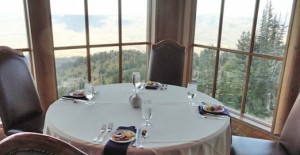
Dinner with a view at Snowbasin's mid-mountain restaurant. Credit: Harriet Wallis

Dinner with a view at Snowbasin’s mid-mountain restaurant.
Credit: Harriet Wallis

Likewise, Wes Crandall, a young rancher in a plaid shirt and cowboy hat, raises the locally famous Morgan Valley lambs. They’re also organic—open range, grass fed with no steroids, no hormones, and no antibiotics.

Restaurants that use locally sourced foods might offer you a new experience for your dining pleasure. Bon appetite.

Snowbasin, located near Ogden, was the 2002 Winter Olympics venue for the men’s and women’s downhill, super G and combined ski races. It offers specialty dining events throughout the year.


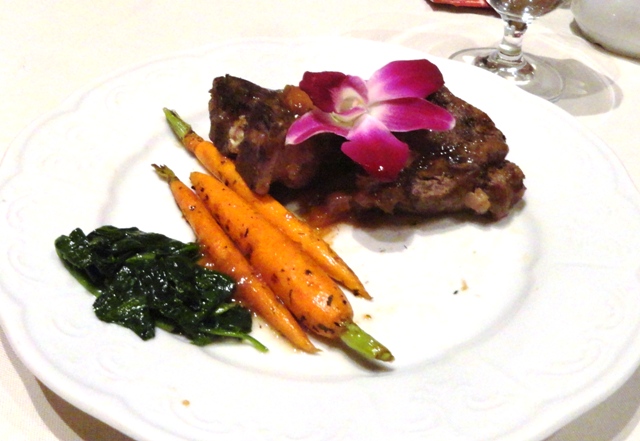
Organic spinach, carrots and lamb topped with a wildflower. Credit: Harriet Wallis

Organic spinach, carrots and lamb topped with a wildflower.
Credit: Harriet Wallis

Stocking Stuffer: Field Trip Jerky

A Healthy Chew For The Holidays.

alg jerky

It’s not your favorite trucker treat of yore. This “new” jerky is natural, gluten-free and tasty. Credit: Harriet Wallis

I love jerky, but most of it tastes like over-seasoned cardboard.  On the other hand, Field Trip Jerky is yummy, and it’s different—lightly seasoned and just the right “chew.”

It’s all-natural, gluten-free, MSG and nitrate-free, and it’s packed with protein. Refuel while out on the trail, on your bike or out for a ski tour.

Where can I get it? Field Trip Jerky has partnerships with Starbucks, Stop & Shop, Sprouts and more. Check the website for a dealer near you. About $6.50 to $8 a pouch.

Gluten-free? I questioned how jerky (a meat) can be gluten-free (which comes from plants). The answer I got is this: “Field Trip Jerky uses gluten-free low sodium soy sauce. All products have been tested and contain less than 5 ppm of wheat.”

In additiion, the “majority of experts report that grain-fed beef is fine to eat. Before protein is absorbed by the body, it’s broken down into single amino acids or very short peptide fragments and no longer contain gluten. Second hand transmission of gluten does not occur between animals and human consumption.”

The back story. Field Trip was started a few years ago by three friends looking to make jerky that wasn’t junk. Breaking away from the corporate mold (the three previously worked in law, finance and the auto industry) Tom, Scott and Matt started with a lot of hustle and $12,000 in seed money scrapped up from friends, family and savings and launched a homemade jerky business from their kitchen.

Worth a try and makes a great stocking stuffer.

[Editor Note: This is not a sponsored article.  Harriet is reporting on products she finds genuinely interesting and useful for our readers.]


My Fitness Journey Continues: Part Eight

Correspondent Rose Marie Cleese reports on her fitness journey, noting that regular exercise makes a big difference in how you feel. Credit: Pinterest

Correspondent Rose Marie Cleese reports on her fitness journey, noting that regular exercise makes a big, big difference in how you feel.
Credit: Pinterest

The Journey That Began With A Single Step Isn’t Over Yet!

Although this will be the last official installment of my personal fitness journey series that began on May 1st, it’s definitely not the end of the journey. I have many more pounds to lose before I sleep and promises to myself to continue to keep. I’ll be posting an update some time in the next three months, at which time I hope I can tell you that I’ve met all of my goals, including losing that last 20 pounds and tipping the scales at 130 pounds. I’ve already lost 20 pounds so I’m halfway there.

Even though I haven’t yet reached my desired weight, I’ve added a number of habits to my life that have made me a healthier, happier person with a body that’s so much better prepared to hit the slopes (hopefully in the next couple of weeks) than the one that floundered on them last March. I tried on my ski clothes last week and they fit comfortably rather than my feeling like a stuffed sausage. People who haven’t seen me in a few months are noticing my weight loss and telling me how good I look. Most importantly, I feel so much healthier…and bouncier.

So what am I taking away from these past seven months? The number one lesson I’ve learned is how important regular exercise is. My twice-weekly aerobics classes and my once-a-week stretching classes and weight classes have had a considerable effect on me. I don’t get out of breath exerting myself anymore, my balance has improved 100%, and my arms and legs actually look and feel toned. I’ve rarely missed my classes because I feel so energized at the end of them. This is one habit that has become solidly entrenched. In the near future I’d like to add some yoga to my exercise regimen and I’ve put a Fitbit on my Christmas wish list.

Regarding my weight loss, I’m happy that I haven’t gained back any of the weight I’ve lost (even over the Thanksgiving holiday!), but I do need to get back on track in the coming months. I plan on being more religious about mindful eating, portion control, food choices (less “white” food, more fruits and vegetables), not eating late meals, and saying “no” at least a couple of times a day when I’m tempted to snack or eat something that’s unhealthy. I’ll continue the daily food diary that I’ve been faithfully keeping the last seven months, and I’ll continue to weigh in once a week and also check my measurements once a month. If I find that the pounds are refusing to come off, I may participate for a couple of months in one of the several diet plans out there that are the top choices of the medical establishment.

As I write this article at 3 AM, I have to admit that I have failed miserably at getting enough sleep and am beginning to wonder if a night owl can ever be an early bird. I’ll let you know in my update in a few months if I’ve found an answer to this perennial problem of mine. Suggestions welcome!

Speaking of suggestions, I want to thank all of you out there who have sent me your thoughts, insights, and encouraging words over the past seven months. It really does make it easier when you’ve got some cheerleaders urging you on. In the meantime, there are some snowy slopes out there that are calling my name, and I can’t wait to make some tracks on them. Stay fit…stay tuned…and have a great winter!

Editor’s Note: SeniorsSkiing.com salutes our correspondent Rose Marie Cleese for sharing her journey with our readers over the last few months.  Her project took courage and fortitude.  Please join us in acknowledging her efforts and her willingness to tell us about her experience.

Senior-Friendly Cross Country Ski Resorts

X-C Resorts Offer Discounts, Amenities For Senior Skiers.

Special Thanks to Roger Lohr, Editor and Publisher of XCSkiResorts.com for pointing out these snow-country x-c resorts that are specially accommodating to seniors.

Nordic skiing director at Bretton Woods, NH, is 84 year old Ellen Chandler. Credit: Roger Lohr

Martha Chandler, 84-year old mother of Bretton’s Nordic Center director Ellen Chandler, glides along.
Credit: Ellen Chandler

About a quarter of the cross country (XC) skiing population is older than 50 years old, and, as Baby Boomers continue to age, we are remaining active—many of us are looking for softer or easier forms of recreation and cross country skiing and snowshoeing fit that prescription.

It is important for older people to exercise because it can help fight both physical and psychological maladies. Everyone understands the need to stay physically active and there is a growing body of research indicating that physical activity is beneficial for the brain, particularly the hippocampus, which is that part of the brain where working memory partially resides and is most susceptible to problems associated with aging. There is extensive evidence that outdoor exercise has positive impacts on sleep, depression, and anxiety. No matter how old you are, it just makes you feel good, too.

The SeniorsSkiing.com 2015 Subscriber Survey showed that the priorities of the older skiers include: discounts; easy access to the area facility from the parking lot; newsletter or website pages dedicated to specific activities catering to older skiers; instruction or guide tailored to older skiers; and a meeting place or set-aside areas in the lodge for seniors.

There are XC ski resorts and lodging establishments that have those senior-friendly characteristics and the incentives almost always include discounts for older people. At Canmore Nordic Center in Canada, trail fee discounts begin at age 55, while most ski resorts set a higher age for lower-priced season or daily passes. At Bear Valley Nordic Center in CA, skiers aged 60-69 get a 28% discount on trail passes and those aged 70 and older get 60% off. At Lone Mountain Ranch in Big Sky, MT there is a discount for skiers aged 60-69 while it is free for those aged 70 or older to access the ski trails. They also apply a senior discount for season passes. This is a popular way that most ski areas attract the older skier segment.

One of the age-old concepts is that many senior skiers are retired and as such, they have more flexibility in their weekly schedule. During the week, most cross country ski areas have few patrons, thus the development of group offers, activities, and programs such as at Lutsen Resort in MN where there is a Sunday-Thursday discount offer on lodging rates that includes free XC ski or snowshoe gear and a guide. The Cross Country Ski Headquarters in Roscommon, MI (and other XC ski areas in MI) has the Silver Streak Week (Monday-Friday on January 11-15, 2016) with complimentary facility access, free hot cocoa, and free demos.

Jackson Ski Touring has easy-ski programs for seniors. Credit: JSTF

Jackson Ski Touring has easy-ski programs for seniors.
Credit: JSTF

Programs such as Jackson Ski Touring’s Friday Gliders & Easy Sliders and Tuesday Trekkers provide a group experience that’s taken advantage of by mostly older folks. Such programs coordinate a scheduled weekly outing for groups such as the Easy Sliders, which is a group of skiers who cross country ski on easier trails (and they get tips from a guide) or the Tuesday Trekkers snowshoe group. For these examples, the Jackson Ski Touring Center in NH is the starting point, and, after the tour, people meet back at the lodge for an après ski spread with wine and cheese, fruit, coffee. There’s even a masseuse on hand to offer massage for tips. Garnet Hill Lodge in North River, NY, hosts a weekly snowshoe club and Cross Country Ski Headquarters reports a similar group regularly drives two and half hours from Grand Rapids to visit and ski the area.

At Lapland Lake Vacation Center in Northville, NY there’s a Silver Strider discount trail pass and the weekly “Soup-er Seniors,” which includes a free bowl of soup on non-holiday Thursdays starting in January.

Road Scholar” is a brand within the Elderhostel program intended for adults (many who are seniors) who want to travel, learn and stimulate discourse and friendship among other people for whom learning is the journey of a lifetime. The Craftsbury Outdoor Center hosts week-long Road Scholar XC ski programs during the winter months with programming inspired by the hostels and folk schools of Europe offering short term academic experiences to adults. This year, Craftsbury Outdoor combines XC skiing and snowshoeing with yoga programs, film programs, and dance programs.

The folks taking advantage of cross country ski offers are proof that you’re never too old to get out and enjoy nature in the winter. If you are an older skier or someone who would like to try cross country skiing or snowshoeing, check an XC ski resort near you for special programs.

My Fitness Journey Continues: Part Seven

Don't be old-fashioned about getting fit. Rose Marie Cleese finds high-quality sites to check out.

Don’t be old-fashioned about getting fit. Rose Marie Cleese finds high-quality sites to check out.

Wading Through the Web For The Best, Most Reliable Health and Fitness Info.

You can find anything on the internet: the good, the rad…and the untruthful! So how do you know that what you’re reading on any given website is solid, current information? When you’re embarking on a fitness journey and decide to do some internet research, you’ll find a lot of contradictory information. And you can’t just google something and assume that the top five listings that come up are the latest and greatest. Ever heard of SEO? It stands for “search engine optimization” and there’s a whole army of specialists companies can hire who know the ever-changing ins and outs of getting one’s website to or near the top of a google list.

So what’s a web surfer to do? During my ongoing fitness journey that started six months ago, I developed a short list of criteria in deciding which sites could be trusted and would be genuinely useful:

  1. they are well-established and highly respected in their area of expertise,
  2. the contributors are proven experts in their field, and
  3. the sites are up to speed on the latest findings and trends.

Here are my “Top 10”—websites I think you’ll find helpful for getting your fitness journey off on the right foot. (And of course we’d like to hear from you about your favorite tried-and-true senior fitness websites!)

National Institutes Of Health

The U.S government’s National Institutes of Health (NIH) is an excellent place to start for general health information; the link above provides a lot of information about exercise for seniors.

WebMd/Fitness-Health

This site has been around for a long time and is one of the most popular “go to” sites whenever one has a general medical question and wants answers fast. The exercise information you’ll find at the link above is for adults of all ages.

UC Berkeley Wellness Letter

Over the years, I’ve gotten many free samples of newsletters from some of the most-esteemed medical schools in the country. Hands down, the one that provides issue after issue of articles on health, nutrition, fitness, and the day’s hottest health topics that I actually want to read and are relevant to me is the UC-Berkeley Wellness Letter. Its website gives you a taste of what’s in the monthly newsletters, but I highly recommend you subscribe to the actual hard copy newsletter. You won’t be disappointed!

AARP Newsletters

Although this website is geared toward getting visitors to the site to sign up for AARP, there are usually several articles posted that are chock full of good advice for seniors wanting to get or stay fit.

Elder Gym Free Exercises

This site has a wealth of exercises, exercise videos, and lots of other fitness advice specifically for seniors.

National Institute for Fitness and Sport/Balance Training

The National Institute for Fitness and Sport develops wellness programs for companies and individuals, but there are also posts that visitors to the site can access; the article at the link above focuses on developing better balance, a key fitness issue with seniors and especially important in skiing and snowboarding!

American Heart Association/Cardio, Strength Training For Seniors

The American Heart Association’s website has a lot of solid, up-to-the-minute information and advice about being heart-healthy, an essential when embarking on a fitness program. The site has many useful articles, such as the one at the link above.

Nutrition For Seniors

The U.S. government has a site, nutrition.gov, that provides a compendium of articles on the latest news and most reliable information on senior nutrition.

SeniorsSkiing.com

You already know about this great site!!

…and since Thanksgiving and the holidays are just around the corner, what better site to end my list with than my favorite “healthy recipes” site that was started by a freelance photographer who wanted to offer weight watchers the tastiest healthy dishes possible. She more than delivers…happy, healthy eating!

Healthy Recipes From Skinny Taste


My Fitness Journey Continues: Part Six

The Battle Of The Bulge Rages On! (Thankfully, Reserve Forces Are On Their Way.)

Getting back into shape is a combination of courage, knowledge and just doing. SeniorsSkiing.com Correspondent has all three working for her.

Getting back into shape is a combination of courage, knowledge and just doing it.

As I enter the sixth month of my personal (and public!) journey to fitness, I continue to make slow, steady progress toward my goal of being in great shape for the slopes come the first snowfall (and it IS supposed to snow in the Sierra this winter). Faithfully attending my four weekly exercise classes? Check. Doing weights three times a week? Check. Continuing to lose up to an inch in my measurements each month? Check. Drinking more water? Check. Getting more sleep? Check. Getting on the scale once a week? Check. Losing weight? Not so much. Since I started this journey, I’ve lost a total of 14 pounds, but I still have 26 pounds to go. So three pounds a month instead of two pounds a week is a bit disappointing. But the good news is that I haven’t gained anything back, and I have established a few good eating habits, such as snacking on edamame instead of salami and crackers. But I need to crank it up!

So it was quite fortuitous for me when a special issue of the highly respected University of California, Berkeley, Wellness Letter arrived in my mailbox a few weeks ago. The entire Special Fall Issue 2015 is devoted to body weight and all its attendant issues. It includes an overview article that looks at our nation’s battle with obesity, and sidebars on BMI (body mass index), why it’s so hard to keep the weight off that one’s lost, and a brief analysis of recent diet studies.

Watching what you eat is the key to weight loss. Ix-nay on the donuts.

Watching what you eat is the key to weight loss. Ix-nay on the donuts.

But the article that really caught my eye was “18 Keys to Healthy Weight Loss: Tried-and-true advice that can help tip the scales in your favor.” I did a quick check and found that I was adhering to nine of them, which was encouraging, but I plan to add a few more to accelerate my weight loss. Some of the pointers are well-known, such as eating a healthy diet that’s tilted toward vegetables, fruits, whole grains, fish, and lean meats and away from sugary foods and saturated and trans fats, and being a conscious eater (eating smaller portions, eating more slowly, and keeping a food diary). But there were several less-intuitive but scientifically proven pieces of advice that I’m going to add to my arsenal of weapons to help me win my battle of the bulge. For instance, “Key #7: Go for volume (low-energy-dense foods)” recommends

Exercise is only part of the picture. Diet plays the most important role in weight loss.

Exercise is only part of the picture. Diet plays the most important role in weight loss.

eating foods with lower calories relative to their weight and volume, in other words, foods that have high water and high fiber content such as fruits and vegetables and broth-based soups rather than low-moisture, denser, high-fat foods such as crackers, cheese, cookies, etc. Case in point: a cup of grapes is the equivalent of 1/4-cup of raisins. In short, think “watery” foods! “Key #10: Limit variety at meals” points out that “you’re likely to eat less if you have less variety, since foods similar in taste and texture dull the palate (a phenomenon called sensation-specific satiety).” It offers a good suggestion for buffets and parties, just in time for the upcoming holiday season: when facing a whole array of appetizers, choose just the two or three that most appeal to you and limit yourself to one trip to the table. It will keep your appetite from accelerating.

Accompanying the article are several useful sidebars that help you calculate your daily calorie count, outline which kind of diet will work best for you (surprisingly, genetics and individual proclivities play a major part in what will actually result in the best outcome for you), offer a critical look at diet supplements, and discuss the part exercise plays in losing weight.

The editors of the newsletter had just posted this particular article on their website, so you can read it in its fascinating entirety! Just click here.

To calculate your BMI, go to to this NIH site.

Editor Note:  SeniorsSkiing.com salutes Correspondent Rose Marie Cleese for chronicling her journey back to fitness.  She continues to be an inspiration to those of us who wonder about our conditioning as we age.  Keep going, RMC.  We’re all rooting for you!


Wheelie__510

Time To Get Moving: Now

Five Ways To Start Your Fitness Program.

Motion helps muscles, joints, ligaments limber up for snow season.

Motion helps muscles, joints, ligaments limber up for snow season.

No more procastination.  You have from six weeks to three months, depending on where you live, to get ready for snow season.  If you are a year-round sports activist, then good on you.  If you are a part-timer, weekend warrior, you probably have to start getting more diverse muscles toned up.  If you are as not as active as you could be, reflect on your habits.  You will be safer and feel better when you head out to slopes or trails if you are physically toned.  It is a huge mistake to go from zero to a ski run or cross-country trail without being physically prepared, especially if you are one of those people who distinctly remember the Beatles on their first Ed Sullivan Show appearance.

Here are five ways to begin, especially if you’ve been off your program for whatever reason this summer.

1. Walk.  Simple.  Morning, lunchtime, or evening.  Walk fast, swing your arms, work up a sweat, carry light weights (2 pounds) or walk with ski poles (Nordic walking burns more calories), use a pedometer, keep a record of how far and how many steps.  After a week or so of daily walking,  the “training effect” will kick in, and you will feel looser, more steady and, guess what, you’ll be outside in the beautiful Autumn weather.  Here are some guidelines for getting started.

2. Stretch. Loss of elasticity of connective tissue, an effect of the aging process, can be nasty.  Muscles tighten up, and back and joint problems ensue.  Stretching makes a difference. Learn to stretch your hamstrings, quads, hip flexors, and lower back.  There are many resources you can access for how-to.  Here is a good starter from the NIH. There’s always yoga. This is really, really important: If you aren’t using it, you’re losing it.

3. Gym Class. Going to a class led by a trainer provides structure, discipline and challenge.  An hour-long class will probably keep you in more motion than the same time spent alone in your basement.  In a good gym class, you will also learn about the muscles you are exercising, how to stretch them and gradually build up strength and flexibility all over your body, not just your favorite parts.  Probably most important, you will learn proper form so you get the most out of your efforts and help prevent injuries.  SeniorsSkiing.com’s Harriet Wallis wrote about Silver Sneakers, a national program sponsored by insurance company targeting seniors. There’s probably one near you.

4. Focus on four essentials.  No gym nearby? If you do head down to your basement or studio for exercises, here are four to get you going:  Lunges for legs, lower back, hips, Plank for core and probably one of the two top exercises of all, Pushups for core, upper body and arms, and the other top exercise, and Squats, a fundamental leg and back strengthener.  You must learn to do these correctly; form counts for everything.  Doing a zillion reps without proper form is not that effective and could get you hurt.

5. Get an app or two. There are many apps you can get for your smartphone that can be your training buddy.  This link has a few of many. Point is you will able to get feedback on how you are doing and see progress using a cool app. And in a strange way, the app builds an expectation. Just like the GPS voice in your car, you can have a relationship with your app.

As usual, see your doctor before trying any of this, or if you start a program, and it doesn’t feel good.  Remember this is meant to be a starter kit.  Stay tuned for more advanced fitness activities.

Now, don’t hesitate, get going. What’s your advice?

My Fitness Journey Continues: Part Five

From High-Tech to Low-Tech, Great Gear For Getting Fit

The best fitness gear you can get requires no expense! It’s at the end of your legs: your own two feet. Walking (or jogging or running) as much as you can in any given week will burn calories and keep you cardiovascularly fit. Being on the move is considered one of the key factors in staying healthy and living longer (as well as enhancing one’s stability, litheness, and mind function).

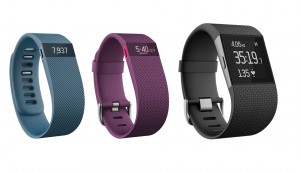
The pioneering body device is Fitbit. Other devices have grown up around it. Credit: Fitbit

The pioneering body device is Fitbit. Other devices have grown up around it.
Credit: Fitbit

But in the digital, tech-centric world we all live in today, even our simple walking regimens can be enhanced by a bit of 21st-century gear, the most popular being Fitbit. The dandy little waterproof device straps on your wrist and keeps track of exactly how much you’re actually walking any given day. The basic device ($80 on Amazon) monitors the number of steps you take and lets you set personal goals you can track. It also monitors your sleep so you know how long and even how peacefully you’ve slept. For a bit more moolah, there are more sophisticated trackers available, like the Apple Watch,  that do such amazing things as alert you when you’ve been idle for a certain length of time, and track your heart rate, skin temperature, and blood oxygenation.


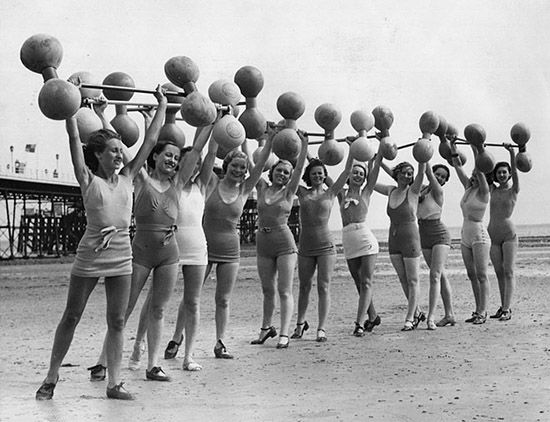
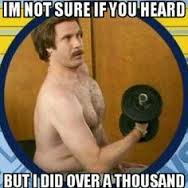
Can you do that? Weights are critical to seniors' fitness. Credit: GymRat

Can you do that? Weights are critical to seniors’ fitness.
Credit: GymRat

The most essential low-tech fitness gear for seniors? Without question, weights. Every official health organization recommends that seniors, whatever their age, incorporate regular strength training into their weekly regimen. In Part Two of this series, the UCSF medical director I was interviewing recommended I get a bone scan since I hadn’t had one since my 50s. The new scan showed that I had osteopenia, meaning lower-than-normal bone mass, now widely considered to be a natural aging process, and one that, in many instances, can be dealt with naturally without drugs. I was told to make sure I was getting enough calcium and to do regular weight-bearing activities. In addition to my weekly half-hour weight class, I now do a half-hour of weights two more times a week. Start out with a weight that’s comfortable (but not too!), then once your round of reps becomes too comfortable, go up a weight. I’m currently using three-pound weights, but I’m about to switch to my five-pound weights. You can find many different weight exercises for seniors online, so it’s easy to create your own program; just be sure you’re getting all the muscle groups.

An update on my own personal fitness journey: I continue to make slow yet steady progress to decrease my weight and measurements and increase my core strength, balance, cardiovascular capability, and stamina. I rarely miss any of my four weekly exercise classes (aerobics, stretching, and weights), which I’ve become a little addicted to. I see a marked improvement in my balance (I can grab an ankle and bring it up behind me for a quad stretch without teetering at all, but I still can’t do burpees, which the 78-year-old woman next to me does without batting an eyelash!). I’ve quit Weight Watcher’s, but I continue to keep a food diary and I’ve cut out some bad eating habits that I miss not at all (such as potato chips with sandwiches). I make it a point to say no to myself dietarily several times a day. When I started this fitness series on May 1st, I weighed 166 pounds; today I weighed in at 156 pounds. At this rate, it would take me another year to reach my target weight of 130 pounds, so I plan on making some major changes in my diet regimen in the coming three months. Stay tuned!

A Dietary P.S.—

How sweet it isn’t! I religiously check the nutrition facts on labels for the daily value percentages, but I didn’t even notice all these years that there is NO percentage listed for sugar until my daughter watched the excellent documentary, Fed Up, and informed me of this fact (thanks, sugar lobby!). I discovered that one Margarita accounts for my entire daily allowance! So if you’re interested in keeping track yourself, know that the American Heart Association recommends 37.5 grams of sugar per day for men and 25 grams per day for women (keep in mind that many unprocessed foods contain sugar naturally); also, before you sugar up, consider the harm sugar can do to aging teeth.

Check out this site if you’d like to know more about sugar and how much is good for you.

Editor Note:  We congratulate Rose Marie for her perseverance.  She has made progress and shared her lessons along the way.  Thank you, Rose Marie, we are all impressed by your commitment to self-improvement. Also note that mention of products was not paid for or supported in any way.

Lunge Toward Ski Season: Start Now

You don’t need a gym. You can lunge around the neighborhood.

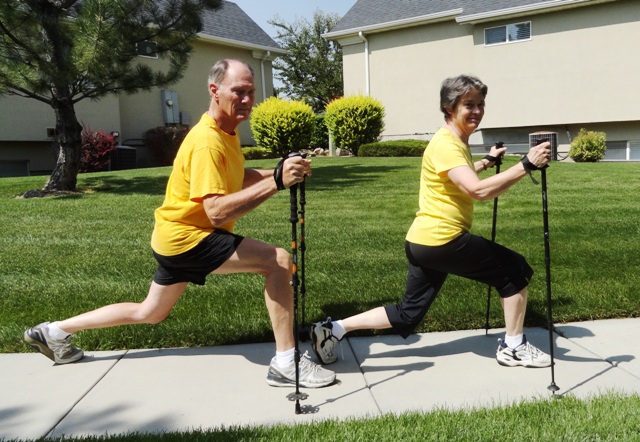
Nick and Carol Bowling are enthusiastic senior-age Alta skiers who enjoy staying fit year round. They just added lunges to their pre-season fitness routine, and they’ve become lunge junkies. But there’s a learning curve to doing lunges correctly, and they’re still working on it.

Carol and Nick Bowling of Washougal, Washington, tune up now for ski season. Credit: Harriet Wallis

Carol and Nick Bowling of Washougal, Washington, tune up now for ski season.
Credit: Harriet Wallis

“Lunges use your own body weight to strengthen your lower body. They’re excellent for your quads and hamstrings – for the big muscles,” says Jo Garuccio, Professional Ski Instructors of America Trainer and Examiner who also teaches at Snowbird. “But be sure your knee is over your shoestrings – not further forward.”

Equipment needed: Your body and a large mirror. Watch yourself. Critique yourself.

Position: Back erect, thigh parallel to the ground, knee over shoestrings.

Incentive: See how many you can do each day while keeping good form. When you’re good at the basic lunge, move on to one of the many variations.

What a lunge should look like:

So here’s a challenge for you. Watch the video, then study Carol and Nick’s position. Pretend you’re a coach. Is there something you’d tell them to improve as they lunge toward ski season?

When will you start to lunge?

My Fitness Journey Continues: Part Four

The Ritz-Carlton, Lake Tahoe is nestled in the forest halfway up Northstar’s Mount Pluto. I Credit: The Ritz-Carlton, Lake Tahoe

The Ritz-Carlton, Lake Tahoe is nestled in the forest halfway up Northstar’s Mount Pluto. 
Credit: The Ritz-Carlton, Lake Tahoe

Exercise your right to stay fit when you go on that summer trip!

To all you senior winter sports aficionados out there who still have your summer escape ahead of you: Is fitness a part of your plans? It should be, and it should be easy to pull off. Those days of lazing about day after day, taking afternoon naps on an Adirondack chair on the lawn of a summer resort or reading a pile of paperback novels on a deck chair aboard a big ocean liner are long gone. Although relaxation is still a major part of summer getaways, the operative words today are “go, go, go!”  That bodes well for us skiers, skaters, snowshoers and boarders who want to be ready to fly when the snow does. Staying in shape during the off-season has never been easier because resorts and cruise companies have geared up handsomely for today’s active senior vacationers.

With my very public fitness journey in the forefront of my mind, I decided to test out this fitness vacation thing and spent three days sampling the fitness options offered by The Ritz-Carlton, Lake Tahoe, a luxury resort situated in the forest halfway up the mountain at Northstar ski area. In addition to all the activities one can do right at the resort, the staff can also arrange any number of active adventures available in the Tahoe area for its hotel guests.

Kayaking is a great upper-body workout for skiers in the off-season and especially relaxing on the calm waters of Lake Tahoe, one of the clearest lakes in the world with water clarity of more than 70 feet. Credit: The Ritz-Carlton, Lake Tahoe

Kayaking is a great upper-body workout for skiers in the off-season and especially relaxing on the calm waters of Lake Tahoe, one of the clearest lakes in the world with water clarity of more than 70 feet. Credit: The Ritz-Carlton, Lake Tahoe

Before we had even checked in, we stopped off at Tahoe Vista on the shores of Lake Tahoe and took the Tahoe Adventure Company’s “Discover Kayaking” tour with a guide, learning how to get into and maneuver a kayak (we were both first-timers), and paddling over to King’s Beach and back, learning about the geology and natural wonders of the lake along the way. One of the beauties of kayaking is that it can be as laid back or as rigorous as you want to make it. And for first-timers, you can’t beat a placid lake!

Our fitness vacation was now officially launched, and after checking in at the hotel, we plotted out the rest of our activities for our short stay. Our main venue would be the hotel’s fitness center, which offers an array of one-hour classes free to hotel guests on selected days, classes such as Active Stretch, Core Focus, and Healthy Back. There’s also a full complement of cardio equipment—treadmills, elliptical machines, recumbent and upright stationary bikes—as well as free weights, etc., available for use 24 hours a day. (It’s amazing how much more enjoyable exercising is when you’re looking out onto a forest.)

Ritz-Carlton guests can also enjoy a lap pool (in addition to the regular hotel pool), and staffers can help guests plan rounds of golf, hikes, mountain biking, white water rafting (when there isn’t a drought!), tennis, or fly fishing. There’s enough active outdoor stuff to do here that you don’t even have to feel guilty when you overindulge in the resort’s superb Manzanita dining room.

Of course, when staying at a five-star establishment, one must spend a certain amount of time luxuriating, which we did: Sunning and swimming at the main pool in between sips of daiquiris served poolside, chilling in the hot tub, and wrapping up our stay with a soothing massage at the resort’s beautiful spa.

Whether you’re headed for a luxury resort or Uncle Joe’s log cabin in the woods, with a little research ahead of time and a little planning,

Ritz-Carlton fitness instructor Nancy Brest demonstrates “dynamic stability” during her Active Stretch class, one of several  fitness classes offered by the resort hotel on selected days.  Credit: Katie Cleese Photography

Ritz-Carlton fitness instructor Nancy Brest demonstrates “dynamic stability” during her Active Stretch class, one of several fitness classes offered by the resort hotel on selected days.
Credit: Katie Cleese Photography

it’s easy to make sure that your vacation has a robust fitness component. Make a list of all the things you can partake in within a 20-mile radius of where you’re staying, then prioritize the items on the list and commit to the top however many. And every time you overindulge at mealtime, make sure you’re out there the next day, hiking or biking or swimming or running. You’re most likely in a very scenic place, so get out there and enjoy the view!

For more information on The Ritz-Carlton, Lake Tahoe, go to www.ritzcarlton.com/en/Properties/LakeTahoe/Default.htm

To contact Tahoe Adventure Company, go to www.tahoeadventurecompany.com or call (530) 913-9212.

Rehab Friend: A Little Assist From Your eBike

An Electric Bike Offers A Friendly Boost To New Knees and Hips

Polaris NordicBike__edited-1 

We all remember “With a Little Help from My Friends” by The Beatles.

My, how things have changed in the 48 years since its release, especially for those boomers who want to come back to the slopes after major surgery on hips and knees and rotator cuffs, among other parts.

Well, here’s some good news:

One of my friends is recovering from hip replacement surgery. His surgeon prescribed riding a bike for exercise, muscle rehabilitation and re- building confidence. How about skiing? Why not!

That’s where an electric bicycle is giving him the confidence to get back on the boards after major surgery. And go uphill at 20+ mph, or faster than your average quad lift!

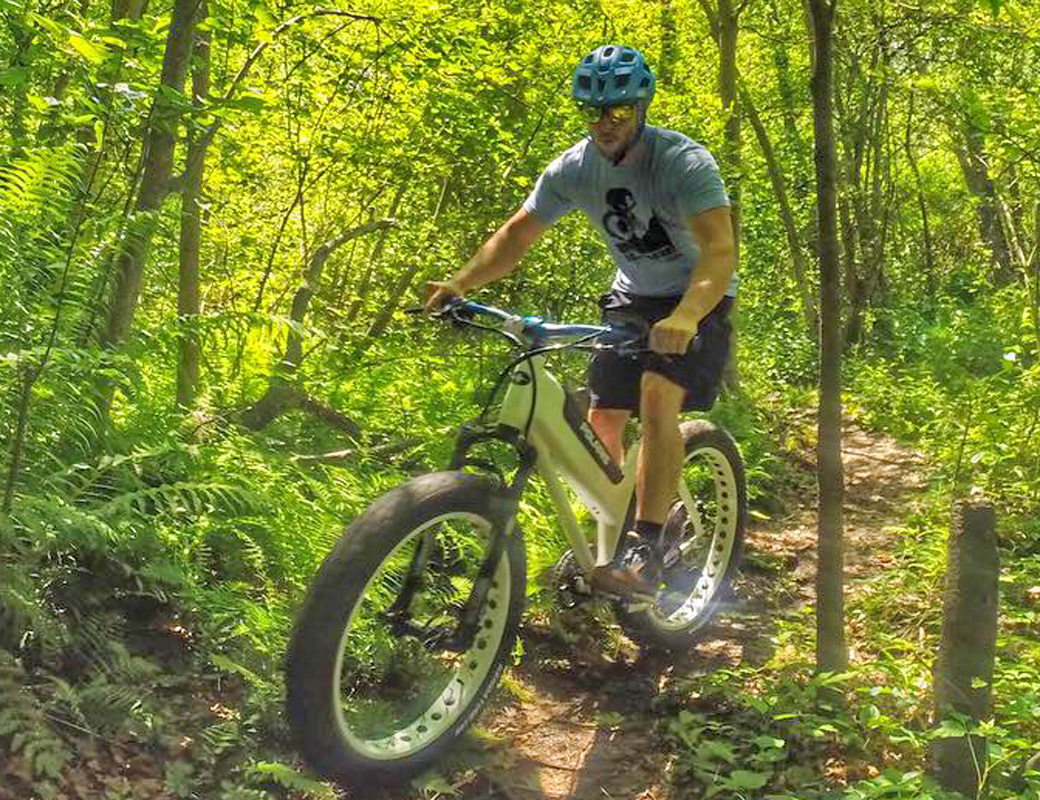
At the New Hampshire ski area where my friend has spent many a winter, the electric bike with fat tires is ideal for going up the main road from the village to the lodge and beyond. Fat-tire bikes are now common for off-roading. One of the challenges of an electric bicycle design is to configure the entire frame, power and control system and accessories to be as light as possible. Lightness and controllability are among the advantages of the Polaris®eBike.

On unimproved trails and dirt roads, the fat-tire configuration gives my pal stability that helps build his confidence as he builds strength.

Advanced technology now available in electric bicycles is a major factor in getting my pal back on skis. In his case, the Polaris Gear Speed Technology features 8 gear speeds.

As the terrain rises, power kicks in—controllable with paddle shifters like a sports car— and “… a little help. . .” from the electric assist turns into up to fifty miles of riding.

How does he get a fifty mile ride? Polaris technology allows regeneration of the battery by braking and reverse pedaling. Active Trail Mode™ regenerates the bike’s battery during pedaling with automatic incline sensors to deliver power for uphill riding. Operation of this mode extends battery life. A four-hour charge can deliver fifty miles of performance.   Regeneration gives the rider unlimited power—my friend said his bum gave out before the bike needed to be re-charged.

As senior skiers, we’re all adopting new equipment, better outdoor clothing, improved diets and exercise routine.  With a little help from an eBike, we can take advantage of bike riding for fun and exercise.

Grow A Hiking Habit: Part Two–More Stuff

Outdoor Guru Steve Hines Offers More Ideas For Taking A Hike.

Summer hiking season is in full swing. The temperatures are warming and trails are dry. After covering the ten essentials in Grow A Hiking Habit: Part 1, some other items will help you more enjoy your hiking.

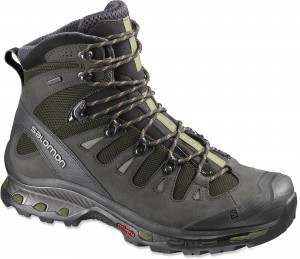
Real hiking boots are lightweight and support your ankle.  Sneakers don't cut it on the trail. Credit: REI

Real hiking boots are lightweight and support your ankle. Sneakers don’t cut it on the trail.
Credit: REI

Boots: Stout boots with good support are a must. Look for boots with waterproof liners. Boots should come to the ankle or above to keep trail debris out and protect the ankles. You should be able to wiggle and spread your toes and walk down hill without “jamming” your toes. Your boots should be wide enough in the forefoot that there is no pinching of any of the toes. Your heel should be held in place without constricting them. If your heel moves around side-to-side with the boot untied try another style/brand. Get fitted at outdoor shop by a qualified boot fitter. If you use orthotics, be sure your boots accommodate them.

Trekking Poles: These are telescoping poles that look like ski poles. When not in use, they can be strapped to the outside of your pack. When in use, they support the legs and lower back. They help with balance and help burn 25 percent more calories.

Comfort Items Now that I’m a little older, several items in my pack make the hike more comfortable.

  • A Dry T-Shirt: A dry shirt mid-hike is great. Avoid cotton; get Dri-Fit or Performance shirts that evaporate quickly.
  • Extra Socks: Even the best socks can’t always keep up with amount of moisture you produce.
  • Foot Powder: Changing socks and rubbing on some foot powder mid-hike is a treat!
  • A Sports Drink: Water is essential. But, a sports drink like Gatorade reduces the risk of dehydration among older hikers.

    The classic bandana is an invaluable partner on the trail. Credit: REI

    The classic bandana is an invaluable partner on the trail.
    Credit: REI

Bandana: The ubiquitous hiking buddy: Towel, handkerchief, sun protection, signal caller, sling, and bandage just to name a few uses.

Watch: I like to know how long it takes me to get from Point A to Point B on a hike. If I know the length of the trail I’m on and how long it took me to get there, I can judge my fitness level better. During these last few years, I’ve been aiming for a 1 mile/hour pace on mountain hikes and treks.

Cell Phone: Many people believe cell phones on the trail ruin the wilderness experience. But a phone can be a lifesaver. For many years I left my phone home but now, especially on solo trips, I take it along. Just be aware that in many remote places reception can be spotty or non-existent.

Camera: Helps with memory if you have a time/date stamp option.

Binoculars: Helps with both navigation (identify landmarks for triangulating your position) and spot/identify wildlife.

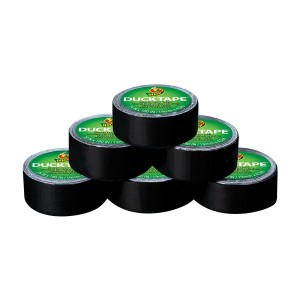
Is it Duct Tape or Duck Tape? Regardless, it comes in small-sized rolls, perfect for a backpack. Credit: Amazon

Is it Duct Tape or Duck Tape? Regardless, it comes in small-sized rolls, perfect for a backpack.
Credit: Amazon

Small Notebook And Pen: Record hiking times and observations, list hiking companions for later memory making.

Duct Tape: Blister treatment, gear repair, unknown problems.  A small roll of duct tape can do miracles.

Please feel free to make comments and provide feedback and additional wisdom. I also welcome questions and clarifications. This can be a wonderful forum for getting your hiking habit started and sharing experiences with others.

My Fitness Journey Continues: Part Three

How and what we eat is the second half of being fit.

Well, they never said it would be easy. Although the exercise part of my journey to fitness is going well (I’ve lost another inch in my upper body measurements), the changing of my diet is going a bit more slowly (I’ve lost only two pounds this month). The good news is that I’m going in the right direction, weight-wise, and I’ve also read that you gain heavier muscle mass as you get into better shape, which means my body composition is better than the scale would indicate.

In this Zesty Lime, Shrimp and Avocado Salad recipe, healthy avocados play a starring role! (Credit: skinnytaste.com)

In this Zesty Lime, Shrimp and Avocado Salad recipe, healthy avocados play a starring role! (Credit: skinnytaste.com)

Regarding food management, we’ve probably all followed some popular diet (or several) over the course of our lifetime, with varying degrees of success. We’ve likely lost some or a lot of weight in a matter of weeks or a few months. But as we all know, within a year or two, we’ve put the weight back on. The problem is that diets with extreme components are not sustainable (or even healthy) over the long term. The key is to instill lifelong healthy eating habits that we can live with (both literally and figuratively!).

Long-popular diet plans (such as the South Beach Diet, the Atkins Diet, Weight Watchers, etc.) and even the more extreme ones (e.g., the Cabbage Soup Diet, the Fast Food Diet) can be good “jump-starters” but over the long haul, the only way to keep the weight off is to develop good eating habits. I’m finding out changing decades-old habits is not something you can do overnight. I’ve made a few changes, such as eliminating a roll or piece of bread with dinner and saying “no” to myself a few times a day when I feel compelled to grab a nibble of something, but I plan on doing a better job of practicing what I preach in the coming months, so hopefully I’ll have great news to report in this area by fall.

And what do I preach? My jump-starter, as mentioned in an earlier article, is Weight Watchers, which I plan to continue for another three months. What’s been good about the program this first three months is that it’s gotten me in the habit of recording everything I eat and drink every day. Over the next three months I plan to do a better job of staying within my allotted daily points.

When it comes to lifelong habits, I’m working on developing the following behaviors:

  • Drink several glasses of water a day (in lieu of diet soda; a study cited in the University of California, Berkeley Wellness Letter showed that people over 65 who drank diet soda every day had gained two more inches in their waist over a nine-year period than those who hadn’t imbibed). Often, when we feel hungry, we’re actually thirsty. A glass of water can subdue hunger pangs, plus it helps keep your body hydrated, which becomes more challenging as we age. Nancy Brest, who’s been a fitness instructor at The Ritz-Carlton Lake Tahoe for five years and works with the U.S. snowboard team, adheres to drinking daily in ounces half your body weight, so if you’re 160 pounds your daily allotment would be 80 ounces.
  • Eat a few small meals a day rather than one or two large ones, and nearly every article I’ve ever read on nutrition and diet has stressed how important it is not to skip breakfast. Save bigger meals for earlier in the day; I try not to eat any meals later than 7 PM.
  • Practice “mindful eating.” In a nutshell, it’s all about chewing slowly and consciously tasting your food. It’s about savoring every mouthful as opposed to shoveling it in. Take twice as long to eat a meal than you usually take. Google “mindful eating” and you’ll find many articles if you want to delve deeper into developing this habit.
  • And finally, you don’t have to eat plain steamed vegetables on a plate to eat healthily. One way to make the transition from bad habits to good ones is substitution: e.g., putting Greek yogurt on your potato instead of butter. And one of the best sites around to find incredibly delicious and savory recipes of your favorite dishes that have been made more healthy is skinnytaste.com. Be sure to check it out, especially the black bean burgers (better than beef ones!).

One final surprising diet tip: the feature article in the latest issue of UC-Berkeley’s Wellness Letter is packed with incredible facts on the health benefits of avocados. Don’t be put off by the calories. There are so many other health benefits packed into the little fruits that outweigh the calorie count. The story won’t be available online for a couple of months, but in the meantime, here are a few avocado facts you can check out on the website now, just click this link.

Bon appetit!

Exercise And Weight Control: Think Again


The Key To Weight Loss Revealed.  And It’s Not Exercise.

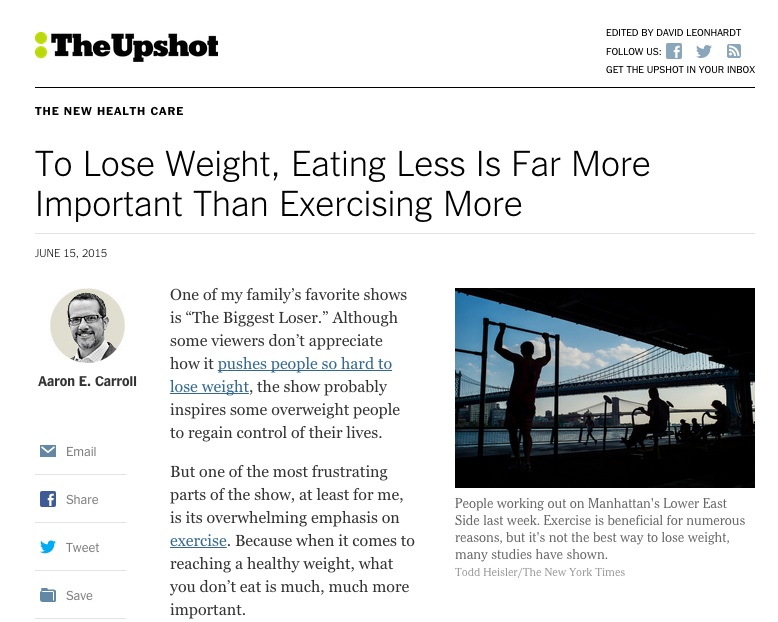
We know that senior snow enthusiasts are also cyclists, hikers, kayakers, golfers, sailors, tennis players and more, engaging in lots of non-snow physical activities.  Some of you might be motivated to keep your activity level up by a desire to control your weight.  Gaining weight is an artifact of aging as metabolism slows down.  Curiously, this article by Aaron E. Carroll in a recent New York Times describes exercise as contributing less than we think to weight loss.  In fact, Carroll points to studies that show exercise makes no difference in weight loss.  While exercise does have many, many physical benefits on cardio health, diabetes control, pulmonary disease and the like, the true key to weight control is…eat less.

Here’s the article.  What do you think?

Diet

Grow A Hiking Habit: Part One

An Expert Offers Advice On Getting Started

Here are the "Ten Essentials": Gear you will need for a hike. Credit: Steve Hines

Here are the “Ten Essentials”: Gear you will need for a hike.
Credit: Steve Hines

Hiking is a great fitness activity for seniors. Whether you are an Alpine or Nordic skier, hiking can keep you in shape to enjoy the slopes or trails this coming winter. Hiking is enjoyed on many levels from simple day hikes in your local woods or conservation lands to classic mountain hikes in our national parks.

Whether you’re an experienced hiker with many trails and summits behind you or you’re new to it,  a few basics make it more enjoyable and safe.

On every hike, when you are away from roads and people always pack the “Ten Essentials”  in your 15-to 20-liter day pack.  The “Ten” are:

Essential Item  Comment
1. Map Contour maps are best. Maps with trails labeled are even better.
2. Compass Know how to orient the map, take a bearing and follow it, triangulate to find your position. Classes are available online and through your local outdoor club. Until you’re familiar with map and compass, keep to well-marked trails.
3. Sunglasses and Sunscreen Prescription sunglasses are great, especially at altitude where the UVs are strong. Don’t forget to put sunscreen on your ears and the back of your neck!
4. Extra Clothing Avoid cotton clothing except for desert hiking. Wool and synthetics are best. Take along a waterproof rain jacket and pants. A light fleece jacket or shirt should be adequate. A light wool or fleece hat and gloves/mittens will help if you are going to higher altitudes where weather is very changeable. And, always bring dry socks.
5. Headlamp/Flashlight Small high intensity lights and lamps keep your pack weight down. A light will be helpful if you are late in coming back from your hike.
6. First-aid Kit This kit should also include bug “dope” and any medications you require i.e. heart, blood pressure, diabetes meds.  Bandaids for blisters might also be helpful.
7. Fire-starter Waxed tinder sticks or tinder balls are available at your local camping store or outfitter. You can make your own using a few simple steps.  Just click here for instructions.  If you don’t think a fire-starter is necessary, read Jack London’s “To Build A Fire”.
8. Matches Waterproof matches are good, but a lighter works even when wet. Butane lighters may now work as well at high altitudes.
9. Knife Your handy Swiss army knife is best. No need for a big sheath knife unless you plan on cutting saplings for a shelter.
10. Water and Extra Food Out for just a day? Take lunch and some snacks or energy bars.   Water is crucial. It’s easy to get dehydrated as we get older. Don’t wait until you feel thirsty to sip water.  Drink frequently!


Here's a 12-15 liter day pack you will need for your stuff.  It should weigh about 12 lbs. Credit: Steve Hines

Here’s a 12-15 liter day pack you will need for your stuff. It should weigh about 10-12 lbs.
Credit: Steve Hines

Other items also come in handy. Some people like a walking staff or trekking pole(s). (See “Try Nordic Hiking” article in SeniorsSkiing.com). Bringing a cap or wide brim sunhat is a good idea. If hiking with friends, a camera adds to the fun. All tallied, your hiking day pack should weigh in at no more then 10-12 pounds.

When I hiked with my kids and they began to gripe about all the stuff in their packs I would tell them, “The only way to make sure you won’t need something, is to have it with you.”

Start slow on level ground hikes. Then, as you feel stronger make your hikes longer and on rolling terrain. When you’re ready, plan a mountain ascent. But always, before beginning a new exercise routine, check with your doctor to make sure your heart is healthy enough for hiking.


My Fitness Journey Continues: Part Two

This Month’s Main Event: Sound Advice From A Medical Expert.

In Part Two I’m going to focus on fitness and heart health, the latter particularly important to me as a favorite nephew of mine who’s only 49 suddenly ended up in the hospital two days ago having a stent put in due to a 100 percent blocked artery. I may have company soon on my fitness journey! My primary doctor, internist Anne Chang, who’s the medical director of women’s health primary care at UCSF, one of the world’s leading hospitals, took time out of her busy schedule earlier this week to call me and answer some questions I e-mailed her recently about health and exercise. Read on.

Dr. Anne Chang, UCSF's women's health primary care medical director, offers sage advice. Credit: UCSF

Dr. Anne Chang, UCSF’s women’s health primary care medical director, offers sage advice.
Credit: UCSF

Rose Marie: How important is it for people over 50 to check with their doctor before they embark on a fitness program? And why? Dr. Anne Chang: Probably most of the time, it’s wise for seniors to check with their doctors before starting a fitness program, primarily to check the cardiac risk factor. Are they having symptoms? Does it take effort to lift a bag of groceries or climb two flights of stairs? Things to watch for are shortness of breath, lightheadedness, chest pains, or palpitations. On their doctor visit, the doctor needs to take a good history of their health. Seniors who want to continue skiing or get back into it should proceed with caution or perhaps reconsider the sport if they have any back issues or problems—such as arthritis—in their hips, knees, or ankles.

RM: I had a couple of bone density tests when I was in my 50s. Should I have another one? AC: Yes, you should. The guidelines for these tests have been refined quite a bit since your previous tests. Now the recommendation for women with no documented risk factors is to get their first bone density test at age 65; depending on what that test shows, the recommendation for their next test is anywhere from two to five years later. For men the recommended age for their first bone density test is 70, with the same subsequent test recommendations. You probably didn’t need to have those tests when you were younger, but you should have another one now. [I’m scheduling it next week!]

RM: What, in your mind, are the three most important things for a 50-plus individual to do before he or she begins a fitness program? AC: The first thing is to talk to your doctor. Second, based on how fit you are, make sure that the fitness program fits your activity level going in. If you’ve been really sedentary, you don’t want to start off, for example, in one of those more aggressive fitness programs. Finally, choose a fitness program that fits your particular needs and goals. [Note: for skiers and boarders, those would be exercise programs that focus on cardio, muscle stretching, strength, and balance.]

RM: There have been a lot of conflicting recommendations out there regarding how much and what type of exercise someone needs to do weekly as a minimum to reach a healthy level of fitness. What do you say? AC: I go by the American Heart Association’s recommendation of 30 minutes of aerobic exercise daily, such as fast walking.

When asked about which is more important on one’s road to fitness, diet or exercise, Dr. Chang said they are equally important. “Doing one without the other won’t bring you the results you want.” When asked about electronic measuring devices, such as FitBit or iPhone apps, Dr. Chang said, “Anything like that is good because it engages your attention.” When she said that, it struck me that those devices are to your physical fitness what nutrition labeling on food is to your diet! Speaking of diet, that will be my topic of discussion next month, and hopefully I will have made greater strides with that half of my fitness plan. As the good doctor said…!

Correspondent Rose Marie Cleese goes to the Senior Center in Golden Gate Park for free exercise classes. Credit: SFP&R

Correspondent Rose Marie Cleese goes to the Senior Center in Golden Gate Park for free exercise classes.
Credit: SFRecPark

Speaking of my fitness plan: here’s the straight skinny as of today. I have a long way to go before “skinny”—I’ve lost only two pounds since I posted Part One of my journey to fitness four weeks ago—but I’m undaunted. At least I’m going in the right direction and haven’t backslid. The exercise part of my plan is going really well; I’m continuing my mix of four exercise classes a week, and I’ve missed only one during this 11-week session. I’ve lost an inch all around since I last measured (the usual three measurements plus my stomach and thighs) two months ago. Several people have commented, unsolicited, about my looking thinner. Plus I’m able once again to wear a pair of black jeans that have been in the drawer for quite some time.

A parting exercise tip: you know how hard it is to remember when you’re supposed to inhale and exhale when exercising? I’ve come up with a easy way to remember! Think of the “3 ex’s”: example: exertion means exhale. You’re welcome…and again, I welcome any and all comments and suggestions.

Editor Note: You go girl!  Keep it up, Rose Marie!

How Much To Exercise And Why Bother

Is There A “Right” Amount Of Exercise Time?

Most readers of SeniorsSkiing.com are active, engaged folks who enjoy snow sports in the winter and lots of different non-snow activities in the summer.  And, most of us like to keep active, because it makes us feel good.  That’s important as we become more experienced in years.

You might wonder if the amount and intensity of the exercise you are doing is enough or too little or too much.  For what purpose, you ask.  If you want to lose weight, keep fit and nimble, then you already know the answer: If what you are doing now in the gym or on the roads or golf course gives you that bounce in your step, it’s working.  But if your goal is longevity—pushing back that time horizon—then there are some specific numbers you should pay attention to.

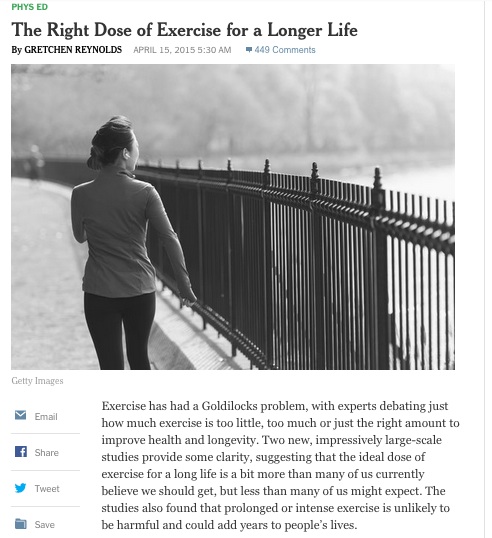
NYT

An April 15 New York Times article by Gretchen Reynolds reports on two different studies that now give a prescription for the amount and intensity of exercise that is linked to increased longevity.  We learned that “broad guidelines from governmental and health organizations call for 150 minutes of moderate exercise a week to build and maintain health and fitness.” For those who exercise more—450 minutes a week—then longevity goes up almost 40 percent over non-exercisers.  And, if 20 to 30 minutes of that activity switches gears from moderate to intense, the longevity number goes up even more. If that’s your goal, then those are your guidelines.

In reading readers’ comments accompanying the article, there are many who just think feeling good is a good enough reason to hit the slopes, roads, trails, links and by-ways.  What are the right numbers for you?  And why bother?  Let us know.

Ski Lessons Improve Senior Skiers’ Technique

It’s Never Too Late to Take A Lesson.

William Smith, age 91, started skiing at Mt. Cranmore, N.H., after WW II. His wife even took lessons from ski legend Hannes Schneider. She quit skiing when she was 73, but Smith continued. He was skiing with his son that morning when I rode the lift with them at Waterville Valley Resort, N.H. Father Smith taught his kids and grandkids to ski, but he doesn’t want to take lessons himself.

Senior Skiers take lessons at Waterville Valley Resort. Good technique means more enjoyable skiing. Credit: Steve Bryan

Senior Skiers take lessons at Waterville Valley Resort. Good technique means more enjoyable skiing.
Credit: Steve Bryan

“I’m skiing as well as I’m going to. My legs aren’t holding up as well.” I then watched him push off down the slope swiftly in well balanced short parallel turns. So much for weak knees.

Like Smith, many seniors are skeptical of what they call teaching old dogs new tricks, unless they plan to do something very different, like ski powder in Utah for the first time.  However, a senior ski lesson can actually lead to more enjoyment.

“Most senior skiers like the medium to long radius turns and cruising the mountain and enjoying it,” says Peter Weber, Snowsports Director at Waterville Valley Resort for 15 years. But that is no reason not to ramp up your technique.

“Whether you’re 7 or 77, technique trumps all. The better you are technically, the easier everything gets,” Weber says.

In teaching seniors, an instructor would most focus on pacing—how fast you ski, how many time outs for trailside chats vs. pushing top to bottom runs, and the need for biobreaks.

Fitness level in general is key, adds Weber. “Skiing anything above a moderate level is an athletic endeavor,” he says.

Like other resorts with comprehensive snow sports schools, Waterville Valley Resort matches you to the right instructor, so you don’t end up in a class with a bunch of young hot shots. Weber also recommends a private lesson as well as taking several group lessons.

Mark Hanabury, an instructor at Waterville Valley, says, “I think it’s more important for seniors than anyone else to take lessons.” He feels seniors will be safer and will enjoy skiing more if they embrace the new techniques including a wider stance and shorter, wider shaped skis.

“Skiing has evolved so much,” he says.

He knows first hand. Last year,  he took his dad Dick Hanabury, age 83, to ski Snowbasin, Utah, after convention in Las Vegas.

“He’s been an avid skier all his life and skied on long Head Standard skis when he was younger. I told him he had to retool his techniques to ski safely at his age. I drilled it into his head,” says Hanabury.

“My dad’s outside ski was getting hung up. He was used to stepping onto the outside ski, but his balance wouldn’t allow that. So, a fellow instructor told him to slide the ski forward and free it up. That allowed him to keep both skis on the snow so it was no longer a balance issue,” says Hanabury.

“My son Mark is keen on knowing the latest technique, so he’s done a good job for helping me to keep up as far as turning techniques,” says Dick Hanabury.

“I used that technique, letting the skis do the work, not throwing your body into the turn but just weighting the skis properly and making sure the outside ski in the turn is well weighted, that’s about the best way I can explain it,” he adds.

“If you’re in good condition, I would recommend skiing at any age. I play tennis a couple of times a week, exercise daily, so I’m ready when the time comes,” says Dick Hanabury.

No matter if seniors are updating old technique or learning for the first time, “I feel it is never too late to learn. Skiing is a dynamic sport and seniors enjoy learning just as much as younger folks. This enables them to ski longer and enjoy more terrain with family and friends,” says Mark Hanabury.

Many ski areas have created programs for those interested in new movement patterns associated with shaped skis or improving techniques. They list these programs on the resort website under the snowsports school tab.

My Fitness Journey Begins: Part One

My six-month plan to go from being a couch potato to a mogul masher.

I had a revelation and a wake-up call on the slopes of Heavenly Mountain Resort this winter while skiing a few runs with the resort’s director of skier services. I had not taken my own advice regarding pre-skiing conditioning or done anything to lose the pounds that have piled on in the last decade or so. And even though I had been able to squeeze into my ski pants and didn’t seem to be affected by the 7,000-foot mid-mountain elevation, I felt like a lumbering whale as I went down the slopes. When I got into gunk, I really had to struggle to work my way out of it. I just didn’t have any strength.

Correspondent Rose Marie Cleese BEFORE she started her fitness program. Credit: Rose Marie Cleese

Correspondent Rose Marie Cleese BEFORE she started her fitness program.
Credit: Rose Marie Cleese

But having my ski gene reactivated and sitting amid all that alpine splendor at lunch, I realized how much I love this invigorating sport and all that comes with it. I decided then and there that one of the things on my bucket list (which I still haven’t put together) is going to be skiing down a slope somewhere at age 90!

So I’m going public with my fitness plan; if that doesn’t keep me on track, I don’t know what will! Plus I’m hoping that my personal journey to fitness will encourage other seniors to make the effort to get in the shape they need to be in to return to the slopes and be able to ski safely and with great satisfaction. And I hope that we’ll learn from each other as I share my progress over the next six or seven months. Comments and suggestions are encouraged! My monthly progress reports will be interspersed with bold-faced suggestions to help readers take action.

So, first things first. Before folks at our age jump into a fitness and diet regimen, it’s vital to have the blessing of one’s doctor. I had a complete physical a few months ago, and my doctor was encouraging me to move more, eat less and more healthy. I’m planning to include a few comments from her in a future progress report. Check with your doctor before you begin any fitness and/or diet program.

Since I can’t afford a personal trainer and have a big DIY streak in me, I’m planning to do a mix of things that I think I can stick with, keeping in mind the elements of fitness and health in general and for skiers and boarders specifically. Ignoring any one of these will not get me where I need to be next November. But at its simplest, it all gets down to exercise and diet.

No nonsense aerobics instructor Pablo Molina keeps his classes hopping. He'll be 73 in June, just a few months older than Rose Marie

No-nonsense aerobics instructor Pablo Molina keeps his classes hopping. He’ll be 73 in June, just a few months older than Rose Marie. Credit: San Francisco Recreation and Parks Department

First, I plan to move a lot more. In March, I started several once-a-week classes at the local San Francisco Park and Rec Senior Center located in Golden Gate Park two blocks from my flat: a low-impact and a medium-impact aerobics class, a stretching and strengthening class, and a weights class. And they’re all free. Look for free fitness classes or programs for seniors; they’re more common than you’d think. These classes have shown me in no uncertain terms what I have to work on most: building up my core strength and regaining my balance!

Cardiovascular-wise, I’m finding that, after just six weeks, I’m hardly out of breath now when I walk up the hill to my flat after class. My exercise goal is this: by the end of the summer, to be able to do all the floor core-building exercises and the aerobics exercises that involve balance without batting an eyelash. It’s a pretty pathetic sight to see right now!

My other big move toward fitness and good health was joining Weight Watchers. I’ve known many people over the years who have sworn by it and were also able to maintain a healthy weight once they quit. Choose a dietary program that you can stick to. I signed up for Weight Watchers’ online program in mid-April for three months and after figuring out how to navigate around the website, I’m finding that I’ve become a lot more conscious of my food consumption. Since Weight Watchers’ integrates activity into the point system, I’m also seeing quantitatively the connection between exercise and what and how much one eats. When I started, I weighed 170 pounds and today my weight is 166 pounds. My goal is to reach 140 pounds by the end of my three months with Weight Watchers’, next maintain that weight for a couple of months, and then get down to 130 pounds before the flakes fly.

And finally, I want to concentrate on getting adequate sleep. I’m still working on that one, inveterate night owl and all-nighter puller that I am. I am, however, making sure I get a good night’s sleep when I have an exercise class the next morning. It’s a start!

One more caveat before I sign off: set realistic goals. I expect that I will hone this fitness plan in the coming months, possibly adding some yoga classes, hiking the trails in the wealth of parklands that surround me, and adding more fruits and vegetables to my larder. All I have to do, whenever I waver, is picture being at the top of some fabulous snow-covered mountain, and everything seems possible. Wish me luck!

[Editor’s Note: SeniorsSkiing.com salutes Rose Marie for publicly chronicling her personal journey back to fitness  She is an inspiration to us and we hope to those seniors in our readership or friends of our readership who would benefit from getting back into shape.  Please support her with advice and comments as she travels down that challenging road.]