Tag Archive for: 50+

This Week In SeniorsSkiing.com (Feb.8)

Mellow Sundance, Tow Line, Backstage World Championships, Bike In Winter, Ask The Expert.

[Editor Note: As the new year begins, SeniorsSkiing.com is again asking our readers to contribute to support our online magazine. Yes, we have grown in the number of subscribers and advertisers. But our expenses have also grown. You can help us defray some of these expenses by helping us out with a donation.  This year, we have a mix of premiums for different level of donations, including stickers, sew-on patches, our new SeniorsSkiing.com ball cap. All donors will be entered into a drawing for a pair of bamboo Polar Poles to be drawn in late March.  You can donate by clicking here.]

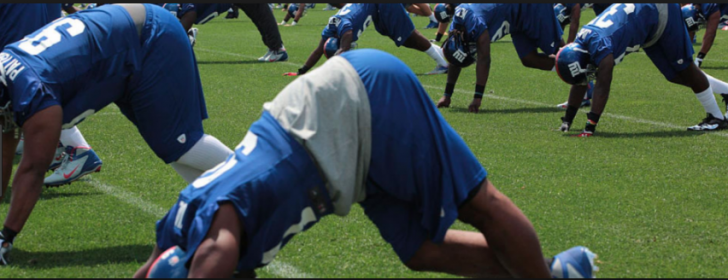
Why Senior Snowsport Enthusiasts Should Practice Yoga.

The NFL has embraced yoga to make muscles and joints supple and flexible. So should you.  Credit: Equinox

Preface: We are not medical experts, health care professionals, or physical therapists. We have, however, been practicing yoga for the past three years. Twice a week for most weeks. So, we can report what the impact has been on our body and our ability to feel athletic outdoors in winter, whether skiing down a hill or cross-country skiing across a field.

As we age, it is essential to keep our muscles and joints toned up. Basically, it’s a use-it-or-lose-it scenario. Working out with light weights on a consistent basis can keep sarcopenia—the weakening of muscles as you age—at bay. If you aren’t aware of sarcopenia’s effect on senior muscles, you aren’t alone. Click here for our discussion of what sacropenia is and what you can do about it.

But there is another important aspect of conditioning that seniors need to pay attention to: Flexibility. That’s where yoga comes in. Tense, contracted muscles, ligaments and tendons inhibit motion, cause pain, and can lead to pulls and sprains.  Those querulous hip flexors and lower back muscles can wreck your day (or week) or even cause you to give up outdoor activities.

Think of yoga as a sophisticated and comprehensive process of stretching and moving muscles and joints throughout your body.  Add a focus on breathing which helps concentration and facilitates movement as well as the discipline of sustained, varied, and regular practice, and you have a means of transforming your body. We’ve found our posture is improved, we find suppleness when we ski, we can get our boots on without gasping, and we’re more in touch with our physical being, aware of how we stand, sit, and move. 

So, we recommend our readers find a good instructor and head to yoga practice.  There are online apps like DownDog. which can get you started.  However, an instructor can give you nuanced cues on how to correctly do the different poses and provide variations that will allow you to get the best of what you can do. Positioning your body properly makes a huge difference, something that is often not specific in online instruction.  There are also different types of yoga to choose from. We think you should start with an “easy” or “basic” class. This level of yoga will not have you contorting into pretzel shapes or standing on your head. Instead, you will be systematically working throughout your physical landscape. When you feel those tight shoulders, hamstrings, or hips lose their tension, and the stress disappear from your neck, you will feel positively different.

If you currently practice yoga, let us know what your advice is for neophytes. 

This Week

Last week’s Mystery Glimpse is revealed.  We are amazed some readers actually identified a ritual snow dance performed by members of the Ute tribe at Vail’s inaugural season back in 1962. BTW, it worked. Pete Seibert had it right.

Correspondent Harriet Wallis offers two articles: A resort review of a very mellow-sounding Sundance resort and a backstage look at what goes on in a world championship competition.

And, if you live in that part of the world were snow is scarce, you can still head out to the hills on your mountain bike. Correspondent Pat McCloskey shows how to ride your bike in the winter, what it takes, and offers suggests for different required equipment.

Check out our new Ask The Expert feature, too.  This week, Steve Cohen of MasterFit offers advice to a reader on how to get a decent pair of ski boots.

Thanks for reading SeniorsSkiing.com. Please consider sending in a contribution to support our online magazine.

Tell your friends about us and remember, there are more of us every day, and we aren’t going away.

Sundance Timpanogos. Credit: Harriet Wallis

Mystery Glimpse: Tow Line

[Editor Note: As the new year begins, SeniorsSkiing.com is again asking our readers to contribute to support our online magazine. Yes, we have grown in the number of subscribers and advertisers. But our expenses have also grown. You can help us defray some of these expenses by helping us out with a donation.  This year, we have a mix of premiums for different level of donations, including stickers, sew-on patches, our new SeniorsSkiing.com ball cap. All donors will be entered into a drawing for a pair of bamboo Polar Poles to be drawn in late March.  You can donate by clicking here.]

A First But Where?

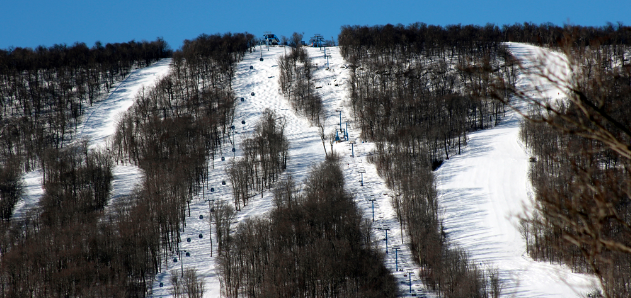
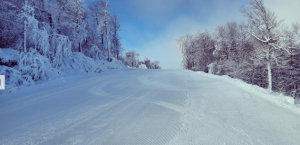
This one might be a bigger challenge than normal. Hint: New England. Where is this? What is the significance of this lift?

Last Week

Snow dance prayer ceremony at Vail’s inaugural season, 1962. Credit: Colorado Snowsports Museum

In December 1962, Vail co-founder Pete Seibert was worried about the snowfall for the resort’s inaugural ski season. Long before settlers came to the Gore Creek Valley, Southern Ute Indians inhabited the area as a summer home. Because Pete knew this, he reached out to the area’s oldest known residents for help and invited members of the tribe to perform a snow dance prayer to bring snow. Eddie Box Jr. and Sr. were present at the 1962 ceremony. Eddie Box Jr. and his wife Betty performed such ceremonies since the 1962 event, one being in 2012. Wouldn’t you know, both years saw a lot of snow.

And thanks again to the Colorado Snowsports Museum for this amazing, historic photograph.

How To Bike In Winter

[Editor Note: As the new year begins, SeniorsSkiing.com is again asking our readers to contribute to support our online magazine. Yes, we have grown in the number of subscribers and advertisers. But our expenses have also grown. You can help us defray some of these expenses by helping us out with a donation.  This year, we have a mix of premiums for different level of donations, including stickers, sew-on patches, our new SeniorsSkiing.com ball cap. All donors will be entered into a drawing for a pair of bamboo Polar Poles to be drawn in late March.  You can donate by clicking here.]

Be Prepared, Have Fun.

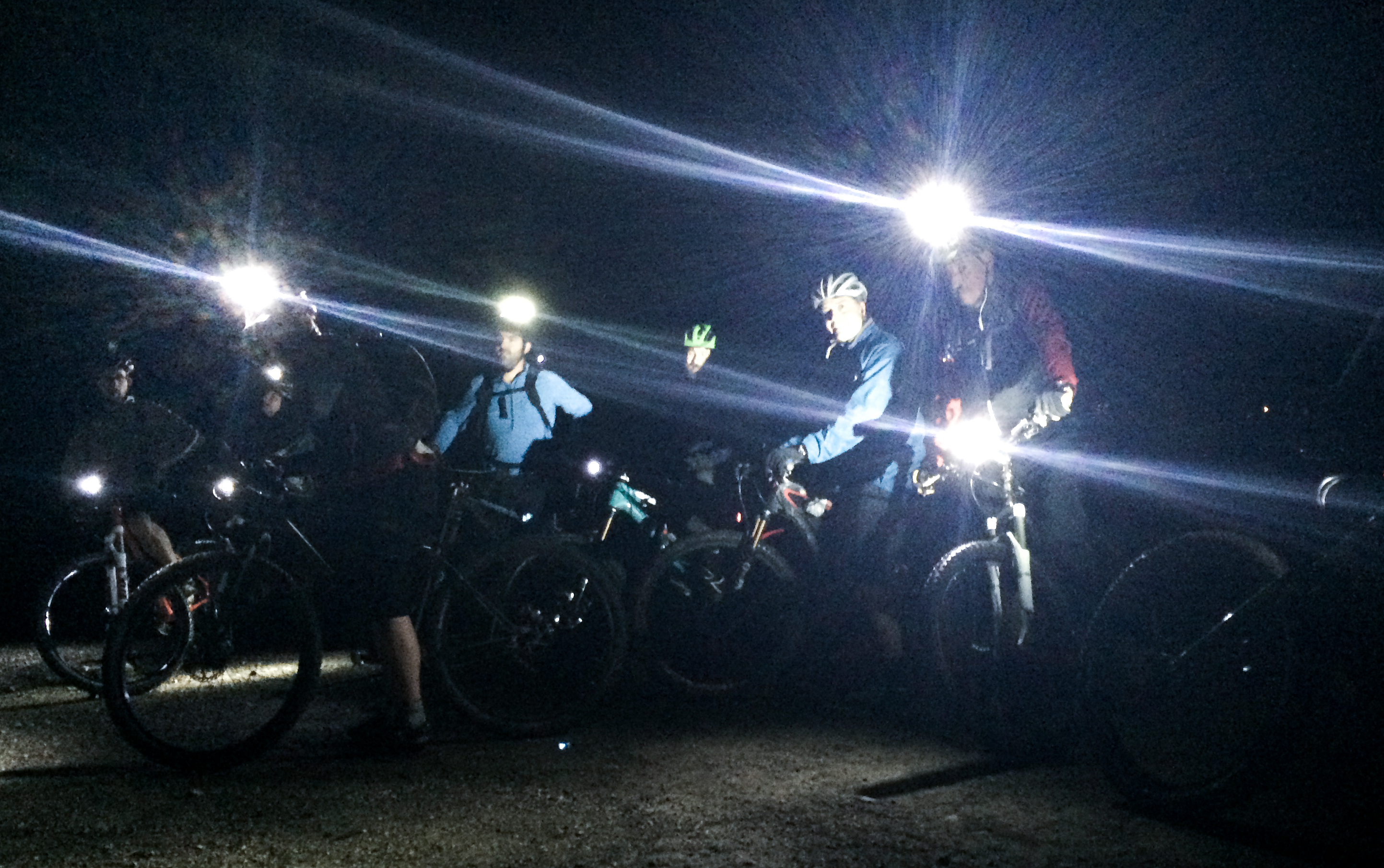
Night riding mountain bikes in winter can keep you busy while you wait for snow in your neighborhood. Credit: Pat McCloskey

While a lot of folks retreat to the gyms, health spas, and YMCA facilities during the winter for continued workouts, there are those of us who value being outside and continue to ride mountain bikes through the winter. The common questions we get are, “What about the snow?”  “What about the cold temperatures? “What are the trails like?”  The truth is if you are clothed properly and have the proper equipment like a fat bike or a plus bike with aggressive tread on the tire, you can enjoy your mountain bike riding all year.

Here are a few tips for maintaining your riding fitness and enjoying the winter on  a mountain bike:

  • Make sure that you utilize a fat bike or a plus bike with a tire like the Maxxis Minion DHF. These are aggressive tires for fat bikes or plus bikes.  They provide excellent traction in snow and mud. 
  • Fat bikes typically use a 4” plus diameter tire where the plus bikes utilize a 2.6-3” tire. Either bike can be used for winter riding. Fat bikes typically are hard tails without rear suspension with theory that the large diameter tires with very low tire pressure( around 6 PSI) provide plenty of suspension.  The plus bikes come in either hard tail or dual suspension design. (Personally, I like the dual suspension for comfort year round).  Plus bike tire pressure should be no more than 14 pounds to provide adequate traction. 
  • Use a good light on your helmet as well as your handlebars.  The bar mounted lights provide a wide beam on the trail while the helmet light can light up the peripheral vision allowing full visibility at night.  Securitylng light is the new company that uses Cree LED technology. and be found on Amazon. I also bring a spare battery in my pack.
  • Use a balaclava under your helmet for face protection against the elements and also warmth.  They are available in any ski shop or online. 
  • Use old ski gloves for warmth.  Chemical hand warming packs are good to use with your winter gloves.  They can be used on the bottom of your socks as well. 
  • Use ski socks with your normal riding shoes or go to your local shop to secure high topped insulated winter riding shoes.  You can search on line for these shoes as well. I find that as long as you use ski socks, you can get away with your normal riding shoes. 
  • Then, layer like you would for skiing with a nice base layer top and bottom and, depending on the temps, a fleece vest and your riding shorts over the top of the base bottom layer. 
  • Finally, I use the Frogg Toggs weather proof suit for wind protection and also to assist with heat retention.  It also keeps the mud off as do fenders which are also available for your bike from your local shop.  The $39.00 Pro-Lite suit is perfectly acceptable and provides good service without spending an arm and a leg. 
Winter boots from Sidi make a difference in keeping warm.

Make sure you are properly hydrated with your Camelbak bladder or utilize an insulated water bottle to prevent from freezing on the bike.  I personally like Hammer Nutrition Fizz Electrolyte with my hydration pack or bottle. A lot of folks don’t realize that with winter exercise, you need as much hydration as you do in the summer.  You lose a lot of fluids with perspiration and inhaling and exhaling during exertion so make sure you don’t forget to hydrate no matter what winter sport.

One word of caution is that with the freeze thaw cycles that we get in the East, black ice can develop on the trails.  There are a lot of choices for studded tires for these conditions that are available online or from your local bike shop.  Prepare to pay several hundred dollars each but if you intend to ride no matter what the trail conditions, studded tires will keep you upright. 

This Week In SeniorsSkiing.com (Feb. 1)

Ask An Expert, Mystery Incantation, Robert Frost, 70s Ski Test Reality, Glen Plake Tour.

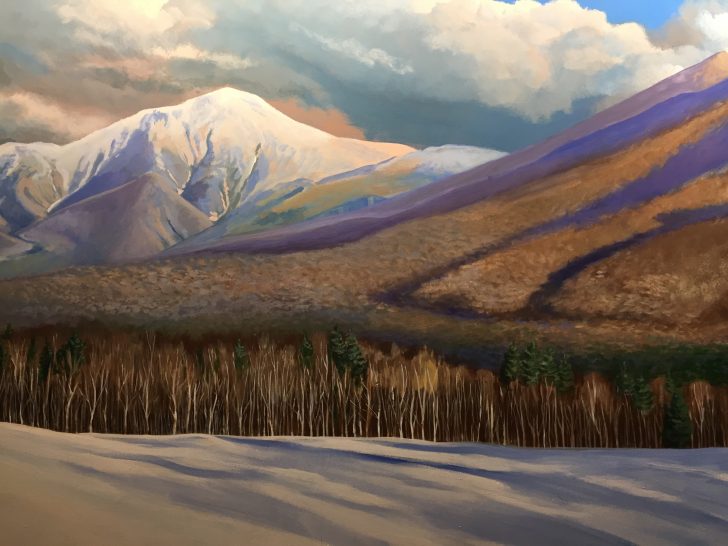
White Mountains, Franconia Notch. Artist unknown

Last week, we pointed out that of three competitive New Hampshire ski resorts along I-93, two offered low day lift ticket prices for seniors and one didn’t. To review, both Waterville Valley and Bretton Woods offered $29 and/or $32, depending on when you buy and if online or at the window. The third resort, the venerable Loon Mountain, offered $75-$79 online for a senior (65-79), one day ticket for mid-week end of January.

We asked Loon to clarify the senior ticket pricing policy. Here’s Loon’s point of view from Greg Kwasnik, the resort’s media contact:

“We believe our resort window ticket pricing accurately reflects the quality of the product we offer. We encourage seniors – and all skiers and riders – to purchase lift tickets online (http://loonmtn.com/lift-tickets). By purchasing lift tickets online, seniors can get significant savings.

Perhaps our best deal for seniors (ages 65-79) is the Loon Midweek Senior Pass, for $369, valid Monday-Friday at Loon. (http://loonmtn.com/season-passes/midweek-senior-pass)

Another great way for seniors to save is the Fly32 Card (http://loonmtn.com/lift-tickets/fly32). For $129, cardholders get one lift ticket, and they can use the card to save up to 20% on already-discounted online lift tickets every time they purchase through our website (http://loonmtn.com/lift-tickets). The card essentially doubles the discount you would already receive by purchasing tickets online. The card also provides exclusive access to a number of bonus discount days throughout the winter for even larger discounts.”

A couple of thoughts: 1) Passes do provide discounts, but not everyone wants to buy a pass, especially if you like to ski at different resorts in a geographical area like the I-93 corridor. 2) Finding this discount information requires diligently sorting through the resort’s website. 3) Even with the discounts described above, Loon’s net day ticket price with discounts is still at least twice the competitors.

So, if you’re a vagabond senior skier who likes to try different resorts in a kind of a la carte mid-week safari, you have some choices. If you’re willing to pay the extra freight for one or two days at a classic resort, go for it. If you are being cautious about expenses, there are other just as classic resorts to accommodate you. Just be aware of the differences and choices you have.

This Week

Our Mystery Glimpse photo this week again comes from the Colorado Snowsports Museum. It looks like there is some kind of ceremony about to take place on a mountain top involving Native Americans. What’s up? When? Why? Last week’s spectacular photograph of an abstract Alpine landscape comes from Ray Atkeson’s remarkable collection of the western mountains. Find out where it was taken.

We lost Robert Front 56 years ago on January 29. To remember him, we’re publishing his poem, “An Old Man’s Winter Night,” perhaps appropriate for these very frosty times, especially for those involved in this week’s Polar Vortex.

Correspondent Marc Liebman’s 70s ski testing series wraps up this week with a description of the political fall out from ski manufacturers, marketeers, and ad sales people when data-driven ski recommendations hit the pages of SKI magazine. Pressure from advertisers was a factor that revealed a flaw in the specialty magazine business model: Dependency on ads for survival. What did SKI do?

We are reprinting an article from friend and colleague, The Ski Diva, who reports on free-styler and ski celeb Glen Plake’s tour of mid- and small-ski resorts. Glen is bringing attention to Mom and Pop resorts around the country, resorts that offer perfect places for families and seniors to have winter fun but are disappearing at a relentless rate. We salute Glen’s novel tour and his flashing a light on what we think is the archetypical resorts that seniors love.

We are starting a new feature in this week’s edition: Ask The Expert. We get lots of questions about technique, gear, location, and general advice about skiing with others. So, we’re going to try to provide a forum for those questions and have some of the experts in SeniorsSkiing.com network answer them. Ask away.

Thanks for reading SeniorsSkiing.com.  Remember there are more of us every day, and we aren’t going away.


This Week In SeniorsSkiing.com (Jan.25)

Buried Alive, Magic Mt., Brian Head, 70s Ski Testing, Mystery Snowfields, Rope Tow Memories.

There is prolific snow in New England these days, and despite the brisk cold, we went skiing last week in New Hampshire in the famous Ski 93 corridor. First stop was Bretton Woods on a frosty bluebird day with far-ranging views of Mt. Washington and the historic Mt. Washington hotel. Great snow, uncrowded, roomy base lodge, wonderful experience. Senior lift ticket for the mid-week day: $29.

Second stop was back down I-93 to the legendary Waterville Valley. Overcast, flat-light-ish, but great snow, uncrowded, etc., etc. Senior lift ticket for the mid-week day: $32 (bought online in advance. The next day’s seniors ticket was $29 online.)

Ironically, we were staying at a condo directly across the road from another venerable New Hampshire resort. Advance sale mid-week senior ticket prices for one day ranged from $70 to $87.

Three competitors in a relatively close geographical area.  Two with competitive prices for seniors, one with huge price disparity. We wonder why. 

At press time, the resort in question’s media contact has not yet responded to our inquiries. We will let you know what we learn next week.

This Week

Correspondent Harriet Wallis give us a description of a scary incident that happened to her skiing companion who got buried, not in an avalanche, but by falling in deep, fresh snow on a gentle slope heading back to the lift at Brighton, UT. Unusual? Not so sure.

Marc Liebman continues his remembrance of ski testing back in the 70s. In this week’s installment, he talks about SKI magazine’s on-snow test regimen and how performance was correlated with bench test statistics. Interesting history.

We have two resort reviews, one from Brian Head in Southern Utah, the other from Magic Mt., VT. They are both appealing and accessible to senior skiers for similar reasons. Is there a “sweet spot” for ski resorts for seniors? We could be seeing convergence of opinion.

Our Mystery Glimpse this week features a fantastic photo of an Alpine wilderness. Tell us where it is and who took the picture. Last week’s Mystery was revealed as none other than Princess Elizabeth stopping off at the Mittersill Alpine Resort in 1951. Find out how she happened to visit what was then a remote outpost of Tyrolean ski culture.

Finally, Don Burch serves up a memory of riding on rope tows as a youngster. We thank cartoonist and ski journalist Mike Roth for contributing an original illustration for this piece.

And remember one and all, January is Learn To Ski and Snowboard Month. Now is the time to re-boot your interest in snow sports and get back into winter. Or bring a friend or a grandchild. Deals abound.

And remember to tell your friends about SeniorsSkiing.com.  That’s how we get new readers.  There are more of us every day, and we aren’t going away.


70s Ski Testing: On The Snow

Step 2: Go Out, Do It.

One of the joys of working at Ski Magazine was that I was paid to test skis!!!  Ski manufacturers shipped skis to our lab for testing and when it was completed, the skis were covered with self-adhesive shelf-paper and numbered so the testers couldn’t identify the ski. 
Mother Nature dictated our location and we didn’t want to test at the same area Skiing used.  One year we started at Mount Hood but weather and poor snow forced a move to Mammoth before we settled on Park City the following year.

Areas were picked that could give testers access to a lift that served terrain suitable to our needs.  To create a hard, icy surface, the area allowed us to spread ammonium nitrate on the snow to create a hard frozen granular.

For racing skis, we set up a NASTAR type course with thirty gates and applied ammonium nitrate to make it rock hard.  Racing skis were tested just like the others before we pulled them aside for the days when we would ring them out on a racecourse.

Our contract testers – six men and four women – and me were all certified instructors with either coaching and/or racing experience.  John Perryman and his wife Joan were expert skiers and were part of the test team.  We wanted strong skiers who could ski consistently and could handle a ski without changing their technique. 

To get it right, it wasn’t about blasting down the mountain on one ski after another.  SKIpp demanded a disciplined methodology.  Each year, we reviewed the on-snow maneuvers designed to replicate how beginners through experts skied.

Because some brands were putting their name under clear P-Tex, testers were not allowed to pick up the ski prior to skiing on them.  To help ensure that each ski was tested the same way, the methodology was designed to minimize the tendency of a tester to adapt his/her technique to the ski.  Testers were limited to two runs per ski. 

 The tester came to the tent to score the test ski and write his or her comments before taking another ski.  Each day we tested ten skis because we learned beyond that it became hard to differentiate each ski’s performance.

The best skis didn’t generate many memorable comments although one tester wrote “On the icy snow, this ski tracks like a train on rails and in the soft stuff, it will derail you.”  Another wrote, “A two-by-four with an upturned end would be better than this ski.”

In the evening, skis were prepped for the next day and the day’s data tabulated.  Even though it was preliminary, we were pleasantly surprised at how well the on snow results compared to the lab’s prediction.

Testing ten skis took us to lunch.  For the afternoon, the testers could pick a ski from that day or prior days to enjoy.  It was tough, demanding skiing, but somebody had to do it!

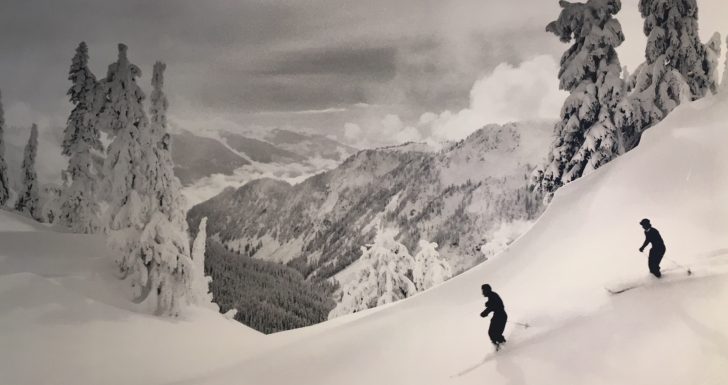
Mystery Glimpse: Trackless World Of Snow

Alpine Universe

Now here’s an amazing picture from the Alf Engen Museum, Park City, UT.  What are we looking at? What’s the place? And, more importantly, who took the picture?  No, not Ansel Adams, but close.

Last Week

Yes, indeed, the Very Special Guest was Princess Elizabeth who visited the Mittersill Alpine Resort near Cannon Mt., NH, in 1951, probably in connection with her trip to Canada that year.

Why would the future Queen of the Realm stay at a then-remote ski resort in Northern New Hampshire?

We infer that she was visiting a member of the Hapsburg royal family, Mittersill’s founder Baron Hubert von Pantz, a wealthy Austrian sportsman and hotelier. His Tyrolean-themed Mittersill Club in Austria—a mecca for royalty from all over Europe—came to a sudden end in 1938 when the Nazis invaded.  He resettled in New Hampshire and in 1945 opened the Mittersill Alpine Resort, which consisted of an Inn and number of unique, mountain-themed cottages, reflecting the Austrian style.

From the Mittersill Inn.

We visited the Mittersill Alpine Resort last February, checked out some of the original chalets, and found a collection of unusual illustrations posted on the walls of the Inn.  These charming pictures reflect another time, a Tyrol where horses and sleighs carried sports people dressed in “ski costume” around the mountains. We asked the Inn’s staff what the history of these magnificent pictures was but no one knew. We strongly suspect the Baron brought them with him from his club in Austria.


And here’s a poster from the Mittersill Mountain Club’s early days.  Cozy, eh?



Rope Tow Escapades

Grabbing That Twirling Rope Was Not Easy.

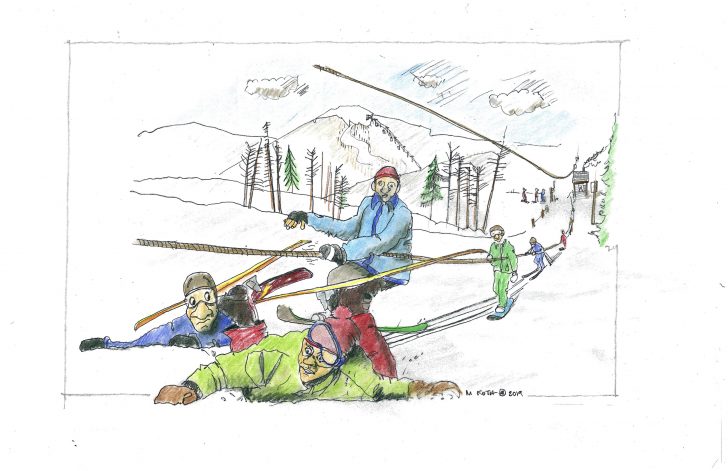
We’ve all been there. Cartoon Credit: Mike Roth

It was the early 1960s, I was in first or second grade and learning to ski at Mohawk Mountain in Connecticut. At the time Mohawk had just installed the first chairlift in Connecticut but most of the experiences I remember where on their numerous rope tows.

The first thing newbies had to master was slowly gripping the rope. Despite instructions to slowly grasp the rope, all first-timers, including myself instantly use a death grip. As a result I’d get hurled up the mountain about five feet before doing a face plant.

To my relief (and later amusement) there was no shortage of people making the same mistake. Every so often there’d be heaps of beginners tossed about on both sides of the tow. Sometimes people got so jumbled up it was impossible to tell whose arms, legs, skis or poles belonged to whom.

After repeating this several times in front of my laughing, older siblings and their friends I finally learned to adjust my acceleration by gently grabbing the rope. Once underway it was an exhilarating ride up the hill.

It was exhilarating because the rope tows at Mohawk moved at about 16 mph. To put that in perspective, modern-day high-speed chairlifts travel at about 12 mph.

After a few tiring rides up the hill someone showed me how to reach my left hand behind my back and grasp the rope while still holding on with the right hand. This did wonders in making the ride physically tolerable.

Another essential skill was learning how to stop once underway. This skill was needed when someone further up the tow fell and blocked the path. Until this skill was learned there would be spectacular pileups. Easing up on your grip wasn’t sufficient because the friction of the rope would tear your gloves apart. Instead you would have to turn one of your skis perpendicular to the hill and use it to keep you from sliding backwards.

The people who didn’t learn this skill would inevitably slide backwards down the hill bumping those behind them. I remember struggling to maintain my place on the tow while two or three skiers slid back into me.

Being six or seven years old the last thing I wanted was to be on the rope tow without others close ahead and behind me. Without other riders close by I would desperately try to hold the rope up off the snow. Being so heavy I’d have to bend over and hold the rope just inches above the snow; a backbreaking way to ride up the hill.

Another challenge was following a tall skier and when you’re a little kid they’re all tall. One of my friend’s fathers was 6’2″. When I rode behind him I’d have to reach up at head level to hold on to the rope. This was another excruciating way to ride up the hill.  In the lift line there was always jostling among my friends to be in the middle of the pack among like-sized skiers.

Being the youngest of three brothers and skiing with a bunch of boys from our neighborhood there was no shortage of mischief. When unloading from the rope tow the older boys would whip the rope in an attempt to knock those following off the tow.

The art form was perfected when one could whip the rope enough to knock off a follower but not so much as to get yelled at by the lift attendant. Those who excelled at this learned to look innocent and express dismay over what happened.

Years later it occurred to me that it was ironic that rope tows, one of the most difficult lifts to master, were most often found serving beginner slopes. I guess they served to toughen us up.

End note: I just recently learned about rope tow speeds at Mohawk having read Nicholas Howe’s fabulous article The Wonders of Walt in the December 2004 issue of Ski Heritage Magazine. Walt Schoenknecht was the ski visionary who founded Mohawk and soon after Mount Snow, Vermont.

Fryeburg, ME, 1936. First rope tow. Credit: MaineSkiMuseum

This Week In SeniorsSkiing.com (Jan. 18)

Silver Streaks, PopUp Problem, Snowmaker Gloves, 70s Ski Test, Mystery Guest, Conditioning Advice, Big Bromley Resort Review.

We stopped at Waterville Valley’s Silver Streak corner in the base lodge last Monday to introduce ourselves and spread some SeniorsSkiing.com stickers to the members who had gathered for coffee and donuts. Silver Streaks is a club program that is supported by the WV management with a separate place to park, gather, store equipment, have parties, races, and other special events. Correspondent Tamsin Venn wrote an article about the Streaks in 2015. Click here to read it.

The Silver Streaks is the oldest senior ski program in the country. We think it’s a model for other resorts.

But something that one member said got us thinking. We asked if they had heard about SeniorsSkiing.com, and one member said, “How would I have heard about you?” Excellent question and difficult to answer. SeniorsSkiing.com doesn’t advertise, we do have a modest Facebook presence, we try to link to other sites and stories. The best and most effective way for new readers to find us is to be referred by someone who is already a subscriber. Please spread the word.

This Week

Whoops.

We explain our annoying Popup Problem that came with last week’s edition. We are very sorry some readers had an issue with re-entering name and email address countless times.

Pat McCloskey gives us a steer to snowmaker’s gloves that really can make a difference if you ski in wet, wet conditions.

Marc Liebman continues his series on ski testing with an interesting article that describes how the parameters of ski performance were actually defined back in the 70s.

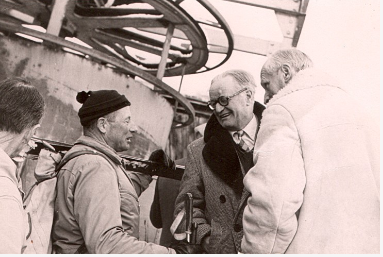
Our Mystery Glimpse this week is quite challenging. You might be able to identify the mystery guest, but where did this person stay? There are hints.

Orthopedist Dr. Peter Schmaus contributes his advice for focusing your conditioning on core muscles and why that is important, not only for skiing or other snow sports but for living as a healthy senior.

Finally, we hear from Tamsin Venn with a Resort Review of Bromley Mountain, VT., a classic ski area with “just right” skiing for seniors.


Remember folks, January is Learn To Ski And Snowboard Month. Bring a friend, bring your grandchildren. Get out there and enjoy the cold. Click here for more.

Thanks for reading SeniorsSkiing.com. Please tell you friends, it’s how we get new readers. And remember, there are more of us every day, and we aren’t going away.

Bromley is right-sized for seniors, lots of do-able trails, even the Black Diamonds. Credit: Bromley

PopUp Problem Perplexes Publishers

Last Week’s Edition Had Some Issues.

Whoops!

Imagine our surprise when we began to receive complaints—some strongly worded—from our readers about having to re-enter their name and email to access our online magazine. That is, re-enter again and again and again. And again.

We thought it was a typical but annoying problem that is usually on the reader’s side of the screen: When “cookies” are disabled or the reader uses a different browser or device, a similar set of symptoms happens. The solution is usually pretty simple: Turn on cookies on browser.

But no, not this time around. We believe the problem can be traced to a flaw in the popup software we use as a result of a WordPress update. We thank our stalwart software designer Alice Winthrop of Gate-House Design who tracked down the developer of the software and disabled the popup until the problem can be corrected.

Which brings us to why we have a popup in the first place. For one thing, we want to offer visitors a chance to subscribe for free. The popup also appears if a subscriber—or a non-subscriber visitor—is trying to access our Subscriber-Only Content. We ask subscribers to confirm their information before getting access to such assets as Free (Or Almost Free) Skiing For Seniors, Ski and Boot Recommendations, our Historic Ski Poster e-book, and other items.

The alternative to the popup is for subscribers to create an account with a username and password. That is not something we want to manage, nor do we think it is necessary for an online snow sports magazine for seniors. Nor do we believe our readers want to remember yet another password. Hence the popup.

Let us know if you have any issues, suggestions, concerns. We love to hear from you.

We apologize for any inconvenience this may have caused.

Snowmaker’s Gloves For Wet Weather: The Joka Waterproof

Wear What Works In The Wet.

Joka Glove is $28, mittens also available as are other models.

I usually take most of my vacation time in the winter because I like to ski out West and in the Adirondacks.  And more often than not, the trips are something to look forward to when you live in the Mid-Atlantic and have to deal with the rain and sleet events that plague our winters here in “the banana belt”.  I always tell everyone if you can stay dry, skiing in the rain is not bad since the snow is soft, and the turns are, well, hero turns on hero snow.  Enter the Joka Waterproof Glove.

If you go to the CHS Snowmakers web site, you will find an array of perhaps the finest waterproof gloves that you will ever purchase for a very reasonable price.  Joka gloves are rubber and have an inner, removable fleece liner  that can be easily removed and dried.  These are true snowmaker gloves and are perfect for skiing in the rain.

I have a Pro Gore-Tex from Patagonia that keeps me completely dry, but the Achilles heel has always been wet leather gloves that get soaked and cold.  When I found the Joka gloves on a recommendation from a friend, I became a believer and an evangelist. You can literally submerge these gloves up to the fleece lining  in a bucket of water and never get wet. Everybody is buying them down here in the banana belt, and you should too if you venture out in weather that is not quite optimal.

The other nice thing about the gloves is that you can “squeegee” your goggles without scratching your lenses. When it really rains, I have to reach up and clear the goggles and these gloves are non -abrasive to the goggle lens.  A definite plus for expensive goggles that are sensitive to handling.

My suggestion: Do yourself a favor, buy a pair.  You can use them in the yard, on a mountain bike, or skiing in the rain.  As my friend the Shark always says, “No such thing as bad weather, just bad clothing choices.”


Focus On Conditioning: Still Time For This Season

[Editor Note: This article was contributed by Peter Schmaus, MD, Orthopedic Spine and Sports Medicine Center, Paramus, NJ. and Senior Attending Physician, Hackensack University Medical Center. SeniorsSkiing.com is very grateful to have his view on conditioning.]

Pay Attention To Body Tuning Before You Hit The Slopes Or Trails.

Many of us pay more attention to our equipment than the most important equipment of all—us! Many ski injuries and overuse syndromes can be avoided by simple preventative maintenance. While sharpening your edges and maintaining bindings are smart, even more important is a musculoskeletal tune up on yourself. This is even more crucial as we age and the musculoskeletal system inevitably displays the wear and tear of the years.

We lose muscle mass annually as we age over 40, but this can be reversed with the correct exercise regimen. Joints inevitably become stiffened both from cartilage thinning as well as tightening of the soft tissues surrounding the joints and spine. These conditions, while not completely reversible, can be managed with exercise programs stressing both flexibility and strengthening.

While stabilization and core are buzzwords frequently used in the fitness field, for snow sports those words cannot be repeated too often. Fitness trainers, therapists, and physicians refer to muscle groups that are core stabilizers. These include the rectus abdominus, external and internal obliques, back extensors, and the pelvic floor muscles.

These are your natural weight lifting belt and lumbar support muscles. They stabilize and support the spine in all planes, and a strong core helps provide balance and force required to carve a turn or navigate a field of moguls. Core muscles even support your spine when pulling off your boots at the end of the ski day. Exercise methods include Swiss ball, back extension, modified crunches, various planks and supermen. All can be done in the home without elaborate gym equipment. And do not forget the simple push up and proper squat.

We frequently refer to the posterior chain, which includes the gluteal muscles, the hamstrings as well as latissimus, and back extensors. Regimens can include lunges, modified dead lifts, squats, kettle bells and burpees. If your bodyweight does not provide sufficient resistance, add some light weight. Simple flat plates, kettle bells, or even resistance bands will suffice. Then move on to side-to-side exercises, which simulate ski motion.  Keeping your center of gravity well centered is the physics behind a good day on the mountain.

Be mindful that snow sports, while not overly aerobic, do require exertion and therefore increased cardiovascular activity. That is aside from the long walk uphill though the parking lot with all your heavy equipment.

Also important especially as we age are balance exercises. Stand on a balance or wobble board. Not a challenge? Hold two light weights. Go through your regimen while remaining balanced on the board. It is not easy in the beginning, but the benefits of enhanced balance and stability are crucial on uneven terrain. Constructing a preventative exercise program well in advance of those first days on the mountain will reduce the risk of injury, making those days on the mountain more enjoyable and injury and pain free.  

This Week In SeniorsSkiing.com (Jan. 11)

Avalanche Alerts And Deaths, Keep Warm, Telemark Memoir, Snow Tool Mystery Glimpse, Tire Chain Reminders, Why You Have To Enter Email Again.

Europe is getting buried by severe storms. Some mountain towns have been cut off or evacuated. Credit: Al-Jazerra

Over the past week, there have been monumental snow falls in Colorado, California, the Canadian Rockies, and most of western Europe. Click here for snow totals over the last seven days from different resorts in the Alps from OnTheSnow.com. In California, I-80 was closed due to spin-outs and low visibility that came with heavy snow and rain. More was forecast for this week.

Multiple feet of new snow are falling on existing bases on both continents. That combination creates an unstable snowpack and brings extremely serious avalanche risk. In fact, seven deaths have already occurred in the last week both in North American and Europe from avalanches, according to Snowbrains.com. Some of these were backcountry skiers, another couple were snowshoeing in the Alps, one death came when snow swept through an avalanche safety class in Silverton, CO.

Obviously, winter snow sports depends on snow and cold weather. When the weather becomes severe, it is wise to pay very close attention to where you are going, whether you are prepared, and even it is wise to venture forth.

There’s a very instructive expression for those who sail, boat, fish, or otherwise head out to the ocean that also applies to those who live and play in snow country.

If you go to sea, you must know what you’re about. 

If you’re not, the sea will find you out. 

Snowfall in Europe, January 2019

Indeed, if you head to snow country into significant weather, please know what you are about. If you ski in backcountry, follow common sense rules: pack a shovel, avalanche beacon and related equipment, ski with a group, watch the warnings. If you are driving in the mountains, make sure your car has the “box in the back” with emergency tools, including chains. [See Marc Liebman’s article on tire chains in this issue.] If you’re just out there skiing the groomers, know your limits, keep hydrated, know when to head to apres ski.

Otherwise, you could get found out.

This Week

Correspondent Harriet Wallis brings a very funny article on keeping warm.  Her advice to women is pretty specific: Ladies, Don’t Wear Black Underpants On Super Cold DaysFind out why by clicking here.

Author Roger Lohr (c) and two buddies try a three-man tele turn. What’s with the group turning thingy, guys?

SeniorsSkiing.com’s XC editor and publisher of XCSkiResort.com Roger Lohr shares some memories of his Telemark skiing experiences. Did you know that Telemark skiing and NATO have some things in common? Did you know that making group Telemark turns is a “thing” in that sport? 

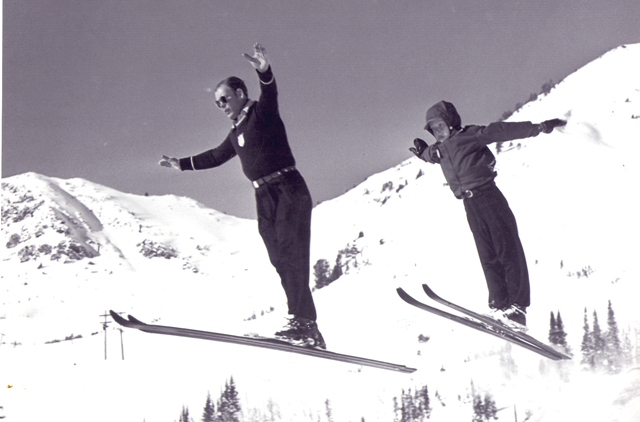
Our Mystery Glimpse features what looks like a bit of daredevil skiing with a device that was meant to be helpful at ski resorts.  What are we talking about?  Click here.  Also, we reveal the names of those flying family members who were ski jumping in tandem from last week’s MG.  Not surprisingly, several readers got that one.  Easy.

Our bet is that most seniors think negatively about snow chains. Unwieldy, noisy, clunky, but ultimately necessary in certain circumstances. (See above comments on severe winter weather.) Correspondent Marc Liebman reminds us why these nuisances are important to master. Click here on his tire chain story with a link to some resources on how to select the right chains for your vehicle.

Finally, we re-cue our explanation of why our readers sometimes have to re-enter their names and emails. We do this because we have a lot of new readers who may not know how our no-password access to Subscriber-Only Content works. We also do this to stem some of the nasty-grams we get from some frustrated readers who are not shy about letting us know about their frustrations and what they think of our so-and-so online magazine. So, to those people, we say: Be nice.  There are reasons you are having these re-entry issues.  Click here for more.


January is Learn To Ski And Snowboard Month. Bring a friend to your favorite resort. There are 140 ski resorts offering nearly 300 special learn-to-ski programs this month. In fact, some resorts are celebrating Learn To Ski month with celebrations on January 11th. Click here for more.

Thank you for reading SeniorsSkiing.com.  Remember, there are more of us every day, and we aren’t going away.


Memoir Of A Telemark Skier

“Telemarketers” Found Each Other To Practice Their Distinctive Style.

[Editor Note:This remembrance of Telemark skiing by Roger Lohr first appeared in his publication XCSkiresorts.com.]

The North American Telemark Organization set a record with this group turn at Mad River Glen in 1980.

In the 1970s, telemark skiers were called the free heelers, telemarketers, and the Lunatic Fringe. But these skiers performing the historical telemark turn down the slopes at alpine ski areas were seen as “the vanguard of the slopes” by many for their ability and skill descending the runs at high speeds, in the moguls, and landing aerials on their cross country skis. But telemarkers were often heard commenting that they were only riding the lifts at alpine ski areas to improve their downhill skills for the backcountry. Some claimed “free the heel, free the mind”, but they became intoxicated with riding chairlifts rather than getting their thrills in the backcountry.

These days, as alpine touring and backcountry skiing become more popular, the telemark subculture may be a declining breed at the alpine ski areas. However, there was a time when they were racing down through the gates and partying hard and celebrating their differences based on what was perceived as their retro ski techniques. They were dressed in wool pants or knickers with ear flapped knit hats with elongated tassles (designed by Vermonter Poppy Gall, a woman entrepreneur, designer, and currently a co-director of the Vermont Ski & Snowboard Museum).

NATO Founder and Telemark legend Dick Hall wiggles through a narrow spot.

Today, telemarkers, or what is left of this group, are no longer counter culture, but in their heyday, telemark festivals, traveling clinics and workshops, and more were the brainchild of the North American Telemark Organization (NATO) created in 1975 by Richard (Dickie) Hall of Waitsfield, VT. In 2017, Dickie Hall was inducted in the Vermont Ski Hall of Fame, which is a long way from his first time telemark skiing with a dozen others as a group at Pico Mountain, Vt. in 1974.

According to author David Goodman’s article about telemarking in Powder Magazine, “the telemark turn was invented in 1868 by Sondre Norheim in the Telemark district of Norway. As alpine skiing and techniques took over, it was not until Rick Borkovic of Crested Butte, CO, sparked a revival and a number of Nordic skiers rediscovered the old technique.”

I found out about telemarking from the 1977 book “Skiing Cross Country” by Canadian Ned Baldwin while I was living in southern Vermont. Most of us regarded Steve Barnetts’s “Cross-Country Downhill” as the bible of telemarking as it covered downhill techniques in depth. As I improved, I got to know many of the telemarkers in the region, mostly men but there were some women, too. We ran a race series, but beside the competition, it was really a clan of telemark skiers who met on scheduled dates at different ski areas.

As a racer, I felt disadvantaged on my Trucker Light Edge skis, which were narrower and softer compared to the Rossignol Randonee skis, which handled the ruts and hard pack better and were used by most of the other skiers. Always blame the equipment. But Dickie’s motto “Ski Hard. Play Fair. Have Fun” was not so much about winning as it was about spreading the telemark gospel.

Hall developed NATO, (according to Hall, it’s the peaceful one) to conduct workshops, training courses, expeditions, and festivals. He traveled as a telemark evangelist from his home in Waitsfield, VT, and visited the states in the northeast, the Rockies, California, and Alaska among others. These NATO telemark events would feature instructional clinics for all ability levels, and equipment suppliers’ gear for demo use. Hall created the telemark ski school at Mad River Glen as one of the first in the US, and he helped others to become telemark instructors across the country. Over the years, Hall estimated that he has introduced, instructed, or just shared his love of telemark skiing to about 40,000 people!

In 2015, NATO held its 40th and last telemark festival at Mad River Glen, which attracted about 200 participants, a far cry from the 13 attendees at the original Pico event. The races held at the festivals were usually the focus point at these events, but the “group telemark turn” was an activity we all shared together. The telemarkers in Colorado and Alaska would try to top the eastern telemarking crew of deplorables at Mad River Glen, but it is believed that 128 eastern telemarkers in a group turn is the standing record.

At Mad River Glen, Dickie was a task master when it came to the group telemark. In Dickie’s mind, it was paramount that we link two telemark turns for the attempt to count. The photo in the 1984 NATO Eastern Telemark Festival Series poster (and used in many other NATO materials) exemplifies one of those record-breaking group telemark attempts. On the day of that photo (I was there), many of the telemarkers who were near the end of the line got whipped into a gully, and it ended in a yard sale of significant proportion. No injuries, lots of laughs—indeed we played hard and had fun.

NATO is now defunct but Dickie Hall telemark videos are still available via email request at nato@gmavt.net

Author Roger Lohr and two buddies try a three-man tele turn. What’s with the group turning thingy, guys?

Safe Driving: Wrap Tires With Chains

How Many Readers Carry Chains And Actually Know How To Mount Them?

Back in the old days, many of us had knobby snow tires even studded ones mounted on a separate set of rims stashed in the corner of the garage, ready for mounting.  Tire designs and compounds changed over the years.  Snow tires still exist, but all season tires are the norm. If you have a car/SUV that has four-wheel drive, you are good to go for most winter conditions.

Last year, in Box in the Back, I listed what you should carry for emergencies when you headed into the mountains.  What Else Should You Have In Your Car provides suggestions on what to do/not to do if you are forced to stop for a long period, either by an accident or road closure.

The best time and place to learn how to put on tire chains is in your driveway on a nice day. Worst: roadside in a snowstorm.

What wasn’t covered was chains with which I have a love-hate relationship.  They’re clunky, a pain in the rear to install on the side of the road.  If one section comes loose, it can beat the crap out of a fender, wrap around an axle, or rip out a suspension component.

While most of us prefer not to install chains, there are parts of the country where the local gendarmes have the right to insist you use them even on a four-wheel drive vehicle equipped with mud and snow tires.  No chains, no going any farther.

Some states require chains on snow-covered roads. You have no choice, so you better know how to use them.

Point one.  If chains are required, getting told to put them on is not the time to turn around, drive back to the last town you passed, and buy a set.  They should have been bought before you left the house and kept handy, i.e. where you can get to them without having to pull everything out of the trunk.

Research chains types to pick the ones that are the best fit for your vehicle and your needs.  Click here for a really helpful link that offers instructions on selecting the right chains.

Point two.  A chain “inspection/installation” station is not the place to learn how to put your chains on because it is cold, snowy, and often dark.  Don’t rely on some helpful soul to rescue you.  Putting chains on slush, cinder, sandy wheels is a dirty job, so be prepared.  Practice putting them at home before you leave. Put them on and take them off several times so you know the drill.  One enterprising soul I know has the instructions downloaded on his iPad as a reminder.  While it is a helpful reminder, a video is not a substitute for actual experience.

Point three.  While you don’t need a separate pair of overalls and boots, carry a small rubber mat you can kneel on and a pair of heavy rubber gloves you can slide over a pair of ski glove inserts.  Leather work gloves also work. This will keep your fingers from getting cold and numb or cut.  Practice with the gloves on.

You make be like me and hate chains, but don’t leave them behind because, one day, you’ll need them or possibly lose a day or so of skiing.

FAQ: Why Do I Have To (Constantly) Re-Enter My Email?

We Get This Question From Time To Time. Here’s What Happens And How To Solve This Problem.

If you are being asked to re-enter your email to confirm your subscription to SeniorsSkiing.com, you might be a bit annoyed.  We don’t blame you, but there is an explanation.

You are accessing SeniorsSkiing.com through a device that is different from the one you originally signed up on. Subscribing to SeniorsSkiing.com puts a “cookie” on your device.  If you use a different device, no cookie, so you are viewed as a non-subscriber. If you re-enter name and password, you’ll be okay with the new device.

You have disabled cookies or cleared browser history on your device. Even iPads can accept or disable cookies. Turn cookies back on, and you’ll not have to re-enter again, or leave it disabled and realize you have to re-enter each time.  Your call. 

You are trying to access our Subscriber-Only Content.  Instead of building a firewall that requires usernames and passwords, we elected a much simpler way of getting to our exclusive content: Just confirm your name and email.  You will have to do that each time you want to get to that information, which, by the way, is under the Community tab at the top.

You have upgraded or changed settings in your operating system or browser.

Those are the usual conditions that prompt the re-entry pop-up. If you are still having trouble, please contact us at info@seniorsskiing.com.  Hang in there!

This Week In SeniorsSkiing.com (Jan. 4)

Holy Ticket Shock, Favorite Article of 2018, Belleayre, Ski Test Series, Flyin’ Mystery, Encore For Layering Basics, Sir Arnold Lunn.

There is a reason SeniorsSkiing.com tries to promote reasonable pricing for seniors who have been supporting the sport for decades.

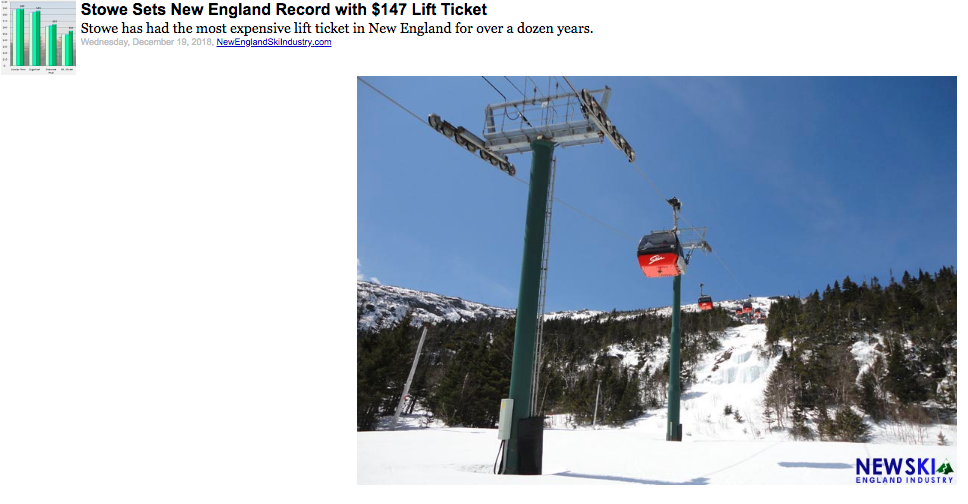
News like the following is evidence that the voice of seniors is needed to get a lot louder in the corporate halls of the ski industry. The headline is from New England Ski Industry.com.

In case you can’t read it the graphic, it says “Stowe Sets New England Record With $147 Lift Ticket.” Read the whole story by clicking here. All of this is designed to push consumers to purchasing Epic season passes which may or may not be a good deal, depending on how often you ski and where you go.

This week’s Short Swings has an excellent summary of the lift ticket/season pass situation in a Ski History article by none other than John Fry, long time snow sports journalist and member of the US Ski and Snowboard Hall of Fame. If you’re a relatively infrequent skier—say five or six times a season—you’re going to be paying the highest ever ticket prices. If you are a frequent senior skier, you’re not going to get the big discounts you used to get at big resorts. Clearly, the multi-resort season pass is focused on the sport’s “best customers”, those who ski frequently and who often head to destination areas, but who represent only about 28% of the total skiers. Pareto Principle, 80-20 rule. Does this strategy make sense?

Favorite Article Of 2018: Free Skiing For Seniors

That is why many of our readers favor “mom and pop” areas, the archetypical ski resort that has low-key facilities, moderate terrain, and reasonable prices. In fact, many of these areas offer free or almost free skiing for seniors. And that is also why our annual listing of resorts that offer free or almost free skiing was the most read article of the year.

If you haven’t seen our directory of 145 ski resorts in the US and Canada that offers free or almost free skiing to seniors, click on the third menu box that reads Free Skiing For Seniors. You may be asked to re-enter your name and email address to access subscriber-only content.

This Week

We have a new resort review for Belleayre Mountain, a two-hour drive from the NY metropolitan area from Bob Nesoff, a veteran snow sport and travel journalist. Did you know Belleayre has a brand new gondola to whisk skiers up the slopes? A gondola in the Catskills!

Janet Franz reports on the basics of layering, based on a presentation by North Face’s Stan Kosmider at the recent Northeast Winter Weather Summit. There are nuances about what is worth wearing and why that we didn’t know. If you’re wearing the same old waffle long underwear that you’ve worn for years, you’ll want to think about how to re-dress.

Our Mystery Glimpse this week is a family affair. Should be quick recognition for those who live and play in a certain part of the country. ‘Nuff said. Check out the clue and read about last week’s amazing snowboard Olympic champ, Shannon Dunn-Downing.

Correspondent and long-ago SKI magazine associate editor Marc Liebman brings an introduction to his new ski test series that offers a history of how it was done ‘way back in the 70s. Remember, that was a time when the number of products proliferated, and readers needed a way to sort through and make decisions. Both Ski and SKIING magazines pioneered ski testing. Marc presents a capsule history.

Finally, Jan Brunvand offers a delightful selection from Sir Arnold Lunn’s The Mountains Of Youth (1925) from the early days of “ski-ing”. Lunn was the British athlete who set the rules for downhill racing, advancing the sport and attracting untold numbers of new skiers.


January is Learn To Ski and Snowboard Month.  Bring a friend and get some discounts. Find out where and how by clicking here.

Happy New Year! Don’t wait, go out there and enjoy the winter. Tell your friends about us.

Remember there are more of us every day and we aren’t going away!


SeniorsSkiing Guide: Belleayre, A World Away…

…But Close Enough To Enjoy The Day.


The new Belleayre Gondola whisks skiers to the summit in comfort. This is part of the continuing upgrading of facilities at the mountain. Credit: Belleayre Mtn.

Folks living in and around major urban centers, with the exception of places such as Denver and Salt Lake City, often find it difficult to plan a ski day within an easy drive. And while the population is graying, more seniors are skiing that ever before. So the hunt for ski areas within easy driving distance becomes a chore.

Belleayre Mountain in Highmount, NY, off New York Throughway Exit 19 and about 40 minutes west of Kingston on a straight run along Rt. 28, neatly fills that bill. About an hour from Albany and two hours more or less from the New York City/North Jersey Metro area, the resort makes a day trip a reality for urbanites.

While there’s no danger of Belleayre ever becoming an Olympic ski venue, its trails offer enough of a challenge for expert and novice skiers alike.

The Catskills resort is owned by New York State’s Olympic Regional Development Authority, a public benefit corporation originally formed to manage the facilities at the 1980 Lake Placid games. Not too long ago in a move to cut expenses, New York dispensed with the Belleayre Gold Lifetime card that granted seniors over 70 the opportunity to ski for free. There was also a Silver Sliders Card for those with little color but silver in their hair, that also offered older skiers courtesies. But according to mountain spokesmen that program was discontinued because of a lack of participation.

Holders of the Gold Card often arrived at Belleayre on midweek days and more often than not were practically the only ones on the slope. Looking at the Gold and Silver cards, it’s difficult to understand why they would have been discontinued for lack of participation. The cost to the state of granting such privilege was microcosmic. 

In view of the fact that they did not detract from the mountain’s bottom line, they could have carried on infinitum. But powers beyond the mountain—read that to say “Albany”—decided that those over 70 years of age should pay to ski. The savings hardly filled the budget gap for Gov. Cuomo.

Onondaga trail looks ready for action. Nice blue! Credit: Belleayre Mtn.

There are discounted program that are currently offered. A septuagenarian will pay only $20 for a daily lift ticket. That’s not bad. If you fall into the 65 to 69 age category, your ski tab is $52 mid week and $60 weekend at the ticket window. If you buy online, that mid week price drops to $32. Belleayre also offers a variety of differently priced passes. A Season Ski3 combo pass good for Belleayre, Gore and Whiteface now costs $999 for those from 65 to 69. A Belleayre only pass was listed as $459 for 70 plus. Season passes would have been way cheaper if purchased in August.

All of that being said, Belleayre is one of the more attractive ski destinations in the Lower Northeast. It’s easy to get to and drive time is more than reasonable. The runs offer enough excitement for expert skiers with a variety of Black Diamonds running from the summit to the lodge. 

The blues are a terrific variety that give skiers an opportunity to condition their legs and move on to a more challenging blue before hitting the steep moguls and runs on the black diamond trails. Green trails are often used to loosen up before hitting  blues or blacks and are both easy enough for true novices and interesting enough for older skiers who simply want to put on skis and enjoy a day on the slopes.

Even on holidays and weekends when the caravans of buses head to the mountain from New York City, North Jersey, Albany and every school district in-between, the lift lines move along at a rapid pace giving you the opportunity to spend more time on the mountain and less time getting there.

The mix of skiers and snowboarders, young and not so young gives Belleayre a great panache. Respect for each other is paramount and it’s not uncommon to see a senior skier stopping to help or offer advice and suggestions to a younger skier who seems to be struggling down hill.

The mountain’s ski/snowboard school offers instructors capable of working with any age group to truly imparting the love of skiing.

For a trail map, click here.

For web cam, click here.

Two hours from New York/New Jersey is Belleayre. That’s doable for a mid-week run where you will find lots of room on the slopes. Credit: Belleayre Mtn.

Weird Weather: Rethinking Ski Clothes For A Fickle Climate

Let’s Review The Basics Of Layering To Deal With Changing Weather.

Sun, fog, snow all in one day. How do you dress for that? Credit: Janet Franz

Here in New England, temperatures swing high and low a lot lately, with 50-degree-plus spikes and heavy rains interposing snow squalls and blizzards. This winter seems hell-bent on convincing the last climate change denier that something weird is going on. Accurately assessing atmospheric conditions for a day on the slopes can challenge even the most seasoned skiers.

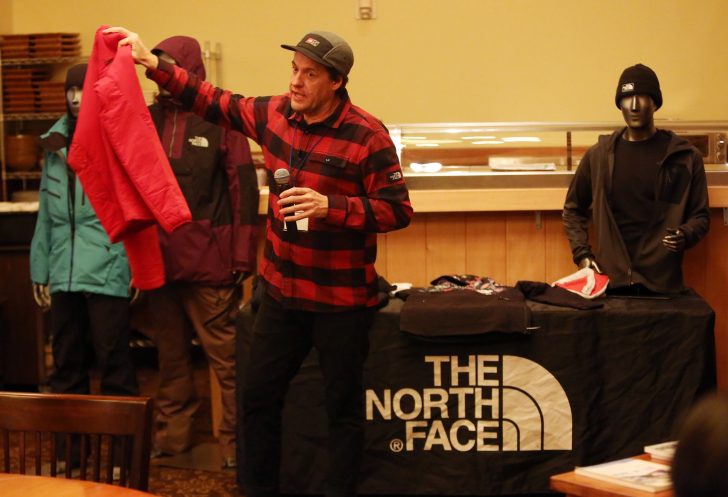
Stan Kosmider, field representative for The North Face, presented on “How to Dress for Cold Temperatures” at the Northeast Weather Summit at Stratton Mountain Resort in December. Credit: Martin Griff

Stan Kosmider, field representative for The North Face, talked with winter sports enthusiasts recently about packing for a multi-day cold weather adventure. “It could be a bluebird day, but the next day it’s pouring rain and icy,” he said. “So pack everything you own and plan on layers. You can remove or add clothes so that you never feel too hot or too cold.”

Three main layers provide for moisture management, heat retention and exterior protection.

Base: The most crucial layer for temperature and moisture control is the first one—your underwear. Skin sweats even when the air is cold, and if the perspiration soaks in to your long johns, the wet clothes will suck the heat out of your body, making you cold.

“The base layer gets moisture off your body and into the atmosphere,” explained Kosmider. This prevents excessive sweating, which can cause additional heat loss, especially when you slow down or stop to rest.

Look for under garments made of lightweight, breathable, wicking fabrics such as a synthetic (usually polyester) fiber, silk or ultra-fine merino wool. Avoid cotton, which absorbs and retains moisture, keeping the skin beneath it clammy and cold. A comfortably snug fit everywhere is essential, because to wick sweat efficiently, your next-to-skin layer must actually touch your skin.

Insulating: The middle layer’s job is to capture and retain body heat that radiates from your body, Kosmider explained. The more efficiently this layer traps heat, the warmer you will feel. Insulated jackets and sweaters come in a range of weights and synthetic and natural insulation choices abound. Down sweaters offer wind resistance but lose insulating efficiency when damp. Synthetic insulations mimic down’s efficiency, with better water resistance. Polyester fleece (not cotton fleece) is a great choice because it stays warm even when damp and dries fast. Fleece fabrics come in a range of plushness and thickness. Microfleece is thin and does a great job of wicking moisture away from the body.

For maximum temperature regulation, insulating clothing should fit close to the body, “snug, not baggy, and you should not have to size down,” Kosmider said. “The fabric should be thick enough to layer and be breathable,” so avoid thick fleece (more than 300 weight) or heavy wool sweaters. Fabrics with insulation-filled bubbles or ripples trap heat well.

Outer: The exterior layer, generally a shell jacket and pants, must do three things: block the wind, keep out rain and snow and allow sweat vapor to escape. Shells range from pricey mountaineering coats to simple wind-resistant jackets, but “even a $600 shell is worthless if you don’t have the right clothes underneath it,” said Kosmider.

Shell insulation types include down (again, warm but not waterproof), synthetic down (such as Primaloft, made from recycled plastic). “Down has the highest weight to warmth ratio, but when it gets wet it’s not warm. So, in this environment, it’s not reliable, and synthetic insulators are a better choice,” Kosmider explained. Shells with zippers and vents allow you to cool off without stripping down.

Shells may be waterproof/breathable for full-on squall conditions with high activity (they wick sweat but keep rain out) or water resistant/breathable for drizzly, breezy conditions and high activity. Avoid waterproof/non-breathable coats unless you plan to stand around in the rain (they keep precipitation out and trap sweat within). Kosmider recommends shells treated with a durable water repellent finish such as Gore-Tex – a rubberized, waterproof, breathable coating that allows water molecules to hold their shape, bead up and rolls off the surface.

Head, Face, Fingers and Toes

It’s not a myth that body heat escapes through the head, hands and feet. If you’re skiing or snowboarding, you should be wearing a helmet, which will keep your head warm. Look for a helmet with vents to let the heat out on warm days. For very cold days, don a skull cap or balaclava made of wicking fabric, because heads sweat, too. Liner socks and liner gloves keep feet and hands dry. Pack extra liners for extra sweaty days. A neck gaiter or face mask keeps the wind off cheeks and nose. Buffs serve the same purpose and work well as a headband to cover up “helmet hair” apres ski.

Product care

Ski clothes can be costly, but well cared for garments will last for many years, and layers will work best if cared for properly. Tiny pores in water-repellent fabrics become clogged with dirt and oils from skin, requiring periodic washing to remove debris and revive their breathability. Gore-Tex makes a special detergent for its products, but any liquid detergent without dyes, scents or fabric softeners will work. Dry garments in the dryer—without fabric softener— to reactivate the waterproof coating.

Down garments should also go into the dryer, without fabric softener. Use low heat, and place tennis balls or toddler’s shoes in the pockets to thrash the garments around so they will fluff up.

You can’t control the weather, but if you bring all your layering choices with you to the slopes, you can easily adapt as conditions change.


Mystery Glimpse: Who’s Flyin’?

Airborne Family Members.

Who is airborne? Can you guess where?  Hint: We can’t tell you the name of the museum that contributed this picture. Know why?

Last Week

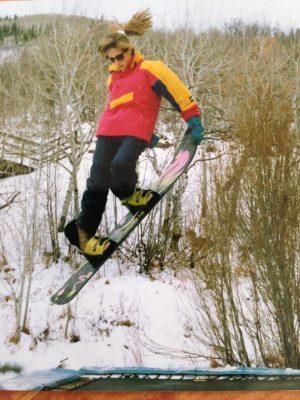
Only one reader got this one.  The enthusiastic boarder is Shannon Dunn-Downing, the first U.S. woman to win an Olympic snowboard medal with a halfpipe bronze in 1998.
Shannon was the first woman to land several difficult halfpipe tricks in competition, including a frontside 540 in 1991, backside 540 in 1994, Mctwist in 1994, frontside 720 in 1995, and frontside rodeo 720 in 2001. She is also noted for working behind the scenes on the development women’s products for companies such as Burton Snowboards and Velvet Goggles.

In the mid-2000s, Shannon retired from professional snowboarding to focus on raising her family. She lives in Southern California and tries to surf whenever she can.

In 2016, the Colorado Snowsports Hall of Fame and Museum produced a tribute video to Shannon, highlighting her early days and Olympic success.  Check it out below.


Sir Arnold Lunn

In Praise Of Ski-ing

Sir Arnold Lunn wrote the rules for slalom and downhill. Credit: JungfrauStories

When this passage (below) from The Mountains of Youth (1925) by Arnold Lunn was published, “skiing” still had a hyphen and “ski” was both the singular and plural form. Lunn (1888-1974) invented downhill and slalom racing, introducing them when the sport was mostly jumping and nordic racing.

Lunn was knighted in 1952 “. . . for services to British skiing.” He was a major figure in promoting ski sports in the Olympic games. As is obvious in this selection, he was a competitive skier who loved speed and took daring chances.

*   *   *   *   *   *   *   *

Arnold Lunn on his first ascent of the Eiger 1924. Credit: Walter Amstutz

The worst and best moments in ski-ing are often separated only by seconds. You are standing at the top of some fierce slope which you have vowed to take straight. You look at the line and observe with sick disgust that the change of gradient is abrupt at the bottom, and that the slight bump half-way down will probably send you into the air. A kind friend says: “I shouldn’t take that straight,” and your enemy remarks: “Oh, it’s safe enough. Jones took it straight yesterday.”And then suddenly, before you quite realize what has happened you are off. The wind rises into a tempest and sucks the breath out of your body A lonely fir swings past like a telegraph pole seen from an express train Your knees are as wax, and your stomach appears to have been left behind at the top. You fight against the tendency of your ski to run apart—the inevitable sequel to undiluted funk—by locking your knees and turning your ski on to their inside edges. And now comes the supreme crisis—the run-out where the gradient suddenly changes. You throw your weight forward, and mutter “Hold it, hold it.” You clench your teeth, and make strange noises as the shock drives up through your legs. Your ski quiver with the strain . . . and you realize to your intense astonishment that you have not fallen.

The pace relaxes. The hurricane dies away. You are drunk with the wine of speed, and you marvel at the faint heart which so nearly refused the challenge. You glory in the sense of control which you have recaptured over your ski no longer untamed demons hurrying you through space, but the most docile of slaves. You are playing with gravity You are master of the snow. You can make it yield like water or resist like steel. Suddenly you decide to stop. A rapid Telemark, the snow sprays upwards, and the “slabberie snow broth,” to quote an old Elizabethan,”has relented and melted about your heeles.”

A laugh floats upwards, and you much enjoy telling your enemy that his diagnosis was correct, and that he can safely venture to take it straight. And, if he falls, your triumph is complete

*   *   *   *   *   *   *

Lunn’s classical education is apparent in his allusion to “an old Elizabethan.” The “slabberie snow broth” quotation, reports the Oxford English Dictionary, comes from the first English translation (1600) of Livy’s Roman History. Shakespeare mentions “snow-broth”—mixed snow and water—once, with reference to the blood in the veins of a villain. (Measure for Measure, I, iv, 57).


British athlete Sir Arthur Lunn helped create a sport out of a past time.

This Week In SeniorsSkiing.com (Dec. 21)

Last Minute Gift, Tell-Tale Hoar Frost, Jim Gaddis Profile, Mystery Boarder, Seasons Greetings.

Yikes, here come the Santas! Credit: EasternSlopes.com

If you’re caught empty-handed and about to head to another senior ski friend’s party, consider ordering and instantly downloading a copy of Ray Conrad’s classic collection of ski songs, The Cotton-Pickin’ Lift Tower and Other Ski Songs.

Ray wrote and recorded these songs ‘way back in the 60s. If you recall, the revival of folk music and growing interest in skiing happened at the same time.  The resulting mash up of ski songs is actually funny, nostalgic, kind of corny, and fun to blast out on the car stereo as you (or the giftee) heads to ski country.  Click below for a sample.

You can order the 16-song CD as an instant download from CDBaby/RayConrad for $20.

This Week

We are reprising a timely article from correspondent Harriet Wallis who asks “Should you take an early season lesson?”One of our surveys revealed that about one-third of our readership does in fact take an early season lesson for a variety of reasons, like having to adapt to changing physical capabilities. Click here for her story.

This week’s Mystery Glimpse is a woman snowboarder who…well, you tell us.  The function of last week’s thingy is revealed.  No, it wasn’t an inclinometer, at least according to the Colorado Snowsports Museum who supplied the pic.
One of our readers, Hiller Hardie, from Pittsburgh, responded to our request for contributions by sending in an interesting article on Hoar Frost, the crystalline formation that appears on the ground or in woodland floors after a humid, cold night. Turns out, hoar frost is used by guides and ski patrollers to assess the risk of avalanche in back country.  Find out how by clicking here.

Co-Publisher Jon Weisberg writes about the innovative Apex boot which provides both comfort and support for senior skiers who dread the aches and pains of “regular” ski boots.  When we first started SeniorsSkiing.com, we noticed an article about Olympic star Billy (the) Kidd who said that he wore the boots as a way to adapt to his more senior style of skiing.  These boots were designed by Denny Hanson who revolutionized the industry in the early 70s with his Hanson rear-entry boot that many people regard as a major advancement in boot design. Readers of SeniorsSkiing.com can get a 20 percent discount on Apex boots until Dec. 31.  Jon will tell you all about it by clicking here. 

Finally, Harriet is back with a tribute to a SnowSports leader, Jim Gaddis, who made his mark as a fundraiser for a number of important snow sports institutions. 

Thanks very much for reading SeniorsSkiing.com. Tell your friends and remember, there are more of us every day, and we aren’t going away!

SeniorsSkiing.com is taking a break during the Christmas week. See you in 2019! 

Drive safely this week!

Looking At Surface Hoar Frost

A Tell-Tale Sign To Watch For In Avalanche Country.

As the weather in the Northeast has gradually become colder over the last few weeks, I have noticed the soil in my garden develops into crystalized patterns such as those in the picture below:

Crystalline shoots are a sign of hoar frost. Credit: Hiller Hardie

Of course, as the weather starts to turn cooler, I naturally start to think about skiing. As these thoughts materialized recently, I realized that this crystallization follows the same process as that of surface hoar in the snow pack. Surface hoar presents, on a smaller scale than these pictures, in a very similar manner. It develops overnight when the following weather conditions exist:

  • Clear sky
  • No direct sunshine, or very weak sun
  • Calm or light winds
  • Open slope exposed to a clear sky (trees or clouds can radiate their own heat and disrupt the process)
  • Humid air

If you have been fortunate enough to participate in guided backcountry skiing, including heli or snow catting,you may have witnessed the guides digging a pit in to the snow pack to evaluate its stability. You may also have seen ski patrollers doing this, notably at Western ski areas. Evidence of surface hoar in the underlying layers is one of the things they are looking for. It is also cause for alarm as it generally represents a very weak layer at high risk of releasing. (Another feature they may note, with alarm, is a layer of “ball bearing” like snow similar to hail. It looks like very small marbles and is a hazard as the overlying snow pack could literally roll right off of the “ball bearings’ forming a slide).

At any rate, the fact that this crystallization is occurring in my garden is good news for me as it means the weather is cooler and ski season is upon us. Here’s to a good winter!

Mystery Glimpse: Woman Snow Boarder Winner

Who Is She? What Makes Her Special?

Credit: Colorado Snowsports Museum

A competitor, a snowboarder (obviously), a woman.  See if you can put these clues together. Once again, thanks to the Colorado Snowsport Museum in Vail, CO., for this contribution.  Put your guess in comments below.

Last Week

Credit: Colorado Snowsports Museum

This artifact is a United States Forest Service avalanche control gun sight. It was used by Dick Stillman in 1955 at Berthoud Pass. During World War II, Dick served in the 10th Mountain Division, trained at Camp Hale, and saw action in Italy. After service, he started a 30-year career with the Forest Service as part of the U.S. Department of Agriculture. He established and maintained the High Alpine Avalanche Research Station at Berthoud Pass, Colorado from 1950 to 1963. At that time, the station was the highest in the world conducting avalanche research at 11,315 feet


Ski Champion Jim Gaddis: When Life Got Tough, He Surged Ahead

Advice Jim Followed: When You Come To A Fork In The Road, Take It.

Ski buddies Alan Engen (l) and Jim Gaddis at Alta c. 2001. Credit: Alan Engen Collection

From the time Jim was a youngster, his single goal was to be an Olympic ski racer. He lived for that. He trained for that. But when he was shut out of the Olympics, it didn’t stop him. He generated ways to help others in the sport he loves.

His accomplishments include being an elite Intermountain ski racer, an inspiring coach, a great salesman, an imaginative program starter, a premier fundraiser — and he’s still moving on. Just try to keep up with him.

Yankee baseball legend Yogi Berra had a saying for it: “When you come to a fork in the road, take it.” Every time Jim came to a fork, he took action, reinvented himself, and moved forward. It’s a lesson we all can learn.

From Sears Skis To Winning National Racer

As a youngster Jim sledded on a golf course and saw someone using strange equipment: skis. He asked for skis for Christmas, and his parents bought him a complete set: skis, strap bindings and boots from the Sears catalog for $5.

He practiced at Alta and Brighton when his older brothers could give him a ride there. And he strived to ski like his good friend and acclaimed ski champion Alan Engen, son of famed Alf Engen.

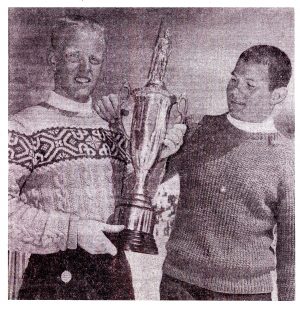
Alan Engen (l) and Jim Gaddis hold the Intermountain Ski Association Alpine Combined trophy. Each won the championship 3 times. c. 1959. Credit: Alan Engen Collection

Early on, he entered his first race on his $5 skis. It was a slalom-type course on the steep face of Collins at Alta. “I don’t know how many times I fell, but I made it down in about 4 minutes,” he said. The winning time was 40 seconds! Defeat spurred him on.

His skills and determination grew, and he entered — and won — national races. He won the National Giant Slalom Championship. And three times he won the NCAA Alpine Championship and three times the famed Snow Cup. But three was not his lucky number. His dreams were derailed when he broke his legs not once, but three times in race accidents, Still nothing stopped him.

Finally he was on target for the 1964 Olympics, and he qualified for it. But his dream was crushed. He was shut out of the elite team that included Jimmie Heuga, Buddy Warner, Billy Marolt and Billy Kidd, with Bob Beattie as the coach.

“It was very hard to deal with,” he said. “It was my whole life’s ambition to be an Olympic racer — and maybe win.” At that point, he didn’t even have a job because he was totally focused on being an Olympic racer.

It was a fork in the road. He took action, reinvented himself and surged ahead.

Metamorphosis

Using his degree in banking and finance, he became a stock broker. But his passion was skiing, so he created the Gaddis Training Organization to coach elite and youth racers. The program grew to 110 racers with seven coaches, and he ran it for 12 years. It became Park City Mountain Resort’s ski team.

His Olympic dream had a legacy. But he didn’t stop there.

Another fork

Jim discovered he had a natural ability to promote and sell. When the University of Utah had trouble raising funds to expand its stadium, Jim took the challenge and quickly sold 40 seats.

From that beginning, his fund raising expertise expanded. His accomplishments read like a Who’s Who of skiing.

Energetic and active Jim Gaddis today. Credit: Harriet Wallis

He spearheaded fundraising for many ski organizations, and founded and chaired others including: the Youth Winter Sports Alliance which gets kids involved in winter sports; the National Ability Center, teaching skiing to handicapped; the Stein Eriksen Opportunity Endowment, which raised $2 million in two years to help local athletes with equipment and travel expenses; and the U.S. Ski and Snowboard Foundation Ski Ball, raising funds for the U.S. Ski and Snowboard teams.

He also chaired the Jimmie Huega Express, which raised $1 million annually for the Huega Multiple Sclerosis center; was instrumental in fund raising for construction of the Alf Engen Ski Museum, which preserves the Intermountain history of skiing; and helped found and raise funds for the Utah Ski Archives, the country’s largest ski research repository of historic material. The Archives collection currently contains 500,000 images, 250 manuscripts and 6,000 audio,video and films, and it’s open to the public.

Just recently, Jim once again raised funds for his Alma Mater. He chaired the University of Utah’s campaign that raised $2.5 million and built a dedicated training facility for the University’s winning ski team.

His Olympic dream lives on in unique ways. He really is a gold medal champion.

Jim’s life demonstrates his philosophy: “Always do a good job. Do it right, and do it honestly. Don’t let anything stop you.”

Today, energetic and active, he takes time from initiating programs and raising funds to ski with a group of friends at Deer Valley and Park City Mountain Resort.

To read more from Harriet click here for her stories on SkiUtah.