Tag Archive for: 50+

This Week In SeniorsSkiing.com (Oct. 26)

Halloween Skiing, Nor’Easter Brings New England Snow, Contribute To SeniorsSkiing.com, Stein’s Studebaker, Ultimate Ski Quiz.

Boo. Credit: SkiTheWorld.com

For the first time in a while, there will be skiing on Halloween. Resorts are opening in BC, Colorado, Vermont, Maine, and more snow is on the way this week in New England. Here’s the forecast for this Wednesday 10/25. Get your costume ready.

Credit: NECN

We would love to see your pictures from your Halloween Skiing Weekend if you are lucky enough to head out. Send your pictures to info@seniorsskiing.com with location, your name, and worthy details, and we’ll publish it next week.  Thanks!

We Also Want To Publish YOU In SeniorsSkiing.com

We want our readers to share with our readers.

After all, you’ve been around winter sports for a while.  You had funny, dramatic, poignant, scary, etc. experiences in snow country. You’ve run across characters straight out of central casting: living ski legends, local heroes, magnificent employees of resorts, entrepreneurs, long-time ski patrollers, and the like.  You also know what makes for a good product or piece of gear for seniors: items that are convenient, add to safety, and/or are cool. You know about places we all should know about. You’ve been reading books about snow sports and related topics. You know a restaurant that is special, an inn we would love, a ski shop that has gone ‘way beyond your expectations. You have a collection of pictures from the old days you’d love to share.  You have recovered from an injury using a conditioning routine that was effective. Tell us. Advise us. Inform us.

We’d love to hear more stories from our readers.

If you are interested in contributing, write to mike@seniorsskiing.com, and we’ll give you the specs. Look at our past stories in our many different categories and check out the style and length (500-600 words) of our typical articles. If you are a photographer, send your pictures and videos. We know there are many, many readers who have stories to tell.  So, tell us.

This Week

Correspondent Jan Brunvand reports on his search for Stein Eriksen’s Studebaker. Yes, you read that correctly. Find out where the path led him.

Also Don Burch as composed a tricky, funny quiz of ski terms that will give you a chuckle or two.  Perhaps a challenge. Just fun stuff.

Ski Shows

Time to get thinking about heading to the shows coming to Boston, Nov. 8-11, and Denver, Nov. 16-18.  If you click the Ski and Snowboard Show ad at the top of our page, you can get a discount from the admission. Just use the promo code: SENIOR. For many, collecting the brochures and swag from the many resorts and vendors at the shows really gets the mind ready for the season.

Listing Of Free Skiing Coming Very Soon

We have scrubbed and re-scrubbed our listing of where seniors can ski for free or almost free for both US and Canadian resorts. We are going through the final editing process and putting into shape for publishing. Stand by.

If we missed any resorts that offer free or almost free skiing to seniors, we hope you will let us know. This year, several new listings were referred by our readers.

Remember, dear readers, there are more of us every day, and we aren’t going away!

If you’re in NYC, come to our fifth anniversary birthday bash in Manhattan.



My Search For Stein’s Studebaker

Having A Studebaker In Common With A Legend Prompts A Sherlockian Pursuit.

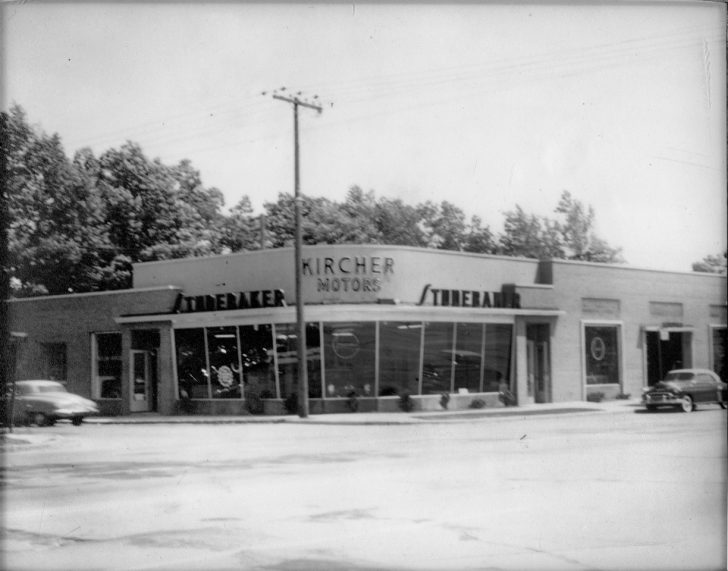
The Kircher Studebaker dealership in Detroit in the early 1950s. The car on the left is clearly a ’50 or ’51 bullet nose model, even though only the back of the car shows here. Those are the only years this model was made.

Stein Eriksen bought a new Studebaker in April 1953. That much is certain. I’d like to know which model Stein bought, what happened to it, and if there is a photo of Stein with the car.

Why? Because my father-in-law bought a Studebaker that same spring, and my wife Judy and I have had it restored. Is it possible that we own a close match to Stein’s Studebaker?

Stein bought his in Detroit from the dealership owned by Everett Kircher, founder of Michigan’s Boyne Mountain ski resort. Judy’s dad bought his from a dealer in Benton Harbor on the other side of the state. Studebakers, seniors may recall, were manufactured in South Bend, Indiana. The company folded in 1966.

Car salesman Don Thomas, also a weekend ski patroller at Boyne, met Stein through mutual Norwegian friends when he attended the 1952 Oslo Winter Olympics. When Stein came through Detroit en route from Sun Valley where he had been training. Thomas invited him to dinner and introduced him to his boss.

Everett Kircher offered Stein a job at Boyne, but Stein wanted to compete in the 1954 FIS World Championships before turning pro. He took the job the next year and spent two seasons at Boyne before moving on, ending up at Deer Valley. But he did buy that Studebaker in 1953.

Various sources describe the car as a “sports car,” a “sports coupe“ and a “graceful 1953 Studebaker coupe.” These ’53’s were a sleek breakthrough concept by the Raymond Loewy design team at Studebaker, coming between the “bullet nose” models and the later Hawk series.

A 1953 model might be the hardtop “Starliner” version or the “Starlight” coupe (our car) which has a pillar supporting the roof. Either version came as either a 6-cylinder “Champion” or a V8 “Commander.”

In an interview, Don Thomas described the car as a “five-passenger coupe,” which could fit either model, although it seems likely a salesman would refer to a hardtop by its proper term.

Once at Deer Valley, I was able to ask Stein about his Studebaker. I was in the singles line at the Northside quad when Stein approached the lift with a couple of celebrity guests. He gestured for me to join them.

I had met Stein a couple of times before, so I used the typical Norwegian greeting for acquaintances, “Goddag, og takk for sist.” Then I asked him about his Studebaker. “Ja,” said Stein, “that was the one that looked like an Italian sports car. I took it with me to Oslo and sold it.”

That’s all I learned straight from the source. But Stein remarked as we got off the lift, “Brunvand, you should speak better Norwegian!”

Since then. I have queried Stein’s son Bjorn, Kircher’s daughter-in-law Molly Clark Kircher, and a Norwegian Studebaker club member, hoping to unearth more information.

The closest I’ve come is finding a 1950’s-era photo of Kircher Motors in the Boyne archive at the Bentley Historical Library in Ann Arbor. Oh, how I wish someone had posed Stein there with his new car for another picture.

Likely Stein’s Studebaker was eventually junked, but it’s barely possible that someone somewhere has the car, perhaps unaware of its past connection with skiing royalty. I plan to keep on searching.

Correspondent Jan Brunvand with his 1953 Studebaker Starlight coupe. In the background, early snow on the Wasatch mountains. Credit: Jan Brunvand

“Ultimate” Quiz Of Ski Terms

You Think You’ve Been Around Snow Sports For A While, Eh? See How Many You Get Right.

  1. Milk Run

a. Ski trail with lots of slush

b. Off-season mountain bike race on ski trails

c. Trail full of slow skiers

d. First run of the day


2. Chatter

a. Noisy lodge

b. Excessive talking on chairlift

c. Squeaky noises from a lift

d. Excessive ski vibration

3. Death Cookies

a. Double stuffed Oreos

b. Cookie-sized ice chunks on a trail

c. Day-old cookies

d. Deep fried cookies

4. Planker

a. Skier who is stays in one spot oblivious that the lift line is moving

b. Someone who falls and can’t get up

c. A skier

d. Someone struggling to get into their bindings

5. Lunch Tray

a. Oversized plate of food

b. Snowboard

c. Device for carrying food in a cafeteria

d. Chairlift chair

6. Blue Run

a. An intermediate trail

b. A run so bad it’s depressing

c. Trail with a stream of melting snow

d. Trail with active snow making

  1. Balaclava

a. Greek desert

b. Tyrolean hat

c. Facemask

d. Dangerous intersecting trails


8. Six Pack

a. Chairlift seating six

b. Parents skiing with young children

c. Group of wild snowboarders. As in, “Look out, here comes a six pack.”

d. Wannabe skier’s lunch

9. Fart Bag

a. Senior skier

b. One piece ski suit

c. Smelly bubble chair

d. Porta Potty at base of remote lift

10. Magic Carpet

a. Easy slope

b. Slang for marijuana

c. Untracked powder

d. Conveyor belt-type lift

Answers:

1d, 2d, 3b, 4c, 5b, 6a, 7c, 8a, 9b, 10d

Do you have some favorite ski slang? Share it with us in the comments section.

This Week In SeniorsSkiing.com (Oct. 19)

Snow, Snow, Snow!

So it begins. And it’s only mid-October. Who’s made a first run? Tell us about it!

From East To West

Sugarbush: A dusting. Credit: Timeline Photos

Killington opens for season pass holders on Oct. 19. Credit: Aspen East


Mt. Washington: 1-inch. Credit: NBC10 Boston


Vail Pass. Credit: Mary Ellen Roth


Wolf Creek, CO, 30-inch base, open on weekends. Credit: Wolf Creek

Arapahoe Basin: Open for skiing seven days a week. Credit: SkiMag.com


This Week

Co-Publisher Jon Weisberg describes two simple tools that make putting on and taking off ski boots less of a wrestling match. Terrific gift ideas, by the way.

We are also announcing our list of 2017-18 Trail Masters, senior skiers who have skied, xc’ed, snow-shoed a greater number (or equal number) of days than their age. This year, we find almost 20 percent of those on the list were also on the 2016-17 list of Trail Masters.  We sent each Trail Master a SeniorsSkiing.com “Live2Ski” patch and a couple of our coveted SeniorsSkiing.com stickers.

We hear from correspondent Pat McCloskey on picking the right underfoot ski width for the conditions you find yourself in most frequently. He also advises you consider a multi-ski width inventory of you plan to diversify where you ski. Interesting.

Finally, Yvette Cardozo continues her series on other snow activities with a visit to a dog-sledding outfitter near Sun Peak Resort in British Columbia. If you like dogs and snow, this is a natural combination. We know that “mushers,” trainers and owners of dog teams, are an especially hardy group, devoted to their animals and lovers of winter outdoors.

Look for our listing of resorts in North America where seniors can ski for free (or almost free) coming up soon.

Interested In Writing For SeniorsSkiing.com?

While some of our regular contributors are ski journalists, most are interested and experienced readers who have an interesting story to tell. For examples of stories our readers like, just look at our inventory.  We have over 900 stories of different kinds, so there are a lot of examples. Nostalgia, Resort Reviews, equipment recommendations, history, meeting famous people, you name it, we’d be interested.

If you’d like to write a story for SeniorsSkiing.com, drop a note to mike@seniorsskiing.com. You get to see your name in “print”, share with family and friends, and we’ll send you a SeniorsSkiing.com “Live2Ski” patch and some stickers.


Ski Shows Coming Up

Ski & Snowboard Expos are coming to Boston (Nov. 8-11) and Denver (Nov. 16-18). As a SeniorsSkiing.com reader, you can get a discount on admission by clicking the banner ad at the top right of this page.

And remember, dear readers, there are more of us every day, and we aren’t going away.

Dog-Sledding Is Another Snow Activity: Don’t Say Mush!

Other Things To Do In Winter For Seniors (Part 2): On You Huskies.

Dog Sled rides with Mountain Man Adventures. Credit: Sun Peaks Resort.

Ok, nobody says mush. Nobody, outside of maybe movies, has EVER said mush, though the folks who drive sleds are often called mushers. Mostly, people who run dogsleds just say, “Go!”

And the dogs aren’t those black and white Siberian Huskies people expect. Your average sled dog is something mushers call Alaskan huskies. They are lean and small with long legs and bred to run. In the case of Chris Schwanke’s pups at Mountain Man Adventures at Sun Peaks Resort, BC, a combo of greyhound or German short hair pointer and … well, who knows what.

“People see some of the dogs with their tails tucked between their legs and think they’re unhappy but that’s what greyhounds do,” said Chris. “So that’s how you tell them apart … the greyhound mixes tuck their tails. The others curl their tails up.”

While these dogs are not an official breed, over the years, the “Alaskan husky” has been recognized by anyone who runs dog teams.

At the end of a tour, guests get to pet the adult dogs and puppies. Credit: Yvette Cardozo

My friend, Nancy Slye and I arrived and first got to pet the dogs and say hello. Chris encourages this. He wants his dogs to be friendly.

Then we loaded into sleds, normally two people in a sled with a guide on back. The ride is 10 km (a bit over six miles) and lasts about 90 minutes.

And we were off—through the woods on narrow trails crowded with trees, along an open lake, across a snow covered golf course, then back into the woods. It can be a semi-wild ride, as snow-caked trees whiz by from doggie level, hardly two feet off the ground.

But what made this trip different from those I’ve done in the past was the chance to run the sled ourselves. Yow!

You stand on the runners behind the sled, which are wider set than you expect if you are a skier. And, guide Destiny said, you just say “go” to start, “easy” to slow and “whoa” to stop.

“Bend your knees a bit and stay flexible,” she added.

It’s kind of like skiing. Or riding a snowmobile. Or a dirt bike. It’s go with the flow.

And, before we knew it, we were back at the start, among the dog kennels and other pups.

Now came more fun. As a treat after a run, the dogs get chunks of meat and fat to fuel them and keep them warm. You toss the chunk in the air and the dog jumps, mouth wide open, teeth flashing in the sunlight. It makes for a killer photograph.

Finally, to wrap up, we went into the puppy pen, where five-month-old Pirate, Sailor, and Captain were waiting to have their ears scratched. It’s not only fun, it helps socialize the dogs from an early age.

Guests are given a chance to drive the sled during the tour. Most sled dogs are NOT Siberian Huskies but, a crossbreed called Alaskan Husky. Credit: Yvette Cardozo

In Your Quiver

Do You Know What Underfoot Measurement Is Best For Your Kind Of Skiing?

Pat’s ski collection from narrow to wide underfoot dimensions. Credit: Pat McCloskey

One of the hardest questions a seasoned skier has to answer is when someone new to skiing or maybe even a friend says, “So what kind of ski should I be on this year?”  Really a tough question to answer without delving into particulars like, athleticism, age, what kind of snow, what trails do you like, front side, back side?  There are so many choices today based on so many factors.  So let me try to make this as simple as possible for the new skier as well as the veteran.

Most of us veterans are using skis that are significantly shorter than the ones we used to use.  In the old days, skis anywhere from a 185 cm to 210 cm in length were used with little or no side cut resulting in significant vertical and rotational movement to execute a turn.  Today, the skis are much shorter, generally ranging from 152 to 185 cm.  The shape of the skis make it easier to turn—wider at the tip and tail and narrower under foot— which, when placed on edge and pressure is applied, results in an effortless turn.   We don’t have to work those 200 plus cm skis like the old days.  But what about the nuances of width under foot?  Where you want to ski and what kind of snow conditions will determine what width underfoot measurement is good. And that’s measured in millimeters and not centimeters like ski length.

Typically a front side ski to be used on groomers or hard pack will range under 85 mm width under foot, in most cases. Race skis have a slimmer profile but for the most part, anything under 85 mm is considered a “front side” ski and encourages a carved turn on groomed or hard pack snow.  There is a lot of interest these days in these profiles because of the lack of early and late snow due to global warming.  Snowmaking is essential, and when these man-made, groomed, hard pack conditions exist, a frontside ski is optimal.

Conversely, anything over 88 mm under foot  is moving into the all mountain range and can be used for most terrain.  Also, 95 mm and above are a must to include in your quiver if you ski out west and have varying conditions.  When you get over 100 mm, you are getting into the powder or loose snow area. Typically, 107mm and up is considered “big mountain” or powder skis.  These skis can perform on groomed snow but the float is optimal for loose snow or powder in the wider under foot measurements.

But what about rocker, early rise, etc?  We all have seen the guy who has rockered skis (tips and tails with an upturn) making turns on hard pack with minimal contact with the snow underfoot.  We don’t want to be that guy.  Wrong tool for the wrong conditions.  Rockers are used to facilitate the float needed to ski powder or loose snow.  You need surface area to ride the groomers, and rockers are not optimal.  However, the early rise tips can facilitate a turn in powder as well as make entry into a groomed turn better.  Personally, I see the advantage of an early rise ski for most skiing conditions.  Early rise referring to a slight upturn to the tip of the ski.

So, it probably makes sense for most skiers to have a quiver of skis for different conditions.  A new skier should really think about what conditions he or she will ski and get one pair based on those conditions.  A good ski shop can help in the selection. Veterans should have that front side ski, an all-mountain ski, and a loose snow or powder ski.  I have a pair of 107 under foot for loose or powder, but my 88 mm skis under foot are ideal in a lot of conditions. I personally think that measurement (88mm) is the optimal one for most conditions.

Be honest with yourself when you are selecting skis.  Think about your physical condition, where you like to ski, and the snow conditions that are optimal for you.  Skiing should be fun and not be like  work. The new equipment makes that happen if you are careful to select the right tools for the quiver.

This Week In SeniorsSkiing.com (Oct. 5)

Big BC Snow Beats Record, Colorado Senior Discounts, Conditioning Cautions, Ski Shows Coming.

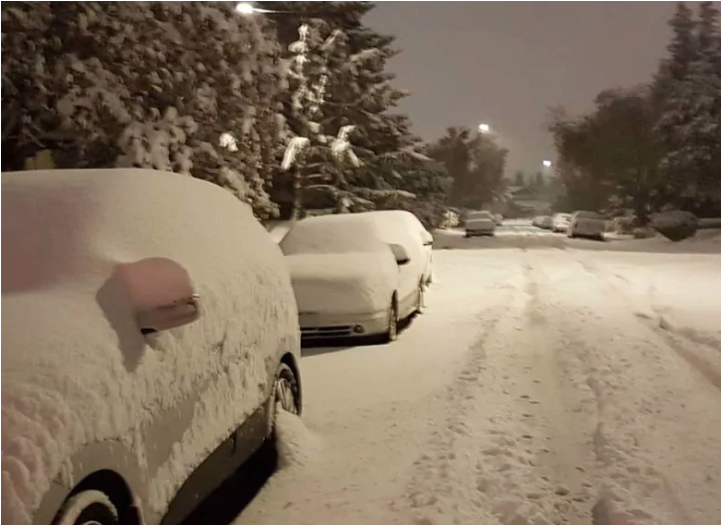
Oct. 2 25 cm (10 in.) snow wallops Calgary, breaking record with more expected.

No doubt about it, snow is making a statement in the Northwest and Canadian Rockies in particular. Just this week, Calgary experienced a record-breaking snowfall, catching municipal snow removers a bit flat footed. Equipment had to be imported from local towns and cities to help clear the streets. But, the pictures of snow on the mountains are certainly encouraging for those interested in starting the snow season. Check out the Calgary snow fall story by clicking here. 

Free Ski Listing Coming Soon.

Incidentally, SeniorsSkiing.com’s annual listing of resorts where seniors can ski for free (or almost free) in galley form, as the expression goes. This year, we have included several dozen Canadian resorts that provide low or no cost tickets for seniors. Meanwhile, if you can’t wait, the 2017-18 listing is still available under Subscriber-Only Content.  You’ll have to re-enter your name and email to get to it. Click on the menu box at the top of the page.

While some resorts offer free (or almost free) skiing for seniors, others give a big discount. For example, we’ve learned A-Basin in Colorado offers 70+ seniors a $105 unrestricted season pass and a $40 day ticket. Aspen has season pass for 70+ for $514, not bad considering an adult season pass goes for $2,284 at the top end. At Cooper, 60-69 pay $279, 70+ pay $149, 80+ are free. Not to be confused with Cooper, Copper Mountain offers a $389 pass for 70+. You can find other senior discounts and free ski offers at Colorado resorts by clicking here.

Conditioning Starts Now. Right?

Sure, you can do the gym thing. It’s not to late to hit the trails, too.

If you haven’t started getting into shape yet, please consider using the next couple of months as your last chance to buff up before your first run. A couple of years ago, one of our friends decided to go skiing in the early winter without any kind of preparation at all.  Needless to say, she had a wicked fall on her second or third run, pulled muscles, and cancelled the rest of her season.

The reality is that we can’t just go out and do it like we used to. Every year adds a new challenge.  If you are wise, you will pay attention to this. Please people, don’t get hurt.  This week, correspondent Pat McCloskey tells us about some alternatives to gym workouts that you can do to harden those legs, shoulders, and abs. 

In addition, Harriet Wallis offers us a Woman’s Guide To Sports As We Grow Older. Despite the march of time, Harriet encourages us to adapt and keep going.  There’s always a way. Just do it.

Ski Shows Coming.

For some, going to the fall ski shows is the official start of ski season. In Boston, the Ski and Snowboard Expo is on Nov. 8-11, in Denver, it’s on Nov. 16-18. Notice the banner ad at the top of this page? If you click through, you can get your tickets at a discount when you enter SENIOR in your order.

The ski show is always a fun afternoon. Collect the swag from the resorts, check out the deals, retail sales, demos, vendors of all kinds, and enjoy saying hello to your pals in the snow sport community.  We will be wandering around the Boston show this year.  Say hello, and we’ll give you a SeniorsSkiing.com sticker.

Reminder: NYC Gathering Nov. 14

If you’re around New York on Wednesday evening looking for a diversion and potentially winning some co0l raffle items, drop by our SeniorsSkiing.com Gathering.  Details below.

Remember, dear readers, there are more of us every day, and we aren’t going away.

Can You Ski Yourself Into Shape?

There Are Other, Fun Ways To Get Ready Besides Hitting The Gym.

Sure, you can do the gym thing. It’s not too late to hit the trails, too.

One of the myths I hear from people at the beginning of the ski season is that they can “ski themselves into shape.”  They have not really done any preparation for the ski season and feel that they just have to start skiing, and their ski legs will eventually come back.  If I ever heard fake news, this is it.  Skiing is a dynamic sport and in order to effectively execute a turn, your legs need to be in good shape before the first turn of the season.  I can’t tell you how many times I have see folks whose “legs are killing them” after the first and second day of a ski trip.  They ski defensively, because they are not in good shape and all the money that they have spent on a ski trip is for naught. That’s because they failed to get in shape before they got on that airplane.  The same is true for local skiers who make their way to their local ski area and have the same experience.

So why not start thinking about this now if you have not done so?  There are a lot of articles popping up in the ski periodicals and web sites about exercises that you can do in the gym.  But how many of us really want to spend time in the gym day in and day out to prepare for ski season?  How many times can we pretend to sit in an invisible chair with our backs to the wall to strengthen our legs?  On the other hand, there are outdoor activities that can be engaged to get the legs in shape but are also fun and allow us to be in the outdoors which is where we all want to be in the first place.

With the flaming leaves coming in to view, the trails in our mountains and parks are available for mountain biking, hiking, and trail running.  Hiking and trail running uphill prepare the legs for sure as well as providing an excellent outdoor fresh air activity.  Mountain biking ramps that up a bit by strengthening the legs on climbs, as well as simulating skiing skills like looking ahead and picking a path through varied terrain.

Lots of folks mountain bike, hike, and run during the summer season when the weather is cooperative, but when the time change looms—Nov. 4 this year, by the way—and the days get shorter, the motivation for these activities starts to wane.  If you want to be prepared for ski season, I would strongly suggest that you continue these activities as long as you can during the fall and into the winter if conditions allow.

A good friend of mine says there is no such thing as bad weather, just bad clothing choices. So why not buy a good Gore-Tex suit for running or hiking and also one to ride in the winter if you can do it.  Night riding is a favorite of mine, and there are a lot of options for rechargeable light and battery systems. I have used a lot of expensive lighting  options in the past but with the advance of lighting technology, you can now purchase systems for a fraction of the cost of the traditional main stream lighting systems.  Cree Mountain Bike Lights found on Amazon are an excellent choice for around $32.00 and provide three mode LED lighting with a rechargeable battery that can provide up to two hours of excellent light on high mode.  I use these lights on my handlebar with another one on my helmet.  I store the battery for the helmet light in my hydration pack and also the battery for the handlebar light can be attached to the top tube of the mountain bike.  I also purchase spare batteries and store them in my pack in the event that there are any issues with the primary battery.

It is not too late to get back on that bike, lace up the trail running shoes or hiking boots, and get moving.  Your legs will appreciate your diligence now in the early fall season, and you will enjoy your turns and ski outings much better if you take the time to be in shape when the first flakes start to fly in the mountains.

High tech bike lights allow you to ride into the evening hours when the clock changes back to Standard Time. Credit: MountainRides.com


A Woman’s Guide To Sports As We Grow Older

Even Though You’re Not A Spring Chicken, You Can Still Do The Sports You Love. Don’t Let Your Past Hold You Back.

Harriet looks for and usually finds a way. Credit: Laurie O’Connor

To set the stage, I recently broke my wrist, so I’m sealed in a cast. Can’t drive. Can’t swim. Can’t this. Can’t that. Fortunately it’s temporary. Soon I’ll be back to doing the things I love.

Meanwhile, I walk loops in the park, and I’ve met some energetic women my age. But I feel sorry for them. Each is stuck in her own past.

Barb loved to bicycle, and she told great bike ride stories as we walked. But she’s afraid to put air in the tires. Her husband always did it. But he passed away five years ago. She longs to ride again.

When Beth’s kids were little, they’d pack the family and supplies into the canoe and paddle from lake to lake for a week. But the canoe was too heavy for her to handle alone. She gave it away.

Liz loved to ski all over the mountain, but she quit. She blames two things. She hates her ski boots and she’s afraid to use her artificial knee.

These women reminisce the glory days of their past. They wish they could repeat the past. But nobody can go back. So they’re stuck.

Life’s lesson

Long ago, I graduated from college, married my sweetheart, and we moved to the military base where he was stationed. The climate there was sweating hot, there were strange birds I’d never seen before, and locals talked with a slow drawl. My husband’s unit was called up at all hours of the night, and they left abruptly for extended tours. I longed for something I could count on, for something certain.

Through that experience I learned a most valuable lesson: The one thing that is certain is change. Nothing remains static for very long. I learned to how to adapt. I think that’s what keeps me going today.

It’s okay to change

It’s okay to grow older. It’s okay to accommodate arthritis and health conditions. It’s okay to do things differently today than how you did them yesterday. Really.

I’m waving a magic wand and authorizing you to make changes.

Let me give you some examples:

After I had hips and knees replaced, I bought a carbon frame bike. I had two choices: quit riding—or get a bike that absorbs more road chatter than a steel frame bike and that would be kind to all the rigid steel inside me. It was my way of accepting new body parts, adapting, and going forward.

Recently, it became difficult to get a tire back onto the rim after fixing a flat. Too much arthritis in my hands. Again, I saw two choices: quit riding—or get tubeless tires filled with goo that seal themselves when punctured. I got tubeless tires.

When my kids were little, we had a monster-size Grumman war canoe. It weighed a ton, but we heaved it onto the car rack. Now I have a lightweight, inflatable kayak that’s fun to paddle and rolls up to the size of a sleeping bag. I catch just as many fish from it.

You might critique me saying: “Harriet is macho.” But I’m not. I just like to be outdoors and be active even though I’m slowing down. I bike slower than 50 year olds, and I ski slower too. But there’s no reason to stop having fun.

And Liz … I hope she’ll let a pro, not just a salesman, fit her for new boots. Too many skiers buy whatever boots are on sale without a clue how boots should fit. Boots are like dentures! They have to fit right to work right. Then I hope she’ll let her artificial knee show her how great it is to ski without pain.

It’s true that updating equipment has a price tag, but you’re worth it. It’s okay to invest in yourself. It’s okay to make changes so you can enjoy the sports you love. Then tell me about it. I’m cheering for you.

To read more from Harriet click here for her stories on SkiUtah.


This Week In SeniorsSkiing.com (Sep. 28)

Other Great Ski Publications, Protect Our Winters, Anticipation, Snowmaking As Fire Protection.

As you may have read, SeniorsSkiing.com is entering its fifth season of publishing. Over these last few years, we have entered the amazing world of ski publications and their publishers, all of whom have been welcoming, supportive, and collegial to Jon and me as newcomers. You should know about some of them.

The Ski Diva is a weekly publication focused on women who ski.  Wendy Clinch, The Ski Diva’s publisher, has been an extremely helpful colleague and friend from the very beginning of SeniorsSkiing.com’s journey.  We thank her for that.  The Ski Diva has won awards from the North American Ski Journalists Association and is recognized for its unique, woman-focused articles.  Its Forum contains thousands of posts from its many subscribers.

Another highly niche-oriented publication, XCSkiResorts.com is published by Roger Lohr, targeting the activities of cross-country ski resorts. Roger has been reporting on cross-country for years and is not only an expert on resorts but also equipment, personnel, travel, technique, and safety. If you are interested in a magical stay at a cozy cross-country resort, XCSkiResorts.com should be your first stop.

Snowbrains.com has been an inspiration to us. We don’t personally know the California-based publishers Miles Clark and Eric Bryant, but we admire their newsy, high quality approach. There’s always an awesome video or current event story worth checking.  There’s also snow reports and forecasts.

OpenSnow.com is a weather/snow reporting site, publisher by Joel Gratz, a professional meteorologist. The site has a ring of correspondents around the country reporting snow conditions and forecasts. There’s also a very cool “Powder Finder” if you’re interested in that sort of thing, and news from resorts. Well done site, especially if you are amateur weather-watchers like us.

We mention these because you, or someone you know, might find them interesting. In one way or another, each of the above has offered—directly or indirectly—material help and support to SeniorsSkiing.com as it got up and running. There are many others that are worth mentioning; we’re sorry we didn’t get to them all.  And we’d like to hear from you what other sites you like.

Of course, SeniorsSkiing.com is the ONLY online magazine for senior skiers, offering a listing of Free Skiing (or Almost Free) For Seniors, Ski and Boot Recommendations,  Experticity Discounts, and Historic Ski Posters, so don’t wander, you guys!

And, also of course, readers of SeniorsSkiing.com can get a FREE SUBSCRIPTION to Ski Magazine, the granddaddy of ski publications, just by signing up under SUBSCRIBER-ONLY CONTENT. (You will be asked to confirm your name and email address.)

Climate Brouhaha

Our recent series of articles on El Nino and its impact on winter weather caused a small handful of readers who are climate change deniers or skeptics to send some flak our way. Let there be no doubt, SeniorsSkiing.com is concerned about global warming and the increasing level of CO2 in the atmosphere. The reality of the impact of those atmospheric changes are all around us from mega-cyclones and hurricanes, droughts, excessive snow or no snow, and coastal flooding.

We admire the work of Protect Our Winters, a non-profit group that is advocating action in the outdoor sports community against climate change. This climate activist group is trying to influence the political agenda as well as educate students and the public about what they can do it mitigate what is happening to the atmosphere. After all, the snow sports industry is dependent on snow and when and if it falls. There are some ski resorts that are actively working to reduce their carbon footprint with different strategies. This is an important development worth paying attention to.

This Week

Speaking of climate change, the wildfires in the west this summer have been frightening. Ski resorts in the high country could be targets and what they can do to avert or minimize damage is an important ingredient the confronting the danger. Correspondent Harriet Wallis offers a story on how Deer Valley has a plan to deal with potential catastrophe.

Also, we have a lovely note on anticipating the ski season from correspondent Don Burch. Think about it; it’s pre-ski show time, pre-parka-buying season.  We’re buying season tickets, and that alone gets excitement going. We can see the season rolling in with snow falling out west, snowmaking operating at A-Basin, and folks bringing in their skis for sharpening.  Anticipation.

Coming Soon

We are preparing the 2018-19 Where Ski Resorts Can Seniors Ski Free (Or Almost Free) directory. Look for it soon. This year, we will be including a host of Canadian resorts.

Don’t forget our SeniorsSkiing.com “gathering” in New York on Nov. 14.  Details below. 

Dear readers, there are more of us every day, and we aren’t going away. See you soon!

How Deer Valley Prepares For Worst Case Scenario: Wildfire

Laying pipe with heavy equipment. A hot engine can quickly spark a blaze. Credit: Deer Valley

Fires continue to rage throughout the western states. It’s an annual phenomenon: drought, dry grass, tinder-dry forests killed by bark beetles. Lightning strikes. Human carelessness. Just one spark can set an entire mountain ablaze.

For Deer Valley, it’s a normal summer. Hikers and mountain bikers enjoy the trails, and they dine outdoors on the patios. Aspen leaves ripple in the cool mountain breezes. Everything is right.

But the threat of wildfire is always there. And Deer Valley is prepared to fight back.

The resort keeps its extensive snowmaking system operational and ready throughout the entire off-season. Water for the system comes from the 20 million gallon reservoir high up on the mountain, and gravity feeds the network of snowmaking pipes that span the vast resort.

In addition, every mountain vehicle carries fire-suppression equipment. An errant spark from construction, maintenance or welding could start a catastrophic blaze.

Deer Valley is prepared to be its own first line of defense.

“But we’re not trained or prepared for a full wildfire battle. We’re back up for the professionals,” said Steve Graff, Deer Valley’s Director of Mountain Operations.

“We work closely with the Park City Fire Department. They have access to the mountain, they know the gate codes, and they know water is available for their attack,” he said.

Being ready to squelch a fire sounds straight forward, but there are intricacies.

If snow melt doesn’t fill the 20 million gallon reservoir, water is pumped uphill to fill it so it’s ready.

“And, every summer we work on the snowmaking system,” said Graff. “We make capital improvements, we repair hydrants, and we systematically replace pipes. That means some pipes are drained and temporarily out of service. Crucial weekly staff meetings inform everyone where water is available that week and where it is not—just in case.

Winter comes once a year, but “We start working on next season the day we close,” said Graff, and that includes preparing for the worst case scenario: wildfire.

He added: All ski areas do so much work behind the scenes and during the off-season that skiers never know about and never see. But it’s a testament to the dedication and hard work of everyone in the ski industry.

To read more from Harriet click here for her stories on SkiUtah.

Anticipation

A Chill Is In The Air.

It’s usually the cusp of late summer and early fall when I first start thinking about skiing. All it takes is some cool days and seeing the first leaves starting to turn. Wearing long slacks for the first time, turning on heat for the first time, and the beginning of football season get me thinking I’ll be skiing in the not too distant future. I hear weather reports of snow flurries in the high mountains and maybe even see photos of the dusting.

I start getting e-mails from ski resorts that have the audacity to put to print opening dates. Though I know these are pie-in-the-sky expectations I buy into the hope that they will open that early in the season.

Warren Miller Entertainment sends me a link to the trailer of their new film. I recall that as a boy, my father, a non-skier, took me to numerous Warren Miller films. It was just him and me, and I am forever grateful. I’m nostalgic when I hear Warren’s live narrations.

I start to visit my favorite online skiing sites. When I see something particularly interesting, I email it to my ski buddies. For the sake of my non-skiing wife, I try not to talk too much about skiing.

I daydream about special moments from last ski season. In the gym, I double down on ski-related workouts.

I start to make plans for the upcoming ski season. This includes visiting some resorts I’ve never been to. I think about friends I didn’t get to ski with last season and promise myself to make plans to do so this year. I’ve already renewed my membership in the Mountain Laurel Ski Club.

I make mental notes on things I need to do. I know I need a new parka. I think I’ll get my skis tuned. My snow tires should still be good, but I need new wipers.

I often wish I could ski year round but suspect this would detract from my passion for the sport.

My wife says I need to live more in the moment. Obviously I haven’t been able to limit talking about skiing. I know she’s right so I continue to enjoy my other sports and hobbies. But deep inside there is a longing to ski again.

Maybe I’ll write some ski articles.

This Week In SeniorsSkiing.com (Sep. 21)

Snow Is Happening Now, Winter Weather Prediction, Portillo Report, XC Binding News.

So it begins.  There’s snow in British Columbia, some parts of Washington, Idaho, and Montana. Check out the very recent snow map above from Snow-Forecast.com.  The green represents snow; it’s not very much accumulation, —though we did hear Banff got blasted just today—but it’s there. Someone please ring a bell or something.

Sundeck at The Remarkables, Queenstown, New Zealand’s famous resort. Big snow happening there this summer. Credit: Snowbrains.com

And, we have heard that four resorts in New Zealand’s South Island have been forced to close because of too much snow this week. That reminds us of the snow-heavy winter we had in 2015-16 when the California Sierras were inundated. Such is the nature of climate change.  Go to Snowbrains.com for the story on how epic snow closed the mountains in En-Zed. 

Free (or Almost Free) Skiing For Seniors Listing Almost Ready.

This week, we are getting back into full swing here at SeniorsSkiing.com. Our correspondents are sending in early season stories which you should be seeing in a week or two. We have completed our research on where seniors can ski for free (or almost free) at ski resorts in North America.  Yes, indeed, we are including Canadian resorts this year in our listing.  It’s amazing how many resorts there are that do offer a significant break for seniors. Those discounts are out there; you have to look.  We know our annual listing will certainly help.

We’re busy designing the Free Ski list and getting it ready for publication.  Stay tuned.  Until then, you can still access last year’s listing under Subscriber Only Content. 

This Week

The Woolly Bear knows what winter will bring. Credit: TheInfiniteSpide

We’ve been paying perhaps too much attention to the winter weather forecasts this time around. That ol’ El Nino seems to be hanging in there, and if it does, it will definitely play a role in what happens in snow country. So, just to corroborate what we’re been hearing from the National Weather Service’s Climate Prediction Center, we branched off to collect some tradition folk nostrums of what winter will be.  Find out what the old-timers looked to around this time of year to predict how much snow was in store for winter.  We also checked the annual Farmers Almanac prediction.  Read all about it.

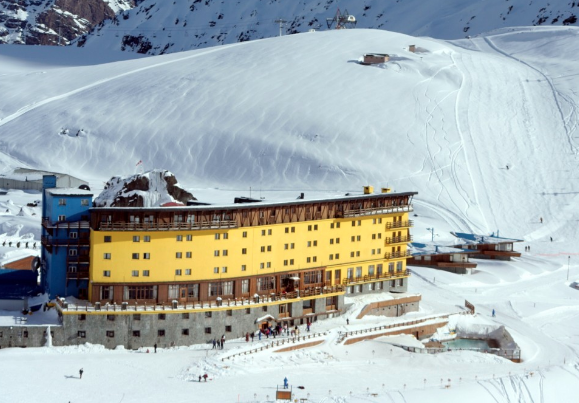
Chile-based correspondent Casey Earle continues his series on skiing in Chile. He wrote some great articles orienting folks to what to expect down there and a recap of some of the principal resorts. This time, he zones in on Portillo, the venerable Chilean resort every skier knows about. Check out his resort review here.

Filled with amenities Hotel Portillo is the only place to stay at the resort. Credit: ChileSki.com

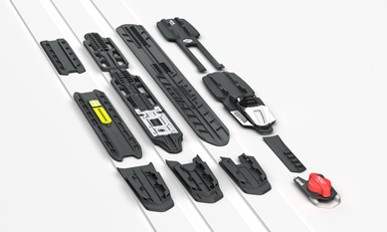
Cross-country editor and XCSkiResorts.com publisher Roger Lohr brings us some breaking news on the xc ski binding front. He describes the brand new Rottefella binding with a Move Switch that allows you to adjust the weight distribution on your skis. This could be an important break thru for senior xc skiers because it can actually enhance both glide and grip.  Certainly worth a look if you are thinking about new xc gear.

On a more serious note, we have a new article on Sarcopenia this week, a condition where muscles become less efficient in seniors. We found it remarkable that we never knew about this condition until we were introduced to it through a contributed article by one of our readers last year.  If we didn’t know, then probably a lot of our readers don’t either.  Study this one, dear readers.  The good news is that the weakening effects of sarcopenia can be mitigated through weight lift training.

If you have any story ideas, or want to submit an article, please let us know at info@seniorsskiing.com.  The season has started, and it is time to get ready.

Remember, readers, there are more of us every day and we aren’t going away.


BowlerSkier_489

Conditioning Can Beat Sarcopenia: Pay Attention Seniors

Sarcopenia Weakens Muscles In Aging Bodies, But It Can Be Managed.

If you’ve been lax about starting, continuing, or expanding your current conditioning program, it is time to get with the program. Many seniors are susceptible to weakened muscle as a natural effect of aging. When was the last time you picked up trash barrel, laundry basket, your bike, kayak, or even your skis, and you realized that they seem heavier than they used to be. The condition is called Sarcopenia, and it affects 13 percent of 60 year olds and as many as 50 percent of 80-plus.

In a recent New York Times article, Jane Brody, a personal health and fitness columnist, says that although the condition is fairly prevalent, not many seniors know about it.

Few practicing physicians alert their older patients to this condition and tell them how to slow or reverse what is otherwise an inevitable decline that can seriously impair their physical and emotional well-being and ability to carry out the tasks of daily life.

Dr. John E. Morley, a St. Louis University School of Medicine geriatrician, says that sarcopenia is to muscles as osteoporosis is to bones. “Sarcopenia is one of the most important causes of functional decline and loss of independence in older adults.”

The good news in all this is that the effects of sarcopenia can be reversed by exercise.

No matter how old or out of shape you are, you can restore much of the strength you already lost. Physical therapist, Marilyn Moffat, a professor at New York University, noted that research documenting the ability to reverse the losses of sarcopenia — even among nursing home residents in their 90s — has been in the medical literature for 30 years, and the time is long overdue to act on it.

That’s yet another reason to get back to conditioning.  Start a strength-building program using weights, bands, or machines.  As Dr. Moffat points out,

Start with two repetitions and, using correct form through the full range of motion, lift slowly and lower slowly. Stop and ask yourself how hard you think you are working: ‘fairly light,’ ‘somewhat hard’ or ‘hard.’ If you respond ‘fairly light,’ increase the weight slightly, repeat the two reps and ask yourself the same question. If you respond ‘hard,’ lower the weight slightly and do two reps again, asking the question again.

If you respond truthfully ‘somewhat hard,’ you are at the correct weight or machine setting to be exercising at a level that most people can do safely and effectively to strengthen muscles. Continue exercising with that weight or machine setting and you should fatigue after eight to 12 reps.

Now here’s a surprising insight. Your current exercise program might not be adequate to hold sarcopenia at bay.

The fact that you may regularly run, walk, play tennis or ride a bike is not adequate to prevent an incremental loss of muscle mass and strength even in the muscles you’re using as well as those not adequately stressed by your usual activity. Strengthening all your skeletal muscles, not just the neglected ones, just may keep you from landing in the emergency room or nursing home after a fall.

Exercise and paying attention to protein in your diet are the keys to remaining strong or at least as strong as you can be as you age. Read Jane Brody’s article and get busy.


Breaking News: Rottefella Introduces the Move Switch for Enhanced XC Ski Performance

New, Adjustable  XC Binding Concept Hits The Trails.

Rottefella Move Switch allows for adjustable weight distribution. Credit: Rottefells

The Rottefella company has created the binding solution for waxless and skin cross country skis. The Move Switch is a dial on the front of the binding that will allow skiers to slide the binding forward or backwards without releasing the ski from the boots. That’s right, while you are on the ski trail, you can just bend over and turn the switch for the binding to slide and adjust to the desired weight distribution on each of the skis.

The intention of the Move Switch is for quick adjustment and better performance on flat or hilly terrain for recreational skiers who use waxless skis and particularly the quiet skin skis that have a mohair-type strip embedded in the ski base. If you want to glide better on a slow snow day on the flat trail, then stop and slide the bindings backwards to distribute your weight on the ski to provide more glide. If you need more grip to go up a hill, then slide the bindings forward to attain an enhanced grip to prevent slipping backwards on the snow.

Rottefella has created a moveable binding system that will be available for and can adapt to work with major existing ski plate systems at the other binding manufacturers including Rottefella NIS, Fischer, Rossignol, Salomon, and Atomic. There is also a binding, Rottefella Classic or Skate Quicklock plate that is moveable when skis are removed for those not expecting to move the bindings while skiing.

The Move Switch will make it easier to adjust the ski bindings as necessary correlating to the snow conditions or terrain. In the olden days, such changing required applying different waxes but with the new products, those days should be in the past for recreational cross country skiers. Using waxless skis eliminated the need for waxing the bases, but they worked differently in varying conditions or terrain – some grip well but are slow on the flats, while others glided well but did not hold when going up a hill. The retail price for a system or plate package will run between $69.99 and $149. Currently, the skin waxless skis may comprise about 25 percent of the new XC ski market as skiers are opting for the quiet base that provides good grip and glide in various ski conditions.

Spike Clayton at Skirack, a retail outlet in Burlington, VT, commented that he’s impressed that a Nordic company came out with a product that can be used universally on any ski brand for the ever expanding skin ski market.  “The product will give our customer a true choice to improve the performance of the skis easily.  The great thing about The Move system is it simple and effective for the skier to use.”

Rottefella Move Switch adapts to many brands of bindings. Credit: Rottefella

Product Review: Company Based On Tea’s Cancer-Fighting Properties

Tea Offers Flavor, Enjoyment, And Health.

Cold Buster tea blend soothes colds and is caffeine-free. Credit: Harriet Wallis

Let’s make it clear. Tea cannot cure cancer. But the chemical make up of many teas can be part of a healthy anti-cancer lifestyle.

It’s not hocus pocus. Tea is a most studied anti-cancer plant. Check out what the National Cancer Institute says about tea’s anti-cancer benefits: https://www.cancer.gov/about-cancer/causes-prevention/risk/diet/tea-fact-sheet

But let’s start at the beginning.

Maria Uspenski was healthy and active until she was slammed with ovarian cancer that turned her life upside down. That’s when the IBM engineer and tech business owner launched full bore into making nutrition and lifestyle changes to give her a life-saving edge. She learned that teas can boost the immune system and might inhibit cancer.

In 2004, this cancer survivor founded The Tea Spot, a woman-owned tea and tea ware company in Boulder, Colorado.

So what about the teas?

I like tea, but I’m a beginner. I had no clue there are so many kinds of tea, and I don’t speak “tea language.” But I like to explore tea flavors and try new tea techniques. It’s okay to be a beginner and learn as you go. Real connoisseurs, however, will appreciate the breadth of The Tea Spot’s offerings.

They offer many, many types of White, Green, Oolong, and Black teas. And there are also Herbal, Mate, Organic and Pu’erh teas.

I’d never heard of this Pu’erh-thing, so I looked into it. It’s a special process that gives those teas an earthy taste. It’s thought to do good things such as: reduce cholesterol, aid digestion, improve weight loss, and it might relieve hangovers.

Each tea has its special properties and benefits. And the Tea Spot site describes each tea in detail. There are so many teas to try.

The bottom line:

The market is saturated with health drinks. Perhaps it’s time to try tea as your health drink.

To read more from Harriet click here for her stories on SkiUtah.

Book Review: The Nature Fix

Your Brain On Nature.

[Editor Note: Roger Lohr, publisher of XCSkiResorts.com and SeniorsSkiing.com’s Nordic Editor, reports on the therapeutic effects of being outside.  We thought it, now we know it.]

Lupine field, Sugar Hill, NH. Credit: Roger Lohr

The Nature Fix by Florence Williams, published by W.W. Norton & Company in 2017, provides the most compelling argument to date for people to spend more time outdoors in nature, based on an increasing amount of biological, psychological and medicinal scientific evidence.

Over the years, efforts have been made to quantify nature’s impact on mood, well being, ability to think (remember, plan, create) and sociability. The “biophilic” hypothesis involves lowering human stress, boosting mental health, restoring attention, empathy, and cognitive clarity. Nature also affects a social component like the feeling that is shared among people who spend time together outdoors or people who perform exceeding acts of kindness in the aftermath of a severe environmental event such as a tornado, earthquake, firestorm, and such.

The recommended prescription for getting outdoors in a “nature pyramid” includes both quick doses and longer spells in wild places. Specifically, humans should:

  • Get out in nature nearby on a daily basis for some minutes to de-stress, find focus, and lighten mental fatigue,
  • Spend weekly outings at parks or waterways for an hour or so, and
  • Go on monthly weekend excursions to natural areas to bolster immune systems.

The top of the pyramid includes annual or biyearly multi-day wilderness trips. More significantly, such wilderness experiences are invaluable for adolescents or those who are in grief or suffering trauma.

The author traveled the world over to investigate and experience research on nature’s impact on humans. In Japan, she saw “forest bathing” on a sensory walk in the woods on one of the 48 forest therapy trails in the country. In Scotland, they call it “eco therapy.” She met with a Korean professor of “social forestry” who introduced her to the world’s only college degree for forest healing. In South Korea from 2010-2013, visits to the forest increased from 9.4 million to 12.7 million, while in the USA there was a decline of 25% during the same time period.

The evidence (20 pages of cited notes and credits) about nature impact involves details with cortisol levels, sympathetic nerve activity, heart rate decline, and hemoglobin in the brain’s prefrontal cortex.  The book is replete with that type of information, which may be news to most people who may not be familiar with such neurological details.

One of nature’s benefits are delivered through sound—a bubbling brook, bird tweets in the early morning, the leaves moving in the wind, and so on. But the US Park Service claims that 83% of land in the lower 48 states sits within 3,500 feet of a road and that within 20 years 90 percent of the population will be close enough to hear at least one of the projected 30,000 airplane flights per day.

In Finland, 95 percent of the population spends time recreating outdoors and 50 percent ride bicycles. It is easy to access forests because 74 percent of the country is covered by trees and there are two million summer cottages for a population of two million Finns, who claim the focus on nature correlates to reduced health care costs and mental and physical fitness.

Williams visited Singapore, where 70 percent of the population lives within 400 meters of green space. The government in Singapore allocates .6 percent of the national budget to develop scenery and greenery.

There are successful nature programs to help people who suffer with PTSD (post-traumatic stress disorder) and ADHD (attention deficit hyperactivity disorder). Outward Bound did a study on a therapeutic adventure program showing 9-19 percent of participating veterans who had PTSD, improved. Williams includes a discussion about ADHD programs where 6.4 million kids are diagnosed and half of them are taking medication for the malady.

Isn’t it about time that more therapists, doctors, teachers, and parents prescribe getting outdoors more often?


This Week In SeniorsSkiing.com (April 20)

Discount Reminders, Season Thanks, Washing Down, Stowing Gear, Abandoned Ski Area Movie, -30-

Killington is still open. Also Sugarloaf, Sunday River, Wildcat, Jay Peak, Okemo, Mt. Snow, Sugarbush. May is possible! Credit: Jamie Frankel

This amazing season hangs on. Even as we write this on April 19 snow is falling in New England, in fact, right outside our window on Boston’s North Shore. We know that the Sierras and Rockies are also seeing spring snowfalls. It will be the last weekend for some, but it’s been years since we even contemplated skiing in May in Maine.

Fourth Season Into The Archives

With this week’s edition, the fourth publishing season of SeniorsSkiing.com is fading into the archives. We will be shifting gears in the next month, bringing articles that reflect our readers’ non-snow season activities on a less frequent basis. We’ll be picking up the pace with new ideas, articles, and offers on the other side of summer.

Bear in mind, the almost 900 articles that we’ve been publishing since 2014 are still and will always be available.  Just check the drop down menus in the blue bar above.

Our Publishing Season In Retrospect

Looking back, we’ve accomplished a lot and worked hard to create value for our leaders. Those initiatives marked SOC can be found under Subscriber-Only Content in the top menu bar. The initiatives we’ve developed in partnership with others include:

  • Mystery Glimpse photos from US ski museums
  • Our Donations to Defray Expenses Campaign
  • Making available 60s Ski Songs from Ray Conrad
  • Arranging exclusive Discounts For Seniors from 20 vendors
  • Publishing Best Skis For Seniors and Best Boots For Seniors (SOC)
  • Creating a directory of  resorts Where Seniors Ski Free (or almost free) (SOC)
  • Offering a free subscription to SKI magazine (SOC)
  • Making available a free digital subscription to Ski History magazine

We also have available on under Subscriber Only Content our first information asset we developed for our readers, complied with the cooperation of the International Ski History Association.

  • Free eBook Collection Historic Ski Posters (SOC)

Early Survey Results: We DO Have Lists Of Discounts.

A quick glance at the survey responses currently rolling in reveals that some readers are wondering when and if we will be offering advice where to get discounts on skiing. We’ve already got you covered.

One of our major early season efforts for the past couple of years has been to identify those ski areas which offer free skiing, or nearly free skiing, for seniors.  We want to point out that information is available under the Subscriber-Only Content menu that is above the blue menu bar. If you are already a subscriber, you will have to confirm your name and email address to get access to that directory. We think confirming your email address is much better alternative than having you create a username and password. We hope you agree.

Spring Survey 2018 Is Still Open.

Responses to our Spring Survey 2018 are still coming in. Thanks to those who have taken the time to give us some valuable input. If you haven’t taken our survey, just click here.  It will take you three minutes, and your advice is important to making SeniorsSkiing.com work for you.

https://www.surveymonkey.com/r/G7YBNCK

Thanks To Our Correspondents: You Are The Best.

SeniorsSkiing.com can’t publish every week during the season without articles submitted by our stalwart correspondents.  You should be familiar with their names by now. Each is a professional, some are active journalists, and each “gets” what SeniorsSkiing.com’s mission is all about: Promoting the interests of senior snow sport enthusiasts.

A tip of the ski pole to:

  • Jan Brunvand
  • Don Burch
  • Yvette Cardozo
  • Rose Marie Cleese
  • Val E.
  • Steve Hines
  • Marc Liebman
  • Roger Lohr (SeniorsSkiing.com XC editor)
  • Pat McCloskey
  • John Nelson
  • Tamsin Venn
  • Joan Wallen
  • Harriet Wallis
  • Jonathan Wiesel

And Thanks To Our Reader Opinion Writers.

This year, our readers have submitted more articles to us for publication than ever. We’d like to acknowledge those who were inspired to put pen to paper to write something for our readers. They made an effort to share their opinions, humor, stories, memories, and advice with you.  Thank you to all.

  • Torry Hack
  • John Farley
  • Bill Emerson
  • Brad Noren
  • Roger Monty
  • Bernie Weichsel

Paying Attention to Gear.

With the season winding down, it’s time to clean and stow your gear. We have two articles with advice for doing same. Val E. gives us 10 steps to cleaning that funky down jacket. And, we reprise Don Burch’s article from last year on putting away your equipment.

Flipping out at the US Ski & Snowboard Hall of Fame Induction Ceremony at Squaw Valley. Credit: Charlie Shaeffer.

US Ski & Snowboard Hall Of Fame 2018 Inductees

The US Ski & Snowboard Association has just inducted its 2018 class of new members at Squaw Valley.  We salute the following ski celebrities:  Airborne Eddie Ferguson, Hermann Gollner, Marty Hall, Mike and Steve Marolt, Thom Weisel, Steve McKinney, and Shaun Palmer.

Abandoned Ski Areas In Colorado Documentary

Here’s a short documentary from a production company called The Road West Traveled about ski areas that disappeared from the Colorado landscape. In the 60s and 70s at the height of the ski craze, there were 200 ski areas in the state.  There are currently 30. “Abandoned” tells the story of just one, Geneva Basin, which closed in 1984 with some nice drone shots. But what’s with the dog running down the piste with the skiers?  Thanks to Outside magazine for sharing this.

CLICK THE IMAGE TO SEE THE DOCUMENTARY

Or, Click Here for “Abandoned”. 

Look For Us This Summer And Fall.

We’ll be publishing articles on fitness, summer sports, fun things, and skiing in the Southern Hemisphere all with a senior slant for the next few months. Please tell your friends, and remember, there are more of us every day, and we aren’t going away.

-30-

Mystery Glimpse: First US Winter Olympic Medalist Was A Ski Jumper

Only Two Guesses, One Was Correct.

Apparently, our last Mystery Glimpse of the season was fairly esoteric. We salute reader Patricia Gottshalk for identifying Anders Olsen Haugen, the US Ski Team member who was the first American to win a Winter Olympics medal. He won medals in the 1924 Olympics in Chamonix and the 1928 games in St. Moritz. In fact, he remains the only American to ever win an Olympic medal in ski jumping. But there is much more to Anders’s story.
It seems that he originally came in fourth in the 1924 Olympics.  The third place went to a Norwegian, Thorleif Haug, who had already won a gold and a silver. However, in 1974, Norway held a 50th anniversary of the games. A ski history buff had scrutinized the scores from those long ago games and determined there was an arithmetic error in adding the results.  Anders had actually won the Bronze by several hundredths of a point. So, at 83 years old, Anders Olsen Haugen, a long-retired brick layer, was awarded the medal by Haug’s daughter at a special ceremony sanctioned by the IOC.

Here’s a snapshot of Anders and Haug’s daughter.  Quite a story, eh?

And with that, we are pausing our Mystery Glimpse series for the non-snow season. This feature could not have been possible without the incredible cooperation of several ski museums across the country. Each museum mentioned below contributed more than one photo from their archives. We thank them for their support and willingness to participate.

Ski museums are quite precious to us. They are typically small, even tiny, with exhibits made from contributions by skiing enthusiasts who want their souvenirs and memorabilia to live on. If you have some interesting relics from the early days of skiing, considering making a donation to a museum near you.  Here are the museums that participated in this year’s Mystery Glimpse. Thanks to all.

Colorado Ski and Snowboard Museum

Vermont Ski and Snowboard Museum

Ski Museum of Maine

New England Ski Museum

US Ski and Snowboard Hall of Fame and Museum

Alf Engen Ski Museum

Museum of Sierra Ski History


Down Care

How To Wash Your Down Jacket At Home

Season’s Over; Isn’t It About Time You Get That Puffy Back To Clean?

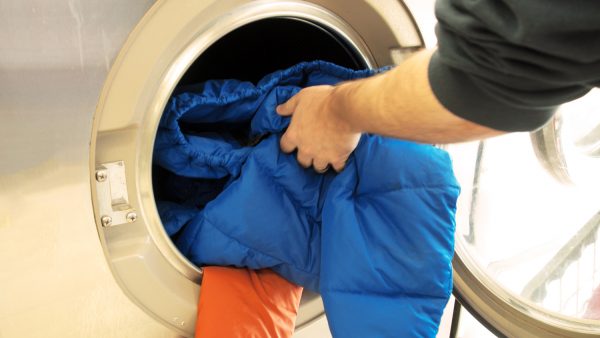
Front loader needed for washing down. Credit: REI

Not only are your season-dirty down jackets, vests, and even sleeping bag dirty and smelly, if you left them that way, they would lose their heat-insulating properties. It is easy to destroy your down gear if you don’t follow some basic rules when washing them at home. It’s not difficult, but it does take some time and know-how.

You will need:

  •  a front load washing machine and a dryer (Top load machines are not recommended.)
  • a bucket
  • special down liquid detergent
  • three-four new tennis balls or reusable drying balls
  • a new sponge (for washing dishes)
  • a clean toothbrush (or something similar)
  • three hours of free time.

10 How To Steps

  1. Purchase a liquid detergent specially designed for down.  Try either Granger’s or Nikwax. You will need about a cap (50 ml) for a jacket.
  2. Inspect the jacket and find especially dirty spots. A bright light really helps. Close all pockets, velcro, and zippers. Turn your jacket inside out.
  3. Soak your jacket in cold water in a clean bucket. Drip a bit of detergent on a sponge and create some foam. Apply foam on wet, dirty areas. Let foam to penetrate the fabric for five to 10 minutes. Brush the really dirty areas with toothbrush. Let it soak for 20 more minutes.
  4. Pull out the detergent dispensing tray of your washing machine, clean it thoroughly. Even a small amount of a wrong detergent or a softener can negatively affect the condition of the down.
  5. Tennis Balls or Dryer Balls are needed to keep the fluff up. Credit: REI

    Take the bucket right next to the washer and gently dump your jacket inside the washer. Add three-four new tennis balls or reusable drying balls. Hint: no balls, no worries. Roll balls out of your heavy cotton socks, wet them, and throw into the washer.

  6. Fill one cap of the detergent, (or the recommended amount in the instructions), into the receiver for the liquid medium. All washers are different, so ideally you need the lowest temperature, the slowest speed, and the longest time —one hour or more. Press the button and…take a break: have a cup of coffee or mow the lawn.
  7. After the machine stops, look at the contaminated zones. Again, a bright light is your friend.  If you still see dirt, repeat step three to five. Check again.
  8. Now, On to your dryer. Set the lowest temperature, the lowest speed, and the longest time . One and a half hours or more would be fine. Click the button and…take another break.

Pull out your clean, dry jacket and hang it on a wide hanger. Regardless of the price and the country of origin (China, Canada, Hungary) of a jacket, feathers may come out.  It is just a question of when. This is a natural process, don’t be surprised if it happens to you. Do not pull out the protruding feather because you will create a larger hole in the fabric and way more feathers will follow. Try to push the feather back inside.

9. Almost all down jackets are only water-repellent and not water-resistant (unless they have membrane fabric like Gore-tex). A few percent of all down jackets do not even have water repellent properties. Those are designed to be a mid layer, which goes under a water resistant shell jacket. All the rest have a water-repellent coating. A smart user should restore this coating after washing, otherwise the fabric will absorb and even let moisture go through in case of rain or wet snow. And water is bad for down. Use a product for water-repellent restoration, typically in a spray. Again Granger’s and Nikwax are very reliable. Apply it according to the instructions. Let it dry.

10. Done! It is time to use your downy friend.

Nixwax and Grangers are specially formulated for Down. Credit: Mountain Equipment Coop


This Week In SeniorsSkiing.com (April 13)

Looking Back, Mystery Glimpse, Spring XC Skiing, Riding With The Cats.

Spring in Appleton Farms, Ipswich, MA. Credit: Mike Maginn

It’s hard not to get a bit philosophical at the end of a season. And yes, we know that there are those who are still finding newly fallen snow out there, but we are done. Highlights for us: We re-discovered our interest in ski history, launching the Mystery Glimpse series this year with the cooperation and contributions of many fantastic ski museums around the country. And re-publishing Ray Conrad’s collection of ski songs from the 60s, a technical challenge, but we hope it is worth it for our readers.

We managed to become comfortable with our emerging carved turn, not yet there, but closer than before. We also realized that skiing on broad, green trails was perfect for us, even skiing the same damn trail all day long was okay.  Such is the lesson from listening to your body. We have new-found Alpine skiing enjoyment by approaching the hills with a whole new mindset. In a nutshell: Slow, poised and in control.

We also revived much appreciation for the joys of cross country skiing and the pleasure it brings on a beautiful, blue-sky, brilliantly cold day with new fallen snow. Nothing can beat the silence of the woods with the only sound your breath and perhaps your heart beating in your ears. Stopping and listening. Even better in your knickers and on your wooden skis. Perhaps a can of beer in your knapsack. Good for what ails you.

We loved mid-week discounts for seniors are major resorts, we loved the empty lift lines, the pleasant cashiers in the cafeteria, the pretzels in the bar apres-ski, the hot tubs at hotels.  And of course, the snow that finally showed up in earnest here in New England just a month or so ago.

As we said, there is still skiing out there, some of the best we are told. But now, we find ourselves heading to the boat store for bottom paint and sandpaper. Weekends have suddenly become nautically oriented. Happy Spring.

Please BOLO For Our Spring Survey. COMING SOON.

Our survey will be heading your way very shortly. We’ve had impressive response rates in our past surveys, and we really hope our readers respond like that again.  This time, we’re trying to pin down the role grandparents have in introducing snow sports to their grandkids. We’re also trying to find this year’s collection of Trail Master, those skiers who have skied the equivalent of their age in days. We know you are out there.

PLEASE RESPOND TO OUR SURVEY WHEN YOU SEE IT IN YOUR INBOX.


Mysterious Pics

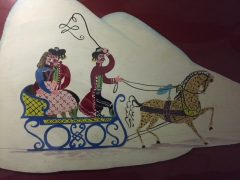
In February, we found a curious set of pictures on the walls at the Mittersill Mountain Inn in Franconia, NH, an iconic, venerable hotel with roots going back the the 40s. The staff did not know the provenance, but these are so idiosyncratic and distinctive, we thought one of our readers might know where these came from.  Of the dozen or so, here is a sample:

Exquisite, aren’t they?  Anyone know the story behind these?

This Week

We reveal the identity of the Mystery Glimpse ski train, its history, and its recent fate.  And we introduce another ski hero we bet very few people will know but should.  Check it out there.

We hear from our cross-country ski editor Roger Lohr, who also publishes XCSkiResorts.com, on spring XC skiing.  It’s out there, and it is glorious. Yvette Cardozo, our correspondent in the Northwest, managed to get herself booked on a ride in a grooming cat at Sun Peaks Resort, BC. She has a really interesting report on how they do it and what it’s like to be on a massive steep in a boxed-in machine.

Onwards

Thanks for reading SeniorsSkiing.com. Remember there are more of us every day and we aren’t going away.

Enjoy Spring Skiing when you can.


XC Skiing In The Spring Is The BEST!

Even In Mid-April You Can XC Ski; You Just Have To Find The Snow.

Spring cross country skiing can be found in high country and xc resorts. Credit: Mike Maginn

As the cross country (XC) ski season winds down, most XC ski areas close because of lack of skiers rather than lack of snow on the trails. The sun comes out, the temperature rises, and the XC skiers quit. Why? Are we infected with winter fatigue? Is the lure of spring time recreation too strong to ignore?

XCSkiResorts.com spoke with some ski area operators around the nation to get their take on spring skiing. Many areas host springtime season pass holder parties and offer big discounts for purchasers of season passes for next year. Lapland Lake in Northville, NY, commented that their trails are compacted on a daily basis so the snow does not disappear like in the city or open areas in suburbia. Lapland’s Kathy Zahray encourages skiers and snowshoers to “get out and enjoy this weather and these great spring conditions!”

Zahray admits that “the reality is that in the spring it costs more for grooming and staffing than the amount of income earned from the diminishing number of skiing patrons, however this is one of the most fun times of the year to enjoy the outdoors. The milder temperatures and discounted rates are terrific for everyone, and it is fun to ski in shorts and t-shirts.” Lapland Lake is offering special lodging prices through March.

Carters XC Ski Centers  in Bethel and Orford, ME, have been very busy this spring renting cabins and selling equipment. Carter’s hosted the Burger, Beer & Bike Festival for their patrons to try fat bikes and enjoy the area.

In Minnesota at Maplelag Resort, proprietor Jay Richards concurs “that people want to get on the snow early but get tired of winter and ready for warm spring days.” He feels that “skiers in the Midwest are conditioned to colder and drier snow compared to skiers in other regions who are more accustomed to a wider variety of snow conditions.”

At Cross Country Ski Headquarters in Roscommon, MI, they run spring events on machine-made snow such as the Hawaiian Barbecue where they have locally raised pork hocks, along with island style veggies and of course fresh grilled pineapple. Proprietor Lynne Frye invites everyone to celebrate all that is great about spring: long, sunny days of great cross country skiing in MI!

Skier Brenda Winkler, who is a regular at Izaak Walton Inn said, “There is nothing like skiing on Piston Bully groomed trails at Izaak Walton Inn. I skied yesterday and then enjoyed the best Buffalo burger in the restaurant. Izaak Walton Inn has had great grooming all season and there is a lot of winter left at the Inn!”

The Breckenridge Nordic Center  in CO has skiers who are enjoying the patio and lounging around with a glass of beer or wine. They’ve held some well-attended fundraising events this spring and expect to remain open through April 22. Owner Josh Dayton said “We’re having really warm days but our snow holds up very well.”

The folks at Methow Trails in Winthrop, WA, stated, “This season has been another fantastic snow year!   We have no shortage of snow but people stop skiing in the spring which is really too bad because we often find the best skiing of the season comes in the spring. The trails are well packed, and the days are lighter and warmer making it much more comfortable to ski. We’re seeing that in the Methow right now there’s some of the best ski conditions we’ve had all year!

Ridin’ With The Cats

What’s It Like To Groom Trails At Night?

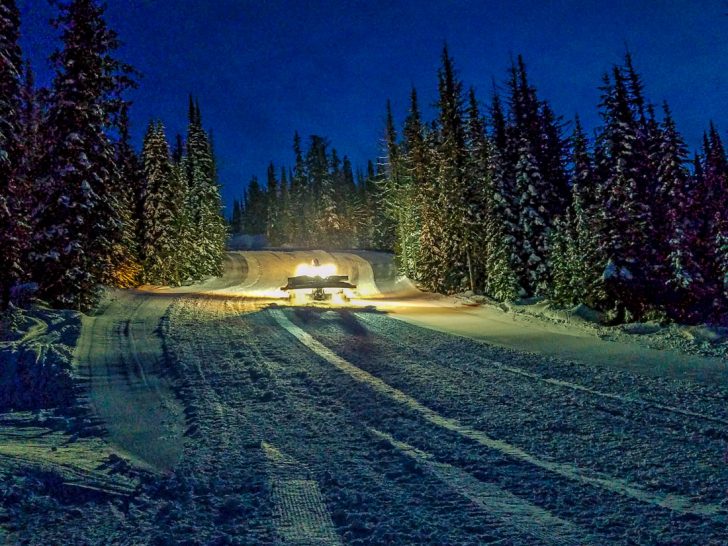
Snow cat groomer making the ski run smooth for skiers the next day. Sun Peaks Resort, BC.

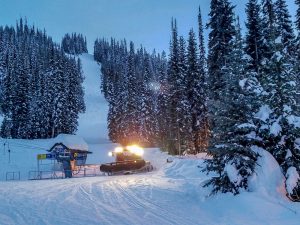
They come out at night and do their job. You can see their lights progressing across the ski slope and occasionally hear their roar. And the next morning, they’ve left this delicious set of corduroy tracks across the ski hill.

I’d always wanted to go on-slope with a snowcat groomer. And so, at Sun Peaks Resort in British Columbia, Canada, I did. And it’s a tour anyone can sign up for.

Snow cat groomer makes its way down a ski slope at Sun Peaks Resort, BC.

It’s astonishing how much damage skiers can do to a run in a single day. If the snow is soft, bumps form, and the middle gets dug out because that’s where folks prefer to ski.

Enter the snowcat groomers. These are powerful cabs—Piston Bully 400s with 320 hp diesel engines— atop tank treads with a blade on front and a tiller on the back. The blade knocks down bumps and that nasty looking tiller, which rotates at over 1,000 rpm, can turn even ice into something resembling powder, which is then smoothed flat into that hero corduroy.

Of Sun Peaks’ 24 operators, two are women.

“Honestly, the women do a better job. They are more detail oriented,” admitted my guide for the night, Leo.

It takes three years for a groomer to really learn how to do this well, he added.

It was one of the women running the winch cat that night. Picture eight tons of growling machine attached by a line to a tree to keep from sliding downslope uncontrollably. This is how the really steep runs get groomed. Back in the day, these runs got so bumped and carved out, they were barely skiable.

It takes three years to become an expert groomer. Sun Peaks, BC.

Rob Gayman, grooming manager at Mt. Hood Meadows resort in Oregon, once described operating a winch cat this way: “It’s somewhat like dropping off a cliff. At the top break-over as the machine teeters above the brink, your heart starts to palpitate, and your natural survival instinct pushes you back into your seat.

“As the machine creeps forward and the operator adjusts the winch tension, the cat tilts forward into the darkness. The cat’s lights don’t shine down low enough; you can’t see what lies below. It tilts more and more. You start to fall forward out of your seat. Now you’re standing on the floor; surely this can’t be right? But then the cat finishes its forward tilt and the ground below you comes back into sight. It wasn’t a cliff after all. Snow rolls and tumbles down in front of the cat as the operator blades and tills his way downhill.”

For me, as dusk fell, the whole scene took on a surreal feel. Our headlights shining on the ridges of snow, leaving them glowing with weird shadows, along with the blinding headlights of an oncoming behemoth.

On an average night, more than a third of Sun Peaks Resort’s ski runs will be groomed. But among those, will be every green (beginner) trail.

And if you are lucky, your favorite black run will have been groomed early, then covered with ankle deep powder overnight, making for a run that feels, well, like skiing a glacier.

There are two women groomers at Sun Peak, BC, said to be more detail-oriented than the men.

This Week In SeniorsSkiing.com (April 6)

Season Hangs On, Cross-Country Lessons, Apex Boot Highlights, Bob Beattie, Fun & Games, Mystery Train.

Where it snowed in 2017-18 and how much. Snow accumulation data from the National Operational Hydrologic Remote Sensing Center. NOAA GOES-16 satellite imagery via the University of Chicago Research Computing Center

Click Here To See Where Snow Fell Day By Day From Oct 5th to March 26th. 

A glance at the map shows where the season’s snow accumulated and where it didn’t. Clearly, the Far West, Upper Rockies, (and Canadian Rockies not shown), parts of the Wasatch, and the Northeast received more than enough snow this season. Midwest, mid-Atlantic and Arizona resorts not so much.

The incredible graphic produced by the NOAA Goes-16 satellite of daily snowfall accumulation reveals most of heavy snow came sometime in March. So now we have spring skiing breaking out and ski resorts extending their seasons to make up for the phlegmatic January and February.

We have friends who have skied in the rain at Stowe this weekend and others who are planning to keep it up until Memorial Day and beyond out in Mammoth Mountain. This might be dubbed the “shifted season” where winter was re-set a month into the year. In any case, the challenge for resorts is to keep customers coming when most folks are taking boat covers off, spending Spring Break in the sun, or otherwise moving on from snow sports. Owning a ski resort is not for the faint of heart.

Mammoth Mountain extended the season after 16 FEET of snow in March. Credit: Unofficial Networks

This Week

This week’s Mystery Glimpse may be tough, showing a train somewhere out in the mountains. See if you can guess what’s going on.  On the other hand, we’ve been surprised by the depth of knowledge and history that comes out of our reader base. Last week’s handsome, California-stylin’ ski instructor’s identity is revealed along with a video clip of this charming gentleman.

We also have some advice on taking Cross-Country lessons from correspondent Jonathan Wiesel, insights into the growingly popular and “disruptive” Apex boot by Marc Liebman, a new game to play this spring with skiing friends by Harriet Wallis, and industry news and comments by co-publisher Jon in Short Swings. And there’s an interesting piece about the patron saint of skiers, mountaineers, and climbers. Do you know who that might be? Hint: Big dog.

This week’s was also marked by the passing of Bob Beattie, a popular, creative, entrepreneurial competitor, and television commentator. You can link to his obituary here.

The SeniorsSkiing.com Spring Survey Is Coming Soon

Please be on the look out for our Spring Survey. You will receive it as an email, and we promise it will take very few moments to complete. The purpose of these surveys is to understand your needs and to get to know who you are. We have had extraordinarily high response rates in the past which makes us think our readers are engaged and interested in supporting the our mission of boosting the profile of the senior snow sport enthusiast to the outdoor recreation community. So, BOLO.
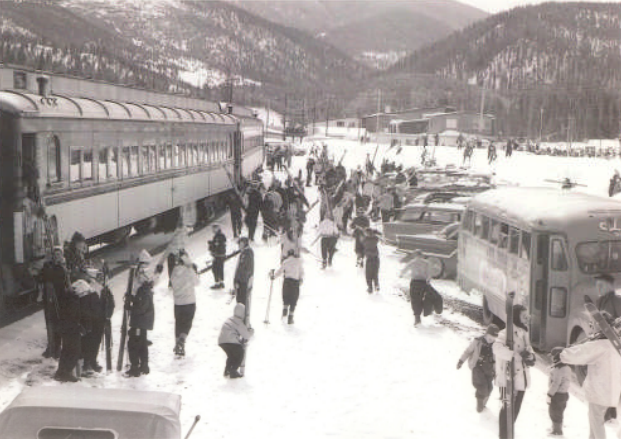
Ski Songs Available

The response from our readers to Ray Conrad’s album of ski songs from the 60s has been remarkable.  It’s easy to download from CDBaby. If in doubt, ask your grandchild. You can go here to listen to some song snippets. Wonder why no one writes ski songs these days?  Or do they?  Know any “modern” ski songs?

Thanks for reading SeniorsSkiing.com.  Tell your friends to tell their friends.  Remember, there are more of us every day, and we aren’t going away.


sa;das


Mystery Glimpse: Choo-Choo!

Where Are We And What’s Happening?

Thanks to the Colorado Ski & Snowboard Museum for providing this picture from ski history.  The CS&SM is in the process of undergoing a $2.4 million renovation. The first of several exhibits, “Climb To Glory”, featuring the story of the 10th Mountain Division is now open. Other exhibits will be open at the end of April this year.  The museum is located in Vail Village, CO.

Last Week

This is another ski history legend.  Nic Fiore was an influential ski instructor and director of the ski school at Yosemite’s Badger Pass for 50 years. His friendly smile and charming French-Canadian accent attracted skiers who came to Badger Pass every year to learn from and ski with Nic.

He was an early member of the California Ski Instructors Association in the late 40s. At the time, he was concerned about the quality and consistency of ski instruction, becoming a voice for a national ski instruction organization. When the Professional Ski Instructors of America was founded in 1961, Nic remained committed to high standards for instructor certification.

Nic Fiore was an active skier well into his 80s. He continued to hit the slopes nearly every day and teach an occasional ski lesson into the 2003-04 season. Nic passed away at 88 in 2009.

Here’s Nic on the lift at Badger Pass. Note his enthusiasm and magnetic personality.

https://vimeo.com/3111117

Thanks again to the Museum of  Sierra Ski History for sending Nic’s photo.  The MSSH is located at the Gateway Museum at Lake Tahoe, CA.