
Tag Archive for: 50+

Cross-Country: Lessons Are The Best Way To Out-Think Your Feet

To Make The Switch To Cross-Country, Please Start With A Lesson And These Tips.

In the early 1970s, in a visionary but totally wrong-headed move, the fledgling Nordic ski industry declared that, “If you can walk, you can cross-country ski.”

It would have been a lot more helpful to say, “If you can walk, you can learn to cross-country ski. And it takes only one lesson from a professional to learn how to glide.”

Those were times when an alpine resort manager pigeonholed skinny skiers as, “Guys who head into the woods Friday night, and come out Sunday without having changed either their underwear or their $5 bill.” We were on the defensive—and dang, it’s tough to fight clever stereotypes!

Those were also the days that New Englander John Frado, who designed a lot of the best trails in North America, coined the hilarious phrase that’s the title of this article. And boy, was he right, because you’re going to become a better skier, use less energy, go further faster, and have more fun sooner if you start the sport with instruction. (And by that I mean ideally not just a single lesson, but one, followed by practice, then another lesson. And so on.)

Cross-country can be filled with grace—not just the dynamism, self-discipline, and athleticism you see at the Olympics, but true beauty. Or it can be an awkward downer.

So here are half-a-dozen tips to make skiing euphoric, quickly.

Credit: Ski Museum Of Maine

First, please do something the Nordic business has never been able to and come up with more endearing descriptions than “lesson,” “instruction,” “teaching,” and “ski school.” Who wants to go back to studies when you’re out to have winter fun?

Next, don’t even think of learning from a loved one—instead, learn from a ski professional. There’s always an uncomfortable level of stress and self-consciousness if your instructor is also a relative, or your sweetie. Too distracting; and incidentally, your kids or grandkids are likely to absorb everything depressingly faster than us oldies. But once you can glide, that’s the moment you discover that cross-country is incredibly social, skiing side by side with friends and family.

Third, learn to ski at a cross-country area or club with machinegroomed trails, where the compressed tracks will guide your skis. (More on this in a future article—promise!) A good resource on places to go is www.xcski.org and  www.xcskiresorts.com.

Fourth, your ski pro needs to explain, early-on, how and why to hold your poles properly (my cliché: reach for the sky along the shaft, then shake hands through the grip). Grabbing the poles tightly means you’ll be upright, stiff, walking rather than gliding, and a lot more fall-prone.

Fifth, if you’re renting equipment, check to see if your instructor uses the same skis you do. It kinda levels the playing field.

And finally, think about a second lesson—or a private lesson—that concentrates on the whole range of descent techniques on these narrow skis that don’t have metal edges or heels held down, while you’re using footwear akin to sneakers. Wedge turns, step and skate turns, parallels, telemarking, traversing with kick turns, side stepping—they’ll all get you down that hill.

And as I found even in my prideful youth, sometimes you just have to take your skis off and walk down. It’s all legit!
Spring Is The Time To Play Games

Try This New Game: It’s A Cross Between Where’s Waldo And A Scavenger Hunt.

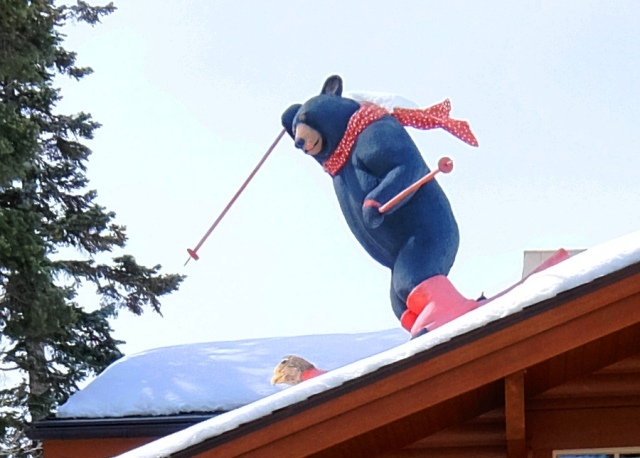
Find the Bear. Credit: Harriet Wallis

I was skiing at Deer Valley, and I was taking photos. I’m always taking photos. It’s what I do. I never know when I’ll need a certain shot to illustrate a story.

Find the flamingo (?!) Credit: Harriet Wallis

The next time I skied Deer Valley, I was with a friend. I showed her eight photos including the carved bear skiing on a roof, a flamingo wearing a white cross outside one of the ski patrol buildings, and a bronze Native American sculpture. I challenged her to find the real things as we skied around the mountain.

We covered a lot of trails that day. Deer Valley has more than 2,000 acres of skiing, six bowls and 101 ski runs. The hunt forced us to ski a trail once, so she could look for an item, and then move on rather than sticking to one trail over and over. It was a whole new angle on having fun.

Bingo! She found everything shown in my photos. And we were thoroughly tuckered out.

Find the mountain goat. Credit: Harriet Wallis

How To Play

If you are used to taking photos only at scenic spots, try snapping photos of things you see around your favorite mountain, such as a certain trail sign or an unusual weathered tree. Then show the photos to your friends (if they’re whacky enough) or to your grandkids. Challenge them to find those things. You can even offer rewards.

If the springtime slopes start to become ho hum, silliness will add new zest.

To read more from Harriet click here for her stories on SkiUtah.


Find the warrior. Credit: Harriet Wallis

Senior Skiers: St. Bernard Is Watching O’er

St. Bernard, The Doggie’s Namesake, Is An Actual Saint.

St. B points the way to an Alpine mountain hut. Credit: Bri-Tri.

[Editor Note: This tidbit was submitted by LuAnn Snyder, a freelance writer from Maryland.]

Here’s a bit of trivia about the Patron Saint and Protector of Skiers: St. Bernard of Montjoux.

Little is known for certain about St. Bernard of Montjoux who was probably born in Italy, c. 996 and died at Novara, Lombardy, Italy in 1081 at the age of 85.

He was proclaimed the Patron Saint and protector of skiers, alpinists, and mountain climbers by Pope Innocent XI in 1681 and confirmed by Pope Pius XI (himself a mountaineer) in 1923 because Bernard spent more than four decades conducting missionary work in the Alps by ministering to the welfare of the scattered inhabitants. His Feast day is celebrated on May 28.

St. B has his own flag.

He is said to have been ordained a priest, made vicar general of Aosta and built schools and churches in the diocese. He is especially remembered for two hostels he built to aid and save the lives of pilgrims on their way to Rome who were lost in the mountain passes or who had fallen victims to avalanche, exposure, and other mountain hazards. The mountaintop on which he’d build his monastery in the Alps, between Switzerland and Italy, is named for him: Great and Little Bernard.

He was further honored in the late 1800’s when European dog breeders renamed the Alpine Mastiff, the St. Bernard. The St. Bernard dogs were formerly used by the heroic monks who were accompanied by their well-trained dogs to go out in search of victims who may have succumbed to the severity of the weather. The Saint Bernard dog was especially breed to assist travelers in this mountainous region.

His image appears in the flag of some detachments of the Tyrolean Alpine Guard. He is also the patron saint of skiing, snowboarding, hiking, backpacking, mountaineering.

You may want to keep St. Bernard in mind if you unexpectedly find yourself on top of a double-black diamond.  You never know..

If you’re stuck, St. Bernard will send his pups.

Reader Opinion: The IKON vs M.A.X. Pass For Northeast Skiers

Compare Ikon and M.A.X. And Major Differences Are Revealed.

To evaluate the Ikon Pass I’ll compare it to what it replaces, the M.A.X. Pass, and look at what it offers in and of itself. Because they are at similar price points I’ll be comparing the M.A.X. Pass with the Ikon Base Pass. While both passes include a variety of resorts across the US and Canada, this discussion is based solely on Northeast resort offerings.

Apologies in advance to fellow skiers in other parts of the country for I’m writing about what I know about, the Northeast—New York and New England, I’ve skied at 12 of the 13 resorts mentioned in this article. In recent posts to SeniorsSkiing Torry Hack (3/15/18) and Jon Weisberg (3/20/18) also discuss the Ikon Pass.

The early purchase price of the Ikon Base Pass for 2018 -19 is $599 while the early purchase price of M.A.X. Pass for 2017-18 was $630. The Ikon Base Pass offers skiing at six  resorts in the Northeast compared to 13 with the M.A.X. Pass. The Ikon pass adds Sugarbush but eliminates Belleayre, Pico, Gore, Mount Sunapee, Okemo, Wachusett, Windham and Whiteface. There are no special price categories for seniors for either pass.

With the Ikon Base Pass, we’re offered five days at three of the resorts and a total of five days combined at Loon, Sugarloaf and Sunday River. That’s a total of 20 days, and there are 10 blackout days.

The M.A.X. Pass had five days at 13 Northeast resorts for a total of 65 days and no blackout dates.

When I contacted Ikon pass with my concerns about their new product, they responded quickly which was appreciated. However, this is the response I received:

“We feel this new product will replace former existing products by adding more opportunity, benefits, and appeal to skiers and riders. As this new product grows, there is always potential for more resorts to be added.”

I struggled a bit on how to comment on the first sentence. There were many responses I considered but after reflection I’ll just say it’s akin to fake news.

The second sentence is encouraging. It would be wonderful for additional resorts to be added to the Ikon Pass and all the better if there were more privately and publically owned resorts included.

Though the Ikon Base Pass is disappointingly inferior to what it replaces, it will still offer value and variety for some Northeast skiers. Like any pass, if you use them enough they are a terrific deal. Multi-resort passes such as the Ikon Base Pass offer variety, and each of the Northeastern resorts included in the Ikon Pass is top-notch. If you plan a trip to any of the Ikon resorts out west, buying the pass is a no-brainer.
The full Ikon Pass at $899 offers unlimited skiing at Stratton and seven days at the other Northeast resorts mentioned. For those interested in a lot of Stratton, this may be a very attractive option.

Whether the Ikon Base Pass is right for you obviously depends on your individual preference and circumstances.

For me and my three ski buddies who also have the M.A.X. pass, we’re going to pass on the Ikon Base Pass for next season.


It’s Birthday Party Time at Alta.

Hip, Hip, Hooray! Skier Bob Turns 94!

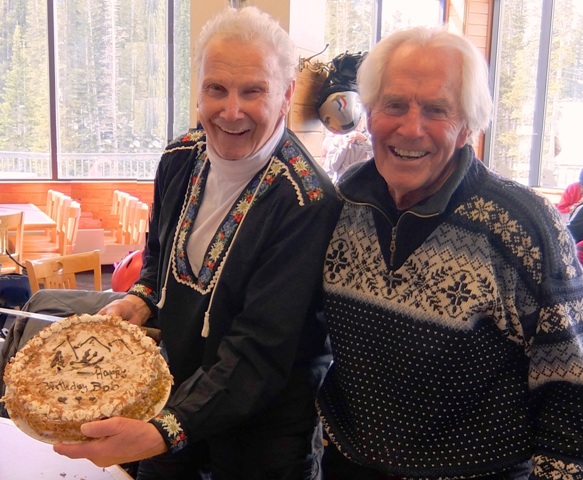
Bob Murdoch celebrates his 94th on skis at Alta. Credit: Harriet Wallis

You might say that 94-year-old Bob Murdoch is a “senior’s senior” skier. He represents many skiers across the country who are skiing into their 90s and enjoying their mountain friendships as much as the slopes.

Ski friends matter. Skiers gave Bob a birthday card that said: Count your age in how many friends you have, not in years.

Bob’s pal, Nick Looser, baked two special cakes
for the party at Alta. Credit: Harriet Wallis

At Alta, Bob is following in the footsteps—in the ski tracks—of 100 year old George Jedenoff who celebrated his milestone birthday on skis in July. Alta’s snow had melted by July, but its neighbor, Snowbird, gathered enough snow to groom a long swath so George could ski on his 100th birthday.

Next to George, Bob is the oldest skiing member of Alta’s senior group, the Wild Old Bunch—and the Wild Old Bunch threw an on-mountain party to honor him. And what a party it was!

Age has its rewards.

Bob, a retired hydro engineer, skis with his good friend Nick Looser, a retired culinary artist, who baked two specialty cakes for the event. He knew there would be a big crowd to celebrate Bob’s 94th birthday.

Bob currently skis three days every week, and his love affair with Alta goes back a long way. He skied the mountain in the 1930s before it was a resort and before it had lifts. He hiked up to ski down.

Skiing has changed a lot since the days of ungroomed snow and long uphill hikes, but we’re lucky we can celebrate with those hardy, early skiers, and we hope we can grow up to be like them.

To read more from Harriet click here for her stories on SkiUtah.

Kingdom-Trails-Fatbike

This Week In SeniorsSkiing.com (March 23)

60s Ski Songs Available Now, More Pass Wars Comments, Ski New Zealand Soon, Fat Bikes, And More.

Back in the early 60s, folk music was just beginning to become popular. Colleges, concert halls, and coffee houses were hosting a wide variety bands like The Kingston Trio and The Weavers with stringed instruments singing old time music as well as newly written tunes. One sub-genre soon emerged in parallel to the growth of the fast-growing sport of skiing. Oscar Brand, Bob Gibson, and a Navy vet named Ray Conrad created their own skiing songs which spread like an avalanche through the growing, ardent band of skiers.

Ray had a knack for composing clever, funny songs about the new world of the skier and skier wanna-bes. His tunes contain a full cast of caricatures like egotistical ski instructors, skiing cowboys, skiing Casanovas, skiing drinkers, you get the idea.  For years, these songs were out of print and only available to those who had saved their decades-old vinyl albums. Now, SeniorsSkiing.com has worked with Ray to make these songs available again.

You can download Ray’s 16-song album, The Cotton-Lickin’ Lift Tower and Other Songs, for $20 from CDBaby. This is a download only. You can listen to short clips on the CDBaby site. Seniorsskiing.com is sharing the proceeds with Ray, who, at 95 years old, is ecstatic people are still interested in his music.

For an earlier article on famous skiing songs of the 60s, click here.

More Season Pass War Puzzlements

Yes, the new editions of season passes and their features are confusing. We are hearing complaints from SeniorsSkiing.com readers about feeling left out by these passes. In this week’s edition, Co-Publisher Jon Weisberg opines on who wins and who loses in the season pass lottery.

And here’s a link to The Ski Diva, our friend and colleague, who writes a somewhat tongue-in-cheek advice column on how to choose between Mountain Collective, IKON, Epic and the rest.

Please let us know how you are navigating these choices.  Are you happy? Unhappy? If unhappy, have you complained to the pass vendors to let them know how you feel?  Remember, there are lots and lots of senior skiers affected by these pass changes. When we shout together, it’s pretty loud.

Think More Skiing In New Zealand

March has brought extraordinary, mind-bending, other-worldly snow conditions to the Sierras, the Northwest, parts of the northern Rockiers, and, thankfully, New England. Spring snow sports should be over the top. If, however, that isn’t enough for you, and you have the time and curiosity, you can always go to New Zealand, where the ski season will soon be “cooling up.”  Here’s a promo video from The Remarkables near the recreation city of Queenstown.  You should recognize The Remarkables from Lord of The Rings.

For another review of En Zed skiing, check out last September’s report from SeniorsSkiing.com advisory council member Bernie Weichsel here.

Ski The Remarkables, Queenstown, NZ

This Week

Check out our new Mystery Glimpse. It’s a dashing ski personality who left us too early.  Do you know who he is and what he was known for?

Correspondent Tamsin Venn reports on the first annual Ski Museum of Maine Senior Legends Race. This looks like a lot of fun, and congratulations to the competitors, most of whom were north of 70.

Correspondent Jonathan Wiesel has an interesting question: Better to cross-country ski on groomed trails or au naturel? Each has its unique qualities.  Your thoughts?

Fat biking is a new-to-us snow country activity although we hear its been around since 2007, starting in Alaska and working into the western US. XCSkiResorts.com publisher Roger Lohr introduces us to fat biking on snow with a visit to Kingdom Trails in northern Vermont.  For course, people also fat bike on beaches and mountain trails in the summer, but snow country is an interesting idea.

Discounts For Seniors

Two interesting vendors on our Discounts For Seniors page for this week’s highlight:

FitterFirst, exercise equipment emphasizing balance and coordination, and Injinji, compression socks that also accommodate individual toes.

Please visit all our Discounts For Seniors vendors. There are some interesting deals in gear, clothing, and gifts you should check out.

Thanks for reading SeniorsSkiing.com.  Tell your friends about us and remember, there are more of us every day, and we aren’t going away.

60s Ski Songs Now AVAILABLE!

You Can Now Download Ray Conrad’s Classic Collection Of Ski Songs.

After many delays, procrastinations, and technical ups and downs, SeniorsSkiing.com is happy to announce that Ray Conrad’s The Cotton-Pickin’ Lift Tower And Other Ski Songs, is now available for download from CDBaby. CLICK HERE.

Ray has kindly agreed to exclusively offer his songs recorded back in the 60s to readers of SeniorsSkiing.com. The music is download only and costs $20. SeniorsSkiing.com is sharing the proceeds with Ray who, at 95 years old, is ecstatic that people are still interested in his music.

In the early 60s, Ray Conrad wrote and performed skiing songs in a folk music style that was gaining popularity in cafes, clubs and college campuses. His songs are satirical, silly, clever, and funny, spoofing the people who ski or want to look like skiers. You can listen to clips of the songs on CDBaby.

Here are the songs from The Cotton-Pickin’ Lift Tower And Other Ski Songs:

  • The Cotton-Pickin’ Lift Tower
  • Snowdrift Saloon
  • The Flatlander
  • Three-Pin Bill
  • Two Cubes and a Slug of VO
  • Mogul Mouse
  • A Skier’s Daydream
  • The Big Downhill Skis
  • Marie
  • Number One Fun
  • The Ski Instructor
  • La La
  • Skier’s Bible School
  • Nastar
  • Round-Bottomed Bogners
  • An Ounce of Prevention

Remember, this is download-only from CDBaby. Once downloaded and on your hard drive, you can play these songs through your iTunes or  music player, transfer them to your Smartphone, listen at the gym or heading up to snow country in your car.

Let us know what you think about this little bit of ski history on SeniorsSkiing.com.


Mystery Glimpse: Straight Down

Who Is This And What Is He Best Known For?

Let’s see if you can identify this skier who blazed some very impressive trails back in the 40s and 50s.

Hint: He was also a pilot.


Last Week

We are frequently impressed by the deep knowledge our readers have on the personalities and history of snow sports.  This week, we were blown away by the several contributors who absolutely nailed the story behind this famous picture.  Well done, readers.

Here’s the story: In 1206 AD, a Norwegian king died and left his baby son, Hakon Hakonsson, as heir to the throne. To protect the infant from enemies, two skiers carried him through treacherous winter terrain to safety in Lillehammer. Their rescue is commemorated every year in the 54=kilometer Birkebeiner race, named for the birch bark gaiter they wore to protect their legs.

Thanks again to the New England Ski Museum for the painting and caption. Congratulations to NESM for opening its new facility in North Conway, NH.

Kingdom-Trails-Fatbike

Kingdom Trails: Vermont’s Fat Bike Mecca

A New Sport Bridges Snow and Non-Snow Seasons: Fad Or Here To Stay?

On the Kingdom Trails in Lyndonville, VT. Credit: Herb Swanson

[Editor Note:  SeniorsSkiing.com is interested in bringing new activities to our reader.  In this story originally published on XCSkiResorts.com on biking with fat, balloon tires, publisher Roger Lohr does an explainer and reports the adventures of a group of neophytes on Kingdom Trails in Northeastern Vermont.]

Fat bikes, dubbed the “Hummers of the two-wheelers’ world” are proliferating with more than 150 cross country (XC) ski areas in North America that welcome fat bikes on their snow covered trails. These specially-made bicycles accommodate ultra-wide tires that can be run at very low pressure 4-8 pounds of pressure, allowing fat bikes to roll over soft, slippery surfaces like snow. XC ski areas and regional pockets across the nation from Vermont to Michigan and Arizona to California and Washington now have fat bike trails with single track groomed and signed trails, rental bikes, and special events.

Snow Sport journalists head off on a fat bike familiarization tour. Credit: Roger Lohr

A small group of North American Snowsports Journalist Association members were recently introduced to fat biking by the welcoming folks at Kingdom Trails in Lyndonville, VT. The group found the bikes easy to balance and maneuver. Similar to XC skiing, the fat bikes provide exercise when going on flat terrain with more effort required up hills, earning thrills on the downhills.

An industry source at QBP, manufacturers of fat bike brands Surleybikes and Salsacycles, boots, gloves, accessories and apparel recently reported that 150,000-200,000 fat bikes that have been sold since 2010. These bikes provide a great way for avid cyclists to stay in shape during the winter season, and they provide different recreational fun for people who are active or love the outdoors.

Fat biking at Kingdom Trails in northeastern Vermont is no small matter. It is the foremost mountain bike destination in the east with more than 40,000 day passes sold in 2017 (20 percent increase from the previous year), and they’ve quickly parlayed this notoriety into becoming a mecca for fat bikers in the winter. Kingdom Trails has 100 miles of bike trails, 30 of which are used in winter for XC skiing, snowshoeing and fat biking, and works with 80 different land owners. Kingdom Trails also hosts Winterbike, which is the biggest fat bike festival in the east. The organization conducted a survey of bikers showing that they are generally aged 45-60 and reportedly attract $8-10 million of business to the region!

At Darling Hill Road in Lyndonville, the Village Sport Shop has a trailside facility adjacent to the Kingdom Trails Nordic Adventure Center renting fat bikes for $55 a day and sells the bikes ranging from $1,800 to $2,800. Fat bike products include softgoods, accessories, and bikes available from companies such as Liv Bikes, Giant, and Pivot among others.

Bike in winter? Fatties make snow country accessible.
Credit: Herb Swanson

Another option for those who would like an introduction to fat biking is to have a guide at Kingdom Experiences take care of all the details. They’ve got certified instructors and want to help cyclists have an experience catered specifically to rider skill and ability levels offering kids camps, women’s clinics and getaways and more.

Kingdom Trails employs three paid groomers, who pack and maintain about 30 miles of trails. Day membership prices (day pass for trail access) are $15 a day for those aged 16-69 and $7 for youth aged 8-15. There are also year-round memberships available with an annual family membership priced at $150. Memberships and rules of fat bike etiquette can be found at the Kingdom Trails Welcome Center in East Burke or the Kingdom Trails Nordic Adventure Center on Darling Hill Road in Lyndonville.

New Legends In The Making

Ski Museum Of Maine Holds First Annual Seniors Race.

Medaling were left to right: Leigh Breidenbach (Turner). Ginny Bousum (Kingfield), Paul Rogers (Camden), Jill Gray (Farmington), Michael Becker (Winthrop), Tip Kimball (Cumberland Center)
Credit: David Eden

Just when the afternoon light was at its best, the Ski Museum of Maine hosted its first Legends of Maine GS Race at Sunday River. The goal was to benefit the growing museum based in Kingfield as well as to show racing for seniors is both doable and fun.

Off and running. Credit: David Eden

Twenty skiers, 50 to 80 somethings, were assigned decade-appropriate heats. Younger competitors presumably most able to handle the ruts went last. Everyone enjoyed a well pitched course, groomed to perfection by Sunday River officials on Monday Morning off Barker Mountain.

Many racers were veterans of Sunday River’s Wednesday race group clubs, but for some it was a step up from the usual NASTAR course.

Tip Kimball, the only male to enter the 50-59 category, was fastest overall. Maybe youth does still have some advantages. Greg Sweetser, Executive Director of Ski Maine, was only 5.34 seconds behind in the 60-69 division, not bad for an older guy.

Leigh Breidenbach of Turner and a manager for Sport Thoma ski shops, took first in the 60 plus category. She says she raced because, 1) she is a board member and 2) she was the director of the Ski Industries Program at UMaine, Farmington for many years under Doc DesRoches, so she supports the industry any way she can. Her husband, Bede Wellford, 64, was gamely racing “on a new hip.”


Beth Hodgkins in the 60 plus group.
Credit: David Eden

Wende Gray of Bethel and President of the Ski Museum of Maine, also took part. The last time she entered a race was in 1988 at Lost Valley for a ski association event. Her words of triumph after this race: “I did not crash, and I finished.” She took the gates wide to stay out of the ruts, enough to earn a bronze medal.

Top woman finisher in the 70 plus category was Virginia Bousum, 77, of Kingfield, and 13th overall.

Virginia was nervous despite her freshly tuned Dynastar GS skis, her “visualization” prep of Michaela Schiffrin running GS on YouTube, and not listening to the other “guys” warning each other about the tricky gates ahead. Her pre-race training had gotten sidetracked by teaching six-year-olds over the busy school vacation week at Sugarloaf. For moral support, she brought along her granddaughter who had taken the day off from school.

Ultimately though, “It was fun, just ski down, nothing tricky. It was a nice course. They set it up really well,” she says.

For the record, her last major race was a Bonne Bell suntan lotion sponsored race back in the 70s at Sugarloaf.

Bill Hayes, 82, placed third in the 70 plus category on his G9 GS skis. He continues to train at Sunday River with the kids from Gould Academy, where he used to coach. No slouch, he was also on the UNH ski team and coached the U.S. Ski Team. A downhill specialist, he came close to the 1955 Olympics in Cortina but an injured leg kept him out.

How was the race?

“Great, but I gave it too much room. What else am I going to do, sit at home?”

An awards ceremony following at the Barker Bar, with food and drink and Gray’s presentation of medals, plus two trophies, Centrum, ski wax, and Bandaids.

Going forward, plans are to move the race around to other Maine ski areas to spread the word. With any luck the race will take place at Sugarloaf next year with more legends in the making.

Cross-Country: Tracks vs Touring

Groomed XC Trails Are Becoming More Prevalent; Does That Ruin The Aesthetics Of The Sport?

The “natural” experience, just like it was meant to be…Or…

For the past 50 years or so, there’s been a generally amicable debate whether cross-country skiing on machine-groomed trails is preferable to making your own way over the fields and through the woods. The argument has a lot of angles, including “Free vs. Fee” and “Pristine, Silent, and Serene vs. Speedy, Social, Service-based, and Secure”.

…Groomed trails at Appleton Farms, Ipswich, MA, easier and less tiring.
Credit: NS Nordic Assn

Clearly, you don’t have to choose one over the other – they’re both delights (and the world’s best exercise), in somewhat different ways. The thing is, as my increasingly complaining bones and joints frequently announce, groomed trails for classic and skate techniques have more and more going for them.

One huge differentiator is that if you want to take up the sport, you’ll be smart to start with one or two lessons from a professional instructor at a cross-country ski area, learning and practicing efficient movement. Undesirable options are learning by yourself off-track (I know someone who tried to do that while consulting a printed manual – results weren’t pretty) or getting often-incoherent suggestions from a friend while floundering in unpacked snow (‘nuff said).

Whether you’re a long-time practitioner or a newcomer, groomed trails make things easier, faster. For classic style, you’re riding on a consistent, packed surface, with your skis guided forward in compressed tracks. (It takes some effort to get lost that way too; whereas I’ve been known to ski in circles in fresh snow, totally convinced I was moving in linear fashion.) Gotta love it, especially if you have balance or vision issues, as I do.

Almost as important, your pole tips are digging into packed snow and no further; while breaking your own trail, the entire basket may sink, throwing off your balance and helping you to get up close and personal to the snowpack. And as many of us have discovered, getting up in deep snow is challenging.

Skate skiers need a packed surface even more than diagonal striders. Two or three inches of fresh snow even on a groomed trail are enough to grab an edge. It’s nearly impossible to skate in ungroomed snow except for spring crust-cruising (not the same as skiing on ice – you can set your edges), which is a joy – crust lets you go almost anywhere, speedily zipping along. Euphoria!

One of the delights of cross-country is that you can evolve from a groomed trail skier to a tourer, if you wish. You’ve developed good classic technique in the tracks; you know how to make your legs do the work and your arms help out – now you can apply those skills in a quieter setting, with shorter strides but still good balance.

Cross-country areas have services – anything from plowed parking to lodges with food and drink, heated bathrooms (also heaven on a brisk day!), rental, retail, even overnight accommodations. Also, groomed trails may have signs, maps, possibly ski patrol, probably snowshoeing – and if you’re wild for something different, increasingly there’s fat biking available.

If you’re taken by the charms of overnight tours, there may be Forest Service cabins in your area (bring your own food, clothing, sleeping bag…). (Editor Note: See Steve Hines’ article on skiing to the AMC Little Lyford Pond Camp in Maine.) And finally, for true adventure, there’s snow camping (bring your own stove, too). Touring with a pack in fresh snow is truly character-building (been there, done that, I happily leave it to today’s kids).


This Week In SeniorsSkiing.com (March 16)

St. Patrick Brings Snow To (Much Of) Ski Country, Mystery Myth, The Snow Song, Bundled Pass Impact On Seniors, Maine AMC XC Lodge, Friendly Little Mountain In Idaho.

Brodie Mtn, MA, ground zero for St. Patrick festivities, circa 1970.
Credit: NewEnglandSkiHistory.com

The good St. Patrick might have driven the snakes from all of Ireland, but his advent this year has brought late winter snow into the resorts of the West and Northeast which have all been waiting patiently all season for some healthy depth. If you’ve been praying for snow, you got it.  Now also buy a lottery ticket.

Please Give Our Discounts For Seniors Page A Visit 

This week we’d like to feature two vendors who have joined our Discounts For Seniors page, where you can find a collection of offers of interesting products at steep discounts.

The Tea Spot, a purveyor of specialty-artisan teas and infusers, may seem like an unlikely participant for senior outdoor enthusiasts. But think about. The Tea Spot’s products are not just Lipton look a likes. Tea Spot’s products are loose-leaf teas and its innovative Steepware, designed to extract the full health benefits of tea. The company’s founder, Maria Upsenski, is a cancer survivor who was drawn to the health benefits of tea during her recovery. With a steadfast mission to foster health and wellness through tea, The Tea Spot donates ten percent of all sales in-kind to cancer and community wellness programs. To date, they have supported over 100 organizations and touched more than 10,000 lives. The Tea Spot is a Colorado-based, woman-owned and operated philanthropic business. So, that’s why they are with SeniorsSkiing.com.

Another terrific vendor we discovered at the OR show is OS1st which offers medical grade supportive compression sleeves for knees, feet, arms, elbows, and wrists. OS1st’s compression technology is designed to basically hold joints, muscles, ligaments, and tendons in the right anatomically place. That supports and stabilizes the underlying anatomy is either speeds recovery or prevents common injuries.  Currently on the Discounts For Seniors page is a KS7 Knee Compression Sleeve Brace which we think many readers will find useful to relieve or a least mitigate knee pain.

Another product is the FS6 Foot Brace Compression Sock that is designed to prevent PF pain. If you’re an active senior who runs, hikes, skis, plays tennis, golfs, you know that Plantar Fasciitis can create foot pain that ranges from uncomfortable to miserable.  Here’s a product that might be helpful.

All these products are currently being or will soon be reviewed by readers and correspondents.  We’ll let you know their impressions.

This Week

After missing our deadline last week because of a power outage, we have a very challenging Mystery Glimpse this week. Readers who are steeped into the deep history of skiing might get it. Check it out here.

With all the snow in the East (and West) this week, we couldn’t help passing along a really funny song by a Maine journalist aimed at the perpetual grouches who think snow is the enemy. The production is fun, too.  Watch it here.

Correspondent Steve Hines visits a remote AMC hut deep in Maine via cross-country skis with a small crew of friends who have been heading into the woods annually for many years.  Here’s his report on the Little Lyford Pond Camp.

Co-Publisher Jon Weisberg reports on his visit to Pommerelle—no, not a wine. Pommerelle is a small area east of Twin Falls, ID, the kind of area that is a magnet for seniors. Gentle terrain, accessible, not expense.  Read his dispatch from a great off-the-beaten track resort.

Next Week

Thanks for reading SeniorsSkiing.com.  And thanks for the contributions you’ve made that are really helpful in defraying expenses. It is gratifying to see the support we’ve received.

Visit our Discounts For Seniors page, tell your friends, and watch for a very special surprise next week having to do with ski songs!

Remember, dear readers, there are more of us every day, and we aren’t going away.

Mystery Glimpse: What’s The Story?

Dire Straits Require Heroic Acts.

Credit: New England Ski Museum

This week, a historic event for Mystery Glimpse.  Can you identify the characters involved in the above picture? What’s going on? Where are they headed? Why? And yes, they are skiing.

Thanks to the New England Ski Museum, Franconia, NH, for hosting this jewel. Congratulations to NESM for opening its new branch in North Conway!

Last Week

Who, where, 1950.

Yes, Stein Eriksen is the racer and the event is the FIS World Championships at Aspen in 1950. This was the first FIS event held outside Europe when Aspen was open for only four seasons. Italy’s Zeno Colo missed sweeping all three events by losing the slalom by 0.03 seconds. Stein Eriksen placed third in the slalom.


Little Lyford Pond Camps: Companionship, Adventure and Hospitality in the Maine woods

Long-Time Friends Take To The Maine Woods On An XC Adventure.

Steve Hines (R) and his pals venture into the AMC’s wilderness camps every year.
Credit: R. Boucher

A fresh three-inch snowfall covered the winter parking lot as we arrived for our annual winter ski trip. We felt a quiet confidence as we loaded gear into the gear shed for transport to the Appalachian Mountain Club’s (AMC) Little Lyford Pond Camps (LLPC). The camp is on the outskirts of Greenville, Maine. At about 9:30 that morning, we put on skis and shouldered day packs for the 6.8 mile trip from the parking lot to the camp. The four of us—ages 63 to 70—are all experienced outdoorsmen.

Head of the Hedge Hog Gate Trail into the LLPC. Credit: R. Boucher

Trips like this were not new to my group of friends. But, what makes people our age want to continue to take adventures like this? Hadn’t we all earned our rest? Shouldn’t we be shopping for “over 55” living arrangements? Perhaps the answers would be revealed during the week.

AMC owns three camps which are on land the club purchased near the Katahdin Iron Works region in north central Maine. The camps had been fishing and hunting camps for “sports” from Portland, Boston and New York, typically wealthier men looking for a respite from their harried lives in large cities. LLPC opened in 1873 during the so-called gilded age in America. These were the days of JP Morgan, the Rockefellers and the Carnegies. Now, the three camps: LLPC, Gorman Chairback, and Medawisla are all updated and modernized for 21st century adventurers.

LLPC was our destination this time, and the only way to get there is to ride a snowmobile or ski in on either Hedgehog Gate XC ski trail or the KI Road (logging road) to Upper Valley Road to the camps. Either way, the conventional wisdom is that intermediate skiers have the best time but beginners beware. Two of us decided on the trail and two on the roads thereby observing the “never ski alone” rule.

LLPC at twilight. The AMC maintains three wilderness camps in Maine. Credit R. Boucher

A few hours later, we four were reunited at the lodge at LLPC having lunch and telling stories. The staff at the camp were all on the job less than six months but were eager to please. In a short time, they’d become veteran innkeepers. Food at LLPC ranges from good to excellent, and we all found plenty to eat. The camp staff also accommodates special needs like vegetarians and gluten free. Trail lunches are provided as part of your stay.

The trail system around LLPC is extensive also ranging from comfortable “kick and glide” trails to challenging, ungroomed trails like Gulf Hagas.

Cross Country skiing isn’t the only winter sport enjoyed in the area around LLPC. Snowshoeing is also popular too. And the Lodge has snowshoes to loan.

While we had many conversations around our wood stove over the course of our stay, there were no clear answers to the existential questions listed at the beginning of this article. We did agree, however, that we all look forward to our next winter adventure.

Snowshoeing around the pond at LLPC. Credit: R. Boucher

There’s Silver In Them Thar Hills!

Park City: Visit Silver Mining Museum Sites On Skis.

California-Comstock mine shaft entrance
is on the tour. Credit: Tamsin Venn

Led by Utah’s Park City Mountain Resort guides, the new Silver to Slopes tour skis you to various relics of the mining history scattered throughout beautiful scenery. More than 1,000 miles of tunnels lie beneath the slopes here.

We ride up the McConkey Express with our amiable guide Jim Brown. He notes the tunnels buried beneath the lift once served to drain water from mining operations. Yikes.

“There are some things that can go wrong when you are skiing Park City, Utah, but falling down a mine shaft is not one of them,” says Jim reassuringly. (They are all capped. EPA tests the tailings every summer.)

Brown, an effortless skier and keen historian, has brought along a briefcase of old photos to further illustrate the tour. He is one of those transplants (from Florida) who skied Park City on vacay and never left. Ditto our sweep, Debrinne Ferguson from Los Gatos, Calif.,

In 1963, United Park City Mines, the last active operation in Park City, opened Treasure Mountain Resort on the 3,700 acres it owned. Relying on mining engineering know-how, it put up J-bars, a gondola, and even a Skier’s Subway. The segue from silver mining to ski mecca is evident all around you.

First stop is the Silver King Mine’s Head Frame Building, at the base of the Bonanza Express, closed in only 1953. Miners started digging the 1,450-foot-deep shaft in 1890. The only female mine owner, socialite Susanna Bransford, alias the Silver Queen, made her fortune here. You can ski her nearby namesake trail.

Next stop the King Con Mine Ore Bin sitting to one side of Claimjumper. The Silver King Consolidated Mine, not to be confused with Silver King Mine, built the 1,800-foot deep Bogan Shaft here. The nearby King Con lift serves an intermediate’s paradise and is named for the mining company, not the giant gorilla, as many think.

We ride the Silverlode Express past the Quicksilver Gondola, which has linked Park City to The Canyons as part of Vail Resort’s recent $57 million upgrade. At the new Miner’s Camp restaurant here, The Pickaxe Pub displays authentic ore picks, in keeping with the general theme.

Next we ride McConkey’s Express to access the Georgeanna trail that follows the ridge past one of the best views on the mountain: Mt. Timpanogos (11,753 feet), Heber Valley, the town of Park City, the Uinta Mountains, and the top of Deer Valley’s Lady Morgan chairlift.

Mid-Mountain Lodge was once a boarding house for miners (1897) and relocated from the bottom of the mountain to save it from demolition.
Credit: Tamsin Venn

We stop at Mid Mountain Lodge, once a boarding house for Silver King miners (1897), next used by the U.S. Ski Team (1973-75), now a popular lunch spot. Scheduled for demolition, a group of locals had it hauled up the mountain to this spot in 1987. Hurray for recycling.

At the bottom of Thaynes lift is the famous California-Comstock Mine and 1,700 feet below via the Thaynes Shaft is the West End Tunnel where skiers used to ride the Skier Subway to access the Thaynes lift in the early days of Treasure Mountain. The ride took about 25 minutes. Most skiers did it once for the novelty, once for the kids, and that was it, notes Brown. Here’s a video of what has to have been the most unusual lift in ski country.

https://www.youtube.com/watch?v=K1aUSYfvehE

The two-hour tour takes place on intermediate trails and departs daily from the Eagle statue in Park City Mountain Village at 10 a.m. and from the Bonanza Summit trail map at 1 p.m. Just show up. The tour also helps you get oriented at this mega resort. Donate to preservation efforts at  Friends of Ski Mining History.

For more information, ParkCityMountain.com

The Pickaxe Pub with display of vintage tools is a good place to wrap up the tour.
Credit: Tamsin Venn


Seriously Injured? High Fives Has A Program For You

A Community That Can Help You To Get Back To Athleticism.

What if you suffer a life altering brain, spinal or physically limiting injury and want to ski again? Where do you turn? One place is the High Fives Foundation started by Ray Tuscany who was a ski racer who broke his back.

After his injury, he founded High Fives to help create a community to get a skier (but it could be anyone or any athlete) through the recovery process. Tuscany is emphatic when he says High Fives doesn’t have clients or customers, they have athletes!

According to Tuscany, once you have clearance from your doctor and are in the best shape possible, they will help find the funding to get you back on the slopes. The foundation works with the rehab staff to create a plan and a budget for each athlete. To help achieve the athlete’s goals, it provides the financial support—typical grants average around $5,000—to help cover the expenses for adaptive equipment, training, and other bits and pieces to get you skiing again. The foundation pays the providers directly so they can accurately track and report back to their donors where and how the money was spent.

The organization is certified to operate in all fifty states and is headquartered in Truckee, CA. It has offices in Reno and Sugarbush, VT as well.

High Fives also has another program to help disabled vets learn to ski. Through its Military to the Mountains program, each year twenty-two injured veterans are selected by the Adaptive Training Foundation in Dallas and taken through a nine-week program to restore, recalibrate and re-deploy these injured warriors. Many become Paralympians.

For more information, contact Roy Tuscany at the High Fives Foundation at www.highfivesfoundation.org or at (530) 562 4270.

For vets who are interested in what the Adaptive Training Foundation has to offer, their web site is www.adaptivetrainingfoundation.org or you can call them at 214.432.1070.

Military To Mountains participants are ramped up for event at Squaw Valley.
Credit: HighFive

Barbara Stewart Anderson

Barbara Stewart Anderson: A Woman Ahead Of Her Time

At Age 82, She’s Athletic And Adventuresome. And She’s The Legacy Of Her Ski Pioneer Father Founder Of Utah’s Sundance Resort.

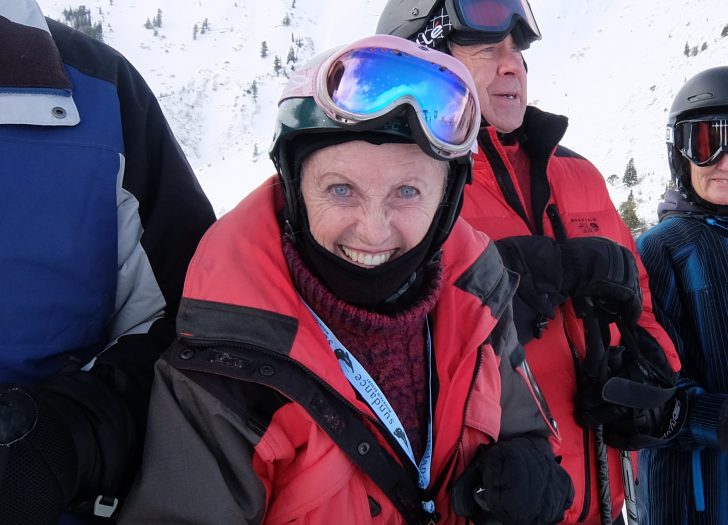
Barbara Stewart Anderson keeps going at 83.
Credit: Harriet Wallis

Barbara Stewart Anderson is like the pink Duracell bunny. She keeps going and going. She lives by her philosophy: “If I can do it today, then why not? I may not be able to do it tomorrow.”

Her accomplishments prove her philosophy. She scuba dived the Great Barrier Reef, completed seven treks in Nepal, rode a yak in Tibet, heli-hiked in British Columbia, and reached the summit of 13,679 foot high Mona Loa in Hawaii. What makes it remarkable—she did it in her 60s.

Looking back, Barbara grew up in the era of the 1930s, 40s, and 50s when women observed strict gender roles. But she was never strapped by the expectations of society. Instead of feeling suppressed or confined, she picked up speed. She has always been a woman ahead of the time.

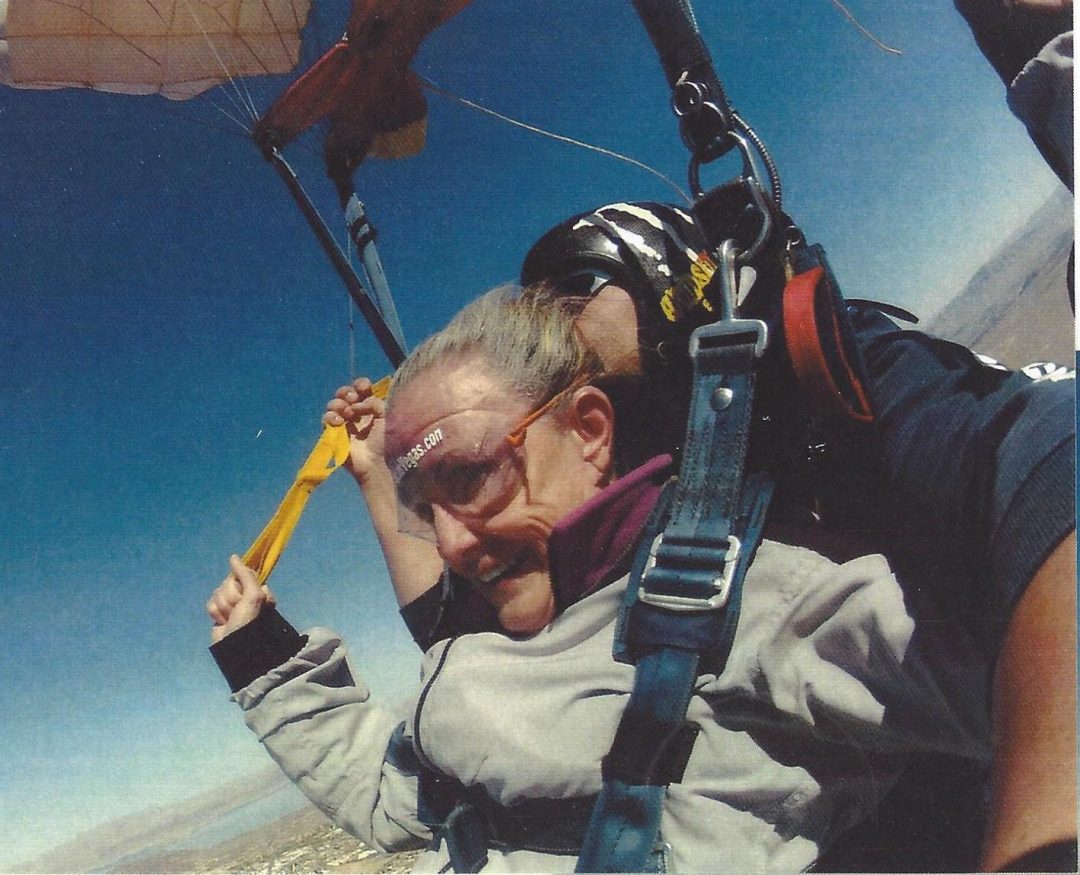
Her list of accomplishments keeps growing. Just 5 years ago, she sky dived, and she also summited 19,341 foot high Mt. Kilimanjaro, the highest point on the African continent. She was 76.

Growing up loving the outdoors

Her passion for unbridled outdoor adventures began when she was a youngster.

Her family homesteaded in the beautiful North Fork of Provo Canyon. Her dad, Ray Stewart, built a little cabin near the base of Mt. Timpanogos. During the summers, Barbara and her siblings roamed the hills and hiked to the waterfalls. It inspired Barbara to a life of over-the-top outdoor adventures that continues to this day.

WWII changed the course of lives and skiing

During WWII, the little Stewart cabin became headquarters for training the Civilian Defense Ski and Mountain Corps—sort of a civilian version of the military’s 10th Mountain Division. In addition to first aid and other skills, ski pioneer Stewart taught the recruits how to ski. And that fanned their enthusiasm to continue skiing after the war.

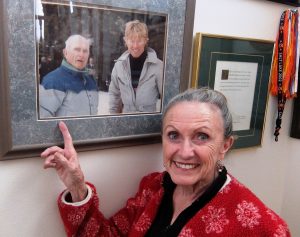
Barbara with photo of dad Ray and Robert Redford.
Credit: Harriet Wallis

When the war ended, Stewart, along with legendary skier Junior Bounous and others from the Defense Corps, cobbled together a rope tow. Stewart bought 1,200 feet of new manila rope for $61 and an old truck for $125 to power the tow. Using written instructions, he learned how to splice the rope into a loop — and it worked. It was the first ski tow in the area.

The tow created new challenges for the whole family. As the oldest child, Barbara was often called on for help. The tow was powered by car batteries, and nine-year-old Barbara helped her dad the lug heavy batteries on and off the mountain so they wouldn’t freeze at night and lose their charge. She also learned to run the snack bar, punch ski tickets and help skiers onto the tow. It was all part of growing up in a ski pioneering family.

As skiing quickly became popular, they built a 50-meter ski jump and raced on the Mt. Timpanogos glacier in the summer. In 1948, famed skier and Olympic coach Alf Engen set the Giant Slalom course on the Timpanogos glacier. The event drew notable racers including Jack Reddish, Dev Jennings, Corey Engen, and Olympian Suzy Harris.

Ray Stewart modified skis so young, energetic Barbara could ski on the glacier too. By the time she was 12, she was winning junior ski tournaments in Downhill, Slalom and Cross Country.

The burgeoning little ski area grew, and it was named Timp Haven. Years later Robert Redford bought it, and it became Sundance.

Stewart was inventive and creative with a passion for tackling the difficult and never giving up. Today, ski pioneer Ray Stewart’s name lives on at Sundance. The main lift is named for him: Ray’s Lift.

Now at 82, Barbara is an icon of taking on challenges and achieving results much like her dad did. She skis regularly with the Sundance Seniors, walks three miles a day, works out at the gym, took first place in a 5K race, and is active in her church and community. Nothing stops her. Many would be exhausted trying to keep up with her.

Over the years, Barbara built a collection of more than 600 miniature skier figurines that are on a rotating exhibit at the Alf Engen Ski Museum at the Olympic Park in Park City. Visitors can also learn about avalanches, sit in a real bobsled, try their knack at interactive ski jumping, and more.

The $10.5 million museum was funded entirely by private donations, including donations from Utah’s famed and philanthropic Quinney and Eccles families. There is no admission charge. Visit and enjoy the museum.

To read more from Harriet click here for her stories on SkiUtah. 

Barbara sky diving. Quite a selfie.
Credit: Barbara Anderson


Seniors Skiing

This Week In SeniorsSkiing.com (March 2)

Introducing NEW DISCOUNTS FOR SENIORS, Mystery Pic, Smuggs Resort Review, Injury Lesson, Women XC Gold.

This week, SeniorsSkiing.com is very happy to introduce Discounts For Seniors, a new feature that brings real savings to our readers.  All our research surveys have revealed a constant finding: Senior snow sports enthusiasts—our readers—are looking for discounts. Knowing that, we have curated a number of vendors who have agreed to offer interesting products at 15-20% and more discounts to our readers.
From the beginning of SeniorsSkiing.com, we have recognized that our readers are not just winter sport participants; our readers are active all year round—hiking, kayaking, sailing and lots of other sports in non-snow months.  You also have grandchildren.  So our select collection of vendors is eclectic, presenting ideas for products you can use as well as for gifts you can buy for friends and families.

To access our Discounts For Seniors page, click here.  Note the discount code on the ad and click through to the vendor’s site to order.

We are quite excited about this new offering to our readers.  Please let us know what you think.

CLICK HERE TO ACCESS DISCOUNTS FOR SENIORS

This Week

Big, high, dry, up in the sky: That’s Taos. Credit: Val E.

Another Mystery Glimpse to puzzle over. This has proven to be a popular feature, highlighting historical photos from ski museums across the country. However, for the first time, we had a submission of a mystery photo from a reader.  Perhaps you have a curious old picture from the past or about ski lore you might want to post.  Let us know.

Correspondent Val E. reports on Taos, the high country ski area in New Mexico which seems to cast a spell on people who ski and live there.  Perhaps it’s the altitude. Click here to read his Taos review.

In another Resort Review, correspondent Tamsin Venn tells us about Smuggler’s Notch, way up in Vermont, next to Stowe. She reports on intermediate trails that range from mountain top to bottom which offer seniors a chance to ski confidently. At the same time, did you know that Smuggler’s has the only triple black diamond in the Eastern US? Lots of variation for families.

Unfortunately, correspondent Yvette Cardozo had a “routine” fall that turned into a significant injury.  She opines on recovery and reflects on lessons learned.

Finally, XCSkiResorts.com publisher Roger Lohr offers his thoughts on the amazing first gold Cross Country Olympic medal for the women’s team sprint.  His prediction: Cross Country racing is going to get a big boost from this historic victory.

Thanks to all readers who have offered to financially support SeniorsSkiing.com. Your response is gratifying; we very much appreciate your help in defraying costs.

On to March. We hear the Sierras are getting big snow at last; let’s hope the crowds come out.

Meanwhile, tell your friends about us.  There are more of us every day, and we aren’t going away.

There are lots of blues at Smuggler’s for cruising seniors.
Credit: Tamsin Venn

New Discounts For Senior Skiers!

Select Vendors Are Offering Special Savings 15-20% Or More Off.

Starting now, you can access special deals just for SeniorsSkiing.com readers on our new Discounts For Seniors page.

From our surveys of our readers, we’ve learned that senior snow sports enthusiasts are interested in discounts.  We’ve shown you where you can ski for free or almost free at 115 ski resorts in the US.  That directory is available for free for subscribers-only. We’ve also created a group on Experticity for qualified subscribers which offer discount deals on gear and clothing. Also free to readers.
Now, we are working with a group of vendors who have interesting and relevant products to offer our readership and at a discount. There are deals for you, your significant other, your grandchildren, all with impressive 15 to 20% or more dollars off.

These deals can be accessed by clicking on the ad you’re interested in on our Discounts For Seniors page.  Note the discount code, click through, and order directly from the vendors’ website.

Over the next two months, we’ll be spotlighting our Discounts For Seniors vendors. We are really interested in hearing from you about how you like the deals and the products.

This is just the start. We will enlist even more vendors for you.

Here are the vendors who are participating:

  • After Shokz Headphones: Wireless and wired bone conduction headphones and accessories
  • Apex Boots: Comfortable ski boot without sacrificing performance
  • Brilliant Tape: Reflective iron-on, stick-on reflective tape
  • CP Helmet: Elegant, built-in visor helmets
  • Epic Water Filters: Water bottles, pitchers, jugs with filtration system
  • Hemp Honey: Combines honey, whole-plant hemp extracts (Hemp Cannabinoid Oil Extract), herbs, spices
  • Know Brainer: Ketogenic creamers, coffee, teas, hot chocolate, convenient, sugarless, good fat powered
  • L-Bow: Family-owned mittens, hats, gloves for adults and (grand)children
  • Omeals: Self-heating, fully cooked meals for outdoorsy folks
  • Orsden: High performance snow and ski wear at affordable prices
  • OS1st Compression Sleeves and Braces: Relieve knee and plantar fasciitis pain, medical grade quality
  • Parakito: Innovative mosquito repellant with active, natural ingredients, DEET free
  • Stabil: Traction footwear for ice, hiking, golf, running, kids
  • The Tea Spot: Handcrafted loose leaf teas and creator of Steepware®  tea infusers
  • Tipsy Elves: Outrageous clothes to make life fun, St. Patrick’s Day, Patriotic, Ugly Christmas sweaters, more
  • Wild West Jerky: Utah-based, family-run jerky snacks with wide variety of flavors and meat options

CLICK HERE FOR DISCOUNTS FOR SENIORS

SeniorsSkiing Guide: Taos—High, Dry, And Full Of Culture

Some People Say The Best Four Letter Word About Skiing Is “Taos.”

Big, high, dry, up in the sky: That’s Taos. Credit: Val E.

When I looked up at the main slope, I was speechless, then the words came—steep, moguls, trees. Wow. At 12,000 ft, Taos’ Mt. Kachina is close to the top of the World.

The resort is located in northern New Mexico, which one seasoned skier described as “a mix of a desert and mountains, unusual and beautiful.” The Blake family discovered, founded, developed, and an Taos Ski Resort since the mid fifties.

In 2013, new management built new lifts, hotels, and other facilities. The result is a cute, small, Euro-style village with an obvious French-Swiss touch and a huge mountain with well groomed slopes, moguls, cornices, glades, and trees almost up to the very top. Snow is quite dry there because of the altitude. Taos is a breathtaking resort in more ways than one; the town is the highest municipality in the US.

Secret Knowledge

Note single chair on left. Credit: Val E.

Kachina Peak is the highest peak reachable by a triple chair in the North American Continent.

Resort lodging options include hotels, condominiums, and bed and breakfasts. The new jewel of Taos is the luxury Hotel Blake, named for the resort founders. The interior is elegant, the restaurant is high-end, and the rental area looks like a high tech lab.

The Ernie Blake Snowsports School is one of the highest rated ski schools in North America. Ski instructing services for groups, especially for ski clubs, were quite reasonably priced.

One of the best parts, besides the slopes and snow, is super friendly employees. Ski lift operators and ski patrol people were waving and smiling like old friends. One ski resort host kindly ride with me just to introduce to the mountain.

Community

During my week stay at the resort, I talked to a few local skiers, some of them were from the 50+ category.

Here is what an expert skier, originally from Hollywood, said: “I moved to Taos after 16 years in Los Angeles in the film business. Taos is a ski town which has world class skiing and an ancient cultural heritage—one of the oldest in the US. It’s also an artist’s town and has dozens of galleries. Taos gives you access to a wider choice of restaurants and apres ski activities. It is great for couples where one doesn’t ski or who like cultural activities.”

A very confident female skier shared: “We came to live in Taos from NYC after years of skiing here. My husband doesn’t ski anymore. He wanted to retire in a friendly community with a synagogue. Now I ski Kachina peak almost every day.”

Another young looking retiree told me: “I am from St. Louis, flat country. I ski in winter and hike in summer. People come to Taos because you can be whoever you want to be, and nobody is asking questions here.”

Taos Ski Valley is a rugged mountain, pioneered by people who put skiing first and all else second. If Virginia is for lovers, then Taos is for skiers!

Taos By The Numbers

2.5 hours by car/bus from Albuquerque International airport

4 espresso bars, including one ski in, ski out

15 lifts

25 miles to Colorado

$105—one day adult ski ticket (18-64); $85—one day senior ski ticket (65-79); 80+ year old – ski free

$408 ski pass for 6 days (65-79); shorter day pass combinations are available

110 trails 55 for beginner/intermediate and 55 for advanced/expert skiers.
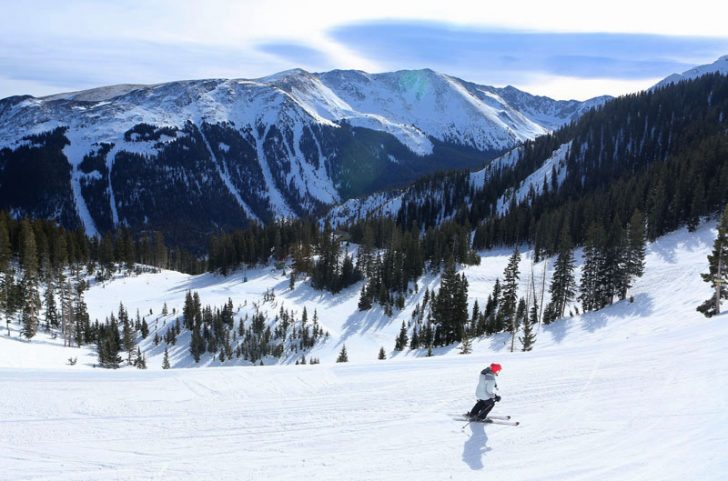
305 in—average annual snowfall

7,000 ft—Taos city altitude

9,207 ft—Taos Ski Resort

12,481 ft—Kachina Peak

Click here for Trail Map

Click here for Taos Ski Resort Website

Trees up to the top are a trademark of Taos. Credit: Val E.


SeniorsSkiing Guide: Smuggs Not Just For Kids

Smuggler’s Notch Feels Like Way-Back-When But With Up-To-Date Conveniences.

There are lots of blues at Smuggler’s for cruising seniors. That’s Stowe in the distance.
Credit: Tamsin Venn

Smugglers’ Notch is the well-known kid-friendly ski area in northern Vermont. That same dedication to fun also makes it a good area for seniors.

Start with the intermediate trails winding off the two upper Mountains—Madonna, 3,640 feet, and Sterling, 3,040 feet. They urge your skis to turn as they follow the mountain’s contours in delightful turns and drops.

Smuggs has the only triple black trail in the East—Black Hole— with a 53 degree slope angle.  But there are also many ego-boost blues like Madonna’s Upper Chilcoot and Drifter, where you turn where the trail turns, and Sterling’s Thomke’s, Rumrunner, Hangman’s, Treasure, FIS, and Black Snake.

Doable glades include Red Fox, Three Mtn., and several “variations” of the trail you are on. The goal here is to always let you have access to the woods should you so desire. Bring them on!

Glade skiing is well known here. When you ride up Sterling, you see Madonna’s wooded flank dropping into the ravine below. All those glades are skiable or snowboardable, says Public Relations Director Mike Chait enthusiastically.

Furthermore, all trails are well defined from top to bottom so no worry about ending up on a black diamond trail by accident and all trails funnel to their respective base areas for pro-choice group skiing.

Meanwhile, The Village Center at Morse Mountain is served by four lifts and 99 percent beginner terrain where you can ski at a peaceful pace.

Views? From the Catwalk, you can look across the Notch to Mt. Mansfield’s trails at Stowe. Remember when these two resorts were connected?

The experiences kindle feelings of New England skiing way back when, but with all the up-to-date conveniences. By not being overdeveloped, Smuggs maintains a nostalgic feel.

Somewhat remote (although only 30 miles from Burlington), midweek is quiet, and the powder stashes linger.

Seniors are looked after. The Smugglers’ Notch 55+ Club is a 26-year-old club that meets every Wednesday for skiing and camaraderie. It has more than 100 members, and about 30 to 35 skiers show up each week. Coffee at 9 a.m., followed by Alpine or Nordic skiing and snowshoeing, then a 1 p.m. program. Membership is $30 for the season, which includes continental breakfast, 50 percent discount off lift tickets, and other discounts.

Most members are Vermonters who live within an hour radius of Smuggs with a wide range of skiing ability, including ex ski patrollers and instructors. Guests and new members are warmly welcomed, says Deborah Pomeroy, club president.

New this winter is FunZone 2.0, a 26,000 square foot indoor playground, a $4.2 million investment reflecting the area’s decades-long focus on family fun. Laser tag anyone?

The Facts

Vertical Drop: 2,620 feet.

Total Trails: 78. 300 acres of marked and patrolled terrain. Plus 700 acres of unmarked and unpatrolled terrain. 19% easier, 56% intermediate, 20% expert, and 5% extreme.

Snowmaking: 62 percent

Total lifts: 8.

Longest run: 3 miles, from the Madonna summit to the Village.

Places to eat: Village Center, Morse Mountain Grille & Pub for salads, soups and burgers. Music: The Friendly Pirate

Lift tickets: Senior 65 and older, $58 day, $64 holiday. Season Pass: (ages 70+) $70

Click here for Trail Map

Click here for Smuggler’s Notch website


Learning From Injury

Correspondent Ends Her Season In “Routine” Fall, Provides Us With Lessons Learned.

[Editor Note: We’ve heard correspondent Yvette Cardozo’s story numerous times, especially the part about immediate post-incident denial. Perhaps there is some biological reaction, perhaps a form of shock, that masks the pain of more serious injury.  In any case, her advice is well worth heeding.]

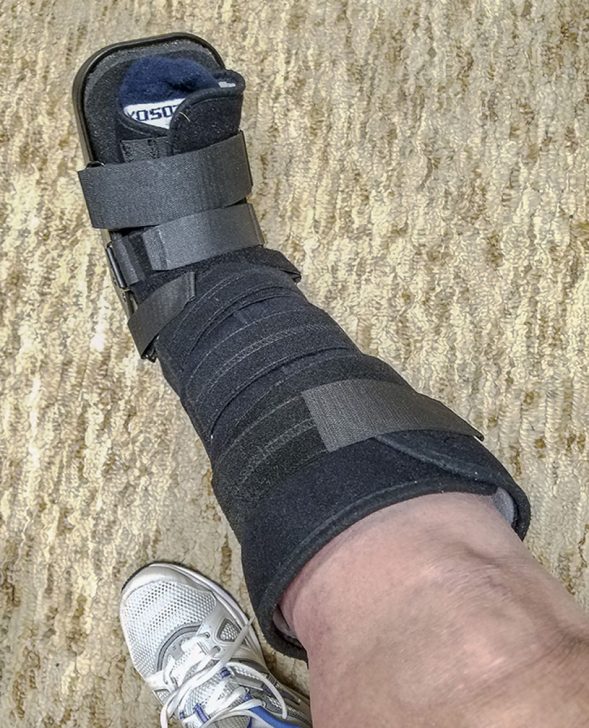
Igor, the medical boot, keeps the broken ankle stable.
Credit: Yvette Cardozo

I don’t remember exactly how it happened. It was the bottom of the last run. I was tired.  The snow had devolved into slick slush, and it was snowing and foggy. I caught an edge and before I knew it, I was on my back, one ski released, the other leg bent awkwardly. A few more turns on the trail, and I would have been within sight of the lodge.

A ski cliche if there ever was one.

My ski buddy came up and got my left ski off. I was sure that was an injury down there and knew enough not to try and stand. So we called the patrol. They came, strapped me into a toboggan and down we went.

Me, head first, on my back. If I could have gotten to my cell phone, I would have videoed the trip down. The view was like being in a soupy blender.

At the lodge, we got my boots off and decided the injury was to my right ankle—probably a bad sprain. I went home, actually driving myself. And went to a business event in downtown Seattle that night. Driving. In the rain. I still thought it was just a sprain.

Two days later, I gave up and went to a doctor. Indeed, it was not a sprain. It was a break. He called it a distal fracture. All these years skiing, all these crashes and I had never broken anything before. And this was an ankle. I didn’t know that was even possible with modern ski boot tech. Ankle breaks are the stuff of 1950’s ski lodge pictures —a guy in front of the fireplace with his leg in a cast, resting on a pillow.

But, I had just left a message for my boot fitter days before, saying my boots were getting loose. He came back into town and said, “Yup”. And also, yup, you certainly can break an ankle today skiing. He’s got three pins and a plate in his ankle to prove it.

The good news is I’m not in a cast, not on crutches, didn’t need surgery. I’m just wearing a medical boot (I’ve named it Igor) for six weeks. The bad news— my ski season was over three days after it began.

Yeah, at age 73 I don’t bounce like I used to. And yeah, I’m grateful it wasn’t a knee. Ankles heal. Knees are another matter.

I canceled one ski trip but am doing another where I will be writing about all kinds of non-ski activities as a non-skier and trying out something called a “snow limo” that gets non-skiers up on the hill, and also down, via a run at Sun Peaks Resort in British Columbia, Canada.

So there are a few lessons learned:

1. Don’t get sloppy about your gear. If you think your boots need re-fitting or your bindings need a check or your skis need tuning, do it NOW.

2. If you just want to do “one more run” and you are tired, DON’T.

3. Don’t assume you know what the injury is. If it’s swollen and getting black and blue, it may very well be a break. SEE A DOCTOR.

4. And don’t grind your teeth too much or overthink this. Get back into the gym or on your bike or walking or whatever when you can and get back into shape.

Snow Limo: Non skiers get up the mountain and down a ski trail.
Credit: Sun Peaks Snow Limo Tours.

This Week In SeniorsSkiing.com (Feb. 23)

Losing The Mind Game: Confidence Versus Competence, Mystery Device, SLC As Ground Zero, Buying Mountain Home Advice, History Ski Poster Explainer.

Thanks to those who have offered financial support to SeniorsSkiing.com. We very much appreciate it.

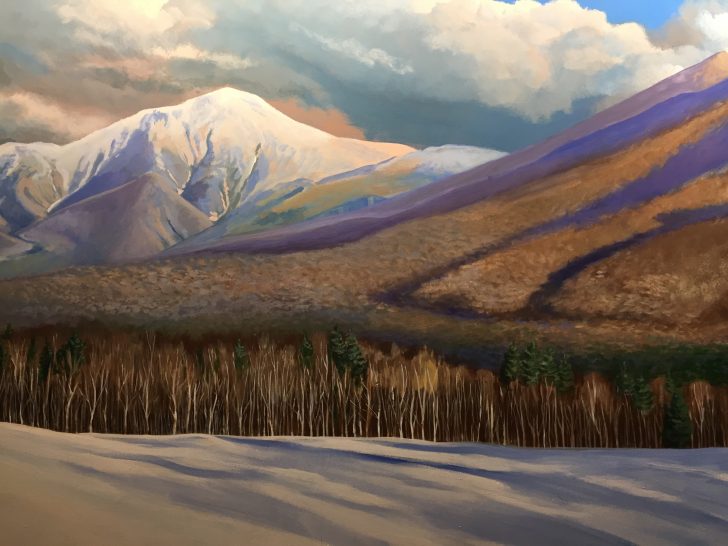
White Mountains, Franconia Notch, Cannon Mountain?
Artist unknown

Like you, we’ve been checking into the Pyeong Chang Olympics, watching the Alpine, Nordic and various snowboarding events with considerable admiration. Some performances were nothing short of heroic, and, in the case of US Womens’ Cross Country and Hockey medals, historic. We were in awe of the skill and grit these competitors showed the world.

We remember in the “old days” when we used to sit on our couch watching those Olympic events, the slalom, the giant slalom, and others, thinking to ourselves, “With a little practice, I could do this.” Well, maybe not the downhill. Admit it, you thought so, too, didn’t you?

In those days, we had confidence in our competence.  Of course, it was a bit of hubris, but we felt we could handle it. That was then.

We got into a discussion last week at the base lodge of a classic New Hampshire ski hill with an 80 year old gent who was skiing his first day of the season.  To many of us in New England, the late start was not unusual; the weather has been saw-toothed, up and down in temperature and mixed luck with precipitation.  Regardless, this man was a good skier, but he had some doubt about going out and that doubt cracked his confidence. He stuck to the Learning Zone, tight, apprehensive, reluctant to head up to the most gentle of greens that started at the top of the mountain.

Losing the mind game may be one of the biggest reasons seniors drop out of winter sports. Fear of injury, susceptible to cold, fed up with lousy conditions all contribute to wondering if you still had the chops to “do it”, leading to perhaps sitting out a season and then dropping out.

But this doesn’t have to be so. Perhaps the answer is to recognize that doubt is changing your attitude about snow sports, then return to the basics by taking a lesson, focusing on technique by practicing a lot on simple trails, and then practicing again. Performance research going back to psychologists Skinner and Thorndike show that good performance adds to confidence. Starting small, practicing skills over and over and then over again, builds confidence.

There are some implications here about how well ski instructors are prepared to deal with seniors who are tentative about their competence. We wonder if anyone has really designed a lesson in confidence and taught it throughout the PSIA.

Have you ever had doubt about your competence? Perhaps at the beginning of the season, perhaps after an injury, perhaps after a particularly bad set of days on the snow?  How did you deal with getting back? Or did you? We have an intuitive feeling this is a phenomenon many seniors experience but don’t talk about.

Share your story with us, please.

This Week

Co-Publisher Jon Weisberg looks at Salt Lake City as base camp for exploring the Wasatch, rich with diverse snow sports opportunities. He also has a really interesting interview with Nicholas Lowry, president and principal auctioneer of Swann Auction Galleries, about vintage ski posters. Contributor Joan Wallen, a veteran real estate broker, offers advice on buying a mountain home.  Finally our Mystery Glimpse reveals whose medals were at the New England Ski Museum and challenges you to identify a strange device.
Consider supporting SeniorsSkiing.com by clicking the banner above.  You can also support us by telling your friends about us.  And remember, there are more of us every day, and we aren’t going away.


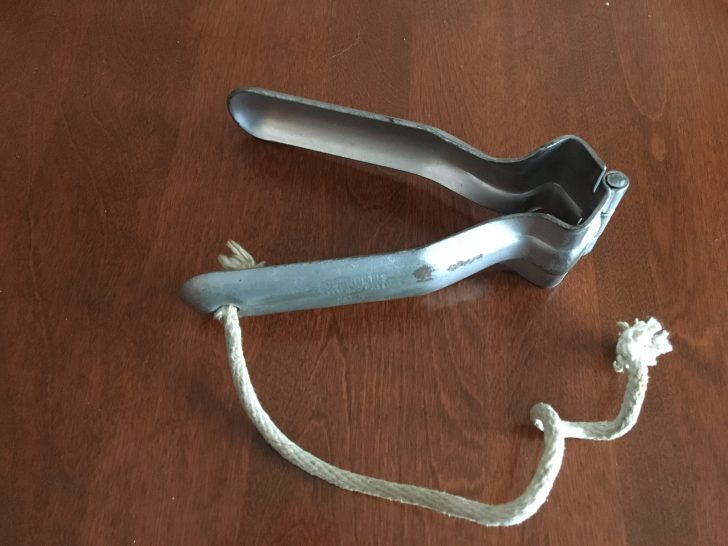
Mystery Glimpse: Hold On

You Have To Be A Certain Age To Have Used This.

Credit: John Emery

Thanks to reader John Emery, 65, from Meridian, ID, who skis as regularly as possible at Bogus Basin.  He sent in this memory from yesteryear.  Do you know what it was used for? By the way, John has been skiing since age 4 when he started back in Connecticut. There’s a bit of a nuanced hint in that last sentence.  Scroll down and write your guess in COMMENTS below.

If you have any “guess who/what this is”, let us know.  We are running these archival pictures in partnership with some outstanding ski museums sprinkled across the US and Canada.  However, if readers have a puzzler, we’ll consider it.

Last Week

Medals. Whose?

Yes, these are Bode Miller’s medals at the New England Ski Museum in Franconia, NH, at the base of the Cannon Mountain tram. Incidentally the new branch of the New England Ski Museum opens in North Conway this Saturday, Feb. 24, with a ribbon cutting.

These five medals represent Bode’s victories in the Olympics at Salt Lake City (2002) and Vancouver (2010).  Bode also won three other medals at the Olympics, presumably they are in a vault somewhere. (Source: Wikipedia)

  • Sochi 2014, bronze (super combined), bronze (super-G)
  • Vancouver 2010, gold (combined), silver (super-G), bronze (downhill),
  • Torino 2006, gold (giant slalom)
  • Salt Lake City 2002, silver (giant slalom, combined)

Bode can well be said to be the most successful American male Alpine ski racer of all time with eight Olympic and five World Cup medals over a 17 year career.

Despite his somewhat controversial start at NBC offering color commentary for the Alpine events at Pyeong Chang, we think Bode adds a level of expertise that is rare. He’s also into ski fashion and horse racing.  Interesting lifestyle for an ex-ski racer.

Buying A Mountain Home? Ponder This.

A Veteran Real Estate Agent Shares Tips You Might Not Have Thought Of.

[Editor Note: See Joan Wallen’s earlier article: Commute, Rent, Or Buy? for advice on renting.]

Condo on the mountain?

Want to buy a home in snow country? Perhaps you’ve rented and now decide that a second home is right for you. Or maybe you’re ready to take a leap of faith and go directly into ownership. What are some of the considerations you should take in to account?

Location is key. You may already have a favorite mountain or region that you like to ski. This makes it easier. If you don’t have a preferred area, think about what’s right for you and your family. Do you want to ski one mountain all the time or be in a location where you can reach several resorts? Will a specific resort be good for your family for future years? You don’t want to end up at an area that the kids will outgrow. Do you want to be slope side, in town or out in the countryside? Condo or single family home?

If you decide on a condo, investigate before buying. Is it a new development or an established community? If the development is older you would want to know the history of upgrades to the buildings and grounds, roofs, building siding, roads, etc? If there are amenities like a swimming pool or fitness room, what’s their condition? Are condo fees reasonable or so high as to feel like a second mortgage? Carefully review the condo association documents to be informed not only of their rules and regulations but also their financial status. The capital reserve fund should be adequate for both planned and unexpected maintenance costs so you don’t get hit with a special assessment.

House in the country?

Consider usage of the condo in the off season. If you won’t be coming to the mountains in the summer you may want to rent out the unit. Some associations enforce minimum rental periods of anywhere from two weeks to two months or more. This could impact your ability to secure a tenant. And if you want, or need, to rent it out, be sure it’s in a location where there’s a demand for summer activity.

Although condo fees add to the cost of ownership, there are advantages also. Outside maintenance fees cover snow removal, shoveling, lawn mowing and trash pickup.

Condo living is not for everyone, however. You may prefer the privacy of a single family home either close to town or in the country. But, you’ll have to arrange for plowing, perhaps someone to check on the house after a power outage and of course maintenance will be your responsibility. The advantages are privacy, perhaps a more tranquil setting and if you’re in the country you can likely cross country ski or snowshoe right out your front door. If you wish to rent it,  you’ll be your own boss, no association restrictions. And, more responsibility also. If something goes wrong, you can’t just call the office, you’re on your own to find a repair person.

Finally, does owning make financial sense? What will you do with the property in the off season? Is it in a location where you and your family will use it both in the summer and winter?

Buying a home in ski country is a big commitment but also can bring big rewards. As a gathering place for family and friends to enjoy the outdoors together, many lasting memories will be created. Family members who may not ski will still have a base from which to enjoy other outdoor activities, or to just hang out by the fire and read. And you don’t have to worry about making reservations, finding a place to stay after that two foot snowfall or lugging your gear and clothing back and forth. The home and your belongings are right there waiting for you.