Tag Archive for: seniorsskiing

Foam Roll Out Those Nasty Knots

An amazingly simple and immediately effective DIY massage relaxes stiffness and removes pain

The foam rolling technique of self- massage is exceptionally beneficial in increasing athletic performance, reducing pain, and helping with injury recovery/prevention —especially for older snow enthusiasts.

The medical term for rolling out is self-myofascial release.  “Myo” means muscle, and “fascial” refers to the fascia, a framework of
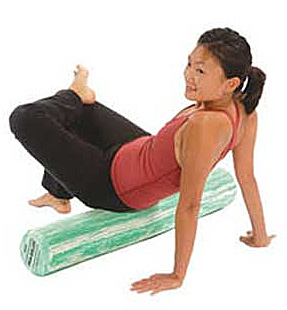
Foam Roller gently elongates tight muscles and relieves pain. Credit: Protherapy Supplies

Foam Roller gently elongates tight muscles and relieves pain.
Credit: Protherapy Supplies

connective tissue that covers the muscles and organs in one continuous structure from head to toe, like a tight sweater over our musculoskeletal system.  A restriction in one area can affect fascia and muscles in a completely different part of the body, not unlike pulling fitted polypropylene long johns in one direction and causing the fabric to twist and tighten on another part of the frame.

When fascia is restricted (e.g. injuries, surgeries, poor posture), the muscle beneath may not be able to return to its normal length after contracting, resulting in compromises in range of motion, blood flow, nerve stimulation, and lymphatic drainage.  This produces an inflammatory response and nasty little trigger points—or “knots”—that develop in the muscle and/or fascia. Any pressure applied to these trigger points can cause pain.

It’s not uncommon to feel areas of referred pain from another part of the body when compressing a particular trigger point, something to expect with the rolling device.

The good news about trigger points is that when pressure is repeatedly applied against a rolling device in a slow manner with the person taking FULL, DEEP breaths, the pain dissipates quickly, eliminating the myofascial

A massage ball can really concentrate gentle pressure on knots. Credit: Pro-tecathletics

A massage ball can really concentrate gentle pressure on knots.
Credit: Pro-tecathletics

restriction and allowing the muscle to elongate and nearby joints to move fluidly with increased blood flow to the area. The result is enhanced athletic performance.

It’s best to roll out before heading to the mountain.  Your muscles will be more supple, and your joints limber and pain-free. For maintenance, roll out daily, either at night or in the morning (or if you can, both.)  Start small and progress to longer sessions of myofascial release. While this technique works for all physical activities, skiers should focus on the lower body–hamstring, IT band, Achilles, quads. That said, don’t forget to include the back and any other areas of chronic pain. And for your (HIGHLY recommended) post-skiing stretch, roll out first.

You may have some pain at first, but that should subside after a few times rolling out. In fact, your muscles may soon crave the roller at the end of a long day on the mountain, even more than you crave that après ski beer.  And with some dedicated time to rolling out, don’t be surprised if your body feels years younger! It may hurt at first, but the pain should subside after a few times rolling out. In fact, your muscles may soon crave the roller at the end of a long day on the mountain, even more than you crave that après ski beer.

[Ed Note:  We have tried myofascial self-massage and can report immediate relief from lower back pain stemming from tight hip flexors and knotted piriformis muscles.  Your mileage may vary, but we are very impressed with this technique. As these videos show, you can use a foam roller or a massage ball.  We used a hard lacrosse ball to really focus on tight knots. Here are some links for rolling exercises and products:] 

Runners World Foam Roller Instruction Series

Finally, some rolling device vendors:
OPTP Foam Rollers

Orb Massage Balls


My Career As A Folk Singer

An Undergraduate’s Parody Ski Song Led To An Academic Achievement.

How did a ski silly ski song to the tune of a classic melody wind up on a Folkways record which became a classroom classic?


As an undergraduate at Michigan State University in the early 1950s I joined the ski club, and I learned, among other things (like how to kick turn), a bunch of ski songs. We sang them driving up to Caberfae resort near Cadillac and apres ski in a local joint, The Pine Gardens.

These songs—passed from person to person—were often parodies. A takeoff on “The Battle Hymn of the Republic” told the sad tale of an injured ski racer with the chorus “Gory, gory, what a Hell of a way to die!”

Another disaster-themed favorite re-worded the cowboy ballad “Streets of Laredo.”

When I was a-skiing the hills of Sun Valley,

As I was a-skiing Old Baldy one day,

I spied a young skier all wrapped in alpaca,

All wrapped in alpaca, and cold as der Schnee.

This lugubrious piece went on to quote the injured skier who “Once upon Baldy used to ski gaily” but then “caught a right edge, and I’m dying today.”

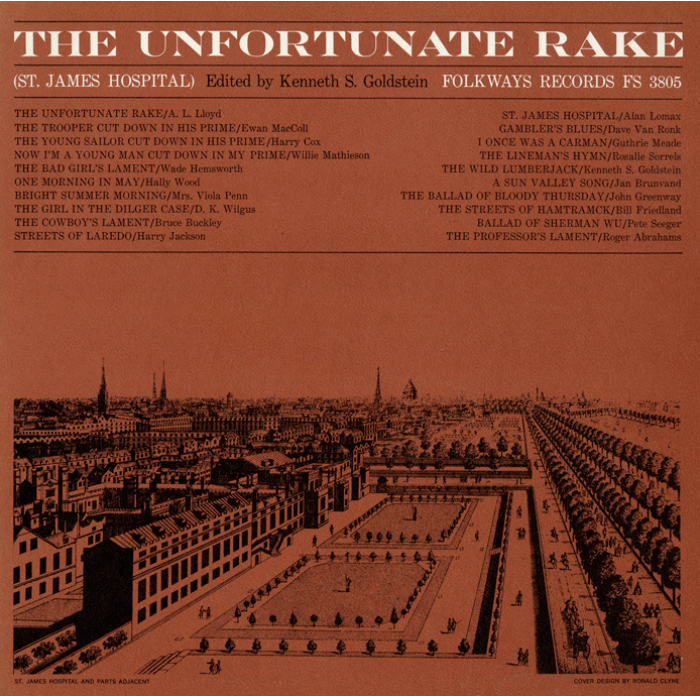
Later as a graduate student in folklore at Indiana University I took a course on British ballads and learned that our Sun Valley song was part of a much older cycle of variations on the theme of “The Unfortunate Rake.” That’s “rake” in the archaic sense of a dissolute person, a libertine.

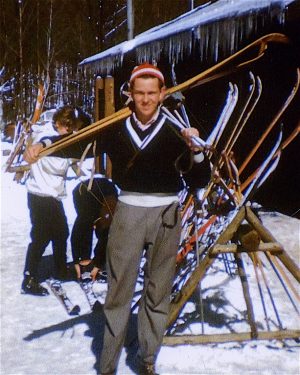
Author Jan Brunvand, occasional singer of ski songs, in the 50s.

In the original Irish and English versions the victim was a young soldier, dying from an STD, who describes his sad condition and requests a funeral: “Get six young soldiers to carry my coffin,/ Six young girls to sing me a song.”

In the cowboy song the funeral request became “Beat your drums slowly and play your fife lowly, /Get six of them gamblers to carry me along.” Our skiers’ parody called for “Six from the ski school to carry my coffin,/ Six little bunnies to sing me a song.”

One of my classmates, a rising star in folksong studies, was compiling a record of versions and variants of the “Rake” cycle. He enlisted me to sing the skiers’ version. Trouble was, I couldn’t sing worth a darn.

So we got another fellow student who performed in a local folksong group to plunk guitar chords to keep me more-or-less on key, and I managed to lay down a decent track, as we say in the business.

The LP was issued by Folkways Records in 1960, and there I was earnestly chirping my “Sun Valley Song” on the same disk as nineteen real folk singers, including Alan Lomax and Pete Seeger.

“The Unfortunate Rake: A Study in the Evolution of a Ballad” became a classroom classic used to illustrate how texts change as they are transmitted via oral tradition.

And you can listen to a sample of the “Sun Valley” song by clicking here. 

Even though this was my sole appearance as a folksinger, I make up in longevity what I lack in numbers. The Smithsonian Institution bought out Folkways and kept the entire catalog in print. Their website offers “The Unfortunate Rake “ by “various artists” as a CD or a download.

Or you can check it out on Amazon by clicking here.

I still like to sing an occasional ski song, to myself, usually while cruising western slopes, including a few times even those at Sun Valley.


Mystery Glimpse: Hold On

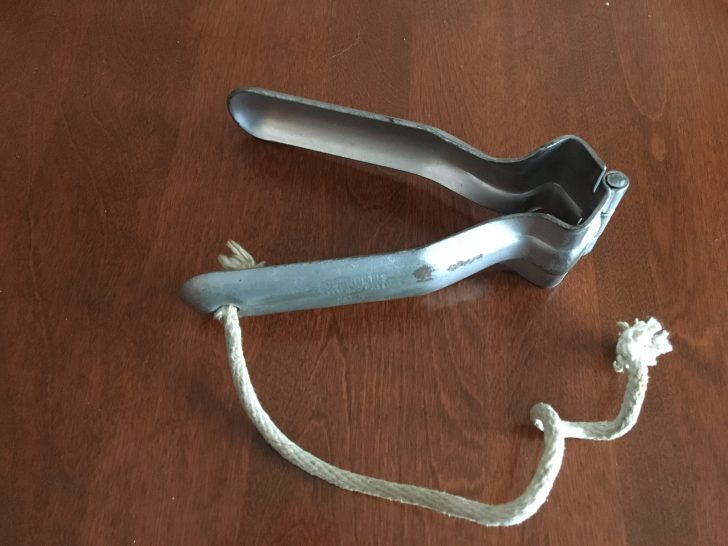
You Have To Be A Certain Age To Have Used This.

Credit: John Emery

Thanks to reader John Emery, 65, from Meridian, ID, who skis as regularly as possible at Bogus Basin.  He sent in this memory from yesteryear.  Do you know what it was used for? By the way, John has been skiing since age 4 when he started back in Connecticut. There’s a bit of a nuanced hint in that last sentence.  Scroll down and write your guess in COMMENTS below.

If you have any “guess who/what this is”, let us know.  We are running these archival pictures in partnership with some outstanding ski museums sprinkled across the US and Canada.  However, if readers have a puzzler, we’ll consider it.

Last Week

Medals. Whose?

Yes, these are Bode Miller’s medals at the New England Ski Museum in Franconia, NH, at the base of the Cannon Mountain tram. Incidentally the new branch of the New England Ski Museum opens in North Conway this Saturday, Feb. 24, with a ribbon cutting.

These five medals represent Bode’s victories in the Olympics at Salt Lake City (2002) and Vancouver (2010).  Bode also won three other medals at the Olympics, presumably they are in a vault somewhere. (Source: Wikipedia)

  • Sochi 2014, bronze (super combined), bronze (super-G)
  • Vancouver 2010, gold (combined), silver (super-G), bronze (downhill),
  • Torino 2006, gold (giant slalom)
  • Salt Lake City 2002, silver (giant slalom, combined)

Bode can well be said to be the most successful American male Alpine ski racer of all time with eight Olympic and five World Cup medals over a 17 year career.

Despite his somewhat controversial start at NBC offering color commentary for the Alpine events at Pyeong Chang, we think Bode adds a level of expertise that is rare. He’s also into ski fashion and horse racing.  Interesting lifestyle for an ex-ski racer.

Top Reasons I Enjoy Being A Senior Nordic Skier

In Response To Last Week’s “Top Reasons I Enjoy Being A Senior Skier”, We Hear From A Nordic-Loving Senior.

Credit: Dawn Green

Editor Note: Roger Lohr is publisher of XCSkiResorts.com, a top guide and center for cross-country news and destination information.

It seems the older I get, the more I enjoy Nordic (XC) skiing. It probably has something to do with being out in nature and also being confident on the skinny skis.

Roger Lohr is publisher of XCSkiResorts.com.

Nothing to Prove

There is nothing to prove but so much to enjoy going along a trail, whether going uphill or downhill. Well, truth be told, I enjoy the downhills much more than the uphills. Frankly, I completely endorse the two-car experience, where one car is left at the bottom of a trail and the other is taken to the top. Is this cheating? Maybe, but I am a senior XC skier; that’s my prerogative.

What A Feeling

It has always been enjoyable to help others with technique tips, but I’d be lying if I didn’t admit to really like when people appreciate my XC ski skills. Much of the enjoyment depends on having the right equipment and, with XC skiing, that is a very important factor. Narrow, fast, waxless skis for the tracks at a groomed XC ski area are great to enjoy the gliding sensation. Whether hearing the nearby brook bubbling, the fragrance of the pine or balsam trees, or stopping along the river to watch the water pass over ice-covered rocks, you find nature is at its transcendent best.

Downhill in the Forest

I also love using wider XC skis (either steel-edged or not) and a little more supportive boot with a wider binding system to go downhill in untracked snow on trails or off trails. Meandering and finding a way down in deep snow is what I call a good time, and the lightweight equipment makes it manageable. I often earn my turns by skiing up a hillside trail on waxless skis to capture some thrills on the slide back down.

The Mountain Road

I especially like taking the lift at Bretton Woods in New Hampshire’s White Mountains to ski back down on the Mountain Road trail whether it is groomed in a corduroy lane, roller coaster tracked, or is sporting a coat of any depth of new snow. That Mountain Road has never disappointed when I’ve taken friends on it.

Snowsport Brethren

My love of XC skiing includes no “attitudes” about my snow sport cousins on alpine skis, telemark or AT skis, snowboards, or snowshoes. We all can enjoy nature in winter and we all can enjoy mastering the snow for memories of the experience. In fact, on powder days I can think of nothing better than donning my snowboard hitting the slopes and floating down the powder paths to the lift to do it again.

Meeting on the Trail

I love to meet others upon the trail and chat about the trails, XC skiing, the equipment, and clothing. Sharing the outdoors with other active folks is great, and it always adds something to the outing.

Ski Anytime

With XC skiing, there is no midweek issue because you can ski anywhere there is snow and on any trail that has enough snow cover to support sliding and turning. Any day can be a great day XC skiing whether at the commercial XC ski area or up the street on a local trail network.

Ready for Anything

Being prepared helps, so on my outings I bring a small pack to carry water and other things that I might need such as dry gloves, a hat, compass, a scraper and spray to handle icing on the skis, and so on. In the old days, I’d carry a spare tip in case the ski broke, but that is a rare instance now as the skis are so well made. And speaking of the equipment, XC ski boots are so comfortable with the right sock set. It seems I’m out there in my bedroom slippers or barefoot.  Light, layered clothing works perfectly to keep me dry and warm. There’s no need for bulky insulation because XC skiing creates heat to ward off cold temperatures.

No Discounts Needed

When I get back home, I enjoy the feeling of accomplishment and respect for nature. I’m not concerned with senior discounts because XC skiing is inexpensive at commercial areas where a trail pass is less than $20-30, or it is free on any other trail that you may find around town or in the local park. Either way, XC skiing keeps you active, feeling great, and in touch with nature, and that’s a triumphant triplet.


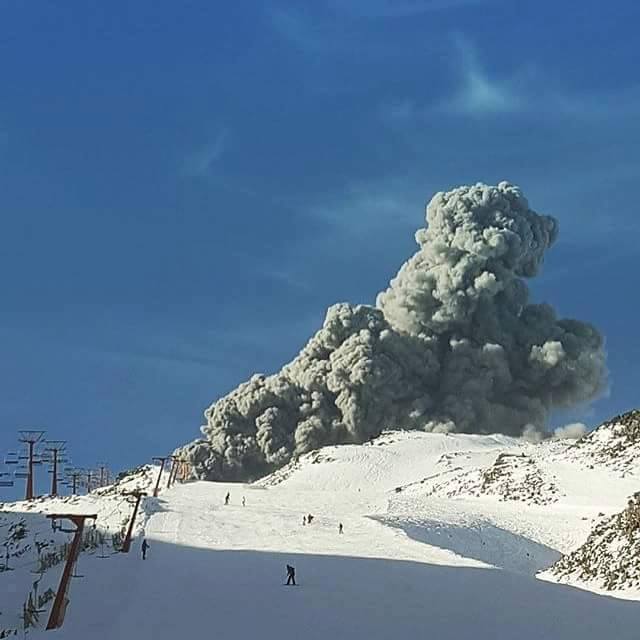
Volcano on Chile's Nevado de Chillan Ski Resort

This Week in SeniorsSkiing.com (Aug 12)

V for Vail, Vandals, Volcanoes…and Vacation!!!!

Volcano on Chile's Nevado de Chillan Ski Resort

This week we report on V‘s: Vail (purchasing WhistlerBlackcomb), Vandals (destroying the world’s oldest skier image), and Volcanoes (erupting in Chile’s Nevado de Chillan ski resort). We figure it’s an appropriate use of the alphabet, since both Mike and I are taking Vacations next week. He’s with family on Prince Edward Island. My wife and I will be on a road trip to Colorado’s Western Slope, hiking, soaking in hot springs, taking it easy.

Out of respect to the adjacent letter, “W,” we’re including a quirky video from Whakappa in New Zealand. If you’re in a hot and humid place, watch it. You’ll shiver!

If you’re contemplating purchasing a season pass, now is the time to do it. The cost of resort and multiple resort passes generally increases after Labor Day. Some resorts, like Snowbird, include a variety of goodies for early purchasers.

SeniorsSkiing is taking a break next week — our first since we started publishing in 2014. We’ll have some interesting and exciting developments to share as we approach the 2016-17 season. More on those when we return August 26!

In the meanwhile, keep doing what you do to condition for Winter. It’s going to be a great season for older skiers. There are more of us every day, and we aren’t going away!

Indoor Skiing? Bode Miller?

Ski In A T-Shirt. In July. In Colorado.

Bode Miller endorses the indoor, endless carpet as a way to practice and learn. Credit: Snobahn

Bode Miller endorses the indoor, endless carpet as a way to practice and learn.
Credit: Snobahn


There is a way to keep skiing year round.  As we have seen, the urge to keep skiing has been explored in many different ways.  This time, Snobahn, a “state of the art” indoor ski facility is coming to the US with its first facility in Centennial Colorado.

Hey, if you are learning or yearning, it’s a place to get some vertical done.  Snobahn says 30-minutes on the continuously moving carpet gives you the equivalent of 20,000 vertical feet.  That’s a work out.

Plus, there’s a lounge, and the price is right: $40 per rental and instruction. And Bode Miller is an enthusiast.  Pretty interesting.  Check out the video. And thanks Teton Gravity Research for the story idea.


der-ski-lehrer-bob-gratton

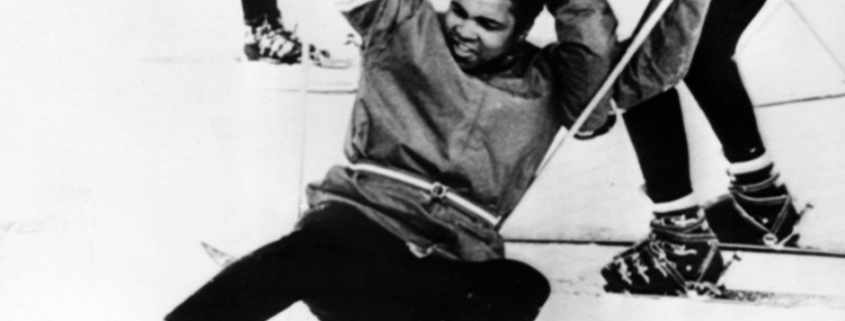
RIP Muhammad Ali

Never Stop Trying.

The Champ gets up at Mt Snow, Vermont

This Week In SeniorsSkiing.com (January 8)

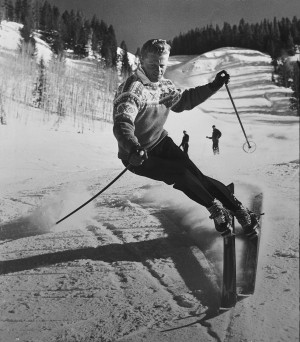
An elegant skier, Stein Eriksen was an Olympian, instructor, skiing ambassador and charming personality. Credit: Deer Valley

An elegant skier, Stein Eriksen was an Olympian, instructor, skiing ambassador and charming personality.
Credit: Deer Valley

Resort Reviews, Remembering Stein.

As part of our new SeniorsSkiing Guides, we have two new resort reviews to check out. These reviews are designed to focus on aspects of different ski areas—Alpine and Nordic—that are “senior-friendly.” New contributor Jan Brunvand tells us about Powder Mountain, north of Salt Lake City, the second largest ski area in North America. (Bet you didn’t know that.) He shares the incredible bargain “PowMow” has for certain seniors.

XCSkiResorts.com publisher Roger Lohr offers his advice to seniors on Alpine and Nordic skiing Bretton Woods in the shadow of Mount Washington, NH. He even gives you some starter-kit routes to follow, a helpful guide for newbie visitors.

Finally, Co-Publisher Jon Weisberg remembers his personal encounters with Stein Eriksen, the ski legend who passed away this week.

Previewing Next Week’s Issue

Coming up next week expect to see our Sierra Roundup about what’s happening in the snow-laden West, thoughts about ski instruction for seniors and more product reviews.  We’ll post our highly interesting poll results about Ski Patrollers lifting lift tickets. Have you participated in our poll yet?

We welcome your article ideas and comments; let’s hear from you!

Also, we are launching our Second Subscriber Survey soon. Look for it in your email and please help us by responding.

Tell Your Friends

Finally, tell your friends about SeniorsSkiing.com; send them a link and let them see for themselves what we trying to do. We are a grass-roots effort, a group of snow sport enthusiasts with an awesome team of correspondents and contributors who see a need to give seniors a voice in a youth-focused industry.  Our mission is to raise the profile of seniors who love snow sports, sharing news and ideas for “senior-friendliness” to all.  As one of the members of our Advisory Board said, “There are more of us every day, and we are not going away.”

SeniorsSkiing Guide: Brighton Resort

This Is The Utah Bucket List Resort Few Visiting Skiers Ever See.

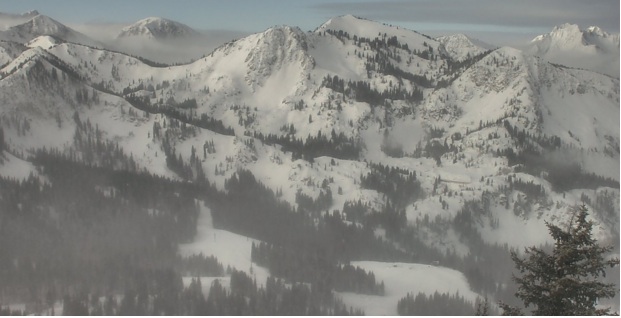
Brighton is a held in high regard by senior skiers for its friendliness and its powder. Credit: Brighton

Brighton is a held in high regard by senior skiers for its friendliness and its powder.
Credit: Brighton

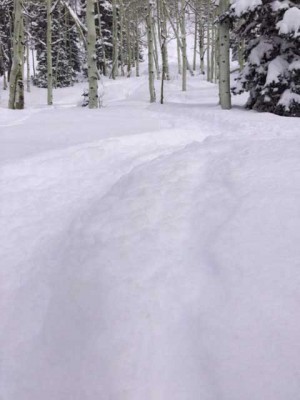
I kept hearing three sounds at Brighton on December 22, the first day of Winter, 2015. Early morning trail runs were knee deep. As more people arrived, I entered the forest. There were places where depths reached my thighs.

Sound One: Teen-fueled screech of Yippee! HooHaw! YowWee!

Sound Two: Less frequent and muffled thunder of avalanche bombs.

Sound Three: My quiet laughter in moments of pure joy.

Jon's tracks through the trees on his early morning run at Brighton. Credit: Jon Weisberg

Jon’s tracks through the trees on his early morning run at Brighton.
Credit: Jon Weisberg

Brighton is Utah’s oldest resort. It was started in 1936 and is at the end of gorgeous Big Cottonwood Canyon road, 14 serpentine miles, including two linked hairpin turns. It’s next to Solitude, and both can be skied for a slight ticket premium.

Brighton is a local’s favorite and known for its boarders. But it has a longstanding following of older skiers and should be on our collective bucket list.

Snow and Terrain

  • Big Cottonwood Canyon is a natural snow machine, funneled toward Brighton. It reliably receives 500″ most seasons; trading position for deepest dumps with neighboring Solitude, Alta, and Snowbird; often drawing the envy of Deer Valley and Park City. By road Park City and Little Cottonwood areas are a distance; by crow, they’re wing beats away.
  • The area has 1,745′ of vertical, rising from 8755′ to 10,500′. Advice to older skiers not accustomed to higher elevations: take it easy and stay hydrated.
  • Brighton offers the full suite of green, blue, and black terrain spread over 1000+ acres, all reachable by high-speed chair. There are 66 runs and an endless selection of glades. Parts of Millicent Bowl are steep, open, and wide.
  • The Sol-Bright trail connects Brighton and Solitude for those who want to ski both resorts. This requires purchase of the premium Sol-Bright lift pass.

Lot to Lift Access

  • The area is shaped like an amphitheater, with parking lot positioned as stage. Wherever you park, you’re not far from lodge or uphill conveyance; no tiring hikes from car to lift. A very nice arrangement.
  • Like many Utah resorts, Brighton is not far from the airport, making a good same day option for those arriving early. Brighton also offers reasonably priced morning- and afternoon-only tickets.
  • If you’re not staying at the mountain — there are only a few options — there are many places in the Salt Lake Valley, some as close as 20 minutes. Next door, Solitude has lodges and condos.

Culture

  • Two words: FRIENDLY and HELPFUL. People go out of their way to make you feel welcome. It’s real.
  • Brighton is old-in a good way. Lifts are modern, ski shop and rental shops, respectable. Other than coffee and roll in Brighton Lodge, I was unable to sample its fare. I’ll do that on another visit and update this report accordingly.

Bottom Line

  • Day pass (for 70+): $50; season pass, $525.
  • Excellent and easily accessed terrain.
  • Watch for boarders.

Trail Map

http://www.brightonresort.com/mountain/trail-map/

Brighton is at the end of Big Cottonwood Canyon, a natural snow machine. Credit: Brighton

Brighton is at the end of Big Cottonwood Canyon, a natural snow machine.
Credit: Brighton

The Late, Late Show: Killington Still Killin’ It

Skiing In New England In May?

Yes, it has been a curious winter and curiouser spring.  We had a snow drought in the West, a middling winter in the Rockies, and bitter cold in the East.  Now, it’s mid-spring, and we’ve heard of quite unexpected, new powder skiing in the Rockies and the Dakotas.  Did people actually go skiing out there after the lifts closed down?  Someone please tell us; we thought most areas in the region closed early to less-than-ideal snow conditions this spring.

Superstar Trail is open for business at Killington on May 22. Credit:  Paul Remillard

Superstar Trail is open for business at Killington on May 22.
Credit: Paul Remillard

Now we hear from SeniorsSkiing.com Subscriber Paul Remillard who reports he and his pal Joe spent May 22 at Killington, VT., on the bumps and has pictures to prove it.  He reports conditions were still top to bottom on Superstar with corn snow and a hard base between moguls.  “Sweet,” says Paul.

This unusual ski season refuses to end.

Pal Joe dismounts the lift at the top of Superstar. Note trees. Credit: Paul Remillard

Pal Joe dismounts the lift at the top of Superstar. Note trees.
Credit: Paul Remillard

Hydration Chronicles: An Easy Way To Keep Drinking

Carry Water On Your Back Like A Camel.

In my younger days, my friends and I launched our adventures without giving a thought to proper nutrition, hydration and so on. On one fondly remembered camping trip, provisions were down to shredded wheat, peanut butter and warm beer, and we still had fun.

Dehydration is pretty common and may be the reason for low energy.

Dehydration is pretty common and may be the reason for low energy.  Benefits of drinking water are many. No joke.

Now we have the benefit of decades of research in sports medicine, nutrition and physiology. When planning my slope time, I try to take advantage of this knowledge to give myself any boost I can, whether it’s diet, exercise or technique. Proper hydration, while an often-discussed topic, is easy to overlook when it comes to winter sports yet surprisingly easy to maintain.

Easy to overlook, because, well, it’s cold out! Cold, dry air and modern technical clothing which so effectively manages perspiration combine to mask how much you may be sweating even on the most frigid day. The “start/stop” exertion common to skiing, where you do a run then relax on the chair, can further hide the amount of water you may be losing through sweat. Medium intensity steady exercise can cause you to lose an average of two liters of water an hour; even if you halve that because the exertion in skiing isn’t steady, it’s still a significant loss. If you get cold, you can still lose through “cold dieresis”, where the body loses water through increased urine production.

The benefits of staying well hydrated are many: You avoid fatigue, confusion, irritability, dizziness. Your joints function better. When dehydrated, the body will draw water from the blood; decreased blood volume leads to colder extremities and greater susceptibility to hypothermia and frostbite. As dehydration increases the heart rate can rise as blood pressure drops.

For my water supply, I like to wear a hydration pack. I prefer a simple, minimal design like the CamelBak Bootlegger ($55) which is made to be worn under your jacket. This keeps the drinking tube from freezing and keeps the pack from shifting around as I ski, or snagging on a chairlift. It’s a simple matter to unzip my jacket a bit & pull out the tube to take a sip every 15 minutes or so,

Camelbak Bootlegger carries the right joy juice to keep hydrated. Credit: Camelbak

Camelbak Bootlegger carries the joy juice to keep you hydrated.
Credit: Camelbak

whether stopping for a breather on a run or while sitting on a lift. The Bootlegger holds 1.5 liters; usually I’ll only fill it halfway and press all the air out to keep it as flat as possible. It’s easy to refill when stopping for a break or lunch. The bulk is barely noticeable, and the water bladder is sturdy enough that I can lean back on the chair lift without fear of bursting it.

I use plain water, which makes keeping the bladder and tube clean very easy. Sports drinks like Gatorade aren’t necessary; they all contain some form of sugar, and some contain up to 150 mg of sodium per cup, which may be an issue if you need to watch sodium intake. I think electrolyte loss in skiing is minimal; it’s more an issue when hot-weather exertion causes copious sweating.

A hydration pack is a much more comfortable way to carry water than having a big bottle banging around in your pocket. Making access easy and convenient means you’re more likely to stay well-hydrated and keep the fun going!


Huff Post: What Senior Skiers Must Remember

Huffington Post Highlight’s SeniorSkiing’s Co-Founder: Is there something outdated about your equipment?

SeniorsSkiing.com’s Co-Founder Jon Weisberg has a new article on Huffington Post’s Post 50 blog, this time about the potential risks of skiing with old equipment and a lack of reasonable fitness in senior skiers.  Click here for the Huffington Post blog about what seniors should think about before heading downhill with those long, skinny skis, rear-entry boots and untoned muscles. 

Huff2

Magnesium Magic For Senior Skier Muscles

How’s Your Magnesium Level These Days?

Feeling fatigued on the hill despite intense pre-season training? Muscles cramping during or after a day on the slopes?

Magnesium deficiency may be the culprit.

Kale is a rich source of Magnesium. So is Spinach.  Popeye was right!

Kale is a rich source of Magnesium. So is Spinach. Popeye was right!

Magnesium, essential for normal muscular contraction and relaxation, is a key player in over 300 biochemical reactions in the body, including production of ATP, the main source of energy for our cells!

Without proper magnesium levels, muscle cramping and fatigue can result. Even slight magnesium deficiency can impair athletic performance and intensify post-workout soreness. Unfortunately, about half of the US population lacks adequate magnesium—with seniors especially affected.

Processed foods are devoid of potassium and magnesium, and magnesium rich foods like dark green vegetables generally are seen (and consumed) as a side dish.

Stomach acid is an important factor in absorption of nutrients, including magnesium. But stomach acid declines with age, often resulting in reduced magnesium absorption, a process further complicated by heartburn reduction drugs like Nexium and Prevacid.

We also lose magnesium as we age because of increased excretion by the kidneys, something compounded by regular use of diuretics (e.g. Lasix or hydrochlorothiazide), prescribed for high blood pressure. Alcohol consumption doubles the rate of magnesium excretion as well.

Here’s how to improve your magnesium intake.

  • Eat green leafy vegetables at least twice a day. These include foods like kale, spinach, chard, beet greens, mustard greens, and collard greens. Enjoy them raw and lightly cooked (magnesium is lost through boiling). Check out the SeniorsSkiing Mega Magnesium Smoothie recipe below.
  • Munch hemp seeds, a great source of magnesium! They’re low in a substance found in other magnesium-rich nuts and legumes that inhibits intestinal absorption.
  • Reduce reliance on acid blocking meds by identifying food sensitivities causing heartburn. This is best accomplished under the guidance of a physician or nutritionist.
  • Limit intake of diuretic drinks (e.g. alcohol, coffee,) or counterbalance their influence with more green leafy vegetables.
Magnesium-up your diet makes sense as you age. Credit: Vega-licious.com

Magnesium-up your diet makes sense as you age.
Credit: Vega-licious.com


If you follow those simple steps and still cramp on the mountain, consider supplemental magnesium. Magnesium chloride, magnesium citrate, and magnesium lactate are the types that absorb best. Dosages vary between 200 – 600 mg per day, depending on gender, age and health. People with kidney disease and those using bisphosphonates (e.g. Fosamax and Boniva) should use caution with supplemental magnesium. Consult first with a health professional experienced in nutraceuticals.

That said, magnesium pills are safer than the average over-the-counter NSAID, and a popular magnesium drink mix called Calm (available at natural food stores) can help with muscle cramping and soreness.

Once your body’s magnesium stores are replenished, you may find yourself getting the most use out of that season’s pass in years!

Recipe: SeniorsSkiing Mega Magnesium Smoothie

Try using organic ingredients, as they contain higher mineral content

1.5 cups milk of your choice (regular milk, hemp milk, soy milk, rice milk, coconut milk)

2 teaspoons unsweetened cocoa powder (a great source of magnesium!)

1 banana

1 cup kale, spinach, or chard

2 teaspoons hemp seeds

Blend and enjoy!

Huff Post: Second Thoughts On Returning To The Hill?

Huffington Post features SeniorsSkiing.com’s Co-Founder encouraging seniors to come back to skiing.

We get around.  SeniorsSkiing.com’s Co-Founder Jon Weisberg has posted an article on Huffington Post’s Post 50 blog about the concerns seniors have about either continuing to ski or returning to skiing and how the sport has changed to help accommodate them.  Click the Huffington Post Post 50 Blog to read more.  What are your thoughts?  What advice do you have for seniors who are thinking of leaving the wonderful world of winter sports?

HuffPost__


Watch for more Huffington Post Post 50 comments from Jon on senior snow enthusiasts.

Who Are You? The Ski Patrol Wants To Know

Carrying Identification Can Help The Ski Patrol Help You.

HIghly trained ski patrollers will be looking for your id. Credit: Deer Valley

Highly trained ski patrollers will be looking for your id.
Credit: Deer Valley

Accidents happen. And when they do, the ski patrol will likely be your savior. But the patrol needs your help. Here’s what you should have with you every time you ski or ride–just in case.

Carry identification. If you’re injured and can’t speak for yourself, the patrol will have to figure out who you are. Chris Erkkila, assistant ski patrol manager at Deer Valley resort in Utah, said: “We’re trained to look for ID and medical necklaces and bracelets.”

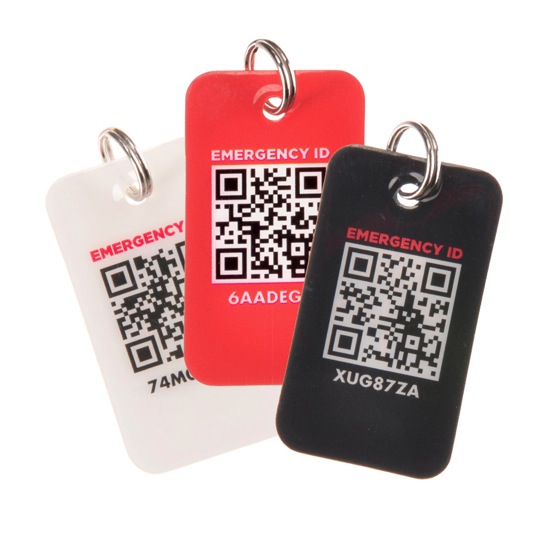
Emergency ID tags from Ecosperformance can be worn as bracelets, plastic tags or as stickers that can be applied to a helmet or even stuck on a phone.

EID Tags contain important profile information in case of emergency. Credit: Ecosperformance

EID Tags contain important profile information in case of emergency.
Credit: Ecosperformance

EIDs store identification, emergency contact and important medical information. When the QR code on the EID is scanned by a Ski Patroller’s smartphone, a skier’s Emergency Profile appears. A seven-digit EID number that can be entered into Ecosperformance website is a backup.

Other times patrollers have to be Sherlock Holmes to find even the most basic information about you—your name. They’ll look for a season pass that carries your name or look for your driver’s license. Sometimes they have to search your cell phone for information. “Often skiers don’t know each other very well, but a ski companion can tell us that the phone is in his injured friend’s right pocket,'” he said.

Carry a list of medications. “Seniors typically take more medications than others,” he said. Based on your condition, it might be vital for the patrol to know what prescriptions you’re taking. Same goes for allergies to medications

“Be sure to carry this information every time you go skiing,” Erkkila said. “Very basic things help us the most.”

And one more thing.

If you’re part of an accident, stay and identify yourself. And then there’s another aspect of accidents, he said. Sometimes there’s a collision between several skiers. Erkkila pointed out that the local city’s ordinance requires you to stay on the scene and identify yourself.  And, “We’re trying to educate the public about this,” he said. For those of us who are veteran skiers, staying on the scene after a collision seems to be common sense courtesy. But it’s also an official part of some resort areas’ regulations.

Afterglow: Visual Night Skiing Poetry

When Was The Last Time You Skied In The Dark?  We bet it wasn’t like this.

Credit: Sweetgrass Productions

Credit: Sweetgrass Productions

So far, this year’s pre-snow-season has seen at least two new dazzling ski movies hit the screens. First, we couldn’t help but notice Warren Miller’s 65th ski movie, No Turning Back, which we reviewed here and concluded it was the best yet. That movie is working its way around the country, showing in schools, colleges, theatres and even ski lodges. Click here for show times and locations near you.

Now, we have Afterglow, a short but incredible visual feast featuring night skiing in light suits over dramatic Alaskan wilderness terrain. Think about that for a second. Night skiing. Light suits. Alaskan wilderness. Think of the logistics. And you have troubles getting your grandkids booted up for the day.

Credit: Sweetgrass Productions

Credit: Sweetgrass Productions

This is a creative cinematic experience that goes into places we guarantee you’ve never seen before. Big time ski pros Pep Fujas, Eric Hjorleifson, Daron Rahives, and Chris Benchetler take slo-mo runs down night-time chutes and powder pillows with dramatic big lights capturing the flying snow. The best part is when they wear LED-light suits and head down into the darkness. The effect is otherworldly and quite beautiful. We had instant flashbacks to our college skiing nights at Song Mountain in Tully, NY, where the dark skies and arc lighting made us lose our sense of space and proportion. This movie brought those impressions back, leaving us wondering where, when and if we should try that sort of skiing again.

The film is presented by lighting manufacturer Phillips, Atomic and produced by Sweetgrass Productions, a far-edge filmmaker which is out to “capture the indescribable”. You can watch this one online; it’s just about 10 minutes. We bet you will be forwarding it to your skiing buddies.

All of this visual spaghetti adds to the building psyche-up for the coming season, a season which has already started in some places in Colorado and Maine.

Seniors See Anywhere: ThinOptics Reading Glasses

Accessible reading glasses, even on a ski lift, make reading fine print do-able again.

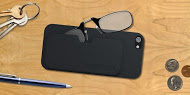
You’ll love these reading glasses, because you’ll always have them with you. No more passing glasses around to read the trail map or the menu. You’ll have your very own glasses, and you’ll know exactly where they are—because their case is on your phone. Now that’s the coolest thing since sliced bread.

ThinOptics "cheaters" are handy wherever your phone goes. Credit: ThinOptics

ThinOptics “cheaters” are handy wherever your phone goes.
Credit: ThinOptics

Teddy Shalon, the inventor and CEO of ThinOptics, is a serial entrepreneur who spent many years innovating in the Life Sciences. He’s constantly looking for ways to help people enjoy healthy and active lifestyles.

The “ThinOptics moment” happened on a bike ride with his friend. When they stopped for a break, his friend handed Teddy his iPhone and asked him to read a text message from his son. “Is there something wrong with your son?” Teddy asked.

“No, I just don’t have my reading glasses, and I can’t read the message,” his friend said. That’s when Teddy realized that phones are useless if people don’t have their reading glasses. On the ride back, the idea of ThinOptics was born—glasses that are always with you, right there on your phone.

Here are some of the nitty-gritty details. ThinOptics are powerful, durable and fit virtually every nose. They’re made from thermo-injection molded

ThinOptics super-convenient reading glasses can be stowed with your phone! Credit: ThinOptics

ThinOptics super-convenient reading glasses can be stowed with your phone!
Credit: ThinOptics

optical grade Poly-Carbonate which is shatter-proof and often used in safety and ballistic eyewear. The lenses are made by one of the largest and most advanced optical lens manufacturers in the world. The bridge is made of Nitinol—an alloy of nickel and titanium— which is 10x more elastic than spring steel, and it’s encased in medical grade silicon tubing and anchored in an injection molded Poly-Carbonate frame. ThinOptics readers come in three optic strengths from +1.00 to +3.00 and case sizes that will fit on your phone.

The bottom line: You get all this technology and convenience for under $40. Click for details on ordering. And there’s a great referral program, too.

Still not convinced? Check out ThinOptics’ torture test on this video.


Knee Replacement Isn’t For Sissies: Part 2

Tips to Kick Start Your Research

A Brighton, Utah, ski patroller with two artificial knees assured me there’s definitely life – and skiing – after knee replacement. Her unbounded success motivated me to launch into research. I’m glad I did my homework. What I learned affected the direction I took, the outcome and ultimately my success. Here are some tips to help you get started.

Metal Knee Model: Is there one in your future? Credit:  Harriet Wallis

Metal Knee Model: Is there one in your future?
Credit: Harriet Wallis

Don’t be duped. Learn about the whole knee replacement process. Don’t be duped by a well-meaning friend who says: “I’d go to Doctor Smith. He’s such a nice man.”

That would be as stupid as buying a car because your friend says: “I’d buy a Honda. It’s such a nice car.”

Do your own research

Get on the phone. Call athletes you even vaguely know who might have some insights on artificial body parts, surgery, and rehab. I called several ski instructors, an operating room nurse, and a 75-year-old mogul skier. I picked their brains .

I also plopped down at the table with ski patrollers while they ate breakfast in the lodge. My question to all of them: What should I learn about?         

They’ll all have different angles, so write their answers down or they’ll become scrambled mush in your head.

Knees, glues and cadavers. With clues you gather from the athletes about what’s important, get on the internet. Do not start on the internet. There’s so much information you’ll get overwhelmed and quit.

Read up on bone-to-metal adhesives, quad-sparing technique, risks, new knee limitations and more. Be sure to separate information from marketing hype. If you have the stomach for it, I recommend that you watch a YouTube video of a knee replacement on a cadaver.  Warning: it’s not for the faint of heart.

Find the top docs. Use the internet to review potential surgeons. They’ll all have illustrious credentials, so do some creative screening. Call each one’s office and ask what his/her specialty is. The phone-answerer should be well informed. Listen carefully. If you get mixed vibes or uncertainty as to whether this is truly a knee replacement guru, it should be a red flag.

Get the inside track. Physical therapists work with patients after surgery. They have refined knowledge about which surgeons give the best outcomes. But they might be reluctant to blurt out a doctor’s name. You’ll probably have to phrase it subtly: “Do you think Doctor A’s outcome is better than Doctor B’s?”

Good luck with your research. Check back for the next installment: Questions for surgeons and how to interview them.

 Note: This is a five- part series in which I describe my knee replacement journey with tips to guide you if you’re anticipating knee replacement. Part 1: Inspired by a ski patroller with artificial knees. This is Part 2. Upcoming will be Part 3: Interviewing surgeons and questions to ask. Part 4: How I found the right doctor for me. Part 5: Rehab and why to love it.

Warren Miller’s Newest: “No Turning Back”

This one is not to be missed.

Flipping out: Lofoten, Norway Credit: Oystein Aasheim

Flipping out: Lofoten, Norway
Credit: Oystein Aasheim

My first Warren Miller film was in the early 50’s. That was when the Master, himself, was present to narrate each showing. You knew the season was

Chute running: Mt. Olympus, Greece Credit: Josh Bibby

Chute running: Mt. Olympus, Greece
Credit: Josh Bibby

starting when Warren rolled into town.

I’ve seen many ski films over the years. After a while, despite camera tricks, ski gymnastics, and the latest soundtrack, they took on a boring sameness. How many times can you watch a daredevil huck the big cliff?

But I just watched Miller’s newest production, “No Turning Back”, and I’ve gotta tell you, this is not to be missed. It is a beautifully shot travelogue of some magnificent lines carved through some of the world’s best terrain.

For the SeniorsSkiing.com crowd, there’s a segment shot in Chamonix featuring a few 50+ skiers (52 and 60) and filled with wisdom about aging and skiing. One line sums it up: “When skiers say 50 is the new 40 (I’d make that 70 is the new 60), what they’re really saying is, Thank you, fat skis!”

“No Turning Back,” Miller’s 65th film, is narrated by Jonny Moseley, who, in his own way, channels the Warren Miller feeling with artful script laced with philosophy and humor. Interspersed throughout are great snippets of skiing history, including a northern Norway search for a ski that was carbon-dated to 3200 BC.

There’s a beautifully shot segment in steep powder runs in Cordova, Alaska, boarding in the bottomless powder of   Hokkaido, Japan, and a piece on skiing in Greece, where there’s more than 20 areas less than two hours from the Aegean.

Two skiers hike and ski Mount Olympus while the narrator links it to Daedelus and Icarus.

A few hundred miles west, we’re introduced to two “speed riders” in Switzerland, guys skiing with paragliding kites, which allow them to huck enormous cliffs, touch down on a stretch of snow and get airborne within seconds.

Throughout, the film pays homage to female skiers, featuring several carving great turns on incredibly steep terrain.

Powder running: Chamonix, France Credit: Mike Hatrup

Powder running: Chamonix, France
Credit: Mike Hatrup

For me, the most enjoyable segment was shot in Montana with big mountain skiers Julian Carr and the charming Sierra Quitiquit. (Julian has done any number on mind-boggling cliff jumps, including a 210′ front flip in Engleberg.) Montana has many smaller areas known for steeps and deeps. And their towns, unaffected by contemporary ski culture, remain time-warped, non-commercial, and down-home friendly.

“No Turning Back” is being shown around the country (locations and schedule). If ski films are your thing, or if you’ve been away from that genre for a while, find a hall where it’s playing. Regardless of age, it will make you want to be on the hill.

Special Edition: First SeniorsSkiing Ski Area Survey Results

Free Skiing, Deep Discounts For Senior Skiers Plus “Senior Friendly” Awards

oldfashionedskierWhich areas are truly trying to accommodate 50-plus skiers? To find out, we surveyed 85 North American resorts. Several resorts stand out for giving senior skiers special attention and deals. They received the new SeniorsSkiing Skier Friendly Award. Those with the deepest discounts and best amenities received Gold awards. Those with better than average discounts received Silver Awards.

The survey had a 34 percent response and will be conducted annually. We hope that by asking the right questions for our readers, SeniorsSkiing.com will help drive greater recognition, discounts and amenities for senior snow sports enthusiasts.

SeniorsSkiing “Senior Friendly” Gold AwardsGold_Waterville_Valley_Resort

Of all respondents, six stand out with the best discounts and amenities.

  • Whitefish Mountain Resort, MT — Free skiing for 70-plus skiers
  • Hood Ski Bowl, OR — Free skiing for 71-plus skiers
  • Ski Whitewater, BC — Free skiing for 75-plus skiers
  • Alta, UT — Free skiing for 80-plus skiers
  • Lake Louise, AB — $20 season pass for 80-plus skiers
  • Waterville Valley, NH — Hosts Silver Streaks, the country’s longest running senior ski program. “We provide the structure and facilities; the members organize their own events,” explains Peter Sununu, Waterville spokesman. Members gather daily for coffee and pastries in a designated meeting area; enjoy mid-week NASTAR races, complimentary clinics, preferred parking, après-ski parties, awards banquets, other amenities.

Free skiing as a strategy to introduce the next generation

The percentage of all midweek senior skiers at resorts which offer free lift tickets for seniors is estimated to be about 50 percent. Mt. Hood Ski Bowl’s Hans Wipper explains the value of providing free skiing to the older customer, “We want to reward loyal skiers, and we want them to bring their extended families.”

SeniorsSkiing “Senior Friendly” Silver Award

Silver_Copper_MountainThese respondents had great discounts for seniors:

  • Sutton, QUE — 55 percent off tickets Tuesdays, January – mid February.
  • Okemo, VT — pre-December season pass purchase (includes Mt. Sunapee, Pico Peak, Killington, Crested Butte): 45 percent off for 65-plus; 70 percent off for 70-plus.
  • Ski Butternut, MA — pre-December season pass purchase: $125 for 65-plus
  • Sugarbush, VT — $199 for Mid-Week Boomer Pass for 65+ (was $99 before Sept 9).

Other Silver Awards went to:

  • Alpine Meadows, CA
  • Copper Mountain, CO
  • Vail, CO
  • Hunter Mountain, NY
  • Windham Mountain, NY
  • Deer Valley, UT
  • Snow Basin, UT
  • Snowbird, UT
  • Red Mountain Resort, BC
  • Whistler Blackcomb, BC
  • Mont Tremblant, QUE

Takeaways: Lift ticket deals are out there, especially for the early-bird, pre-season buyer. So are discounts in restaurants, rentals and other amenities. Look and ask.

We also encourage ski area management to consider the business benefits of catering to the interests of the senior skier: increased mid-week traffic, younger “tag along” full paying clients, and a loyal and vocal clientele.

Deer Valley Buys Solitude

Pre-Season Acquisitions March On Through the Wasatch Mountains

Will Deer Valley Change The Sign? Credit: CityWeekly.Net

Will Deer Valley Change The Sign?
Credit: CityWeekly.Net


There goes another one.  First, Vail scoops up Park City.  Now we have Deer Valley, a top-shelf brand, picking up Solitude.  Who’s next?

Here’s the full story from the Salt Lake Tribune.  And here’s the official press release from Deer Valley. Operations at Solitude won’t shift over until May, 2015.  We wonder if bigger is better when it comes to ski area ownership.  Remember conglomerate corporations from the 80s? We shall see, won’t we?

What do you think?

[Thanks to Harriet Wallis, SeniorSkiing’s correspondent in SLC, for spotting this one.)


Toast Your Booties: Two Ways To Keep Feet Comfy On Cold Days

No more wrestling with cold, stiff boots on a crowded ski lodge bench.

A few years ago, I indulged in my version of the middle-aged cliche: Instead of a red sports car, I snagged some very nice new skis and a serious pair of custom-fit boots. All was glorious but for one problem—the boots were 120’s, so stiff that by the time I forced my feet into

Plug your boot bag in for pre-ski warm-ups.  Ahhhh. Credit: HotGear

Plug your boot bag in for pre-ski warm-ups. Ahhhh.
Credit: HotGear

them in the ski lodge, I was exhausted, bathed in sweat and ready for a break. To the rescue came the Hot Gear Bag, a thoughtfully-designed, electrically-heated boot bag. Plug it into the condo wall or your car for the ride to the mountain, toast your booties, and you can ease into a deliciously warm and pliable pair of boots. If you have trouble with your back or hands, you will greatly appreciate how rigid ski boots become like slippers and easier to buckle, too. Depending on your boots and the weather, your feet stay warm and comfy for a few hours.

Pair the heated boot bag with  Boot Gloves ($29.95) from DryGuy to retain the heat, and you have a comprehensive warm-foot strategy. The Boot Glove is, well, a

Boot gloves can make a difference on cold, cold days. Credit: DryGuy

Boot gloves can make a difference on cold, cold days.
Credit: DryGuy

neoprene glove for your boot. For more on boot gloves, click here.

Heating feature aside, Hot Gear has a great bag, well-designed and sturdy. Zippered or mesh pockets are everywhere! Carry it with the grab handle or the removable, padded shoulder strap, stowable in a zip side pocket. The other side pocket opens to reveal fleece-lined sleeves for goggles and spare lenses. Another zipper on the back reveals backpack straps for a balanced carry and also an integral cable and lock for security. A bungeed helmet carrier on top zips flat when not needed, and a padded plastic foot pad can be deployed from the underside to provide a clean place to stand.  Now, that’s a clever addition. The connection cords for house or car outlets hide behind their own zippers in front. Sturdy rubber feet protect the bottom of the bag.

The large main compartment is surrounded with an electric heating pad. Select one of three settings, and your boots, gloves and anything else you can fit in are nicely warmed and softened, or, at the end of the day thoroughly dried out. Velcro-ed in place, the heating pad is easily removed for replacement, if necessary. Velcro-tabbed compartments hold extra socks, neck gaiters or base layers, and there’s a generous mesh pocket for all those small doodads. I keep an old hand towel at the bottom of my bag to soak up melting slush at the end of the day. When traveling, besides my boots, I can put my helmet, gloves, and several pairs of socks in the bag, and it fits nicely in the overhead bin on a plane.

There's a variety of heated boot bag models from Hot Gear. Credit: Hot Gear

There’s a variety of heated boot bag models from Hot Gear.
Credit: Hot Gear

I own the Classic 110-volt model ($179). Other models include the somewhat larger Pro ($199), a double-size for two pairs of boots ($249), the smaller Ajax ($149) and the Classic Trolley ($239) with wheels and a telescoping handle, variously available in 110- and 220-volt versions.

I’ve used mine for several years now and consider it an essential piece of equipment. I love the heating feature and am currently working on a recipe for Boot Bag Baked Brownies.

To find a retailers near you, click here.  Not near you?  Click here to buy direct.

Why Seniors Still Ski

A celebration of senior skiers, including American deep powder legend, Junior Bounous describing his descent of Snowbird’s Pipeline when he was 80 years young (he’s about to turn 89). Why does he still do it?

Tag Archive for: seniorsskiing

About Seniors Skiing