SeniorsSkiing Guide: It’s Hard To Beat Crystal Mountain On A Sunny Day

Pacific Northwest Resort Is Largest Plus Reasonably Priced For 70+ Seniors.

ASunnyRainier__

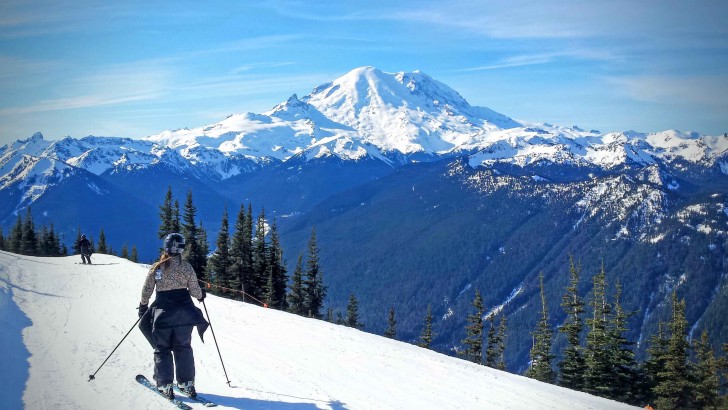
Pausing to take in a stunning view of Mt. Rainier from trailside at Crystal Mt. WA. Credit: John Nelson

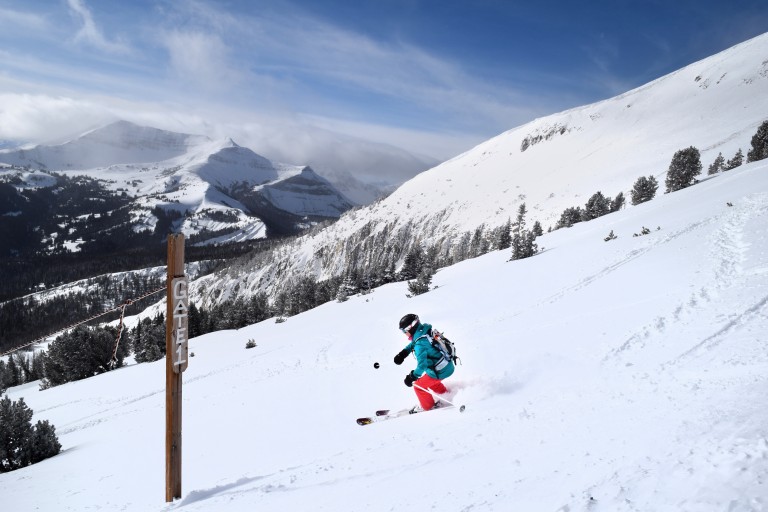
When I stepped off the resort’s gondola, I was treated to a stunning view of 14,410-foot Mount Rainier just 12 miles to the south. Not a bad way to begin a spring-like February day at Washington’s largest ski area.

I clicked in and started with some of Crystal’s cruisers. Many of these intermediate runs funnel into a high basin known as Green Valley, served by its own high-speed quad. The skiing was fast and fun.

Besides cruisers, Crystal has some truly thrilling drops on Northway and Chair 6 in the Campbell Basin. These two double chairs deliver skiers into the best of Crystal Mountain’s cliff-strewn double-diamond runs.
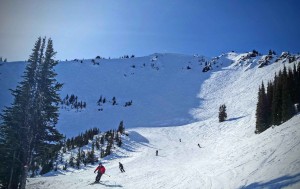
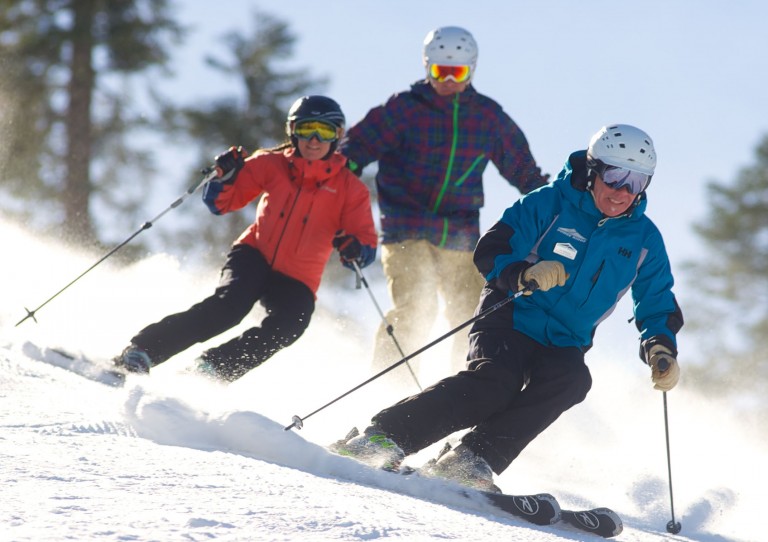
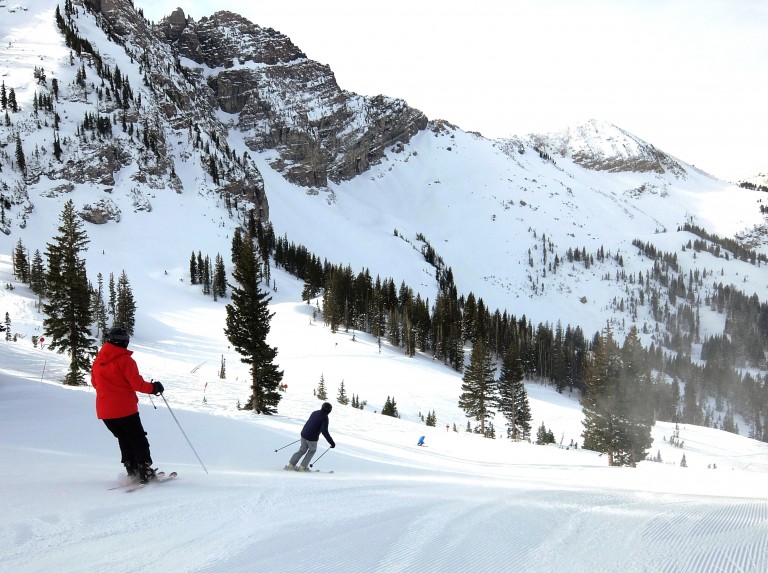
Skiers cruise down the intermediate run Lucky Shot at Crystal Mountain. Credit: John Nelson

Skiers cruise down the intermediate run Lucky Shot at Crystal Mountain.
Credit: John Nelson

Snow, terrain and more

  • Location: Crystal is situated off of State Highway 410, 39 miles from Enumclaw, Wash., a small town at the base of the Cascade foothills. The ski area is about a two-hour drive from downtown Seattle.
  • Snowfall: Nearly 500 inches a year fall here annually. Snowmaking was upgraded on the lower mountain following the drought year of 2015, and additional snowmaking improvements are planned for the mid-mountain.
  • Terrain: About 2,600 acres are spread over several lift-served basins. About 35 percent of the terrain is rated advanced; 65 percent is beginner and intermediate.
  • Vertical: Lift-served vertical is 2,602 feet (the base is 4,400 feet; chairlift access goes to 7,002 feet) but those willing to do a little hiking can stretch the vertical to more than 3,000 feet.
  • Lifts: One eight-passenger gondola, two high-speed detachable six-passenger lifts, two high speed quads, one fixed-grip quad, two triples, two doubles and one children’s surface lift.
  • Views: On clear days, Mount Rainier dominates the skyline, but you’ll see much more. The Olympic Mountains are visible to the west, as are most major peaks in the Cascade Range from the Canadian border to Oregon.

Lot to lift access

  • Crystal has five parking lots. The lower lots are served by free shuttles to ferry skiers to the base area. In addition, drivers can drop off equipment and passengers next to the ticket kiosk before parking.
  • Private bus and van services operate from Bellevue, Seattle and Tacoma bringing skiers to the mountain. Information is here.
  • Several private lodging options are available on the mountain. Three lodges and two condominiums operate at the base area; another lodge is about 15 minutes away on Highway 410.

Culture

  • Apres Ski: Washington’s best après ski bar, the cozy Snorting Elk, is located in the old-school Alpine Lodge just across a wooden bridge next to the top parking lot. You’ll find a well-oiled group of hard-core skiers swapping tall tales here at all hours.
  • Dining: On the mountain, there are two day lodges, one in base area, the other in Campbell Basin. The upscale Summit House restaurant at the top of the gondola offers sit-down dining with views of Mount Rainier.
  • Vibe: Because it’s Washington’s largest ski area, Crystal has a “resort-y” feel. While a great many hard-core skiers of all income levels come here, you’ll also run into some very rich folks.

Bottom line

  • Tickets are $72 for an adult all-day pass; $48 for 70 and older. When available, seniors 70-plus can get Five-Pack lift tickets for $215. Mid-week season passes for 70-plus are from $450 to $700, depending on dates.
  • Highest-elevation, biggest ski area in Washington.
  • Can be crowded on weekends; weekdays are empty.
Trail Map

Webcam

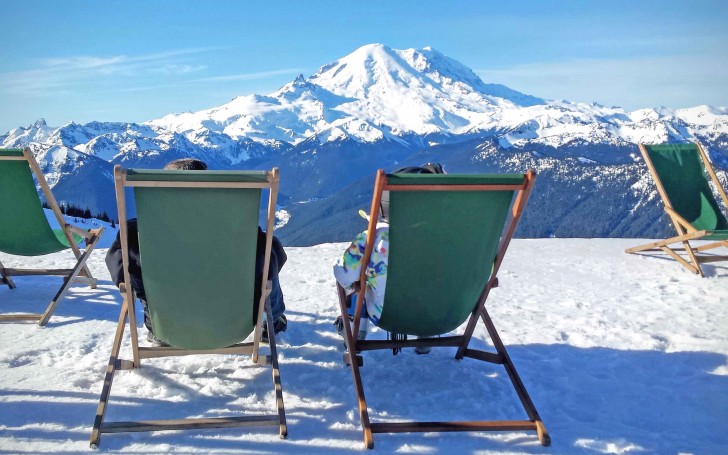
Skiers take in the view of Mount Rainier from the Summit House area of Crystal Mountain. Credit: John Nelson

Skiers take in the view of Mount Rainier from the Summit House area of Crystal Mountain.
Credit: John Nelson


B_Sun Valley 1950

Bebe Wood: Approaching 90 And Going Strong

Skiing Since The 30s, She Has Seen Lots Of Changes.

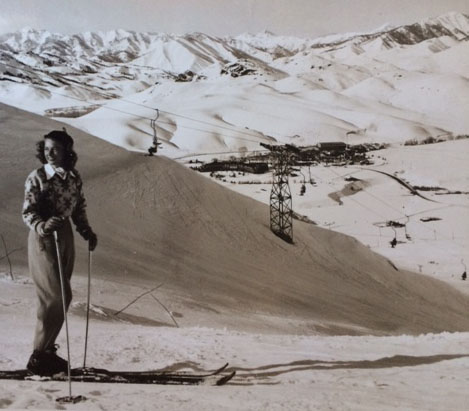
In 1949, 23 year old Bebe Wood left her job at Dartmouth College and traveled to Idaho seeking adventure as a ski bum in Sun Valley. By then, she had already been skiing for about 10 years!  Thus began her long association with the ski industry. Today, approaching her 90th birthday, she remains actively involved as a Host at Ragged Mountain in New Hampshire.

As a youngster in Marblehead, MA, she and her siblings taught themselves how to ski at a nearby golf course. By the late 1930’s her sister, five years her senior, had a driver’s license so they started going up to Cranmore in North Conway, NH. It was there that she became immersed in the sport.

Bebe Wood was an original ski bum in Sun Valley in 1950. Credit: Bebe Wood

Bebe Wood was an original ski bum in Sun Valley in 1949-50.
Credit: Bebe Wood

Following graduation from college, she went to work at Dartmouth as medical secretary. She and her friend Jean Adams joined the Dartmouth Outing Club which was an opportunity for travel around Northern New Hampshire and Vermont—Stowe, Cranmore and Suicide Six. They also skied locally at the Oak Hill rope tow in Hanover. “The DOC was a wonderful experience”, says Bebe. “We all loved to ski, yodel and sing. We had a great time.”

In the winter of 1949-50 Bebe and Jean Adams headed west to be ski bums in Sun Valley. They worked as waitresses and had plenty of time for skiing during the day. Bebe also had time to be a Sun Valley model for a Life Magazine shoot there and appeared in a February 1950 issue. “We had the best time there,” Bebe says. “Dartmouth was connected to Sun Valley back then and we were able to ski with some top notch eastern skiers.”

During the following ten years or so there was not much skiing in her life as she and her new husband were starting a family and moving around. But in 1963 they moved to Bristol, NH. And that move heralded her return to skiing in a big way.

In 1964 she began her long tenure at Ragged Mountain where she directed the junior program for school kids. She continued in this role until the mid 1980s when Ragged closed. During the next few years, Bebe taught at nearby King Ridge in New London, NH where she was part of the ski school until Ragged reopened in 1989.

All along the way Bebe found time to become PSIA certified, a first aid instructor, make two trips to the Alps skiing in Switzerland, Austria an Italy and a return trip to Sun Valley.

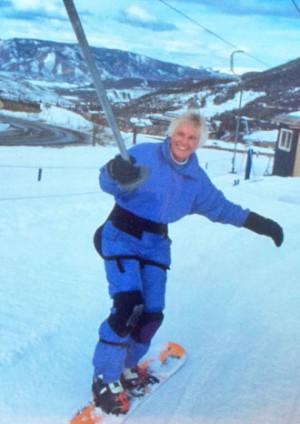
Bebe learned snowboarding at 70. Credit: Bebe Wood

Bebe learned snowboarding at 70.
Credit: Bebe Wood

Bebe retired from instructing in 2007 but continued as head the Courtesy Patrol until it was phased out a few years ago. Not wanting to be idle, however, she remains active at the resort today as a mountain host. You can find her in the base lodge greeting skiers and boarders, chatting with folks as come in for a break, checking with patrol on the latest conditions and dispensing all kinds of local knowledge and information about the resort and the general area.

Bebe stopped skiing five years ago at the age of 85. “Not because I can’t ski,” she says, “but because I’m now too afraid of getting hurt. I have no one to take care of me if I were to get injured. I do miss it, though.”

Bebe sees the evolution of equipment and technique as a positive thing that has made the sport much easier to learn and continue. “Sometimes the technical details get confusing but if the continued development of new equipment and technique makes the sport easier that’s good for its growth,” she said. When asked about other changes she’s seen, she said that in the old days skiers were just one big happy family. They sat around the fireplaces in old ski lodges and never complained about rope tows that wore out ski gloves or conditions that were less than ideal. Now she says, skiers want everything to be perfect. And there are so many people you have to be a little more careful.

According to Bebe, “It’s still a wonderful sport. It should be available in all schools free of charge so all kids have a chance to experience it.” She thinks there are more seniors skiing now than ever before. “New and better equipment keeps people going longer,” she says, and hopes that “more people being on the hill does not discourage older skiers.” She knows some seniors in their late 70s and early 80s who still ski, including some 10th Mountain veterans. “But the group is dwindling.”

What keeps her coming back? Why does she continue to work even though she no longer gets out on the hill? Love of the outdoors, a desire to keep up with the sport and the people in it, the opportunity to meet new people with similar passions are just a few of the reasons. “You don’t have to be young to enjoy it. It brings family and friends together.” Of teaching she says, “I can still look at skiers and tell what they’re doing wrong. I can tell who has had lessons and who hasn’t.”

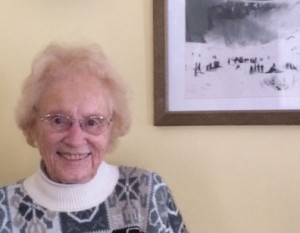
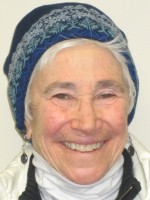
Bebe Wood today.

Bebe Wood today. Tuckerman’s Ravine was a favorite spot. Credit: Joan Wallen

Approaching her 90 th birthday in a few months and summing up her lifetime involvement in a sport she loves, Bebe states, “I wouldn’t have changed a thing.” Including, or perhaps especially, her ski bumming year in Sun Valley. “If young people have a chance to be a ski bum, they should go for it. It’s an experience to always remember.”

Master’s Clinic: Fabulous Idea For Senior Skiers

The Secret To Breaking Decades-old Bad Habits: Attending A Master’s Clinic At Dodge Ridge.

Jon Mahanna, creator of the Master’s Clinics, has class members follow his every move down the slopes. Credit: Dodge Ridge

Jon Mahanna, creator of the Master’s Clinics, has class members follow his every move down the slopes.
Credit: Dodge Ridge

I hadn’t skied at Dodge Ridge, the closest ski area to the San Francisco Bay Area, in years. But as soon as I arrived at the base area a couple of Thursdays ago for one of its Master’s Clinics, a four-hour-long freeski instructional program designed for intermediate and advanced skiers over 50 years of age, the memories flooded back. It was the first place I had ever put skis to slopes back in the ’50s, unwittingly grabbing on to a rope tow and finding my 12-year-old self being flung into the nearest snowbank. In the ’60s, it was the area my friends and I headed to when classes were over for the day at San Jose State College, taking a hit of blackberry brandy from our bota bags each time we headed down the rudimentarily “groomed” slopes on our brakeless wooden skis with bear-trap bindings and with long leather straps bound around our leather boots.

Now a saner, much older me was back to do things right! My friends and I were going to get this ski season headed in the right direction: by letting a seniors-certified PSIA instructor spend a few hours with us, helping us to break bad habits we’d acquired over the years and showing us how to adapt our skiing styles to today’s more-efficient shaped skis.

We met up with our group of nine other fellow seniors, ranging in age from 58 to 79, at the base promptly at 10 AM and headed up the mountain to do a ski-off for our two instructors: Bryan Jarratt, 61, an Aussie who’s been with the resort for 15 years, and Jenny Matkin, 64, who has deep roots in the region and has been teaching for decades. As we all did our “exhibition” run down the hill, I could instantly tell when my fellow participants had learned to ski. Yep, those two guys standing tall and stately over their skis with their ankles seemingly tied together were from the Arlberg “reverse-shoulder” method days. And that guy making the quick turns probably learned during the “short skis” phase. Our instructors split us into two groups, those itching for some “black diamond, off-piste” skiing and we more-timid ones who still had some cobwebs to dust off our skis before going full-out.
After three-and-a-half hours of skiing with frequent instructional breaks, we learned at least four or five specific things from Jenny that we could take away and work on the rest of the season in order to ski with much more ease and efficiency and not be exhausted after a full day of skiing.

DodgeRidge3A

Dodge Ridge’s Jon Mahanna saw the need to help senior skiers adapt to the new, shaped skis. “Let the skis do the work,” he says. Courtesy of Jon Mahanna

Jon Mahanna, 68, explains the strategy behind the Master’s Clinics best. He, along with Dodge Ridge’s current owners, Frank and Sally Helm, came up with the concept three years ago. Jon had been Dodge Ridge’s ski school director for 15 years in the ’80s and ’90s, and after serving in various capacities at ski areas in Colorado, New Mexico, and back in California, the “retired” Mahanna saw a need for older skiers, Level 5 and higher, to improve their skiing technique, especially with the advent of all the new equipment. Says Mahanna, “I saw that a lot of older skiers, especially those returning to the sport, needed to work on creating a balanced, ‘stacked’ stance so that there’s the least amount of resistance on their skeletal frame and muscle groups. This open, athletic stance gives them better lateral stability and is easier on their knees and backs. Balance is the key to everything.”

The instruction focuses on medium-radius turns on groomed slopes. “The modern equipment out there lets you stand there and go for the ride while you let the skis do the work,” avows Mahanna. “The idea is to have fun and to be able to ski all day, where your knees and muscles don’t give out on you.”

When we all met up at the lodge afterwards for lunch (which is included in the clinic package), the participants, to a person, were Master’s Clinic converts, and most were planning to sign up for more. One of them, Ralph Purdy, 75, happened to be the son of Dodge Ridge founder Earl Purdy, who opened the resort back in 1950. Said Purdy, “This is the first lesson I’ve had in many years. I thought that there’s gotta be something I’m missing. I saw this as a drill, and today I learned about unweighting and keeping my legs apart a little.” Another clinic attendee, Mark Sahines, 58, skied a lot in his 20s and 30s, then kids and work put skiing on a back burner. “I want to get to an advanced level, and my goal is to be skiing at 75 or 80. A lot of the guys older than me in today’s class ski a lot better than I do. Today I learned to do a hockey stop, something I could never do before.” My friends, Jim, 65, and Kathy, 70, Clarke, have a cabin near Dodge and are season ticket holders. They’ll definitely be back for more Master’s Clinics. Kathy called her teacher “one of the best” and appreciated Jenny’s focus on older skiers and the different techniques required with the new equipment. Jim shared that “every year I fret about being ‘ready’ to hit the slopes. Will my legs hold up? Will my funky right knee start giving me problems? Jenny, our wonderful instructor, brought my focus back to the skills and techniques needed to get the most out of my fancy, red shaped skis. By the end of our class, I was able to remember and use several of Jenny’s methods for getting the most out of my skis. In the end, there’s no reason I can’t learn this stuff if I keep a positive attitude, pay attention, and practice, practice, practice.”

To learn more about Dodge Ridge’s Master’s Clinic program or sign up for one of its Thursday or Sunday clinics, click here.  Tell them Rose Marie sent you! And if you love uncrowded slopes, sign up for a Thursday clinic.

[Editor Note:  SeniorsSkiing.com salutes Dodge Ridge and Jon Mahanna for creating a program focused on helping seniors optimize their technique and continuing to enjoy skiing.  If you, our readers, think this is a good idea, please forward a link with this story to your local ski area to show them how easy it is to support seniors skiing.  Or, if you’re in the Bay Area, enroll in Dodge Ridge’s Masters’s Clinic. We hope to see the idea of focused events for seniors—especially mid-week— growing in the ski resort industry.]

SeniorsSkiing Guide: Deer Valley Sets The Gold Standard

It’s the Deer Valley Difference.

Deer Valley at the top with a view of Jordanelle Reservoir. Credit: Harriet Wallis

Deer Valley at the top with a view of Jordanelle Reservoir.
Credit: Harriet Wallis

When Deer Valley opened 35 years ago, it was a novel concept to commit to top notch service in skiing, dining and lodging. Today it’s the gold standard.

The resort is known for its impeccable grooming, incredible dining and attention to every detail. Senior skiers really like that.

How to start your day right. Uniformed valets will unload your equipment at slope side. No need to schlep it.

Ride the open air shuttle to the day lodge. Save your energy for the slopes.

Enjoy secure basket checking with unlimited access so you can change layers throughout the day.

You’ve been pampered, and you haven’t even reached the slopes yet. Little things really do mean a lot.

“We’re committed to excellence in everything we do,” says Bob Wheaton, resort president and general manager.

Where should I start? It’s a big resort with four peaks and 101 trails. If you’re an intermediate or advanced skier, you can take a complimentary ski tour with a Mountain Host and find new runs and learn about the resort’s history. You’ll discover powder stashes that you’d never find on your own.

Outdoor patio dining in high altitude sunshine at one of 12 DR restaurants. Credit: Harriet Wallis

Outdoor patio dining in high altitude sunshine at one of 12 DR restaurants.
Credit: Harriet Wallis

Lunch time. Deer Valley has 12 restaurants, including outdoor dining patios, plus five evening restaurants right at the resort. A lunch favorite is the signature Deer Valley turkey chili. I especially love the Natural Buffet with its exotic salads and hearty breads.

Terrain. Deer Valley’s manicures more than 60 trails nightly from gentle slopes to its long steep runs. But it also has gnarly mogul fields, glades and ungroomed powder. Take your pick.

When your legs fall off, check your skis at a complimentary ski check station. Then relax in a beach chair on McHenry’s sunny “beach”.

Don’t miss this. When you’re ready to wind down the day, take the Last Chance beginner trail to the base and enjoy the trailside sculptures at homes along the way. They’re absolute must-sees.

One of the many raccoon sculptures along the trail side houses near the base run out. Credit: Harriet Wallis

One of the many raccoon sculptures along the trail side houses near the base run out.
Credit: Harriet Wallis

One home is plagued by mischievous raccoons. They ski off the roof, snooze on the railing and look uphill through binoculars. My favorite skiing raccoon is the one that went splat when he hit the house.

A family of life-size bronze elk stand trailside at another home. There’s also a bear house, a totem pole house and a mountain goat house. The charming critters add a bonus to a great day on Deer Valley’s slopes.

Just the facts

  1. Easy access. Just 40 minutes from Salt Lake International Airport.
  2. Skiers only. Deer Valley is for skiers only. It does not allow snowboards.
  3. Dining: 12 restaurants including five evening restaurants right at the resort. My favorite is the Seafood Buffet.
  4. Limited lift tickets. To enhance your experience, Deer Valley caps lift ticket sales to limit lift lines and lodge lunch lines ,and it opens up lunch seating.
  5. Grooming. The resort has 101 runs from four mountain peaks. Over 60 runs are groomed nightly.

2015-16 Bottom Line

A day ticket is $85 for those 65+, but on holidays it’s $92. A season pass is $1,195 for those 65-71, and it’s $1,085 for those 72+. However, mid week season passes are $1,085 for all who are 65+. There’s a pre-season discount for those who buy season passes early. And locals are eligible for reduced prices. Click here for more Deer Valley information.

Trail Map

Web Cam

McHenry's sunny "beach", absorbing the bennies and waiting for the surf to come up. Credit: Harriet Wallis

McHenry’s sunny “beach”, absorbing the bennies and waiting for the surf to come up.
Credit: Harriet Wallis

SeniorsSkiing Guide: Cranmore A Classic Senior Ski Hill

This Venerable Mountain Is Super Senior Friendly.

Cranmore's view of Mt. Washington. Since 1937, Cranmore has been one of the classic New England resorts. Credit: SeniorsSkiing

Cranmore’s view of Mt. Washington. Since 1937, Cranmore has been one of the classic New England resorts.
Credit: SeniorsSkiing

Returning to Cranmore Mountain in North Conway, NH, is like coming back to the basics. You will not find flash, large verticals, or multiple-piste skiing.  No heart-stopping double diamonds.  You will find like-minded senior regulars gathering in the little lodge, classic New England narrow trail skiing as well as broad, open blue cruisers. Low key skiing comes to mind.  We like that.  There’s lots of room for skiing mid-week, and the prices are definitely right, if you know how to look for discounts.  We like the snowmaking.  Even in this season of eastern snow drought, there was decent coverage and highly carvable snow.  And we like the community feeling among the other folks, even in the ski shop, rental desk and cafeteria.

History

The Skimobile ran straight up the middle of the mountain. It was still running in 1988. Credit: Cranmore

The Skimobile ran straight up the middle of the mountain. It was still running in 1988.
Credit: Cranmore

If you’ve never been there, skiing at Cranmore in the Mount Washington Valley is something of a pilgrimage into skiing history.  In 1937, local businessman Harvey Gibson founded the ski hill, put in a rope tow and so it began.  In the next two years, two big innovations came to Cranmore. First was the Skimobile, built straight up the middle of the mountain.  The Skimobile consisted of little cars traveling uphill on a wooden rail. It was a practical, New England-simple alternative to the lift system, contemporaneously making its first North American  appearance at Sun Valley. It’s hard to believe that the Skimobile lasted till 1988.  The other innovation was the

Hannes Schneider is called the Father of Modern Skiing at Cranmore. He established ski instruction that opened the sport beyond college athletes. Credit: SeniorSkiing

Hannes Schneider is called the Father of Modern Skiing at Cranmore. He established ski instruction that opened the sport beyond college athletes.
Credit: SeniorSkiing

arrival of Hannes Schneider from Austria.  Schneider expanded the nascent ski school, extended the Skimobile and carved trails that you can ski to this day. Hannes Schneider had an enormous impact on ski instruction and, in many circles, is considered as the person who opened up the sport to the masses back in its early days.

Snow And Terrain

Snowmaking is an art at Cranmore.  The snowmaking team publishes its own blog and methodically covers the entire mountain when nature is not forthcoming. As for trails, there are 54 spreading out from the summit served by nine lifts of different sizes.  On the left side of the mountain, you find the archetypal narrow, twisty, old-style New England specials like Kandahar, Rattlesnake, Arlberg. These narrow trails get slightly U-shaped in cross section as the season goes on, so it’s almost like skiing down a tube.  On the other side of the mountain,  you get those beautiful wide blues that we love.  Artists Falls, East Slope, and Schneider are great blues, Easy Street is a greenie that runs from the top and one that we like to take as a first run to shake off the dust from the ride up from Boston. And yes, there are terrain parks and glades for those who indulge in those kinds of activities.

Cranmore is a super mountain for seniors: friendly, accessible, reasonable cost. Credit: SeniorsSkiing

Cranmore is a super mountain for seniors: friendly, accessible, reasonable cost.
Credit: SeniorsSkiing

Lot To Lodge To Lift

Cranmore’s base is small and compact.  You can drive up to the lodge, drop off your stuff, park and walk the 100 yards or so back to your car.  It’s easy.  The lodge is small, but it is on a couple of levels.  That’s the only criticism I can think of.  Bottom level: lockers, changing area and rest rooms, next level cafeteria and lodge.  Many seniors just park their gear around the lunch room area and change there, walking out to the lifts which are an easy skate away.

Culture

It may be a slight exaggeration, but I think that during the week seniors own the mountain.  Lots of seniors show up in the morning, take some runs and many are gone by 1:00.  Obviously, they are season pass holders who come in groups, singly, in pairs and who schmooze over coffee and packed lunches before heading home.  Everyone we met was  cheerful, chatty, and friendly.  At about 2:30 or so on the several Thursdays we visited, school buses descended and lots of kids poured out to take lessons.  North Conway clearly has an enlightened Physical Education program at the local district.  There is a bar and separate restaurant at the base.  We imagine those are weekend magnets that weren’t busy on Thursday afternoon.

The Future

A group of Boston entrepreneurs purchased the resort in 2010 and have plans to rebuild the whole base area around a new condo village.  Right now, the condos are on sale , and whenever construction starts you can bet the culture is going change.  The good news is that there will be a future for this historic and important ski area. The other news is that the quirky little lodge will be gone. Cranmore will eventually become more of a year-round residence-resort. Regardless, the mountain will still have those classic trails.

Bottom Line

Seniors are treated nicely at Cranmore.  We bought a $29 weekday senior (65-79) lift ticket online. Weekend tickets bought online are $40 for seniors.  Weekday passes are $48 for seniors if you don’t buy online.  When you look online for passes, you will notice that prices vary by week and what’s going on, i.e., Washington Birthday Week, school vacation week, etc. Seniors can buy a season pass before the end of November for $369 for limited skiing and $429 for unlimited.  Check the website for more details.

Cranmore Trail Map

Cranmore Web Cam

The future of Cranmore includes a condo development and lodge area. Credit: Cranmore

The future of Cranmore includes a condo development and lodge area. Here’s a rendering of what the future will look like.
Credit: Cranmore


American Airlines Introduces Direct Flights to Big Sky

Now It Is Easier To Get To A Montana Destination Resort.

Now you can get a direct flight from Dallas to Bozeman. Welcome to Big Sky Country. Credit:Michel Tallichet

Now you can get a direct flight from Dallas to Bozeman. Welcome to Big Sky Country.
Credit:Michel Tallichet

American Airlines now has direct service between Dallas/Ft Worth and Bozeman Yellowstone International Airport (BZN), 40 miles from Big Sky Ski Resort. The once a day flights are scheduled through April.

Big Sky is one of America’s most spectacular resorts. It has 5800 acres spread over four peaks and sports a vertical of 4,350′, making it the longest drop in the lower 48.

It is a snow magnet, attracting on average 400″. Best of all, it’s vacant. If a few people are ahead of you in line, you’ll be talking about it that evening at one of Big Sky’s terrific lodging options.

Karst Stage provides shuttle service to the resort. Multiple car rental options are available.

Legendary Over-The-Hill-Gang A Model For Seniors

Started at Copper in ’76, OHG Now Around the Globe.

[Editor Note:  This report on the Over The Hill Gang was written by Steve Lipsher and originally posted on the Copper Mountain Blog. Here is a link to the original article.]

Over The Hill Gang poses on Copper Mountain. Not exactly a club, OHG is open to anyone 50+ and has spread around the globe. Credit: Copper Mt.

Over The Hill Gang poses on Copper Mountain. Not exactly a club, OHG is open to anyone 50+ and has spread around the globe.
Credit: Copper Mt.

It’s easy to spot members of Copper Mountain’s Over the Hill Gang: sexagenarians, septuagenarians and octogenarians blasting down the slopes – often hooting and hollering – decidedly not acting their age.

The Over the Hill Gang was created at Copper Mountain in 1976 by part time instructors Moe Mosley, Bill Magill and Tom Stein. Their vision was simple; encourage skiing as a lifelong sport for skiers over the age of 50 and share their passion of the sport.

“If it wasn’t for the OHG, I probably wouldn’t be skiing,” said Dyann Gray, explaining that for lack of companionship on the slopes many seniors simply give up skiing when spouses lose interest or physical abilities.

OHG member Norman Crawford said he probably was lucky to get in four to six days of skiing a season before joining the group. Last year he skied 50+.

Each group of eight to 10 skiers is accompanied by a certified Copper Mountain ski instructor, who serves as guide, cheerleader and low-key instructor.

“They help members improve, either when asked or when they see something that needs a little tweaking,” said Jennifer Walker, who coordinates the classes and instructors on behalf of the Copper Mountain ski school.

On a recent day with the “Club Decline” group – skiers who could ski anywhere on the mountain but who are deliberately toning it down – OHG guide Steve Hultquist offered general group guidance about technique and specific tips to individuals.

Given the suggestion to look at the spaces between the pointy moguls, for example, Gray bragged that she had “slithered” down a slope that previously had given her nightmares.

OHG member Mary Goodwin said the pro advice and gentle peer pressure/examples set by fellow skiers have produced positive results for her.

“I ski better now than I did 20 years ago because of these guys,” she said.

Many participants take delight in discussing pacemakers and replacement joints. “If you took a metal detector around here, it’d go ‘ding, ding, ding,’” Swain laughed.

The group gathers 52 days a season – Saturdays, Sundays, Tuesdays and Wednesdays – and members can take advantage of special instruction, such as a two-day bump clinic, women’s workshops, and ski-school lift-line privileges.

Part ski club, part social group and all fun, the club has spawned chapters and associated groups at ski resorts around the world over its 39 years of existence. Last year OHG received the Colorado Ski and Snowboard Hall of Fame’s “Top of the Hill” award.

OHG is open to anyone 50 or older. Membership is $400 for the season ($200 for those 80+). Four-day mini-memberships and a one-day trial are available with cost applied to full membership to those who inevitably are hooked.

To learn more about the Over the Hill Gang, e-mail ohg@coppercolorado.com or call (970) 968-3059.


From The Ski Diva: Keep Tootsies Warm

Advice On How To Manage Cold Feet.

Our friend and fellow online ski magazine, The Ski Diva, has just posted a really helpful article on cold feet management.  This is important folks.  Cold toesies can ruin your day and might even discourage you from enjoying the world of winter outdoors.  Take a moment to check out The Diva’s suggestions, and feel free to add your own in COMMENTS.  Click on the toes to link to her site.

A_SkiDiva


SeniorsSkiing Guide: Alta, Skiers’ Paradise

Alta is all about open slopes and big vistas. Here is Big Dipper, a beautiful "blue" level run. Credit: Harriet Wallis

Alta is all about open slopes and big vistas. Here is Big Dipper, a beautiful “blue” level run.
Credit: Harriet Wallis

It’s Vast Open Space And Powder.

Alta is the granddaddy of powder skiing. It averages 500 inches of snow a year which earns it the nickname: Skiers’ Paradise. It has wide, wide open bowls with groomed trails, but everywhere you look slopes are left au natural and full of powder. That’s ample for most senior skiers. But it also has tough, gnarly in-bounds chutes and cols that can only be reached by serious hikes.

As the day begins. Come early and park at the Albion Grill day lodge that’s just steps from your car. The sun pours in making it a cheery gathering place, and it’s the first place where seniors meet. They enjoy conversation as they boot up and fuel up with a hearty breakfast. Introduce yourself, and you’ll have instant ski friends.

Why does Alta have such wide open skiing? Ancient glaciers carved Alta. Fast forward to the days of pioneers and silver miners. They cut down the trees and hauled off the timber to shore up the mines and to build early Salt Lake City. The only thing left was stubble, and hungry sheep overgrazed it right down to the ground. Alta was a wasteland.

The U.S. Forest Service had domain over the vast area but had no clue what to do with it. That’s when it hired iconic ski jumper and legendary ski pioneer Alf Engen to check it out and see if the area had any value. Engen envisioned it as perfect for skiing – and Alta was born

Alta skiers, and especially senior skiers, are avid about the uniquely vast terrain with its wide open slopes. Watch this 95 year old senior ski Alta.

Lunch time. After a few laps on Supreme and Sugarloaf lifts, drop into Alf’s mid-mountain restaurant about 11 a.m. That’s when members of Alta’s Wild Old Bunch gather at the restaurant’s only round table. They’ll be having coffee or lunch and exchanging notes on their morning of skiing. It’s the second place where you can make more senior friends.

Buy a hot beverage at Alf’s and enjoy a free refill. My personal favorite is hot chocolate topped with a mound of whipped cream.

While at Alf’s, go to the farthest corner,  and you’ll find fascinating photos of Alta’s past.

What else can I do?  Alta has extensive rentals and demos, so check out some of the latest gear, especially if it’s a powder day.

On weekends and holidays meet trained naturalists at 1:30 p.m. at the top of the Sunnyside lift and take a tour to learn about the area’s environment, animals, and history. A Tour With a Ranger will not disappoint.

SeniorsSkiing.com's correspondent Harriet Wallis and friend have a cuppa java at the end of the day. Credit: Harriet Wallis

SeniorsSkiing.com’s correspondent Harriet Wallis and friend have a cuppa java at the end of the day.
Credit: Harriet Wallis

Wrap up the day with a specialty brew at Alta Java, an outdoor coffee bar at snow level just beneath the Albion Grill where you started.

I want to stay. Alta is within a national forest, so there are no shopping centers or high rise hotels. There are several lovely slopeside hotels that blend into the landscape and are scarcely noticeable. But book early if you want to stay there because they’re very popular.

Evening activities include fireside history talks and other local events. Alta is eat, sleep, ski. Repeat.

Bare bones facts.

1) Skiers only. Alta does not allow snowboards. 

2) Convenient. Alta is just 45 minutes from Salt Lake City International Airport. If you stay in the city you can take a frequent UTA ski bus to the mountain.

3) Stats. 2,200 acres, 116 named runs, 7 chair lifts, and a surface rope tow that’s a hoot. You can ride both directions across the flat base area. Of course you don’t need to use it because you can ski all around the mountain. But it’s a novelty that you’ll find only at Alta.

4) Eat. Mid-mountain and base area restaurants.

5) Orion and the dippers. Enjoy the stars in the night sky because there are no interfering lights.

6) The Wild Old Bunch. If you missed Alta’s senior skiers at lunch, join them at Sweet Tomatoes, a soup and salad buffet restaurant on Union Park Avenue in Midvale. They gather every Wednesday night year round for dinner and conversation.

Bottom Line:

Alta has a $699 season pass for 65 to 79.  It’s $50 for 80 plus.  During the season, there are no senior discounts, but you can get reduced prices online, especially if you buy four days ahead of your visit.  Weekdays passes can be bought for about $73 online if you plan ahead, otherwise it’s about $89.  Multi-day discounts are also offered, the more days you buy, the lower the per day rate.  See the Alta website for details.

Alta Trail Map

Another view of Big Dipper. Alta is known as "Skier's Paradise". Credit: Harriet Wallis

Another view of Big Dipper. Alta is known as “Skiers’ Paradise”.
Credit: Harriet Wallis

New Senior Deal Site For Tahoe Area

Up Pops A New Senior Ski Site Out West. Well Done!

We are pleased to see that Michael Warner started a website for senior deals in the Tahoe area.  We like to think seniorsskiing.com stimulated his venture to some degree.  We now have an ally in trying to promote the needs and interests of senior snow enthusiasts by targeting a specific geographic area.

Michael Warner has launched a new ski deal site for seniors focusing on the Tahoe area. Credit: Tahoe Senior Ski Deal

Michael Warner has launched a new ski deal site for seniors focusing on the Tahoe area.
Credit: Tahoe Senior Ski Deal

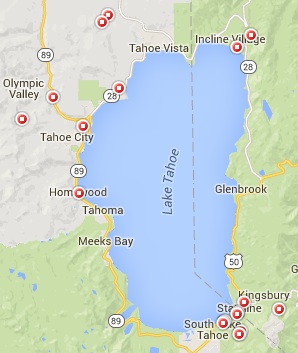
Tahoe Senior Ski Deals keeps tabs on lift pricing rates at 16 resorts throughout the Tahoe Donner region.  As we have learned in SeniorsSkiing.com’s Annual Ski Area Surveys, the best deals are always at the smaller areas like Boreal Mountain ($54, 65-69; $29, 70+) and Homewood ($47, 65-69; $20, 70+) for just two examples.  We were glad to see Tahoe Donner, a SeniorsSkiing.com Senior-Friendly Award Winner, on the list of deals ($22, 60-69, free, 70+).  In fact, Tahoe Senior Ski Deals calls Tahoe Donner the “Best Senior Prices”.

Tahoe Senior Ski Deals focuses on 16 resorts ringing the big lake. Credit: Google Maps

Tahoe Senior Ski Deals focuses on 16 resorts ringing the big lake.
Credit: Google Maps

The site also advises that seniors buy online at least three days before coming to the mountain.  There are always better deals online. The site also lists ski clubs and, notably, a link to SeniorsSkiing.com.  Thanks, Michael.

It shows that seniors can ski and enjoy the outdoors without having a hedge-fund account.  If you know of other sites that report ski or cross-country ski deals, clothing or gear discounts, please let us know.


Stocking Stuffer: Low Temperature Windshield Washer Fluid

Okay. It’s too big for a stocking, but it doesn’t need wrapped.

Practical and inexpensive, this De-Icer Windshield Washer can save your day. Credit: Harriet Wallis

Practical and inexpensive, this De-Icer Windshield Washer can save your day.
Credit: Harriet Wallis

A cheap but practical gift is a jug of low temperature windshield washer fluid with de-icer. Look on the label for a temperature rating that is -25 or -30 or lower. A gallon jug costs less than $5.

There are some days when a certain mix of temperature and humidity can cause windshields to glaze over as you climb in elevation or go over a pass. The “blue stuff” that’s usually in the your car reservoir will not defrost the windshield. Using low temperature windshield fluid will likely save your ski day.

There are several brands of low temperature windshield fluid. Different brands are different colors – orange, purple or pink. But none are blue. Stick a bow on the jug, and it’s wrapped!

You might want to buy a turkey baster too. Use it to suck the blue stuff out of the car’s reservoir and then replace it with the low temperature washer fluid.

It’s the little things that make a difference.

Snowbird

Special Edition: SeniorsSkiing.com Announces “Senior-Friendly” Resorts

Results of SeniorsSkiing.Com’s Recent Survey And Industry Research Reveals 16 Winners

Snowbird

Snowbird is one of 16 ski resorts designated as “Senior-Friendly” through SeniorsSkiing.com’s second annual ski area survey.

Sixteen resorts in the East. Midwest, West/Northwest, and Canada are recognized as “Senior Friendly” for their proactive efforts to meet the needs of older skiers.

The selection is based on input from SeniorsSkiing.com’s second annual survey of US and Canadian resorts, reader input, and industry sources. Factors taken into account include free or discounted lift tickets and a variety of features—such as resort-sponsored clubs, close-to-lodge parking, and other amenities—which readers of SeniorsSkiing.com have identified as important.

The resorts designated as friendliest to seniors are (*designated Senior-Friendly in 2014-15): 

East

Attitash Mountain Resort, Bartlett, New Hampshire

Special ski school clinics, discounts, clubs, social activities; $50 season pass (80+), 30% discount (65-79).

Cannon Mountain Ski Area, Franconia, New Hampshire

Ski school clinics, discounts, curbside assistance, $50 season pass (80+). 14% discount (65-79).

Cataloochee, Maggie Valley, North Carolina

Free skiing (65+).

Smugglers’ Notch Resort, Jeffersonville, Vermont

Reserved areas in lodge, discounts: ski shops, rentals, school; area sponsored clubs, social activities, $20 season pass (70+0.

Sugarbush Resort, Warren, Vermont

$199 mid-week season (65+); free skiing (90+).

Waterville Valley Resort*, Waterville Valley, New Hampshire

Silver Streaks ski club: clinics, races, social events. 30% discount (65-79), $25 season pass (80+).

Midwest

Crystal Mountain, Traverse City, Michigan

“Retired Not Tired” program: provides local retirees opportunity to return to skiing; actively enjoy winter in the company of peers. 42% discounts for mid-week season passes (56+), $29 season pass (80+).

Mt Zion Ski Hill, Ironwood, Michigan

Ski school clinics, curbside assistance, close-to-lodge parking, restaurant discounts. Free skiing (70+), 20% discount (65-69).

 West/Northwest

Arapahoe Basin, Keystone, Colorado

Close-to-lodge parking, clubs and activities. Single day tickets $25 (70+), season pass $75.

Hogadon Ski Area, Casper, Wyoming

School clinics, equipment carts for gear, clubs and activities. 25% discount (65+), free skiing (70+).

Mt Hood Skibowl*, Government Camp, Oregon

School clinics, mid-week parties, clubs/activities, mid-week motor coach transportation. Free skiing (75+), 30% discount (65-69).

Purgatory Resort, Durango, Colorado

School clinics, equipment carts for gear, mid-week parties, curbside assistance, valet parking, close-to-lodge parking. 30 percent off season pass (65 -79), $120season pass (80+).

Snowbird, Snowbird, Utah

Generous season passes discount; 10% food discount for seniors in all dining facilities (including new Summit at Snowbird). Ask the cashier.

Sundance Mountain Resort, Sundance, Utah

Sundance Senior Ski Group (free for 65+); lift ticket ($15), season pass ($125). Includes all skiing, x-c ski/snowshoe trail facilities, use of lift in summer months. Coaching available on select dates throughout season.

Tahoe Donner, Truckee, California

School clinics and discounts, mid-week parties, close-to-lodge parking, clubs, awards banquets, equipment rental discounts. Free skiing (70+), 45% discount (65-69).

Canada

Lake Louise Ski Resort*, Lake Louise, Alberta

School, equipment discounts. Free skiing (80+), 20% discount (65-79)

All Senior-Friendly resorts will be receiving an award plaque from SeniorsSkiing.com.  Many of these resorts report that up to 40 percent of mid-week skiers are seniors taking advantage of fast lift lines, space in the lodge to spread out, as well as other low-cost, or no-cost amenities.

SeniorsSkiing.com salutes these resorts and thanks them for setting an example for the ski industry and for making seniors feel welcome.

Online Ski Tickets Equal Big Discounts

Buy Before You Go And Save.

Bargains are out there if you look. Credit: SaratogaSkier

Bargains are out there if you look.
Credit: SaratogaSkier

We’ve just discovered GetSkiTickets.com, an online marketplace for advance purchases of discounted lift tickets, lessons, rentals, group lift tickets and season passes. The service is designed for people who know the specific dates they’ll be using the passes.

GetSkiTicks

Here’s a new online way to get discounted ski tickets. Credit: GetSkiTickets.com

Prices tend to be lower when purchased farthest in advance, somewhat like your airline tickets.

Purchasers receive an email confirmation, print out the voucher and present it at the ticket office with a photo ID. The ticket office exchanges ticket(s) for the voucher. Starting this season, the vouchers can be implemented via smart phone and tablet.

The group has 50 US and Canadian resorts participating for 2015-16, some with special rates for seniors.

According to Brandon Quinn, who started the business in 2008 with wife Heather, GetSkiTickets.com doubled in growth last season. While he, understandably, won’t give out sales figures, the reasons for growth are evident: discounted tickets, seeing available pricing options on a single screen, and ease of purchase.

GetSkiTickets.com is easy to navigate and understand. Select your dates, and the cost appears in an oval window with the amount to be saved shown below in red. Participating resorts are listed by state, and each resort shows snowfall for last 48 hours.

Resorts also may offer discounted advance purchase tickets on their own sites, so it’s worth checking that option, as well— similar to what many travellers do when booking air travel and hotels.

Other places to to visit:

GetSkiTickets.com’s larger rival Liftopia.com which also lets skiers buy in advance at 250 ski areas in North America as well as international destinations.  

SkiForFree.com specializes in bargains at California ski resorts.  

SlidingOnTheCheap.com has a wide range of discounts in areas from famous to obscure.

Every skier knows that simply getting to the mountain can be a hassle. Visiting an online discount aggregator can remove some of the aggravation.

Anyone know about other sites that offer discounted ski passes?

Big Sky, Big Win For 3 Gens

Can Mom (74) Adapt To Big Sky Skiing?

Heather, her son, and mom have a knock-out three-gen ski vacation at Big Sky. Credit: Greg Burke www.luxuryskitrips.com

Correspondent Heather Burke, her son, and mom have a knock-out three-gen ski vacation at Big Sky.
Credit: Greg Burke www.luxuryskitrips.com


SeniorsSkiing.com welcomes Correspondent Heather Burke, Ski Journalist LuxurySkiTrips.com and FamilySkiTrips.com

Big Sky is just as massive and scenic as it sounds, with over 5,750-acres and a skiable summit soaring to 11,166’ and dropping 4,350’ vertical feet to the base village. Boom. This Montana ski resort is as intimidating as it sounds, or at least it was to my 74 year old mom. She wanted to join us on a family ski trip, but she had serious alpine anxiety. Would she be able to keep up with us, my husband and me, and our 21 year old son? Would she remember all her skiing skills? Would it be like the proverbial bike after missing a season or two of alpine skiing?

She flew from Florida, a reverse snowbird, to meet us in beautiful Montana. Our first ski day together, I could tell she was wound up, and a bit winded from the elevation (Florida’s highest point doesn’t acclimate you to Big Sky country). As we walked to the Swifty high-speed quad (I carried her skis), I assured mom she had done this thousands of times before, and taught me to ski four decades ago.

As I made those first few gentle turns in sparkling soft snow on Mr K under brilliant blue sky, she followed. I looked over my shoulder to see her skiing fluidly, in perfect form, a pretty big smile on her face. She was feeling the elation of skiing, at 74, and I was feeling pride (and relief). To think that she’d been apprehensive seemed silly now. But her Florida friends had warned her, “don’t break a leg,” and “you’d better come back in one piece.”

Many senior skiers like wide groomers. Big Sky has some beauts. Credit: Greg Burke www.luxuryskitrips.com

Many senior skiers like wide groomers and big turns. Big Sky has some beauts.
Credit: Greg Burke www.luxuryskitrips.com

We skied four fantastic days on Big Sky’s gorgeous groomers—Elk Park Ridge to Calamity Jane.  Mom had her faves—Sacajawea and Ambush. We skied with my son and husband on Big Sky’s Moonlight Basin terrain, three generations sharing comfy quads. Over lunch in the spectacular Moonlight Basin Lodge, we laughed about how our gear and technique had revolutionized during our three generations, and told crazy ski instructor stories – all of us had taught skiing at some point. Mostly we had a blast. I can’t think of another sport than can span 50 years age difference. Senior skiing sure has changed, so has age… 70 is the new 40 for skiers.

The other change, now I’m the over-protective parent, of my mother. I controlled my mom’s ski environment during our week in Montana, leading her down ego-pleasing, beautifully groomed boulevards—Big Sky has many. Our last day brought soft glittery powder and she skied it like a champ. “I have never skied such amazing powder,” she said. I’m pretty sure she had in her six decades, this woman skied on barrel stave skis with trap bindings after all. But who am I to correct my mom though.

Big Sky was the best venue for our three generations, big mountain terrain for the boys, big blues for mom and me, and a compact village at the base – so she could ski back to the slopeside condo mid-day and I could catch up with my guys for tram laps and steep chutes. At après ski, with well-earned scotch in hand at Big Sky’s Carabiner Bar, mom toasted to our skiing legacy.

We returned her rental ski equipment and returned her on a plane safely back to her cynical Florida friends (in one piece, no broken leg). Big Sky made a big impression on these three generations of skiers.


On The Threshhold of Winter 2015-16

So It Begins

WhiteMountains

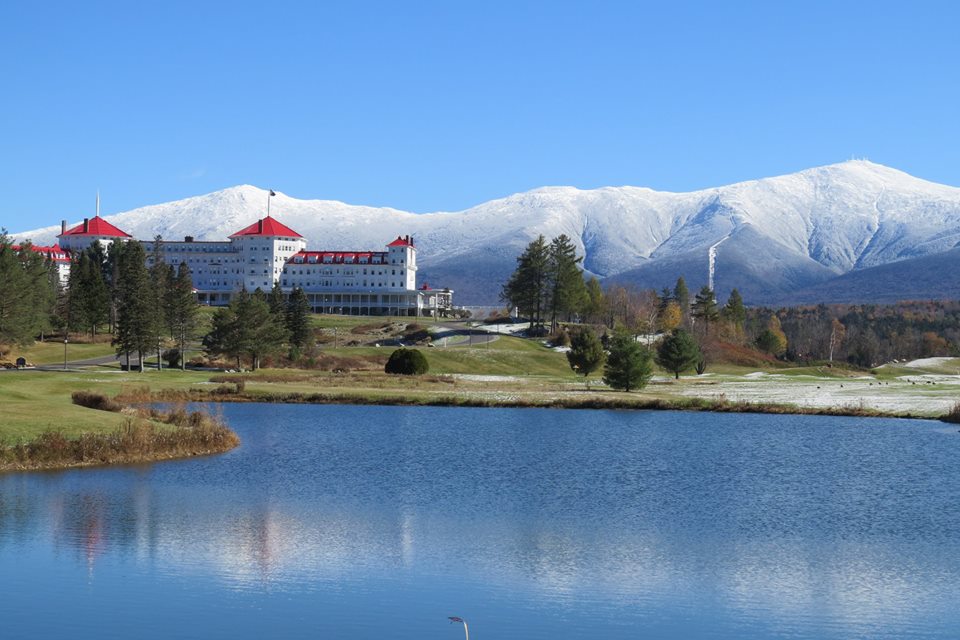
The White Mountains frame Bretton Woods resort with a first dusting in mid October. Credit: Bretton Woods

We’ve been watching reports of snow in high altitude places in the West and East which makes the coming of winter seem a bit rushed this year.  There are still leaf-peepers on the roads of Vermont and New Hampshire, and snow on Halloween decorations doesn’t seem to ring true.  For those of us in New England, the snow fall brings a reflexive response conditioned by last year’s Snowmaggedon.  Yes, bring it on, but hopefully let it regress to the mean.

By now, you’ve probably heard that Killington opened on Oct 18 with a small army of zealots skiing on manufactured snow.  (BTW, Killington was the last ski area in New England to close last spring. The last run of that elongated season was in late May.)   Sunday River followed a day later with 750 season ticket holders playing hookey from work and school to record their first of presumably many days of snow sport to follow. Our friend and colleague, The Ski Diva, puts these early days of enthusiasm in perspective.  See her astute advice on surviving what she calls the White Ribbon Of Death here.

And yet, according to NOAA, this year’s El Nino has become a stronger predictor this year.  OpenSnow, our favorite snow forecaster, explains that despite the early showing, this year might be less snowy than we’d like.

Nevertheless, now is the time to:

  • Start/continue your conditioning program,
  • Bring your gear into your local shop for a tune-up,
  • Consider a season pass while early bird specials are still available,
  • Read the ski magazine reviews of new equipment and ponder your next possible purchase,
  • Think about a destination resort where you can find senior-friendly specials,
  • Re-convene your ski club and start getting excited about the season ahead,
  • Check out deals and discounts at the Snow Shows coming to your city or town,
  • Wash/dry clean last year’s contents of your stowed away ski bag.

Meanwhile, let’s remember winter is a special time for senior snow enthusiasts.  In describing winter, Robert Frost says,

It lifts existence on a plane of snow
One level higher than the earth below,
One level nearer heaven overhead
And last year’s berries shining scarlet red.
 (A Winter Eden, Robert Frost)
Let’s get ready.
Wheelie__510

Time To Get Moving: Now

Five Ways To Start Your Fitness Program.

Motion helps muscles, joints, ligaments limber up for snow season.

Motion helps muscles, joints, ligaments limber up for snow season.

No more procastination.  You have from six weeks to three months, depending on where you live, to get ready for snow season.  If you are a year-round sports activist, then good on you.  If you are a part-timer, weekend warrior, you probably have to start getting more diverse muscles toned up.  If you are as not as active as you could be, reflect on your habits.  You will be safer and feel better when you head out to slopes or trails if you are physically toned.  It is a huge mistake to go from zero to a ski run or cross-country trail without being physically prepared, especially if you are one of those people who distinctly remember the Beatles on their first Ed Sullivan Show appearance.

Here are five ways to begin, especially if you’ve been off your program for whatever reason this summer.

1. Walk.  Simple.  Morning, lunchtime, or evening.  Walk fast, swing your arms, work up a sweat, carry light weights (2 pounds) or walk with ski poles (Nordic walking burns more calories), use a pedometer, keep a record of how far and how many steps.  After a week or so of daily walking,  the “training effect” will kick in, and you will feel looser, more steady and, guess what, you’ll be outside in the beautiful Autumn weather.  Here are some guidelines for getting started.

2. Stretch. Loss of elasticity of connective tissue, an effect of the aging process, can be nasty.  Muscles tighten up, and back and joint problems ensue.  Stretching makes a difference. Learn to stretch your hamstrings, quads, hip flexors, and lower back.  There are many resources you can access for how-to.  Here is a good starter from the NIH. There’s always yoga. This is really, really important: If you aren’t using it, you’re losing it.

3. Gym Class. Going to a class led by a trainer provides structure, discipline and challenge.  An hour-long class will probably keep you in more motion than the same time spent alone in your basement.  In a good gym class, you will also learn about the muscles you are exercising, how to stretch them and gradually build up strength and flexibility all over your body, not just your favorite parts.  Probably most important, you will learn proper form so you get the most out of your efforts and help prevent injuries.  SeniorsSkiing.com’s Harriet Wallis wrote about Silver Sneakers, a national program sponsored by insurance company targeting seniors. There’s probably one near you.

4. Focus on four essentials.  No gym nearby? If you do head down to your basement or studio for exercises, here are four to get you going:  Lunges for legs, lower back, hips, Plank for core and probably one of the two top exercises of all, Pushups for core, upper body and arms, and the other top exercise, and Squats, a fundamental leg and back strengthener.  You must learn to do these correctly; form counts for everything.  Doing a zillion reps without proper form is not that effective and could get you hurt.

5. Get an app or two. There are many apps you can get for your smartphone that can be your training buddy.  This link has a few of many. Point is you will able to get feedback on how you are doing and see progress using a cool app. And in a strange way, the app builds an expectation. Just like the GPS voice in your car, you can have a relationship with your app.

As usual, see your doctor before trying any of this, or if you start a program, and it doesn’t feel good.  Remember this is meant to be a starter kit.  Stay tuned for more advanced fitness activities.

Now, don’t hesitate, get going. What’s your advice?

Lift Tickets: An Area That Charges By The Hour?

And Other Ticket Pricing Ideas.

Station de ski du Semnoz offers hourly ski tickets. Huh?

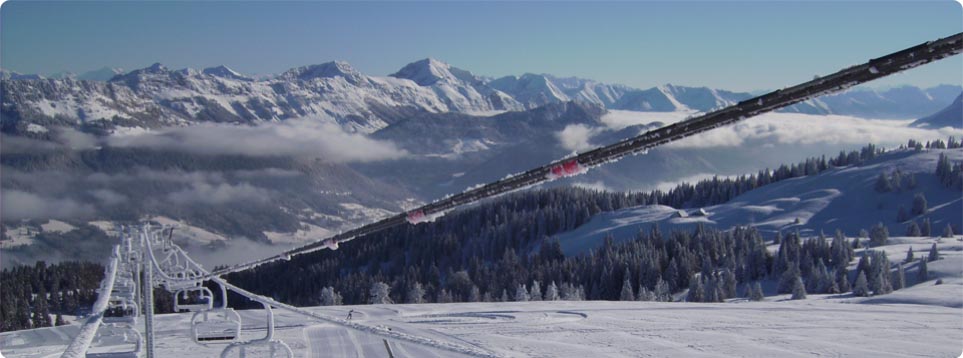
Station de ski du Semnoz with a  view of Mont Blanc offers by-the-hour lift tickets. That’s different.

Pre-season cocktail hour among veteran skiers often leads to talk of the new season’s pass prices. In 2001 or 2002, when Park City Mountain Resort changed its senior pass from free to $300, a flurry of letters to the editor registered collective outrage. Not to mention that even at $300, it was a great deal for a season’s pass. Now, under Vail’s ownership, it doesn’t matter if you’re 19 or 89, the cost is $599 for locals and $789 for everyone else. To be fair, they throw in the rest of the Vail-owned resorts with the purchase, but not The Canyons, the area next door under Vail’s management.

A short drive away is smaller, more intimate Sundance. Vertical and skiable acreage are smaller, but on weekdays it is less inhabited. On powder days, it is vacant, providing one untracked run after another, some on steep, continuously pitched terrain. Sundance’s food is equivalent to that of a well-reviewed restaurant. And maybe because he’s an older dude, Robert Redford cuts a great deal for seniors (65+). This year, a day pass is $21, up from $15 last season and $12 a few years before that. The season pass is $125.

We’ll be publishing an updated list of where and when the mature set can ski free. Last year, those privileges started at 63 (McCauley Mountain Ski Center, Old Forge, NY) and clustered around 70.

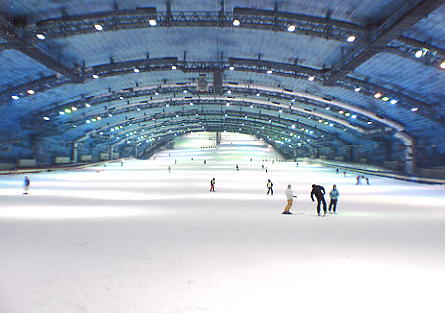
SSAWS (Spring, Summer, Autumn, Winter Skiing) Indoor Ski Dome outside Tokyo.

SSAWS (Spring, Summer, Autumn, Winter Skiing) Indoor Ski Dome outside Tokyo had three-hour day passes.

Throughout the industry, ticket-pricing models tend to follow the same ideas: Age, full day, half day, night, multi-day passes, 10 packs, etc. When it was in business, Lalaporte Ski Dome SSAWS, the indoor ski center outside of Tokyo, sold three-hour tickets. The monotony of the place made three-hours seem especially long.

We’ve just learned of an area not far from Chamonix that offers tickets based on the number of hours you choose to ski. Semnoz, is a short drive from Annecy, with a direct view of Mont Blanc. It is 5575′ above sea level, a midget compared to Mont Blanc’s 15,778′. Semnoz is a local’s place, which like Sundance, is reported to deliver endless untracked following big powder dumps.

We mention Semnoz because paying to ski by the hour is an idea that might deserve some attention here in the States.


Women Only Skis and Boards? Yes, Says Coalition Snow

Coalition Snow Fills Women’s Needs For Quality Equipment.

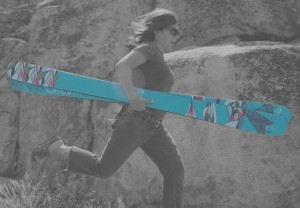
Coalition Snow has skis and boards for women only. Credit: Coalition Snow

Coalition Snow has skis and boards for women only.
Credit: Coalition Snow

Last spring, we’ve were impressed by Coalition Snow’s CEO Jen Gurecki when she talked with our friend The Ski Diva about her line of ski and boards for women only.  She recognized a niche market, defined a set of unique needs, and she put together products that are based on research. Now her challenge was getting the word out.

Last week, Jen won an entrepreneurial competition at the Nevada Governor’s Business Conference.  Her message was strong and simple:  There are a lot of women out there  (eight million) who spend a lot of money ($1-billion) on snow sports.  But their needs are not being met.  Instead of watered-down versions of men’s equipment, Jen has designed skis and boards “that don’t suck”.  She’s made a lot of progress in promoting her company since last spring; her Kick Starter campaign raised $31,000 in 31 days.

Check out her company’s elevator pitch.  Pretty sharp.  Makes us wonder:  We know there are senior-friendly ski boots and bindings.  Is there a need for senior-only skis and boards?  Your thoughts?

Lunge Toward Ski Season: Start Now

You don’t need a gym. You can lunge around the neighborhood.

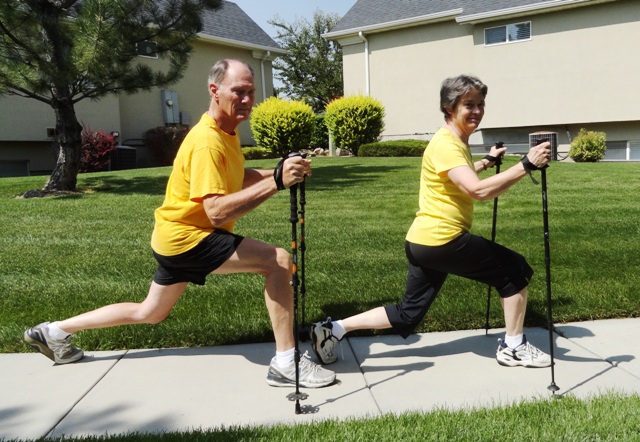
Nick and Carol Bowling are enthusiastic senior-age Alta skiers who enjoy staying fit year round. They just added lunges to their pre-season fitness routine, and they’ve become lunge junkies. But there’s a learning curve to doing lunges correctly, and they’re still working on it.

Carol and Nick Bowling of Washougal, Washington, tune up now for ski season. Credit: Harriet Wallis

Carol and Nick Bowling of Washougal, Washington, tune up now for ski season.
Credit: Harriet Wallis

“Lunges use your own body weight to strengthen your lower body. They’re excellent for your quads and hamstrings – for the big muscles,” says Jo Garuccio, Professional Ski Instructors of America Trainer and Examiner who also teaches at Snowbird. “But be sure your knee is over your shoestrings – not further forward.”

Equipment needed: Your body and a large mirror. Watch yourself. Critique yourself.

Position: Back erect, thigh parallel to the ground, knee over shoestrings.

Incentive: See how many you can do each day while keeping good form. When you’re good at the basic lunge, move on to one of the many variations.

What a lunge should look like:

So here’s a challenge for you. Watch the video, then study Carol and Nick’s position. Pretend you’re a coach. Is there something you’d tell them to improve as they lunge toward ski season?

When will you start to lunge?

A Skier’s Journey: Pushing The Envelope

A Senior Skier Reflects On The Thinking Part of The Sport.

Since I was five I’ve been on a voyage of self discovery through skiing that started at the ski areas of the Laurentian Mountains of Quebec, Canada and grew to be an integral part of my life the older I became. Initially learning to ski on riverbank in Winnipeg wasn’t the most auspicious start to any skier’s career but the passion for the sport of those around me left an indelible impression. Certainly I picked this up from my father, a local and eventually nationally recognised builder of the sport in Canada. It probably meant that skiing and not hockey would become the central sport of my life but I was under no pressure to do this. Instead I was attracted for its own merits to this activity that rewarded individual effort yet was always way more fun in the company of others. And then there was the connection with nature and the fact that skill wasn’t just about the size or sex of the participant. It appealed to me on an intellectual level too. The best skiers always seemed to me to be aware and afterwards reflective of what they were trying to accomplish yet in the moment of performance instinctively connected to the snow. They were and are my inspiration.

As I gained more experience it became obvious to me that I would want to pass this joy on to others so at the age of 14 I became an instructor. I also realised that one of the best ways to understand the sport that was rewarding in so many ways was to never stop trying to learn yourself. In 1986 a close friend invited me to enter the sport from a different angle and coach. Along the way I made a career in the retail sporting goods field and still strive to learn everything I can about the impact of equipment on performance as a professional boot fitter, technician and ski shop manager since 1974. All of which led to jumping off points in my life which I was completely oblivious to at the time. It was never just the destination but the journey that with hind sight mattered most. Like having a great run where sometimes a moment of reflection at the end when you realise what you just accomplished. Now I’m not saying that skiing is somehow always a metaphor for life but it was for me.

So here I am 55 years later from that little boy in Montreal and still learning and pushing the envelope. It’s a fascinating period of time in the evolution of the sport for any of us that have experienced the full range of changes in the last 60 years. Thanks to this website for allowing me to share some of the ride.

Contributor Glenn Allen is an “employee athlete” at Sport Chek, Canada’s largest retail chain of sports equipment.  Thanks for letting us use the video clip.

More Hot Products From SLC’s Outdoor Retailers Show

Gee Whiz, Seniors, Here’s What’s Coming to a Store Near You!!

Shoes whose laces tighten without your needing to bend down to tie them.

Wireless heating insoles controlled with a smart phone app.

A small device that communicates your whereabouts and whether or not you need help when there’s no cell service— nywhere on the globe.

These are just a few of an endless array of products exhibited at the summer edition of the semi-annual Outdoor Retailers Show in Salt Lake City.

Every August, thousands of manufacturers and merchants—from mom and pop to big box—converge on the Salt Palace Convention Center in Salt Lake City to see and place orders for products to be sold a year from now. They return in January, this time focusing on winter sports.

Exhibitors are organized by product category. Paddle board, surf boards, water accessories, etc. in one section. Footwear, socks, foot beds, etc. in another. Yoga equipment here; camping gear there.

handsfree_heel_wheel

Treksta’s hands free lacing system works by sliding the heel back for lace up. Credit: Treksta

Back to those self tying shoes. You can look for them under the name Treksta Hands Free Shoes. It’s an athletic shoe (quite comfortable) with a foot-activated lacing system. Even the most active person will enjoy not having to bend down to tie or tighten shoe laces.

Digisole is a French import that will be in stores in a year. A programmable, heatable insole for ski and other cold weather boots, the insoles can reach 120 degrees F, a bit too toasty for most tootsies. The great thing about Digisoles is that they’re fully adjustable using an app on your Smartphone. Same phone app tells you how many steps that day, what the weather is, etc., etc. The soles are charged via USB connection, and, for most heat levels and in most conditions, will keep your feet comfy for 5-8 hours. Can’t wait to try it on the hill.

SPOT Gen3 will find you almost anywhere on the globe. Credit: SPOT GlobalStar

SPOT Gen3 will find you almost anywhere on the globe.
Credit: SPOT GlobalStar

Spot is a reasonably priced, pocket-sized, personal tracking device that, with the push of a button, lets family and friends know you’re ok or sends emergency responders your GPS location. It’s all about providing you and loved ones peace of mind when you’re out of cell range. Using satellite technology, it works from land, air and sea, anywhere on the globe. The unit, itself, can be purchased for about $75, and the satellite subscription is about $150 per year. A small price to pay for peace of mind. It’s a valuable and necessary addition to every pack or parka.

Harriet Wallis’ Great Idea: Perhaps You Need A “Pail List”

SeniorsSkiing.com Correspondent Harriet Wallis Has A New “Pail List”

Harriet Wallis conquers the trail to the top of Emigration Canyon.  Check. Credit: Harriet Wallis

Harriet Wallis conquers the trail to the top of Emigration Canyon. Check.
Credit: Harriet Wallis

It’s summer and half my friends are traveling the planet. They’re checking off places on their bucket list. I get emails from exotic locations. They send photos of elephants and penguins, mountain peaks and crystal clear lakes.

So I ask: “What’s wrong with me? Why don’t I have a big bucket list? Is it okay to have a pail list instead?” Have those questions ever occurred to you?

I’m lucky. Throughout my life I’ve been able to see penguins, hike mountain peaks and paddle clear lakes. My bucket is pretty full. Now I’m working with a pail instead. Maybe a pail is right for you too.

For me, the things I want to accomplish — to fill my pail — are mostly close to home and are personal challenges. This summer, my pail list includes bicycling as many days as I skied during the winter (80 days), to swim three miles a week, and to tie a fly that’s so good the fish will fight over it. So far my pail is filling up. But I’m still struggling with the fish-thing.

Bucket lists are very trendy. But not everyone has the time, finances or inclination to travel to far away places. Consider a pail list instead. Consider setting challenges for yourself close to home. I’d love to hear what’s on your pail list and how you’re doing with filling it up.


Hike Vermont: Trails For Seniors And Families

Great Advice From Roger Lohr, Publisher of XCSkiResorts.com.

There’s no better way to enjoy the outdoors than hiking on a trail alone or with your friends or family. Whether you are a first time hiker or a walking aficionado, hiking with the family provides quality time together, allows the family to grow closer, develops life-long memories, and introduces the next generation to the outdoors. It’s no wonder that statistics show that nationally more than 34 million people went hiking in the year 2013 and that has remained somewhat consistent in the last few years.

Family hiking in Smuggler's Notch is a perfect summer vacation. Credit: X-CSkiResorts.com

Family hiking in Smuggler’s Notch is a perfect summer vacation.
Credit: X-CSkiResorts.com

You don’t need to walk very far to experience the joys of being outdoors with your kids or grandkids. It’s about discovery and having fun. For parents taking their kids on a hike, it is recommended that the child’s early experiences be positive, so avoid plans to reach that favorite spot or the top of the mountain. Keep it simple by being flexible and adaptive to make sure the younger ones have a good time.

Perhaps short hikes at first near home or a local park will provide a positive experience. Bring a snack, water, and invite your kid’s playmate. They can find joy in clouds, flowers, tadpoles, splashing water, getting dirty, colorful bugs, etc. but you don’t want them to get sunburned, hungry, thirsty, or exhausted.

Safety and Other Considerations on a Hike

Be careful of rocks, rubble, brush piles, or fallen logs where kids might lose their footing, sprain an ankle, or take a fall. Tell kids not to drink the stream water or eat berries or mushrooms, and the rule with poison ivy, oak, and sumac is “leaves of three, let it be.” Be wary of places where bees and wasps might nest.

Wearing bright clothing is a good idea so you are easy to see and find if lost. Layer clothing, and be prepared for weather changes. Synthetic clothing (such as a capilene shirt or a pile jacket) is lighter, a good insulator, and dries faster. Socks and supportive boots are important. Traditionally hiking socks were made of heavy wool but more recently socks that are made of a variety of materials that provide warmth, durability and keep your foot dry. Hiking boots are not required but they can help kids feel like explorers.

A list of items that could be useful on the trail includes: signal device (whistle, mirror), water bottle, emergency blanket, map, compass, flashlight (with spare battery and bulb), extra food, extra clothing, sunglasses, sunblock, insect repellent, knife, waterproof matches, firestarter or candle and a first aid kit.

If you think that you are lost, try to retrace your course rather than continuing on in an effort to reach some destination. An emergency call consists of three short audible or visible calls repeated at regular intervals. Use a whistle for making noise and a mirror or smoke puffs during the day. At night, use a flashlight or small bright fires to signal.

 You may consider leaving your dog at home if he or she cannot be kept under control. Respect the privacy of residents that live along the trail unless there is an emergency and you desperately need help.

Leave No Trace

Some basic concepts for outdoor and trail etiquette include: Plan ahead and be prepared; Travel on durable surfaces to minimize trail erosion; Pack out what you bring in to the outdoors (don’t bury trash or diapers); Leave the outdoors as you found it, don’t feed the wildlife, and take only memories away with you; Minimize the use of fire and take extra care if you do use it.

Here are some hiking destinations in Vermont and for more locations, check the XCSkiResorts.com Resorts Page:

Bolton Valley: There are 100km of Nordic and backcountry ski trails at Bolton Valley Resort and in the summer these same trails provide paths for outdoor adventure in over 1,000 acres of wilderness. Some trails lead up the valley to the ridge-line where hikers can connect with Vermont’s Long Trail.

Killington Resort: With 15 miles of hiking trails at Killington Resort, you can summit Vermont’s second tallest peak to be treated to 360 degree views of Vermont’s Green Mountains, New York’s Adirondacks, and New Hampshire’s White Mountains. Additionally, near the top of the mountain provides access to the Peak Lodge, Killington’s state of the art facility, which offers fresh food and cool drinks to hikers and mountain bikers all summer. The K1 gondola lift is open for rides to reach the summit.

Smugglers’ Notch Resort: The Green Mountain setting at Smugglers’ Notch Resort creates many opportunities for guided and self-guided hiking for all ages. The resort hosts guided outings designed for families with young children, with a gentle pace and fun learning opportunities. Other guided outings entice new hikers and experienced hikers with the opportunities to learn more about the history of the surrounding area and the local flora and fauna, and to summit some of the area’s most challenging peaks. Guided hiking is included in the resort’s vacation packages. The resort provides informational sheets on self-guided outings nearby.

Trapp Family Lodge: There are over 60 kilometers of wooded hiking trails for all levels of ability at Trapp Family Lodge in Stowe. There is a short, peaceful hike to the Chapel, built by the Trapp family sons on their return home after World War II. A more challenging hike takes you to the Slayton Pasture Cabin, a favorite resting spot for cross country skiers or snowshoers in the winter. Guided nature walks are available to guests to learn about native plants, wildlife, and the evolving landscape.

Woodstock Inn & Resort: Step outside the Woodstock Inn & Resort and choose from more than 60 miles of interconnected trails and pathways that wind through the Woodstock Village, nearby meadows and woodlands, scenic vistas, and rural countrysides. Pedestrian pathways skirt local landmarks, while off-road trails yield to magnificent vistas from the summits of Mount Peg and Mount Tom. For a historic walking tour of Woodstock’s past, stroll the 20+ miles of colonial carriage roads as they wander through the Marsh-Billings-Rockefeller National Historical Park and intersect with the Appalachian Trail.

Grow A Hiking Habit: Part Two–More Stuff

Outdoor Guru Steve Hines Offers More Ideas For Taking A Hike.

Summer hiking season is in full swing. The temperatures are warming and trails are dry. After covering the ten essentials in Grow A Hiking Habit: Part 1, some other items will help you more enjoy your hiking.

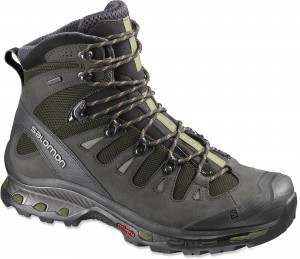
Real hiking boots are lightweight and support your ankle.  Sneakers don't cut it on the trail. Credit: REI

Real hiking boots are lightweight and support your ankle. Sneakers don’t cut it on the trail.
Credit: REI

Boots: Stout boots with good support are a must. Look for boots with waterproof liners. Boots should come to the ankle or above to keep trail debris out and protect the ankles. You should be able to wiggle and spread your toes and walk down hill without “jamming” your toes. Your boots should be wide enough in the forefoot that there is no pinching of any of the toes. Your heel should be held in place without constricting them. If your heel moves around side-to-side with the boot untied try another style/brand. Get fitted at outdoor shop by a qualified boot fitter. If you use orthotics, be sure your boots accommodate them.

Trekking Poles: These are telescoping poles that look like ski poles. When not in use, they can be strapped to the outside of your pack. When in use, they support the legs and lower back. They help with balance and help burn 25 percent more calories.

Comfort Items Now that I’m a little older, several items in my pack make the hike more comfortable.

  • A Dry T-Shirt: A dry shirt mid-hike is great. Avoid cotton; get Dri-Fit or Performance shirts that evaporate quickly.
  • Extra Socks: Even the best socks can’t always keep up with amount of moisture you produce.
  • Foot Powder: Changing socks and rubbing on some foot powder mid-hike is a treat!
  • A Sports Drink: Water is essential. But, a sports drink like Gatorade reduces the risk of dehydration among older hikers.

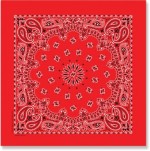
    The classic bandana is an invaluable partner on the trail. Credit: REI

    The classic bandana is an invaluable partner on the trail.
    Credit: REI

Bandana: The ubiquitous hiking buddy: Towel, handkerchief, sun protection, signal caller, sling, and bandage just to name a few uses.

Watch: I like to know how long it takes me to get from Point A to Point B on a hike. If I know the length of the trail I’m on and how long it took me to get there, I can judge my fitness level better. During these last few years, I’ve been aiming for a 1 mile/hour pace on mountain hikes and treks.

Cell Phone: Many people believe cell phones on the trail ruin the wilderness experience. But a phone can be a lifesaver. For many years I left my phone home but now, especially on solo trips, I take it along. Just be aware that in many remote places reception can be spotty or non-existent.

Camera: Helps with memory if you have a time/date stamp option.

Binoculars: Helps with both navigation (identify landmarks for triangulating your position) and spot/identify wildlife.

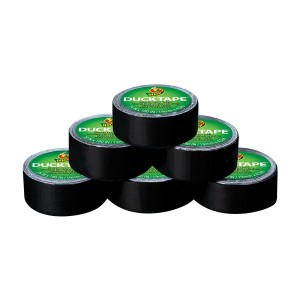
Is it Duct Tape or Duck Tape? Regardless, it comes in small-sized rolls, perfect for a backpack. Credit: Amazon

Is it Duct Tape or Duck Tape? Regardless, it comes in small-sized rolls, perfect for a backpack.
Credit: Amazon

Small Notebook And Pen: Record hiking times and observations, list hiking companions for later memory making.

Duct Tape: Blister treatment, gear repair, unknown problems.  A small roll of duct tape can do miracles.

Please feel free to make comments and provide feedback and additional wisdom. I also welcome questions and clarifications. This can be a wonderful forum for getting your hiking habit started and sharing experiences with others.

Exercise And Weight Control: Think Again


The Key To Weight Loss Revealed.  And It’s Not Exercise.

We know that senior snow enthusiasts are also cyclists, hikers, kayakers, golfers, sailors, tennis players and more, engaging in lots of non-snow physical activities.  Some of you might be motivated to keep your activity level up by a desire to control your weight.  Gaining weight is an artifact of aging as metabolism slows down.  Curiously, this article by Aaron E. Carroll in a recent New York Times describes exercise as contributing less than we think to weight loss.  In fact, Carroll points to studies that show exercise makes no difference in weight loss.  While exercise does have many, many physical benefits on cardio health, diabetes control, pulmonary disease and the like, the true key to weight control is…eat less.

Here’s the article.  What do you think?

Diet