Tag Archive for: SeniorsSkiing.com

FreeSkier

Why I Don’t Read Ski Test Reports

[Please consider supporting SeniorsSkiing.com with a donation. We appreciate your help. Click here.]

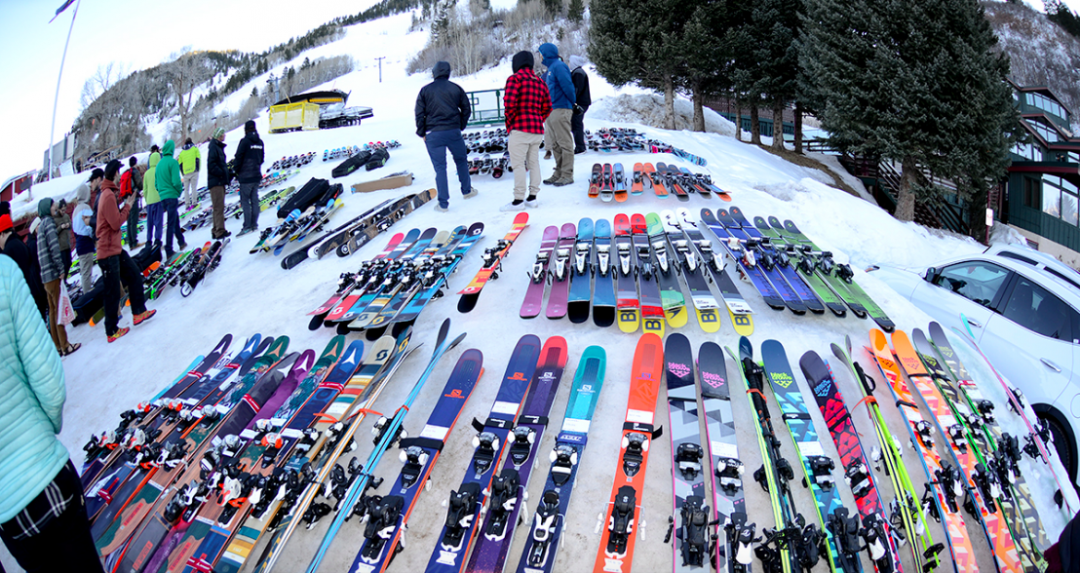
Unlike this ski test, the author masks the ski’s identity. Credit: FreeSkier

Seven Ways To Make Ski Tests More Objective.

Way back in the late 20th Century, while running the SKIpp Testing program for SKI Magazine, John Perryman and I learned the most difficult problem to solve and the biggest variable was the ski tester. In conversations with almost every manufacturer, they said the same thing. So the goal of SKIpp (way back in the 1970s before engineering modeling software was available), was objectivity and processes that minimized tester bias. John created a bench test and then tested the ski on the snow so we could compare the results.

Amazingly, we were successful. We were invited as “consultants” by several manufacturers, to compare SKIpp’s results with theirs. Again, SKIpp was very accurate, more so than some manufacturers would admit.

Most ski testers are really good skiers and as such, they unconsciously adapt their technique to the ski, terrain and conditions and the brand’s design philosophy. This makes objective comparisons very difficult. In the SKipp program on-snow methodology, seven steps were incorporated to reduce the human variable.

One, we did blind testing. The tops and tip logos of each ski were covered with shelf paper before numbering each pair. The tester was not allowed to pick up the ski until he/she “tested” the ski to minimize identification.

Two, we skied the same trail every day that gave us about 1,000 feet of vertical and a chair lift that made yo-yoing possible. The ski area spread fertilizer on a long marked off segment to simulate frozen granular and give us a consistent snow surface to reduce the “snow condition variable.”

Three, each skier filled out a test card which graded a list of mandatory maneuvers/turns. At the beginning of the year’s session, we conducted a clinic on the required maneuvers and how the ski should react.

Four, each tester was allowed only two runs on the ski before grading. We wanted first impressions and found that after two runs, most testers adapted to the ski’s idiosyncrasies.

Ski tester range from racers to intermediates. Controlling tester bias is key.

Five, the testers’ skills ranged from certified ski instructors who either had been racers or coaches to intermediate skiers. Our youngest testers were in their mid-20s (we did have a few teenagers one year) to older skiers in their 50s.

Six, the “racing” models were skied down a 20 gate GS course that had been “fertilized” so the surface was rock hard.

Seven, only 10 skis were tested each day. After 10, the testers had a hard time determining the differences.

We let the testers pick which skis they wanted to ski in the afternoon. Again, the choice and why was recorded. Only then did we allow the ski to be identified. Results were tabulated each evening by hand because Excel, laptops, etc. didn’t exist in the 1970s.

Even with all these precautions, most of us could, after a few weeks of on the snow testing, tell one brand from another. To this day, I can tell a Rossignol from a Dynastar from an Atomic from a Head or K2.

So, when I read the current ski reports filled with jargon such as “edge gripping power” or “discover the amazing effect of (name of manufacturer) new Energy Management Circuit,” my reaction is %$^@*&, and I stop reading. Whatever credibility just evaporated. I’ve been there and writing facts about the ski’s performance instead of hype is, well, boring. But, experience tells me that the reports are more believable. So now you know why I don’t read ski test reports and prefer to “on snow test” them myself.


Question For You: Flat Light Tactics

[Please consider supporting SeniorsSkiing.com with a donation. We appreciate your help. Click here.]

Is Flat Light The Bane Of Your Skiing Experience? Or Just One Of Those Things?

Head for the lodge after this one? Think so. Credit: Jan Brunvand

No contrast, lack of depth perception, no tell-tale marks on the snow, flat light adds another dimension to deal with. Not welcome to many. Tolerable to some.

We’ve had a couple of our more spectacular falls in flat light conditions. Too fast, unexpected terrain. And boom. The lasting result is that whenever we see that gray-white shroud, we tighten up, and more likely than not, head for the bottom and home.

There’s an excellent article by correspondent Marc Liebman on Coping With Flat light in our archives. Check it out here.  But what is your way of approaching flat light conditions? Do you have a specific brand of goggles you swear by? What about technique? Changes in how you approach the trail? Let us know.  Perhaps you can help up break through our reluctance to head out on flat light.

Question For You: How Do You Manage Flat Light? Tell us how you do it. Or if you just avoid it.

Write a comment in Leave A Reply below.

Women Played Integral Role at One of Nation’s Oldest Ski Areas

[Please consider supporting SeniorsSkiing.com with a donation. We appreciate your help. Click here.]

Janet Davis Mead, June Aker, Verlene Belden All Kept Pico Going And Growing, Despite Obstacles and Challenges.

Janet and Brad Mead started Pico in 1937.

Vermont’s Pico Mountain survived a war, two owners’ deaths, and a neighbor called Killington to become one of the 30 oldest continually operating ski areas in the country.

It’s a feat that was largely driven by women in its first 30 years, a time when the ski industry was known to be “a man’s world.”

Women also played major roles in Pico operations since that time, continuing the strong family influence that began with co-founder Janet Davis Mead.

A feisty woman given to exaggeration, Janet Davis told Brad Mead she had skied at the Lake Placid Club, so he invited her to go skiing.

“I had to follow him down what looked to me then like Mount Everest. I made it, but without poles,” she would write years later, explaining she had thrown them in the bushes, not knowing what they were for.

Her bravado paid off; they married and researched building a ski area.

Envisioning a year-round resort with mountainside homes, aerial tram, swimming pools, ice rinks, and tennis courts, the Meads leased Pico Mountain and opened Thanksgiving Day 1937 on Little Pico with a 1,200-foot rope tow and a rough-cut, 2.5-mile Sunset Schuss skiers could ‘skin up’ to the summit.

The Meads hired Swiss racer Karl Acker to run the ski school, added two tows, widened Sunset Schuss — renowned for downhill racing and the Pico Derby — and installed the first U.S. Constam T-Bar to the top of Little Pico.

After Brad died in a boating accident in 1942, Janet carried on with support from skiers, the Otter Ski Club, and Otter Patrol. When workers including Acker left for World War II, she kept Pico open despite hardships of rationing and shortages that caused many areas to close. Using her marketing skills, charisma, and tenacity, she gave special rates to schoolchildren and servicemen who visited on furlough weekends.

Karl and June Acker took over from Janet and continued to expand the resort.

Having survived wartime, Janet bought the mountain (1947) as Acker returned to teach and help operate Pico. (He coached daughter Andrea Mead, first American to win two Golds in the 1952 Olympics, bringing acclaim to Pico’s strong racing tradition.) As the first woman to own and run a U.S. ski area still operating, Janet survived four lean snow years, weak finances, and growing competition by lowering ticket rates and offering summer rides on chairs hung on the T- Bar (1950). With the ski boom on and her children not interested in running Pico, she sold to Karl and June Acker in 1954.

Karl added trails, a T-Bar, and a J-Bar. “The lack of access to funding caused him to do too much of the work himself; the long hours and the stress of the new J-Bar which he couldn’t get to work quite right contributed to his fatal heart attack” in May 1958, June told me in 2007.

“The three banks that had lent us money to purchase Pico had insisted on a life insurance policy on Karl. Because I was a woman they needed to know I could repay the loan if he died,” June said of becoming Pico’s owner at age 30.

She added trails, replaced a lift, and obtained financing for Pico’s first chairlift, a Stadeli double that went halfway to the top ($110,000 in 1962).

“Pico needed lift service to the summit to compete and survive.  Being a woman contributed to the banks’ reluctance to provide more loans,” June said, of her decision to sell to Bruce and Verlene Belden (1964) in hopes they would carry on a family-oriented mountain.

Bruce had helped build Mount Snow (1955-1964), while Verlene ran their 30-guest ski lodge and raised four children. With former guests investing, they became majority owners with Verlene as office manager. Her business acumen coupled with their strong family orientation and expansion of the mountain enabled Pico to survive the trying 1970s when all but five major Vermont ski areas changed owners, and most surface lift areas closed. Vermont had 81 areas in 1966 but just 39 by 1988.

When they retired in 1987, Pico had a reputation as the “friendly mountain” with strong racing and instruction programs and new base village engendering a loyal following.

Women played significant roles in achieving that reputation. “They taught youngsters to ski and race and were instrumental in the Pico Ski Club. They also ran various departments from ski shop to ski school, tickets to childcare. They contributed to the skier loyalty that saw kids who grew up at Pico return as instructors or coaches and bring their own families to the mountain,” noted former GM Frank Heald.

Current Pico Director of Operations Rich McCoy added, “Pico staff make people feel at home and welcome. That’s a legacy that women through their leadership roles have contributed to throughout Pico’s long history and still do today.”

Sunset Schuss: Had to skin up in the old days.

Model T Snowmobile

[Please consider supporting SeniorsSkiing.com with a donation. We appreciate your help. Click here.]

In 1922, a New Hampshire Ford dealer and inventor offered a kit to convert Model Ts to “Snowmobiles.” The kit sold for $400 at a time when the Model T sold for $300. The conversion included skis in the front and a second set of wheels in back attached to heavy caterpillar tracks. Inventor, Virgil White, also offered a complete, already converted Model T Snowmobile for $750.

Who purchased the rig? People who had to get through bad conditions no matter what: farmers, country doctors, milkmen, grocers, rural mail carriers, fire departments, etc. White claimed the Model T Snowmobile could travel through 18” of snow at 18 miles per hour. The one pictured is completely restored and being offered by Legendary Motorcar Company, Ontario, Canada, for $59,900 A more extensive description is available in this posting from Hagerty, the terrific publication for old vehicle buffs. Even more info is available from the Model T Ford Snowmobile Club.

Make More Tracks: Sustainable XC Ski Resorts

[Please consider supporting SeniorsSkiing.com with a donation. We appreciate your help. Click here.]
[Editor Note: This article first appeared in XCSkiResorts.com.]

Craftsbury has a solar array, one element in a system that provides heat.

Many cross country (XC) ski areas operate in an environmentally-friendly manner, and some of these operators, who are exemplars using the most sustainable practices, are models of sustainability in the effort to combat climate change. The operators at these resorts practice what they preach such as: using renewable energy, protecting scenic values and wildlife habitats, practicing water/energy conservation, reducing waste and reusing products, designing and building facilities in an environmentally-sensitive manner, managing forest and vegetation properly, handling potentially hazardous waste properly, and educating clientele and staff about environmental awareness.

These sustainable practices are not typically million dollar investments, but they are meaningful accomplishments, and the information about many of their practices can be shared with hundreds of other XC ski areas across the US and Canada.

Devil’s Thumb has geo-thermal heating.

At Devil’s Thumb Ranch Resort & Spa in Tabernash, Colorado, a geothermal heating system is used throughout the resort. The system consists of glycol-filled pipes that have been installed in the Ranch’s on-site lake. Heat is transferred to the glycol from the water, and then heated to 105 degrees by compressors in each building. The resort has also installed EPA-approved specially designed chimneys that minimize emissions from wood burning fireplaces and used recycled asphalt for paving. “We continue to make a concerted effort to work with local suppliers and businesses and reduce our carbon footprint at every level,” said General Manager Sean Damery.

The White Grass Ski Touring Center in Canaan, WV has been awarded the WV Environmental Council’s Green Entrepreneurs Award. The facility is heated with wood and uses about $6.66 worth of electricity a day. Environmental education is a key element at White Grass as there are regular outings in the WV Highlands Conservancy and the Canaan Valley National Wildlife Refuge, which they helped to establish.

In the northeast US, the Great Glen Trails Outdoor Center in Gorham, NH upgraded an old micro-hydro 10 kw system, which now supplies 80 percent of electric needs. They’ve also got a wood pellet heating system in the lodge and have converted more vans that tour up to the top of Mt. Washington to propane gas and installed an electric vehicle charging station, too. The new Glen House Hotel has a geothermal closed loop system and high insulation for high building efficiency. The LED lighting is throughout the hotel indoors and the outside lighting is “Dark Sky Compliant” at night. One of the coolest things at the Glen House is the regenerative elevator system that feeds energy back to the building’s electric grid.

Craftsbury Outdoor Center in VT has incorporated sustainability in its mission statement to be carbon neutral. At Craftsbury Outdoor Center everything is net metered with 32kW on the solar trackers and 3,000 square feet of panels on the roof, supplying the Activity Center with close to 70kW. Between the two, that provides 63 percent of operation’s electricity and there is also solar thermal to provide  summertime domestic hot water, which is supplemented with heat pumps.

Craftsbury has incorporated massive amounts of insulation into all of the new buildings, and locally sourced many of the wood products used in the building construction. The roof of the Activity Center is at R72 and the walls are R46. It also has composting toilets, a heat pump, and locally-sourced wood for paneling and recycled steel beams for support were incorporated in the construction. High efficiency wood gasifying boilers provides all of the heating and domestic hot water demands during the cooler months. They’re tied into the 10 million BTUs of thermal storage in the form of 20,000 gallons of water. This storage system allows them to cogenerate with the snowmaking generator, providing electricity for the pumps and guns, and catching waste heat off the engine.

Sleepy Hollow owners Dan and Sandy pose in front of one of 10 solar arrays at the resort.

Sleepy Hollow Inn Ski & Bike Center in Huntington, VT added 10 kwH of solar this summer and now has 50 kwH of solar net metering from its solar panel arrays to provide for electric needs that include power for a snowmaking system used to guarantee snow early in the season. A solar hot water system heats 50 percent of the hot water use at the inn, and the lights on the ski trail have been converted to LED lights. Sleepy Hollow Proprietor Eli Enman commented, “By April, we’re expecting to see that close to 100 percent of our total electricity would’ve been powered by solar energy and that includes our all-electric snowmaking system water and air pumps.”


Nipika is totally off the grid.

A sustainable Canadian resort that practices what it preaches is Nipika Mountain Resort in BC, which is off the public power grid. It uses solar panels to supply energy needs. The resort’s furniture was built on site with wood from trees that were killed by the Mountain Pine Beetle.

Boundary Country Trekking on the Gunflint Trail in MN offsets the carbon produced on the Banadad Trail (such as snowmobile grooming) by investing in reforestation in the area. This is a planting estimated at 75,000 trees. Boundary Country Trekking is one of the few XC ski operations that have a sustainability statement and a comprehensive implementation plan. Another Minnesota XC ski area, Maplelag Resort in Callaway, is an active tree farm where it has planted thousands of trees and has created more than 20 ponds to benefit wildlife there.

For people who seek beautiful destinations to cross country ski and want to patronize businesses that fight climate change, the resorts in this select group are the places to visit.

Snow In Literature: On A Tree Fallen Across The Road

[Please consider supporting SeniorsSkiing.com with a donation. We appreciate your help. Click here.]

(To hear us talk)

By Robert Frost

The tree the tempest with a crash of wood
Throws down in front of us is not bar
Our passage to our journey’s end for good,
But just to ask us who we think we are

Insisting always on our own way so.
She likes to halt us in our runner tracks,
And make us get down in a foot of snow
Debating what to do without an ax.

And yet she knows obstruction is in vain:
We will not be put off the final goal
We have it hidden in us to attain,
Not though we have to seize earth by the pole

And, tired of aimless circling in one place,
Steer straight off after something into space.


This Week In SeniorsSkiing.com (Feb.12)

Valentine To Our Readers, Loon Visit, Resort Liability-Less, Vicarious Swiss Ski Run, Marg’s Moment, Personal Ski, XC Ski Injuries, Skiing In College In The 50s, Take A Lesson, Herb’s Weather For The Week.

[Please consider supporting SeniorsSkiing.com with a donation. We appreciate your help. Click here.]

Here in SeniorsSkiing.com’s New England headquarters, we are feeling very gratified. We’ve been receiving donations from both online donors and through the mail. The notes on little pieces of paper mailed in with checks have been supportive and encouraging. “We love reading your e-magazine,” says one. “Keep it up,” says another.

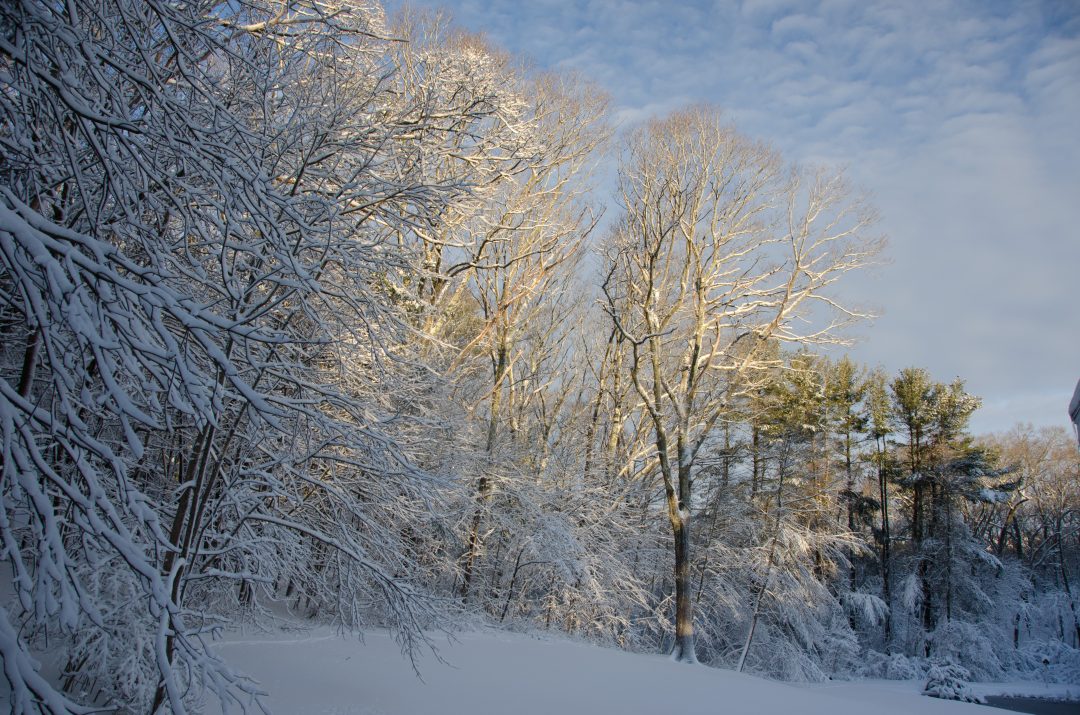
Thank you very much. Here’s a Valentine picture for you taken on a beautiful blue bird day at Appleton Farms just after Sunday’s snow fall.

If you haven’t made a donation yet, please consider it. All donations go to help defray expenses which are growing as we grow. Click here.

__________________________________

This Week

Correspondent Tamsin Venn visits Loon Mountain and reports on her ski experience in times of COVID.  It’s like a throw-back to the old days, simple, economical, and ski-focused. Click here.

We found an interesting video on YouTube where someone took a run at Nax resort, a small-ish area in the Swiss Alps. It’s an eight and a half minutes from the top of the lift to the bottom.  You judge if you would have been comfortable doing what the videographer did. Or whether you think it’s safe. Click here.

The traveling Australian Dave Chambers recounts a 30-day ski journey in France.  On day one, a member of his safari has a bad accident. His tale of Marg’s foreshortened vacation and the wonder of travel insurance are a lesson in being prepared for evacuation far from home. Click here.

Correspondent Marc Liebman has done some research on the potential of a “personal ski”, that is, one made just for you.  Hey, if Dell can customize computers to your specs, why not a ski? Click here.

XCSkiResorts.com publisher Roger Lohr describes the typical injuries you can get in XC and how to avoid them. Click here.

Jan Brunvand, a frequent contributor from Utah, sent us a reminiscence about skiing in college in the 50s and how his first date with his current wife worked out. Click here.

Ski instructor John Gelb advises readers to take a lesson and reports on the three common flaws he sees in seniors that can be improved with instruction. Click here.

Finally, the Skiing Weatherman Herb Stevens brings us next week’s weather prediction. Coming up to four weeks to spring. Click here.

Thanks for reading SeniorsSkiing.com. Please tell your friends and remember, there are more of us every day and we aren’t going away.


Short Swings!

Last week was the single deadliest avalanche week in the US since 1910. Avalanches claimed 15 lives: five in Utah, four in Colorado, three in Alaska, and one each in California, Montana and New Hampshire. To date, this season, 21 people perished.  According to avalanche.org, all but five of the fatalities were skiers or boarders. 

Experts attribute the dangerous conditions to the thin early-season snowpack which weakened under the snow from  recent storms. That, of course, has been exacerbated by the increase in backcountry skiing, some of which is the result of Covid restrictions at the resorts. An increase in any activity means many novices who are not adequately educated about what they’re getting into. 

And, as we all know, there’s the element of being in the wrong place at the wrong time. Bad luck.

I have several friends whose passion is backcountry skiing. They have the proper gear and know how to use it. They’ve learned how to scope out terrain and how to study snow. They know what they’re doing. That said, one of them was caught in a terrible slide with life-altering consequences. 

Whether or not you’ll ever leave the resort, this first-rate 15-minute orientation film from avalanche.org is worth watching.

Sun Valley Expansion

Sun Valley has added 380 acres of expert terrain.  Called Sunrise, it’s served by  the new Broadway detachable quad. It replaces the Cold Springs chair, until recently the resort’s oldest. Click on the image to learn more.

Lower Covid Risk on Ventilated Gondolas

Swiss researcher measures gondola’s air volume.

Risk of Covid during a 12-minute gondola ride is 1000 times less risky than a dinner in a closed room with eight people. That, according to scientists at the Swiss Federal Laboratories for Materials Science and Technology. Personally, I prefer gondola rides to good terrain far more than restaurants with good terrine. 

History of the Chairlift

Early Sun Valley chair

James Curran, who never skied a day in life, invented the chairlift at the request of Averell Harriman who was developing Sun ValleyThis article in the current issue of Smithsonian Magazine tells the story of the chair and other lifts. It’s good reading.

Generous Discount for Readers

I’ve reported on a few of the Biofit 360 CBD products. The company’s Deep Sleep CBD drops is the first product — Rx or OTC — to give my wife a full, uninterrupted night of sleep without side effects. It is exceptional. I’ve used its Relief CBD Cream as an alternative to OTC pills, and it really does the job. Now, Biofit is offering SeniorsSkiing.com readers a 20% discount. To enjoy this benefit, click on the Biofit 360 ad on the right of the screen, shop, and enter SKIING in the discount code field when checking out, 

90,000+ Vertical in One Day

Jonathan Boblitt

Jonathan Boblitt skied 90,073 vertical feet at Beaver Creek (CO) on January 26. According to Vail News, he was inspired by his late grandfather who told him a good day of skiing is when he could get it down to 10 cents a run. Boblitt did 39 laps on the Birds of Prey lift. Those and the runs he took to reach Birds of Prey helped him get to 90,000 vert. Congratulations, Jonathan!

Kai Jones Skis Targhee

This two-minute video of 13-year old Kai Jones at Grand Targhee brought a big smile. Targhee is a powder magnet and a joy to ski. Watching this kid make his way down slopes, over cliff bands and through the park is a lot of fun.

We Appreciate Your Support

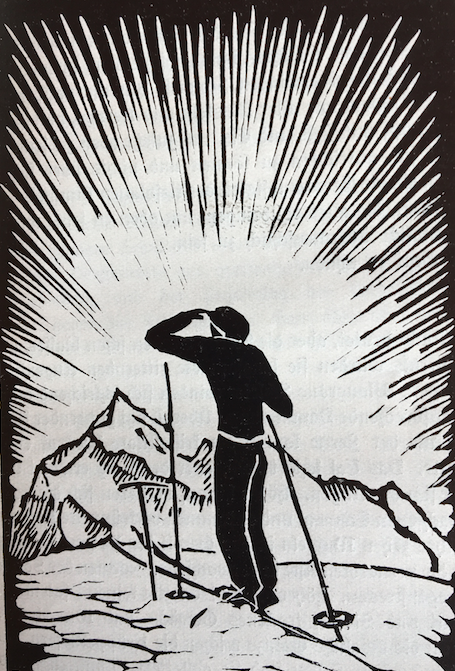
This is a brief thank you to readers who, over the past week, donated to SeniorsSkiing.com. You will be receiving a mailing with stickers. And, if you contributed $50. or more, you will receive the terrific BBQ apron specially imprinted with the vintage skier woodcut (see below). We’re encouraging readers to make a minimum gift of $10 to help defray the cost of publishing SeniorsSkiing.com. To participate, please click here. The fund-raiser will last through February.

Please, Take A Run For Me

I’ll be in the hospital and out of commission for a while. The coming months will require effort, grit and good luck. For the majority of SeniorsSkiing.com readers blessed with good health or who have gotten through rough periods, I hope you remain well. For those facing health issues, I hope you get better soon.

Because of this situation, it will be some time before I get back to writing Short Swings!

For each of you fortunate enough to be on the slopes this weird (now, snowy)  season, I ask this favor: Next time you’re on the hill, please, take a run for me.

Skiing Weatherman: The Hits Just Keep On Coming

Busy Storms. Slopes in Good Shape.

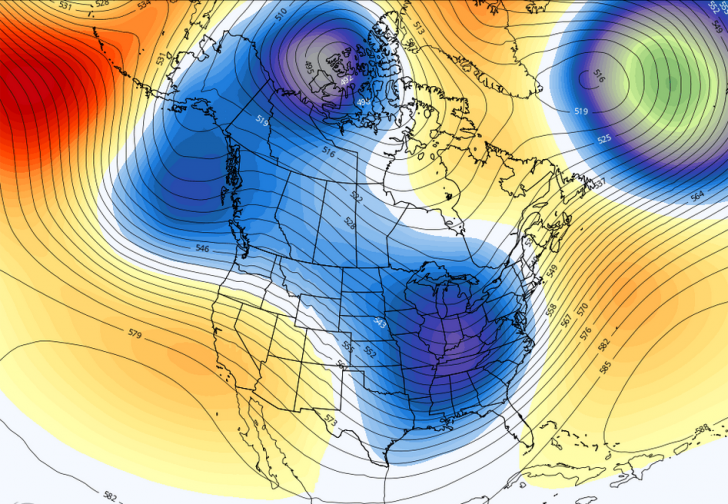
As I write this piece at the start of President’s Day weekend, the slopes from coast to coast are in fine to extraordinarily good shape, thanks to a very busy coast to coast pattern of storms that has played out in recent weeks.  A push of arctic air delivered by the stratwarm episode that was discussed in last week’s column is providing cold air over the eastern two-thirds of the country.  At the same time, upper level energy that supports the stormy pattern continues to be ejected from an upper level trough over the Aleutians.  After the holiday weekend those disturbances will continue to favor resorts north of I-70 and I-80 in the West, but as the energy tracks eastward and interacts with the cold air flowing into the center of the country from Canada, storms will bring fresh snow to the Midwest and the East.  Here is a jet stream for Friday the 19th that illustrates the snowy “handoff” pattern that is in place now and should stay in place for the next couple of weeks.

With one trough over the Gulf of Alaska and another over the eastern half of the country, combined with a blocking ridge still hanging around Greenland, storm after storm will cross the country, some small, some more significant.  Initially, the snow will fall in British Columbia and the resorts of the Pac NW and northern Rockies.  The northern Great Lakes will pick up a round of powder as the disturbance heads toward the high amplitude trough that stretches from the Great Lakes to the Gulf of Mexico.  As the disturbance in the northern branch of the jet stream interacts with the larger system, the result could be a storm that could run up the length of the Appalachians late in the week and into next weekend.  As I suggested earlier, there will be ample cold air around, as shown by this map of 5,000 foot temperatures for next Friday.

The green and gray colors show where temps will be below 32 degrees aloft, a proxy for snow vs. rain at the surface.  You can see that a long-track snow event up the eastern seaboard could indeed be in the cards.  Now if you look at the jet stream map above, you will see an extended trough reaching from the waters west of Washington northward to the Arctic region.  The counter clockwise flow around that feature suggests that after 10-12 days of domination by arctic air, Pacific air masses will get involved, leading to somewhat milder weather (less cold) by the end of the month or so.  In the meantime, enjoy the frequency of flakes and preponderance of powder!

REGIONAL HIGHLIGHTS:

Pac NW/B.C.:

Big storm late this week followed by more storms from the Gulf of Alaska rolling into the mountains of B.C., Washington, and Oregon.

Central and southern Sierra:

One storm this weekend and another early next week.  Glancing blows from storms to the north bring light snow later next week.  Heavy snow next weekend.

Rockies:

Weekend snow followed by a moderate to heavy accumulation a couple of days later central and south.  Potential for another round next weekend.  Moderate amounts of snow next week in northern resorts

Midwest:

Arctic air dominates.  Light snow from Clipper systems and some lake effect snow in northern Lakes.

Northeast:

Parade of storms continues to add snow every couple of days.  Shot at significant snow middle of next week and again late in the week.

Mid-Atlantic/Southeast:

Two shots at moderate to heavy snow in next week…first one around Tuesday and again a couple of days later.


Vicarious Ski Run In The Swiss Alps: Fun Or Foolish?

Here’s A Top-To-Bottom Video Of A Run At Nax.

[Please consider supporting SeniorsSkiing.com with a donation. We appreciate your help. Click here.]

This is a Go-Pro video we found on YouTube.  It’s shot at Nax ski resort in Switzerland, a charming ski village in Valais, overlooking Val de Herens. It’s an intermediate-type area with moderate runs, one of the many small-ish areas found throughout Europe.

The video is eight and a half minutes long. From the top of the lift to the bottom.

What do you think? Is the skier making any turns here? Does this look like a safe run? What do you think of the terrain? The snow conditions?  Do you come away from this video with a good feeling?

Please leave comments below in Leave A Reply.

Question For You: Liability-Less

A Recent Court Decision Changes The Legal Landscape For Skiers In Colorado.

[Please consider supporting SeniorsSkiing.com with a donation. We appreciate your help. Click here.]

Watch this video news story from Channel 7 News in Denver, CO. Basically, a recent December 2020 Appeals Court ruling has decided that skiers cannot bring action against ski resorts, expanding protection for resorts, releasing resorts from any and all liability from injuries, including chairlifts and gondolas.

Question For You: What’s your reaction? Is this any different from what we’ve always read on the backs of lift tickets? Or is this decision more ominous?

Please note your comments in Leave A Reply below.


Marg’s Morzine Mishap

Poor Marg. She Becomes A Poster Person For Travel Insurance.

[Please consider supporting SeniorsSkiing.com with a donation. We appreciate your help. Click here.]

When I think back over the last two decades, our group of skiing fanatics have been largely injury free. We are a large group of friends comprised of both Australian and British skiers. But there was Morzine.

The Apartment is in the heart of Morzine.

Today our first day skiing, we vacate our Appartment Telepherique in Morzine, France. Our accommodation here in 2013 is a luxury condo with huge post card views over snow covered mountains. Our group of six skiers alight from the Telepherique Tramway. The day is a glorious blue with wisps of low thin cloud dispersed amongst the pines. As the sun rises this mist burns away as we exit the Tramway. The snow is firm pack with a centimetre or two of fresh on top.

Suddenly our day goes pear shaped within 100 metres of the tramway on a gentle slope.

Yes, there was an accident and when I say words like hip and femur, it sounds like it could be serious. It is. Our skiing friend Marg in fact has had a slight altercation with some hard packed powder. Not more than a couple of minutes from the door of the Tramway exit. She has rearranged the bones in her upper leg or hip or thereabouts. And this on her very first day skiing of our trip here in Morzine, Avoriaz, Portes du Soleil, France. In fact, her very first run right off the Tramway.

Marg is transferred to helo. First run of 30-day ski vacation in the Alps. Credit: Dave Chambers

We have hired a rental car and are now underway to a hospital on the shore of Lake Geneva (which in fact is called Lake Leman) in a town called Thonon. We have decided that our very good skiing friend Marg,who  has been at the mercy of the staff for a couple of days now at Hopitaux Du Lemans, Thonon Les Bains, France, needs some cheer and mirth in the hopitaux as they call it.

No more skiing for the entire trip for poor Marg. An otherwise for us, normal ski trip, covering three countries, France, Italy, and Switzerland. Skiing for a touch over 30 days at Morzine, Les Gets, Avoriaz, Champery, Courmayer, Monte Bianco, Valle Blanche, La Thuile, La Rosiere, Champoluc, Alagna, Gressoney La Trinite, Frachey and Gressoney Saint Jean. Skiing all without Marg.

Insurance is expensive when traveling, that’s for sure. But one day that policy and your insurance representative will be among your best friends. Poor Marg required attention by five ski rescue persons and a helicopter, no less. Experts all, they very carefully bundled her up, administered some drugs and whisked her away to said hospital. Never has a girl had so much male attention. She later reflected on enjoying this and some of the best drugs for her rehabilitation.

We joke about this in her private room and generally try to cheer her up. Also there is considerable discussion as to the right angle or such of the pins and what pins are where and, well a girl can never have too much jewelry, but in this case it is medical grade stainless steel. “It’s just such a shame you can’t show it off and jiggle it around,” says Marg.

The result of all this activity, unfortunately, has demanded her complete repatriation back to Oz and her vigorous removal from Morzine by that new best friend: the Insurance Company!

But seriously we are sad to see her go, and a large portion of our day is now vacant without Marg. She is now a guest of said insurance company and a very exclusive guest she is. Having an invoice that now includes a lift by helicopter and a First Class flight all the way back to Australia for her and her new best friend, her nurse. Sometimes insurance companies are your friend indeed.


Volkl

The Personal Ski

Does The World Need A Custom Ski Just For You?

[Please consider supporting SeniorsSkiing.com with a donation. We appreciate your help. Click here.]

You can buy a computer built just for you. How about a ski?

Way back in the winter of 2018, long before Covid raised its ugly head, I asked the heads of marketing (none of whom would qualify for a SeniorsSkiing/com subscription) from three manufacturers a simple question: “Has ski material science and engineering reached the point where—with a simple, easy-to-measure parameters, and algorithms— a ski manufacturer can produce a ski tailored to the way an individual, recreational skier skis?”

The answer was yes, they have been making custom skis for World Cup and Olympic Ski racers for decades. But what about us common folks?

Again, the answer was yes. Physical dimensions of the skier and other limits such as artificial joints could be entered by the buyer.

All it takes is translating measurement to manufacturing.

The hardest part would be translating how a skier skis into data that can be used by a computer to then control the manufacturing process. For elite racers, they have zillions of gigabytes of footage “experts” can analyze coupled with on-snow testing.

Unlike ski racers where the variations in their technique are subtle, recreational skiers are all over the map. If you don’t believe me, watch a well-traveled slope. Even the “untrained” eye can see the differences in technique, some good, some, well, not-so-good bordering on awful, or where they are in learning to ski.

All three ski designers hypothesized that with two to three minutes of video of a skier on a a ski whose design parameters were known skiing down a known piece of terrain with measured condition, a custom ski could be done. The individuals all agreed that this approach would eliminate many variables.

From there, they could have internal experts go through their analysis, come up with whatever inputs a computer model needs, and, voilá, out would come the engineering/design specs for the ski.

Cost of manufacture is another story. Credit: Volkl

Now we get to the second issue: Producing the ski. Ski manufacturers make huge investments in equipment that can be used to turn out thousands of skis so they can amortize the investment over each ski produced. In this “personal ski” scenario, the molds and materials can still be used. Workers would have to be re-trained. How and why happens is beyond the scope of this piece, so just accept the fact that custom construction is possible.

Which brings us to cost. The custom ski would cost more than the $1,000 for a top-of-the-line ski. How much more, my informal panel wouldn’t or couldn’t agree on a number, but again, for the sake of dreaming, let’s say $3,000. Whether or not the ski was salable at that price is a different subject, again beyond the scope of this post.

So the obstacle was not cost, nor engineering, nor manufacturing, but identifying and then gathering the needed data that could be translated into ones and zeros. In the end, they all said,  “Why bother?”  The current designs meet the needs of 80—90 percent of recreational skiers. And therein lies the rub and why, at least not yet, everyone can’t have a custom designed ski.


Take A Lesson And Improve 25 Percent?

That’s the simple question, would you like to improve your skiing and enjoy it more?

[Please consider supporting SeniorsSkiing.com with a donation. We appreciate your help. Click here.]

When was the last time you took a lesson? Perhaps a mid-season lesson might boost your skill. Credit: Breckenridge

Would you love skiing as much if you were a wedge skier?  Probably not.  What about a pretty good parallel skier, but anxious on the more challenging black diamond runs?  Maybe you’d avoid them, stick to the corduroy and feel great.

My point is this: The more skilled we are, the more we love our skiing days!  It’s that simple.  And when I began as a part time ski instructor in VT eleven years ago (my kids had moved west, and so had my ex-wife), I got myself hired at Stratton.  First thing I learned while doing “clinics” with the best instructors: There was a lot to learn about technique that I DID NOT KNOW.  I thought all my expert skills learned in the 1960s-1970s were enough.

Wrong.  Skiing techniques have changed, because ski design has massively morphed.  Back in the day, longer skis meant you were a better skier.  Today, not so much.  And ski shape has changed dramatically: One shape for all-mountain, and something very different when you’re going into the deep pow.

Here’s what I see the most among my own “senior” skiing friends, and those I teach:

1. Many skiers forget about the importance of maintaining the “athletic stance” on skis, but it’s so important because it’s what brings us forward into our boots, and gets us over our skis for maximum edging and  balance effectiveness.

2. Skiers like to look straight ahead over their ski tips, when much of the time they should be facing more downhill than their skis, such twisting thus keeping the hip into the hill and edges carving.  This is where the saying “move the skis more than the jacket” comes from.

3. Skiers get lazy and stand up too straight and tall, and by doing so, lose control and confidence on more challenging terrain.

These are all little things that can easily be fixed, but it’s easier to “show” the error to skiers and then have them fix it in their own skiing than to simply “tell” them to do it without any demonstration of what’s being done incorrectly.  And with some focus and concentration, any skier can correct these bad habits and see/feel their improvement so quickly,

So what if you could instantly take a step up to a higher level of skiing with one or two short private or semi-private lessons?  Remember the way we used to hop at the moment of turning in order to cause the weight change from one downhill ski to the other?  We don’t do that with today’s skis, because the skis are much more effective, and they have the ability to be moved from one edge to the other almost magically with subtle movement. All it takes is a little new knowledge.  It’s called carving, and it works.  But even as an instructor, I thought I didn’t need it.  Now that I’ve got it worked into my skill set, I would never get rid of it.

And don’t you hate it when you get to a run (usually a black diamond), and you don’t feel confident enough to turn your skis downhill on that run?  A single lesson or two at the beginning or middle of the season could set you on a glorious path of improvement enabling you to ski previously daunting black diamond runs you’d avoid.  Or enjoy them much more!

Let’s face it, we’re not getting younger, but as Mike’s recent piece pointed out, getting more skilled and proficient at the sport we love is just one more way of “keeping the old man away” (or “old lady”), so we can still feel young plunging down the trails we love. And there’s nothing like improvement to make us feel younger.

When you think about all the money you’ve spent (and still spend) on ski clothing and equipment, don’t you owe it to yourself to spend just a fraction on actually getting better?

One lesson each season, that’s all it takes. Just find a great instructor. I’ll tell you more about doing that in another column.

Group or private, a lesson opens new capabilities. Credit: Vail Resorts

This Week In SeniorsSkiing.com (Feb. 5)

Supporting SeniorsSkiing.com, Time For Gratitude, StratWarm, XC Ski Length, Reflections On Comments, Best Restaurant Ever, Odyssey Between US And Canada, And More Ski Art.

About eight years ago, Jon Weisberg, a college friend and fraternity brother, mentioned on a holiday phone call that he had been thinking about starting a website for senior skiers. He even chatted up fellow senior skiers on lift chairs across the West to validate his vision.

Interesting idea, he had.  We discussed. Why a website? Why not an online magazine? Published for free. To senior skiers. Advocating for their interests, concerns, and needs. Providing information about best skis, best boots, where to ski free (or almost free). Highlighting topics of interest to older sports enthusiasts. Conducting survey research to better understand the readers. Recruiting writers from around the world, both professionals and amateurs.

So, we became co-publishers of SeniorsSkiing.com, not knowing anything about online publishing, Mail Chimp, Survey Monkey, web hosting, WordPress, or any of the realities involved with putting out weekly editions. We tapped into our 401Ks to start pulling the threads together. We lucked out when we found Alice Winthrop of Gatehouse Design who produced our prototype and taught us how the backend worked.

We found a group of extraordinary journalists who clicked with the idea and who had stories to tell. This stalwart group has been the cornerstone of how we grew. We simply could not have “gone to press” without them. As a completely shoe-string operation, we couldn’t pay them, but they provided first-rate stories that resonated with readers.

And, SeniorsSkiing.com started to catch on. In truth, we never really tried to “sign up” new readers; we just encouraged readers to tell their friends about us. And so, we grew.

Sometime last year, we realized that we were publishing more than an online magazine. We had created a community of seniors who loved the outdoors, winter and summer, and who were active, engaged, experienced, opinionated, and knowledgeable. And who used SeniorsSkiing.com to talk to one another.

SeniorsSkiing.com has become more than an online magazine. It represents a forum for seniors who love the active lifestyle.  Help us to keep this going.

Please consider supporting SeniorsSkiing.com with a donation. We appreciate your help. Click here.

__________________________________________

This Week

Avalement was the French answer.

Ski Coach Bob Trueman has reviewed the comments to the Question For You article: How Did You Learn? He offers his opinion about the state of ski instruction. You may disagree or agree, but you can’t deny he has some interesting points. Click here.

Skiing Weatherman Herb Stevens has identified a wrinkle in the arctic atmosphere called a StratWarm condition. It means cold is coming.  Find out what a StratWarm is and why you should love it. Click here.

Don Burch has another unusual ski art video. This one is really different. What do you think? Click here.

How do you select the proper cross-country ski length? Hold your arm up and measure the ski against your wrist? Think again.  Here’s the straight skinny on skinny skis from Jared Manninen from TahoeTrailGuides.com. Click here.

This week’s Question For You asks you to identify the best restaurant you’ve been to in ski country. It doesn’t necessarily have to be the most gourmet or luxurious, although it could be.  It could be a remarkable hamburger joint on a mountain road. Tell us your story. Click here.

Curlew Saloon is a taxidermist’s showcase. Credit: Dave Chambers

Our traveling Australian correspondent Dave Chambers offers a narrative about traveling across the border from Washington state to British Columbia, the little towns he went through, what he found, and a hidden gems ski resort in BC. Click here. Click here.

Finally, correspondent Pat McCloskey takes stock in mid-season about how this sui generis year is turning out. Nice story about being grateful for what we have. Click here.

Thanks for reading SeniorsSkiing.com. Please tell your friends, and remember, there are more of us every day, and we aren’t going away.


Short Swings!

This week’s Short Swings! message is straight-forward:

If you enjoy receiving SeniorsSkiing.com, please support us financially.

Many of you have been generous in our past February fundraisers.

This month, we hope to expand the number of donations by asking more of you to donate a minimum of $10; not much considering the cost of a hot chocolate or a bowl of chili.

For those readers donating $50 or more, we’ll send a terrific navy blue BBQ apron imprinted with this striking vintage skiing woodcut.

All donors will receive a personalized thank you note and some SeniorsSkiing.com stickers.

The fundraiser will continue through the month.

To donate, click here.

Thank you!!!!

Ski Patrol Drones Used at Val Thorens

Many ski resorts outlaw drones for a variety of safety reasons. But ski patrol in Val Thorens, the French mega-resort, are employing drones to monitor lifts and avalanche management systems, and to perform a host of other duties. Among the examples you’ll see in this short video produced by drone-manufacturer, DJI Technology, is how an infrared-equipped drone, is able to detect a skier buried in an avalanche. This is impressive stuff that, before long, we’ll be seeing at many areas.

Idaho’s Tamarack Resort Plans Expansion

Tamarack Resort

Tamarack, which opened in 2004, went bankrupt in 2008, and got new owners in 2018, recently applied to the US Forest Service to add 3000 acres to its existing 1100. The addition, including multiple lifts, would elevate it to one of North America’s biggest. Tamarack, in west central Idaho, averages 300” a season.

Elan’s Folding All-Mountain Ski

Elan, the Slovenian ski brand, is big on innovation. I used their asymmetrical skis a few seasons ago in the Dolomites. Right and left ski were used on hard pack. Switch the skis and they performed differently in powder and soft, heavy snow. Now, Elan is using a similar approach in its new, folding Voyager model. The technology was developed as tactical equipment for the Slovenian Army. It incorporates a hinge and locking swivel-plate which holds the binding.  The company appears to be promoting Voyager for ease of carry-on and transport. Click here for an amusing explanation. Another Elan product currently under development is a “smart ski”, embedded with sensors that will provide real time coaching feedback through a headset. Couldn’t find a price for the Voyager.  

Yellowstone Club’s New Trail Map

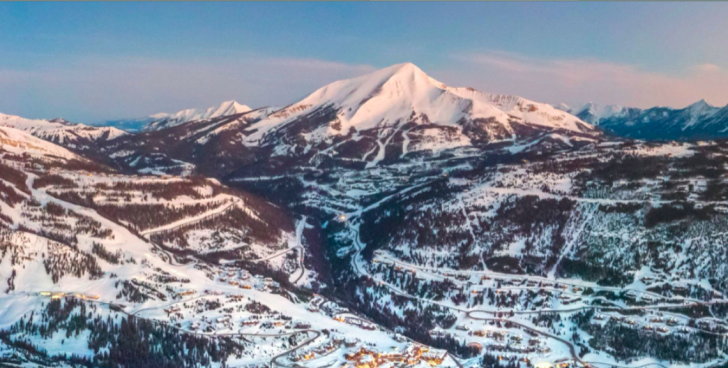
Yellowstone Club, adjacent to Big Sky

The closest I ever got to the Yellowstone Club, was skiing a perimeter trail at Big Sky in Montana. Yellowstone Club is the “private and secure” ski and golf resort where business and entertainment celebs have homes. Bill and Melinda Gates are there, as are Tom Brady, Justin Timberlake, and before his death, Warren Miller. Click here to see the resort’s new trail map.

Two Idaho Areas Join Low Cost Multi-Pass

They are Soldier Mountain and Pomerelle Mountain. Indy Pass costs $259 and gives passholders two days of skiing at each of 61 participating areas.

Death and Fantasy Ski Videos

Arianna Tricomi is a three-time Freeride World Champion. In 2018, the Italian was Euro Skier of the Year. She recently recorded this touching and informative video after being unable to save a 15-year-old buried in an avalanche. The point she makes is that little is discussed publicly about risks and preparations made when filming fantasy skiing in challenging terrain. The final edited versions may attract less prepared skiers to mimic the lines, often with tragic results. Her message, while it may not apply to many older skiers, is still an important one: In order to prevent more unnecessary deaths, there needs to be more open discussion and disclosure about behind-the-scenes planning of extreme skiing videos.

Classical Guitar Après Ski

Dr. Jon Paul Yerby is a gifted classical guitar artist and educator who performs globally. He’s not a skier, although, he’s told me that skiing is one of his aspirations. But he is an outstanding musician, as demonstrated in this performance of the  J.S. Bach Prelude. This and other of Jon’s performances are a nice way to enjoy a relaxing senior skier après-ski.


Skiing Weatherman: Thank You, Stratwarm

Hint: Cold Air Coming Your Way.

[Please consider supporting SeniorsSkiing.com with a donation. We appreciate your help. Click here.]

I assume that this week’s headline has many of you scratching your head wondering “What in the world is a stratwarm?” I will try and explain but the bottom line is that this phenomenon is in large part responsible for the colder than normal pattern that covers much of the country, much to the delight of snow lovers. The past ten days or so have brought fresh snow to just about every resort in the country, and the coming two-three weeks look very promising, as well.

Okay, what is stratwarm? The technical term is Sudden Stratospheric Warming (SSW), and it is an almost exclusively northern hemispheric winter event that typically occurs in about six out of every 10 years. Unusually warm air develops in the top 10 per cent or so of the atmosphere (the stratosphere) over the high latitudes. The warming works its way down in the atmosphere and then reverses the winds circling the North Pole from westerly to easterly. Those winds weaken as well, which disturbs the polar vortex. If you imagine the strong westerlies around the pole acting as a dam of sorts, keeping the coldest air trapped at the top of the world. When the wind shifts direction and weakens, the dam breaks and cold air heads southward to the mid latitudes. Here is a map of the current temperature anomalies at the 10 millibar level of the atmosphere, right near the top

Notice the orange/brown swatch draped over the North Pole. The warm air is in place and has been for a couple of weeks. Stratwarm episodes take weeks to develop and mature, and this one started in late December. You may have heard that both Europe and China experienced severe cold outbreaks last month as pieces of the vortex broke loose and reached the mid-latitudes. The next thrust of cold is now aimed at Canada and the U.S. It will first move into the northern Plains next week before spreading east-southeastward. Here is a forecast of surface temperature anomalies for Monday, the 8th

The greens/blues/purples indicate where temps will be below normal, with the core of the coldest air moving into the Dakotas. A week later, the cold has pushed southward to envelope most of the lower 48. Have a look.

Now, cold air doesn’t always lead to snow, but with an upper trough likely to cover much of the same area as the cold mid-month, the likelihood of significant snow events from the Rockies to the east coast will be enhanced. Resorts west of the continental divide and along the west coast will be more influenced by upper ridging over the eastern Pacific, so snow events will be harder to come by, except in the Pacific NW, where a typically snowy La Nina winter will carry on. Stratwarms can cause some uncomfortably cold days on the slopes, but this one will also lead to a cold and snowy February for a majority of the slopes we love.

REGIONAL HIGHLIGHTS:

Pac NW/B.C.:

Snow this weekend, only B.C./Washington resorts pick up snow next week as west coast ridge builds.

Central and southern Sierra:

Very snowy late January morphs into dry first half of February as new ridge on west coast keeps the flakes away.

Rockies:

Occasional rounds of light snow across the south, somewhat heavier spells of snow central and north from small disturbances embedded in cold northwesterly flow.

Midwest:

Cold shot from the arctic arrives this weekend and dominates for more than a week. Several rounds of light snow during that time.

Northeast:

Light/moderate snow event early next week. Arctic air gradually spreads into region thereafter. Potential for sizable storm around the 15th.

Mid-Atlantic/Southeast:

Higher elevation snow early next week, colder weather follows and dominates through mid-north. Next shot at significant snow around the 15th.

Gratitude

Half-Way Through The Season, Pat McCloskey Takes Stock.

[Please consider supporting SeniorsSkiing.com with a donation. We appreciate your help. Click here.]

My Ski Lodge. Credit: Pat McCloskey

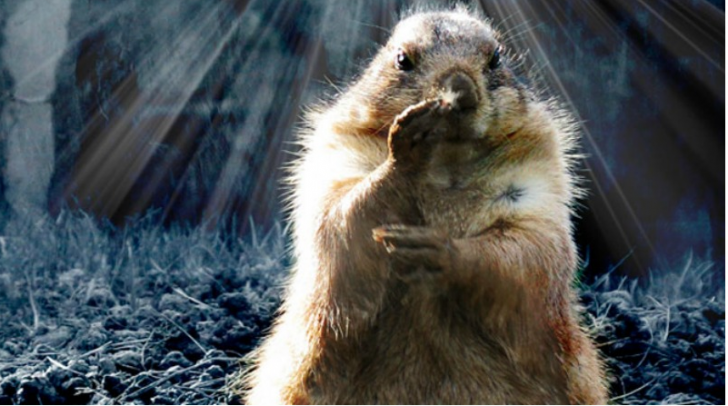
We are halfway through winter, and the groundhog has come out to let us know what he thinks about the rest of the winter. I wonder if he will be masked? In any event, this has been a different ski year with booting up in the parking lot and eating lunch in the car or at a tailgate. The good news is that, for the most part, snow has been really good this winter, and lots of folks are getting out to enjoy the slopes nationwide.

Here in Western Pa, the snow has been plentiful, and all of our ski areas have been operating well. There have been a few glitches along the way but for the most part, I am grateful that the lifts are spinning. The outside fireplaces are roaring, and, when there are only a few people in the lodge, I sneak in early to sit by the fire, one of my favorite things to do.

There’s been snow in western PA. Gratitude. Credit: Pat McCloskey

There have been a lot of changes this year in the operation of skiing. We don’t really know the half of it, but I am sure that operating a ski resort in Western PA is challenging enough let alone in a year with a pandemic. In the fall, there were questions about whether there would be skiing this season.  However, the resorts have made it possible even though their bottom lines are probably not as robust with the lack of bar and restaurant business. Tough to survive on take out and limited indoor seating. But they are doing it, and, for that, I am grateful. When I ride up that old chairlift and look out over the Laurels, I am so thankful that I have the health and the skill to enjoy skiing. And an hour and a half from where I live, I will take it.

Janet and I are headed west in February and I will be going again in March. From what I am hearing from friends out there, the resorts are doing a good job in general. Sure there has been the issues with long lines due to social distancing on the chair lifts, but it seems to have sorted itself out as the season has progressed.  This past week, most of the west has seen a significant snowfall which will hold them in good stead for the rest of the season. Outdoor recreation is essential to all of us if we want to get through this pandemic and nothing better than enjoying the snow in the winter.

As I sit in my folding chair at the beginning of the day and boot up, I look around and think we are much better off than we thought we might be. The weather has been cooperative, and it has led to good times outside for a lot of us. So the next time you see a snowmaker at the resort, any resort, thank them. They work hard in really adverse conditions. When you see the patrol, the ski school, a groomer , restaurant employee, ticket booth personnel, or management at an area, take a moment to thank them all and tell them how much we appreciate their efforts to keep us all going strong this winter. The good news is that no matter what that ground hog says, we have a lot of winter left.


An Odyssey Between US And Canada

Our Traveling Australian Skier Recalls Characters, Odd Places, And Skiing In The US/Canadian West.

[Please consider supporting SeniorsSkiing.com with a donation. We appreciate your help. Click here.]

Beautiful downtown Curlew, WA, a ghost town stop on the way to BC.

Have you been to Curlew, WA? We try several routes in an attempt to exit the USA, having already skied at Schweitzer Ski Resort. When I say skied, I use the term advisedly. Due to lack of snow, most of the ski hill is closed. But now we are still in the wild vacant Northwest back woods.. The landscape is quite depleted of signs. You wouldn’t think it would be that difficult to get back into Canada. I mean, the border, is 5,000 miles long.

The Curlew Saloon on Main Street

While pursuing a route, we chance upon the town of Curlew. I say town, it was once a town now a ghost town more than any ghost could conceive. I walked casually, quietly, through the door of the Curlew Saloon. I notice the licensee, silver hair, beau-fount style, piled high on her head, like Dolly Parton but raggedy eyed. A patron, her worn body reflecting all of her ninety years affected by smoke and booze. She eyed me, a stranger, with a leery eye. A stranger is noticed here.

Curlew Saloon is a taxidermist’s showcase. Credit: Dave Chambers

Ahead of me, launching out of the ceiling, a Cougar, within its snarly jaws, sharp and yellowed teeth. Further in a delicate patterned rattlesnake skin now devoid of its body is flattened against the weathered timber wall. The scene is old, faded and dreary. Several skulls and horns decorate. No one really engages with a stranger here. Two of three other occupants whisper in the quiet space. One a city slicker wants to move to a quieter town. Maybe he could move to this old gold mining town, its heyday long now a memory. I say g’day to the cowboy in the big hat. With an efficiency of movement, a vacant stare, he leans forward and barely nods a response.

The short wide Main Street looks like a western set in an old Hollywood back lot. The rear of which is littered with the ruins and detritus of the last century. Old cars, a fire truck still equipped with ladders on the side sits on flat tires adding more junk to the back streets. Part of the scene is the General Store in Curlew near the hotel on the main street. It fits in to this worn landscape, dilapidated and tired. The owner here also of advanced age sells items almost equal to her age. Brand new cassettes all covered in dust lie waiting for purchase. Century old posters decorate the splintered paintwork. It’s now a forgotten town Curlew, with history slowly seeping out of the old grey wooden buildings, like sand through an hourglass.

We leave Curlew, head north, and exit America. Apex, Penticton, BC is a ski town inside the Canadian border in the Okanagan region.  On this occasion, we find the border guards are Canadian. Almost like magic, the landscape changes to fields and hills laden with snow.

Apex resort, a hidden gem in British Columbia

Our disposition is much improved with a few new snowflakes drifting in the occasional sunshine. Here at Apex where the vertical is surprisingly anything but the average height for a Canadian Resort, we learned, that Apex is still two hundred feet higher than Whistler.

We are greeted in the morning by wafting light snow drifting down between the large fir trees. Lovely. Our mountain host, Dale, likes Aussies, he says. Doesn’t everybody. Took us on a tour and regaled us with stories of his son and daughter and a guy named Fred Smith, an Aussie, rich, says Dale, but lives in an old camper van near the resort for the season.

Somewhat of a legend is Fred. He took his chainsaw to the firs in a steep gully here at Apex and cut his own tree glade. The management of the mountain, when they found out, were not pleased but eventually consented and included it within the ski boundary. Over our only two days at Apex we have three mountain hosts. Russill with an I, Dale with an A and Fred with an E. Dale is a character and is referred to by the local skiers as the Apex CEO.

Cruising all day down blacks that are really blue runs, we had a great time with Dale. The next day we had Fred with an E and in the afternoon Russill with an I.

Don’t tell anybody but Apex is a secret waiting to explode. Russill with an I, seemed quite excited when Ray and I suggested a shoot down the back runs over at Wildside. Double Blacks and Impossible Blacks abound. There almost seems no way down. Russill with an I said he couldn’t ski down there. He is an excellent skier in my estimation. And now Whistler beckons but the snow reports are quite ordinary. We are not surprised at this a strange season indeed. But off we go.

Apex Resort is several hundred feet higher than Whistler.


This Week In SeniorsSkiing.com (Jan.29)

Mid-Winter, Ski Art, SmartPhone Photography, XC Booming, Question About Racing, Reminiscence, Skiing Weatherman, AI Ski Coach, Rx Goggles, And More.

Jon WeisbergComing soon: Prognosticator of Spring.We are approaching the middle of the winter season, and Ground Hog Day, coming up next week on Feb. 2, marks the half way point till spring.  Hope you have half your firewood and half your hay left, at least that’s what the old time New Englanders say.

Curious that Dec. 21, the first day of winter and the date of the winter solstice is considered “mid-winter” just like June 21, the first day of summer is “mid-summer”. On Ground Hog Day we are technically half way through the twelve weeks/three months of the winter season, and the dark, long days are behind us, the longest, and darkest Dec. 21. So why not call Ground Hog Day “mid-winter?”

Actually, Ground Hog Day falls on a cross-quarter day, an astronomical event that marks a midway point between the solstice and equinox.

There are four cross-quarter days each year, Ground Hog Day, usually Feb. 2 or so, is the first. The others are May 1 (May Day), between Spring Equinox and Summer Solstice, August 1, between Summer Solstice and Autumnal Equinox, and November 1, between Autumnal Equinox and Winter Solstice.

Our ancestors used these cross-quarter days as well as the equinoxes and solstices to mark the progress of the year, these markers indicating the time  to begin planting or harvesting. In our non-agrarian world, we’ve lost the significance of the sun’s movements across the sky. And no one really celebrates the significance of August 1 and November 1. May 1 has occasional followers (May poles and Morris dancers) as the mid-point of spring. Only Ground Hog Day remains as a celebration of movement towards spring and a huge public relations event for Punxsutawney, PA.

And as a symbol to snow sports lovers that time is running out for this crazy season.

This Week

Don Burch is posting the second of his Ski Art series. Don has managed to create a unique art form from video images, turning them into impressionistic, sometimes dramatic pictures of the ski world. Thanks again Don for publishing your work here. Click here.

Sugarloaf inversion taken by Smartphone. Credit: Tamsin Venn

Correspondent Tamsin Venn has tips from a professional photographer on how to make the most of Smartphone pics in snow country.  Almost everyone we know pauses at the top of a lift or mid trail to take a picture of the scenery or their pals. These ideas can raise the quality of those “snaps” and put them into the “art” category.

XCResorts.com publisher Roger Lohr reports on the boom in XC activity: Visits to XC areas, gear sales, etc.  People are coming back to the sport, bring in old XC gear for tune ups.  First timers are being accommodated when Alpine areas run out of capacity.  Interesting trend.

Our Question For You this week asks about your racing experience, if any.  If not, why not? We are impressed by the many essays we received on how readers learned the sport.  Your stories make interesting reading.  Thanks for all your contributions. It makes SeniorsSkiing.com a tighter-knit community.

Veteran ski journalist Dave Irons recounts the only time he was a ski instructor.  He was called to action to teach a small group of women despite the fact he never took a lesson in his life. How’d it turn out?

Dave had to teach a group of local women, and he never even had a lesson himself.
One again Herb Stevens checks in with the next week’s snow forecast. His mid-season predictions more snow for all coming up next week. Standby for news.

Co-Publisher Jon Weisberg describes the SnowVision Rx goggles he’s been using on hikes. The uniqueness of this goggle is that it claims to be fog-proof and full range of vision using a prescription lens insert. This can be a positive feature if you use this for XC skiing as well as Alpine. By the way, SnowVision is a SeniorsSkiing.com advertiser.  Check it out.

A reader Bob Margulis reports in a new AI product that is essentially a custom ski coach.  CARV is a tool you can use to get feedback as you ski.  It consists of footpads in your boots, a Smartphone app, and Bluetooth trackers. He’s found his skiing has improved after just a short time using the product.

We have another poem for this week.  In the past, we’d occasionally post a poem or story about snow, skiing, winter, and the like. We’ve posted a lot of Robert Frost, an excerpt from a Hemingway story, modern poets like Linda Pastan, Wallace Stevens, Wendell Barry, Emily Dickinson, W.S. Merwin, John Clare, John Greenleaf Whittier. We’ve published a song by Pete Seeger, and a poem written just for SeniorsSkiing.com by a street poet in Denver.  This week we are very pleased to present a poem written by Matthew Haddad, 11 years old, submitted by his grandpa, SeniorsSkiing.com reader Doug Haddad. It’s really good.

Thanks so much for reading SeniorsSkiing.com.  Please tell your friends. Remember there are more of us every day, and we aren’t going away. Stay safe out there.


New Rx Goggle: Full-Range and Fog-Free Vision

SnowVision Rx goggles integrate prescription with inner lens

One of the downsides of not skiing this season is that I am unable to experience some new and interesting products in a skiing environment. I make clear in each article I’ve written about these products that it is not a product review. These pieces may be about the product’s features and benefits and how I think it will benefit other senior skiers, but, at least for this season, these product articles are not full reviews based on my on-hill experience.

That said, I’ve been using my new SnowVision prescription ski goggles in a number of non-skiing settings. SnowVision is a Belgian company that advertises with SeniorsSkiing.com. It utilizes a patented lens technology that integrates the prescription lens into the inner lens of the goggle. The picture accompanying this article explains it quickly. 

A Better Rx Goggle

The SnowVision approach has numerous advantages over goggles using prescription lens inserts or over-the-glasses (OTG) goggles. The most obvious is the total lack of fogging. I believe that has something to do with the face to lens distance. I’ve used SnowVision while hiking on a cold, wintery day and fogging never occurred. I can’t imagine it would be an issue while skiing. 

I’ve never found OTG goggles acceptable. My experience is they fog-up too easily. Also, with prescription inserts, there’s always the issue of matching the insert with the correct goggle. Once, after purchasing the insert, I had to search for a compatible goggle.

Perhaps the most significant and satisfying difference between SnowVision and other prescription goggles is the clarity and full range of vision. My prescription-insert goggles provide decent enough vision looking straight ahead. SnowVision, however, gives full, clear vision at the periphery. This, because the integrated prescription lens, like the goggle’s outer lens, is curved. The difference in vision is dramatic.

SnowVision prescription lenses are available as unifocals, progressives or bifocals. The company sent me a pair with bifocals. In all my years wearing glasses, this is the first time with bifocals, and I adjusted immediately. Also, the lenses are fully photochromic: they darken when conditions are lighter and lighten when conditions get dark.

But I have not yet skied with SnowVision, so I can’t comment on their effectiveness in flat light and other on-hill conditions. As for comfort of fit, hiking in a cold and snowy forest, they provided excellent, fog-free vision.

The Belgian company has its goggle components manufactured by high-quality vendors in Germany, Italy and Japan.  That quality is reflected in the design and robust look and performance of SnowVision.

Price ranges start about $300 for the unifocal. The custom-made goggle comes in a box with a cloth carrying case, a lens-cover and free shipping, worldwide.

I’ll write a full review when I’m back on snow next season, but, in the meanwhile, if you’re like me and rely on prescription goggles, SnowVision offers a unique, new approach which I think is superior to the existing options.

Make More Tracks: Cross Country Skiing is Booming Despite COVID

XC Is Hot And Getting Hotter.

Crested Butte Nordic Center attracting alpine skiers who can’t get downhill reservations.

The Cross Country Ski Areas Association (CCSAA) has been conducting online sessions with its cross country (XC) ski area members since last spring, focused on sharing information about how XC operations should respond to the COVID-19 pandemic. Discussions resulted in widespread adoption of plans aimed at minimizing risk of virus transmission for staff and guests.

For example, many XC ski areas have adopted e-commerce and are requiring on-line purchase of trail passes, rental equipment, and lesson reservations. Plans to alter the flow of ski area traffic on the premises and in buildings for safe distancing, as well as limiting or eliminating indoor capacity, have also been put in place.

With plans ready, the onset of winter has come—and business is booming.

High Demand

As per usual for the XC ski business, there is snow in some places and a lack of snow in others. But one thing is consistent­ and fresh—at least since August, XC ski gear has been flying off the shelves.

There are shortages for popular sizes of skis and boots. Bindings and ski poles are also hard to find. Manufacturers have been unable to supply enough products to fill the dealers’ needs. Adding to the shortage, an October fire at a huge Ukrainian factory that reportedly produces a majority of the industry’s skis has hampered the ability to meet demand.

Great Start

XC ski area operators attending the meeting were upbeat about the demand and the level of business this winter, so far.

Christie Hicks of Crested Butte Nordic Center, referring to the two weeks before Thanksgiving when the center in Colorado first opened, “We were slammed from the beginning, and the holidays have been through the roof with five of the seven days during the period being the biggest ever.” Crested Butte Nordic’s season pass sales were up 40 percent, and rental revenue was up more than 100 percent.

First timers at Crested Butte Nordic over the holiday enjoyed good snow conditions and great weather. The center also welcomed alpine skiers who failed to reserve tickets in advance at the alpine ski resort and were turned away due to capacity restrictions.

Richard Hodges of White Pine Touring in Park City, UT, described “business being relentless, as everyday is as busy as a great Saturday. The on-line retail sales are up 300-400 percent, with all the beginner gear sold out and significant gaps in the inventory, but we are hopeful that we can get more products from suppliers by the late winter.”

“With regard to our retail equipment, we are now almost all sold out,” explained Dustin Hite of Osceola Ski & Sport Resort in northern New York. “Indoor capacity is limited to 50 percent per the state, but all the rentals are out on most days and season pass sales have been very strong,” said Hite.

Woodstock Nordic Center is tuning up old XC gear people are using to come back to the sport.

In Vermont, the Woodstock Nordic Center, which traditionally relies on guests at the Woodstock Inn & Resort, has doubled sales of season passes with locals compared to other years despite a 50 percent decline in occupancy at the Inn. Woodstock manager Nick Mahood said, “We had our biggest day ever for revenue leading up to the holidays, and then there was a rain out. Then we got enough snow to open and increased business has occurred despite Vermont’s restrictive travel policy.”  Mahood said that many local people who left the sport for years were coming back with their old gear that they want to get tuned-up.

In Truckee, CA, Tahoe Donner Cross Country is experiencing a low snow winter so far but has had strong season pass sales. According to area operator Sally Jones, “the state has set capacity limits, which is impacting the rentals and food operations. The health authority opposes eating at the premises—even outdoors—because it wants to minimize congregation on the area’s patio.”

On a recent visit I made to Green Woodlands in western New Hampshire (recently named a top place to XC ski in the US by an on-line outdoor website), there was enough snow to ski. And out of 50 XC skiers I saw in the parking lot and on the trails, there were only a couple not wearing masks. XC skiers appear to be respectful without being told to wear masks and there seems to be a minimal chance to get infected with the virus when passing other skiers along a trail if you’re wearing a mask. So join in, get outdoors, and hit the XC ski trails!

Green Woodlands in NH has groomed trails, parking, warming huts and no fee!

Tips To Better Smartphone Photos

Don’t Lug Your DSLR. Smartphones Can Do It.

It’s steeper than it looks. Credit: Tamsin Venn

Do you want to take better photos with your Smartphone? Transform your friends into Alpine or Nordic heroes?

Mark Phillips is a professional photographer.

Mark D. Phillips, a former AP photographer, is used to lugging around SLRs and long telephoto lenses for photographing ski racing. Increasingly, for sheer convenience, he uses an Smartphone to get good high quality shots. Here are some pros and cons of using the Smartphone and tips for how to take better photos, according to Phillips.

  • The Smartphone quality level is about half of your standard SLR so you sacrifice quality. But if you are doing photos mostly on the internet and sharing with friends and family, the clarity will be fine.
  • The phone works best as a wide angle lens. You can take that a step further and turn on the fun panorama feature. Use anchor points on either end to bring the image together.
  • One drawback is not having the use of a telephoto lens (true on the earlier models). Stay tuned for new phones which will have new zippy telephoto features.
  • To compensate for the Smartphone’s lack of depth of field, try to connect the elements of the photo: the skier with a line of trees or throw in a pop of color to give a sense of depth.
  • Use the rule of thirds. Put your subject in a third of the camera, and use the rest as a complement.
  • Mix up the camera angle. Hold the Smartphone down at your knees and get an interesting low shot. No need to bend way down or get on our knees.
  • Fill as much of the screen as you can.
  • The Smartphone has good light values for night photos, but again you are going to lose the depth of field. Use lines for composition to give more of a sense of depth.

Sugarloaf inversion taken by Smartphone. Credit: Tamsin Venn

  • Photoshop tools in the Smartphone rival any of the other tools available for playing with photos. Change the exposure, the highlights, lighten up the shadows and bring some details back into the blacks, or add warmth to take the blue out of the snow. Or, turn the photo into a moody black and white.
  • Most people email their photos to their computer, but if you have a lot you may want to use a cable. (If you turn on the “send to cloud” feature, they will show up on your computer.) Work with the largest file size you have, the more data you have when you resize the better the image.
  • Shoot video with the slow motion feature, then scroll through the images one shot at a time to find the best single action photo.
  • Finally, if you want to shoot your ski tips hanging over the top of Corbet’s Couloir at Jackson Hole, just accept that the Smartphone is going to erase the steepness factor. Then drop in.

Got any tips for taking better Smartphone photos? Share them in the Leave A Reply section below.

Moody day at Deer Valley has been edited with built-in editing tools. Credit: Tamsin Venn

My One Morning Career As A Ski Instructor

A Ski Patrolman Rises To The Challenge.

Dave had to teach a group of local women, and he never even had a lesson himself.

Before I ever had a ski lesson, I had become a ski patrol director, certified (the highest level) by both the National Ski Patrol and the Professional Ski Patrol Association. One morning while working at a small ski area (240 feet of vertical), I was called into the base lodge by the woman who scheduled the ski school programs. This tiny area actually within the city limits ran a number of programs mid week, mostly for housewives, and this morning they had a couple of no shows among their instructor corps.

After numerous phone calls to no avail, it was decided that I would have to teach one of the classes. I asked what level they were as skiers and was told level B, or it might have been C. Neither told me anything. I didn’t know an A from an E. I later learned that A were true beginners, never-evers. Fortunately, these ladies could ski enough to get down the hill. On this second week of their once-a-week program, they got the pro patrolman.

In front of the lodge the ski school director introduced me to the four ladies before he headed off to also teach a class. Having no idea what to say, I simply stated, “I hope you ladies have a good sense of humor. We’re all going to learn together today. Not only have I never taught a lesson, I have never even had one!” One of the ladies laughed while the other three gave me strange looks.

I took them up the lift and watched as they skied down to the top of a broad low intermediate slope. I explained that I needed to see what they had worked on the previous week so I skied part way down and asked them to demonstrate as best they could the turns they had worked on last week.

As each one stopped by me, I complimented them on what they had just done. As they were just breaking into parallel, I decided we would work on a combination of up unweighting and pole plant. I demonstrated the way I thought a real ski instructor might, planting the pole and rising up to ski around it. It seemed to make sense to them so we worked our way back to the lift.   We spent the rest of the time skiing around the area, and I made it a point to ride the lift with each one so we could talk about their progress. I also took them on a longer flatter run which circumscribed the area so they could let the skis run and feel how much easier it was to turn with a little speed. Mostly I listened and passed out tips and compliments.

When the lesson ended, I thanked the ladies for their patience and told them I hoped they had as much fun as I had. Later I talked with Shirley who had recruited me for the lesson, and she told me that two of the ladies asked if they could have me the next week. Unfortunately, that was the end of my career as a ski instructor. The following week, they got Bruce Fenn, one of the PSIA gurus who had been in on the beginning of that organization, and knew everything there was to know about teaching skiing. Thanks to Bruce, and his clinics, that small ski area had close to a 100 percent pass rate on PSIA certification exams. And skiing with him and the instructors at those final form clinics were the closest I came to ski instruction at that time.

Question For You: What Lessons From Racing?

Have You Raced? When? What Did You Learn?

Billy Kidd making his move.

We are curious how many of our readers have actually been involved in ski racing in the long arc of their skiing careers. Did you race in college? High school? World Cup circuit? Olympics?  Or just the odd NASTAR race at the local hill? 

Regardless what level you raced or your degree of success, what did you learn from the experience? How has what you learned changed your skiing experience, or, for that matter, your life and your outlook? If you didn’t race, what do you think you might have missed? Or, if you didn’t, why not?

What did you learn from your racing career that still sticks?

Please write your comments in Leave A Reply below.