Tag Archive for: seniors skiing

Quebec Winter Carnival: Canoe Racing On The Frozen St. Lawrence

A New Extreme Sport Emerges For Those Who Really Love The Cold

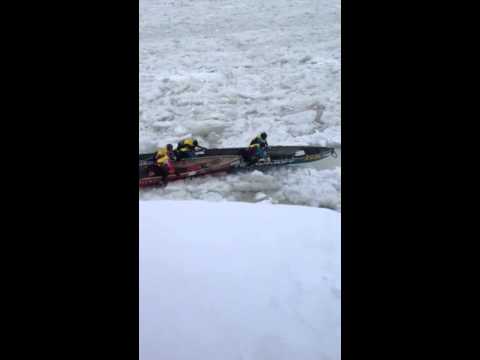
Hearty, are we?  Well, these lads surely are.  These garcons are one of a dozen or so teams, some of them professionals, who are canoe racing on the St. Lawrence during Quebec’s Winter Carnival.  The amateurs included a women’s team, mixed men and women teams and a few folks who just wanted to have some fun.  You might wonder why this is a good idea for a sport.  Don’t bother.  It’s about The Extreme.  And learning to love the magnificent cold.  This was taken on Feb 8, 2015 when the temps were -20 C and the wind was blowing at least 25 knots.  What’s the wind chill? Anyone?  Anyone?

Quebec’s Winter Carnavale was the site of the North American Snowsports Journalist Association Annual Meeting.  More to come on Ice Hotels, ski trains and memorable “versants” (ski areas) just outside Quebec.

Huff Post: Skiing With Senior Eyes

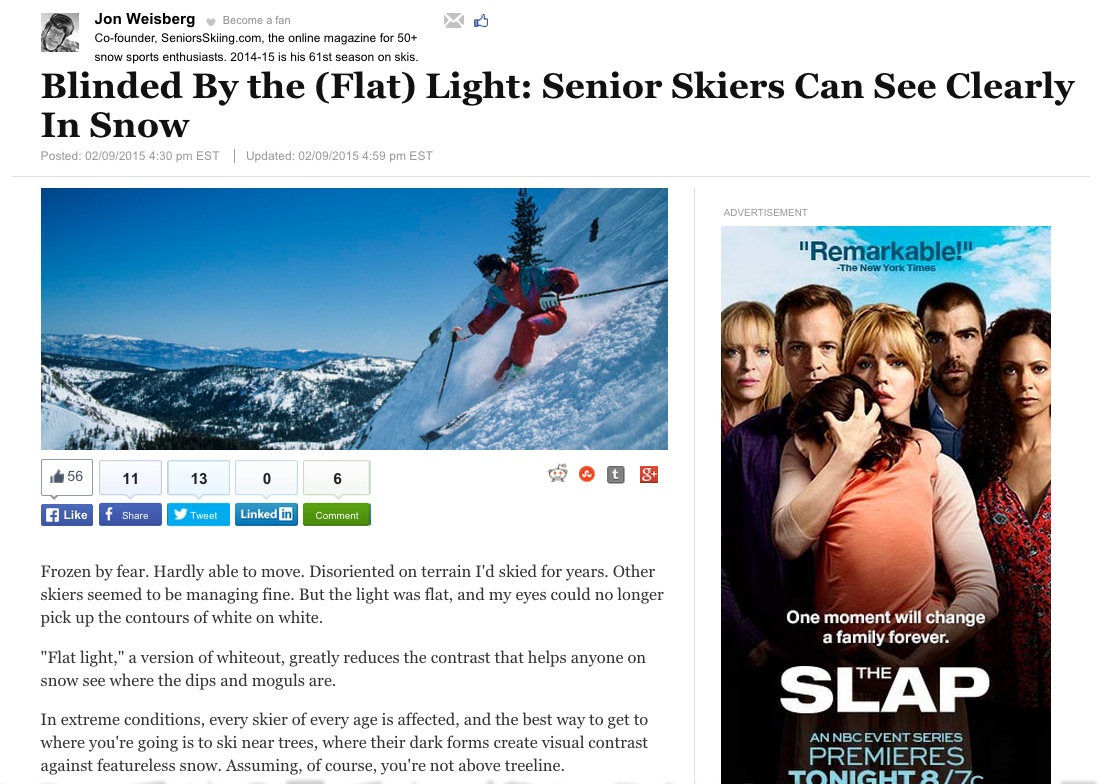
Huffington Post Features SeniorsSkiing.com’s co-founder Jon Weisberg On Light, Goggles and Lenses

We’ve all been there.  Flat light conditions, slow down, stop.  Take your goggles off and put them on.  Peer down the slope.  Proceed slowly, cautiously down, perhaps calling it a day. In his latest Huff Post Post-50 article, SeniorsSkiing.com’s co-founder Jon Weisberg explores the impact of aging eyes on seeing and skiing.

BlindedByLight

Managing Fear, Building Confidence

Ski Instructor: “Encouragement Is The First Lesson For Returning Skiers”

It makes no difference whether a skier has just recovered from joint replacement, traumatic accident, ski injury or is returning to skiing from a long hiatus. There is going to be some level of anxiety.

Walt Lattrell, ski instructor at Smugglers Notch (VT), teaches a clinic on managing fear for other instructors. “We see people coming back to skiing who are harboring apprehension, negative thoughts and low expectations for performance. The good news is that they take a class from a professional instructor. That’s an indicator they want and need help.”

Thinkin' about it.  Revelstoke, BC, cornice has some folks wondering. Credit: Walter Latterell

Thinkin’ about it. Revelstoke, BC, cornice has some folks wondering.
Credit: Walter Latterell

The goal of ski instructors is to help their students to acknowledge their fears. “Our first challenge is to help returning students believe they are capable of higher performance. Self-limiting beliefs lead to self-defeating behavior. The instructor has to inspire their students, provide a vision of success and lots and lots of positive reinforcement,” says Lattrell.

Lattrell tells students not to expect perfection, to pay attention to their thoughts, and to visualize success. He provides clear goals for each lesson, and explains how the student is going to get there through a series of small steps.

There are some stages that Mermer Blakeslee, in her book ,“In The Yike! Zone” sees some students going through as they gain confidence. It seems it is key for the instructor to positively reinforce the student at each step:

  • At first, the student doesn’t want to try. Small attempts are guided and reinforced by the instructor.
  • Then, the student will try a skill, but only on “safe” terrain. Success will bring the student confidence to try again at a higher level.
  • Next, the student will try a more ambitious skill, but bails out. Now, the instructor demonstrates, guides, and encourages again.
  • Finally the student tries again and follows through with sense of relief, joy and accomplishment. The instructor points out what the student did right and acknowledges the progress.

“The goal of any lesson needs to be a progression from simple skills to more challenging ones. Each step is built upon with growing confidence,” says Lattrell, a PSIA Level 2 instructor.

As we have learned from Harriet Wallis’ series on Knee Rehabilitation, some returning skiers need a run or two by themselves to adjust to the slopes after illness, injury or rehab. Others could benefit from a supportive lesson or two. Lattrell, himself, had bilateral knee replacements.

To paraphrase the great Yankee Hall of Famer Yogi Berra: “Half this game is 90 percent mental.”


Sound Like A Local

Here’s How To Talk The Talk.

Every region has its own pronunciations, so if you take a western ski trip you might want to brush up on a few words and say them the way the local say them.

Word 1: Alta. This popular ski-only resort in Utah is the granddaddy of powder skiing. It averages 500 inches of snow a year, yet it’s just 25 miles from Salt Lake International Airport. How to say it like a local? Use this as a guideline. “My PAL AL skis at ALta.”

Word 2. Nevada. If you go a littler further west you’ll ski in Nevada at resorts around Lake Tahoe such as Kirkwood and Heavenly. But the state’s name often gets clobbered by visitors. Try saying this: “I’m GLAD not MAD to ski NEVADa.

BLIZZard, no longer BlizzARD.  Talk like a native. Credit: Harriet Wallis

BLIZZard, no longer BlizzARD. Talk like a native.
Credit: Harriet Wallis

Word 3. Blizzard. That’s a snowy weather condition. It’s also a brand of skis that’s popular out west. The Lift House, a full service ski shop at the base of Big Cottonwood Canyon in Utah, says that the brand is modernizing and Americanizing its name. No more “BlizzARD”, rhymes with “yard.”

Now you’re in the know. You can pronounce BLIZzard skis just the way you’d speak of a big snowstorm – a blizzard.

Does your region have some words that get mispronounced by out-of-staters?

Contemplative Ski Tour Around Appleton Farms

The Road Not Taken By Robert Frost

Two roads diverged in a yellow wood,
And sorry I could not travel both
And be one traveler, long I stood
And looked down one as far as I could
To where it bent in the undergrowth;
Appleton Farms, Ipswich, MA. Credit: SeniorsSkiing

Appleton Farms, Ipswich, MA.
Credit: SeniorsSkiing

Then took the other, as just as fair,
And having perhaps the better claim,
Because it was grassy and wanted wear;
Though as for that the passing there
Had worn them really about the same,
And both that morning equally lay
In leaves no step had trodden black.
Oh, I kept the first for another day!
Yet knowing how way leads on to way,
I doubted if I should ever come back.
I shall be telling this with a sigh
Somewhere ages and ages hence:
Two roads diverged in a wood, and I—
I took the one less traveled by,
And that has made all the difference.
Appleton Farms is a 900-acre property owned by the Trustees of Reservations on Boston’s North Shore in the historic town of Ipswich.  The farm had been the Appleton family since 1636, granted to them by Charles I.  It was deeded to the TOR in 1998. Many of the buildings have been restored, and the farm is producing crops for the local community.  The cross country skiing is magnificent, parking is plentiful, and the quiet is most welcome.
Great Pasture, Appleton Farms, Ipswich, MA. Credit: SeniorsSkiing

Great Pasture, Appleton Farms, Ipswich, MA.
Credit: SeniorsSkiing

Ski Industry Remembers: Scenes From 60 Years Ago

A Blizzard Of Memories From Ski Industry Association Video.

SnowSports Industries America (SIA) is the ski trade association of suppliers to consumers.  Think equipment manufacturers, clothing designers and providers, retailers, reps and media, everyone who gets the skier, boarder, X-Cer, backcountry adventurers and snowshoer out on the snow. SIA puts on global trade shows, publishes extraordinary research on market trends, advocates for the industry with government regulators and provides a platform for networking and  Founded in May, 1954 as the National Ski Equipment and Apparel Association, the organization is proudly celebrating its 60th year. Here’s a tribute SIA produced with scenes from the by-gone snow sports of the 50s and 60s to present day.  It’s an anniversary present from SIA to snow sport enthusiasts everywhere.


Is This Guy For Real? Amazing Candide Thovex In The Alps

Daredevil is becoming an -ism.  Here’s yet another impossible run.

We wonder if videos like this help recruit people to skiing or turn them off.  It sure looks, um, well, risky.  What do you think? Professional skiers Candide Thovex totally shreds Val Blanc.

A Much Better Way To Boot-Up

Taking The Pull Out Of Pulling On Boots.

Every now and then I come across a product that makes a big difference in the comfort of older skiers. I’ll explain in a minute.

No more wrestling with boots. Ski Boot Horn makes a BIG difference. Credit: Ski Boot Horn

No more wrestling with boots. Ski Boot Horn makes a BIG difference.
Credit: Ski Boot Horn

I always boot-up in the parking lot. The difficulty of that process advances with age. Over the years, I’ve found that using boot warmers on the way to the mountain makes it easier to get boots on — especially on very cold days, when the shells are stiff and resistant. Because I find it easier to be seated, I carry a folding chair in the car.

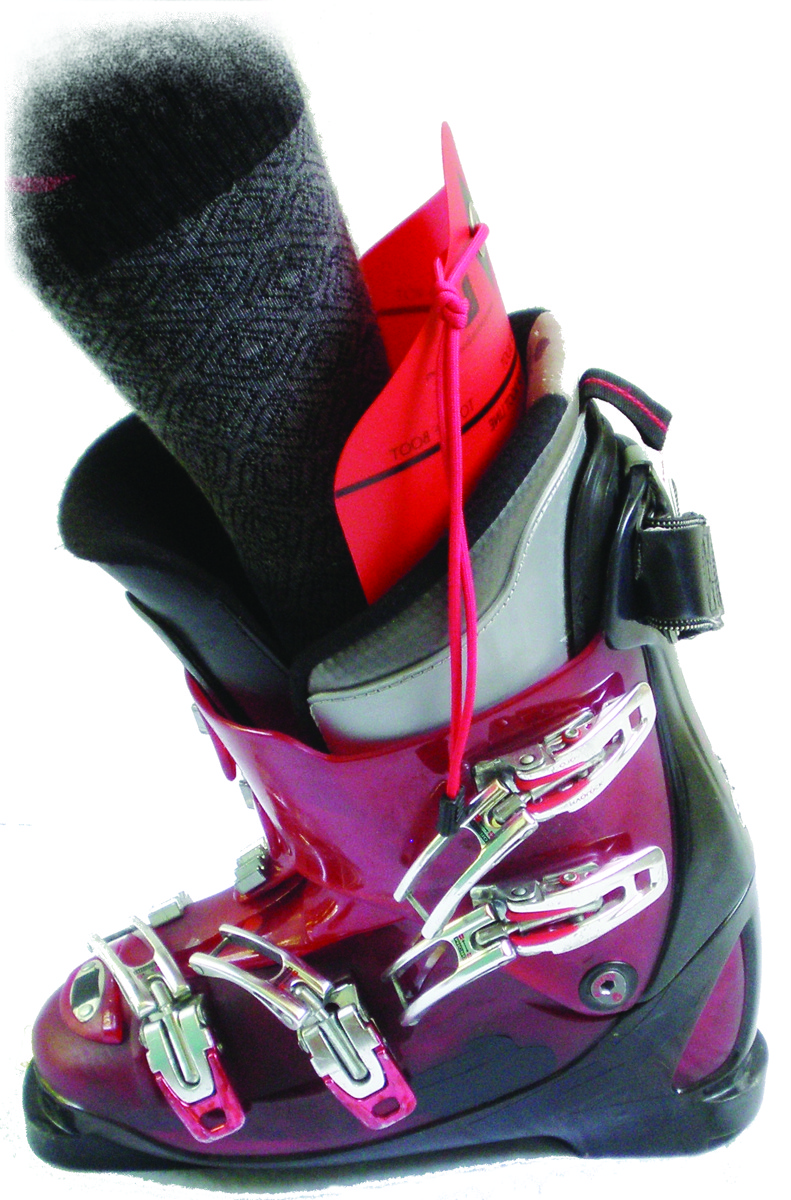
Recently I learned about the Ski and Snowboard Boot Horn, and, WOW, does it make a difference! This specially-designed sheet of flexible and slippery plastic is placed in the boot and helps your foot slip into place. It is simple, effective, and costs less that $10, when purchased online.

In addition to letting your feet slip in easily, the boot horn helps avoid foot and ankle pain from earlier injuries, while putting on boots. It also protects hand and finger injury and discomfort that can occur in the frustration of trying to get boots on in very cold conditions.

The ski boot horn website features a few useful videos about ways to improve getting your boots on, including useful tips about boot liner care. For reasons I don’t understand, there’s even a video of a group of skiers dropping into Jackson Hole’s iconic Corbet’s Couloir. I checked that one off on a deep powder day almost 25 years ago.

I haven’t tried the boot horn with cowboy boots, fishing waders, skates, etc., but the makers claim it works well for them and for all types of shoes. I’ll try those as the seasons change, but for now, I treat my Ski and Snowboard Boot Horn like I treat my AMEX card. I don’t leave home without it.

We’ll Have What They’re Having

Skiing En Masse Down A Mountain In The Buff Must Have Seemed Like A Good Idea At The Time.

We’d like to have at the conference table when the idea for this video came to up.  Not sure where or when this took place, but thanks to Mountain Life magazine for bringing it the world and for Sweetgrass Productions for the flick.  It is from their feature-length film, Valhalla.  If you took part, tell us what possessed you.  Thanks anyway to the, ahem, streaking skiers.  Probably NSFW.

“Road Scholars” Flock To Winter Learning Programs

XC Skiers mug it up at Craftsbury VT's Outdoor Center. Programs include Yoga, Film, Music & Dance, Credit: Roger Lohr

XC Skiers mug it up at Craftsbury VT’s Outdoor Center. Programs include Yoga, Film, Music & Dance,
Credit: Roger Lohr

XC and Snowshoeing Plus Study Opportunities From Lapland to Oregon.

From Roger Lohr, founder and editor at XCSkiResorts.com:

The Road Scholar program is a brand within the Elderhostel program intended for adults who want to travel and learn and stimulate discourse and friendship among other people for whom learning is the journey of a lifetime. This is an institution that attracts 97,000 participants on multiple-day travel programs enjoying a wide variety of subjects while providing comfortable and inexpensive lodging. This year there are 17 different winter outdoor adventure programs (Nordic and alpine skiing, snowshoeing, dog sledding, etc.) and participants can select from among domestic and international travel and scores of dates from January and March.

The Minnesota Winter Sampler (6 nights, $776, program #7933) has dog sledding, snowshoeing, and XC skiing, learning about the dynamics of wolf packs at the International Wolf Center and an overnight in a yurt.

The Trees For Tomorrow program (Road Scholar program #7310) has been offering natural resources education workshops to students, teachers, adults, and others in Wisconsin’s Northwoods in Eagle River, WI since 1944. Participants stay in rustic dormitories that have comfortable bedrooms, central bathroom facilities and a lounge with a fireplace.

This is a week of XC skiing and snowshoeing on trails, and ski instruction is provided for all skill levels. Naturalists will talk about how animals and plants adapt to the difficult northern winter conditions. Participants will visit a waterfall and learn orienteering skills on snowshoes. They’ll also visit the Kovac Planetarium, the world’s largest rotating mechanical globe-style planetarium.

Classic New England XC scene at Craftsbury Outdoor Center. Credit: Road Scholars

Classic New England XC scene at Craftsbury Outdoor Center.
Credit: Road Scholars

Annually there are many Road Scholar programs in Yellowstone National Park but the variety of Road Scholar programming is best exemplified at the Craftsbury Outdoor Center in Vermont (program # 20276). They’ve got three yoga programs (in January, February, and March) that incorporate daily outdoor activities such as XC skiing and snowshoeing. A program for Film & Fiction is scheduled with participants viewing a variety of film genres with a North Country theme and discussions following each film. The group will also read short fiction set in northern settings by contemporary authors ranging from contemplative to humorous with following discussions. A New England Music & Dance program is scheduled for early February to learn the history of traditional country dance and song from New England, the Canadian Maritimes and beyond with live music and a contra dance, too.

Road Scholars can visit Lapland where Auroras live. Credit: Road Scholars

Road Scholars can visit Lapland where Auroras live.
Credit: Road Scholars

There are winter trips to Colorado, Alaska, and Oregon but if you want to discover your inner Arctic explorer, there’s a trip to Finnish Lapland (11 nights, $6,500, program #21695) where reindeer outnumber the indigenous people by 10-1. You’ll drive your own dog sled team, spend a night in a glass igloo to bask in the aurora borealis show, and join the crew aboard an icebreaker.

Participant surveys show that 92 percent of the individuals on a Road Scholar trip learned something new and 20 percent fulfilled a lifelong dream. For more information about Road Scholar programs, call 800-454-5768, or visit www.roadscholar.org to view a myriad of programs to select among hundreds of national and international regions.

Eat Your Way To Fitness: Gourmet Ski Tours

Lots of Chocolate: Nordic Ski and Snowshoe Events Collected By XCSkiResorts.com

From Roger Lohr, XCSkiResorts.com: Want a guilt-free way to indulge yourself with food while exercising? XC Skiing is one of the best forms of aerobic exercise but if you go on a “Gourmet Ski Tour” on your xc skis or snowshoes, you may very well eat your way to fitness at a number of trailside food stops. What a grand time so go ahead, eat, ski, and be merry – appetizers, wine, champagne, fondue, entrees, desserts, and more.

Here’s a cross section of the culinary XC ski events that are planned this winter across the country with a varied menu of fun and fine cuisine.

EAST

Smugglers Notch in VT has Sweets and Snowshoes every Wednesday night 7-9 PM for adults only. Hot cocoa, coffee, and desserts await snowshoers after a 30-minute trek to a pavilion and campfire. A warming meal of hot soup, bread and beverage at a trailside cabin is a destination for the Soup and Snowshoes guided trek mid-day on Sundays, and on Tuesday nights there’s a Snowshoe Adventure Dinner at the mountain summit.

Eastman (NH) Cross Country’s Nordic Nibbles in Grantham, NH on January 18 has a Scandinavian theme with a visit to a fire pit at each stop for cheese from a local smokehouse, Lindt chocolate, gingerbread cake and pastries, local dairy milk for hot coco, soup, and the main meal from 11 AM – 1 PM.

Munching along at Eastman's outdoor ski party. Credit: Roger Lohr

Munching along at Eastman’s outdoor Nordic Nibbles ski party.
Credit: Roger Lohr

The Valentine’s Day Destination S’Mores Station at Bretton Woods Nordic on February 14 with two self-guided tour for sweets from 10 AM – 4 PM. The shorter tour will be less than 2 km on easy trails so it’s great for the kids. Purchase S’Mores Kits at the center or at the station to make your own.

The Chocolate Festival at Mount Washington Valley Ski & Snowshoe Center in Intervale, NH on February 22 is an inn-to-inn affair at 10-12 stops to experience your chocolate fantasies including moose and fondue. Go on a tour of any length and actually gain calories, even if you ski as far as 20 kilometers. A shuttle is also available for those that have overindulged at the event dubbed the “Sweetest Day on the Trails.”

CENTRAL

The Upper Peninsula of Michigan in Ironwood features cuisine from local restaurants that can be purchased at a nominal fee along a designated route along the trails at the Taste of the Trails on the ABR trails on March 7 at 11 AM – 2 PM.

MOUNTAINS

Snow Mountain Ranch in Granby, CO hosts the Grand Huts.org Progressive Dinner on Feb 28 with a multi-course meal at outposts along the trail in a fundraiser for the huts.

Just Desserts Eat & Ski in the Enchanted Forest in Red River, NM on February 28 features goodies from 20 different local restaurants at three trailside stations with up to 100 desserts within a 4 kilometer loop. Their motto is, “It’s not a race, just a gorge fest.”

The Rendezvous Trails in West Yellowstone, MT features cuisine from local restaurants that can be purchased at a nominal fee along a designated route along the trails at the Taste of the Trails on February 7.

Crested Butte Nordic Center has has the Magic Meadows Yurt Dinners reached by a 2 km ski or snowshoe tour where 10 gourmet dinners are offered during the winter including the Saturday Yurt Dinners each month, and special dinners on Winter Solstice on December 20, New Year’s on December 31 and Valentine’s Day on February 14.

Look to the Galena Lodge in Ketchum, ID for the Full Moon Dinners on nights associated with the full moon, (Jan 3 & 4, Feb 3,4, & 5, Mar 5,6, & 7, Apr 3 & 4) whereby you can go ski or snowshoe ($5 snowshoe rental offered) and then return to lodge for a four-course dinner at $40 or half price for kids under 12. There are also special Wine Dinners, Holiday Dinners, and a Valentine’s Day Dinner.

Lone Mountain Ranch in Big Sky, MT has the Glide & Gorge event on March 8 from 11:30 AM-2 PM with trail luncheon stationed with appetizers, soups, entrees, desserts from the Ranch’s four-star kitchen, local brew, wine, music and shuttles.

WEST

Royal Gorge XC Ski Resort in Soda Springs, CA has the Royal Fondo Tour on Jan 25 with skiing or snowshoeing to various huts along the trails for snacks and lunch at the resort deck.

Tahoe Donner Cross Country Center in Truckee, CA has the Taste of Truckee presenting food from local restaurants along the trails on Mar 22.

Cypress Mountain outside of Vancouver, BC has Ladies Only Chocolate Fondue Snowshoe Tours on Friday and Sunday nights starting at 6:30 PM. Warm up with a mug of steaming apple cider before enjoying appetizers then a chocolate fondue Jan 9 & 23, Feb 6 & 20, and Mar 6. These programs include rental equipment, trail access, guides/instructors, and the appetizers.


Coming Back From Injury: Avoid One-Sidedness

Adaptive Ski Instructor Provides Advice on Predictable Issues for Returnees

Alisa Anderson, Smuggler’s Notch’s (VT) adaptive skiing program manager, is a highly-specialized PSIA instructor who, over the past 20 years, has applied techniques and tools for skiers of all kinds who need a little extra help getting down the mountain.

Adaptive Ski Instructor Alisa Anderson guides a student on the "Snow Slider" at Smuggler's Notch. Credit: Alisa Anderson

Adaptive Ski Instructor Alisa Anderson guides a student on the “Snow Slider” at Smuggler’s Notch.
Credit: Alisa Anderson

She trained at the National Sports Center for the Disabled, Winter Park, CO, where she learned how to use bi-skis, mono-skis, and outriggers. At Smuggler’s Notch, she purchased a “Snow Slider” which is basically a walker on skis. While these tools are mostly used with people who have chronic physical disabilities, she also helps people who can ski on their own skis get back to skiing after injury, accident, or knee, hip or shoulder replacement.

“It’s important that people coming back from an injury take a lesson from a trained instructor,” said Alisa. “One reason is to help them get through the natural apprehension that you’d expect after being through major surgery and a year or so of rehab. The other reason is to spot and correct physical mistakes before they become habits.”

Most people coming back after rehabilitation, she said, will clearly favor the healing side. “It’s natural. There’s been a trauma to the area, and the body wants to ‘save’ that side. What you see are people not pressing the ski on that side or being very tentative about flexing.” That stiffness is risky because the skier doesn’t have bi-lateral control.

People aren’t even aware they are favoring one side, she said. That’s where coaching comes in.

“If they continue to be stiff and one-sided, they are going to form some bad behaviors. Stiff muscles lead to fatigue, and the risk of injury goes up,” she said. “They need to be constantly in motion.”

The solution is for the instructor to give the student skier active feedback on what she sees. “Basically, I remind the student to focus on keeping pressure on the front of the boot and weight on the ball of the foot. It’s really back to the basics. It’s important for the skier to loosen up, extend, get tall and bend their joints into through the turn.”

Alisa says that one lesson might be all a skier needs, others, maybe a couple more. “Most people get it pretty quickly. It’s just a matter of getting through the first days doing it right.”

Alisa knows what she is talking about. In addition to her experience as an adaptive ski instructor, she’s also recovering from ACL reconstructive surgery. “I have to wear a brace. It reminds me all the time about what it’s like to be rehabbing. Sometimes, I don’t like wearing it, but I do it, and I’m still skiing.”


Get Into The Spirit: Cannon Mountain Aerial Footage

If You Need Some Inspiration To Get Out There, Here It Is.

Cannon Mountain in New Hampshire looks deep in snow as of today.  Wonderful and dramatic shots of a beautiful and venerable ski area.  Credit White Mountains TV 16.

Straight Down: Cody Townsend and Gravity

Now This Should Tighten You Up.

Cody Townsend, professional free skier and athlete, takes on the most improbable ski run we’ve ever seen.  The scene is a near vertical chute in Alaska’s Tordrillo Mountains, more like a elevator shaft than a ski run.  This scene is a clip from Red Bull’s documentary, “Days of My Youth.”  We are certain that the legendary Dick Buek, winner of the 1952 Olympics downhill and probably the original extreme skier, would approve.   This stunt is reminiscent of Dick’s daredevil runs; he was the first person to schuss Exhibition at Sun Valley, something that French skiing pioneer Emile Allais said could never be done.  And, of course, there’s another legend Toni Matt whose run down the Headwall at Tuckerman’s Ravine to win the 1939 Inferno Race still echoes through the White Mountains.  All of these guys like to go straight down.  Fearless.

Cody, you’re following some pretty impressive skiing heroes.  Be careful out there.  Or is that not the point?


Knee Replacement—How I Chose My Surgeon: Part 4

How To Identify An Athletically-Empathic Surgeon.

I’m lucky to live in Salt Lake City. There are 10 ski resorts nearby, and there are opportunities for an active lifestyle year-round. Because of that, there are many top surgeons here who put athletes back together when they get injured or need replacement parts.

Correspondent Harriet Wallis chose Dr. Beck for many reasons. Credit: Harriet Wallis

Correspondent Harriet Wallis chose Dr. Beck from Salt Lake City for many reasons that made sense to her.
Credit: Harriet Wallis

But when I needed to have my knees replaced, I wanted to choose the right doctor for me. My list of questions helped me differentiate between the five surgeons I interviewed. Here’s the essence of just three of my questions and how the doctors’ answers focused my decision.

Do my knees need to be replaced? When?

            Doctor X: Yes, they need replaced — when you’re ready.

Doctor Beck: When the quality of your life is gone, and you can’t do the things you want to do, it’s time. Do it while you’re still active enough to get the best outcome and get back to the things you want to do.

What’s your surgery technique?

            Doctor Y said: I do the surgery this way. I do it this way all the time. I never vary from doing it this way.

Doctor Beck said: This is what I plan to do. But when I get into your knee I might find something that doesn’t show up on the x-rays and I’ll have to take care of it — but “I don’t want to hurt you any more than I have to.”

Can I ski?

            Doctor Z said: I wouldn’t ski anymore.

Doctor Beck said: “You’re darn tootin’ you can ski!” Pick good snow days, take some breaks, and you probably should stay out of the moguls.

For many reasons, this was the right surgeon for me.

         Good luck finding the right surgeon for you.

Editor’s Note: This is a 5-part series in which SeniorsSkiing’s correspondent Harriet Wallis describes her knee replacement journey with tips to guide you if you’re anticipating knee replacement. Part 1: Inspired by a ski patroller with artificial knees. Part 2: Research 101 – why and how to do it.  Part 3: Interviewing the docs.  Upcoming Part 5: Rehab and why to love it.

Free Skiing For Seniors: A Directory From Skiing History Magazine

There are dozens of ski areas that offer free skiing to seniors.

Join the ISHA to receive Ski History Magazine

Join the ISHA to receive Ski History Magazine

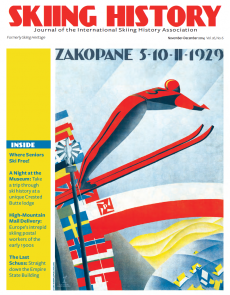
SeniorsSkiing.com’s partner, the International Ski History Association, has just published an incredibly valuable resource for senior skiers.   In the November-December 2014 issue of Skiing History Magazine, there’s a directory of where seniors can ski for free or for discounts in North America.  Thanks to ISHA President (and Seniorsskiing.com Advisory Council Member) Seth Masia for this important information.  Consider joining ISHA to receive Skiing History and other benefits such as DVDs and subscriptions to popular skiing magazine.  Also a nice gift for ski buffs.

Move It! Get Fit Your Way With Silver Sneakers

Nationwide Health Insurance Program Supports Senior Fitness.

Tune yourself up for ski season and beyond. Get started by checking your health insurance plan to see if it includes Silver Sneakers. It’s a nationwide program sponsored by many health insurance plans, and it encourages older adults to get fit in whatever way they want to.

Correspondent Harriet Wallis loves her Silver Sneakers aerobics class. Credit: Harriet Wallis

Correspondent Harriet Wallis loves her Silver Sneakers aerobics class.
Credit: Harriet Wallis

Silver Sneakers gives you access to gyms where you can walk on the treadmill, swim laps, stretch with yoga, lift weights and work out with certified instructors. You may also enjoy community-based programs that include everything from line dancing to boot camp. There are 12,000 Silver Sneaker facilities across the country. Find one near you and get going.

For me, I enjoy an aerobics class designed for seniors. It gets the heart rate up and the joints moving – but the class does it gently. My classmates and I are a heap of replacement parts. We’re full of metal hips, knees and shoulders. The instructor understands, and when she introduces a new move that’s too hard for some of us, we make adaptations. Nobody laughs. We’re all there for the fun of it and to keep our bodies moving.

But we “mambo” and we “grapevine.” We huff and we puff. We feel like prima donnas because we face a mirror and we can see ourselves. But we’re all wearing T-shirts, not tutus!

Silver Sneakers allows you to choose the exercise programs you like. Credit: Harriet Wallis

Silver Sneakers allows you to choose the exercise programs you like.
Credit: Harriet Wallis

Classes also offer the benefit of socializing with others of like age before and after class. Just for fun, our class goes to lunch once a month. The recent lunch reminder email said:  “We go right after class with sweat and no make-up. So far we have never been turned away looking and smelling of exercise.”

Many seniors fear trying something new because their heads fill up with negative thoughts such as: Will the class be too hard? What should I wear? Will I fit in? Skip those thoughts.

Find a Silver Sneakers program near you. Put on your sneakers and get going. Now.

GoPro Flipping Out On Mt. Cook

Free-skier Tom Wallisch corks it on New Zealand’s Tallest Mountain

Some say skiing is flying with different expectations.  Take a look at this short video from GoPro with professional free-skier Tom Wallisch down in En-Zed.  Aside from the corkscrew flip, the view of these snow fields is breathtaking.   By the way, winter in New Zealand is summer in the Northern Hemisphere.  And the South Island is one of the most beautiful places on earth. So, if you want a unique July Fourth party, off you go.

Breaking News: Vail Connects Park City and Canyons

High-Speed Gondola To Link Both Areas

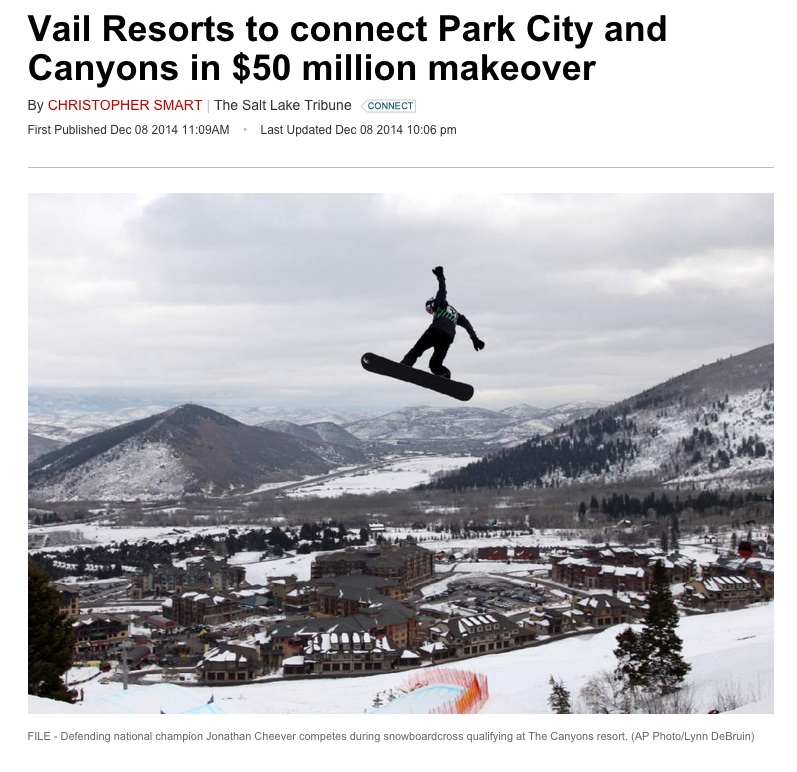
The recent acquisition by Vail of Park City Mountain Resort is yielding a major new development.  Vail will link Park City and Canyons Resorts together, creating the largest ski area in the US with over 7,300 acres of skiable terrain.  Click here to read the whole story from the Salt Lake Tribune.  Your move, Colorado.

Dec 9 Story From the Salt Lake Tribune

Dec 9 Story From the Salt Lake Tribune

Breaking News: Mount Snow to Celebrate 60th Anniversary on Founders Day, December 12

Walt Schoenknecht’s Vision Was Far and Creative

When Mount Snow’s visionary founder, Walter Schoenknecht, stood atop Mount Pisgah in over a foot of freshly fallen snow back in autumn of 1949, he knew he had found the perfect place to build his dream ski resort.  Only a few years later, Walt had purchased the land around the base of the mountain from the family of Rueben Snow and subsequently renamed the mountain in his honor – which is where the name “Mount Snow” was derived from.

The Original Lift at Mt. Snow. Credit: Mt. Snow

The Original Lift at Mount Snow.
Credit: Mount Snow

On December 12, 1954, Mount Snow opened for the first time to skiers with two rope tows and two chairlifts that transported guests up to seven trails.  In only a few years since its debut, Walt had transformed the mountain into the premier winter playground of the East with expanded terrain and off-the-wall amenities for the time like a heated outdoor pool, an indoor skating rink and state-of-the-art chairlifts.

Schoenknecht’s boundless energy, ambition and creativity had many comparing him to another such pioneer of that day named Walt Disney.  And while not all of his ideas were perfect, including sending a proposal to the Atomic Energy Commission to detonate an atomic bomb at the base of the mountain to create more vertical, many of his initiatives became standard practice for the ski industry like snowmaking, modern lifts and off-mountain amenities.

Now 60- years later, Mount Snow carries on Walt’s pioneering spirit by being in the forefront of on-mountain technology and trends.  There is much to celebrate this Founders Day, as December 12 has become known at the southern Vermont resort, with the celebration continuing throughout the weekend.

Mount Snow is offering $12 lift tickets to ski and ride on Founders Day, which can only be purchased at least 24 hours in advance online.  There will be a comprehensive historical display in the Main Base Lodge, lift line giveaways, birthday cake for everyone, throwback parties, live music, scavenger hunts and more.  The resort is inviting everyone to wear their favorite retro ski gear to honor the styles of the past, and there is an “old school” bamboo gate ski race planned for Sunday, December 14 that will even have a straight ski category.

For more information about the Founders Day Weekend 60th anniversary celebration and to purchase $12 lift tickets for December 12, visit www.mountsnow.com/events/calendar/founders-day.

To learn more about Mount Snow’s history, visit www.mountsnow.com/the-mountain/our-history.

Seniors: Don’t Hit The Snow Without Preparation

Here’s a Must-Read for Seniors Before They Head for the Slopes.

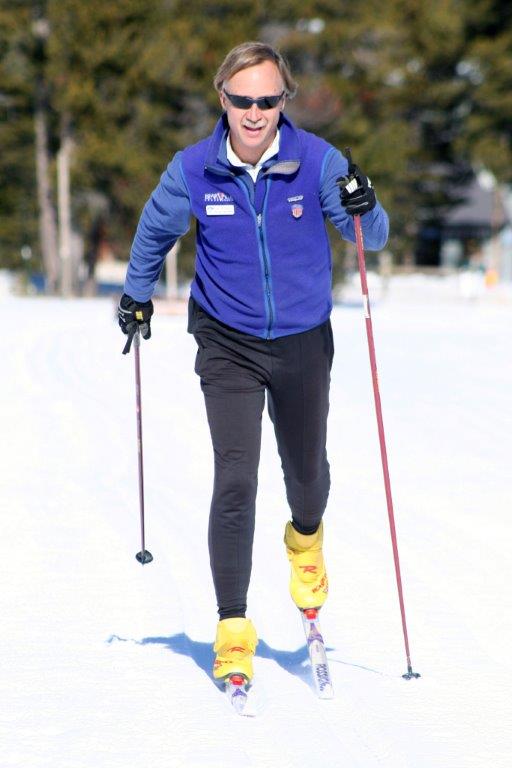
Paul Petersen, who begins his 38th season running Bear Valley Cross-Country in California this winter, is 56 years old and comes with the kind of credentials that should make you sit up and take note of what he has to say! He’s been a certified alpine and cross-country ski instructor for nearly four decades. He’s also the former coach of the national nordic team of the Professional Ski Instructors of America and is currently on its education advisory committee.

“I’m a fully addicted skiaholic, and I don’t see that getting better any time soon,” avows Petersen. “It’s one of the most fun things you can do in life outdoors.”

Long-time coach Paul Petersen has wise words about physically preparing for the season.

Long-time coach Paul Petersen has wise words about physically preparing for the season.

He’s made “staying in the game of skiing a life goal,” and he’d like to help you do the same. First and foremost, plan ahead. You can’t just hit the slopes or trails without any preparation after several months of not skiing. Start with exercises that simulate the movements you make when you ski or snowboard. Here are Petersen’s four cornerstones to focus on in the weeks before the wintersports season begins:

  • BALANCE: Stand on one foot, moving from foot to foot every 15 seconds or so multiple times; look for other balance-focused exercises you can do easily anywhere, any time.
  • STRENGTH: Simulate a chair—every skier’s “go to” thigh-strengthening exercise! Slide your back down a wall so that your hips and knees are at right angles. Hold for as long as you can stand it, slide back up, and repeat! Check out other leg and trunk strengthening exercises, such as lunges and squats.
  • FLEXIBILITY: Streeeeetch! Do yoga, or any other stretching exercises you’re comfortable doing.
  • CARDIO: Take the stairs. Park in the farthest parking space in parking lots. Walk around two or three blocks several times a week. Run in place.

What about fitness classes? Paul recommends aerobics for cross-country skiers to enhance cardio and yoga for downhill skiers/boarders to stretch out tight muscles and loosen joints.

And don’t forget about pre-season equipment safety. What good will it do you to plop your fit-as-a-fiddle body atop skis that negate all the prep? It’s worth the money to get your skis tuned up ahead of time, getting the edges sharpened, and most importantly, having your binding settings checked to be in sync with your age, current weight, and ability—all of which might have changed since the last time you had your bindings checked.

Not a big fan of helmets? After all, you’ve skied unencumbered by headgear for eons without any ill effects. Petersen says, “It’s a no-brainer [pun not intended]…wear a helmet! It keeps you warmer, and it doesn’t affect your balance or equilibrium. It’s not so much that you might hit a tree, but rather that some out-of-control newbie snowboarder can come crashing into you.” Petersen also suggests buying some of the incredibly well-designed sports padding that’s available today, such as padded shorts that protect one’s hips, which are particularly vulnerable as we age, and wrist guards for snowboarders.

Editor Note: Petersen also has a lot of excellent tips for the day before you ski and things that are very important to do the morning of. But that’s another whole article for another day…watch for it coming soon!

Lightweight Pakems: Flip Flops for Cold Weather

Clever new “portable” boot makes feet happy.

Pakems CEO Julie Adams shows off high and low models at the Boston Ski and Snowboard Show. Credit: SeniorsSkiing.com

Pakems CEO Julie Adams shows off high and low models at the Boston Ski and Snowboard Show.
Credit: SeniorsSkiing.com

We’ve been padding around SeniorsSkiing.com’s New England office for the past few days wear-testing our new Pakems boots that we picked up at the Boston Ski and Snowboard Show last month. The real trial will come in a couple of weeks on some ski hill in New Hampshire, Vermont, or Maine after the final run of the day. I look forward to the moment when I take off my ski boots, relieving that clamped feeling—[regardless of how comfortable you think your boots are, there is always that clamped feeling]—and slipping on these lightweight, comfortable, warm and water-resistant booties and head off for après ski activities. Ahhh.

Pakems are relaxation machine. Credit: SeniorsSkiing.com

Pakems are relaxation machines.
Credit: SeniorsSkiing.com

Julie Adams, CEO and “Cruise Director” of Pakems, calls her company’s innovative boots, “flip-flops for cold weather.” After a day of skiing, rather than put on another heavy pair of hiking boots, Merrells, Sorrels, or even Bean boots, the solution, according to Pakems, is to slip on these ultra-light comfies for “happy relaxation.” We think it’s a pretty good idea to let your feet be happy after all that hard work.

There are many kinds of Pakems, from low to high cut, in different colors and ruggedness features. You’d probably want the insulated and thicker-soled Extreme model if you were planning to regularly trudge across a slushy parking lot back to your car. For us, the Classic boot is just fine for cruising around the lodge, condo or even heading out to an informal dinner. You can also give your kids or grandkids the chance to design their own boots with a set of fabric pens that come with the Kid’s Bodie model, named after Julie Adams’ eight-year old.

Pakems come in a very clever, squishable tote bag into which you can store the boots, making carrying them around instantly easy and convenient. Put Pakems in a backpack if you’re cross-country skiing , snowshoeing or ice-skating up a frozen river. Oh, and also for non-winter activities like cycling, hiking, fishing or being a tourist in a foreign land. You’ll be glad to have them at the end of the day.

Check the Pakems website for models, dealer locations and ordering information. You can also get them on Amazon.

Chic CP Visor Helmet Replaces Goggles

Hot-Looking Helmet Channels F-15 Pilot Look.

I’ve written previously about the Osbe Proton Senior, a clever helmet with an integral visor which replaces goggles, providing an effective solution to the problem of foggy eyeglasses. Swiss-based CP raises the bar with their Italian-made Camurai, which adds some significant tweaks to the pivoting visor concept.

 Both helmets feature a visor that allows a small, controlled airflow through the inside, which keeps your lenses from fogging. To achieve this flow, the Osbe’s visor does not actually seal against either your face or the helmet. Generally this works very well, but I have found

CP Camurai is a full visor helmet that eliminates googles and makes you look like an F-15 pilot. Credit: Mike Conley

CP Camurai full visor helmet gives you that Top Gun aura.
Credit: Mike Conley

that occasionally fine snow can find its way inside and collect atop the foam “air-dam”. On the other hand, when closed, the CP visor’s foam seal lightly contacts your face and a rubber strip seals against the helmet at the top. Three small vents at the bottom edge of the visor allow air to circulate inside, and this does the trick. After an entire season in varying conditions, I never had the slightest fogging, nor did the smallest snowflake find its way inside. At the end of a long day wearing the Osbe I’ve sometimes felt a bit dry-eyed, perhaps from circulating air, but I have not noticed this happening with the CP.

 Like Osbe, CP offers a range of UV-filtering visors which can be quickly changed, but the CP has no small loose parts to risk losing when you do so. CP will soon be offering a full-range, photochromic visor, which should be nice. They make an extensive line of sunglasses that translates to excellent visor quality. I’ve been using a mirrored yellow visor which is great in flat light. As I’ve done with the Osbe, I stick with that one visor and use my clip-on shades on bright days. Both helmets feature a retainer strap; so, you have to option of leaving the visor off and using goggles.

 The CP is more of a three-season helmet than the Osbe with removable leather-covered ear-pads and far more venting, including 12 slots in front and on top that can be opened or closed with a slider as needed. Another nice extra is a knob in back to fine-tune the fit. The inmolded CP has a higher, domed profile and features a thick Coolmax-covered liner. I prefer the look of the Camurai; I felt the Osbe had a certain “bowling ball” look which brought back painful childhood comparisons to Charlie Brown.

 Both helmets are priced similarly – around $300 – which is reasonable considering the cost of a helmet and goggles purchased separately. The Camurai is available in a pricier carbon-fiber version if your wallet needs slimming. Visit CP/Fashion/At/Sports website  to see the full range of choices.  For a US dealer, try contacting: CP SPORTS NORTH AMERICA365 Sinclair Rd, PO Box 5968, Snowmass Village CO 81615, Phone:+1 970 710 9633

All you need is an aircraft carrier to complete the ensemble.

Who Are You? The Ski Patrol Wants To Know

Carrying Identification Can Help The Ski Patrol Help You.

HIghly trained ski patrollers will be looking for your id. Credit: Deer Valley

Highly trained ski patrollers will be looking for your id.
Credit: Deer Valley

Accidents happen. And when they do, the ski patrol will likely be your savior. But the patrol needs your help. Here’s what you should have with you every time you ski or ride–just in case.

Carry identification. If you’re injured and can’t speak for yourself, the patrol will have to figure out who you are. Chris Erkkila, assistant ski patrol manager at Deer Valley resort in Utah, said: “We’re trained to look for ID and medical necklaces and bracelets.”

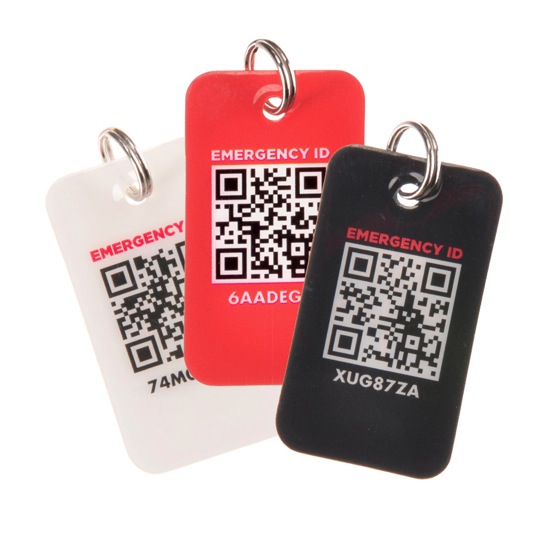
Emergency ID tags from Ecosperformance can be worn as bracelets, plastic tags or as stickers that can be applied to a helmet or even stuck on a phone.

EID Tags contain important profile information in case of emergency. Credit: Ecosperformance

EID Tags contain important profile information in case of emergency.
Credit: Ecosperformance

EIDs store identification, emergency contact and important medical information. When the QR code on the EID is scanned by a Ski Patroller’s smartphone, a skier’s Emergency Profile appears. A seven-digit EID number that can be entered into Ecosperformance website is a backup.

Other times patrollers have to be Sherlock Holmes to find even the most basic information about you—your name. They’ll look for a season pass that carries your name or look for your driver’s license. Sometimes they have to search your cell phone for information. “Often skiers don’t know each other very well, but a ski companion can tell us that the phone is in his injured friend’s right pocket,'” he said.

Carry a list of medications. “Seniors typically take more medications than others,” he said. Based on your condition, it might be vital for the patrol to know what prescriptions you’re taking. Same goes for allergies to medications

“Be sure to carry this information every time you go skiing,” Erkkila said. “Very basic things help us the most.”

And one more thing.

If you’re part of an accident, stay and identify yourself. And then there’s another aspect of accidents, he said. Sometimes there’s a collision between several skiers. Erkkila pointed out that the local city’s ordinance requires you to stay on the scene and identify yourself.  And, “We’re trying to educate the public about this,” he said. For those of us who are veteran skiers, staying on the scene after a collision seems to be common sense courtesy. But it’s also an official part of some resort areas’ regulations.

Still Time for a Winter Tune-up

Get Ready Now to Ski and Snowboard!

Cold weather is approaching fast. Don’t procrastinate. There’s still time to get ready for the ski season. Fitness can help prevent injury, improve abilities and ensure a long, safe season.

Alpine fitness programs routinely include movements to enhance balance and stability, strength, power, agility, mobility and flexibility. Workouts

Exercise ball crunches tune up those all important abs. Credit: Harriet Wallis

Exercise ball crunches tune up those all important abs.
Credit: Harriet Wallis

often combine exercises in a circuit-type workout which includes an aerobic component. Although alpine sports are anaerobic in nature with short hard bouts of activity followed by rest, basic aerobic fitness can help the average winter enthusiast avoid fatigue related injuries. In addition to training more specific skills and energy systems, it’s prudent to include 60 minutes of aerobic activity 3-4 times per week.

Focus strength training on core, legs and shoulders. Incorporate exercises that require some twisting movements since many of our summer activities like hiking, biking and running are performed in a single plane of motion. Quad muscles and those in the lower leg are important for balance and turning. Hamstrings help protect knees. Hips play a role in lateral movements. Core and shoulders function as stabilizers.
Although gym machines can be helpful and certainly convenient, considerably larger benefits can be reaped with routines that use body weight, dumbbells, stability balls, kettle balls, medicine balls and exercise bands. Or check out TRX Suspension Training. Originating in Navy SEALs training,

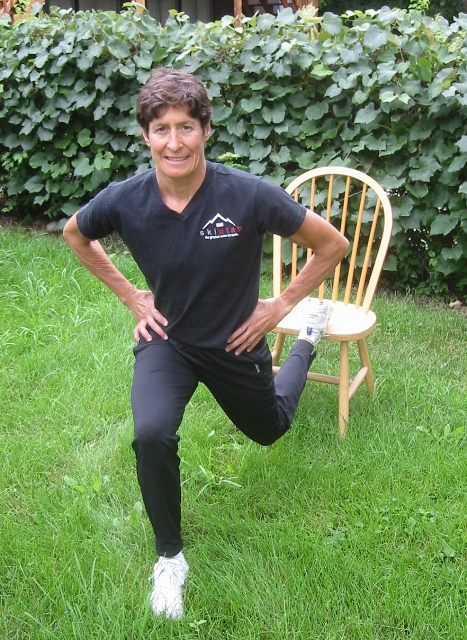
Work on balance with one-foot lunges. Credit: Harriet Wallis

Work on balance with one-foot lunges.
Credit: Harriet Wallis

TRX is used in the NFL and in USA Ski and Snowboard Teams to prepare for the season. TRX classes have also become extremely popular at many fitness clubs and recreation centers.
Look for exercises that include multiple joints because that’s how we move in all sports. Squats, leg curls and dead lifts, overhead press and rowing movements are good examples. With the lower body, progress from two-legged exercises to one-legged and then add some instability to the exercises to improve balancing abilities. Eventually add plyometric—explosive movement exercises—for power. Progress from two-footed hits to one. An easy activity associated with this ability is jumping rope.

Don’t neglect flexibility. Stretch after training and include muscles that were worked during the session as well as problem areas. A good yoga class is great way to improve flexibility. Pilates is another option and adds a little more of a strength component to the mix.

I hope this will help guide your quest for winter fitness. I wish I could individualize an actual exercise routine for each of you, but you can get help by looking for a trainer or class instructor in your area who has a solid understanding of the concepts covered above.

Jo Garuccio is a PSIA Trainer and Examiner, and she teaches at Snowbird. She’s also a Triathlon World Champion and a USA Triathlon Certified Coach. She’s a mega athlete and a mega sports enthusiast who loves to get people moving to be their best.