


This Week In SeniorsSkiing.com (Oct. 11)
Free Skiing For Seniors: Early Observations.
One of the most popular features on SeniorsSkiing.com is our annual listing of resorts that offer free or almost free skiing for seniors. “Almost” free means a lift ticket or a season pass that can be had for a token amount, usually a processing fee or relatively small cost.
For the past several weeks, the lights have been burning late at SeniorsSkiing.com Headquarters. We’ve been waiting for resorts to post their 2019-20 rates, and many started appearing in September and late August. In a couple of weeks, after we’ve verified the final outliers and settled on a new format, we’ll publish our 2019-20 listing of free or almost free skiing in the US and Canada as Subscriber-Only Content. [Subscriptions to SeniorsSkiing.com are free, by the way.)
The process of finding and verifying senior rates is time-consuming. We have to go to each resort’s website, find the lift ticket and season pass rates, search for the senior eligibility age, and note it all on our spreadsheet. Some resorts have clear and easy to navigate sites, others have sites that are clearly amateurish. Others have one website for combined winter and summer activities, adding another layer or two of clicking.
But in going through the process of finding each resort’s pricing plan, we’ve noticed something of a trend. Call these observations rather than findings.
Many of the destination or big, brand name resorts offer free or almost free skiing for seniors beginning at 80 years of age. Those same resorts may or may not offer a discount for 65-79, varying from 10 percent off a regular adult pass to 40 percent, mid-week being the most cost-effective offering.
And many of those big resorts do not make it easy to find the offer of free skiing for 80+ on their websites. In fact, when we saw a separate price for, say, 65-79 year olds, that was a tip that there was something going on for 80+. We had to confirm many of those with an email to the resort. In other words, the free skiing for seniors 80+ option is not clearly obvious on many big resorts’ websites.
On the other hand, when we went to small and mid-sized resorts, the rates for seniors was more likely to be upfront and clearly displayed. These rates were usually found on a table where prices for kids, adults, military, college students, and seniors were immediately accessible. And there are great deals,
For example, Michigan’s Mt. Holiday has free skiing starting at 65. Monarch Mountain in Colorado has free lift tickets for 69 year olds and a $20 fee for a season pass. McIntyre Ski Area in New Hampshire offers a free lift ticket for 65 + and a $30 season pass. For many small or mid-sized resorts, the discounts or free skiing start to kick in at 70.
A couple of observations to share;
- You have to ask about discounts at big resorts, regardless of what you find on the website. Call and talk to a person.
- Generally, small and medium-sized resorts are the ones that have big discounts and free skiing for seniors. While not necessarily glamorous destination resorts, they are the first line of affordability for seniors. For those who are complaining they are being priced out of the sport, look for those kinds of resorts.
Update: Unsafe Skiers
Last week, we published an article by SeniorsSkiing.com correspondent and XCSkiResorts publisher Roger Lohr, recounting his hit-and-run collision with another skier. That story plus our survey question about “What Pisses You Off?” got a lot of comments from readers. So, we are pursuing some of the questions raised about whose responsibility it is to monitor and control on-slope speeding. We have some inquiries being made to the National Ski Patrol, and we’ll let you know what we hear.
This Week
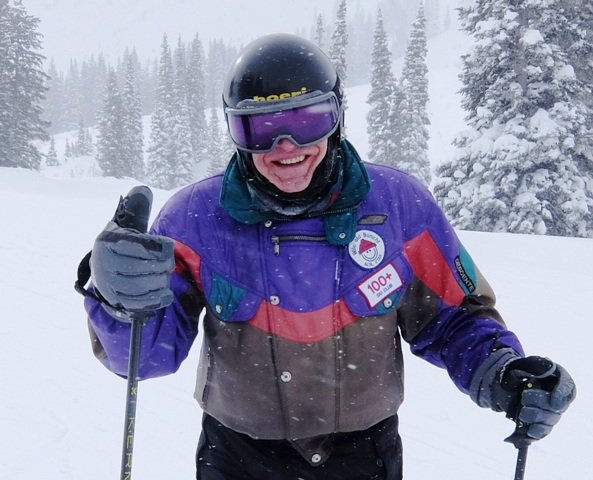
An inspiration to us all, George Jedenoff is the senior-most senior skier. At 102, he still enjoys the outdoor winter at Alta. Harriet Wallis has alerted us to his autobiography which is available and accessible by download for free. Check out his story here.

We are launching our first Mystery Glimpse of the season.
Thanks to the many wonderful ski museums around the US and Canada, each week, we publish an historic photo of a person, place, or thing that they contribute, and you have to guess what it represents. As for this week’s pictures, it’s really not what you think.
Also, co-publisher Jon Weisberg adds an appreciation of Doug Coombs, daredevil, risk-taker, celebrated skier of the steep and deep. Jon found Tracking The Wild Coomba, a biography of an extraordinary outdoors man and adventurer, in a book store on Cape Cod this summer. Click here to read his tribute.
SeniorsSkiing.com correspondent Don Burch offers another fun puzzle about skiing, this time a word puzzle. Give it a try.

Finally, we are posting an interesting article by Ben White, who, as a teenager, managed to ski New Hampshire’s famous 48 peaks over 4,000 feet in one season. He is sharing what he learned about skiing off-piste, lessons he learned the hard way. If you’re a backcountry skier, see what you can learn from his experience.
Thanks for reading SeniorsSkiing.com. Please tell your friends. Remember, folks, there are more of us every day, and we aren’t going away.

Short Swings!
Based on the overwhelming number of reader responses about on slope hits and near misses, it’s probably safe to say that skiing has become a contact sport. Body armor products aren’t far behind.
Most of us got our first taste of protective gear when we donned helmets. I resisted a few years. Then word of head injuries started circulating, and I decided to give helmets a try. They’re comfortable, warm, and handy when skiing the trees. I never went back.
Europeans and ski racers have been using protective gear for years. Punch covers, forearm guards, and shin guards protect racers negotiating gates. The All Sport

Back protector by POC
Protection website lists a variety of protective products for skier bodies, including entire suits of armor, not dissimialr to those used by motorcyclists. The site is oriented to big air youngsters who subject themselves to big falls.
European skiers are well accustomed to using spine protectors. These padded devices are said to reduce spinal impact during hard falls. My understanding is that kids racing in the EU are required to use them.
Coming Soon to Your Back?
Based on the content of promotional emails and my participation on a ski product panel, it appears that spine protectors (aka back protectors) are the next big thing in safety gear for the North American ski market.
Slowing Down
I gave up speed a long time ago and for the past few decades have preferred to ski slowly and gracefully, regardless of terrain.
Because that may make me more of a target for unwitting, unskilled, and irresponsible boarders and skiers, I practice defensive skiing. Busy days, I ski, literally, on the edge of slopes and trails, figuring that I’m minimizing exposure to others. And, I’m always glancing uphill to see what might be barreling my way.
Importantly, if some jerk gets dangerously close, I do my best to catch up and explain that what he/she/they did is unacceptable.
As for patrol, I respect them for everything they do to protect us from avalanche and obstacles and for helping the injured get the help they need. But I rarely see patrol stop a reckless rider.
As we older skiers enter a new season, on-snow safety is a big concern. We can put on the body armor. We can voice our concerns to area and patrol management . Or, we can ski defensively; glancing around us as we work our way down the hill and avoiding overly crowded terrain.
If you have your own techniques for avoiding skiing injuries, we’d be happy to share them with other readers.
New Take on Cable Delivery?
Credit: AP
A pilot in Italy tangled his plane in the chairlift cables of Prato Valentino last Sunday in the Italian Alps. The pilot was thrown to the ground and taken to the local hospital. His passenger, trapped inside, was rescued, unharmed, by emergency workers.
Scottish Cancer Survivor Skis 120 Consecutive Months

Credit: CTVNews
Helen Rennie, 65, an Inverness school teacher, has been skiing monthly in the Scottish Highlands since 2009. She started in 2006 but was stopped several months later when diagnosed with esophogeal cancer. There are times when she hikes miles to reach a patch of snow where she takes a few turns. Talk out grit and determination!
New Documentary on First US Amputee Skier
Paul Leimkuehler lost his leg during the Battle of the Bulge. He returned home and designed the first ski outriggers in the US. His innovation launched the adoptive skiing movement which liberated many from their wheelchairs, allowing them to expeience the freedom and joy and skiing. Now his granddaughter, Katie Leimkuehler, has produced a fascinating documentary on her grandfather’s life and accomplishments. It’s called Fresh Tracks and premiers December 12 in Breckenridge at the Hartford Ski Spectacular sponsored by Disabled Sports USA. More info on future showings will appear as they become known. Watch a short based on the film here.
Versatile and Super-Bright Compact Flashlight

Just started using the Fenix LD 30 flashlight. It comes with a rechargeable Li-ion battery. A small button transfers between five light settings, the brightest of which is an impressive 1600 lumens. The light also has a strobe setting. It’s about 4.25” long and 1” wide, comes with a carrying case and a USB cable for recharging. This is ideal for pack, car, boat, basement or garage. MSRP: $79.95. Available at https://www.fenix-store.com/fenix-ld30-flashlight-1600-lumens/.
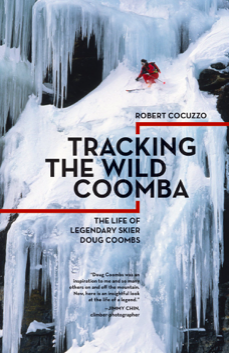
Tracking The Wild Cooba: An Appreciation
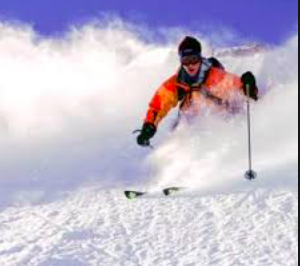
Doug Coombs was one of the most celebrated steep and deep skiers of the ‘80s, 90s, and 00s. Many of you will remember his film exploits and his steep skiing camps at Jackson Hole and in Tinges and elsewhere in Europe. He died in La Grave France in 2006, when he slipped off a cliff on skis trying to find and help a fellow skier.
I found “Tracking the Wild Coomba” in a used bookstore on Cape Cod. Authored by Robert Cocuzzo, it was published in 2016. Handwritten on the title page is this note from the author: “Sebastian, The inspiration to write this book came when I first read The Perfect Storm. Your words drove me to become a writer. Thank you.” An unexpected find.
Coombs grew up in a skiing family in Bedford, Masachusetts. From the beginning he was a risk-taker, performing crazy stunts and showing off for friends. When he was 17 at Waterville Valley, New Hampshire, he crash-landed. Dazed, he went to the clinic at the base of the hill. No one was there. He went back up the hill and continued to ski. When he got home, his mother took him to the hospital where he was diagnosed with several broken neck vertebrae. His muscular neck had saved his life. He was wheelchair-confined for months, with a stabilization device screwed into his head. Doctors informed him that he would die if he fell again.
Over the ensuing years Coombs established himself as one of the world’s preeminent steep skiers. In telling his story, the author also tells us about the evolution of steep skiing and introduces us to many of the sport’s more prominent personalities. He takes us to numerous places where Doug hung out. These include Valdez, Alaska, where he and his wife, Emily, lived in a trailer, purchased cheap helicopter rides, and specialized in skiing first descents of previously unnamed steeps in the Chugach Range. Before long he was attracting a robust clientele to his heli-ski guide service.
We learn how he and Emily started the Steep Skiing Camps at Jackson Hole and how he became the area’s public face. But trouble was brewing. As a key member of the underground Jackson Hole Air Force – a cadre of highly skilled, hard core rope-duckers – he is pursued by the Jackson Ski Patrol. It is Les Miserables on skis. He’s caught and banned from Jackson. Soon after, he and his wife set up shop in the French Alps.
Once there, he integrates well with top-ranked skier/climber/guides, eventually earning their respect and becoming a fully credentialed guide.
Throughout the book, the author paints Coombs as a remarkably caring and congenial person, always there to help others.
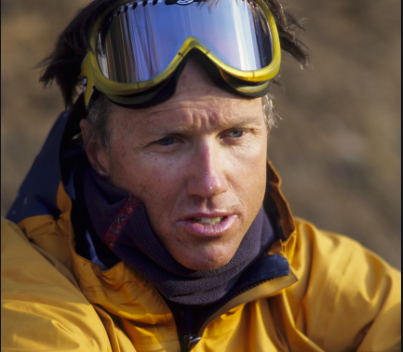
Doug Coombs
On April 6, 2006 in La Graves, he was skiing with three friends, including Chad VanderHam, a young American who had attended multiple Steep Skiing Camps and worked with Coombs in France. The last run was through some couloirs they had skied before. VanderHam skied down and went out of sight. Coombs skied to the edge of a cliff and called down to him. The other two heard Coombs call for a rope. One skied part way down but before reaching him, Coombs, on skis, had slipped off the cliff.
Chad VanderHam was declared dead by the time his copter reached the hospital. Doug Coombs, warned at 17 that his next fall would be his last, died from a broken neck. He was 48.
The book weaves Coombs’ story with Cocuzzo’s travels to document it. He follows Coombs’ path, interviewing and skiing with the people who knew him.
The author finds his stride not too far into the book. It becomes an absorbing read.
Tracking The Wild Coomba: The Life of Legendary Skier Doug Coombs. Copyright 2016 by Robert Cocuzzo. Mountaineer’s Books. Available online from $3.44.
[authors_page role=contributor]