

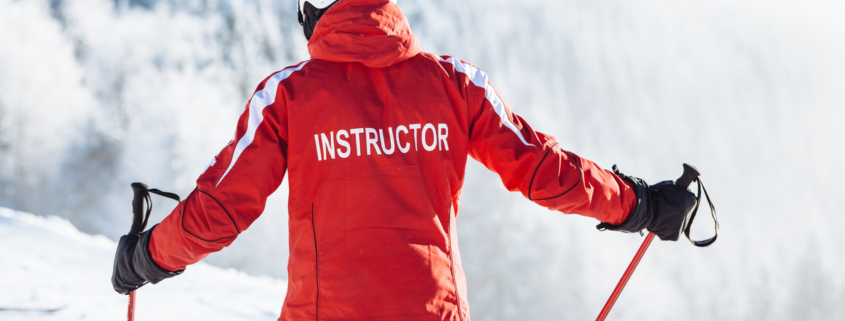
“Senior Skills” seminar provides useful tips for one’s technique quiver
Credit:4maksym
As a certified ski instructor I’m required to take a biennial clinic in which we upgrade our teaching and skiing skills.
The Professional Ski Instructors of America, or PSIA, offers a broad menu of topics to focus on. Having just turned 71, the “Senior Skills” clinic at Vermont’s Sugarbush resort naturally caught my eye. I was hoping to pick up some tips to combat fatigue and get ideas for my own adult students at New York’s Windham Mountain Club where I teach part-time.
But I wondered. What special skills or techniques exist for senior skiers? Aside from, hopefully, a greater degree of common sense and a more acute awareness of one’s limits, what can seniors do on the slopes to soften those inevitable aches, pains and tired muscles that emerge toward the end of a ski day?
As it turns out, there’s no silver bullet for senior skiing proficiency, but there are adjustments one can make in technique, as pointed out by our course conductor, Killington trainer Keith Hopkins.
He started out the two-day clinic by reminding us of the basics, that there are three moves or skills involved in turning a ski.
Those are pressure, or the amount of force being exerted on a ski; edging or the act of tipping the ski or skis on edge and rotation or steering of the skis by applying a twisting motion that starts with the feet.
Many skiers, Hopkins pointed out, especially older ones who grew up before shaped skis were on the scene, tend to start their turns with pressure. That can be by upweighting or the up movement at the start of a turn.
Instead, Hopkins had us try starting our turns by tipping our skis on edge earlier, that is before the pressure and steering starts.
There’s a lot of physics and technical detail involved here, but the bottom line is that can help us extend our outside leg sooner and with less effort. And it lets the ski, which is designed to turn, do more of the work.
Most of the participants in the clinic were like me in their 60s and 70s who started skiing back in the day when we were on longer often stiffer skis. While shaped skis have now been around for decades, old habits, especially those connected to muscle memory, can die hard. This move toward engaging our edges sooner was a good reminder of how to best use modern ski design.
There were other moves as well. Along with edging, Hopkins had us working to extend our outside leg earlier in our turns. By keeping one’s legs extended a bit longer, there’s more time for the blood to carry fresh oxygen to the muscles. That can combat the inevitable “burn” one gets during a long or non-stop ski run. Those are just a few of things that senior skier can think about to minimize fatigue and maximize fun.
Recycled Water, Real Snow: Big Sky’s Path to a Greener Ski Season
Summit photo courtesy of Big Sky Resort.
In February I was fortunate to be at Big Sky Resort in southwestern Montana with the 70+ Ski Club. For the last decade or so Big Sky had been working its way up my short list of resorts to knock off. After several years of less than desirable conditions in the East (yes, not this year) I was looking forward to quiet surfaces. You know, the kind where you make turns and you don’t even hear your edges.
I’m pleased to say I found what I was looking for on the slopes of Big Sky. While the base depth was less than average it didn’t matter. The coverage was of no concern and the surface was packed powder nearly everywhere we went.
I had heard Big Sky is pioneering a sustainability initiative that converts treated wastewater into artificial snow but now I was riding on it. Believe me, you would never know.
As climate change, population growth, and increased tourism place greater pressure on mountain water supplies, the resort and surrounding community have adopted an innovative water-reuse strategy that turns what was once a waste product into a valuable resource for winter recreation.
The initiative also reflects a broader shift in how mountain communities approach water management. The Big Sky project grew out of a community planning effort known as the Big Sky Sustainable Water Solutions Forum, which brought together local stakeholders to address long-term water supply and wastewater challenges. Rather than treating wastewater solely as something to dispose of, the community began exploring ways to reuse it beneficially. Snowmaking emerged as one of the most promising solutions because it returns water to the mountain environment where it naturally belongs.
As you know, ski resorts traditionally rely on surface water from rivers, lakes, or reservoirs to power their snowmaking systems. Snowmaking often requires millions of gallons of water and a lot of energy, particularly in the early part of the ski season when natural snowfall may be limited. Resorts in the western United States increasingly face competition for these water resources, especially in drought-prone regions where maintaining stream flows for ecosystems and downstream communities is a priority. In response, Big Sky and its partners have developed a program that reuses highly treated municipal wastewater for snowmaking, dramatically reducing the need to draw fresh water from rivers or aquifers.
The recycled water used at Big Sky comes from the community’s modern Water Resource Recovery Facility, a treatment plant that processes wastewater generated by homes, hotels, restaurants, and businesses throughout the Big Sky area. At this facility, wastewater undergoes several advanced treatment stages designed to remove solids, nutrients, pathogens, and contaminants. By the time it leaves the plant, the water has reached the highest reclaimed-water classification recognized by the Montana Department of Environmental Quality (MT DEQ) and is disinfected and sterilized to eliminate bacteria and viruses. Continuous testing and monitoring ensure that the water meets strict environmental and public health standards before it can be reused.
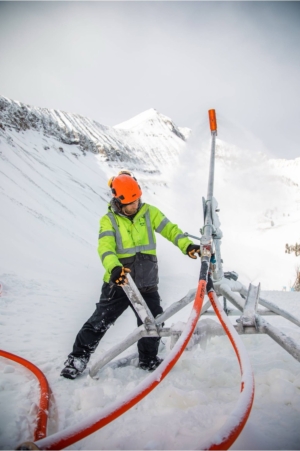
Photo courtesy of Big Sky Resort.
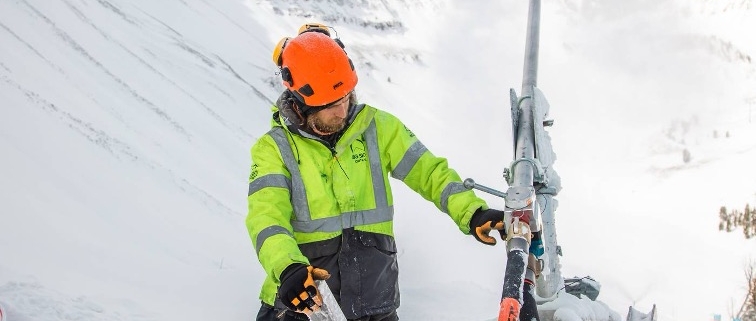
Once treated, the reclaimed water is pumped to snowmaking equipment on the slopes. Snow guns spray the water into cold mountain air, where it freezes into fine crystals that accumulate on ski runs. At Big Sky, this recycled water is primarily used to create an early-season base layer of snow on terrain across Spirit Mountain, Andesite Mountain, and the Spanish Peaks base area. Establishing this base layer is crucial for opening trails earlier in the season and protecting the ground beneath later snowfall.
The snowmaking project will be implemented in phases. During the first phase, the resort expects to use up to 23 million gallons of recycled water each year. In the second phase, the program could expand to approximately 44 million gallons annually, representing a significant portion of the resort’s snowmaking supply. Instead of being discharged into rivers after treatment, this water is reused as snow and later returned to the natural water cycle through melting and infiltration.
An important environmental benefit of this approach is that it reduces pressure on the nearby Gallatin River watershed. Traditionally, many ski resorts withdraw fresh water from rivers or groundwater sources for snowmaking. By recycling wastewater instead, Big Sky avoids taking additional water from these natural systems during the winter when flows can already be low. Conservation organizations such as Trout Unlimited and the Gallatin River Task Force have supported the project, noting that it conserves fresh water and protects river ecosystems.
Another advantage is the process effectively treats the water multiple times. The wastewater first receives advanced treatment at the recovery facility. It is then atomized through snowmaking equipment, which further exposes the water to cold air and ultraviolet sunlight. Finally, when the snow melts in spring, the water passes through soils and natural filtration systems as it percolates into the ground. This multi-stage process can improve overall water quality while returning water to the aquifer and streams later in the season.
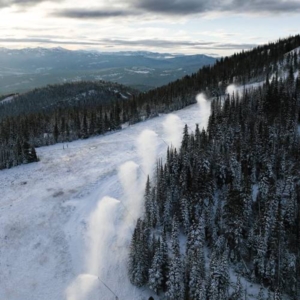
Reclaimed water is recycled water that has undergone advanced treatment at a facility, such as the new state-of-the-art Big Sky Water Resource Recovery Facility. Photo courtesy of Big Sky Resort.
The timing of snowmaking also plays a role in water management. Snowmaking with reclaimed water generally occurs between early November and mid-January, when temperatures are low enough for efficient snow production. As the artificial snowpack melts during late spring and early summer, it gradually releases water back into the environment. This delayed release can help maintain stream flows during drier months, benefiting aquatic ecosystems and downstream users.
Although the concept of using reclaimed water for snowmaking may sound unusual, it is not entirely new. More than a dozen ski areas across several U.S. states—as well as resorts in Canada, Switzerland, and Australia—already use recycled water for similar purposes. What makes the Big Sky project notable is that it’s one of the first ski areas open to the public in Montana to adopt the practice, potentially setting a precedent for other resorts in the region (the Yellowstone Club, a private resort, was the first).
As climate change continues to affect snowfall patterns and water availability in the Rocky Mountains, innovations like wastewater snowmaking may become increasingly common. By transforming a local waste stream into a reliable snowmaking resource, Big Sky Resort demonstrates how ski areas can adapt to environmental pressures while reducing their impact on fragile mountain watersheds. The project illustrates a growing recognition that sustainable recreation in the future will depend on creative approaches to managing water—one of the most critical resources in alpine environments.
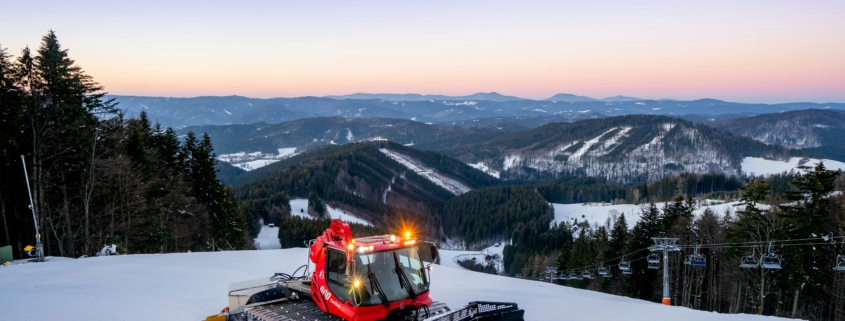
Tips and Tactics for Spring Skiing
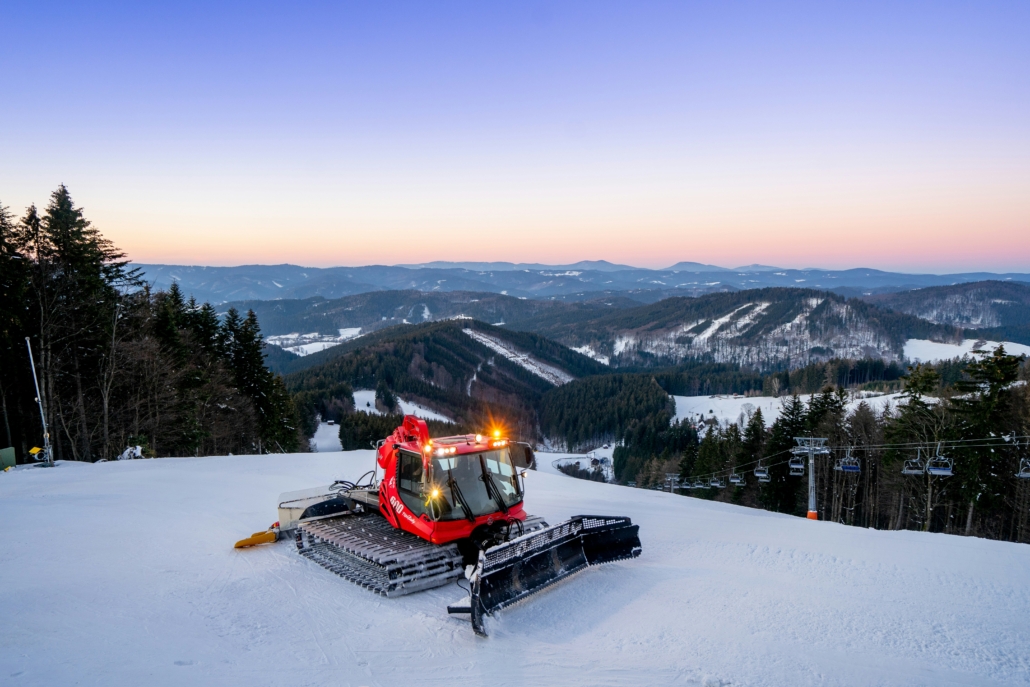
Photo by Michal Janek on Unsplash
The days are longer, the sun is brighter, the temperatures are warmer and the snow is softer. Ah, yes, spring skiing is special, when you can shed layers enjoy such end-of-season silliness as pond skimming contests and leisurely sun-soaked apres.
Spring skiing also needs some special attention, both to the condition of the snow and the condition of your equipment. Here is some sensible advice from a trio of ski and snowboard instructors at Whistler Blackcomb –
Understand spring conditions:
Nights are still cold on the mountain, so the snow can be firm in the mornings. Wait for the sun to soften the snow if you’re looking for that spring slush. Spring powder conditions can be slower and harder to ride through, depending on how deep it is. This can require making bigger, straighter turns.
Debate beauty sleep vs early bird:
Spring skiing means relaxed mornings and softer snow in the afternoons, but prime conditions for laps are in the morning.
Adjust your body language:
Make sure your weight is evenly distributed along the downhill ski (or along the inside edge of the snowboard) at the end of the turn. If there is too much weight, too far forward, the back of the downhill ski (or snowboard), can slide out. Skiers should make sure you don’t have your weight forward at the end of the turn. Instead, what is needed is pressure on all parts of the foot from the toe to the arch, to the heel. This allows the edge to dig in. Tighten your downhill ankle by rolling inwards to put the ski on more of an edge, and tighten your muscles so you have more control.
In powder and deeper slush, push your feet a bit forward through the end of the turn. In deeper snow, it is common for a skier’s feet to slow down due to the increased friction of the snow. The wetter the snow is, the more likely it is for this to happen. This can result in a skier being thrown forward. To counter this, skiers can push their feet forward through the end of the turn.
It is important to also push their hands forward as well, otherwise, you will be leaning too far back. This puts extra pressure on the quads. When skiing, we always want our shoulders over our knees. Snowboarders can also accomplish this feeling by pushing the front of the board forward if they feel that their board is being slowed down by the deeper, wetter snow.
Get a wax:
You’ll definitely want your skis or board to be waxed to avoid getting stuck in slush. A good sign that your equipment is running out of wax (besides not gliding properly anymore) is a white cloudy effect on the edges of the base near the metal – this is where the snow is causing friction burn against the p-tex base.
Tree runs and spring conditions don’t mix:
As the snow melts, obstacles can emerge in forested areas that are hazardous to skiers and riders and damaging to your gear. Tree wells are also a hazard, so stay away from the trunks of trees, especially if they have low-hanging branches. And always ski with a buddy.
Dress properly:
Layer with breathable, quick-drying fabrics, wear sun protection, and pack a small backpack with essentials like water, sunscreen, and extra layers for changing conditions. The jury is still out on whether goggle tans are considered cool, but there’s no doubt that if you want to avoid a nasty burn, sunscreen is a must. With high altitudes and UV rays reflecting off the snow, it’s easy to get sun damage. And don’t forget the lip balm with SPF.
Have fun and be safe. See you on the spring slopes!
[authors_page role=contributor]