

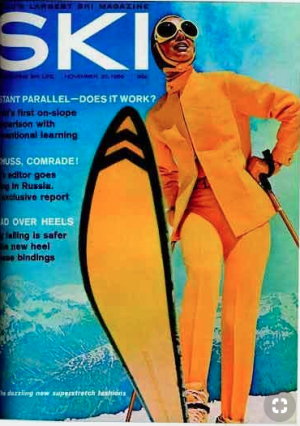
70s Ski Testing: A New Series
This is the first in a series about Ski Magazine’s 1970s ski testing program called Ski Performance Prediction or SKIpp. Its methodology combined engineering analysis as well as a structured series of on the snow maneuvers designed to bring out the best and worst of a ski under a variety of conditions.
Part one of the series Determining How Skis Worked is an overview of the engineering analysis. The second part discusses the on-snow testing that we did and the third is about the politics of ski testing along with a lesson learned.
Ski (and boot and binding testing) programs came about because skiers were faced with a plethora of choices backed by marketing hype that was confusing at best and to some, downright misleading. Both SKIING and Ski Magazine decided to jump into the fray and help their readers. Ski’s approach was significantly different than Skiing. Given several glasses of smoky, single malt scotch, I might be persuaded to cover the quicksand of boot and binding testing in the 70s.
On the Snow Testing is a very brief overview of the on the snow part of the program. Typically, we were at a mountain for about twenty-five days and tested 200+ skis. Not bad work if you can get it, but it wasn’t all fun. It was work!
Ski testing unleashed a set of business issues that challenged the leadership of Ski Magazine. Most of the discussions were well above my pay grade as a lowly associate editor. However, on more than one occasion, I was called into a meeting with the high-mucky mucks and asked why manufacturer A’s didn’t get high marks. In Politics of Ski Testing, there’s enough to give you an idea of what the discussions were like.
In the end, the SKIpp and the engineering teams at most of the manufacturers found common ground, and we helped each other out. It was the marketing people that created all the problems because the cries from the ski shops were giving them migraines.
The shaped ski as we know it today wasn’t on the horizon. The material science and engineering software that creates them was in its infancy and ski design was as much black art as it was engineering. We got a glimpse of the future one year when we tested twenty odd short skis – 170 – 180 centimeters – and were pleasantly surprised by the results. The market was ready and when engineering and materials science caught up, voilà, you have the shaped ski.
Weird Weather: Rethinking Ski Clothes For A Fickle Climate
Let’s Review The Basics Of Layering To Deal With Changing Weather.

Sun, fog, snow all in one day. How do you dress for that? Credit: Janet Franz
Here in New England, temperatures swing high and low a lot lately, with 50-degree-plus spikes and heavy rains interposing snow squalls and blizzards. This winter seems hell-bent on convincing the last climate change denier that something weird is going on. Accurately assessing atmospheric conditions for a day on the slopes can challenge even the most seasoned skiers.

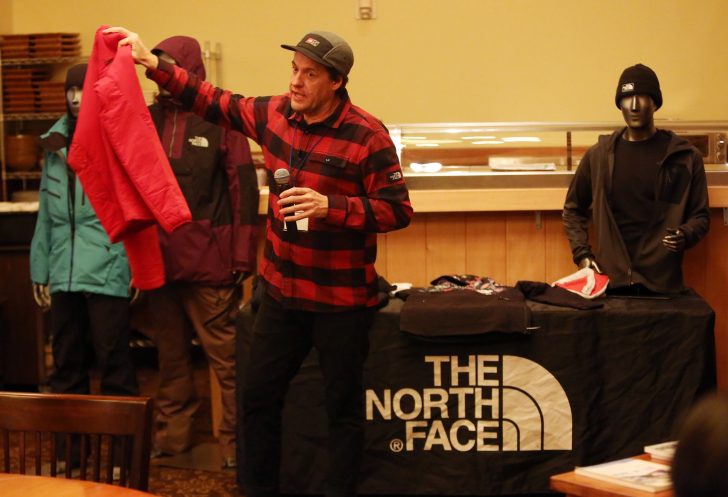
Stan Kosmider, field representative for The North Face, presented on “How to Dress for Cold Temperatures” at the Northeast Weather Summit at Stratton Mountain Resort in December. Credit: Martin Griff
Stan Kosmider, field representative for The North Face, talked with winter sports enthusiasts recently about packing for a multi-day cold weather adventure. “It could be a bluebird day, but the next day it’s pouring rain and icy,” he said. “So pack everything you own and plan on layers. You can remove or add clothes so that you never feel too hot or too cold.”
Three main layers provide for moisture management, heat retention and exterior protection.
Base: The most crucial layer for temperature and moisture control is the first one—your underwear. Skin sweats even when the air is cold, and if the perspiration soaks in to your long johns, the wet clothes will suck the heat out of your body, making you cold.
“The base layer gets moisture off your body and into the atmosphere,” explained Kosmider. This prevents excessive sweating, which can cause additional heat loss, especially when you slow down or stop to rest.
Look for under garments made of lightweight, breathable, wicking fabrics such as a synthetic (usually polyester) fiber, silk or ultra-fine merino wool. Avoid cotton, which absorbs and retains moisture, keeping the skin beneath it clammy and cold. A comfortably snug fit everywhere is essential, because to wick sweat efficiently, your next-to-skin layer must actually touch your skin.
Insulating: The middle layer’s job is to capture and retain body heat that radiates from your body, Kosmider explained. The more efficiently this layer traps heat, the warmer you will feel. Insulated jackets and sweaters come in a range of weights and synthetic and natural insulation choices abound. Down sweaters offer wind resistance but lose insulating efficiency when damp. Synthetic insulations mimic down’s efficiency, with better water resistance. Polyester fleece (not cotton fleece) is a great choice because it stays warm even when damp and dries fast. Fleece fabrics come in a range of plushness and thickness. Microfleece is thin and does a great job of wicking moisture away from the body.
For maximum temperature regulation, insulating clothing should fit close to the body, “snug, not baggy, and you should not have to size down,” Kosmider said. “The fabric should be thick enough to layer and be breathable,” so avoid thick fleece (more than 300 weight) or heavy wool sweaters. Fabrics with insulation-filled bubbles or ripples trap heat well.
Outer: The exterior layer, generally a shell jacket and pants, must do three things: block the wind, keep out rain and snow and allow sweat vapor to escape. Shells range from pricey mountaineering coats to simple wind-resistant jackets, but “even a $600 shell is worthless if you don’t have the right clothes underneath it,” said Kosmider.
Shell insulation types include down (again, warm but not waterproof), synthetic down (such as Primaloft, made from recycled plastic). “Down has the highest weight to warmth ratio, but when it gets wet it’s not warm. So, in this environment, it’s not reliable, and synthetic insulators are a better choice,” Kosmider explained. Shells with zippers and vents allow you to cool off without stripping down.
Shells may be waterproof/breathable for full-on squall conditions with high activity (they wick sweat but keep rain out) or water resistant/breathable for drizzly, breezy conditions and high activity. Avoid waterproof/non-breathable coats unless you plan to stand around in the rain (they keep precipitation out and trap sweat within). Kosmider recommends shells treated with a durable water repellent finish such as Gore-Tex – a rubberized, waterproof, breathable coating that allows water molecules to hold their shape, bead up and rolls off the surface.
Head, Face, Fingers and Toes
It’s not a myth that body heat escapes through the head, hands and feet. If you’re skiing or snowboarding, you should be wearing a helmet, which will keep your head warm. Look for a helmet with vents to let the heat out on warm days. For very cold days, don a skull cap or balaclava made of wicking fabric, because heads sweat, too. Liner socks and liner gloves keep feet and hands dry. Pack extra liners for extra sweaty days. A neck gaiter or face mask keeps the wind off cheeks and nose. Buffs serve the same purpose and work well as a headband to cover up “helmet hair” apres ski.
Product care
Ski clothes can be costly, but well cared for garments will last for many years, and layers will work best if cared for properly. Tiny pores in water-repellent fabrics become clogged with dirt and oils from skin, requiring periodic washing to remove debris and revive their breathability. Gore-Tex makes a special detergent for its products, but any liquid detergent without dyes, scents or fabric softeners will work. Dry garments in the dryer—without fabric softener— to reactivate the waterproof coating.
Down garments should also go into the dryer, without fabric softener. Use low heat, and place tennis balls or toddler’s shoes in the pockets to thrash the garments around so they will fluff up.
You can’t control the weather, but if you bring all your layering choices with you to the slopes, you can easily adapt as conditions change.
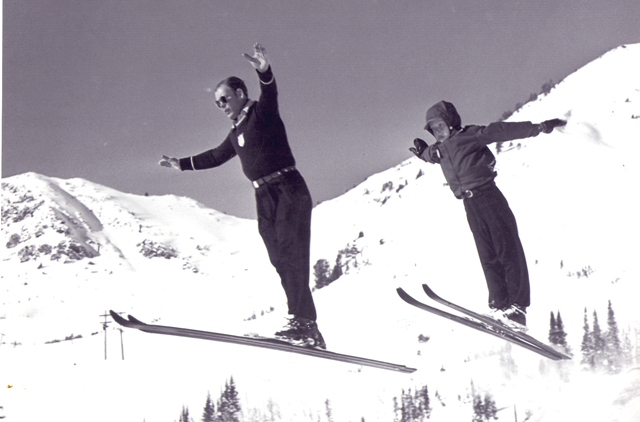
Mystery Glimpse: Who’s Flyin’?
Airborne Family Members.
Who is airborne? Can you guess where? Hint: We can’t tell you the name of the museum that contributed this picture. Know why?
Last Week
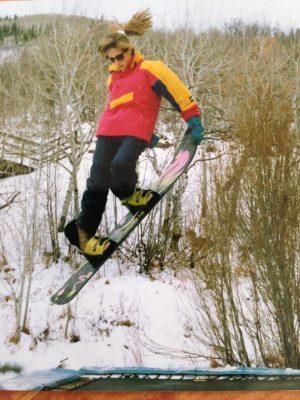 Only one reader got this one. The enthusiastic boarder is Shannon Dunn-Downing, the first U.S. woman to win an Olympic snowboard medal with a halfpipe bronze in 1998.
Shannon was the first woman to land several difficult halfpipe tricks in competition, including a frontside 540 in 1991, backside 540 in 1994, Mctwist in 1994, frontside 720 in 1995, and frontside rodeo 720 in 2001. She is also noted for working behind the scenes on the development women’s products for companies such as Burton Snowboards and Velvet Goggles.
In the mid-2000s, Shannon retired from professional snowboarding to focus on raising her family. She lives in Southern California and tries to surf whenever she can.
In 2016, the Colorado Snowsports Hall of Fame and Museum produced a tribute video to Shannon, highlighting her early days and Olympic success. Check it out below.
[authors_page role=contributor]