


On The Fitness Road Again!
How My Fitness Journey Took A Detour, And How One Powerful Documentary Is Going To Help Me Get Back On Track.
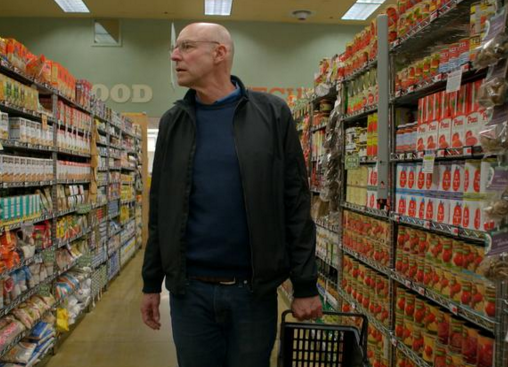
Nutritionist Michael Pollan’s PBS documentary and book have inspired RoseMarie to renew her fitness quest.
So, to let all of you who were following my fitness journey here last summer know, I was doing great…and then I wasn’t. I don’t know exactly when I lost momentum or let complacency set in or thought I could let some old bad habits wiggle back into my life here and there without bad effect. But here I am again a year later feeling like a stuffed sausage in too-tight jeans and nowhere near fitting into that favorite dress of mine again. Somehow I’ve managed to gain back half the weight I lost.
But I’m not throwing in the towel or losing the tape measure or chucking the scale. I’ve got three-plus months to get back to where I was last fall, and I vow to continue this time until I reach my goal. My plan is to continue my exercise program, finally conquer my habit of staying up late and getting up early, stick to a healthy and sensible diet, and make all of this a permanent, everyday part of my life going forward. I’ll report periodically on how I’m doing and share with you any insights or good tips I’ve found on my renewed journey to fitness.
My big piece of advice for you today is to check out In Defense of Food, the excellent two-hour PBS documentary about nutrition produced by Michael Pollan, America’s most personable, passionate, and brilliant nutrition activist, journalist, and award-winning author. At the heart of the documentary, which is based on his best-selling book of the same name and which first aired on PBS last December, is Pollan’s seven-word maxim to help Americans figure out how to eat to be healthy: “Eat food. Not too much. Mostly plants.”
During my fitness program last summer, I had actually incorporated some of his philosophy into my new eating regimen. I became very vigilant about portion control, and I started eating less meat and white food (e.g., bread, cheese, etc.) and more fruit and veggies. But after watching Pollan’s riveting documentary, I have a whole new view on what “food” is.
When Pollan says to “Eat food”, he’s talking about 100% real food, not quasi-food or “edible food-like substances”. Believe it or not, probably most of the food in your local supermarket falls into the latter category. Anything artificial or with additives does not qualify as real or pure food. When Pollan says “the quieter the food, the healthier the food”, he’s talking about the “health” claims that cry out from the packaging, most of which are horribly misleading or worse, untrue. As much as the government tries to regulate what can be said on packaging, the manufacturers find clever ways around the rules. To follow this part of the maxim, always read the labels and buy food that’s free of packaging, which will make it easier to follow the third part of the maxim: “Mostly plants”. Eat lots of fruits and vegetables and consider meats “special occasion” food. For the freshest produce with the least amount of packaging, shop at your local farmers’ markets.
And to follow the middle part of the maxim, “Not too much”, Pollan suggests eating your fruits and vegetables first during a meal, and use smaller plates and glasses. And of course, be mindful of your portion sizes—think palm-full, not plate-full.
Enjoy Mr. Pollan’s documentary…and wish me luck!
Pollan’s seven word rule for selecting and consuming food. Makes sense.
Remembering Portillo’s FIS World Championships 1966
Fifty Years Ago, Portillo Changed Everyone’s Idea About Skiing Below The Equator.
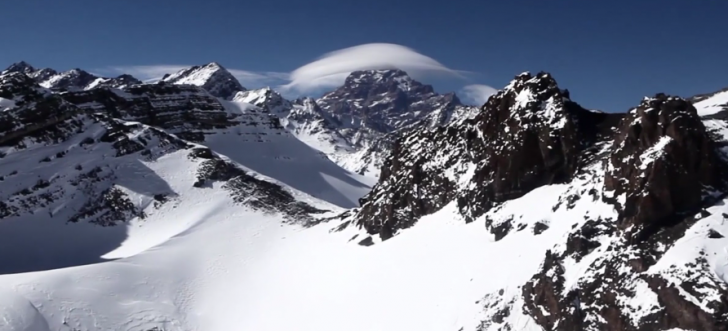
Portillo improbably hosted the first FIS World Championship below the equator in 1966. It changed a lot of minds.
At the time, it was a wild idea. Hold the FIS World Championships in Chile, at Portillo, at 3,300 meters, in the Northern hemisphere’s summer. Somehow, resort owner Henry Purcell convinced the FIS to award the 1966 event to the nascent resort. Despite a 1965 hurricane that destroyed lifts and created monstrous snow falls and avalanches, the FIS held fast and the World Championships were (heroically) held in the Andes with skiers gathering from all over the world. You can read about Portillo’s history here.
In the commemorative documentary video below, you’ll see Henry Purcell, the owner, describing how the event changed the world’s view of South American skiing. Nancy Green, Canadian super star, Austrian ski race legends Egon Zimmerman, Hermann Maier, and Erik Schinegger, Carlos Senorer, Italian gold medal winner, and even modern day whiz Ted Ligety offer their thoughts and memories about that most pivotal event.
Portillo continues to attract summer skiers and racers preparing for the season. As we have seen, this season has had its moments of really, really big snowfalls. Click here for a report of a nine-foot snowfall this June. Have you skied ‘way down south?

Vermont Ski Hill Morphs Into Summer Water Park
Grandkids Would Love A Summer Day At Smugglers.
[Ski resorts are being creative about developing off-snow season attractions. Smugglers Notch in Northern Vermont has gone the extra mile in creating three separate water parks. There’s still time to get up there if you’re looking for a getaway for Labor Day. Special thanks to Janet Franz, a feature story writer covering health, fitness, business, recreation and community affairs and a member of the North America Snowsports Journalists Association for this story. She’s also chair of Vermont Governor’s Council on Physical Fitness and Sports.]

View from top of slide at Mountainside Water Park.
Credit: Janet Franz
If you are entertaining your grandchildren in the Northeast this summer, consider how many bodies of water they can splash into on one day? About a dozen, if you’re spending the day at Smugglers’ Notch in northern Vermont. In summer, the ski resort transforms into a water park village, with three diverse wet “playgrounds” and two reservoirs spread across the resort’s three interconnected mountains. Consider a daytrip to Smugglers’ Notch with your little ones—a “Daycation” ticket and free, on-call shuttle give all-day access to every location.
My family of four visited Smuggs last month on a mission to plunge into every pool, slide and spray zone. Here’s how we made a splash:
We parked in the Village Center near Mountainside Water Playground, where four separate watery spaces cater to all ages. In the ankle-deep Little Smugglers’ Lagoon, tiny tots sloshed under a gentle waterfall, explored a faux cave decorated with happy bears and floated on colorful rafts. Nearby, kids up to 48 inches tall rode the Turtle Slide into a shallow pool.
My boys, ages 8 and 12, could hardly wait to try the 30-foot tall, 300-foot long Great River Rapid Ride, a slide restricted to people at least 48 inches tall, or 42 with a lifejacket. We grabbed tubes and carried them 55 steps up the tower where an attendant helped riders settle in and launch toward a pool below. On multiple rides we slid forward, backward, spinning, and — everyone in my family’s favorite — the slingshot: The staffer holds your ankles, pulls you forward, then thrusts you down banking off the sides.
After breaking for a home-packed picnic, we waded in the 75-foot long Mountainside pool. We found plenty of chairs, a snack bar and clean bathhouse with showers and changing rooms.
Using the poolside phone, I called the shuttle and we took a five-minute ride to Notchville Park, a tiered area with three pools. My kids tested Ninja skills on the Lily Pad Walk, jumping between floating mats toward the Twister Waterslide. I tried it, but disliked the sensation of lying on my back inside the enclosed tube that dumped me plunging underwater.
We sat together under a waterfall in the large pool. The boys swam and I wet my feet in Splashville, where tiny tots romped through gentle fountains and glided down a colorful slide onto a soft pad.
Again, I called the shuttle and this time a golf cart arrived. The kids sat facing backward while we zipped along a wooded trail as though on a forest safari.
At Courtside we dipped our toes in the nine-foot deep lap pool and checked out the 120-foot Flume waterslide. We felt too sweaty for hot tubbing, but I appreciated that there was an adults-only whirlpool and another, cooler one for families.
We drove our own car five minutes to Morse Mountain and hiked 10 minutes to Rum Runner’s Hideaway, a six-acre reservoir in a scenic mountain setting. The boys waded in marshy water and inspected a floating, inflated trampoline. We contemplated renting a paddleboat, but instead hiked down to our car and drove to Bootleggers’ Basin, another reservoir surrounded by fields and mountains. The inflated Zoom Flume slide was closed, so we explored the sandy beach and scenic view before heading home, exhausted, wet and happy.
Details
Smuggs’ Water Parks are open through September 5. Daycation tickets cost $69 per day for adults, $49 per day for youth 3-18 years, under 3 free with a paying adult. Vermont residents receive a 50 percent discount with valid ID. Bring your own towels. Lifejackets, noodles and inner tubes are provided at pools and slides. Shop for supplies and food in the village (including Ben & Jerry’s Scoop Shop).
Overnight accommodations available here.
For plenty of fun activities to do in the region click here.
[authors_page role=contributor]