


Cycling Series: Around Crater Lake
Riding The Rim Was One Of The Best Rides Ever.
Crater Lake water is pure and deep blue. It’s 33 miles around the rim and 4000 vertical feet of ups and downs.
Credit: John Nelson
As I topped a ridge near 8,049-foot Llao Rock on the north rim of Oregon’s Crater Lake, I had that giddy moment cyclists get when everything comes together.
I felt great. I had just finished one of my biggest climbs of the day. And I was alone on a road ringing one of America’s natural wonders.
I picked up speed on the downslope and screamed for joy.

Climbing along East Rim Drive on the south side of Crater Lake National Park.
Credit: John Nelson
It was early October. I had left my home in Seattle a week before on an extended road trip around the west. I had no real itinerary, except to camp, hike, bike and enjoy beauty.
I hadn’t planned on coming to Crater Lake National Park. But while camping on the Oregon Coast, I met a fit retiree who had just done the 33-mile ride around the rim.
“It’s incredible,” he said in a hushed tone over the campfire. I decided then and there I had to try it.
A few days later, under cool, clear skies, I clipped in and started what would be one of the best rides of my life.
When you tackle the Crater Lake ride, the first thing to understand is that almost none of it is flat. You’ll do more than 4,000 vertical feet of climbing over the next few hours, so get used to the long ups, and the lovely, all-too-quick downs.

A stop at an overlook along East Rim Drive at Crater Lake.
Credit: John Nelson
I started at the park headquarters and immediately had a 1,000-foot climb to the rim of the lake. Cresting the top of the rim, I was treated to views of something really special.
Crater Lake is America’s deepest lake (1,943 feet deep, to be precise) and rests in the caldera of Mount Mazama, which collapsed during an eruption 7,700 years ago. The average annual snowfall here is 44 feet, which melts in warmer months, keeping the lake filled with some of the purest water on earth. Its color is a dramatic deep blue.
The rim road sits many hundreds of feet above the lake. From a car, the view is stunning. From the seat of a bicycle, it’s much more than that—you become part of the earth, water and sky as you grind past each jaw-dropping viewpoint.
If you go
Which direction? Most people choose to go clockwise, which puts you on the lake side of the road on your journey. Starting at park headquarters gets a big climb out of the way early when you have the energy to do it.
Fitness concerns: The ride is strenuous and not to be taken lightly. Besides the many ups and downs, you’ll be pedalling at up to 8,000 feet elevation. Temperatures vary wildly from below freezing to well into the 90s.
Safety: Auto traffic can be heavy in the summer months, and rubber-necking drivers don’t always watch for cyclists while taking in the views. Wear bright clothing. If you want to avoid cars, visit on one of these dates in 2016: Sept. 17 or Sept. 24, when the East Rim Drive will be closed to automobiles for runners, walkers and bicycles. Information is here.
Water, food: The Rim Village Visitor Center is a good place to load up. Bring lots of water for the ride: There are no drinking fountains along the rim. The Visitor Center has cafeteria-style food service if you want a meal.
Stops: There are 30 overlooks that ring the lake; plan on stopping frequently to rest, take pictures and enjoy the views.
Accommodations: Inside the park, the historic Crater Lake Lodge has commanding views from its location at Rim Village. You’ll need to make reservations a year in advance to book one of these in-demand rooms. The Cabins at Mazama Village have scattered availability through summer and fall of 2016. Reservation information is here.
Camping: Two campgrounds are available. The full-service Mazama Village Campground has 214 tent and RV sites. A limited number can be reserved, the rest are available on a first-come, first-served basis. The primitive Lost Creek campground has 16 non-reservable tent sites.
National Park Bicycling Info: Highly useful guide to the Rim Drive, including safety, camping and ride information.
Crater Lake National Park Map: A beautiful map of the lake and surrounding area.

National Park Service Map of Crater Lake. Hills and altitude make the ride around challenging.
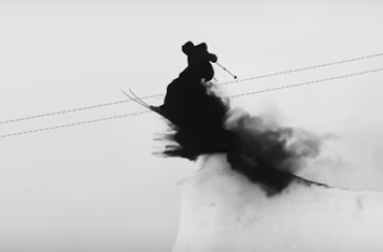
Painted Black Ski Art From Nicolas Vuignier
Abstract Art On The Ski Slopes A Bold Experiment.
Ready for something different? Ethereal visual images from Nicole Vuignier.
Swiss freestyler and film maker Nicolas Vuigner in collaboration with Jules Guarneri has produced an abstract visual treatment in black and white using skiers and (environmentally-friendly) pigment. Take a look at this short clip. There is something haunting and definitely different about these images. Your thoughts?
https://goo.gl/CkHIyu
History, Memories, Books, And More
ISHA’s 2016 Skiing History Week at Aspen.
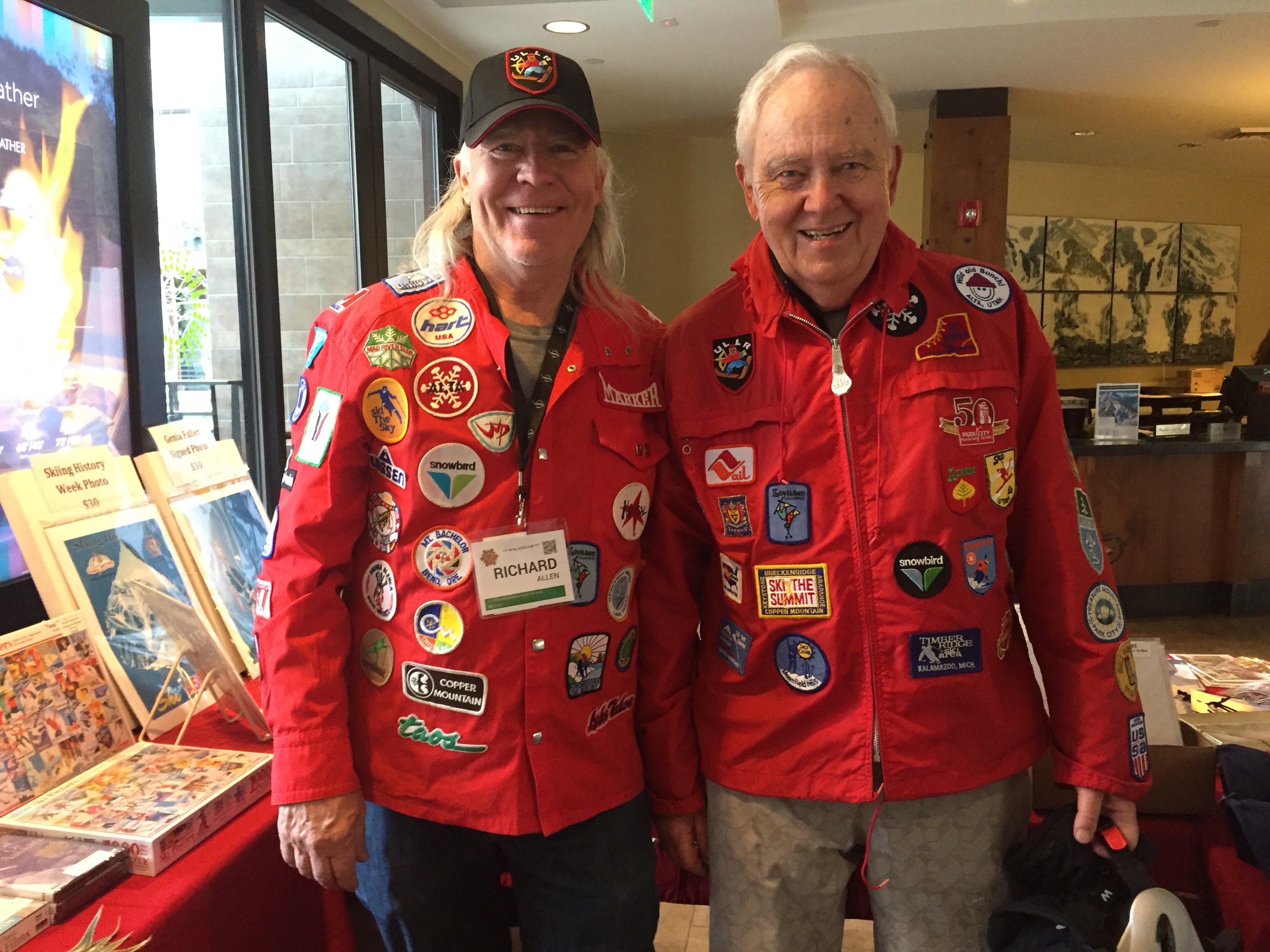
Author compares patches with Richard Allen of Vintage Ski World . Credit: Jan Brunvand
The International Skiing History Association (ISHA) and the US Ski and Snowboard Hall of Fame held their annual Skiing History Week at Aspen on April 5 – 10. My wife Judy and I attended, partly for the presentations, but also for the $32 day passes.
How avid are people about skiing history? Very! Folks lined up to buy a 240-page book on the history of ski poles written in Norwegian. Most bought it as a collector’s item, signed by the author, Karin Berg, director of the Holmenkollen Ski Museum. Berg received a Lifetime Achievement Award.
Maybe a few others, like me, hoped they could read some of the book by drawing on dim childhood memories of our Norwegian parents speaking the language at home and making liberal use of a dictionary. If not, well the illustrations are lavish.
The welcome on Wednesday evening included a tribute to Aspen, which happens to be my first Western ski resort. In 1954 as an undergrad at Michigan State I came with ski club pals during spring break. Passes were $21 per week, and rooms were $5.00 a night. We ate cheap dinners at the Red Onion, still an Aspen fixture.
In those days I didn’t even consider entering the ritzy Hotel Jerome. How things have changed.
At Thursday night’s banquet in the Jerome, ISHA presented annual awards “For Outstanding Creative Works of Ski History.” These included eight other books, one more in Norwegian and two in German. We came away with a couple more: License to Jump! about women’s ski jumping, and Freedom Found, the autobiography of filmmaker Warren Miller.
On Friday a buffet dinner was followed by two lectures. One was a presentation by sons of skiing legend Dick Durrance with film clips and photos including his time at Alta. The second was on the Warren Miller book by his collaborator Andy Bigford.
The highlight of the Hall of Fame program was the induction ceremony Saturday for seven new members at a banquet at the St. Regis. Two inductees had Utah connections: Bob Salerno, pioneer freestyler and a native of Ogden learned to ski at Snowbasin; and the late Edgar Stern, founder of Deer Valley. There were also memorial presentations on Olympic champions who died in the past year, Stein Eriksen and Bill Johnson.
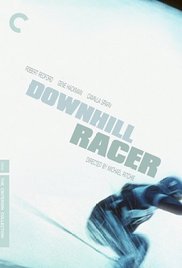 Five ski films received awards. Since these were screened in the daytime when we would rather be skiing, we skipped them, but, at least, we had seen the 1969 classic Downhill Racer honored as “one of the best sports films ever made.”
Among skiing greats we met this year were racers Klaus Obermeyer and Billy Kidd; the writers or editors Doug Pfeiffer, John Fry, and Harry Kaiser; and early freestylers Genia Fuller Crews and Barbara Alley.
How was the skiing? Very good spring conditions all week, meaning a bit crunchy on the groomers in the morning and softer snow as the days warmed. Definitely worth the trip and the lift prices.
[authors_page role=contributor]