

SeniorsSkiing Guide: Italy’s Dolomiti Superski
Winter wonderland in one of the largest ski areas in the world.
Although I was born and raised in Italy, I did not do much skiing until I moved to Colorado for college. So I jumped at the occasion to join some old friends for a week of skiing in the Dolomites—a portion of the Italian Alps characterized by their stunning rocky outcrops, sufficiently beautiful to be listed as a UNESCO World Heritage site.
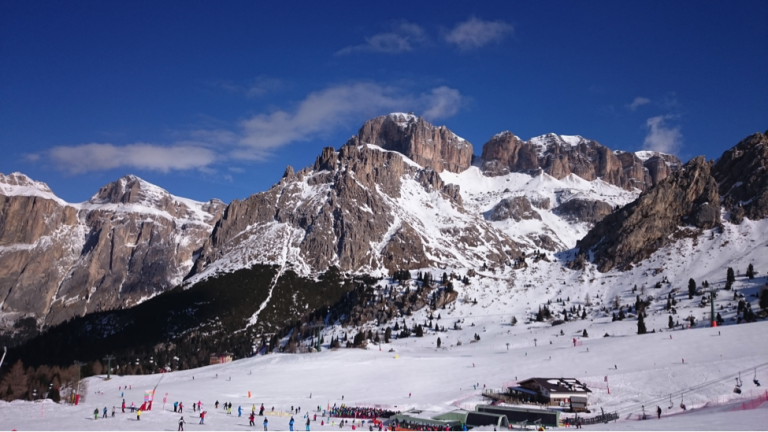
A view of Sella Massif from the south.
Credit: Paolo Gaudiano
Dolomiti Superski is a resort encompassing some 12 connected ski areas totaling 1,200 Km (750 miles) of trails served by 460 lifts. While a few of the areas require a bus for the connection, you can literally ski all day without ever doing the same trail twice, while experiencing a wide variety of terrains and stunning views.
Terrain
The area is accessible to all levels, but in general is aimed toward families, and as such there is a preponderance of easy and medium slopes. I was pleasantly surprised by the large number of older skiers—for once, I did not feel like a rarity because of my gray hair.
As with most European areas, the vast majority of the terrain is groomed, and if you like moguls or off-piste this place is not ideal. On the flip side, when the snow is abundant (which this year it was not), if you find places to go off-trail safely, you will likely find lots of untouched powder even a few days after the last snow.
The main attraction of this area is Sella Ronda, a 40 Km loop around the Sella massif, spanning four valleys and offering a variety of stunning views. The loop is great for intermediate skiers, and it’s possible to head off for side detours for more advanced skiing.
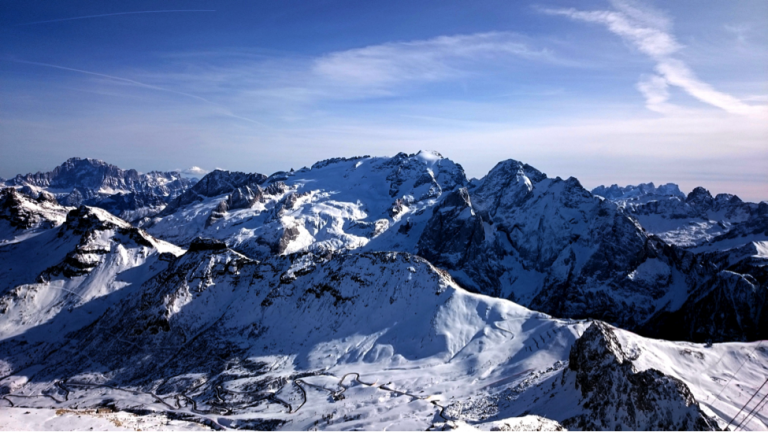
Marmolada and its glaciers.
Credit: Paolo Gaudiano
Getting there
I flew into Munich, which gave me the best combination of price and relative convenience. Depending on which town you choose, it is somewhere between three and four hours from Munich, about two-three hours from Innsbruck, two-three hours from Verona and three-four hours from Milan. You can also take a train and bus combination if you want to avoid driving, but travel times will be longer.
Lodging
The entire area is dotted with small towns and hundreds of hotels. Most of them offer mezza pensione, which includes breakfast and dinner. Our group was based at Hotel Alpi, a three-star hotel in Campitello Di Fassa that cost €85/night for a single, or €130/night for two. The food, service and amenities were excellent. There are many stores nearby and a Ski Bus that connects all the towns, making it really easy to get around.
Food and Culture
As with most of Italy, part of the experience is the food. One of my favorite things about skiing in Italy is that there are lots of restaurants on the slopes that serve great food and are relatively inexpensive. On the downside, most of these places do not allow bringing and eating your own food. I brought sandwiches every day, and sometimes I just had to find a bench somewhere to eat.
Bottom Line
Skiing in Italy is much cheaper than most of the US. I paid €240 for a 5-day pass giving access to all the areas. Coupled with the inexpensive food and lodging, you’ll pay the same if not less than flying to Utah from the East coast.
Discounts are offered for skiers over 65 (roughly 10 percent off).
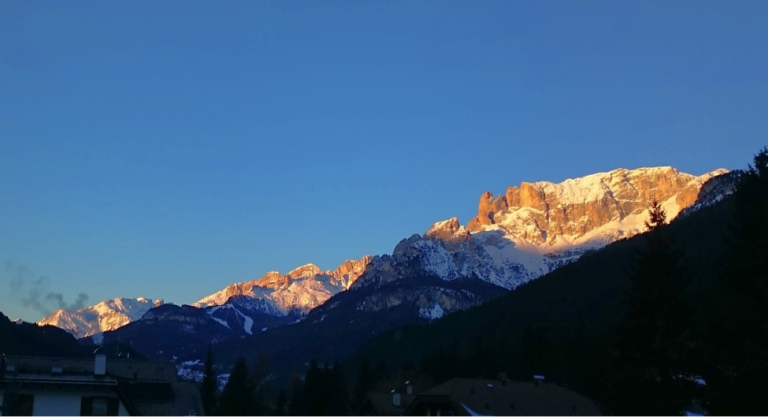
A view from Paolo’s hotel room, showing the dolomite rock the region is named for.
Credit: Paolo Gaudiano

Nowadays, We Like To Put The Foot Rest Down
Funny, Funny Rap About Senior Skiing.
Thanks to Lif’ Ticket, whoever you are. We do put the foot rest down.
A SeniorsSkiing.com’s Correspondent steered this our way. A highly hysterical and insightful ode to what happens to senior skiers. We aren’t sure who these dudes are, but, man, you have it nailed.
SeniorsSkiing Guide: White Pass, WA, Free For 73+!
Kudos To Senior-Friendly Ski Resort Three Hours From Seattle.
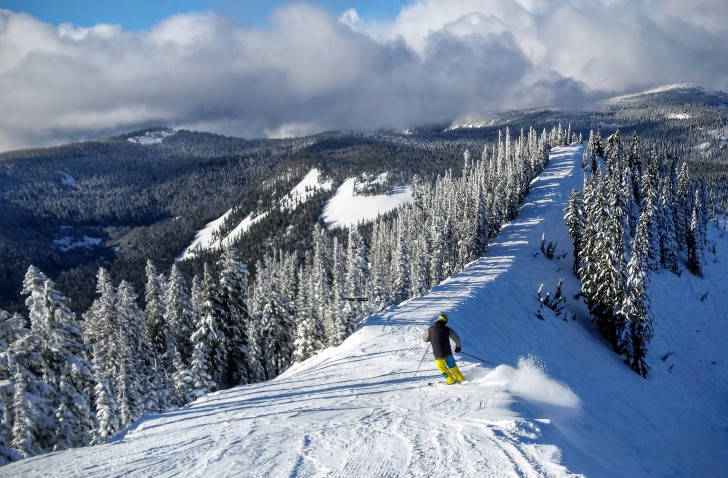
A skier heads off the top of Great White Express at White Pass.
Credit: John Nelson
As I got ready for a day of skiing at White Pass, I ran into a gregarious septuagenarian with a big smile on his face.
“It should be a great day,” he said to me happily as we crossed paths.
Fresh snow had fallen on the empty weekday slopes. And if you happen to be of a certain age like my lodge acquaintance (73 and older), your day at White Pass just got better: You ski for free.
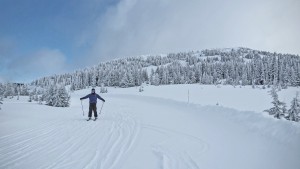
West Ridge at the top of Paradise Basin leads skiers into gladed off-piste powder runs.
Credit: John Nelson
Besides that benefit, White Pass has many other great qualities: Beautiful scenery, vast terrain, reasonable pricing and ample lodging options nearby.
During my visit, two inches new had fallen on top of meticulously groomed slopes, yielding buttery smooth turns and fresh tracks all day long.
Snow, terrain and more
- Location: The ski area is on the White Pass Scenic Byway section of U.S. Highway 12, one of the major east-west routes in Washington state. The byway has fantastic views of 14,410-foot Mount Rainier to the north and is a jumping off point to explore the volcanoes Mount St. Helens and Mount Adams to the south. It takes about three hours to drive to White Pass from Seattle.
- Snowfall: More than 350 inches fall annually, and snowmaking keeps the mountain covered when Mother Nature doesn’t cooperate.
- Terrain: White Pass feels like two mountains on its 1,500 acres. The “frontside” has the area’s only steeps and also has a variety of intermediate runs. The “backside,” known as Paradise Basin, offers intermediate skiing on its higher-elevation slopes. About 20 percent is rated advanced; 80 percent is beginner and intermediate.
- Vertical: 2,000 feet from base (4,500”) to the top of Paradise Basin (6,500”).
- Lifts: Two high-speed quads (Great White Express on the frontside) and (Couloir Express in Paradise Basin) do most of the people-moving at White Pass; the ski area has four additional chairlifts.
- Views: On clear days, Mount Rainier is the big dog on the skyline to the north; the Goat Rocks Wilderness and Mount Adams to the south are also visible.
- Olympics connection: Medal-winners Phil and Steve Mahre grew up skiing at White Pass and still drop in now and again.
Lot to lift access
- Weekends and holidays can be busy, but for the most part, parking is easy. A passenger unloading zone is available next to the day lodge and regular shuttles ferry skiers from distant parking. On weekdays, parking is a breeze; I pulled in 10 minutes before opening and parked right next to the lodge.
- Accommodations: Options are plentiful along U.S. 12, including the on-mountain White Pass Village Inn. The tourist-friendly towns of Packwood and Naches are short drives from the ski area, and Yakima, a center for many of Washington’s wineries, is about an hour’s drive to the east.
Culture
- The vibe: Everyone seems to know everyone at White Pass, and visitors are welcomed. I met some friendly retirees who treated me like an old friend as the day progressed.
- Dining: The best option is the cozy High Camp Lodge in Paradise Basin, with a variety of menu options, exceptional craft brews and wine. The day lodge has cafeteria food and the Sitzmark Lounge.
Bottom line
- If you’re 73 and older, it’s $5 for your initial ticket; after that, reloads are free. Adult tickets (ages 16-72) are $63 (reloads are $58).
- Grooming is exceptional on the ski area’s many intermediate runs, and when it’s clear, you’ll have commanding views of Mount Rainier.
- The upper-elevation Paradise Basin offers rolling groomers and gladed off-piste powder.

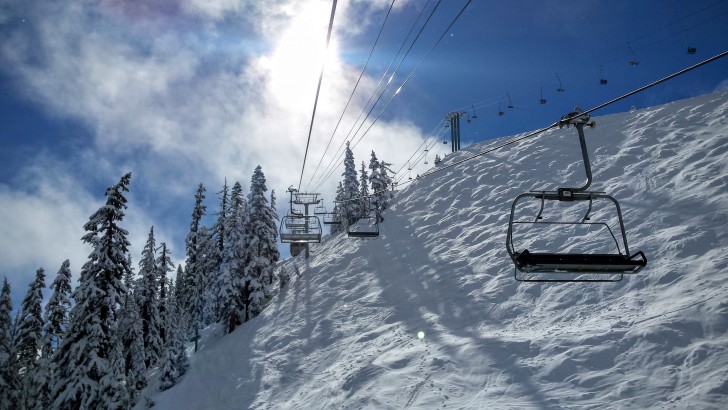
The Great White Express on the frontside of White Pass accesses the area’s steepest terrain.
Credit: John Nelson
[authors_page role=contributor]