


Lightweight Ski Gear Does Double Duty At Resort, Backcountry
Backcountry Skiing May Be An Alternative For Seniors.

Backcountry can be a destination for seniors, especially with new lightweight equipment.
Credit: Paul Foy
It’s getting crowded on the slopes. Lift lines can be agonizingly long, the runs denuded of soft powder. You’re looking over a shoulder trying to avoid getting clobbered by someone else. Is that any way for an older skier to enjoy the sport?
Maybe it’s time to venture into backcountry. Equipment on display at the recent Outdoor Retailer Show in Salt Lake City had plenty of boots that walk naturally and bindings that free the heel for backcountry travel. Skis are easier to turn in many categories and are lighter on the foot.
Nearly every major ski brand is offering equipment that can do double duty at resorts and off-piste. Technology advances (and some lifts) are leading skiers into the wild or the resort’s side country. One problem is that backcountry bindings didn’t always stand up to a more aggressive style of resort skiing on hard snow and in moguls. But that is changing. The new binding systems, like Marker’s Kingpin or Fritschi Diamir’s Viper, are designed to close the gap.
Dynafit has long been the backcountry leader in ski equipment, but others are catching up with beefier versions of its classic pin binding, which allows skiers to naturally flex their legs for cross-country travel.
With its patent expired, Dynafit’s basic design has been widely copied with variations making it safer for less forgiving resort slopes. The company has beefed-up versions of the pin binding for safer boot retention, a critical feature for the hybrid ski category.
Backcountry skiers also need mohair or synthetic climbing skins that stick to the bottom of a ski, giving a skier traction to move uphill or cover distance easy. They peel off quickly for the downhill run.
Alternatively, Voile sells a touring ski that comes with traction scales embedded in the base. The so-called Vector ski glides with a grip on flat or gently rising terrain.
There’s a big safety concern for backcountry travel, addressed by another category of equipment. Anyone venturing deep into mountain wilderness needs avalanche training, a beacon to transmit their position under snow, a probe to find and a shovel to dig out a ski buddy.
First-timers can aim for gentle slopes, away from avalanche zones, or in resort side country cleared of dangers. But navigating backcountry terrain can be tricky. Earlier this winter in Utah, safety experts triggered deep avalanches from hundreds of yards away, just by stomping on their skis.
If you are looking for a new challenge, learning about and gearing up for backcountry skiing might be your next one.

Muck Boots: The Toyota 4-Runner Of Footwear
Rugged, Waterproof Snow Boots E-Z On/Off.
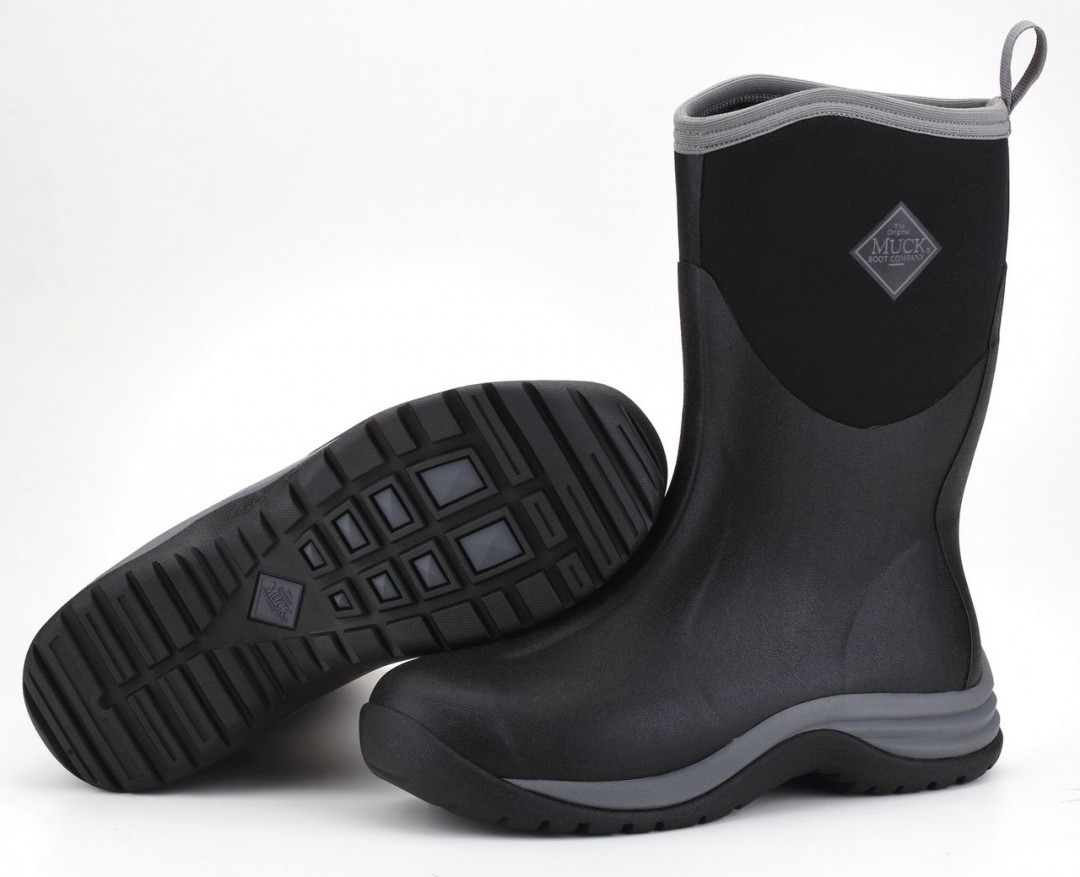
If you know horses, you’ll know what “muck” means. These boots are warm and tough.
Credit: Muck Boots
My wife and I just returned from a pleasant hike in the snow, among cliffs and monoliths; sagebrush and Ponderosa pine. She wore sturdy hiking boots and gaiters. I wore the Muck Boot Arctic Commuter, a high-rise (mid-calf) fleece-lined neoprene boot. They were an ideal choice.
For a hike on snow-covered, uneven, though generally flat terrain, I’d typically wear Sorels or Kamiks—sturdy felt-lined winter boots combining warmth, good traction and protection from a foot of snow. They’ve been my go-to’s for snow shoes.
Muck is a good alternative. I’ve used them to drive to ski areas, especially when snow is really deep in the lot. They accompanied us on a recent ski/road trip to Colorado. In Glenwood Springs, a lovely town not far from Aspen, the town fathers and mothers are snow clearance challenged. Walking from the hotel to one of the multiple excellent eateries requires navigating frozen snow and patches of ice. Muck handles these conditions well. A slightly longer walk to Glenwood’s public hot springs (about a football field in length) was more complicated with a variety of frozen obstacles. Muck was warm, comfortable, and gripped effectively.
The company makes a variety of boot designs for men, women and kids. The Arctic Commuter is listed at $150, although some Web-based “sole searching” may deliver them for less.
I’ve worn them with and without socks. Comfort reigns. The website claims comfort to -40F. I have no intention of testing that one, but I do look forward to using them during mud season. Not a chance water will get inside, and they’ll wash clean with the garden hose. Their material and construction make them the Toyota 4Runner of footwear. They look good and will get anyone wearing them through the elements in comfort and basic style.
This Week In SeniorsSkiing.com (Feb. 12)
At Last, It’s Cold In The East, Poll Results, Resort Reviews and A Ski Hero Profile.
All those hopeful prayers and skyward glances are paying off for the snow businesses on the eastern side of the North America. An arctic air mass followed this week’s innocuous snowstorm, and, for snowmaking from the mid-Atlantic to Maine and Quebec, it’s game on. Contrast the feeling of relief if not ebullience to last week’s dour ski condition report from Bromley and Mad River Glen. And just in time for school vacation week. Single digits upcountry this weekend. Whew.
In fact, we took advantage of the change in weather to sneak away to North Conway, where we are writing this by the side of a roaring fire at the Cranmore Inn.
We have the results of our latest reader poll that asked about our readers’ stretching habits. The results are a bit surprising—perhaps you’d like to comment or interpret. Stimulated by these polls results, in a few weeks we will have a report on stretching and senior skiers; apparently, some folks need some motivation out there. Stay tuned.
San Francisco correspondent Rose Marie Cleese reports on what we feel is a very important event for senior skiers. It’s a Master’s Clinic, held at Dodge Ridge, CA, where seniors get come intimate coaching on their technique, all intended to reduce strain on joints and muscles and to shift the hard work to the skis. We feel this is the kind of event ski areas can hold for their senior clientele. It pays for itself, and everyone benefits. Expect to hear more about low-cost, no-cost senior events on these pages real soon.
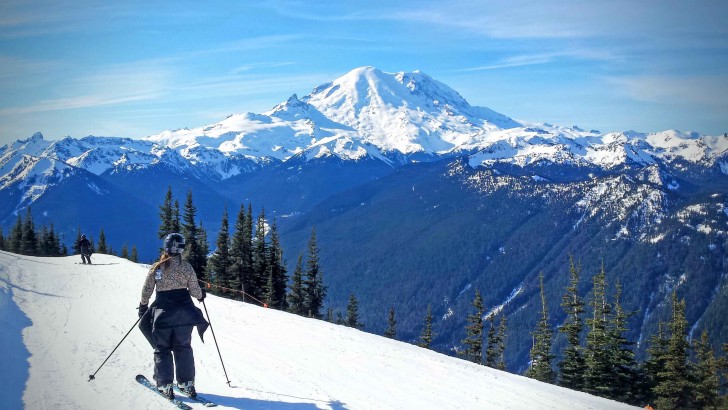
We have two resort reviews this week. Crystal Mountain near Seattle boasts of being the largest resort in Washington. From the pics that John Nelson, our new Pacific Northwest-based contributor submitted, it certainly has the best views of Mt. Rainier. SeniorsSkiing.com’s staff also visited Appleton Farms in Ipswich, MA, describing the magnificent, historic property, ideal for cross-country skiing and snowshoeing. While not a resort, per se, it is a snow enthusiast’s perfect retreat from the humdrum.
Finally, we are honored to have Joan Wallen, president of the North American Snow Journalists Association, Eastern Region, send us the story of New Hampshire’s 90-year-old Bebe Wood who started skiing in the 30s, ski bummed out West in the 50s and has been involved with the sport at all levels to this day. SeniorsSkiing.com loves to salute ski heroes like Bebe and if know of any others, please let us know.
Preview
Next week, we have more Resort Reviews, a look back on America’s biggest cross-country race, held on Washington’s Birthday in Vermont. Alas, it is no more, but some say it put Nordic skiing into play on this side of the Atlantic.
Please respond to our new poll question in the blue box on the right. We want to understand how optimize the FORUM for our readers; it’s the best way for our readers to talk to each other.
Also, we know that our readers are seriously interested in discounts. We are working very hard to bring you some very cool deals. Watch this space.
Tell your friends about SeniorsSkiing.com; there are more of us every day and we aren’t going away.
[authors_page role=contributor]