


A New Killington Village is Born
Killington finally is getting a real base area village center.
In the March 2023 local election, residents of the town of Killington, Vermont, passed the TIF (tax increment financing) zone for a new village at Killington Mountain Resort. It will take up to $47 million and about four years to build infrastructure including a new water system and road reconstruction plus guest facilities including housing, restaurants, and shops, for the planned village project, which has been under discussion for years.
The vote was 75% in favor of the TIF zone at the resort, which occurred due to the coming together of the resort, local businesses and residents to bolster the local economy.
Michael Sneyd, a resort development representative from Great Gulf Group, a firm from Toronto, joined Killington/Pico president and general manager Mike Solimano to present some of the plans to a group of local and regional journalists hosted by the Ski Vermont organization.
The project will take a couple of years to plan, design and sell while the construction is expected to take about four years.
The 4,229-foot Killington is part of Powdr, which also owns such other areas as Mt. Bachelor, Snowbird, Copper Mountain, Silver Star and others. Great Gulf has worked on similar projects at Stratton Mountain and resorts in Canada.
According to the industry trade publication Ski Area Management, it will be called Six Peaks Village, designed to serve skiers, bikers, hikers, golfers, music event attendees, and others in a true four-season center.
Phase 1 of the project would develop a walkable pedestrian avenue and 700 units near what is now Snowshed in the village that Sneyd said would incorporate a “ski beach” concept and be “animated for skiers and nonskiers.” The snowmaking pond would be featured and surrounded by a promenade.
Sneyd said there would be about 110,000 square feet of retail space in the village that will not be limited to Killington resort businesses. The living spaces would be whole ownerships – not fractional – as in many other such resort base areas – and there would be a rental program to be developed for residential owners.
Speaking to the development concept that is being planned Sneyd stated, “This is not a quaint Vermont thing.”
One of the intriguing aspects of the project is that the Snowshed and Ramshead lodges would be reconstructed and joined by a covered bridge spanning over what is currently the Killington Road. The reconstruction of Killington Road includes installation of a multi-use path, sidewalks, pull-offs for buses, and a roundabout at the junction with East Mountain Road to relieve congestion, according to Ski Area Management.
Construction of Phase 1 is set to begin this summer.
The Killington village concept has been on the drawing boards for decades, and it appears that the community finally will have an opportunity to reap the rewards of the project coming to fruition.

Letter to the Editor: Hidden treasure 80+ Northeast Value Pass
To whom it may concern,
Vail’s 80+ Northeast Value Pass for $ 45 (+ $4.95 shipping & handling) is a hidden treasure that is NOT on their website, is basically unknown, is VERY hard to get accurate info about, and ONLY is in effect to the “Northeast” Areas which includes Mid-Atlantic and Ohio!! People on the toll free line insist it does NOT exist…but it does…confirmed by 2 independent Vail employees…
This from an email exchange with Vail: “Since the 80+ Northeast Value pass is a pass that not many people are able to buy (Guests have to be 80 Years old or older to buy), it is only available to purchase by calling our guest services team or by email. It is not a product we advertise for the general public. You may also call our guest services team to have them assist you in buying your 80+ Northeast Value Pass. When calling our number, I will suggest pressing the extension number 4 to get to someone who is located in our Colorado call center. Please note, the 80+ Northeast Value Pass is part of our product line, please don’t let the agents tell you it doesn’t exist, it does. Our guest services phone number is: (970) 754-0005. “
Unclear if this pass will be physical (probably)…or part of the program to put it on cell phones (which I think will be problematic)….I asked…and the answer was mumbo-jumbo…and I don’t really care….so did not follow up. I can get a full season of skiing at Whitetail for less than a senior day ticket….seems wise economics to me!!
The fine print says 10 NON-CONSECUTIVE days at Stowe (my former home town)….I found out that “non consecutive” means: can but need not be consecutive……ie I can ski at Stowe 10 consecutive days or 10 random days during the season…..
David Putnam

Snow Sports Museum in Northern California on Track for Completion
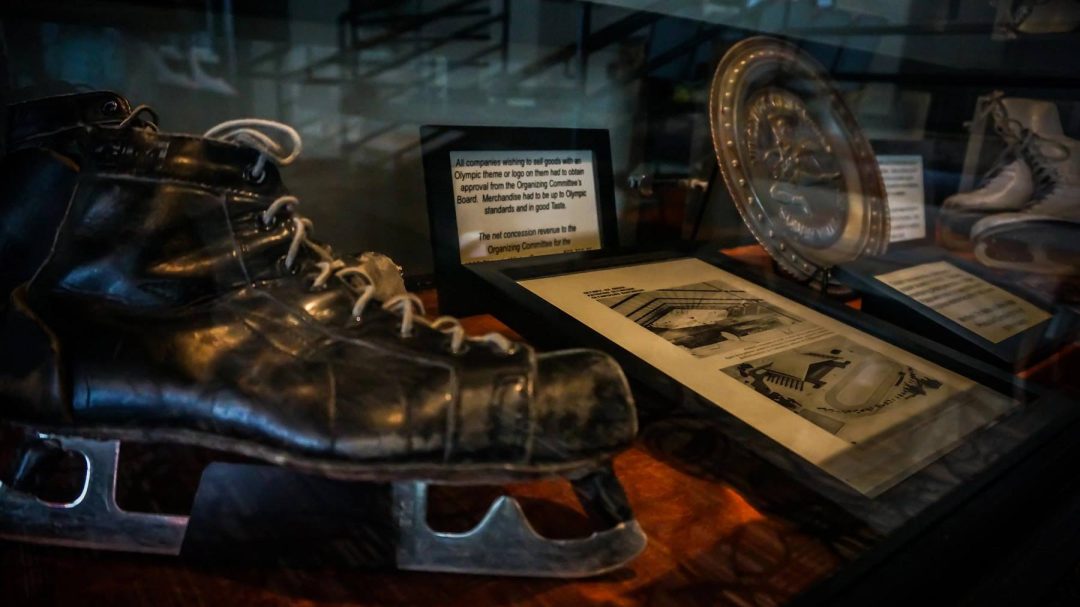
Back in 1955, it took Squaw Valley co-founder Alex Cushing, just six months to nail down his Northern California ski resort near Lake Tahoe as the site of the 1960 Winter Olympic Games. The building of the museum that will preserve the history of the games along with the broader history of Sierra Nevada winter sports is taking far longer.
By the time the SNOW Sports Museum opens its doors in 2026 or 2027, it will have been two decades since the formation of the official non-profit foundation to create the museum, and close to seven decades since the 1960 Winter Games.
Just so you know – SNOW is an acronym for Sierra Nevada Olympic & Winter.
Longtime local resident and travel writer Eddy Ancinas, now 86, says there was support for a museum ever since the 1960 games. He has been involved since the beginning and currently serves as vice president of the board of the SNOW Sports Museum Foundation.
The closest that came to happening was the Auburn Ski Clubs’ Western Ski Sport Museum, which opened in 1969 and fastidiously tended by legendary ski historian and snow sports journalist Bill Berry.
Located on Donner Summit near the base of Boreal Ridge ski area, it is filled with memorabilia and histories of skiing in western North America – especially California and Nevada—from the Gold Rush to the era of ski clubs and the advent of ski jumping. It also includes some 1960 Olympics memorabilia, and is expected to stay open even when the larger, grander, more modern new museum opens nearby.
The longtime Olympic Museum at High Camp at what is now Palisades Tahoe has closed, and it is expected that its collection will be absorbed into the new museum. Says Ancinas, “Russell Poulsen [son of the late Wayne Poulsen, co-founder with Cushing of Squaw Valley, now Palisades] was the impetus behind the new museum. He was the one who rustled us all together in the early 2000s with the help of Bill Clark, executive director of the Auburn Ski Club.”
In 2008, two years before the 50th anniversary of the 1960 Winter Olympics, the Squaw Valley Ski Museum Foundation was formed, to find a site and develop a program that would tell the Olympic story and also the history of Sierra and Western winter sports. Since then, it has worked nonstop to launch capital campaigns, host galas, search for an ideal site, navigate the tangle of permits and environmental reviews, and deal with non-receptive government officials.
Recently, with the strong support of a newly elected local government, the foundation found a site, completed the environmental requirements, and hopes to break ground in 2024.
The foundation will lease approximately an acre of land from Olympic Valley Park (formerly Squaw Valley Park) just off State Route 89 and close to the Olympic Valley Entrance, where the original Tower of Nations and Olympic cauldron still stand and welcome visitors.
Plans are to build an 80,000-sqaure-foot, two-story structure to house its collections of ski memorabilia.
According to current foundation president, David Antonucci, 72, a civil environmental engineer and author of several books on Lake Tahoe and the 1960 Winter Olympics, three collections will form the core of the museum’s memorabilia:
- the private collection of the Batiste family,
- Palisade Tahoe’s collection, currently on display at the resort’s High Camp, and
- the 10th Mountain Division memorabilia collection.
The contents of The Museum of Sierra Ski History and the 1960 Olympics, currently on display in the Boatworks Mall in Tahoe City, also will move to the new museum.
This museum was opened in 2011 by Antonucci and fellow board member Stan Batiste and includes memorabilia and artifacts from the Auburn Ski Club Museum, the Squaw Valley and Lake Tahoe Ski Clubs, and the Sugar Bowl ski area. Antonucci encourages anyone with Sierra Nevada or 1960 Olympics ski memorabilia to contact the foundation if they have anything to donate.
Eddy Ancinas emphasizes how important this new museum will be to the region and the state.
“I grew up in the Sierra Nevada, as did my father and grandfather, so I’ve lived much of the history the SNOW Sports Museum intends to preserve. The 1960 Olympics were like no other Olympics in the past, present, or future, yet Olympic Valley is the only Winter Olympic site in the world without a museum to commemorate those seminal events.
“Equally amazing are the stories and events that took place in the northwestern Sierra during the final days of the Gold Rush, when men and women in mountain communities traveled in winter on longboard skis—an activity that eventually led to competitions. A museum dedicated to the legacy of the Winter Olympics and California and Nevada’s unique mountain history is long overdue.”
Antonucci agrees, saying, “The SNOW Sports Museum will finally bring to life the compelling story of the 1960 Winter Olympics—the Winter Olympics that changed it all.”
To contact the foundation for more information or inquire about making a monetary or memorabilia donation, go to thesnowmuseum.org.
[authors_page role=contributor]