


Can’t We Stop the Fast & Dangerous Skiers/Riders?
Your Support Helps!
Help us keep SeniorsSkiing.com free. Please support SeniorsSkiing.com with a donation.
Source: #RideAnotherDay
In the past couple days many of you have read about two skiing tragedies: one affected multiple lives (a 5-yr old girl who was killed by an out-of-control skier), and the family she leaves behind, plus the alleged “killer,” a 40-yr old skier who has been charged by French authorities with manslaughter. As always would love to hear your thoughts and ideas about this.
The above is horrifying to all of us, and a true example of the most disturbing trend I’ve noticed over 30+ years: an explosion in reckless skiing and riding. As a ski instructor I see this ALL the time, and I’m always wary of super fast skiers/riders, particularly when I’m teaching, because then I’ve got real people with me for whom I feel incredible responsibility to keep safe.
Clearly something should be done about this epidemic on our slopes. But what?
First, I’ve made it a point to start reporting instances of too-fast, or out-of-control skiers/riders. I’ll report occurrences to either “courtesy” patrol or ski patrol, and also ask them “why don’t you position staff on green and blue runs which attract too-fast skiers, and move them off under a threat of getting their ticket pulled”? If patrollers hear this frequently, they’ll do something – they’re first responders.

On trail signage at Park City Mountain Resort Photo: Jon Weisberg
Second, whether I’m in a lesson teaching kids/adults, or simply free skiing myself, I take great care to constantly look uphill before starting down, to see whether or not I’ve got clearance for my next 15-30 seconds of turns. And I’ll always wait the extra time to let fast people go by me.
In a lesson, I’ll make sure to place myself in a constantly turning series of arcs that place me between my students and faster skiers above. I can still observe them do a skiing task, and yes, it’s risky for me, but I believe the combination of my turning back and forth, along with my students immediately below me, makes that section of trail unappealing to super-fast skiers.
It’s sad ski areas don’t do more to police the trails. But they don’t need to…by law. If you read the all-encompassing “waiver of liability” contained on the backs of all day ski tickets, and included as a mandatory item to read and e-sign before you’re allowed to purchase tickets/passes online, ski areas in general have zero liability for bad things that happen on their hills…it’s all part of the inherent risk of skiing.
For me, I’ve got to TELL ski area courtesy patrol, ski patrol or management when I experience a dangerous situation, especially on green/blue terrain where there’s the expectation that skier proficiency is lower; therefore the speed of guests on that terrain should be lower! If we don’t tell responsible ski area people about dangers we witness, then we shouldn’t expect anyone to take reasonable actions. It’s up to all of us, because no one wants to hear about an innocent skier or rider being killed by an out-of-control skier – but’s it’s happening.
BEHIND THE SCENES WITH CCSAA
Your Support Helps!
Help us keep SeniorsSkiing.com free. Please support SeniorsSkiing.com with a donation.
I recently was part of a conference call of U.S. and Canadian cross country ski area operators. The conversation touched on who our guests are, their wants and their needs; whether we’re in a growing business (short and joyful answer: yes!); and what we need to do to create new skiers and to retain past visitors. The questions are all part of the normal agenda at these monthly meetings; they’re survival matters in our industry.
On the call were Board Members of Cross Country Ski Areas Association (CCSAA, usually pronounced “Kssaa”), an unassuming but extremely effective force in the Nordic ski world in North America. It’s a familiar name among Nordic area operators and suppliers; less so among the several hundred Nordic clubs with groomed trails; and an enigmatic acronym to most retailers.
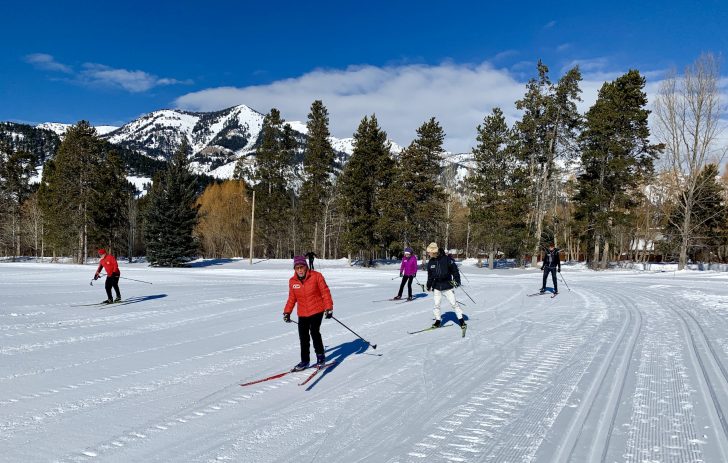
Group Lesson Source: Jackson Hole Nordic
As for the skiing public, about the only folks who know about CCSAA have learned of it through the logo on its exceptionally useful consumer website, https://xcski.org, which provides information on why, where, etc. to enjoy XC skiing. If you have any interest in XC, take a look at the site – it’s incredibly informative about the value of groomed trails, benefits of instruction, spotlights on XC areas and regions, etc.
That unfamiliarity is ironic but not surprising when you consider that CCSAA is a trade organization that promotes the sport but historically hasn’t tried to promote itself to the public. At the same time, it not only represents the entire recreational side of the Nordic industry (including ski publications and organizations) but generates and serves as a resource for much of the media coverage of cross country skiing.

Reese Brown, Executive Director, Cross Country Ski Areas Association.
CCSAA’s Executive Director is 62-year-old Reese Brown, a vigorous and versatile leader who has given the organization a more recognizable face and name in the industry at in-person meetings, frequent Zoom calls that discuss implications of the COVID era, and bi-weekly newsletters. Most of CCSAA’s Board are in their 50s and 60s, with, literally, decades of experience in a challenging industry.
For XC skiers, CCSAA’s accomplishments are pervasive but often may seem subtle or even mundane. Examples include helping persuade major snowcat manufacturers to explore Nordic markets; working with insurance companies to provide liability coverage at reasonable premiums (otherwise your trail pass would cost many times the current rate); and negotiating with the U.S. Forest Service to grant multi-year use permits.
CCSAA has developed a consistent signage system so skiers understand what direction to ski in; whether

CCSAA trail signage
skating/snowshoeing/fatbiking/walking is allowed on certain trails; what difficulty rating suits you best, etc. There’s also a defined way to measure trail length (sometimes called “non-repeat kilometers”). This approach may seem self-evident, but years ago some managers measured two-way routes in both directions. In one instance, a trail “network” advertised 30+ kilometers for a single non-repeat two-way 6-kilometer trail.
New in the CCSAA repertoire is primary-level consumer, retailer, and operational research, so we’re able to determine what’s growing, shrinking, or has plateaued. Knowing that you’re in a healthy business not only encourages improved services and facilities but may also enable XC areas (for example) to find new investors or loans, community partners, event sponsors, and media coverage.
So next time you’re out on the XC trails, smile at the signage, enjoy the grooming, and recognize that CCSAA may also be responsible for sensible COVID policies, inexpensive trail passes, and your use of public lands.

Breezy Days Skiing the Ice Coast: Don Burch’s Newest Video
Your Support Helps!
Help us keep SeniorsSkiing.com free. Please support SeniorsSkiing.com with a donation.
FINALLY, the East Coast got hammered. Although this newest addition to the Don Burch ski video canon was produced before the big storm, everything about it – color, sound, scenes – expresses its title: Breezy Days Skiing the Ice Coast.
[authors_page role=contributor]