


The Skiing Weatherman-January 21, 2022
East stays stormy…snow returns to the West
As we approach the approximate halfway point in the skiing/riding season, the slopes in all regions of the U.S. and adjacent to Canada are in good condition, with the western half of the continent still benefitting from the astounding amounts of snow that fell in late December. This season got off to a roaring start in the West and a sluggish one in the East, but the jet stream pattern that delivers cold and storms has favored the Midwest and East for a couple of weeks now. A western ridge/eastern trough couplet has dominated, and that setup will remain in place much of the time for the rest of this month. In early February, a subtle change will lead to a turn to milder weather in the East. If we look at the jet stream map as this forecast gets underway, we see strong ridging that stretches up to Alaska where the clockwise flow around that ridge can tap deep cold air over northern Canada.
In that position, the ridge is far enough west to allow small packages of jet energy to slide down its eastern flank and bring some snow to the inland ranges of West. Not major snow, due to the lack of a direct tap into Pacific moisture, but after lots of bluebird days of late any new snow is very welcome. The coastal ranges from B.C. down through California will be kept rather dry by the eastern flank of the large upper ridge sitting offshore. The jet level flow along the coast is nearly northerly right now, so the disturbances will be able to dive all the way to the Mexican border, which would bring the resorts south of I-70 some light snow this weekend…the fast movement will limit the input of Pacific moisture, but the “freshies” will do a nice job of softening the surfaces a bit.
As has been the case for the past couple of weeks, the real forecast challenges will come over the eastern half of the country, where the interaction of the northern and southern branches of the jet stream determine the track and intensity of surface storms. In the Rockies, the track of the storm determines who get heavy snow and who gets light snow. In the Midwest and East, it determines much more, with sleet, freezing rain, and plain rain often part of the landscape. If we look at the Monday morning 1/24 jet stream, we can see a good example of the forecast challenge.

The systems that swings through the Southwest is headed out to the southern Plains, where it could join forces with northern stream energy moving into Minnesota. If they phase into one larger trough, another substantial winter storm would impact the Midwest and East. Just where the two branches of the jet combine will determine whether the surface low goes up west of the Appalachians, just east of the mountains and along the coast, or it stays off to the south. All three have vastly different outcomes in terms of “who gets what”. Right now, I favor the two streams staying separate with light snow in the Lakes and Northeast. This busy pattern will persist until the trough eases west at the end of the month, perhaps supporting a “cutter” low into the Lakes at that time.
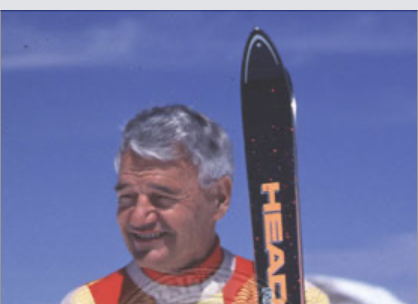
Meet 96-Year-Old Ski Legend: Junior Bounous
Ski industry icon Junior Bounous, 96, is a mover and shaker whose passion is to keep people skiing throughout their lives. In a nutshell, he tells seniors: Just “keep moving.”
Junior’s career spans nearly eight decades with a list of accomplishments and awards longer than both my arms: Intermountain cross country and national gelande jumping champion, national race course setter, ski patroller, founding member of Professional Ski Instructors of America, father of today’s American Ski Teaching System, an advisor to ski manufacturers, a ski trail designer for resorts, and the director of skiing in California and Utah including Sundance and Snowbird. In 1996, he was inducted into the National Ski Hall of Fame.

Snowbird’s Pipeline
Junior takes his own “keep moving” advice. To celebrate his 80th birthday he skied Snowbird’s treacherous Pipeline chute, a couloir lined with jagged rocks and with no room for error.
And he keeps on moving. On a bright spring day in 2021, he heli-skied from the 11,489’ Twin Peak summit, the highest point in the Little Cottonwood Canyon range, making him — at 95 years and 244 days — the Guinness World Records’ oldest heli-skier. Getting out of the helicopter was difficult because his knees don’t bend as well as they used to. “The skiing was the easy part,” he said.
Follow the legend
A role model for seniors, Junior continues to ski for the joy of it.
A few days ago my senior ski friend Beth Tait was skiing at Alta when she saw a yellow helmet. Junior always wears a yellow helmet. As she got closer, she saw it really was Junior. He was talking with skiers around him, and she joined in. Later, Beth followed him, trying to ski as smoothly and fluidly as the 96-year-old. “Junior is an incredibly athletic skier not to mention his heartwarming personality,” she said.
From barrel staves and manure piles to Alta and Snowbird
Junior was the youngest of six children in an Italian farming family in Provo, Utah. His first ski experience was on the farm at age 8 when he attached barrel staves to his feet and skied down a slope trying to miss the manure piles at the bottom.

Alf Engen (l) and Junior Bounous Source: J.Willard Marriott Digital Library
Fast forward to 1948, when, at age 22, he became one of the first certified instructors in Utah, and he began a long-lasting relationship with his cherished mentor, Alf Engen. For the next 10 years, Bounous was Engen’s primary assistant in Alta’s Alf Engen Ski School known worldwide for teaching students how to ski powder. His skiing and teaching careers kept accelerating.
When Snowbird was on the drawing board, founder Dick Bass recruited Junior to lay out the trails, and when it opened in 1971, he became its Ski School Director inspiring generations of skiers.
Junior’s top tips for Seniors

It’s a bird, it’s a plane, it’s Junior in the air in 1957. Photo credit: Harriet Wallis
Balance and coordination are major factors for senior skiers. “Older people have trouble with their eyes and ears, but you can extend the life of both senses if you practice,” he said.
He advises cross training. “Stay active. Do not confine yourself to just skiing. Play golf, ride a bike, take a walk. Do whatever you enjoy – but do it. It will help you get out of the bathtub, get out of the car, and go up the stairs.”
He also recommends improving balance by skiing slightly different terrain and snow conditions. Don’t get stuck skiing only on bluebird days or just on your favorite trails. “It boils down to just doing it. Stay active in as many ways as possible,” he said.
Take Junior’s advice: Just do it.
However, “Many older people drop out because they no longer have anyone to ski with. They’re physically capable, but they’ve lost the social fun of skiing. Find somebody to ski with,” he said.
Help Us Compile SeniorSkiing.com’s list of senior ski groups
To help seniors find someone to ski with, SeniorsSkiing is starting a list of senior ski groups around the country. If you know of a senior ski group, please use Leave a Reply at the end of this story. Include as much information as possible about the group.

A Day With Kathy Brennan, New CEO, PSIA-East
Kathy Brennan, new CEO, PSIA-East, at Seven Springs, PA
I recently skied with Kathy Brennan, the new CEO of PSIA -E (Professional Ski Instructors of America- Eastern Division). Kathy has an impressive background in the snow sports industry and is currently on staff at Waterville Valley, New Hampshire. She has been touring areas in her division which extends from Maine to North Carolina.
An accomplished skier and excellent teacher, Kathy did something at the beginning of our session suggesting how she‘ll function in her new role: She asked everyone for feedback on how to make PSIA better, any suggestions or comments on the organization and, in short, what she could do to improve the organization’s mission of being an education platform.
She received numerous comments and suggestions. I asked what PSIA was doing to retain older instructors. She said we never stop learning even after seniors are long past their certification exams.
She also explained that she’s dedicated to assuring that PSIA partners effectively with areas, suppliers, patrol, race programs, and the industry, in general. Educational programs can be utilized by any member, especially seniors who want to stay in the game and improve their skiing and teaching abilities. In her words, PSIA has changed from a “pin chasing” entity to an organization dedicated to providing programs for skiers and boarders of all ages. She’s meeting with area management to educate them on the value of the organization and how its current direction will lead to better instructor education, better lesson quality, and greater customer satisfaction. This approach also will help areas retain good quality certified instructors.
Our conversations were held on chairlifts. On the snow, she gave us – skiers, tele-skiers, and snowboarders – a clinic. Her emphasis, common to the three approaches: balance,rotary movement, edging, and pressure control.
I’m retired from ski teaching but maintain my membership in PSIA with the goal of learning something new every year.
Kathy’s goal is to unite the entities in the ski industry and to make them aware of the value of what PSIA brings to the table. From my time with her at Seven Springs, I’m confident she’ll have great success.
[authors_page role=contributor]