


The Skiing Weatherman-October 15, 2021
A bit of a false start…
In the past week, some significant early season snow has fallen over portions of the western U.S. and far western Canada. The season is off and running…at least for now…as Wolf Creek Pass in southern Colorado will open this weekend with limited terrain. I wish I could say that it is a sustainable plan going forward, but unfortunately, the weather pattern that brought the early snow is breaking down and not locking in. Here is a look at the jet stream pattern that lead to much of the western snow earlier this week…
On this map from Tuesday morning, the dark blue feature in the west is a deep upper level trough where cold air pooled after travelling south from Canada. The counter clockwise flow around the center of circulation over northern Arizona dragged the cold air southward and mixed it with moisture pulled off the Pacific to provide the ingredients for Wolf Creek’s snow. The high elevation of the ski area (10,000+ feet) in the San Juan Mountains helped, too. The result was 14 inches of snow…enough for the groomers to work with so some early turns will be possible this weekend. The other notable feature on the map is the strong ridge that covers much of the eastern half of the continent. Ridges are warm and late September and the first half of October have been a classic case of “endless summer” east of the Mississippi. Heck, I haven’t even heard of any frost yet, let alone snowflakes.
The pattern is going to change this weekend, however. First, it is going to become more progressive. That is, the troughs and ridges will be moving along across the continent. For the most part, the jet stream has been in a stagnant mode for the past several weeks. I would love to tell you that the ridge is going to break down and go away, but unfortunately, it is going to migrate northward in Canada. That will allow troughs to cut underneath it and move across the U.S., with each trough bringing along a shot of cooler…not colder…air with it. When the troughs pass through the West, the air will be chilly enough for high elevation resorts to pick up some additional snowfall, but the air masses just won’t be cold enough to generate snow or snowmaking temps further east. And that is where the position of the migratory ridge becomes important. As I indicated earlier, ridges support warmer air masses, and with warm anomalies headed for central and northern Canada, the process of stockpiling early season cold will become more difficult to start. This map of 5,000 foot temperature anomalies, valid on the 24th, illustrates this issue.

The temperatures at 5,000 feet are an effective proxy for surface temperatures in the forecasting world, and you can plainly see that Canada is projected to be blanketed with (relatively) warm air later this month. You can also see a cool swath over the East where a trough will be passing through, but again, it won’t be cold enough to jump start the season. This is not a long term issue, though. We just have to give the increasingly longer nights a chance to cool things down in the prime source region for U.S. cold and we will be starting the process from a warmer baseline this season. I am still bullish on November, based on analog years I have identified. I will delve into those in my next installment. Until then, patience is a virtue.
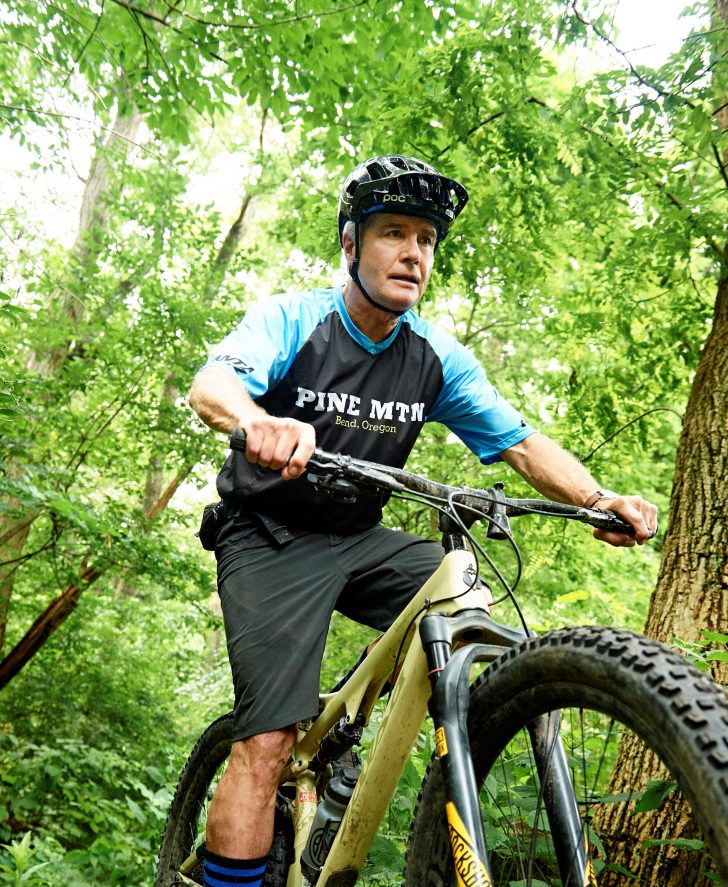
How Mountain Biking Improves My Skiing
Pat McCloskey training for ski season. Picture: Becky Thurner, Thurner Photography, Pittsburgh, Pa
There are many similarities between mountain biking and skiing aside from the fact that both sports engage the same type of people. I love to mountain bike, but I use it primarily as an exercise to keep me in shape for skiing. I don’t take any chances. I ride to ride another day. But it is good exercise and keeps your skiing skills sharp in the off season. Consider the following:
- Look Ahead – As in skiing, if you focus on the tips or your front tire, you’ll reduce the amount of reaction time needed to make any last minute changes. You are way better off concentrating on what is down the trail by looking ahead. This way, you have plenty of time to make adjustments and won’t get caught off guard by changes in terrain. Just like skiing, look ahead not at your front tire.

Focus on the trail ahead. Picture: Pat McCloskey
- Tire selection – I tend to like a more knobby tire to handle all kinds of different terrain. Here in Western Pennsylvania and West Virginia, we have many rocks and roots which tend to become slick when the weather turns ugly. A good tire with a good rubber compound and an aggressive tread pattern can be ridden all year long. The important thing is to make sure there is an adequate knobby pattern on the edges of the tire to help with cornering in slick conditions. As with good ski edges, if you have a good tire edge pattern, you can lean the bike over in the turns…similar to carving on the slopes.
- Body position – Utilize body position on the bike to face the new turn, keeping your outside pedal weighted just like you would do with the outside ski during an aggressive GS turn.
- Terrain selection – Just like in skiing, selection of terrain and line is important on a mountain bike. When looking ahead, you can quickly see your line and make your way over and through rough terrain. Momentum is your friend and the shocks will soften the blow of rugged trails. Be aggressive but always be safe. At our age, no need to be a hero. Look ahead and select a good line just like you would on a pair of skis.
Mountain biking is great aerobic exercise as well which is important in skiing. If you’re in good aerobic shape and your legs are strong from riding, you’ll enjoy your ski season all the more. Ride to ride another day, get in shape, and be ready for the season to come.
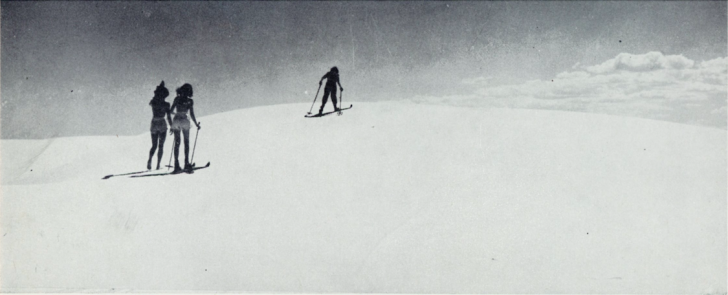
Test Your Skiing Knowledge
Where are these skiers? Source: New Mexicao Ski Museum
Each issue of SeniorsSkiing.com has a picture to help test your skiing knowledge. The pictures are from collections in a variety of participating ski museums, which we encourage you to visit and to support.
This image was submitted by New Mexico Ski Hall of Fame and New Mexico Ski Museum, located outside Albuquerque, at the base of the Sandia Peak Aerial Tramway. The museum collects, preserves and displays items connected with and/or celebrating the history of snow skiing in New Mexico. The Ski Hall of Fame celebrates individuals who have contributed substantially to the development of skiing and snowboarding in the state.
It is open daily year-round, and admission is free.
Where in New Mexico are the skiers in this picture? The first person to identify the correct location (email jon@seniorsskiing.com) will receive a copy of Arcadia Publishing’s book, Skiing in New Mexico.
The correct answer and the name of the winner will appear in the next issue of SeniorsSkiing.com.
The winner of the last Test Your Skiing Knowledge (a few others had the correct answer, but were not the first to submit it) is George Treisbach of Harrisburg, Pa and Copper Mt, Co. He identified author Arthur Conan Doyle, creator of Sherlock Holmes. Congratulation for this mystery well-solved, George. Enjoy the membership we purchased for you to The New England Ski Museum.
[authors_page role=contributor]