


Skiing Weatherman: Here Comes The Snow!
The Weather Worm Is Turning, Especially In The East.
If the optimist in all of us considers November 1 the start of the winter sports season, then the first month of this season was a dud in the eastern half of the country. Cold air masses were infrequent visitors, and natural snow was even harder to find.
A persistent jet stream pattern brought early snow to the West while the East was stuck in mid-autumn weather much of the month. A western trough/eastern ridge couplet was common and kept any early winter weather bottled up over the West, especially in the Northwest, closer to the source of cold air. The ridge kept it unseasonably mild in the Midwest and East, with only passing chunks of cold air that supported brief snowmaking windows.
Well, the weather worm has turned, and it is now the eastern half of the country where an upper trough is promoting cold and snow while the West sits under a strong, quiet, ridge. Now, the air across Canada is milder than normal pretty much from coast to coast, but as it flows into the lower 48, it is just cold enough to lead to snowfall. Much of Ohio as well as western New York and far western Pennsylvania got tagged with a moderate snowfall early this week. Another storm will be on the weather maps this weekend. Because the axis of the upper trough that supports it will be further east than it was several days ago, the track of the surface storm will also be displaced eastward to the coast where it can tap deep moisture as it tracks toward southeastern New England.
Here is a look at how the jet stream will look early Saturday.
The axis is just east of the Appalachians and a surface storm that forms along the mid-Atlantic coast will be ushered up toward southeastern New England, a nice track for snow for the mountains of the Northeast. Cold air will be limited with this storm so elevation will play a big role in the battle of snow vs. rain.
If all the pieces come together, this storm has the potential to produce moderate to heavy amounts from the Catskills and Adirondacks through the mountains of western and northern New England. In addition, sufficiently cold air will move in behind the storm to allow productive snowmaking in the Upper Midwest and Northeast early next week. Full disclosure: If the northern and southern branches of the jet don’t work together to form the system you see on the map, then the storm will be a dud. But I am an optimist; first turns look plausible next week!!!
Looking further down the road, it looks like the eastern trough will dominate for about two weeks and additional opportunities for snow will develop. After that, the pattern is likely to revert to the western ridge/eastern trough combo, which is more favored in La Nina winters like this one.
Here are the regional details:
Northwest U.S./Western Canada: A storm will try to dent the ridge late this weekend/early next week and lead to high elevation snow from Washington into B.C. Better pattern evolves mid-month.
Sierra: Dry for at least the next week; pattern change mid-month is next good chance at snow.
Rockies: The upper ridge keeps it dry for the next week. This region will also be waiting for the western ridge to break down.
Midwest: Seasonably cold for the next week and likely longer. Decent snowmaking temps most nights. Alberta Clipper systems will bring light snow every few days.
Northeast/QB: Favorable pattern for snow and snowmaking temps for next 12-14 days. Potential for significant mountain snow this weekend. Pattern change to milder
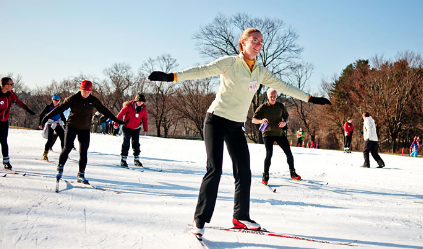
Make More Tracks: Tips For Getting Started In XC Skiing
This Might Be The Season To Get On Skinny Skis.
[Editor Note: This article first appeared in XCSkiResorts.com.]

XC in Mammoth Lakes, CA. Beautiful vistas are included free of charge.
Getting outdoors, going at your own pace, enjoying and sharing an outing with a friend or family member of any age, and getting some winter exercise are all good reasons for older folks to try XC skiing. You can have a purpose (fitness or reaching a destination) or a goal (getting out a few times a week, or attaining a number of times on skis a year) with your XC skiing. The sport is known to provide a level of calorie burning but it also is very helpful to combat various ailments including mental health such as depression and anxiety.
Tips for alpine skiers to have a positive introduction to XC skiing include:
- Go to a XC ski area with machine groomed trails (packed with tracks) for a consistent trail condition and introduction to XC. Refrain from starting to XC at the local park, trail, or golf course in your neighborhood.
- Use good light weight rental equipment. Boots should be comfortable and skis should allow good balance. Make sure it is not old equipment because the new gear makes it easier.
- Get a few clinics or lessons from a professional instructor. Don’t expect a friend or relative to know how to teach you how to XC ski. Basic skills include weighting one ski at a time, good body position, making the skis glide, and controlling speed when going downhill. They’ll also show you how to hold the poles correctly if the grips have straps which makes a big difference.
- Dress in layers with a synthetic base layer (underwear top and bottom), light gloves (not alpine ski gloves because they are too hot), shirt and overpants, light jacket (not alpine ski jacket and pants). Bring a bottle of water, headband, heavier gloves, etc.
- Go for a ski tour or outing less than 10 kilometers (5 miles) on a nice day (sunny and not too cold), which should be less than 2 hours.
There are some major differences between XC skiing and downhill skiing that include:
Skis are much narrower and the boots offer much less support compared to alpine skis. This requires more reliance on balance and weighting the skis rather than leaning on a big plastic ski boot.

The clothing issues are also significantly different as noted in the above tips. XC skiing creates heat for the skier and you don’t go as fast so there is less wind involved that makes you feel cold. You also do not sit on the chair lift, so less insulation is needed.
Take a lesson from a pro. Here’s balance practice. Credit: Weston Ski Track
On downhills, XC skis require an even weighting technique when snow plowing and it is recommended that you dominate the skis by making sure that weight is distributed to both your heel and the front of your foot. Rolling the ankles inward really helps to push the skis out in the snow plow (weighting the central part of the ski) so it slows down and allows control. Flimsy XC ski boots makes this more difficult but stiff boot should give more control. Twist the boot sole to compare the stiffness of different pairs of boots. On XC skis it is possible to go faster and out of control. In untracked snow you can burrow into soft snow and fall forward if too much weight is on the toes when snow plowing.
Longer poles have a different purpose in XC skiing as they should provide about 20 percent of forward momentum and are more than a turning cue as in alpine skiing except when you are turning the skis while going down hill.
The best suggestion is to avoid overdoing it—bring some chocolate treats, take in nature and winter scenery, and make it about more than skiing, and it can give you a quality experience and great memories.
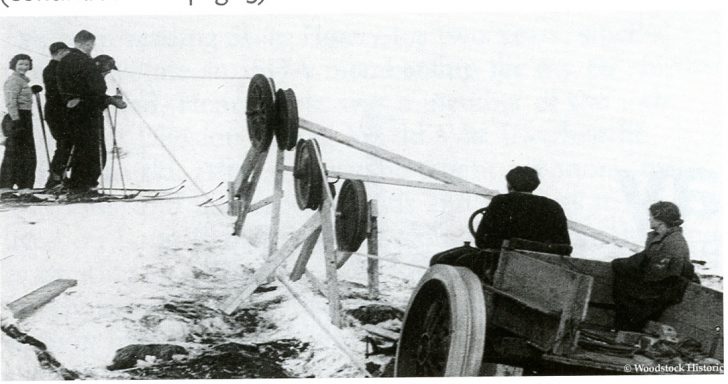
Mystery Glimpse: Where And When?
This Is An Oldie.
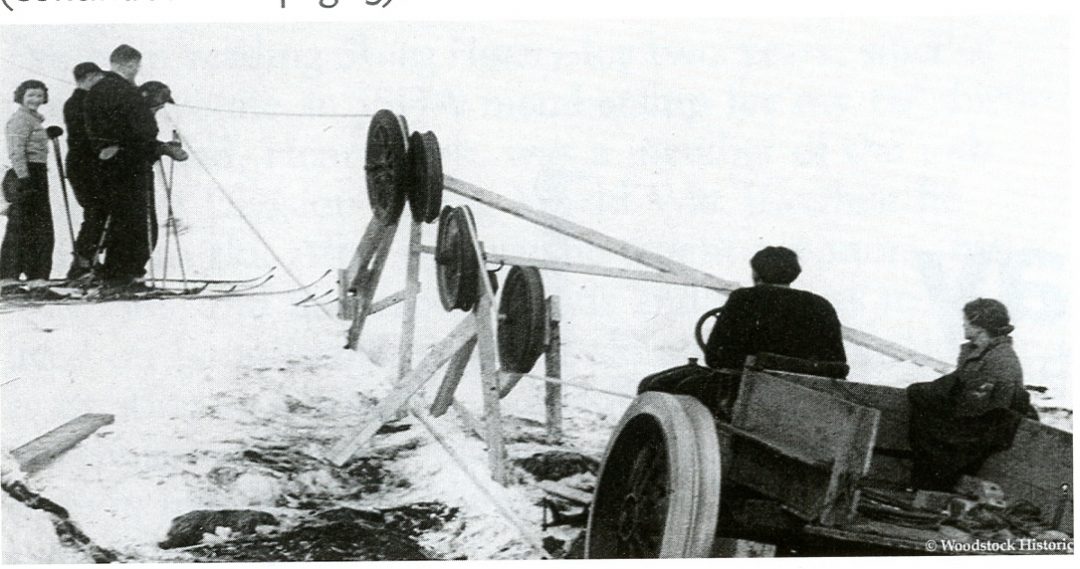
Can you identify where this rope tow was and when? If you can, write your comment in Leave A Reply below.
Many thanks to Ski History magazine for this picture. Ski History magazine is the publication of the International Ski History Association. Find out more about ISHA by clicking here.
Last Week

Bjorn before the start of an American Birkebeiner, 2009. Credit: FastSkier.com
In keeping with last week’s Make More Tracks theme, we posted a picture of the GOAT of Nordic racing.
And he is Bjorn Daehlie, the Norwegian Nordic skier who has won more total Olympic and gold medals than any other cross-country skier, making him the greatest Nordic competitor of all time.
Bjorn is reported to have one of the highest VO2 max scores for endurance athletes in all sports. The maximum rate of Oxygen (O2) consumption by the body during exercise is the criterion measure of aerobic endurance fitness. Dahlie’s VO2 max has been recorded as high 96 ml/kg/min in the 1990s. That’s more than twice the VO2 max for his most likely competitors, 20-29 year old males in excellent condition.
A back injury forced Dahlie into retirement in 2001. Since then, he has become a successful businessman in real estate and fashion. Dæhlie also invented the Salomon Nordic System Pilot Bindings. His ski clothing is offered in a variety of outlets. Click here for the Bjorn Dahlie line at REI.
What’s curious is Bjorn is a national hero in Norway, an astronomic legend in cross-country circles, yet virtually unknown to North American skiers.

Bjorn Dahlie showing his stride.
[authors_page role=contributor]