

Utah Preview: What You Can Expect
Key Take-Away: Know Before You Go.
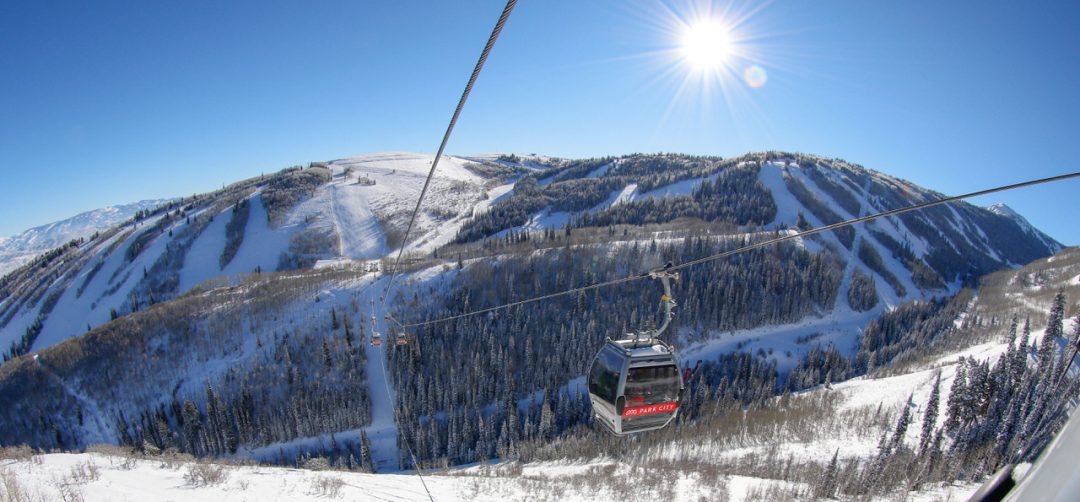
You can reserve for seven days between Dec. 8 and April 4 at Park City.
Credit: Park City
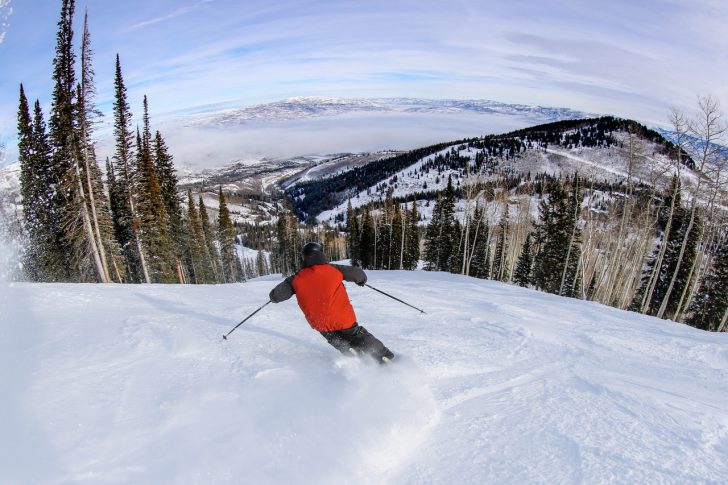
In these uncertain times, one thing is sure: Utah powder. As of this writing (mid-November), several Utah resorts had bases of two feet or more. Here are some updates of what you will see at Utah ski areas this winter.
In Little Cottonwood Canyon, Alta is limiting the number of parking spaces, on a first-come, first-served basis, no reservations. By contrast, Snowbird requires parking reservations, made online. In both canyons, buses have limited capacity to 20 vs. the usual 60 meaning longer waits at the stops, but UTA, the free, public bus service, plans to run nine buses it had planned to retire.
At Alta if the resort is full, you can ski if you took the bus or are staying there. Only the lodge bars are open and for guests only; check with Snow Pine Lodge. In Big Cottonwood Canyon, Solitude has pay-for-parking, and Brighton is limiting skiers based on parking. At Brighton, IKON pass holders will have to make a reservation.
Snowbasin near Ogden will essentially turn inside out. It has a ticketing yurt for faster pass pick up; rented several executive bathrooms to be placed throughout the resort; built three slopeside “food trucks”—cheese fries and burgers anyone? It has built a trail to ski right to the parking lot vs. riding the shuttle. Bus users will have a baggage check next to the stop. Parents and kids can duck in and out of a yurt village mid-mountain to warm up. You can ride the gondola alone.

Dreamcatcher at The Canyons. Plenty of snow already for the new season.
Park City has developed a reservation system for every day of the season. Starting Nov. 6 you can reserve up to seven days for the core Dec. 8-April 4 season. Up to Dec. 7 the mountain is reserved for Epic pass holders only. All tickets will be sold online. Apres-ski? Head to downtown Park City.
Booting up in the car? Powder Mountain Resort skiers are used to it. The main lodge now has sit-down dining with reservations only. The Powder Keg is closed, but still has take-out for beer and ramen. There will be “pop up specials” at various areas so you can grab food and eat it on the lift.
Keeping employees safe is a huge issue. Brian Head Resort has a team in place to temperature-check employees and do follow-up care. Workers go straight to their stations so they minimize mingling with visitors. They will receive additional training to help them triage guests’ concerns and direct them to the right resource.
Deer Valley notes it has always limited visitation based on restaurant seats not mountain capacity and will continue to follow those limits, noting that its vast acreage can accommodate many skiers. It will provide a mobile app to let you know where they can feed you immediately and where the lift lines are not.
The general idea is that ski areas will do everything they can to stay open and may have phased-in closings for indoor spaces. It could be that an area has to close for two weeks, then reopen.
The main message as you’ve heard all along is this: Know before you go.
For updates, click here.
Managing A Rental Unit In Your Ski House: Part 3
Tips On Running A Rental And Finding Financing.
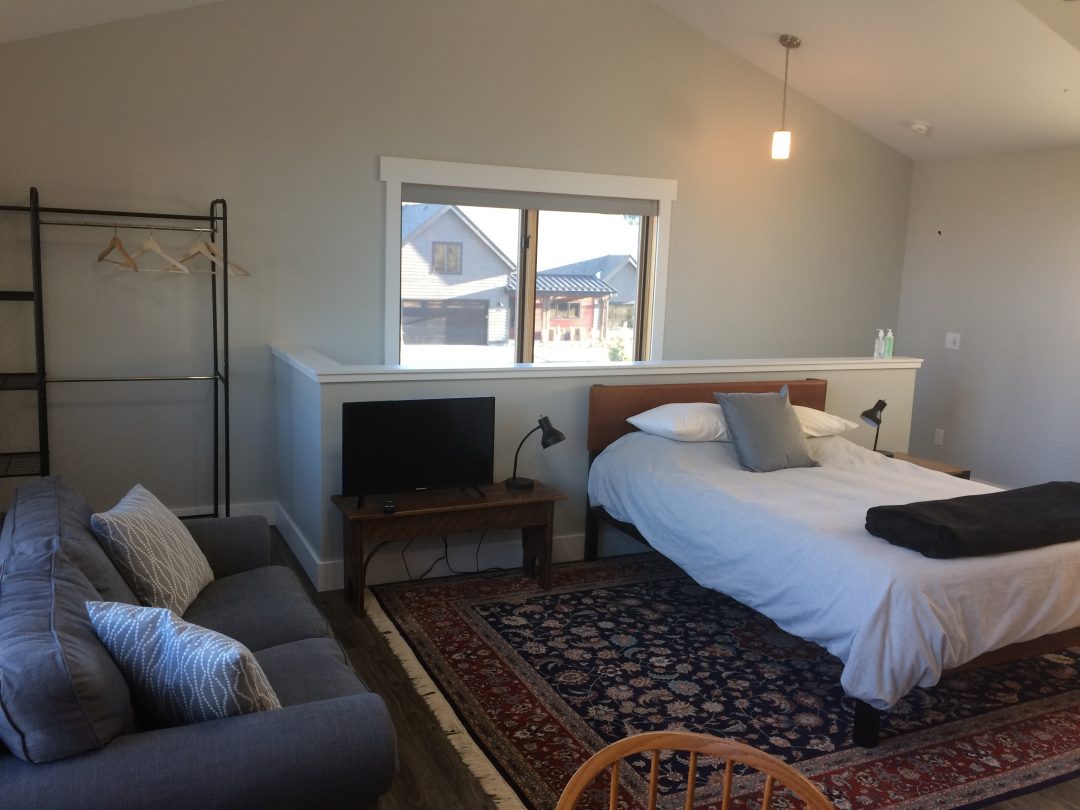
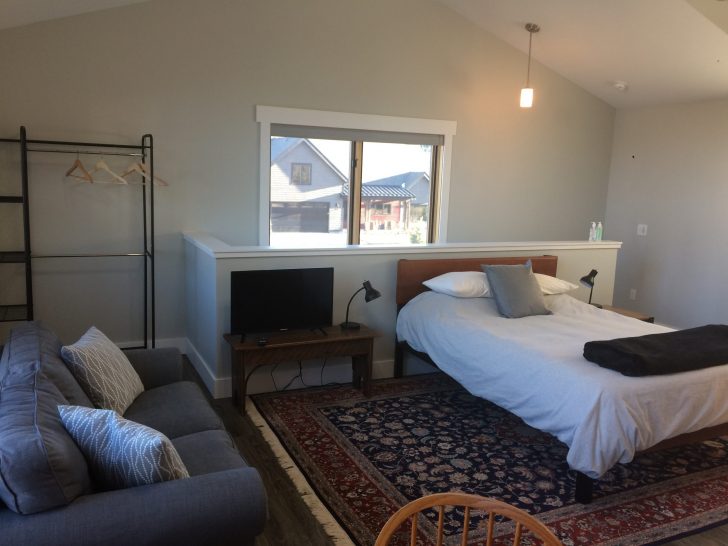
A modest one-bedroom apartment in your ski house can easily be rented. Credit: Steve Bell
Once you have reservations coming in, you have to manage the flow of people coming and going. Here are a few ideas we have found useful in making it easy and efficient for everyone.
We could easily hire a cleaning service, but we do the cleaning ourselves to earn money in addition to the nightly price. Both websites we use for booking rentals, Airbnb.com and Vrbo.com, provide the opportunity to charge guests a cleaning fee. The high fee we set does not seem to discourage demand. We find that we do not want to ski every single day, so we don’t mind spending an occasional morning as cleaners (who wear very good safety equipment).
If, during the COVID era, the thought of cleaning an apartment makes you queasy, hire a professional cleaning company. They have experience in keeping their workers safe, and towns around ski resorts have a number of cleaning vendors. The cleaning fee that we charge would be more than sufficient to cover the expense.
Our overall feeling about visitors is extremely positive. They have proven themselves to be consistently neat, quiet, friendly, considerate, enthusiastic, and polite. We know that a less-than-wonderful encounter is one day inevitable, but we are confident that the memory of many fine guests will help us to forbear with grace. And guests help us to improve our apartment, because we ask for recommendations, which they constructively provide.
We have strict rules. No pets, no children, no smoking, no wild parties, no candles. We hope to keep everything clean, simple, and safe. There are facilities for all these alternatives at other venues at the resort. In the beginning, we were concerned that all these prohibitions would suppress demand, but we are filling our unit with happy guests.
Here’s a creative idea that is not for all, but might be perfect for some. We have found that the months of high demand are end-of-December, January, February, March, June, July, August, and September. During some or all of the months of high demand, you can move to the apartment and rent out the (larger) home. The larger the space, the greater the rental revenue. You can implement methods to streamline the switch-over. For example, you can have a lock installed on your largest closet, and use it to conveniently store all the possessions in your house that you choose to keep private, when you are living in the apartment. Remember, you crafted your apartment to be a nice place to live. Why not enjoy it yourselves for a while? My wife and I are considering this switch for some of the summer months because summer life does not require winter gear such as layers of clothes and ski equipment. And we are outside hiking and biking a lot anyway. So a smaller home base should not present a problem.
Financing Advice
Financing the property could be the most difficult issue for some people. An unfortunate aspect of buying a house with a rental unit is that most mortgage lenders will not allow prospective revenue from a rental unit to be used as income on a mortgage application. You can try to find a mortgage lender who would consider that revenue. My guess is that a bank that knows the local market well, a bank in the municipality in which you intend to buy, would be most sympathetic to such a request.
At the time of purchase, my wife was retired, and I was close to retirement, so financing was fairly straight-forward. We had both saved for retirement, mostly in the form of 401Ks. We applied for the maximum mortgage that we could afford, intending to finance the remainder of the purchase price with a down payment from our savings. But in order to maximize our mortgage size, we took steps to increase our income.
First, we both applied for social security. Second, I had a small pension that I elected to take early. In both cases, the trade off for the early payout start is a modest reduction in the monthly benefit. Third, instead of retiring, I worked part-time for one more year in Big Sky. This also boosted my income and thereby our mortgage size.
In the first few years of ownership, you might want to work full-time, part-time, or seasonally to firm up your financial position. We have learned that people who live in resorts are very resourceful. They can find the perfect part-time employment that keeps them happy and that pays bills. Or they can start a business that suits their immediate needs and that they can later sell.
My wife and I feel that we have lucked into a happy place. We have a small business that is fun to manage and that helps pay the bills. And we live in a beautiful and enormous natural playground.

This Week In SeniorsSkiing.com (Nov. 20)
SPECIAL EDITION: MAKE MORE TRACKS!
Credit: Trapp Family Lodge
Focus On Nordic, Snowshoeing, Fat Biking: Rationale, The Market Forecast, Videos: How To XC, Snowshoe, Fat Bike, Hidden Gem XC Resorts, Lesson Advice, Mystery Nordic Star, Trail Preferences.
There’s more to winter besides downhill skiing. This issue will explore additional ways you can Make More Tracks.
Let’s be clear at the top: We love Alpine skiing, the thrill, the speed, the grace, and all that. We always will, so don’t think this Special Edition of SeniorsSkiing.com devoted to alternative winter snow sports is an abandonment of the mainstay that almost all of our readers have been participating in for years.
However, this year, we anticipate that while our readers will at first enthusiastically head to Alpine resorts, reserve online, gear up in their cars, mask up, social distance, eat a bag lunch, and all the rest, many will grow weary of those restrictions. Or become frustrated. Or not bother going at all.

But, since we know our readers love winter and snow, we also anticipate that they might be open to alternative snow sports that might be new to them or to which they may be returning. Like cross-country skiing and snowshoeing. These are accessible, easy to learn the basics, affordable, safe (social distance built in), and good for body and soul.
Since the beginning of October we have been publishing a series of articles named Make More Tracks. These include instruction, resort reports, clothing advice, and the like. In addition, we’ve compiled a Make More Tracks Resource Guide with a compendium of articles about the alternative winter snow sports, covering gear, destinations, technique, and how to dress, and much more.

Co-Publisher Mike Maginn on wooden skis, circa 1970.
We are dedicating this entire issue to Nordic skiing, snowshoeing, and Fat Biking. Hopefully, you will read something that might stir you to think about getting into other winter sports. We’ve been loving cross-country skiing since the early 70s. So much so that we still (occasionally) get out our wooden skis, wax, four-pin bindings, and take a loop around the farm across the street. On a bluebird day with perfect snow, the right wax combo, and a Heineken in your backpack, there is nothing like it.
ANNOUNCEMENTS
We are extending our special introductory classified ad offer until Dec. 4th. That means you can post a classified ad for 30 days from the date you post for just $1. We’re hoping you take advantage of this opportunity to find ski buddies, share rides, rent condos or apartments, and sell gear and collectibles.
We’ve been contacted by several readers who are frustrated by having to re-enter their name and email on the subscription pop-up. We know this can be frustrating. Here’s what you can do to eliminate the problem: TURN ON “ENABLE COOKIES” IN YOUR BROWSER ON EACH DEVICE YOU USE TO ACCESS SENIORSSKIING.COM. We’re working with our IT resource to make enabling cookies more clear as a way to avoid constantly re-entering name and email.
This Week

SeniorsSkiing.com’s cross-country editor and publisher of XCSkiResorts.com Roger Lohr explains what XC means to him. Our thanks to him and cross-country journalist and consultant Jonathan Wiesel for their support and contributions to the Make More Tracks series. Click here.
Our Mystery Glimpse picture this week is a Nordic competitor who may be the greatest xc racer of all time. We predict some of our readers will get this one right away; others will have no clue. Such is the fate of Nordic celebrity in the snow sport world. You will also learn the name of that odd parka from last week. Click here.

“Au naturel” trail across Appleton Farms field. Credit: SeniorsSkiing.com
This week’s Question For You asks our reader’s preference for what kind of XC ski trail they like best: groomed and groovy or no grooming. Our choice is actually a little of both. Click here.
We have a short video about a cyclist making his first fat bike ride on a chilly day. We learned that keeping toes warm is a project. Click here.
Kelly Davis is a noted snow sports industry market researcher. We met her several years ago when she was director of research at SIA, the industry trade group. Currently, she runs Snow Sports Insights, a consulting company that brings information to decision-makers about the changing market place. Here’s her view of what’s happening this year in the Nordic/Snowshoe market space. Interesting stuff, and thanks to Kelly for allowing us to reproduce this article which first appeared on the Cross Country Ski Area Association website. Click here.

Credit: LL Bean group lessons
Snowshoeing is the easiest alternative for those who want to get outdoors in the winter without a learning curve or significant outlay of cash. It is also the most grandchild-friendly choice. Here’s a short video that explains the basics of How To Snowshoe from LL Bean. Click here.
Cross-country editor Roger Lohr offers his inventory of XC ski resorts that he considers “hidden gems”, tucked away from hustle and big areas. These resorts offer extraordinary opportunities to enjoy a socially-distanced vacation in snow country. Yes, you can! Click here.

Methow resort has lots of ways to make more tracks. Credit: XCSkiResorts.com
Cross-country journalist and consultant Jonathan Wiesel expounds on when and how you might take XC lessons: Group or private. Trust us, we’ve been xc skiing since the 70s and we took a brief lesson last winter from a former Olympian and US Ski Team member Sue Wemyss at the Great Glens Trails Outdoor Center in Gorham, NH. Amazing how quickly you can improve your stride with a few simple moves. Click here.
For those readers who have never tried to cross-country ski or who might have tried to learn on their own, here’s a short video from REI that is a clear and really helpful guide on How To Cross-Country Ski. Click here.
Finally, the Skiing Weatherman Herb Stevens explains how the winds of November will favor some regions and not others. Click here.
Thank you for reading SeniorsSkiing.com. Please tell your friends, and remember, there are more of us every day and we aren’t going away.

Appleton Farms, Ipswich, MA. Trails are groomed by a volunteer group. Credit: SeniorsSkiing.com
[authors_page role=contributor]