


The Skiing Weatherman: Changeable East, Snowy West and Mid-West
The West Continues To Luck Out, Cold Coming East By Month End.
Despite a wildly changeable run of weather in the East recently, I managed to get two days of wonderful winter turns in early this week. It snowed on Monday at Sugarbush as I skied packed powder with my son. Wednesday at Killington surfaces were just about perfect packed powder early on and then an arctic cold front arrived. It brought fresh snow: three inches in 30 minutes! An absolute whiteout that gave me a chance to focus on my toes with each turn, a method I was taught decades ago to deal with low visibility. It still works!
Changeable weather will continue to rule short term in the East while much of the West continues snowy, but that imbalance will be changing in the near future. The past couple of weeks, the jet stream maps across the continent have featured a trough centered over the West and a ridge over the East. The trough has produced tons of snow, particularly in the Northwest and coastal ranges of British Columbia.
As this week comes to a close, another storm will cut southeast from the Gulf of Alaska and dump on B.C. as well as the WA and OR Cascades. Lighter snows will reach down to Tahoe as well as the northern and central Rockies. Over the eastern half of the country, a low will cut northeastward through the Great Lakes and into Ontario and Quebec. That’s great news for the resorts of Michigan, where significant snow will result. Further east, the northern track forced by the strength of the southeast ridge means another mild, wet event this weekend before colder air returns Monday. The “cutter” track is consistent with the current warm state of the MJO, as discussed last week.
Changes are coming, though, and by the final week of the month, the changes will be dramatic across the country. A pool of very cold air has been building in central and western Canada and due to the density of that air mass, it will start to spread southward and eastward. Here is a look at a forecast for the 5,000 foot temperature anomalies for ten days from now that I agree with.
The 5,000 foot level is a forecasting proxy for surface temps, and you can see that a large mass of colder than normal air will cover much of the eastern half of the country by 19th or so. Meanwhile, the West will turn a little warmer than normal, but not until after some of the arctic air descends through the Rockies later next week. At the jet stream level, the setup will flip, and we will find a trough in the East and a flat ridge out west. Here is a reasonable jet stream forecast for the same time.

Now, any change in air masses and jet stream features of this magnitude will come with a stormy transition, so there is reason for optimism for eastern snow, at least north of the Mason Dixon line, from late next week onward. Once the new pattern settles in, I expect it to dominate through the bulk of rest of the winter, due to the anticipated influence of the warm water pool in the northeast Pacific Ocean.
Here are the regional details.
Northwest U.S./Western Canada: Another heavy snowfall is coming this weekend, light snow in AB.
Periodic lighter snows will continue next week as arctic air presses southward.
Cascades and Sierra: Snowy weekend with heavy amounts in OR, tapering down further south in CA.
Lighter snow continues next week as it turns windy and colder.
Rockies: Northern Rockies catch light snow this weekend but as several upper level short wavelength disturbances move through the first half of next week, persistent light to moderate snow will provide daily “refills”. Each successive trough will draw arctic air further south, reaching the Tetons by mid-week. Light snow in central Rockies first half of next week.
Midwest: Messy weekend storm lower Lakes, snowy in northern Lakes, narrow ice storm in the middle.
Some light snow northern Lakes from a Clipper or two next week.
Northeast/QB: Another cutter brings wet and icy weather to the northern mountains of NY/New England this weekend, snow up in Quebec. Renewed snowmaking and light Clipper snow next week, with bigger storm threat late. Pattern will look much better a week from now.

Int/Att Loop: A Technique Improvement Tool
After So Many Years, Can You Improve? Here’s A Way.
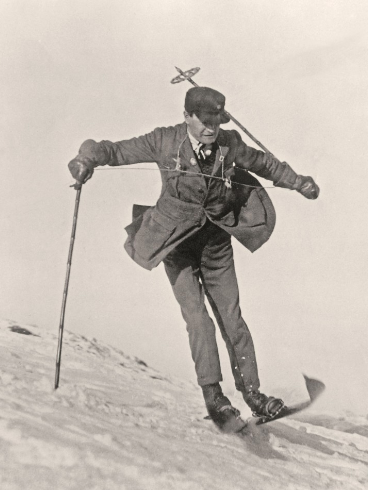
Time to improve? You can do it with the Int/Att Feedback Loop. Read on.
First, do you want to improve your skiing? If you don’t care that much, read no further. If instead you still have a hankering for greater skill and more satisfaction, then the good news is “Yes, you can”.
The “Int/Att Loop”© gives you the tools to do it.
But improvement doesn’t come by doing what you’ve already been doing for years. If you always do what you’ve always done, you’ll always get what you always got. If your choice is to become more skillful, then your choice is to change. To change, you need to:
- Know what to change—should you do something different, or something differently?
- How to change it
- Have a set of tools to do it with.
You will also need one other commodity—persistence. The great joy that comes from going on such a journey is that it’s an adventure that delivers huge satisfaction.
What is the Int/Att Loop©?
Back in the 70’s and 80’s two of Britain’s top coaches uncovered how humans learn to do physical things. Through considerable research, they identified a process that is simple to understand and use.
This process is not how to ski, nor how to have a skiing vacation, it is how to effect the kind of performance changes you desire. It has to to do with two completely separate nervous systems we have:
- the Efferent system
- the Afferent system.
Let’s say, you make a decision to do something. This is your INTENTION. The message from your brain to your muscles is carried by the Efferent system. But your brain needs to gather information from your senses to know that the instruction was carried out and what the effect was.
That information sent back to the brain via the Afferent nerves. Now, you are paying ATTENTION to those sensors. With that information, your brain can modify the next actionable decision to slowly bring your performance to where you want it to be.
Intention/Attention forms a feedback loop.
It is explained much more fully in many of the instructional videos you can find via www.bobski.com.
Your Action Plan For Better Skiing.
So, how do you use this dual nervous system concept?
Say you’re on a gentle bit of piste. You intend to work on some aspect of technique. You will only ski in very short sections—no more than 100 yards at a time. Here’s how it goes
- Choose a task – something simple such as “link two arcs together seamlessly”.
- Decide on one very small element of behavior—something simple such as “flex my ankle ALL the time”. That message will be sent by your Efferent system.
- This is important: You must then decide beforehand which of your senses you will pay heed to that will constitute a message back to your brain via the Afferent nerves. Most likely, in this case, it will be a feeling of constant pressure between your shin and the front of your boot. But for some other task it might be what you hear or see.
- If you were working with a coach, you would stop after the very short distance and report to her what you felt. Not how you felt. Not what you “thought”. This is not about thinking.
What you are attempting to do is to develop within yourself the ability at all times to be aware of what you sense, within the context of a simple and very powerful, plan.
This works. Watching someone else ski doesn’t work. “Getting the miles in” doesn’t either. If you find this interesting and have specific questions, don’t hesitate to send me them at bobski@bobski.com

Mystery Glimpse: Two Racers
One Very Young, The Other A Successful Competitor.

Many thanks to the Tread Of Pioneers Museum, Steamboat Springs, for this photo. Visit their online collection by clicking here.
Last Week
This is George Lundeen’s bronze statue, The End of An Era, circa 1960. Why is it significant? Here’s what Dana Mathios, Curator and Director of Collections, Colorado Snowsports Museum, has to say:
 This sculpture depicts a sport poised at a turning point on the edge of change. Soon, metal and synthetics would become standard in ski construction in place of wood that had been in use for more than 4,000 years. Pioneering skiers used a single wooden pole. By the early 1900s, two poles were in fashion. The shafts were often made from bamboo until superior poles of a light metal alloy were developed. Higher, plastic ski boots featuring buckles marked the passing of lace-up leather boots.
Also depicted in the sculpture is an early version of a safety binding designed to release the toe of the boot in a fall. A leather thong anchored the heel to the ski. More advanced safety bindings that released both the toe and the heel of the boot followed.
Early in the development of Colorado’s ski industry, the Pikes Peak region offered a number of small ski areas. Nearby slopes at The Broadmoor Hotel and others on Pikes Peak at Glen Cove, Elk Park, and Holiday Hills were popular. The region also included Tenderfoot Hill at Cripple Creek and the Edlowe ski jumping hill at Divide. In time, large corporate-managed ski areas further to the West replaced the small, locally owned ski facilities in the region.
Many thanks to curator Dana Mathios and the Colorado Snowsports Museum for their many contributions to SeniorsSkiing.com’s Mystery Glimpse feature. Visit the museum’s website to browse its collection and do consider making an audition.
[authors_page role=contributor]