

Can You Do This?
Another Caption Contest.
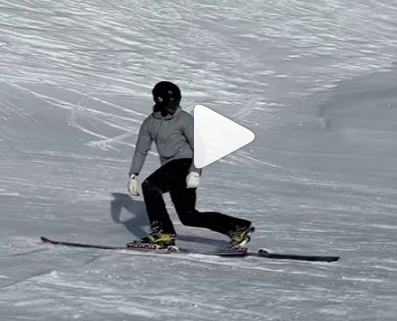
This is Tobi Heinle, ski guide, Voekyl-Marker-Dalbello pro athlete, doing his thing on Zugspitze Mountain, Garmisch-Partenkirchen. More on Tobi, click here.
Click on arrow to see video. And try to caption it. Write your entry below.
[Editor Note: Thanks to Snowbrains.com for originally posting this.]

Skiing Weatherman: How A Trough Works
And Regional Forecasts From West To East.
Had my first day on snow last Thursday at Jiminy Peak in the Berkshires. It was a wonderful day on nearly perfect snow: chalky packed powder with some windblown pillows of powder along the edge of several trails.
Today, I thought I would tell you about the jet stream feature to look for when you are hungry for snow or cold weather.
For the most part, troughs are your friends. On a map they look like the letter “U” and act as receptacles for cold air delivered from Canada. They also provide the upper level support for surface low pressure centers to form and deliver fresh snow. There are two “branches” of the jet stream that flow across the continent in the winter, northern and southern. Northern troughs tap into the cold from Canada, and southern troughs enhance the injection of moisture into surface lows. When the two branches combine, or “phase”, we often see our strongest storms. In the West, single branch systems can be pre-loaded with moisture as they roll ashore from the Pacific, so phasing isn’t as necessary to generate a major snowfall. The next opportunity for a significant snowfall in the East will come next Tuesday, when some phasing looks possible. This jet stream map for Tuesday night illustrates the attempt at phasing:
Notice that the southern branch feature is lagging behind the northern one. If it catches up to the longitude of the northern branch system, the storm will be more intense.
Here is the surface map that goes along with that trough at that time:

The High to the north, in Quebec, will feed the system with cold air and should suppress the track to the south far enough to keep most of the NE in moderate snow.
Next week I will discuss the role of upper level ridges in winter weather.
Here is the outlook for the next 1-2 weeks, by region.
Northwest U.S./Western Canada: Light to moderate snow has fallen in BC in the past week with heavier snow in Alberta helping to boost skiable acreage. With the eastern Pacific ridge temporarily replaced by a trough for much of the next couple of weeks, new snow should be significant.
Cascades and Sierra: A much needed juicy storm hit the Sierra last weekend and open terrain percentages took a major jump. Late this week, the Cascades are cashing in, and totals will be two-four feet when the storm winds down over the weekend. Tahoe will pick up five-10 inches. Cascades will also be hit by a moderate storm early next week. Additional troughs will arrive every few days up until the holiday.
Rockies: The northern branch storm that nails the NW will bring heavy snow to ID, MT, WY, northern UT and northern CO over the weekend. One-two foot totals look likely. Like the coastal ranges, the northern half of the Rockies can expect additional helpful systems in the next 10-14 days. The southern Rockies will see lighter snow this weekend, but will have to wait for a southern system for help…later next week at the earliest.
Midwest: Lake effect snow has helped this week, especially in northern Lower Michigan, but it looks as though the air that flows over the Lakes in the next week will not be as cold, so amounts will be modest. An Alberta Clipper or two next week could help the northern Lakes, in addition to pretty solid snowmaking temps.
Northeast: Early week rain was followed by outstanding snowmaking temps this week but another wet storm will move through Saturday, due to a track that hugs the coast too closely…some backside snow will occur across northern New York and New England on Sunday. Prospects are better for a meaningful snow event on Tuesday/Wednesday of next week. Cold air will not be abundant, so there will be an elevation component to the storm. The snow should provide a shot in the arm to resorts roughly north of I-80. Longer term will be a high wire act leading up to Christmas, as the progressive pattern will make it difficult for cold air to get locked in enough to ensure snow vs. rain. There will be enough cold intervals for helpful snowmaking, however.
Overall, the weather in the Western half of the country looks good while the pattern will be rather chaotic with an enhanced degree of variability over the Eastern half for the next 10-14 days.
Canadian Cuisine? Sun Peaks, BC, Has Poutine Plus
Poutine Is A Huge Comfort Food. Add That To A Mighty Bloody Mary And You Have Dinner At A Cozy BC Resort.
Yes, poutine is one of those things that requires an excuse to eat.

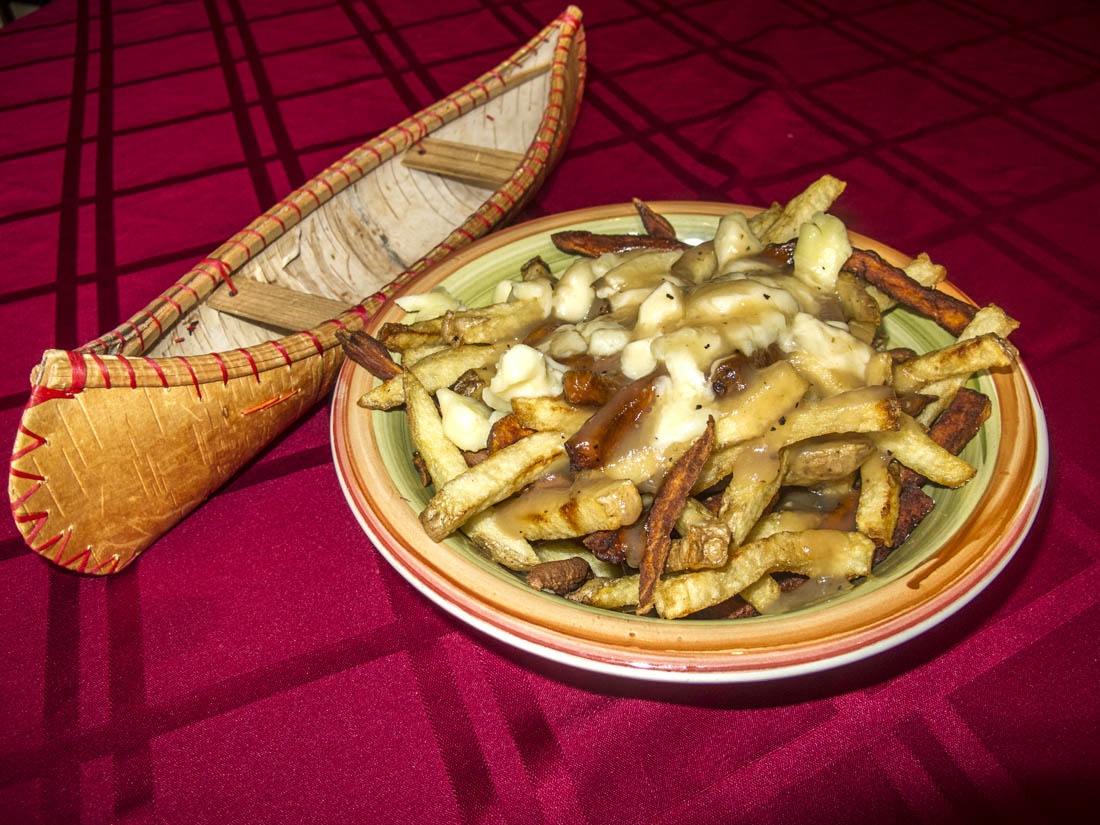
We’re talking the massively popular comfort food that is Canada’s answer to Mac and Cheese. There isn’t an easy way to rationalize a dish that includes french fries, gravy, and cheese curds.
Unless, maybe, you’ve been skiing all day.
Bear in mind, poutine comes from Quebec, a scarf-culture place that has yet to embrace the idea of full face covering against the cold, a place where minus 30 degree temperatures in winter are a way of life. You NEED fuel in those conditions. Or anyplace else with that kind of weather.
So, enter Voyageur Bistro at Sun Peaks Resort in British Columbia, Canada. It’s a tiny cafe with hardly a dozen tables but if you’re looking to bolster your inner heat lamp when it’s freezing outside, you can hardly do better.
A former river rafting guide, owner Kevin Tessier started adding authentic Voyageur cuisine to his tours. It was all based on what folks ate during fur trading days (bison, berries, cedar plank salmon, lots of maple syrup). His meals were wildly popular, and this whole concept found a home in his restaurant, which he co-owns with his wife Diane Larsen.
There’s Elk Wellington, Bison Burgers and, in the past, a Mac and Cheese that included Tenderloin Steak.
As for poutine, one often-cited tale is that of Fernand Lachance, from Warwick, Quebec, which claims poutine was invented there in 1957. Lachance is said to have exclaimed, ” Ça va faire une maudite poutine” (“It will make a damn mess” in French slang), hence the name. The sauce was allegedly added later to keep the fries warm longer. Over time, the dish’s popularity spread across the province and later throughout Canada.
Well, of course, then, I had to try Kevin and Diane’s poutine, which is made with real (they stressed that point) locally made cheese curds and fries, topped with their own special gravy which includes drippings from beef, pork and turkey. The secret ingredient is apple cider vinaigrette.
The final extra yummy product—mind you, I had skied 25,000 vertical feet that day and was truly READY—was a mouth wateringly hearty dish, rich with a hint of sweet from vinaigrette and interspersed with chewy, tangy cheese.
I was forking my way through when a local sat down on the bar stool next to me.
“Caesar,” he said, ordering from Diane, the bar keep.
I started to pay attention when the drink took its final form and immediately ordered one for myself.

A Caesar is basically a bloody Mary with an attitude but Voyageur’s Caesar is something very special: first into a tall glass rimmed with celery salt, the barman put the ice, then two shots of smoked salmon-infused vodka (“We don’t skimp,” Diane added about the vodka they make themselves), followed by squirts of tabasco sauce, Worcestershire sauce, a touch of horseradish and finally Clamato juice. This is topped with a skewer of assorted pickled or roasted vegetables, a chunk of First Nations-caught sockeye salmon, sometimes a chunk of cheese curd and maybe bison or elk sausage.
Yes, this was dinner.
[authors_page role=contributor]