


The Skiing Weatherman: Knowing The NAO
A Negative NAO IS Friendly To Skiers. Right Now, It’s Smiling.
During the upcoming winter I will be producing condensed regional forecasts on a weekly basis, hopefully providing readers with another nugget of info before they pick a destination for time on the slopes. I will refer to a number of different reasons for forecasts that you will probably not hear from other sources. Things like the Typhoon Rule that I wrote about last week and SSW (Sudden Stratospheric Warming) episodes. In addition, I will use a number of “teleconnections” around the northern hemisphere.
A teleconnection is a relationship between surface and/or jet stream level features located thousands of miles apart both west to east and north to south. Each one has a correlation to different types of winter weather in different parts of the country. Examples are the SOI (Southern Oscillation Index), AO (Arctic Oscillation), EPO (Eastern Pacific Oscillation), and MJO (Madden Julian Oscillation). One of the most significant winter teleconnections for snow lovers east of the Rockies is the NAO (North Atlantic Oscillation), which I would like to explain today.
The components of the NAO are found over the waters of the North Atlantic and the teleconnection is based on the difference in sea level pressure between two persistent features: the Icelandic low and an Azores high. The relative positions and comparative strengths of these features determine the sign (positive or negative) of the NAO.
When the two systems are relatively strong, the interactive circulation between them (counterclockwise around the low to the north and clockwise around the high to the south) speeds up, which results in more of a zonal, or west to east flow across the Atlantic. That setup makes it easier for cold outbreaks from Canada to be ushered offshore after only a brief visit to the central and eastern U.S. This is an example of a positive NAO.
When the two systems are weaker, the flow can buckle more easily, not only at the surface but also aloft. When that happens, upper troughs are favored over central and eastern North America and blocking ridges can be found in the vicinity of Iceland and Greenland. This is the configuration when the NAO is negative.
Jet stream patterns are more persistent when there is greater amplitude of troughs and ridges. When the NAO goes negative, the trough acts as a receptacle for cold air from Canada. The development of such troughs often spawns surface storms, many of which bring snow to the Lakes, mid-Atlantic, and Northeast, often in the form of a disturbance that becomes a coastal “Nor’easter”. It is worth noting that a correlation exists between low solar activity (we are now very near the minimum of the 11 year solar cycle) and North Atlantic blocking patterns that support a persistent negative NAO. So, there is reason to believe that the NAO will be in a mode friendly to skiers and riders at least a fair amount of the time this winter.
Here are depictions of the two modes of the NAO…
Now that November is here I know that many or you are starting to get as revved up about the season as I am and you are looking for snow, or at least temperatures cold enough for productive snowmaking. The Rockies have gotten off a fast start and the first shot of true cold air has reached the Great Lakes this week and will spread into the Northeast over the upcoming weekend. The first half of the new month, at least, looks good for cold and some natural snow roughly north of I-80 from the Midwest into the Northeast. It won’t be long now.
Recreational Therapy For Injured Vets

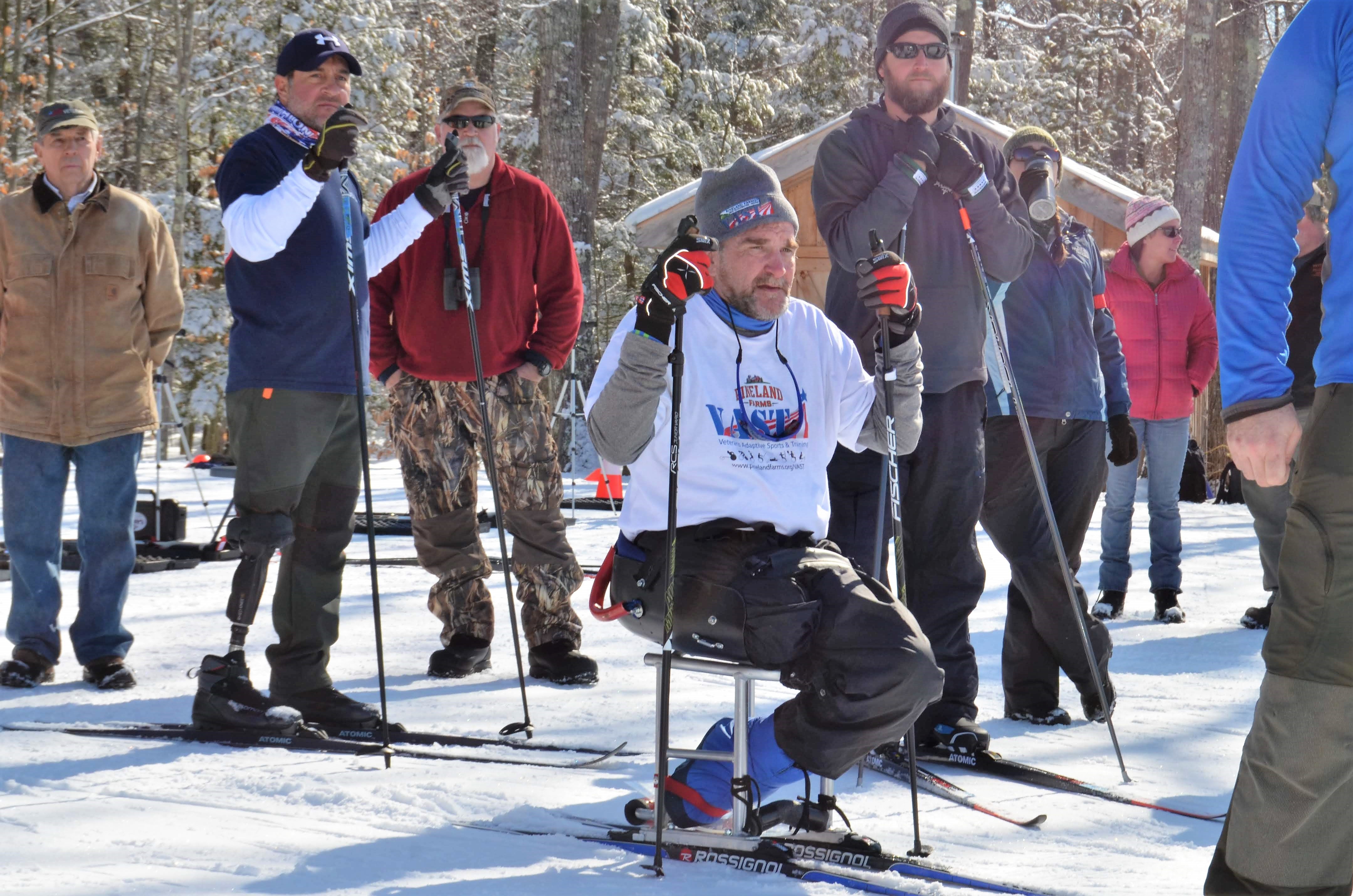
More doctors may be prescribing outdoor recreational therapy instead of Xanax if the proposed Federal legislation entitled the Outdoor Recreation Therapy for Veterans Act (HR 2435) passes. Studies are showing evidence that outdoor recreational activities can be therapeutic. I met Veterans Ray Gilmore and David Binford recently at a ski industry meeting, and they were engaging anyone who would talk with them about the Azimuth Check Foundation, which provides injured veterans and first responders challenging year-round athletic activities to create wellness in an atmosphere of camaraderie.
“Whether these vets have seen or unseen injuries, they can find peace in the outdoors,” they said. They feel that participation in activities such as alpine and Nordic skiing, snowboarding, kayaking, hiking, fishing, cycling, indoor rock climbing, wood carving and art, aquatics, golf, water skiing, stand up paddle-boarding, archery, and even bowling will build self-esteem and accomplishment.
Some veterans and first responders who have experienced visual impairments, amputations, and other physical and mental challenges have discovered organizations that orchestrate recreational activities, which can positively impact their well-being through adaptive recreation programs. Azimuth partners with other organizations such as the Veterans Adaptive Sports and Training, Adaptive Sports of the North Country, Ability Plus Adaptive Sports, Vermont Adaptive Ski & Sports, and Northeast Passage.
Misha Pemble-Belkin of Vermont Adaptive Ski & Sports’ Veterans Ventures program commented, “I’ve taken anti-depressants and done talk therapy but nothing I tried has worked. It was like my brain was still at war.” Different than working with healthcare providers in an office setting, this real world/real time approach to creating solutions for active and engaged living takes the guess work out of what happens when you go home or are discharged from care.
Gilmore talked about difficulty “shutting the motor off whereby the adrenaline remains and has become toxic.” The recreational activities help to create new memories and meaningful relationships. Beside physical challenges, many vets are faced with post traumatic stress (PTSD). While a stigma may remain about this condition, more veterans are now acknowledging it and seeking help.
Some of these program participants express that they’ve have had enough of meds and therapy Recreational programs can stimulate problem solving, collaboration, camaraderie, relevant and meaningful goals, as well as develop sustainable healthy behavior.
One vet referred to taking “meds” which made him feel like a “zombie” and took away the passion and joy of life. That vet commented that participating in recreational programs and outdoor activities such as skiing, hiking, rock climbing has helped to re-instill periods of passion and joy in his life.
How does it work?
At Northeast Passage, a recreation therapist (RT) meets with an individual to complete an initial assessment. The RT talks about health conditions, interests, personal strengths, and local resources. They will also use standardized assessment tools as part of a collaborative process to identify goals, and a plan for achieving them, while working together.
In follow up appointments, the vet and RT are in the community actively engaged in recreation. At the same time, they’ll likely be creating community connections, learning about equipment, developing skills, and aspects of themselves that support continued active participation and a healthier experience.
Kristina Sabasteansk,i an Army Veteran, runs programs at Pineland Farms’ Veterans Adaptive Sports & Training in southern Maine, which offers year-round programming for vets with disabilities. She said, “Last year we took veterans and volunteers to Maine Huts and Trails in Kingsfield, ME. It was -9 F the day we left to go home, and there wasn’t a single complaint among the group. Sometimes the vets crave challenges similar to what they experienced in the military such as harsh winter conditions and strenuous activities.
Pineland Farm’s yearly Biathlon Camp had 16 Veterans with disabilities – ranging from SCI, amputations, TBI, blindness, PTSD and TBI, and other orthopedic issues. “Many had never even seen snow before the camp and by the last day they cross country skied and competed in a biathlon race against each other. These trips and activities with fellow Vets allow them to share their experiences in the military and they realize they are not alone in their struggles.”
Retired SSG Misha Pemble-Belkin of Vermont Adaptive Veteran had 170 vet participants for more than a thousand activities including winter sports such as skiing, XC skiing, and snowboarding. “It’s vets helping vets to learn these sports.” According to Pemble-Belkin, “There was a study of 1,200 Vets who were split into a group taking three of the major meds and a group taking a placebo, and it showed similar results. While the war experience was stored in your brain, outdoor recreation can provide some joy and passion that is a relief to the miserable times being home alone or unengaged.”
For more info:
Azimuth Check Foundation: acfne@azimuthcheckfoundation.org
Pineland Farms VAST Program in southern Maine with Kristina Sabasteanski Kristina@pinelandfarms.org
Northeast Passage in NH with David Lee david.lee@unh.edu
Vermont Adaptive Ski & Sports Veterans Ventures with Misha Pemble-Belkin veterans@vermontadaptive.org

Mystery Glimpse: Tow Boat
What’s This?
This Strange Device Held 10 Skiers. Hint: Western resort. Many thanks to the Tread Of Pioneers Museum for this contribution.
Last Week

Of course, Killington. We took advantage of a picture of the resort a day or two after a major pair of Nor’Easters in New England taken by a pilot friend of ours. The snow dusting bodes well for Killington. The resort is hosting the 2019 Audi Women’s World Cup on Nov. 29th, that’s just four weeks away!
[authors_page role=contributor]