


Short Swings!
End of Season House Cleaning
We’re moving out of Salt Lake City. Anyone who has gone through the exercise knows about getting rid of stuff. You categorize three ways: stuff you need; stuff you think you need; stuff you know you don’t. Which brings me to skis, boots, and clothes. I have seven pairs of skis and enjoy all of them. BUT, a few pairs haven’t seen snow in several years. At least one goes to the thrift store. There are two pairs of custom boots in the closet. The DaleBoots are the newest and fit best. I harvested the custom insoles from the old SureFits and hope a thrift store customer with my feet gets them for a lot less than I paid. The biggest dilemma? Parkas and pants. My wife shamed me into getting rid of Old Yella, it was dirty and way out of fashion. I have a few recent vintage parkas that cover most of my needs. They stay. The black one I picked up at a yard sale around 15 years ago still looks good and is great in powder. It’s only issue? Far too many zippered pockets. Finally, I’m giving up the pants that were waiting for my waist to change. A few still had tickets from 2003. And that black and silver Colmar one-piece? It’s a beaut, but it hasn’t been outside for more than a decade. Time for it to find a new home.
 CALIFORNIA
Squaw Valley is a pretty hot real estate market. 2016 showed an 8% increase in home sales and a 17% increase in dollar volume. Greg Rankin is a ski friend specializing in Squaw Valley real estate. His newsletter is GOSQUAW.com.
MONTANA
Big Sky set a record for skier visitation. Its last biggest season was ’15-’16.
QUEBEC
Most ski resort summer activity is in the form of music, rides, mountain biking, etc. Mont Tremblant offers those and more. Its Tonga Lumina is a sound and light show showcasing the mountain’s natural elements and inspired by the its history and legends.
OTHER
 Epic Pass doesn’t offer senior discounts, but season passes for some of its affiliated ski areas do. For example, the Tahoe Value Pass gives those 65+ access to Heavenly, Northstar and Kirkwood for $389. Holidays, peak periods and Saturdays are excluded. For $439, seniors can ski Kirkwood only, with no restrictions. The threshold age for Minnesota’s Afton Alps is 62 and unrestricted skiing is $309 for the season. At Michigan’s Mt. Brighton, skiers 62+ ski unrestricted for the season for $369. Purchase before May 29, and you get two Buddy Tickets, each providing a fixed ticket price for a day at one of the Vail Resorts. A ticket at Vail/Beaver Creek would cost $116 with a Buddy Ticket; one at Park City would be $85. Stowe, Vail’s most recent acquisition, currently is not shown as part of the Epic Pass program. According to a Vail spokesperson, once the deal closes Stowe will be included.
Shred Optics, Sync Performance and Slytech are partnering on a discount program that delivers up to 50% off their brands. Shred makes helmets and goggles. Sync makes down items and other wearables. Slytech makes a variety of protection devices for the back, knees, arms, elbows, shins, etc. When visiting the sites, use discount code: NEWPARTNER.
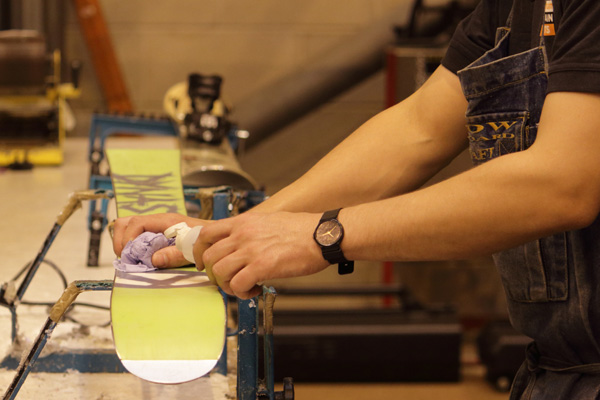
Putting Away Stuff: More Advice On Cleaning And Storage
Things You Can Do To Show How Much You Love Your Equipment.
[Editor Note: We received several comments about last week’s article by Don Burch about putting your skis away. So, we asked retail expert and SeniorsSkiing.com correspondent Val E. offer some more advice. Here you go.]
Ski Cleaning

Care for your equipment in the springtime pays off in the fall.
All ski bases are made out of polyethylene which is a chemically neutral and relatively durable material. You can’t ruin it with household chemicals, but you should keep in mind that the base material is porous. So, clean dirt from the surface and from the pores (hot wax cleaning is for that). Acetone is a simple, cheap and easy option for base cleaning. Use rubber gloves.
To slow down oxidation of polyethylene (see any whitish areas?), seal the base with wax, that is why hot waxing is better than cold waxing. A thick layer covering the base and the edges doesn’t let oxygen infiltrate.
I would suggest you file down nicks on aluminum tail and tip inserts as well as round up the nicks on the top surface edge, especially in the areas where you grab your skis. The top layer and the sidewalls are often made out of ABS plastic which doesn’t like acetone, so to be on a safe side use household soap to clean these areas.
Binding Cleaning
Try to avoid getting liquids besides water and special lubricant into your bindings. A ski bag should protect your bindings from dust sticking to the internal parts. Don’t have a ski bag? Wrap the bindings or the entire skis in a plastic bag. Two big garbage bags will work.
Keeping skis in a shed or cold garage is even worse as driving with your skis on the car roof unprotected; be nice to your skis and you will be a happy camper…oops, skier!
Poles
If tips are rusty and dull, sand them and sharpen. Aluminum poles may bend and stay bent or break, while composite poles never stay bent, they just break in case of high load. Check the shafts: in case of aluminum poles—file any nicks if found. In case of composite poles (carbon or fiberglass), fill in deep cuts or delaminated areas with epoxy resin. Look at the baskets, they should not have any deep cuts.
Boots
Pull out the liner and wash the shell of your ski boots with soap and nylon brush. Dry out the liners and the shells.
Store your boots buckled up. You may want to fit them with newspapers or thick wrapping paper. It may sound very old school, but it will help your liners to stay in shape.
Clothing
Wash all your ski soft goods—pants, jackets, base and mid-layers, face masks, socks using the right detergent; read the tags first. Most dry cleaning companies will not accept your clothing made of membrane fabric. If your gloves are very dirty, hand wash them, carefully squeeze the water out, starting with the fingers, and hang the glovers with the fingers up to dry. If your gloves have membrane liners (Gore-Tex or similar), try to not mess with it, if your pull the liner out of the fingers, it would be very difficult to put them back.
Store your ski jacket on a “fat” plastic hanger, not wire or thin plastic or wood. This is especially important for a natural down jacket. I prefer my ski pants to spend the summer hanging on a belt loop, not folded. Fold it less and you will extend the life of a waterproof/breathable membrane!
Synthetic fleece pieces and mid-layers with synthetic insulation are very easy to wash and store. Some items can be used off season for biking, running or walking. A fleece sweater is my favorite item while traveling by airplane—light, easy, and comfortable. If you have wool layers (merino or regular wool), make sure they are protected from moth.
Helmet
The liner may need a wash, check for cracks, the buckle and adjustments should work well. Dry it out and put in a fabric bag, don’t keep in a direct sunlight or in a hot shed.
Electronics
If you use batteries in your ski gear (goggles, heated gloves, boot heaters, helmet camera, etc.) pull them out. Replace batteries at the beginning of next season.
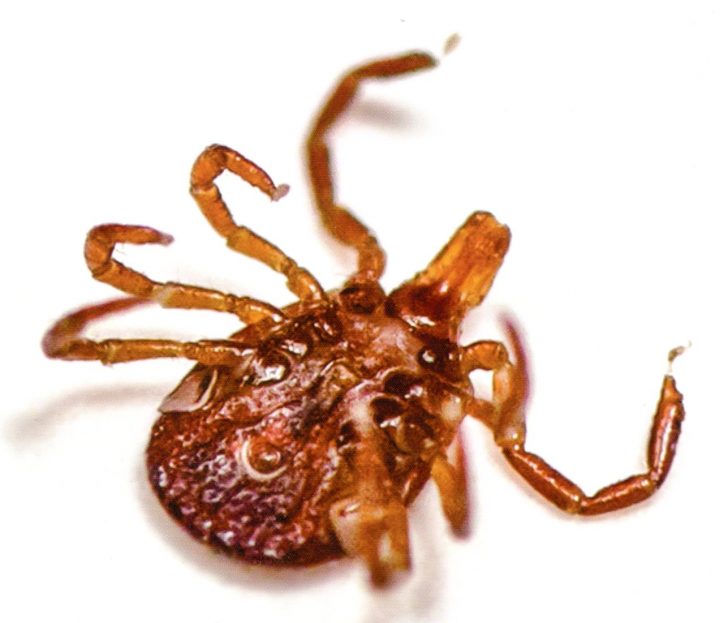
What’s Biting You? Part Two: Treatment And Prevention
[Editor Note: This is Part Two of a two-part article on Lyme disease by Steve Hines, outdoorsman and Wilderness First Responder. Click here for Part One: What’s Biting You?]
 Treatment
The best treatment for Lyme disease bacteria is antibiotics. According to the Centers for Disease Control (CDC), “Patients treated with appropriate antibiotics in the early stages of Lyme disease usually recover rapidly and completely.” Patients with certain neurological or cardiac forms of illness may require intravenous treatment.
However, the National Institutes of Health (NIH) tells us, “Physicians sometimes describe patients who have non-specific symptoms (like fatigue, pain, and joint and muscle aches) after the treatment of Lyme disease as having post-treatment Lyme disease syndrome (PTLDS).”
So, don’t assume that because you and your doctor caught it early, and you took a course of antibiotics that you need not be careful. This is the case especially for seniors, since one symptom is cognitive impairment. The question comes up, “What’s normal age related ‘forgetfulness’ and what’s a lingering symptom of my Lyme disease?”
Prevention
It seems, then the best treatment for Lyme disease is prevention.
And prevention falls into two categories:
1. Personal protection
The first line of defense is protection when outdoors. Personal tick sprays use the chemical DEET.
The CDC recommends 30-50% DEET to prevent the spread of pathogens carried by insects, and it should be applied every 3-6 hours

Examples of tickproof gators. Worth it if frequently in high scrubs.
Finally, a number of outdoor clothing makers offer clothing in which the fabric’s threads are infused with permethrin. Hats, shirts, pants, socks, bandanas and gaiters are available from brands including Outdoor research, Orvis, ExOfficio, Craghoppers all offer these clothing pieces. Check with your local outdoor retailer.
Clothing containing the insecticide Permethrin (also known as Nix) is effective. Products like Sawyer’s Permethrin Spray can be squirted on clothing to make it tick (and mosquito) repellent.
Once you gear up with these products, don’t get overconfident. The critical activity for Lyme disease prevention is to inspect yourself from head to foot thoroughly when you come indoors. Ticks like warm dark moist places—so you know what that means for inspection. Don’t be shy.
2. Controlling ticks in the environment.
CDC experts suggest that, in the absence of a human vaccine for Lyme disease, “no single method will be sufficient to substantially reduce Lyme disease.” Therefore, a main goal of researchers is not only to develop new treatment methods, but to assess the effectiveness of combined treatments for habitat.
What’s a potential habitat for Lyme? Richard C. Falco, of Fordham University has conducted research on this and asks questions including:
- Is the property located in a Lyme-disease-endemic neighborhood?
- Is there a history of tick bites associated with the property?
- What is the proximity to woods?
- Are deer observed on the property?
- Is the property shaded?
If the answer is “yes” to all these questions, you should consider a tick-management plan from a professional. However, if the answer is “yes” to some of the questions, agree on a plan you are comfortable with given the estimated level of risk.
The deer tick is now carrying a disease more deadly than Lyme called Powassin. The CDC says approximately 75 cases of POW virus disease were reported in the United States over the past 10 years. But the danger is real and no cure exists. So, take precautions. [Editor Note: As Steve suggests, Powassin is important to know about. Click here for our SeniorsSkiing.com Powassin story from 2015.]
[A Final Editor Note: Our own SeniorsSkiing.com correspondent Suzie Winthrop alerted us to an important effort to better understand and fight Lyme disease. The Bay Area Lyme Foundation is asking people who get bitten to send the tick to them for analysis. You can learn more by checking out bayarealyme.org. They have been getting submissions from all over and will send you a report on your submission after it is analyzed.]

Find out how you can fight Lyme by submitting ticks from your area.
[authors_page role=contributor]