

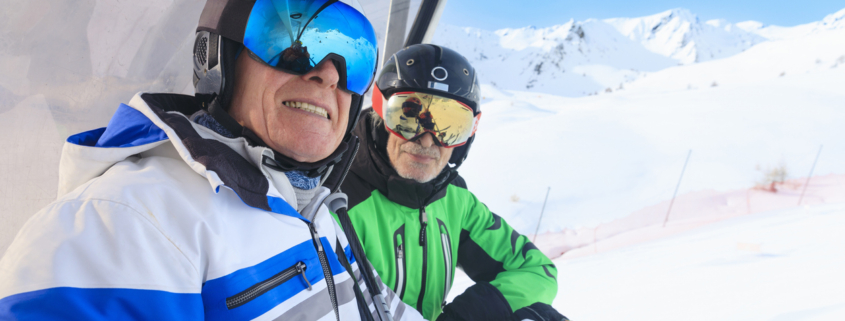
The Continued Decline of the Senior Lift Discount
Credit:ultramarinfoto
Helping seniors stretch their skiing budget is and has always been a pillar of SeniorsSkiing.com We’re sorry to report we recently learned Telluride has discontinued its season pass for seniors and its free season pass for skiers 80 and over.
Purgatory and Sunlight are now the only resorts in Colorado offering free season passes to those 80 and over. * (Lake County-owned Ski Cooper has a $10 season pass for skiers 75 and up, Monarch offers a $29 pass for skiers 69 and up and Powderhorn offers $29 passes for skiers 75 and up.)
We encourage our readers to support the areas that recognize there are benefits to having seniors on their slopes beyond the price of the pass.
One reader told us he has a discounted senior pass to his local ski area. He used it 19 days last season. Each time he bought lunch for around $30. He had his equipment tuned twice. He brought his kids and friends several times who bought day tickets. He says if he had to buy a full priced pass that spending would have been zero because he would no longer be a patron.
For more on how seniors and resorts reached this point, we encourage you to visit The Colorado Sun at www.coloradosun.com to read “And then There Were Two” by Jason Blevins.
https://coloradosun.com/2024/09/26/telluride-free-skiing-seniors/
The 2024-2025 season is upon us. Will you be ready?
Credit:Yelizaveta Tomashevska
Editors Note: Here are some important pre-season readiness tips from Tom Arnold, owner of Powder Cord Pouches and purveyor of Buckletite boot levers, the HotBuns warmer and the SeeBlade goggle wiper. Follow Tom’s lead to ensure your gear is ready to make the first day of this season as memorable as your last day last season.
The 2024-2025 season will be upon us before we know it. Will you be ready? Here are a few tips to ensure your first day this season will be as memorable as your last day last season.
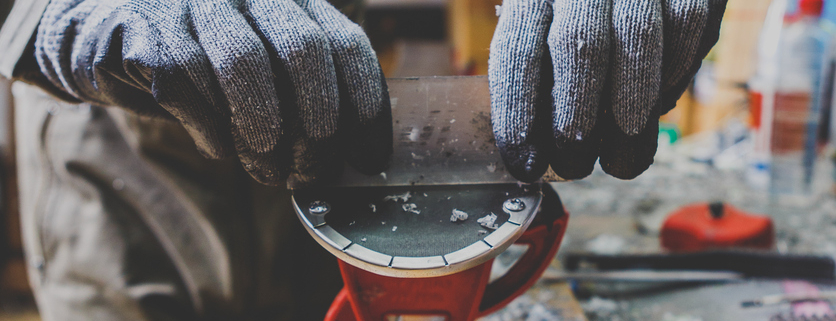
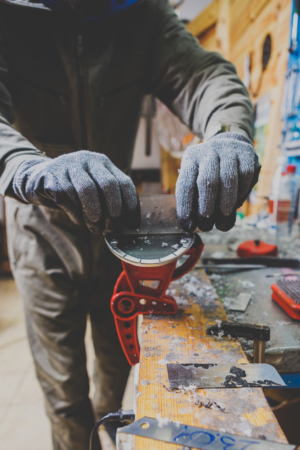
Let’s start with your skis. If you have more than fifty days on them since their last visit to your preferred ski tech, consider taking them in for a full tune-up/base structure evaluation. This should include P-texing any base dings, flattening and waxing the base itself, sharpening the edges, lubing and checking the functionality of the bindings, ensuring you have the correct DIN setting to prevent the bindings from releasing prematurely or not releasing at all and – this is important! – checking the torque of the special screws that hold the bindings to the skis. On rare occasions, all or part of the binding can rip loose from the ski causing a catastrophic crash. You will need to leave your boots with your skis for this test.
If your skis are fairly new with perhaps only a dozen or so days on them, you can prep them for this season yourself. Get a chunk of wax at your ski shop, pick up a bottle of ski base cleaner and if you don’t have one already, a waxing iron. You’ll also need some sort of strap to lock the brakes out of the way so you can work on the bases.
First, clean the bases according to the directions on the bottle of base cleaner. Be sure to let them dry completely before you start dripping wax on them. When they are dry, dribble wax on the bases and iron it in. Tognar Ski Tool has a good how-to video on ski waxing. (www.tognar.com/how-to-hot-wax-skis-or-snowboards). You’ll get the feel for how much pressure to apply, how hot the iron should be and how long to keep the iron on the ski. Let the wax set for a while before you scrape it off with a stainless steel or plastic scraper. Scrape from tip to tail (that’s the direction the snow moves under your skis). Be careful to get a flat, smooth base without removing too much wax.
Next, your boots. You skied hard last season and sometimes your feet would sweat as witnessed by your socks when you stepped out at the end of the day. Don’t for a moment imagine that those damp socks kept your liners dry! They’ve been absorbing moisture and salt like there’s no tomorrow. You need to take the liners out of your boots and, if you have removable foot beds, take those out of the liners as well. Fill up a bucket with warm, sudsy water and slosh those liners and foot beds for several minutes. You will be amazed at how dirty that water is, especially if you’ve had your boots for a few years and this is their first bath. Once they’re as clean as you can get them, dump the dirty, soapy water and begin rinsing the liners in clean warm water. You may need a few basins of water to be sure there is no residual soap. It doesn’t hurt to wash the boot shells as well, inside and out. Finally, let the shells and liners air dry somewhere outside but not in direct sunlight. Don’t be surprised if drying takes several days or even a week or two. The main thing is to be sure they are completely dry before you put them in your closet. Leave them disassembled (liners and foot beds out) until you need them this season.
With your skis, boots and bindings in top condition, you’re good to go with confidence come opening day.
Getting Ready for the Next Olympics
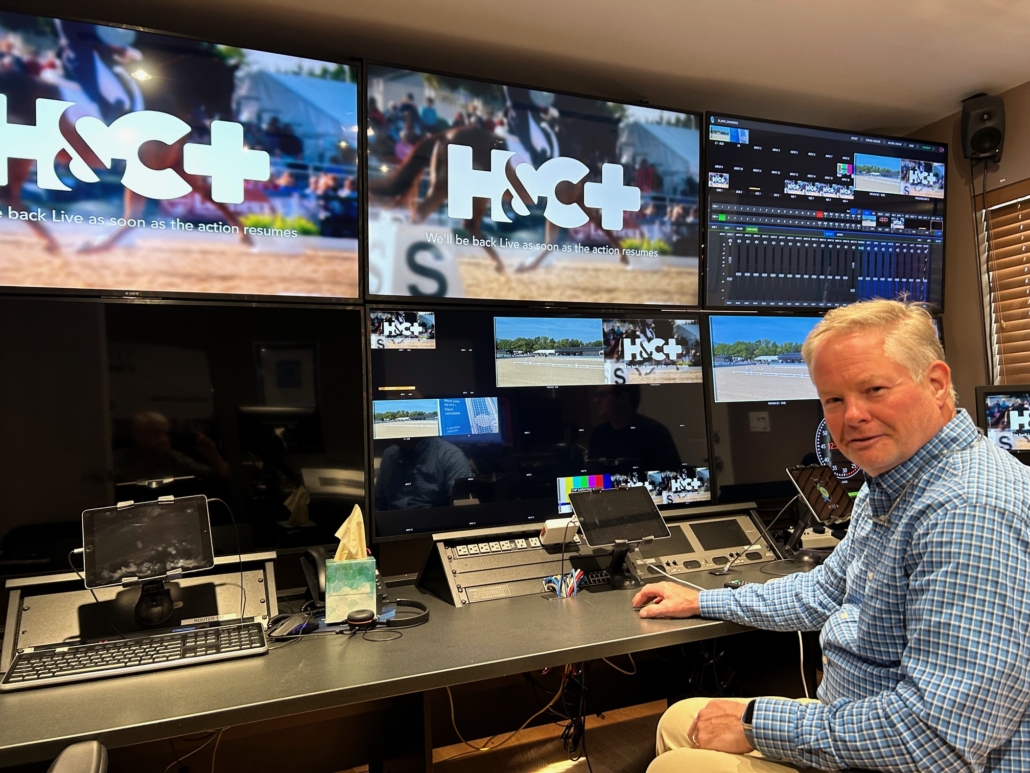
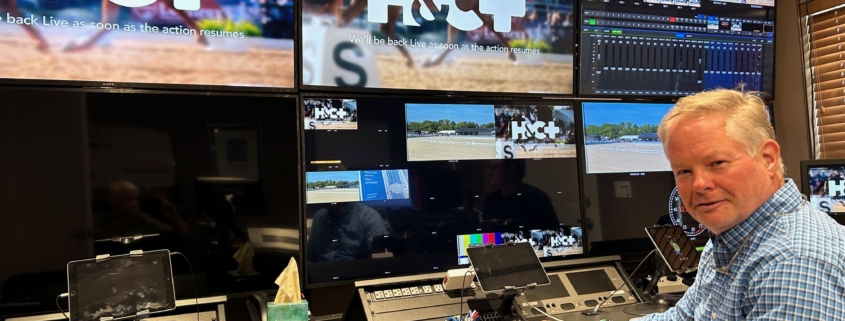
Jim Carr at Carr Hughes Productions in Saratoga Springs
If you were like me, you were glued to the TV last August, watching the Summer Olympics from Paris, especially the track and field events where American Noah Lyles became the “Fastest Man on Earth” by winning the 100 meter dash.
The thrill of victory by one one thousandth of a second – 1/1,000 — a whisker: faster than the blink of an eye; less time than it takes to exhale. But despite the slimmest of margins, at home on TV, you were able to see there was no doubt about the outcome, in large part because of the work done by Jim Carr who produced the the highlights of that broadcast for NBC.
It was no small undertaking. ” We had 110 cameras available to us in Paris from NBC and the world camera feed at track and field, about 25 of those covering the finish line ” noted Carr about the scope of production.
The Olympics Games is the all star game of television broadcasting. The combination of live and packaged telecasts over two weeks doesn’t get any bigger than this. The producers are the quarterbacks of the operation, determining how events will be featured. It means determining the content of the broadcast, prepping the announcers, choosing the graphics, plotting coverage and helping directors set up the visuals. Some of it is live and , in Jim’s case, it can be after the competition pulling together the highlight shows for prime time in the US. .
As you might expect with an event this big, the 60 year old Carr is no rookie when it comes to who is at the controls for the marquee broadcast on the World sports calendar. This is the 17the Olympics for the Saratoga NY based television veteran who is already thinking about number 18 and what he’ll be doing at the Winter Games in Italy in 2026.
Although he isn’t certain what his assignment will be, he already knows what the scope can be.
‘For an outdoor event like the downhill event, there may be 100 cameras or more engaged for the race: large studio cameras on platforms, point of view cameras that shift along the run, sophisticated hand held cameras, and helicopters and drones in the air above the course. All of this will be plotted out long in advance, in some instances as soon as this winter more than a year before the event.”
At the winter games In 2022, Jim was all set as a post production producer of figure skating from Bejiing when the network asked him to double up and take on the snowboard competition too. In a year when much of the US coverage was staffed remotely from studios in Connecticut, Carr was on scene at two locations in China. Shifting assignments on short notice is not unusual, it seems. Just before leaving for Europe for track and field this summer, he was called to Connecticut to help with the remote network coverage of the spectacular opening ceremonies on the Seine River in Paris. .
Being in the right place at the right time has been a hallmark of Carr’s career from the start. The upstate New York native watched the 1980 Winter Olympics from Lake Placid as a teenager and, a few years later after graduating with a degree in communications from the nearby state college at Plattsburg, was hired by the local television station. He and an on- air colleague were sent to provide local coverage of the 1988 Winter Games in Calgary. There he worked in the same space as the network and international television crews. He made contacts. It was the era of expanding television opportunities with cable stations and 24 hour sports broadcasting. He hasn’t looked back since.
After several years with AMPS, a local production service that packaged various sports competitions in the Lake Placid area, he started his own company in1993 and moved to his hometown. In 2002 he teamed up with former US luge athlete and organizer Bob Hughes to form Carr Hughes Productions.
Is he good at what he does? Seven broadcast Emmy Awards suggest the experts believe he is.
Today, in addition to his work with the Olympics, he produces a variety of sports broadcasts, from equestrian and horse racing to international track and field , much of it in partnership with NBC and ESPN, Carr Hughes bought a mobile broadcast unit in 2017 and now crisscross the US and Canada for sports of all sorts: They can do an event like Big Ten football, or produce an entire competition like the World University Winter Games last January. That was an eight venue event throughout the Adirondacks that required a staff of 277. Five months earlier, Carr Hughes was across the country in Oregon for the international Track and Field champions. (Yes, Jim did chat with Snoop Dog.)
In the early years, much of the work was done on site then shipped back and produced at his studio in Saratoga near his home. Today, with the advancement of broadcast technology, a lot of the work can be done remotely.
‘A lot of the editing that once required a studio can now be done on a laptop. We can shoot on site and transmit a ready to air product directly to the network from the site. Our work no longer demands a big city presence. We can be located anywhere.”
Where does he want to be in the winter of 2026?
“I hope I will be in Italy. The Olympics are so much fun in person.”
[authors_page role=contributor]