

This Week In SeniorsSkiing.com (Sept. 23)
La Nina No Way, Goggle News, Sailing On Snow, Advice On Buying Gear.
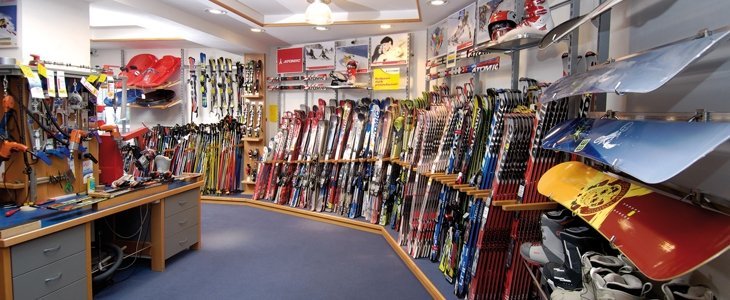
Study up if you’re buying new gear this year. There is a lot of nuanced knowledge to learn.
Credit: SkiSaltLakeCity
EXTRA! LATE BREAKING NEWS: SeniorsSkiing.com Subscribers Can Get A Discount at BEWI’s Ski And Snowsport Expos. Click The Ad At The Top Of The Page.
We’ve been watching the news from various country ski resorts about the first snow falls of the year. We’ve heard Tahoe has been hit with plowable snow, more in Utah, and there are reports of dustings in the Canadian Rockies. So, perhaps this season is picking up where it left off: big weather in the West while the Northeast, especially parts of New England, are experiencing a drought.
Which leads us to this week’s report on NOAA’s latest winter weather prediction. The much-anticipated La Nina—which would have brought above average precipitation to the Northeast—will not happen, it seems. Find out what that means for your region by clicking here. And remember, a prediction of the future is not a dead-cert bet.
We are entering the buying season where ski shops will be stocking new inventory, and you’ll be looking for stuff. Our Spring Survey 2016 revealed that many of you will be looking for hardware—skis, boots, bindings. Our correspondent and PSIA ski instructor Pat McCloskey offers a guide to what is important to know when buying. And Val E., our new correspondent with deep ski business retail experience, shows us ten tips on buying goggles. Everyone needs new goggles. Study up.
There’s more buying advice from Yvette Cardozo’s article last week on finding proper ski and sport clothes for plus-size senior women.
If you notice a shift in our editorial stream, you’re right. We’re slowly shifting over to snow sports news and reports. Next week, we hope to have a guide to equipment and ski resort discounts just for seniors. And our first Resort Review of the season. Stay tuned.
Curiosity Department: We have a small and short video showing a creative soul sailing a catamaran down a ski hill somewhere. Don’t ask us why.
Important Update On Promotive-Experticity
Also, Promotive is now Experticity. Our special opportunity for our subscribers to get discounts has shifted over to Experticity, the new provider. If you are subscriber who registered with Promotive, it should be a seamless switch. If you are a subscriber who has not yet registered for discounts, there are some NEW INSTRUCTIONS. Send us an email at info@seniorsskiing.com, and we will forward these to you. Just verify you are a subscriber, okay?
Thanks for subscribing to seniorsskiing.com. Please tell your friends and remember, there are more of us every day and we are not going away!
New NOAA Winter Long Range Forecast: No La Nina
NOAA National Weather Service Says Not So Fast, Winter.
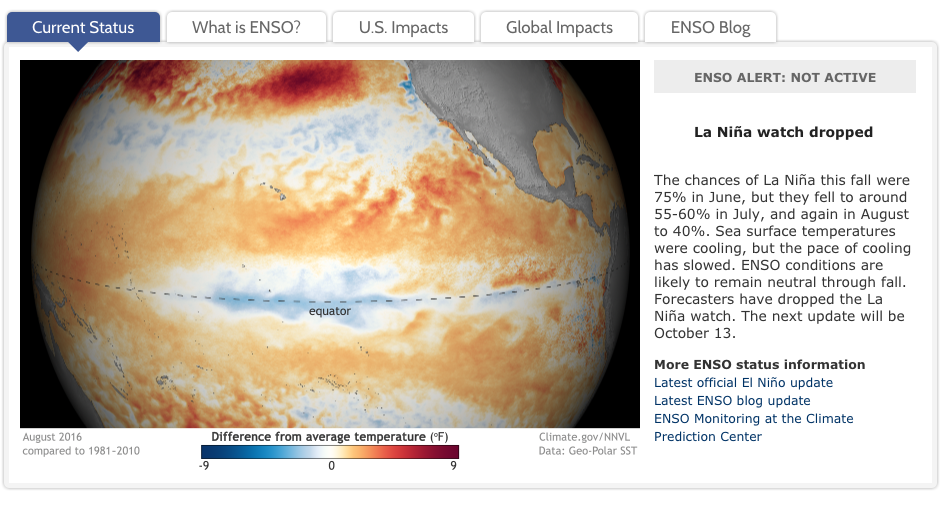
The weather outlook for this winter shifted dramatically over the summer when the sea water temperatures of the Western Pacific cooled more slowly than predicted. To review, El Nino is a “hot” sea water temp, La Nina is “cool”. Both play significant roles in global weather because sea water temps determine which way the surface winds blow which in turn impacts the circulation pattern that connects the tropics with the middle latitudes.
The 2015-16 El Nino was one of the strongest on record. We had huge snows out West and close to nada in the East. This year’s El Nino was declared over in May, 2016. The big bets—and data collected from NOAA ships, buoys and planes—were on for a dramatic La Nina that would basically reverse that prediction.
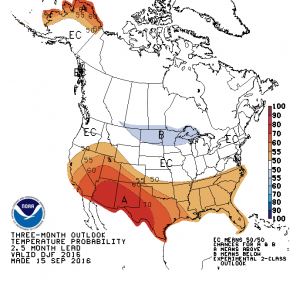
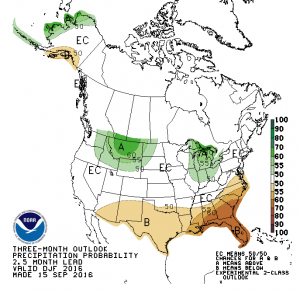
That is not to be. The current data shows the La Nina hasn’t developed as predicted. So, the National Weather Service says we’re headed for a “ENSO-neutral” winter, that is, no La Nina. To cut to the chase, that means—for Jan, Feb, March 2017— below normal temps in the upper mid-west, higher than normal precipitation in Idaho and western Montana (i.e., snow), warmer than normal temps in the southwest with below average precipitation (i.e., warm and dry), and about an equal chance of above, normal or below normal temperatures and precipitation in the northeast. (i.e., you can’t predict it.) From this prediction, it appears the place to ski will be Ontario.
But, be advised, these predictions are based on measures that can and do change randomly. So, stay tuned. We will be watching developments and report the latest when it comes from the National Weather Service.
Here’s a clip from the Climate Prediction Center ENSO site. Worth a visit.
10 Tips For Buying Goggles
10 Things A Senior Buyer Has To Know About Goggles.
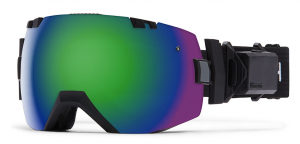
Googles, once an after-thought, have embraced high technology as well high style.
Credit: Smith Goggles
- While goggles shopping, take your helmet with you; both should happily marry. It is good to have no gaps between goggles and your nose.
- Don’t touch the inner side of the lens with your fingers, gloves or paper napkins. You may scratch off the special coating, then the goggles will start fogging up in this area. Shake off snow or water droplets.
- It is more practical, comfortable and even safe to have two lenses—one for a sunny day and another for a low light day. These days, some goggles have lenses which are VERY easy to swap; they have super magnets or easy locks.
- Use a microfiber bag to protect your goggles (or glasses) from scratches and also to clean the leans. Microfiber in contrast with cotton, wool, leather and many other materials doesn’t scratch the coating of the lens.
- You can ski in goggles with dark lenses and keep your sunglasses with yellow, rose or light gray lenses in your pocket or around your neck in case of low light conditions. You can see how different tints affect what you see by clicking here on the Anonoptics “Lens Visualizer.” Pretty interesting.
- People with smaller faces should check so-called “Asian fit”, “Women” or “Junior” models.
-
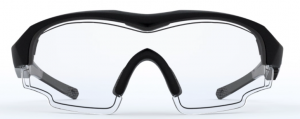
Uvex Variotonic can change VLT with a touch. Pretty fancy.
Credit: UvexVisual Light Transmission (VLT) is an important metric. VLT is the percent of visible light that passes through a glazing unit, like a goggle lens. Lens color is a question of taste and sometimes may help to see better in fog or flat light conditions. Years ago, we were told the yellow one was the best, later rose/pink became popular, now Smith has red, blue, yellow lenses with VLT (55, 60, 65). It’s hard to tell which one is best. Uvex has a goggle that can change VLT in a fraction of a second. (7 -17 %, very bright conditions; 20-50%, universal, 50-84%, low light/night)
- Concerned about protecting your goggles while traveling? Put them in a metal cookie container.
- OTG (Over The Glasses) goggles are good option for those skiers who want to combine their prescription glasses with goggles. It is an easy and cheap solution. But make sure the prescription frame is made of impact resistant materials (plastic lenses and flexible frame).
- Some brands (Smith, Bolle, Oakley, Uvex) make prescription inserts for goggles. Some of them cost as low as $20-30. Technically, the inserts are designed to fit certain goggles, but in reality they may fit other goggles. Just try. Your optician will install your Rx lenses. You can save money if you ask for the cheapest plastic lenses with minimal coatings. Your sunglasses will already have UV protection and other features.
- High tech goggles with GPS and small computers are not cheap, but they could be helpful. You can find your way out or find your friends even when your cell phone doesn’t work.
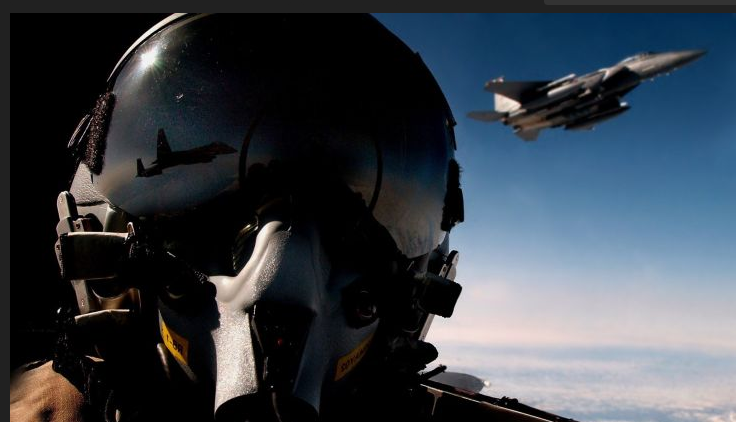
Are we subliminally trying to look like F15 pilots?
Credit: Wallpaperup.com
[authors_page role=contributor]