


Bootfitting 101: TLC For Old “Soles”
Here’s a boot fitting pro doing a stance analysis.
Credit: Steve Cohen
Older people have messed up feet, says Steve Cohen philosophically. Cohen is CEO of Masterfit Enterprises, a company that specializes in training ski shop salespeople to fit boots properly. The company also tests boots, makes insoles and boot fit aids and runs America’s Best Bootfitters, an organization of top bootfitting shops.
“Think how many miles senior feet have trod. They’re like an old car suspension, a little more played out,” he says.
Help is on the way.
“Many people are in boots one size too big for them, some are amazingly even in boots three sizes too big,” says Cohen. “You need snug fitting boots to steer with your ankle, set your edge, and let the ski do its thing with an arc turn. Movement should be minimal to get your ski to turn where you want it.”
The way to test boot size? Remove the liner, slide your foot into the boot until your big toe touches the front. Make sure there is not more than a finger’s to a finger-and-a-half’s width of space between your heel and the shell. That will ensure a snug fit when the liner is reinserted.
Typical foot problems that occur with age are: thinning of the fat pads cushioning the soles, plantar fasciitis (inflammation caused by the stretching of the connective tissue that runs from the front of the heel to the metatarsal heads sole), bunions, and poor circulation.
One recommendation Cohen makes off the bat is to replace the stock insole with an upgraded model that provides support in two key places, the arch and the

Fitting boots properly may require custom-fit insoles.
Credit: MasterFit
heel.
Other pieces of advice:
- To ease your foot into the boot, spray the spine of the liner with dry silicone spray or use a giant shoehorn, made specifically for ski boots.
- Remove liners frequently so they can dry out. Your foot sweats and produces moisture. If it sweats a lot, use an underarm anti-perspirant on your feet.
- Buckle your boots when not in use, to preserve the shape of the plastic.
- Use thin socks, the liners will provide the necessary insulation.
- The cuff of the boot should wrap snugly with buckle bails set somewhere near the beginning to middle of the ladders. If you’re near the end of the ladder, the buckles may deform the shell and change the boot’s intended flex pattern.
- To keep feet warm, start with a warm boot. Use a heated boot bag to keep boots toasty on the way to the slopes or place a microwavable hot pack inside each boot (remove before skiing!). Use Boot Gloves, neoprene insulating covers that Cohen swears by. Or—bootfitters’ trick—put a layer of adhesive aluminum foil underneath the insole (stock or custom) to help reflect heat back to the foot.
- When shopping for boots, expect to spend several hours. Go when shop personnel are least busy, midweek, midmorning.
“Never buy boots online. In the shop, you’re buying the boot fitter’s knowledge and skills, which is priceless,” says Cohen. “You will get boots that are comfortable and will last you many years. A lot of people buy new boots before their old ones are truly done because they don’t fit or perform well.”
Check out bootfitters that belong to America’s Best Bootfitters. They can help you select a proper fitting ski boot, make modification to enhance fit, comfort, and warmth. Good bootfitters can also stretch or grind shells and liners to relieve pain caused by bunions or other bony prominences.
It’s all good for the senior soles.
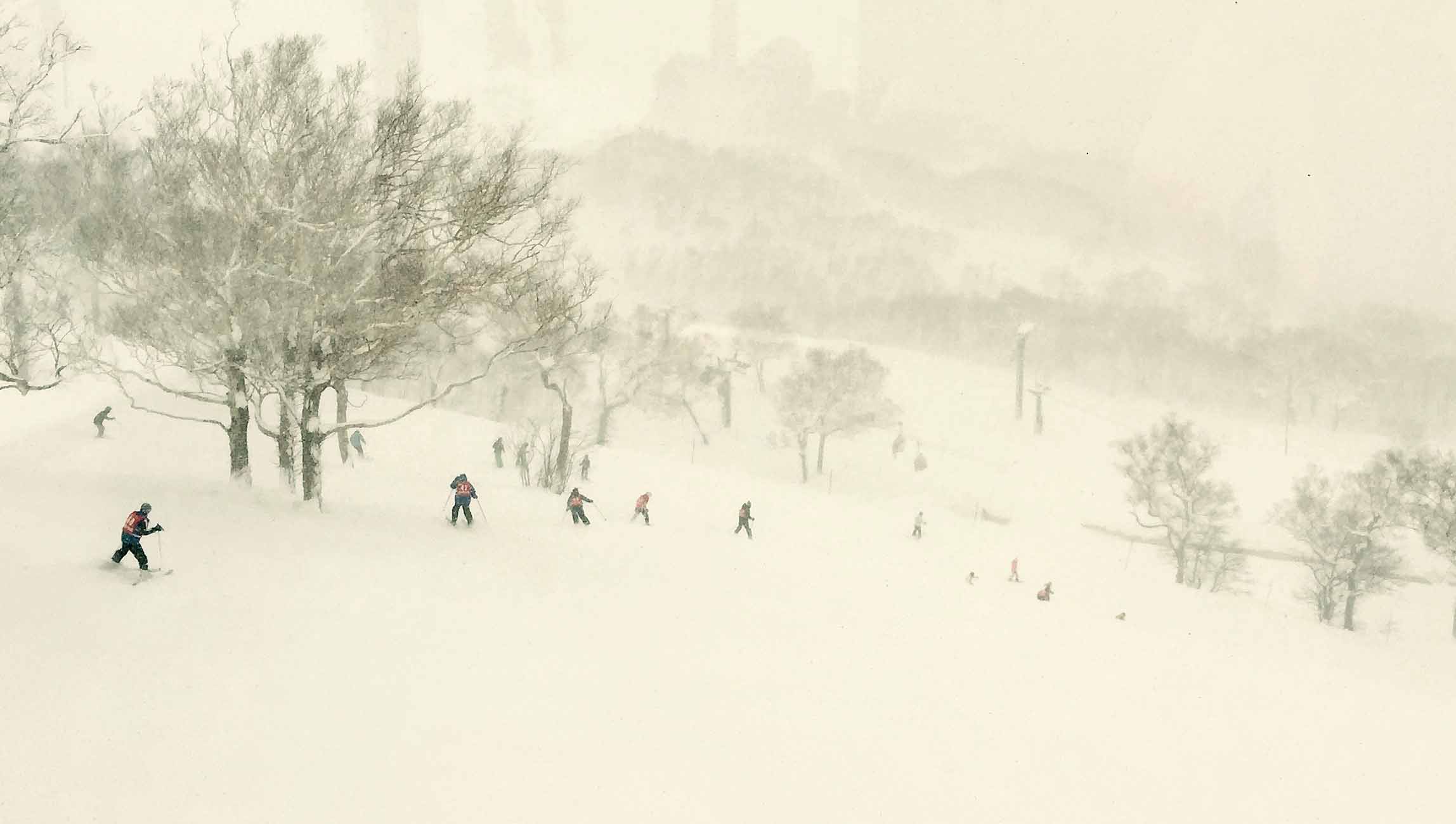
Ski Japan: Looking For Snow? Head West. All The Way.
Combine lots of snow with an exotic destination for an incredible skiing experience.
Almost like a Japanese woodcut, skiers in Niseko run through the flakes.
Credit: Susie Winthrop
O.K., you adventurous senior powder-hounds: How far will you fly to find an awesome stash in this odd winter of snow conditions? If you don’t fly east to New England or Quebec to ski, how about 14 hours on a JAL flight to Tokyo on a 787 “Dreamliner” direct from Boston? When you get there, hop on another two-hour flight to Sapporo, the capital of Hokkaido, the northern most island in Japan. Then, jump on a bus and three hours later you’re in Niseko, home to four (Annupuri, Higashiyama, Hirafu, and Hanazono) interconnected ski areas. If it’s winter, it will be snowing. Yes, guaranteed fresh light powder snow everyday all winter. The aspen trees are perfectly spaced and slopes are rarely skied out, but guides, helicopters and snowcats also await those coveting untracked bliss.
However, the real adventure here is the fact that you’re in Japan. You’ll eat sushi, sashimi, tempura, gyoza, yakitori, miso soup and sea urchins. Be sure to stay
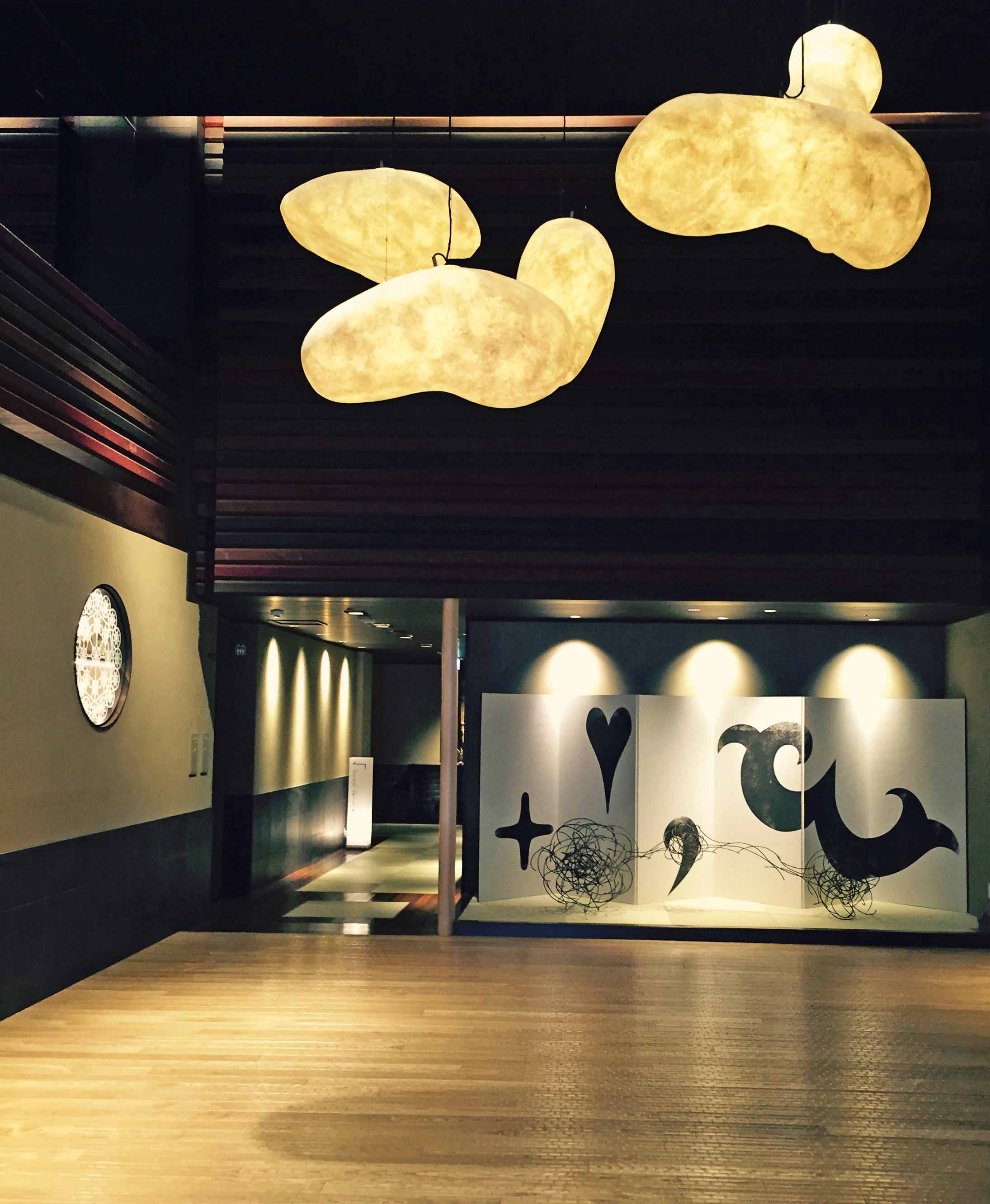
Moku No Sho ryokan has an onsen (hot water spring) on site.
Credit: Susie Winthrop
at a real Japanese Inn (Ryokan) with hot spring fueled baths (Onsens). You won’t need to bring a bathing suit to the springs; you bathe in the buff. Niseko Moku No Sho, the fabulous inn we stayed at, provided a yukata (kimono bathrobe) and slippers which we wore at all time until we dressed for skiing. You don’t even need to bring your own ski garb; you can rent it at the mountain: parkas, pants, hats, mittens, goggles, helmets, snowboards, skis, boots, poles—all the latest, all for rent.
Like most things in Japan, the resort is clean, organized and efficient. At the mountain, it took no time to pop grand-daughter, Eloise, in day care, purchase our senior three-day ticket (a real deal at $105 for three days on four mountains), rent our super-wide powder skis and get out on the slopes. There are no lift lines, even during vacation week.

Tower of beer. What a novel idea.
Credit: Susie Winthrop
Looking for apres-ski fun? Make some friends and order a high “tower” of beer to share at the base lodge. Or slide down to the Bar Ice igloo and warm yourself with a hot rum and butterscotch toddy. “Kampai” is all the Japanese you’ll need to know.
For more information on skiing in Japan, click here.

Portrait Of A Weird February: East, Coldest; West, Warmest
Here’s a picture of our weather record-breaking mid-winter month.
Black and White, Ying and Yang, Macy’s and Gimbel’s, Felix and Oscar: These opposites come to mind when we look at this picture of what happened to the weather in February, 2015. The Washington Post reports there were coldest months on record throughout the East, while the West cooked. There are some in both places who aren’t having fun with this. You can understand the frustration of Western snow sport enthusiasts when they see brown hills, but there are plenty in the East who find the cold abysmal, the roads to ski areas challenging, and the need to deal with ice dams at home more demanding than recreation. Nevertheless, as the month turns (Rabbit, Rabbit), there are signs the West is entertaining new storms.
One glance at the February weather composite shows why we’ve had a weird mid-Winter: Cold East, Warm West.
Credit: Weatherbell.com
[authors_page role=contributor]