

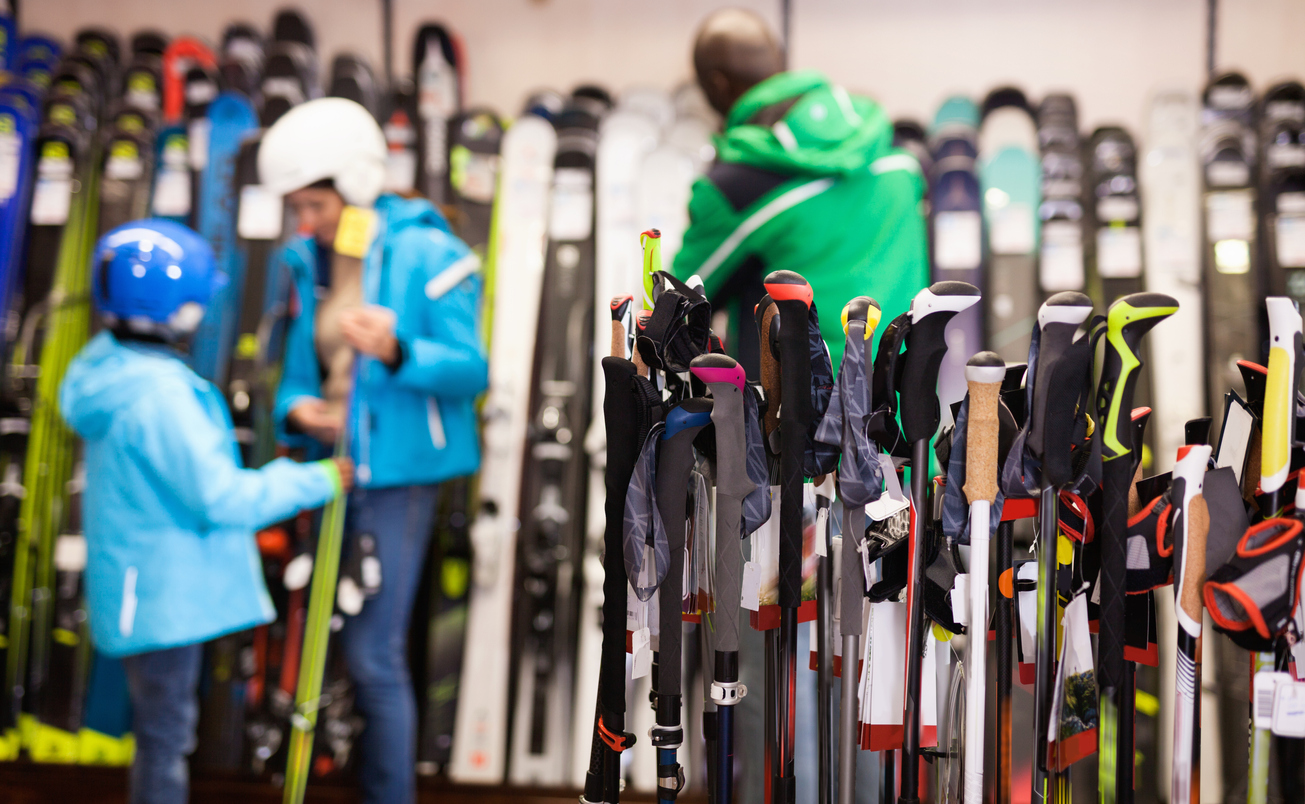
The Ski Swap
This time of year, the Ski Swap notices start coming and people get excited for the coming season. The Ski Swaps are not only an outlet for selling and buying equipment, but also a social time to reconnect with your ski buddies who perhaps you have not seen since last winter. But there are plusses and minuses for these things, and I believe that there should be an acronym for the word SWAP (S#$% we all purvey) Yes, we are purveyors of the “s@#$” from our basements and garages and in most cases, we just want to unload and if we get a buck or two for it, so be it.
But the main reason is to clear out so that we can make room for new equipment. Old boots, helmets, skis, and various auxiliary ski items can be moved but the funny thing is the difference in what we think they are worth compared to what people are willing to pay. If your main reason is to unload stuff at the swap, then you will take whatever is offered. But if you think your “stuff” is worth more than people are willing to pay- you will be sorely disappointed. If you want to get rid of your “stuff” then you better be prepared to let it go for next to nothing.

Credit:JackF
Let’s go through a couple of examples, shall we? Skis- if your skis are straight skis and not shaped, meaning they are “old”, you have next to no chance to sell them. You are better off disposing of them or donating them to those guys that make Adirondack chairs out of old skis. Or hang them up above your fireplace if they are really old. Anything 10 years or older – the ski shops will not work on the bindings for liability purposes.
Do you have better skis? If you want to move these, you need to be realistic about the price. You may have paid over $1000.00 per pair for them with bindings in the past, but people are not going to want to pay more than half of that if they are several years old- no matter how well they are maintained.
Let’s talk about boots. A discerning buyer will look at used boots to see what kind of shape they are in. Are the liners worn down? Are the toes and heels of the shell worn? They won’t work well in the bindings if they are. Are they more than a couple of years old? If the aforementioned things are true, don’t expect much from a swap. Take what you can get and leave the building.
Rear entry boots- use them for a flowerpot. Not worth a hoot. My dad’s old buddy had a pair of Hansens that he wanted to sell back in the day. I told him to plant his geraniums in them in the spring. Nobody in their right mind was going to buy those things. Be realistic.
Clothing- a lot of swaps do not have clothing options because of COVID. However, there are some that may try it. Again, don’t expect much for used clothing. Your old Bogner one piece may have been cool in the day, but it is not worth a thing today. Again- lower your expectations and try to unload if you can for a cheap price.
But the bottom line is see your friends, see what s@#$ they are trying to buy or sell, laugh at the curmudgeons, and enjoy one of the highlights to the beginning of ski season. Think snow and thanks for reading.

Book Review: Staying With It
An Aging Athlete Becomes Enlightened
[Editor Note: We are reprising this article from Nov. 2015 because it contains important themes of persistence and adaptability. And the book Staying With It was written by one of our favorite authors, the venerable John Jerome, a former editor of SKIING magazine.]

What happens when a 50-year-old writer decides to fight aging by becoming an athlete? Will physical awakening, sharpening, perfecting hold off the loss of function, range, performance? When former SKIING Magazine editor John Jerome found himself at the doorway to old age, he decided to do something about it. That something was his four-year voyage into athleticism to see if he could counter the effects of aging with muscle power, insight, and, as it turns out, mindfulness.
He tells his story in Staying With It, (Breakaway Books, 1992), a journey of trial, error and learning told in his usual reflective—and discursive— style. We recently re-discovered Jerome’s writing while paging through old, bound copies of SKIING magazine. When we learned he decided to become a competitive, masters-level swimmer at age 50, we wanted to explore his journey for our own edification as well as for our readers’.
At the beginning, he says, “Aging is very rude, making no attempt at diplomacy, at softening its message. It just starts slamming doors in your face, yanking things out of reach.” Jerome said he “was interested in giving up any capacity as slowly as possible…understanding and acknowledging the process.” His goal was “the maintenance of full function beyond the years of youthful vigor.”
To do that, he starts an experiment, swimming first as a fitness replacement for running and then training hard as a competitor. He discovers the Training Effect, body’s response to increased physical demands that gets cells to respond and do more. “To age,” he says, “is to begin asking the cells to do less.” The only antidote he says he could find was “movement—exercise and stretching.”
Jerome tells us about his training regimen, his lessons in exercise physiology, his trips to swim camps where he meets fellow enthusiasts, his many swim meets and consults with scientists. When he talks of perfecting his swimming stroke, he finds that simple physical task opens the door to complex mental aspects. He discovers “pre-verbal” tempo, right-brain control of the action, what we now call “flow”. “Learning to operate in your right brain is another part of the athlete’s job I had never considered before.” You know it, of course, when you ski cross-country “in the groove”, or swing through giant slalom turns without, well, without thinking. One way to induce that, he says, is to relax. “The athlete has to maintain a small amount of relaxation…The right brain knows this. Sometimes you have to wait, to ease up, to feel around in your capacities for just the right touch to make the motion work.”
Because his training program was largely self-directed and John was a self-admitted type-A personality, he eventually drove himself too hard, over-training and catching “Olympic Flu”, the syndrome that leads finely tuned athletes into exhaustion and even depression. After resting, he turned to a sport physiologist who used software and underwater video to analyze his stroke. Result: return to racing more enlightened. But, he says, “I wish I hadn’t started so late. I wish there were more time. I keep hurrying, and I’d really rather not do that.”
Of his experiment, he says, “I may not have stopped aging in its track…but I have certainly stopped the loss of intensity.” And, “the more I trained, the better the rest of my work goes, the sharper, and clearer and more efficient.”
John Jerome has written several books on fitness as well as other topics. Staying With It is available from Amazon.com.
$1 Billion in Improvements at Ikon Pass Resorts
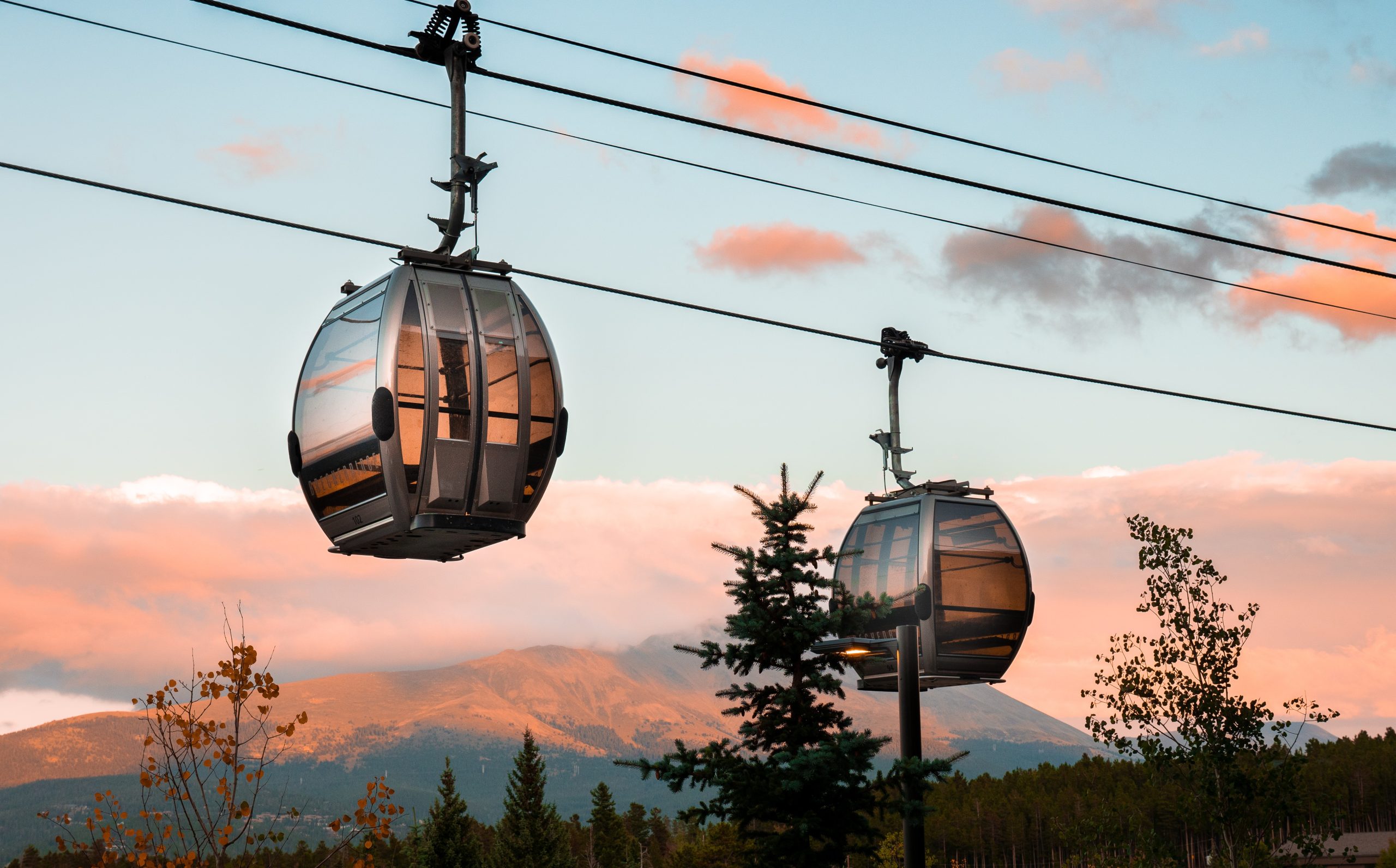
A sunset shot of two gondolas in Steamboat, CO Photo by Phoenix Dorninger on Unsplash
Ikon Pass holders get to enjoy more than $1 Billion in new terrain, lifts, dining, skier services and more for the 23/24 season. It’s an impressive collection of improvements, including new destinations added, so let’s start with those.
New Destinations
Winter 23/24 offers pass holders new destinations –
Alyeska in Alaska and Snow Valley in California.
Also, two areas in Pennsylvania, Camelback and Blue Mountain Resort, have been added to the Ikon Pass.
New Terrain and Lifts
This season, skiers and riders will have access to more than 1,000 additional acres of terrain and more than two dozen new lifts or upgrades across multiple Ikon Pass destinations. A few highlights –
Steamboat – The new Mahogany Ridge area adds 650 acres of advanced and expert terrain, making Steamboat the second largest ski resort in Colorado.
Aspen Mountain – In the largest expansion project in decades, the new Hero’s terrain opens 153 acres, increasing lift-served terrain by more than 20 percent. The mix includes nineteen expert chutes, three gladed areas, and four groomed intermediate trails. The project also extends some runs aat the bottom, eliminating the hike-out.
Loon Mountain – The South Peak Expansion adds 30+ acres of new terrain, a new quad chairlift, and 50% more beginner terrain.
Sugarloaf – The West Mountain expansion adds 120 new skiable acres with beginner and intermediate trails and lift upgrades including the new Bucksaw Express high-speed quad.
Big Sky Resort – The iconic Lone Peak Tram will transform access to the highest scenic overlook in Montana presiding over the peaks of Montana, Idaho, and Wyoming, as well as Grand Teton and Yellowstone National Parks.
The Highlands – The Michigan resort is installing a new six-person, high-speed Doppelmayr D-Line bubble chairlift, complete with heated seats – the first lift of its kind in the Midwest.
Tremblant, Stratton and Crystal Mountain will begin offering direct to lift access with new RFID technology at all major lifts.
New and upgraded lifts at Winter Park, Snowshoe, Aspen Mountain, Mammoth Mountain, Solitude, Schweitzer, Taos Ski Valley, Sun Valley, Brighton, Loon Mountain, Sugarloaf, Sunday River, Snowbasin, Mt. Bachelor, Boyne Mountain, The Highlands, The Summit at Snoqualmie, Dolomiti Superski, Kitzbühel, Thredbo (2024).
Upgraded Skier Services
Redesigned rental shops, updated locker rooms, more spacious base lodges, improved parking lots, re-imagined children’s facilities, and fun off-mountain activities. These include –
- Copper debuts a new 25,000 square foot mid-mountain lodge with a full-service restaurant
- A new Kids Ski School lunch center is slated to debut at Deer Valley.
- The new Schweitzer Creek Village project creates a dedicated area for beginner and intermediate skiers and riders, as well as additional parking, rental and SnowSports school facilities.
- Windham will unveil revamped facilities in its base lodge and private club.
- Creekside snow-front services will debut this winter at Steamboat, conveniently located adjacent to the slopes and Steamboat Square, with new guest lockers, ski valet, UCHealth Urgent Care Clinic, and additional restrooms.
Enhanced Snowmaking
Look for upgrades at Eldora, Mammoth Mountain, Steamboat, Blue Mountain, Copper Mountain, Sugarbush, Dolomiti Superski, Sunday River, Panorama, Sun Peaks, Killington-Pico, Sugarloaf, Windham Mountain, Boyne Mountain, Thredbo (2024).
Ikon Pass is currently on sale for the 23/24 winter season. For more details, please visit www.ikonpass.com.
[authors_page role=contributor]