


Question For You: Foggy Goggley?
Here’s A Common, Perhaps COVID-Amplified Problem For Skiers.
A question from SeniorsSkiing.com reader Steve Rosen:
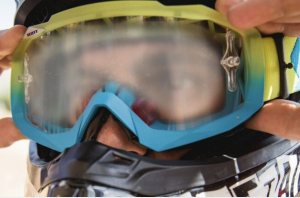
Which is worst: Foggy goggles or flat light?
I’ve learned to put the goggles on my face as soon as the helmet goes on and to keep the goggles on, which seems to help, as does trying to create a seal between the bottom of the goggles and the top of the mask. Are there other techniques that work or that are sure failures? Or models of goggles that seem immune from fogging?
Question For You: How Do You Manage the Foggy Goggle syndrome? Is this a new problem? Do you have a person method to remain unfogged? What do you do when you get fogged up?

Obsessing Over Gelati In Milano
After Your Ski Trip, Do This, Especially When In Italy.

Duomo di Milano where we indulged in our initial Gelati. Credit: Medium.com
It is the 8th March 2013, the day is cool but sunny. It is still winter here in Milano, Italy. Food and Italians go together like toast and marmalade on Isle of Wight. The clever people that they are they gathered the recipe from Marco Polo and created ice cream. Gelati to the Italians, and not simply ice cream as we know it.
We have skied some legendary powder. Morzine, Avoriaz, Courmayeur, and the slopes of high Switzerland. Now all behind us. The mishap that was Marg’s on the slopes of Morzine Ski Resort where her hip parted company with her femur. It’s done and sorted. She by now languishing in a hospital back in Australia. Ahead of her months and months of exercises by physical therapists. Our remaining group of skiing tourists head to downtown Milano for some creature comforts and good European hot chocolate and to search for that legendary Gelati.
Forget your bucket list, it’s so yesterday; just visit Italy. Don’t dally, this place is cool. Built by people that know a thing or two about how to construct a medieval village. It has everything you never realized you needed. But now know where your life experiences can be fulfilled.
In Italy, they have Gelati; it’s everywhere. In Italy, it helps to be passionate and quite obsessive about food. You fit the culture better. The medieval diet is a thing. The food here makes your heart sing. I am a man of simple taste, I like a Lou Reed riff, Italian Gelati, fresh snow, Uva di Troia, blue sky, powder snow, porcini mushrooms, wasabi pear paste, Nutella Pizza, Italian hot chocolate, and cats. Italy has nine out of the above, that’s plenty to make a trip of a lifetime.
Tack it on to the end or start of your next skiing trip.
Anyhow, Gelati is our focus. We decided, as you do in Italy, to search for that Zen moment. Or nirvana when food passes your lips and mere seconds later you are taken to another place.

Gelati in the presence of Il Duomo di Milano. Perfect. Credit: Dave Chambers.
Day One Milano. We sit in the hugely dominating presence of the massive cathedral that almost blankets the whole square. The Duomo di Milano, 600 years and still standing, all 135 gargoyles of it. Seated at an open-air restaurant, we eat yet another excellent pasta. Porcini mushrooms grow wild in the forest here. Collected from the forest and scattered with a slip of black truffle across a fresh house made pasta. Simple yet sublime. Accompanied by a very good Montepulciano.
The conversation turns to Gelati, and, I kid you not, within twenty quick paces we find a purveyor of fine Gelati . We ordered enough scoops to satisfy a platoon. All your typical flavors. Our excitement was rewarded with explosions of flavor.
Could it get better than this. We didn’t think so.
Day Two. Now down to just two of us, the other tourists having skipped and flown home. We are just getting a feel for Italian lifestyle. Our concentration heightened now we are tuned in to the local food scene. Feeling switched on. We trawl through the piazzas. We circle and wander the streets looking for shops that mysteriously stay hidden for almost two hours looking for snow wear retail stuff. My mate has a tired ski jacket in need of replacement. Suddenly we blunder upon the old bohemian quarter, exclusive and designer expensive. The luxury within these narrowed walkways is revealed. By chance or divine intervention, our next serve of designer Gelati is nigh. Imagine Mango, so smooth, the deepest orange in color and very glossy with smooth mouthfeel. This mango Gelati has the most intense sweet flavor and equal first place to yesterday’s I decide. Sacrilegious, I know, but folded within a wispy thin, crepe.

Simply the best: cioccolata italiana milano.
Last day. We lunch under the brooding gargoyles of the Duomo di Milano, now grey with mist and rain. Within our shallow bowl, pasta. The waitress recommends a very fine local red wine. I ask her about Gelati. “Oh yes,” she says encouragingly, “You should visit Cioccolata Italiana,” further adding, “It is the best in Milano.” We are excited. I demand four flavors. It’s a bucket but a small one. Of flavors chosen, I can’t remember because my tastebuds had hard wired to my brain. Endorphins now in overdrive. The Cioccolata Italiana Chocolate conjured angels. Those angels started dancing on my tongue, the intensity of chocolate, the smoothness as it melted around your taste buds, all balanced with a not too sweet finish, a deep dark chocolate that lingered long after the first taste. The heavens had opened just then for a tiny glimpse of ice cream nirvana. This is not just any Gelati, this is alchemy for the tastebuds and simple the best Gelati I have ever experienced. The ancient Romans may have brought you the amphitheatre, sewers, and concrete, but I am thanking them for their wonderful Gelati and the Medicis for Marco Polo.
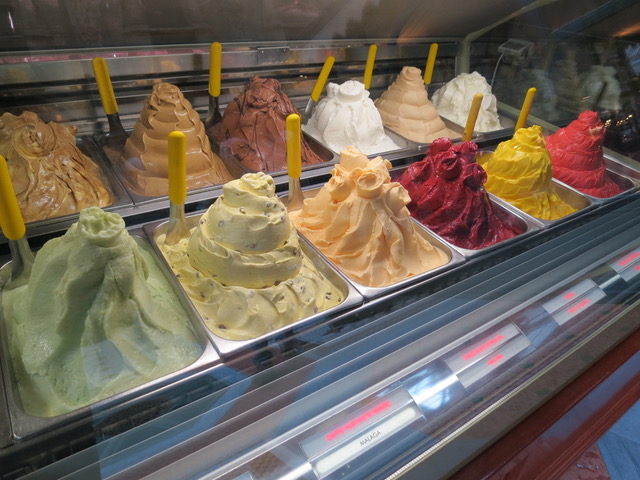
Chocolate, please. Credit: Dave Chambers

A Brief History Of Skiing “Style”
Author’s Note : I owe much of the following to a close personal friend. This is wholly my interpretation of his observations, it does not necessarily reflect or deny his views.
In France
In the 1940s/50s France and Austria began competing for increasing skiing tourism. The rivalry was both commercial and political. Each wanted a national “product,” supposedly better than their competitor, that they could differentiate and sell.
At that time, the French believed they had the answer to the question, “What to teach?” They needed a product that trainee ski instructors could be trained to deliver in ski schools.

JCK embodies the French style in 70s Head ad.
Remember that the instructor training systems were nationalized. The Ecole de Ski Francais was a government monopoly. Its name is frequently mistranslated into English, as the “French Ski School” but that is not what it means: it means the School of French Skiing. A product.
They offered the “Rotational Method” which they claimed exemplified the physics involved. What you were to do was to slightly crouch as the “turn” approached, then extend the legs rapidly to unweight the skis, and at the same time rotate your torso in the direction you wanted your skis to go.
This transferred the angular momentum (the twist if you like) of your “upper body” toward the impending new direction, down to the legs and skis. From a physics viewpoint that was “Transference of momentum from part to whole” , your body can only twist so far before it imparts that twist to your legs via your pelvis.
Some of SeniorsSkiing’s respondents to my earlier contributions insisted on this being “the way to ski” and were critical of my introduction of the concept of “arcs” instead of “turns”. Which does not reflect badly on them, but it does illustrate the power of inertia and how susceptible we are to Confirmation Bias.
In Austria
At the time, a leading figure in the Austrian National Ski Instruction System was Prof. Stefan Kruchenhauser. He had been studying, photographing, and filming Austrian racers as they went through the racing gates.
Unlike the French, he observed that as they approached the gate po they turned their shoulders away from the intended “turn” and had their back toward it as the direction change occurred.
Kruckenhauser was a ski photographer as well as a pioneer of the Austrian technique. This photo is by him.
Other writers picked up on this supposedly “New Austrian Technique”, explaining it via Newton’s 3rd Law of Motion (every action has an equal and opposite reaction). It became known as the Counter Rotational Method, conveniently providing a different “product” to that of the French, and endless column inches to the magazine writers.
Because both were governmental, political projects, they each quickly developed their own followers in the ski schools, and woe betide anyone who thought any different. Austrian instructors, attempting to find analogies to help their pupils, began teaching “point your skis across the mountain, and your chest down to the valley.”
In fact, the Austrian racers were not employing Newton’s 3rd Law, they were simply trying to avoid whacking their shoulders into the slalom poles which back then were tree branches cut off the pine trees and bedded very firmly in the snow. Had the good professor filmed his skiers changing direction when not racing round sticks in the ground he would have found they did not “counter rotate”. Be careful what you think you see!
The Austrian concept was exported comprehensively to the USA because Austria provided back then a great many instructors to the newly expanding American ski school industry. The system satisfied ordinary recreational skiers, if it’s making money why change it?
Prof. Georges Joubert.
In late 1960’s early 70’s, Prof Joubert of Grenoble University stood both the French and Austrian instructing methods on their heads. Note that it is academics who are making the discoveries not the ski schools, which simply followed the “official line”, and pretty much did so until their monopolies were broken. Monopolies are not innovators and not good learners.

Still sought after book by French team coach Georges Joubert
What Joubert proved was that racers ski with Independent Leg Action. Racers never skied with their legs together. The legs do NOT act as a single unit. Each rotates independently in its hip socket unless the feet and legs are jammed together, which inhibits such free movement and necessitates throwing your torso about one way or the other.
What this means, and it is very significant indeed, is that the “upper” body is not defined at the waist; it is defined in the pelvis. The leg rotation can be either active or passive, but it happens in the hip socket. There is therefore no need for either the Rotational nor the Counter-Rotational concepts which were not based in physics after all.
To his credit, Prof. Kruchenhauser was one of the first to recognize and adopt this new realization that all that is required is effective balancing (not “balance” which is different and static), accompanied by independent leg rotation with accompanying leg flexion and extension. He called it “Beinspiel” or “leg play”.
Those earlier concepts still facilitate getting folk down skiing pistes, but not in a way that can can now be classified as skillfully. It either matters to you, or it doesn’t. Shakespeare observed “nothing matters, but thinking makes it so”.
It is regrettable that even after 50 years much of the ski school industry has not recognized either the change, or its significance. Though of course, a few have.
[For more thoughts and videos on ski technique, as well as links to Bob’s books, visit https://www.bobski.com/]
[authors_page role=contributor]