

64 Years of Skiing & the Consequences
I first skied when I was six, and loved it from the first day. It was a rope tow at North Creek, NY, near my mom’s hometown. By the second day I was taking the rope-tow and couldn’t understand why sometimes the rope felt SOOOO light in my hands, and other times it was almost too heavy to hold on. But most important…every time I let go the rope at the “get-off” spot, I was on the way to FUN! It’s been 64 years of fun, enjoyment, camaraderie, a bit of racing, good anxiety, wet, cold, enormous powder dumps, sleet. You know what I’m talking about, it’s the wonder of skiing and always having fun on the hills.
Except that the past season of 2024 wasn’t great at all. It started out with the rainiest day I’ve ever skied in January. I was in Vermont with old friends, and said I’d take their granddaughter up on the hill. She had a great time, I taught her a basic wedge/snowplow, and we had fun all day long. The only problem was the dull ache in my left hip. It had been bothering me more often during the previous twelve months. In 2021, I’d seen an orthopedic specialist, who said, “Well, you don’t need surgery now, and maybe you never will, but there’s some erosion of cartilage in your left hip joint.”
The discomfort in my hip got a bit worse each of the past three years. I tried PT but it didn’t work for this (the cartilage was going, going…and then pretty much gone by winter 2024). By March 2024, with one decent hip and one goner hip, my annual spring trip to Snowbird & Alta was bittersweet. Always love being out there, but I was skiing (in my mind) like an old guy, and I didn’t like it, cause I still didn’t feel “old”! But I could only manage a decent turn to the left, and that just doesn’t cut it in the Wasatch! In my mind I knew my future. So I did what I had to do. I got in touch with my “bone doctor”, or orthopedist.
Now, three years after first meeting my doctor, I understood why he’d originally said, “well, you may never need a hip replacement at all”. Everyone’s body works differently, and so whereas my cartilage was now gone (and to quote the goodfellas in Goodfellas: “and there wasn’t nothing we could do about it”), plenty of other guys and gals in my situation, with a similar period of “time passage”, might have more cartilage working for them in the joint, thereby lessening pain and immediate need for surgery.
My pain was constant, so I asked my doctor for some names of top surgeons. The first guy had done the surgery to replace a very good friend’s hip nine years ago, but now he wasn’t doing as many surgeries, being older. So I called the next surgeon on my list. There was something in his manner that exuded a quiet confidence in his surgical abilities (he specializes in hip and knee replacements). I was already feeling really good about him, when he said, ”so you’re a skier”. I told him I was, and had just returned from a Utah trip, but that my home mountain was Stratton in VT. “That’s where I ski with my family every year”, he said.
Well, you guessed it. I chose him. It was important to me that he was an athlete, a regular skier, and we both loved the same mountain in Vermont.
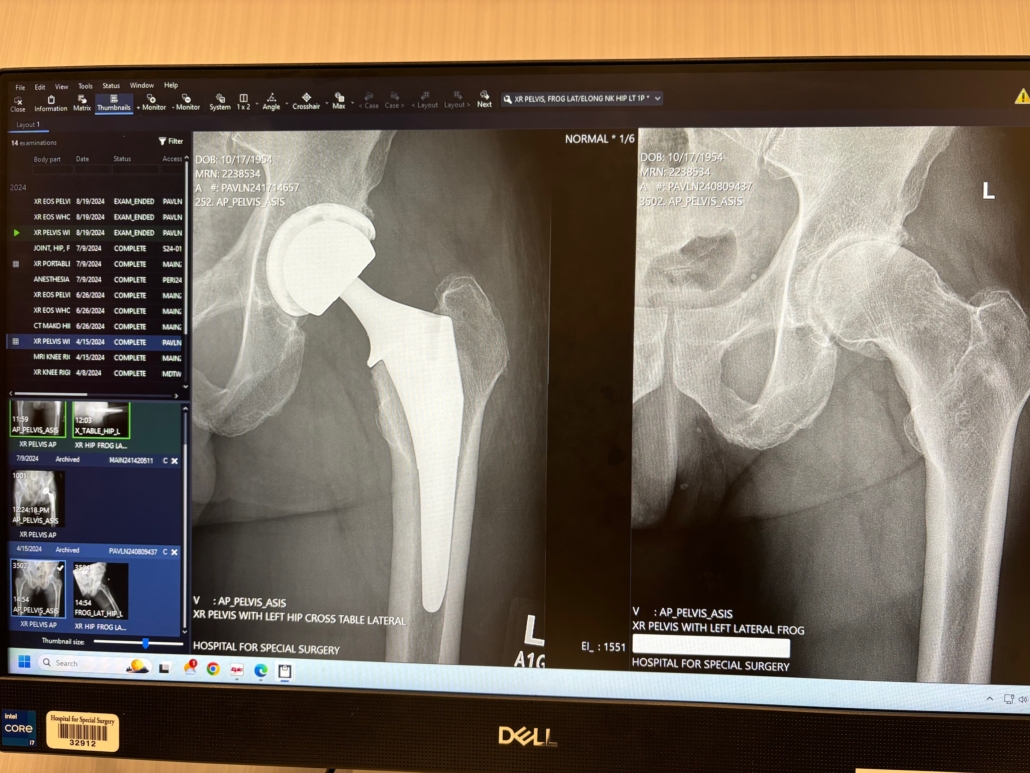
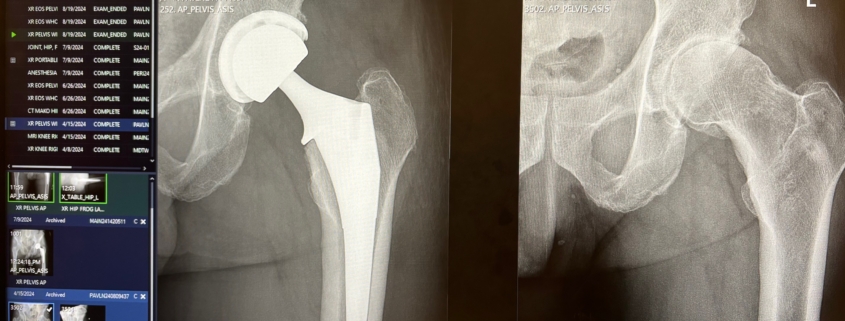
X-Ray of John Gleb’s Hip
Three months later, in early July, I had the surgical procedure done in New York City.
My hip feels great, zero soreness from area of incision. Walking average of 1.5 miles per day. And because the cartilage had all but disappeared in my left hip joint, it had the result of shortening my left leg perhaps an 1/8 of an inch, which contributed to my irregular walking gait. Now both legs are the same length again, (another beautiful consequence of the surgical procedure), and walking feels totally normal. Am I happy? You better believe it. Did I wait too long? No, I actually think I waited the right amount of time.
Moral of the story for me: Pain is a signal that something’s wrong, especially when it doesn’t go away, and acting on that signal has been such a great thing for me. Got questions? Happy to reply. I’m just a regular guy, not a doctor. But pleased to be helpful in any non-medical way, personal perspective, etc.
Very thankful I did this.
The Top Resorts in Europe – World Famous and Not
 Lots of snow and sunshine days, gorgeous views, varied terrain, modern lifts and multiple choices for dinner, nightlife and shopping. All are the hallmarks of what makes a winter resort great anywhere in the world, including in Europe. These are the top-rated resorts in France, Italy, Switzerland elsewhere in Europe are based on a mix of all those things, plus transfer time from and back to the nearest airport. Plus the low cost of weekly ski passes – as low as $50/day – adds to the appeal.
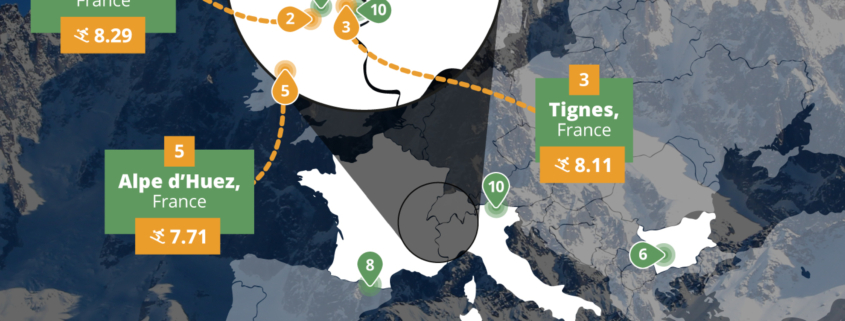
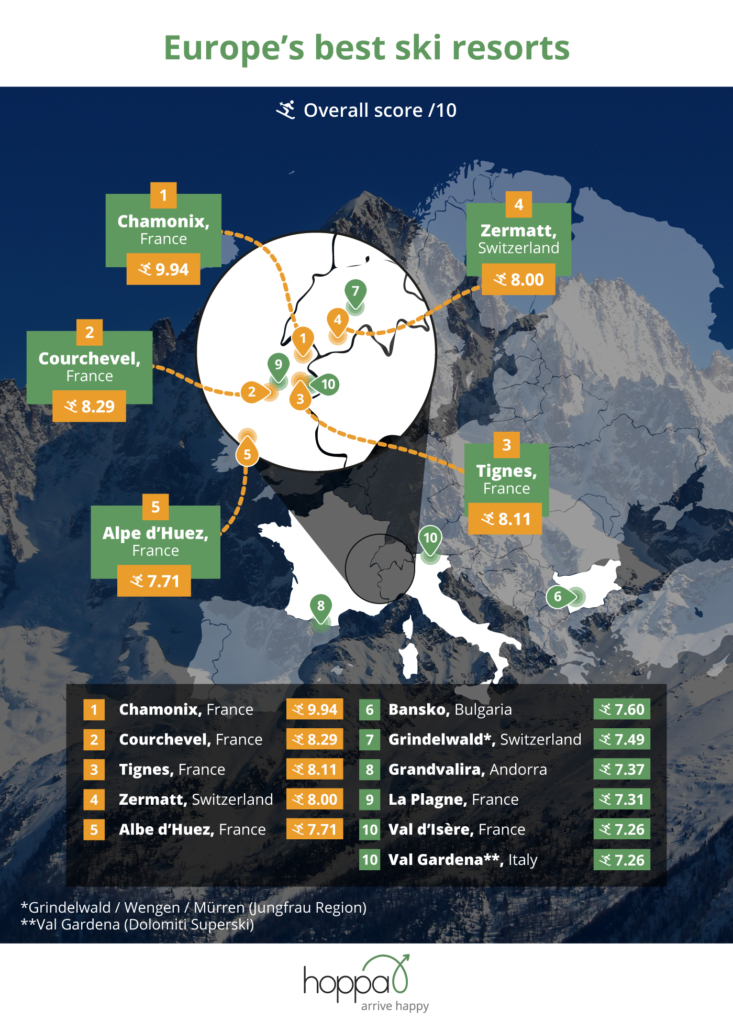
Research by the Europe-based air transfer company hoppa rates Chamonix, Courchevel and Tignes the top three, and includes lesser known Bansko, in Bulgaria, and Grandvalira, in Andorra, as up-and-coming super-affordable hidden gems less crowded than the larger and more famous destinations on the list.
So here are some factoids to help you decide where to go next –
Chamonix – Nestled at the foot of Mont Blanc in the French Alps, Chamonix tops the ranking with an overall score of 9.94. Famous as the birthplace of modern alpine skiing and host of the first-ever Winter Olympics, it remains one of the world’s most iconic resorts.
Ski passes average $85/day for a weekly pass, annual snowfall reaches 470cm, and no other resort in the list offers as many restaurants or nightlife options.
Courchevel – Contributing to Courchevel’s high score is its average annual snowfall of 399cm, its high number of nightlife listings and restaurants and its high number of Google searches. Courchevel is a great place for a luxury stay. Along with stunning scenery and desirable hotels, and more than a dozen Michelin-starred restaurants in the area, including Le Sarkara, Le 1947 à Cheval Blanc, and Baumaniere 1850.
Ski passes also average $85/day for a weekly pass.
Tignes – This resort completes an all-French top three with a score of 8.29 out of 10. Contributing to its high score is its high snowfall of almost 700cm per year, an affordable ski pass of just around $50/day for a weekly pass, and its high number of nightlife listings.
Due to Tignes’ high average snowfall – around 669cm a season – it is considered a safe resort to book. That means you don’t have to worry about whether or not it will have snow.
Val Gardena (Dolomiti Superski) in Italy and Val d’Isere, also in France, are also on the top ten list – and both are destinations this season for the 70+ Ski Club.
Bansko ski passes are the least expensive on the list – around $50/day – which is one third of the price of Zermatt in Switzerland, the most expensive ski resort in in Europe, and also on this top ten list. Bansko has a ten-mile cruiser known as the “Ski Road”. Closest airport is Sophia.
Grandvalira is the largest ski resort the Pyrenees, with more than 150 miles of trails, 70 lifts and six base areas. Is part of the group that also includes Pal Arinsal and Ordino Arcalis. You can ski all three on one pass for around $75 for a weekly pass.
Other resorts on this top ten list include Grindelwald/Wengen/Murren in Switzerland’s Jungfrau Region and two more areas in France, both smaller and lesser known than their big sisters, La Plagne and Alpe d’Huez.
Surpisingly, no resorts in Austria or Germany made this list.
Not world-class Innsbruck, with its world-famous Hahmenkamm run, or even Gurgl, where I learned to ski after college in the 60s, trading English lessons for ski lessons, and site of the recent World Cup races in which Mikaela Shiffrin cemented her winning legacy as G.O.A.T. Not Garmish-Partenkirchen in Germany’s highest mountain range, site of the1936 Winter Olympics, where some inns on the main street have been serving guests since the 1600s. So it goes.
You can read the full research here: https://www.hoppa.com/en/discover/infographics/european-ski-index
What is your favorite ski resort in Europe? Where do you want to go next?
See you on the slopes.

It’s Everywhere!
 If you have been shopping for cold weather gear lately, PrimaLoft is hard to miss. This ubiquitous synthetic insulation marked by a triangular red shield is now featured in more than 1,000 cold weather brands that cater to the winter wear market. Very likely it is an important part of your winter wardrobe now.
What is PrimaLoft? And where did it come from?
As the popularity of skiing grew in the 1960s and 70s, so did the need for clothing to stay warm on the slopes. Goose down insulation was the answer. A down parka was the epitome of popular fashion and practical comfort. But it turned out there was a problem. Once that down insulation got wet, its ability to hold heat went away. So long outdoor comfort!
In 1983, the US Army research lab in Natick Ma. asked the Albany International Corp., a pioneer in advanced textile and material processing, to develop a water resistant alternative to goose down for military issue clothing. The goal was 97 percent of the warmth, weight and compressibility of down, whether wet, or dry.
The result: PrimaLoft, a synthetic down, that was patented in 1984 and established for commercialization as a subsidiary of Albany International in 1989. . A year later, the first commercially available PrimaLoft insulated garment was manufactured and marketed by L.L.Bean. PrimaLoft Inc became a privately owned independent company in 2012 with headquarters in Latham NY, outside Albany. Today, one form or another of the insulation is used in jackets,, pants, gloves, shoes, sleeping bags and just about anything insulated offered by companies that sell outdoor products.
PrimaLoft products are mainly a polyester microfiber, often made from reclaimed plastics like water bottles that have been through a clean, shred, and melt process and designed to be biodegradable. There are also versions that are blended with merino wool.
Currently, in addition to the headquarters in upstate New York where product research and development activities are based, the company has representatives in Europe and an office in Asia. The emphasis is creating insulation featuring recycled content using advanced manufacturing technology and renewable energy that significantly reduces carbon emissions in production. The trademark you see for this is PrimaLoft P.U.R.E. A serial innovator, this fall (fall of 2025) the company introduced six new products that enhance and fine tune commercial applications of the insulation fibers.
Originally conceived for all-weather use by the military, PrimaLoft has emerged over the past 40 years as a mainstay in the recreational clothing industry and regular feature in the wardrobe of skiers everywhere.
[authors_page role=contributor]