

The Comeback XC Skier
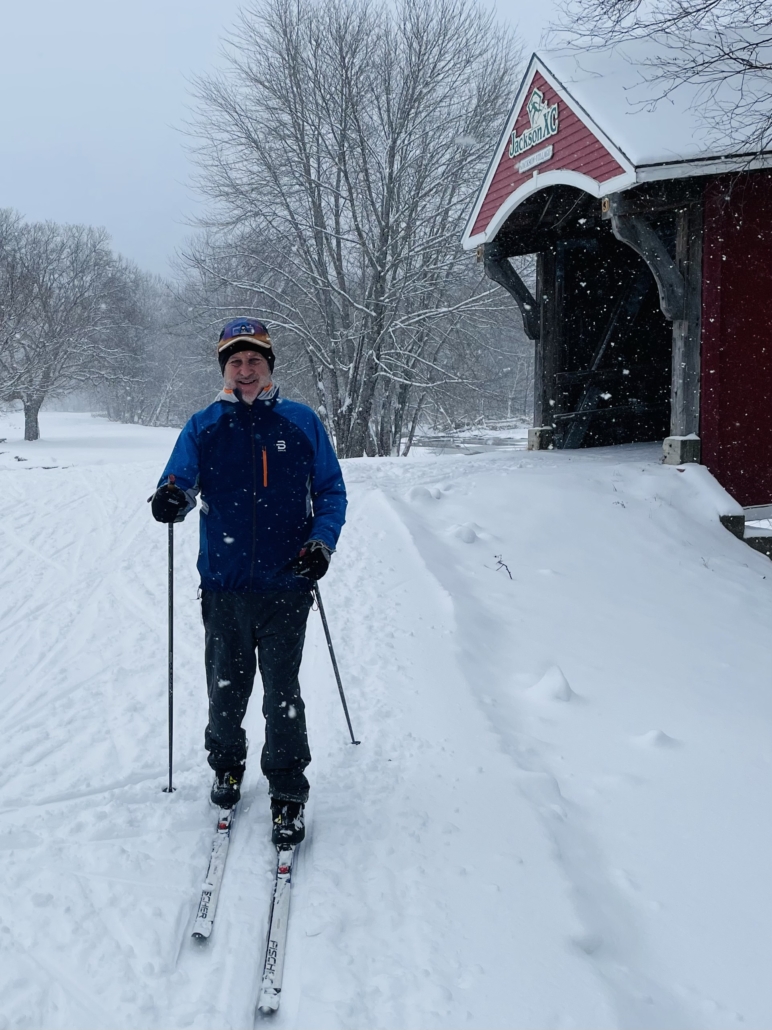
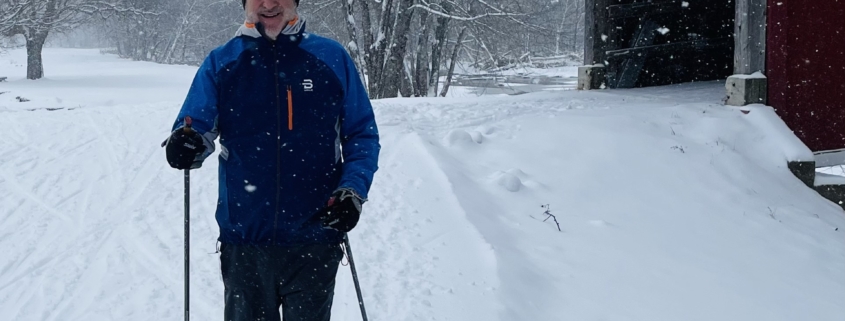
RBL at Jackson XC
There is a ski industry statistic that cross country (XC) skiers have owned their skis for an average of 17 years. I don’t remember the source of the information and it is probably outdated, but I’ve quoted it for more than three decades and after attending an excessive number of ski swaps, reused ski equipment sales, and local yard sales, I can attest that indeed there are a lot of really old XC skis out there. Every now and then I buy an old pair of wooden XC skis that are in pristine shape so I can use my pine tar stuff to recondition the ski bases and use them once a year.
This talk about old XC ski gear got me to thinking about the “comeback skier.” You know, the people who tried XC skiing in the past, and then put the gear in their garage and took a rest- of-their-life hiatus. In general, many of these folks tried XC skiing and felt it was too much work particularly when comparing it to alpine skiing where they could ride a ski lift up a mountain followed by skiing back downhill. A ski industry term for these people is “lapsed skiers” but recently the skier participation statistics are showing a resurgence in XC skiing which may be a resurrection or revival and is likely connected to the aging baby boomers and a new group of younger people interested in winter recreation, wellness, and getting outdoors.
This potential returning lapsed XC skier may have originally thought that the sport was not their cup of tea, but Father Time and Mother Nature may have conspired to change the outlook on XC skiing for older and younger people, respectively.
There are reasons that one might consider coming back to XC skiing. The sport is soft on the body and you can do it at your own pace. You can ski on the flat terrain which is relatively easy rather than climbing uphill on trails that will require returning on high speed adventures that could cause concern. You could XC ski for a short time such as a half hour, which would cover a short distance. I go XC skiing for about 4-5 kilometers (2-3 miles) on flat terrain and it takes about 45 minutes, but that distance may require a bit more time for the comeback XC skier.
TIPS FOR THE COMEBACK
For the first few days of the comeback, keep it on a manageable level of time and effort while you become accustomed to it. Like anything, if you do it regularly you will improve in every aspect XC skiing. You probably have light layers of clothes (base layer, outer layer, good noncotton socks, light gloves and a hat) that can be used for XC skiing.
Perhaps you would consider going out with a ski instructor to get tips that will make the sport easier and give you some goals to achieve. In fact, it is highly recommended that returning XC skiers rent XC ski equipment and take a ski lesson to see if it is something that might be pursued further. The newer XC ski gear (skis, boots, poles) may surprise the comeback skier because the gear makes the sport much easier than decades ago. Waxless skis give better grip and glide than ever before, XC ski boots are both supportive and comfortable, bindings can be adjusted out on the trail, and even the new pole straps are helpful.
Ellen Chandler, executive director at Jackson XC and board member at Ski NH commented “Sometimes these former skiers bring their old gear which has not benefited from sitting around for the past 20 years. We do get some rescue calls when old boots “blow out” on the trail. Boots are the weak link. Also, some things have improved with the passage of time, so a person who can reenter the sport with new, responsive boots (plastics have improved over the years) attached to skis with bindings that have benefited from improved engineering, and a ski with a more subtle but effective pattern base, or a “skin base,” is setting themselves up for success.”
XC skiing still does not cost an arm and a leg to either acquire equipment or visit a commercial XC ski area like Jackson XC, where a trail fee is paid to access groomed trails and maybe they’ll even use snowmaking. At the ski area you can get rental gear, a trail pass, and take a lesson for a package price. Jackson XC 2025 Day rate – $25 for adults; Rental day rate – $25; Group lesson Super Saver package – $89 and it is lower for kids and seniors.
In the Rocky Mountains, the folks at Breckenridge Nordic Center will give a 20% discount if you register on the Internet for a group lesson. They specialize in working with people who have never been on snow and share the joy of the XC skiing by helping skiers learn efficiency and control. Josh Dayton, who runs the operation has produced a 9-minute video that can be accessed with a QR code by skiers to watch in advance of their experience on the snow which covers the touch points about controlling the skis and maintaining balance. It’s great for first timers or folks who want a refresher in the basics! All staff at the resort are ambassadors who offer ski tips to anyone. As soon as the skier steps out the door there is a staff person there who helps skiers put the equipment on, review the trail map, talk about body balance, and so on. When people come to Breckenridge Nordic with old equipment, they get offered a free upgrade to see the difference that new gear can make in the skiing enjoyment. Here’s the video https://www.youtube.com/watch?v=_i6978nfvEw
After XC skiing, expect a little soreness if you have not used the specific muscles associated with XC skiing recently, but typical over-the-counter medicines, rub-on creme, or pads should take care of any of those problems. If you go XC skiing at a groomed ski area a few times, you will quickly get the feel of gliding along the snow in the tracks or on packed trails; you’ll be traveling at a slow speed that provides immersion in the outdoors and nature; you’ll be enjoying one of the best forms of exercise and with a regular schedule of XC skiing, wellness (physical and mental) will be yours to experience in very little time.
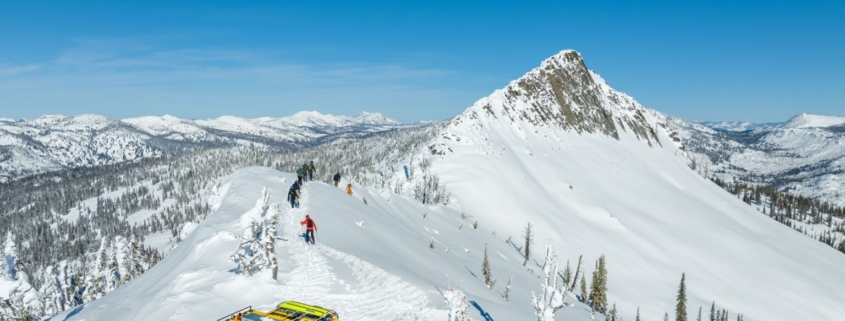
What’s New in Idaho for the 2025/26 Season
The Gem State is feeling the stoke of the new season with special anniversaries, new terrain and lifts, expanded parking lots and more RFID technology at the 19 member resorts of Ski Idaho. Here’s what to expect, so get those skis and boards tuned and ready for some fun in the snow.
Brundage scenic with snowcat
Here are the details – starting with Idaho’s most famous, even legendary, resort, and then alphabetically for the others.
Premiering amidst an array of upgrades during Sun Valley Resort’s 90th season, there are 90 acres of newly gladed terrain for advanced skiers between Canyon, Exhibition, and Olympic.
Developed through the resort’s Bald Mountain Forest Stewardship Project with the U.S. Forest Service, Bureau of Land Management, and National Forest Foundation, the effort reduces fire risk and improves forest health while providing heating firewood to local indigenous communities like the Shoshone Bannock at Fort Hall and the Shoshone Paiute in Duck Valley. The project also unlocks some of the most exciting advanced terrain on the mountain and has led Sun Valley to develop more than 350 acres of glades over the last 5 years.
The family owned Central Idaho ski area — renowned as America’s first destination resort and the birthplace of the chairlift — is introducing RFID technology across all base areas of Bald and Dollar mountains to improve guest experiences and efficiency.
Sun Valley is also launching new ski and ride clinics — including multiday adult camps — as part of its award-winning ski school programming. Plus, Dollar Mountain will debut Sunny’s Adventure Park, a whimsical addition with fun terrain-park-style features.
Alphabetically now for the rest of Idaho’s downhill and XC destinations –
Bogus Basin Mountain Recreation Area in Southwest Idaho near Boise thinned undergrowth and opened more gladed terrain across Pine Creek and Bitterroot Basin. Plus, it graded two aspects off the top of the Morning Star Express chairlift for a more direct, beginner- and intermediate-friendly path toward the Bitterroot and Morningstar sides of the mountain.
The big news is that guests will be skiing on snow from last winter, because it’s been piloting innovative snow-storage technology from Finland in use only at three North American ski areas. The system stored approximately 11 acre-feet of snow over the summer with a 70 percent to 80 percent retention rate regardless of temperature, elevation, or aspect. Dubbed a clear success, the effort preserved roughly. 2.6 million gallons of water in snow form on Lower Coach’s Corner.
The nation’s largest nonprofit ski area, Bogus Basin undertook a major remodel of the Pioneer Lodge, turning it into a modern, multi-use hub. Upgrades include a new elevator, providing full ADA access to all lodge floors. The mountain also upgraded and expanded lighting in the Pioneer Parking Lot and launched a new e-commerce platform for online sales.
Brundage Mountain Resort added a new 1,800-square-foot emergency services building to house the ambulance and fire engine it added in 2024 to support its independently operated fire protection agency and emergency medical service. The resort once again offers its popular preseason 4PAK Sale and is celebrating its 65th season with $65 Tuesday Tickets, and other weekday tickets for as little as $70.
North Central Idaho destinations Bald Mountain Ski Area near Pierce and Cottonwood Butte Ski Area near Cottonwood — both nonprofits run by local ski clubs — have not announced any significant upgrades beyond maintenance and brush cutting.
Grand Targhee Resort — rated #5 in SKI Magazine’s list of the top 30 ski resorts in the West for 2026 — is not introducing any significant upgrades this winter. Just four miles across the border in “Wydaho,” the only way to reach the resort is through Driggs, Idaho, either over the Teton Pass from Jackson Hole, Wyoming, or from elsewhere in Idaho.
In Eastern Idaho near Ririe, Kelly Canyon Resort cleared and graded a new cat track between the tops of Lift 2 and Lift 4 for easy access to more terrain, including a whole new glade. The resort also installed a new rope tow to serve its terrain park, which will boast 13 new features, including dancefloors, F-boxes, spines, and 10-inch-diameter tanker tubes. And Big Jud’s, a small but popular Idaho chain of burger joints, has taken over the lodge restaurant.
Little Ski Hill in Southwest Idaho near McCall hasn’t announced any significant infrastructure improvements this winter.
Lookout Pass Ski & Recreation Area in North Idaho near the historic town of Wallace upgraded several runs, including removing all the stumps on two black diamond trails on Chair 3, smoothing and grading Big Dipper and Hercules, and removed large, exposed rocks on Whitetail, Keystone, Cloud 9, and Sundance.
Lookout Pass, which straddles the Idaho-Montana border and the Pacific and Mountain time zones, also regraded its Success beginner area, conducted additional grading on the recently opened Eagle Peak terrain, mowed virtually all the slopes on Chairs 1 and 2, and removed standing dead wood in several glades. Other upgrades include repainting Chair 3 and expanding the lower parking lot.
Plus, it is offering a new, affordable Lift Ticket 3 Pack for $179 if purchased by Dec. 1.
Lost Trail Ski Area is launching RFID ticketing this winter. Events planned at the family owned mountain, one of two that span Idaho and Montana, include ski clinics with Olympian Deb Armstrong in January and Smash Life Banked Slalom, which blends freeride fun and avalanche awareness.
Family-owned Magic Mountain Ski Resort in Southern Idaho near Kimberly, doubled its surface lift capacity with a second magic carpet to serve an expanded beginner area. It is also expanding the Twilight Tubing Hill with new beginner/child area and new private weekday tubing sessions for groups.
For the first time, guests can rent Magic Mountain for private full-day events on its non-operational days (it is typically closed Mondays-Wednesdays except holidays). It will begin selling single-ride lift tickets for backcountry and Nordic skiers, and snowshoers desiring a “lift bump.”
Plus, Magic Mountain is new to the Indy Pass this winter, bringing the total number of Idaho ski areas accessible via the multi-resort pass to eight.
Pebble Creek Ski Area in Southeast Idaho near Inkom, completed a major overhaul of the Aspen Beginner Lift and upgrades to its snowmaking system and rental shop. Plus, Pebble Creek installed two brand-new fryers in the kitchen to keep cranking out its world-famous, homestyle (i.e. skin-on) fries from spuds sourced from a local potato farmer.
Pomerelle Mountain Resort added $30,000 worth of new gear to its rental fleet and replaced the conveyor belt on its magic carpet, which at 440 feet is one of the longest in the West. The family- owned resort also upgraded the lodge with new high-tech, energy-efficient windows.
Rotarun Ski Area is installing a magic carpet, which will be free to all users, although a lift ticket will be required to ride the Poma lift (for guests ages 5 and up). Adult lift tickets increase to $20, with Wednesday nights still free from 6-9 p.m. Weekend hours have changed to 11am to 3pm New and returning events include monthly Friday Night Silent Discos.
Schweitzer is launching a themed pre-fixe early breakfast series called Summit Sunrise Breakfast at Sky House on select Saturdays and Sundays, and Sky House Snowcat Dinners return on full-moon evenings.
Expanded Ski & Ride School offerings include new full-day group lessons for kids ages 6-12 and a multiweek Freestyle Camp to teach kids freestyle and freeride skills in terrain parks and natural terrain. Families will enjoy Kids Ski Free Week Dec. 6-12 when children 17 and under can ski or ride at no cost with pre-registration online.
Silver Mountain Resort in Kellogg in North Idaho, thinned out new areas of the North Face Glades, yielding additional steep, fall-line tree skiing and reducing the need for traversing, and also expanded adjoning Sheer Bliss. The resort also trimmed and gladed traverses throughout the mountain to improve flow and access and updated signage with more accurate run status updates and links to backcountry forecasts at backcountry gates.
Tubing sessions are now extended to seven days per week, and Silver Rapids — Idaho’s largest indoor waterpark – now offers extended midweek hours. Plus, a new partnership brings the Rossignol Experience Center to Silver Mountain Sports, including expanded demo experiences.
Silver Mountain features North America’s longest single-stage gondola.
Snowhaven Ski & Tubing Area completely overhauled the T-bar. Owned and operated by the City of Grangeville, the North Central Idaho ski area is celebrating its 80th birthday in 2026.
Soldier Mountain in southern Idaho near Fairfield opened 250 acres of intermediate and expert terrain last season; this season it will be open for guided excursions aboard the resort’s TRAX side-by-side UTV. Guests with the necessary skills and equipment also can reach the Bridge Creek Sidecountry Project’s steep, north-facing ridges and trees by foot on established bootpack trails or by skinning up in alpine touring gear. The resort is also adding Ladies Backcountry Days and Intro to Backcountry Days to an expanded, world-class cat-skiing program.
Improvements include a reforestation project with the US Forest Service, expanded snowmaking, new restraint bars on chairlifts and the return of its tubing park. Once owned by actor Bruce Willis, the resort now is run by the Alden family, and hosting several major competitions, including U.S. Ski & Snowboard Cross Training in April.
Turning lemons into lemonade after this summer’s Rock Fire scorched 80 acres of forest near its boundary, Tamarack Resort is transforming more than 60 acres south of Bliss into terrain for advanced skiers and riders. The fire began with lightning less than two miles from Tamarack in August, and burned nearly 2,800 acres across Idaho’s West Central Mountains.
Tamarack also enhanced its main green run, Waltz, to allow more room for progression and learning, and added snowmaking to ensure early opening conditions and consistent coverage throughout the season. The resort also added specialized Aebi mowers to cut brush on Tamarack’s most popular runs, including Serenity, Showtime, and Encore, for earlier openings and to provide smoother, more manicured surfaces all winter. New loading and unloading ramps at key chairlifts, including Discovery Chair, Tamarack Express, and Summit Express, ensure smoother transitions for skiers and riders of all ability levels.
The resort, in Southwest Idaho near Donnelly, plans to limit day ticket sales on peak dates — a measure adopted by other ski areas to minimize crowds and improve the on-mountain experience. Tamarack also is expanding Nordic rentals, lessons, and programming, too, and it’s taking après to new heights, introducing a mobile DJ Snowcat to bring high-energy experiences to different areas of the mountain. Plus, the mid-mountain lodge, which debuted last winter, will offer expanded dining offerings, live music, and enhanced outdoor seating overlooking Lake Cascade.
The Tamarack Sports School has been relocated to a new, centralized location in the Village, along a new Central Reservations and Lodging Check-In center in the Village. A new Elevation Studio offers a range of fitness and wellness classes from yoga and mobility to guided stretch and recovery sessions.
Expansions to Tamarack’s upper and lower Village parking lots will ease congestion during peak weekends, and the new Aspen lot will significantly grow capacity. The new lot offers more than a dozen camping spots large for Class A and C motorhomes and for Sprinter and Class B camper vans.
See you on the slopes – in Idaho.
Preparation
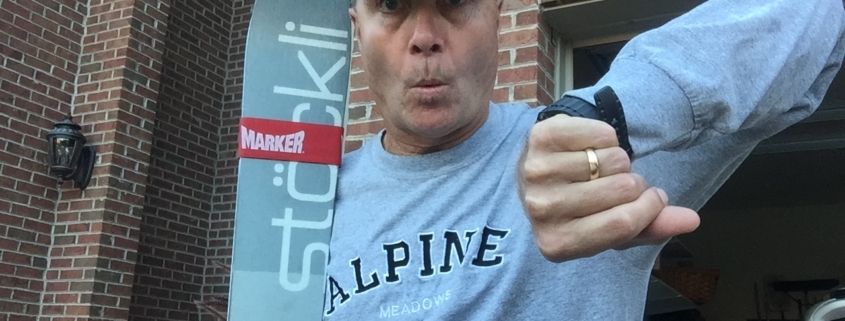
Author Pat McCloskey
My friend Pete always laughed and said that ” Pat rides a bike to prepare for ski season.” And in many ways that was true. I wanted to ride to be able to have strong legs for skiing. And although the ski season is fairly short for us in the mid- Atlantic, even with our trips, it still requires physical preparation to execute what you need in skiing. It is even more important for people my age, because we can’t just ski ourselves into shape anymore. Nothing worse than going on a ski trip and your legs fail you. All the time and effort is lost if you are not in shape. Buying the passes, making the air and lodging arrangements, schlepping the bags through the airports, driving to the area in the dark and snowy conditions. All is lost if you are not prepared physically. Same with skiing locally. The excitement of that first run and the rest of the day can be tempered if you have not prepared.
So fall is here, and for us, the best riding and hiking of the season is upon us. Yes- my crew rides all year with lights and in all kinds of weather. But it is important to keep the legs strong. I always wonder how the first turns of the season will go and if I can still execute after 8 months off. But usually I am confident that with a yearly riding schedule, and hiking mixed in, at least my legs will be strong enough. That gives me confidence when I push off for the first time.
This time of year, I start to get excited because I know the leaves have fallen and the first frosts of the season are upon us. As much as I like the fall season with the colors, the anticipation starts to get to me and I start monitoring the weather more closely. There seems to be a more urgent need to do my stretches in the morning, do my pushups, and keep riding so as to be totally prepared when the opening day announcement is made. As I have always said, it is good to ski locally to get your ski legs ready for trips out west or to New England. People who say they only ski out west really are missing a good time locally. And they only ski 5 days out of a year or maybe a little more. They are what I call people who ski, not necessarily ……….skiers.
Preparation is key so when you do travel, you click in and you are ready. You are not trying to find your legs the first few days of a trip. You would be amazed at the fun and progress you can have at a mid-Atlantic area. And talk about enthusiasm, just look to the mid-west to Michigan and you will see some of the most rabid skiers in the country on hills with vertical drops smaller than we have. They are second to only New York State in total operating ski areas. Skiing is fun no matter where you go. You can always make a fun day as long as you are turning and breathing in that cold winter air.
So we are all waiting patiently, or not, and hoping for the best this winter. Pete is probably right. I ride to ski and perhaps if you have not prepared the way you would have wanted, it is not too late. Enjoy the upcoming season. But remember what Ben says. Thanks for reading.
Please follow the blog on http://www.chroniclesofmccloskey.com It helps me.
[authors_page role=contributor]