


Adirondack’s historical Hickory Ski Center will not operate this season
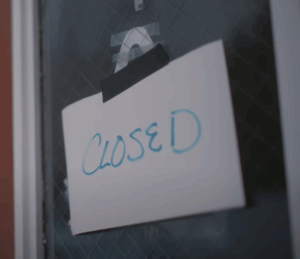
Photo from ‘Reviving the Legend’ courtesy of Ian McGrew
The long-struggling Hickory Ski Center, which dates to the post-war period, will not be opening this season.
The historic area announced on its website Nov. 7 that they won’t be open for either lift-served or human-powered uphill skiing in the 2025-26 ski season.
“Currently, there are no plans to operate this season,” reads a statement on the News section of the area’s website. “Our hope is that as a new management model unfolds, Hickory will again be a place for families to gather, friends to connect and kids will learn to ski.”
“Please be advised that public access is no longer available for hiking, skinning, snowshoeing, disc golf or camping. There will be opportunities for reserved group use. There will be construction work on the lodge and a new web page being designed. New beginnings for The Legend that will emerge in the coming months.”
Despite its respectable 1,200-foot vertical rise and some genuinely twisty, challenging trails, Hickory has long been hindered by its lack of a snowmaking system and an ancient lift system featuring two poma lifts and a t-bar.
The area opened last February when enough natural snow piled up but was quickly held back when the two poma lifts broke down.
The area’s travails briefly went viral in November 2023 when they said on Facebook that they still needed $38,000 to pay the insurance premium needed to run the lifts. They urged fans of the area to purchase season passes or to donate to an affiliated foundation to raise the funds.
News media and a number of websites picked up the plea.
That led to a partnership with Entabeni Systems, a company that provides digital technology to ski area, the Indy Pass program and the Unofficial Networks website. They put in enough money for Hickory to pay their insurance premium.
The effort also inspired a documentary ski film, “Reviving the Legend,” by Hudson Valley cinematographer Ian McGrew. See our story here.
Hickory had been on-again, off-again for several years, depending largely on how much snow fell during each winter.
For the 2021-22 season, Hickory operated solely as a skin-up ski-down area, charging $10 per visit on the honor system. Before that it had been closed since 2015.
The area was built after World War II by a group of veteran ski troopers and local ski enthusiasts.
In keeping with that history, Hickory is redolent of a nearly by-gone era in skiing, with low prices (day passes last year were $45 for those 70 and older and free for those 17 and under), basic accommodations and a proud lack of style consciousness. It was the kind of place where skiers could wear their 80s-era C.B. jackets or kit-made down parkas without feeling out of place.
Hickory is located in Warren County, not far from Gore.
Recommended Skis for Senior Skiers 2026 (subscriber only)
Credit:Ljupco
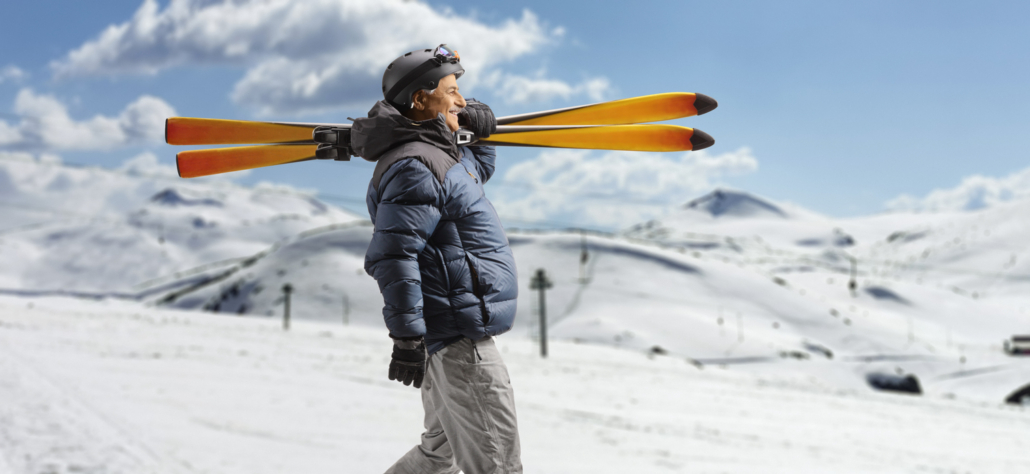
Don’t ski as aggressively as you used to? Looking for a ski that makes the sport a little easier? Realskiers.com, my go-to site for finding the perfect ski, has shared their recommendations of the best skis for older skiers. Their ”Silver Skier” selections are models, in their estimation, either inherently easier to steer with light pressure or possess such a broad performance envelope that their charms are accessible to lower-energy skiers.
Recommended 2026 Skis for Senior Skiers

FRONTSIDE
This is a huge category, if only because it occupies every price point from the cellar to the penthouse. If you’ve been riding an All-Mountain model for a few seasons, you’ll find a narrower Frontside ski easier to maneuver and more terrain agnostic than you’d expect. Whether your skills are eroding or as sharp as ever, you’ll find a Frontside model takes less effort to steer and holds a more accurate line.
Atomic Redster Q 9.8
Blizzard Anomaly 84
Blizzard Stormbird 82 DTi
Head Supershape e-Titan
Head Supershape e-Rally
Kästle MX84
Rossignol Forza 70o Ti
Salomon Stance 84
Stöckli Laser AX
Völkl Peregrine 82
WOMEN’S FRONTSIDE
One of the oddities of the women’s ski market is that the narrower the model, the more likely it is to use a rich construction that targets the elite skier. The top-of-the-line women’s models in both the Technical and Frontside genres tend to sport more made-for-women features than the typical All-Mountain and Big Mountain women’s models. Point being, the best made-for-women skis aren’t aimed at seniors, but at hard charging, technical skiers. Mellower models can be found further down the pricing pyramid and in wider categories like All-Mountain East.
Blizzard Black Pearl 84
Nordica Wild Belle DC 84
Salomon Stance W 84
ALL-MOUNTAIN EAST
If you need one ski that can handle whatever conditions you encounter, it should be plucked from this genre. Versatility is their dominant personality trait; quick enough to the edge to navigate choppy bumps, fat enough to float in boot-top powder, narrow enough to bite into eastern boilerplate, mellow enough to turn at slow speeds and stable enough to charge the fall line.
Atomic Maverick 86 C
Blizzard Anomaly 88
Head Kore 94 Ti
Nordica Enforcer 94
Rossignol Arcade 94
Völkl Mantra 88
WOMEN’S ALL-MOUNTAIN EAST
If all you ever ski is groomers, fine, get a Frontside ski. But for those women with the slightest inclination to travel off trail, the all-terrain, in-resort skier belongs on an All-Mountain East model.
Blizzard Black Pearl 88
Head Kore 93 Ti W
Nordica Santa Ana 92
ALL-MOUNTAIN WEST
If your preferred playground lies the big mountains of the American west, you’ll encounter enough mixed conditions to justify the added surface area built into an AMW model. The less you sink on each turn, the less effort required to maintain momentum and the easier it will be to change directions with a sudden swivel, an essential off-trail technique. The top models in the genre are generally Power skis that take some added mojo to bend, which is why you won’t find the Blizzard Anomaly 94, the Stöckli Stormrider 95 or Völkl Mantra M7 on this list.
Blizzard Rustler 9
Dynastar M-Pro 100 Ti
Nordica Enforcer 99
WOMEN’S ALL-MOUNTAIN WEST
Women of modest skiing skills looking for a wider ski to make their off-trail life easier should probably look elsewhere. Women’s AMW models tend to target the talented lass who rips the sidecountry to shreds, rather than the timid who tiptoe into choppy snow. Our two Silver Skier Selections aren’t meant as training wheels for so-so skiers, but as facilitators that open up the sidecountry to those who already have the requisite skill set.
Blizzard Sheeva 9
Head Kore 99 Ti W
BIG MOUNTAIN
Lower skill skiers will be out of their depth here. Sure, they’ll get the benefit of more flotation in deep, uncut pow, but how many perfect runs like that are you going to get? And will the less talented be able to even bend a burly Big Mountain? Sure, some Big Mountain models are softer-flexing than the norm, but the extra width also makes it harder for the less-than-expert skier to rake the ski up to a high edge angle. If a Silver Skier really wants more help in new snow, get a full-on Powder model, forget edge angle and smear your blues away.
Salomon QST 106
Head Kore 112 Ti
Völkl Revolt 101
WOMEN’S BIG MOUNTAIN
A Women’s Big Mountain ski to too wide to serve as an everyday ski for most women, so consider these recommended models to serve as one’s powder ski when conditions merit. The principal “womanizing” feature of their design – if any – is to reduce the amount of metal in their make-up.
Head Kore 104 Ti W
Völkl Blaze 104
NON-FIS RACE
This isn’t the genre for someone trying to conserve energy, but the addiction to the feel of a true race ski doesn’t fade with age. By definition, all Non-FIS Race skis are made to the highest standard. The three GS/SL models I’ve selected here are notable for being readily accessible without world-class conditioning. If you’re good enough to ski a true race ski, you don’t need my advice on how I perceive their particular merits, hence no thumbnail sketch for each model. Suffice it to say, if I were picking for myself, these are the models I’d choose from. They all ski better than whatever else you own. But you need to bring a polished skill set to the party…
Atomic Redster G9 Revoshock S
Atomic Redster S9 Revoshock S
Rossignol Hero Elite LT Ti
Rossignol Hero Elite ST Ti
Völkl Racetiger GS
Völkl Racetiger SL
TECHNICAL
This genre has all but disappeared from the U.S. market, although it remains popular in Europe. Some are combi race models; all are made to arc perfect carves.
Atomic Redster X9 Revoshock S
Head Supershape e-Magnum
Kästle M9 76
Nordica Dobermann Multipista DC
Salomon Addikt 76
If you are thinking of buying near gear this year, a Realskiers subscription isn’t a luxury; it’s a necessity. One receives the best advice from those most qualified to provide it. You can read the full article on Realskiers by clicking here.
Related content Snow Sports Leaders: Jackson Hogen, Publisher of realskiers.com

Ski Strong, Ski Long: A Chiropractor’s Guide to Preventing Injuries on the Slopes
The sensation is universal for skiers. That crisp mountain air, the stunning vista of snow-covered peaks, and the pure joy of a perfect turn. As both a lifelong skier and a chiropractor, my mission is to help my fellow enthusiasts, especially those of us in the 50+ community, enjoy that feeling season after season without being sidelined by injury.
Although expert technique helps, what’s really important is having a well-thought-out strategy for preparing, maintaining, and recovering your body. True longevity in this sport comes from respecting your body’s mechanics and understanding that the best run of the day is often the one you finish healthy and strong.
The foundation of a safe ski season is laid weeks, or even months, before you click into your bindings. Your body must be prepared for the unique demands of skiing, which combines strength, endurance, balance, and sudden, explosive movements.

Bird Dog Exercise Credit:Rani Nurlaela Desandi
A pre-season conditioning program is your most powerful tool for injury prevention. Focus on building a resilient foundation with exercises that mimic the movements you’ll be doing on the hill.
Pre-Season Conditioning Checklist
Build a Powerful Lower Body. Your legs are your primary shock absorbers. Incorporate squats and lunges to build quadriceps, hamstring, and glute strength. Don’t forget lateral lunges, since they specifically target the muscles needed for powerful, side-to-side skiing movements.
Forge an Unshakable Core. A strong core is your secret weapon for stability and balance, protecting your lower back from the torsional stresses of skiing. Planks and the bird-dog exercise (alternately extending opposite arm and leg while on all fours) are exceptionally effective for building the deep core stability you need.
Practice Balance. Simply standing on one leg for 30-60 seconds at a time can dramatically improve your proprioception, that is, your body’s ability to sense its position in space. This is critical for navigating uneven terrain and catching an edge before it becomes a fall.
Getting Started
Even with the best preparation, what you do on ski day itself determines your immediate risk. A cold, stiff body is an injury waiting to happen. Before you even get on the lift, invest 5-10 minutes in a dynamic warm-up.
This means moving while you stretch, not holding static positions.
Leg swings, arm circles, torso twists, and a few body-weight squats will increase blood flow, raise your core temperature, and prime your muscles and nervous system for action. Remember that dehydration happens just as easily in cold weather.
Drink water consistently throughout the day, especially at high altitudes, since dehydration leads to premature muscle fatigue, which significantly increases your risk of injury.
Staying Safe
Now, let’s talk about the most dangerous part of the ski day, the infamous “last run.”
We’ve all been there. Your legs feel heavy, fatigue is setting in, but you’re tempted to squeeze in one more descent. This is when most injuries occur. Your form breaks down, your reaction time slows, and your tired muscles can no longer support your joints effectively.
Learning to listen to your body is a non-negotiable skill.
When you feel that fatigue, when your technique starts to falter, that is your body’s signal to call it a day. There is no glory in a final run that ends in the clinic. The true victory is returning home healthy, ready to ski again tomorrow.
Your responsibility to your body doesn’t end when you step off the mountain. Post-ski recovery is essential for reducing soreness and preparing for your next day of adventure.
After your last run, take a few minutes for gentle, static stretching, focusing on your quads, hamstrings, calves, and glutes. Follow this with a nutritious meal or snack containing protein to help your muscles repair themselves.
If you start to feel specific aches or pains (particularly in the knees, hips, or back), don’t simply ignore them. Applying ice to a sore joint can reduce inflammation, and seeking a professional evaluation from a physical therapist or chiropractor can address a minor issue before it becomes a season-ending problem.
Final thoughts
With a holistic approach that includes intelligent preparation, mindful practice on the hill, and dedicated recovery, you can significantly reduce your risk of injury. This allows you to fully embrace a lifelong joy of skiing.
[authors_page role=contributor]