


This Week In SeniorsSkiing.com (Feb. 1)
Ask An Expert, Mystery Incantation, Robert Frost, 70s Ski Test Reality, Glen Plake Tour.

Last week, we pointed out that of three competitive New Hampshire ski resorts along I-93, two offered low day lift ticket prices for seniors and one didn’t. To review, both Waterville Valley and Bretton Woods offered $29 and/or $32, depending on when you buy and if online or at the window. The third resort, the venerable Loon Mountain, offered $75-$79 online for a senior (65-79), one day ticket for mid-week end of January.
We asked Loon to clarify the senior ticket pricing policy. Here’s Loon’s point of view from Greg Kwasnik, the resort’s media contact:
“We believe our resort window ticket pricing accurately reflects the quality of the product we offer. We encourage seniors – and all skiers and riders – to purchase lift tickets online (http://loonmtn.com/lift-tickets). By purchasing lift tickets online, seniors can get significant savings.
Perhaps our best deal for seniors (ages 65-79) is the Loon Midweek Senior Pass, for $369, valid Monday-Friday at Loon. (http://loonmtn.com/season-passes/midweek-senior-pass)
Another great way for seniors to save is the Fly32 Card (http://loonmtn.com/lift-tickets/fly32). For $129, cardholders get one lift ticket, and they can use the card to save up to 20% on already-discounted online lift tickets every time they purchase through our website (http://loonmtn.com/lift-tickets). The card essentially doubles the discount you would already receive by purchasing tickets online. The card also provides exclusive access to a number of bonus discount days throughout the winter for even larger discounts.”
A couple of thoughts: 1) Passes do provide discounts, but not everyone wants to buy a pass, especially if you like to ski at different resorts in a geographical area like the I-93 corridor. 2) Finding this discount information requires diligently sorting through the resort’s website. 3) Even with the discounts described above, Loon’s net day ticket price with discounts is still at least twice the competitors.
So, if you’re a vagabond senior skier who likes to try different resorts in a kind of a la carte mid-week safari, you have some choices. If you’re willing to pay the extra freight for one or two days at a classic resort, go for it. If you are being cautious about expenses, there are other just as classic resorts to accommodate you. Just be aware of the differences and choices you have.
This Week
 Our Mystery Glimpse photo this week again comes from the Colorado Snowsports Museum. It looks like there is some kind of ceremony about to take place on a mountain top involving Native Americans. What’s up? When? Why? Last week’s spectacular photograph of an abstract Alpine landscape comes from Ray Atkeson’s remarkable collection of the western mountains. Find out where it was taken.
We lost Robert Front 56 years ago on January 29. To remember him, we’re publishing his poem, “An Old Man’s Winter Night,” perhaps appropriate for these very frosty times, especially for those involved in this week’s Polar Vortex.
Correspondent Marc Liebman’s 70s ski testing series wraps up this week with a description of the political fall out from ski manufacturers, marketeers, and ad sales people when data-driven ski recommendations hit the pages of SKI magazine. Pressure from advertisers was a factor that revealed a flaw in the specialty magazine business model: Dependency on ads for survival. What did SKI do?
 We are reprinting an article from friend and colleague, The Ski Diva, who reports on free-styler and ski celeb Glen Plake’s tour of mid- and small-ski resorts. Glen is bringing attention to Mom and Pop resorts around the country, resorts that offer perfect places for families and seniors to have winter fun but are disappearing at a relentless rate. We salute Glen’s novel tour and his flashing a light on what we think is the archetypical resorts that seniors love.
We are starting a new feature in this week’s edition: Ask The Expert. We get lots of questions about technique, gear, location, and general advice about skiing with others. So, we’re going to try to provide a forum for those questions and have some of the experts in SeniorsSkiing.com network answer them. Ask away.
Thanks for reading SeniorsSkiing.com. Remember there are more of us every day, and we aren’t going away.


Short Swings!
Why aren’t skis designed for and marketed to the 20% of the U.S. skiing population over the age of 52? In other words, is the industry ready for a senior’s ski?
I’m asking now, because this is the week ski manufacturers write orders for next year’s crop. They’ve gathered at the Denver Convention Center for the Snow Show, the industry’s annual trade exposition.
There will unisex skis, women’s skis, and kids skis. But nothing specifically for the older skiing population.
One question is why should there be? We know that numerous models in the unisex category are suitable for older skiers. In his annual ski review process, Jackson Hogen of Realskiers.com identifies the characteristics that define skis for the older set. They generally have softer flex, which helps them engage with snow with minimal exertion. This allows skiers to turn more easily and to ski longer without tiring. (Readers can locate the list of Best Skis for Senior Skiers by clicking “Community,” then “Subscriber Only Content.”)
Shouldn’t older skiers simply shop for those characteristics when they shop for skis?

Alberto Varagas illustration from WWII honoring ski troops.
A similar argument could be made for women’s skis. When they were introduced, with few exceptions, manufacturers simply changed the cosmetics of existing models and targeted them at women. There were some companies that designed skis specifically for female size and physique, assembling panels of racers and others to help define what should go into the female model.
The manufacturers recognized the potential for women’s skis. It seems they made a good bet.
Why aren’t they placing a similar bet on a ski for seniors? Older skiers ski more frequently than the national average. Our reader surveys show that 25% intend to purchase new skis in the coming season. The surveys also show that 68% are financially independent (i.e. they have money to spend).
I’ve heard the argument that older skiers might be reluctant to admit or to accept their age status. That may or may not be a real obstacle.
I’ve also heard that the state of the ski industry is such that manufacturers are shifting money from marketing to providing retailers with bigger discounts. That way, some brands are able to dominate display space and account for a larger share of the retailer’s sales.
If a ski manufacturer simply wanted to explore the possibilities, it could apply different graphics to suitable existing models and test them in a handful of outlets. Alternatively, it could select existing models best suited to the older skier and identify them with a sticker or a hangtag, or give sales staff the information that would help present the skis to older customers.
Those are possibilities. But visit the ski section of the Snowshow, and virtually everyone representing the ski companies – the marketers, the salespeople, etc – are young. Can we really expect them to understand the value of making or marketing a ski that may appeal to the one-in-five U.S. skiers who ski more, spend more, and try new products in order to stay in the game?
Industry To Try Luring Drop-Outs
National Ski Areas Association is looking at new goals for increasing the number of skier/boarder days. They include getting people who left to return to the sport. One estimate indicates that in the past decade, up to 8.5 million skiers/boarders dropped out for more than a year. Other figures suggest that up to 15 million skiers/boarders left for a year then returned. Given rising costs of getting on a hill, competition from Disney, Princess Lines, etc., student loan and mortgage payments, and stagnant wages, it’s not hard to see why the number of skiers/boarders in the U.S. hasn’t grown in 35 years.
Climate Change Initiative Heats Up
 This week, the Outdoor Industry Association (OIA), SnowSports Industries America (SIA) and National Ski Areas Association (NSAA) formed the Outdoor Business Climate Partnership to provide leadership on climate change. Several state ski area trade associations immediately followed suit. They are Colorado Ski Country USA, Ski Utah, Ski California, Ski Vermont, Ski Areas of New York, Ski New Mexico and the Pacific Northwest Ski Areas Association. The announcement from the state groups included the following statement:
“Pursuit of climate change solutions is a defining issue for ski areas across the United States…As economic drivers in our respective states we urge policy makers to understand that we can’t wait for lasting, bipartisan action to reduce carbon emissions, promote energy innovation and support a rapid, responsible transition to a clean energy economy. We applaud and join with the broader outdoor recreation community and the National Ski Areas Association as they pledge leadership and advocacy for climate solutions across the country. We pledge to do the same with our respective state advocacy efforts.”

Join Us in the Alps
Join us the week of March 10 when we ski in the Aosta Valley with guides from Alpskitour. Each day, we’ll go to a different resort in Italy, Switzerland and France. The all-inclusive price — $4,500 to $5,500 per person– depends on where you fly to and whether you stay in a 3 or 5 star hotel. Orsden is a sponsor and giving a parka to each participant. If interested, email me: jon@seniorsskiing.com.
Coming Soon: SeniorsSkiing.com Annual Fundraising Campaign
In a few weeks, we’ll start our second annual fundraising campaign. Please support our efforts to bring you weekly information and to advocate on behalf of older snow sports enthusiasts. Thank you!

New Feature: Ask An Expert
Ask An Expert is the new SeniorsSkiing.com feature that answers your snow sport questions with responses from experts. Send in your questions, and we’ll find the experts to answer them. The feature will appear as frequently as we have your questions.
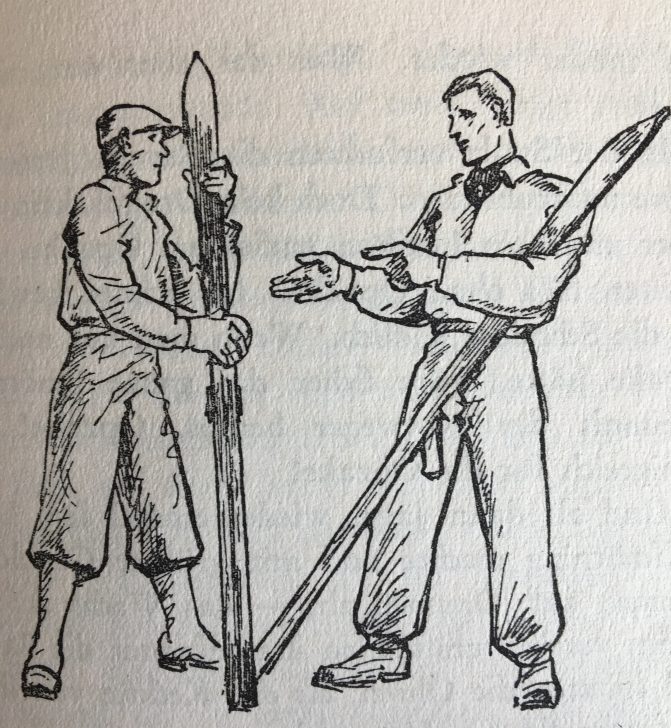
We start the series this week with this question from reader, Terry Kureth:
While skiing with a friend not long ago, we were talking about the recommended techniques for skiing moguls. My friend said he had heard that it is advantageous to loosen the top buckle of one’s boots in order to more easily assume a deeper knee bend needed to be a better mogul skier. Any thoughts?
For an expert opinion, we turned to Seth Masia, founder of the skiyoungernow.com instructional approach, offered at the Aspen/Snowmass Ski School.
I’ve occasionally recommended loosening the top buckle but only when it’s clear that the boot is too stiff to begin with. No one can ski efficiently unless there’s some way to articulate the ankle — knee flex without ankle flex just results in back-seat skiing, not a recipe for safe skiing anywhere and certainly not in moguls. By the way, a boot that’s even half a size too big is likely to be too stiff.
In teaching seniors to ski in bumps, I emphasize hand discipline and speed control. The hands MUST be forward and the pole plant ready early. This enables keeping the shovel of the skis in the snow, and turning — hence speed control. When the shovels come off the snow, the only way to turn is to swivel, and that puts a torque on knees and hips — not a good technique for those of us above a certain age.
Have a question about technique, gear, destinations, travel, or any other aspect of winter sports? Send it to mike@seniorsskiing.com, and we’ll do our best to find an expert to respond.
[authors_page role=contributor]