

Buried Alive In Deep Snow
Where’s Laurie? She’s Gone.
Here’s a lesson for vacationers and anyone else who skis in the West.
Let me set the stage.
A snowstorm dumped several feet of light, fluffy snow, and we were skiing at Brighton, UT, our home resort. We know every inch of the mountain—its steeps, its trees, its gentle slopes.
Dreams are made of fresh snow like this. Fearsome steep slopes become mellow ones. Moguls disappear. It was deep, and it was bottomless. It was hero snow.
Then to get back to the lift, it was a wide open slope. Learning skiers like the slope because of its gentle pitch. It had been recently groomed, so the new snow there was only half as deep. Although it’s a basic, easy slope, it’s still fun to bounce along in the fresh snow.
Then Laurie—my skiing companion—disappeared. Where’d she go? Did she ski around the little grove of trees? Did she pass me? Where is she? She’s gone. Holy cow, she’s suddenly vanished.
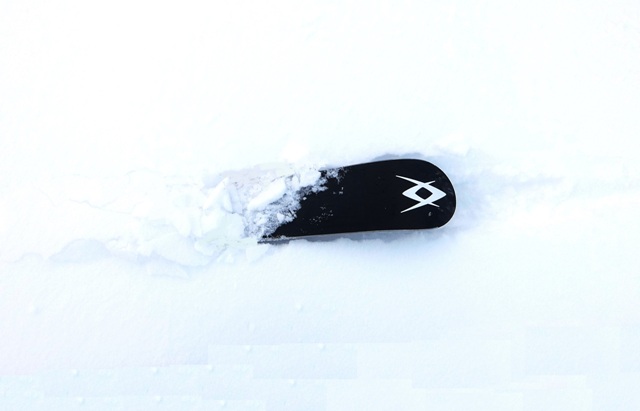
Scanning the slope I saw a black dot. It was just a few inches of the bottom of a ski—her ski—sticking out of the snow. After all the steep, deep slopes, she fell on the easy slope.
But why wasn’t she wallowing to get up? Why was there no movement? Something was wrong. I struggled up slope and reached the ski, but still no Laurie.
There was no crater. There was no hollow. There was no indication that an entire human being was buried right there. The only tell tale was the tip of her ski sticking out of the snow. I began digging,
She had fallen forward, head first, into snow that was as soft as feathers. The soft snow poofed up, buried her, then settled over her as though nothing had happened. It pinned her down. She couldn’t move. Couldn’t thrash. Couldn’t call out for help.
She could have died there. It was an avalanche burial—but there was no avalanche. It was in bounds, on an easy slope, and in snow that wasn’t very deep.
It was a lesson that verifies what we all know: Mother Nature can play nasty tricks. Don’t ever ski alone.
To read more from Harriet click here for her stories on SkiUtah.
SeniorsSkiing Guide: Magic–Where Skiing Has A Soul
Magic Mt. Has $29 Tickets On Thursdays!
Magic is right-sized for seniors and families.
We are zipping down Wizard, a 1.6-mile-long intermediate trail that hugs the West Side, in seven inches of new snow with lots of woohoos and yippees. At many areas, this trail would be flattened by now. Not so at Magic Mountain in South Londonderry, Vt.
Groomers will leave the snow to powder hounds until the weekend. They will, however, smooth trails out on the more easy going East Side to keep everyone happy.

Is Robert Frost hanging around Magic Mt? Credit: Tamsin Venn
Natural snow makes some of the East’s most interesting, fun, and challenging trails and glades all the more sweet. Add a trail mainly to yourself midweek, friendly locals, and reasonable prices – Throwback Thursdays lift tickets cost only $29 – and it’s like skiing back in the old days.
When Swiss instructor Hans Thorner started Magic in 1960, he picked Glebe Mountain for a reason: exciting, wooded terrain that reminded him of his home in the Alps. Back in the 60s and 70s, Magic Mountain had a huge following. Thorner sold it in 1985. After, the vagaries of skiers, investment, real estate, and weather meant customers drifted away because they could not count on it to be open, and it has had its ups and downs since then.
President Geoff Hatheway and his band of 16 investors (Ski Magic) are changing all that. They have launched an ambitious five-year plan to make Magic appeal both to die-hard skiers, families, and the 18- 19– year-old set. The group is investing in snowmaking (now at 60 percent) and lifts. Notably they are putting in new lifts to provide mid-mountain skiing and more lift capacity to the summit.
Hatheway typifies the die-hard Magic loyalist. He skied here in 1998 and his kids went through the racing and free skiing programs. Like others he appreciated the family friendly alternative to nearby Stratton Mountain.
“Here’s what you won’t find at Magic, a high speed lift and trails groomed Soup to Nuts,” says Hatheway frankly.

Magic President Geoff Hatheway likes early runs on snowy days. Credit: Tamsin Venn
What you will most like find are other senior buddies either on the lift or in the Black Line Tavern, a popular locals’ watering hole. Throwback Thursdays extend to food and drink specials here, the bands are live, and no one is in a hurry.
Magic is open Thursday to Sunday, plus holidays, and on any day it snows 6 inches or more. It has a daily sales ticket limit of 1,500 to keep lift line wait times short and glades uncrowded.
Mountain Facts
Vertical Drop 1,500 feet
205 skiable acres
29 trails, 11 gladed runs
3 Chair Lifts, 3 Surface Lifts
Tickets
Seniors (70+) day $54; season pass $499
Buy online in advance and pay as little as $44.99
Throwback Thursdays $29 (except holidays and powder days of 6” or more) with purchase of Throwback Card ($149)
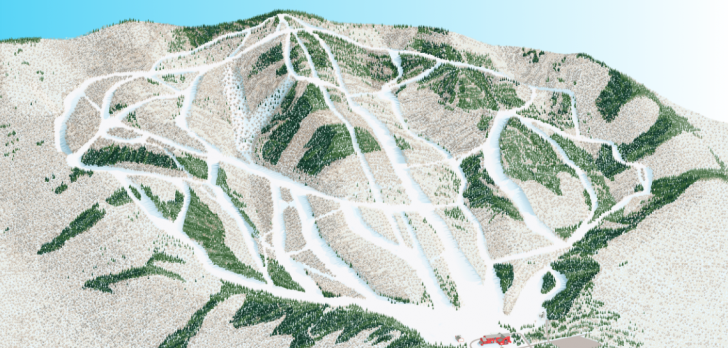
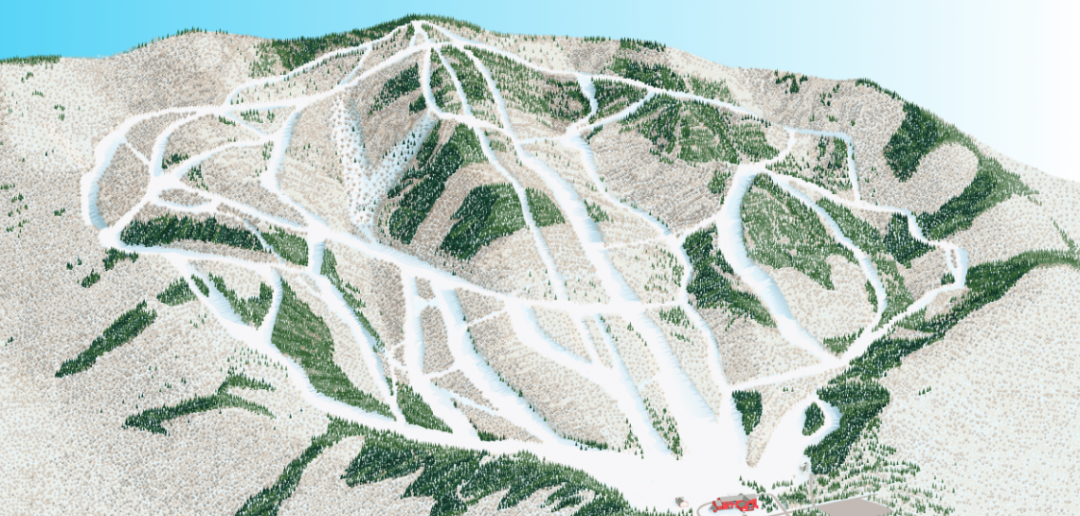
Magic Mountain Trail Map Click Here
Magic Mountain Webcam Click Here
There it is. An accessible mountain that has something for every senior. Credit: Magic Mt.
70s Ski Testing: On The Snow
Step 2: Go Out, Do It.
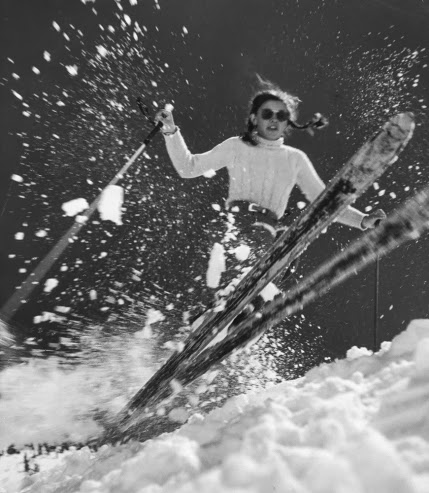
 One of the joys of working at Ski Magazine was that I was paid to test skis!!! Ski manufacturers shipped skis to our lab for testing and when it was completed, the skis were covered with self-adhesive shelf-paper and numbered so the testers couldn’t identify the ski.
Mother Nature dictated our location and we didn’t want to test at the same area Skiing used. One year we started at Mount Hood but weather and poor snow forced a move to Mammoth before we settled on Park City the following year.
Areas were picked that could give testers access to a lift that served terrain suitable to our needs. To create a hard, icy surface, the area allowed us to spread ammonium nitrate on the snow to create a hard frozen granular.
For racing skis, we set up a NASTAR type course with thirty gates and applied ammonium nitrate to make it rock hard. Racing skis were tested just like the others before we pulled them aside for the days when we would ring them out on a racecourse.
Our contract testers – six men and four women – and me were all certified instructors with either coaching and/or racing experience. John Perryman and his wife Joan were expert skiers and were part of the test team. We wanted strong skiers who could ski consistently and could handle a ski without changing their technique.
To get it right, it wasn’t about blasting down the mountain on one ski after another. SKIpp demanded a disciplined methodology. Each year, we reviewed the on-snow maneuvers designed to replicate how beginners through experts skied.
Because some brands were putting their name under clear P-Tex, testers were not allowed to pick up the ski prior to skiing on them. To help ensure that each ski was tested the same way, the methodology was designed to minimize the tendency of a tester to adapt his/her technique to the ski. Testers were limited to two runs per ski.
The tester came to the tent to score the test ski and write his or her comments before taking another ski. Each day we tested ten skis because we learned beyond that it became hard to differentiate each ski’s performance.
The best skis didn’t generate many memorable comments although one tester wrote “On the icy snow, this ski tracks like a train on rails and in the soft stuff, it will derail you.” Another wrote, “A two-by-four with an upturned end would be better than this ski.”
In the evening, skis were prepped for the next day and the day’s data tabulated. Even though it was preliminary, we were pleasantly surprised at how well the on snow results compared to the lab’s prediction.
Testing ten skis took us to lunch. For the afternoon, the testers could pick a ski from that day or prior days to enjoy. It was tough, demanding skiing, but somebody had to do it!
[authors_page role=contributor]