

Boomers on Groomers – a lifestyle brand
We are excited to introduce one of our newest advertisers, Boomers on Groomers – a lifestyle brand created and designed by Boomers, for Boomers to celebrate a lifelong passion for skiing. This unique company was born from the shared experiences of two longtime TV cameramen on a ski trip to Steamboat Springs.
Steve, a former Warren Miller cameraman and contributor to about 5 of Warren’s iconic ski films, and Bruce, who spent forty- six years working in the industry are the driving forces behind Boomers on Groomers. Their friends suggested, “Why not celebrate skiers our age?” Inspired by this idea, Steve and Bruce set out to create a brand that reflects the spirit and style of seasoned skiers.
At first, the duo faced a significant obstacle. Steve openly admitted, “I really don’t know anything about designing a website or selling stuff online”. Fortunately, Steve’s millennial daughter, Allison, stepped in to help. Together, they built the Boomers on Groomers website and crafted the logo featured on their shirts and hats. Thanks to Allison’s assistance, the boomersongroomers.com site was launched and thriving.
Reflecting on the journey, Bruce remarked that without Allison’s involvement, “Steve and I would still be sitting on that couch in Steamboat Springs saying, “wouldn’t it be nice if we started a website to make available shirts and hats with a cool logo?” Today, Boomers on Groomers offers apparel designed for experienced skiers who appreciate both powder days and perfectly groomed runs. Their hats and shirts combine timeless comfort with a subtle recognition of ski hill skills.
Steve and Bruce embody the Boomer generation of skiers, passionate about carving long turns and pushing their limits. They believe their gear is an excellent way to showcase your slope style with pride. Whether you’re gliding down a blue run or enjoying après-ski at the base, these hats and shirts send a clear message: “Still got it.”
Keep the adventure going by grabbing your own Boomers on Groomers apparel. When you purchase a hat or shirt and send in a photo, Boomers on Groomers will feature your picture on their gallery page, celebrating your love of skiing and community spirit.
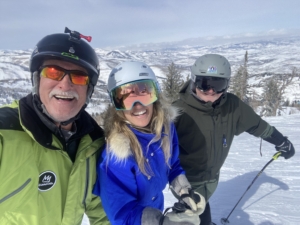
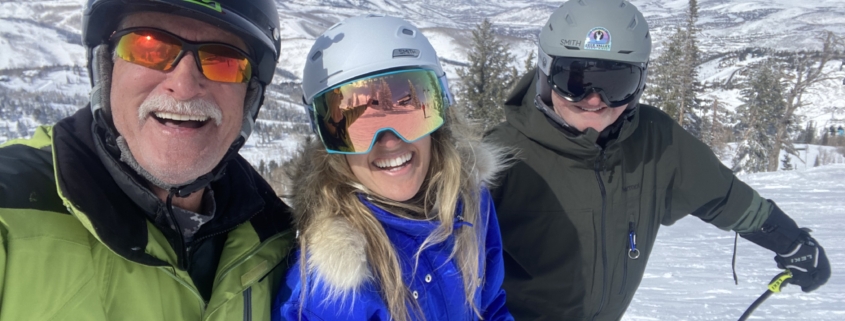
Boomers On Groomers founders from left to right: Steve, Allison and Bruce.

AI is Already Bringing Changes to Ski Resorts

Photo by Igor Omilaev on Unsplash
You may not see it, but AI is already playing a significant role in your skiing experience.
Thanks to the folks at Ski Area Management, I recently attended a Zoom meeting with over 40 resort marcomm and IT specialists. They were discussing how to custom build chatbots, defined as a program designed to simulate conversations with humans, for customer service applications. Ski resorts are utilizing AI to optimize operations, engage customers, and increase profitability.
Let’s investigate how AI is transforming ski resorts today. Here are some applications with real-world examples.
Dynamic Pricing & Revenue Optimization
Aspen Snowmass is using AI-driven pricing models that employ AI-based pricing algorithms to adjust lift ticket costs. Ski resorts maximize revenue by adjusting lift ticket prices in real time based on demand, weather conditions, and booking trends. This maximizes revenue while rewarding skiers who book early with lower prices.
The Benefits
- Maximizes revenue without deterring customers.
- Encourages early bookings for better planning.
- Adjusts for weather conditions to optimize attendance.
Personalized Guest Experiences
Vail Resorts’ EpicMix App uses AI to analyze a guest’s data, such as runs and achievements, and provides personalized recommendations for ideal trails, food stops, and après-ski options tailored to their experience level. Resorts also use AI-driven mobile apps to send real-time alerts about upcoming events and exclusive deals. How does it work? AI tracks skier activity by using RFID lift passes and mobile apps. Data analysis provides customized recommendations based on skiing skill level, past trails used, and in-resort spending habits.
The Benefits
- Enhances guest satisfaction by offering relevant recommendations.
- Increases in-resort spending through targeted offers.
- Improves skier safety by guiding them to suitable terrain.
AI-Powered Snow Forecasting & Management
Alterra Mountain Company uses AI-powered weather forecasting tools to help optimize snow production efficiency, to reduce unnecessary snow production, and to reduce the environmental impact. AI collects real-time weather data and predicts natural snowfall amounts. Resorts use this data to determine where artificial snow is needed, optimizing water and energy use. Smart snow guns adjust automatically based on conditions which helps reduce costs.
The Benefits
- Reduces environmental impact and energy costs.
- Ensures better snow conditions throughout the season.
- Enhances sustainability efforts for eco-conscious travelers.
Ski Lift Efficiency & Crowd Management
Jackson Hole Mountain Resort is using AI-driven cameras and sensors to automatically optimize ski lift operations by analyzing lift line congestion. Resorts adjust lift speeds and open additional lifts based on real-time demand and crowd patterns thereby reducing wait times. Foot traffic around the resort is also monitored to improve operations.
The Benefits
- Reduced wait times and improved skier experience.
- Optimizes lift operations, reducing operational costs.
- Improves overall traffic flow across the resort.
Chatbots & Automated Customer Service
At Whistler Blackcomb, AI-powered chatbots handle customer inquiries about lift tickets, weather, resort services, lift conditions, snowfall reports, booking changes, FAQs, and real-time resort updates. Machine learning enables the chatbot to improve responses based on past interactions. Available 24/7, the need for human staff for common inquiries is reduced.
The Benefits
- Improved customer service efficiency.
- Provides instant responses to common questions.
- Frees up human staff to handle more complex issues.
Computer Vision Provides Safety & Security
In Zermatt, AI-powered surveillance cameras and computer vision help identify accidents, monitor skier behavior, and prevent unauthorized lift access, fraud or lost pass misuse. Skier safety is enhanced by detecting accidents. AI-powered cameras scan ski runs to detect unusual movements that could indicate an accident. When an accident is detected the system sends an automated alert to the ski patrol in real-time.
The Benefits
- Speeds up ski patrol response time for injuries.
- Improves skier safety by monitoring risky behavior.
- Prevents ticket fraud and lift misuse.
Enhanced Marketing & Customer Engagement
Park City Mountain Resort is using AI to analyze guest preferences and past behavior to send targeted promotions and offers. They use AI-driven email marketing to suggest the best ski packages based on user preferences. This helps ski resorts boost revenue through targeted marketing campaigns based on customer behavior. They can even use previous visitor data to predict which guests are likely to return and send personalized emails and promotions for ski packages. AI also up- sells, offering deals on lodging, lessons, rentals, and dining.
The Benefits
- Increases revenue with targeted promotions.
- Encourages repeat visits.
- Provides relevant offers instead of generic ads.
A Brave New World
The AI revolution in the ski industry is in its nascent state yet it’s already optimizing revenue, enhancing guest experiences, improving safety, and increasing sustainability. From personalized recommendations to smart snowmaking and lift management, these innovations are making ski resorts more efficient and customer friendly. Given how AI is likely to accelerate and permeate our lives forever more, I wonder how this new power will transform skiing in the future.
Will the Drought in the Northeast Curtail Snowmaking This Fall/Winter?
 It all begins with water availability. Resorts draw water for snowmaking from reservoirs, ponds, rivers, streams, or groundwater. In drought years, those sources may not be “fully charged” ahead of the snowmaking season. In Vermont, resorts have expressed concern that their ponds haven’t recharged fully, and if dry conditions persist, their ability to sustain snowmaking over the season will be strained. Sugarbush Resort has noted its pond levels are currently lower than normal, and its usual source (the Mad River) is too low to allow withdrawal. They have “enough water to cover a few trails … enough for opening day,” but worry about sustaining broader coverage. Further complicating the issue, many resorts are bound by legal and regulatory limits on withdrawals, or environmental regulations that prevent them from drawing water when streamflow drops below thresholds (to protect aquatic ecosystems).

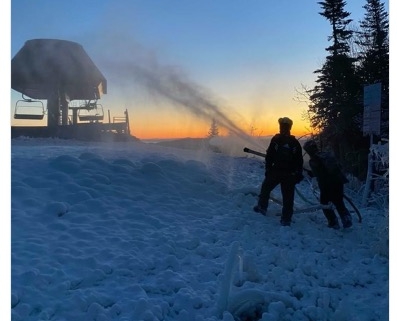
The sun comes up on Alex Phillips of the Sugarbush snowmaking team.
Even with water in hand, making snow requires sufficiently cold, dry conditions. Snowmakers use a crucial measurement that combines the ambient air temperature and humidity called “Wet Bulb”. A lower wet bulb reading means that snow can be produced more efficiently, even at temperatures slightly above freezing.
Advances in snowmaking technology — more efficient guns, better automation, lower-pressure systems — let resorts achieve more snow per unit of water (or per unit of energy) than older systems. In drought years, that becomes more critical. Some resorts are already investing in snow guns with lower water demands to adapt to drier conditions.
Current drought conditions may affect the early season (November/early December). In a “normal” year, resorts might push snow guns aggressively or respond to brief cold snaps. In a drought year, they may have to ration water usage, being more selective about when and where to make snow. The timing of reservoir refill (from late summer and fall rains) is going to be critical. If those refill cycles are weak, reservoir levels may start the snowmaking season below “full” capacity, constraining how early (or how much) water it can divert from streams. Resorts may be able to cover a few critical trails (e.g. base zones, beginner runs) when cold weather arrives but fully covering or “blanketing” entire ski areas early might be tougher if reservoir water is low. They may choose to reserve water for prime cold periods rather than using it broadly on marginal nights.
In the heart of winter, snowmaking is used to maintain and augment snow surfaces (filling thin spots, optimizing coverage). Drought constraints might force a resort to scale back “top-up” snowmaking (the process of supplementing natural snowfall with machine-made snow to ensure optimal surfaces) in less critical zones. If some reservoirs or ponds are drawn down too far, they may not be able to sustain high-volume snowmaking over prolonged cold periods. Resorts might have to scale back snowmaking, maintain minimal coverage, or stop making snow until conditions improve. They may incur extra costs (energy, pumping, infrastructure) or push investments in more efficient snowmaking technology to stretch available water. If reservoir draw is aggressive early, there might not be enough buffer left late in the season if cold spells reappear — meaning a resort could run into resource constraints before season’s end.
The undisputed king of snowmaking in the Northeast is and has long been Killington, VT. Killington is one of the more capable and well-resourced ski areas in the Northeast, if not the country, with substantial snowmaking infrastructure. But it also has regulatory and physical constraints (reservoir levels, permit limits, environmental flow constraints, refill limits, etc.). To provide some perspective on just how colossal their water needs are, and without getting too far into the weeds, here are some facts from publicly available sources:
- Killington claims that under ideal conditions, its snowmaking system can deliver 9 million gallons of water per day (on average, that’s 30,000 households per day!) to more than 250 snow guns covering ≈ 45 acres with 12 inches of man-made snow.
- Killington has been actively investing in snowmaking upgrades. They plan to deploy 1,000 new high-efficiency snow guns for the 2025/26 season (across Killington & Pico) to reduce water and energy use.
- Killington owns and operates infrastructure (including water rights) in its capital planning.
- There are historical precedent and regulatory context: for example, Killington has permits concerning the use of its Woodward Reservoir for snowmaking withdrawals. They may not begin before November 1 each year.
- Killington also has upstream influence: it has acquired the ability to pipe water from Killington’s sources to Pico (another Vermont ski area nearby under its ownership) via an interconnect system.
These constraints mean that even if water exists somewhere in the system, Killington cannot necessarily always draw it at full capacity — especially in low-flow/drought conditions. Of course, major, well-resourced resorts like Killington are more likely to navigate the drought with less disruption. Those with large, deep reservoirs or multiple water sources (streams, groundwater) have a buffer. Resorts whose water rights or permits allow more flexible withdrawals will have more leeway. Areas already using state-of-the-art, water-efficient systems will be at an advantage. Resorts at higher elevations, or in colder microclimates, may have longer viable windows for snowmaking and rely somewhat less on aggressive snowmaking.
The quality of snow surfaces in the Northeast this season, and the ability of resorts to open extensive terrain early, will hinge on the amount of rain received this fall and sustained cold weather. Even with adequate rainfall, resorts will still have to deal with an increasingly prevalent and destructive freeze thaw cycles and temps too high to make snow.
It’s shaping up to be a challenging season for resorts in the Northeast. Before you do your snow dance this season, you may want to do your rain dance.
[authors_page role=contributor]