


This Week In SeniorsSkiing.com (Mar.8)
[Editor Note: We sent packages and envelopes to readers who donated in our recent fund-raising campaign this week. Jon and I are truly gratified by your support. Thank you. If you haven’t received your premium, please be patient. More patches and stickers are being shipped to us.]
Vasaloppett And Memories Of The Great Washington Birthday Race, Fat Bike Amateur, Mystery Grinder, Knee Replacement Expert Question, Powderhorn Resort Review.
On March 3, the Vasaloppett, the oldest and biggest cross-country ski race in the world, stepped off, heading 90 km (55 or miles) from Salen to Mora, Sweden. That’s the equivalent to two back-to-back marathons, but on skis. Click on the video above, and you will see that this isn’t just a race of college kids and professional athletes. It’s a community experience with plenty of fit looking senior men and women in the crowd of 15,000 plus entrants. That’s 15,000 people coming out for an historic, 55 mile ski race, fueled along the way by hot blueberry soup. The winners come in about four-and-a-half hours after the start. Others are still “racing” 10 plus hours later. Registration opens for the 2020 race on March 15, if you’re curious.
The US almost-equivalent is the American Birkebeiner, held in Hayward, WI, in mid-January. About 10,000 skiers race 50 km or 30 miles. In Canada, the Gatineau Loppet outside Montreal attracts 2,500 racers who have the option of skiing, snowshoeing or fat biking on different courses.
If you’ve never participated in a mass start, large field, cross-country race, you might have to review your bucket list. Thinking about these huge races reminded us of the Great Washington Birthday Race that used to be held in Putney, VT, and other places in Southern Vermont back in the 1970s It was our first outing ever on cross-country skis, and there we were, competing with college teams, Olympians, ordinary citizens, and plenty of seniors on a modest 20 km (12 mile) course. Those days, you either got your wax right, or you didn’t. We didn’t, but we laughed our way around the course, coming in dead last, but enthusiastic about the newly-discovered mystique of this ancient sport—the smell of pine tar, the arcane waxes, the simplicity of technique, and the thorough work out we got. Of course, equipment has evolved, but the aura of Nordic skiing is still magnetic.
Here’s the point: Most of SeniorsSkiing.com readers are Alpine skiers. We urge you to try cross-country to give yourself a break and change your perspective. Like the new skis for Alpine, there’s innovative new skis, bindings, and boots that makes x-c more efficient. We also encourage corporations, resorts, equipment, and clothing vendors to think about a Vasa-like race—smaller scale, local, a people’s race—in different regions. We know there are plenty of folks who would love to participate. Build it, and they will come.
Start of Sweden’s Vasaloppett March 3, 2019. 15,000 racers head out to Mora, 90 km away.
This Week

Mike riding the Fat Bike. Knickers are just for fun. Credit: Don Burch
Last week, we went on an expedition to the Great Glen Trails Outdoor Center in Pinkham Notch, NH, with a group of ski writers to try some alternative snow sports in a beautiful setting at the base of Mt. Washington. We had heard about fat biking as a new winter option, and so off we went. Here’s a report of what we learned.
Our Mystery Glimpse this week has a tenuous connection to St. Patrick’s Day coming up next week. If you get this one, you’ve clearly been around the sport for a while. And we reveal the previous week’s picture as Al Johnson, a legend of the Rockies who started the first races in silver mining country.
This week’s Ask The Expert has a question about knee replacement answered by an orthopedic physician. We know a lot of readers will find this helpful.
 Co-publisher Jon Weisberg reviews a number of ski-assist devices. These tools can help you extend your sporting life and are worth exploring. Click here for his story.
Finally, Jon also visited Powderhorn Mt. in western Colorado. Powderhorn is another of those off-the-beaten track areas that offer value to senior skiers. There’s even a weekly Young-At-Heart program for 50-plus that offers guided skiing, lunch, and apres ski. Click here for the Resort Review.
Thanks again for supporting SeniorsSkiing.com. Tell your friends and remember, there are more of us every day and we aren’t going away.

Short Swings!
Older skiers have older eyes, and all skiers eventually experience decrease in snow contrast sensitivity. The most common culprit is cataracts, the cloudiness that forms on our lenses, causing the eyes to lose clarity and decreasing the quality of light focused on the retina. Cataracts can start forming when we’re in our 40s and 50s, though they’re more commonplace in our 60s and 70s.
Less common are processing issues related to diseases such as glaucoma and macular degeneration. They decrease the quality of the signal transmitted to the brain.
Many of you ski with contacts. I never figured out how to get them in and out without struggling. It was especially frustrating on powder days.

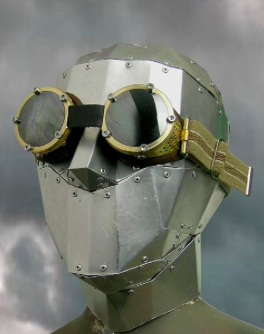
Arctic region snow goggles

Early snow goggles
For years I simply wore glasses. Then I used the OTG goggles. OTG stands for Over The Glasses. There was a lot of fogging. Next step was the battery operated fan goggle. When they worked, they worked well. When they didn’t – which was frequently – AAARGH!
A-BOM makes a goggle that works like an electrified windshield. I used it for a few years. As I recall, it works.
My go-to solution is a prescription insert. It fits into goggles designed to accommodate inserts. Smith, Oakley, and Anon are among the companies that offer them.
Finding an optometrist that understands how to make a good insert may be a challenge. The last time I had an insert made was at a prominent optometric shop in Salt Lake City. I thought that being so close to the resorts, shops in SLC would have the know-how. I was wrong. The place I selected couldn’t get one of the lenses to stop falling out of the frame. It required multiple return visits.
I carry my specs in a hard shell case for use in the lodge or if conditions are such that I don’t want to wear goggles.
Another alternative is laser surgery. Some people I know swear by it. A few have developed complications.
For the time being, I’m sticking with inserts.
Alterra To Invest $181 Million in Resort Improvements
Alterra Mountain Company, which owns ski resorts and the IKON pass, announced it will invest $181 million in capital improvements across its 14 North American mountain destinations. Major 2019/2020 projects include new high-speed lifts at Squaw Valley Alpine Meadows and Winter Park, RFID lift access at Deer Valley Resort, an expansive renovation of the Bobbie Burns lodge at CMH Heli-Skiing & Summer Adventures, and an upgrade of Steamboat’s gondola.
US Ski and Snowboard Hall of Fame Dinner Discounted for SeniorsSkiing.com Subscribers
The US Ski and Snowboard Hall of Fame’s annual induction ceremony is April 6 in Salt Lake City. The ceremony will culminate Snowsport History Celebration, a gathering in Park City of International Skiing History Association, US Ski and Snowboard Hall of Fame, and North American Snowsports Journalists Association. The ceremony will be at Salt Lake’s Little America Hotel. SeniorsSkiing.com subscribers may purchase tickets to the gala at a $100 discount ($239) through March 15 by entering SENIORS2019 when purchasing. If you live in the area or are visiting, this should be a terrific evening. This year’s inductees include racers Bode Miller, Kristin Ulmer, Hilary Engisch, and Andrew Weibrecht.
Tickets: https://skihall.com/induction/tickets/
Full event details: https://skihall.com/induction/schedule/
Lodging: https://skihall.com/induction/lodging/
George Jedenoff, 101 1/2 and Still Skiing

George Jedenoff, 101 1/2 and still skiing!
This video issued by Ski Utah is titled The Optimist. It shows George skiing with his son at Alta. George explains his philosophy of optimism and staying fit so he can continue to enjoy life on snow. An added bonus are some brief comments from Harriet Wallis, frequent SeniorsSkiing.com contributor. The video is 5 minutes long. It will bring you joy.
ORSDEN Parka and Pants SALE


Orsden makes good-looking, functional, ski parkas and pants. Because they sell directly to consumers online, the products cost about half of what they would in a shop. The company just announced a 50% off end of season sale for its products. Parkas are $165; pants, $100. When I looked there was a full selection of sizes and colors. This is one terrific bargain.
Short Swings! Hiatus
Over the next four weeks, Short Swings! may be really short or nonexistent, while I’m skiing in the Aosta Valley and the Dolomites. Will report on the adventure from time to time and when I’m back in early April.

Mike On A Fat Bike On Snow
A Fat Bike Neophyte Takes To The Trails. Here’s What’s Different.
Correspondent Don Burch (l) and Co-Publisher Mike Maginn pose before heading out. Credit: Tamsin Venn
Exploring alternative snow sports always interests us. We like snowshoeing around the woods when the snow is too deep for cross-country skiing. We go ice-skating on the pond behind the house when it gets cold enough and there’s no snow cover, an uncommon combination. We even tried snow camping, and we are researching ways to build an igloo or a snow tepee for our grandson in the backyard. So, when the opportunity to go fat biking in the New Hampshire winter mountains came around, we saddled up.
A group of ski journalists were given a chance to explore the Great Glen Trails Outdoor Center in Pinkham Notch, just up the road from Wildcat Mt. The center with its base lodge, store, cafe, and rental shop is just across the road from the brand new Glen House Hotel, on the exact site of four previous hotels dating back to the mid-19th century at the entrance to the famous Mt. Washington Auto Road. The spacious Outdoor Center has 45 km of groomed trails for xc, snowshoeing, and fat biking as well as tubing. Another fantastic activity is riding the Snow Coach up the Auto Road to the 4,200 foot tree line on Mt. Washington. There’s a whole other slate of activities for summer, too. Only a half hour or so from North Conway, this resort is an historic, ultra family-friendly, non-skier welcoming, Nordic-focused, relatively undeveloped area, and we predict it is going to be growing like a snowball.

Don whisking along on the flat. It helps to have a groomed trail. Credit: Mike Maginn
But we came to try fat bikes because we heard they had become a new winter thing to do. See Pat McCloskey’s recent story on biking in the winter. We’ve seen fat bikes on sandy beaches, on trails in the woods, but we’ve never been on one, let alone riding one on the snow. We’re not new to cycling, that’s for sure. We’ve been on two Boston-New York AIDS Rides, a Pan-Mass Challenge, and numerous local charity rides. We are happy on road bikes and a rail-trail hybrid. So, not a newbie.
A fat bike has gigantic balloon tires, a triple chain ring in the front with a tiny granny gear, and a frame that looks like beach cruiser. SeniorsSkiing correspondent Don Burch and I started off from the Outdoor Center with a little downhill run to the trail. So far, so good.
To bike at Great Glens, you follow the ski trail, riding in the center of the groomed corduroy, keeping away from the classic cross-country tracks. Right away, you notice the differences.
Rolling resistance is noticeable. With a five inch tire width, you’d expect that. But wow, it is different. We decided that hammering for speed was not our game, instead going slow was good. Finally finding the right gear combination made pedaling easier Those adjustments helped.
Soft snow acted like a brake. When we hit a soft patch, we felt the wheels sink, and we had to power out. Harder snow is much better. Look for hard snow in the woods; open field snow gets soft first on a sunny day.
Bouncy, bouncy can happen. Somewhere along the way, those big balloon tires made us feel as if we were bouncing up and down along with our pedaling. Perhaps it happened on an uphill where we tended to half-stand on our pedals. Kinda fun, but obviously not very efficient.
For a first outing, it was fun and challenging. Like all new things, now we know what to expect. Give fat bikes a try on a nice, cold, sunny day. You will have a thorough workout, learn some new cycling techniques, and have another way to enjoy the winter.
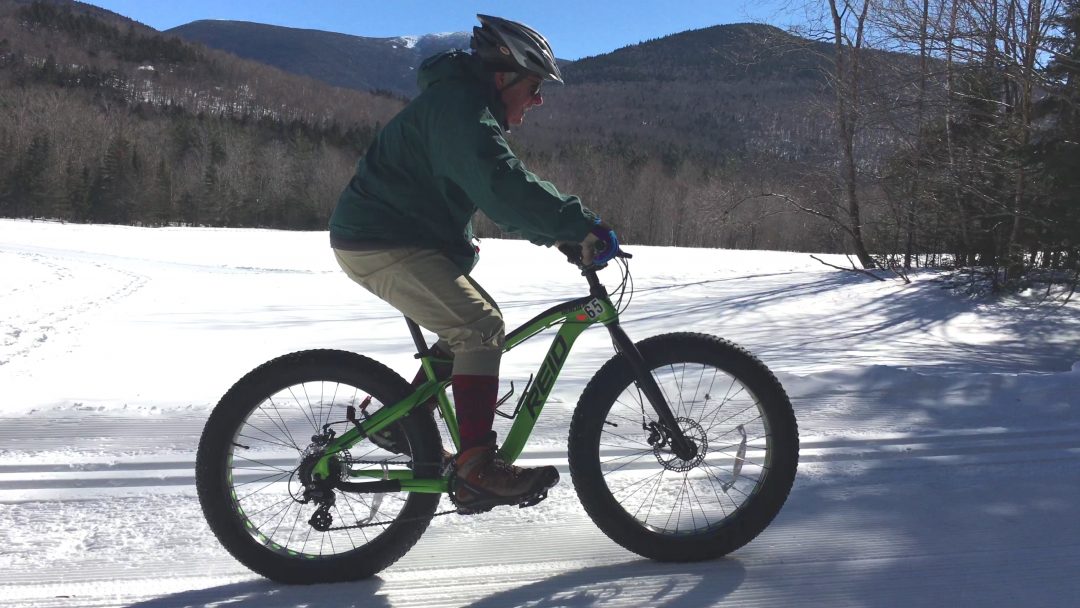
Mike riding the Fat Bike. Knickers are just for fun. Credit: Don Burch
[authors_page role=contributor]