

Mystery Glimpse: Ski Legend Of The Rockies
That’s A Big Hint.

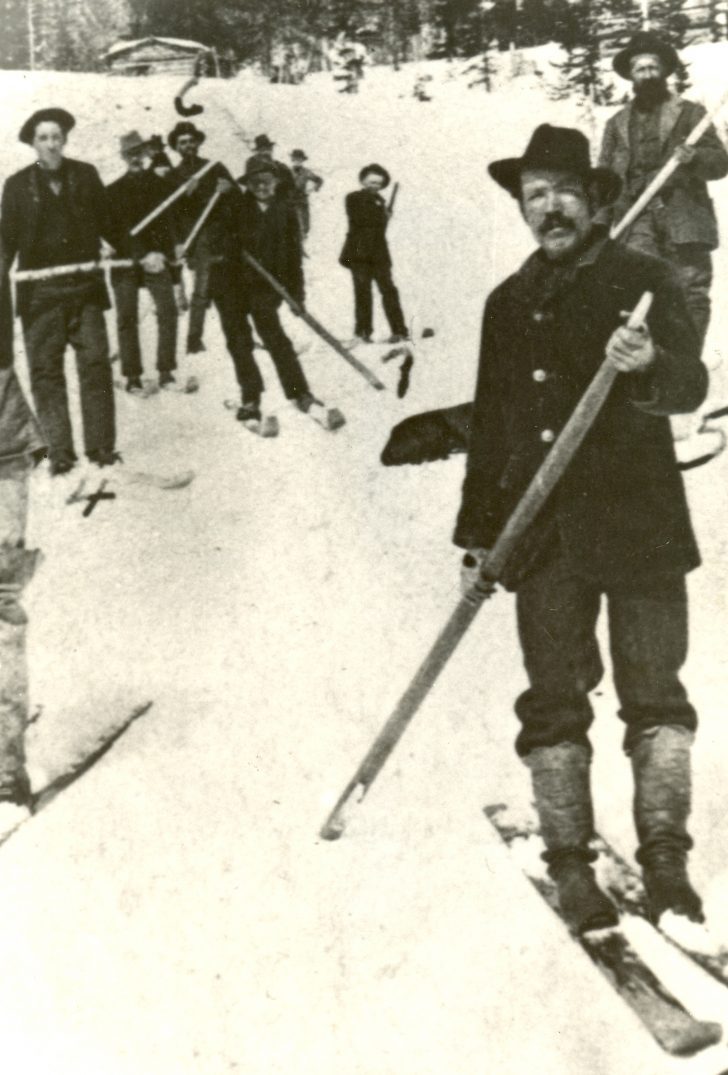
He sure looks like a rugged dude. Considering what he did for a living, you shouldn’t be surprised to learn he was a thorough outdoorsman. Do you know who this is? Where he hung out? What he did for a living? Our bet is a lot of our readers know who this is.
Last Week

Two jumpers? Looks like a long time ago.
This photo comes from the archives of the Tread of Pioneers Museum in Steamboat Springs, CO. The scene is Hot Sulphur Springs, CO, and the date is 1913.
The following description is from Katie Adams, curator at the Tread of Pioneers Museum. We thank her for this explanation.
“Carl Howelson, “The Flying Norseman,” who introduced skiing and ski jumping to the West, emigrated to the US from Norway in 1905 and settled in Colorado. When in Denver, he met new friends who shared an interest in ski jumping and cross-country skiing. Some of those friends, specifically Angell Schmidt and James Presthus, traveled with Howelsen and helped organize some of the first ski clubs and the first Winter Carnival event in Hot Sulphur Springs. The purpose was to gain appreciation and enthusiasm for skiing, and Howelsen knew the best way to do that was to amaze the crowd. He had experience with this as a performer for Barnum & Bailey Circus. He convinced the best ski jumpers he could find to come to Hot Sulphur Springs, to Inspiration Point in Denver, and to Steamboat Springs to dazzle the crowds. As part of putting on the show, jumpers would perform dual or twin jumps, two people jumping at one time. This picture is one of those crowd-pleasing dual jumps, and it probably (but I can’t confirm for certainty) is Carl Howelsen and James Presthus. So, the short answer to why two men jumping: for the razzle and dazzle.”
A great source referenced for this article: “The Flying Norseman” by Carl’s son Leif Hovelsen. The Tread of Pioneers Museum in Steamboat Springs is a center for the history of not only Steamboat, but also the Rockies, Colorado, and the West. In addition to skiing, many different aspects of pioneer life and culture are preserved and displayed.
When we researched the background for this photo, we came across a more modern attempt to ski as a duo. Here’s a report on the World Record first-ever tandem ski jump. We’re not sure why people do this, probably for a bit of “dazzle” like Carl, but when it comes to challenges, there’s always room for one more.
Report From The NSAA Winter Meetings
SeniorsSkiing.com Correspondent Makes Presentations On Senior Skiers’ Needs and Wants.
 NSAA is the National Ski Areas Association, publishing the NSAA Journal six times a year. The publication’s audience, along with its competitor, the independent Ski Area Management, are those who manage and market ski areas. A growing topic of interest is the senior skier and how to bring them to their area.
NSAA’s own data supports SeniorsSkiing.com’s research. Here’s why the sudden interest. Senior skiers represent about 16% of the overall market and ski approximately 21% of the skier days. We also ski off-peak—the industry buzzword for mid-week and not holiday weekends—and visit an average of three resorts a year. The number of senior skiers is growing because many of us see it as part of our healthy active life style. Put another way, age 70 is the new 50.
What leapt off the page in this year’s NSAA data was that the number of new senior beginners, i.e. people over the age of 55 who have never skied before until they showed up at the base of a ski area and bought a lesson, grew at the rate of 1% per year.
Since the 1970s, the number of skiers has been declining steadily, and it was only in the past two or three years that the number of skier visits/active skiers leveled off. From a ski area owner’s perspective, this good news but is not going to lead to lower prices.
 One of the marketing themes of this year’s NSAA’s East and West Regional events was bringing back the lapsed skier who is defined as someone who skied at an early age but has dropped out of the sport for family, economic, geographic and/or professional reasons. Seniors can be lapsed skiers; areas now see us as a way to increase the number of skiers by introducing their grandchildren to the sport as well as bringing friends.
Your humble scribe held a 90-minute presentation/seminar at each event. Each was well attended and received! Space doesn’t allow me to cover everything that was discussed, but what follows are some takeaways.
Marketing strategies targeted at senior skiers differ widely. Major destination resorts tend to view us differently than those near major metro areas. Some, because of their name and branding, offer only token incentives. Others really want us.
Resorts are struggling to find ways to attract senior skiers. It is a combination cost, technology, lack of focus, and talent issue. However, next season, there will be some innovative approaches to senior skiers.
 Ski areas realize their facilitates are not senior friendly. The top three areas to improve, which are not limited to seniors are 1) Need to use stairs to get to bathrooms, 2) Long walks from the parking lot or drop off point to the lifts, and 3) Need to climb from lift exit to another.
Net net, we’re now a bigger blip on ski resort’s marketing radar scope, and the interest is there.
SeniorsSkiing Guide: Wolf Creek—The Snowiest Surprise
This Resort Has All The Characteristics Senior Skiers Love.

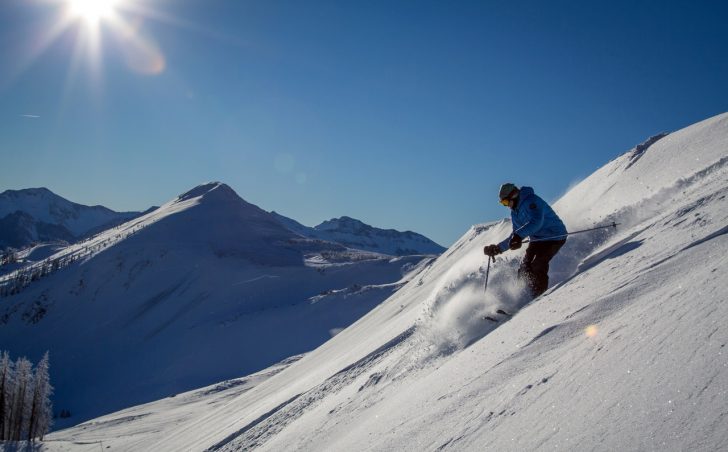
Skiing off the top of Wolf Creek, with Alberta Peak in the distance. Credit: Samual Bricker courtesy of Wolf Creek Ski Area.
It was a powder day at Colorado’s snowiest resort when we pulled in.
Where were the crowds? Not here, they were in places like Aspen, Vail, and Winter Park.
“There are maybe 500 people here,” said our shuttle driver. “Have fun!”

The unassuming base area at Wolf Creek Ski Area is a throwback, with no developed village. Credit: Samual Bricker courtesy of Wolf Creek Ski Area.
Wolf Creek Ski Area is a delightful throwback situated on the Continental Divide in the southern part of the state. And if you’re shocked at the price of skiing in Colorado’s glitzy mountain enclaves, you’ll be pleasantly surprised at how they hold the affordability line at Wolf Creek.
“We’re not out to squeeze every last dime out of our customers,” said Rosanne Haidorfer-Pitcher, vice president of marketing and sales at the resort.
Walk-up ticket prices are $72 for adults, and just $43 for seniors 65-79. If you’re 80, congratulations, your ticket is free.
The skiing is phenomenal, especially if you can hit Wolf Creek on a powder day, which is often. Rocky Mountain storms drop more snow here than anywhere else in Colorado—430 inches a year.
Tree-Skiing Paradise

A skier gets ready to drop in off of Knife Ridge, a short hike into double-diamond powder terrain. Credit: John Nelson
Wolf Creek has a vast array of tree-skiing runs scattered over its 1,600 acres. Topping out at 11,900 feet, its 10 lifts serve a long ridge line that is steep at the top, but rolls into intermediate pitches for most of the area. All in all, 55 percent of the mountain is rated as beginner and intermediate.
If you’re an advanced skier, hiking along the ridge line will deliver you into double-diamond alpine drops. Some of the best are off the Alberta Lift, where a 10-minute climb puts skiers into rare territory of steep untracked lines.
You’ll find great powder elsewhere at Wolf Creek, particularly in the resort’s vast maze of tree-skiing. During my visit in February, I skied powder all day.
Transportation, Where To Stay
Wolf Creek has no on-mountain village. It’s an unassuming collection of old-school lodges, with accommodations 23 miles to the west in Pagosa Springs and 18 miles east in South Fork. If you don’t want to drive, shuttle service is offered by Wilderness Journeys in Pagosa Springs.
Pagosa Springs offers the biggest variety of lodging and restaurants, and it’s also home to several hot springs establishments where you can soak your quads after spending the day skiing powder.
After our big powder day, we spent the shuttle ride down talking about how much we loved the skiing at Wolf Creek.
“This is my new favorite resort in Colorado,” said Jan Mosman, who was visiting from Minnesota with her husband, Mark. “I love the tree skiing.”
The Mosmans had just come from Winter Park, where they had done battle with 15,000 other skiers.
“What did you like best about Wolf Creek?” I asked them.
“No lift lines,” Mark said.
Food, Travel
For a small ski area, Wolf Creek has some surprising amenities. On mountain, there are eight places to eat.
The main Wolf Creek Lodge has daily hot specials and homemade soups, along with burgers served on the sundeck. Don’t miss the Continental Espresso Bar at the top of the Treasure Stoke lift, surely one of the highest places to get a coffee buzz in the Rockies.
The closest major airports to Wolf Creek are in Denver (246 miles away) and Albuquerque (237 miles away).
Click here for Wolf Creek Web Cam

Skiers make the 10-minute climb off the top of the Alberta Lift to access advanced terrain at Wolf Creek Ski Area. Credit: John Nelson.
[authors_page role=contributor]